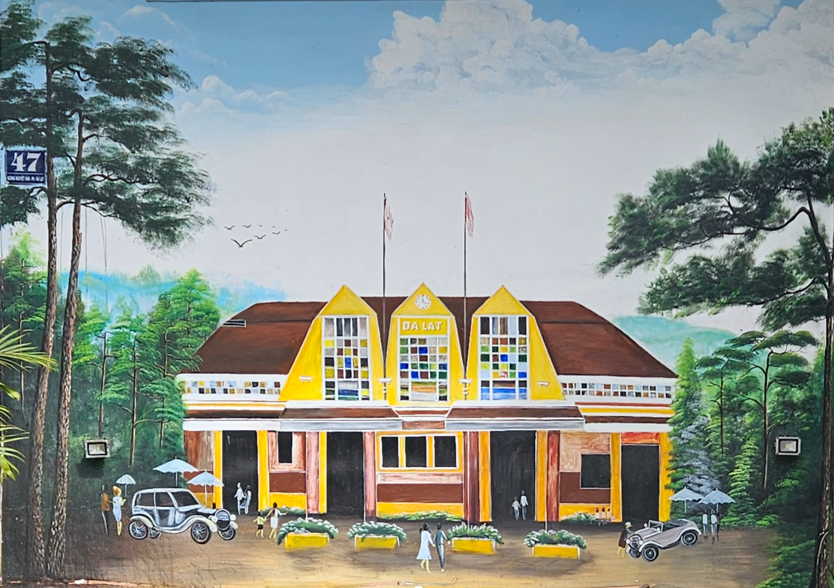
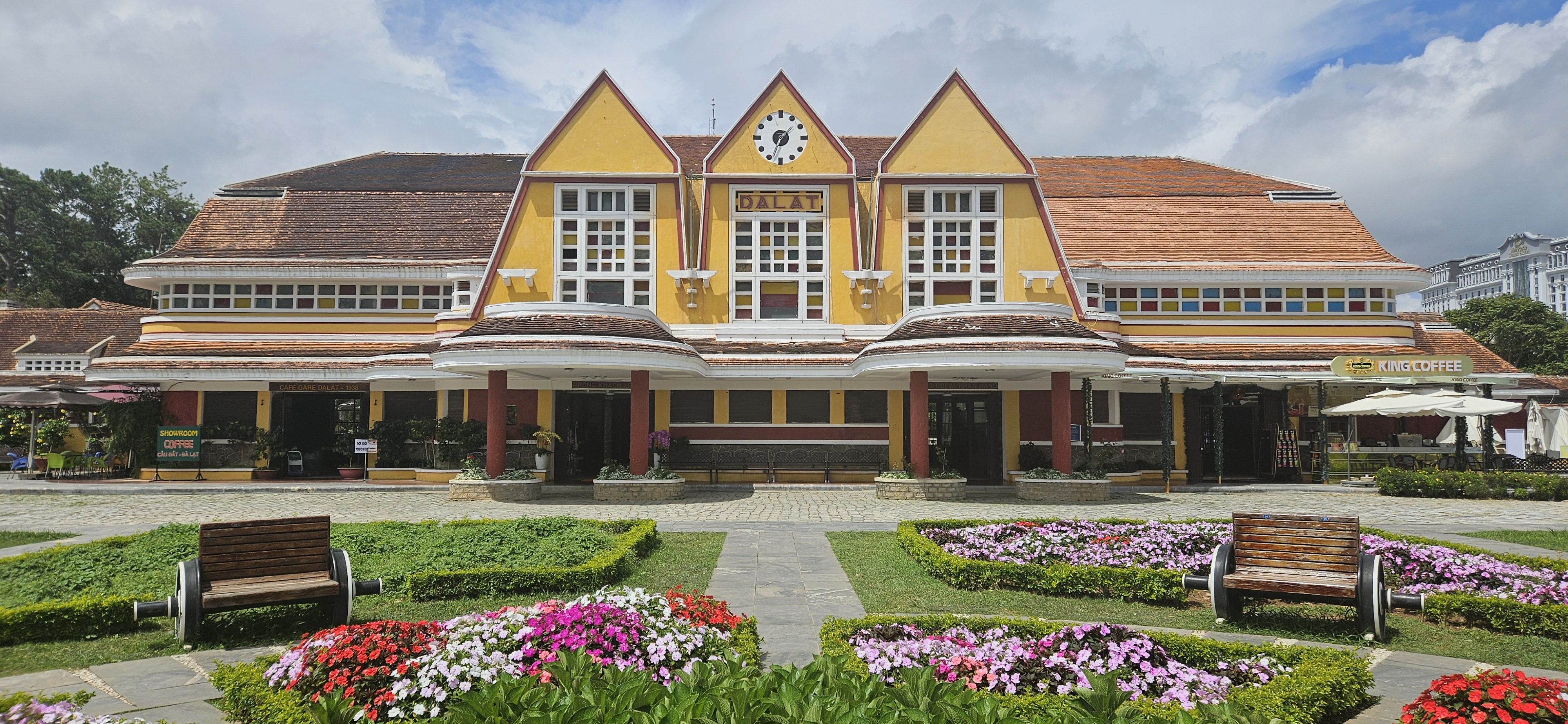
The Dalat Train Station is iconic as it was built in the 1936 in a very unique Art Deco/Vietnamese style though is no longer part of the Vietnamese rail system. However, there is one train that runs to the Trai Mat Tourist Area and back (about 7 km away), that is quite popular amongst the tourist crowd. The station was within walking distance of our hotel, so we woke up a bit earlier than normal and enjoyed the cool weather on our walk to catch the train.
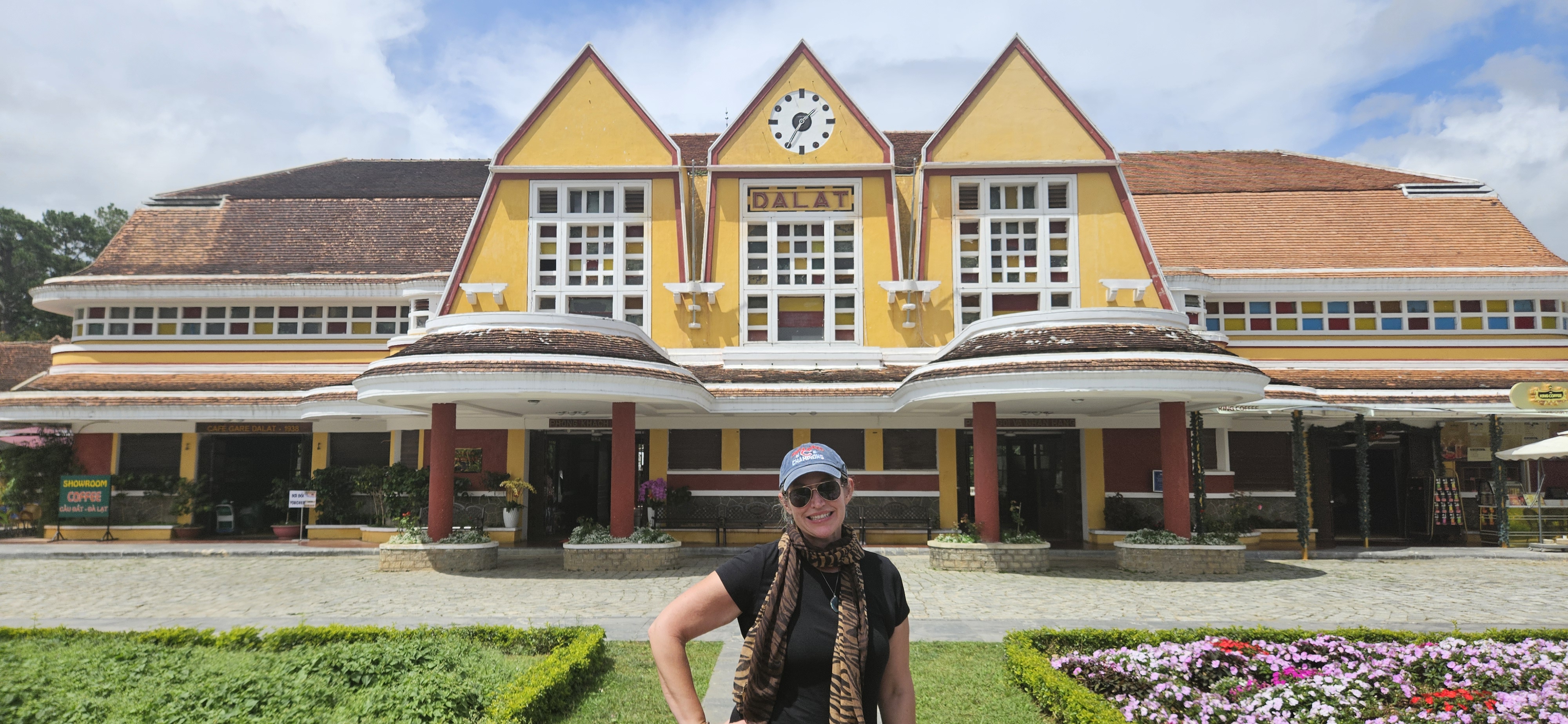
We made it with just five minutes to spare, bought our tickets, and boarded the train.
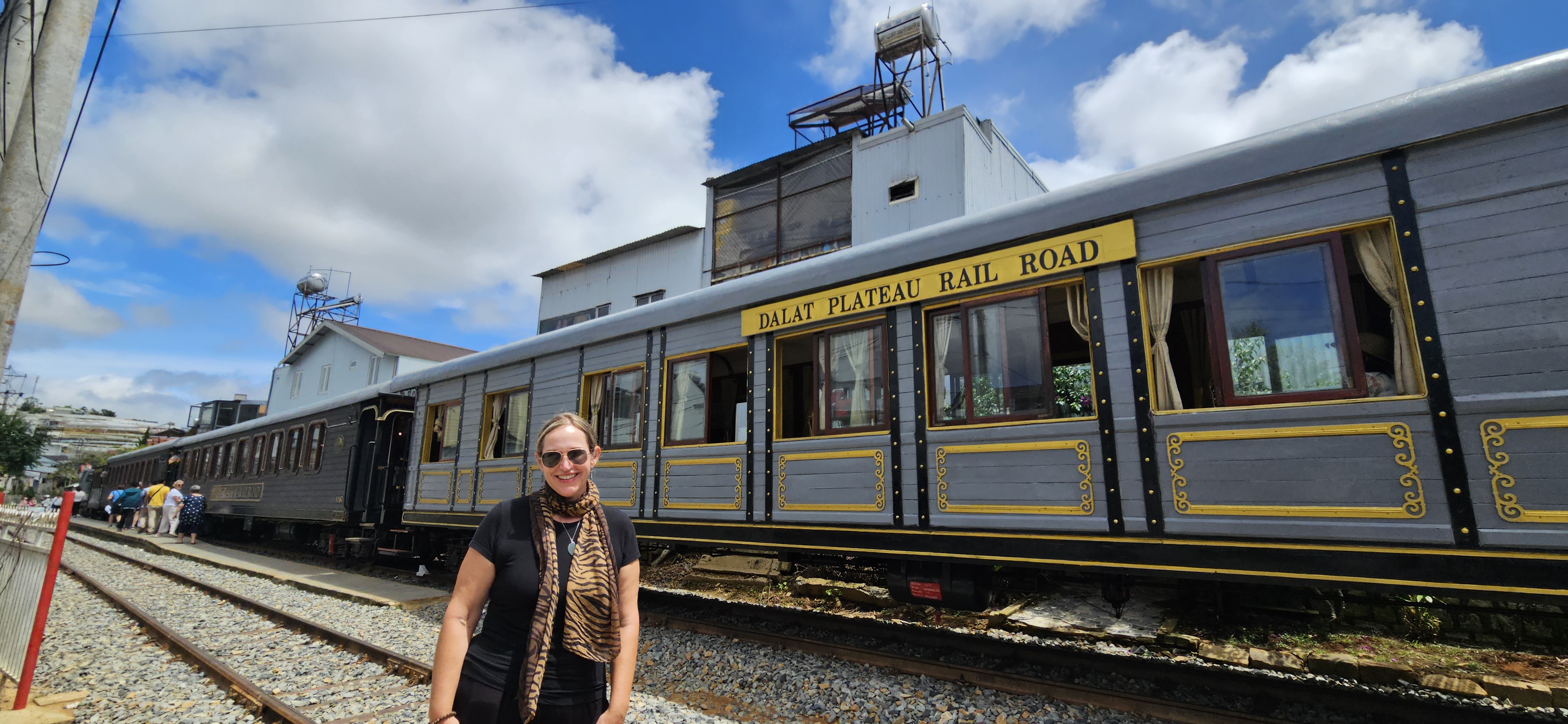
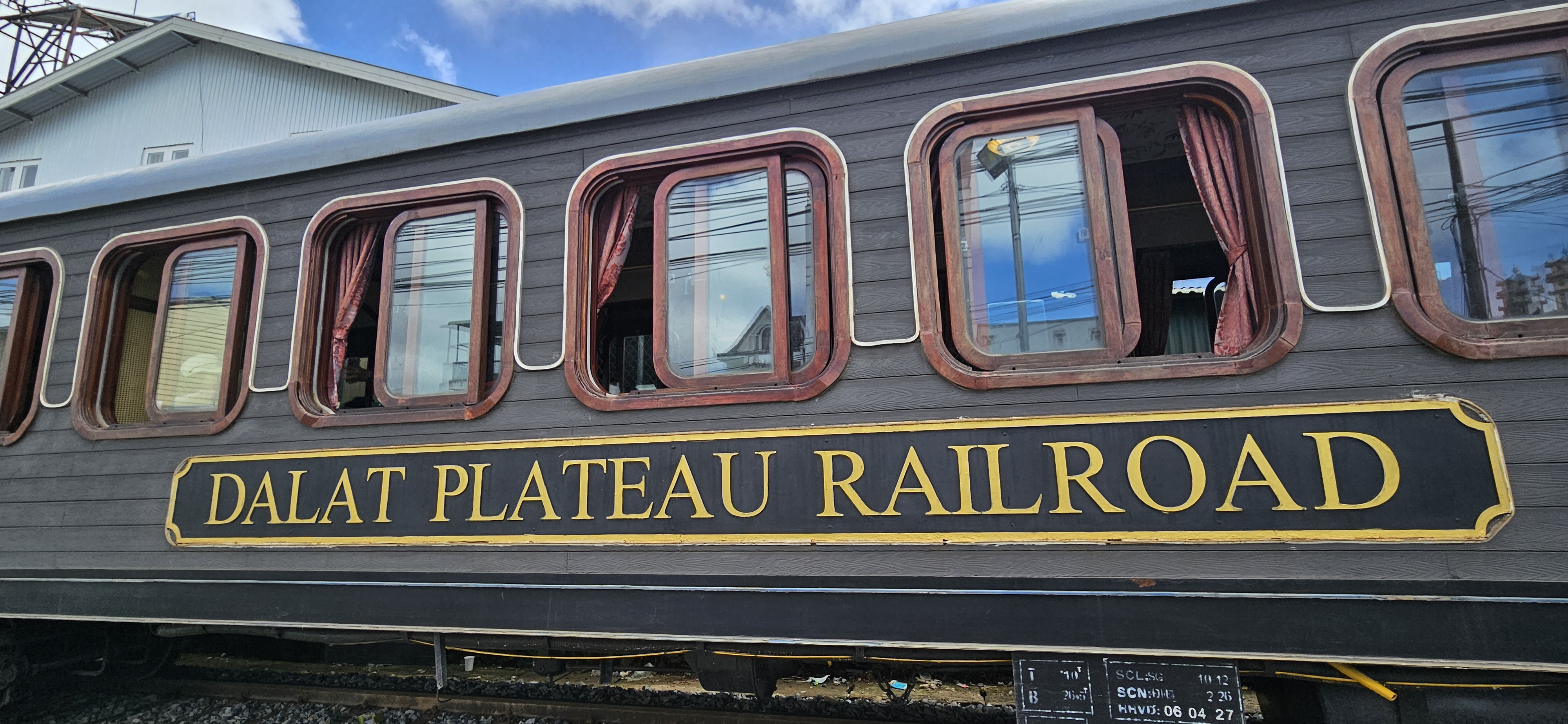
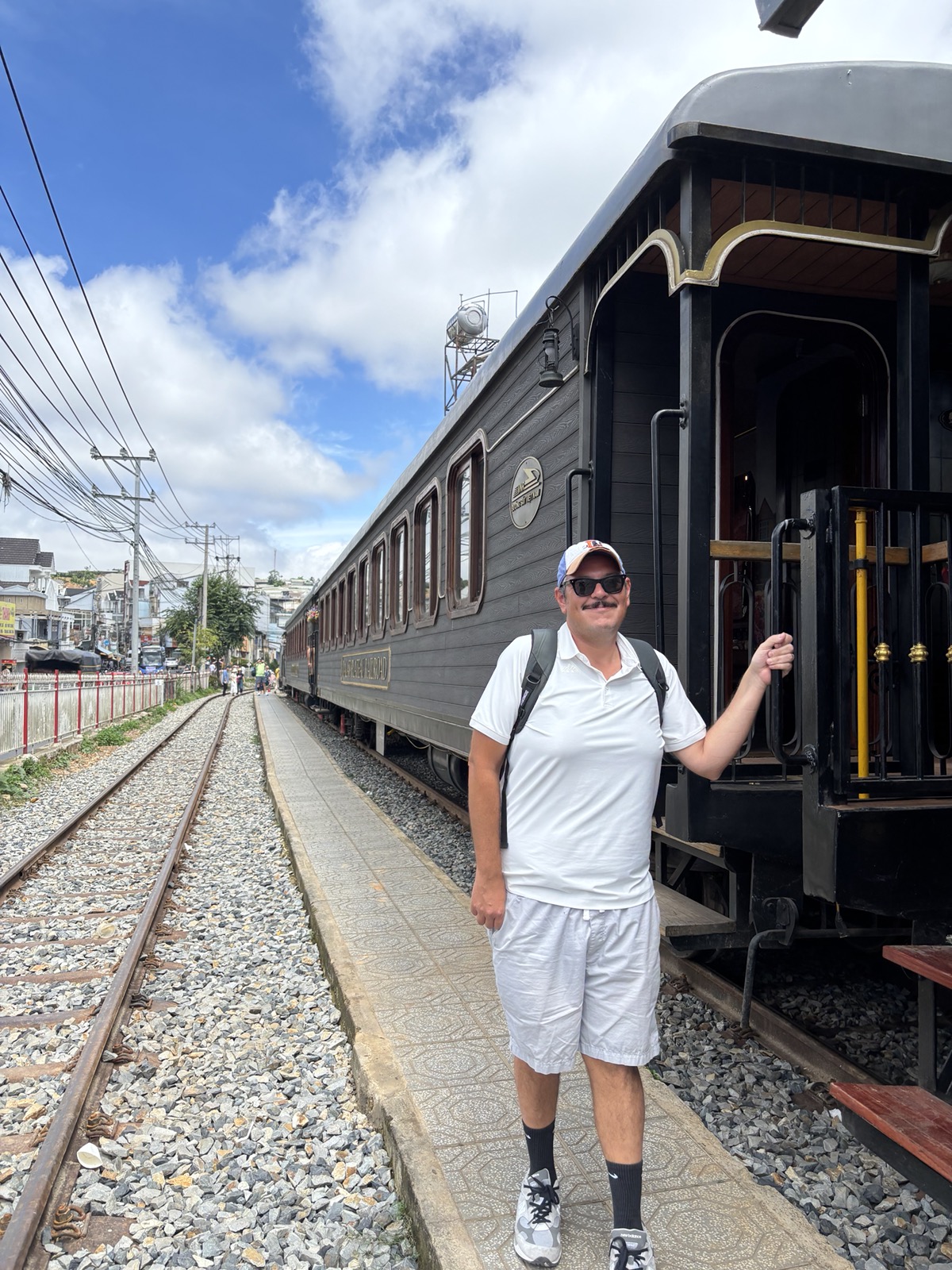
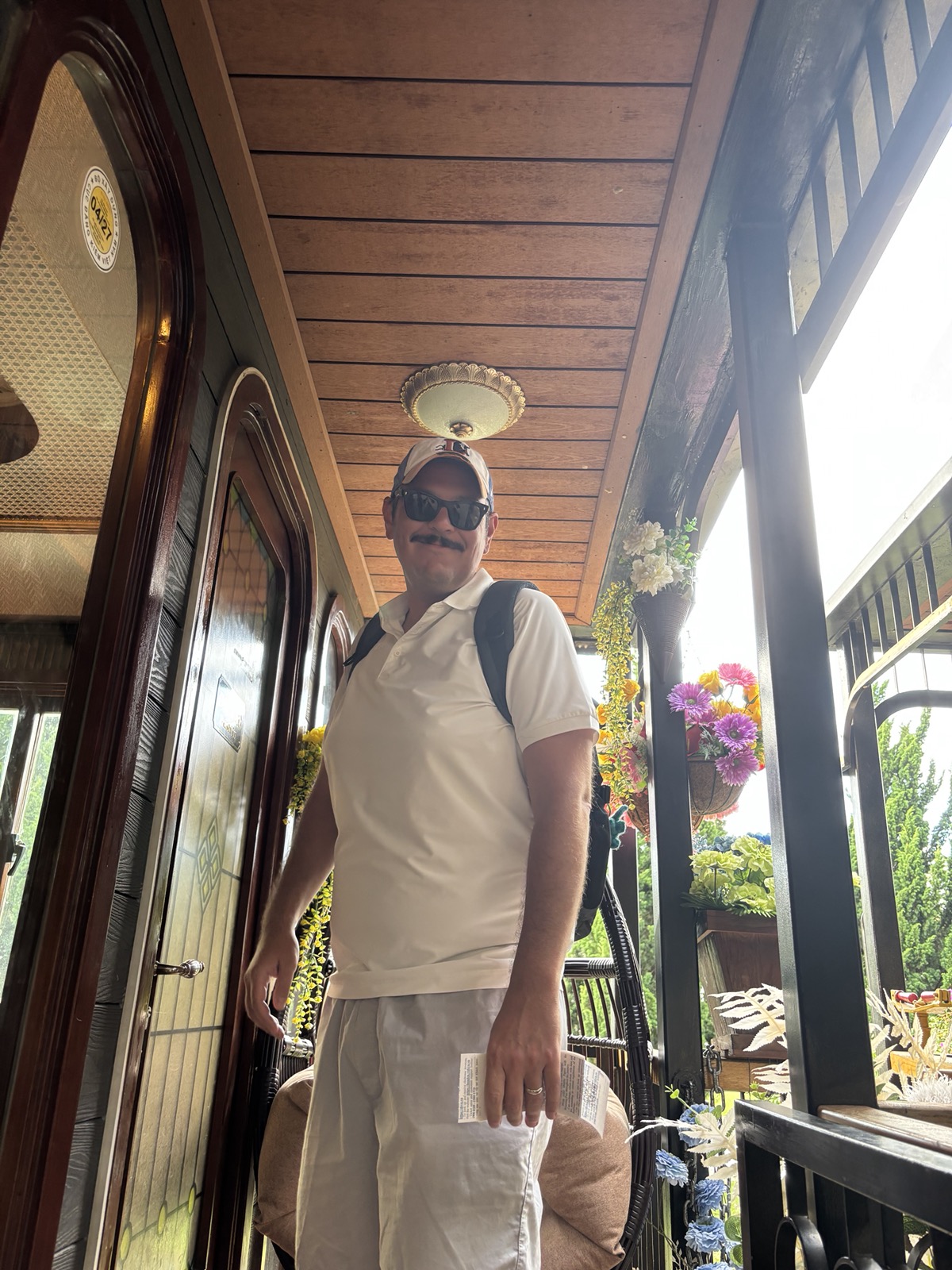
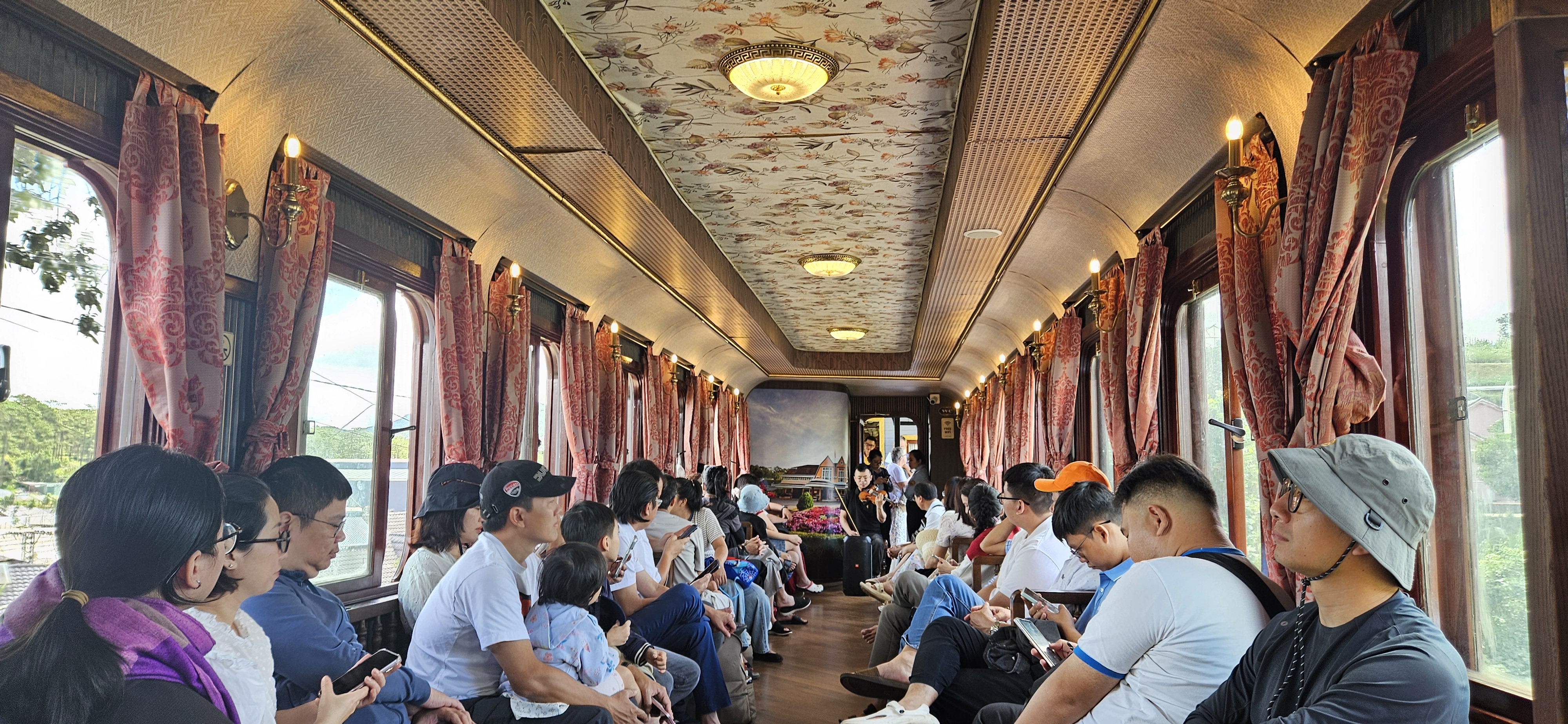
Once on the train, we enjoyed a violinist playing a song, and, while the ride was not very scenic, the cool breeze was ever so nice.
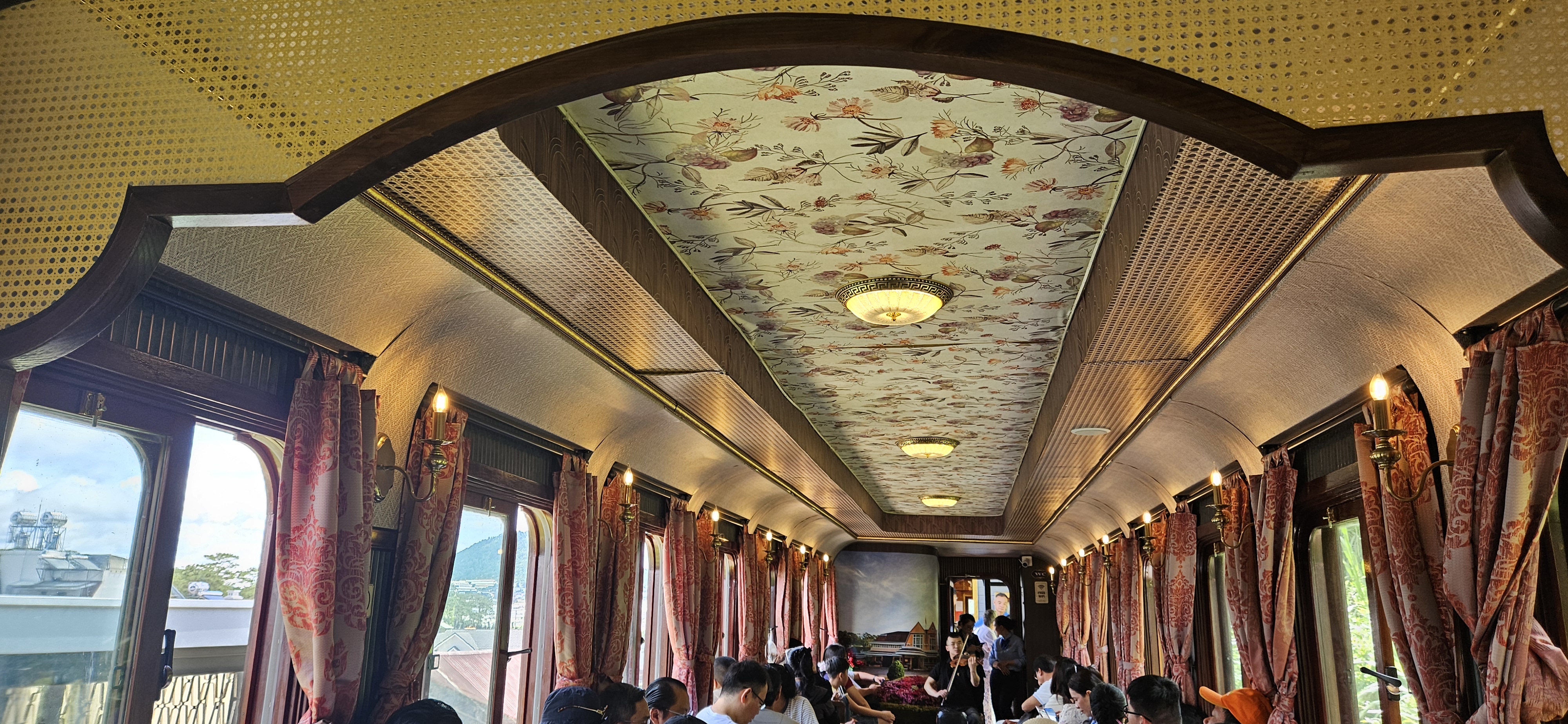
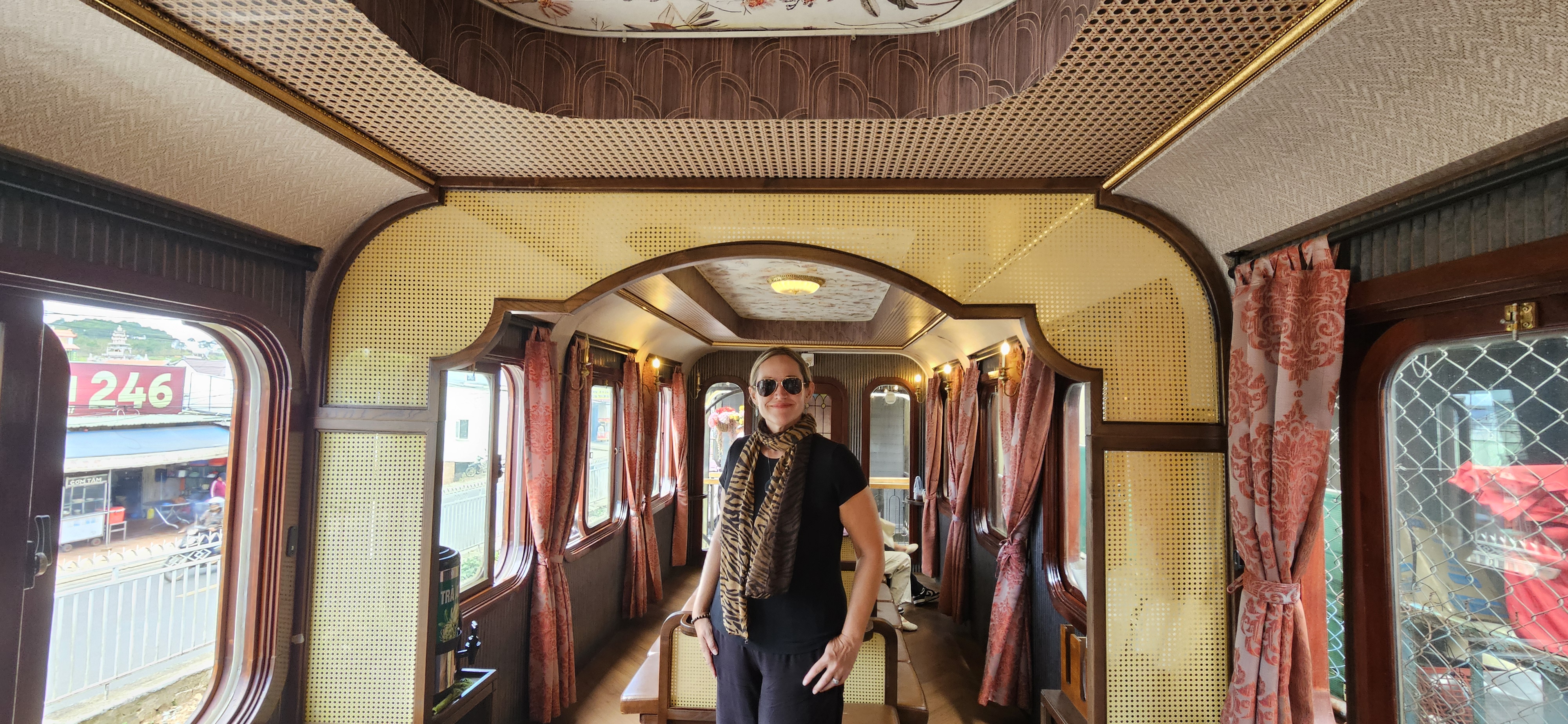
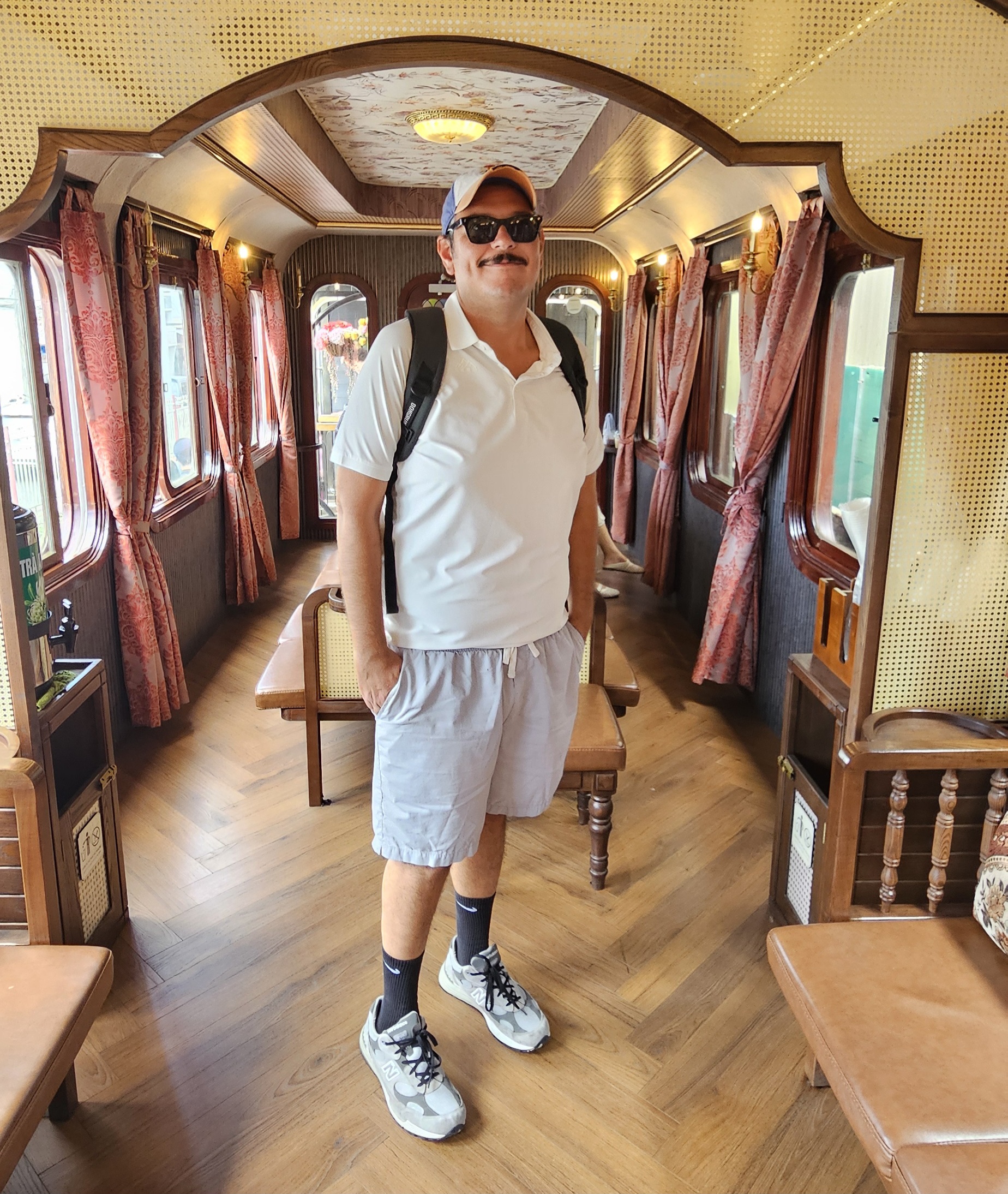
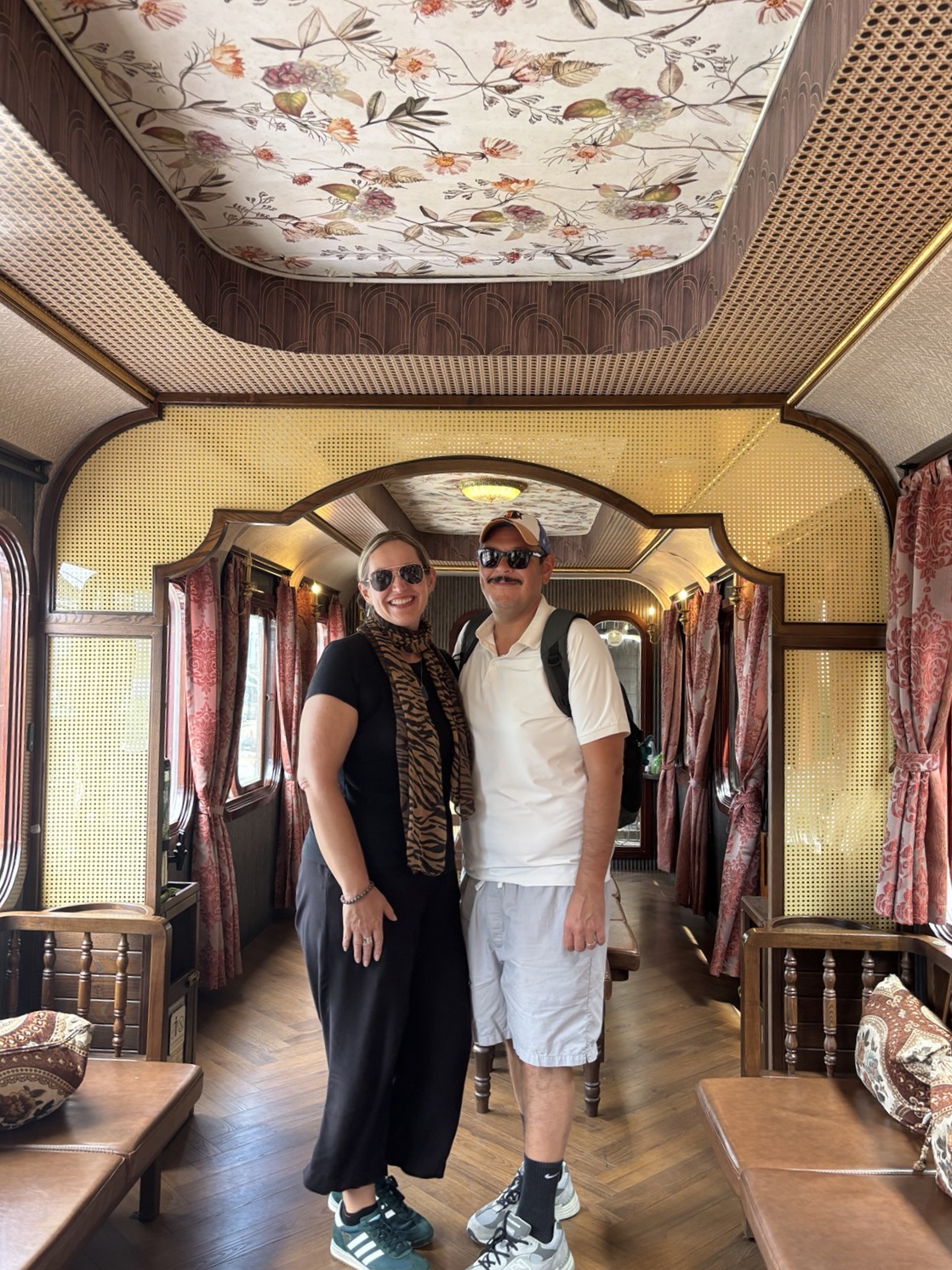
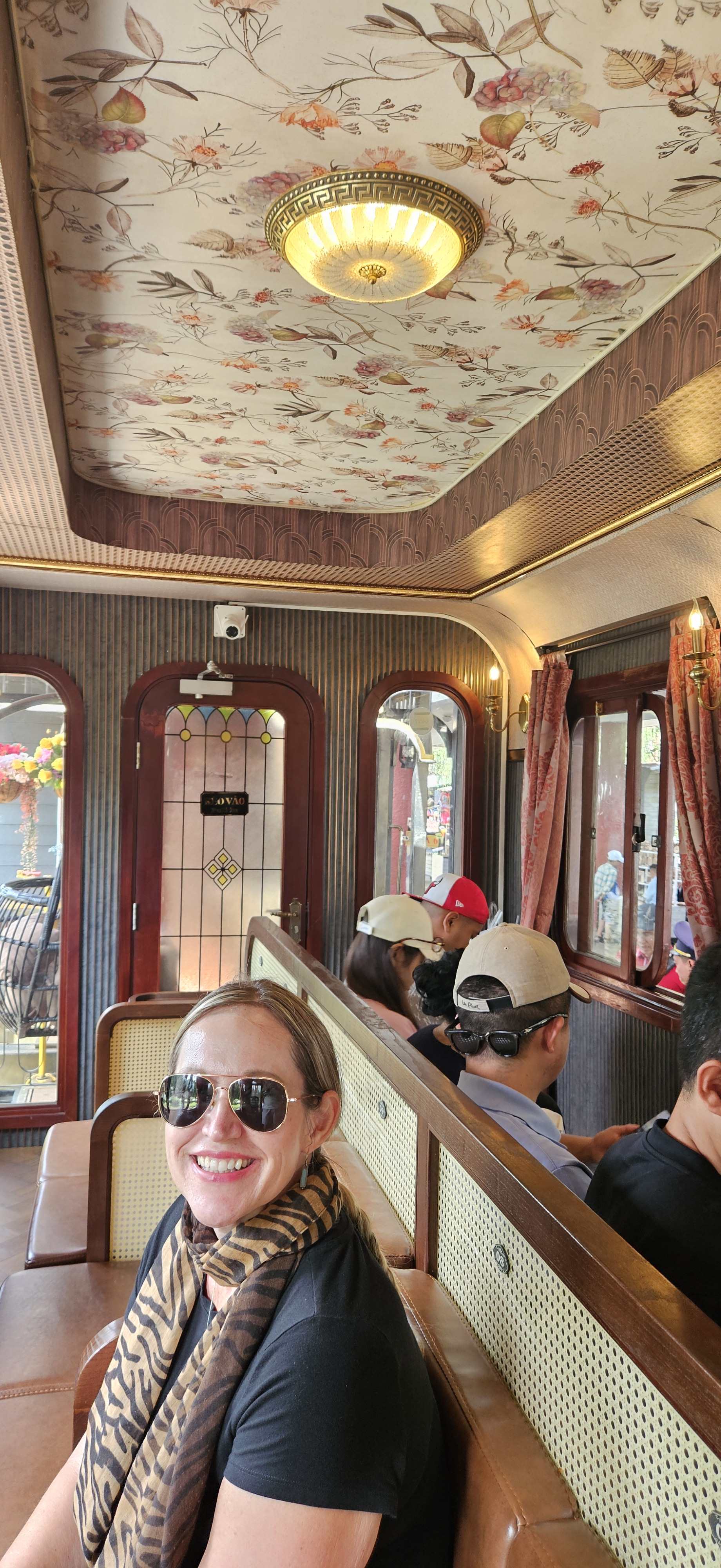
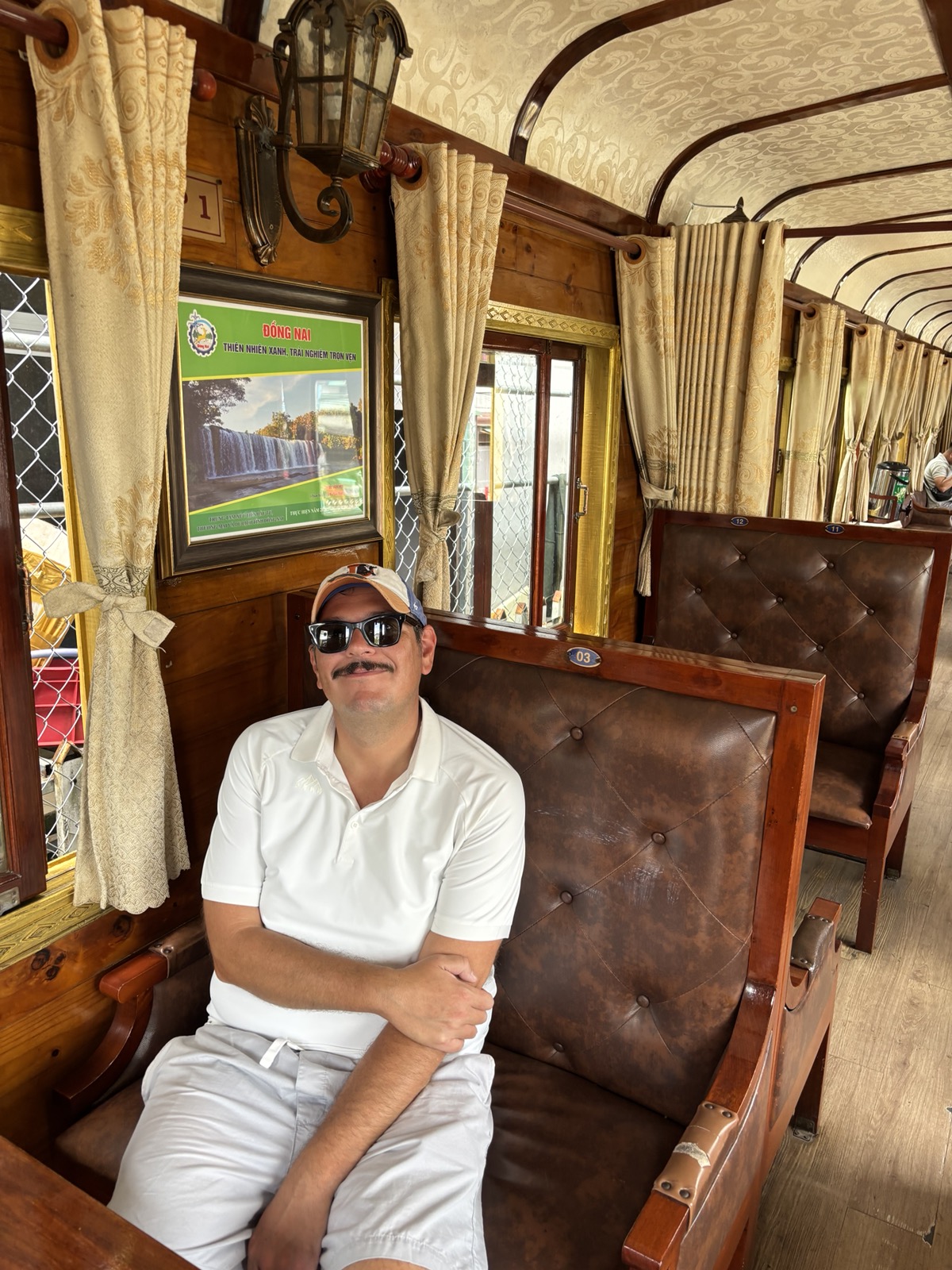
At the Trai Mat Tourist Area there is a famous Buddhist temple and a less famous Cao Dai temple to see. In fact, many people just ride the train there and back without getting off, or, if on a tour, have their tour bus pick them up, so they can save money on not having to purchase a return ticket. When we bought our round trip tickets, we told the ticket agent that we wanted to take the train back at 1:30pm (we took the 10:30am train), and he looked at us with a look we’ve seen before from ticket agents, which loosely translates to, “why? that is too long to spend there.” We were motivated, as the map said there was a flower farm about a mile away from the train station.
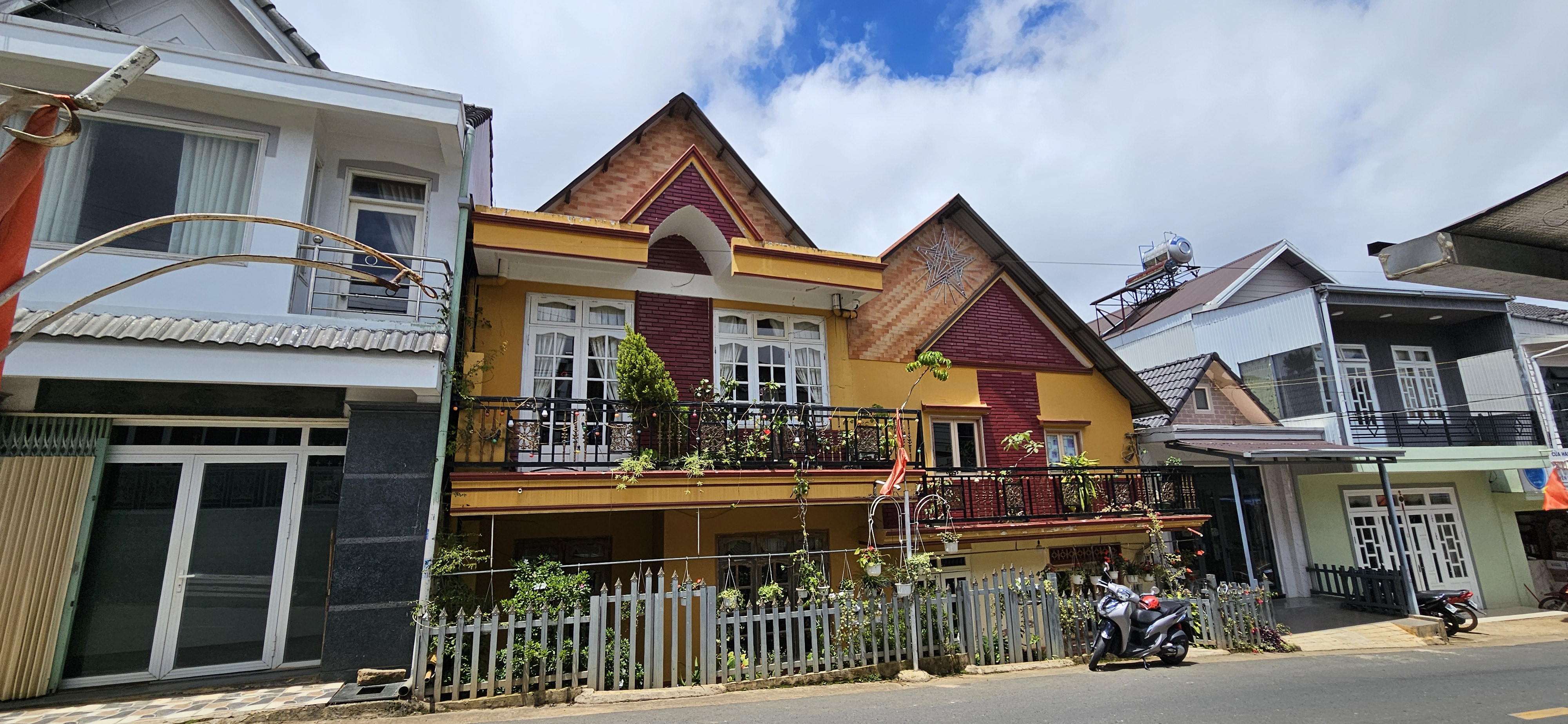
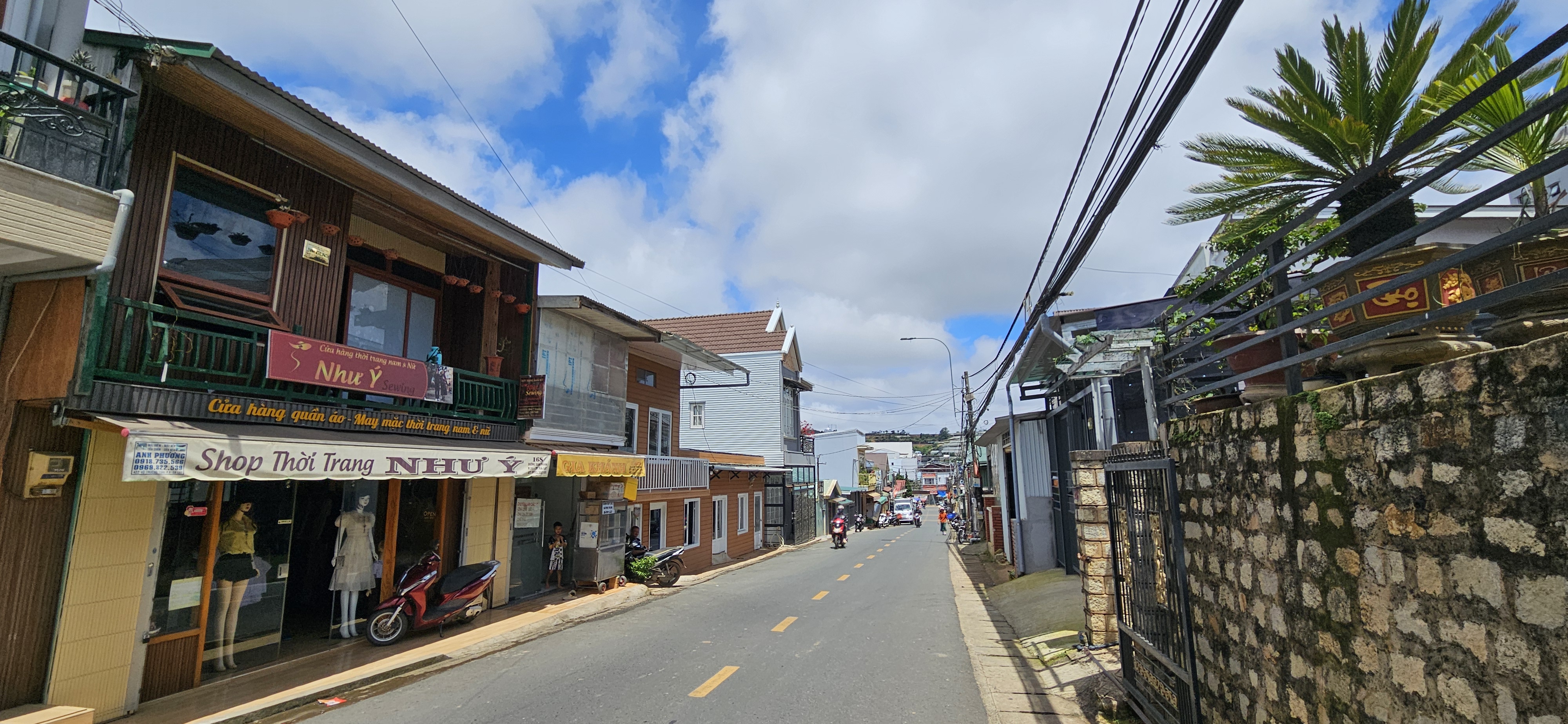
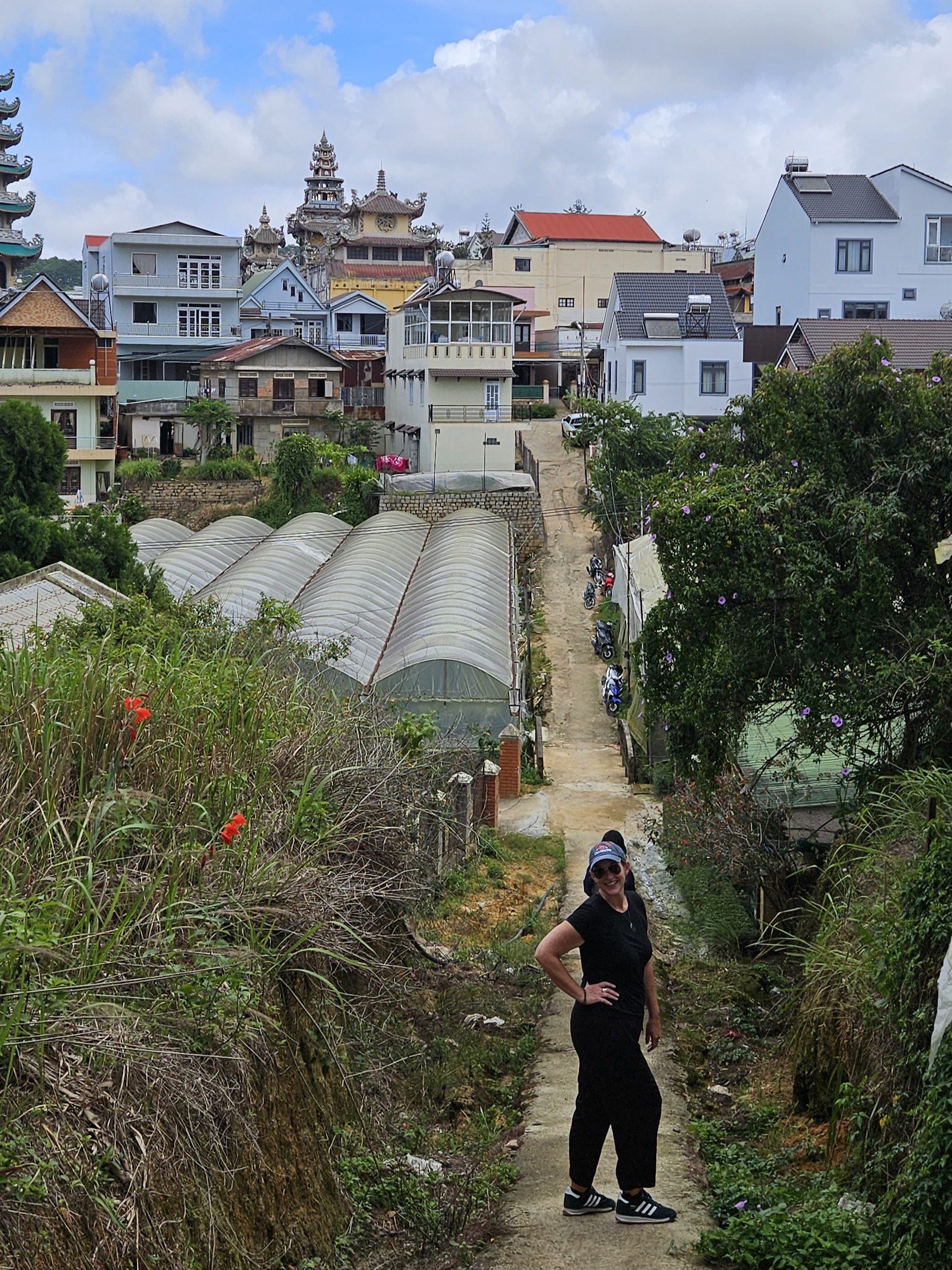
We figured to go to the flower farm first, then visit the temples on the way back. We walked and tried to follow the map to the flower farm, but were first turned away by a friendly man with two big, unfriendly dogs, telling us, we could not go that way. We kept trying, but never found the correct road to reach the flower farm, and had to scrap that plan. Not everything is for us, we say, in these situations. The town was nice to walk through, at least. We also walked past many, many flower greenhouses.
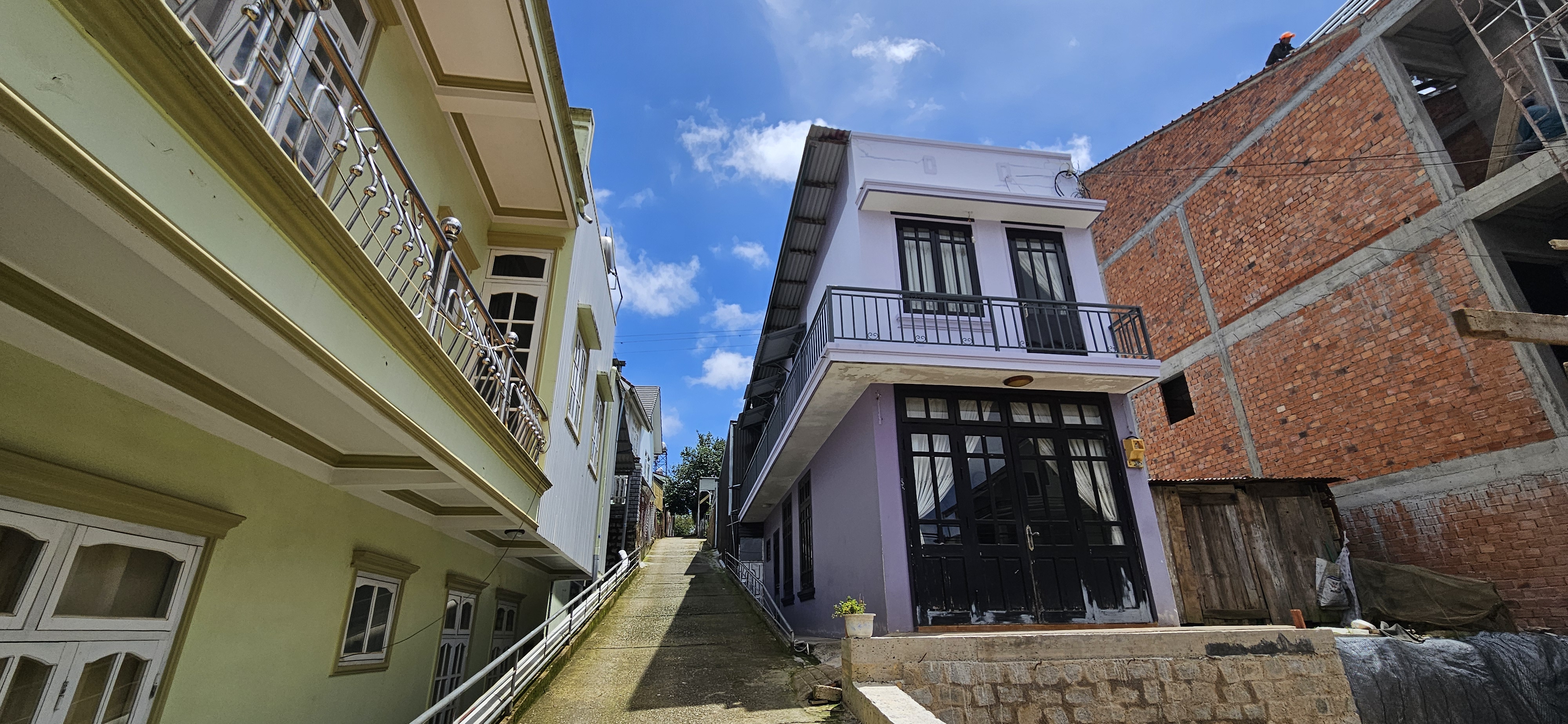
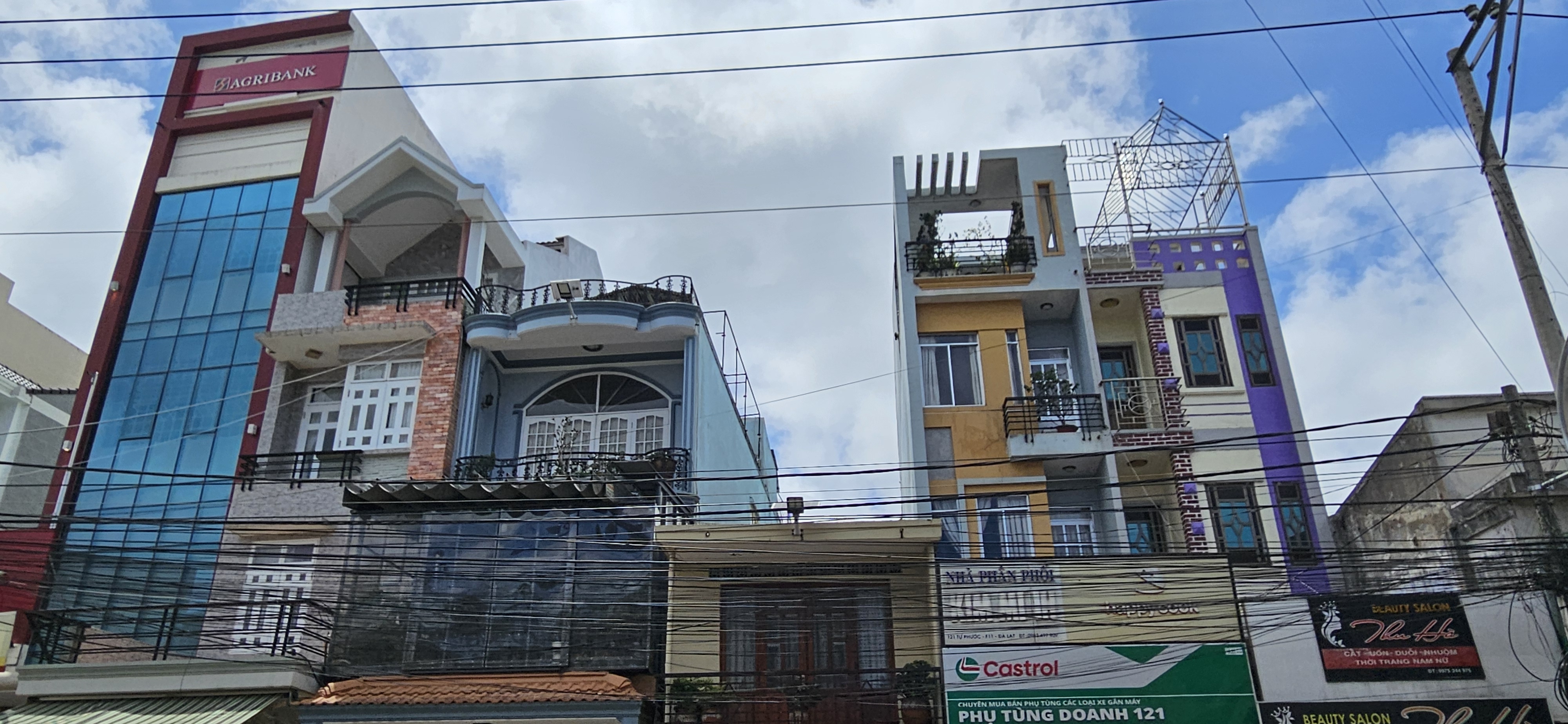
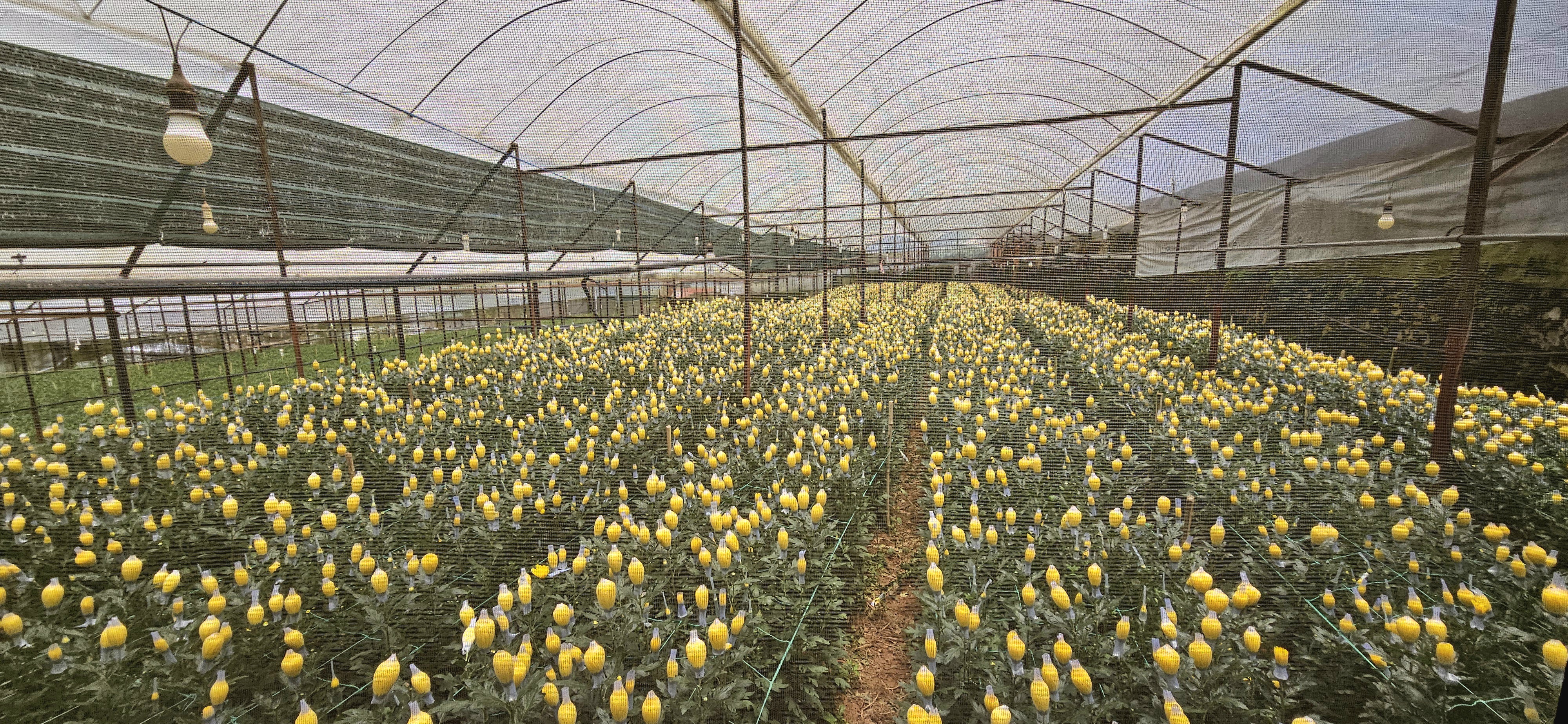
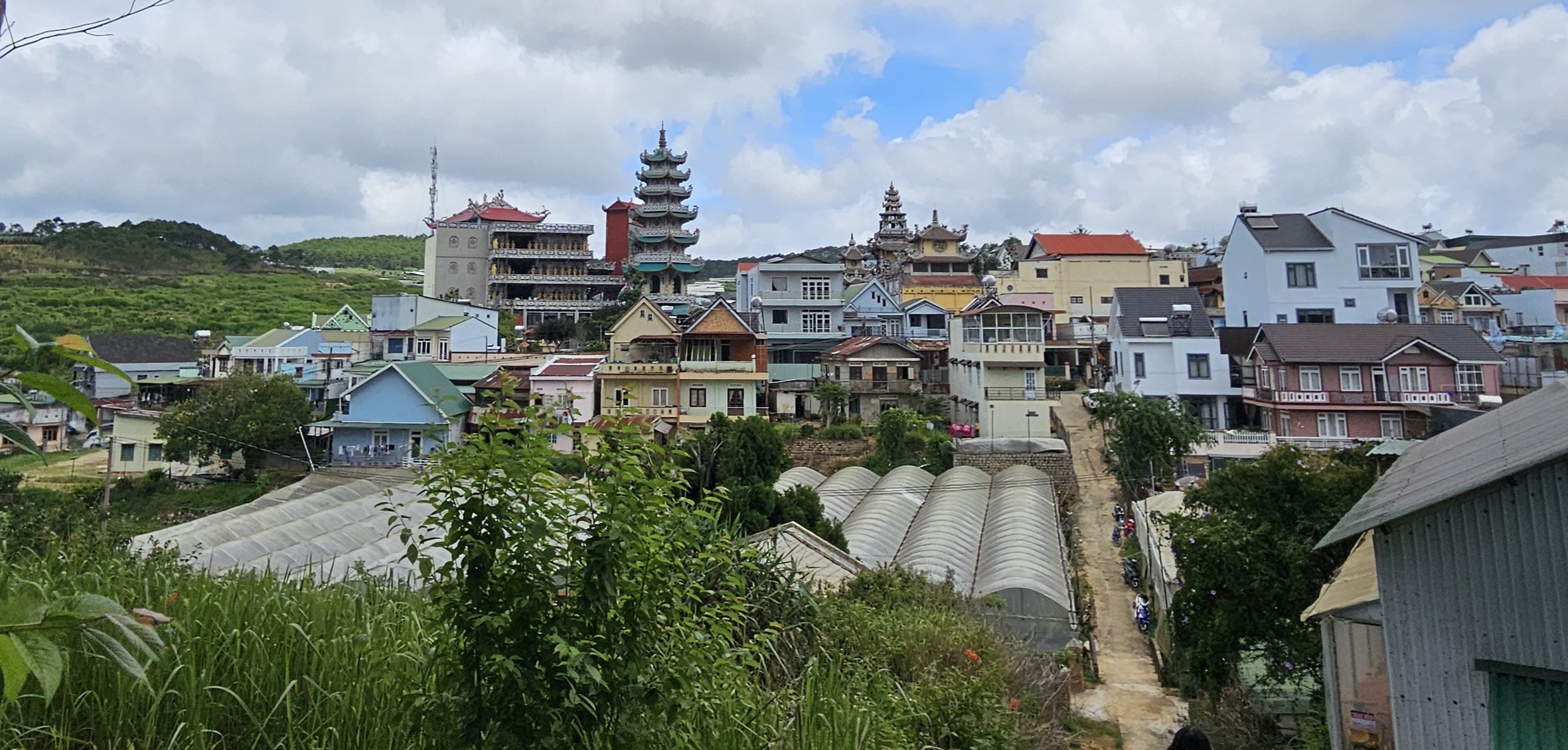
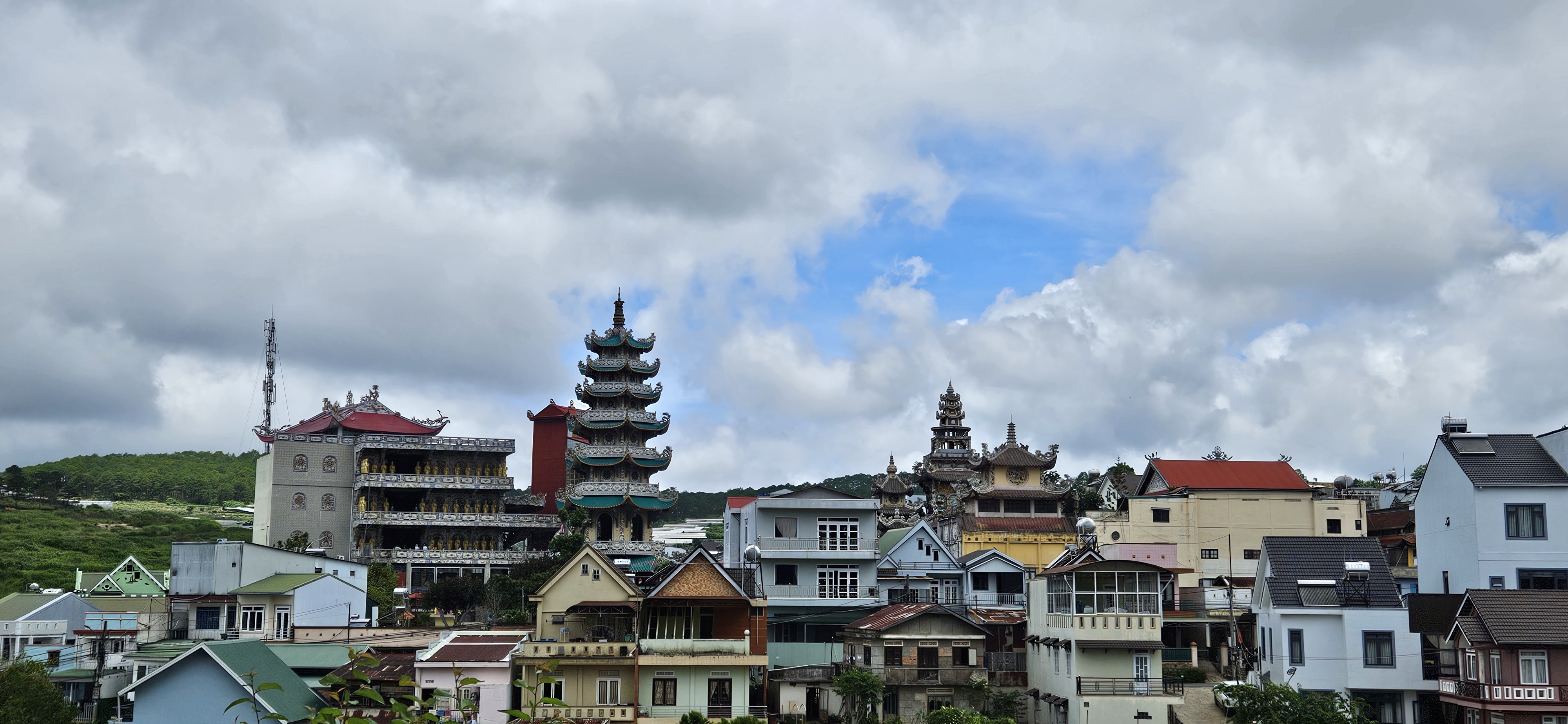
We first saw the Cao Dai Temple of Dalat from afar,
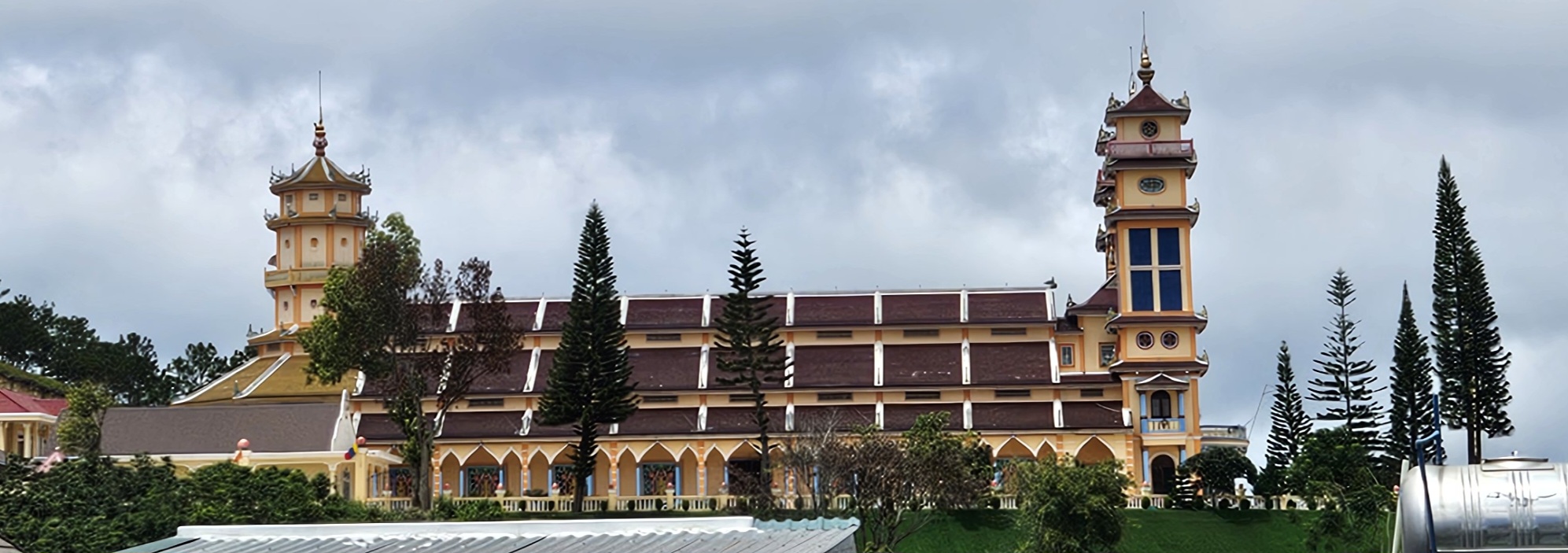
and were treated to a nice town view with the mountains in the background opposite the Temple.
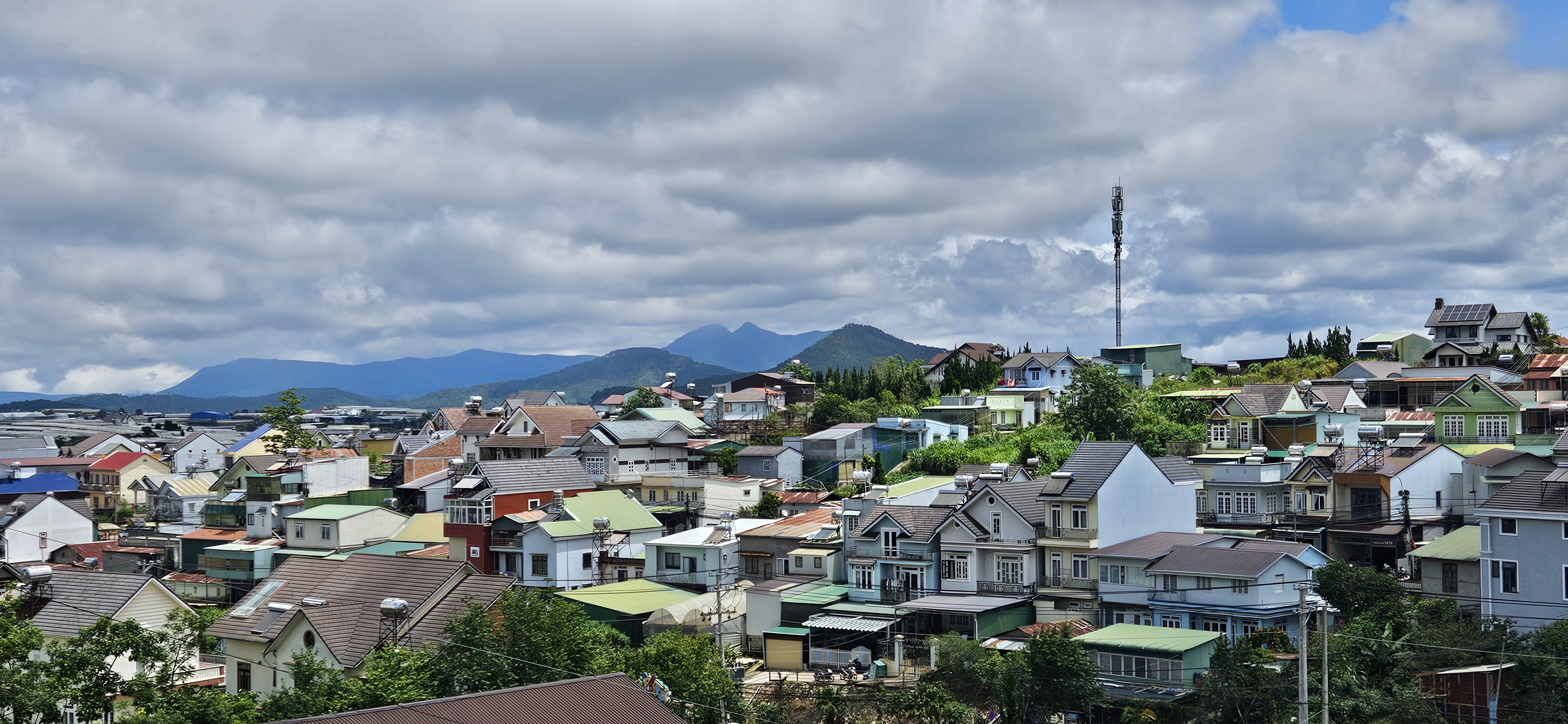
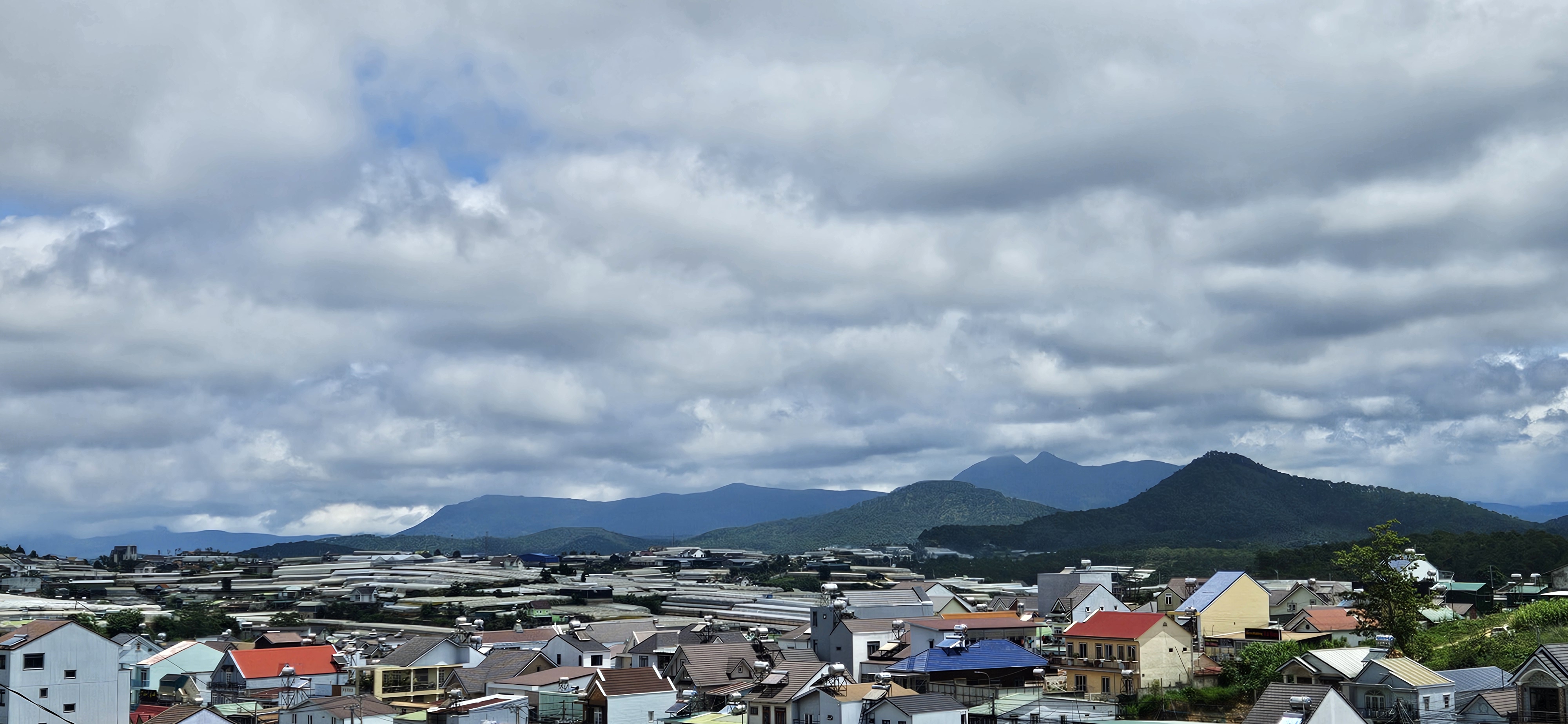
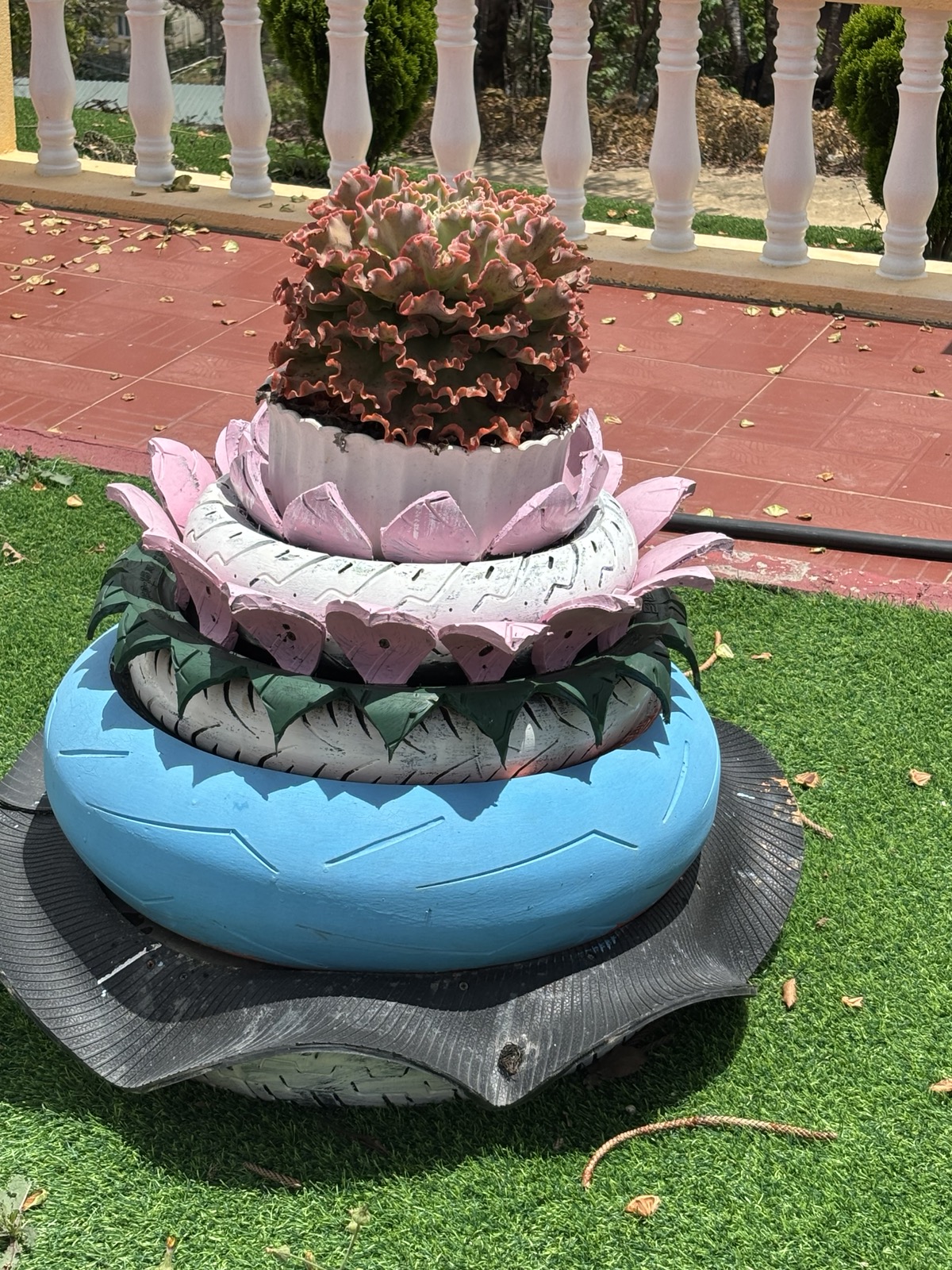
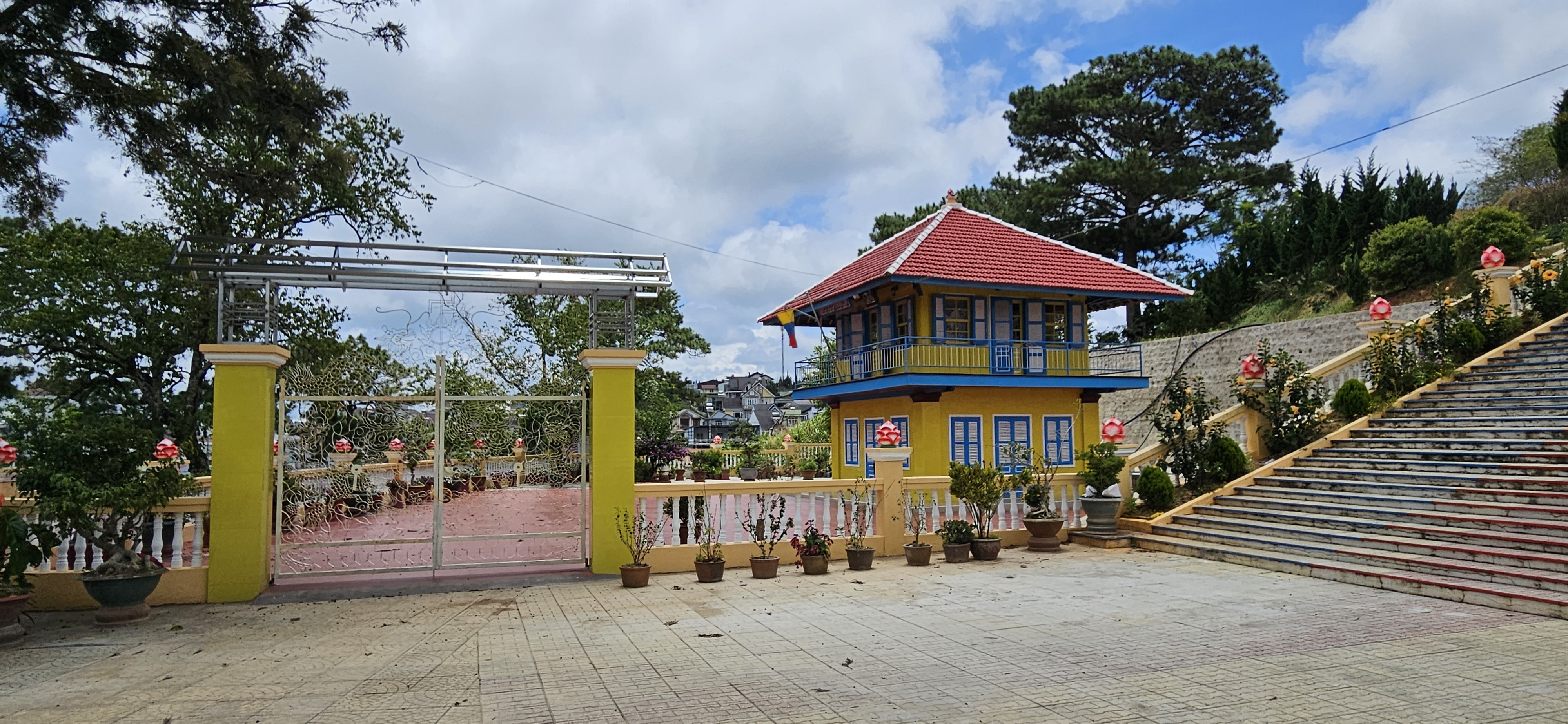
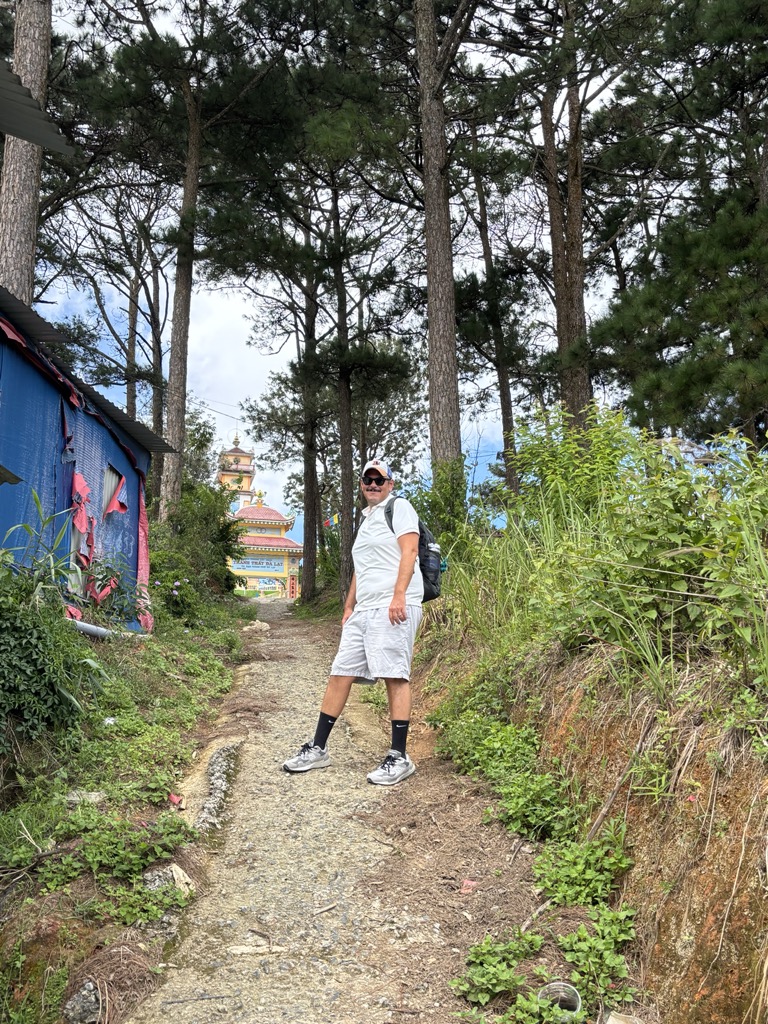
We arrived at the side entry gate, where they had creatively used old tires and painted them to fun effect.
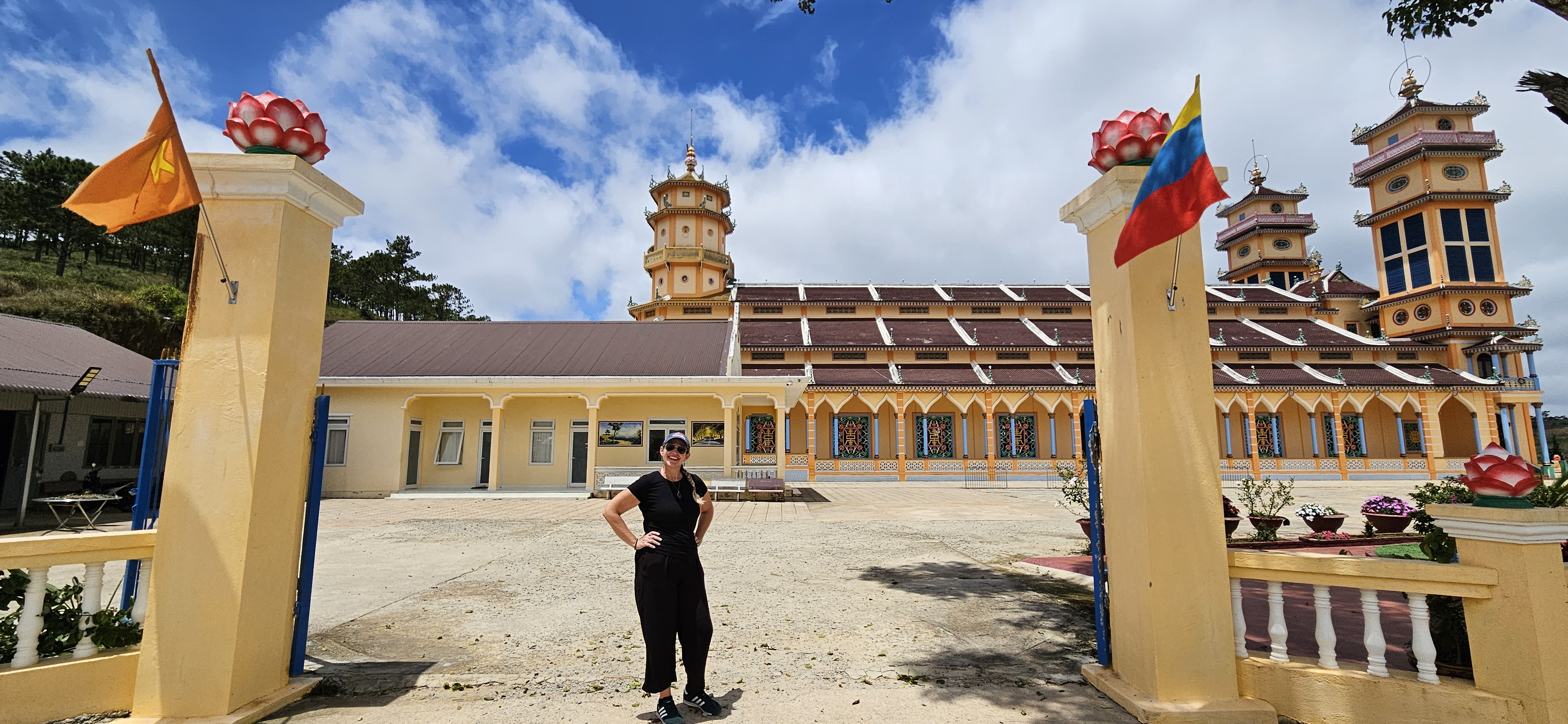
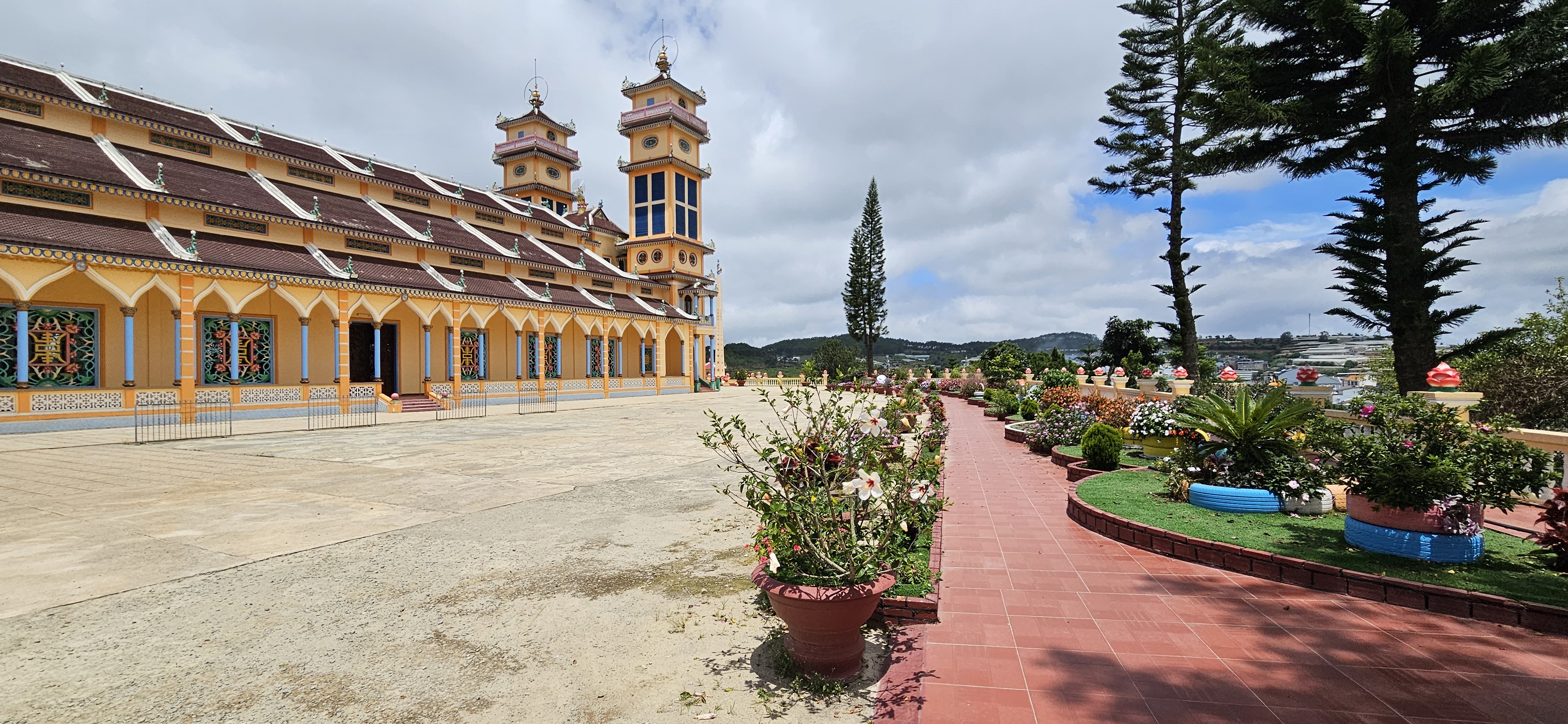
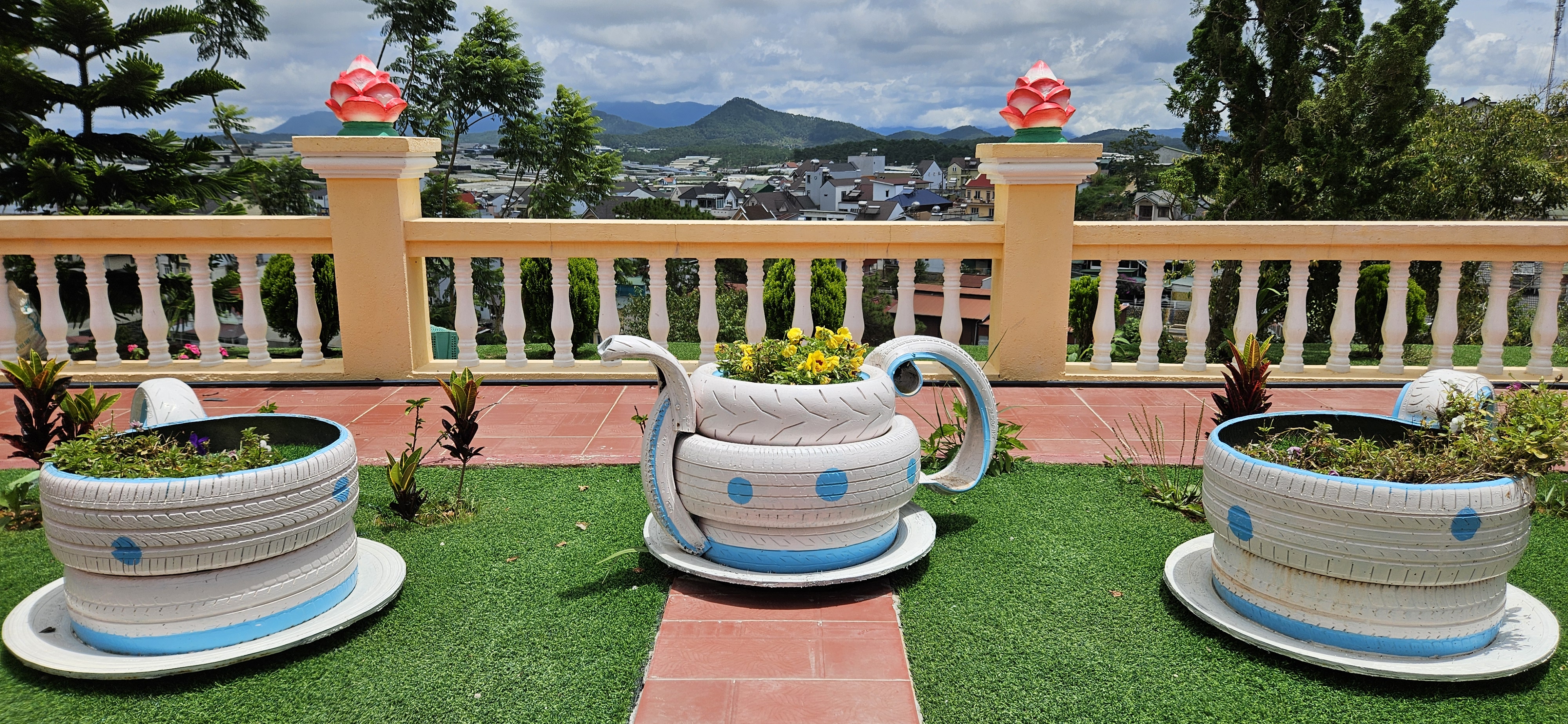
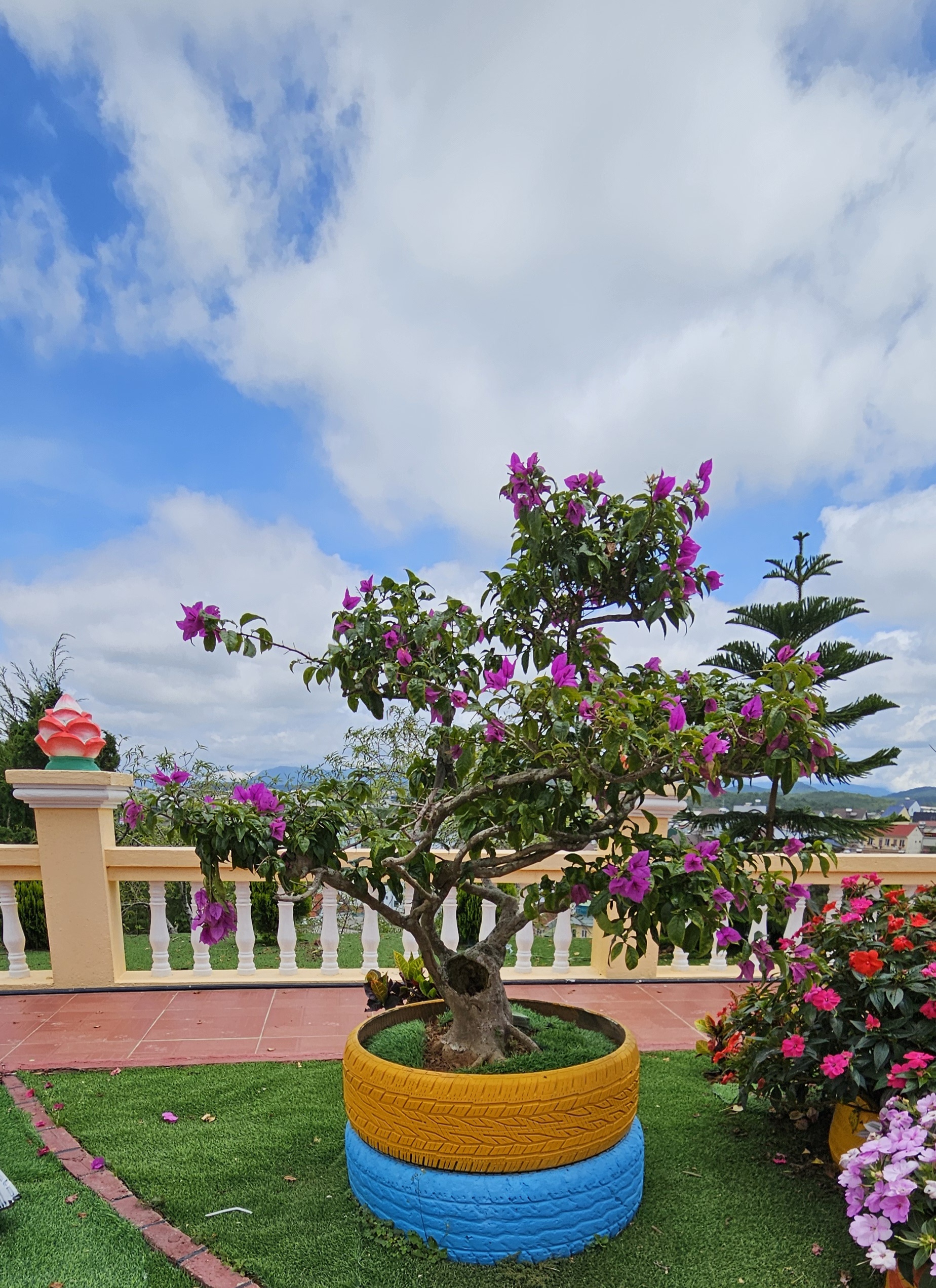
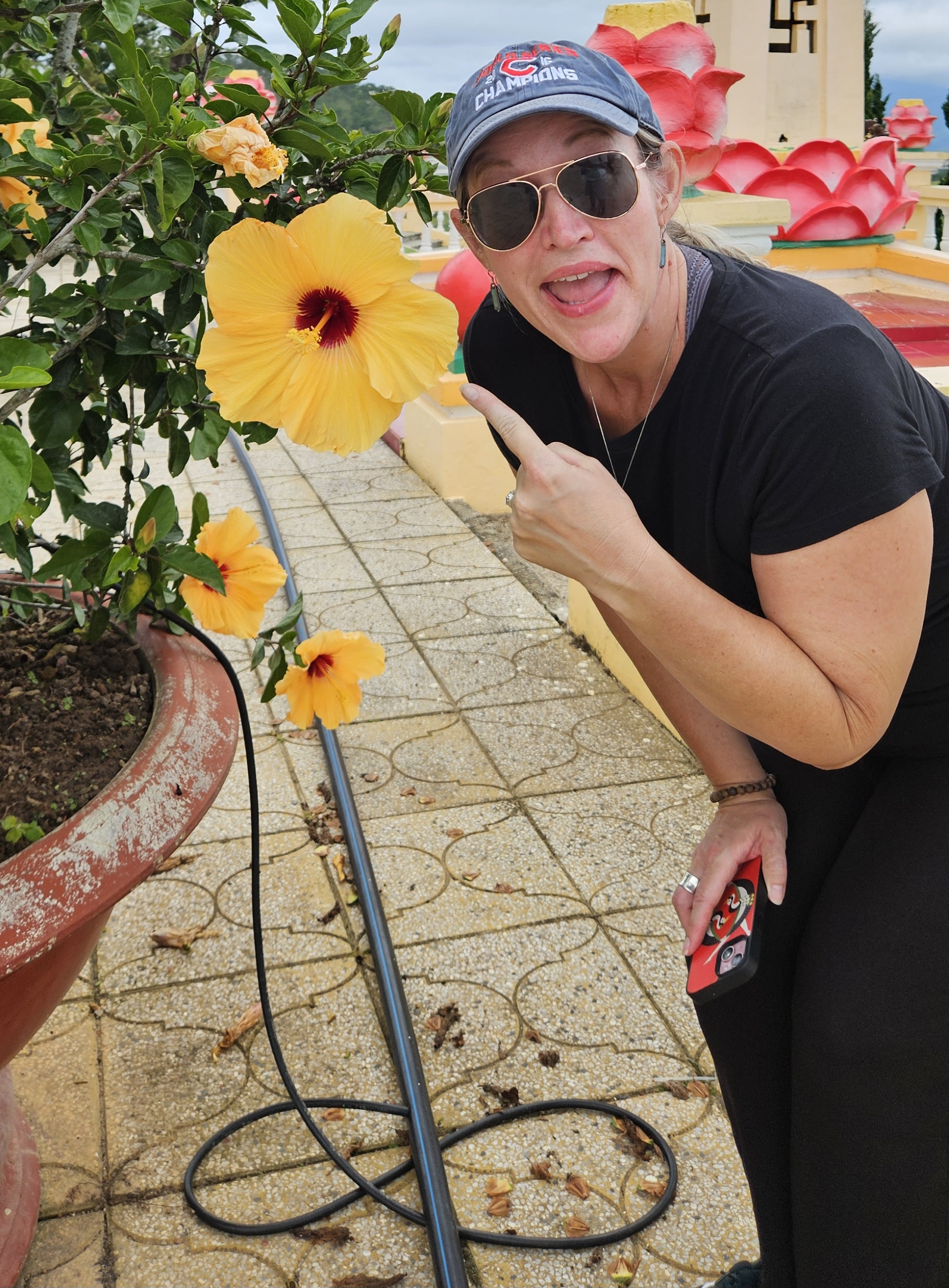
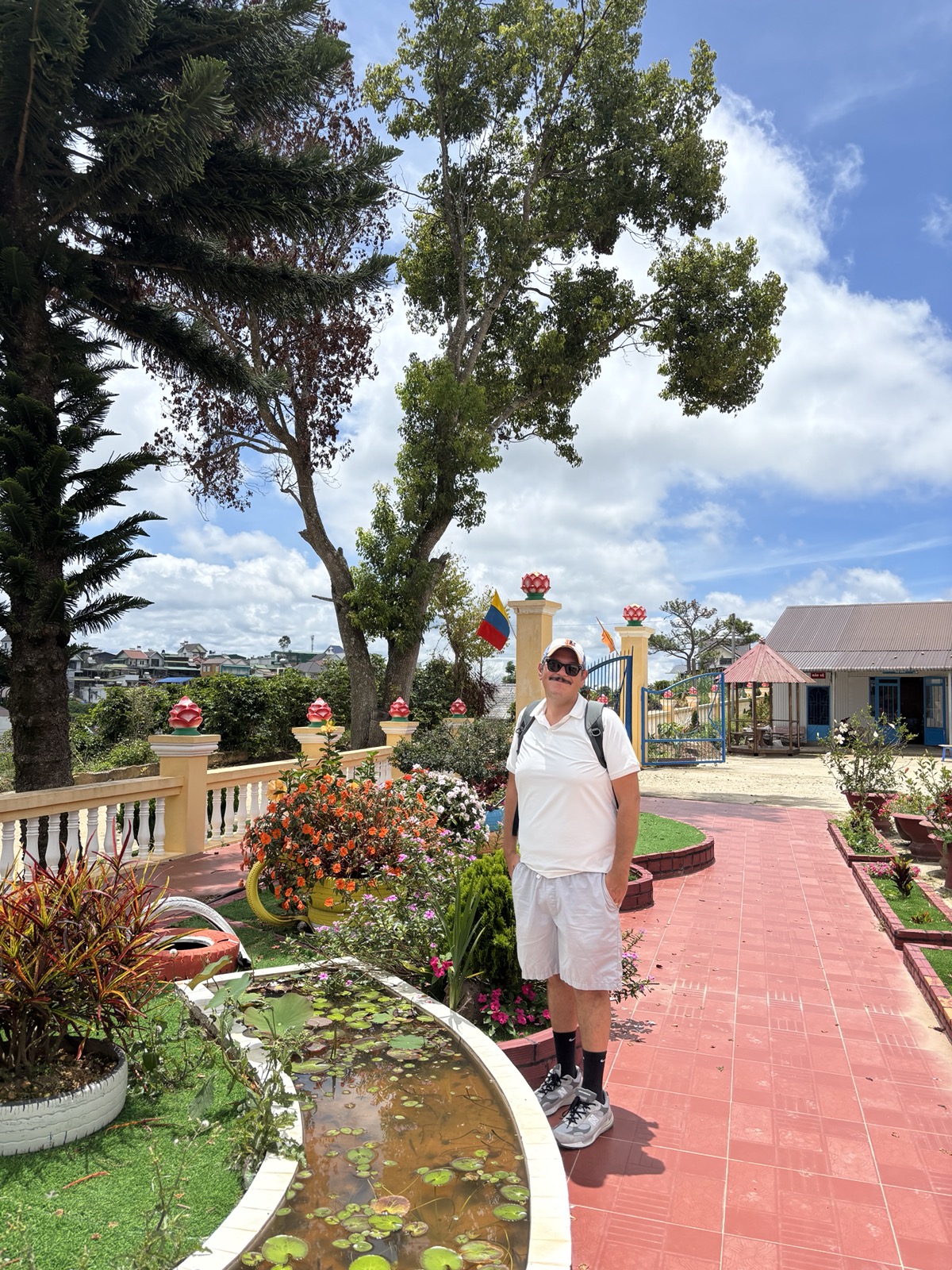
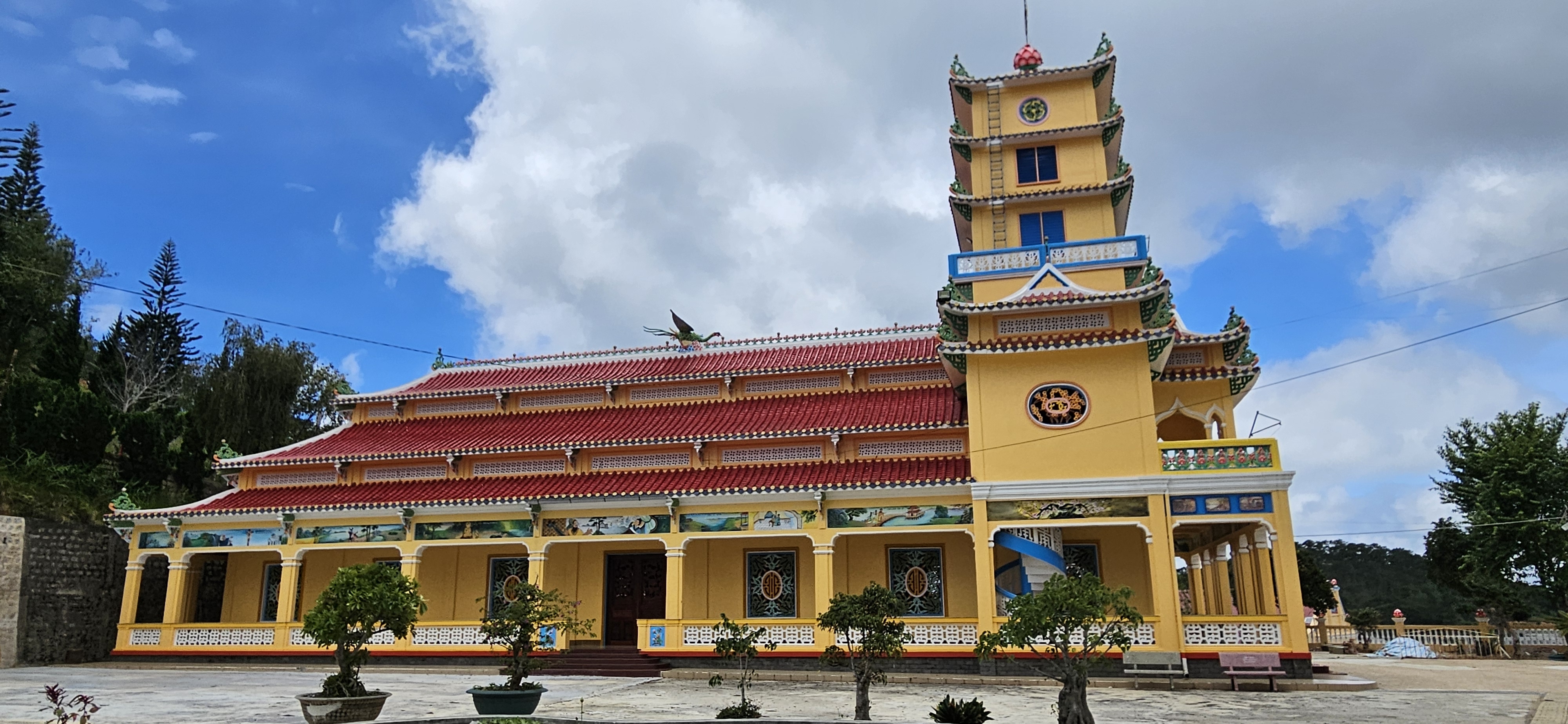
We found ourselves at the front of this humongous temple, which couldn’t even fit fully in our picture.
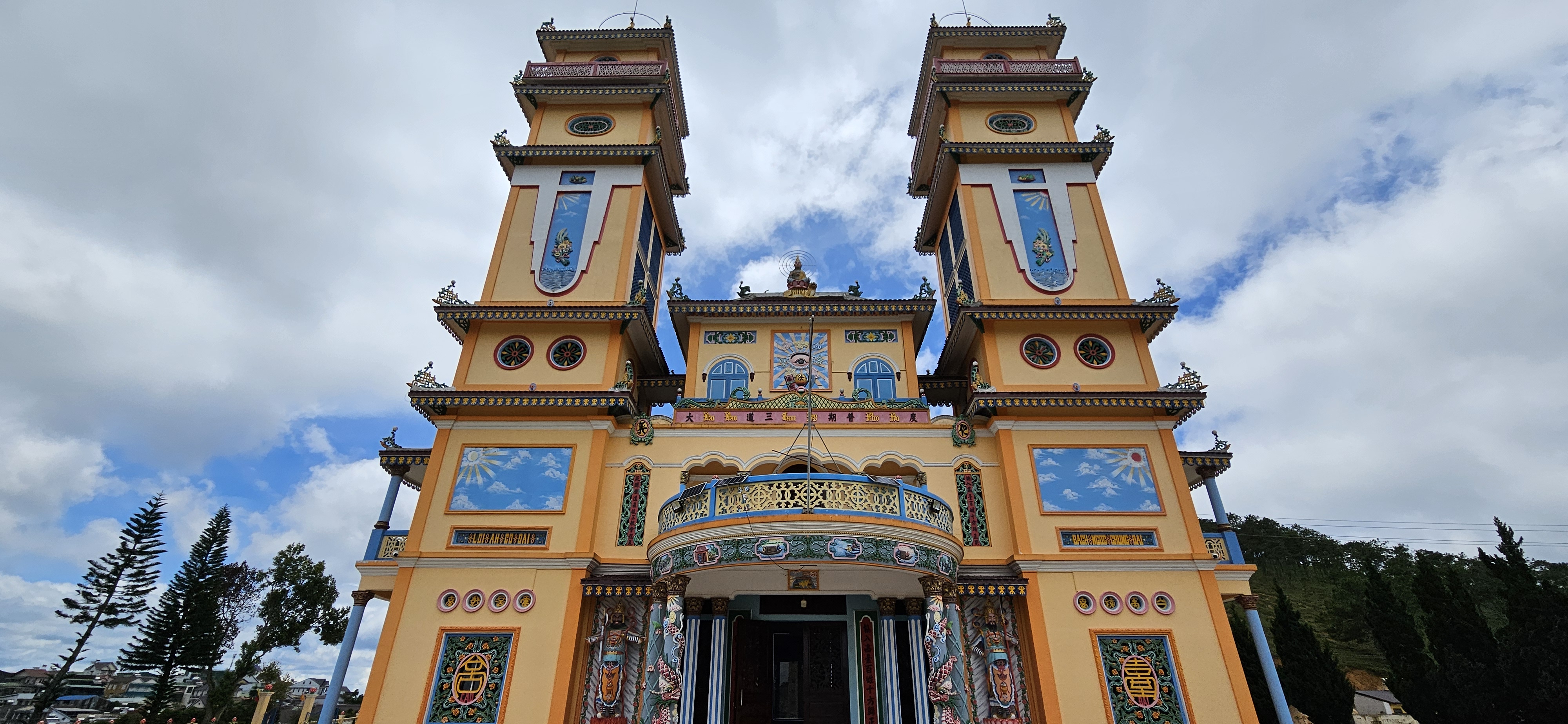
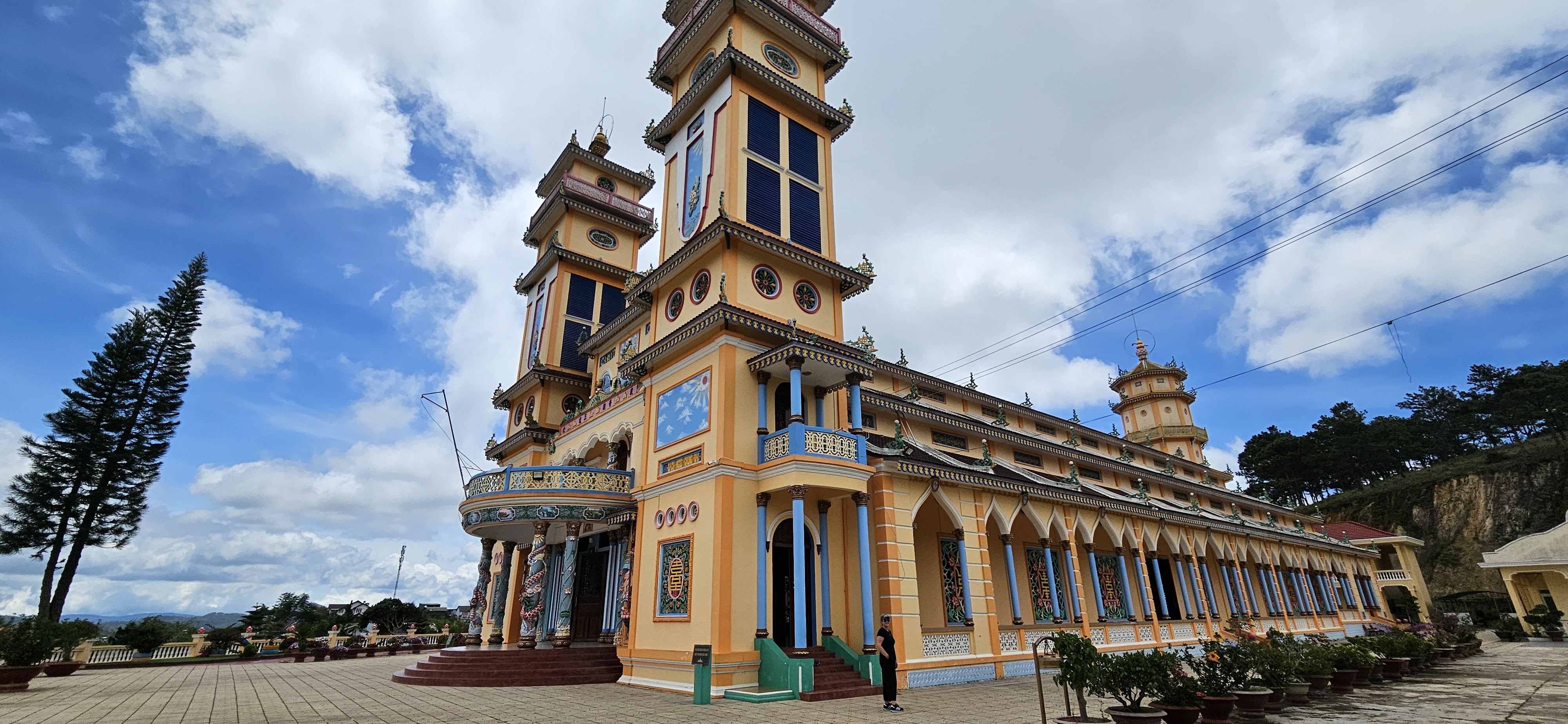
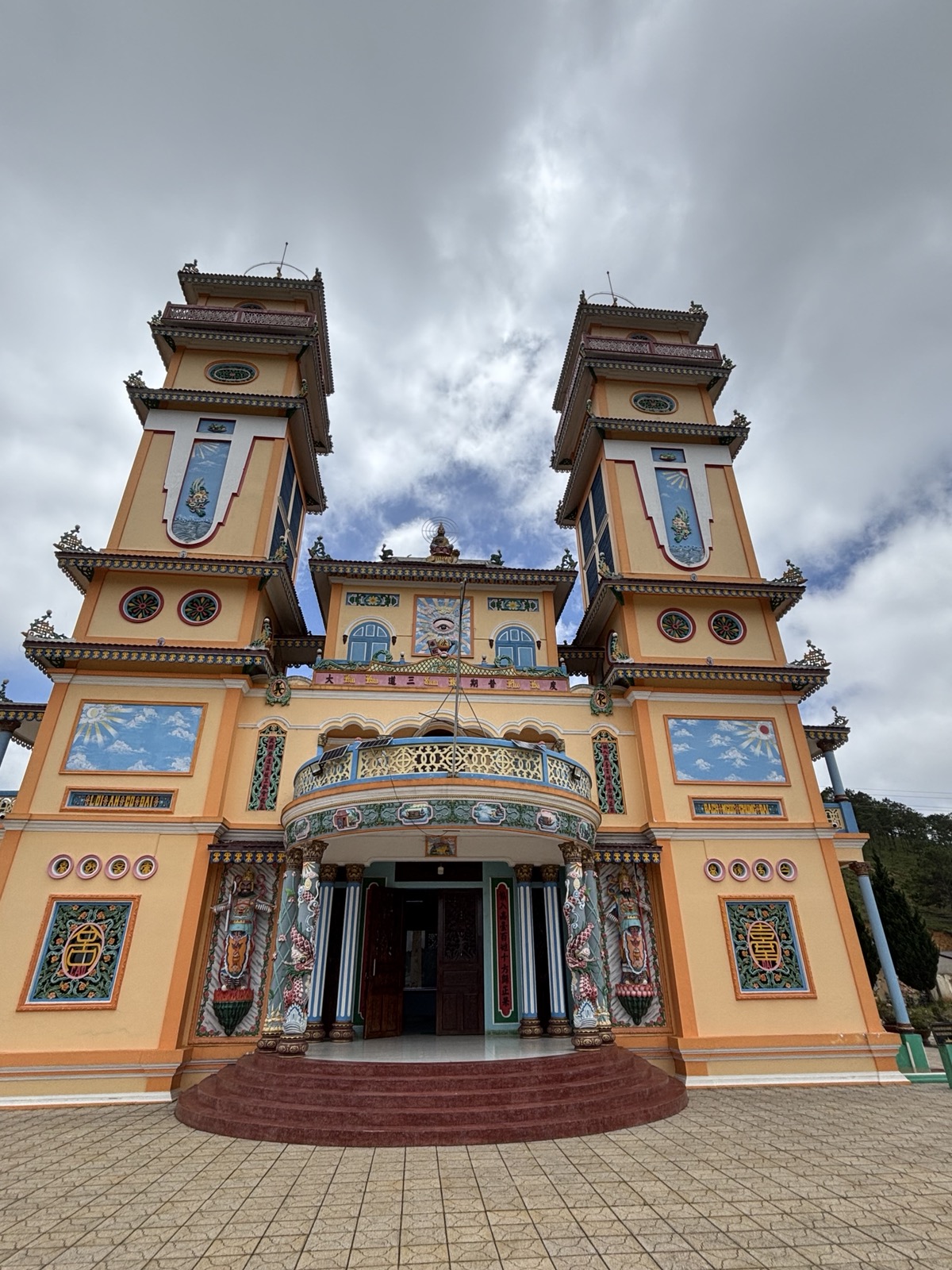
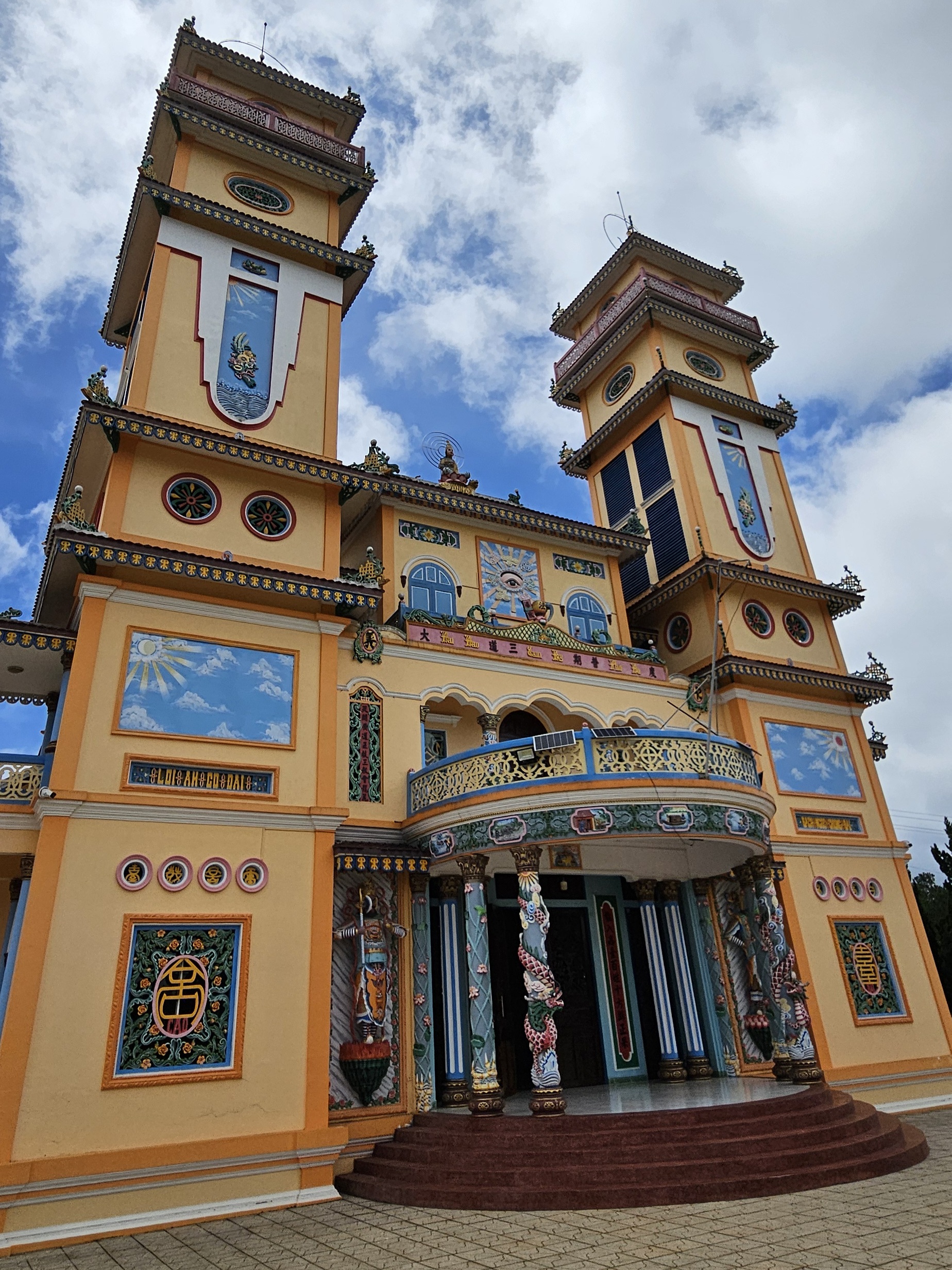
As you can see it does somewhat resemble a Catholic church with Buddhist temple pieces incorporated, and that is at the heart of the Cao Dai religion. Caodaism was started in southern Vietnam in 1926 and takes “ethical precepts from Confucianism, practices from Taoism, theories of karma and rebirth from Buddhism, and a hierarchical organization from Catholicism”. Very basically, it combines all those four religions into one.
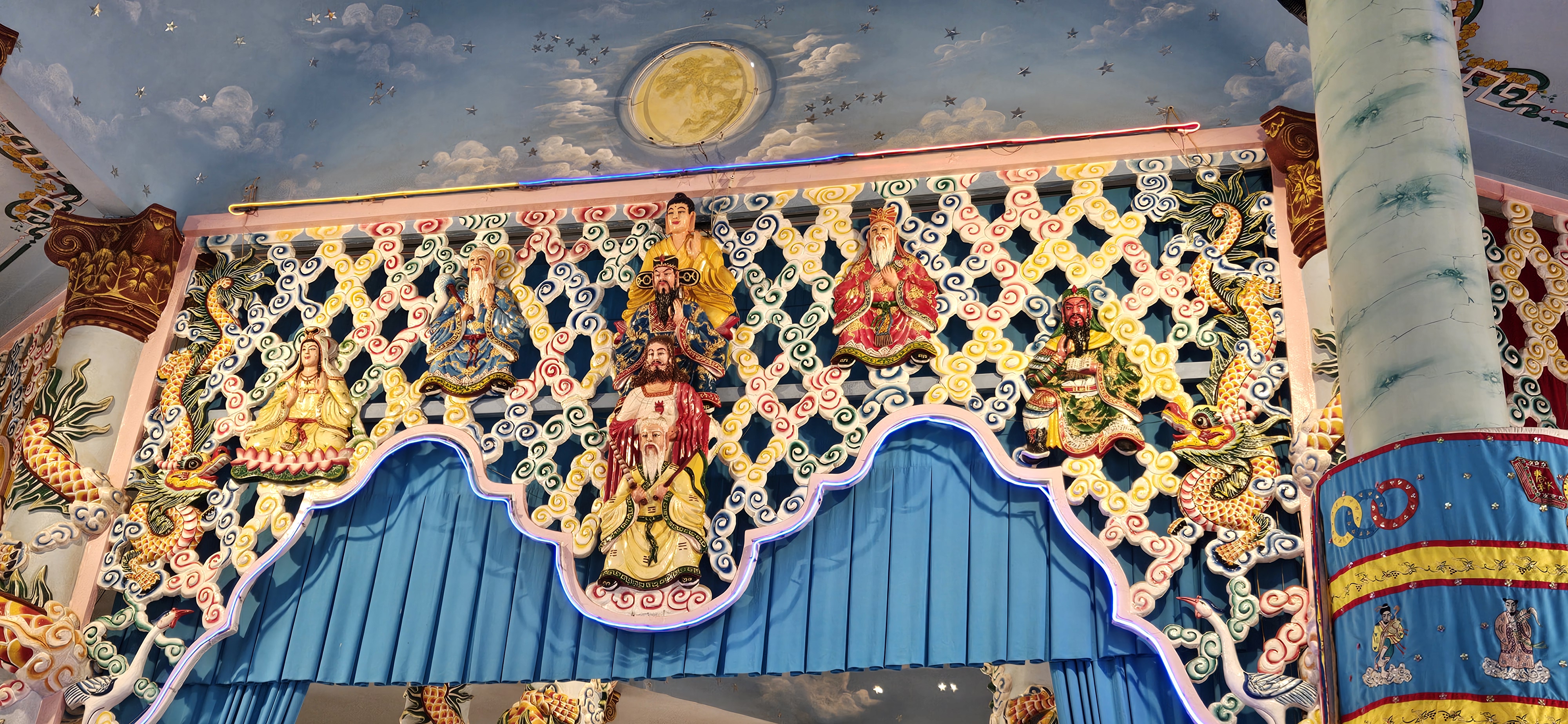
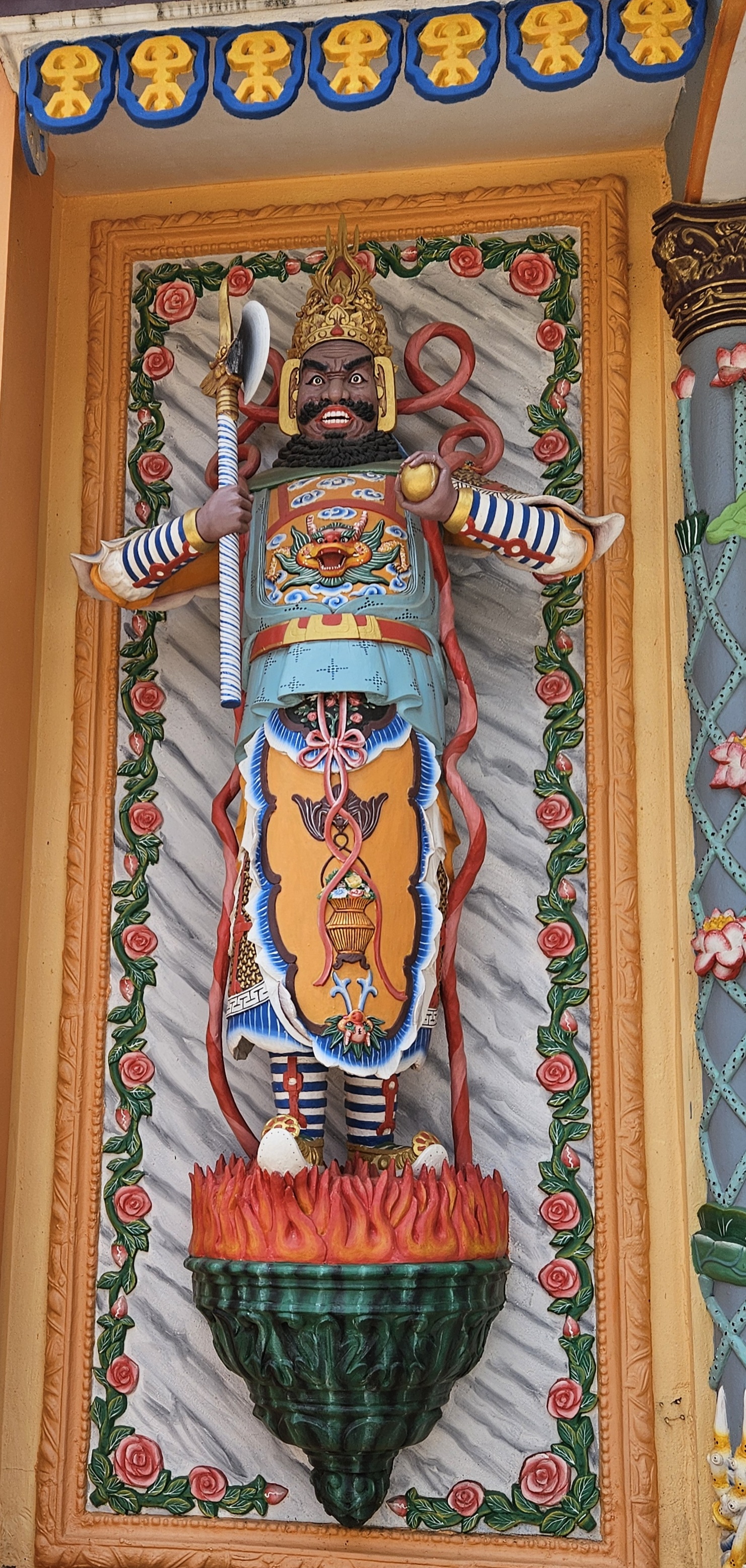
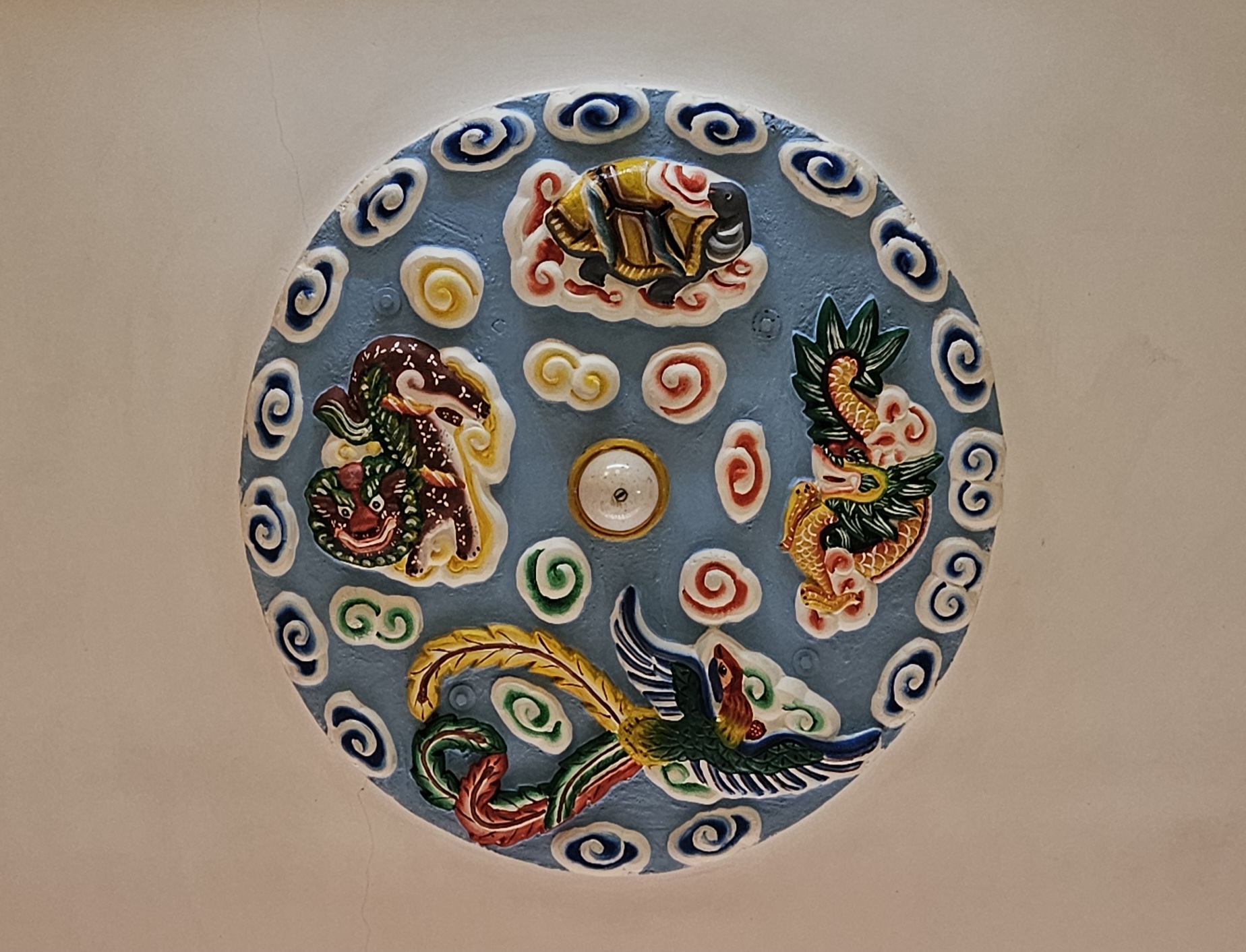
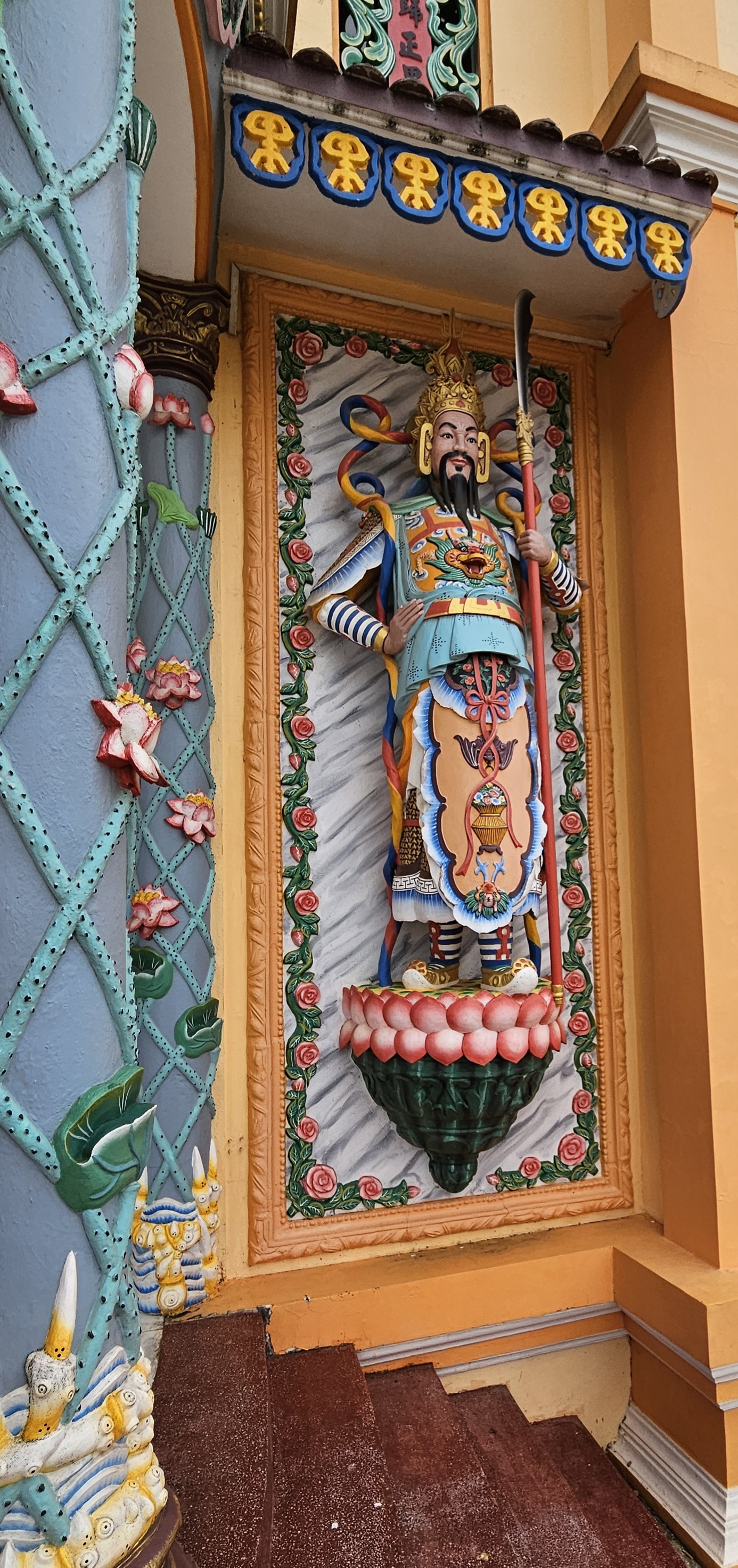
Caodaism gained popularity in Vietnam after founding, and its members fought against the French and Japanese invaders of Vietnam in the 20th century, as well as the Communists. Their members were jailed and the religion was suppressed, and eventually outlawed when the Communists took power of Vietnam in 1975. It returned in the 1990s, and now there are approximately six million followers in Vietnam and worldwide (mainly in Cambodia). There are actually nine Cao Dai churches located in the U.S., all in California (Orange County California has the largest Vietnamese population in the world, outside of Vietnam).
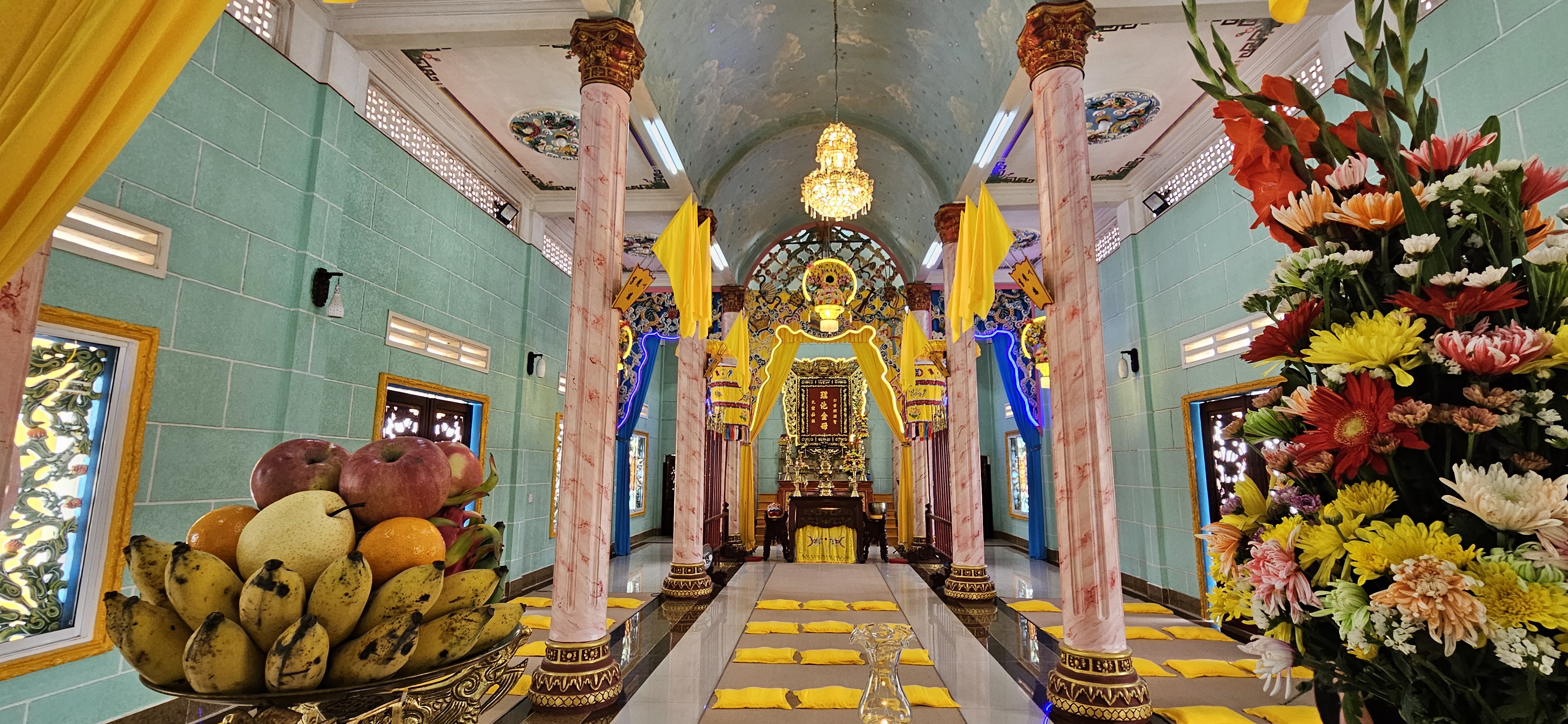
The inside of the temple was peaceful, beautiful and serene.
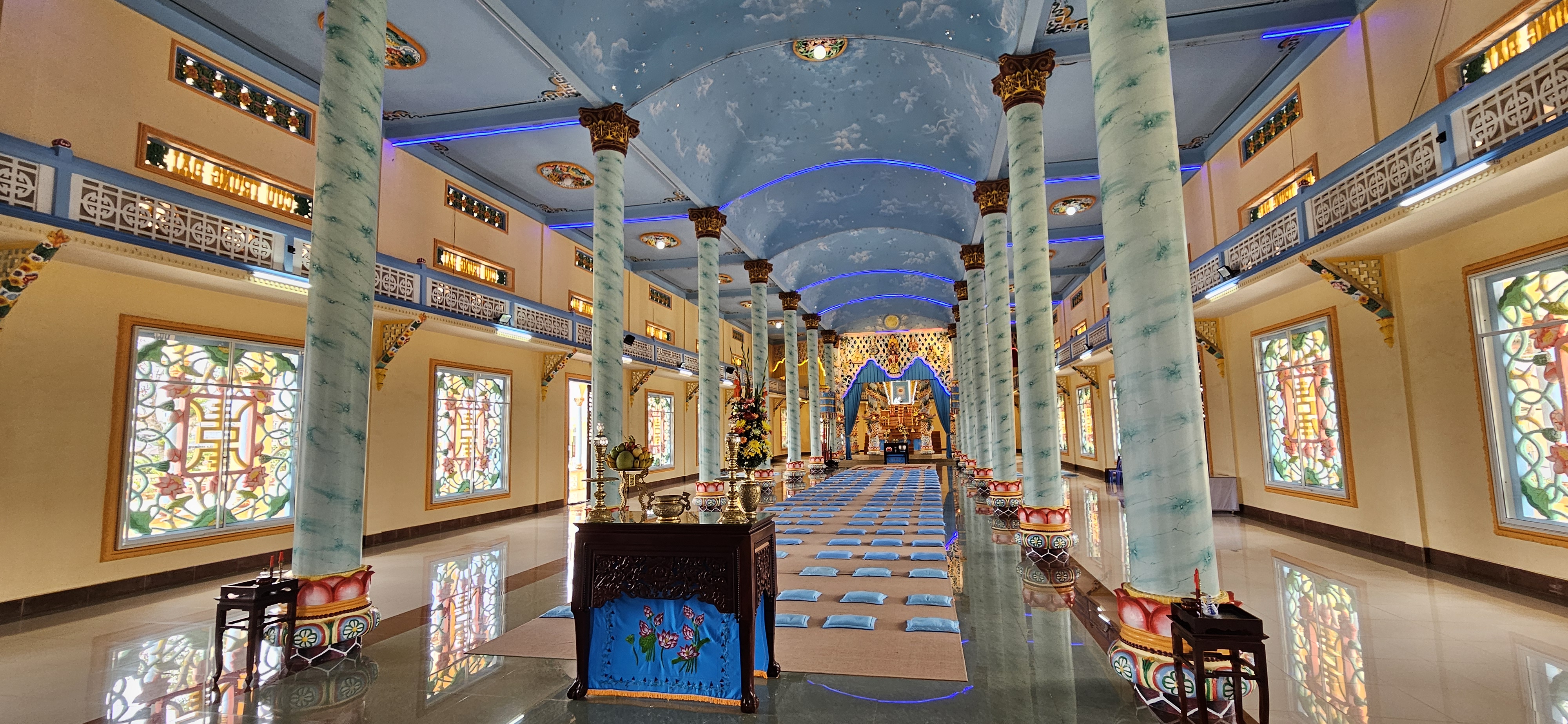
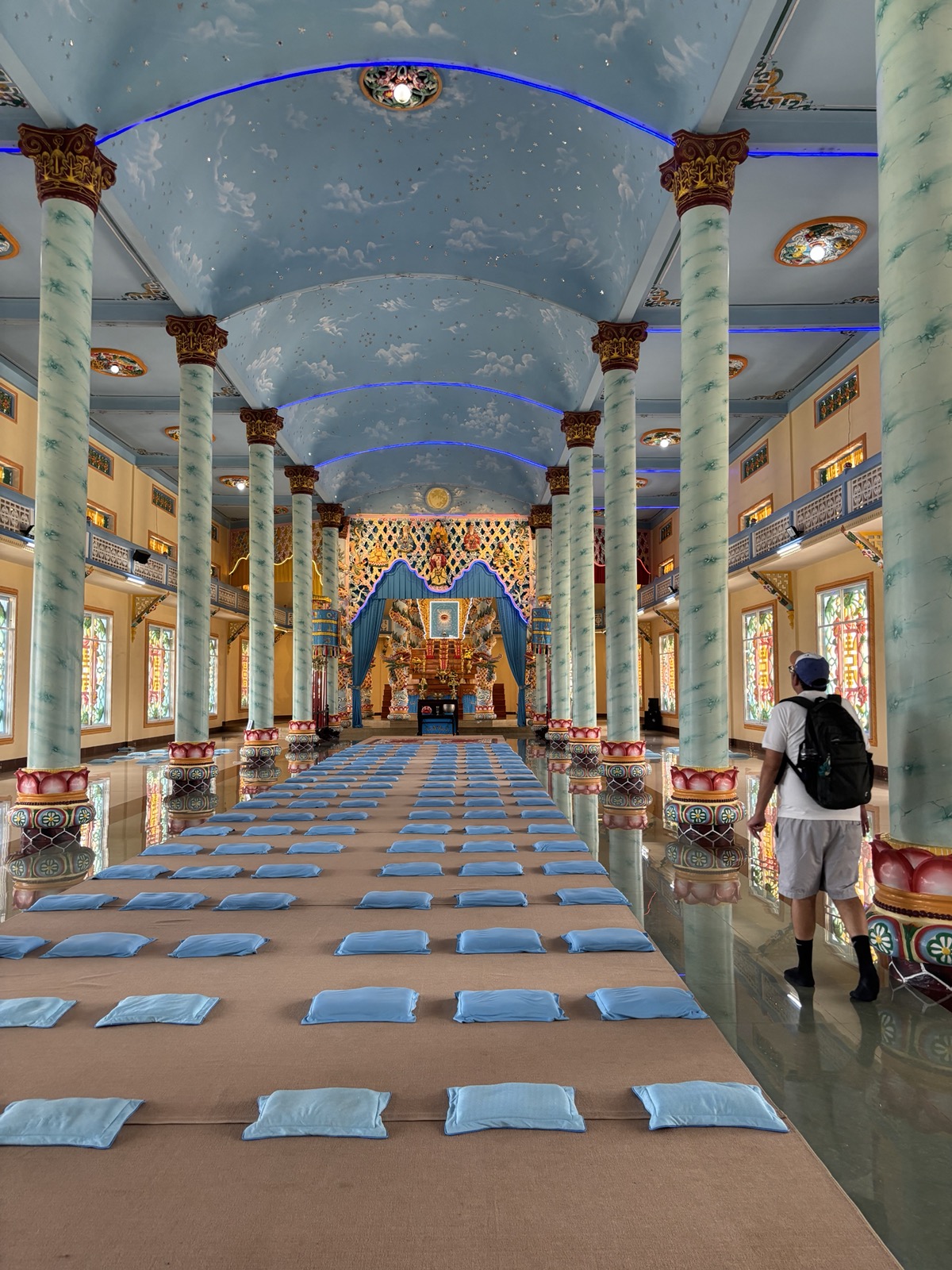
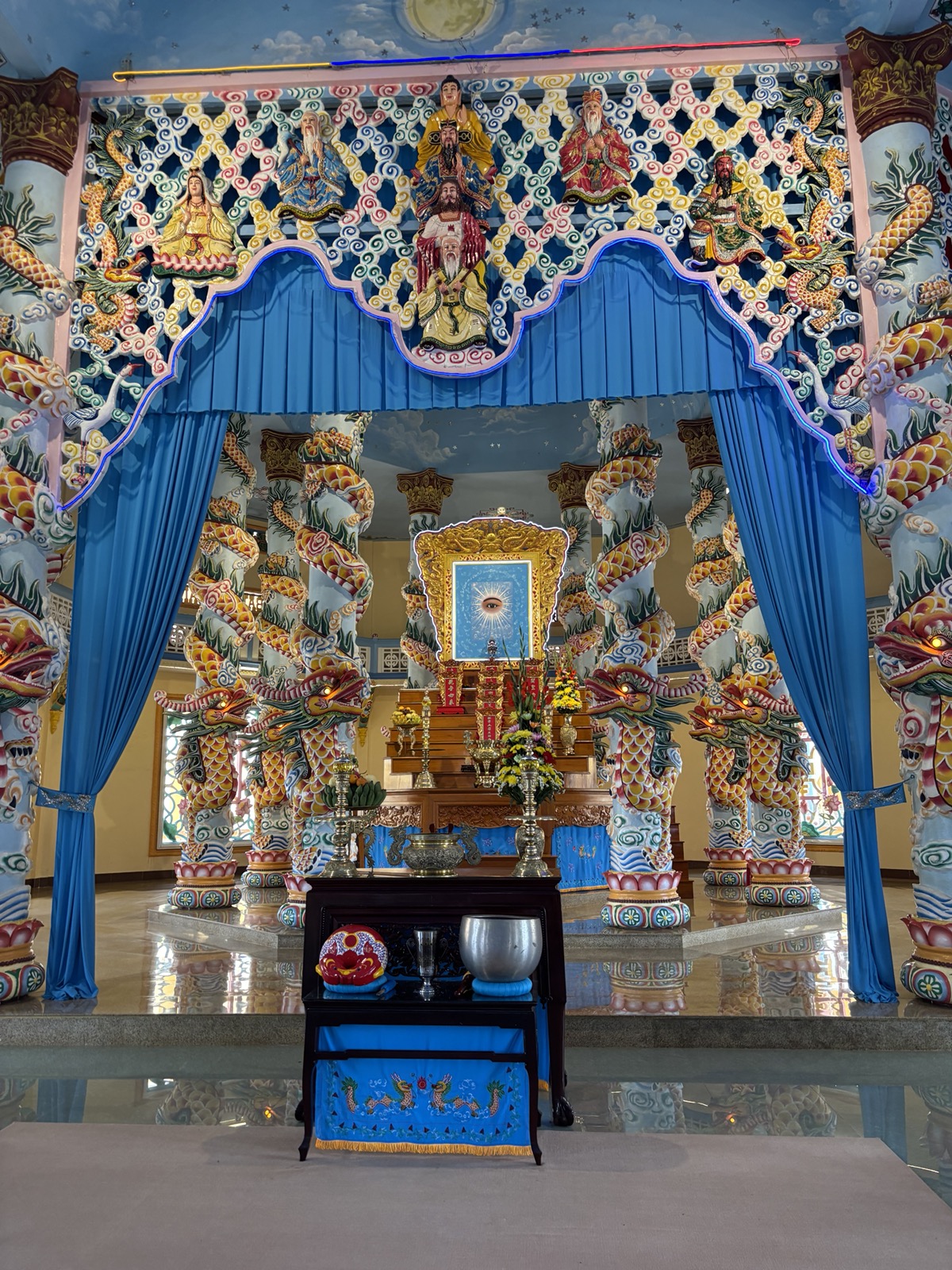
The temple complex grounds are huge and on two levels; we walked down the many steps to the second, smaller temple, to check it out, first looking back up at the main temple.
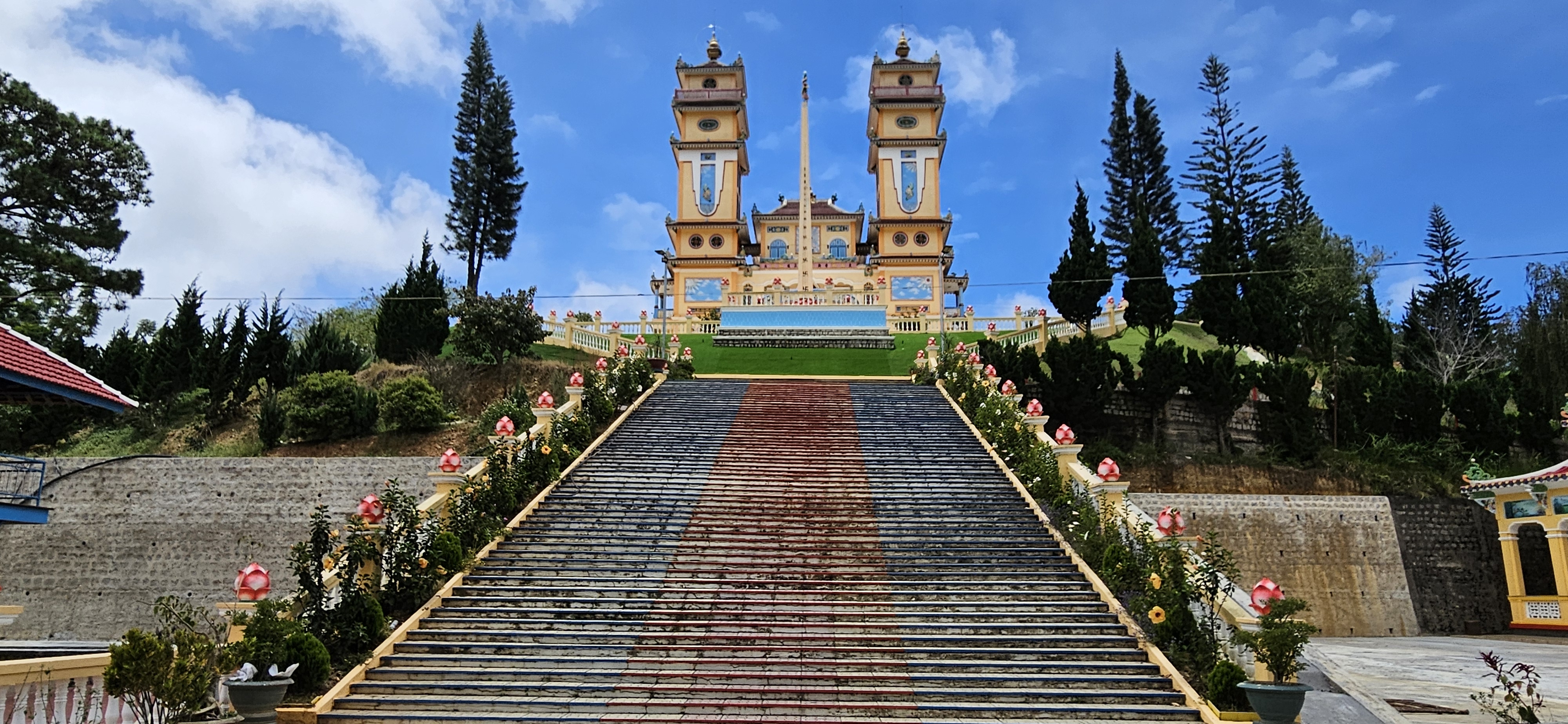
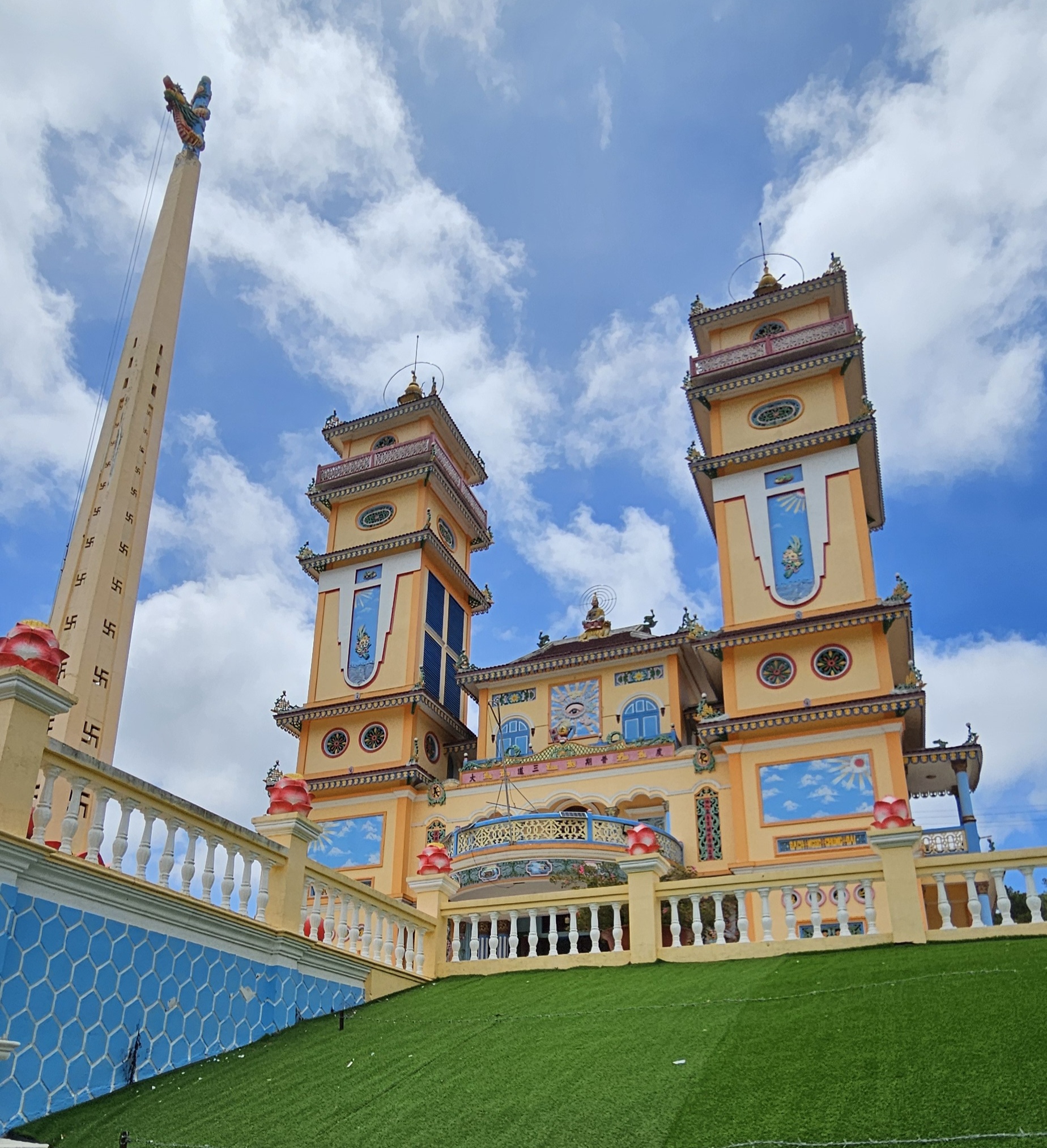
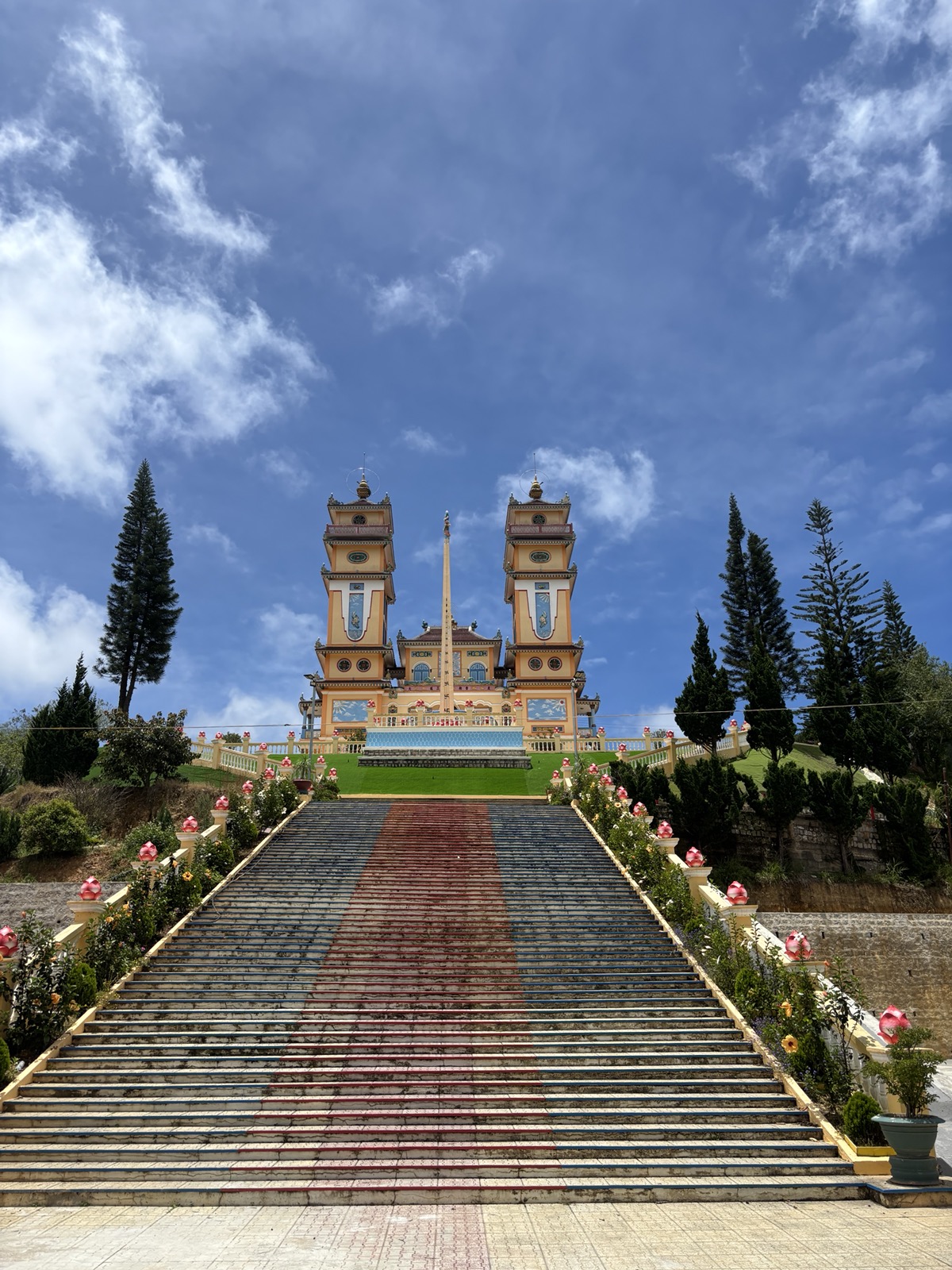
Then reaching the “smaller” one.
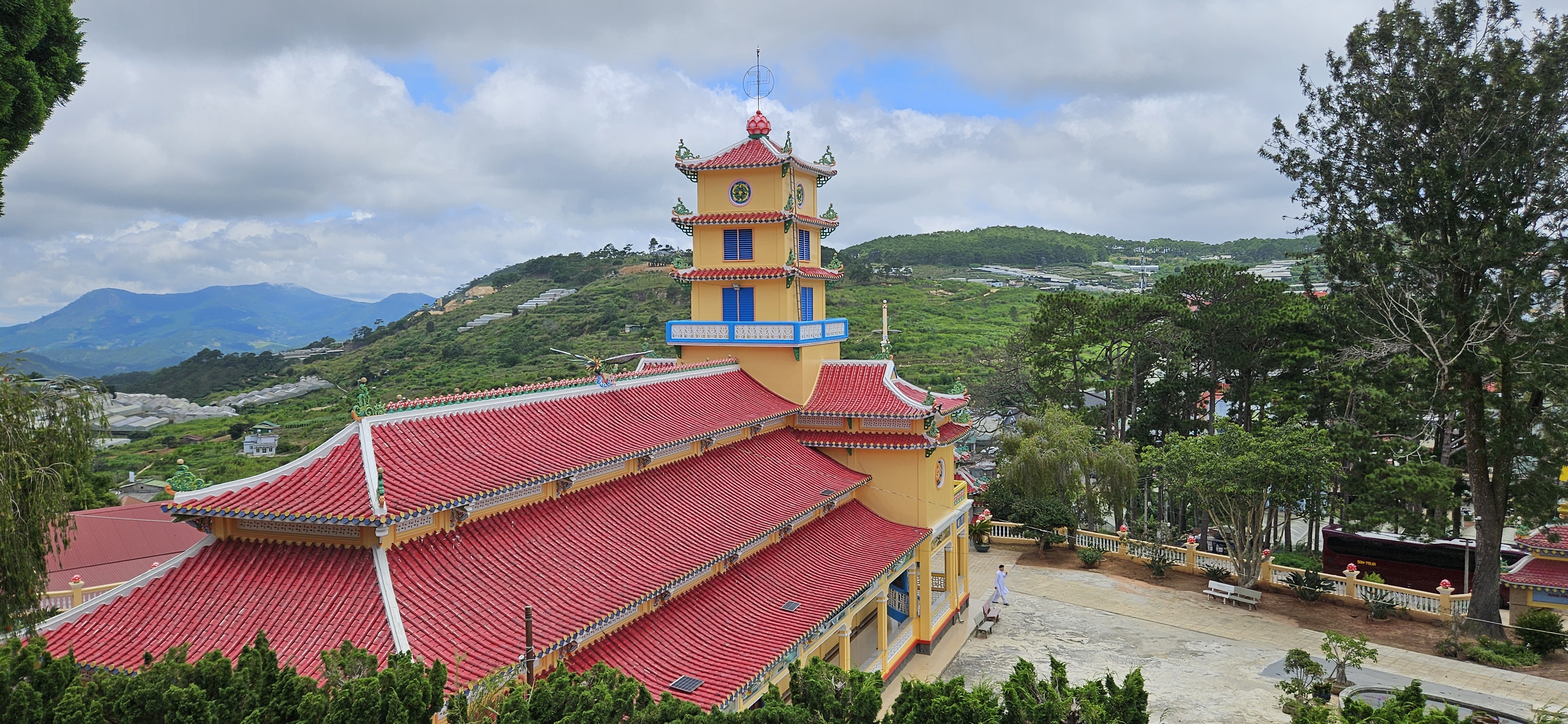
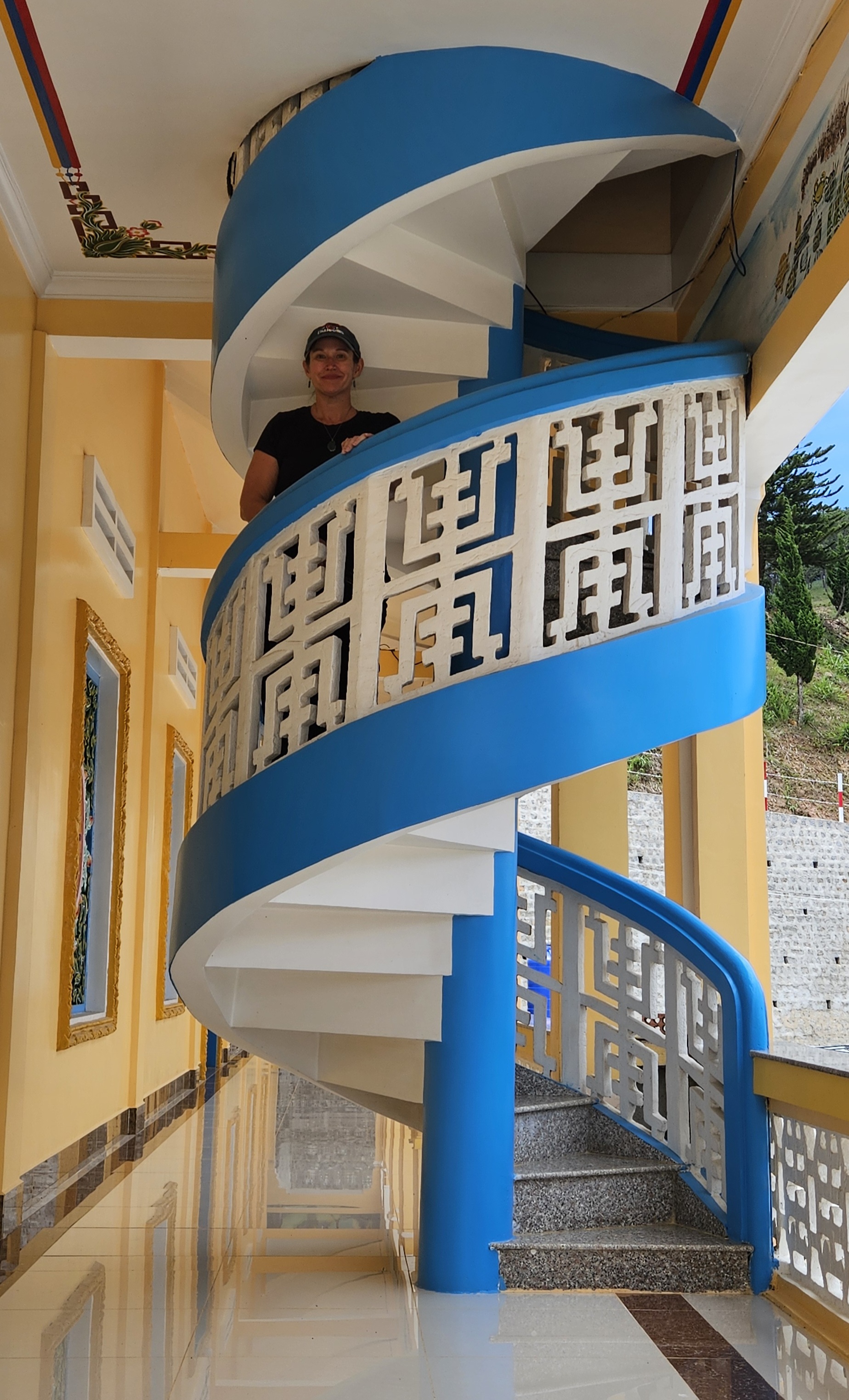
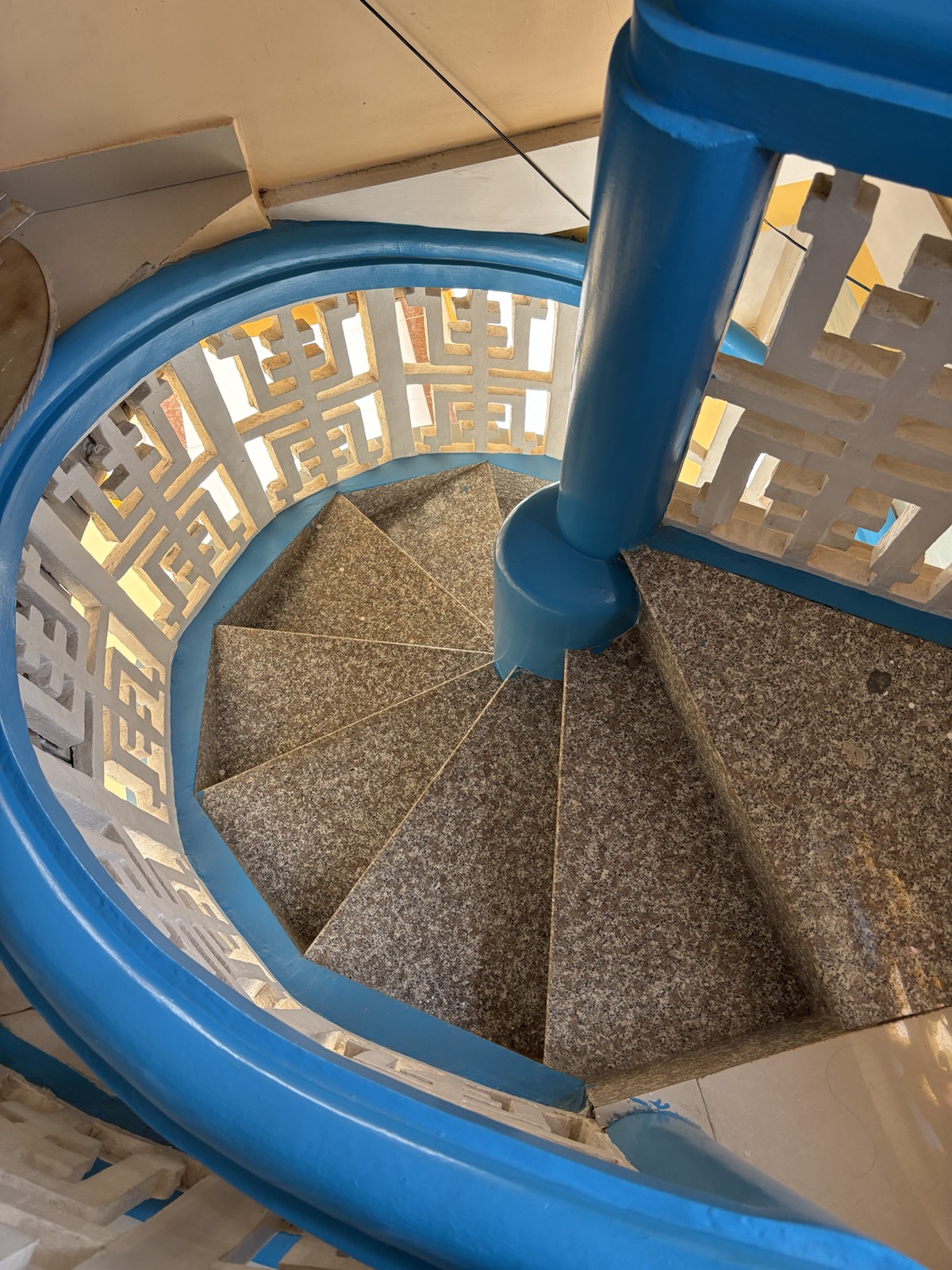
The second temple had a spiral staircase, and Jessica followed it up to get the second floor view of the chapel.
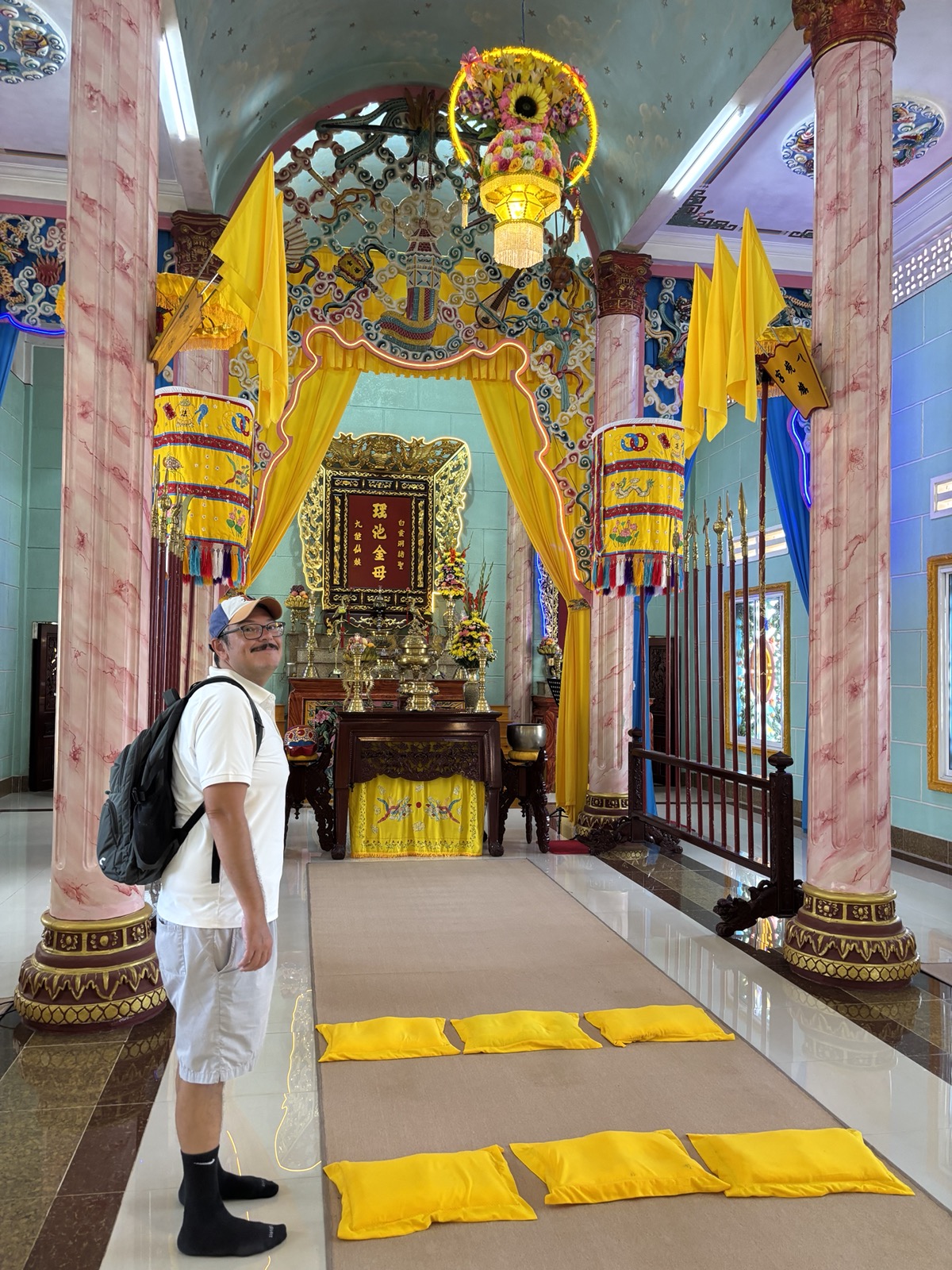
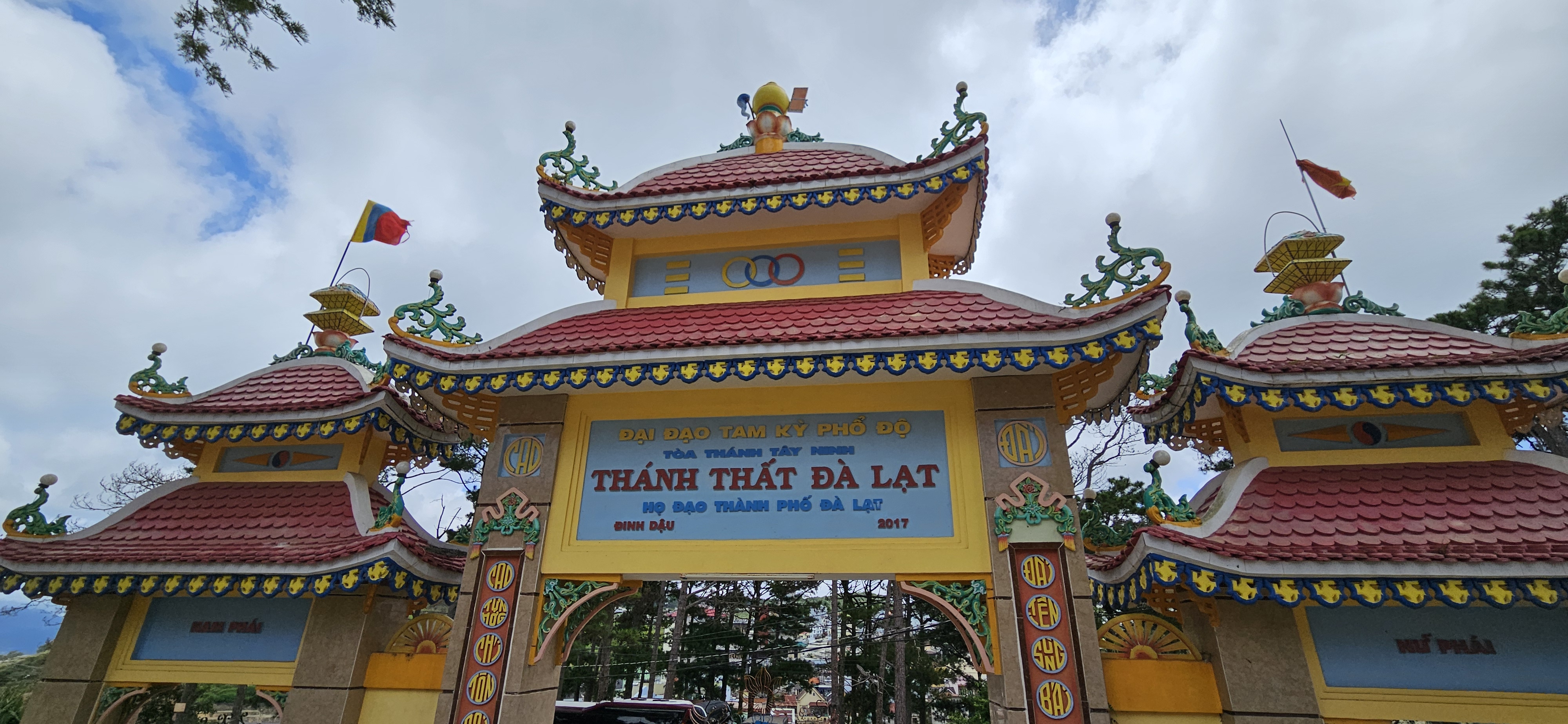
We left through the main entrance to the Cao Dai Temple.
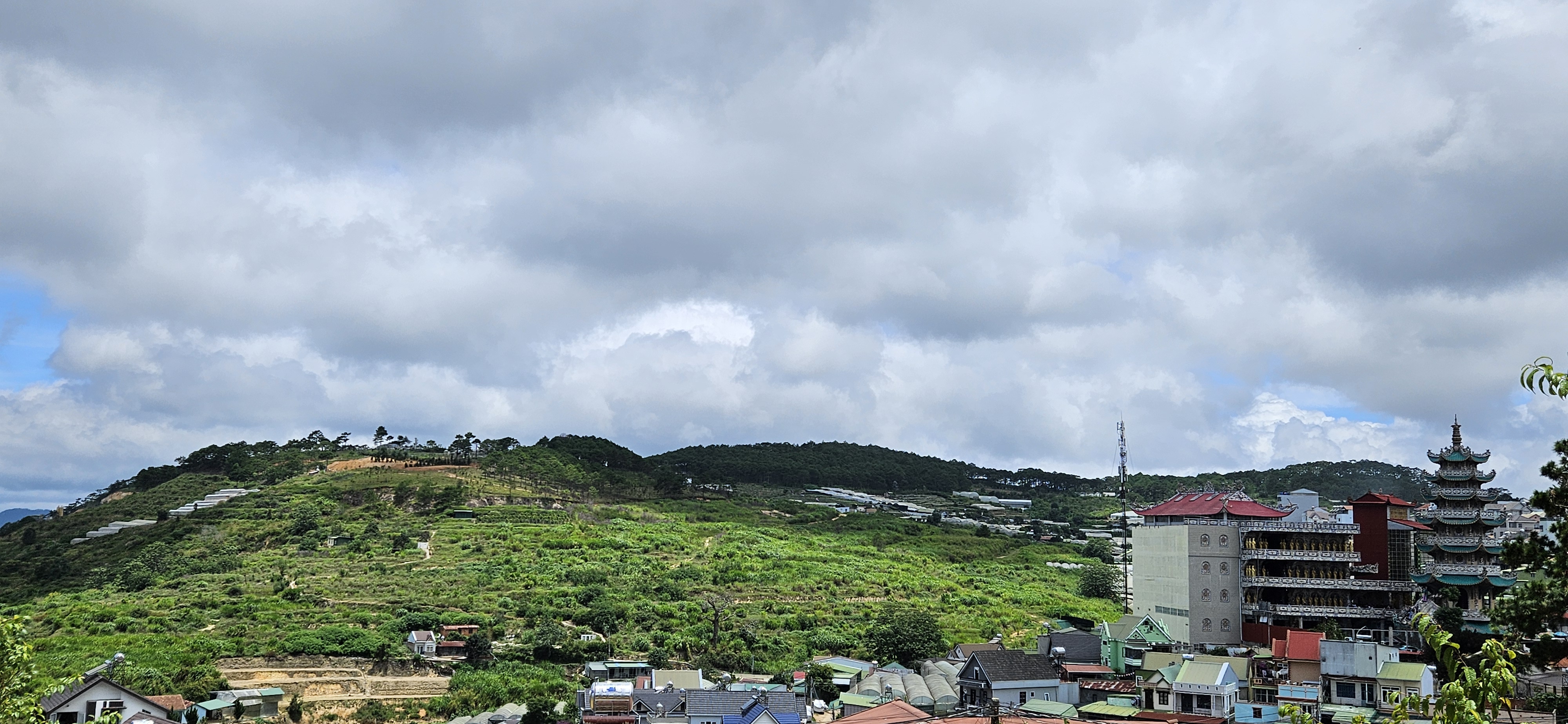
The Cao Dai temple is not a popular tourist spot on most tours of Dalat, especially those from Vietnam and other Asian countries, as the only tour group we saw there was a group from Russia. The Linh Phuoc Buddhist Temple nearby, however, is very much so popular amongst all tour groups. We could see it from the Cao Dai Temple and it was a short walk down a dirt path to reach it.
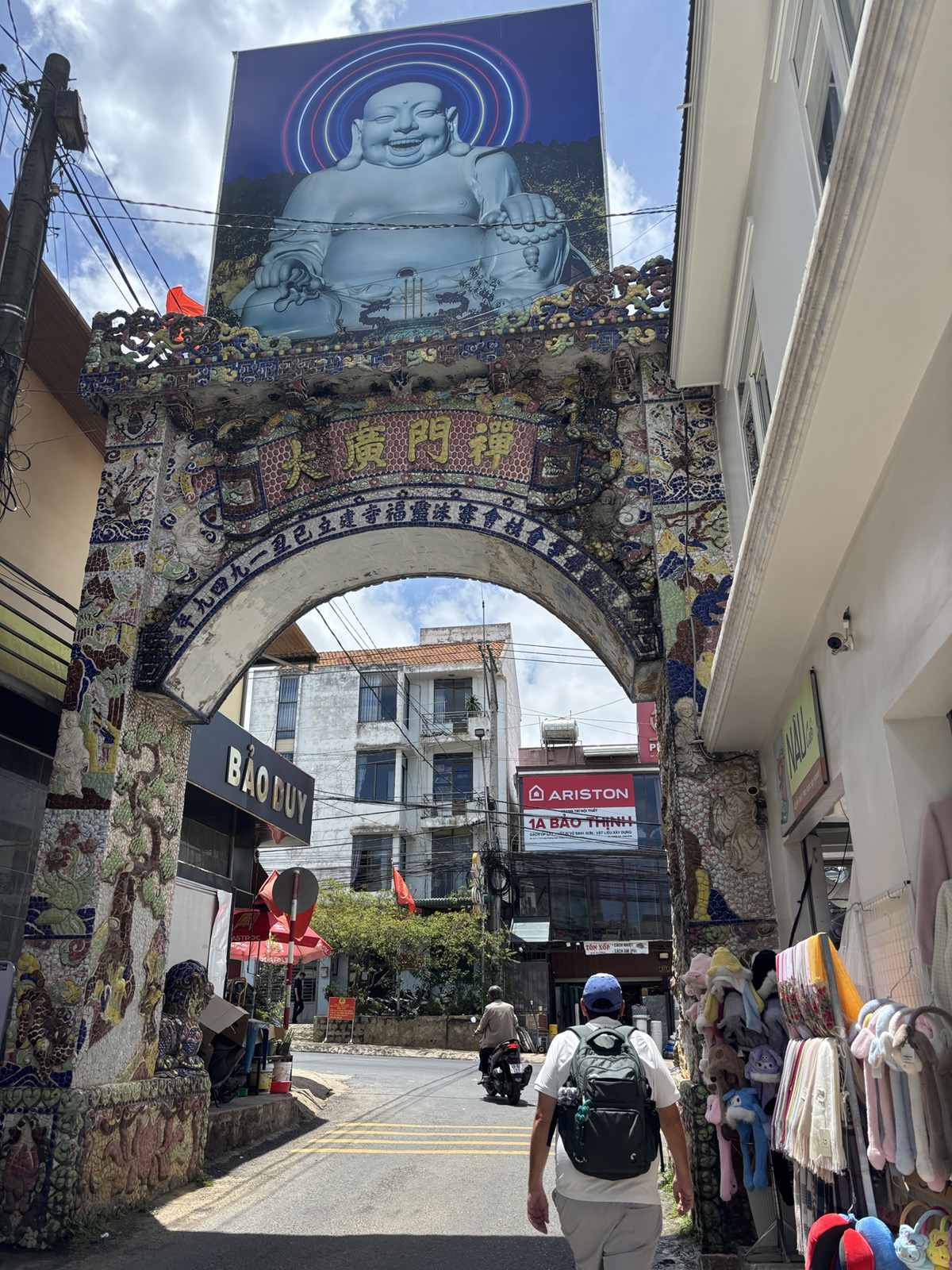
The Linh Phuoc Buddhist Temple has a lot to see on the temple grounds; there are multiple pagodas, temples and Buddhas, and a whole lot of tourists, tour buses, and food/souvenir stands. Most of the temples are mosaic, and they are really impressive, along with the quite large Buddha statues.
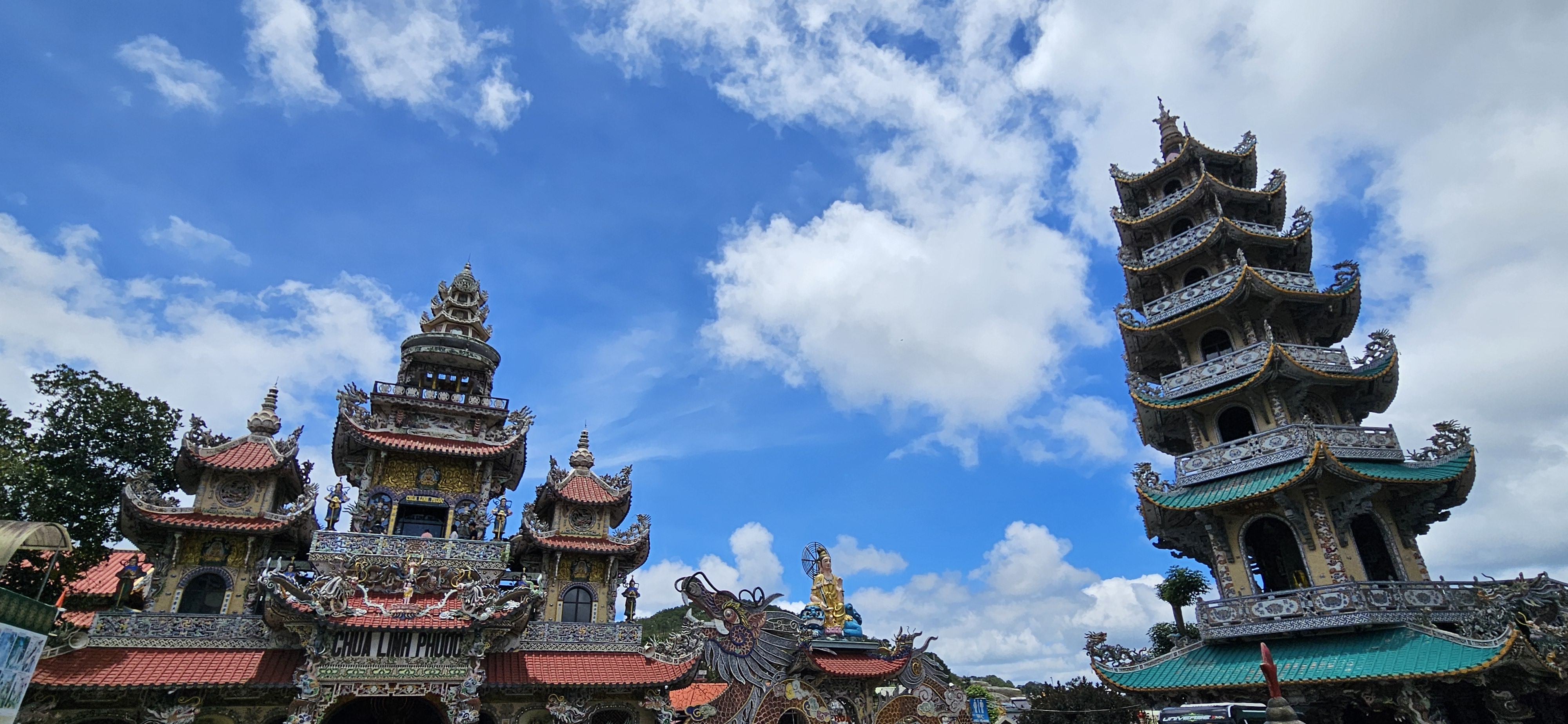
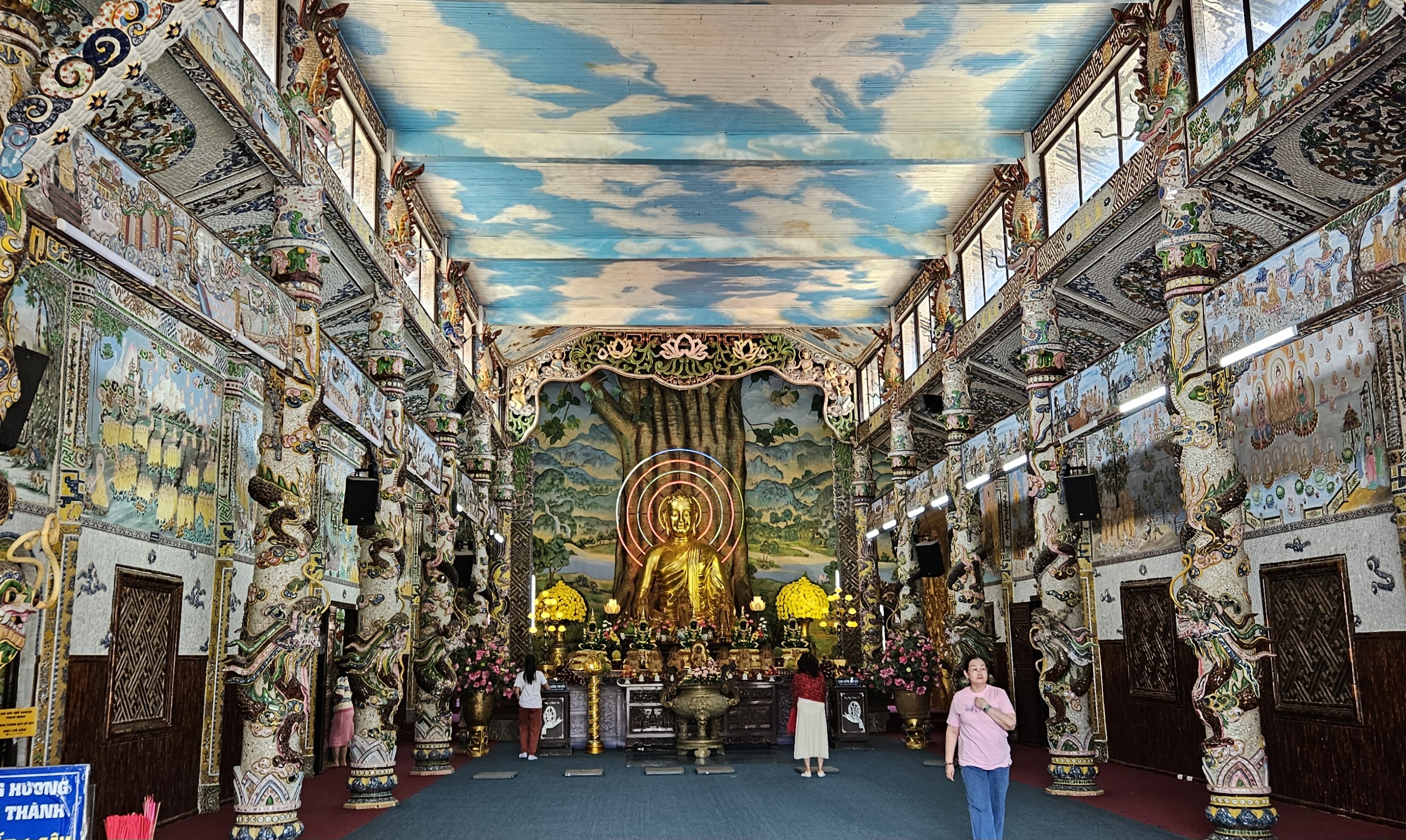
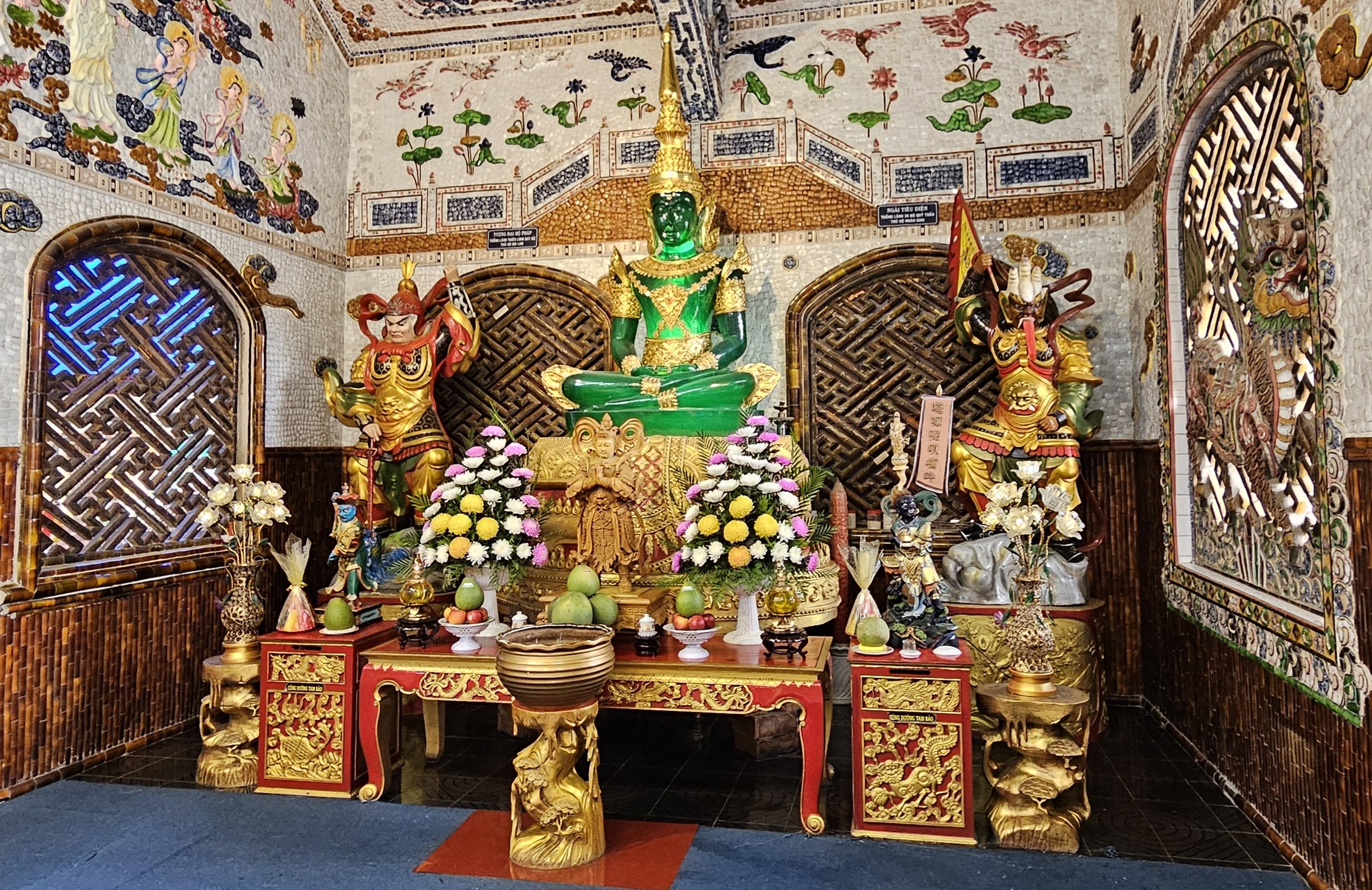
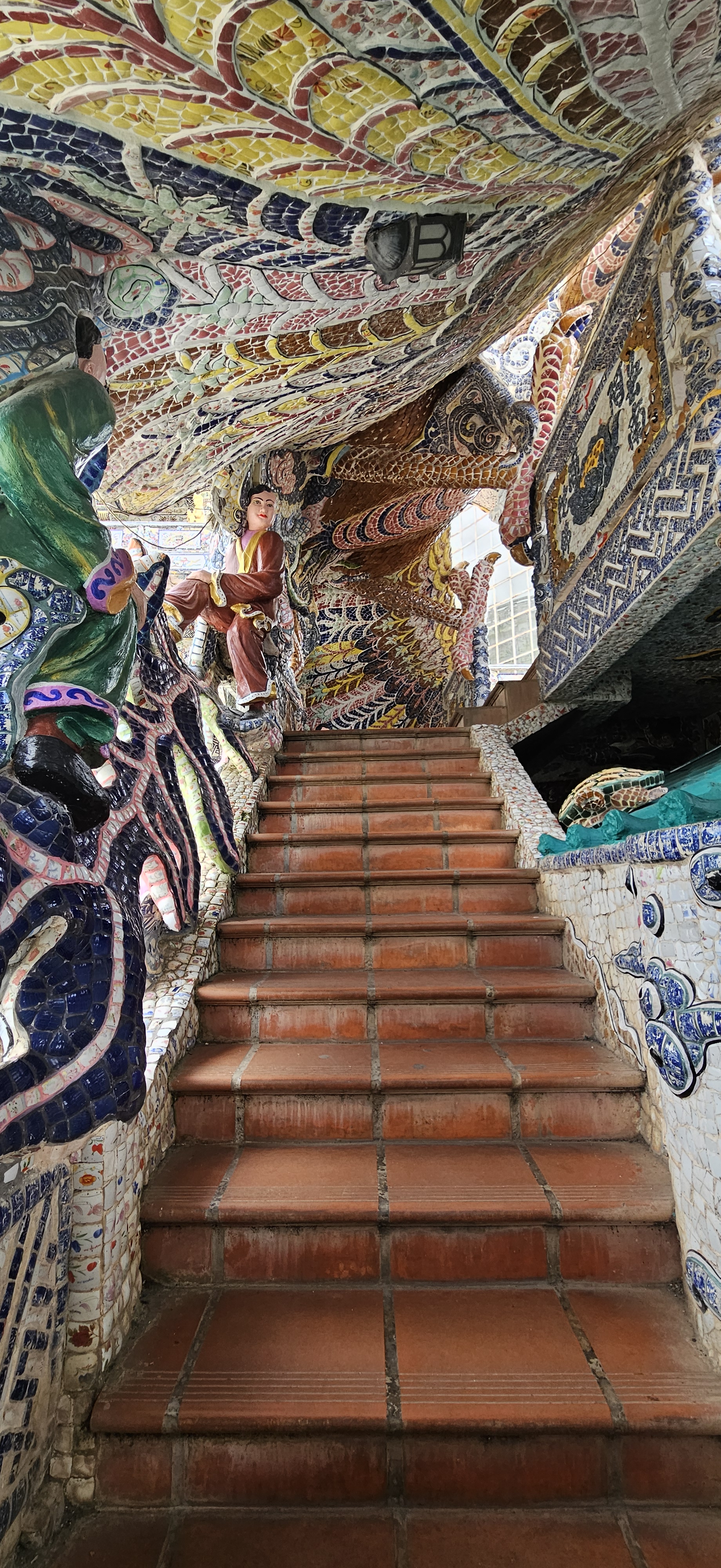
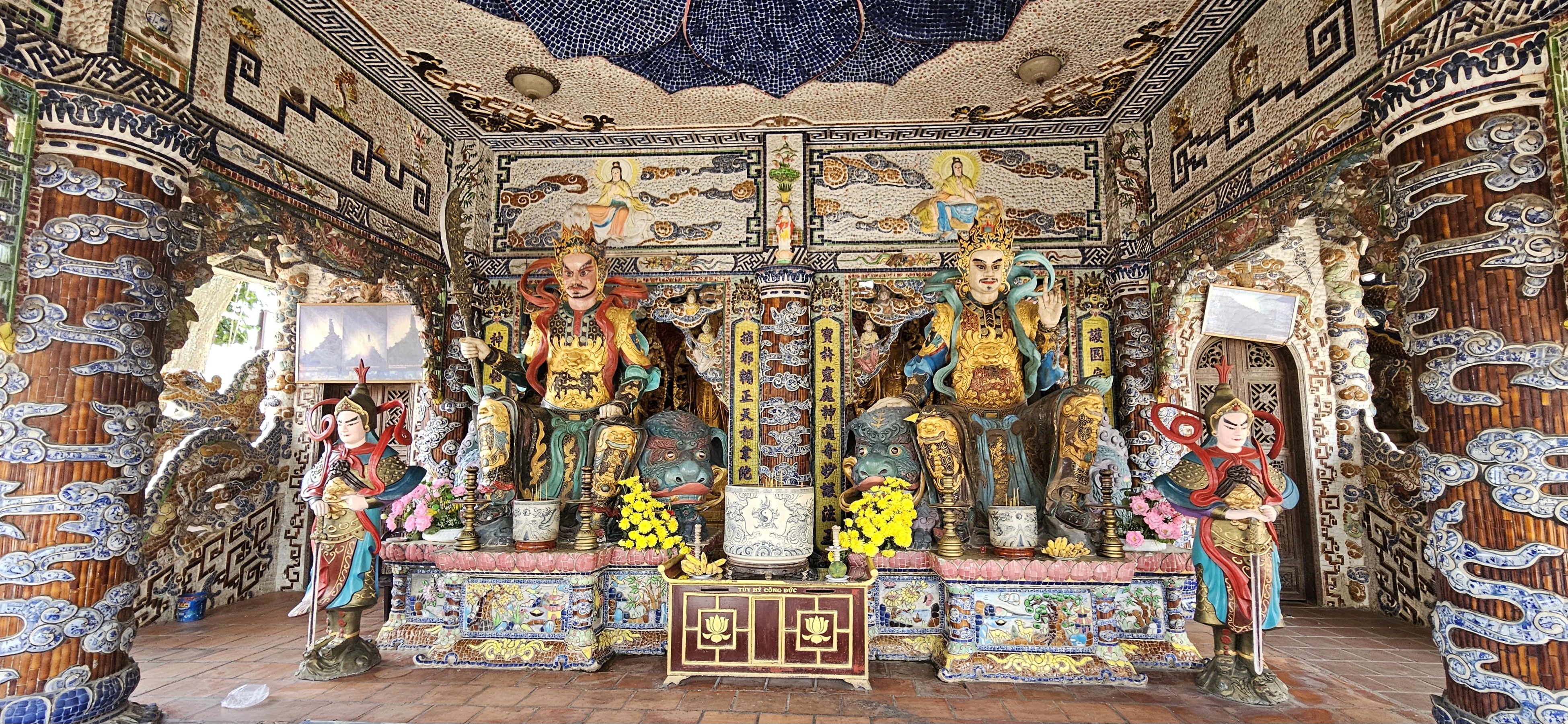
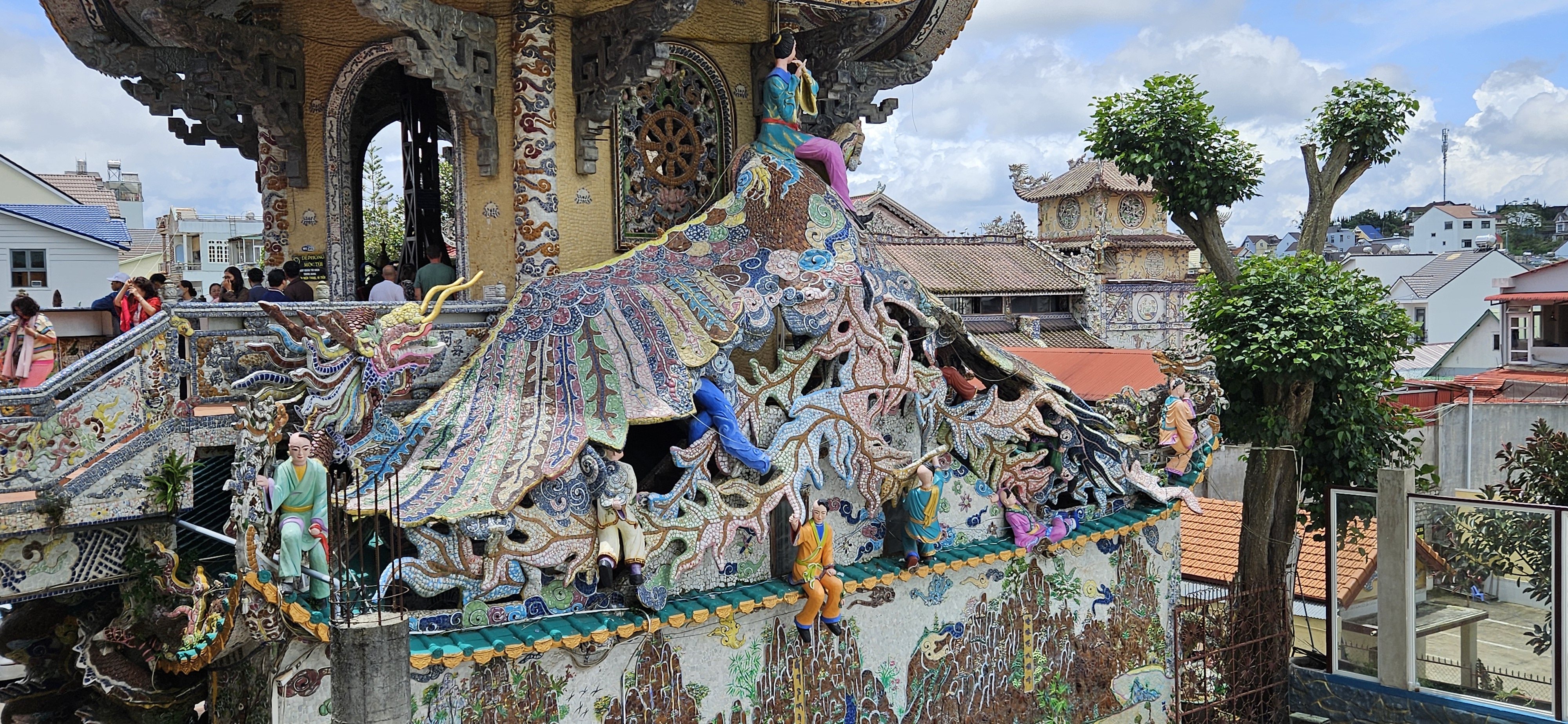
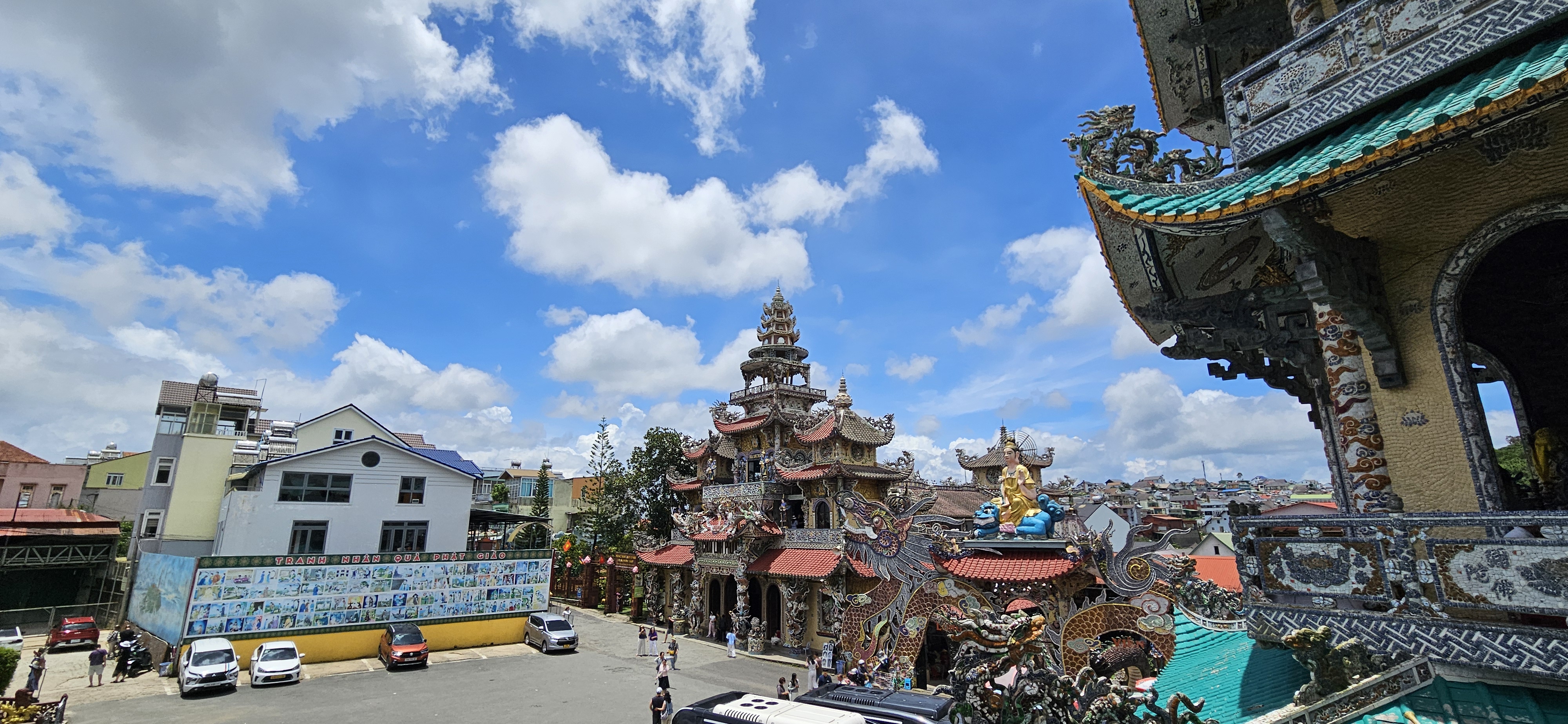
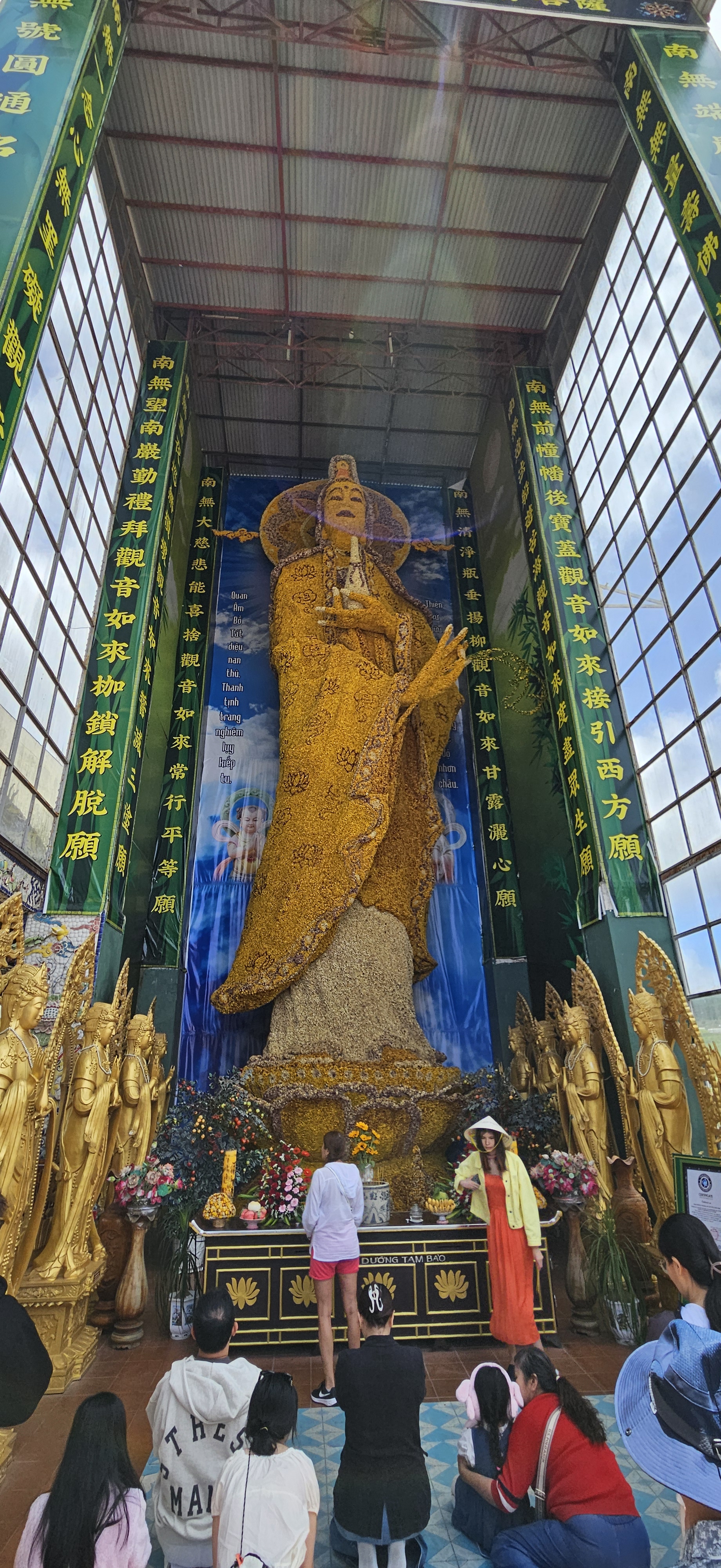
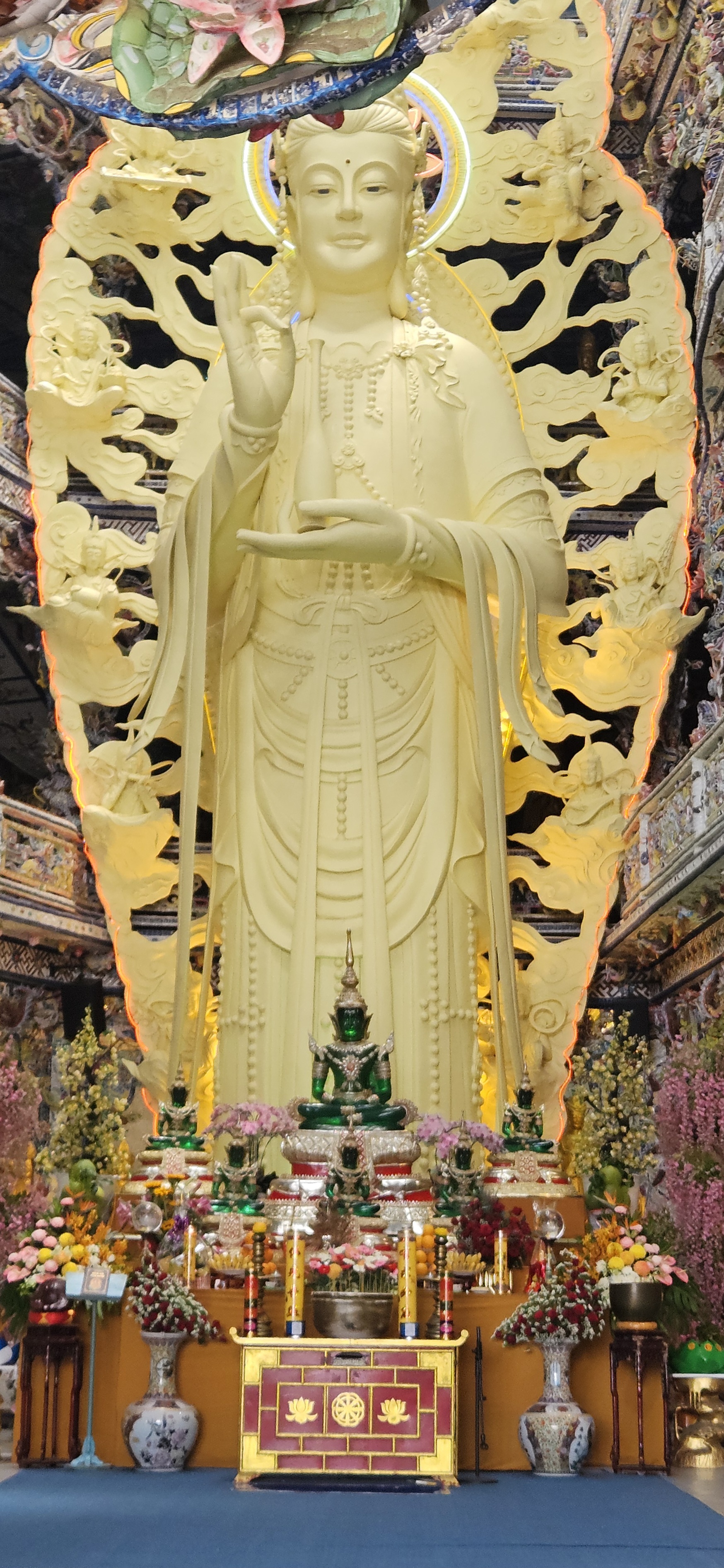
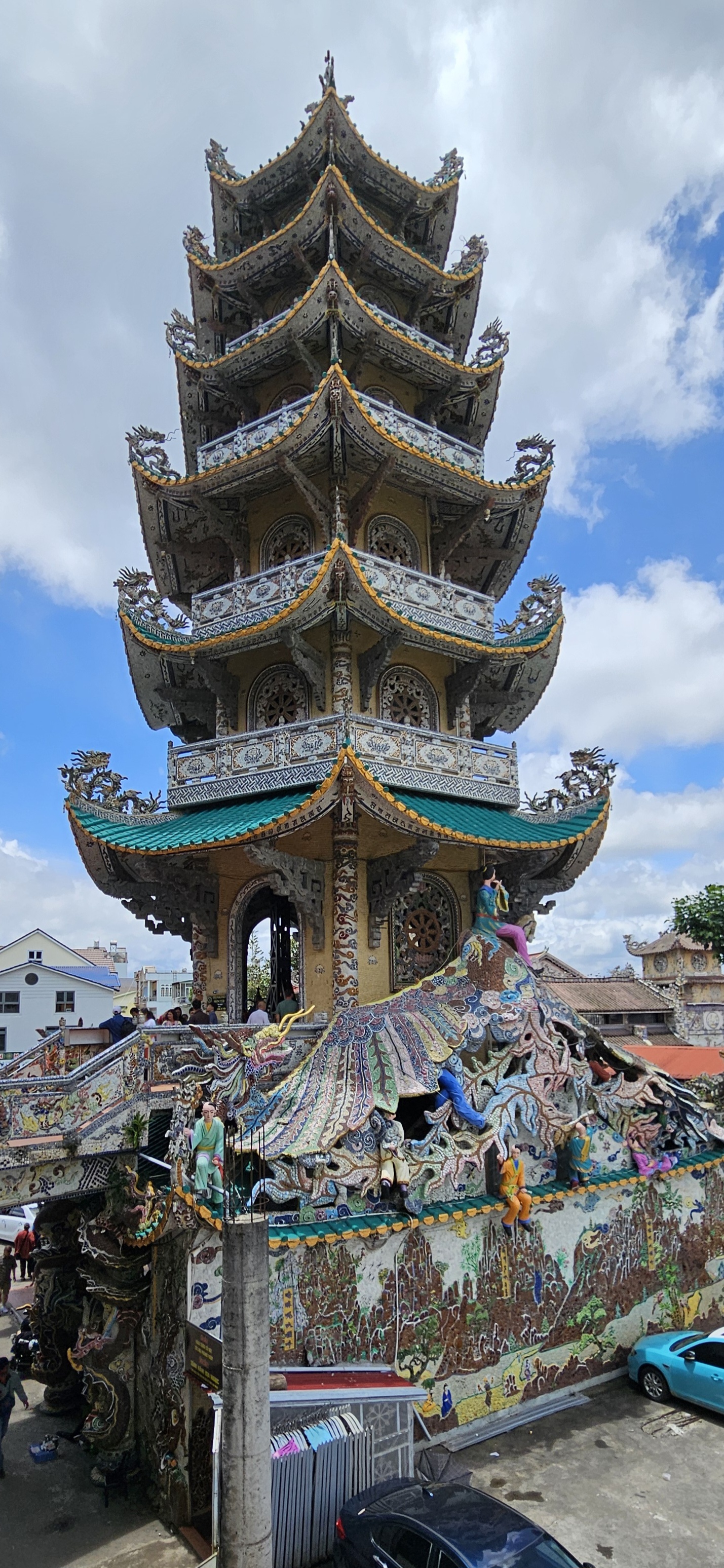
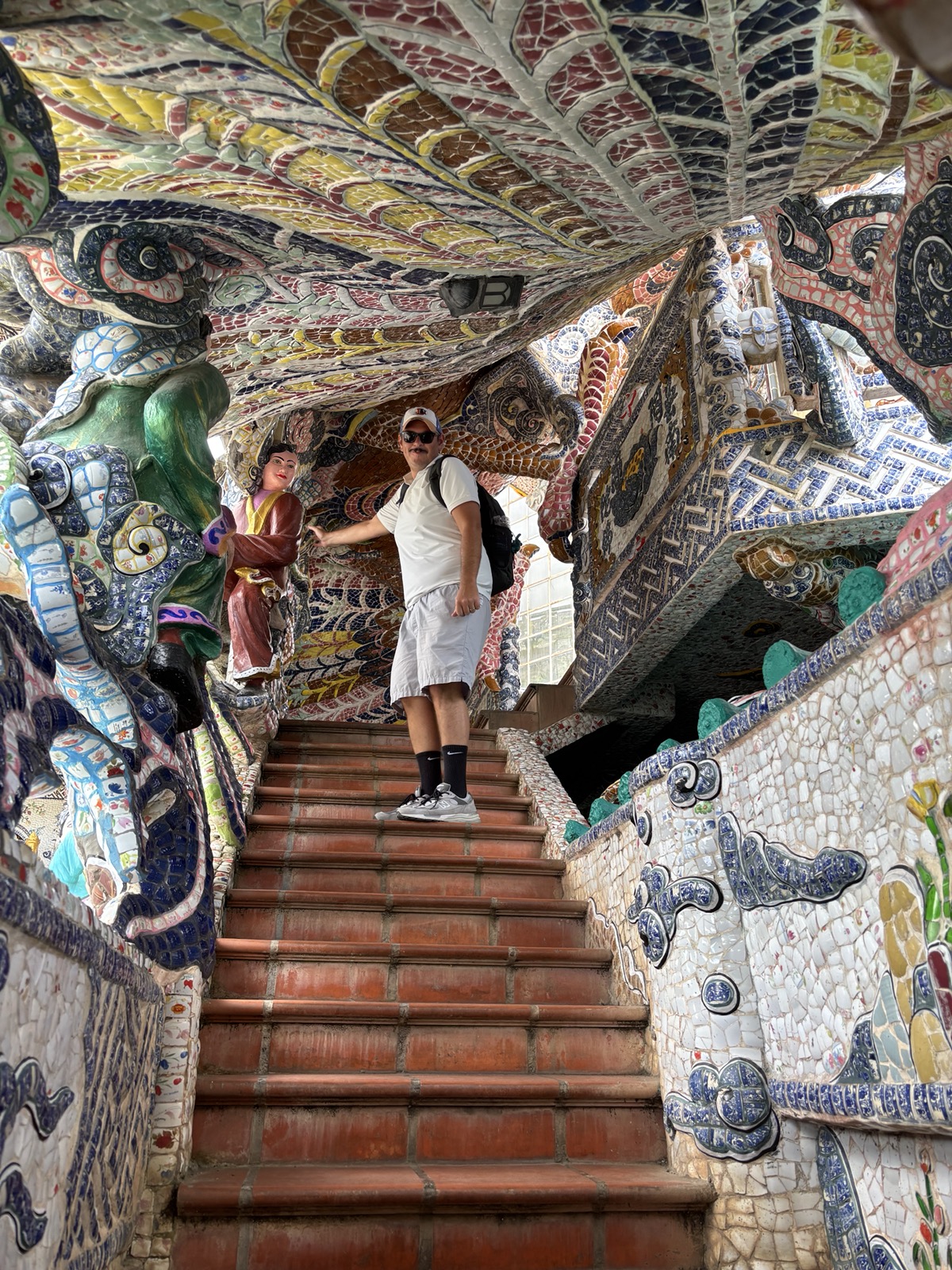
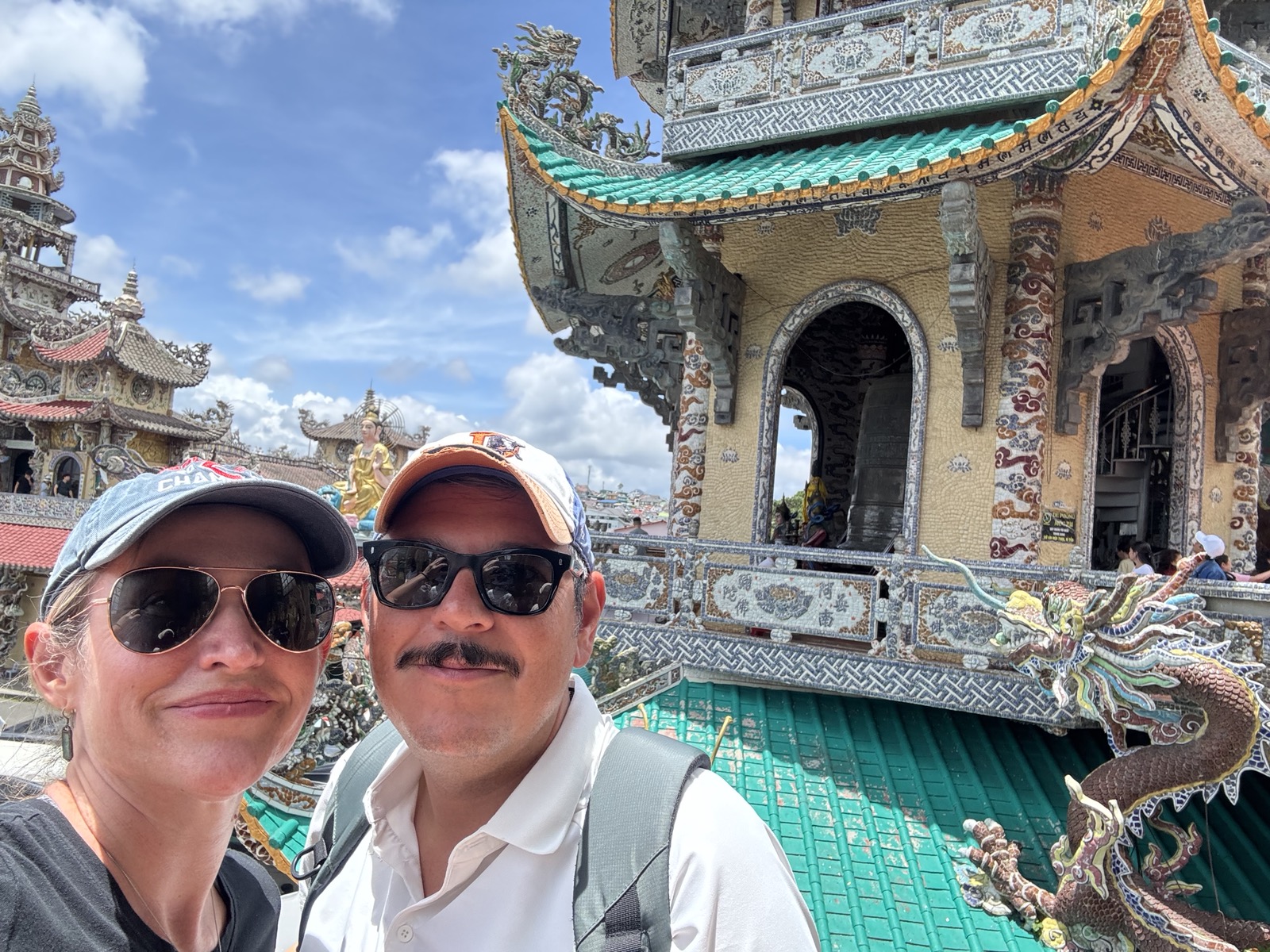
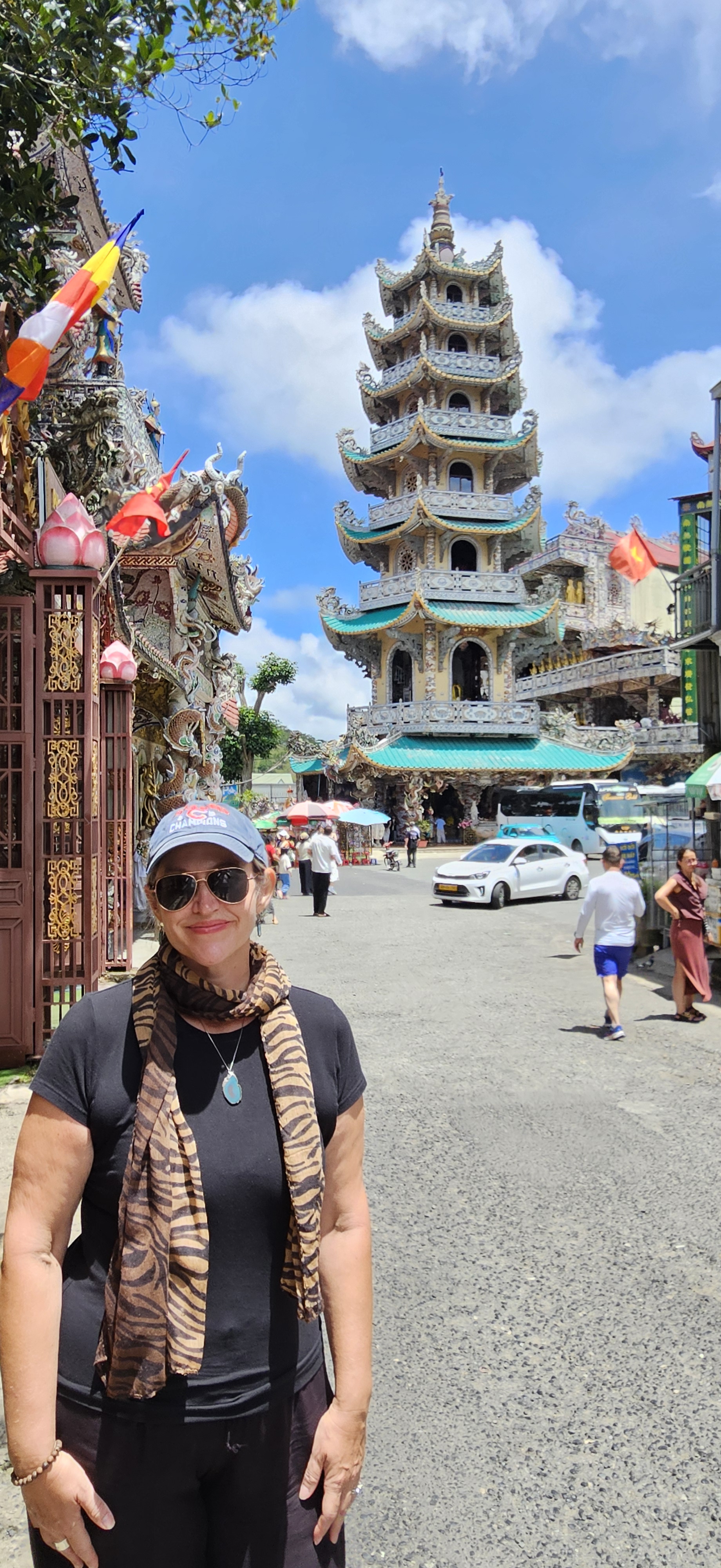
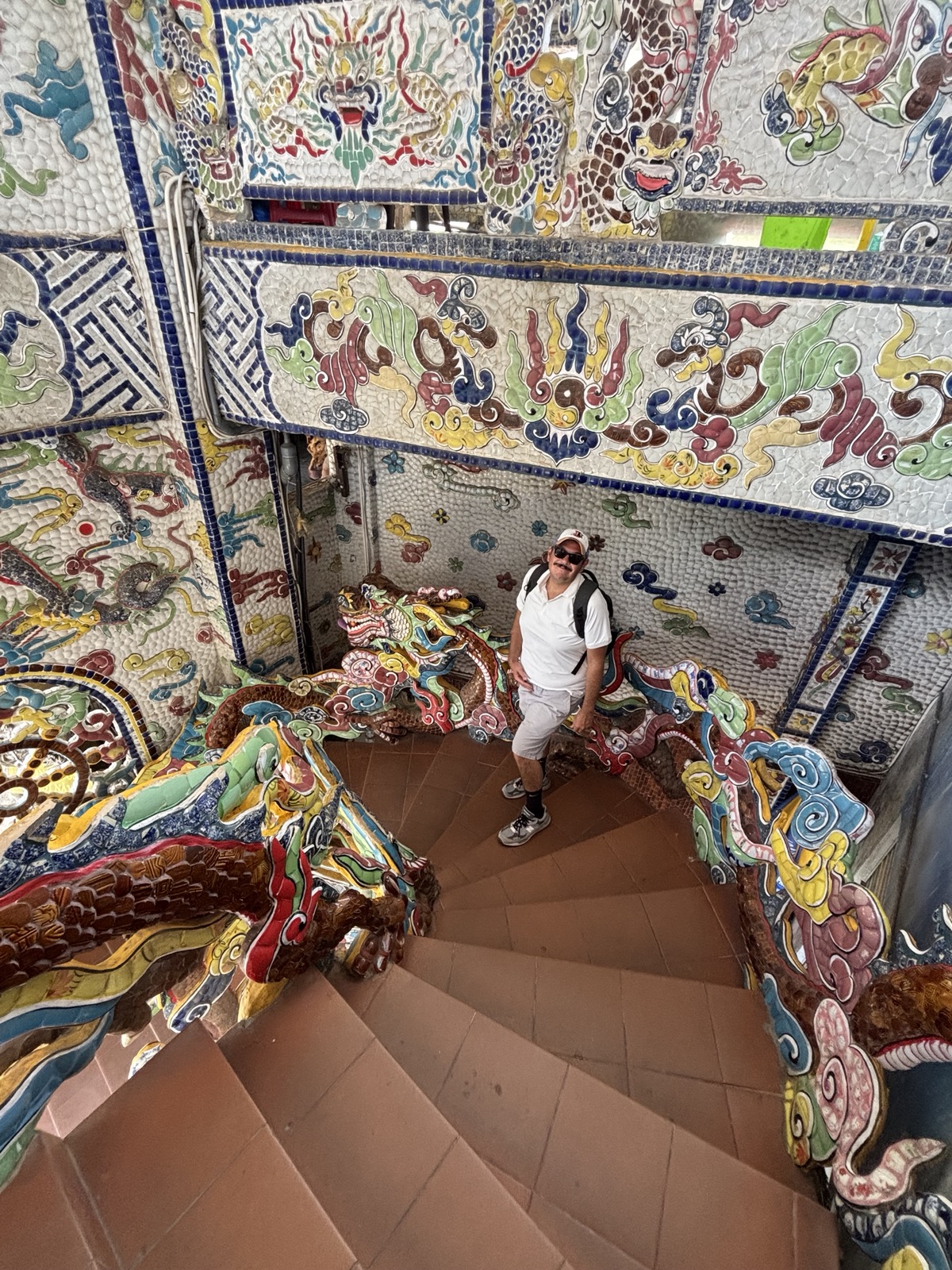
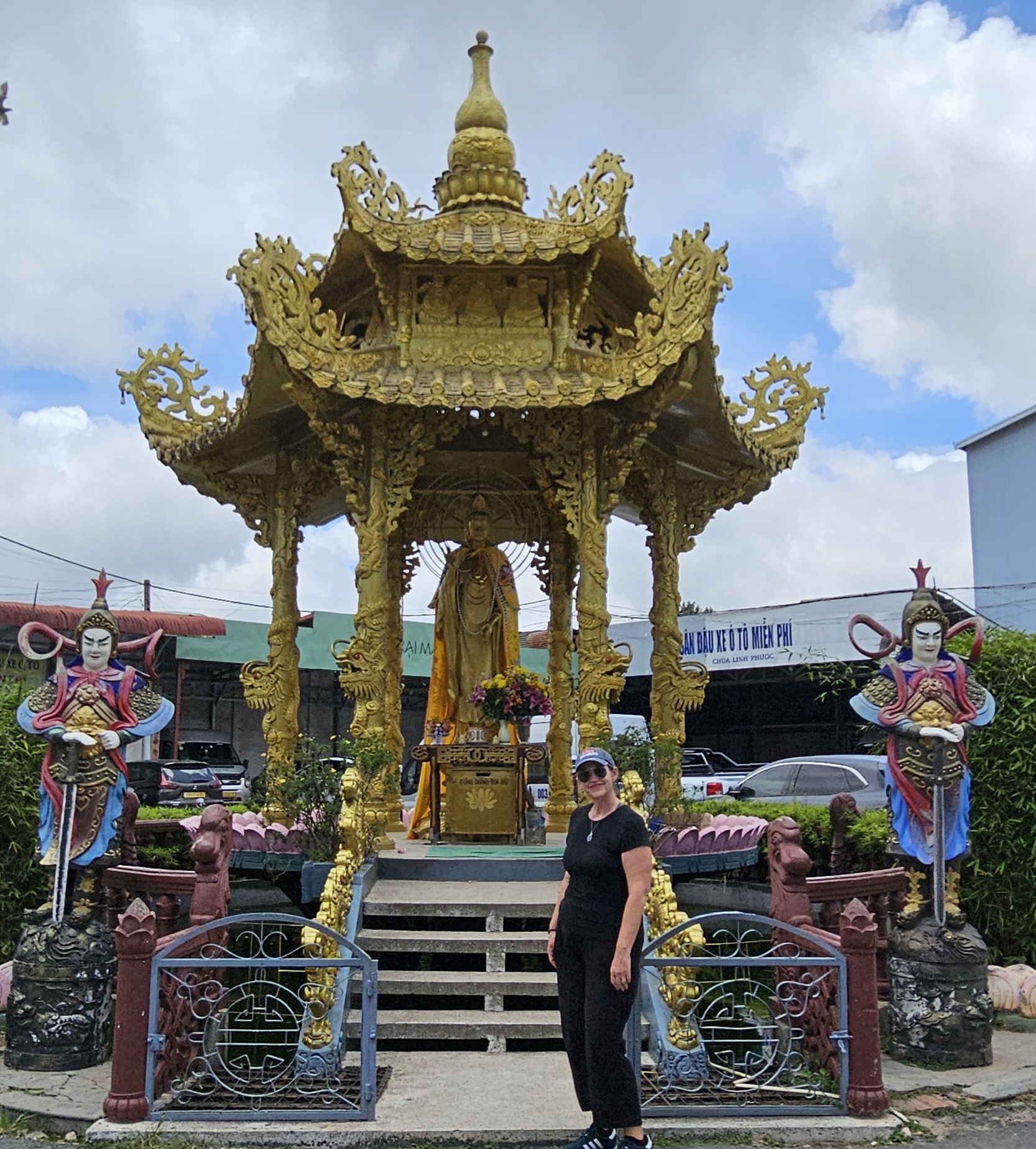
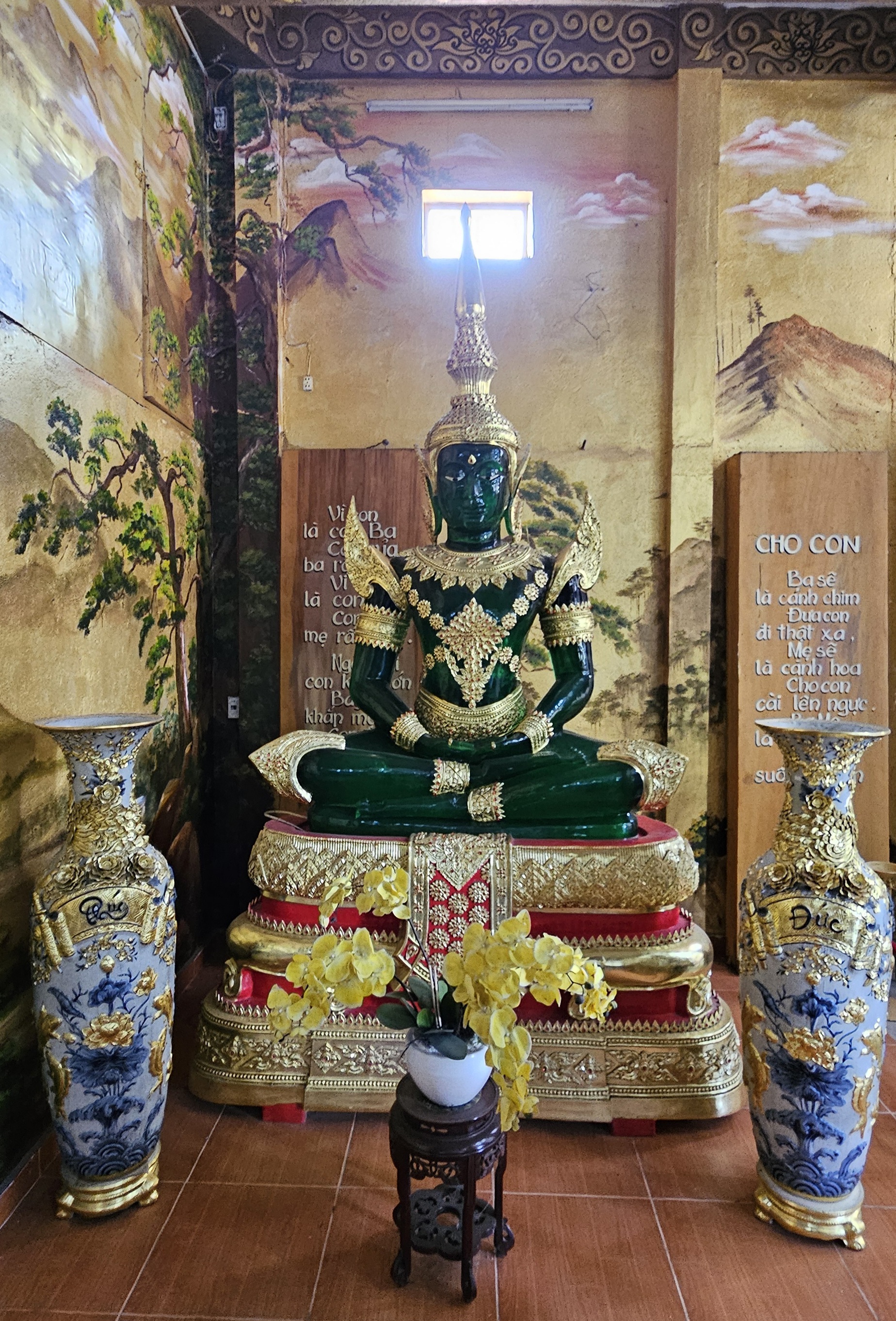
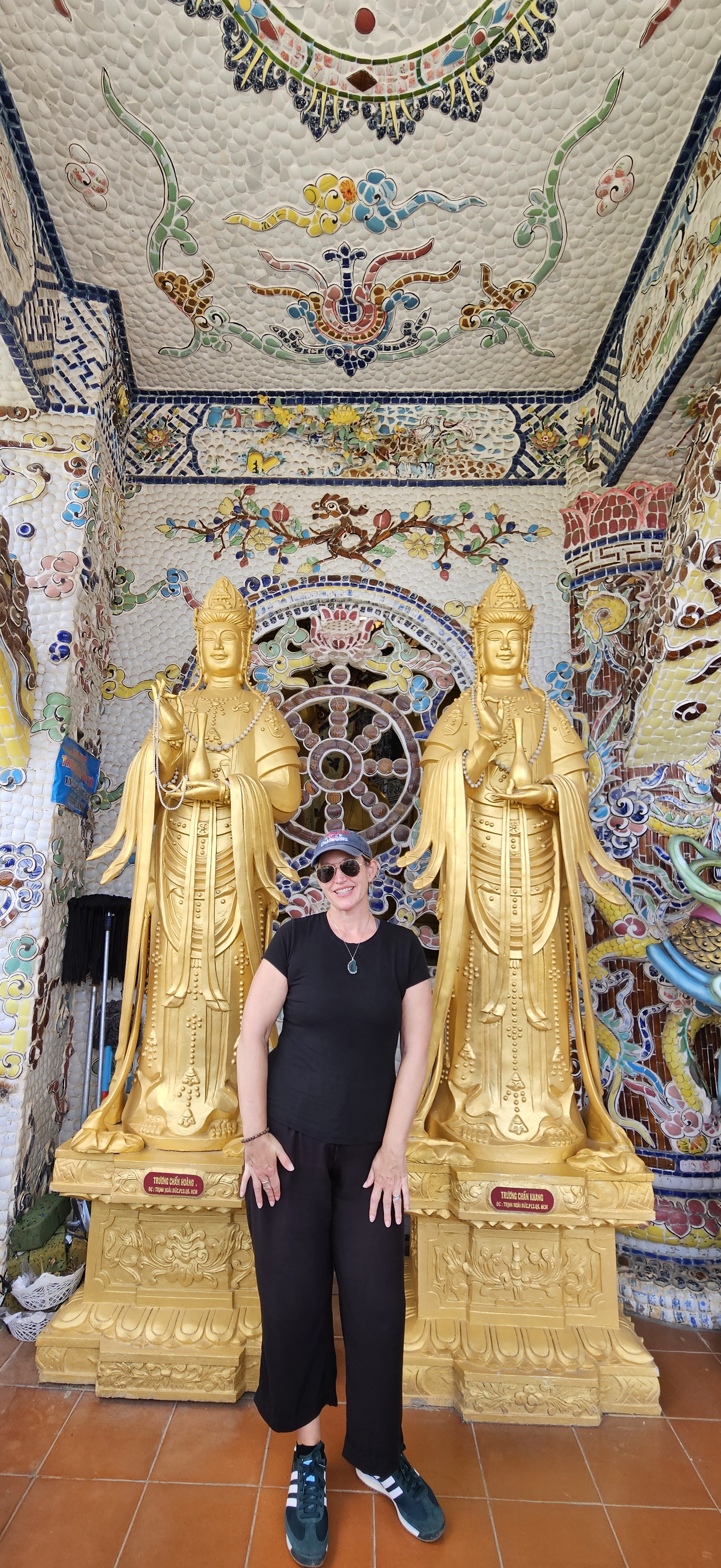
It really was an impressive, creative, and colorful temple complex and fun to explore. However there were too many people and the sun was too oppressive for us to stay very long. Soon we returned to the train station, but not before getting a much needed iced tea.
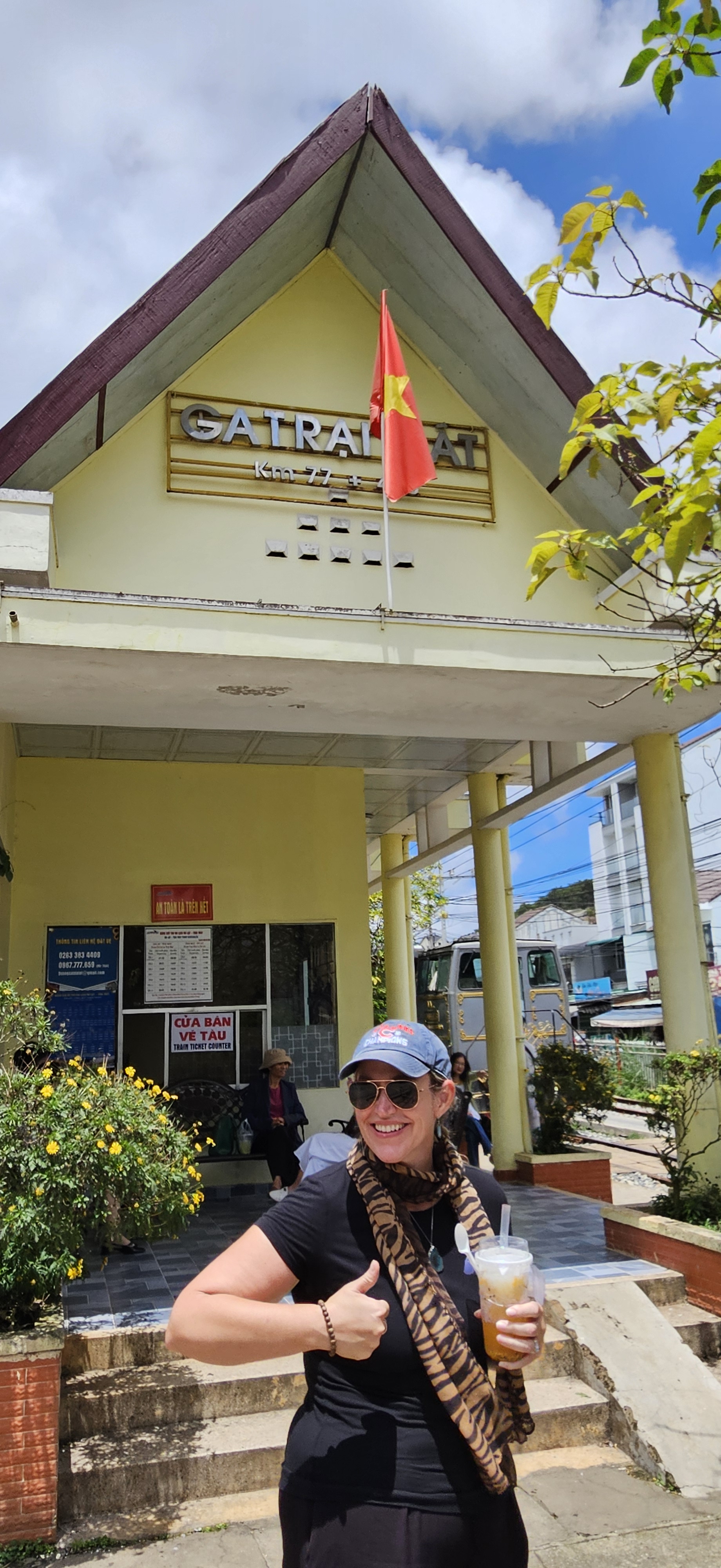
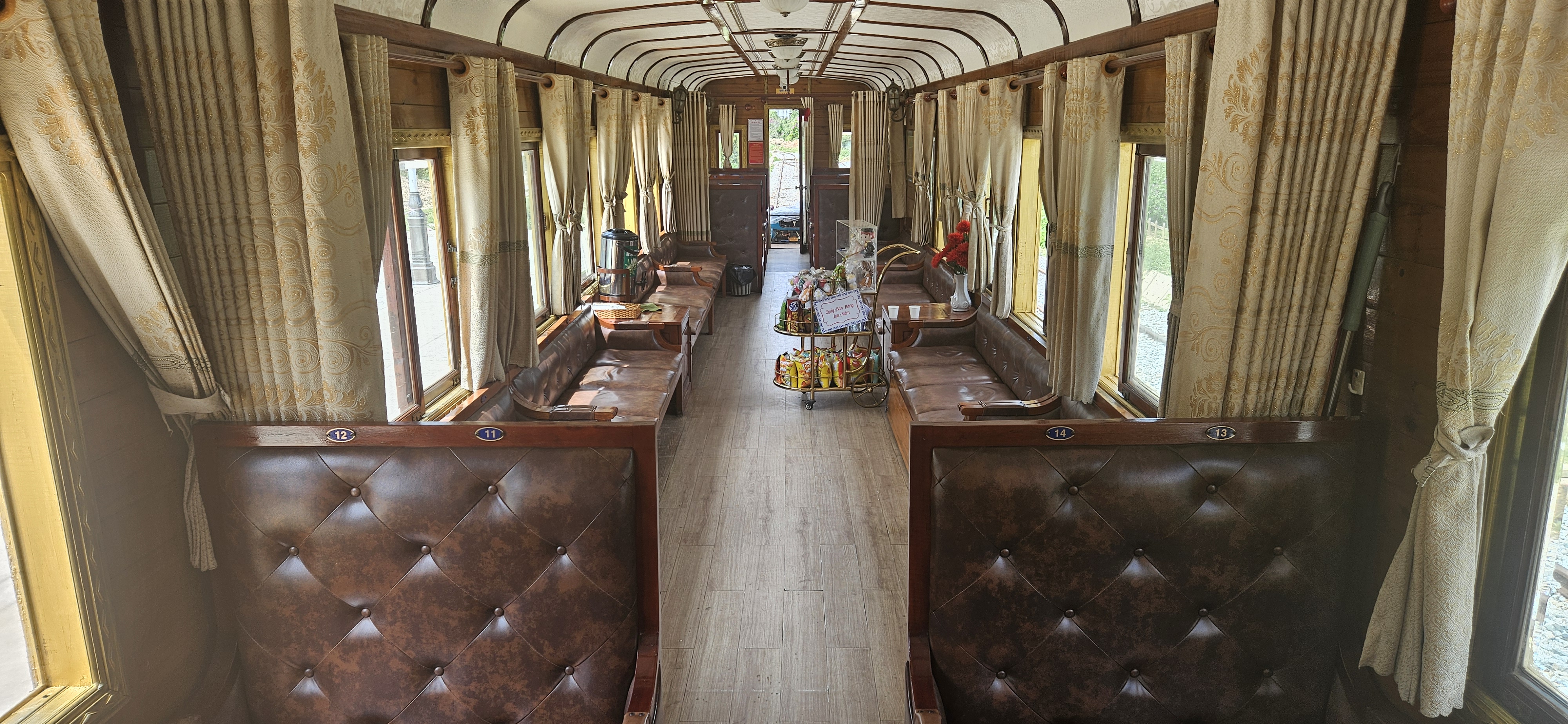
We boarded the return train, which is much less populated than the way there (only one car back, compared to three cars outbound), giving credence to our thought that most tourists just take it one way.
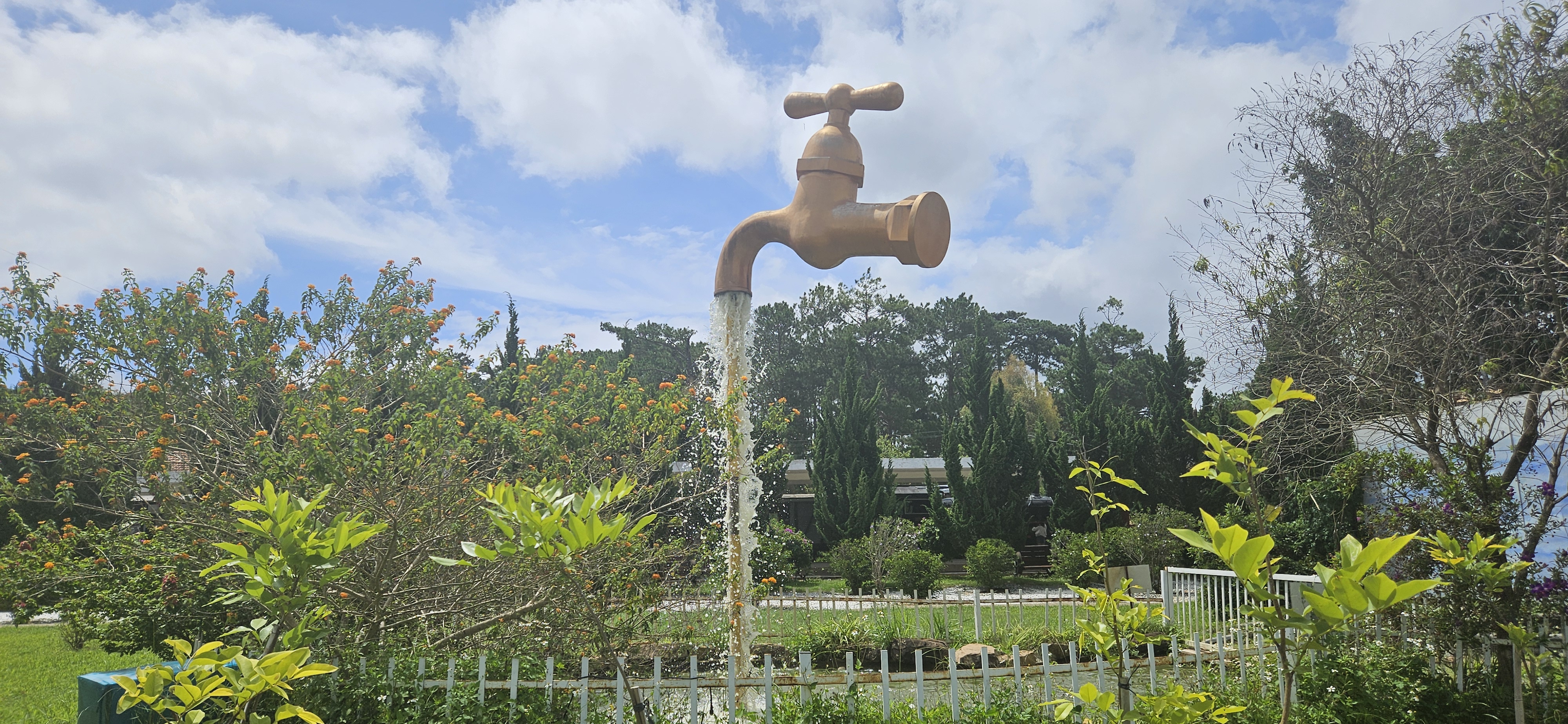
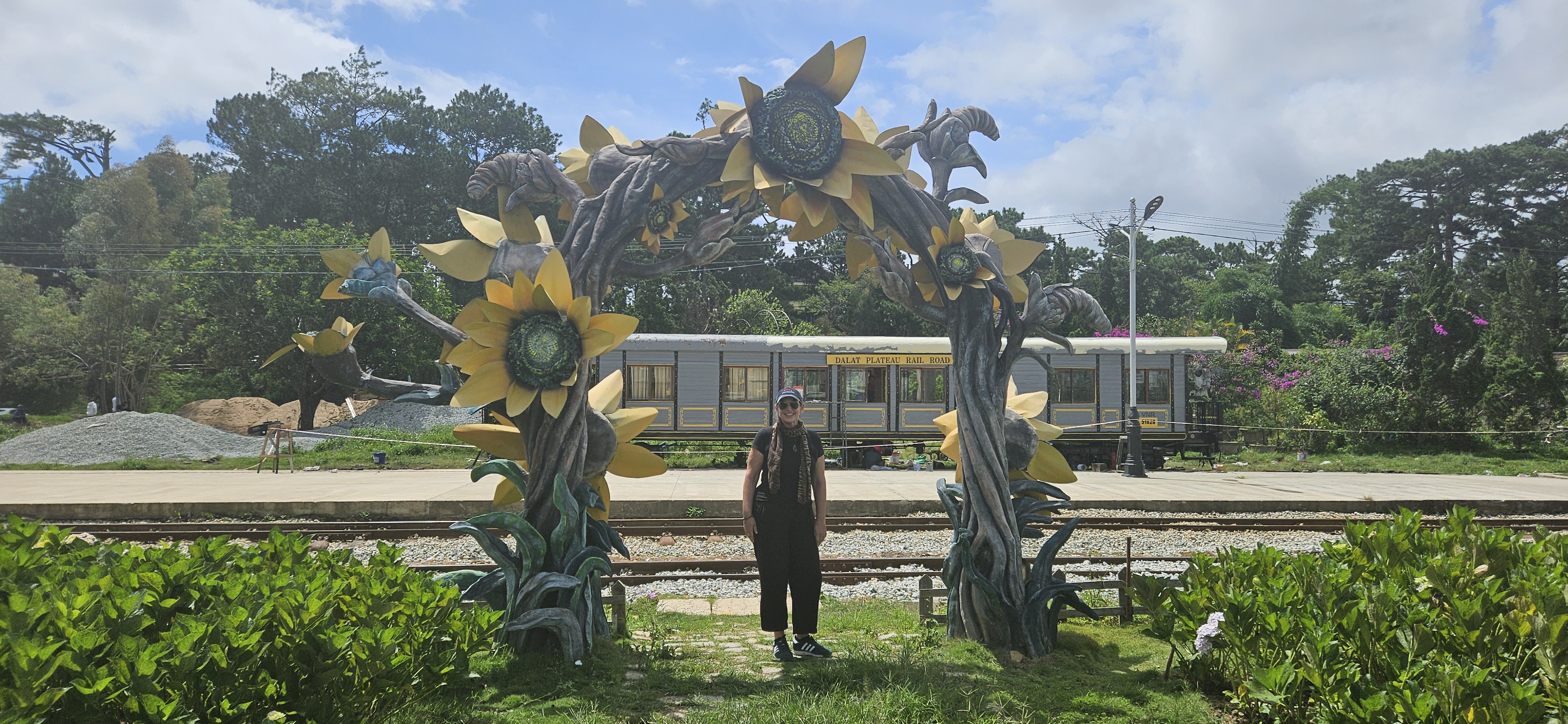
Once back at the Dalat Train Station, we walked the grounds, but there was not much too see, save a couple outside art pieces.
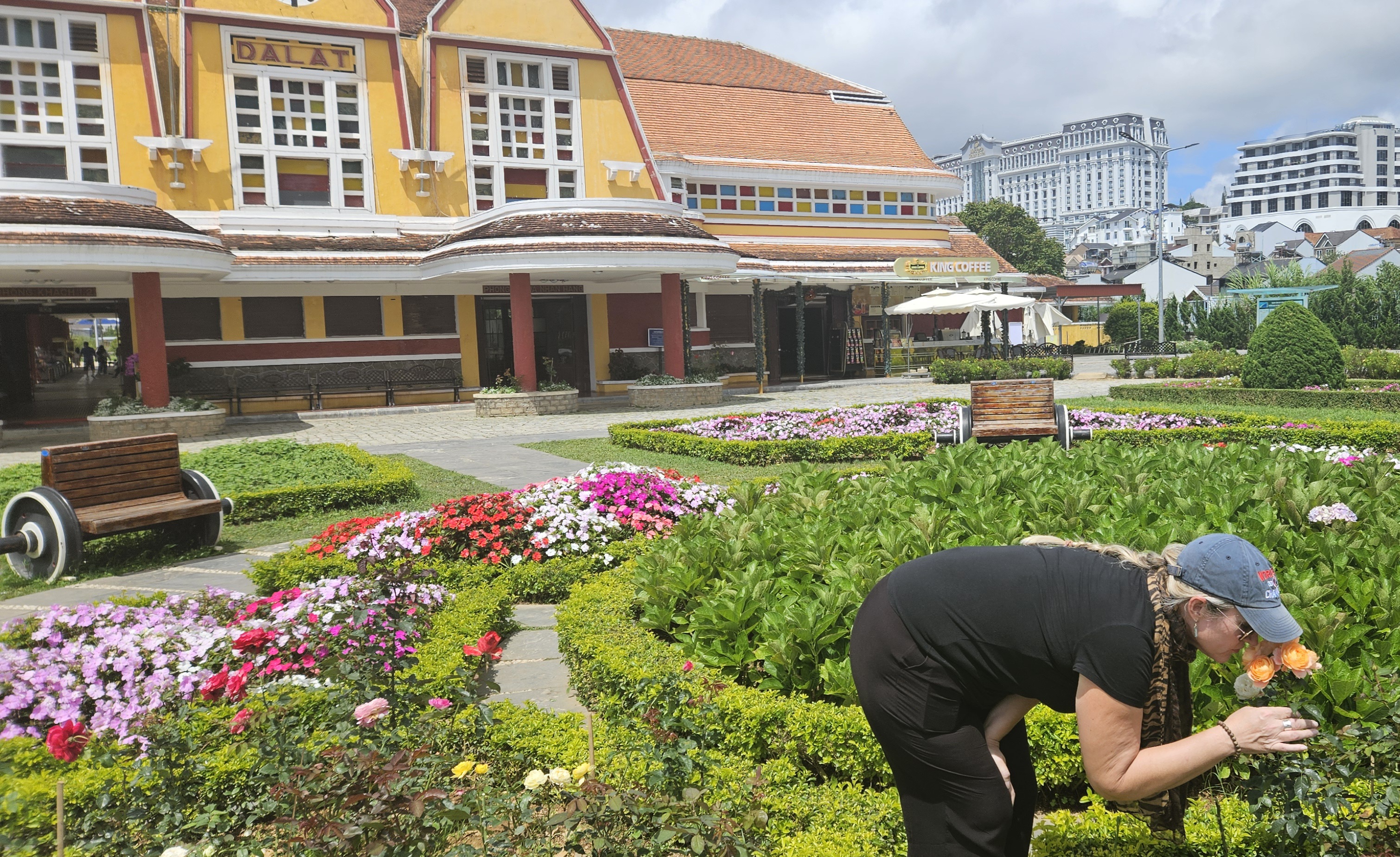
We did stop and smell the roses (as one should always do) in front of the station, and they smelled so good. We called it an early night as we were pooped after the long, hot, and fun day.
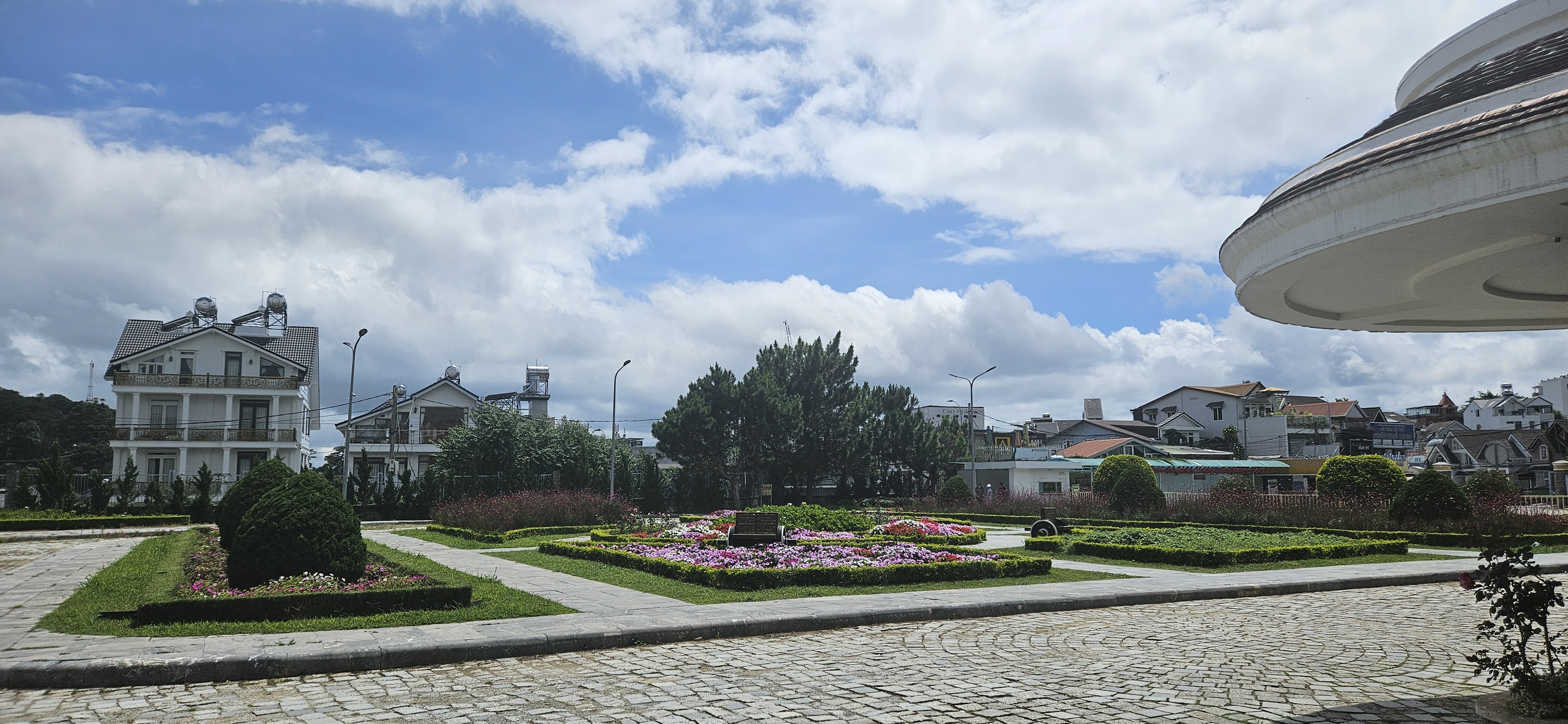
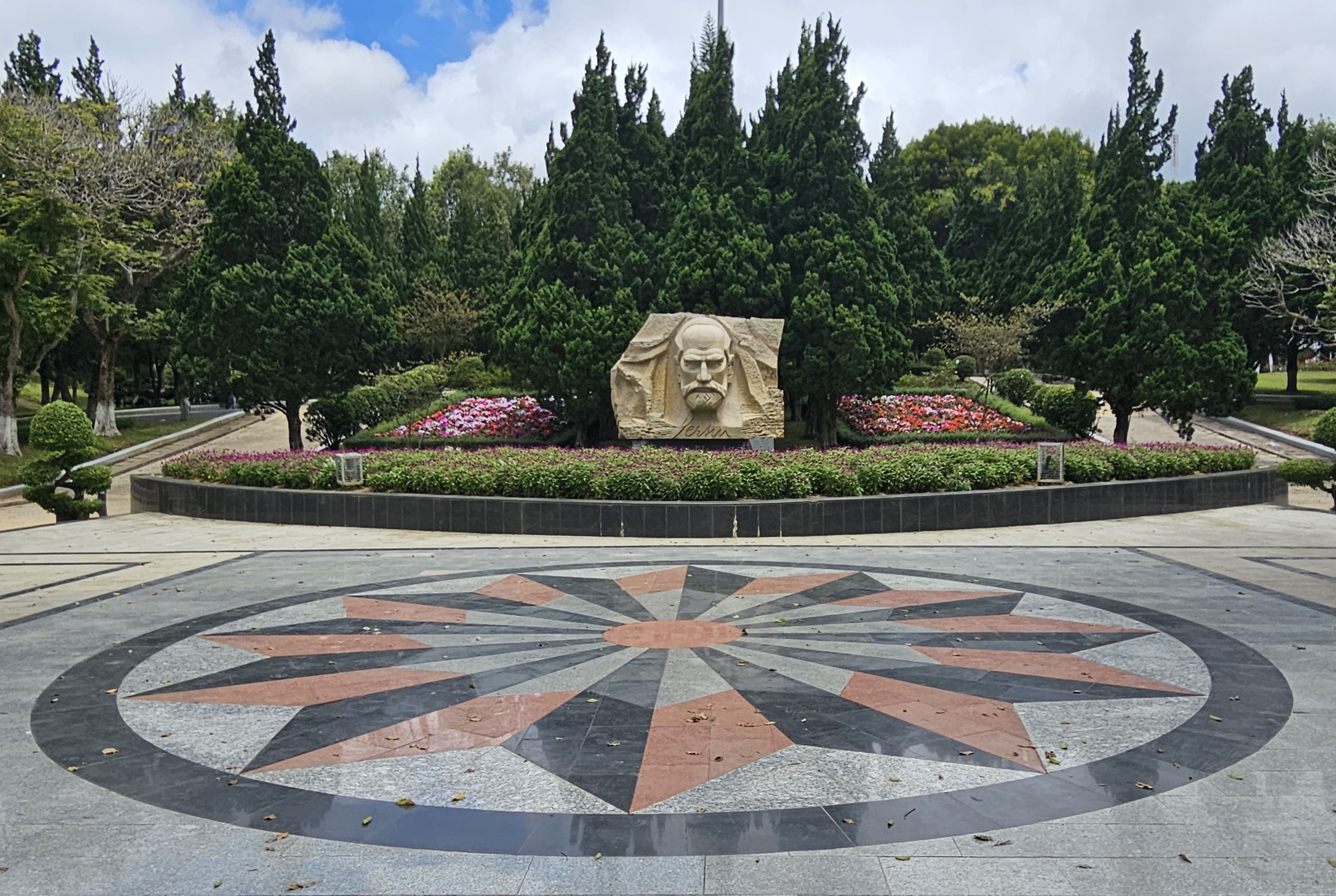
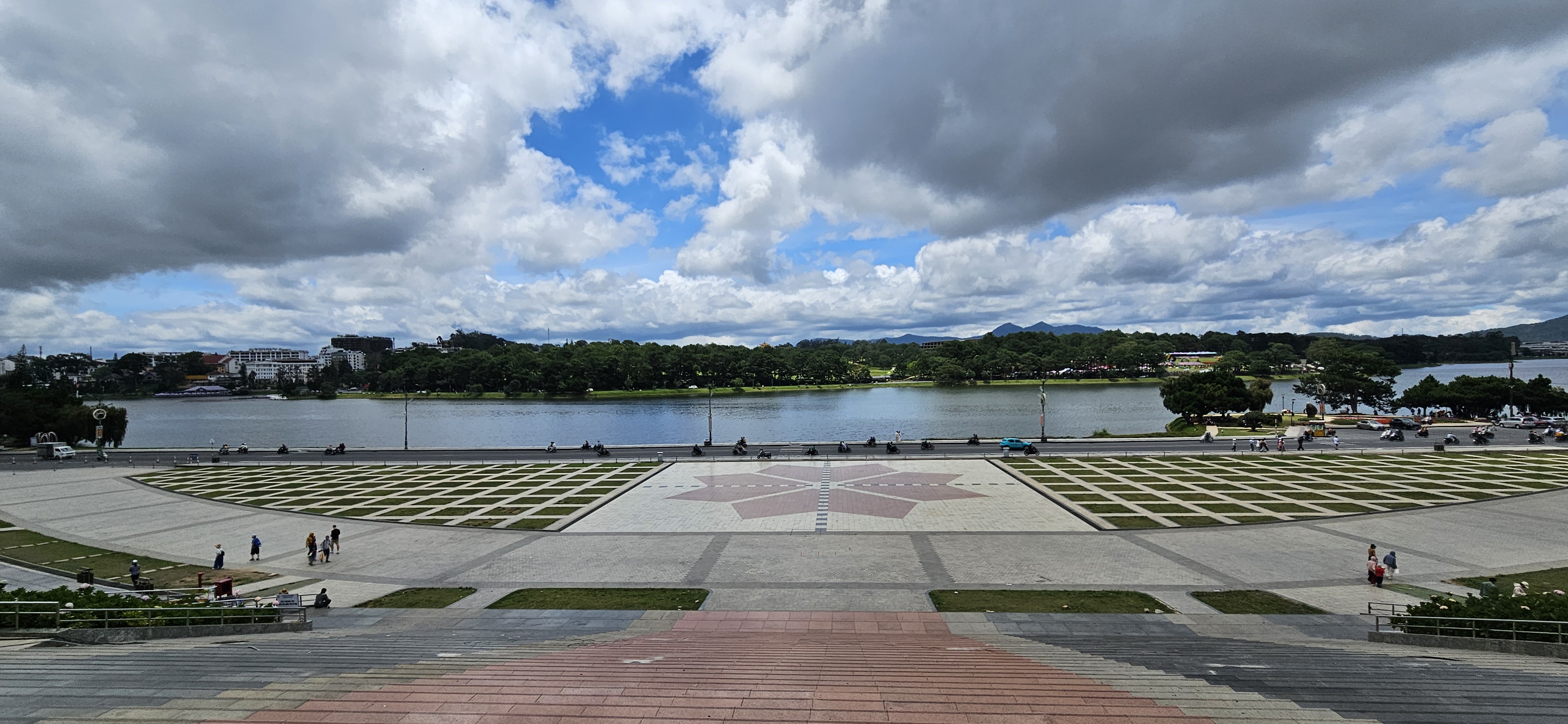
The next day we did some more walking around Xuan Huong Lake, starting at Yersin Park, named for Alexandre Émile John Yersin, a French/Swiss physician and biologist who co-discovered the Diphtheria and tetanus toxins, and also determined that the bubonic plague was transmitted by rats. He lived in Vietnam and passed away in Nha Trang (we will visit his museum when we go to Nha Trang next). Behind the statue of Yersin below it read: “Give joy to one, give health to another.” A nice sentiment.
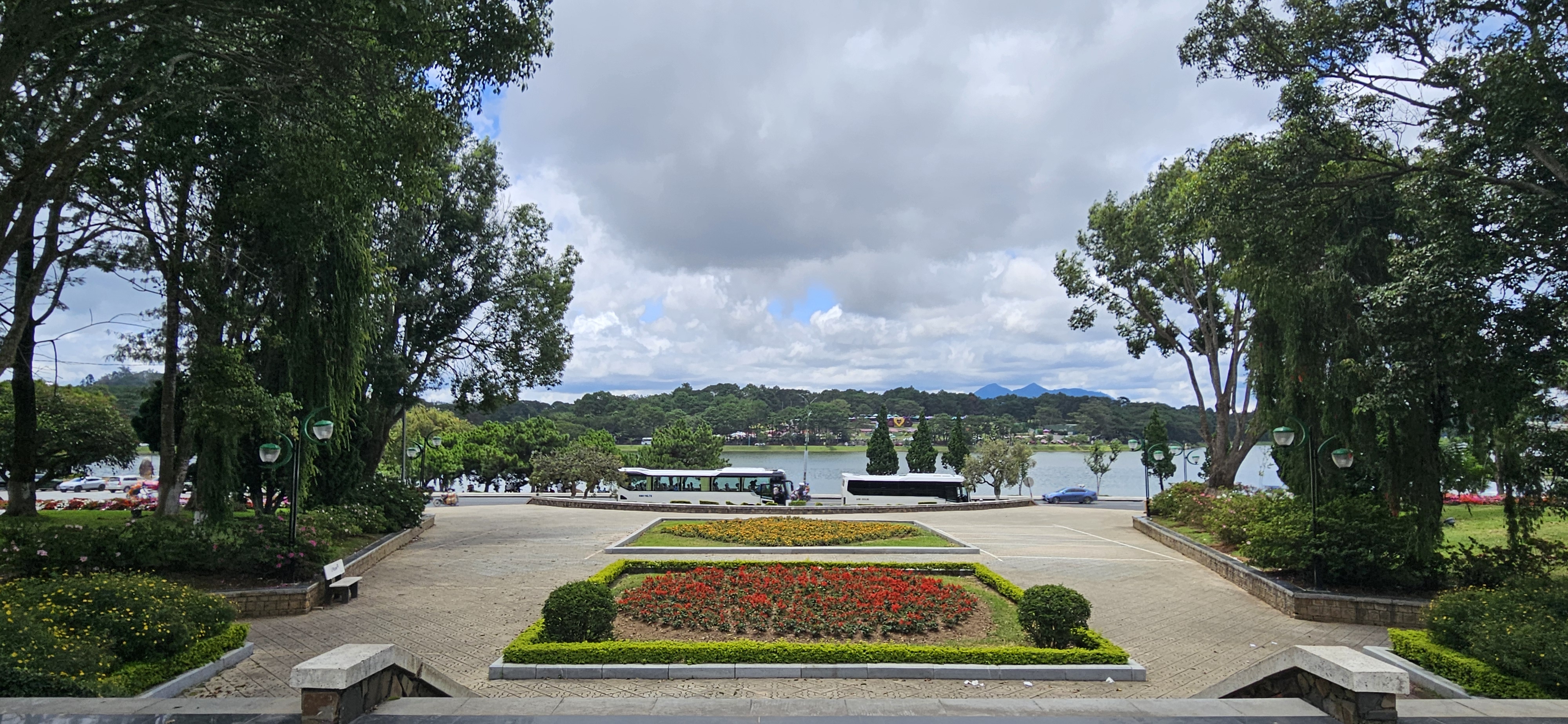
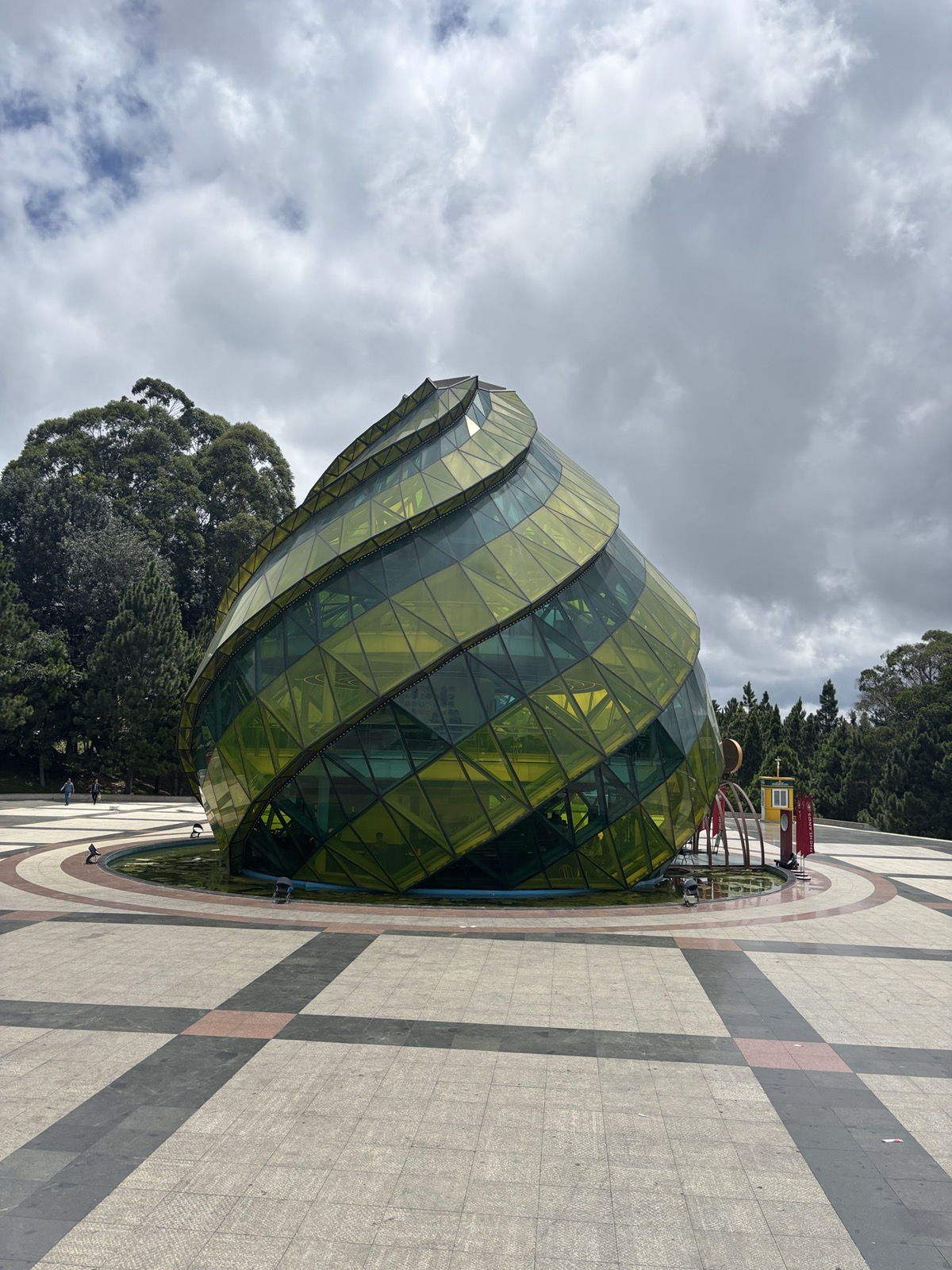
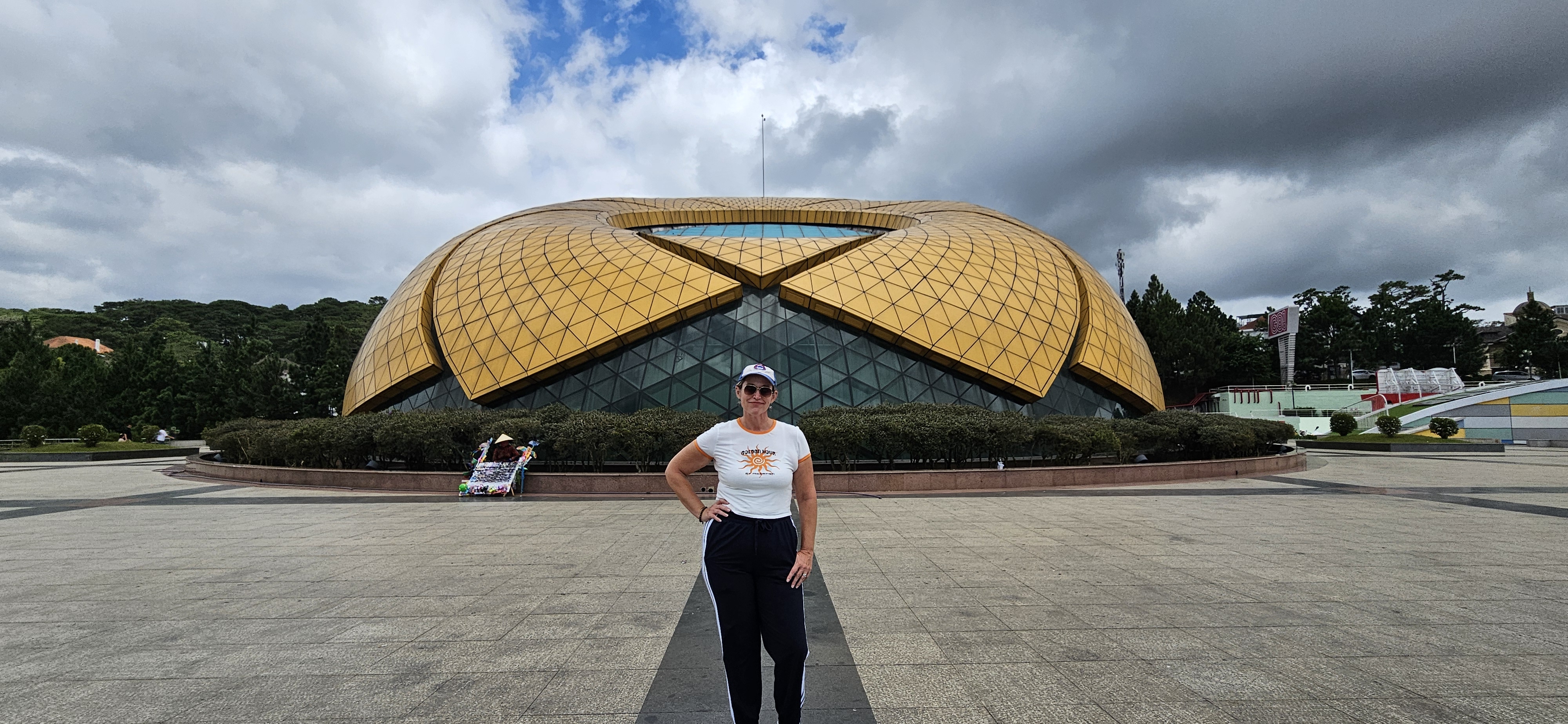
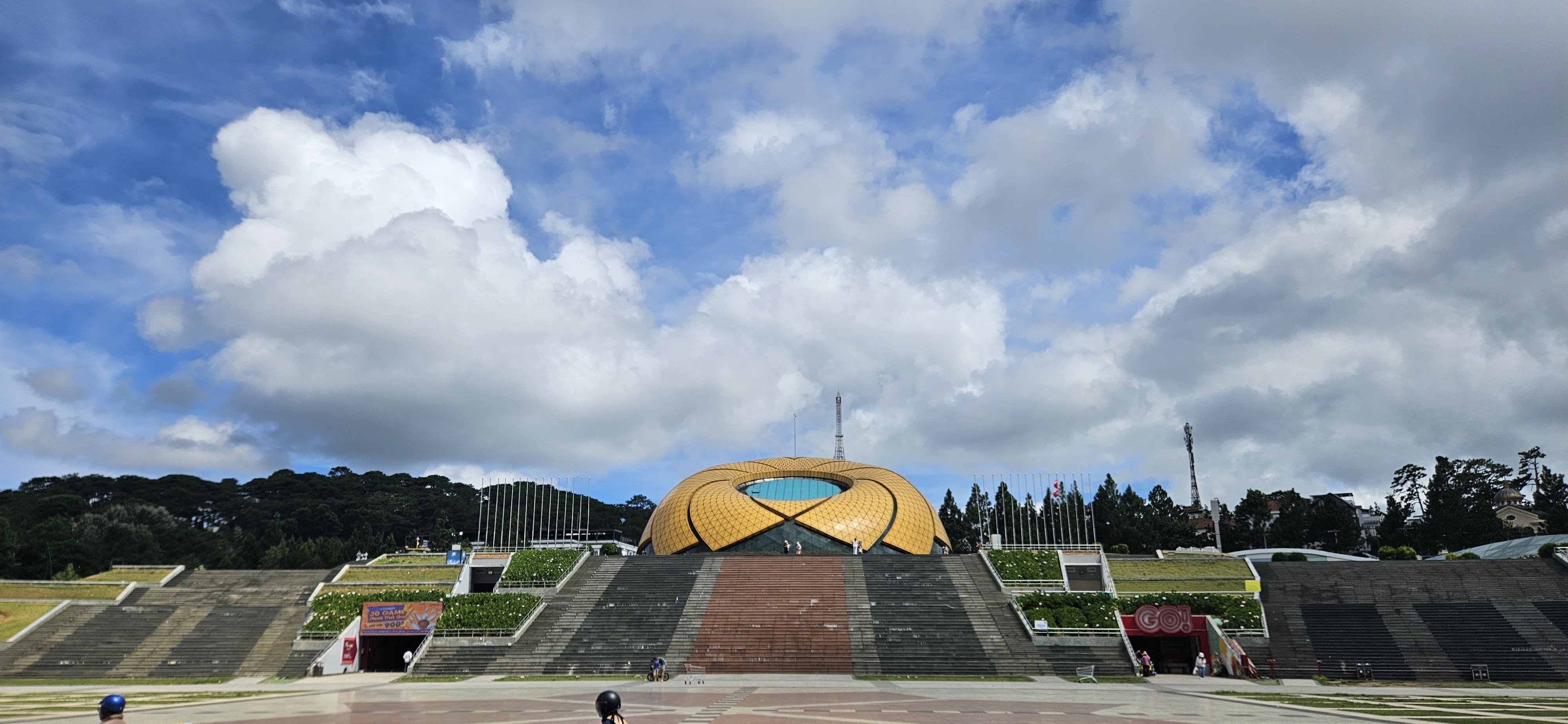
Next to Yersin Park are a couple of famous glass monuments in Dalat. One is the Opera House, designed to look like a sunflower (which now houses a movie theater, food court, and big grocery store). The other is affectionately known as the Artichoke, which is actually a Highlands Coffeeshop (Highlands is the Starbucks of Vietnam) which makes a good salted coffee. Artichokes are grown in Dalat, as one would expect. We had to be leery of dark clouds overhead; while it is technically rainy season, it would often not rain at all, but look like it would be about to. It did rain on us our last few days, but that’s for a future post.
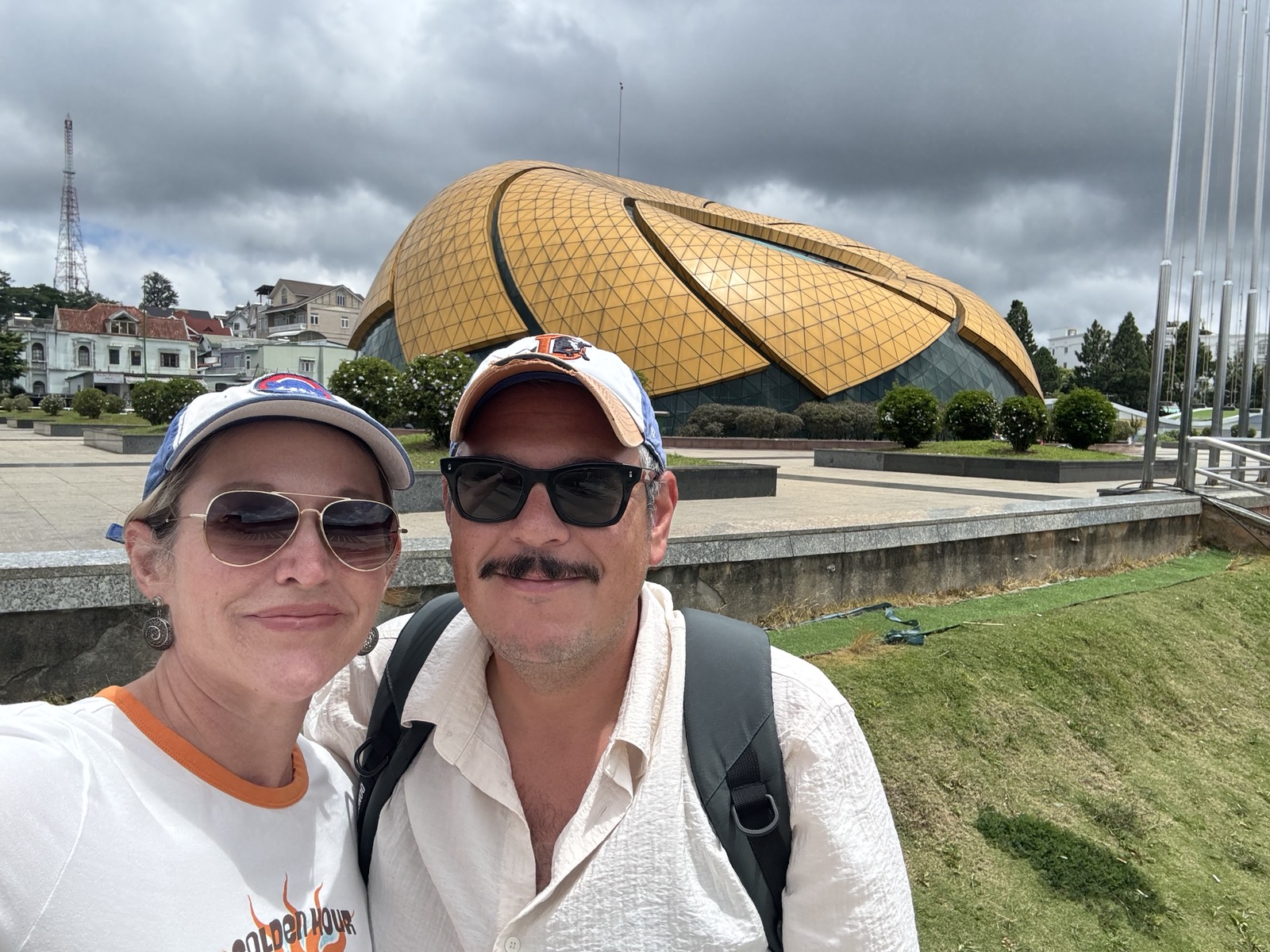
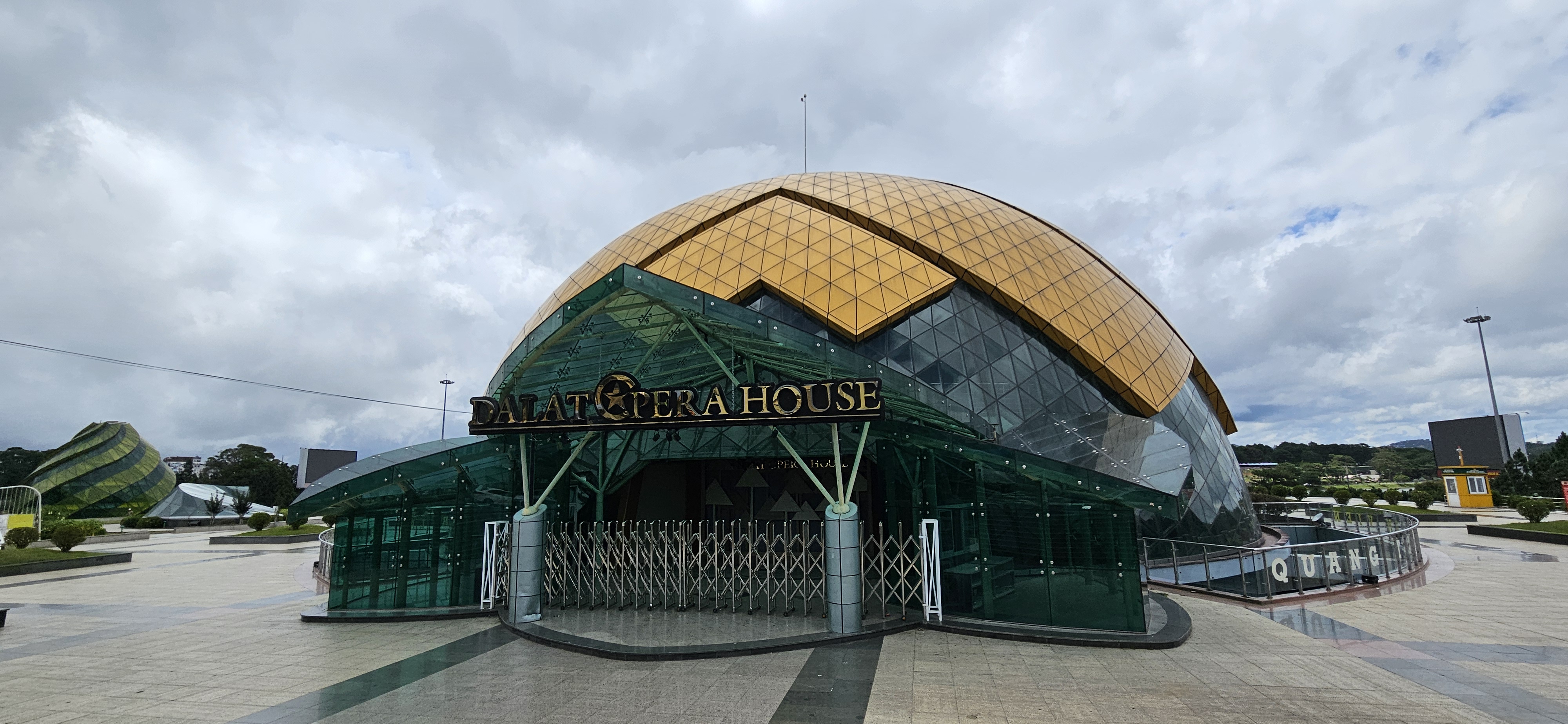
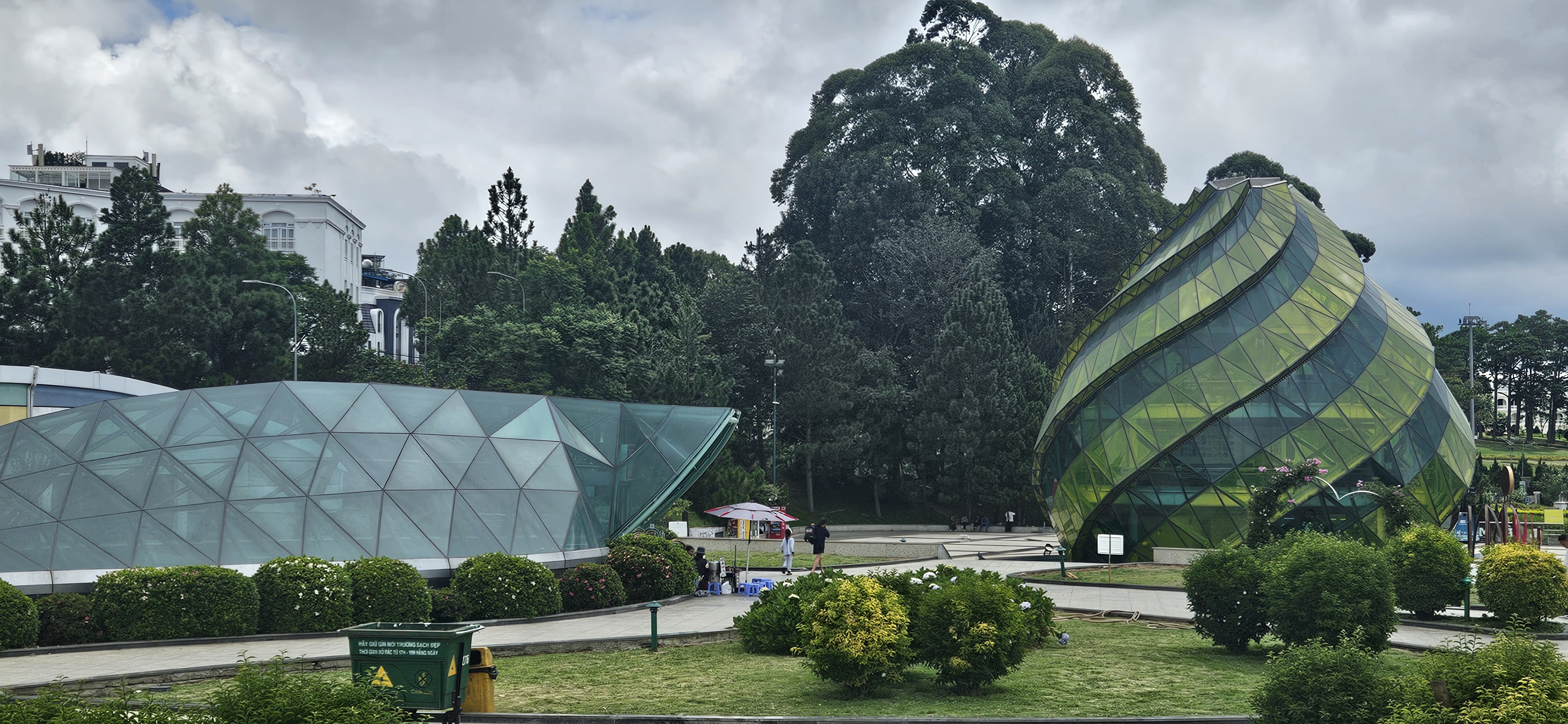
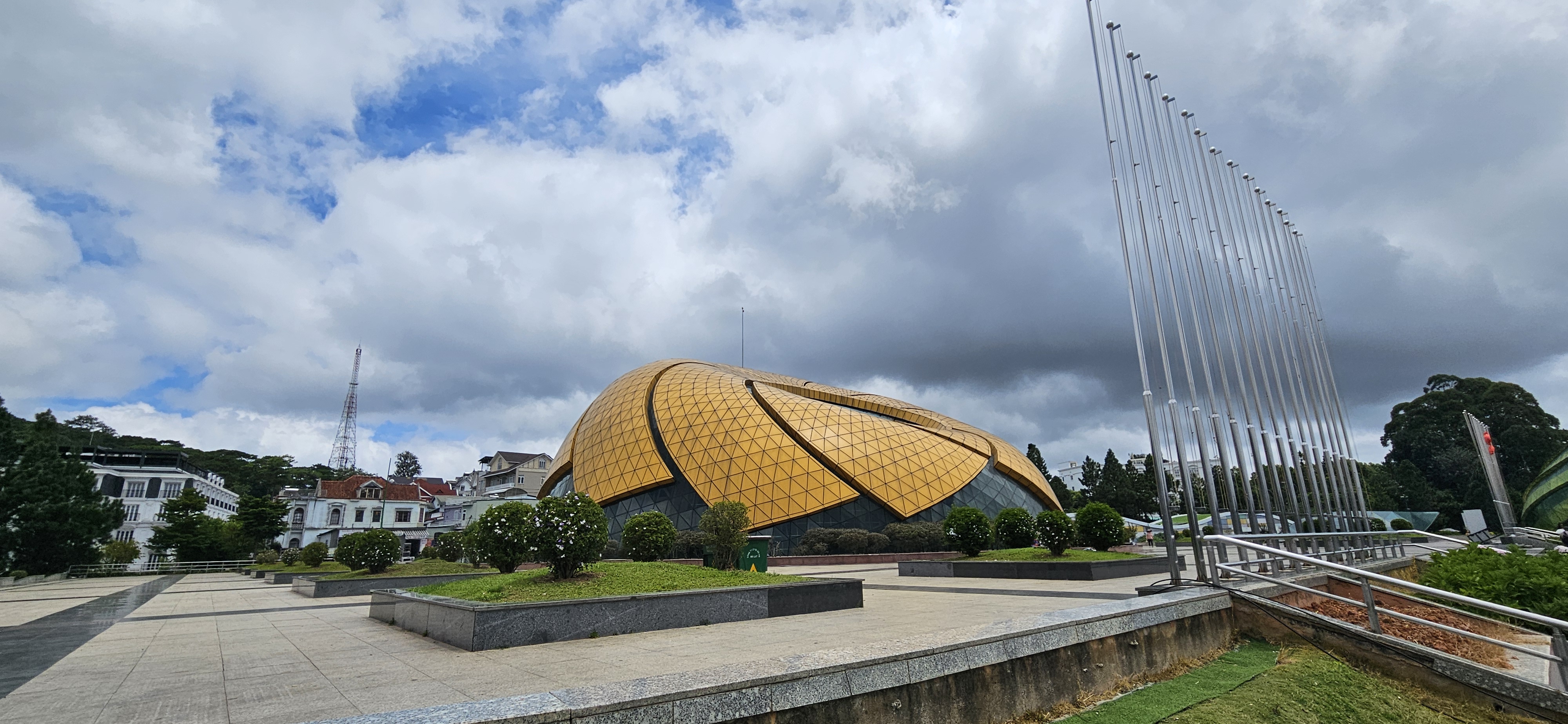
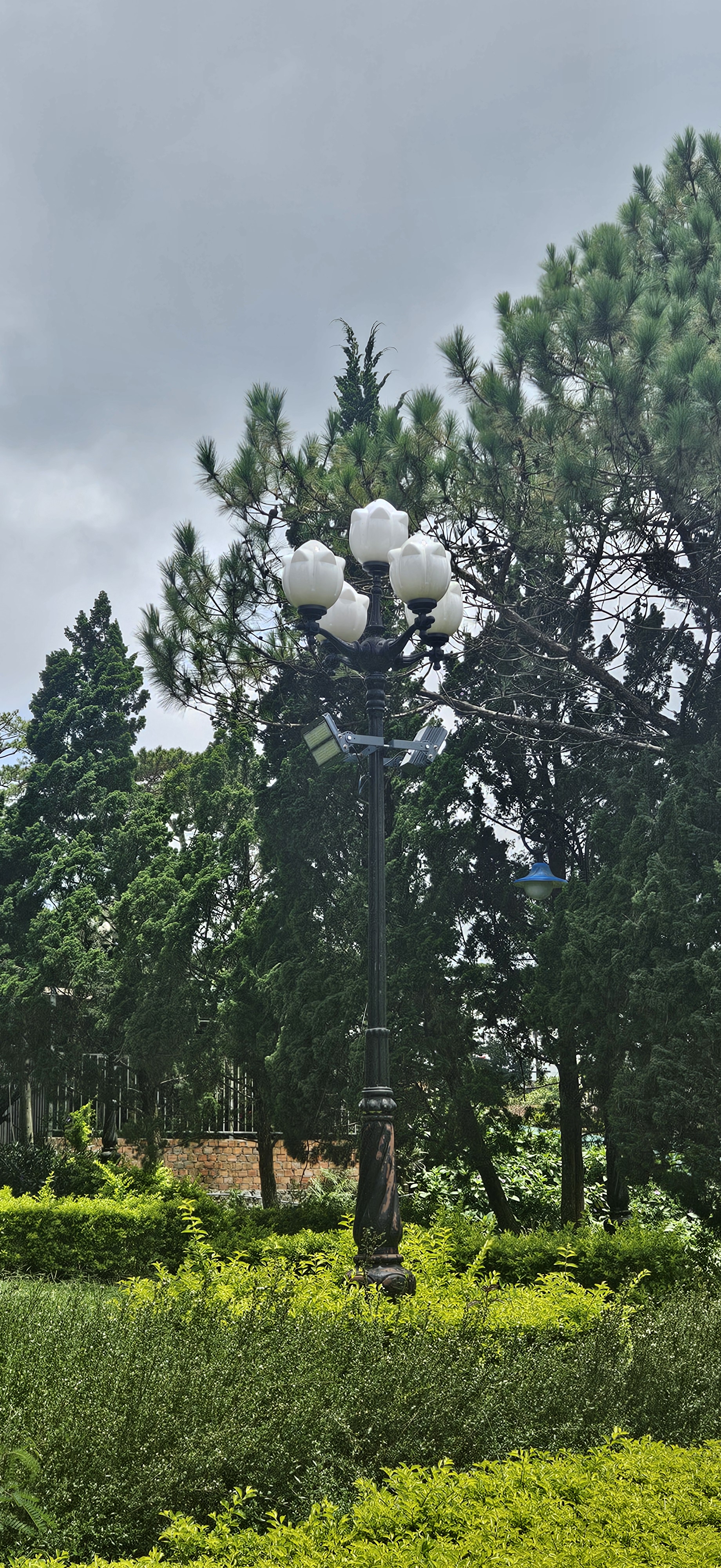
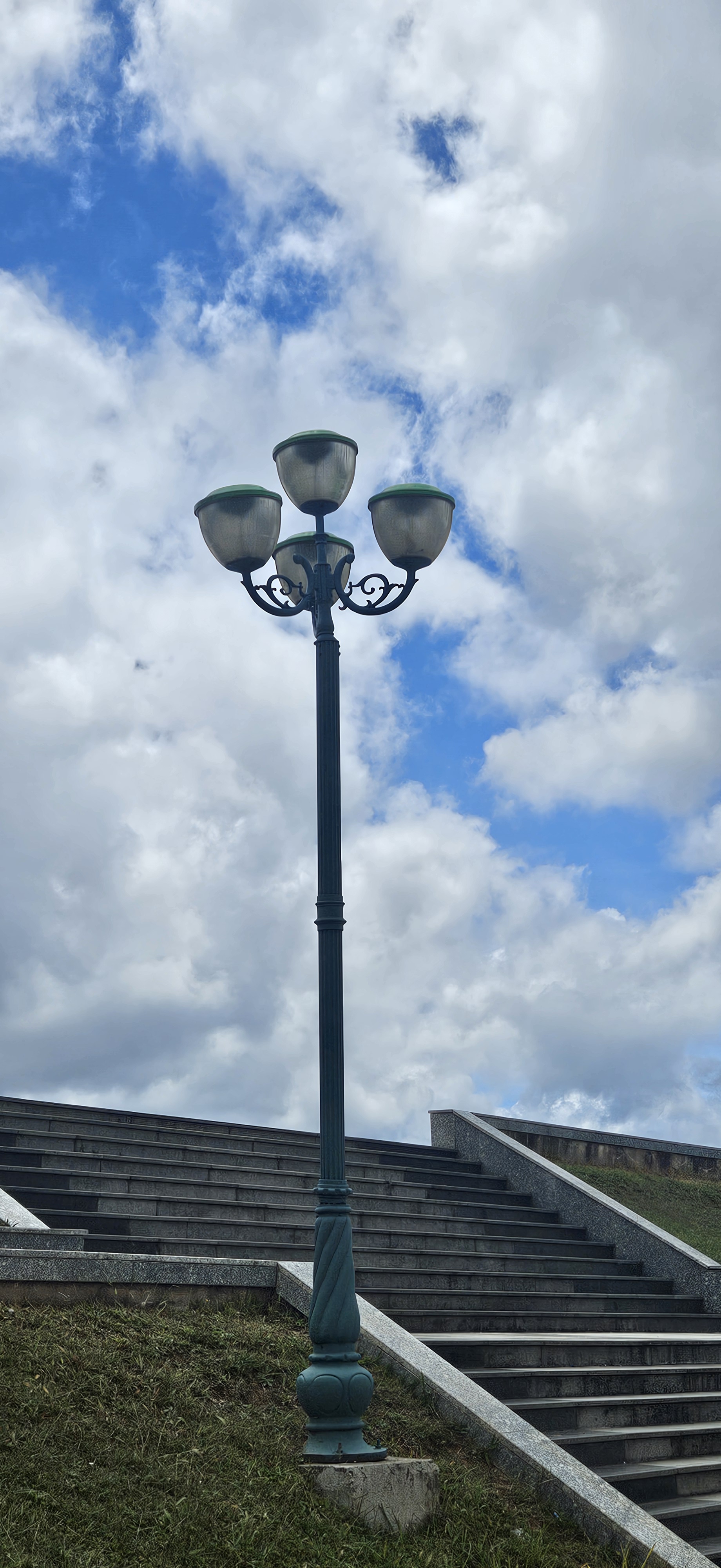
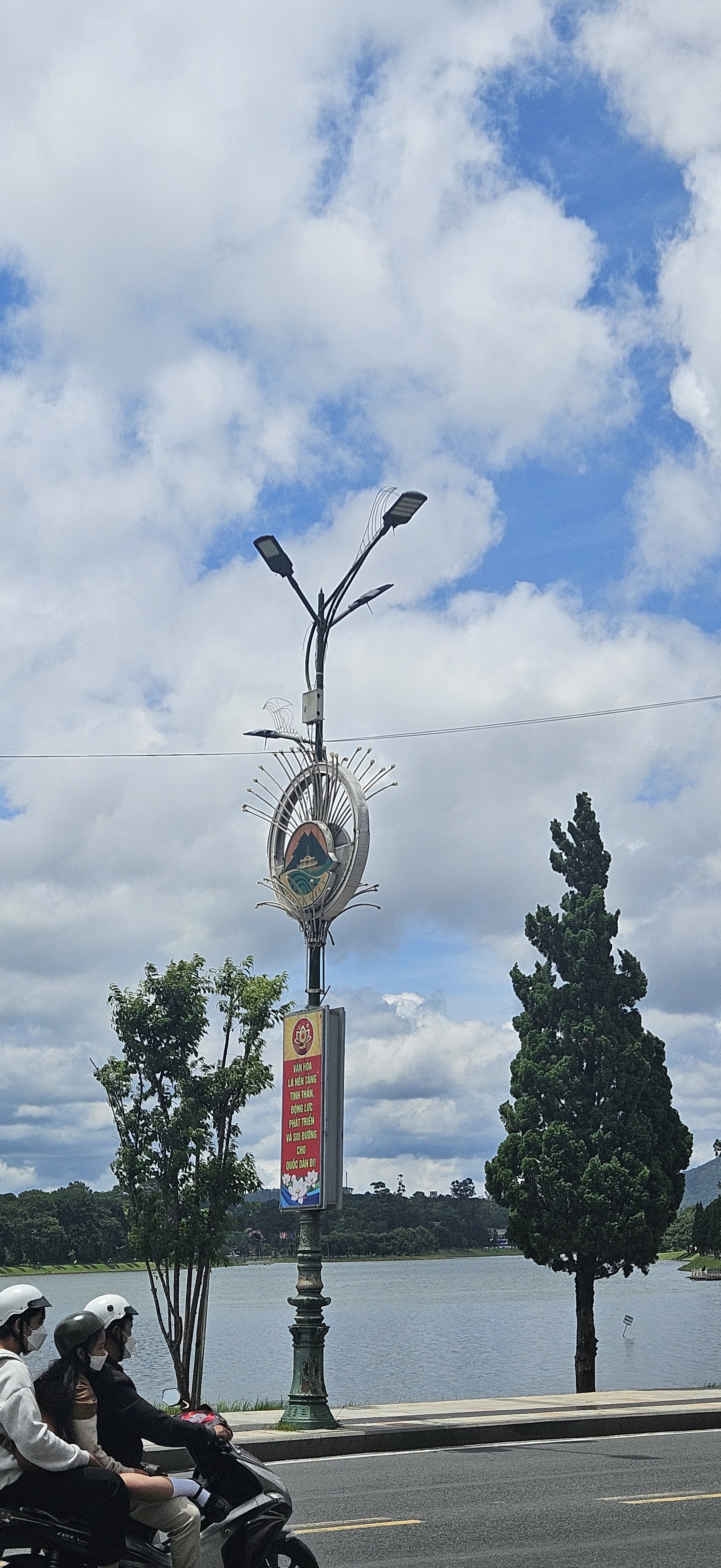
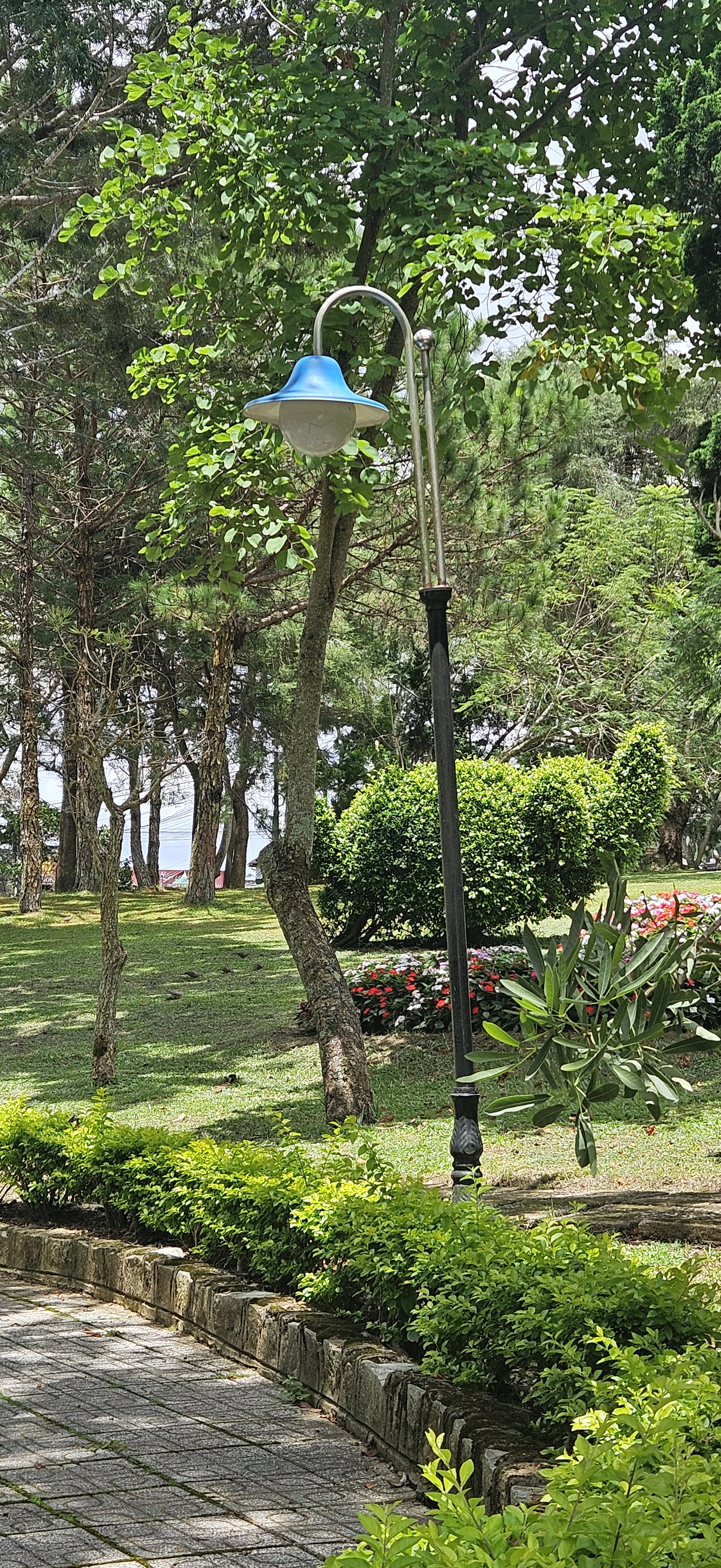
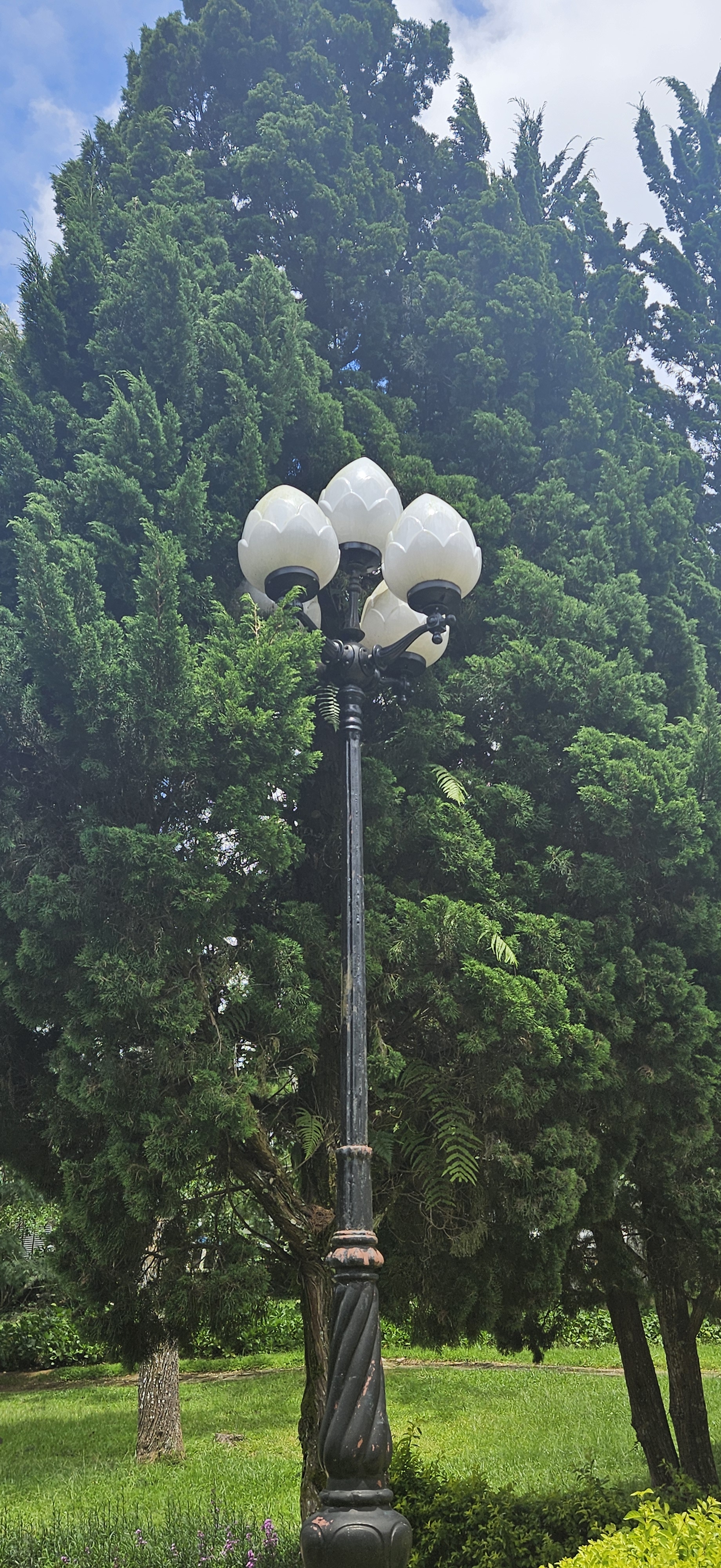
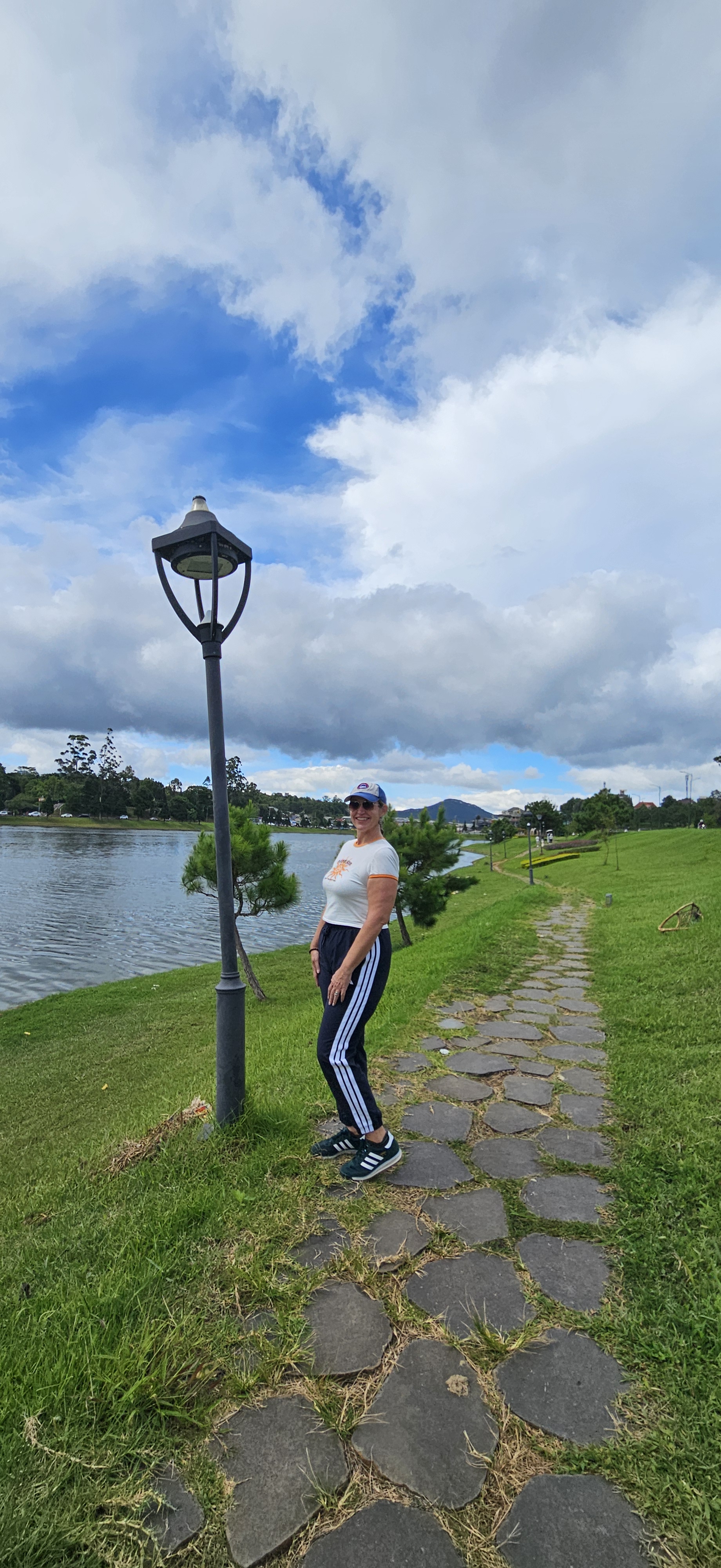
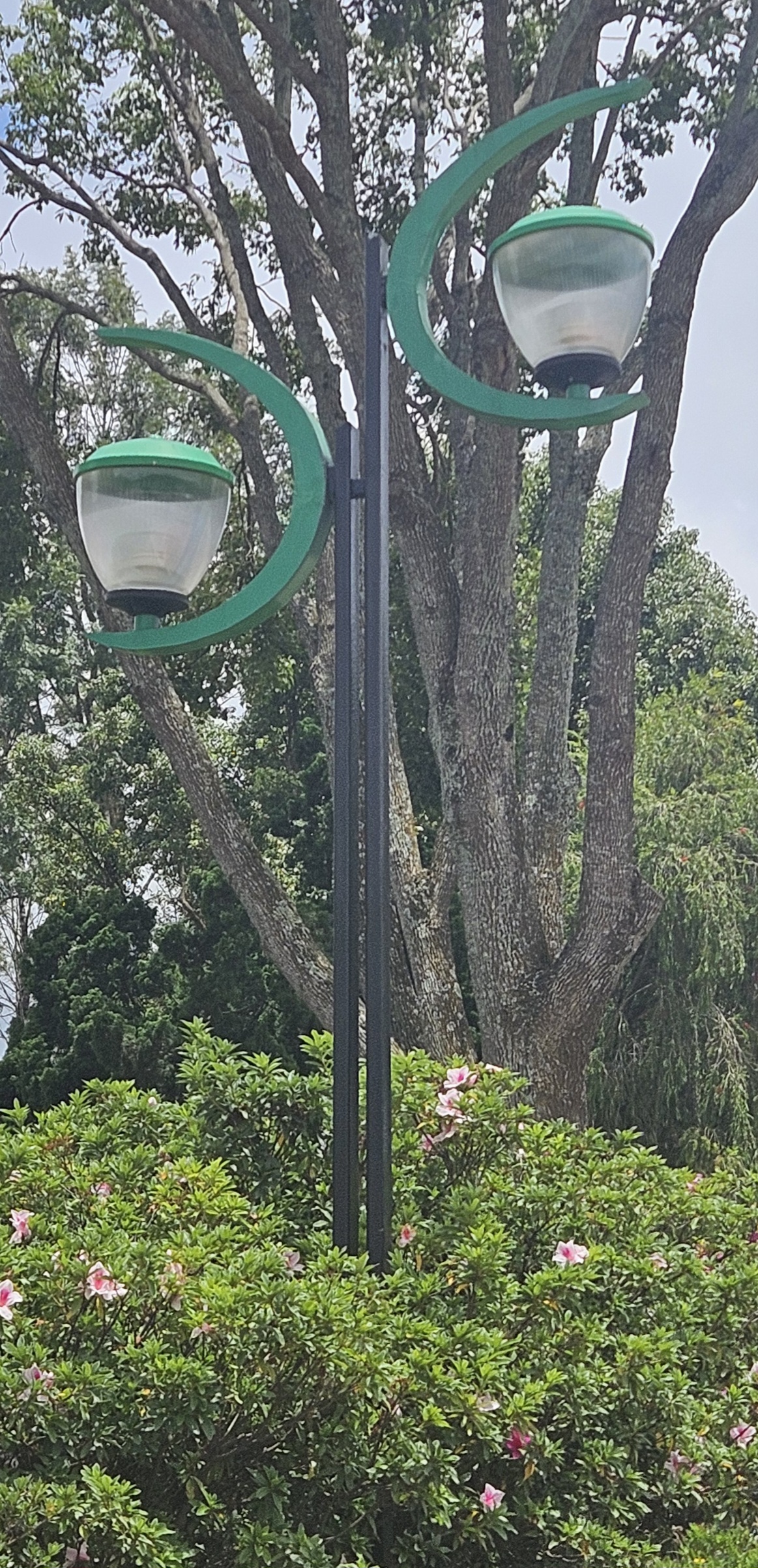
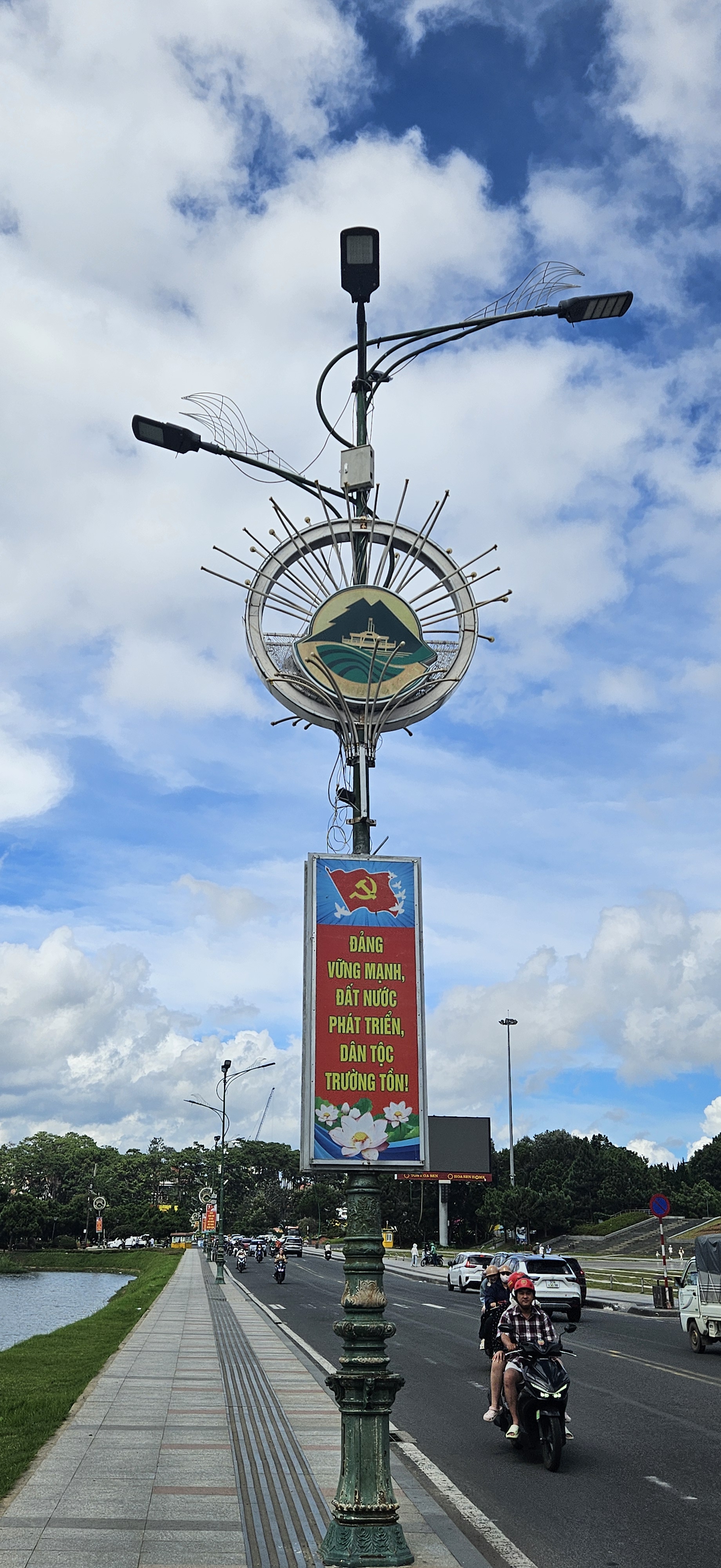
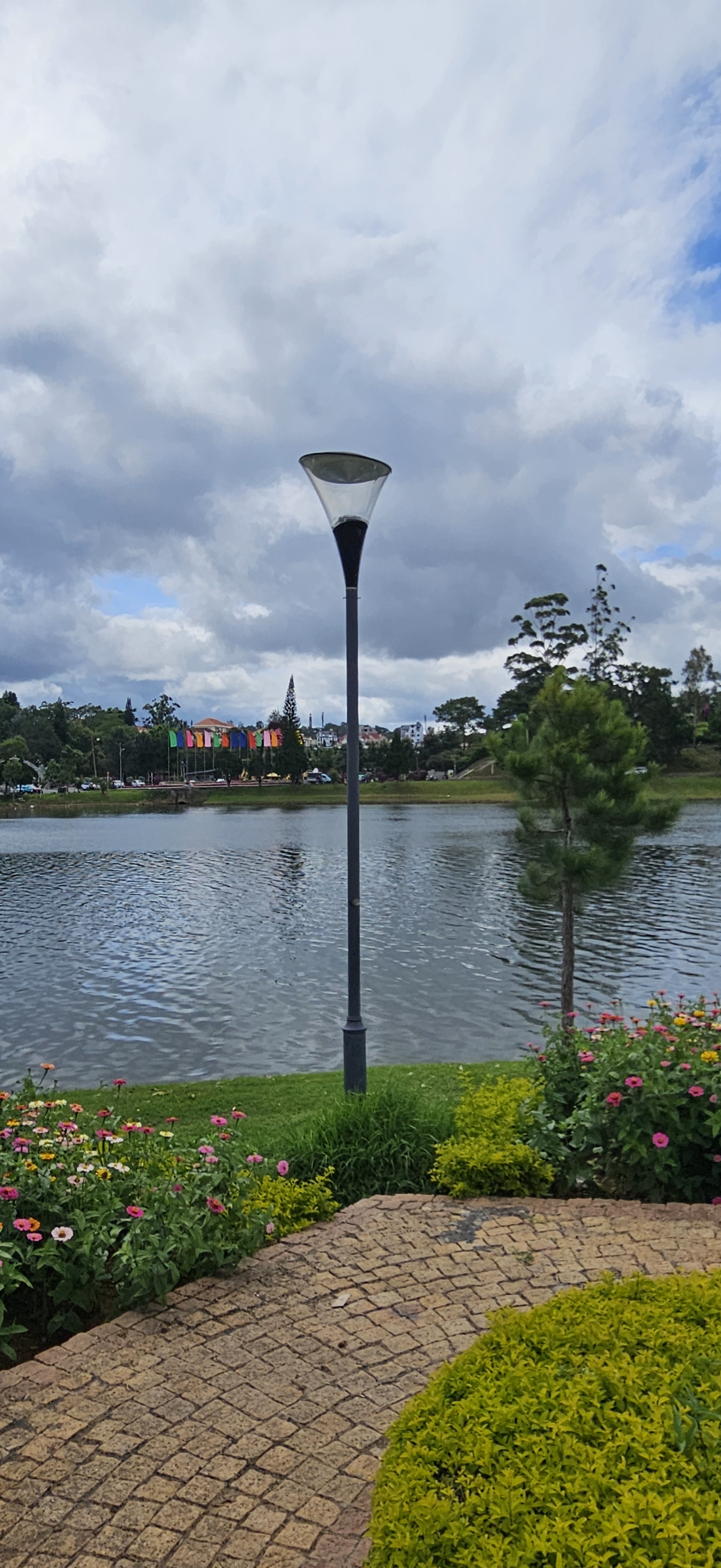
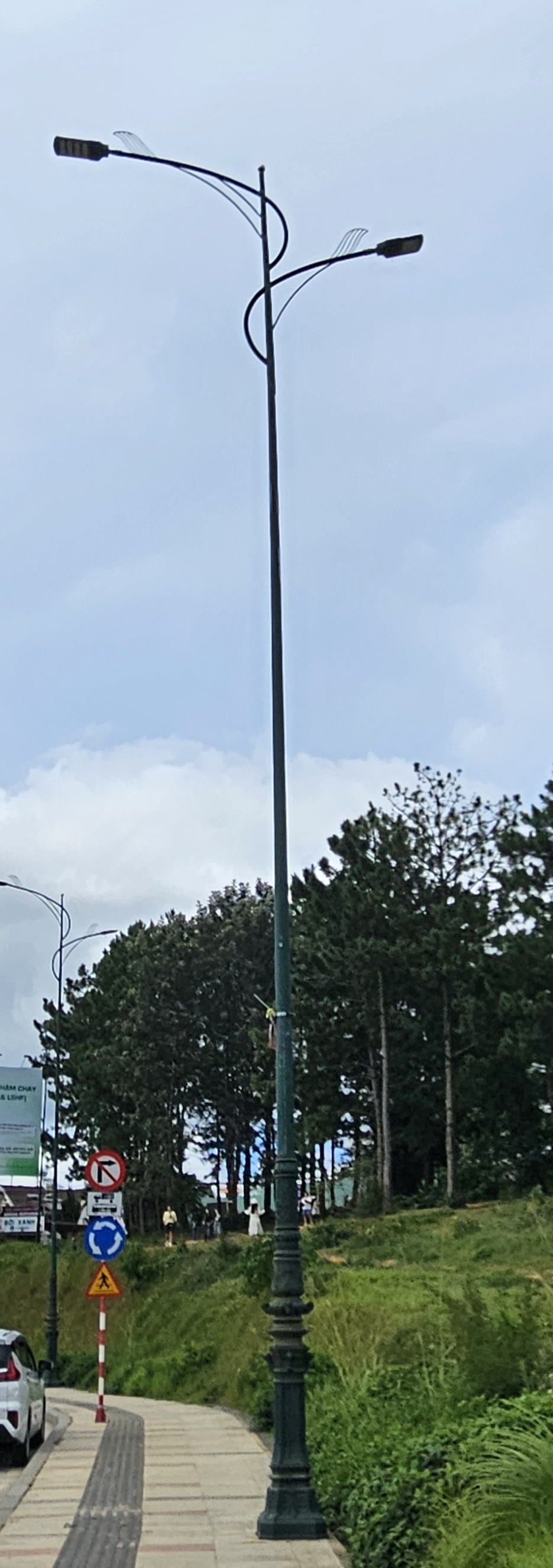
The lampposts around the park were so varied.
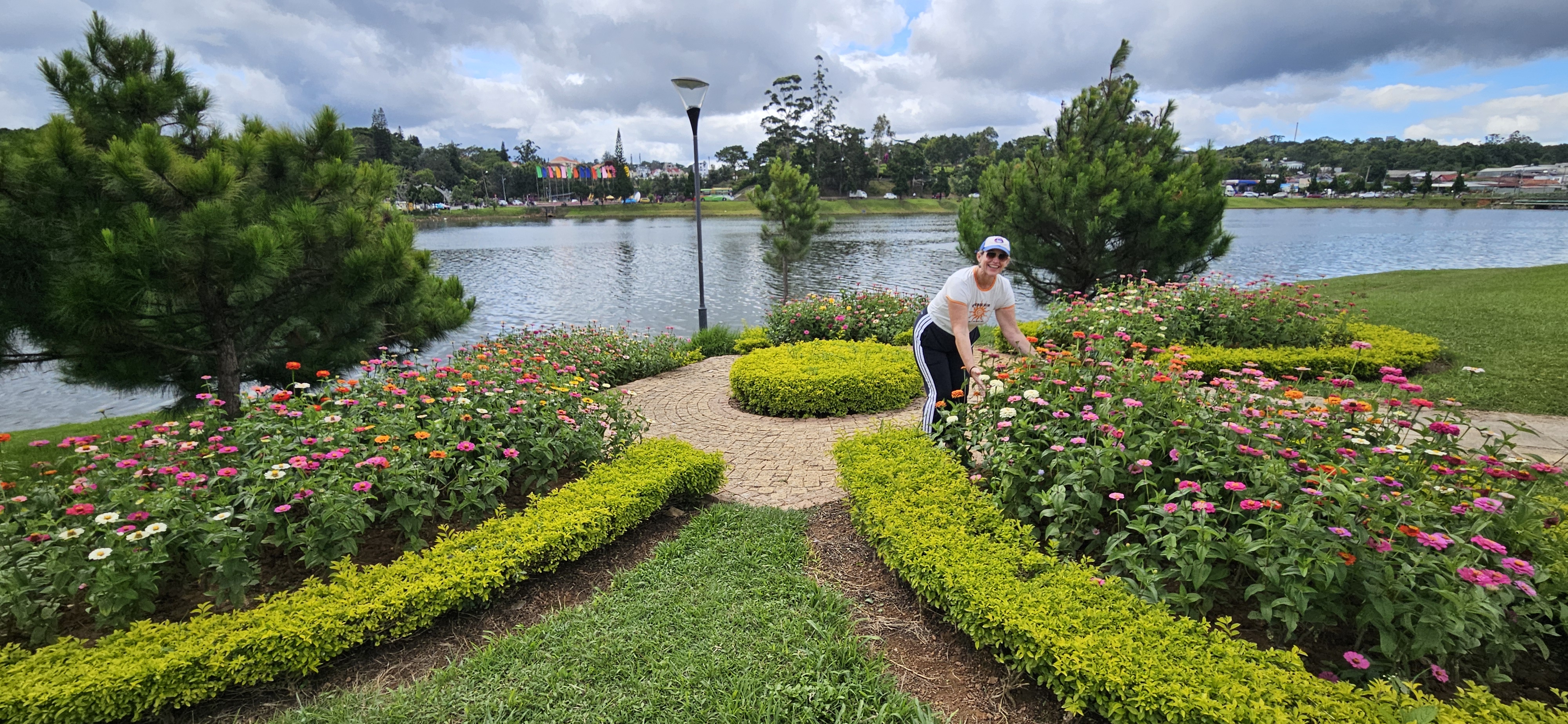
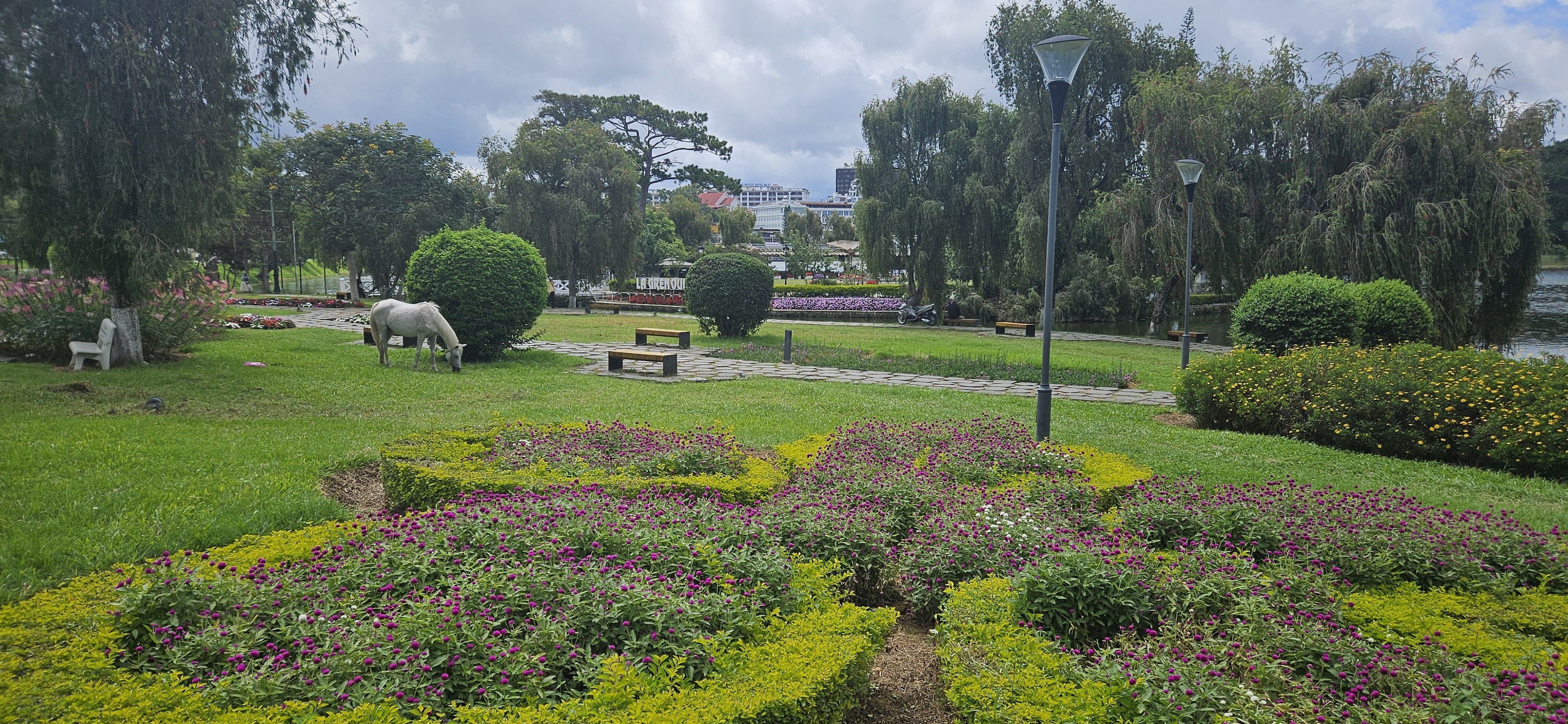
There were many more pretty flowers around the lake, and Jessica particularly loved the gerber daisies. We also saw paddle boats designed to look like big swans, but they were not in operation, much to our disappointment.
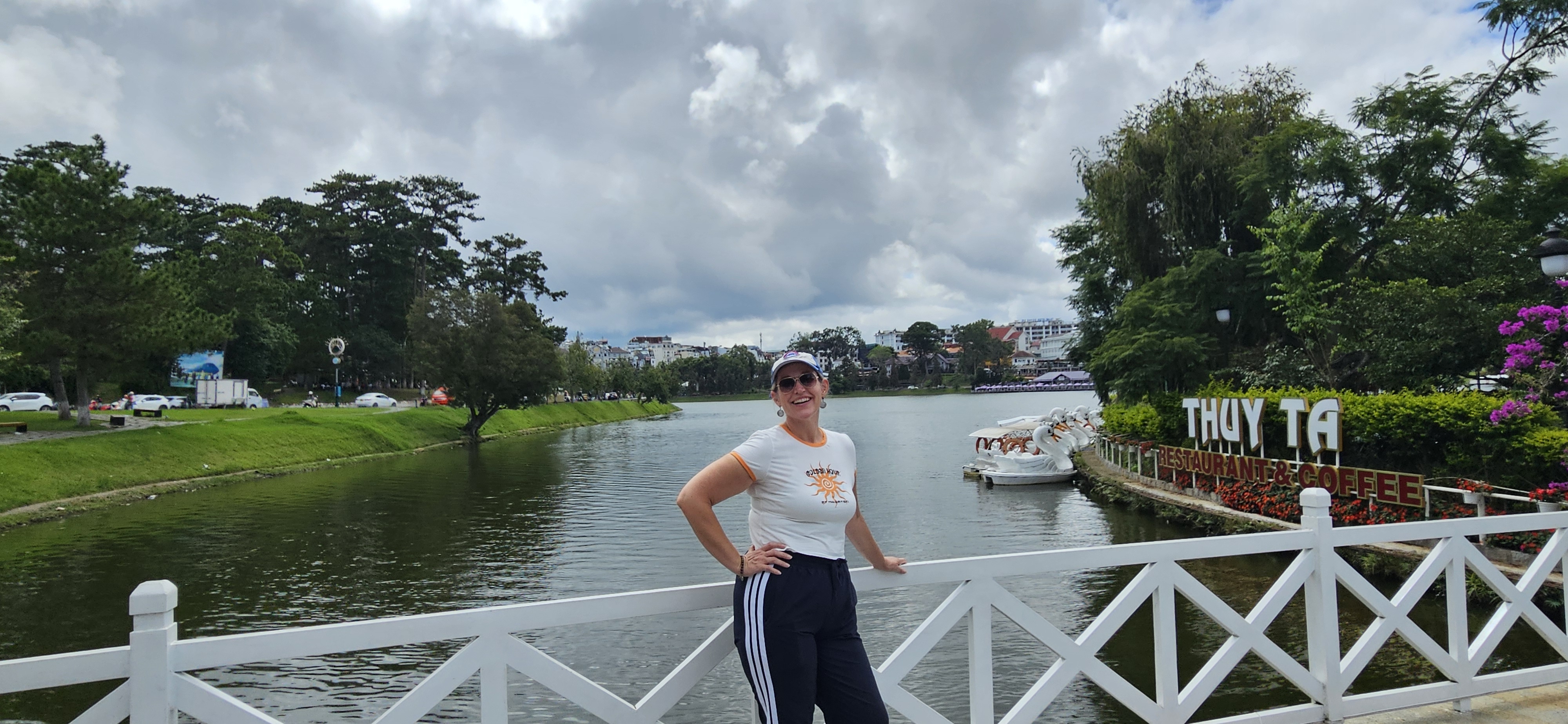
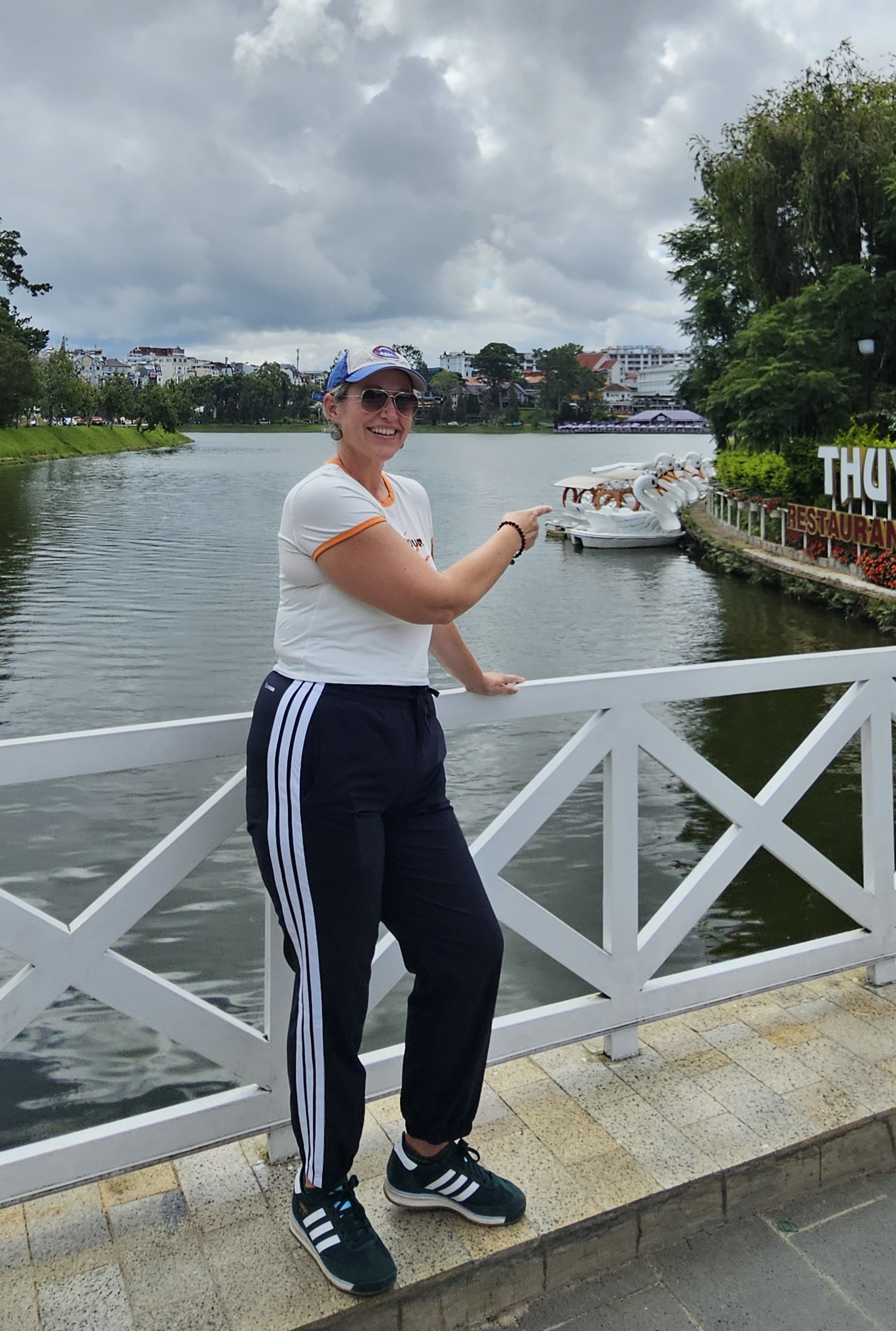
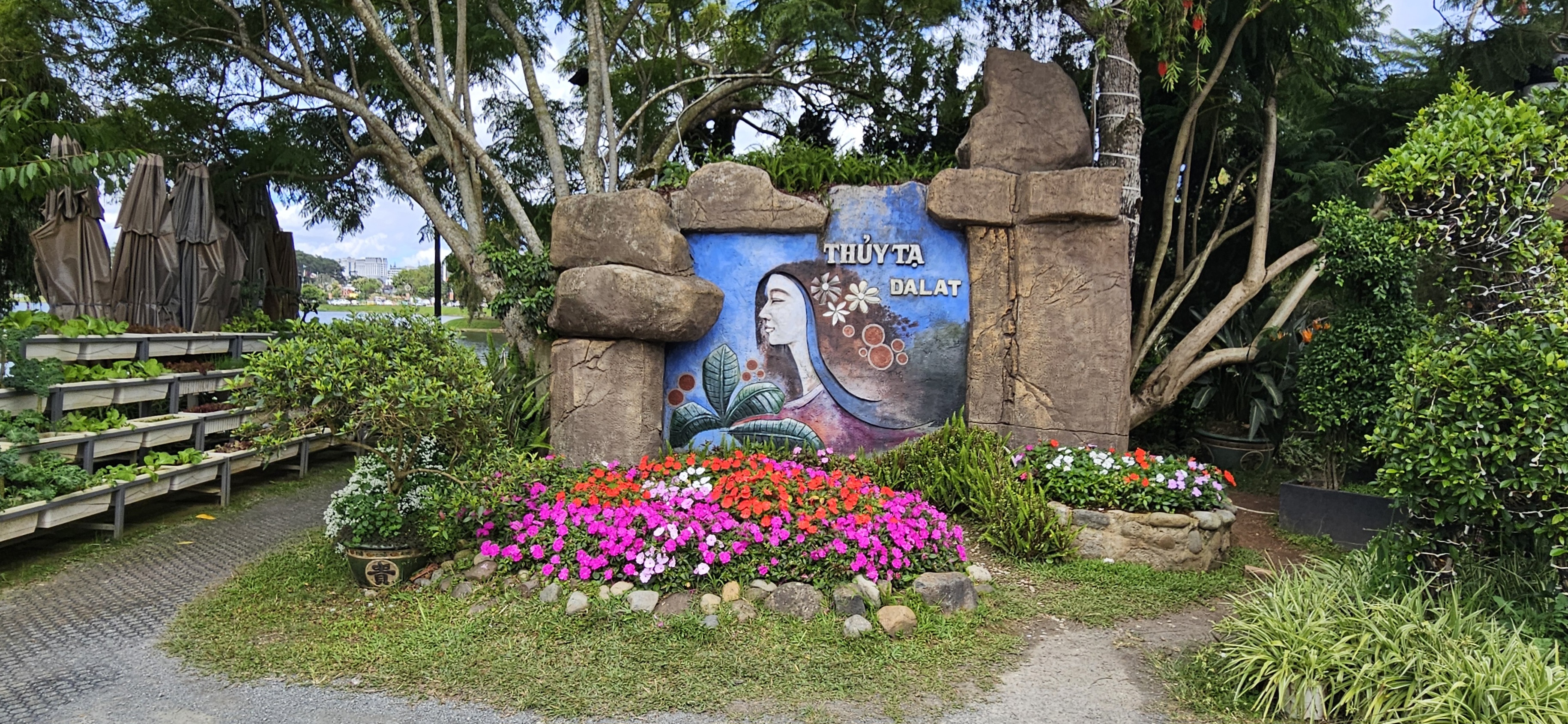
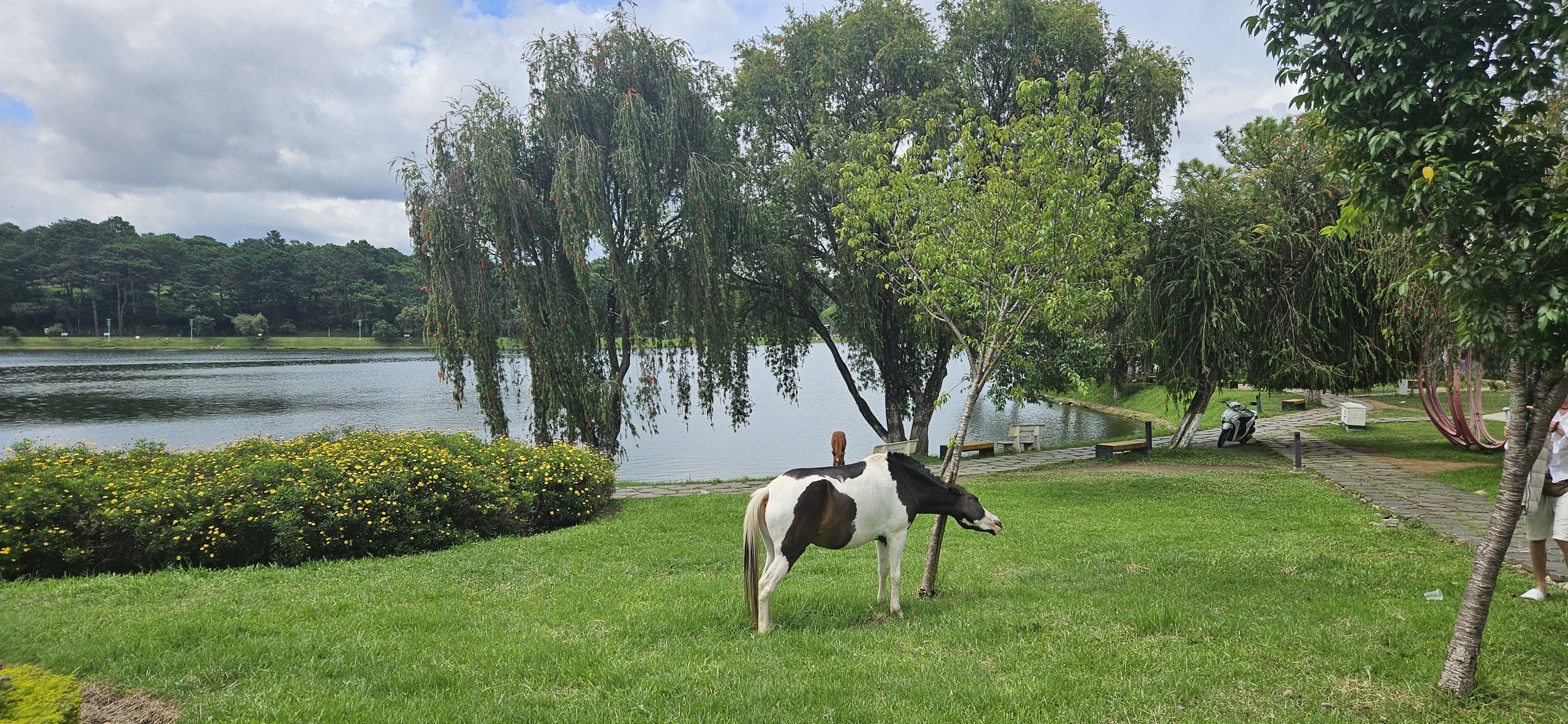
There were also some horses, just milling about, eating grass.
Next up: a trip to the super cool Maze Bar and the Eiffel Tower (of Dalat)!


Love the random horses around…that is so weird but also neat. Were they friendly? Also – those MOSAICS! Wow. I love that a lot. I am sucker for an interesting train ride. (Gerber daisies are one of my favs, too!)
LikeLike
The horses weren’t unfriendly, and one was tied up. The others weren’t, there were handlers (we think) nearby, but it wasn’t too clear. The train ride was a must, it was so worth it just for the experience.
LikeLike