In the last post, I mentioned meeting the head gardner at the Fort/part-time tour guide, named Mr. Alif, when we were touring the Maliboro neighborhood. We reached out to him on Whatsapp and gave him a few places we wanted to go, and he quoted us a price, and we agreed to start early in the morning. First stop, the world famous Borobudur Temple.
Mr. Alif and his brother-in-law, our driver for the day, picked us up at the hotel and we took the hour ride to the temple. Mr. Alif took us in “the back way” which was just the entrance they didn’t have a parking fee and was not used by the big tour buses. As such, there was no line at the ticket entrance. We had gone to put on our sneakers as we expected to walk a lot that day, but he said, no need, as they would give us sandals to wear, that would not damage the temple grounds.
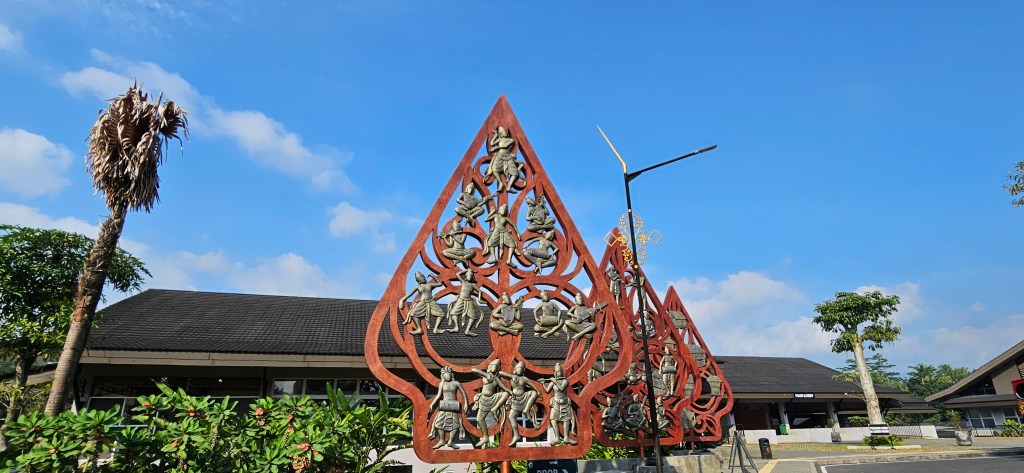
Once we received our tickets, we boarded an open air, mini-bus with fellow tourists for a short trip to the temple gatehouse. There we were given our bamboo sandals, a bag for our shoes, and a group number for the English speaking tour guide. We didn’t have to wait too long until our group was called, and we were off with our group of about 15. Our guide told us about the history of the temple, and we could see it from far off.
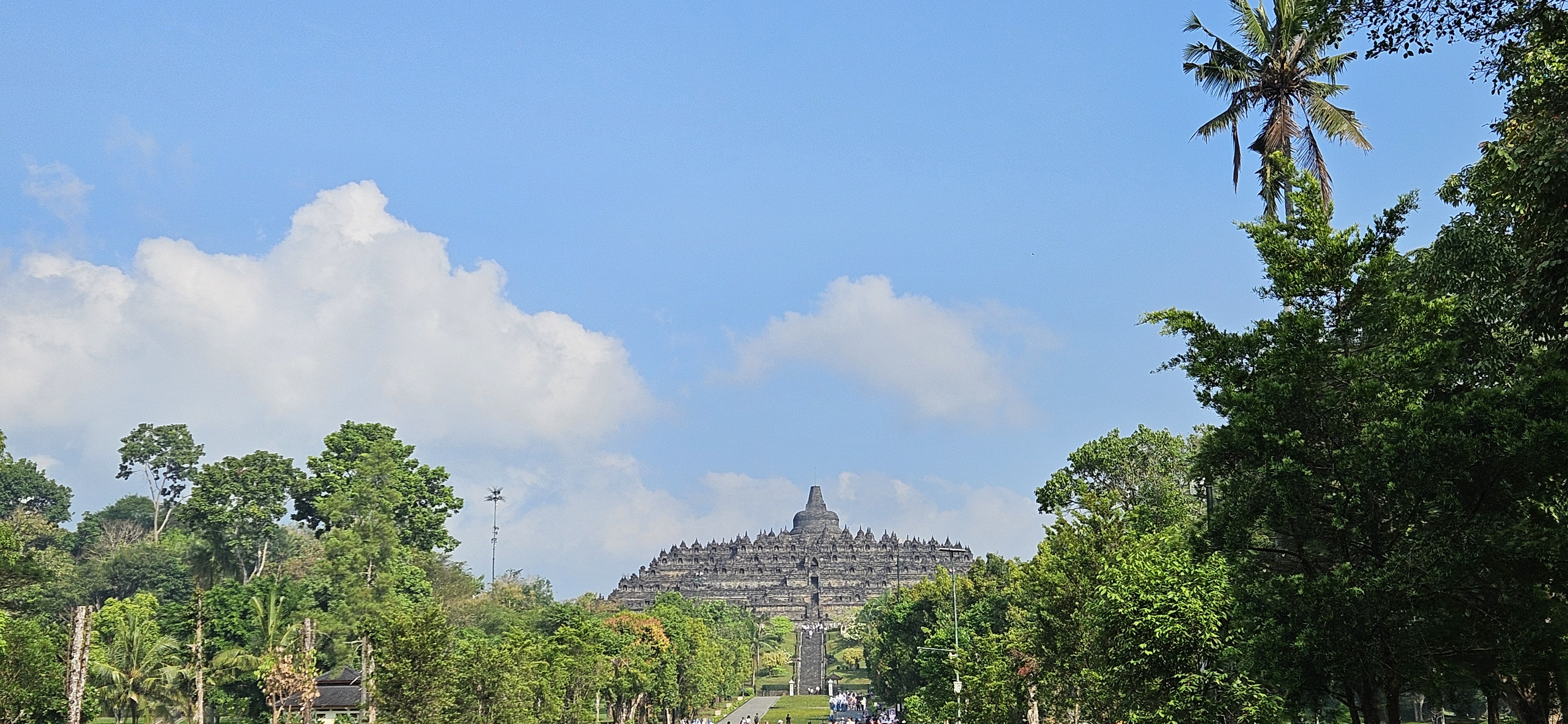
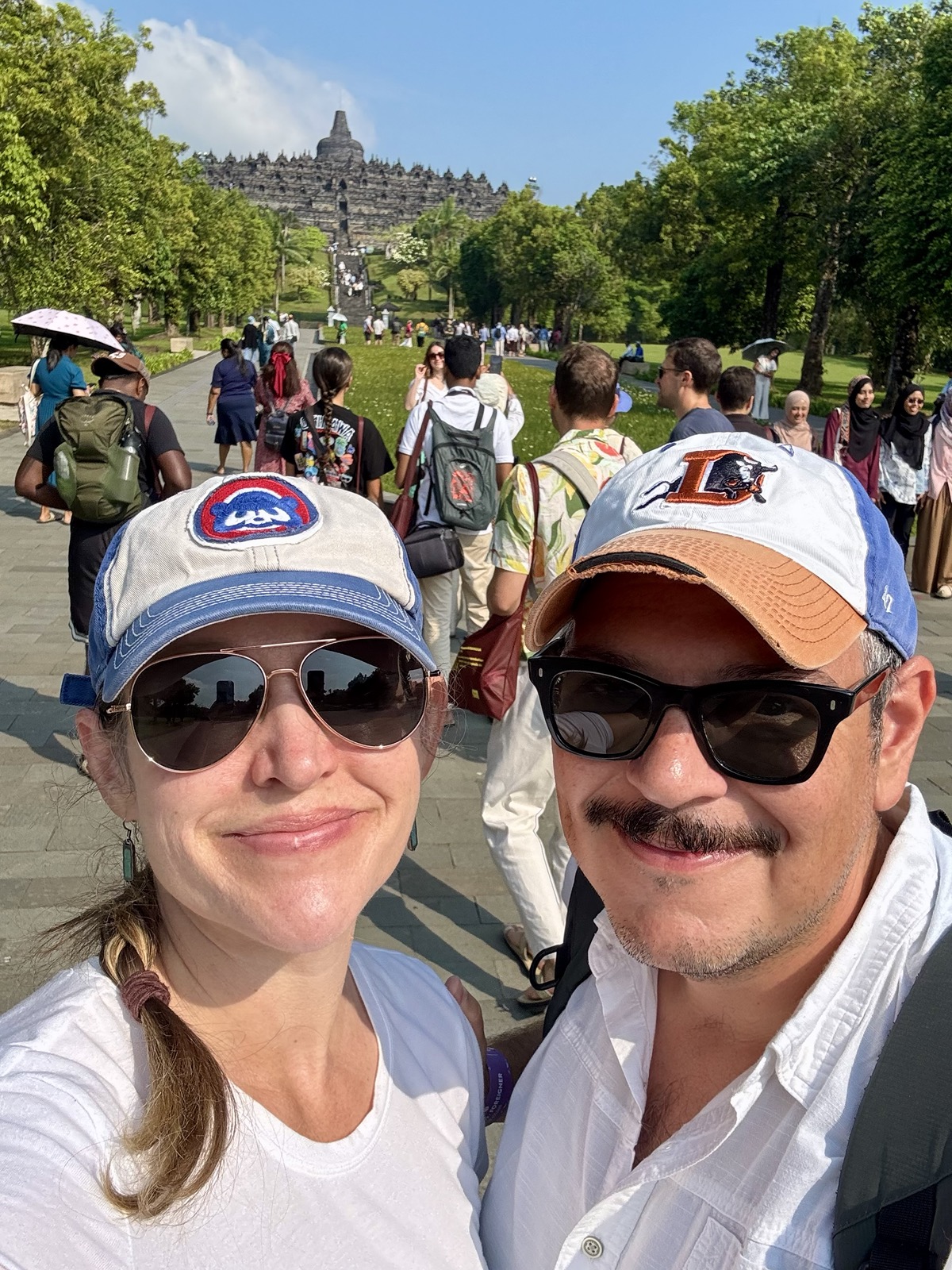
The guide told us that Borobudur is actually not a temple, as there are no interior chambers and no worship rooms at all; it is a monument (I will still call it a Temple for this post, for ease, as it is known as the largest Buddhist Temple in the World). It was originally built in the 9th century during the reign of the Sailendra Dynasty; but had undergone some further renovations in the early 1900s. It was actually buried under volcanic ash and dirt for hundreds of years, and was later “re-discovered” in the 1830s, when 200 trees had to be chopped down to access it. Up until the end of the 19th century, some pieces were taken from the complex and sold to large museums around the world.
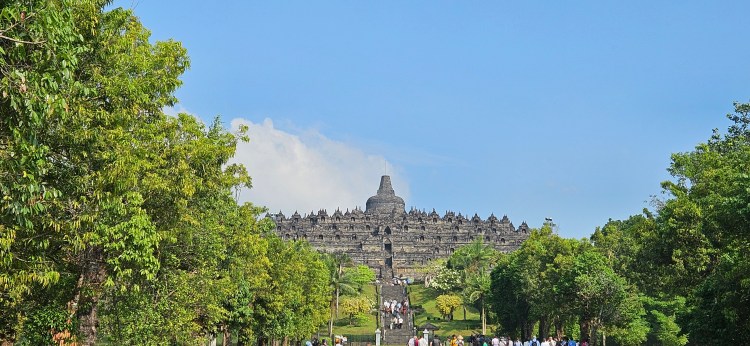
Later, between 1907-1911 a much larger restoration project was undertaken, and the temple looked then as it does today. During the Japanese occupation during World War II, the Japanese General in charge of Indonesia believed the Dutch (who had colonized Indonesia) had buried gold in the base of the structure. Thus, he used dynamite to blow up the lowest level, but found no hidden gold. Later, in 1975, the last major renovation was undertaken to restore Borobudur to its current state.
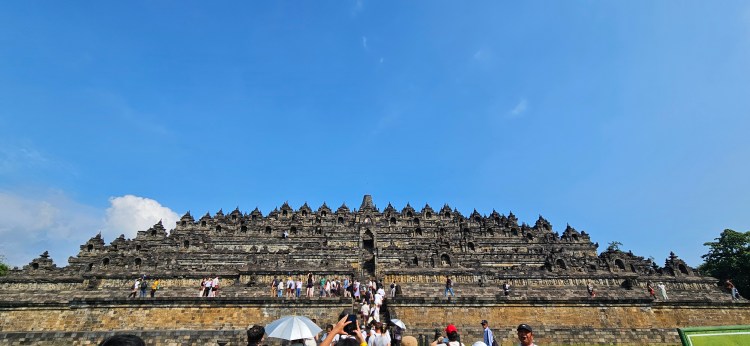
There are nine levels of the temple, the first six are square, the top three are circular. The stairs are steep, and we were covered in sweat on the hot day, even though it was early in the morning. There are umbrella salespeople everywhere which protect from the sun (and the rain, so dual purpose). Our guide showed us the first level first (duh) and on it there are many reliefs of everyday life of the people at the time of it being built. There are tales of living a pious and honest life, and what comes from that; alternately, there are also cautionary tales of drinking too much and sleeping with their family members (yikes!). There also are still sections that are buried, with reason; they are graphic sex scenes, and it was decided to keep them hidden.
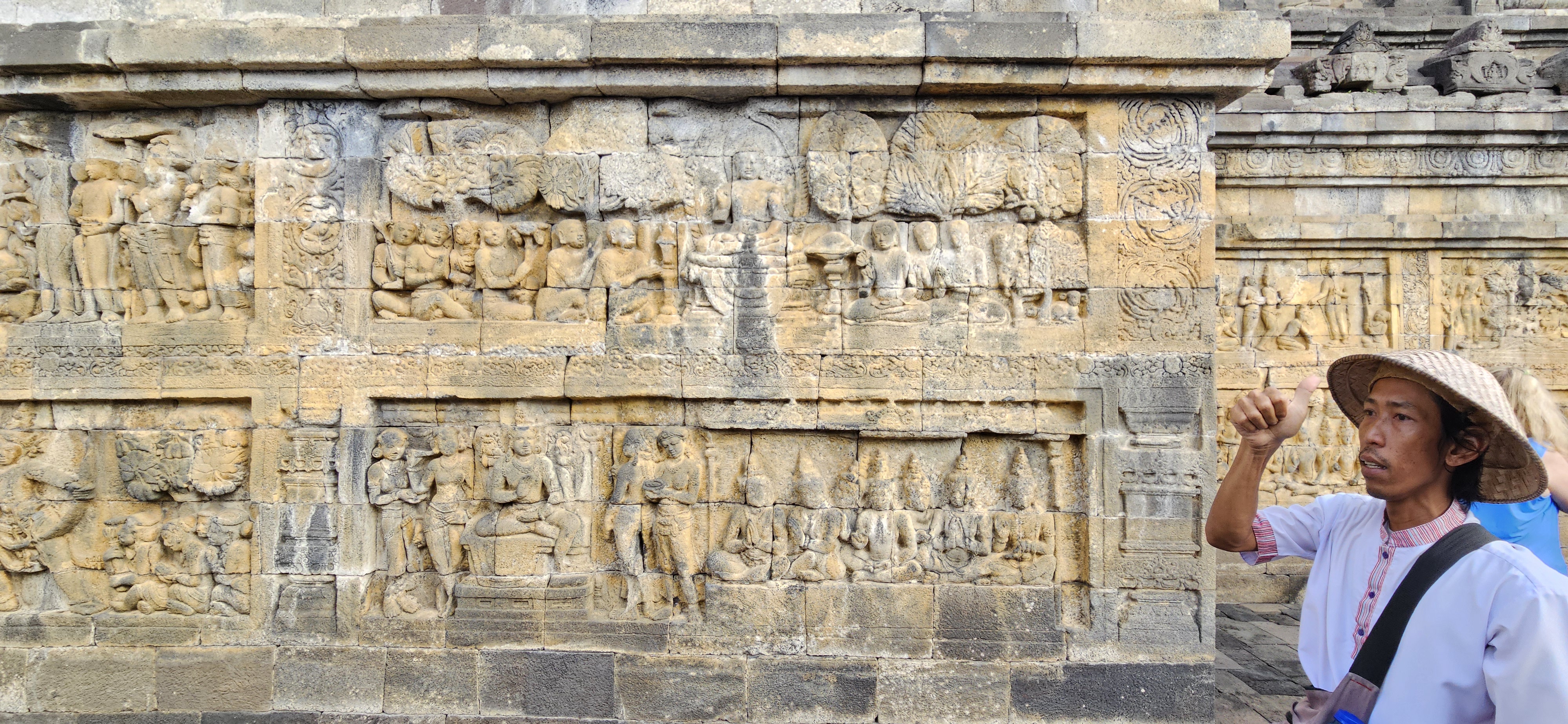
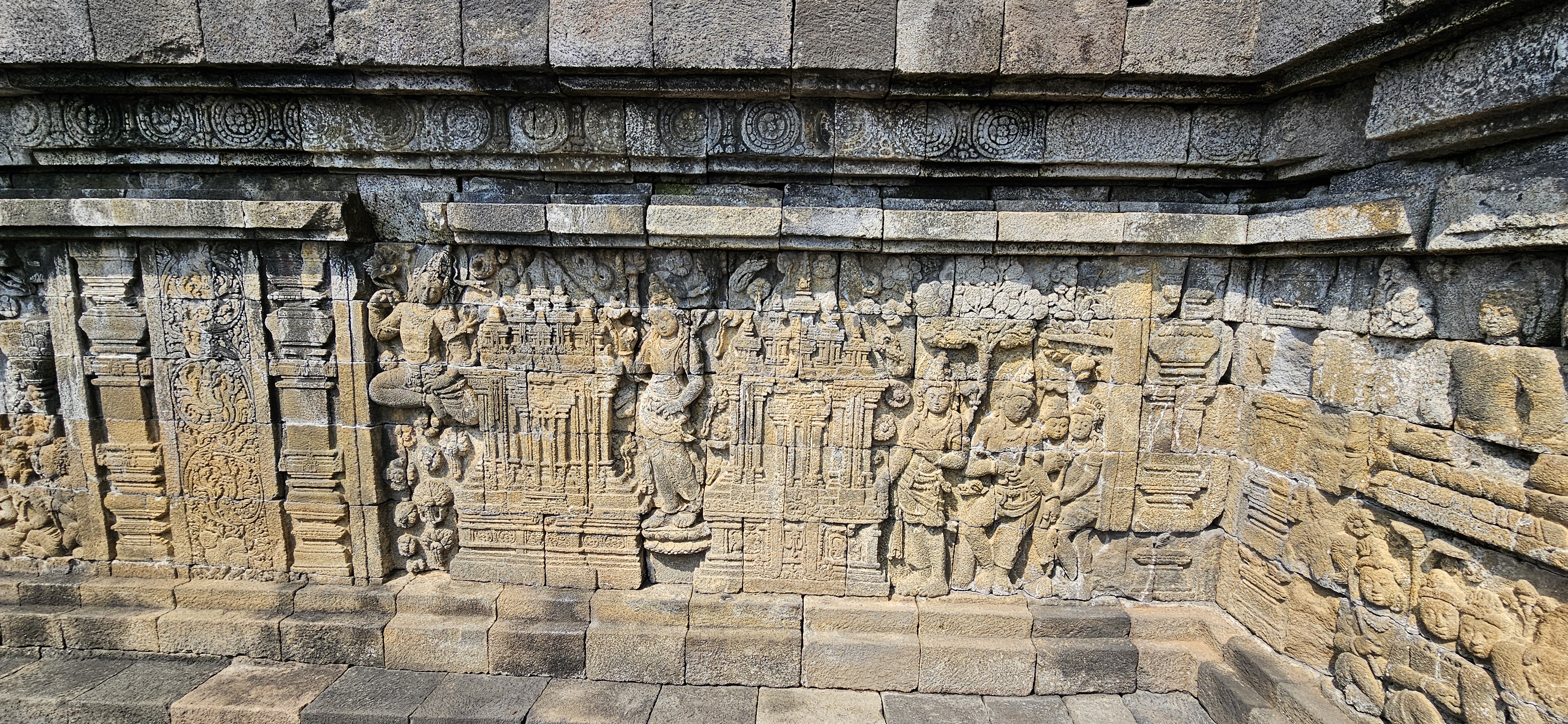
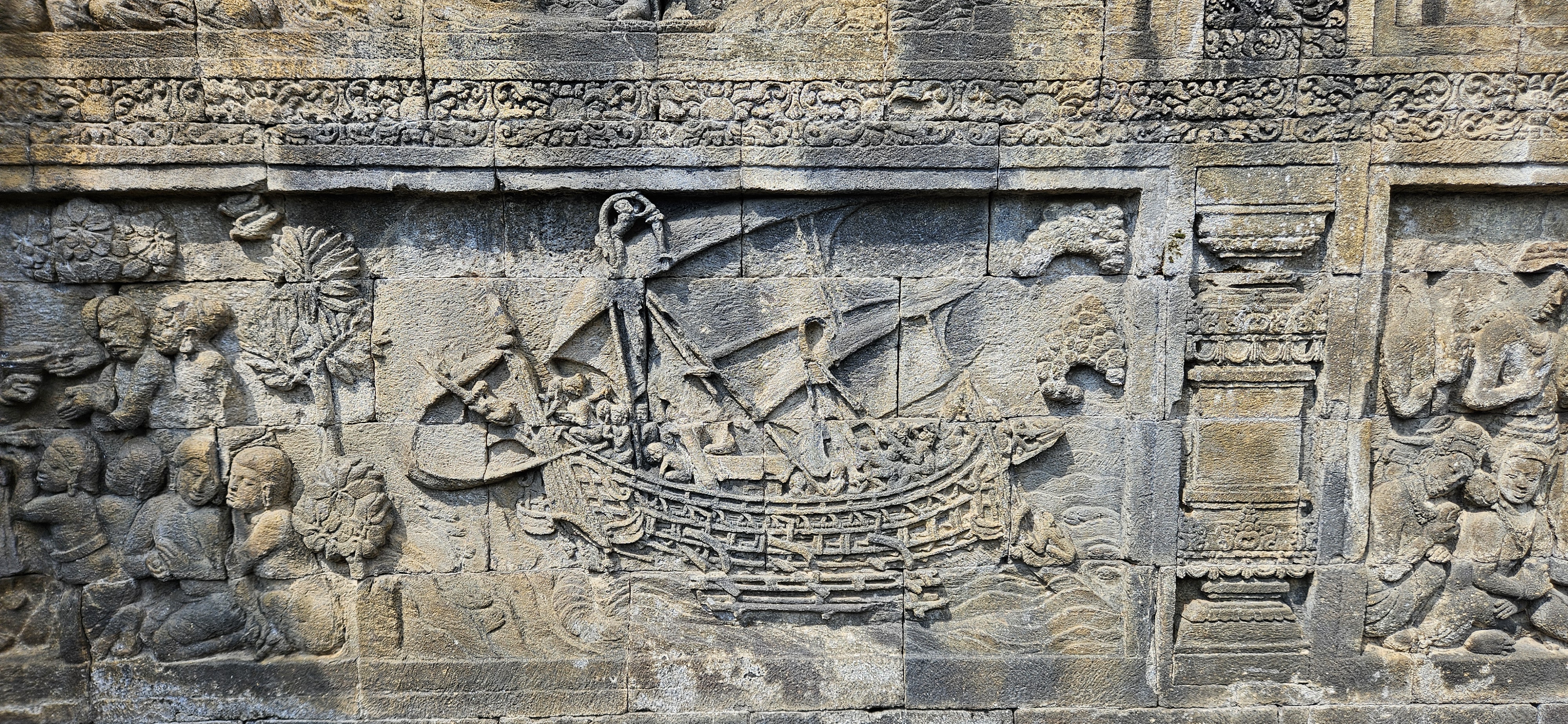
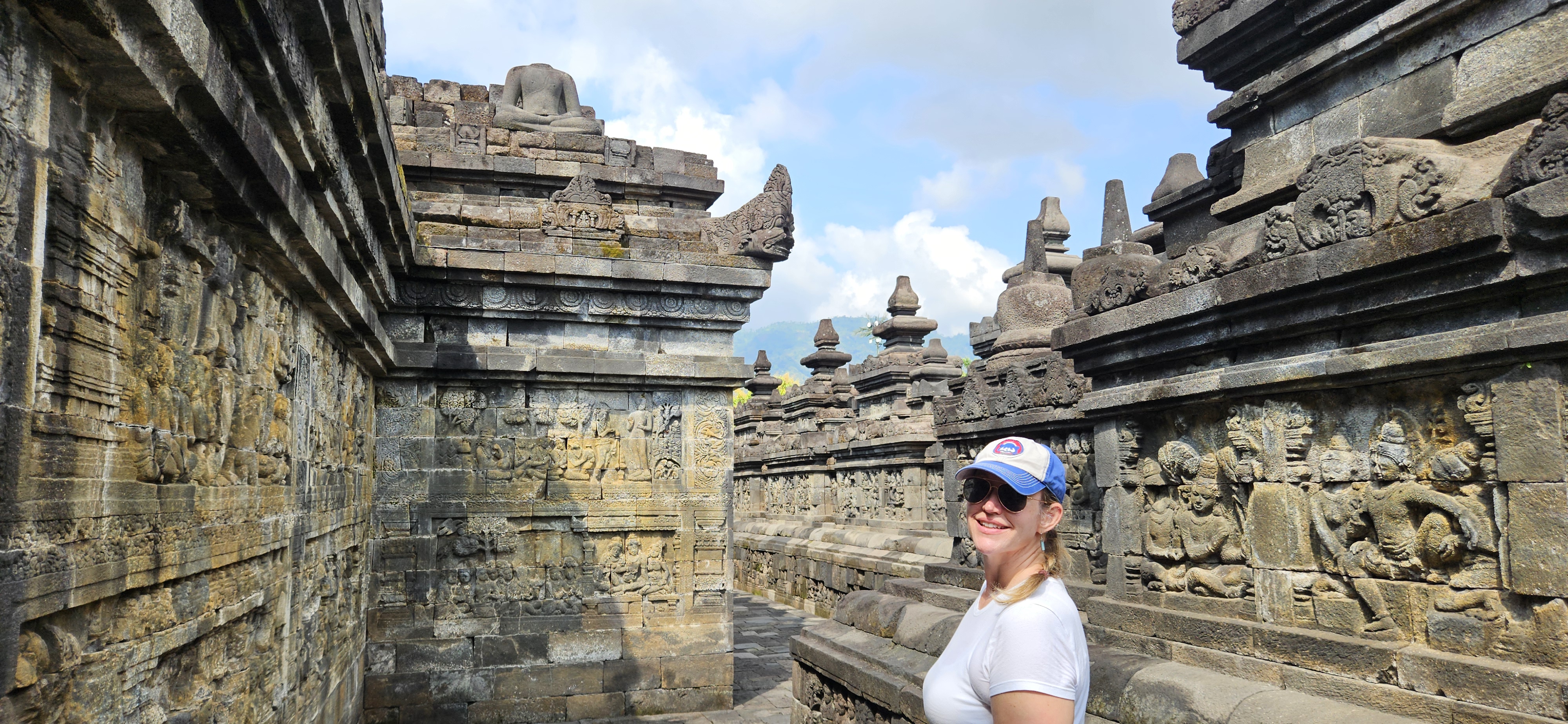
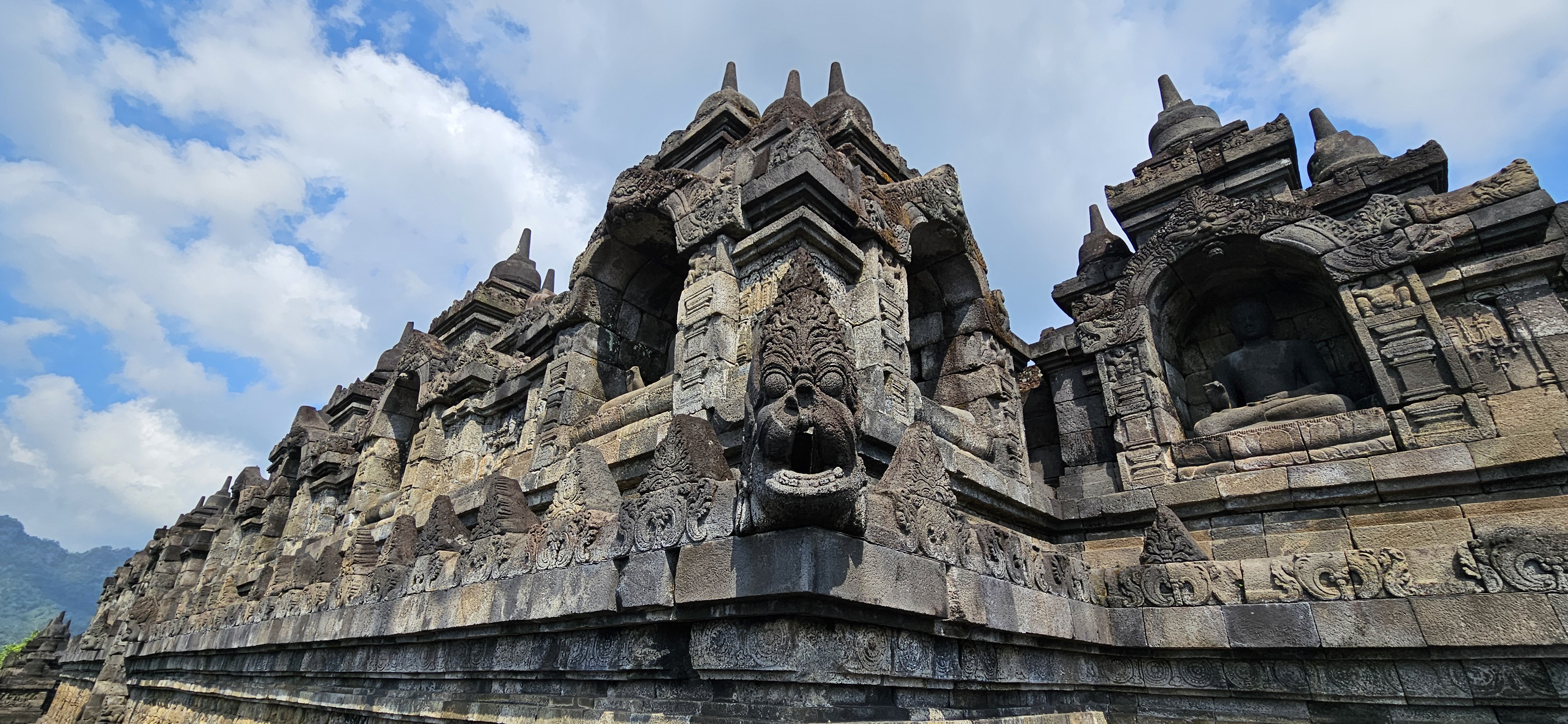
As we climbed the levels, we learned that Borobudur was built by 3 kings, and thus, each level as we went up was a little less refined compared to the prior. After nearly 50 years (appx 782-833 AD), they began to run out of money, so had to be more economical with the stones and processes used on the highest levels. As we neared the top we could see the landscape around us open up to beautiful hills of green.
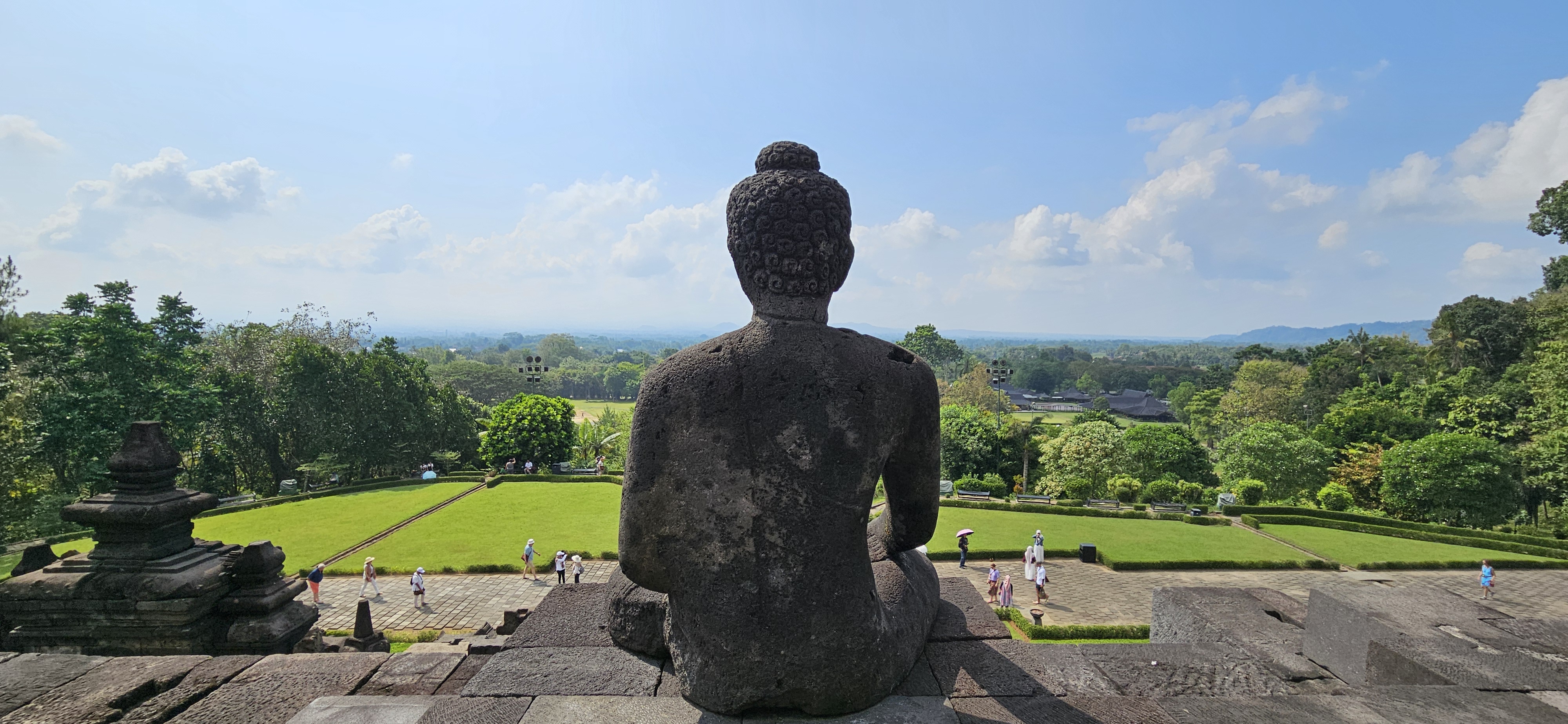
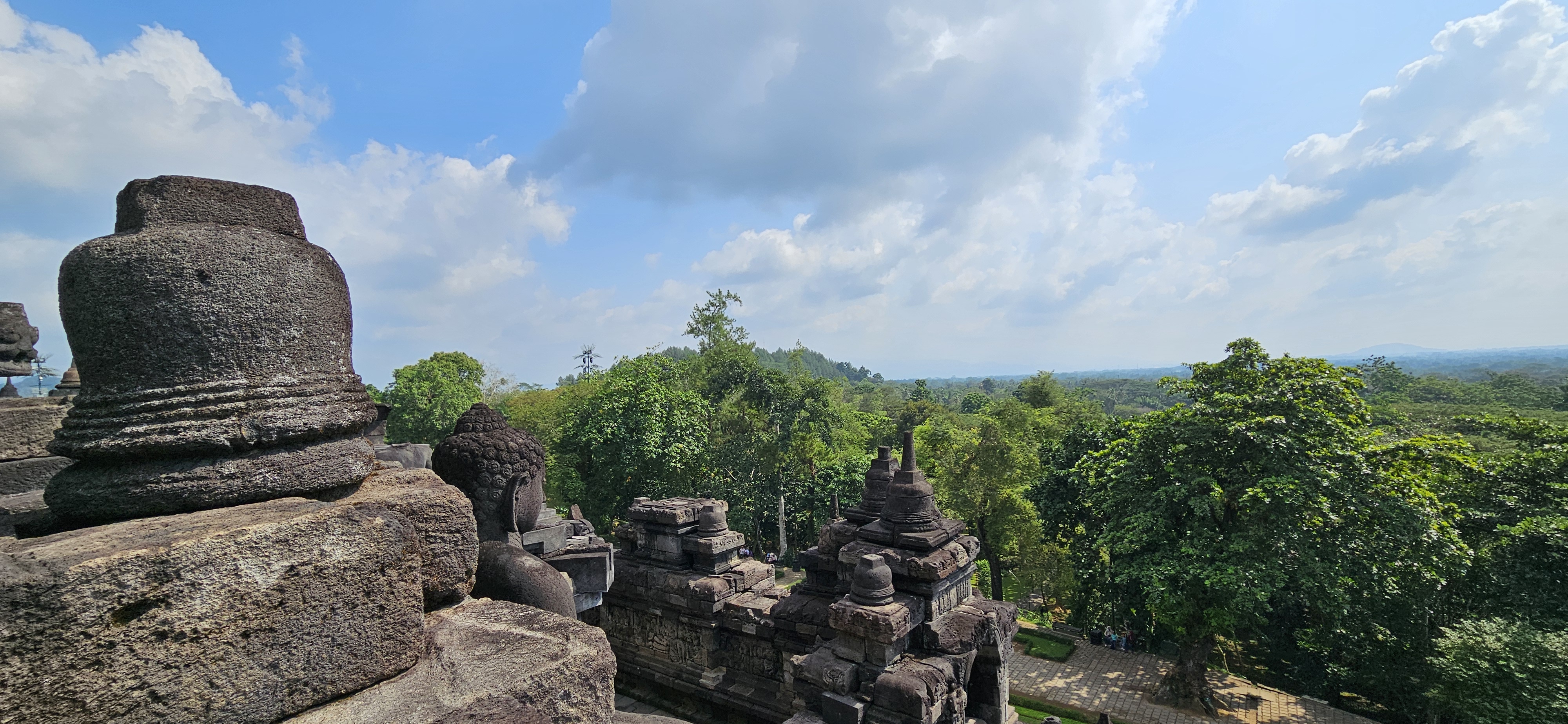
As you can see above, the Buddha head has been reattached; many were stolen, as mentioned earlier.
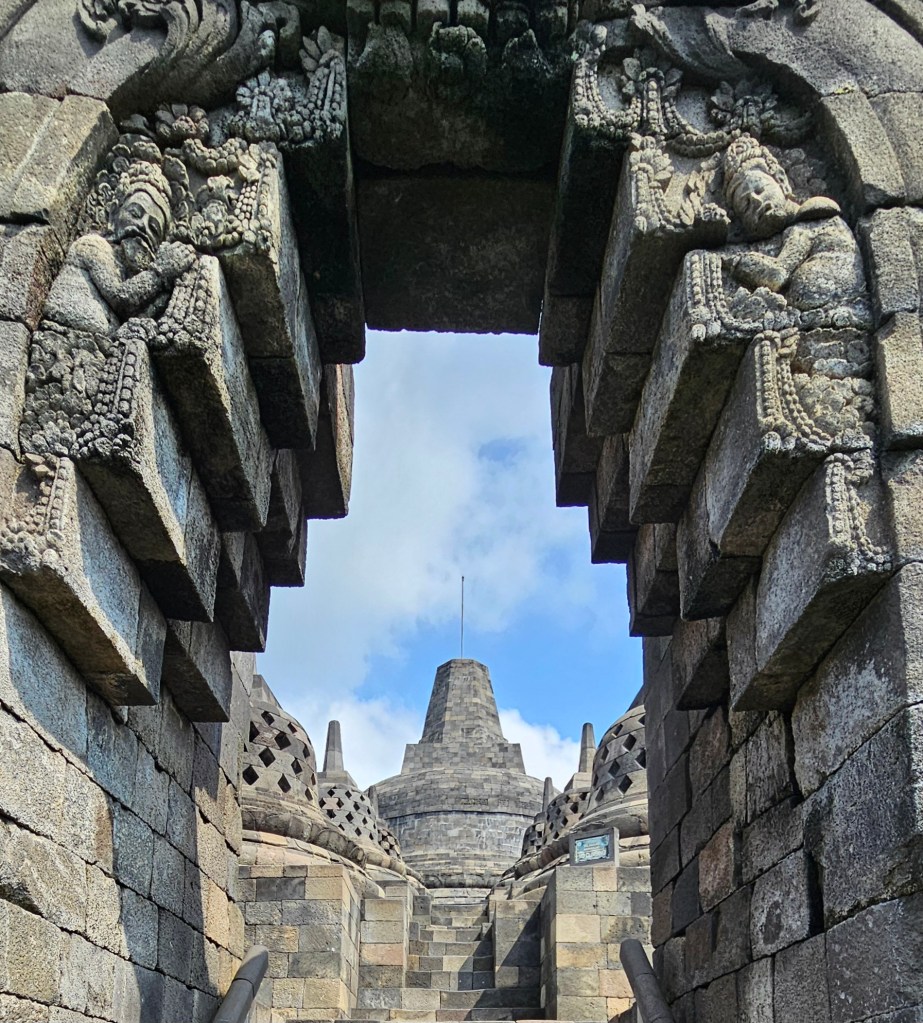
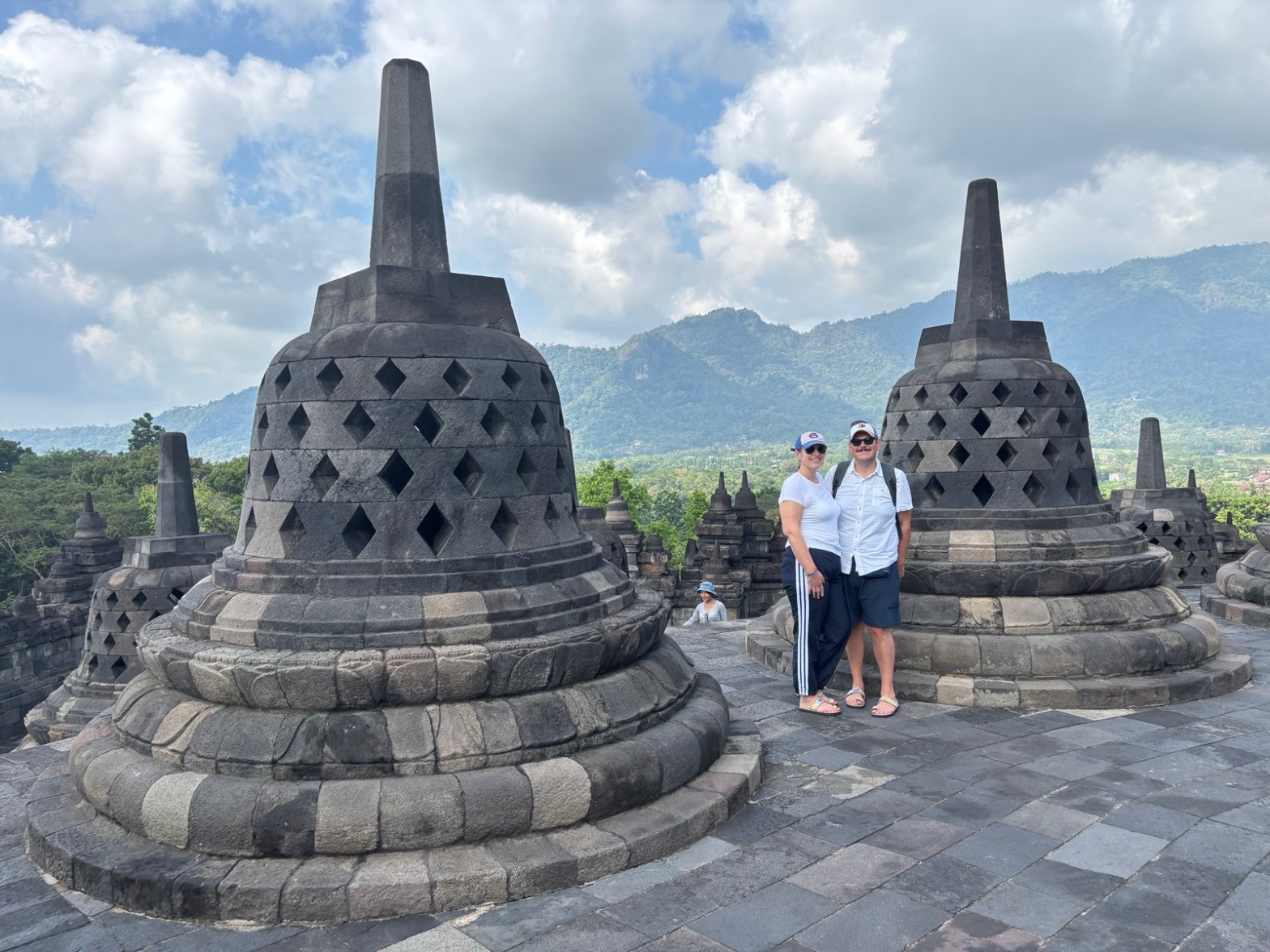
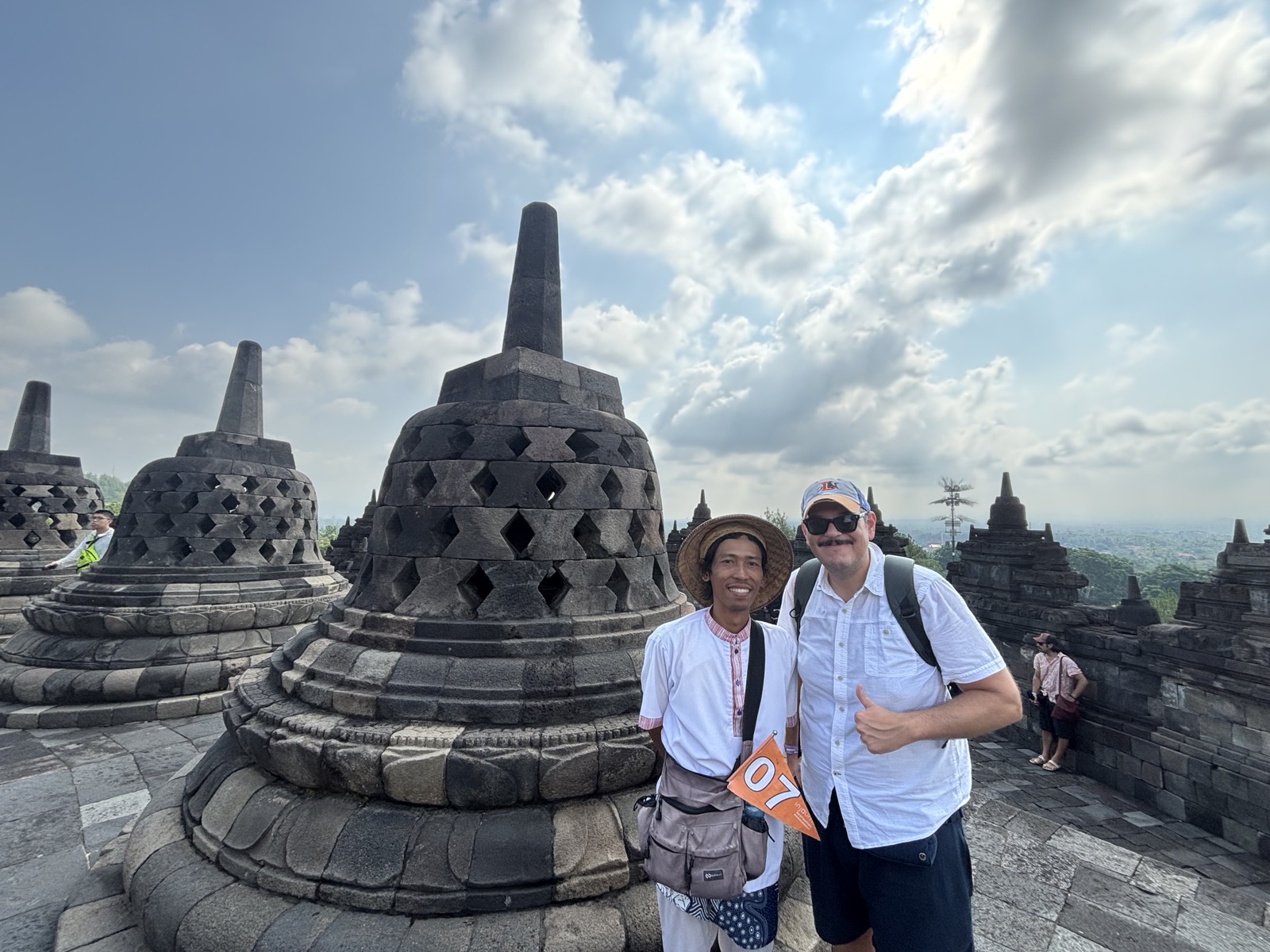
As we reached the topmost level, we saw the stupas, of which there are 72, each (originally) with a seated Buddha inside.
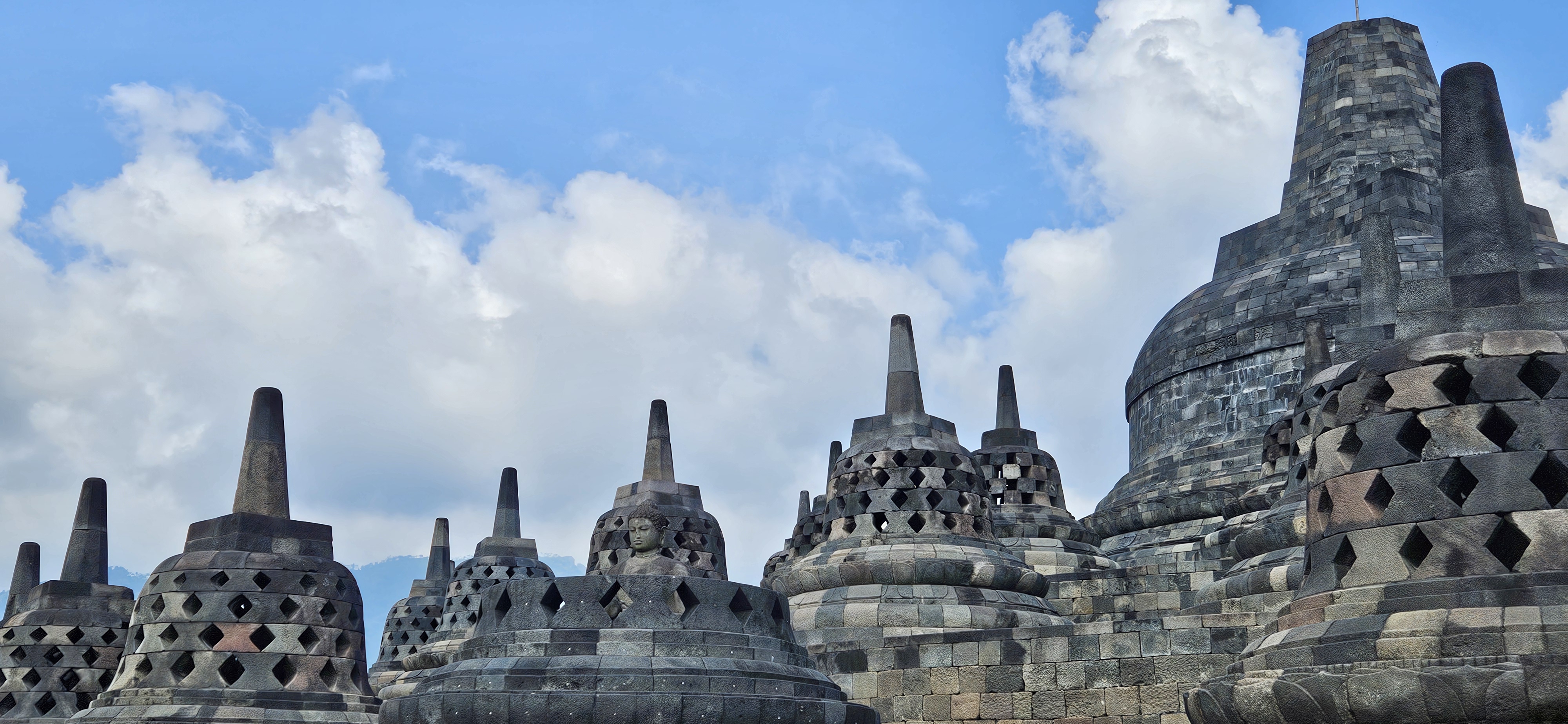
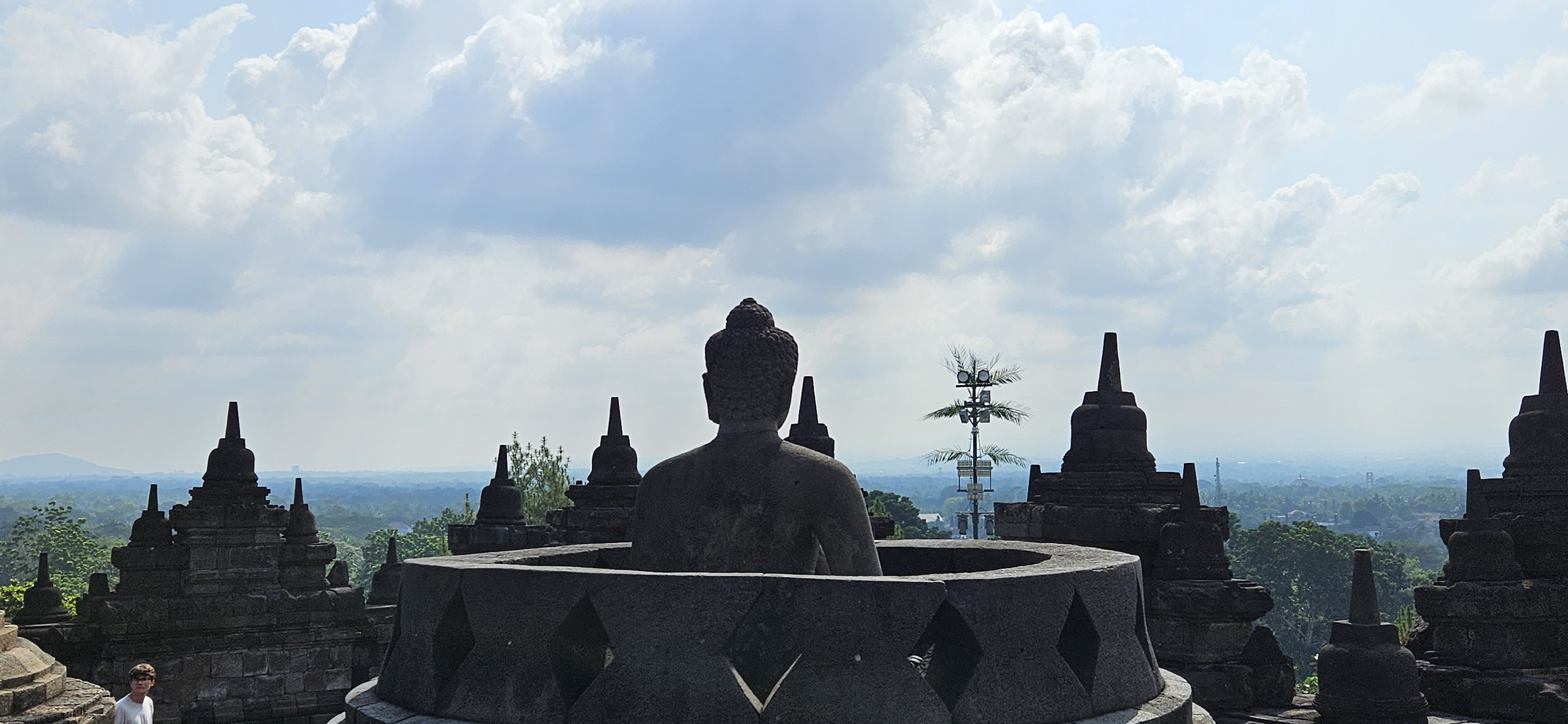
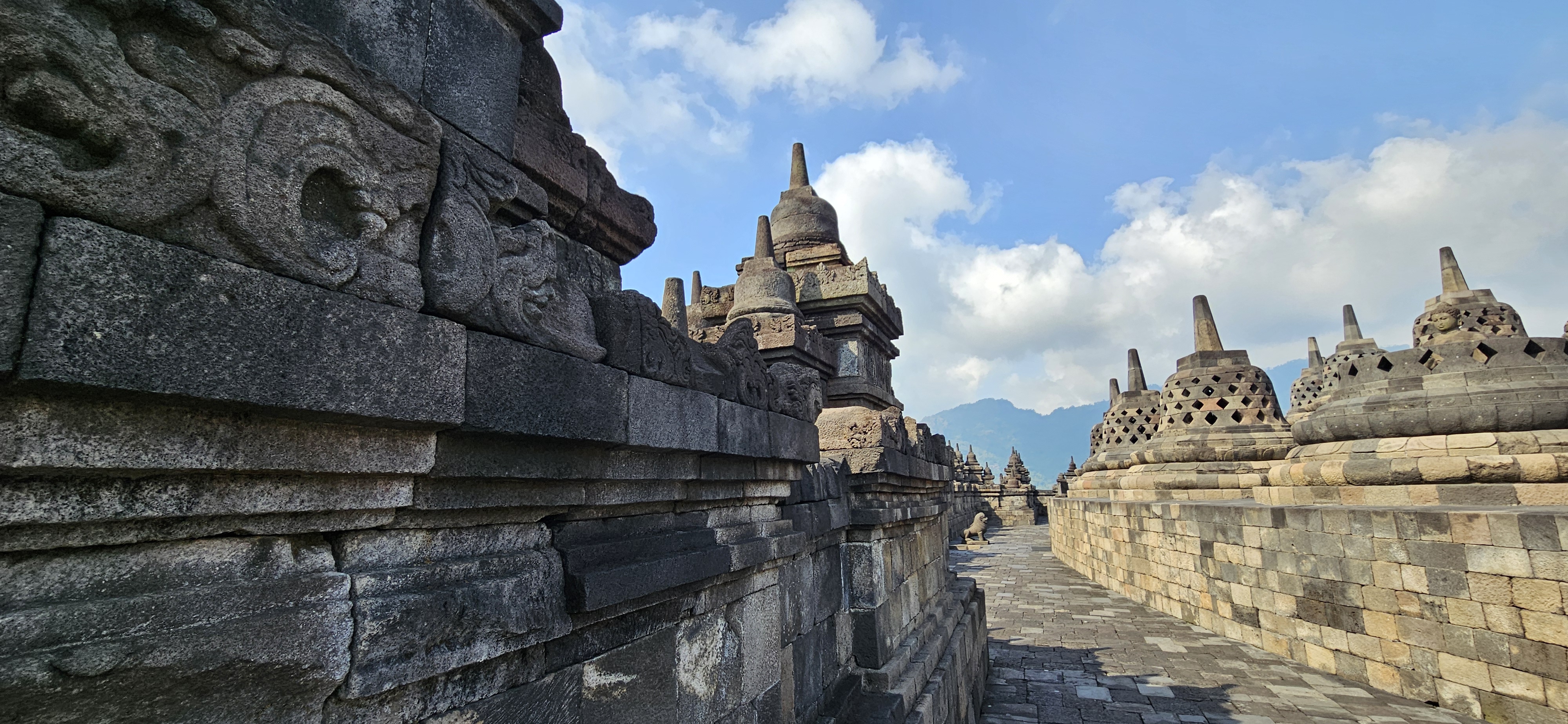
Many of the stupas have been rebuilt due to a terrorist attack bombing in 1985 and nearby Mt Merapi, an active volcano, erupted and covered the temple in ashes in 2010. With those last facts, the tour ended here, and our guide said we had about a half hour to wander ourselves.
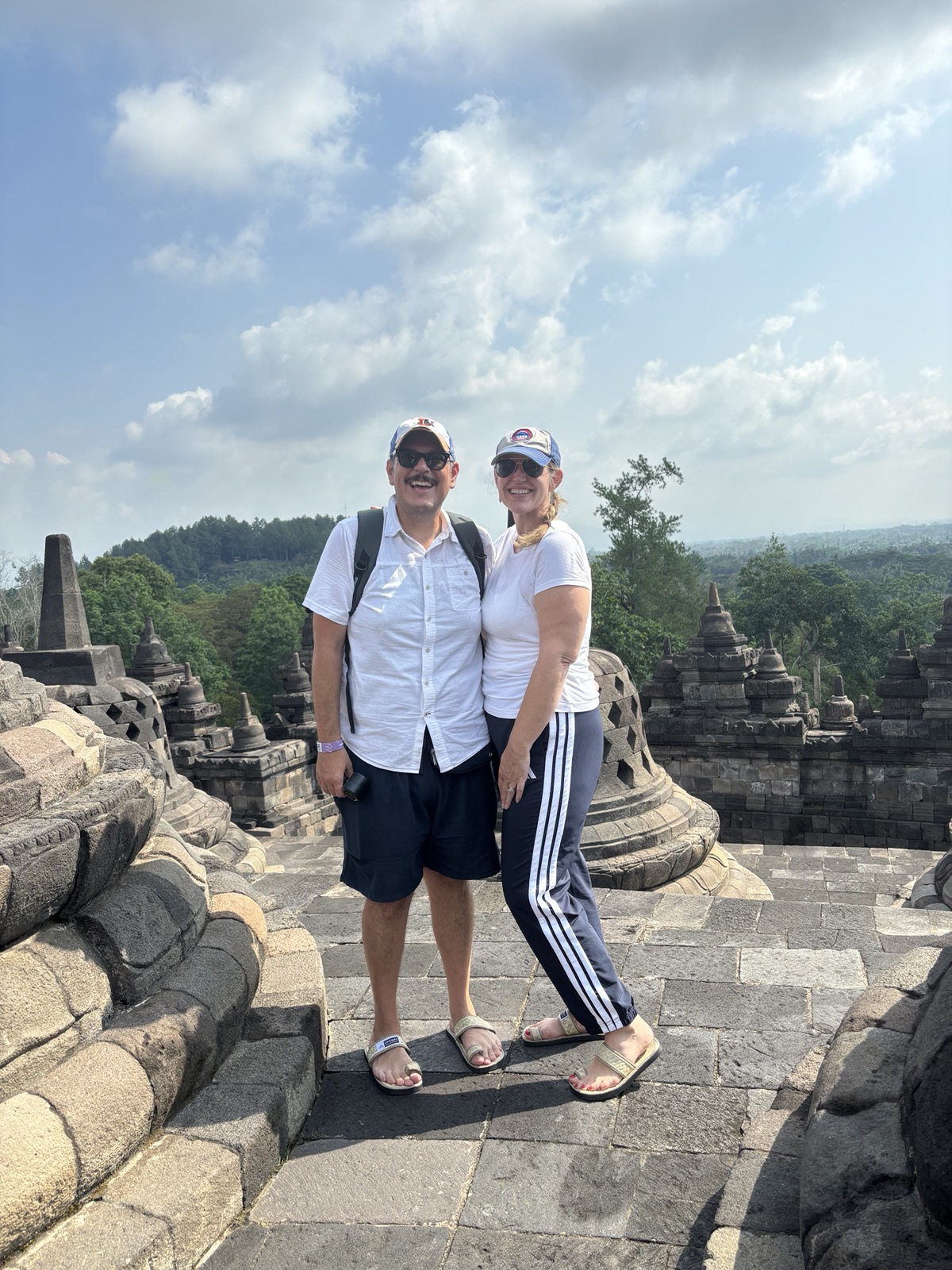
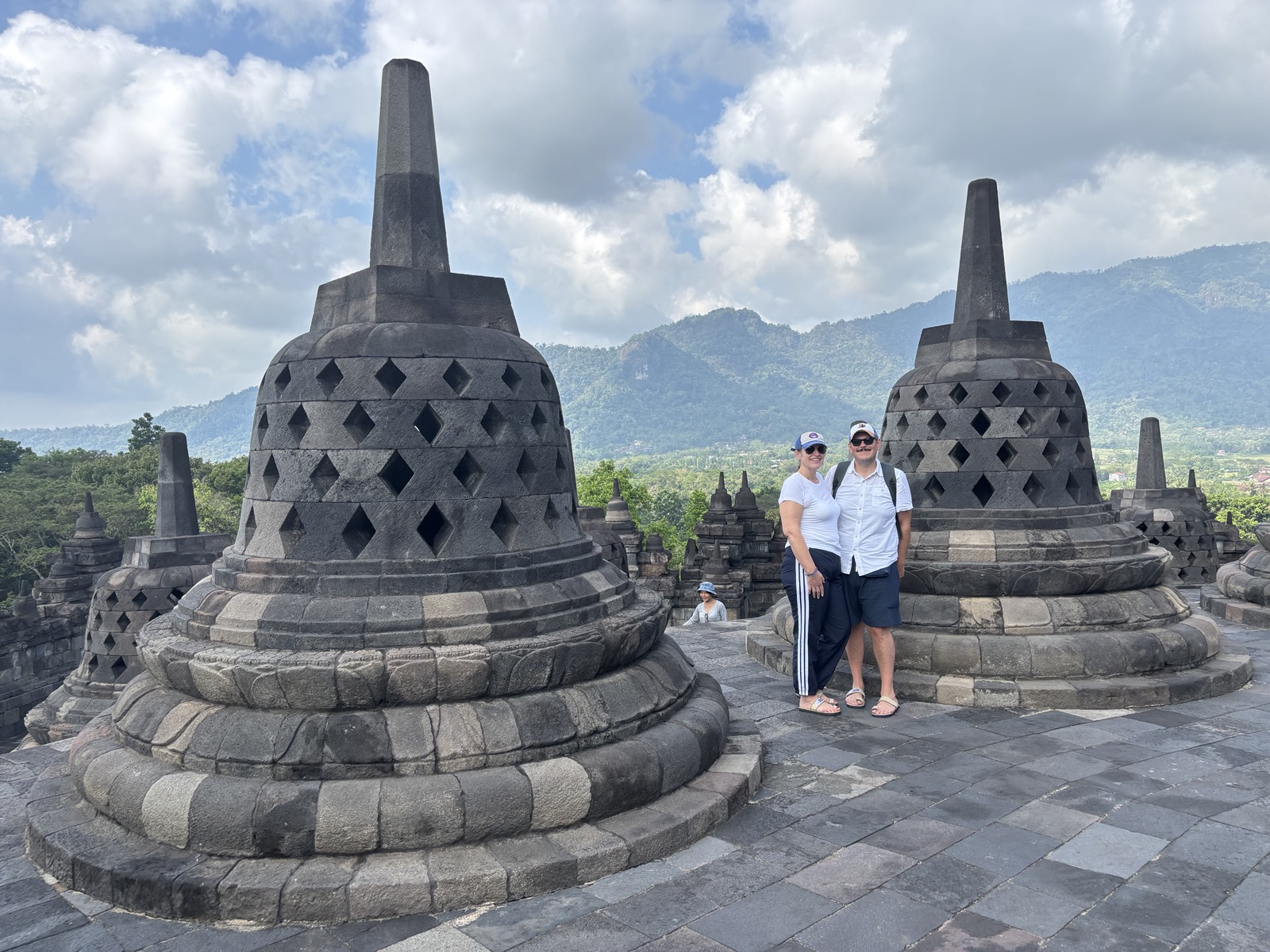
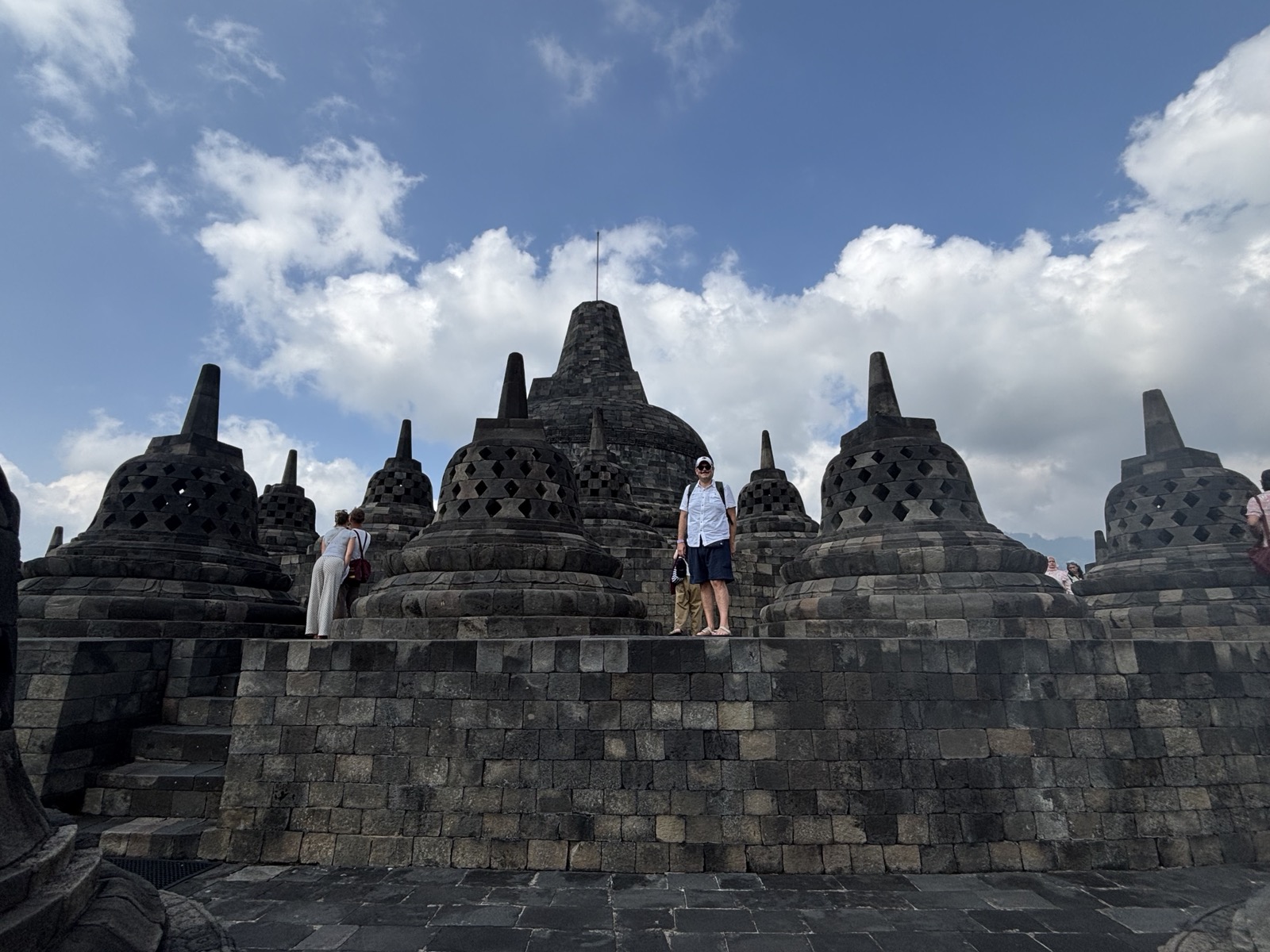
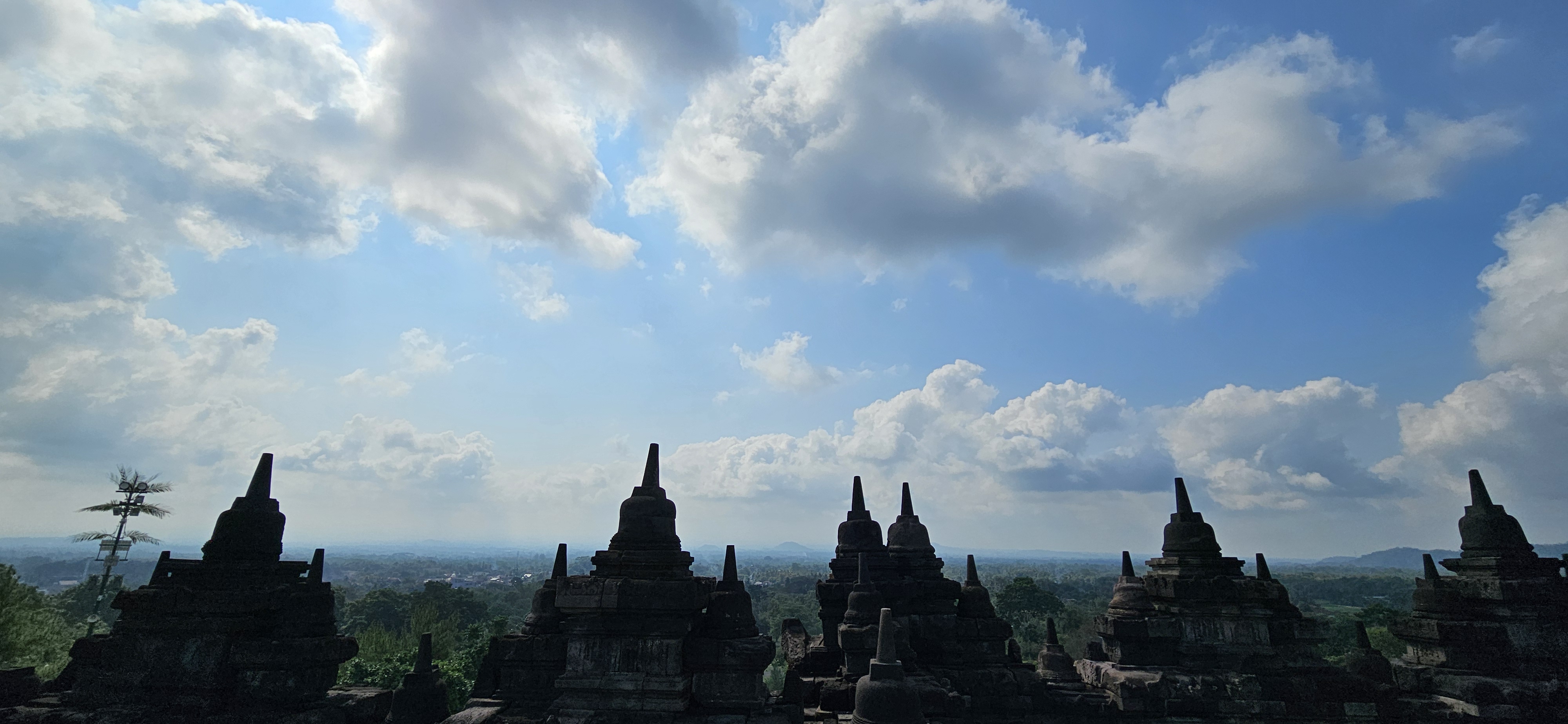
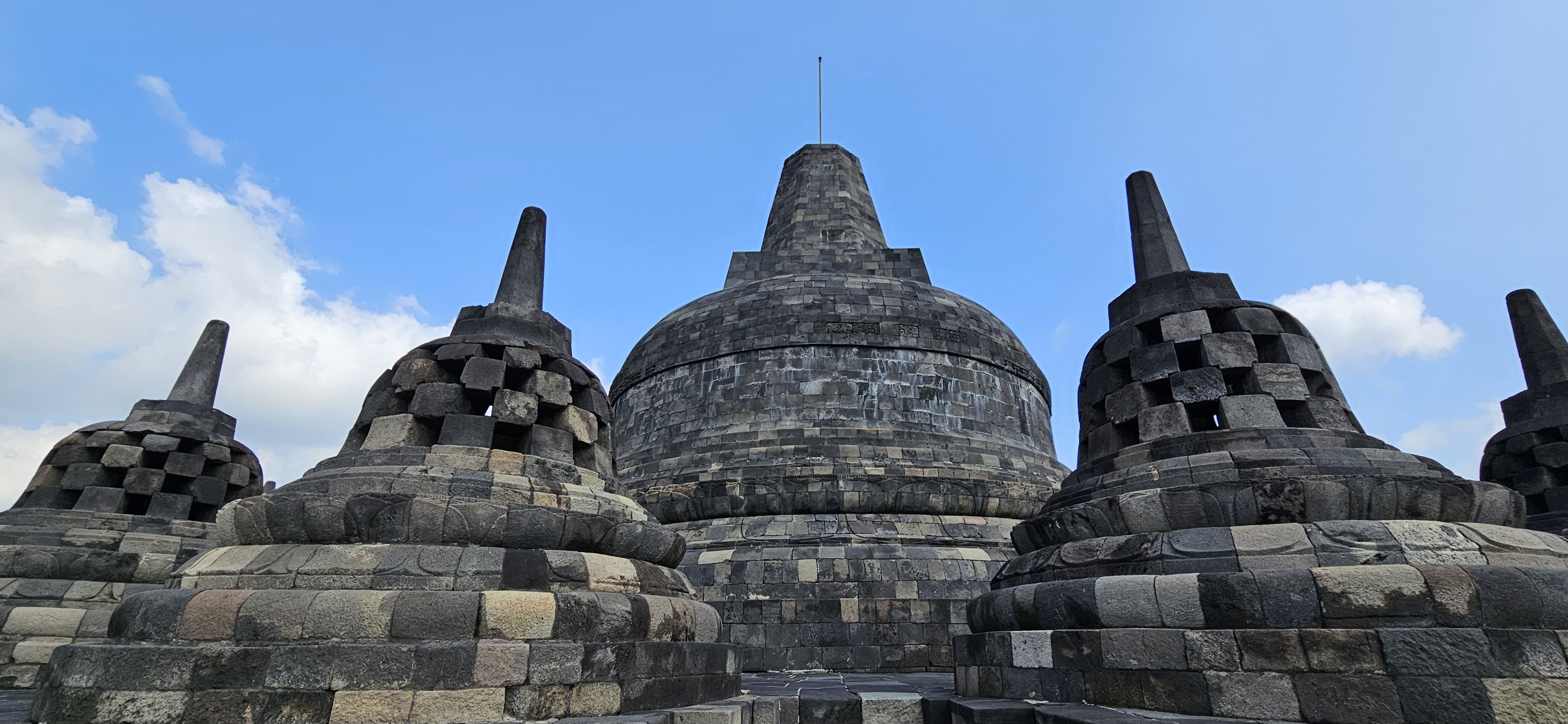
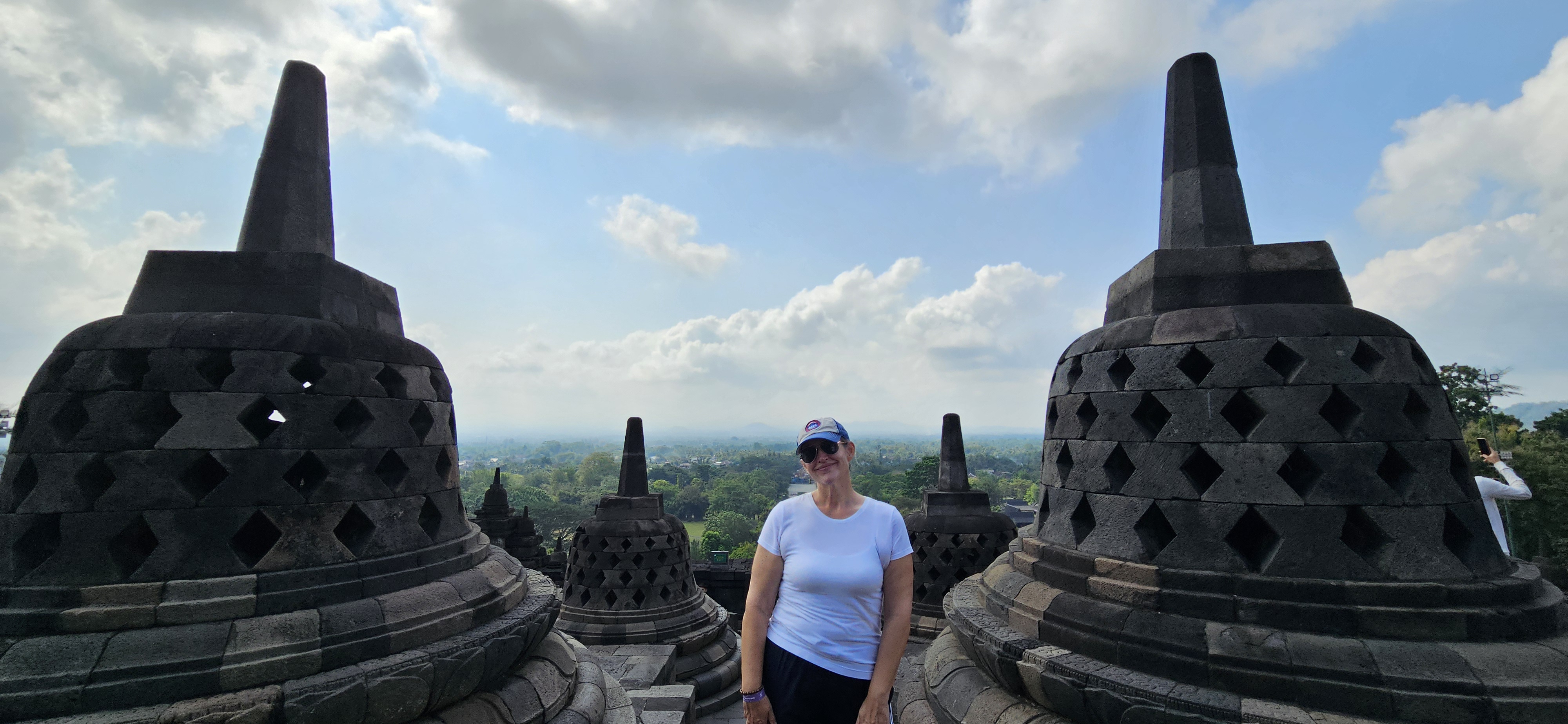
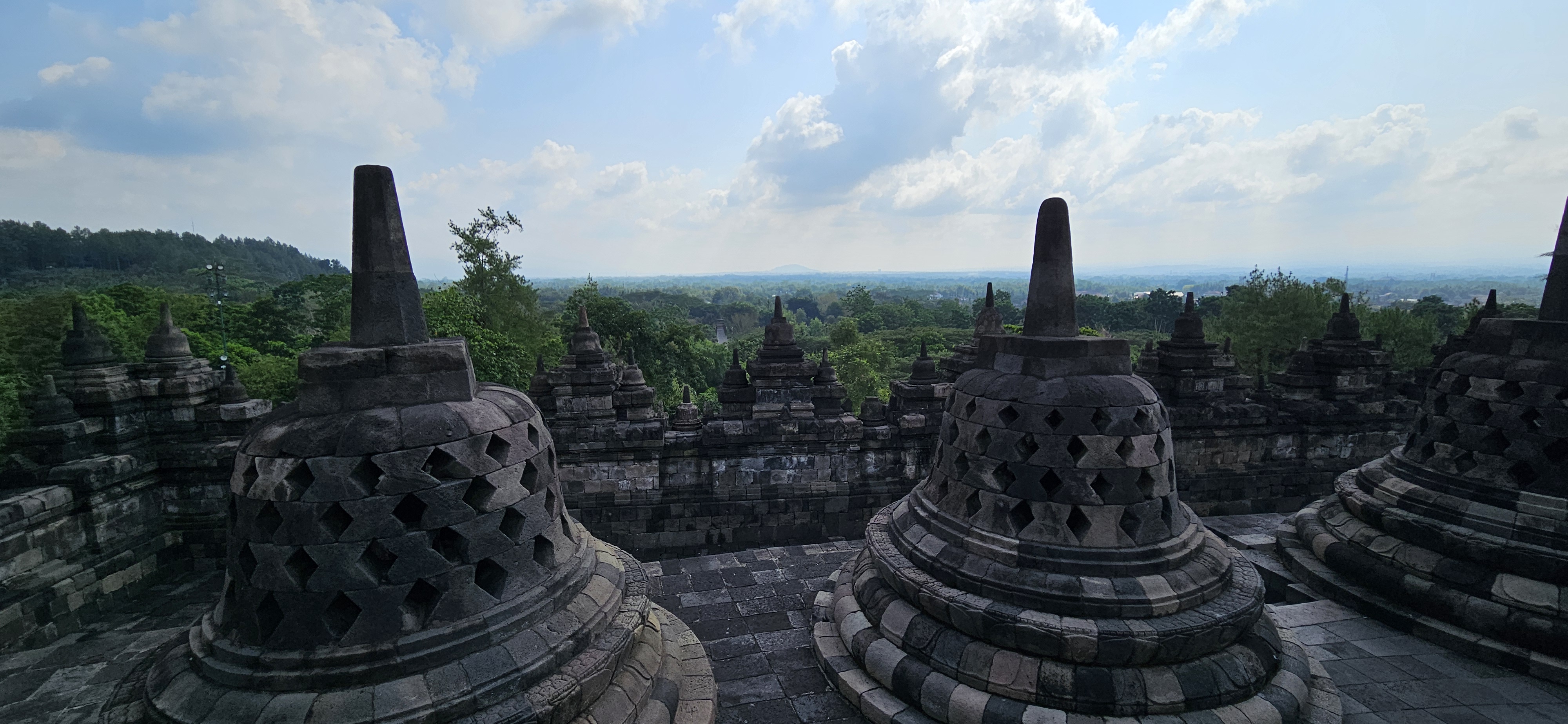
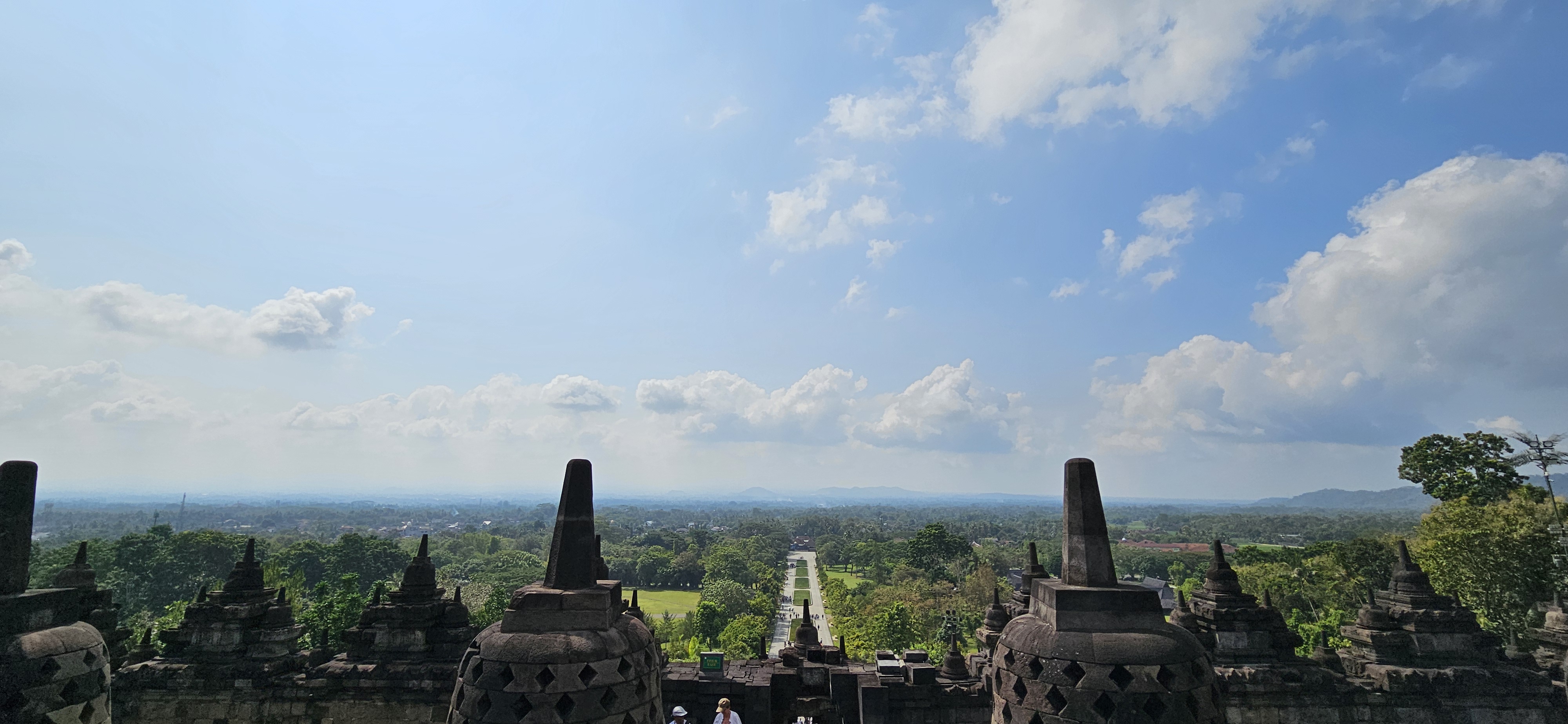
We spent time amongst the stupas on the top level, but then headed down a couple levels with our remaining time, and if you visit, I recommend doing this, as we encountered no one as we were able to explore on our own. Finally we descended the temple, and began walking toward the museums that are also on the property. It is a huge green space surrounding the temple with nice, flat, asphalt roads to walk on. Although quite hot, we pushed on to Borobudur Museum, and found it practically empty except a few lounging workers.
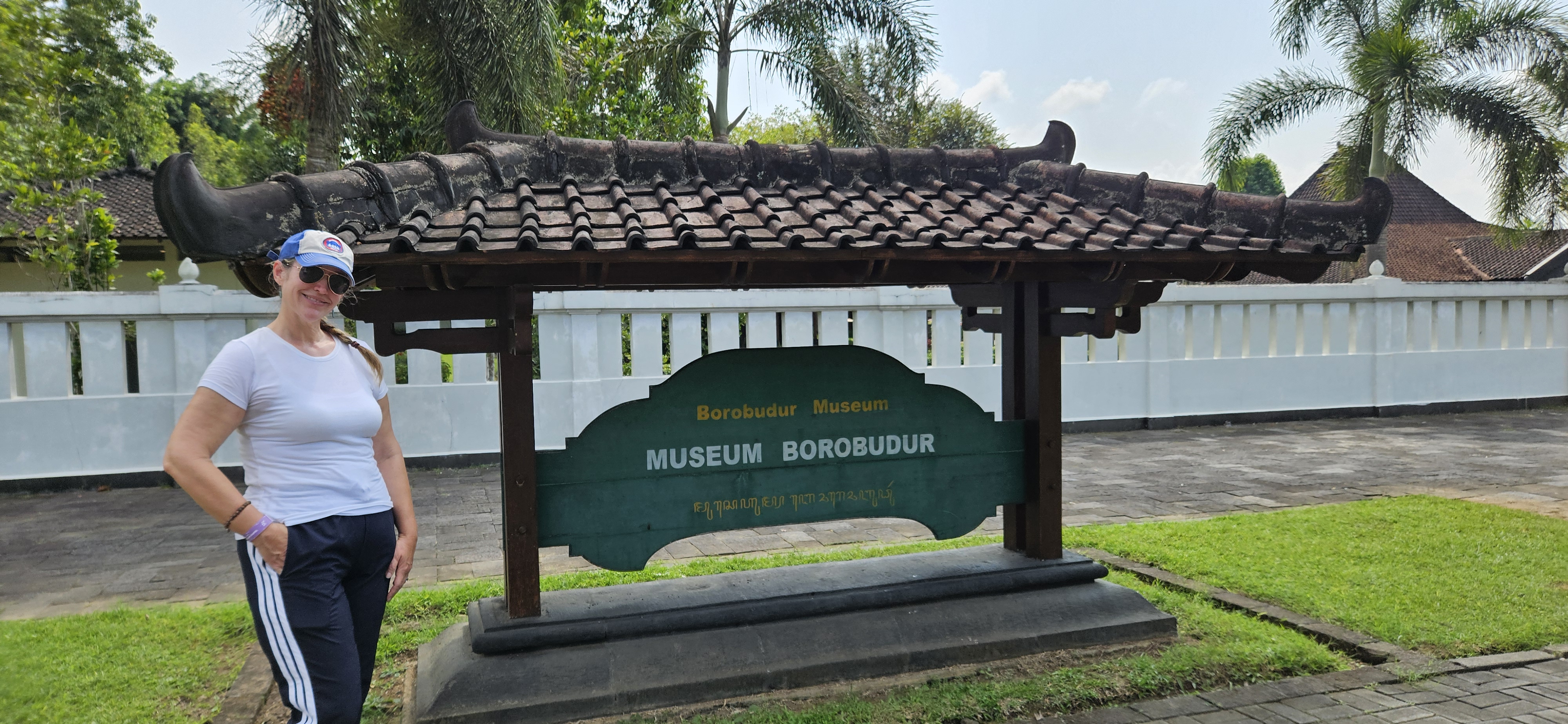
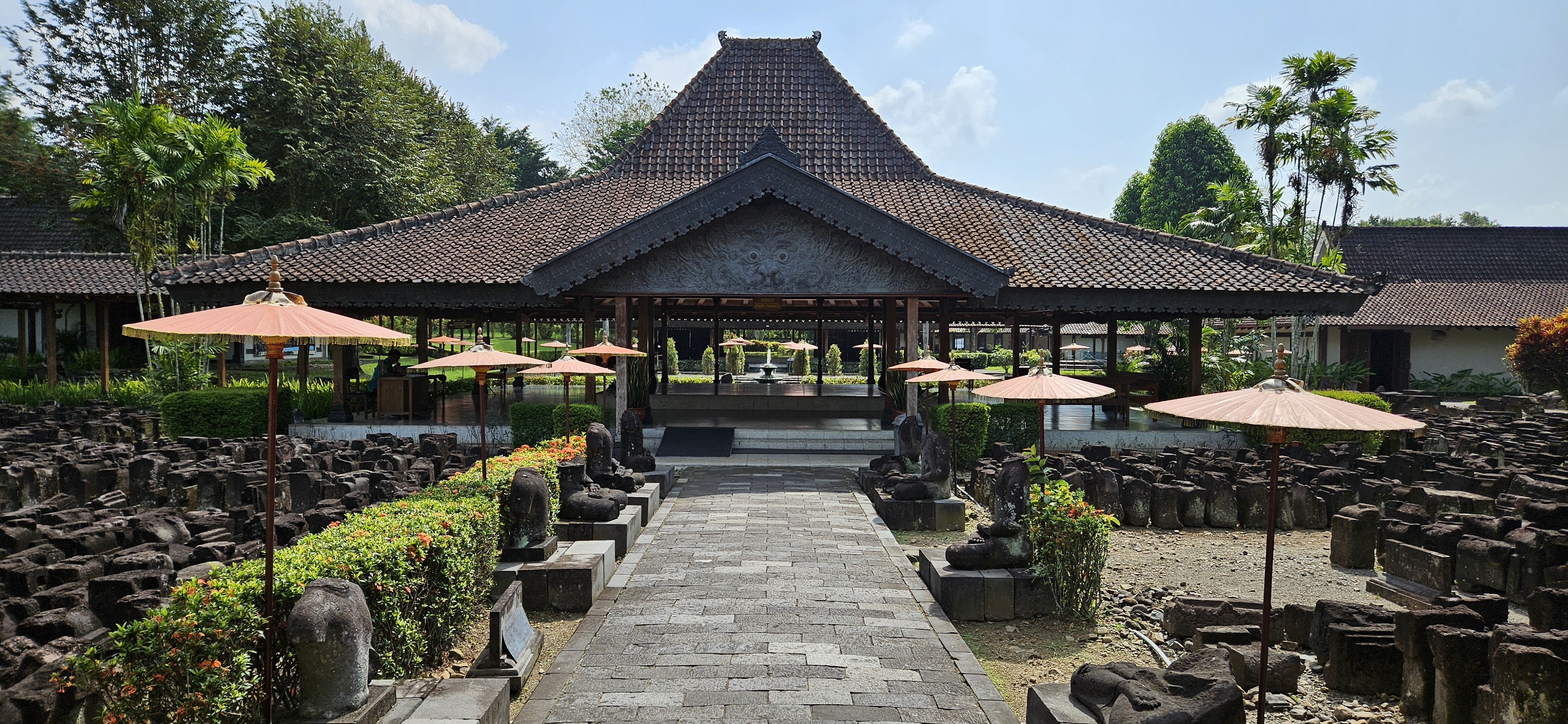
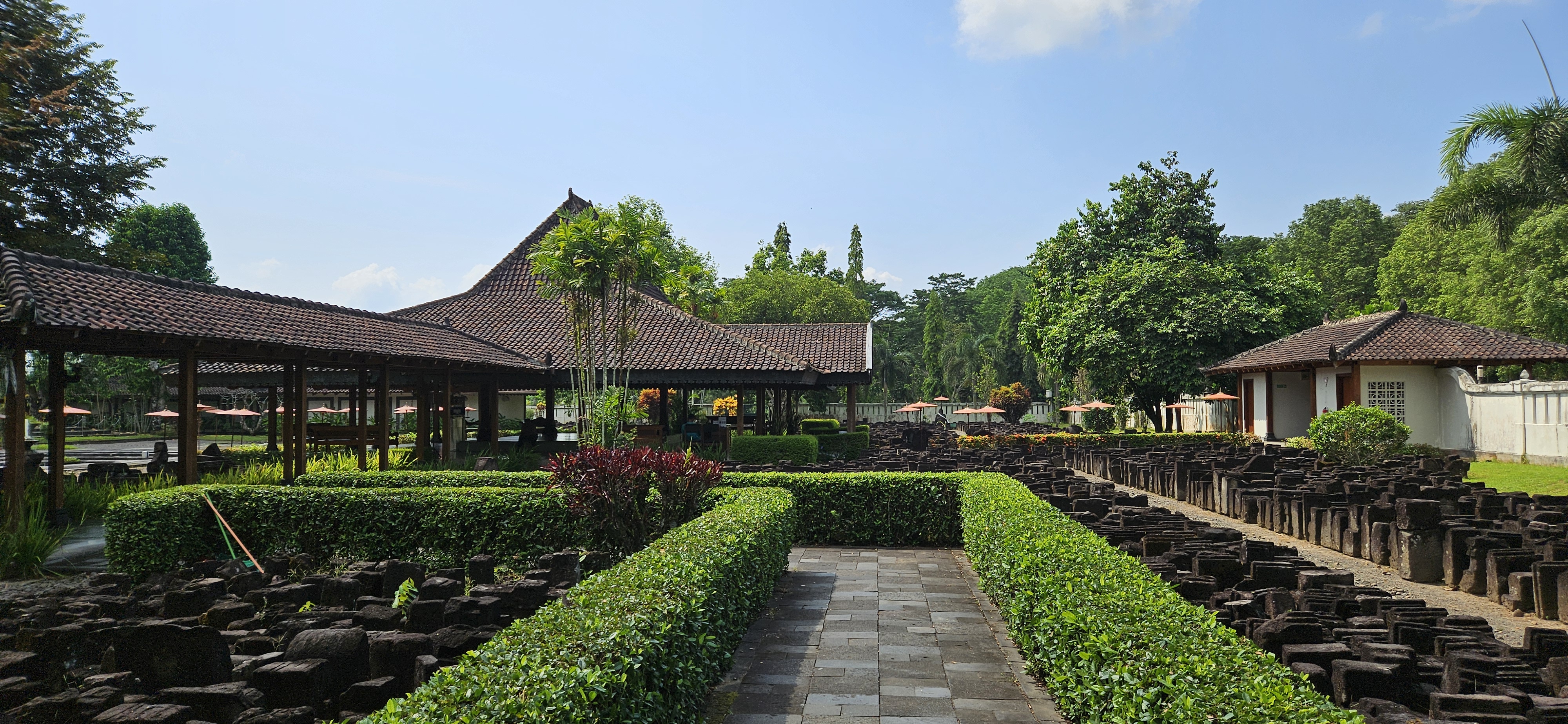
The museum had further detail on the creation of the temple and the history of Mahayana Buddism, as well as many, many stone blocks from the original construction but could not be re-fit and were replaced.
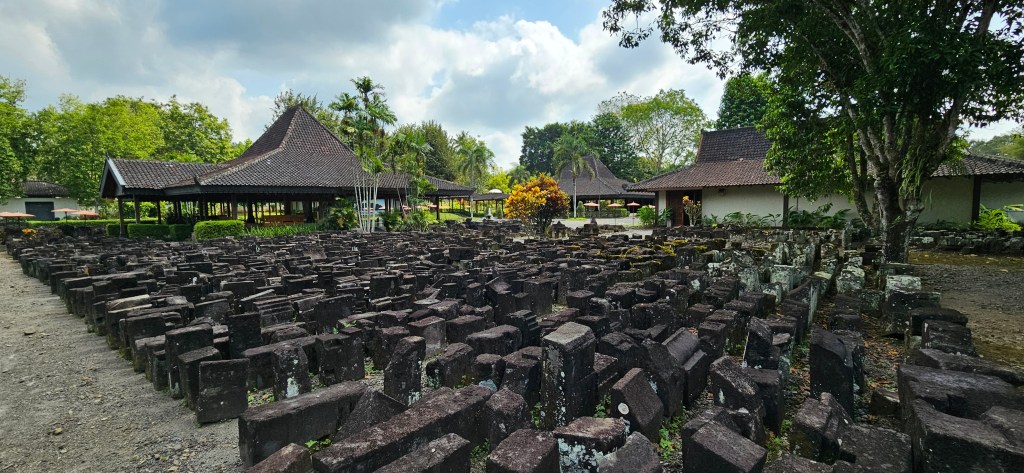
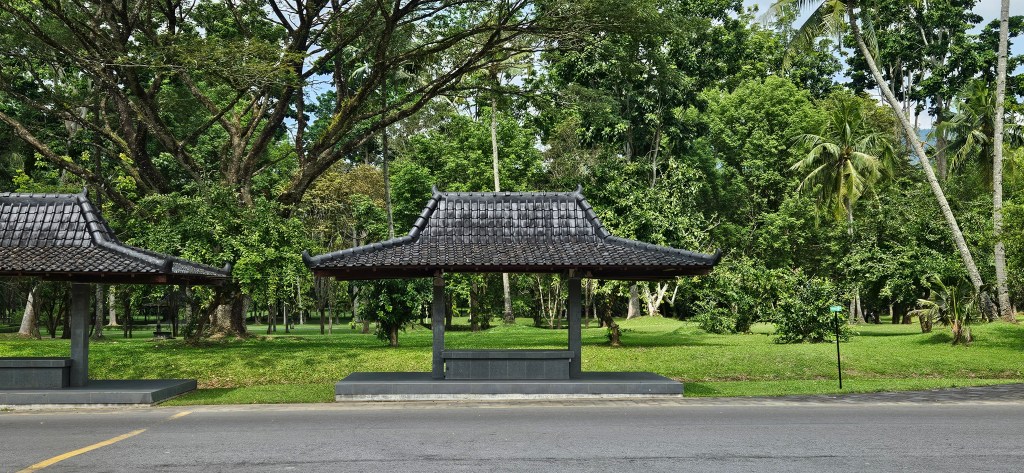
We really enjoyed the peaceful Museum after the hectic Temple. We walked on, finding the mini-bus stop to take us back to the Park entrance.
Mr. Alif was waiting for us once we left, and he led us through many, many, stalls selling all kinds of tourist items, mini temples, t-shirts, and the like.
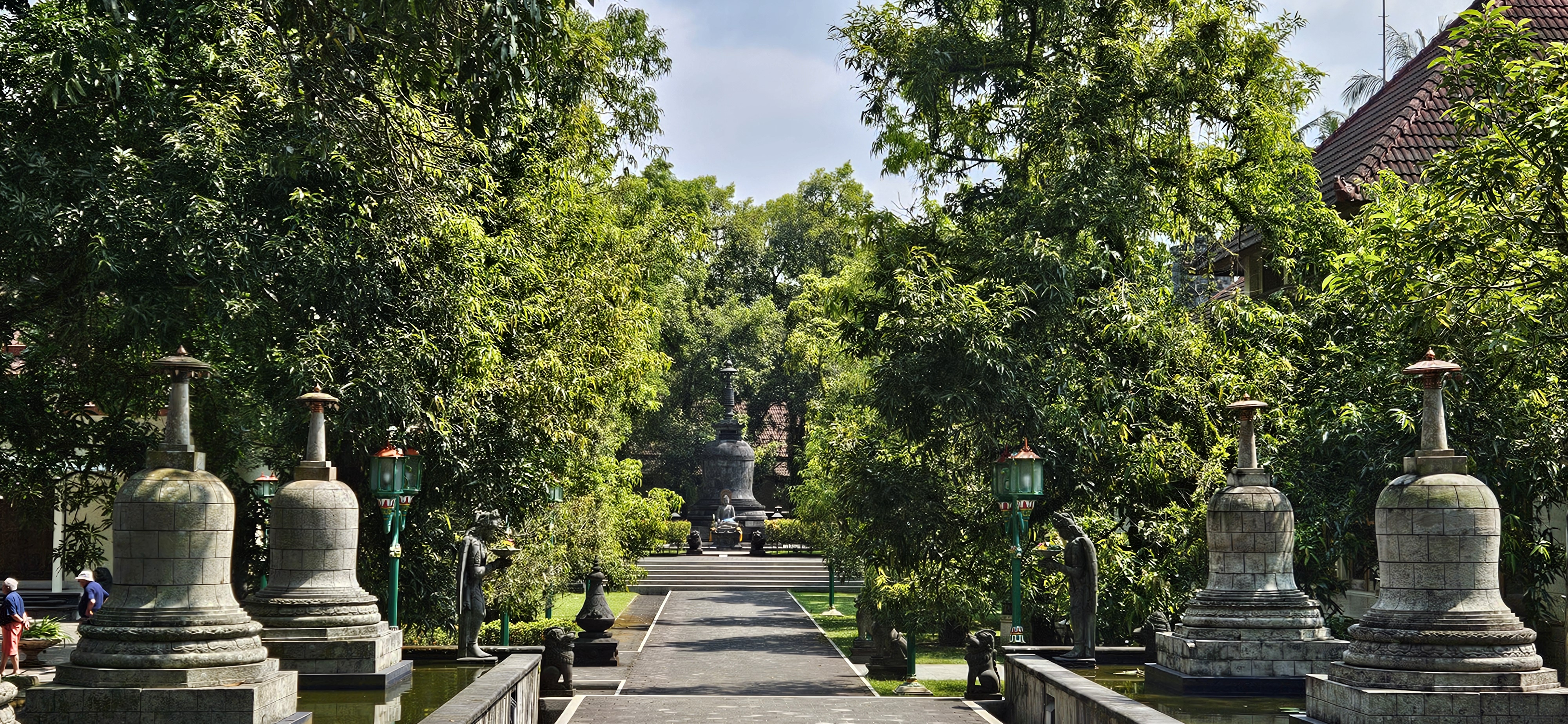
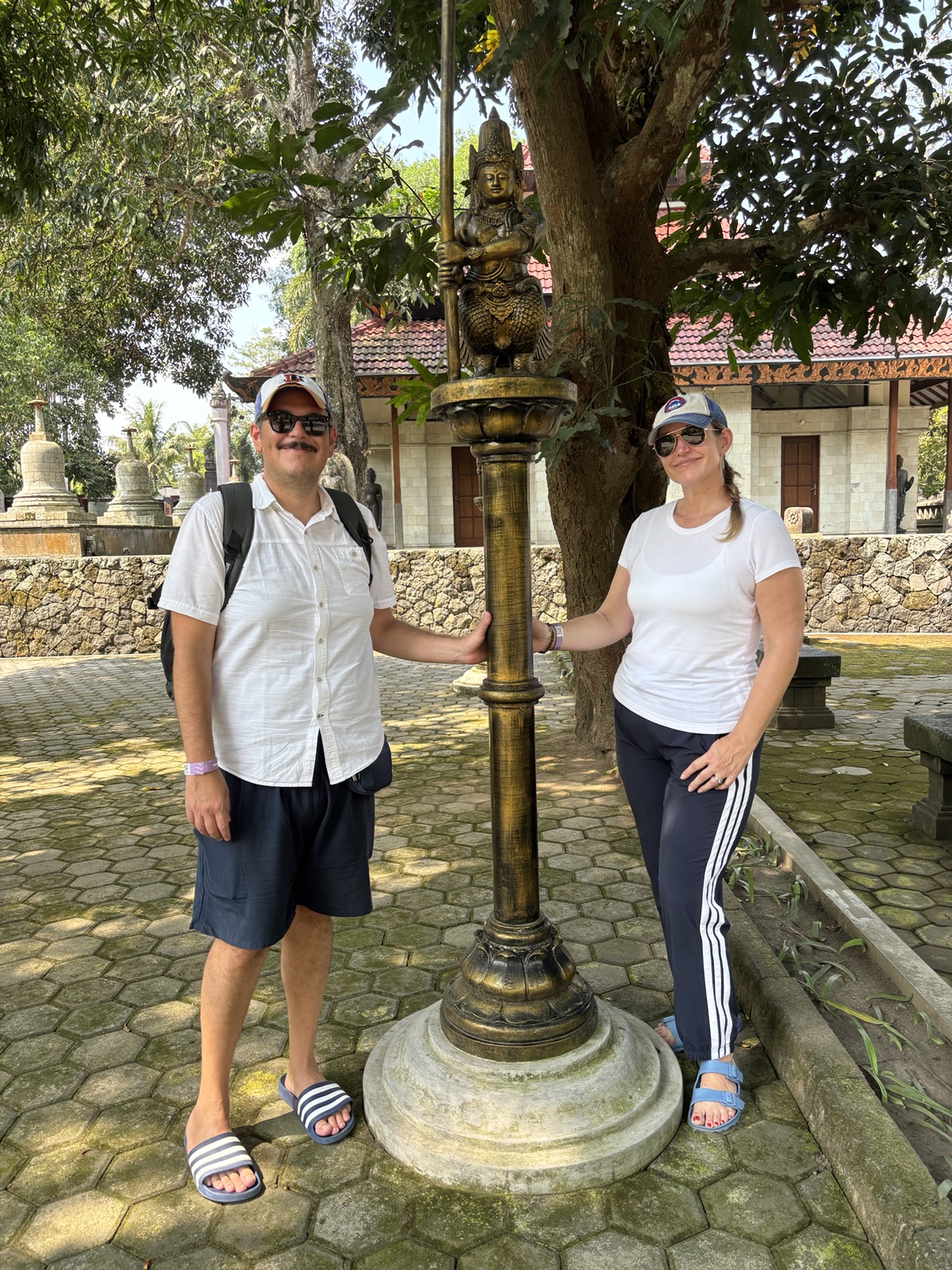
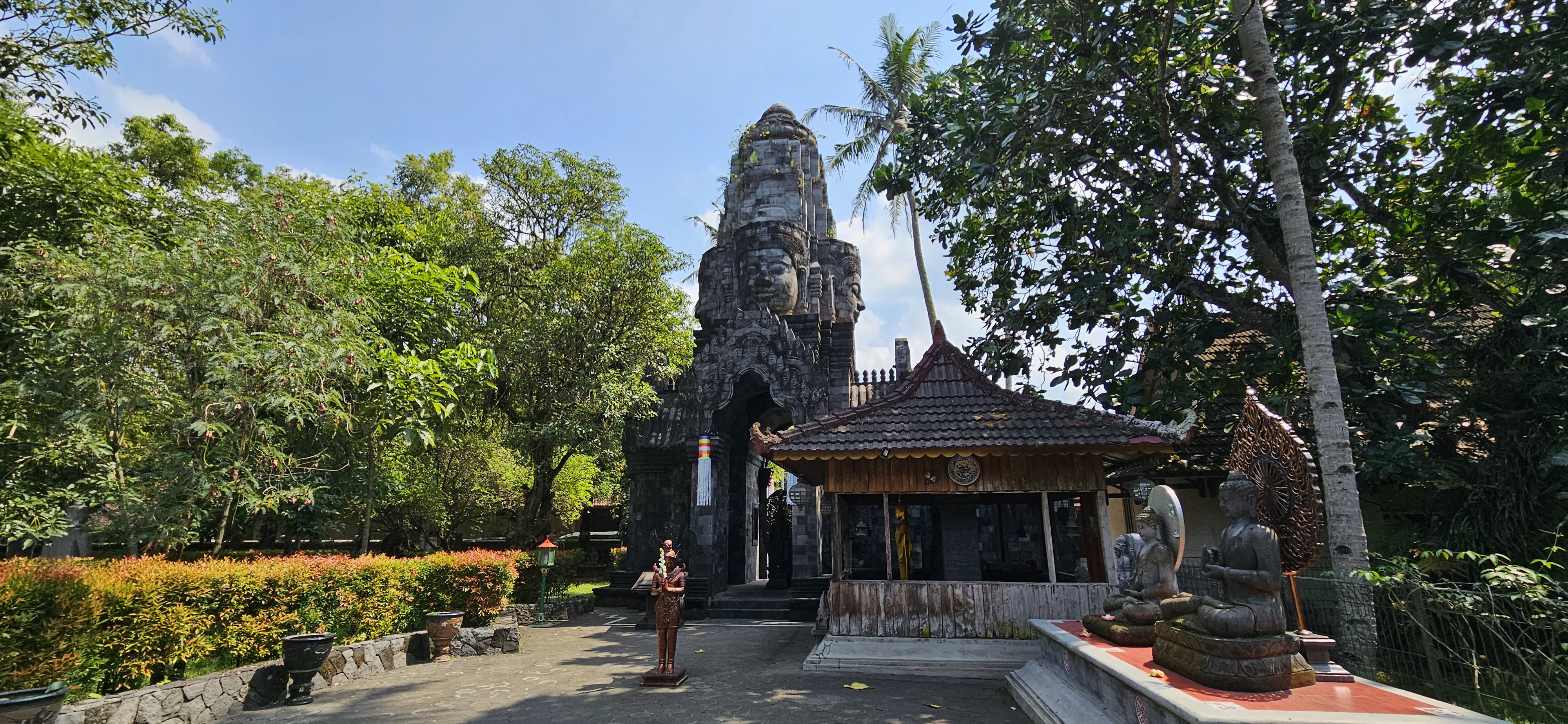
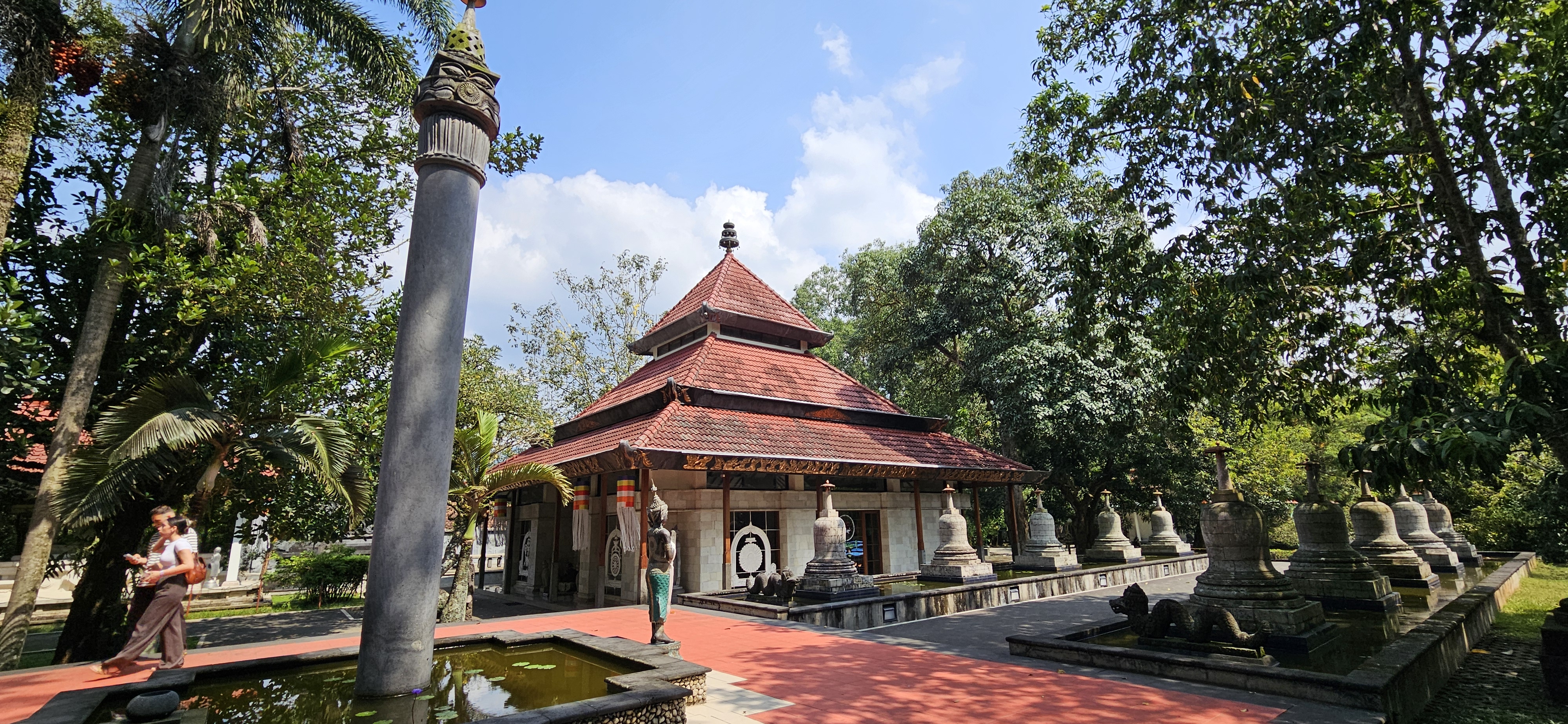
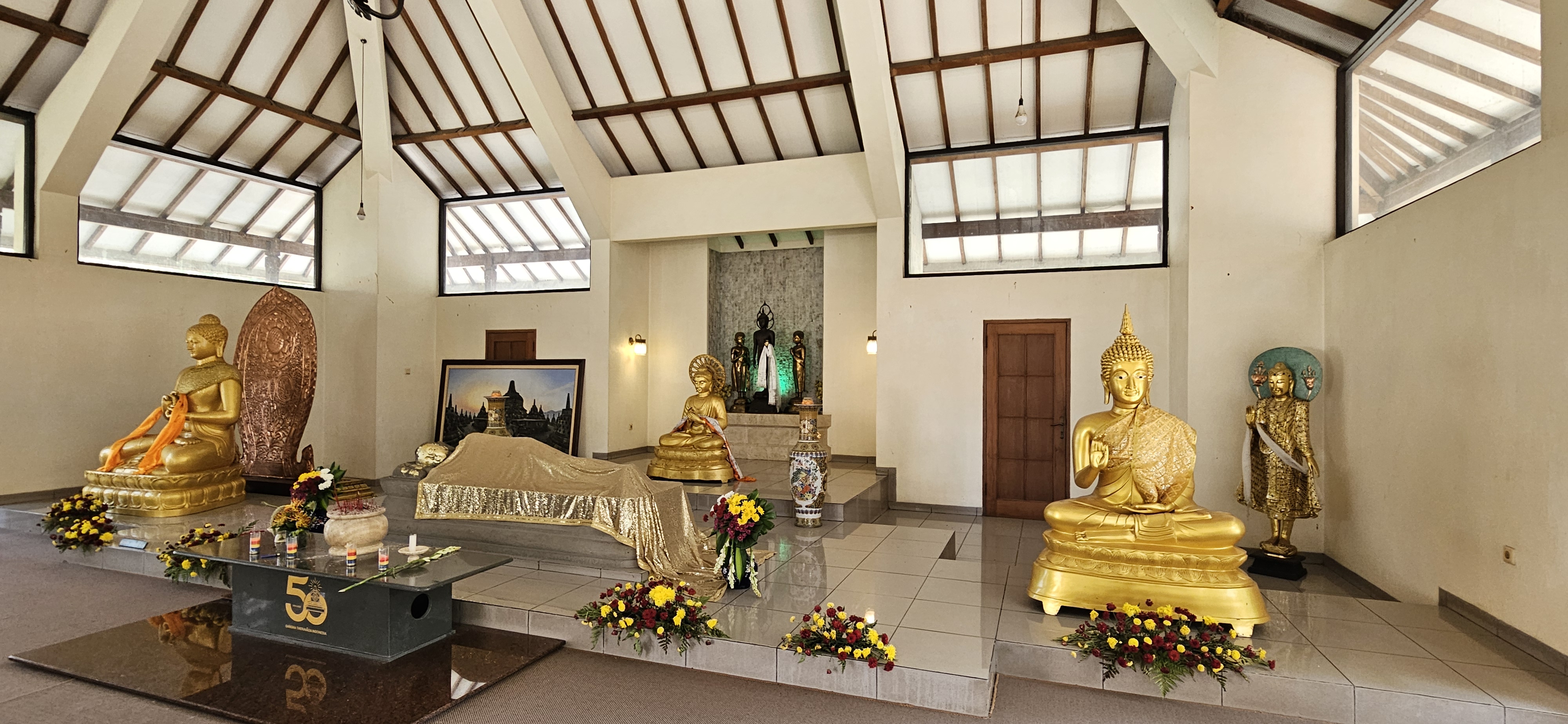
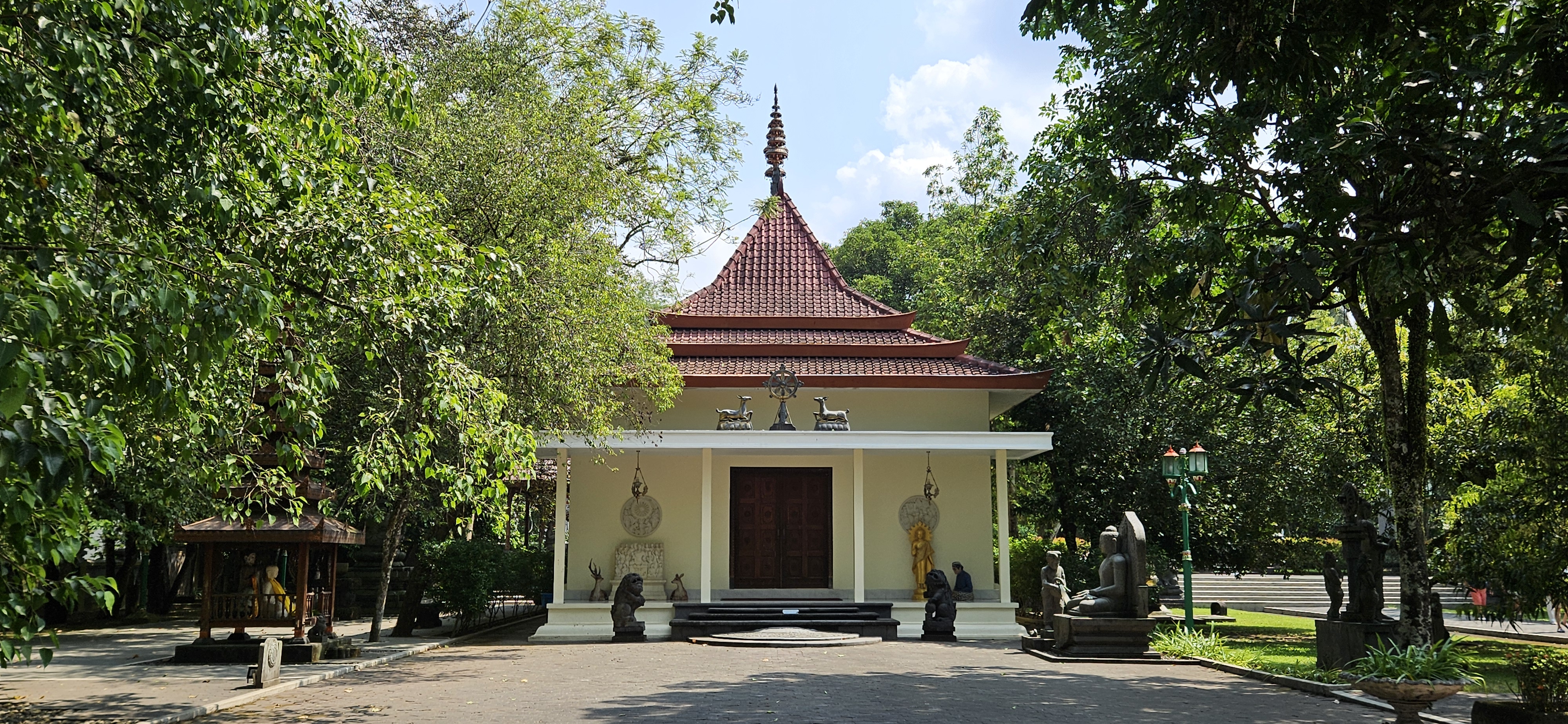
We asked Mr. Alif to take us a few more places that day, and they were just as interesting. The first was Mendut Buddhist Monastery, not far from Borobudur. There were a number of buildings on the Monastery grounds and many statues, and it was peaceful to wander through with Mr. Alif sharing information about it with us.
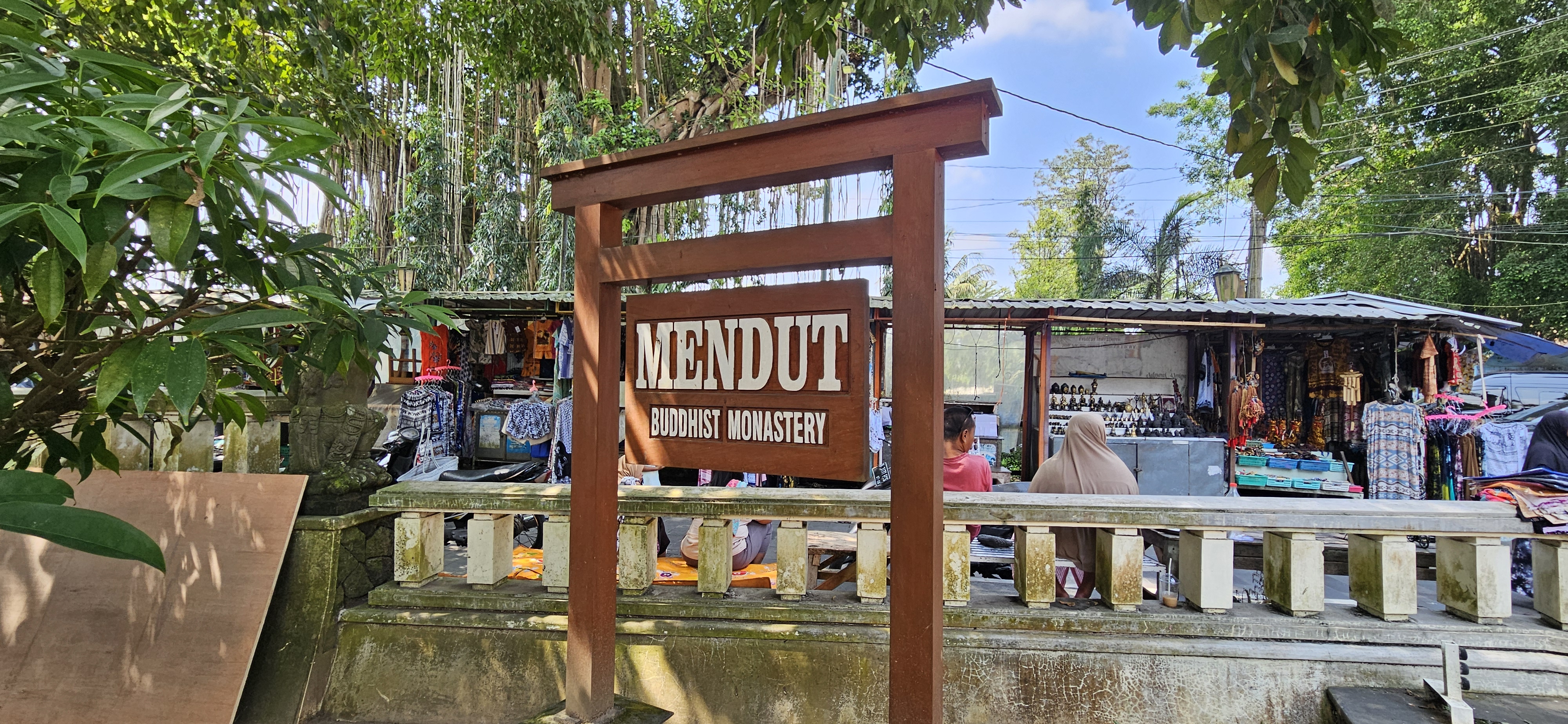
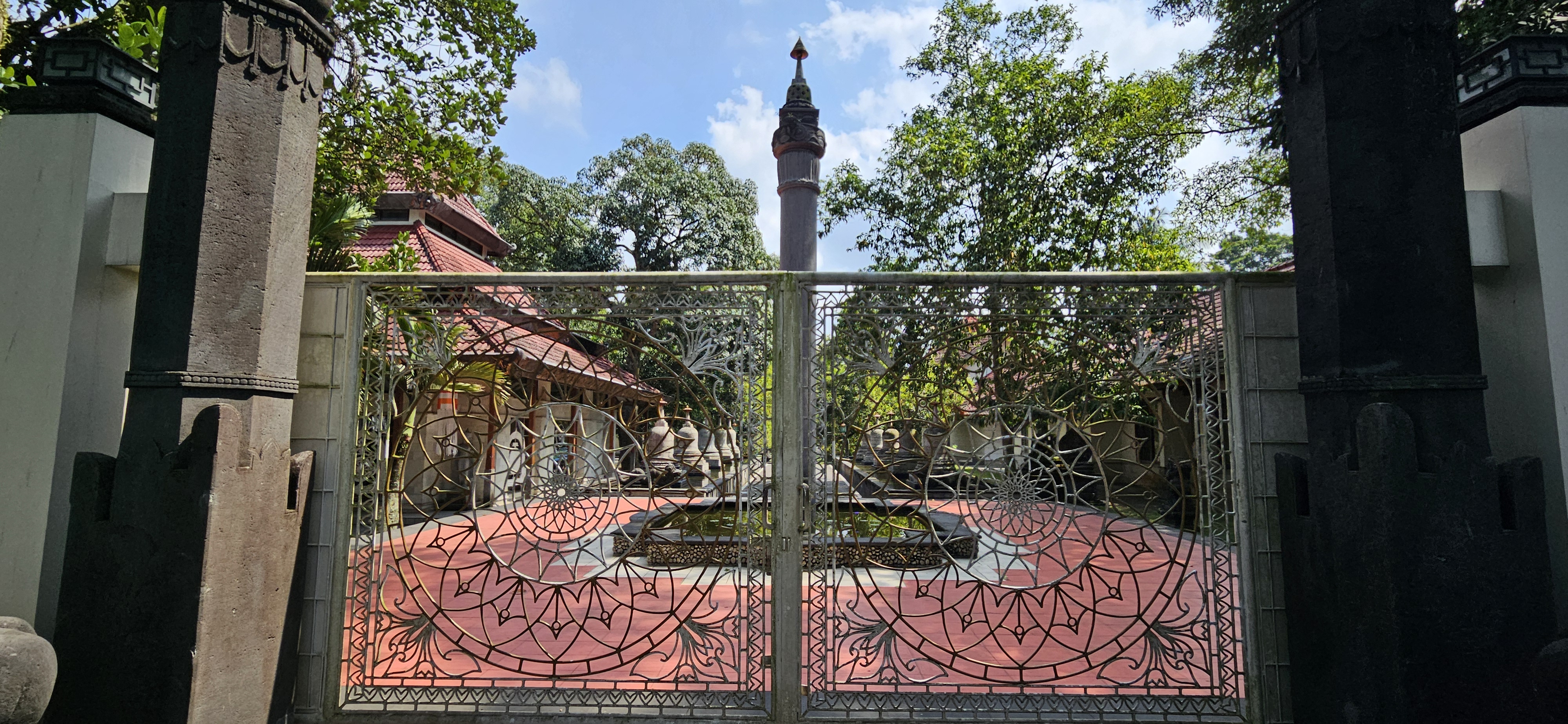
There are many buildings on the site as well as monuments and statues. It was a very peaceful place to wander and enjoy.
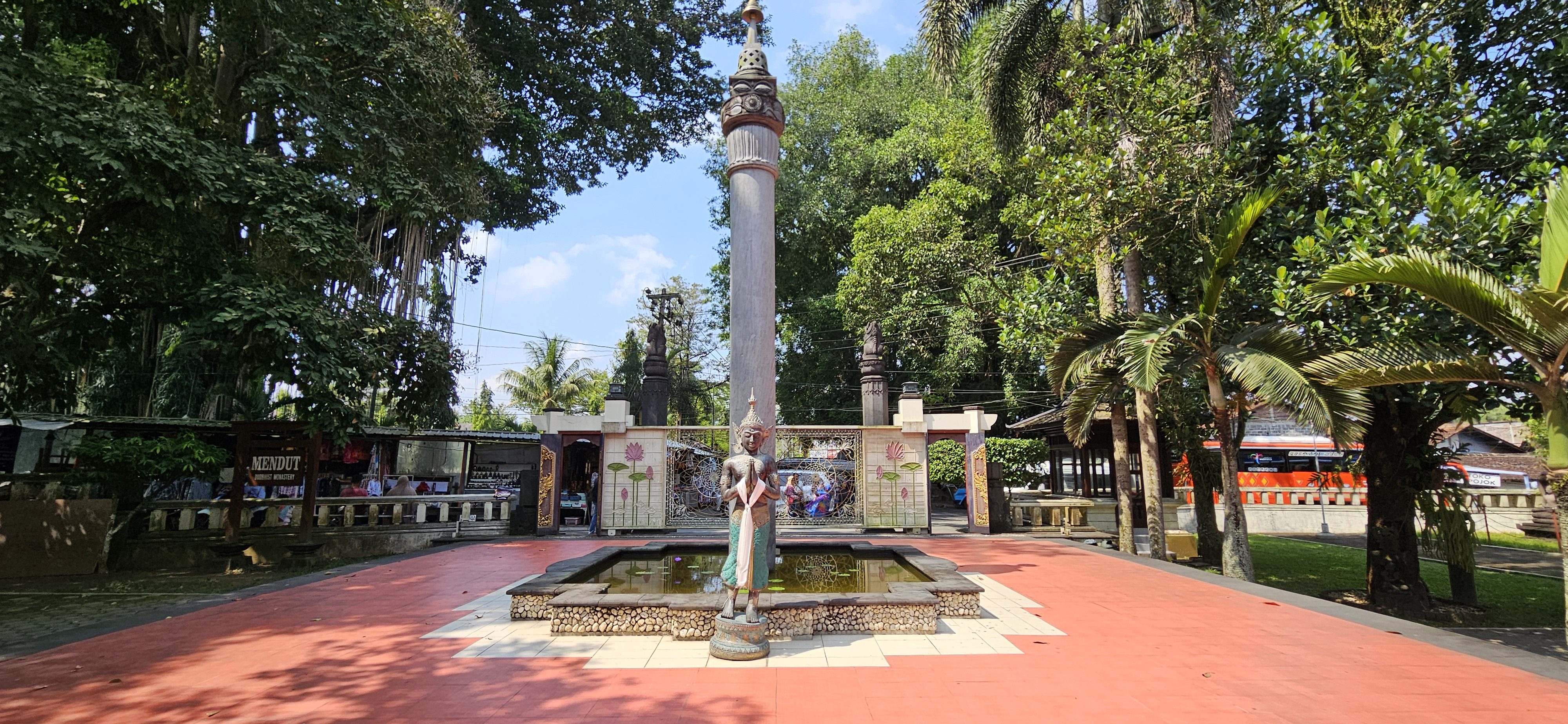
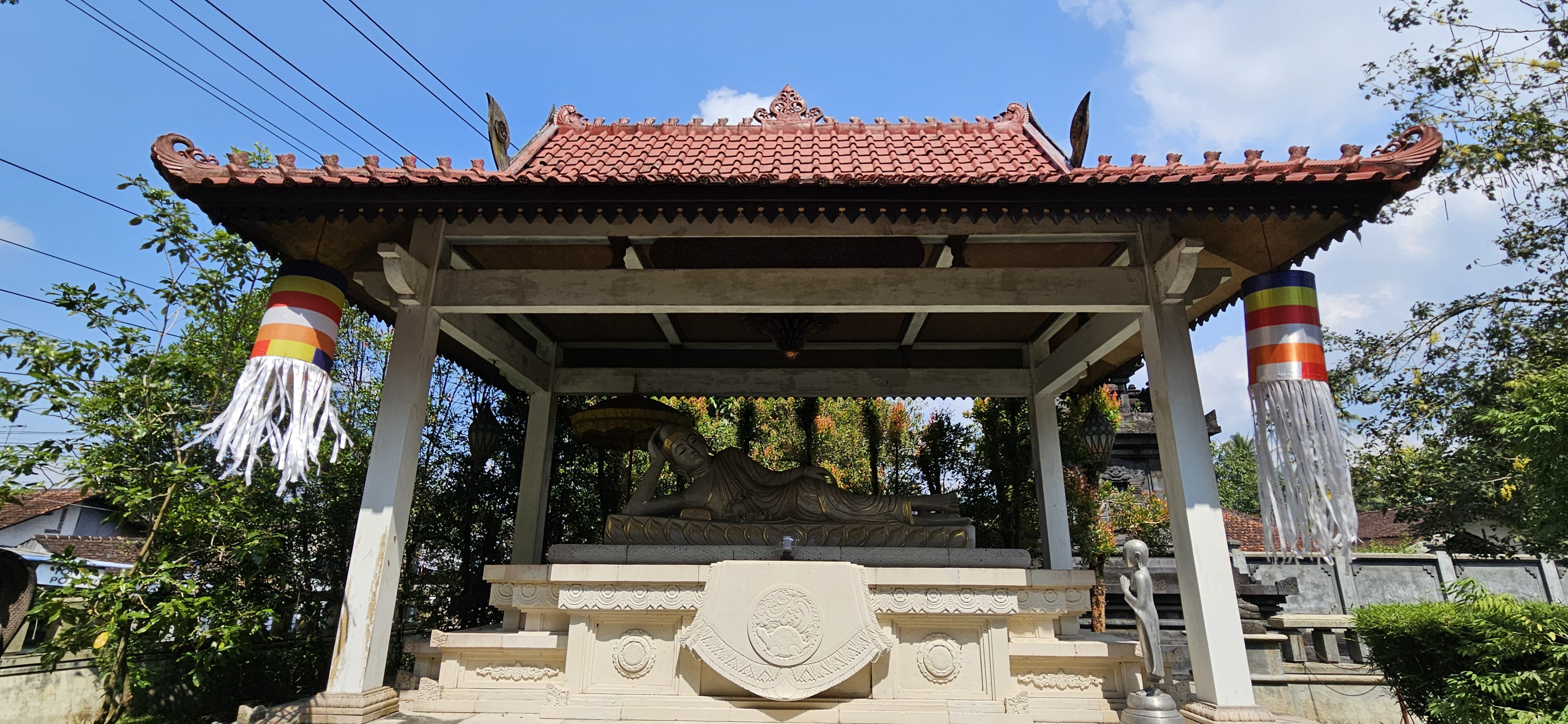
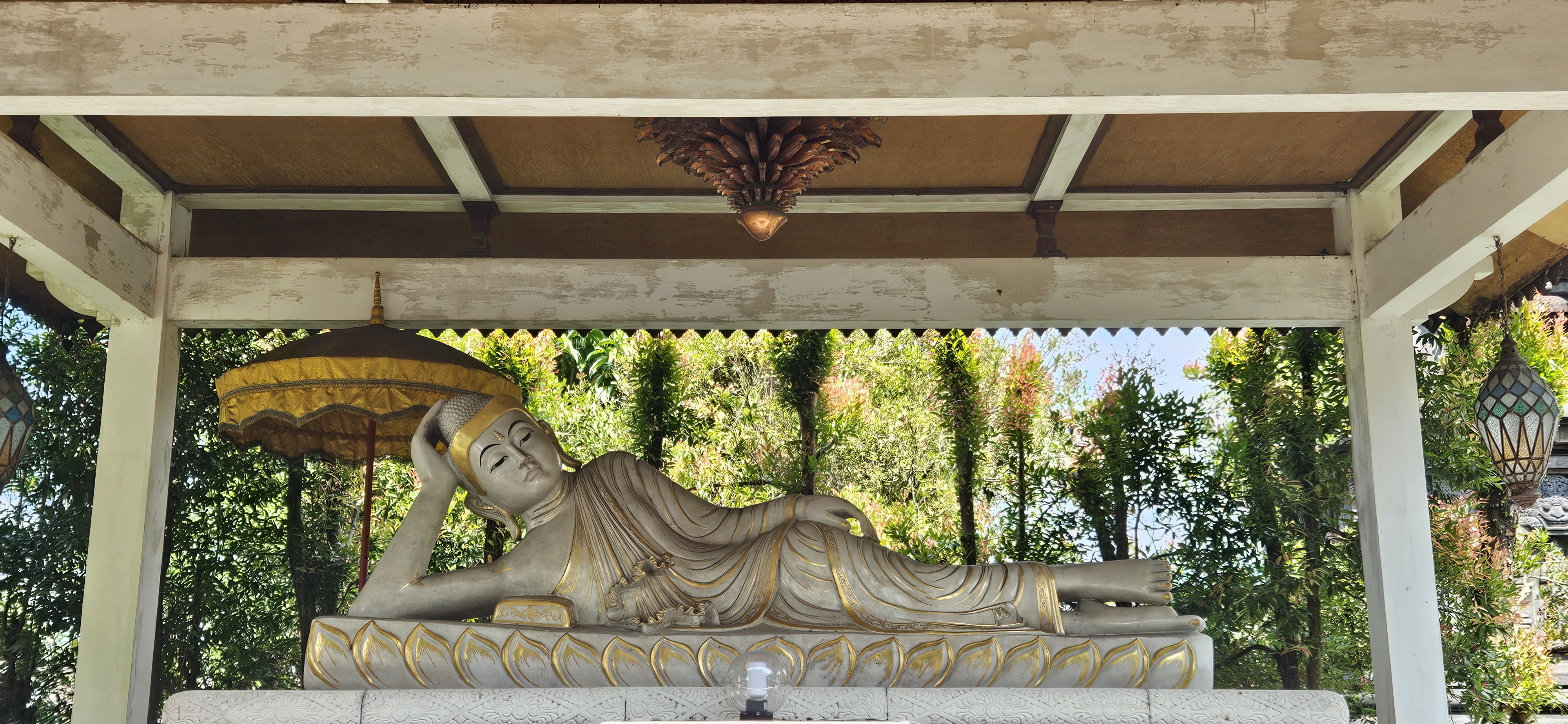
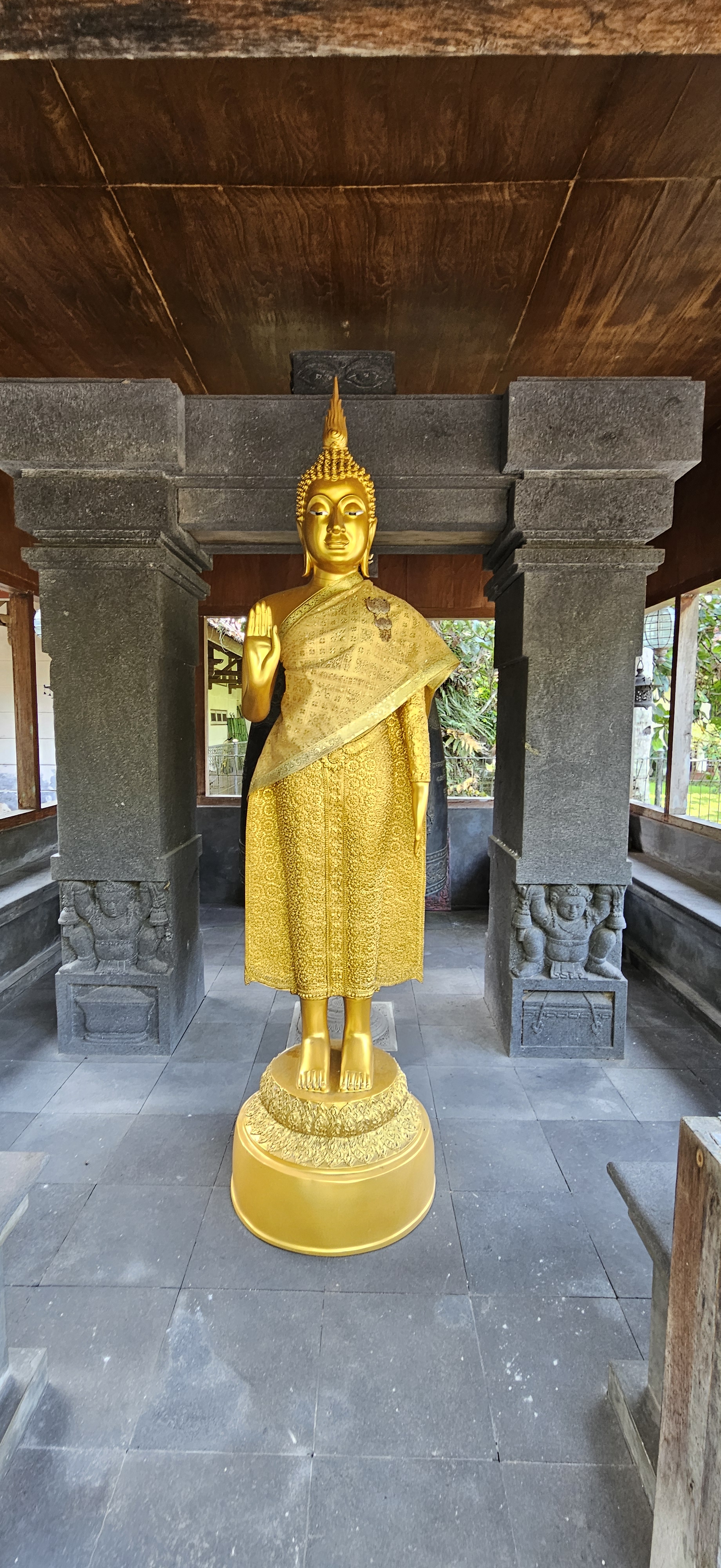
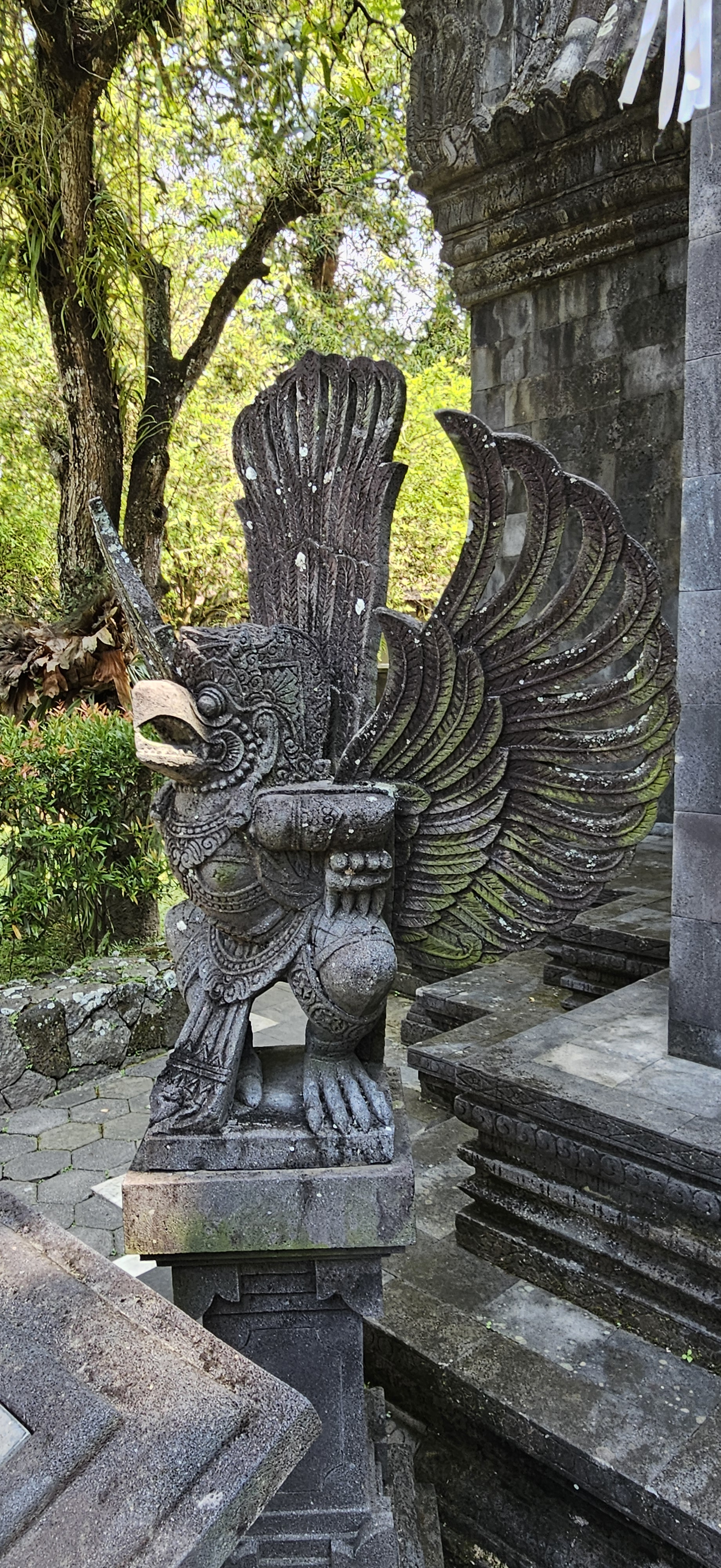
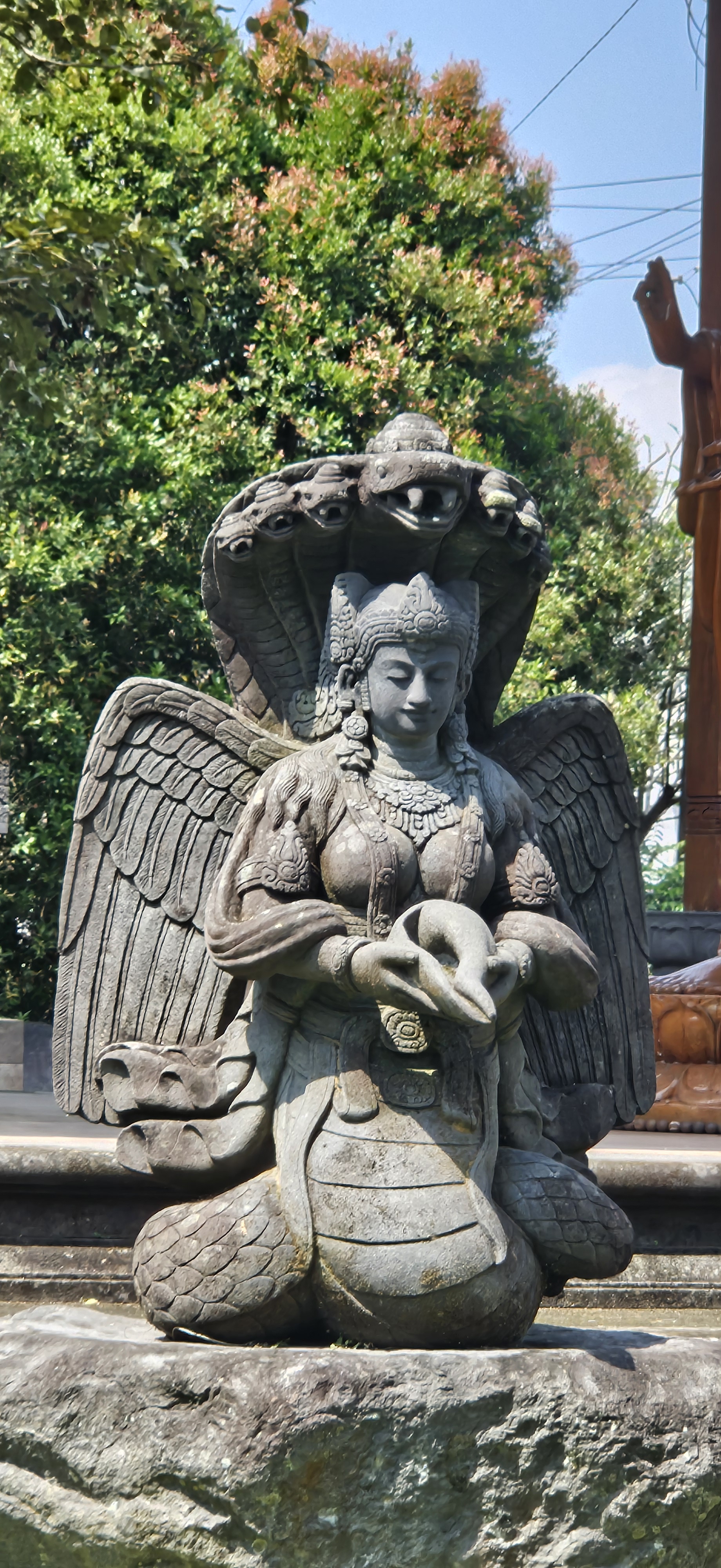
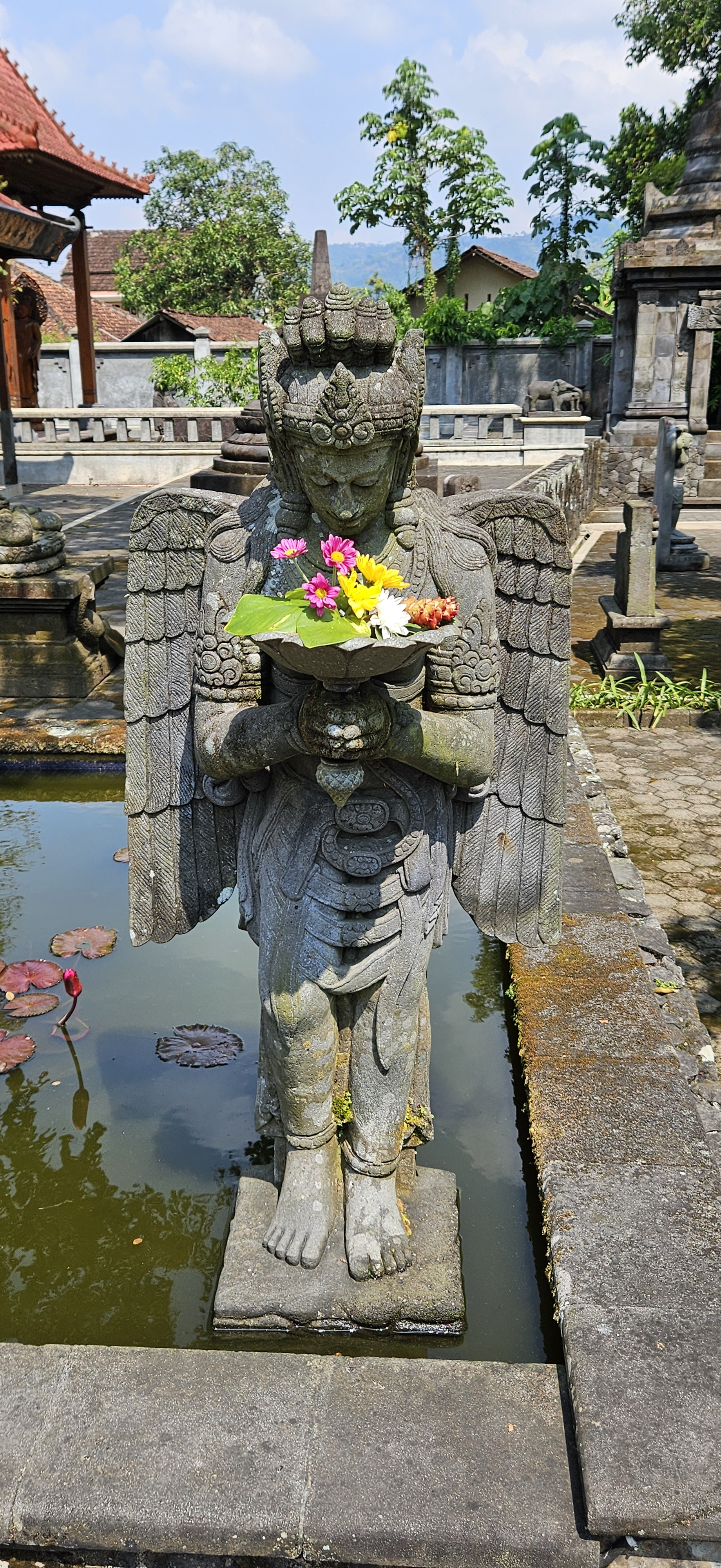
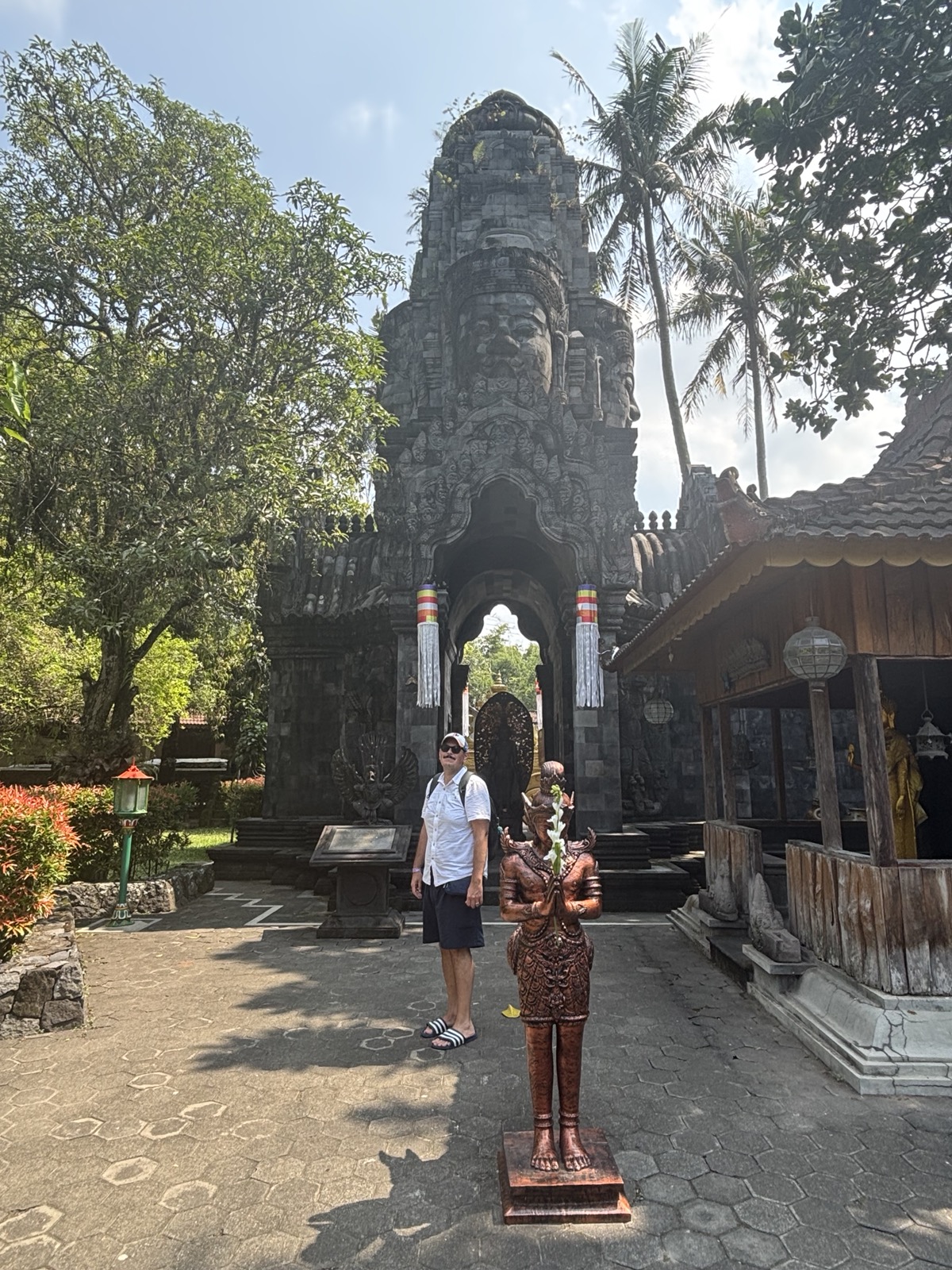
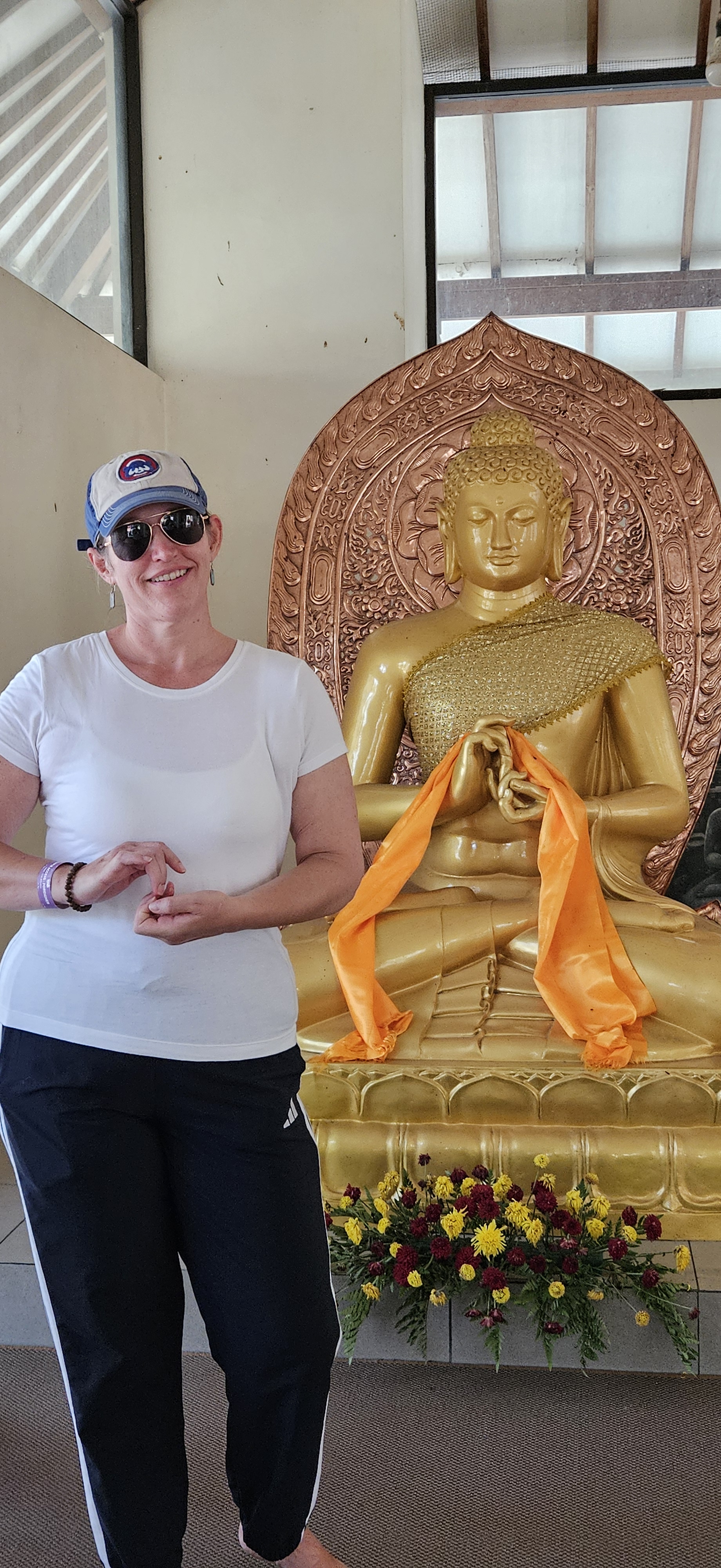
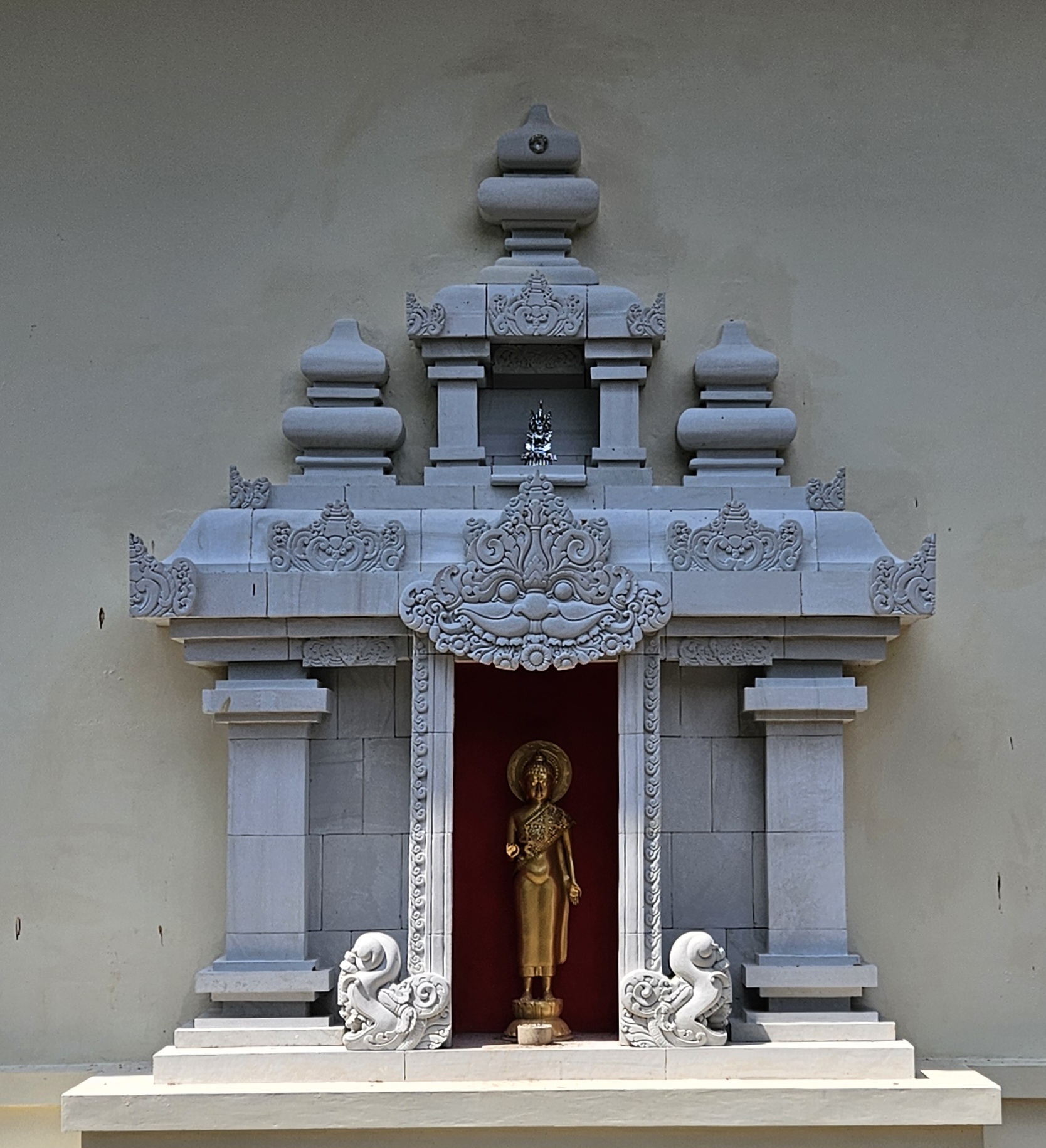
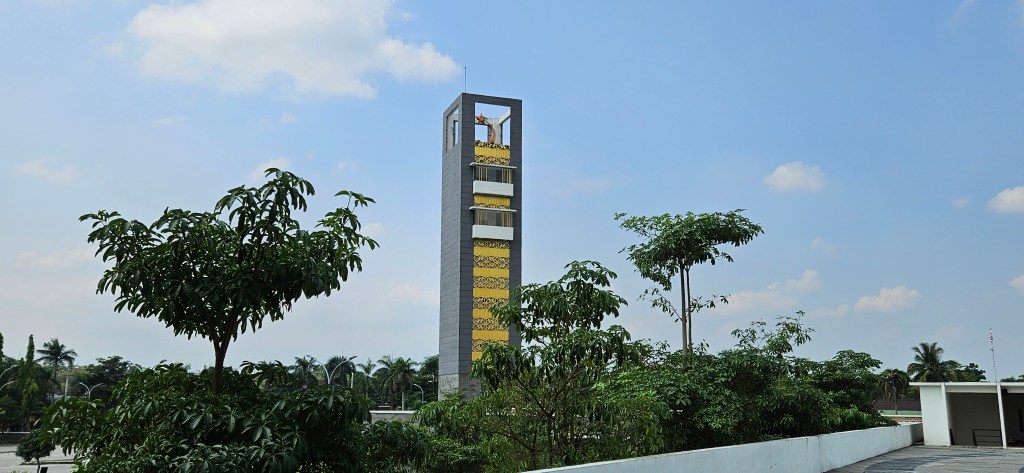
Inside was peaceful, but right outside there were many stands selling tourist items, and a few of the sellers really wanted us to buy things, but we quickly entered the car and were on the way to our next stop, the Great Mosque of An-Nuur Kota Mungkid. There is a tall rectangular minaret, the first of its kind we had seen, that we saw from far off.
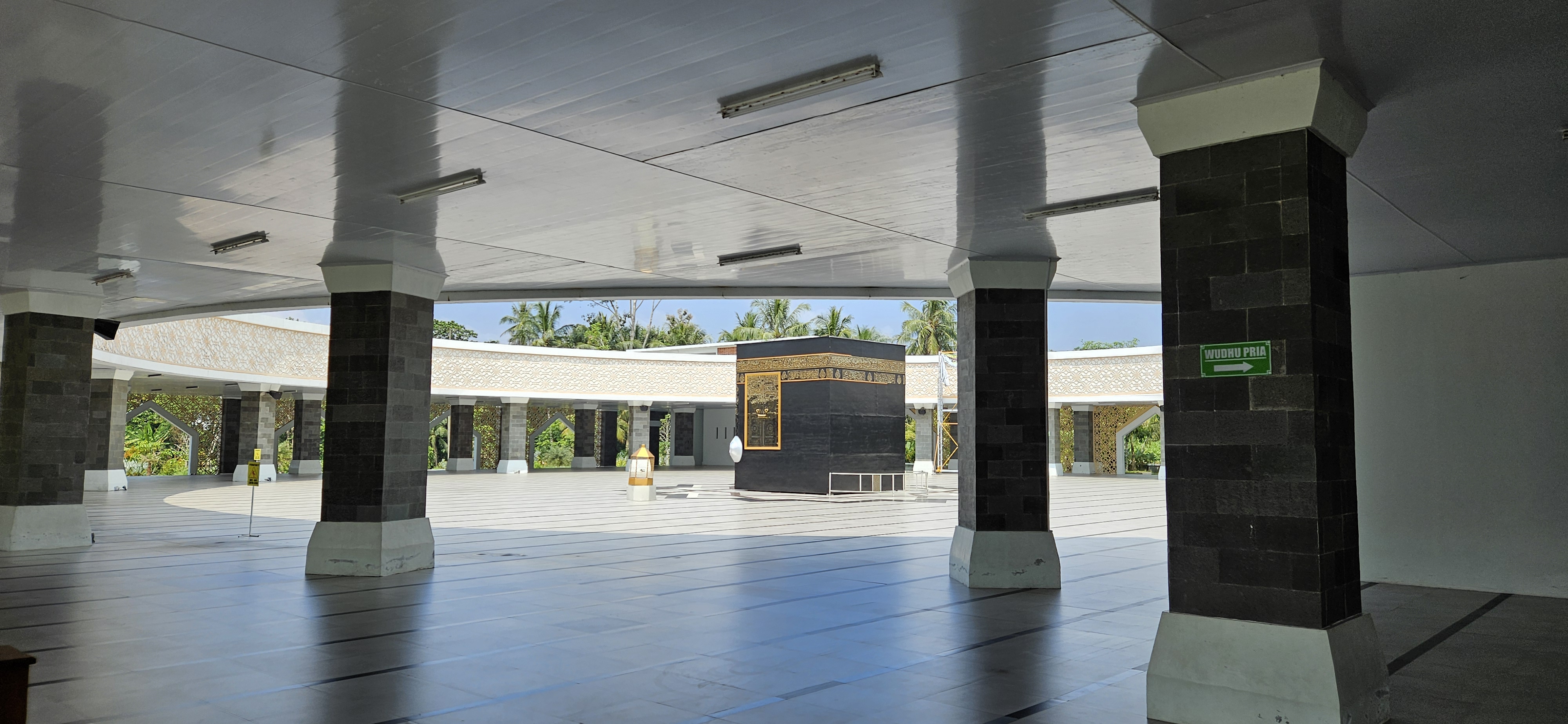
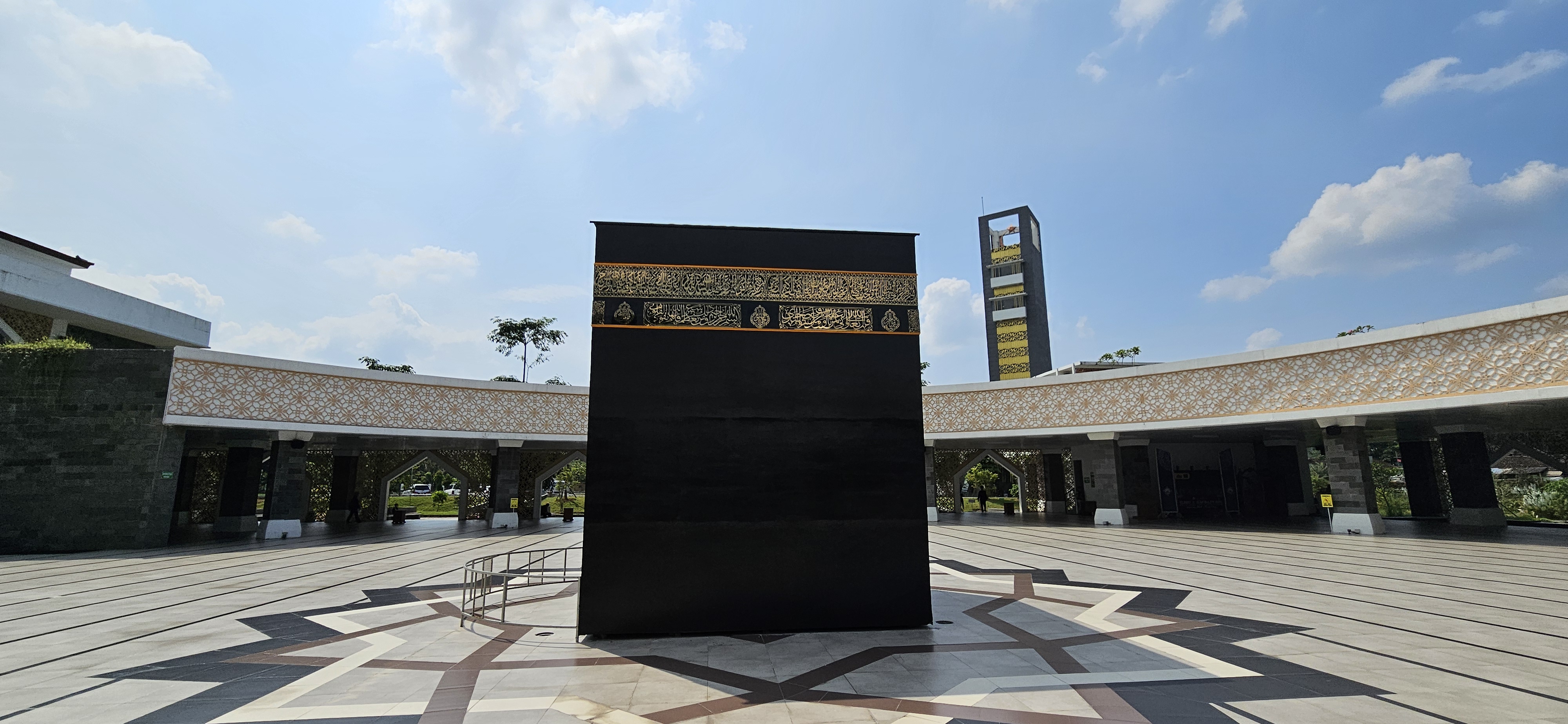
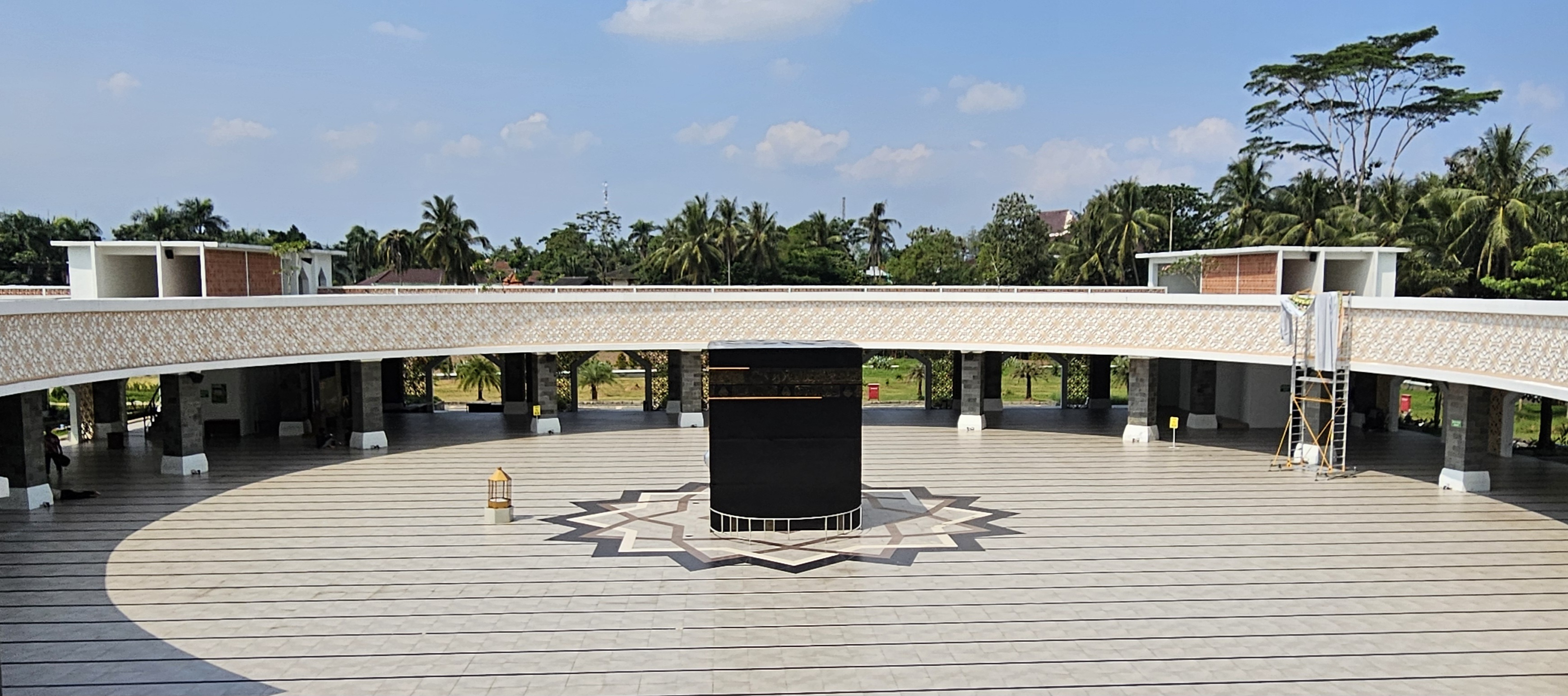
Once we arrived, we took off our shoes and kept to the shade, as the sun made the white tiles quite hot. They have a mini-Kaaba (the black cube – Kaaba means Cube – that, in the Quran, says it was the first house of worship of all mankind) in the courtyard, which I was surprised to see. Mr. Alif said it was for Muslims to practice, as it is required to visit once in a Muslim’s lifetime. The original is located in Mecca, Saudi Arabia.
We walked up the stairs toward the entrance to the prayer room.
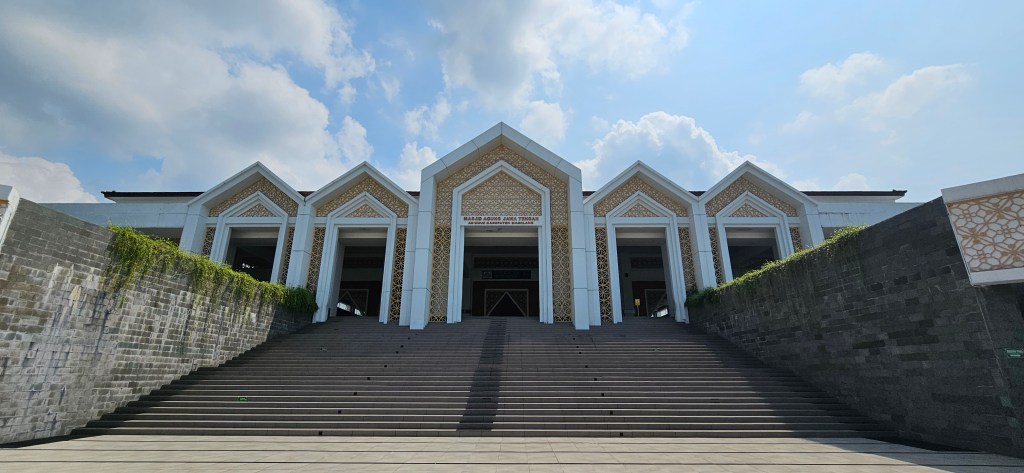
We could not enter the prayer room as it was prayer time when we arrived. Mr. Alif asked us if we would wait while he and his brother-in-law went and prayed, so we sat outside and took a rest.
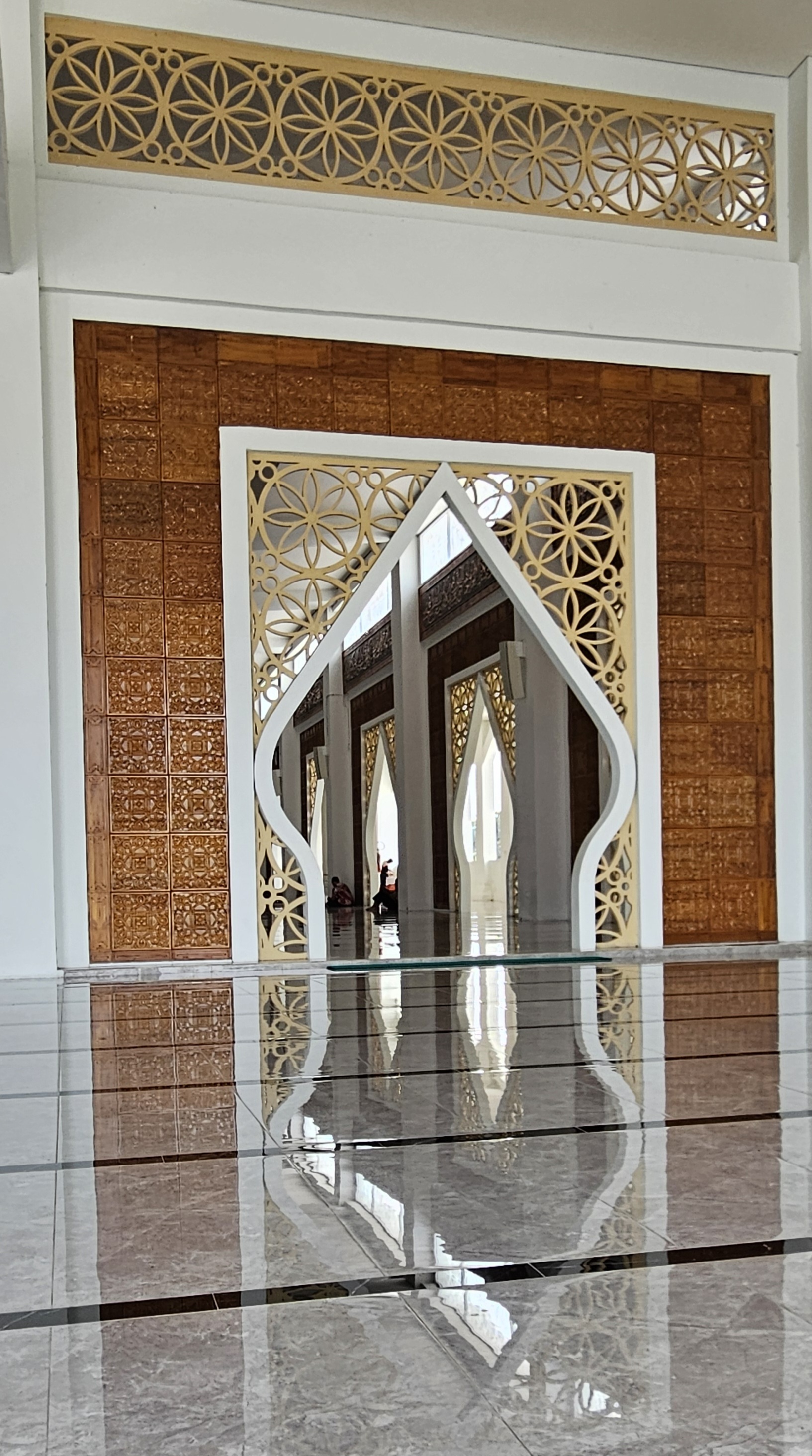
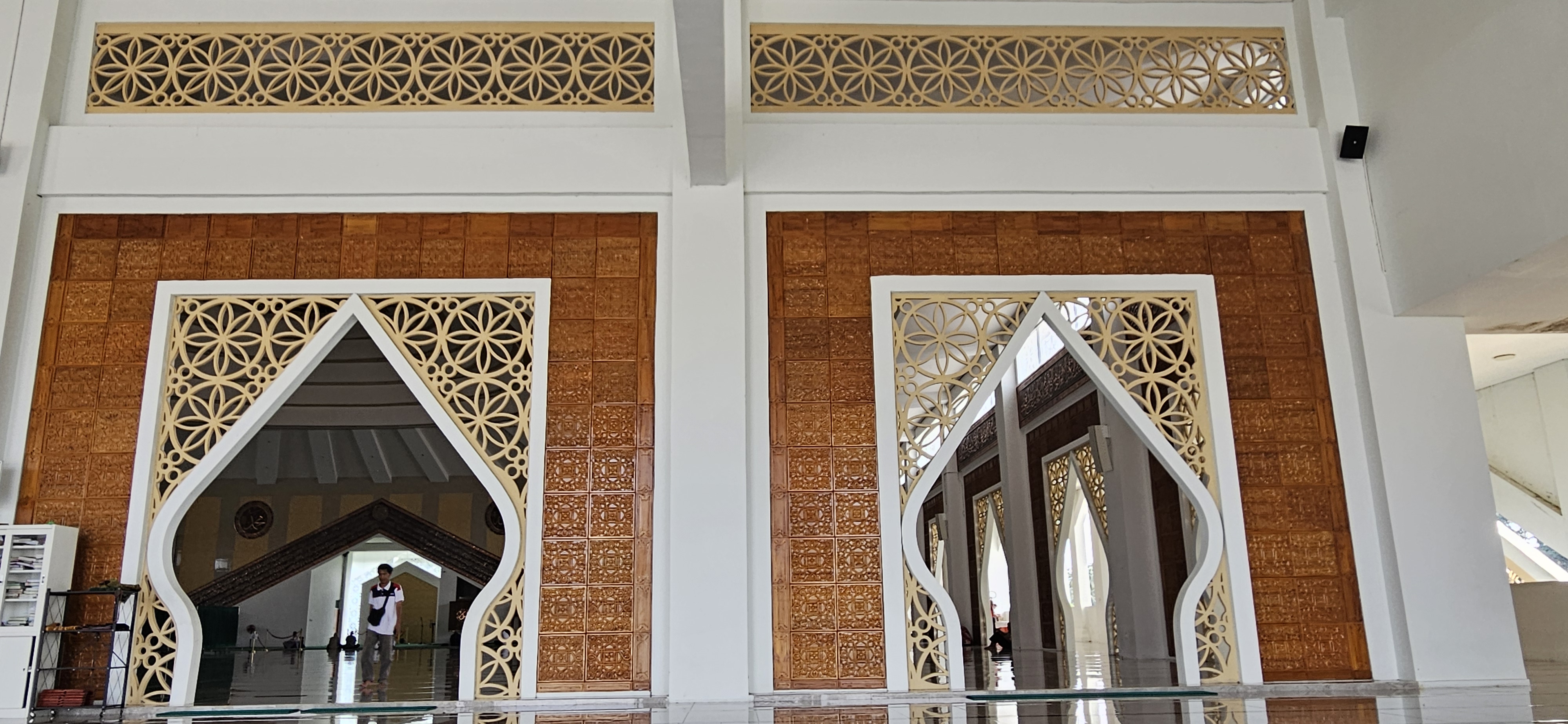
We could take pictures of the prayer room, and the ceiling was particularly interesting.
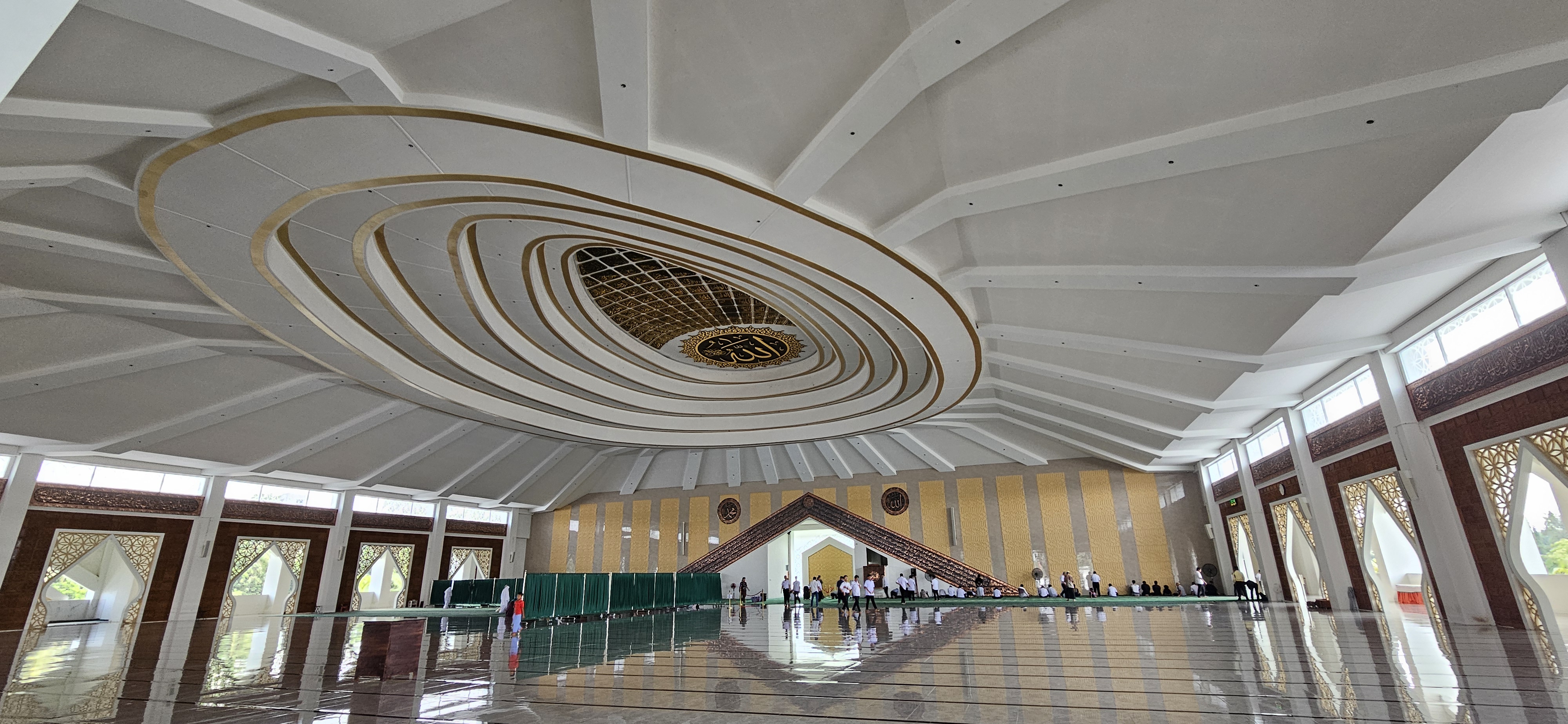
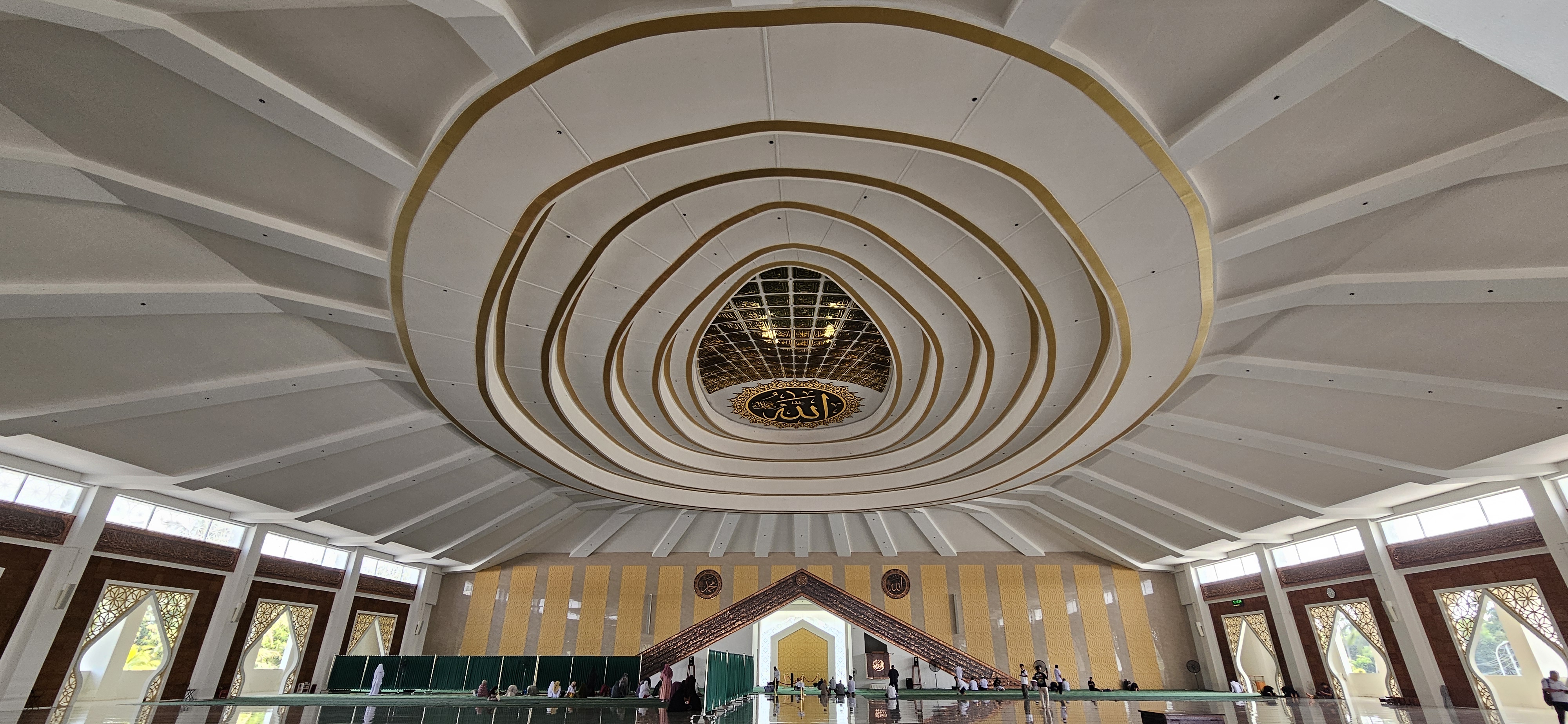
Once they were done praying, Mr. Alif and his brother-in-law came and sat with us. His brother-in-law told us how all the religions of Jogja and Indonesia (the Christians, Buddhists, Hindus and Muslims) live together in harmony; when it was a holy day for one religion, the others would pick up the slack, and vice versa, and they all worked to compliment each other, rather than fight each other. It was nice to learn.
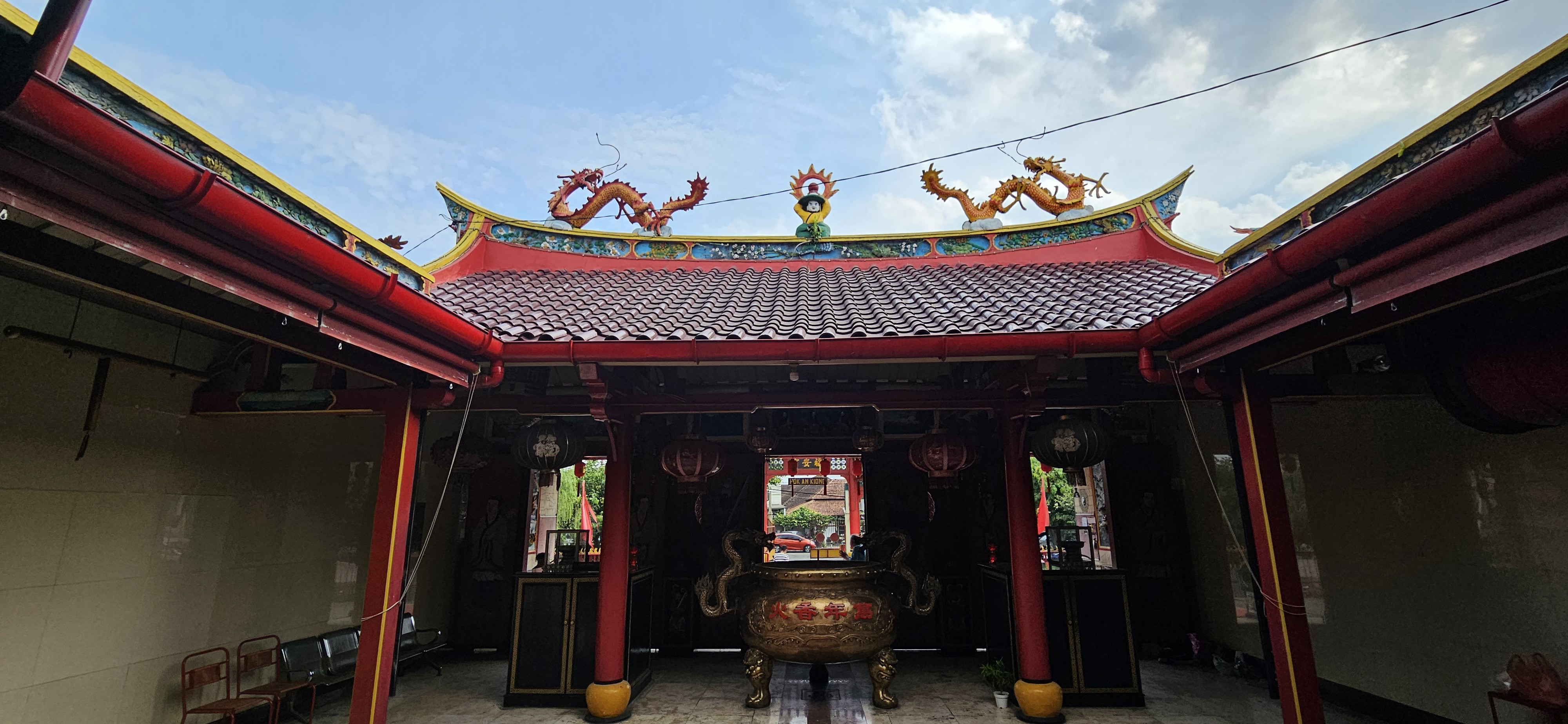
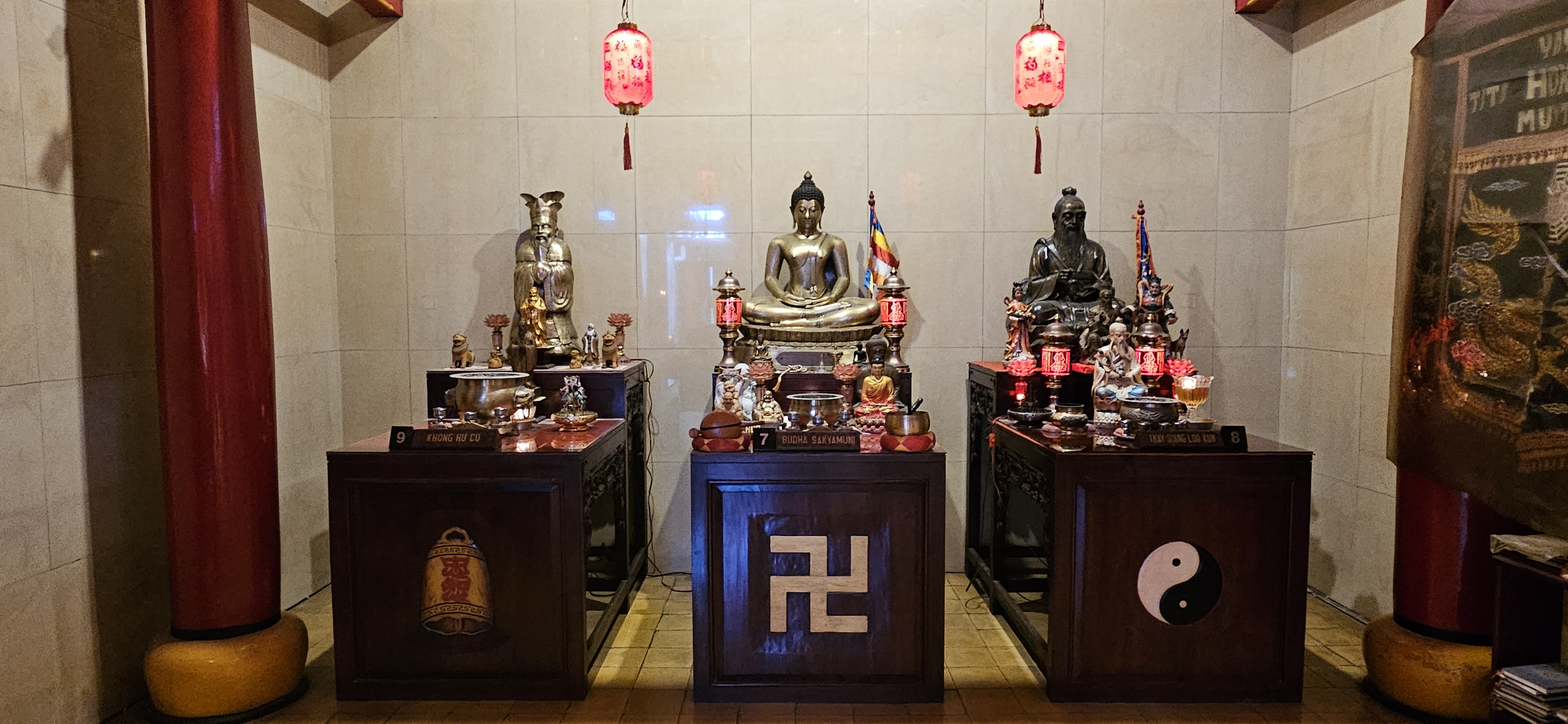
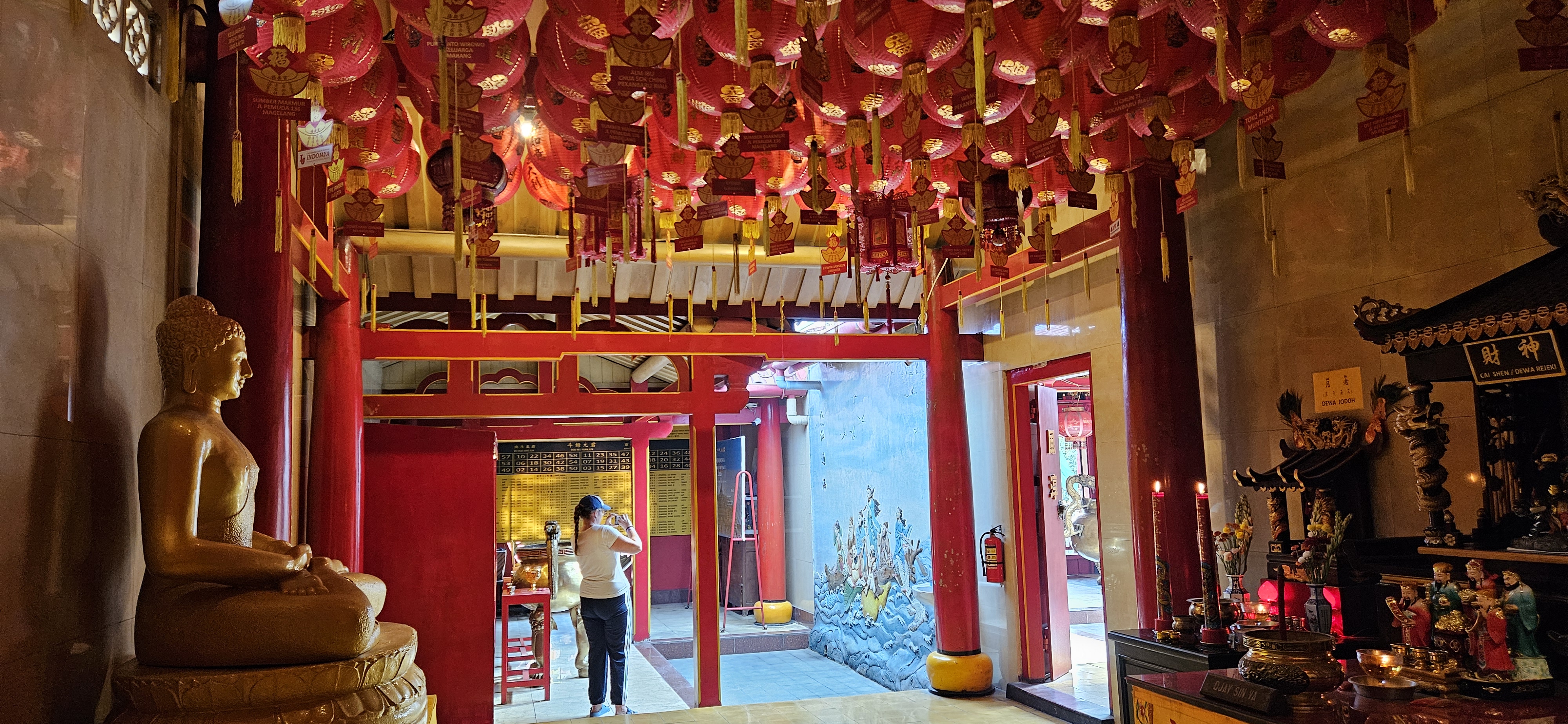
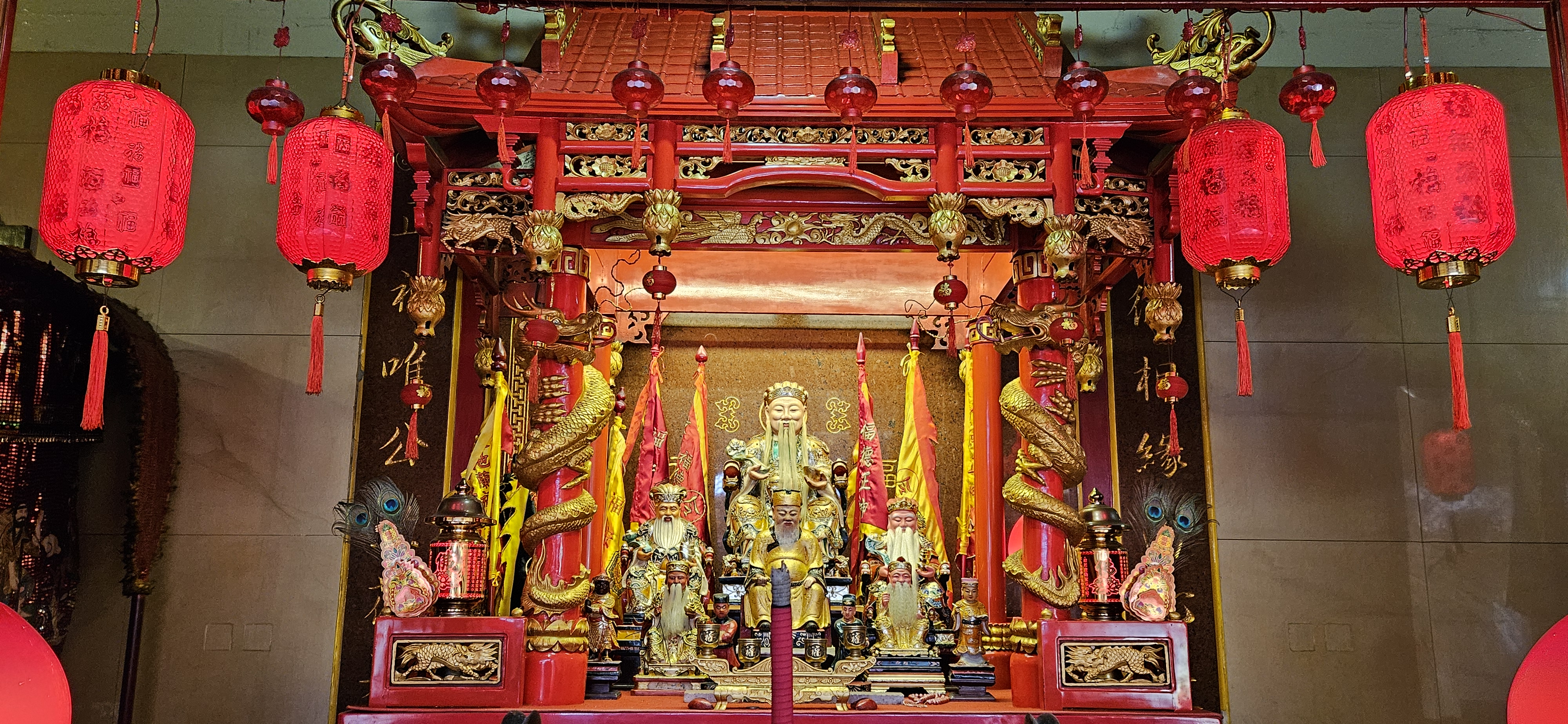
Our last stop was not too far away, and completed another tour of religions on Java for us, named the Hok An Kiong Muntilan. It is a temple, and its name translates to “the palace that provides safety and well-being.” It was another Tri-Dharma places of worship, which were Chinese in origin and celebrated three religions in one temple: Taoism, Buddhism, and Confucianism. We had seen our first Tri-Dharma temple in Surabaya only a week earlier.
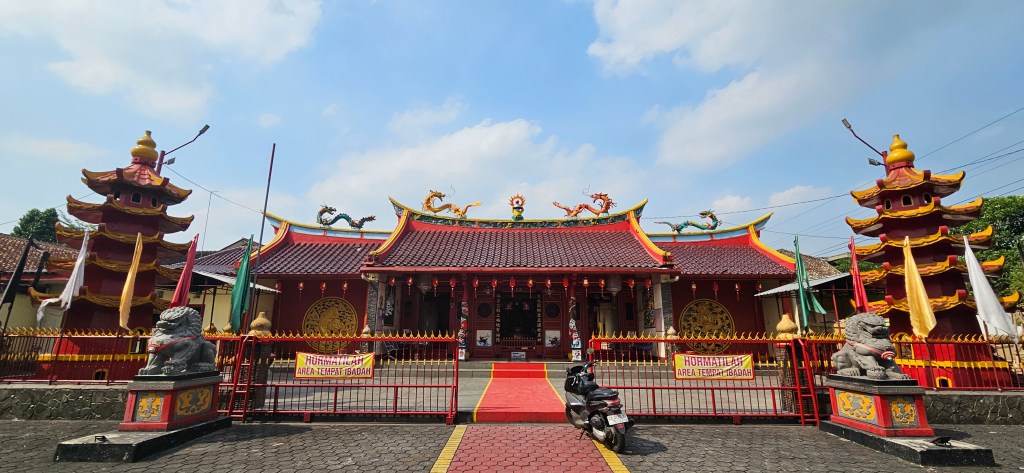
This one was built in 1929, and had a large entrance gate. I do not think Mr. Alif had many of his tourists ask to go here, but he took us anyway, and waited in the car while we explored.
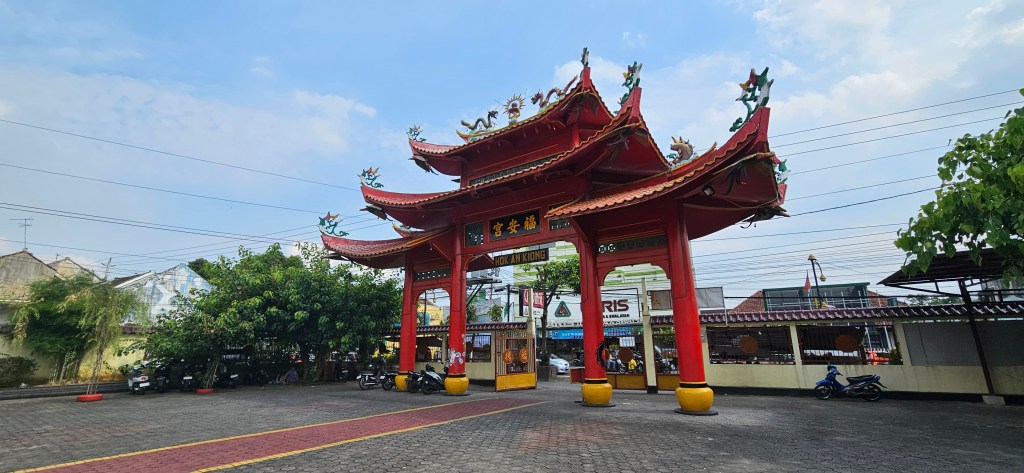
The rooms and altars inside the temple were very colorful and intricate.
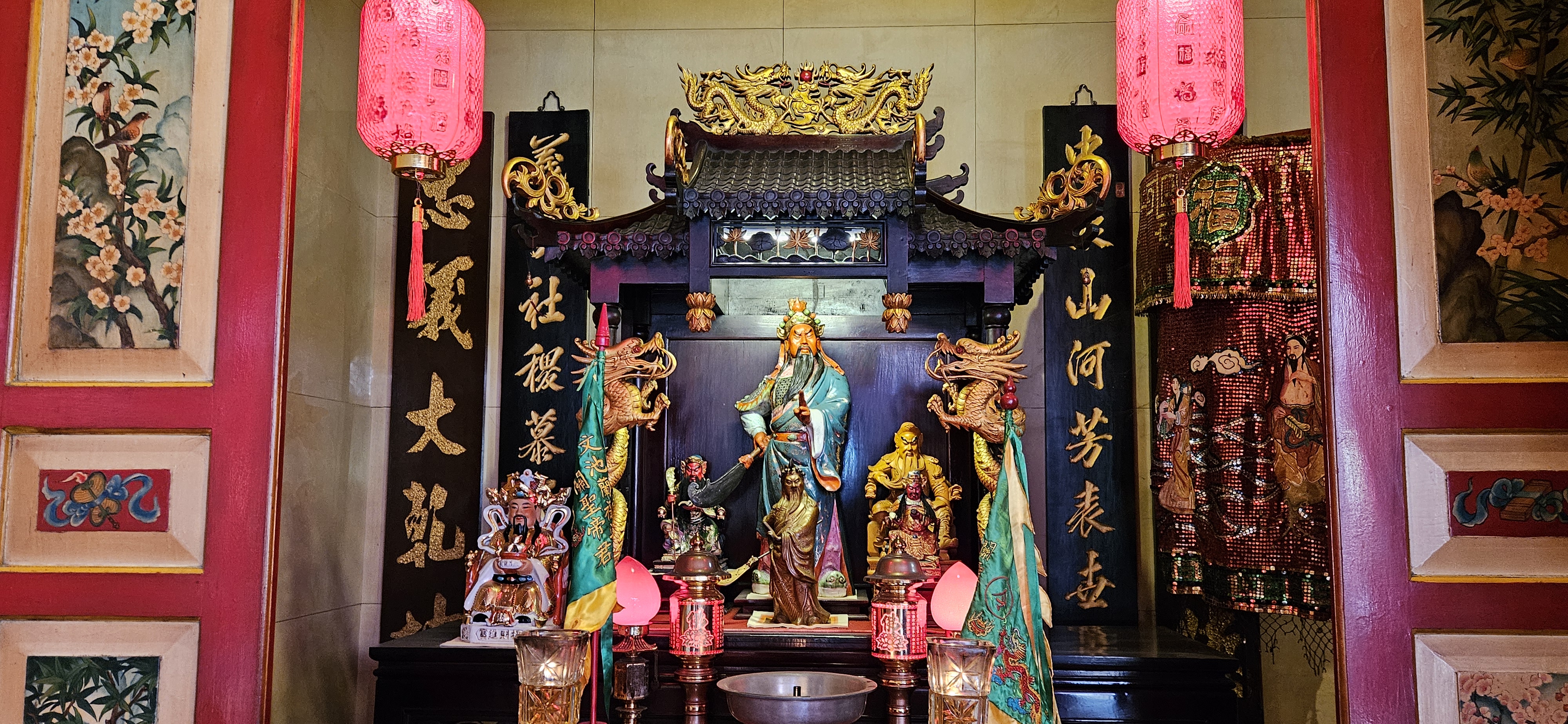
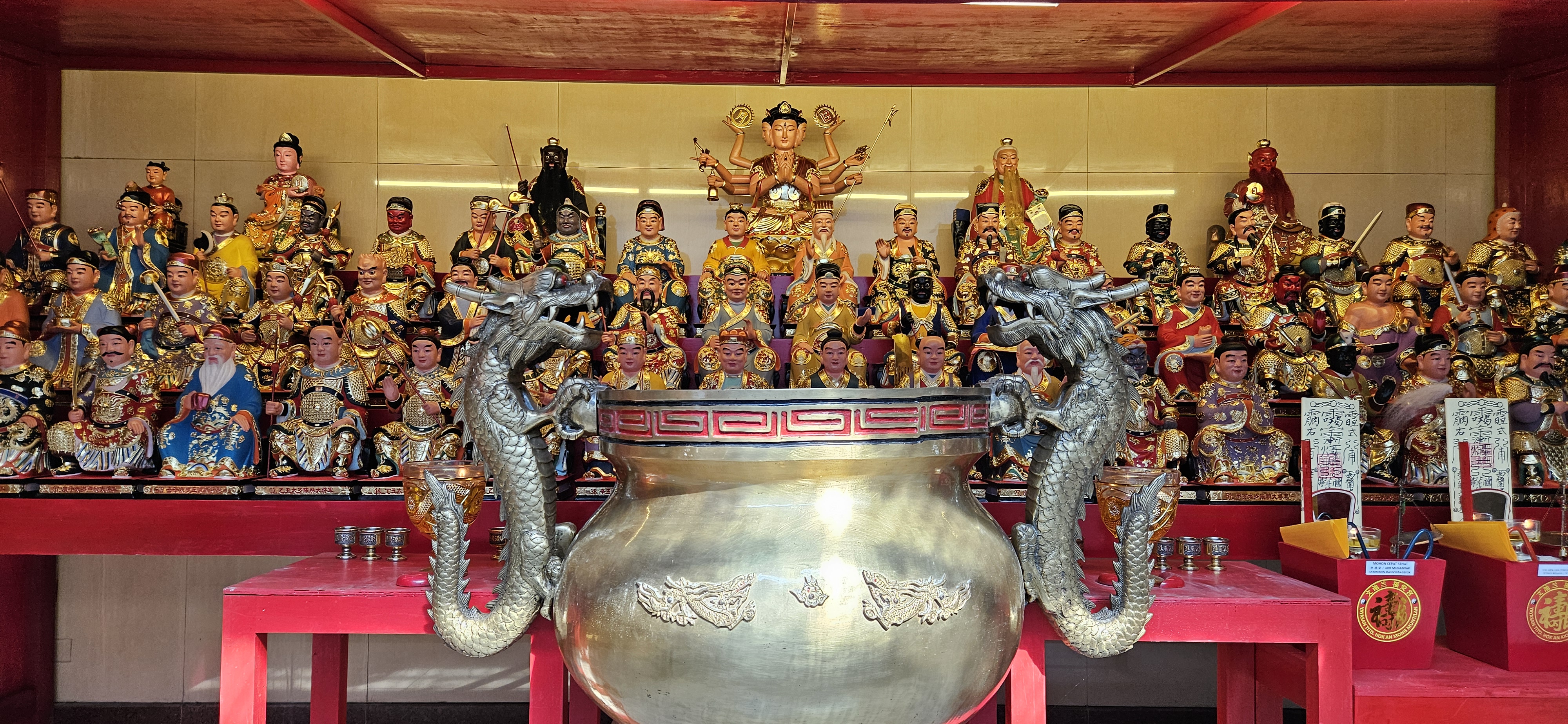
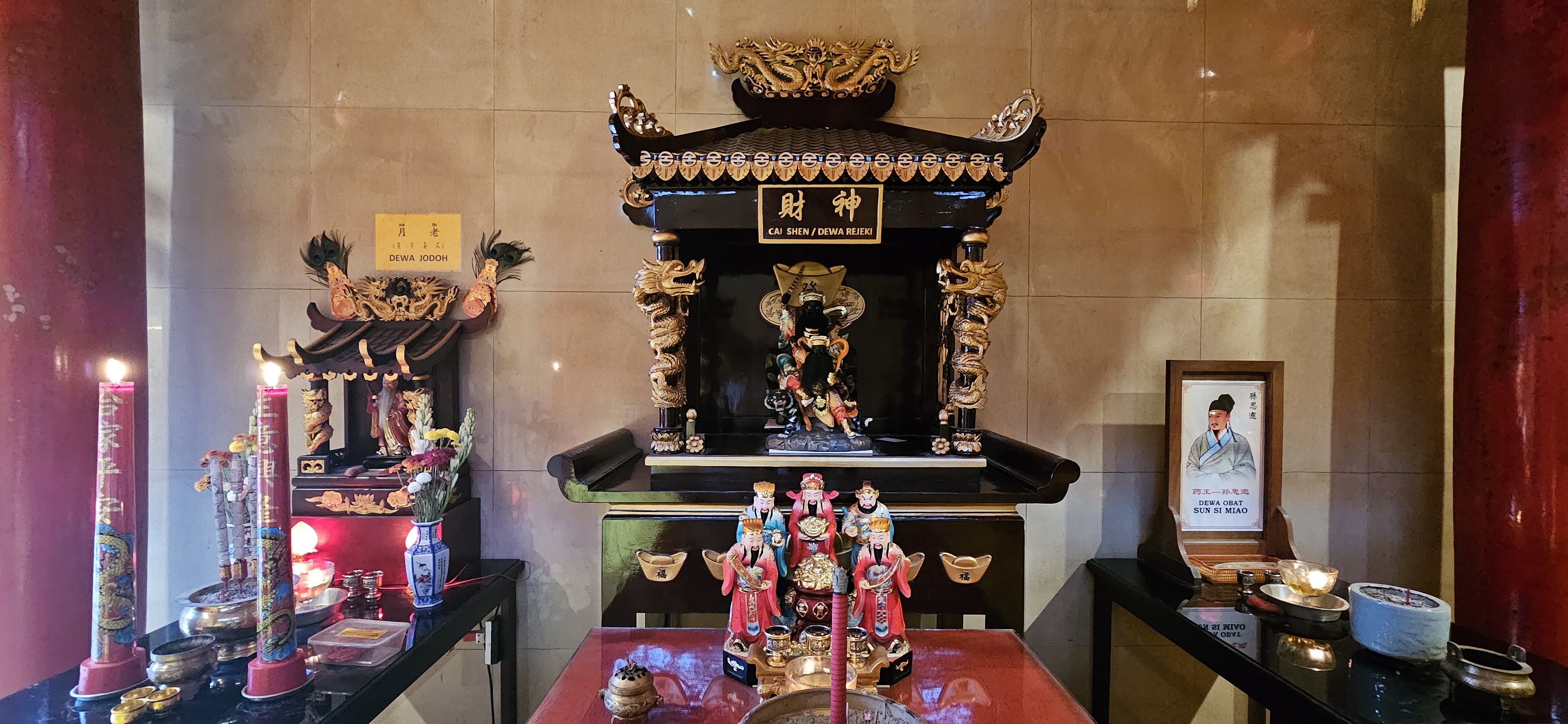
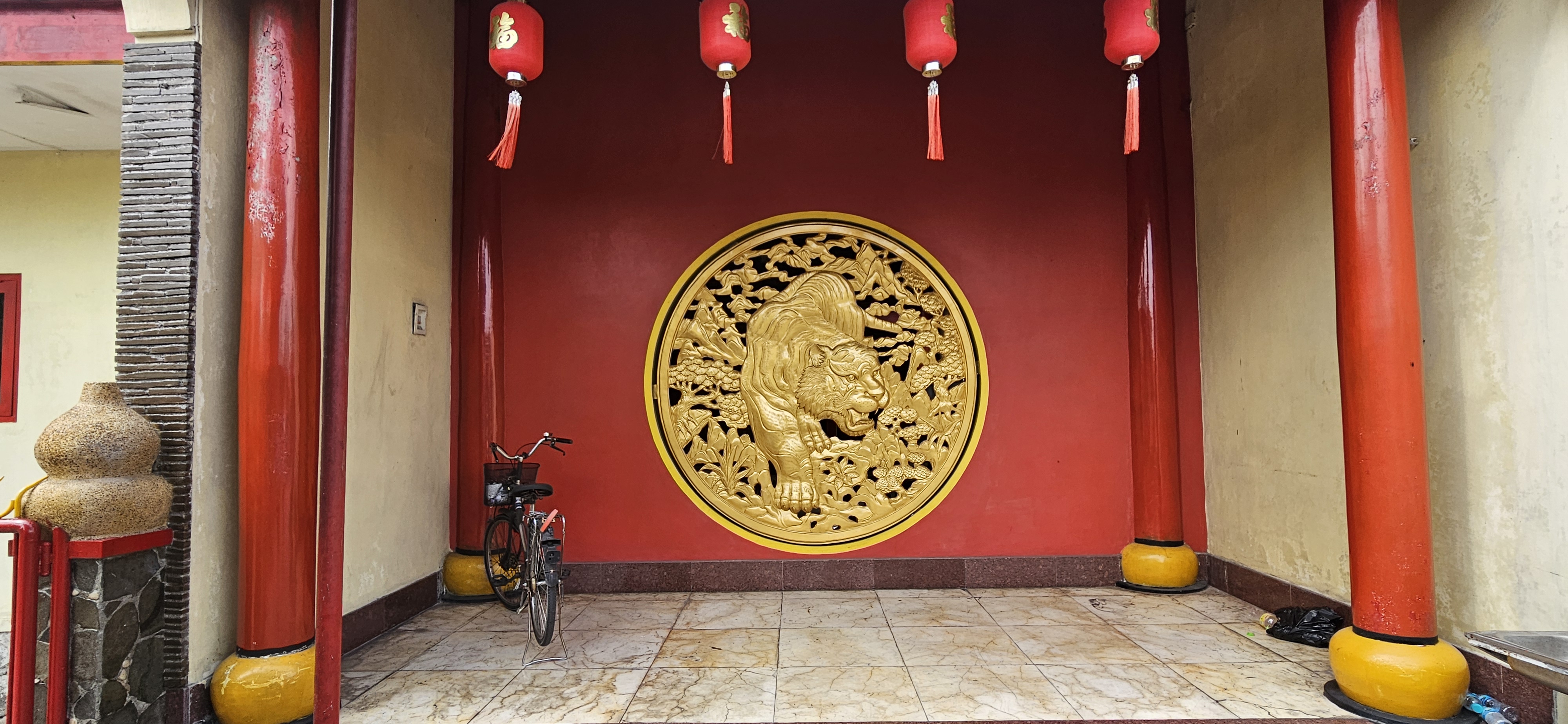
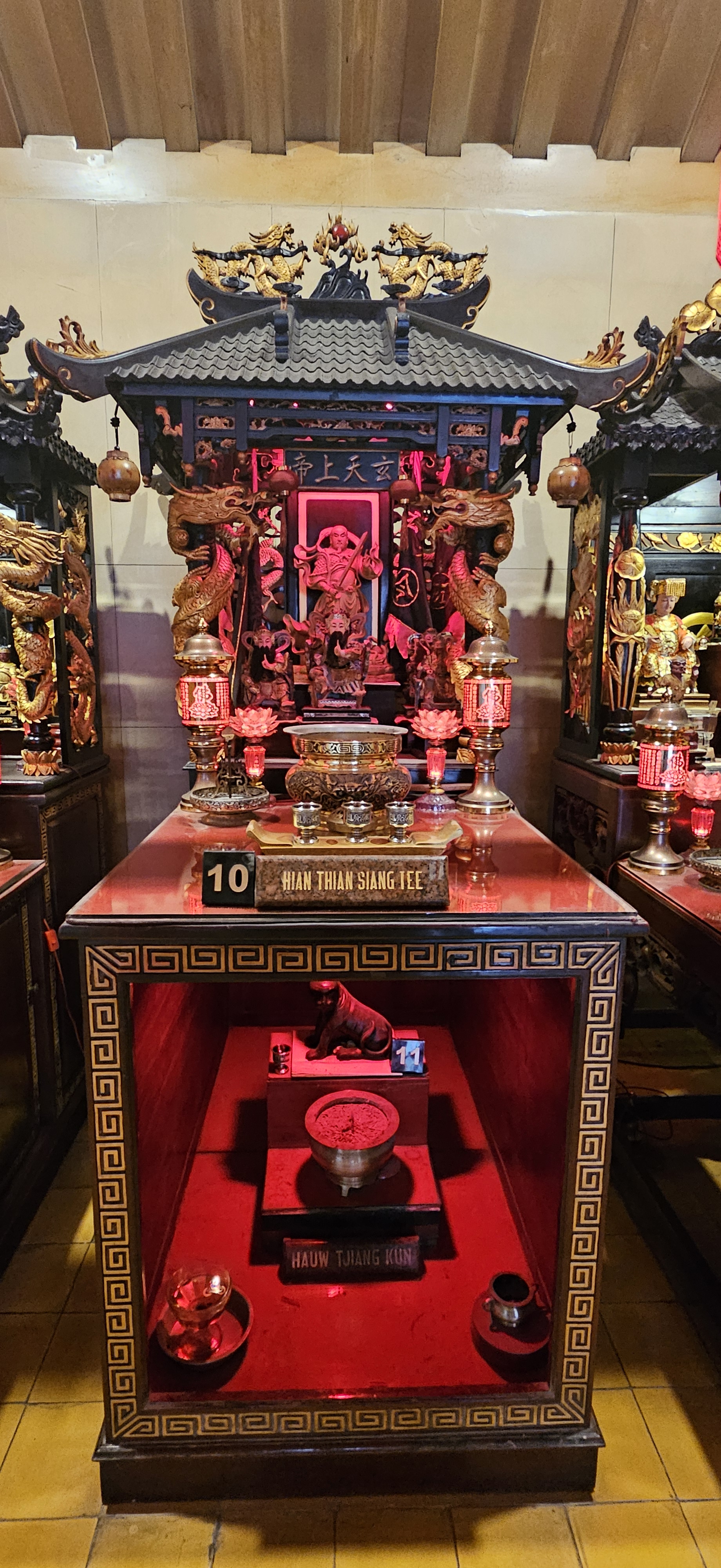
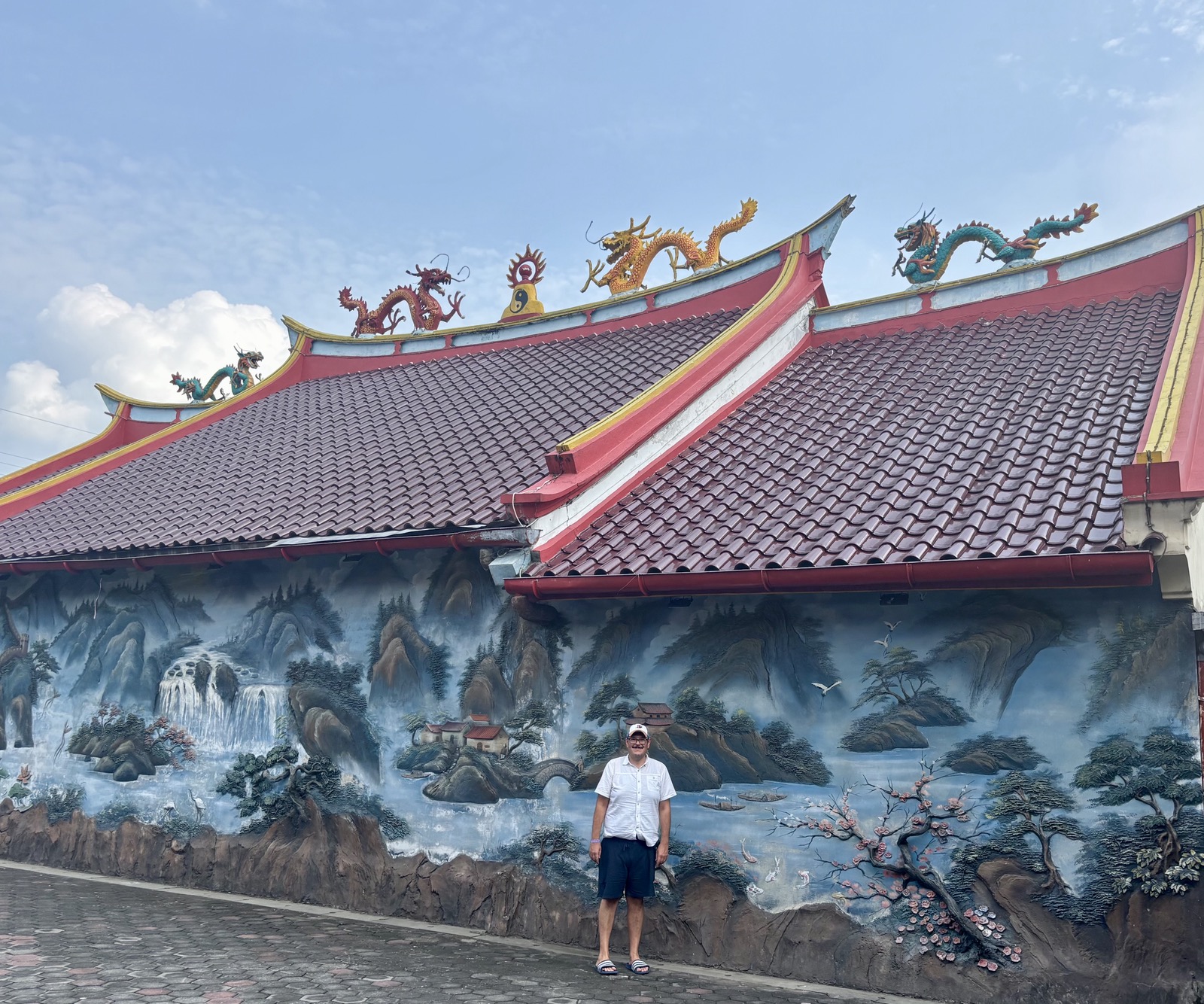
We finished up our tour and Mr. Alif and his brother-in-law took us back to the hotel. It was a jam packed day of religious structures and houses of worship and all were unique and broadened our perspectives. What a day!
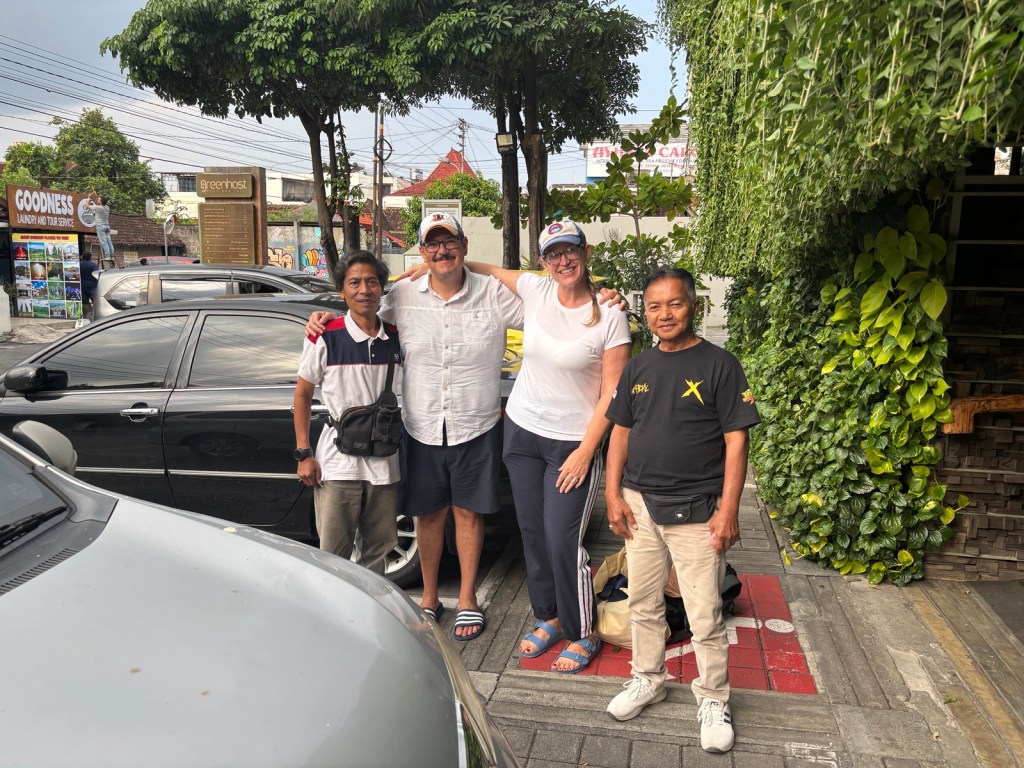
Post script: We saw Mr. Alif a few days later (in the above picture, on the right) when we visited the Fort where he is head groundskeeper; his hair looked freshly dyed, jet black. He was happy to see us, and I think our tour went to help pay for it, which made us happy, too.


Those are some very nice temples. That prayer room is gorgeous!
LikeLike
Really stunning, just being in the space created a sense of wonder and calmness.
LikeLike