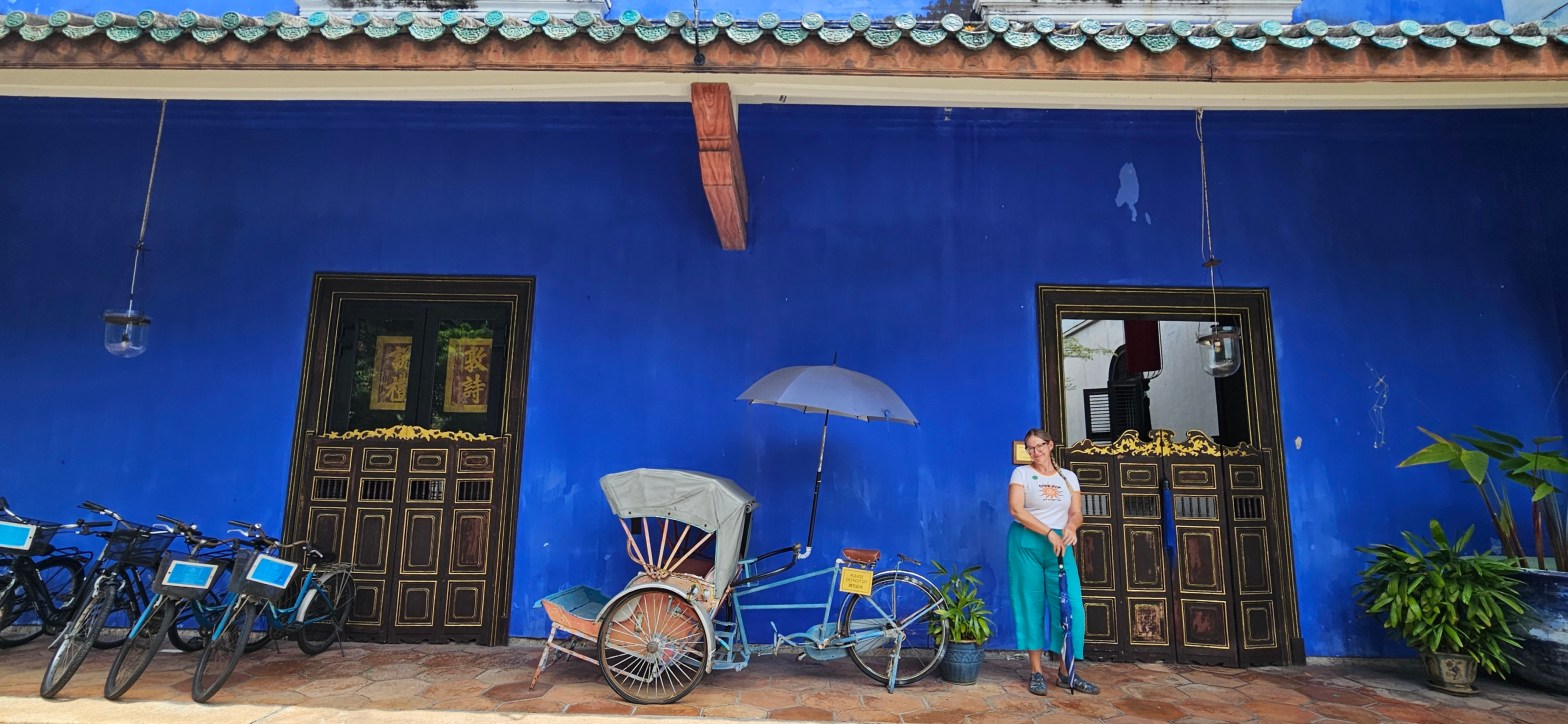
Peranakan homes abound in Penang, and two of the most visited are known for the distinct colors; the Blue Mansion and the Green Mansion (or Pinang Peranakan Mansion). We started our day at the Blue Mansion, originally owned by Cheong Fatt Tze. He was a early 20th century industrialist and banker, born in Guangdong Provence in China, and made his fortune in George Town. He was called the Rockefeller of the East by the New York Times, and he built himself a home to match.
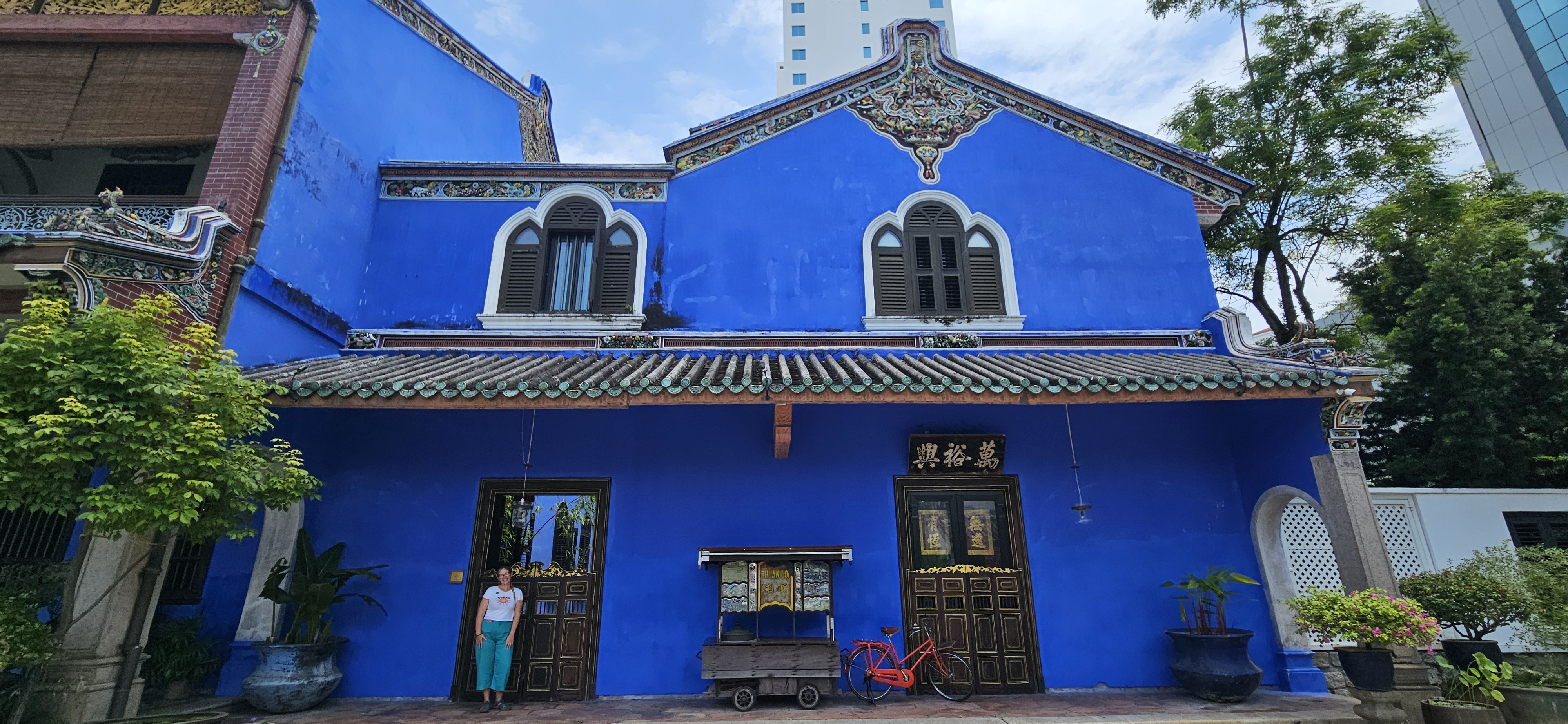
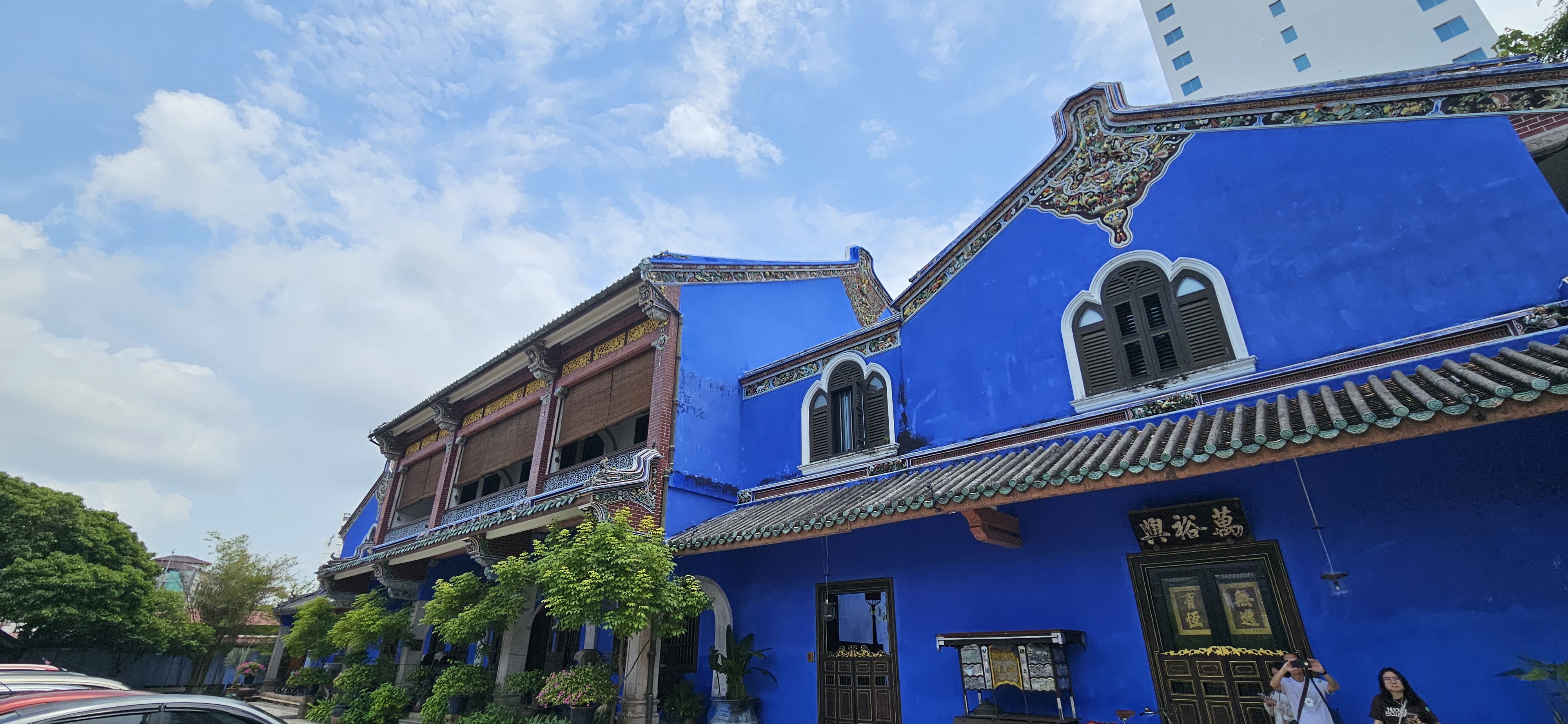
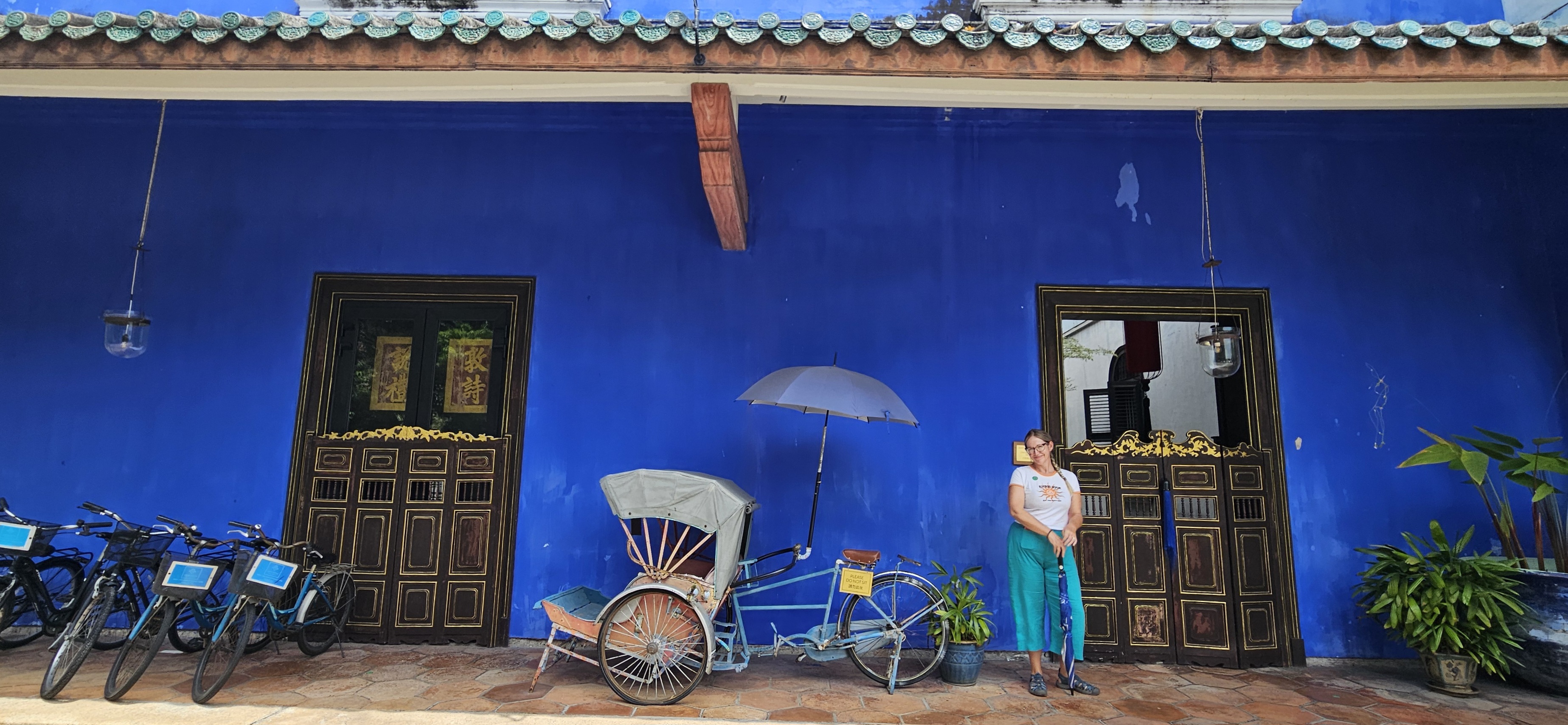
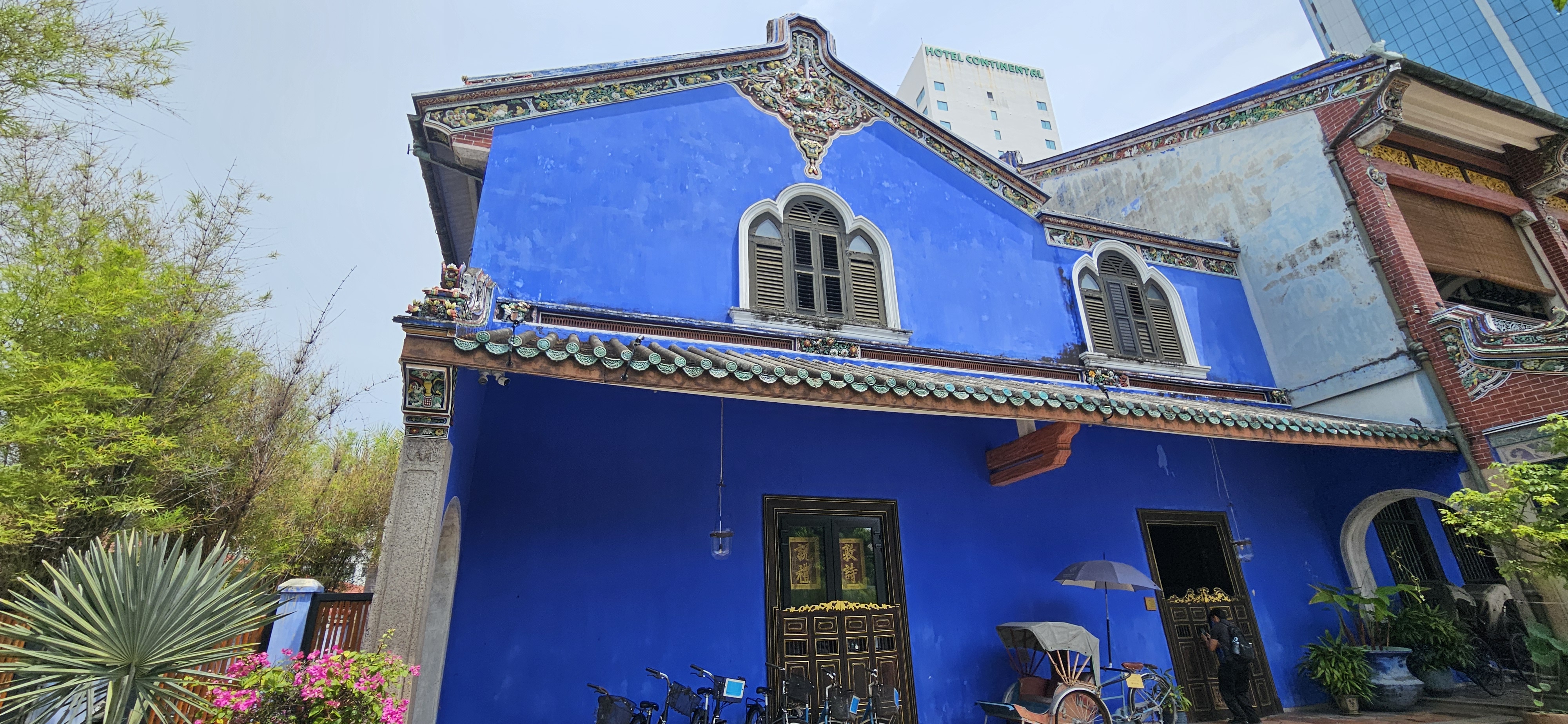
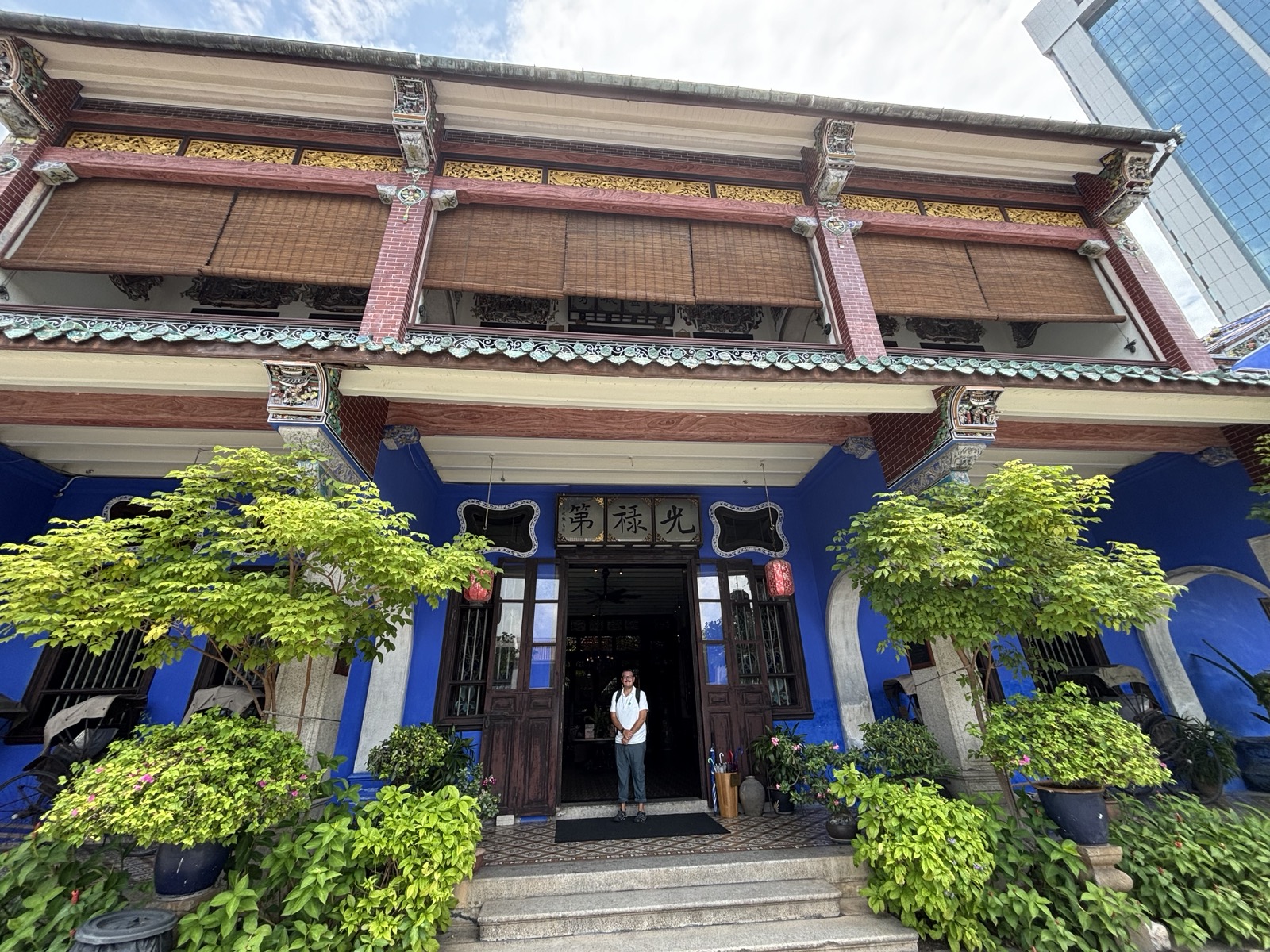
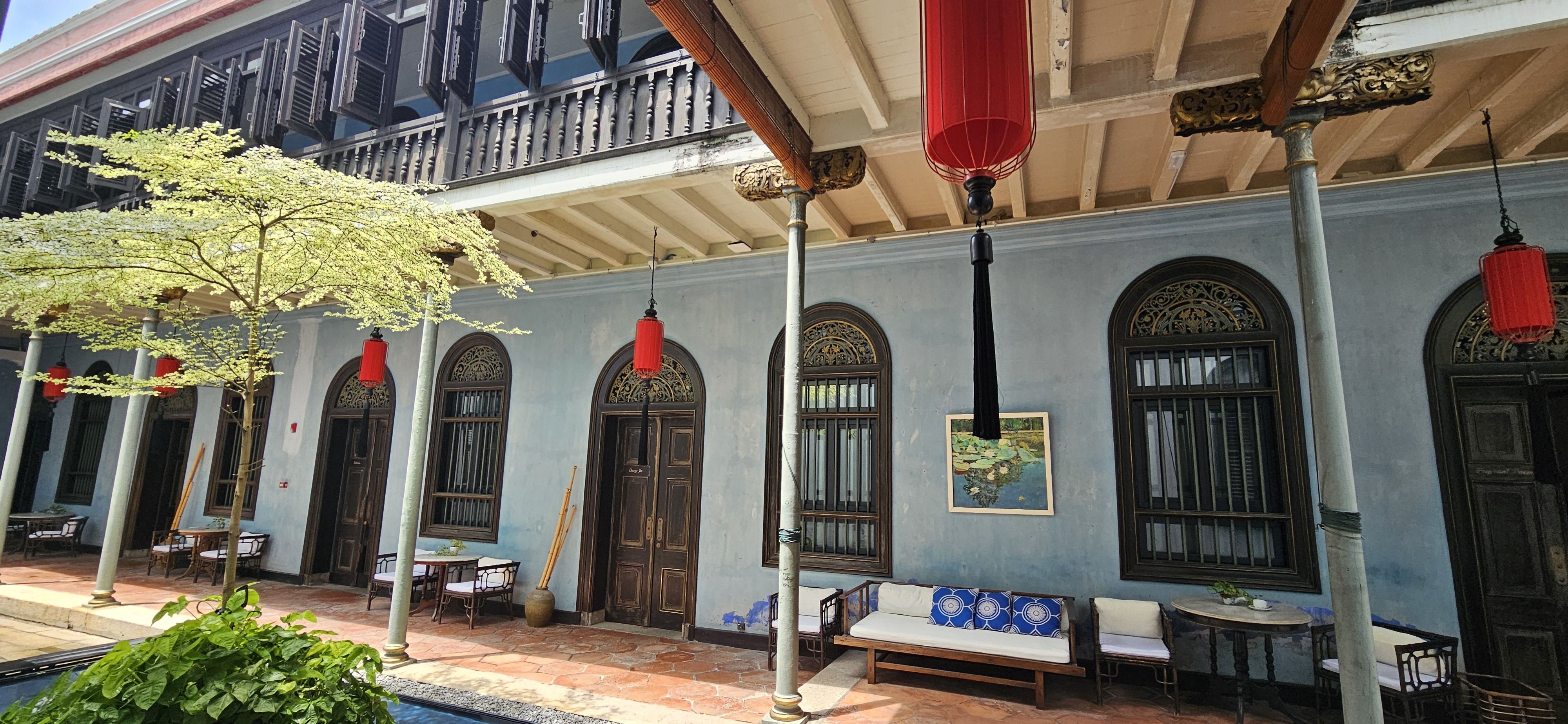
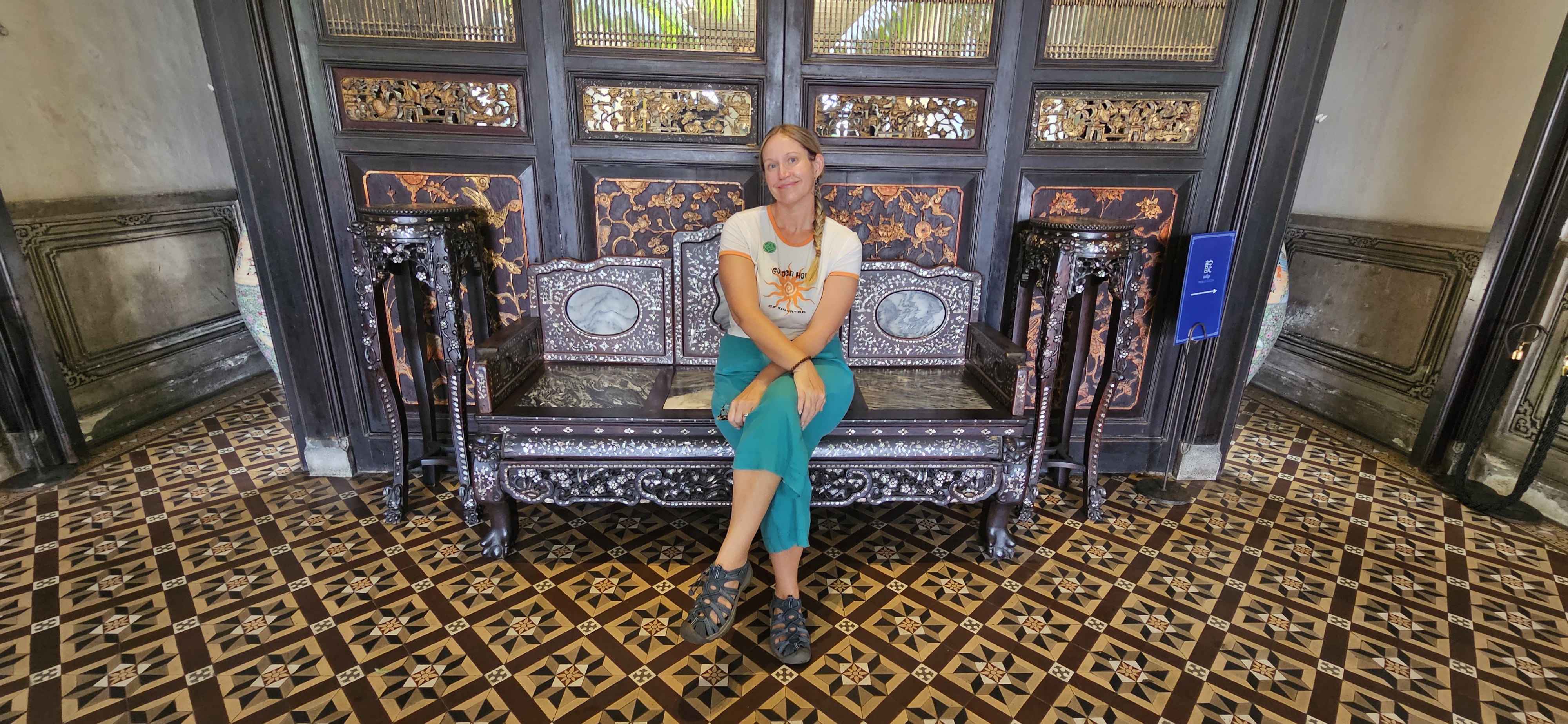
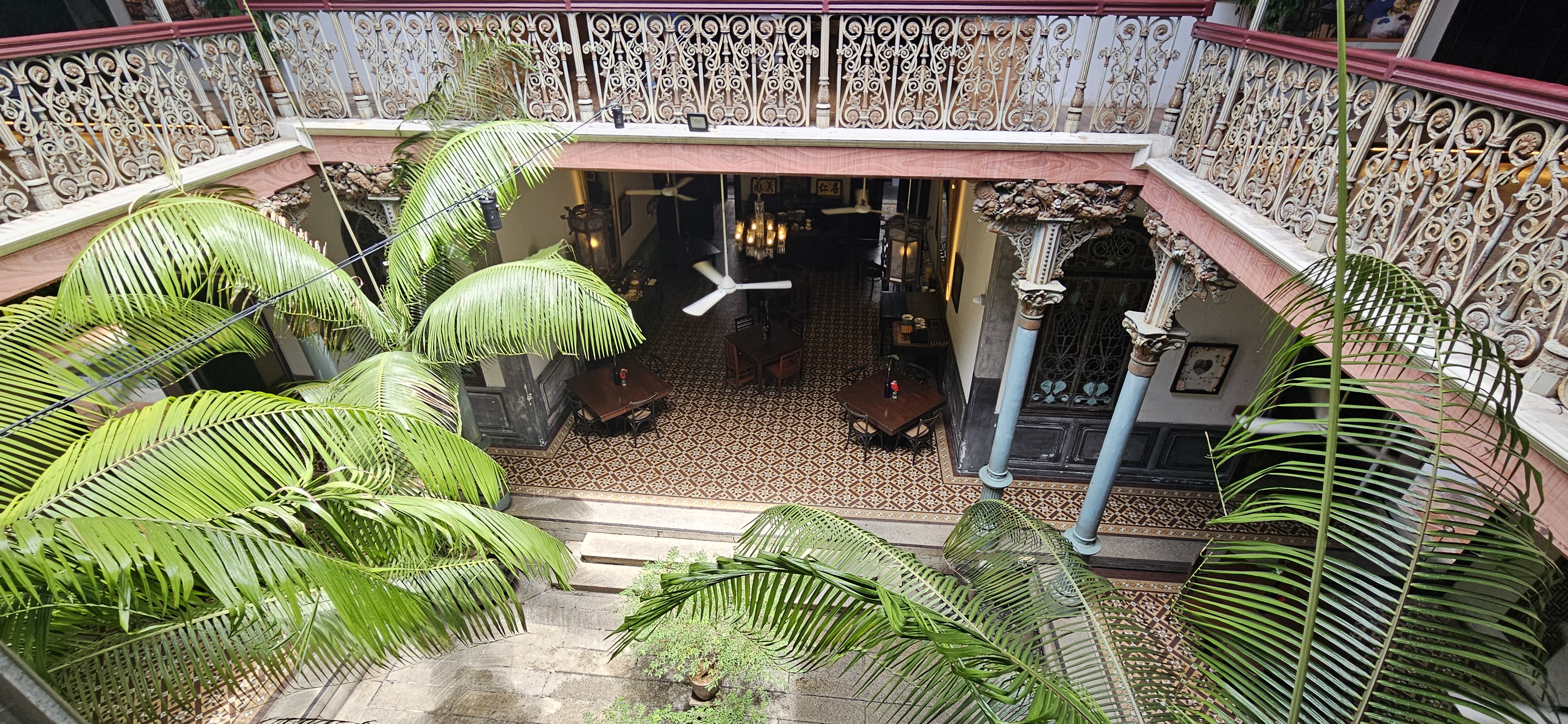
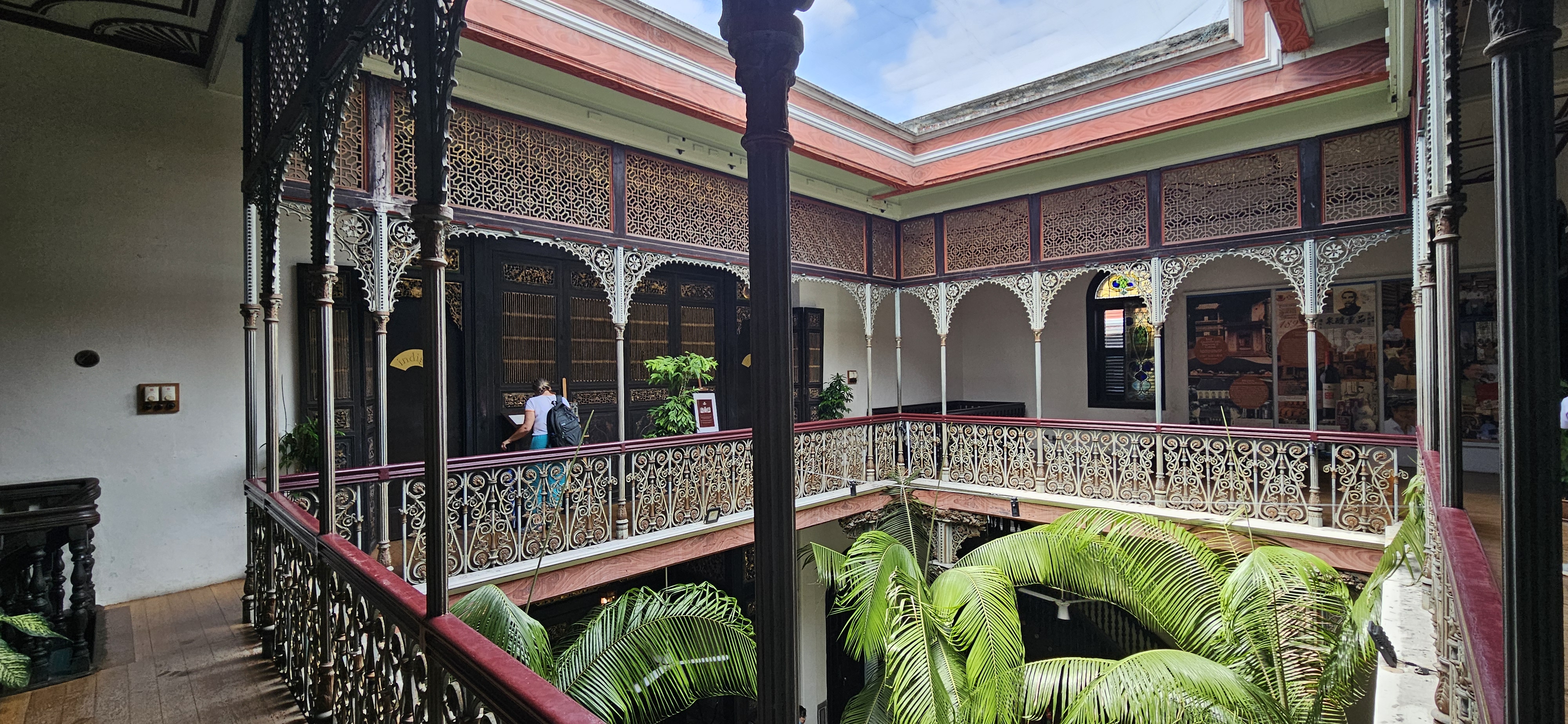
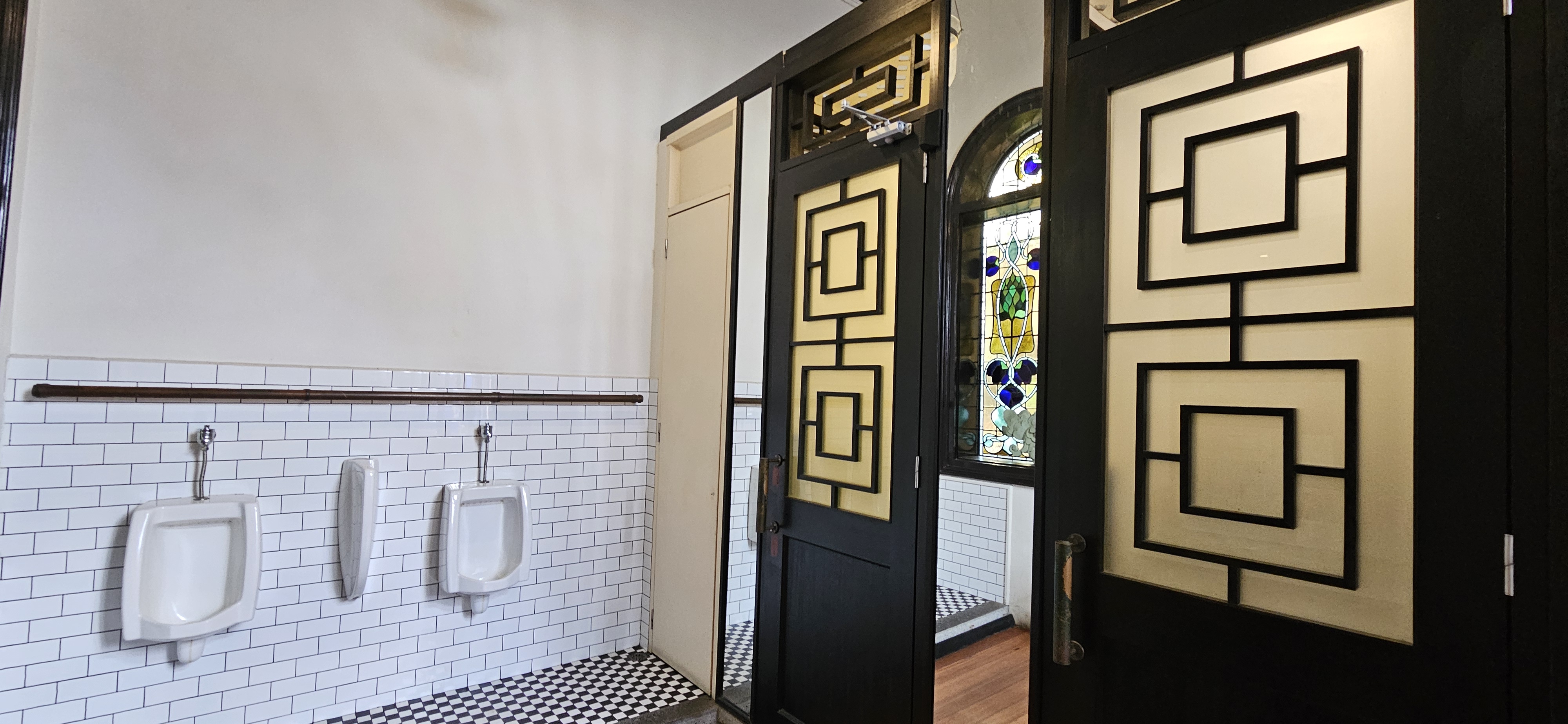
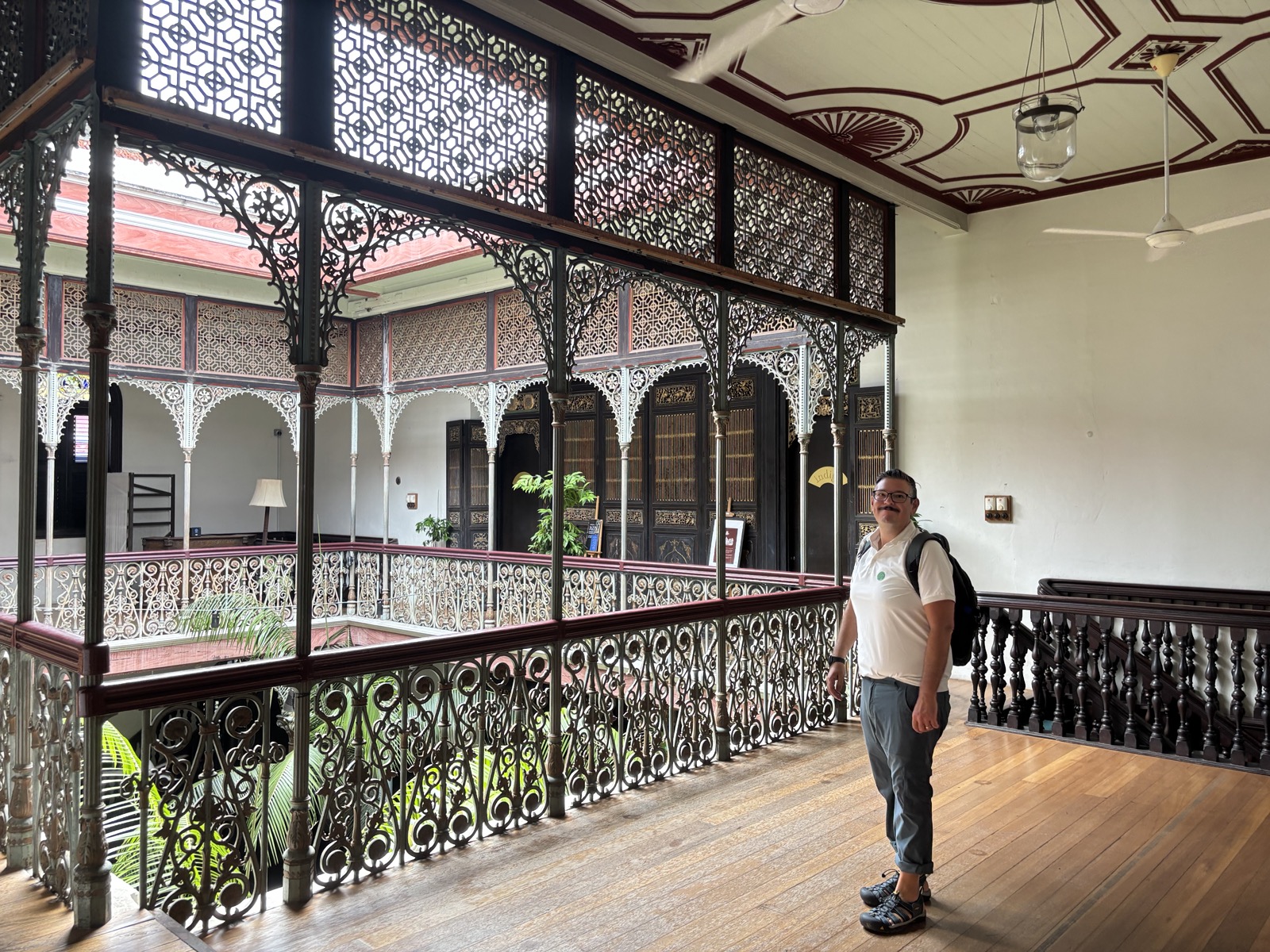
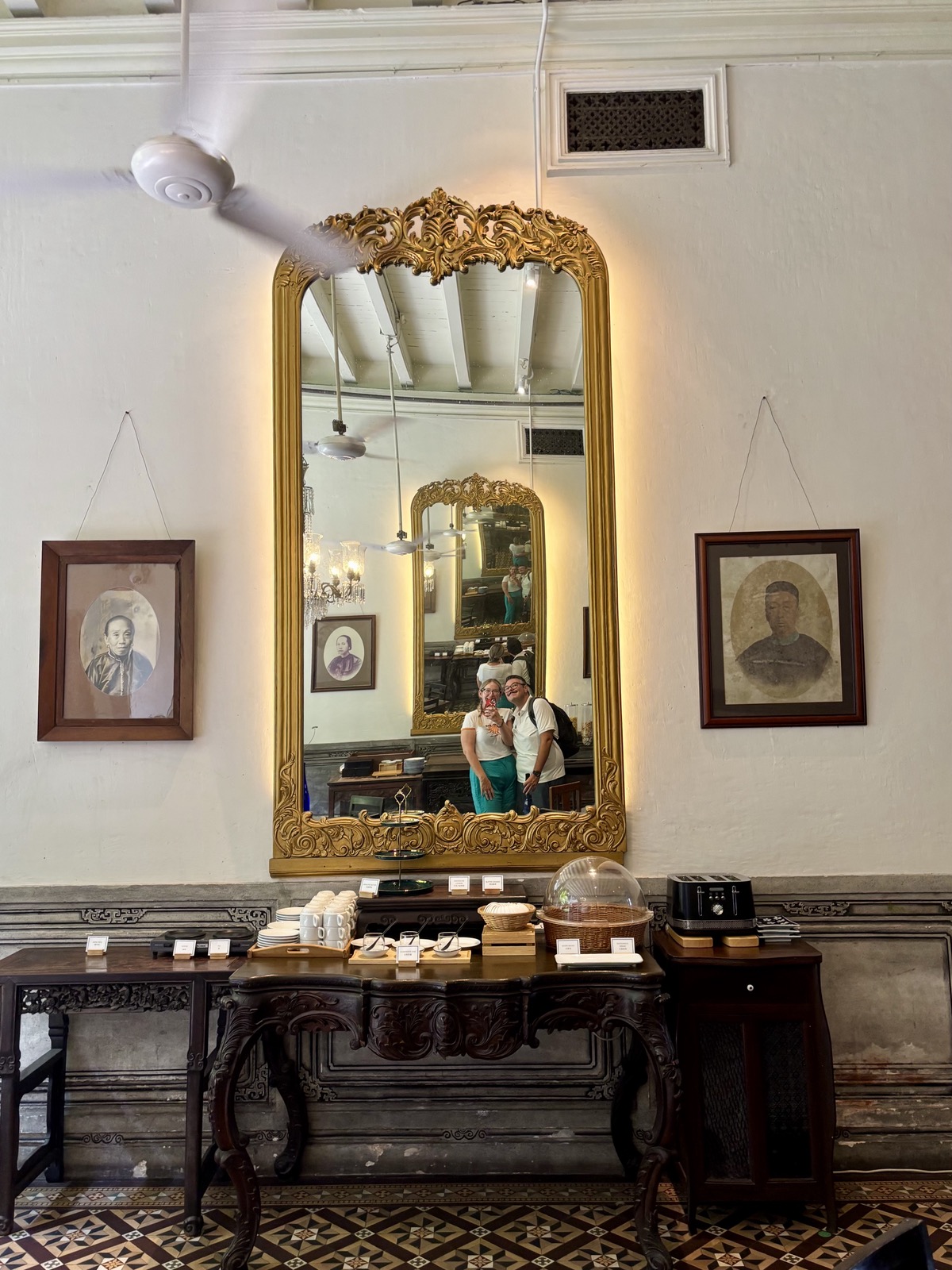
The last of Cheong Fatt Tze’s relations sold to developers in 1990 and the Mansion underwent six years of rehab. Now it is for tourists to wander through, and is also a working hotel (it would’ve been cool to stay there for sure). The Blue Mansion has 38 rooms, 5 courtyards and 7 separate staircases. The interior rooms and courtyards are even more impressive than the outside (even the bathrooms!).
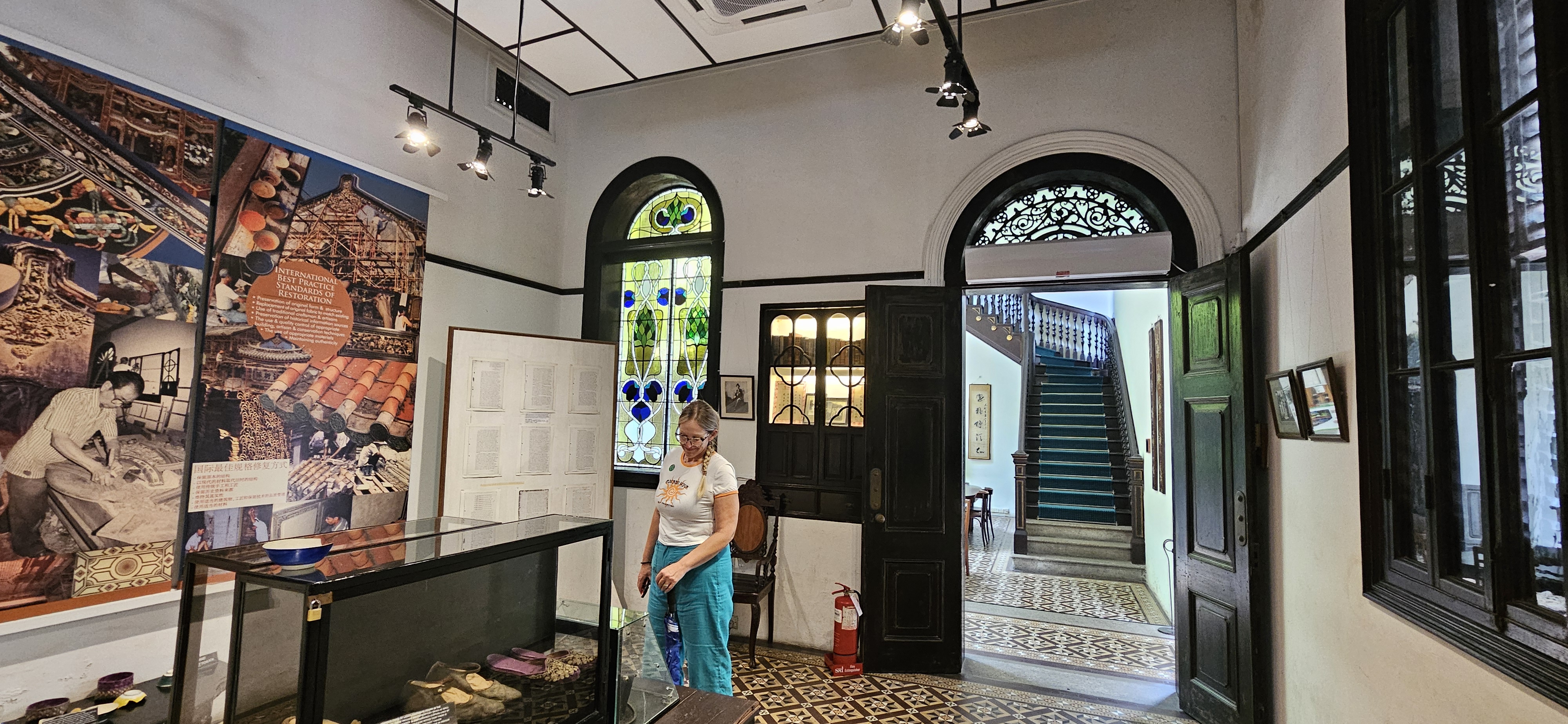
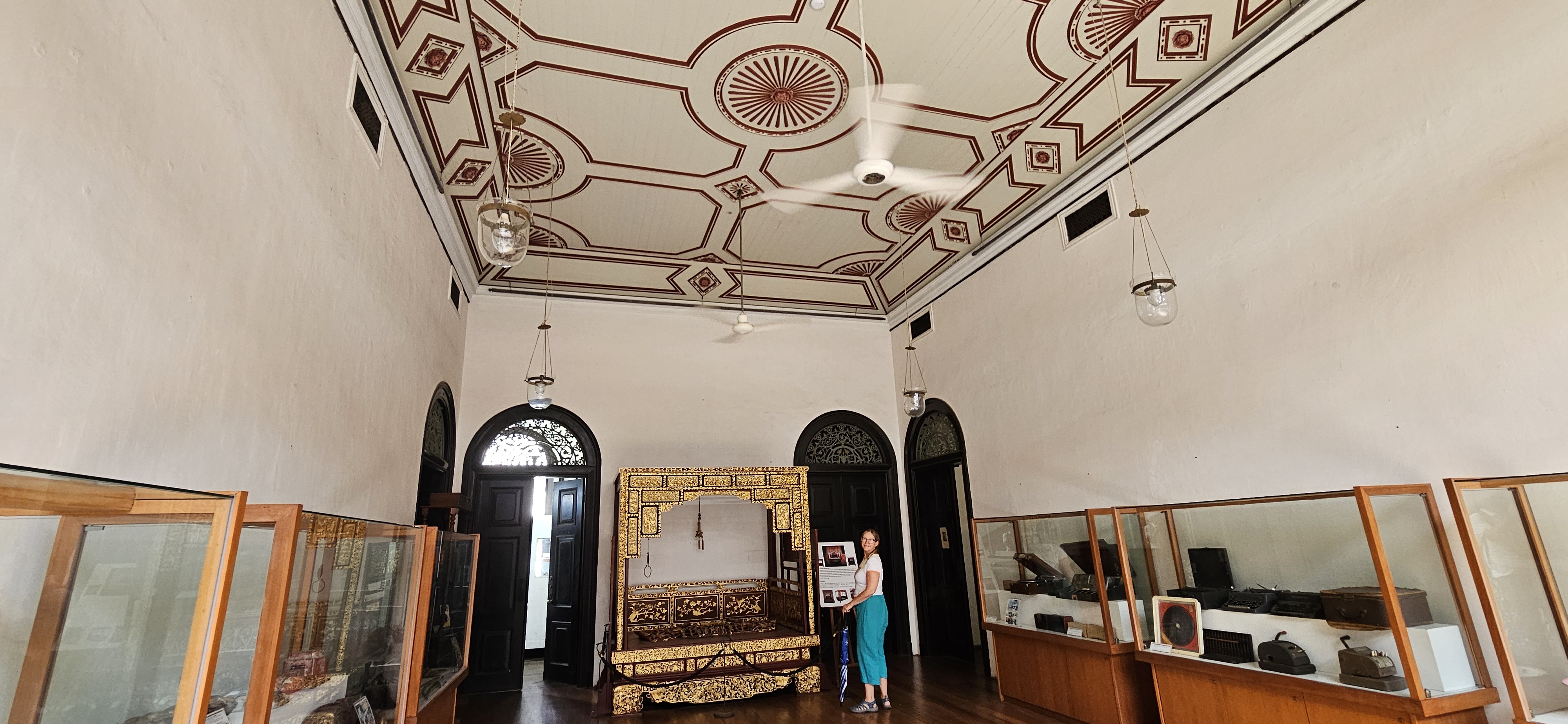
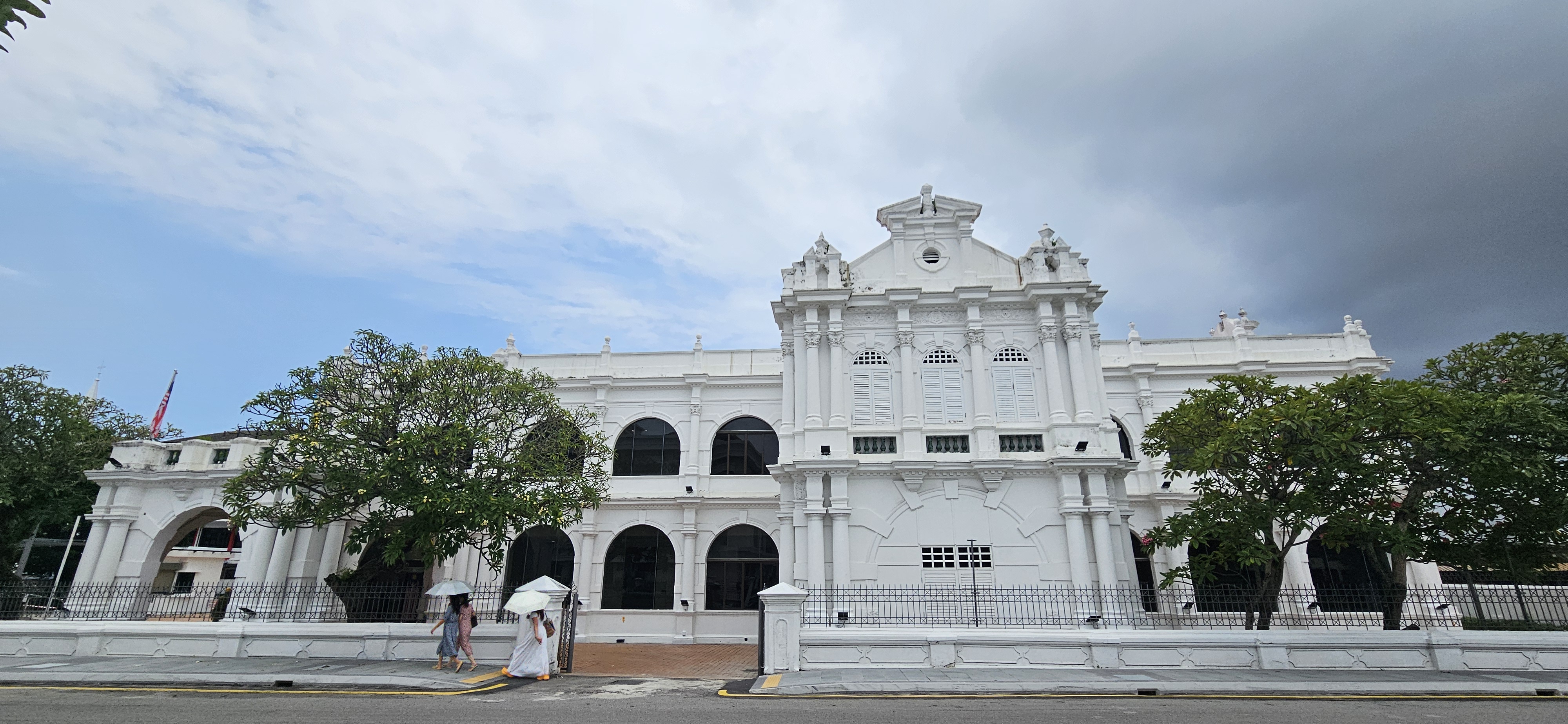
On our way to the Green Mansion we made a stop at the Penang State Museum and Art Gallery, which is housed in the former Penang Free School, built in 1821. It was the oldest English speaking school (and has since moved next door) in Southeast Asia.
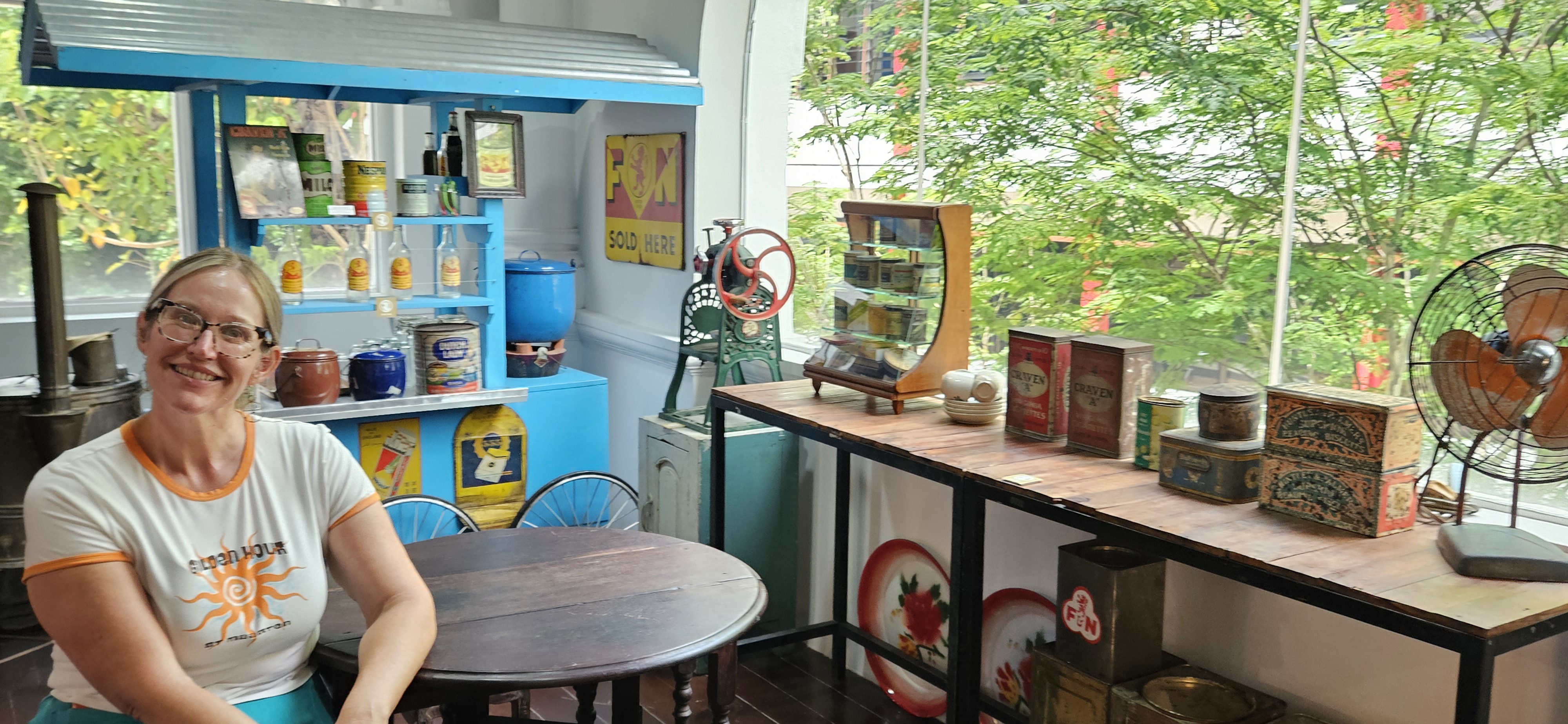
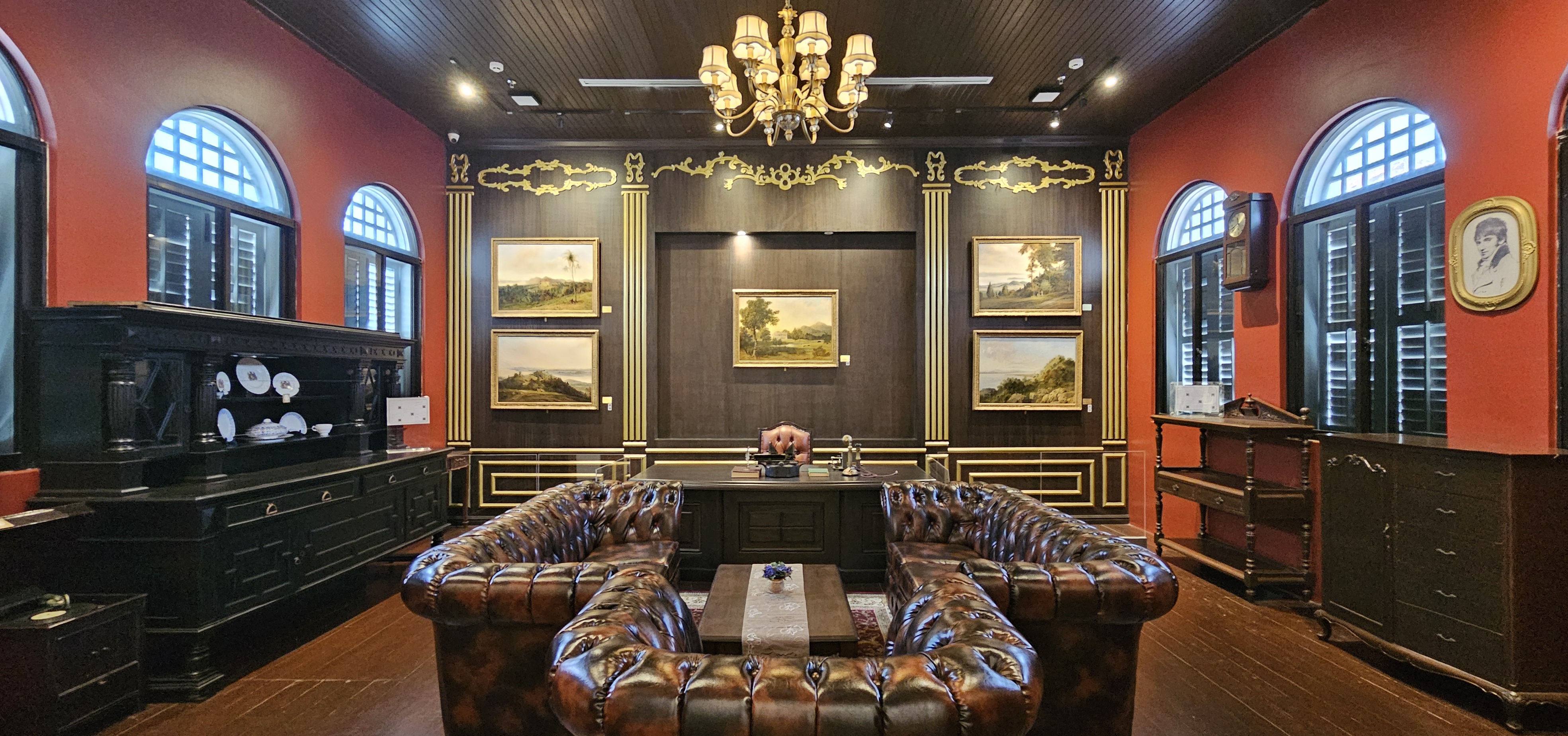
There were so many interesting exhibits throughout, including a replica school room from the early 20th century, a replica of an early 20th century store, a replica office of one of the early British magistrates, and replica judicial and government offices as well.
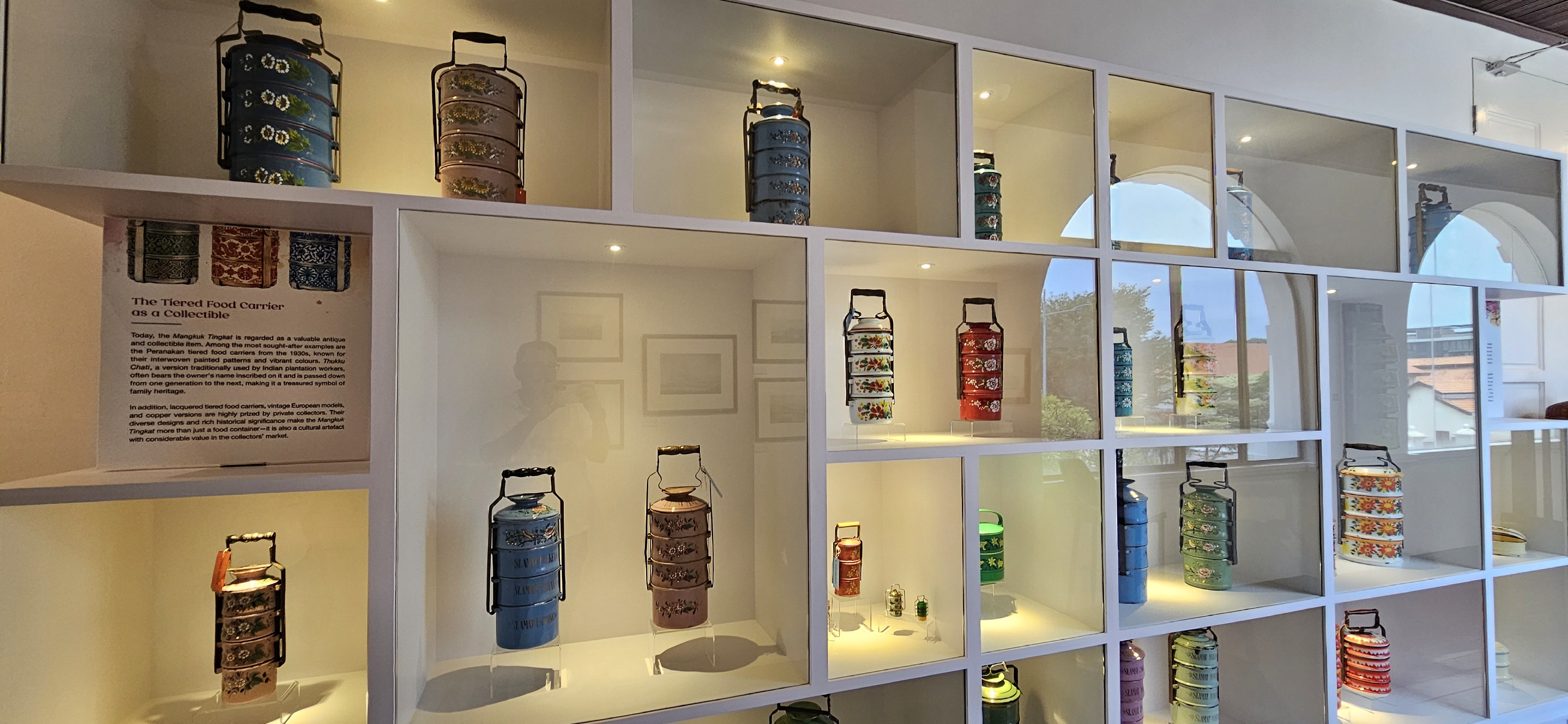
We liked the collection of Mangkuk Tingkat, which were Peranakan food carriers used for the last 100 years (we also saw them in use today). These antiques are seen as collector’s items, and Indian plantation workers even used to engrave theirs and pass them down generations.
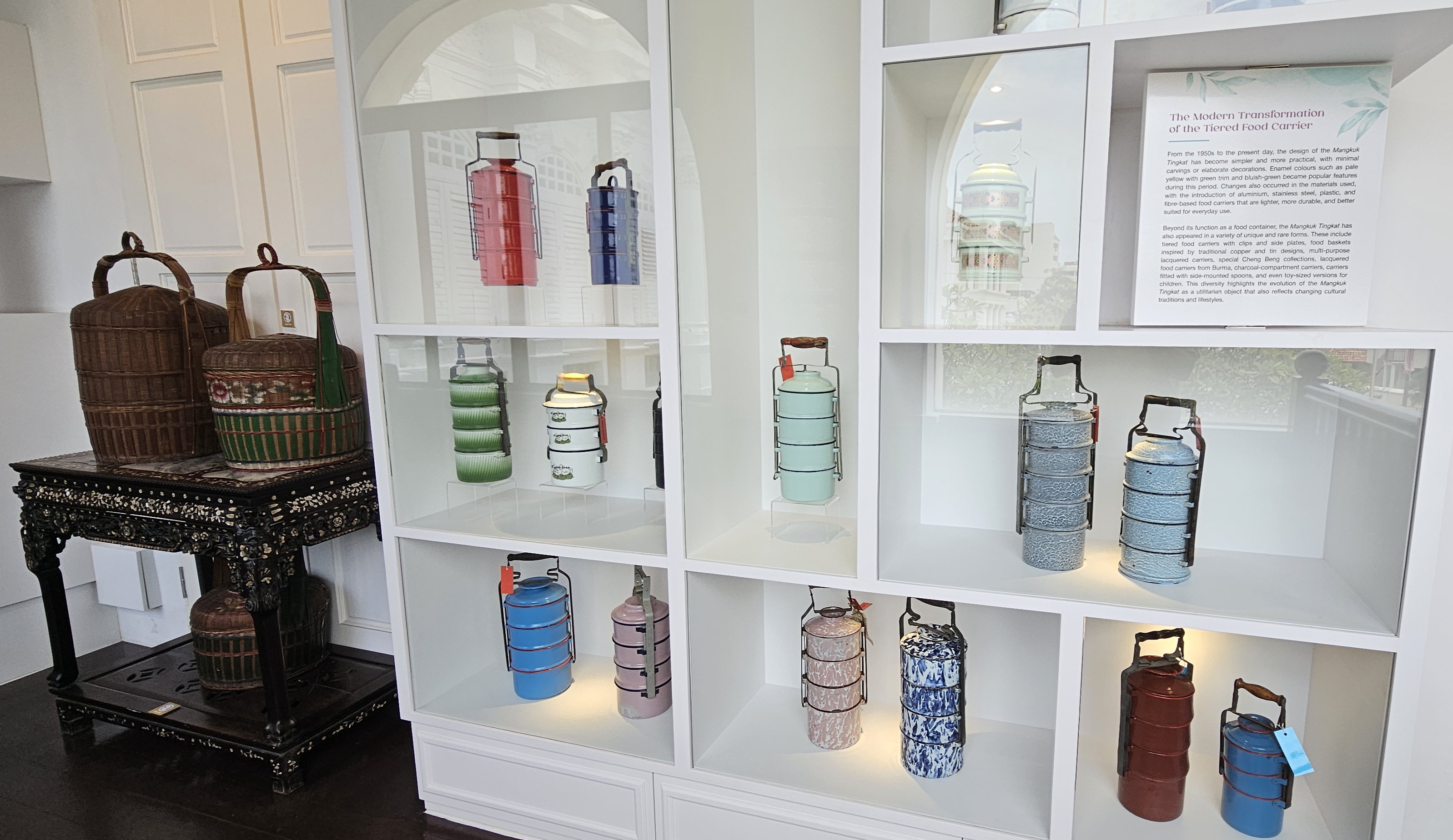
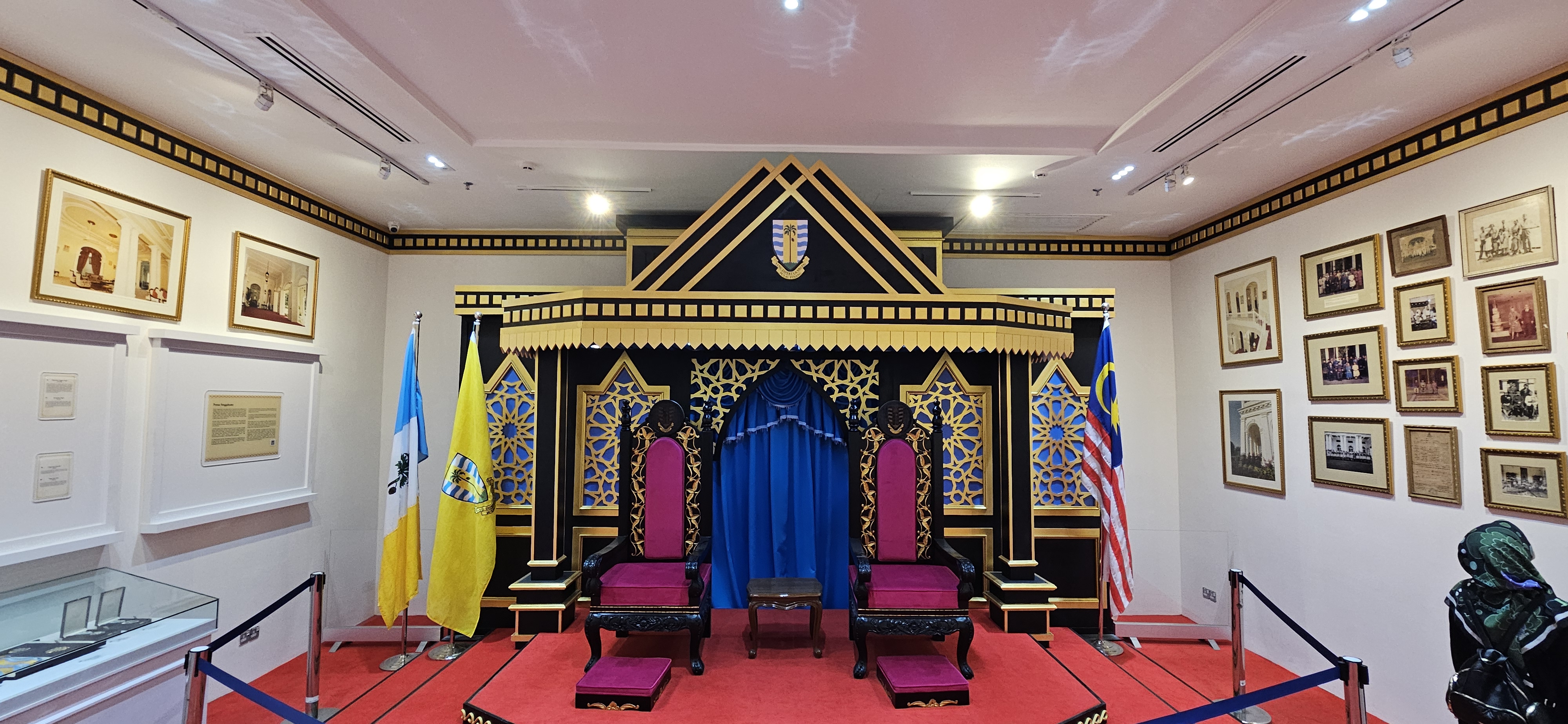
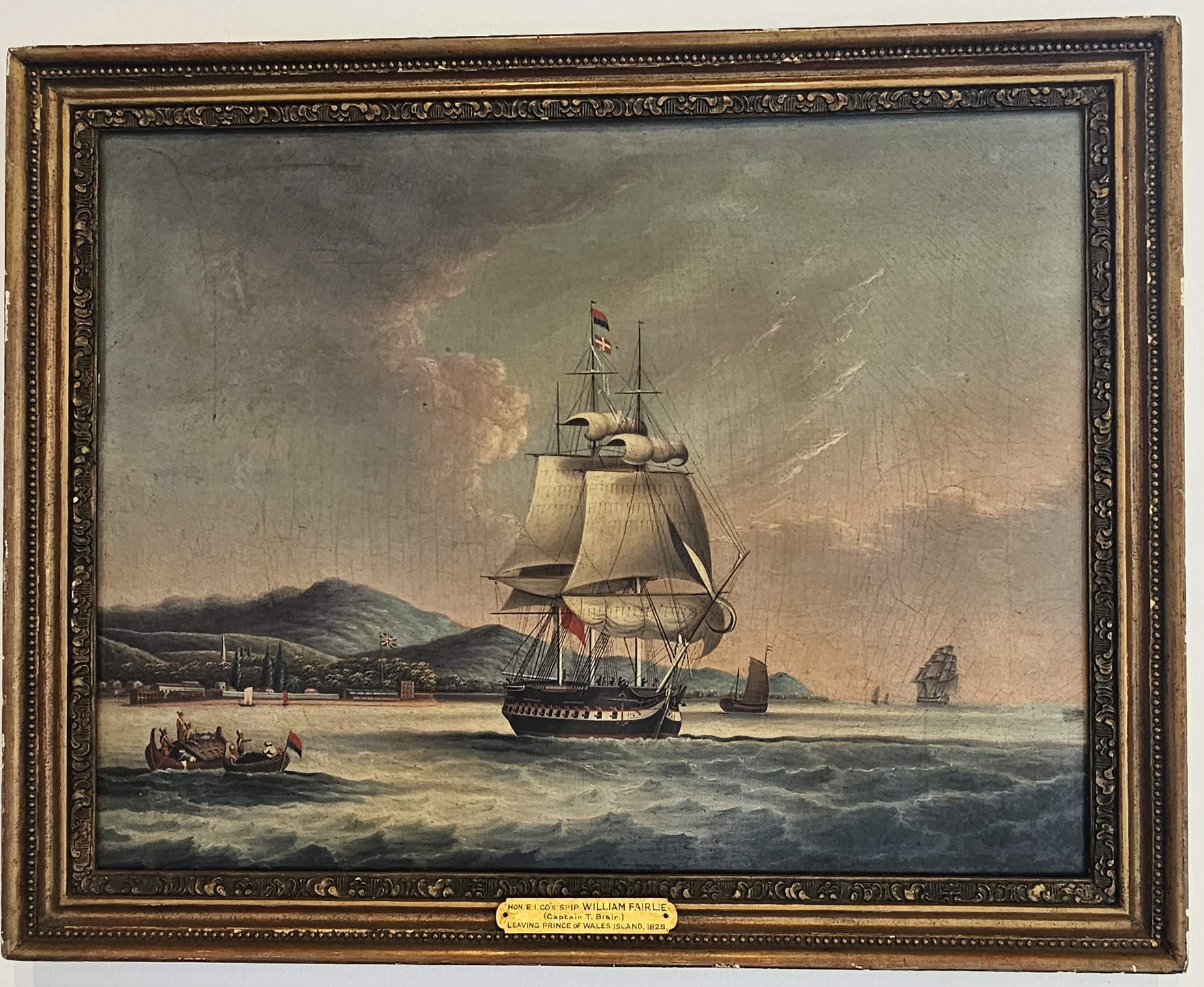
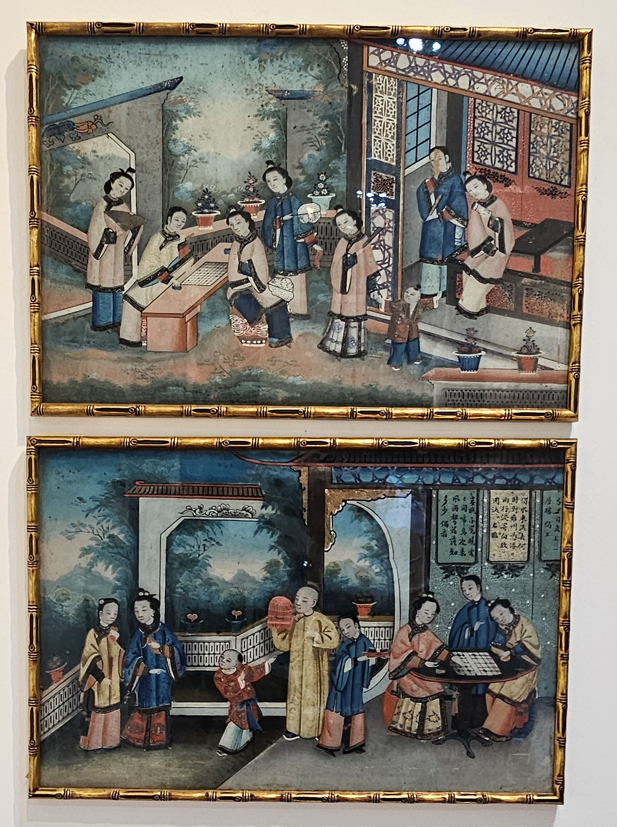
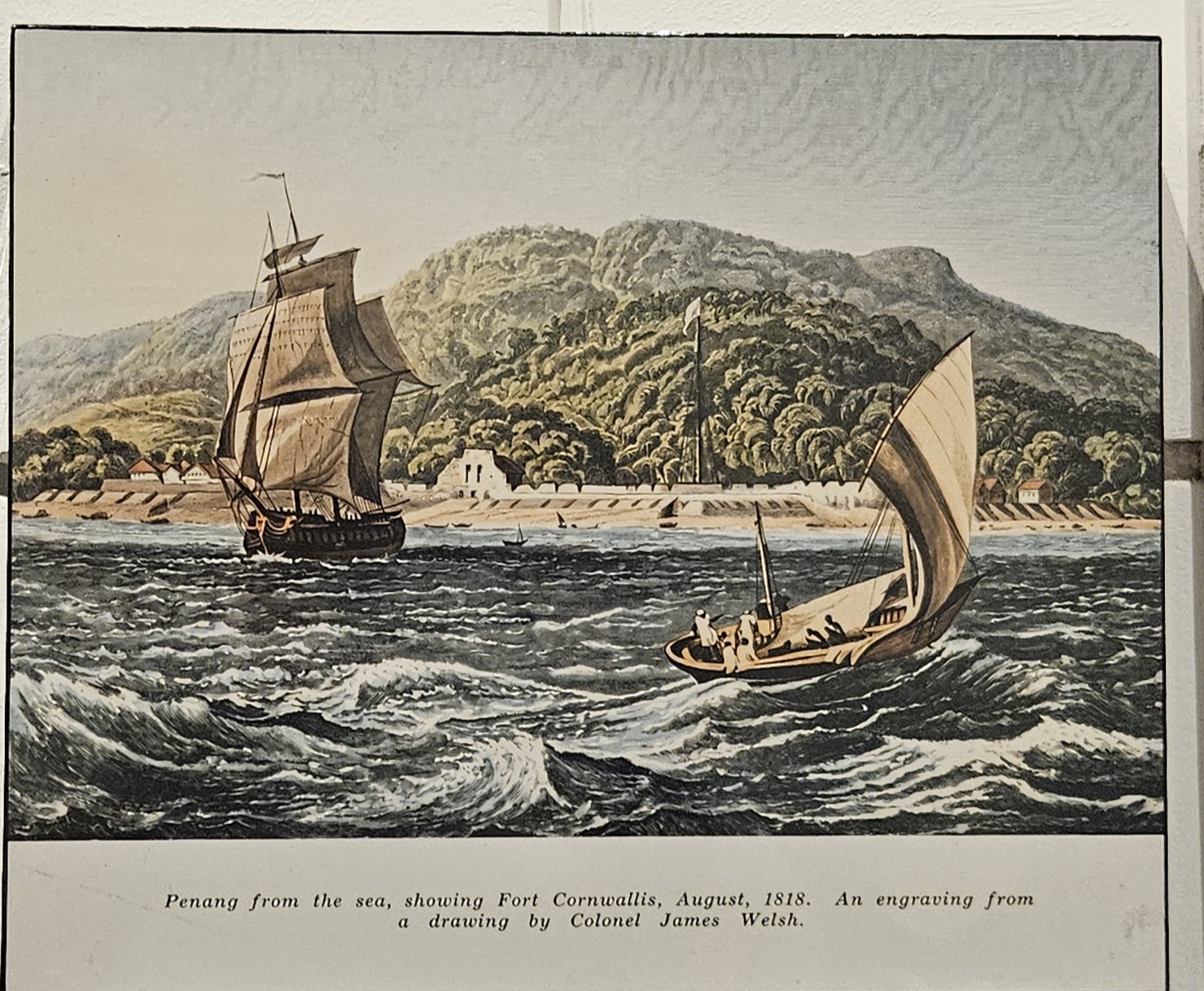
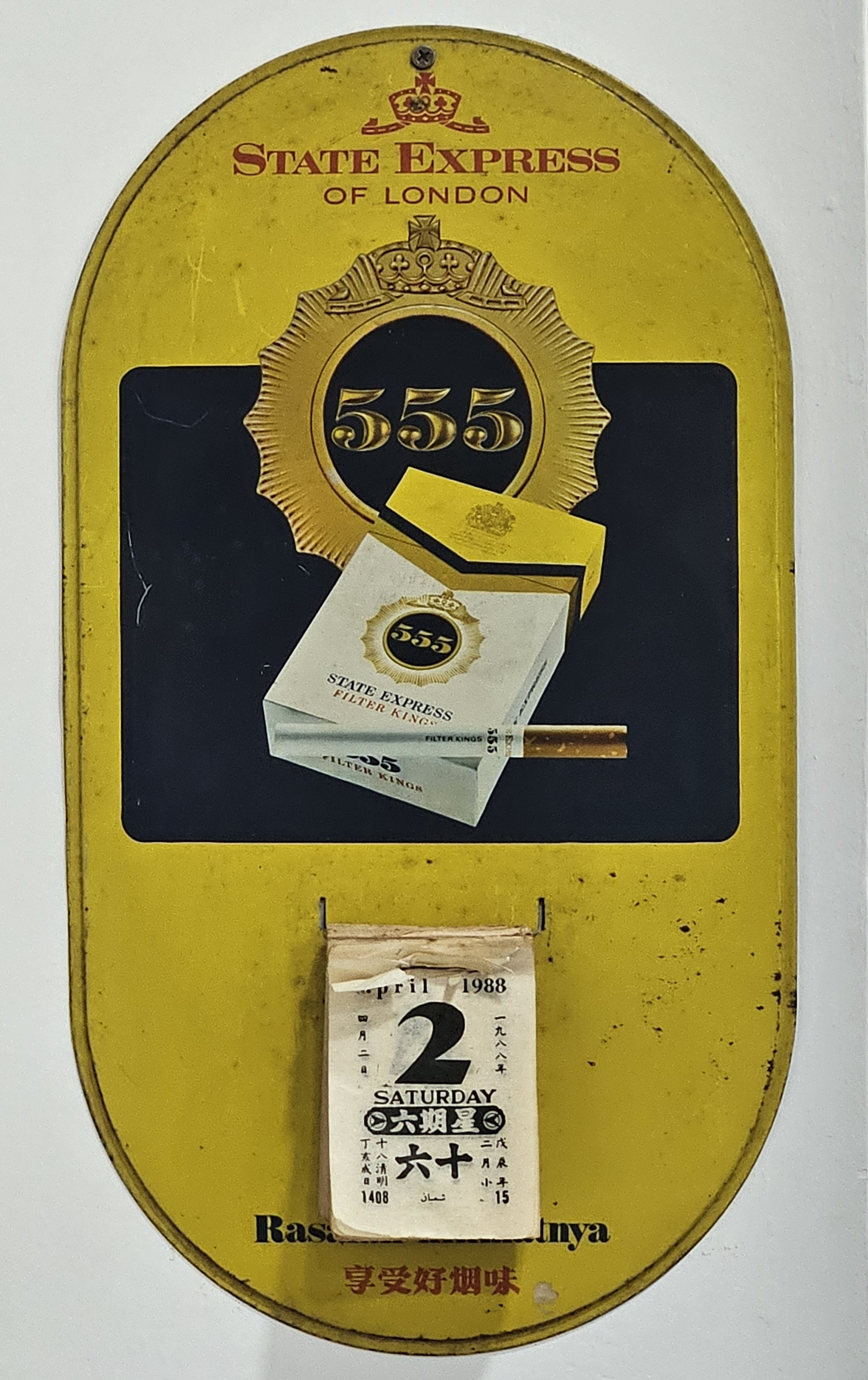
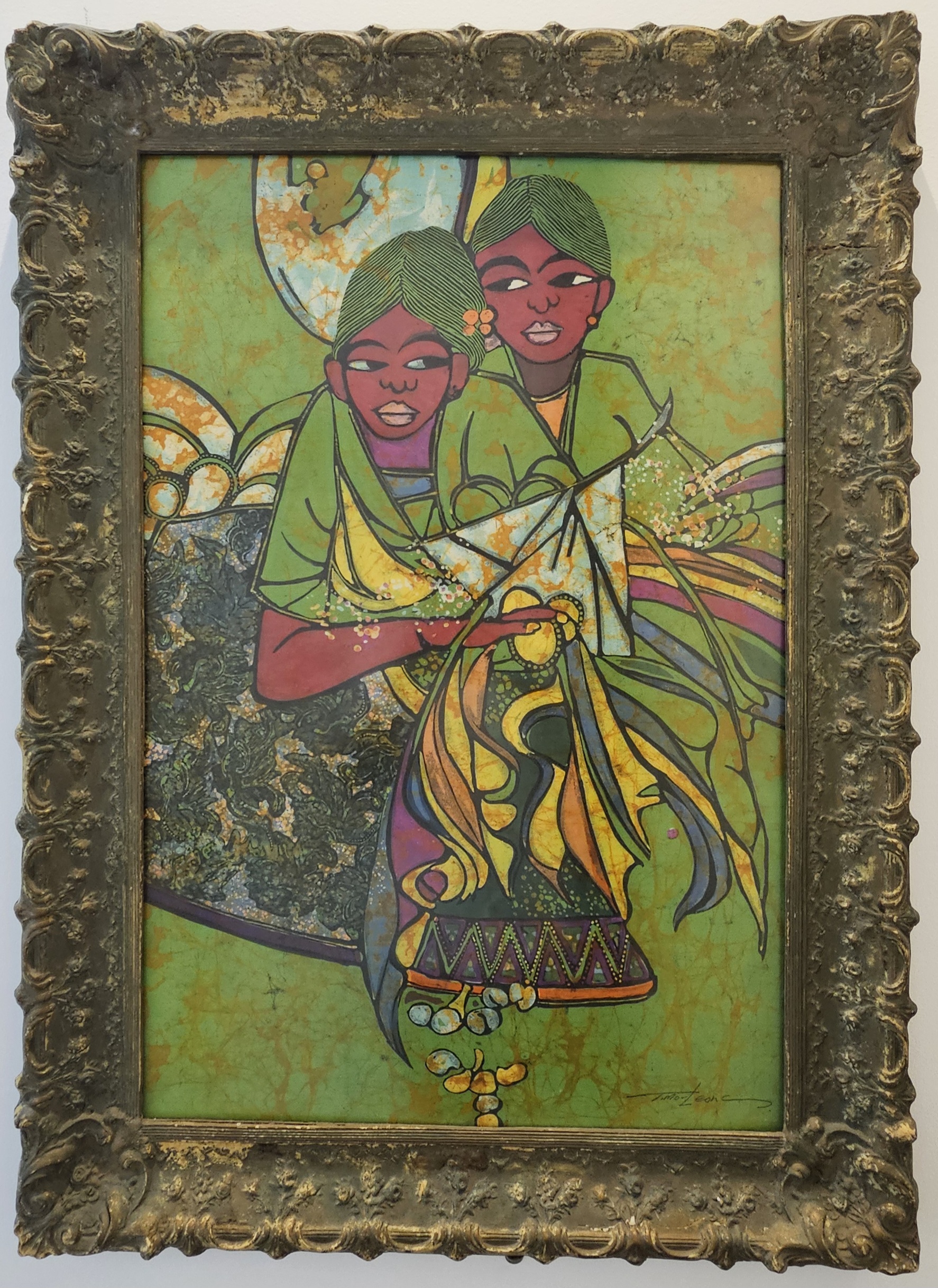
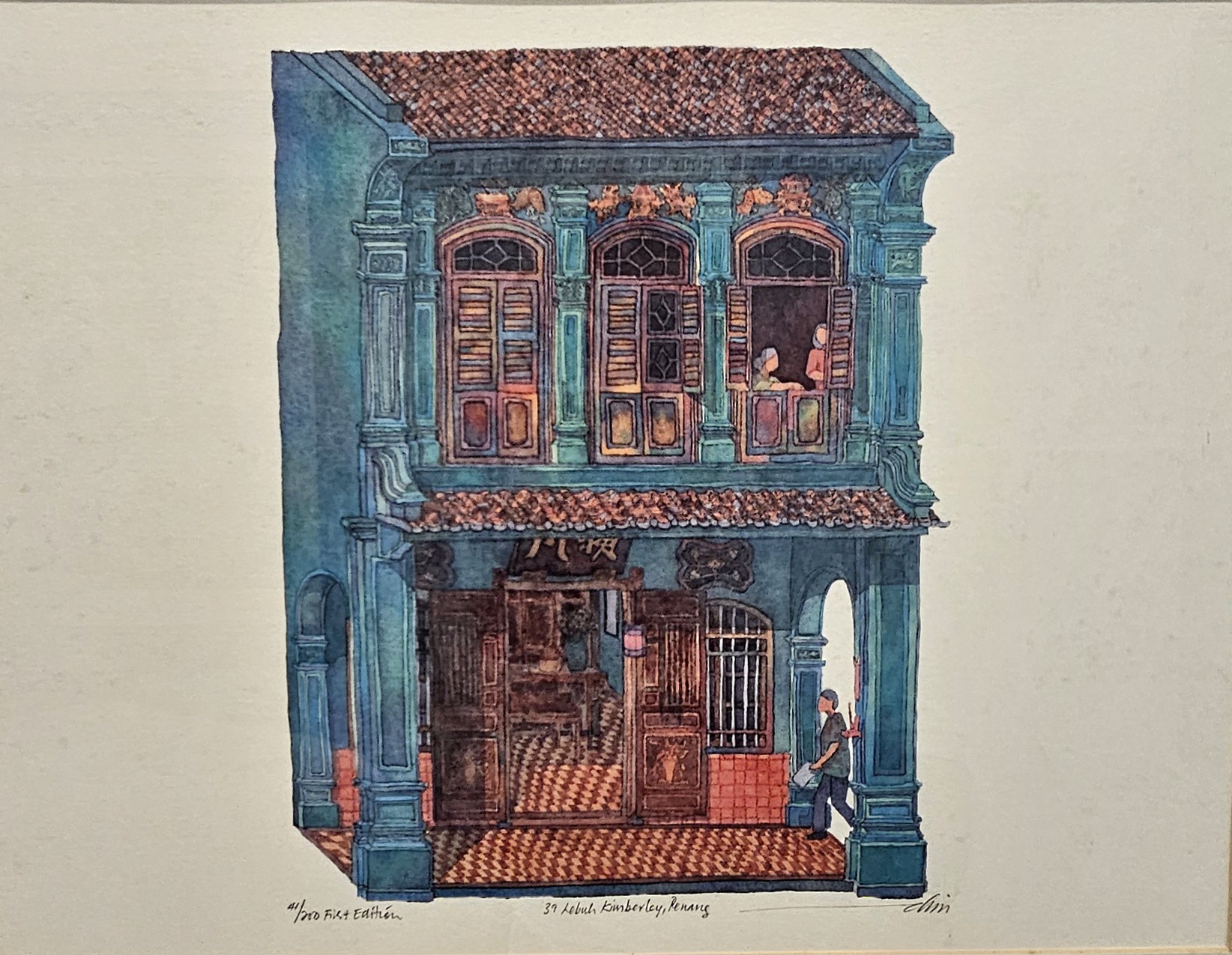
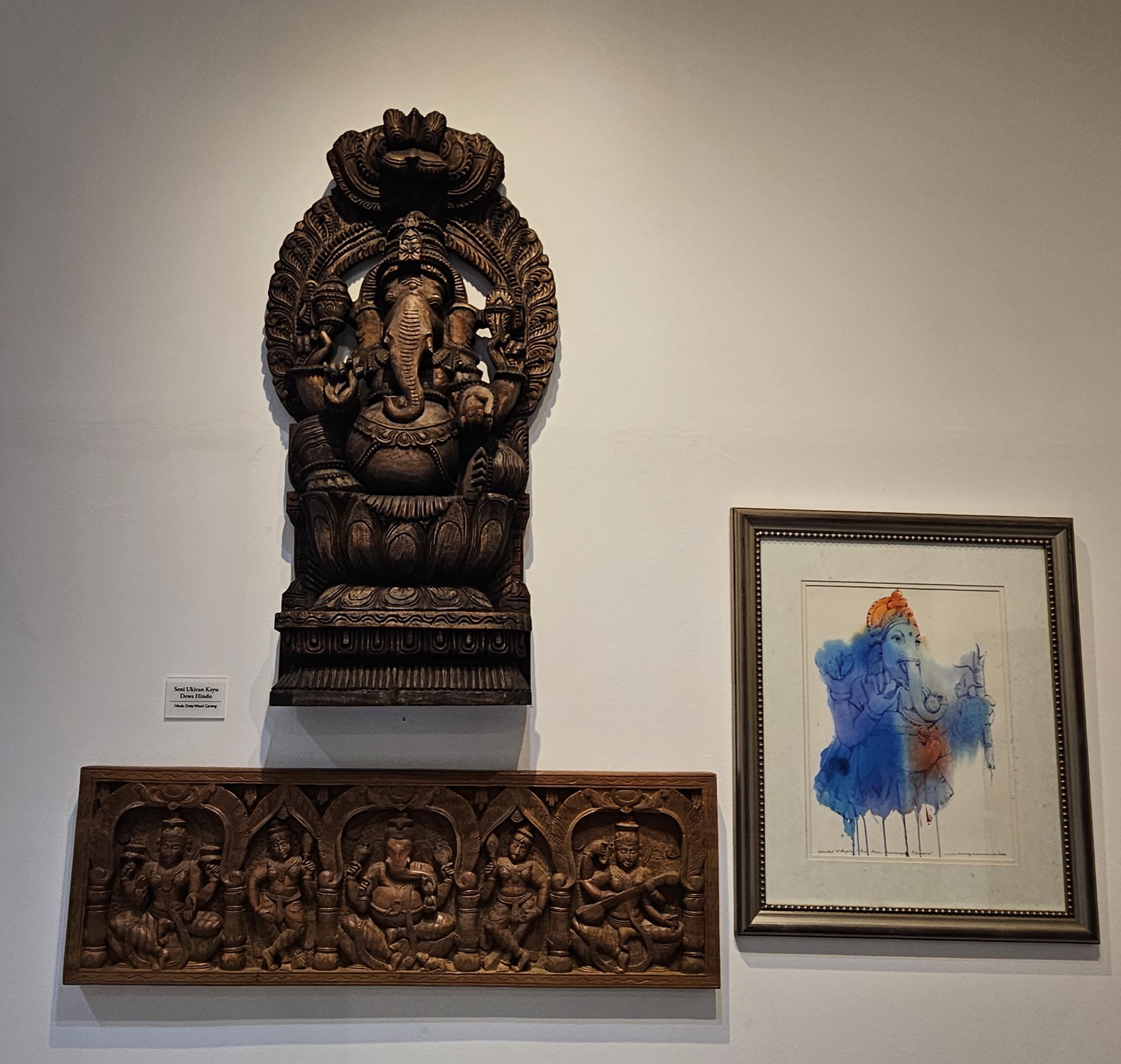
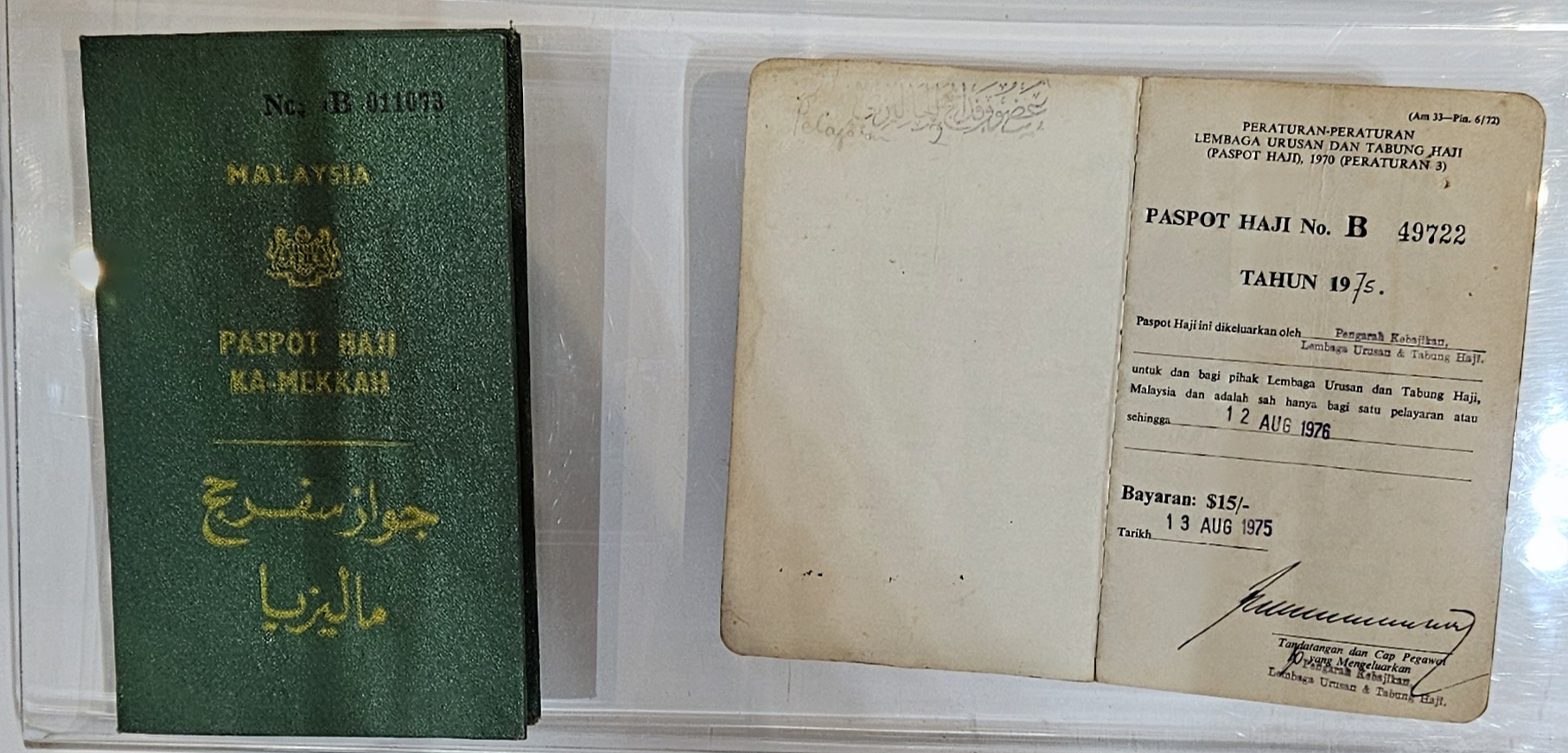
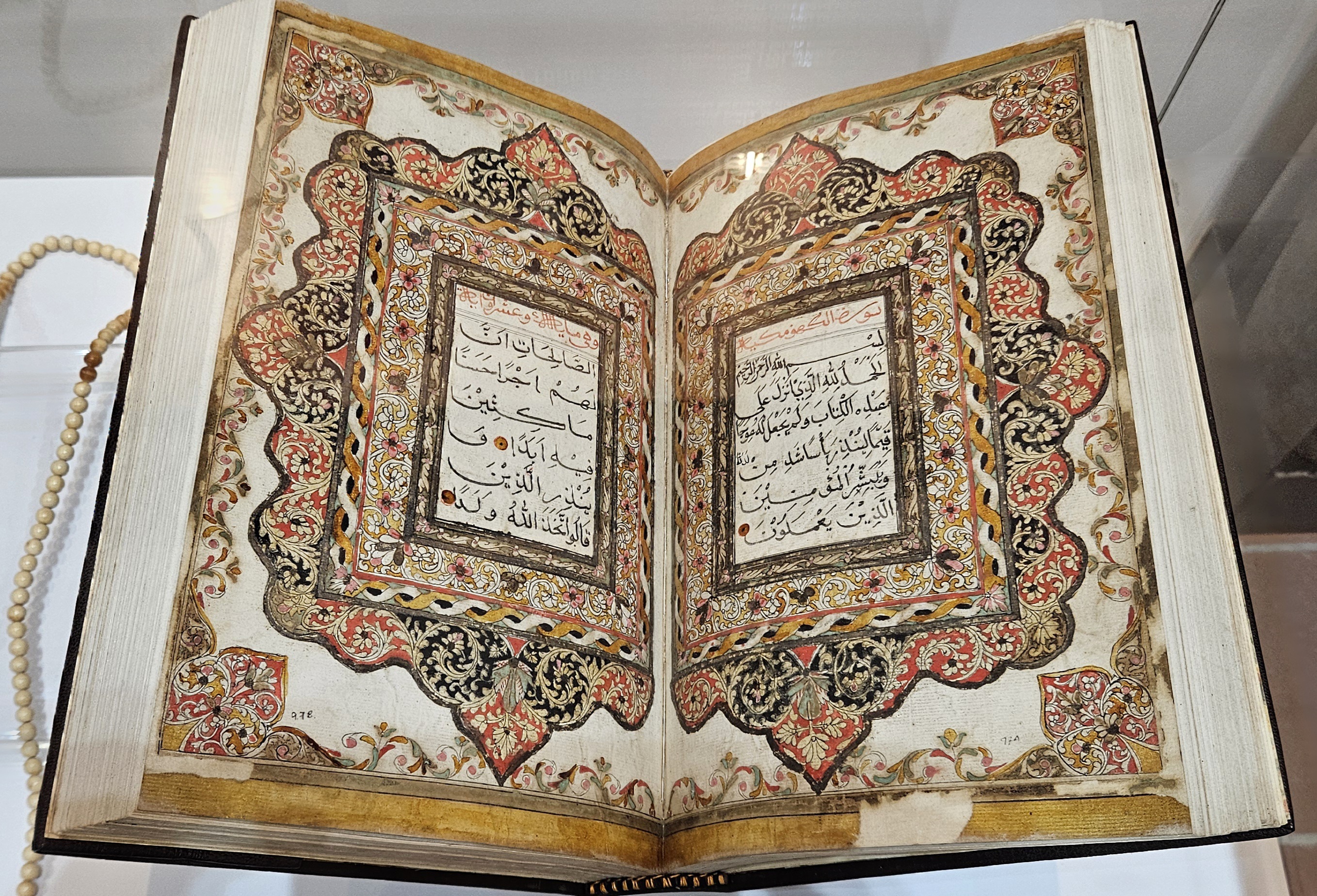
There were paintings, furniture, carvings, Quran copies, old passports, and a lot of other art as well; here are a few of my favorites.
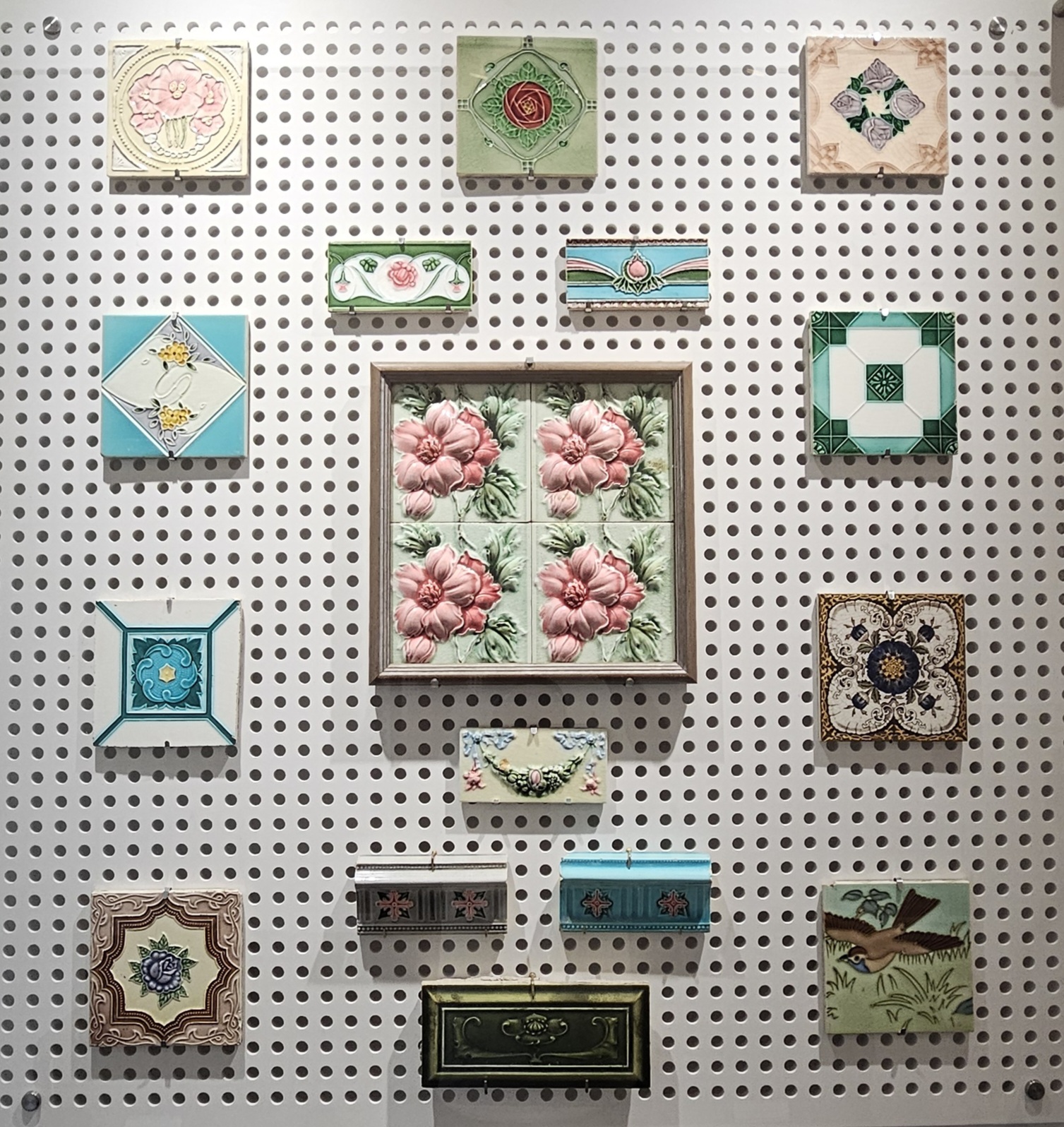
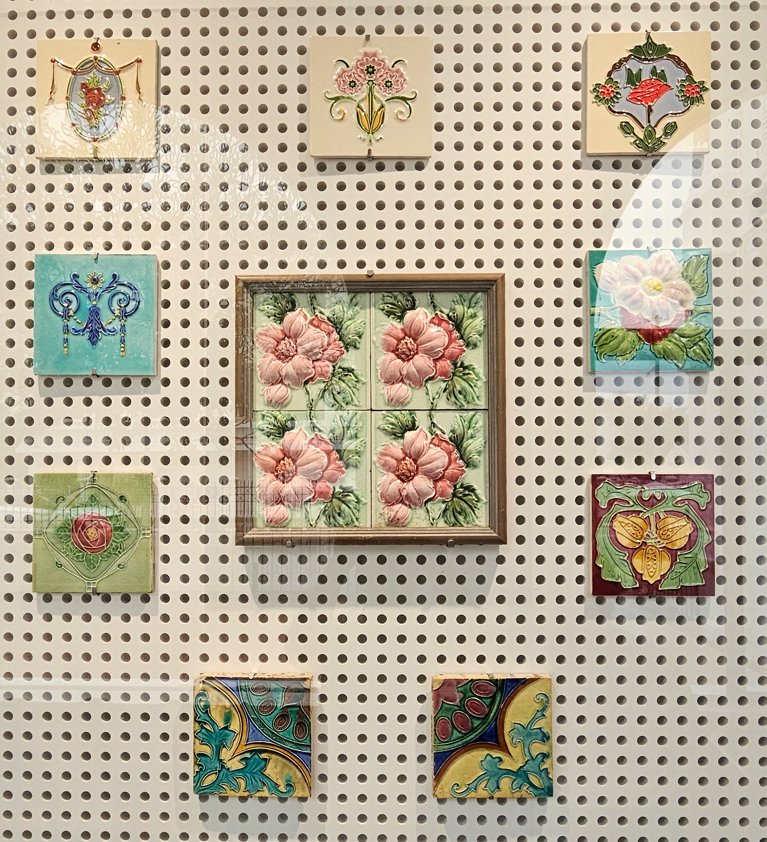
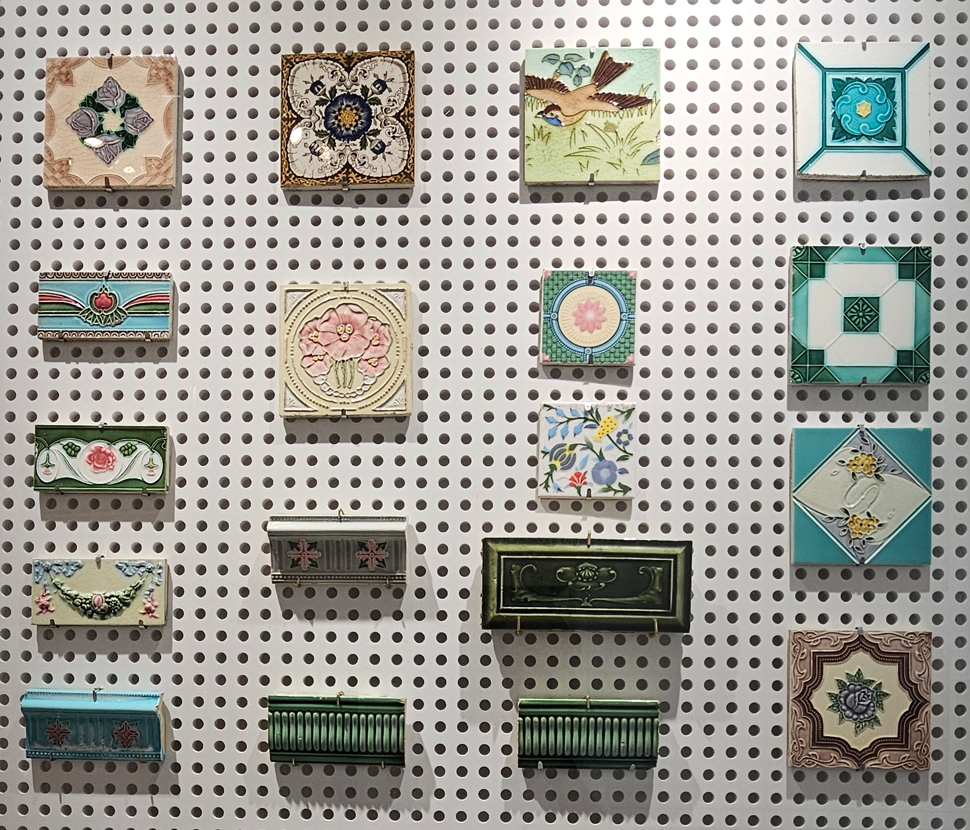
My favorite part of the museum was the exhibit on the Peranakan ceramic tiles. So many of the buildings in the city had ornate, colorful, and beautiful tiles on their floors and entryways, and there was symbolism for many of them. A combination of Malay flora and fauna often combined with Chinese mythology and folklore, the tiles were a product of the Art Nouveau and Victorian Era. So varied and unique, we also saw them in Melaka and Singapore. Keep an eye out the “For Art’s Sake: George Town” post because there will be a bunch of pictures of the tiles from around the city. Here are some of the ones we saw at the museum.
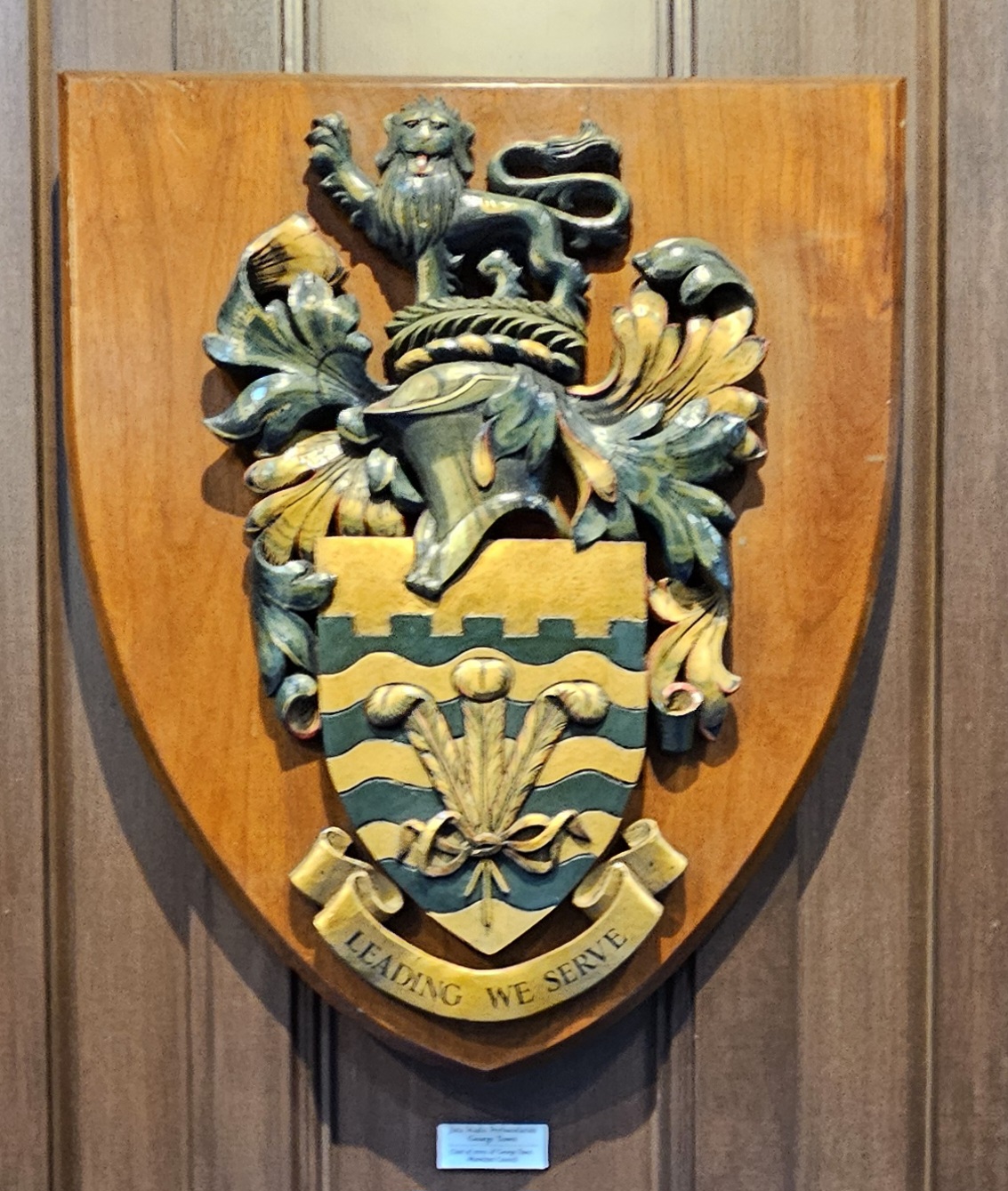
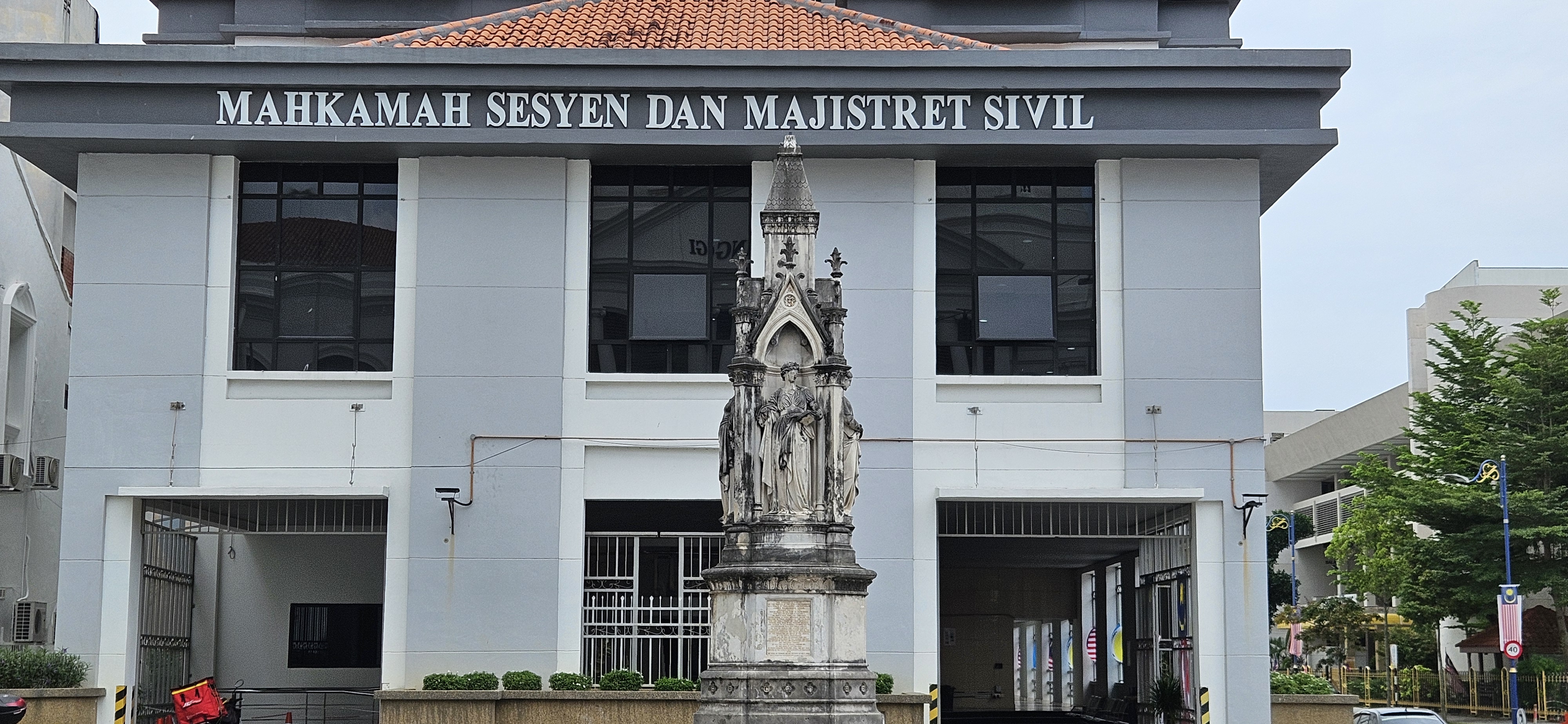
Onward we continued, past the Civil Courts building, with a memorial statue in front, we learned it was named for James Richardson Logan, who was a defender of local rights. It was constructed in 1873, and we learned of it because there was a smaller version made of wood inside the museum.
After a quick stop to cool off with some iced coffees (that became our usual lunch, as it was brutally hot every day and iced coffees kept us going), we arrived at the Pinang Peranakan Mansion, or Green Mansion. We actually met outside the Green Mansion on our food tour a few days before but this time we were going inside.
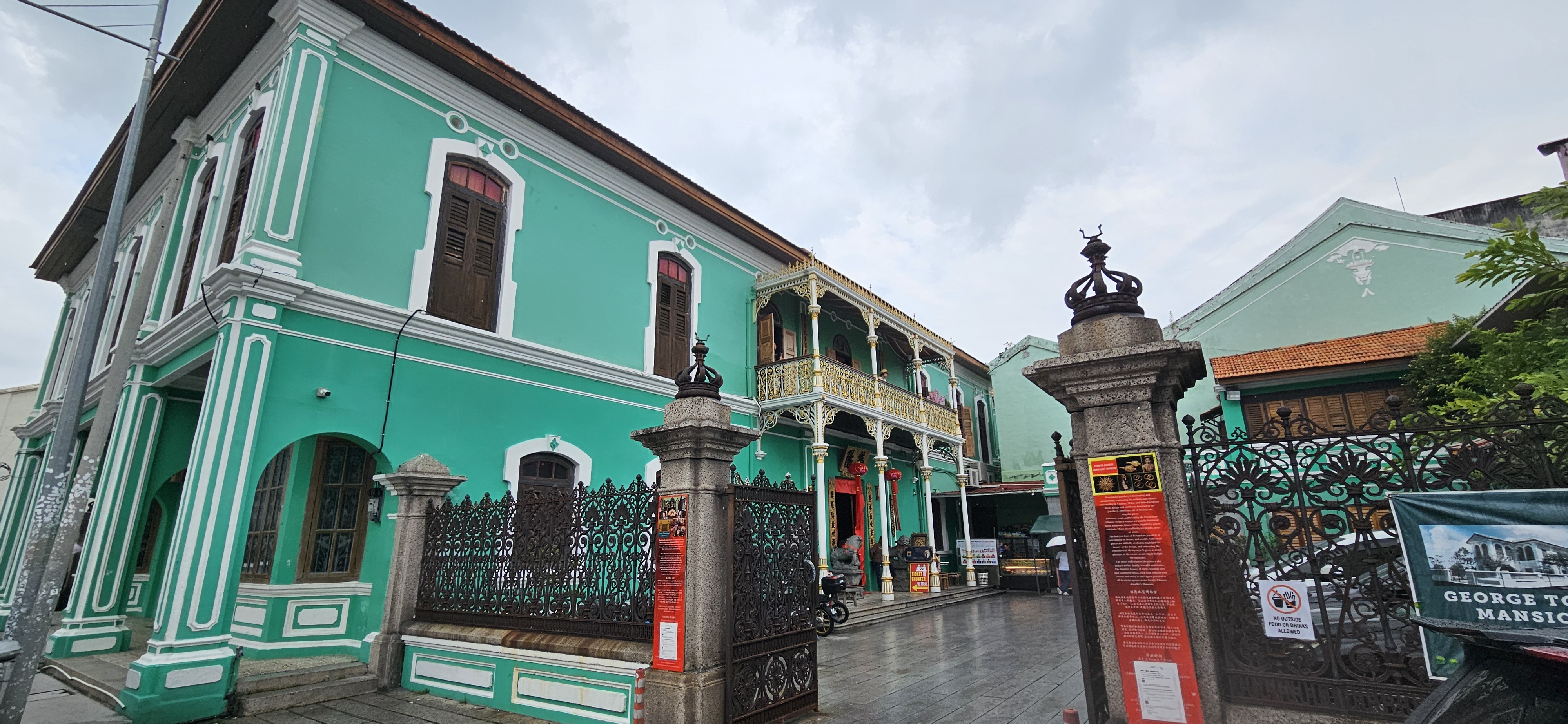
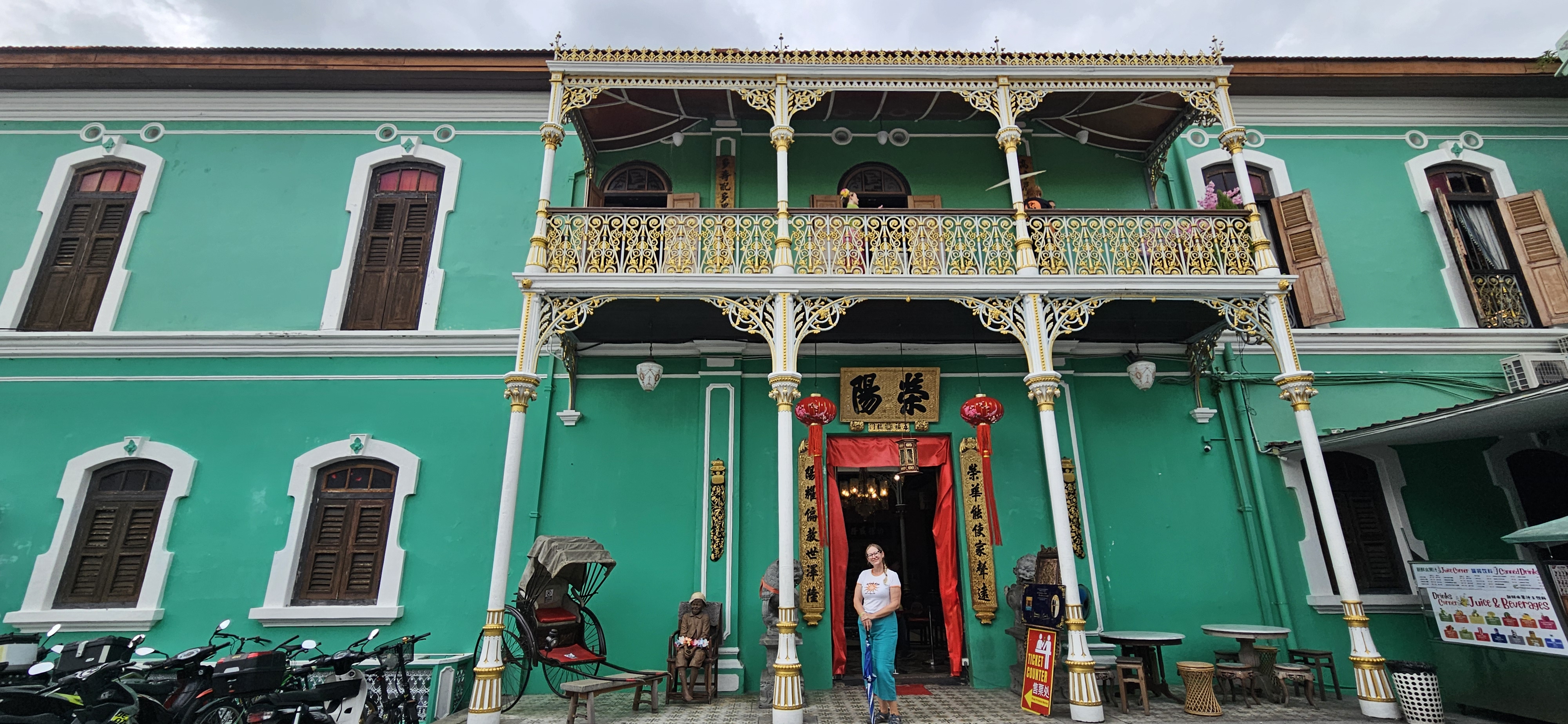
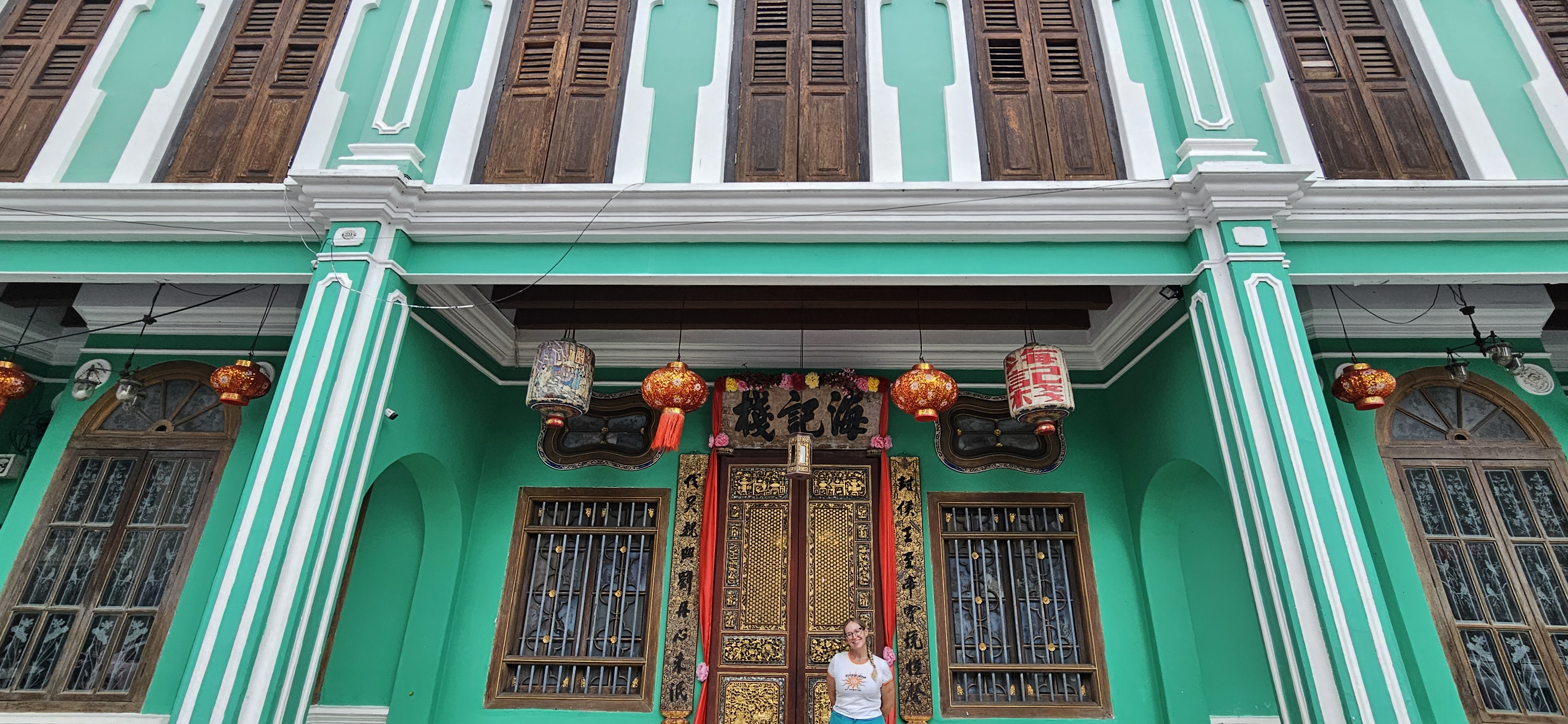
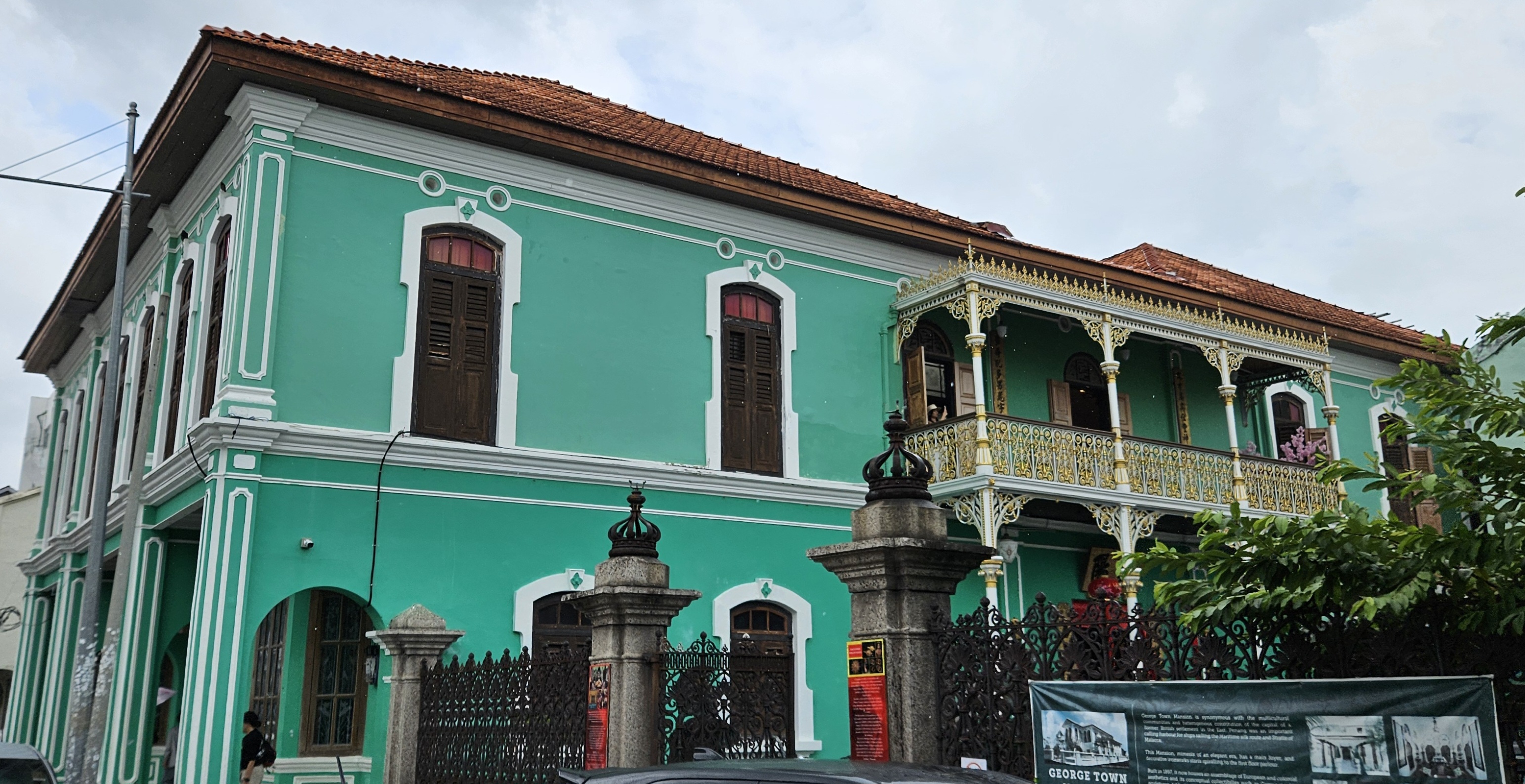
The Green Mansion is the more popular of the two, and is more museum-like as it celebrates the Peranakan culture and history. Built in 1899 by owner Hai Kee Chan, the building was acquired in the 1990s by a developer and painted green. Unlike the Blue Mansion it is not a hotel and charges an entry fee, and as such it is much more ornate and has more than 1,000 unique artifacts and beautifully decorated rooms. There is a big gift shop with Peranakan items too.
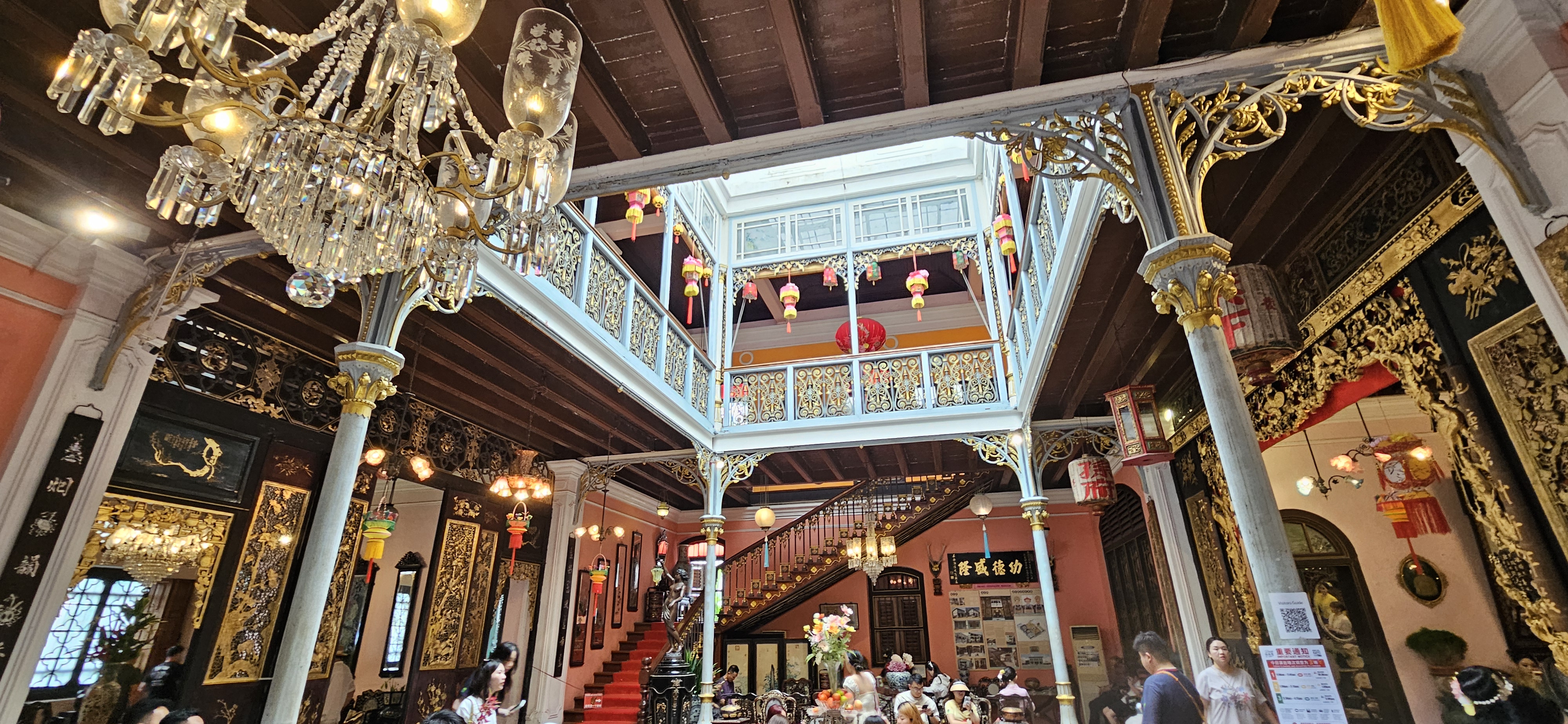
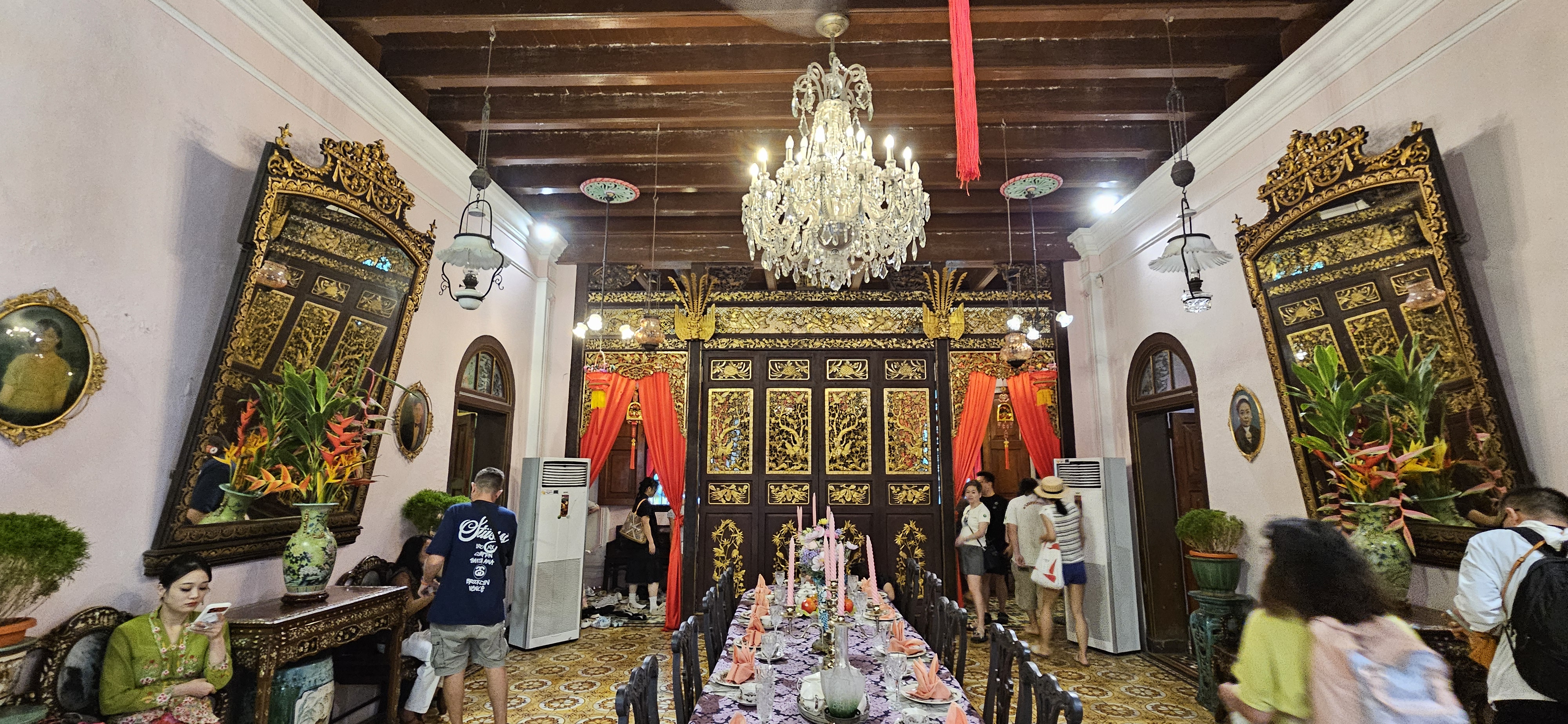
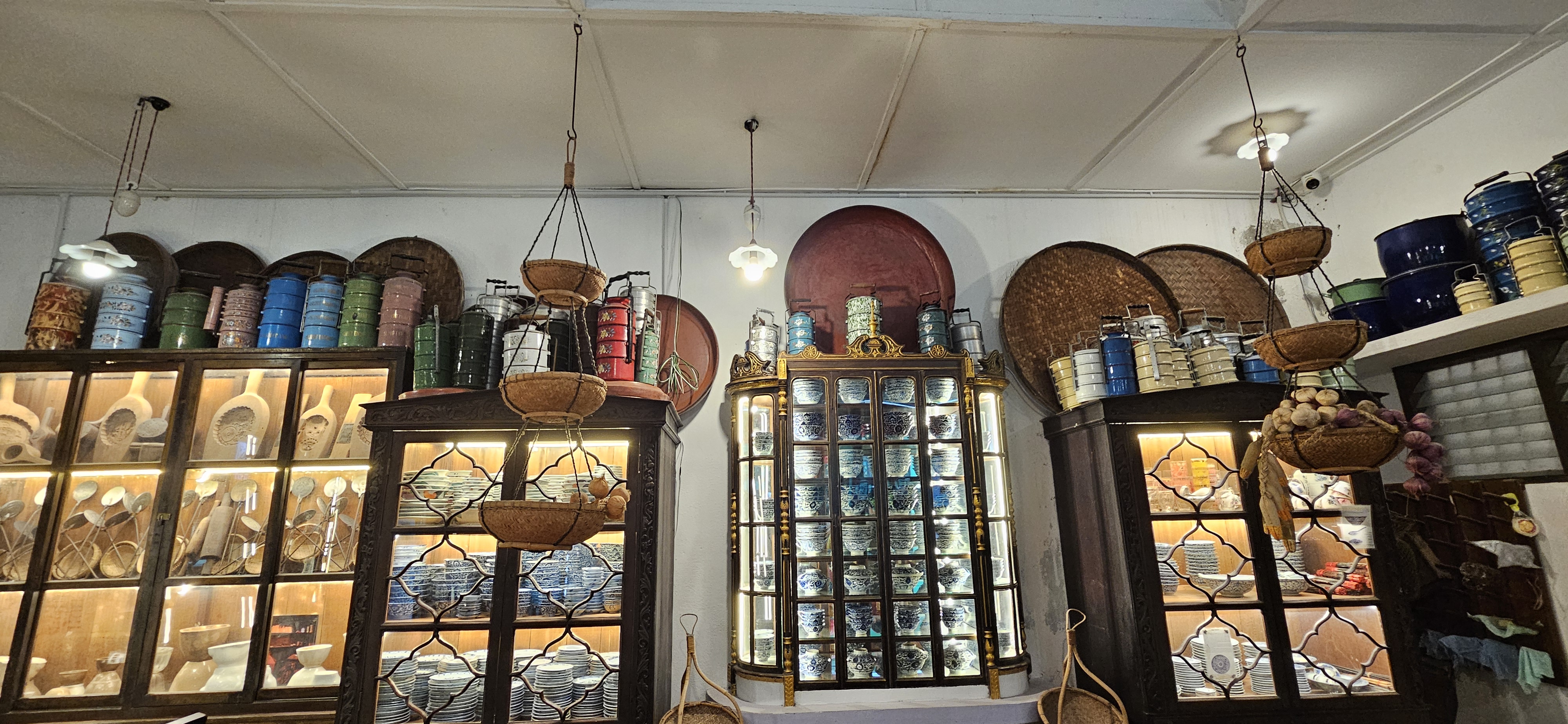
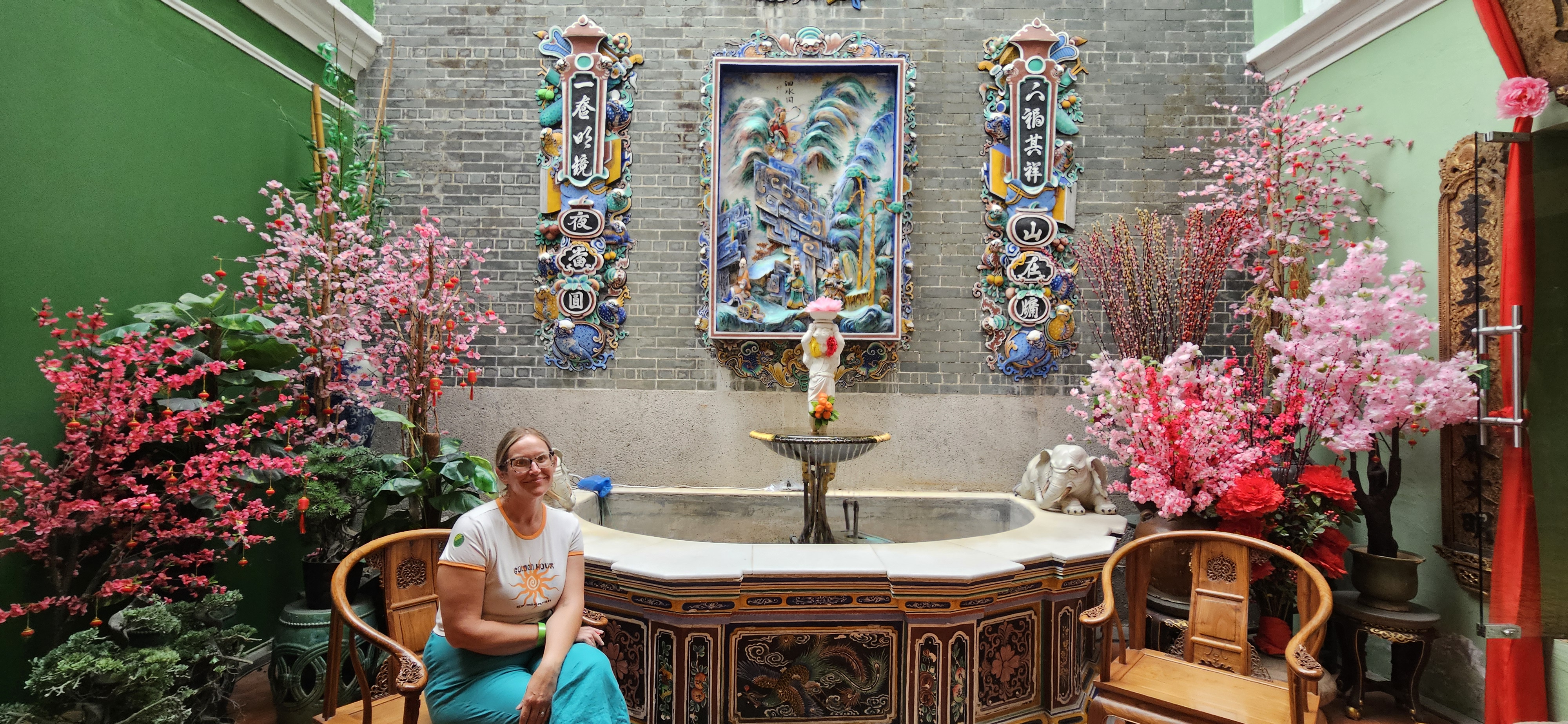
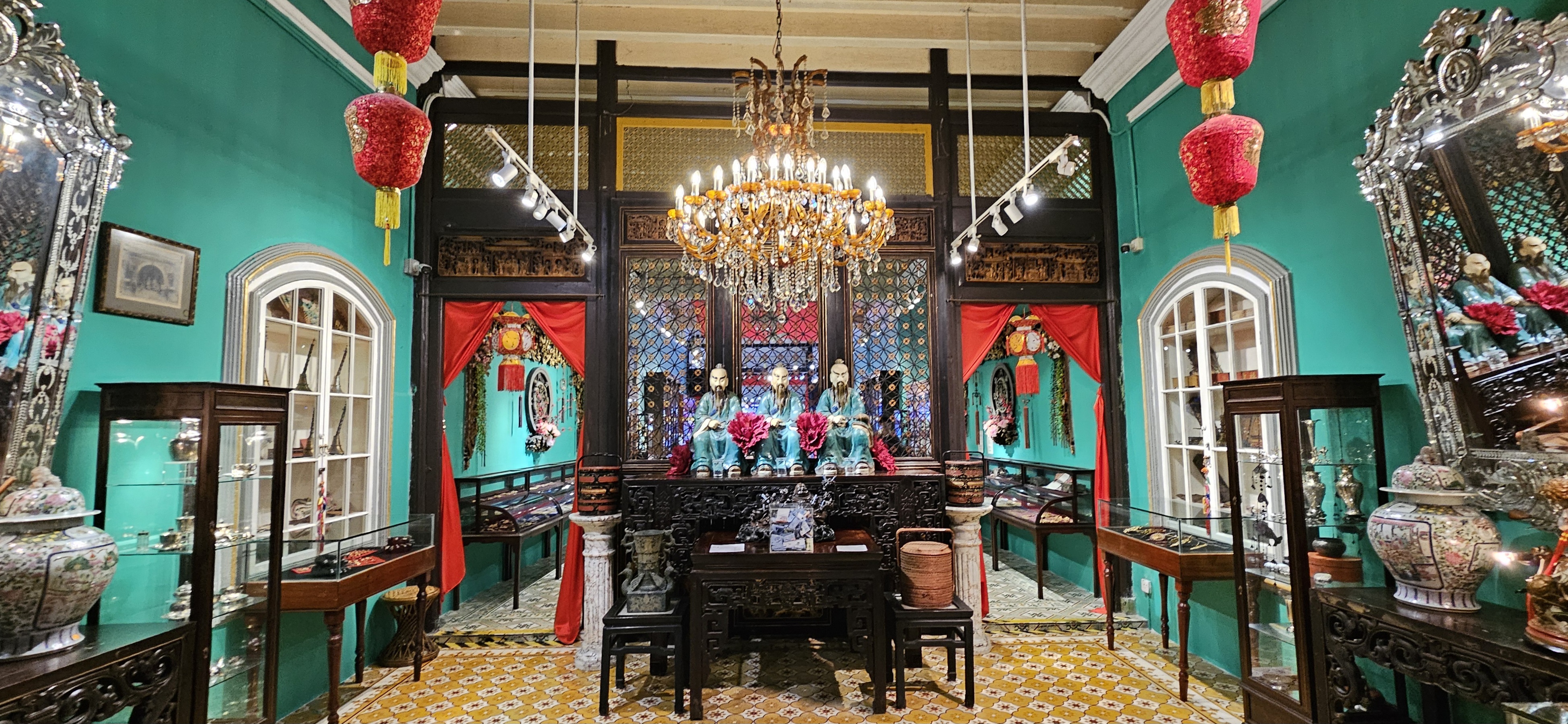
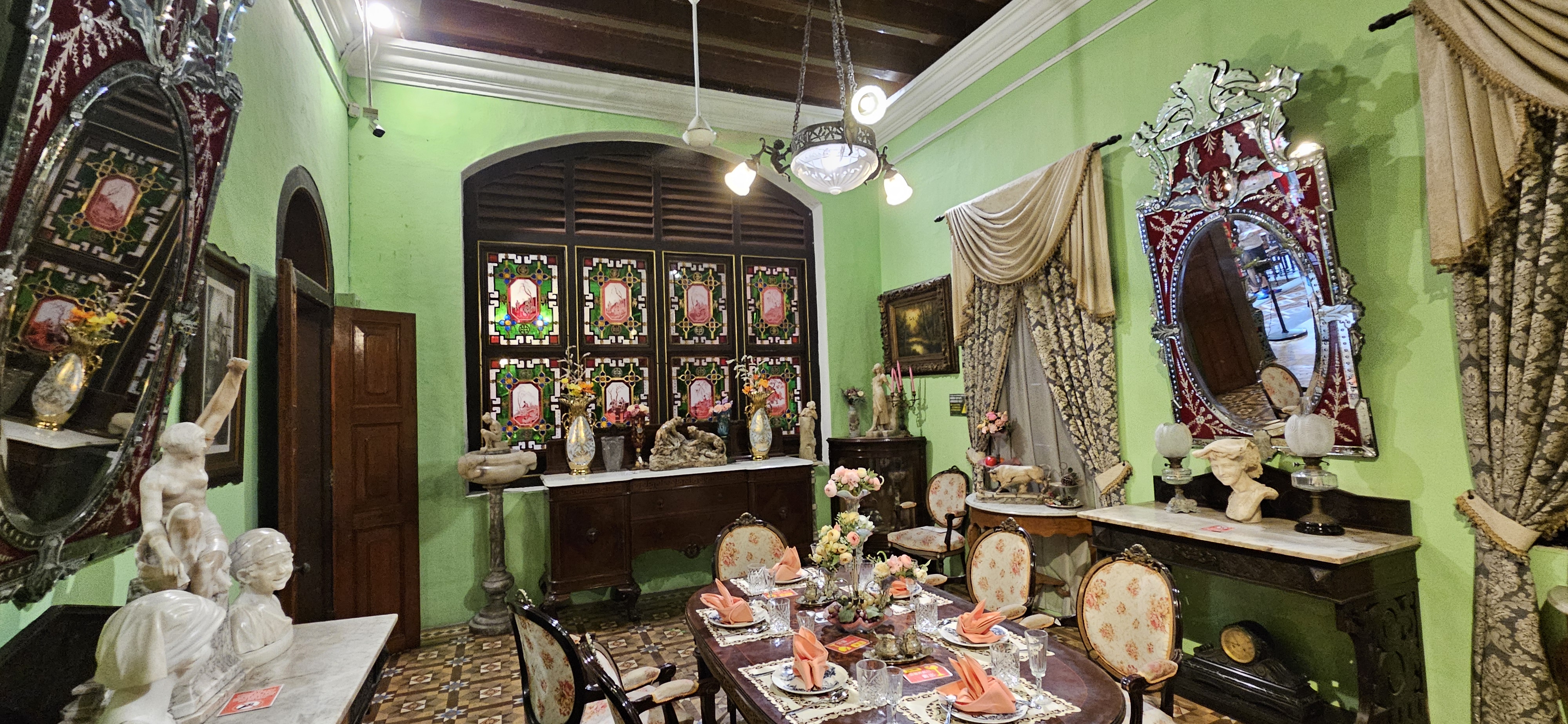
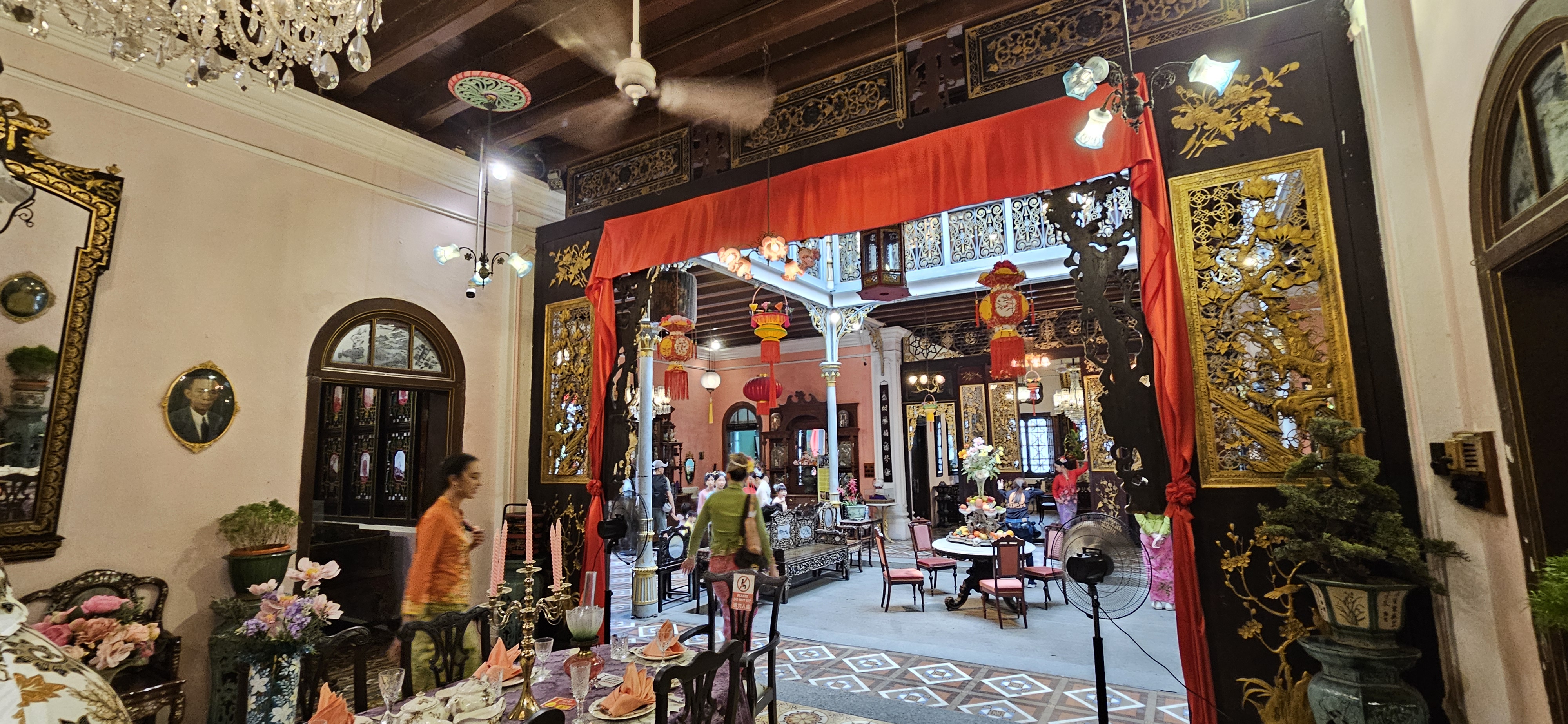
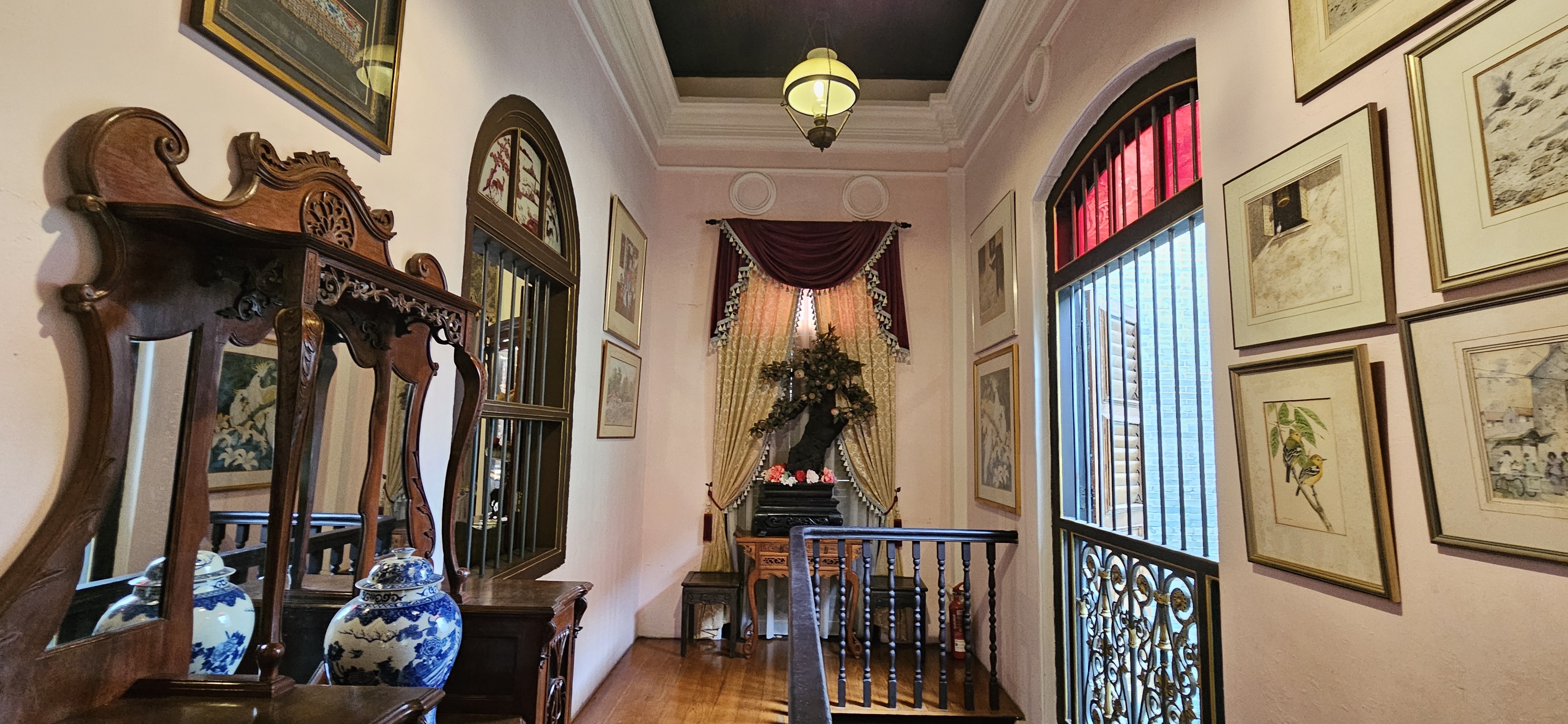
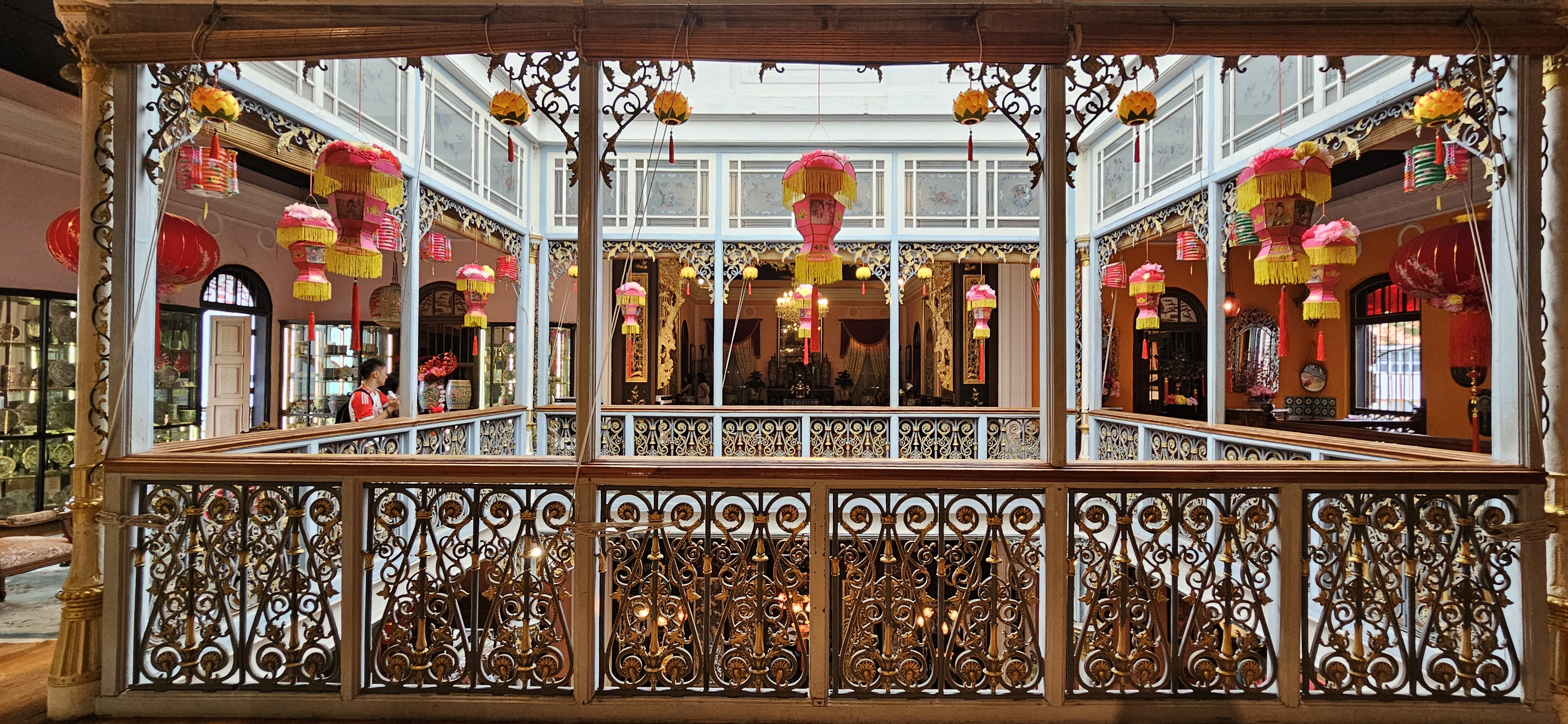
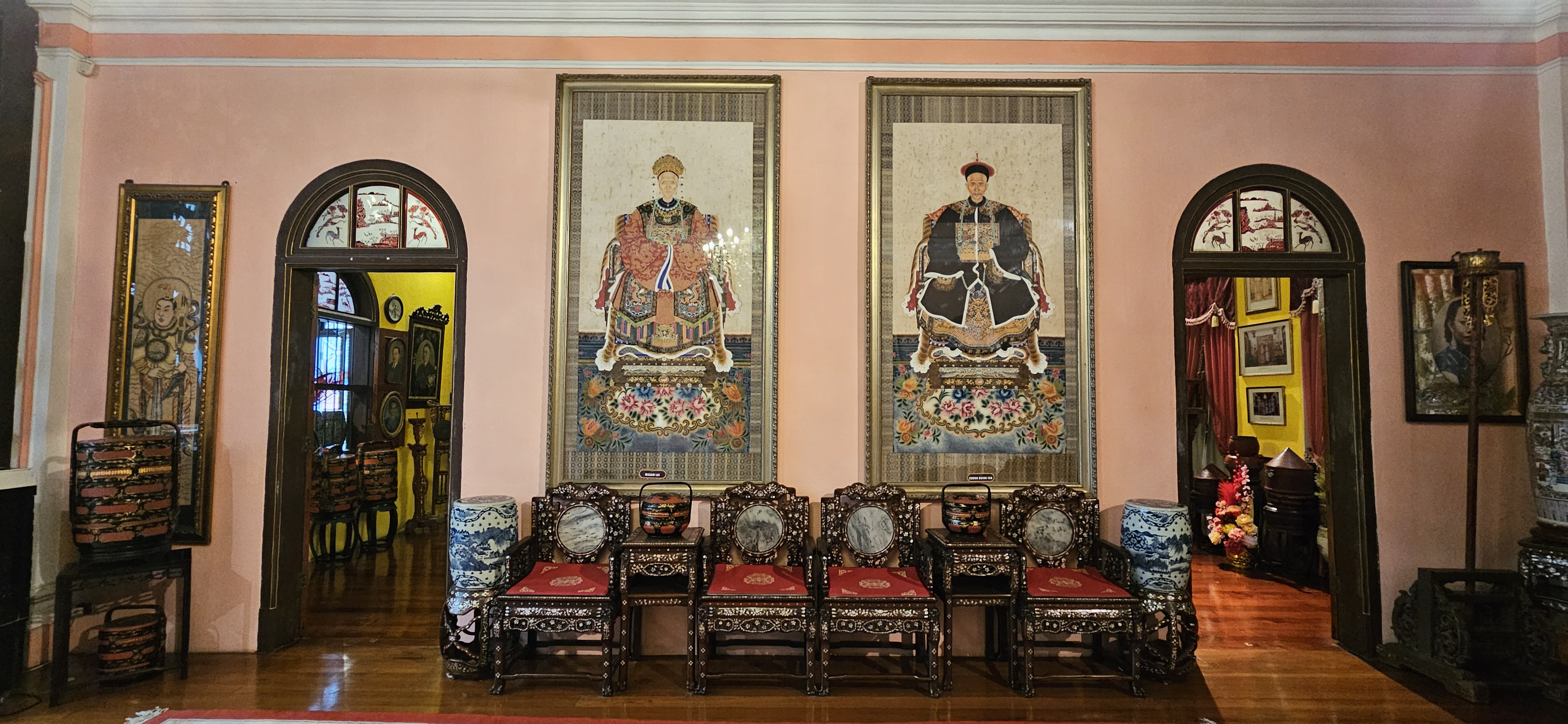
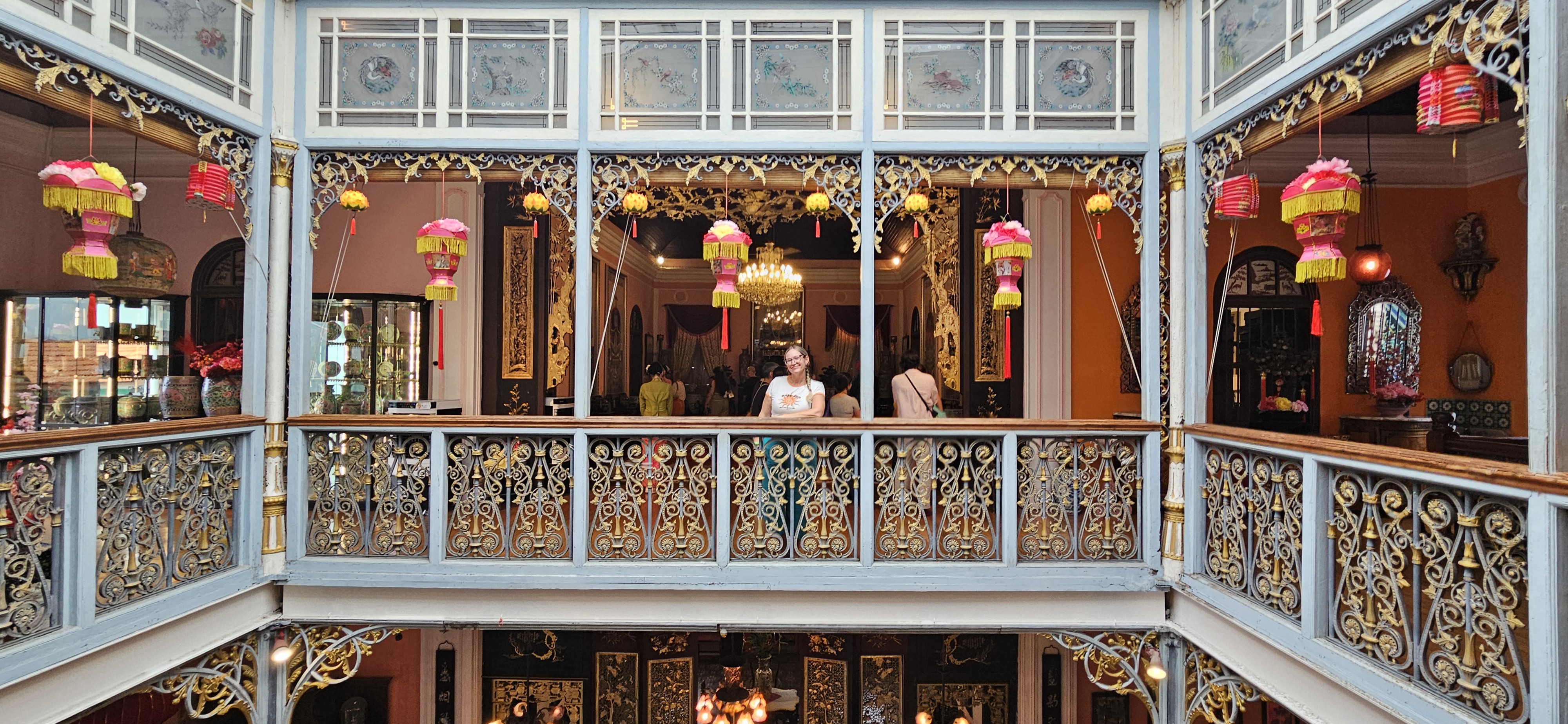
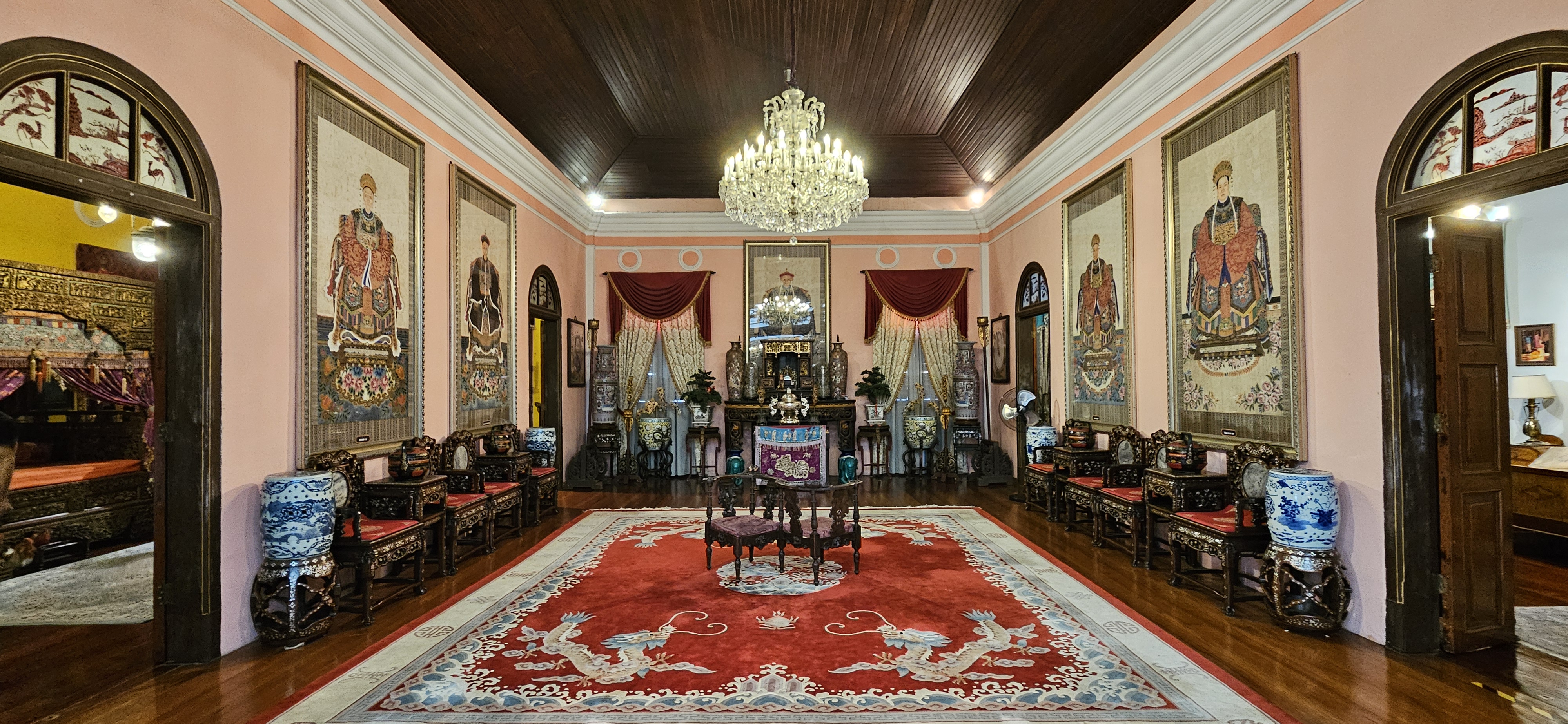
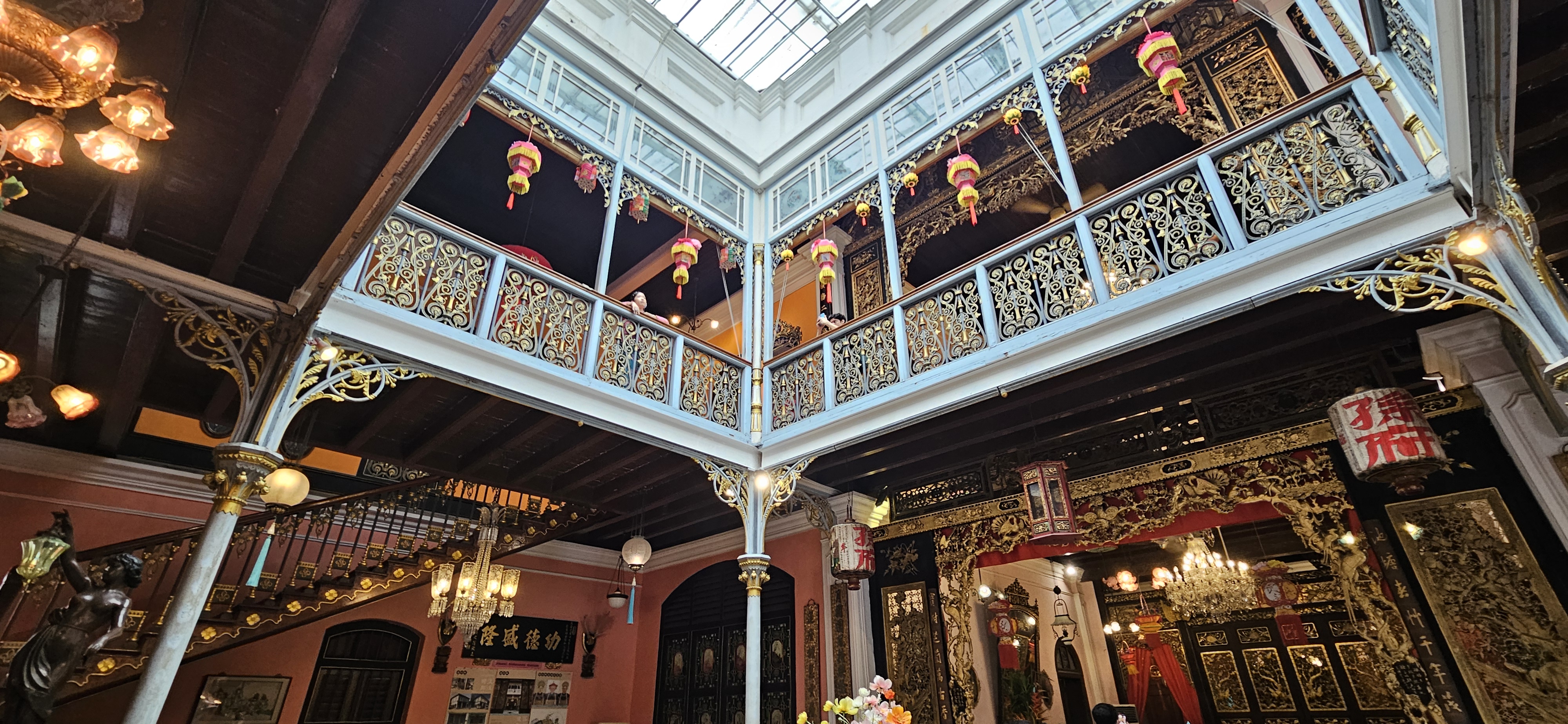
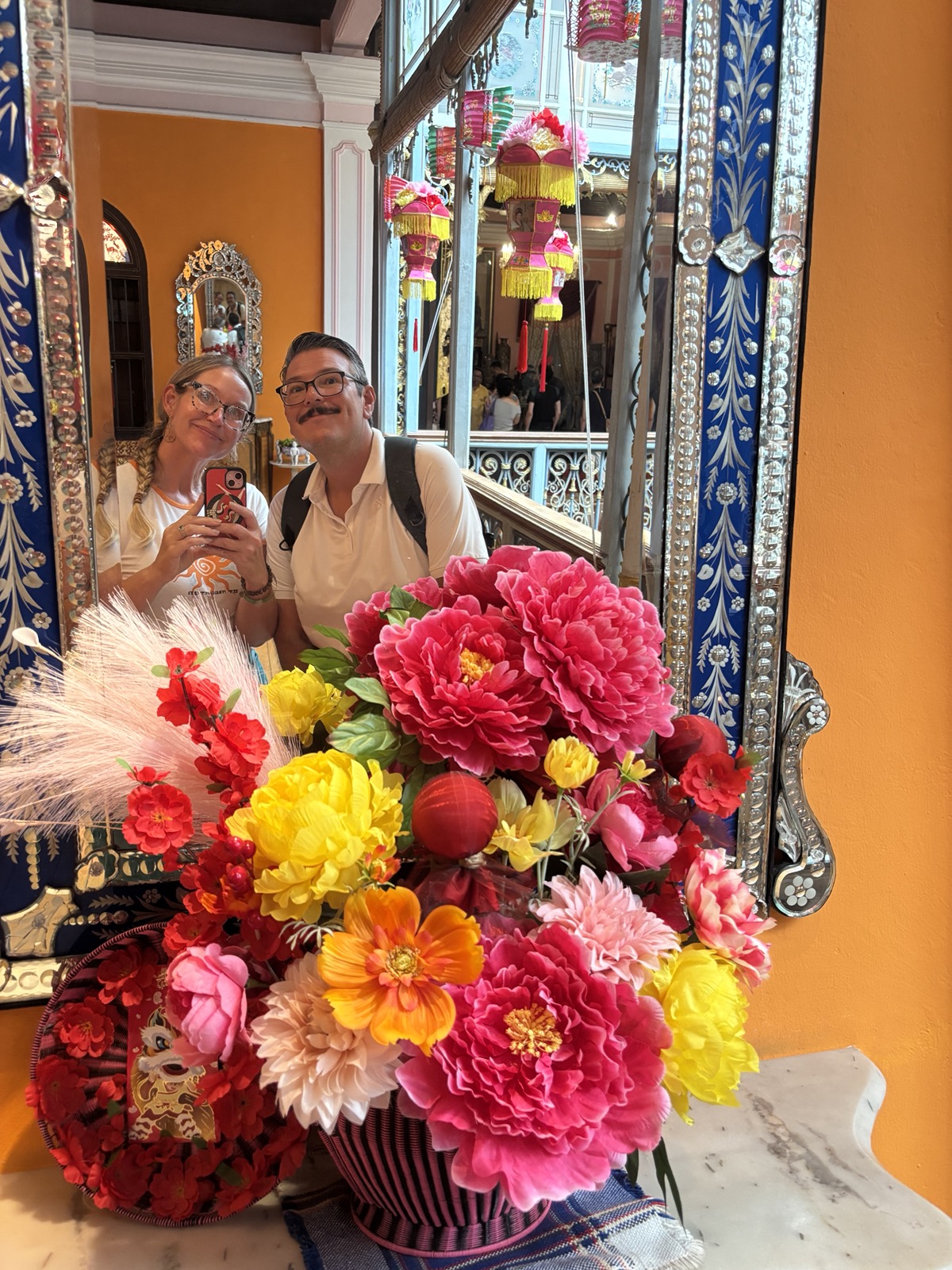
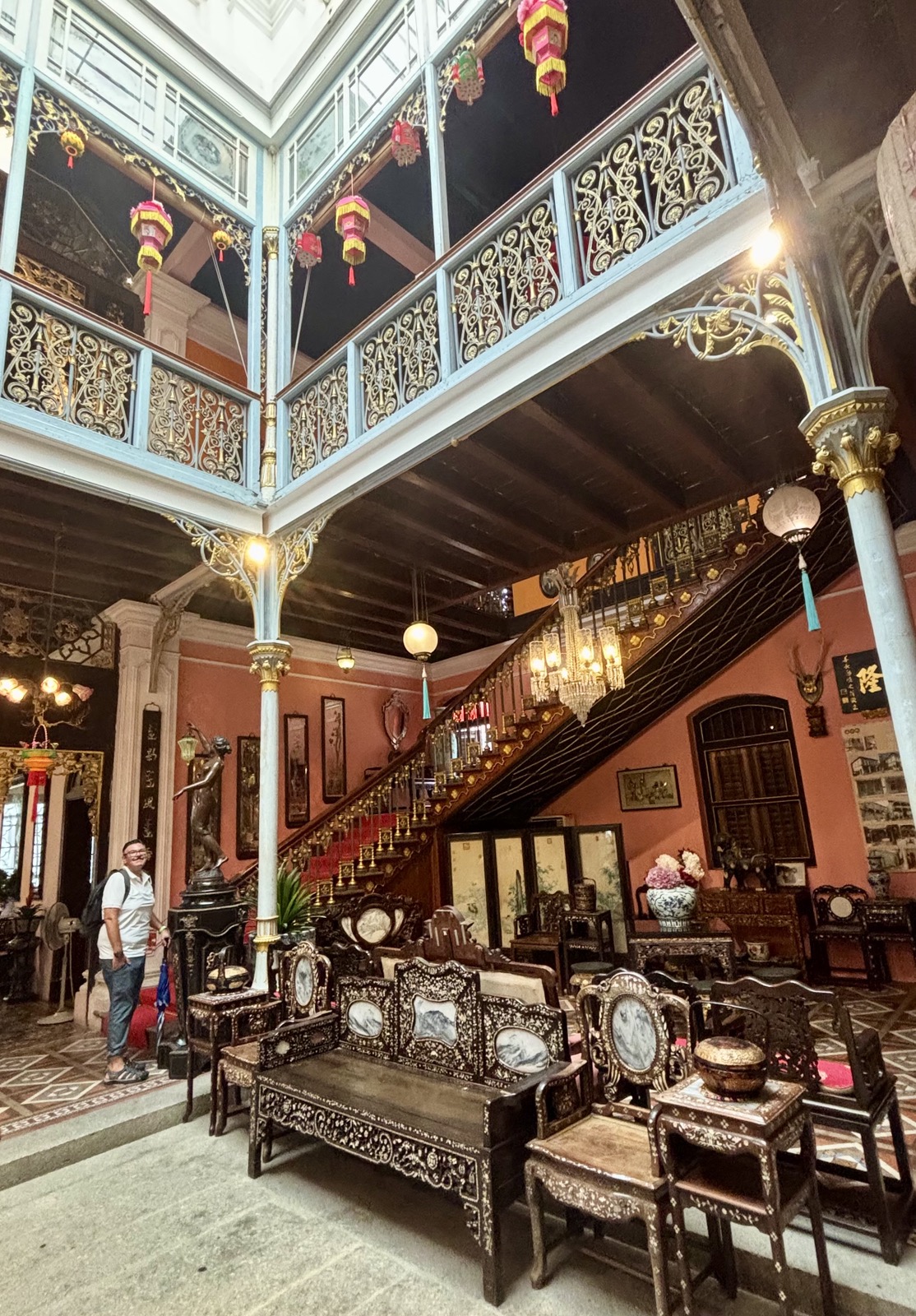
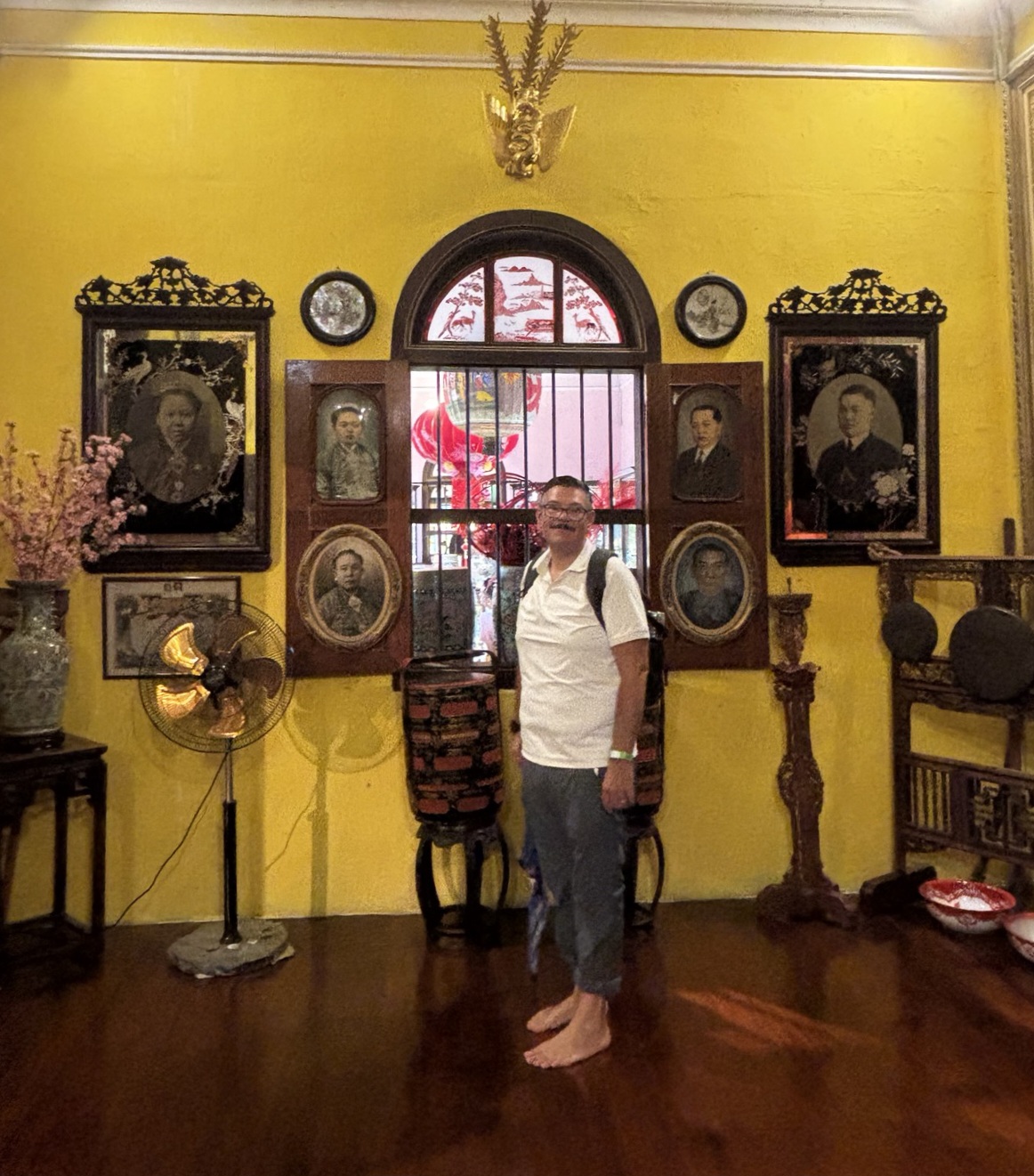
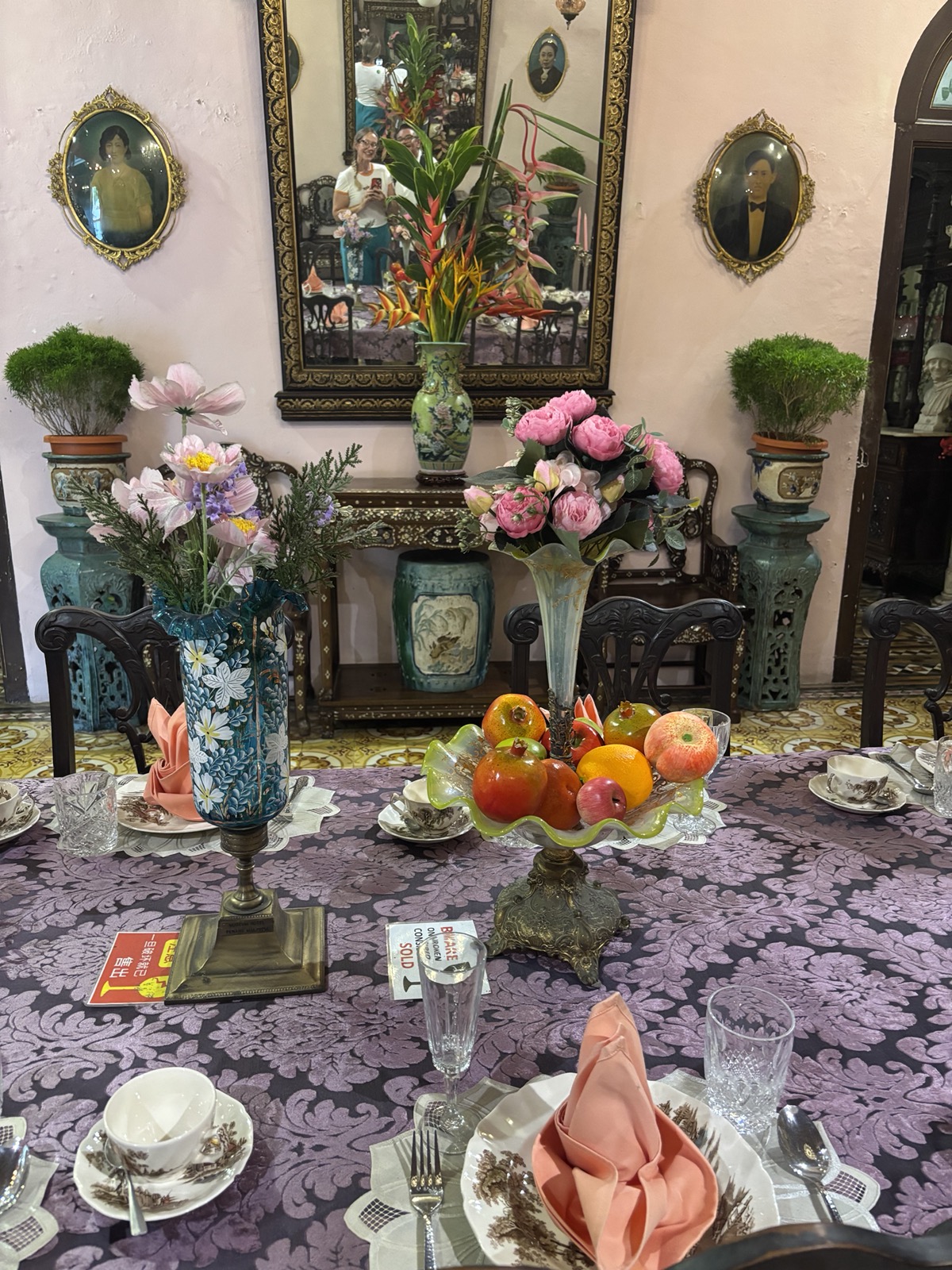
We even had to take off our shoes to wander upstairs. Interestingly the original family’s temple is located inside its walls. A free guide took us through the green-walled, open air courtyard.
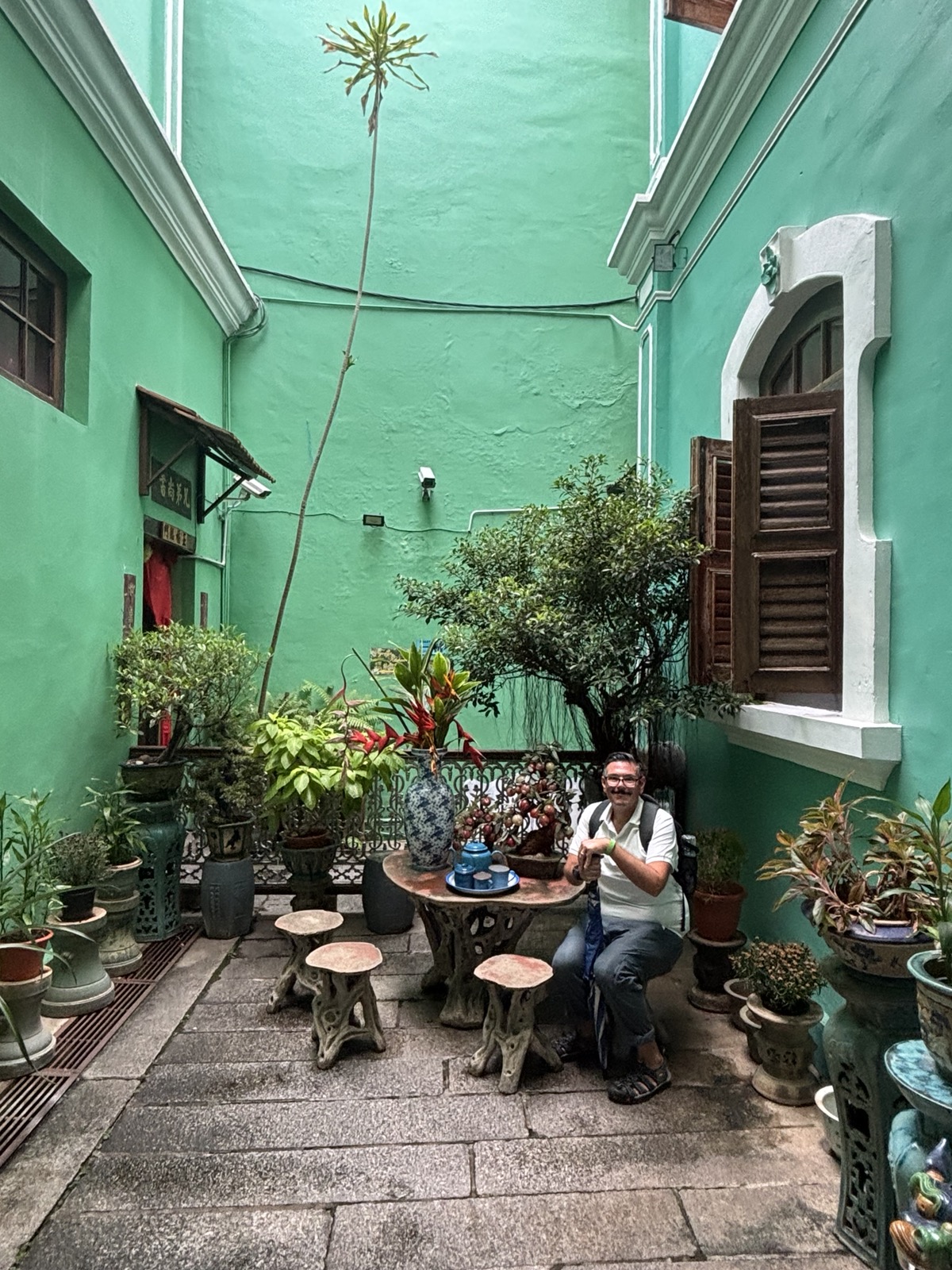
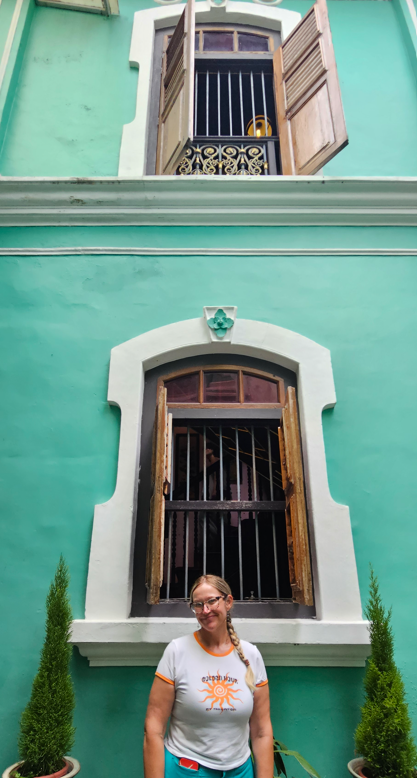
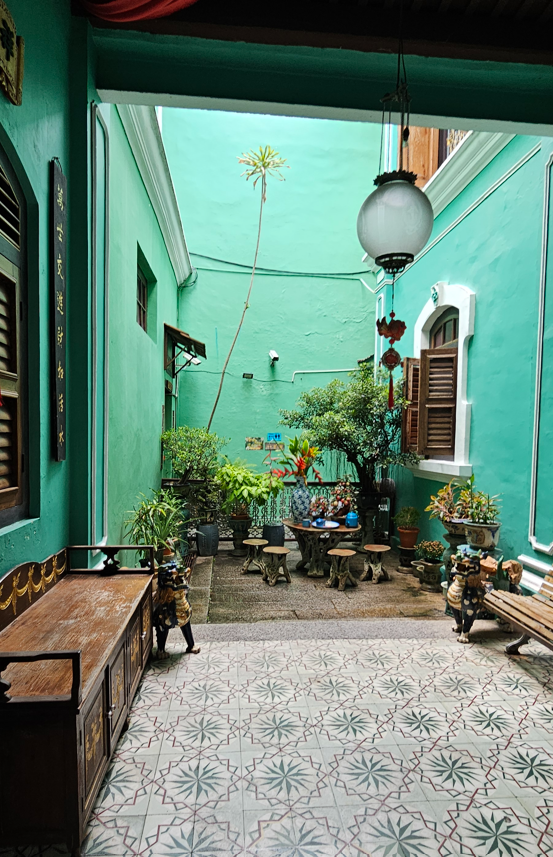
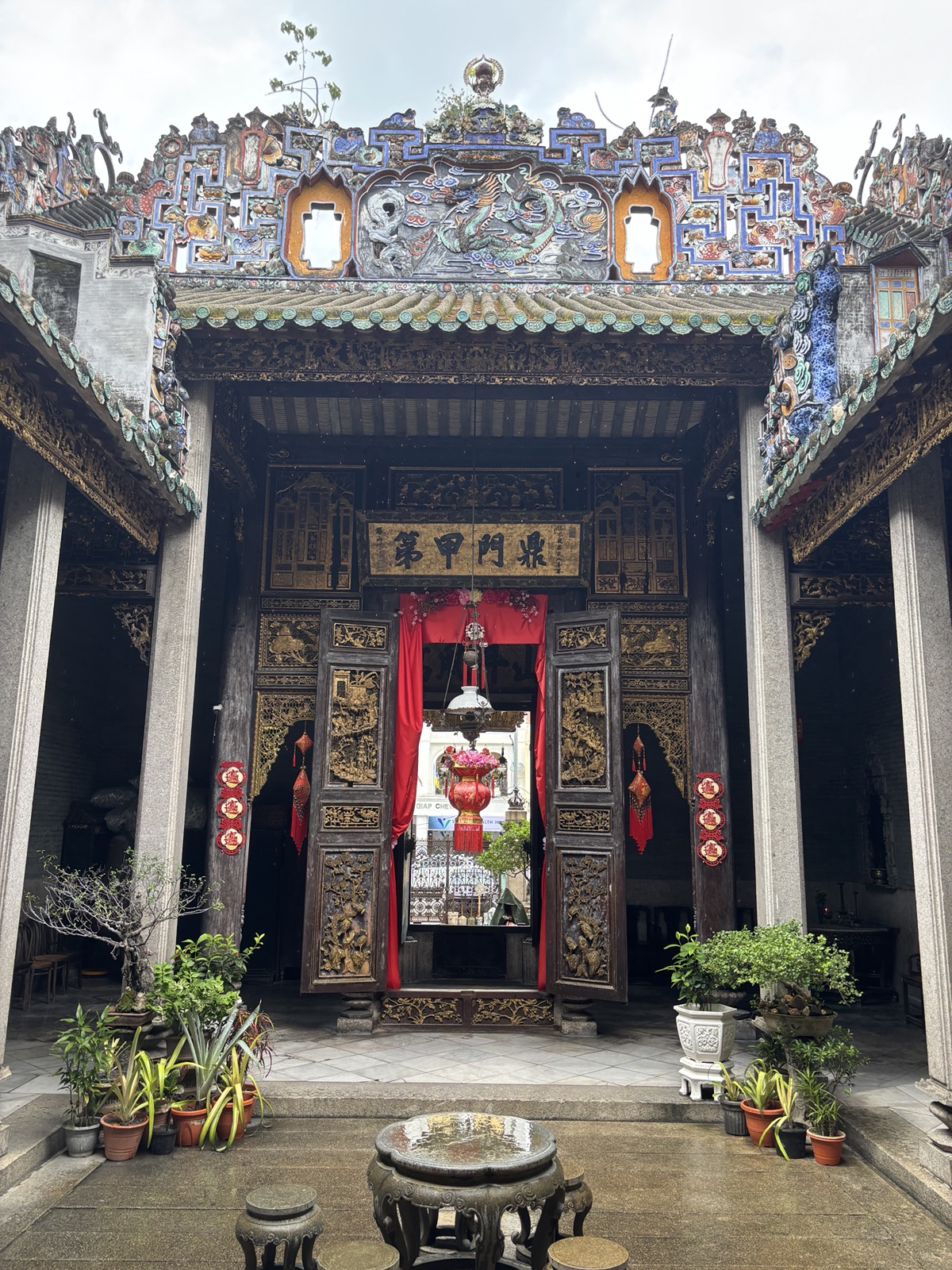
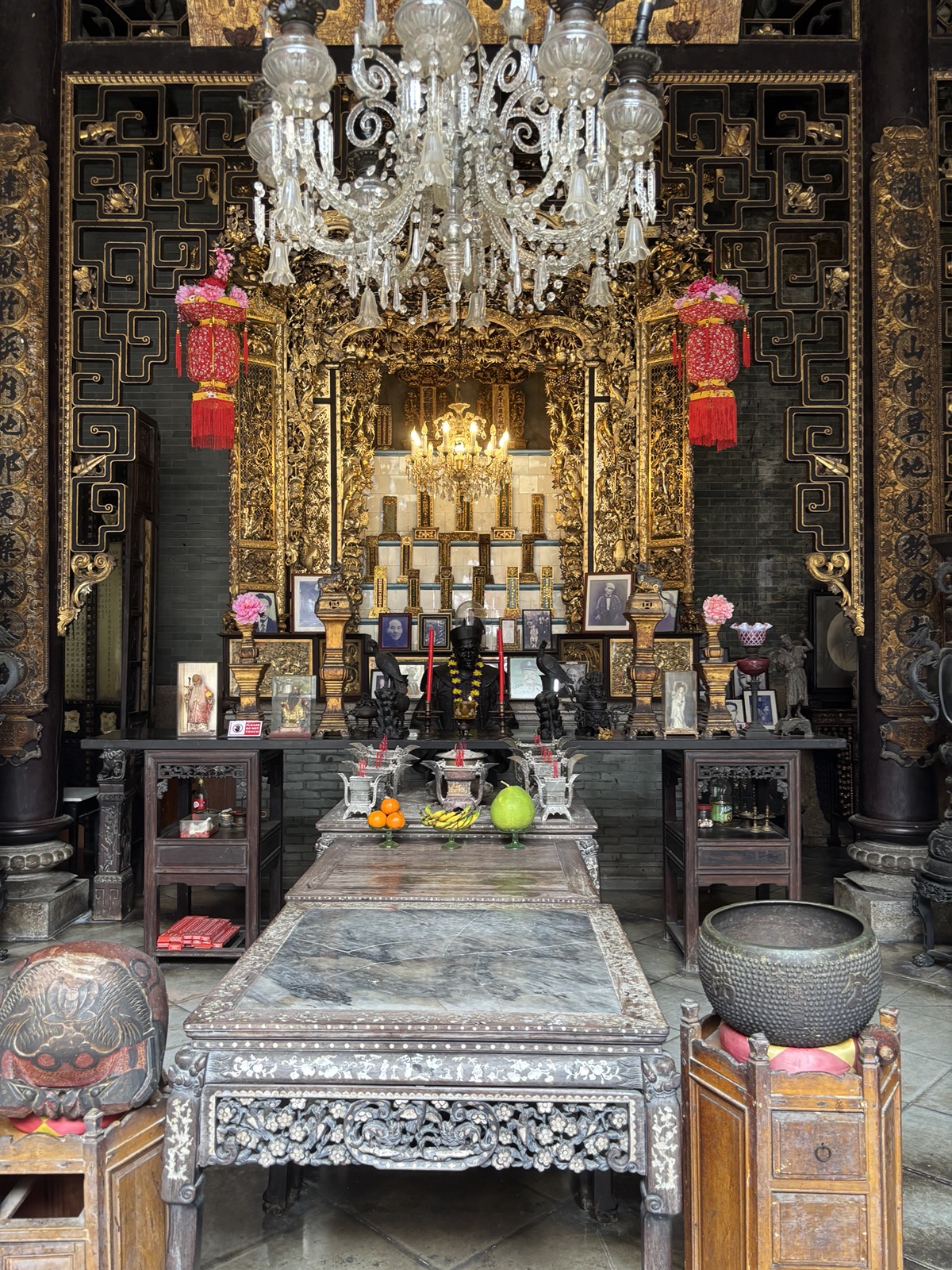
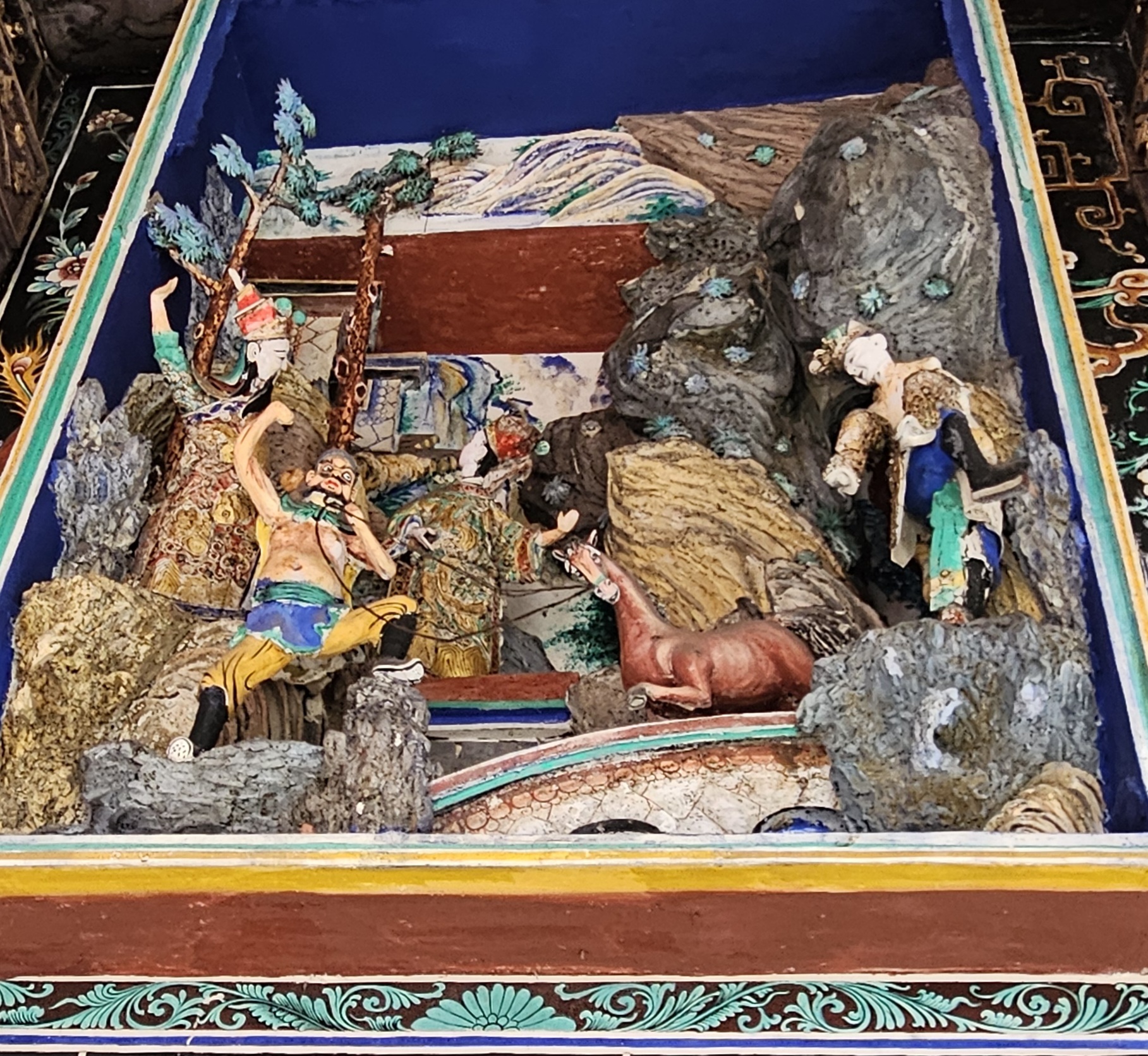
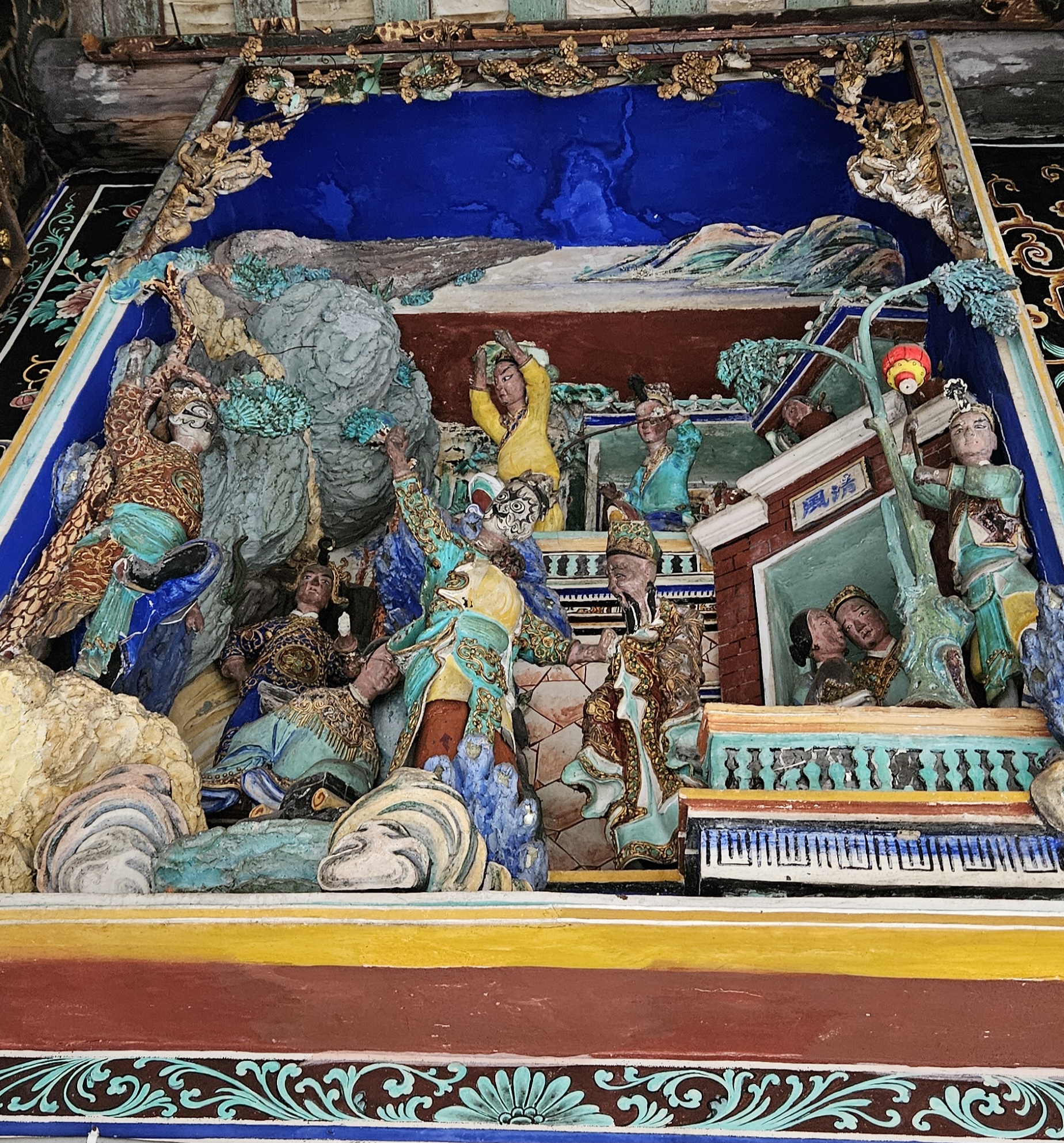
Inside the temple the wood carved and painted scenes above two of the doorways were so cool and unique.
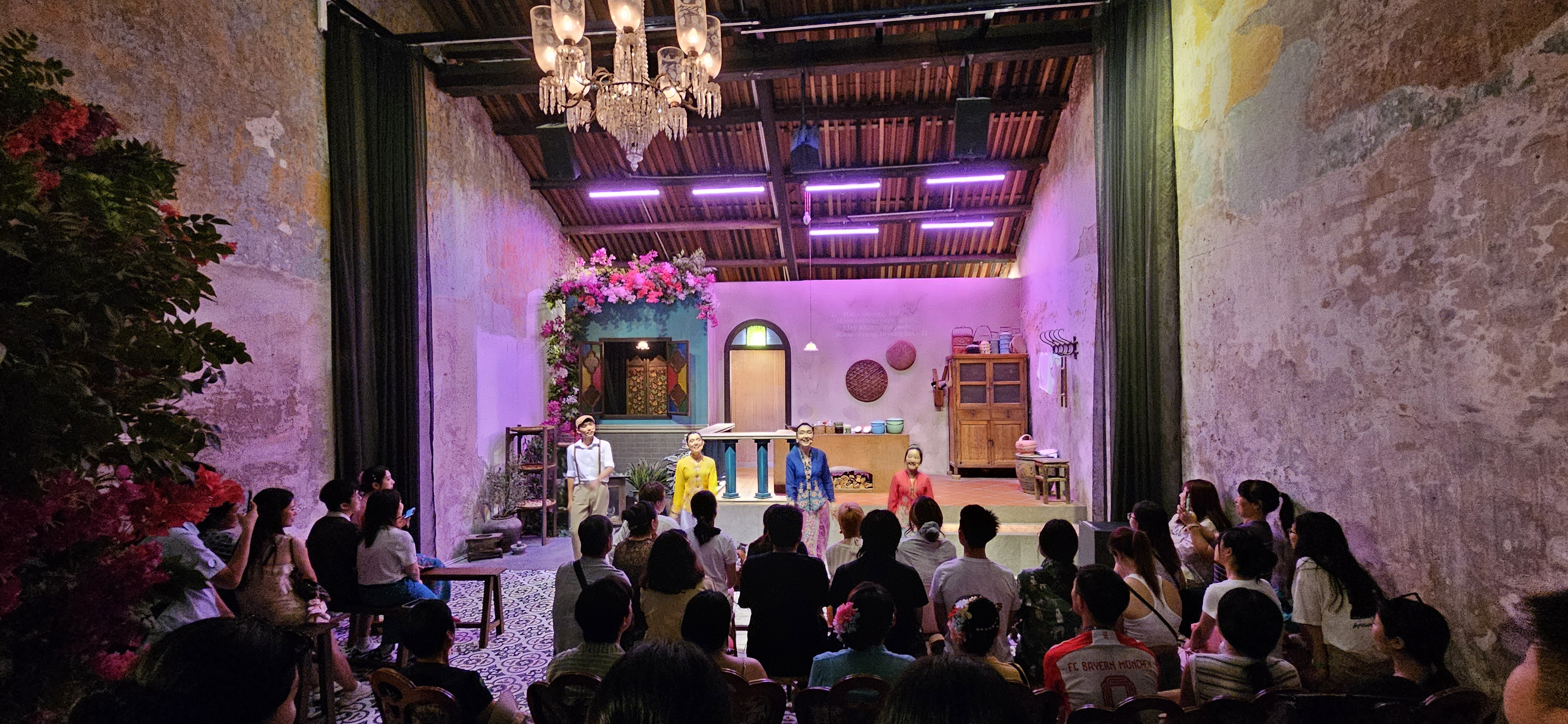
In a different area there was a small performance stage that we were able to see a show about Peranakan Culture. It included singing and audience participation, though was in Chinese (with English subtitles), as this is the number one spot in George Town for Chinese tourists.
We saw two small wooden carvings of the Guanyin Bodhisattva, known as the Goddess of Compassion in Mahayana Buddhism. She is like the Lady Buddha we first encountered in Vietnam that we enjoyed seeing.
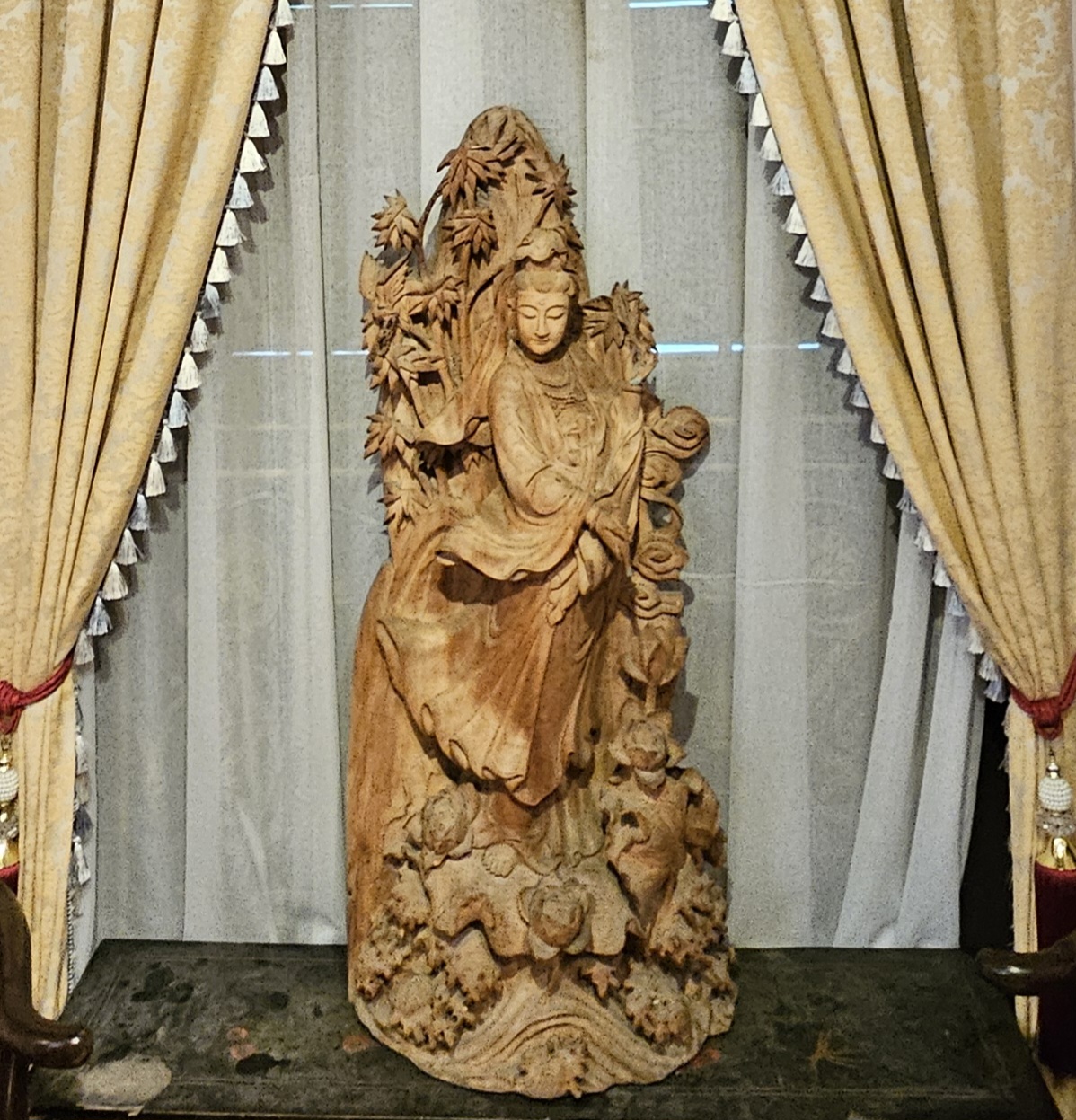
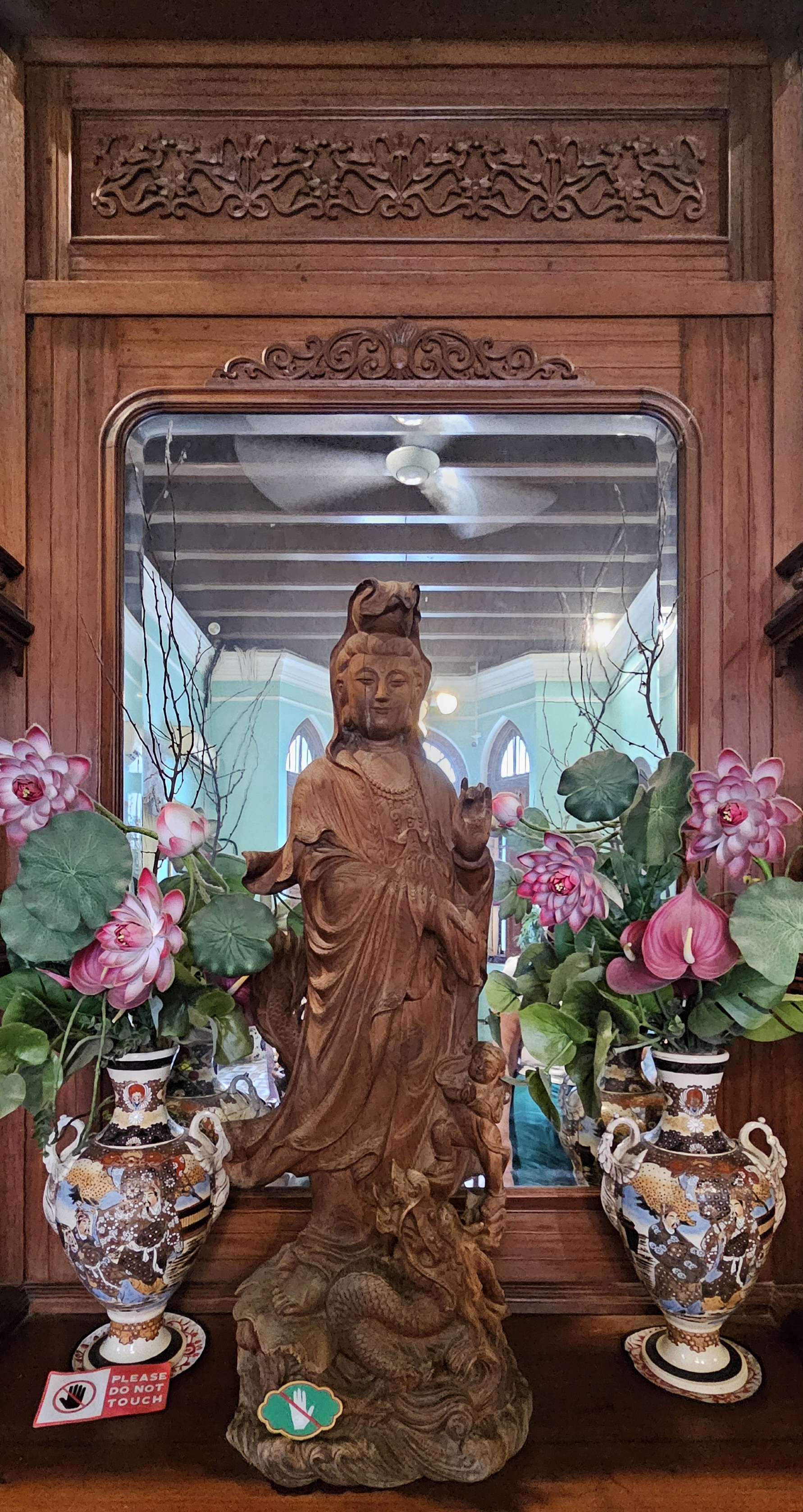
While there were a lot of people there we still had a great time exploring all the rooms, getting to learn some of the mansion’s history from an English speaking guide, and getting to see a live performance to boot, all included in the ticket price. We had a jam-packed, unforgettable, and fun day learning about Peranakan culture and Penang history! Come on back for more from George Town!

