We were originally supposed to visit the My Son temple complex, which is located a couple hours south of Da Nang, on the same day we visited Marble Mountain. Our taxi driver, Tony, took us to Marble Mountain first, and by the time we left there it was already noon, and we were hungry and were advised not to visit My Son during the hottest part of the day.
So, we visited Hoi An instead (which will be the subject of the next post) and planned to visit My Son another day. This allowed Tony to take us on another half day trip, instead of doing it all in one day, a fact that we knew, but were ok with. Tony was a good driver and we mainly used the translator app to communicate, so its possible something was lost in translation, but we knew Tony was a businessman as well, and two day trips pays more than one (these day trips only cost between $25-40, for our own private driver to go and stop where we wanted, so not a huge cost and less than organized tours with many fellow tourists).
We woke up early and Tony picked us up at 8am for the nearly two-hour drive to the My Son Temples. They are ancient Shiva Hindu temples, some as old as the 4th century AD to the most recent ones built in 13th century. They are in various states of disrepair though preservation and rebuilding projects are currently underway.
The Cham, or Champa, people were the original inhabitants of central Vietnam and Cambodia, before the arrival of the Vietnamese and Cambodians. The Champa Kings built My Son for religious purposes, but eventually My Son was abandoned and a majority of the Cham people became Muslim by the 17th century. The Cham people still exist today in Vietnam and Cambodia as an ethnic minority. Interestingly they have always been, and continue to be, a matriarchal society, in family structure and inheritance.
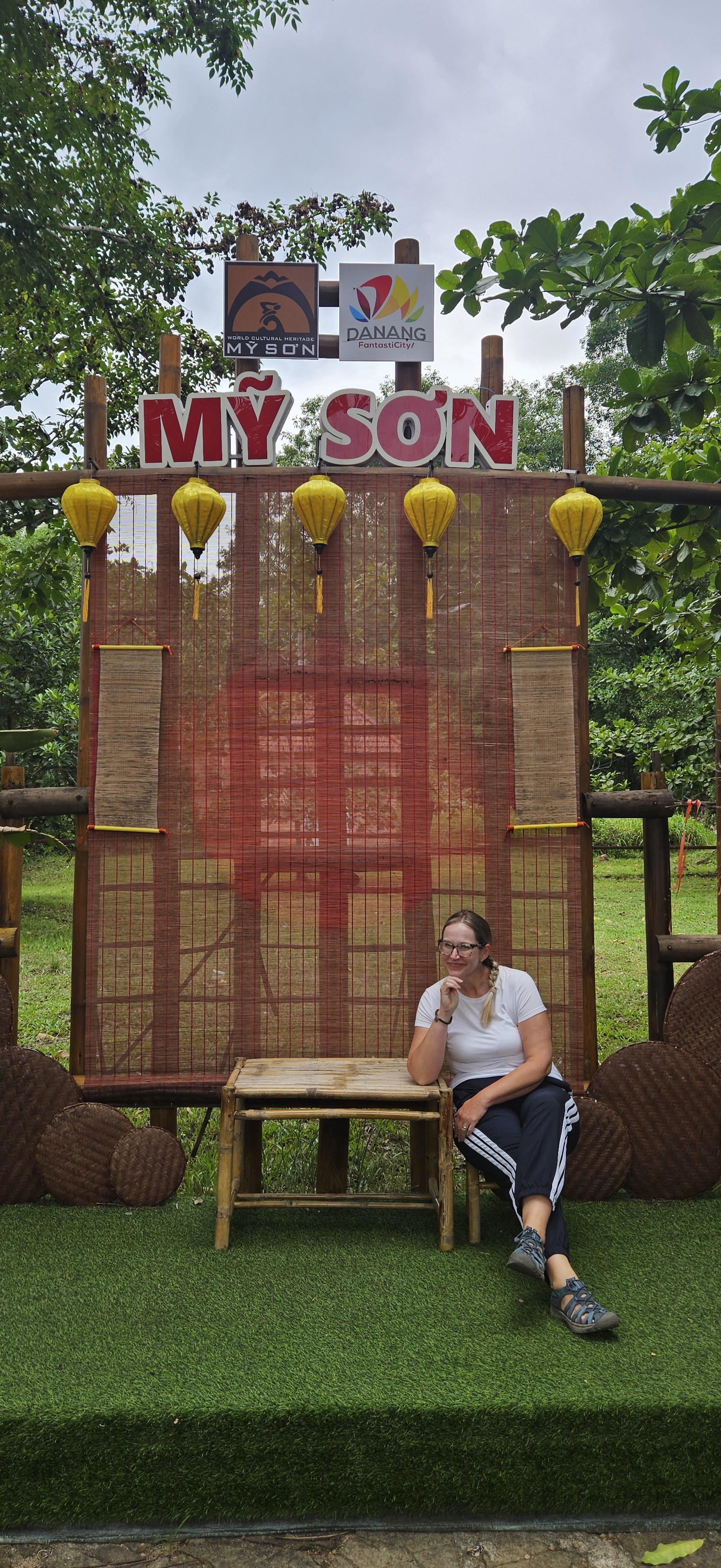
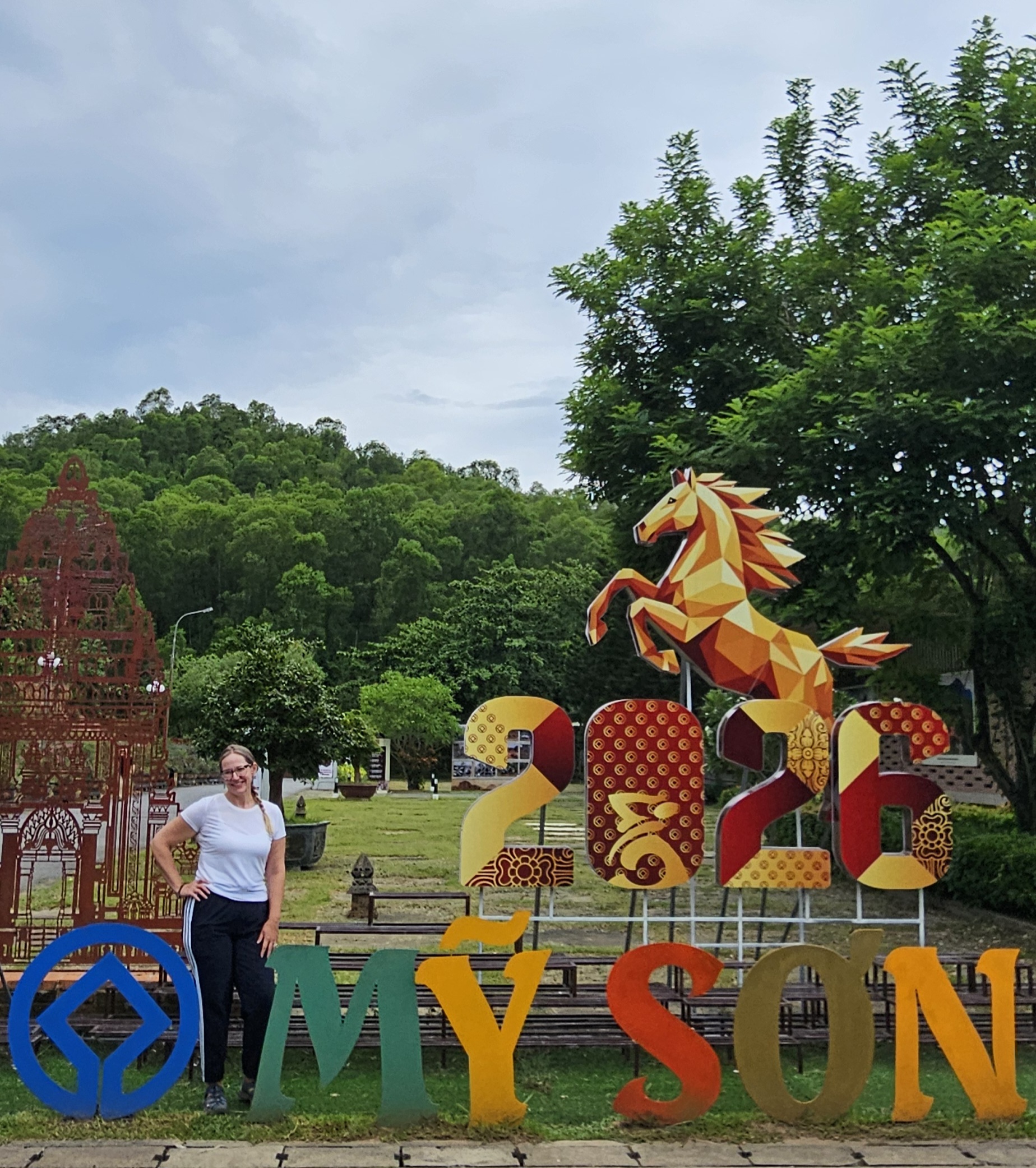
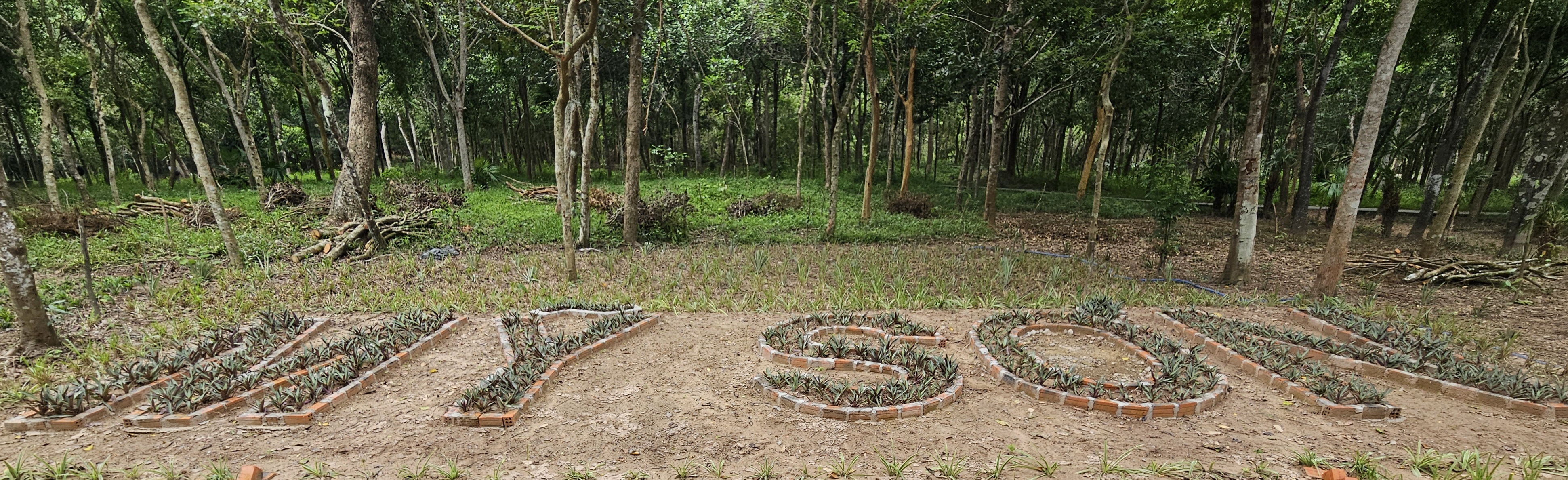
We arrived at the My Son entrance gate under cloudy skies, bought our tickets, and entered the park. There are some fun signs at the entrance, good for pictures, and we saw so many Year of the Horse 2026 signs all over Southeast Asia, to celebrate Jessica’s year.
There is a gift shop and small museum, but we skipped past those, figuring to visit on the way out. We made our way to the entrance bridge, crossed it and had two paths before us.
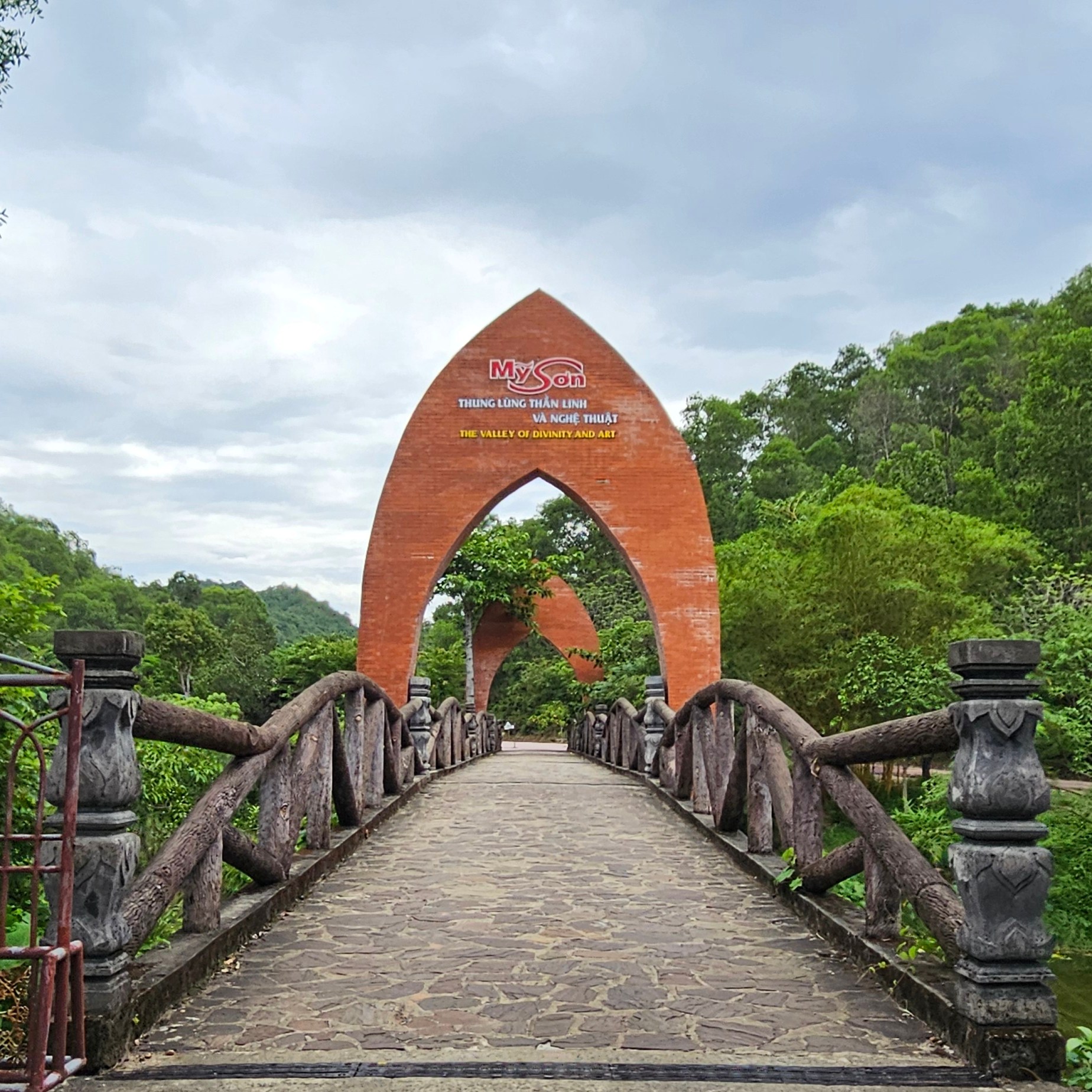
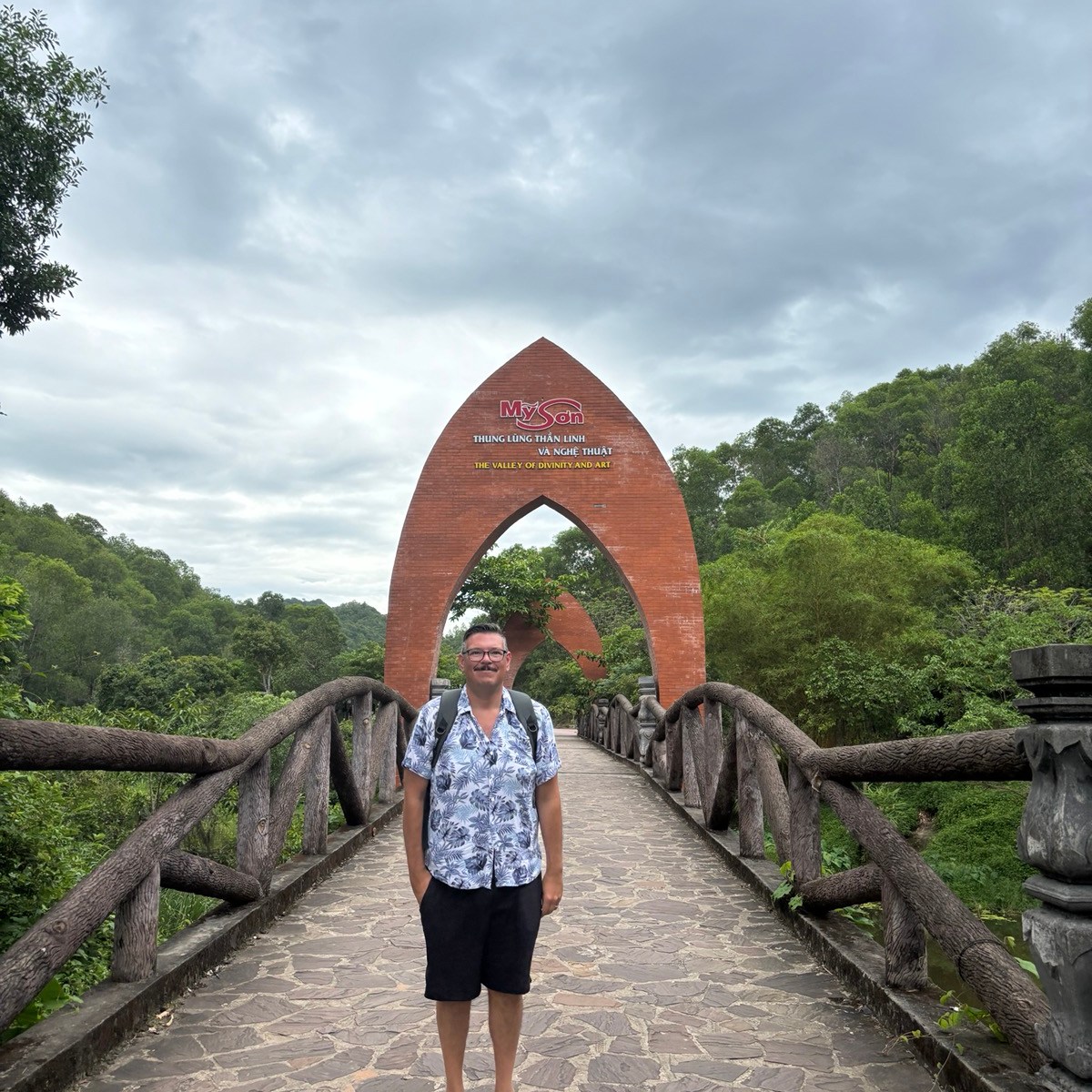
There was a cafe and shop on the left past the bridge; and we saw a big tour group take the right path, so we headed down the left.
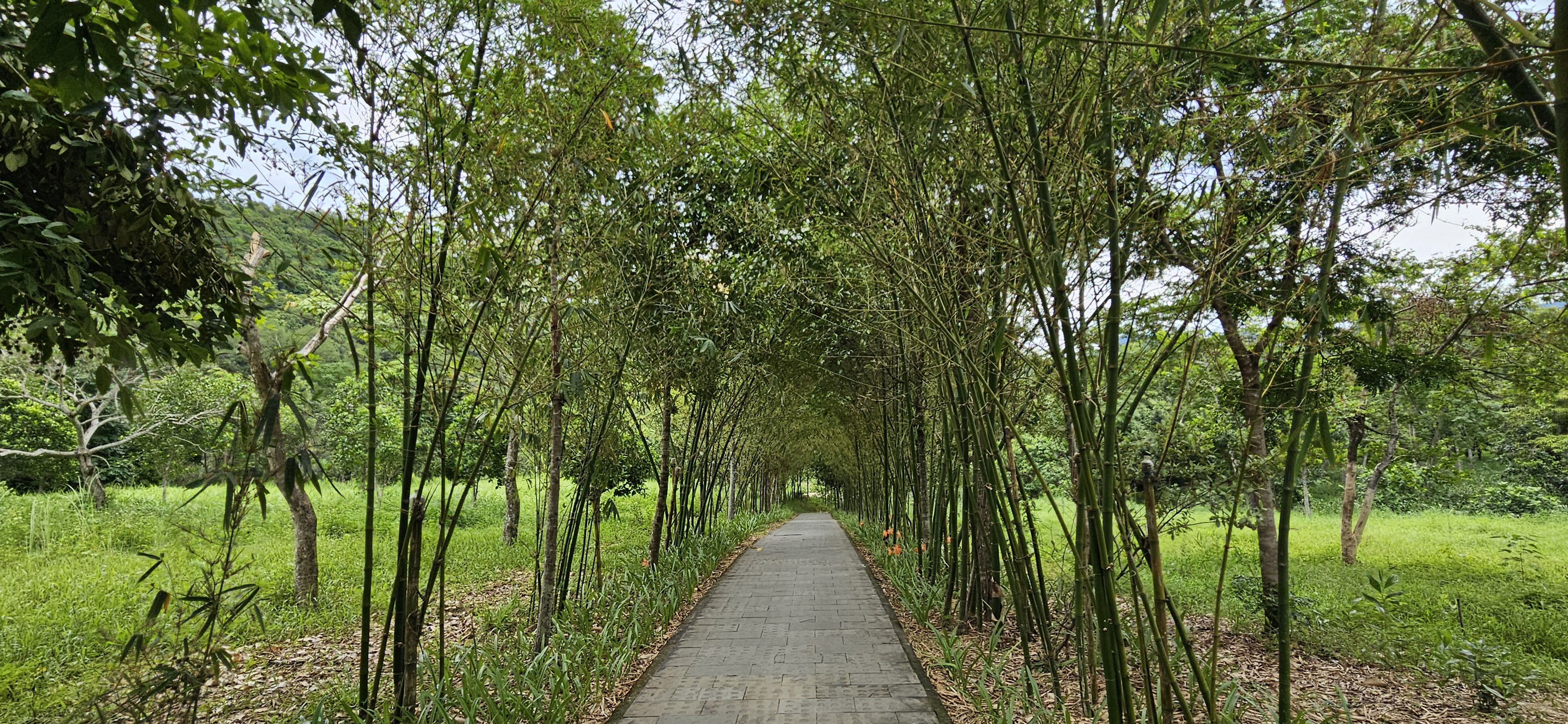
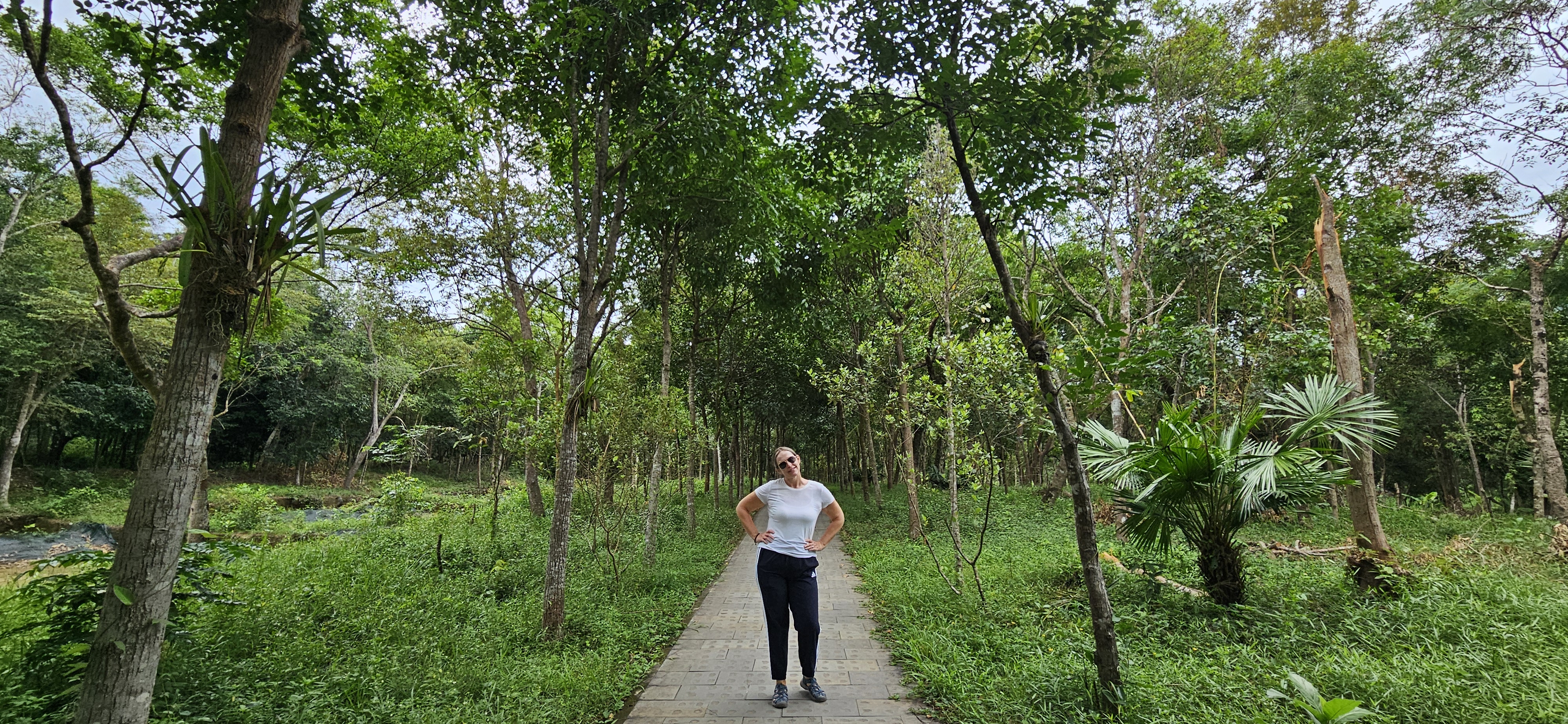
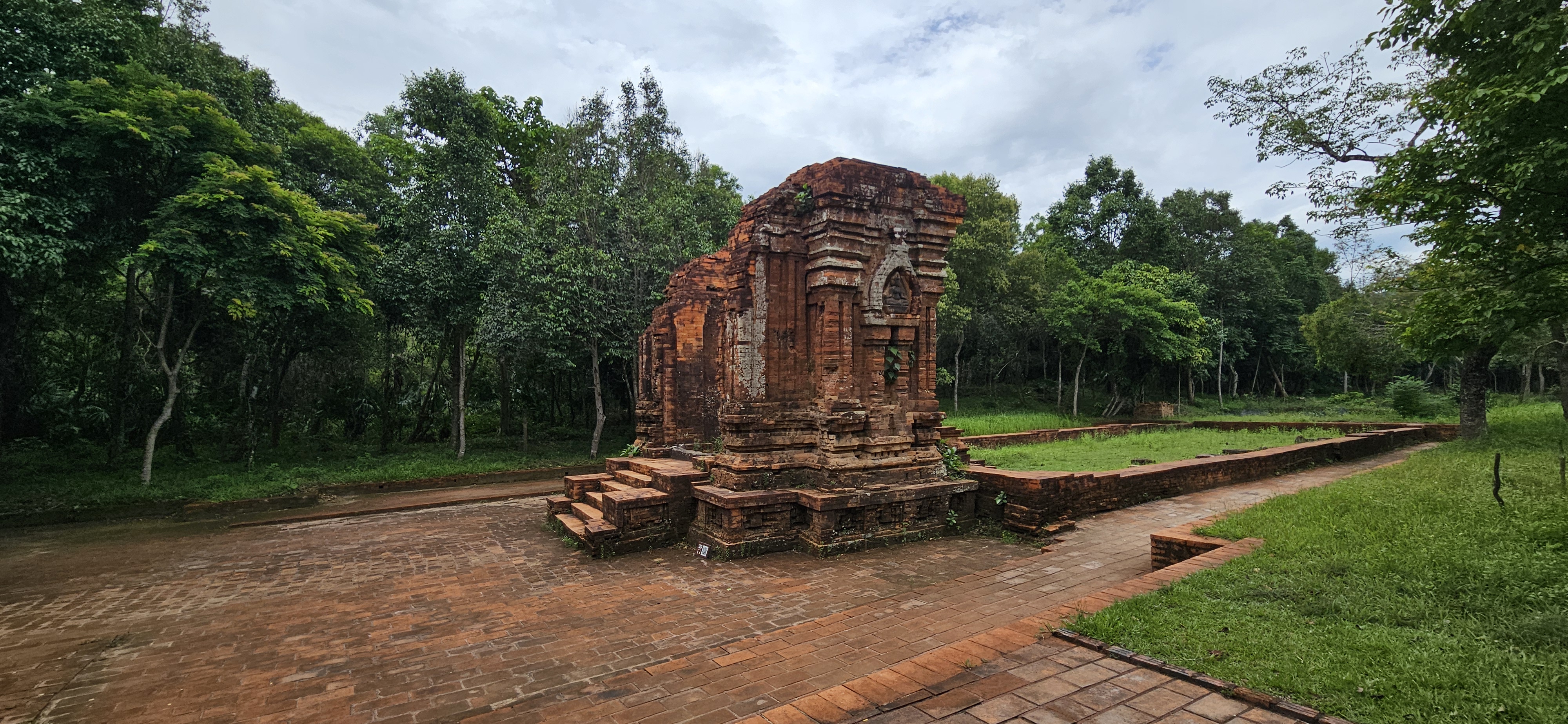
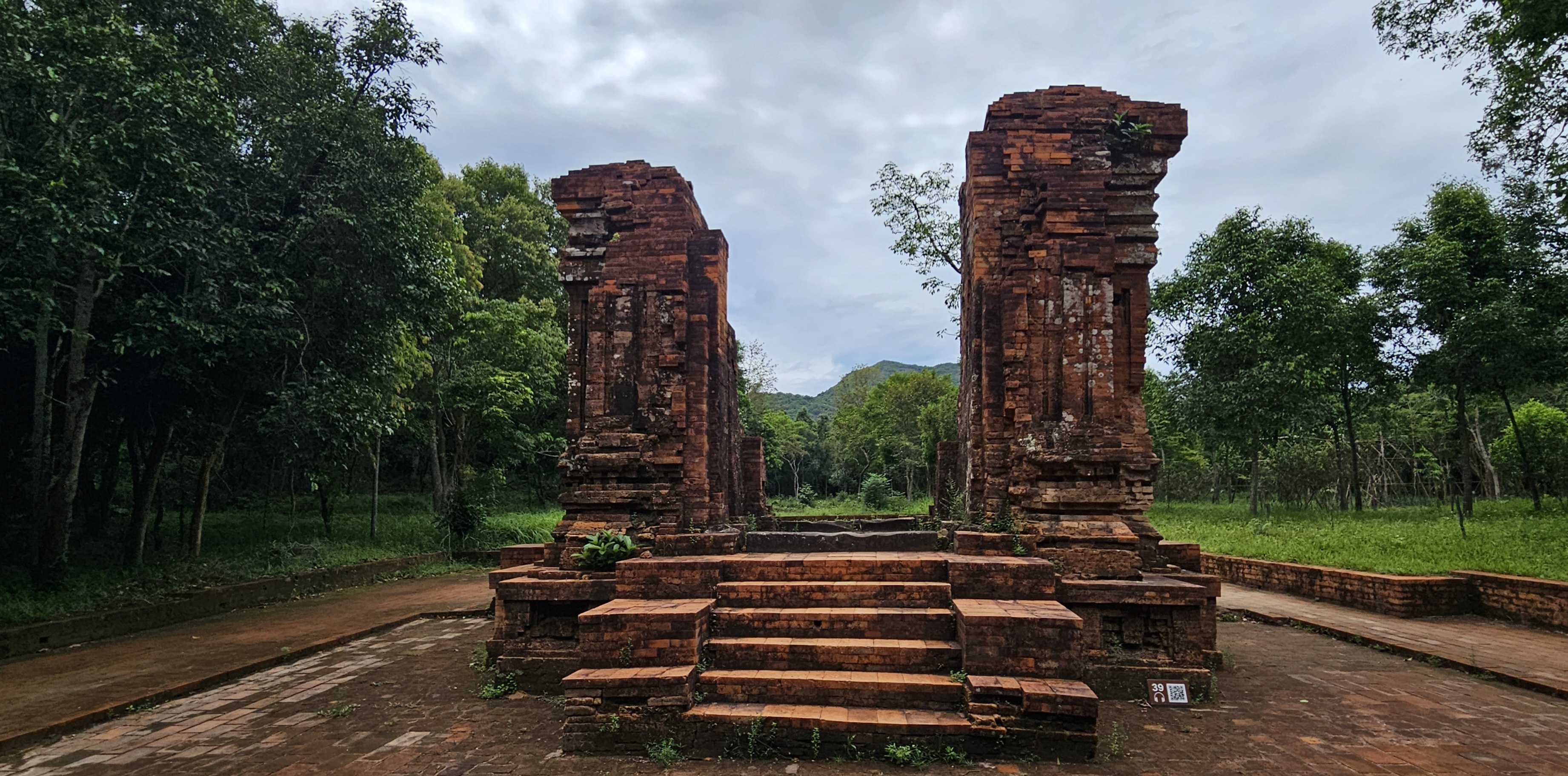
There we encountered the first temple, or what was left of it.
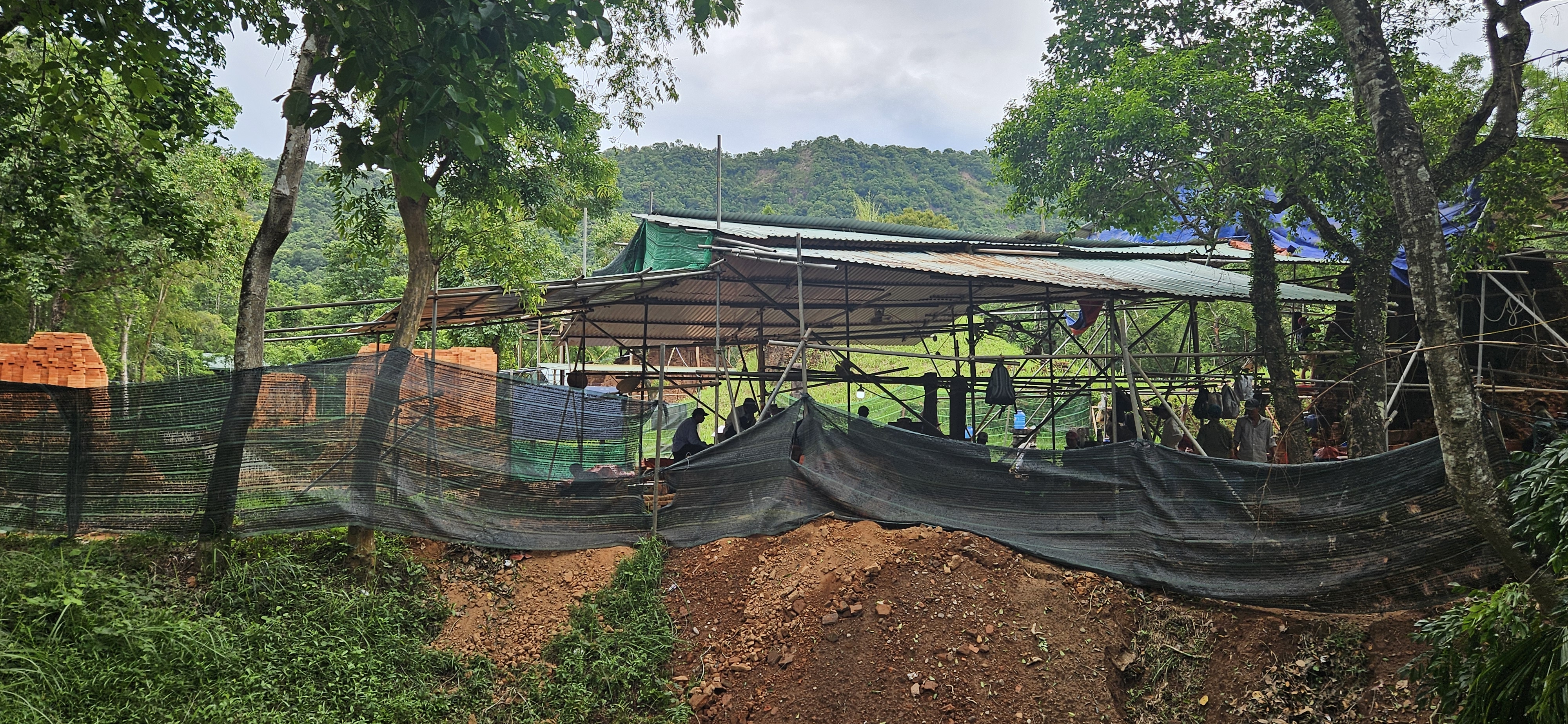
Next, we passed one of the temples that was being reconstructed; there were many workers and we also learned the project was a joint country one, with the Vietnamese and India working together.
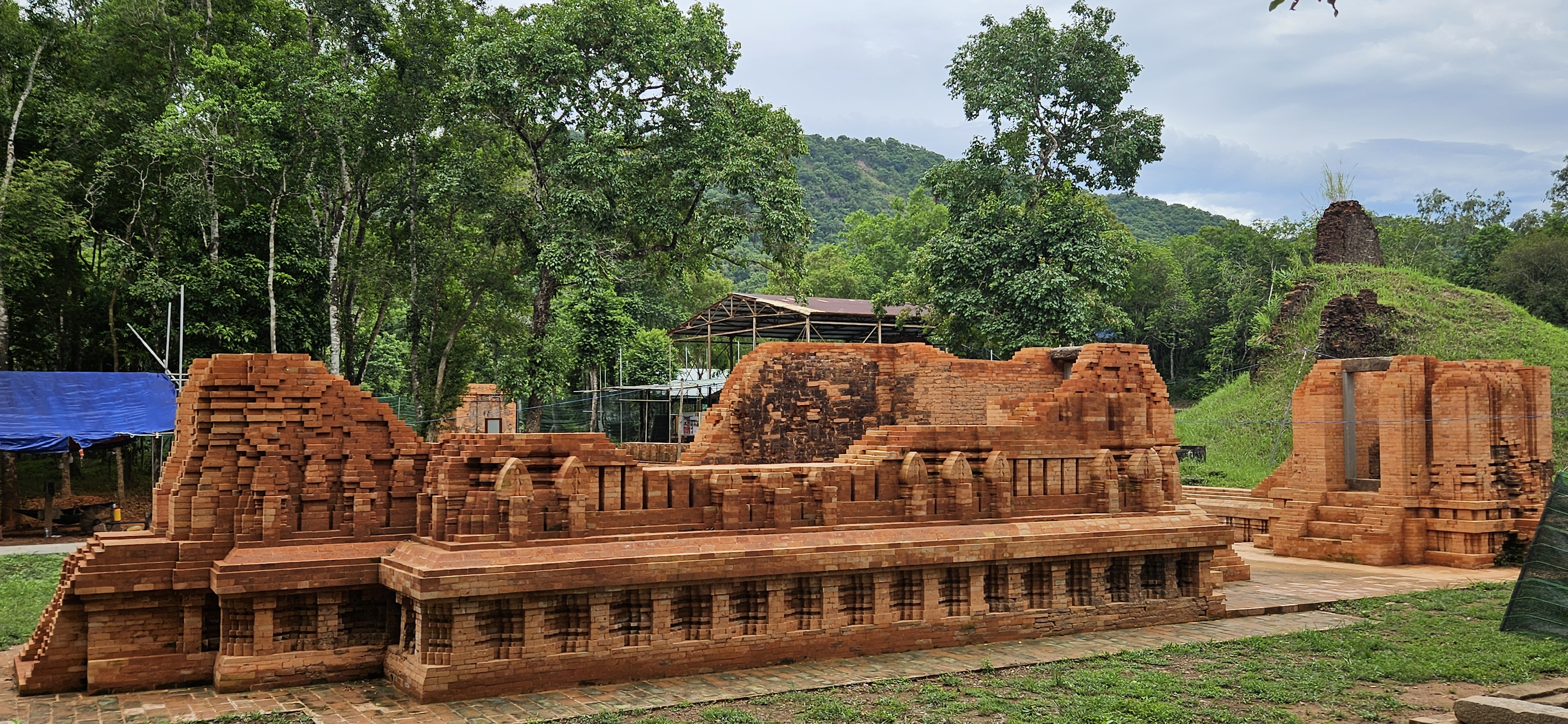
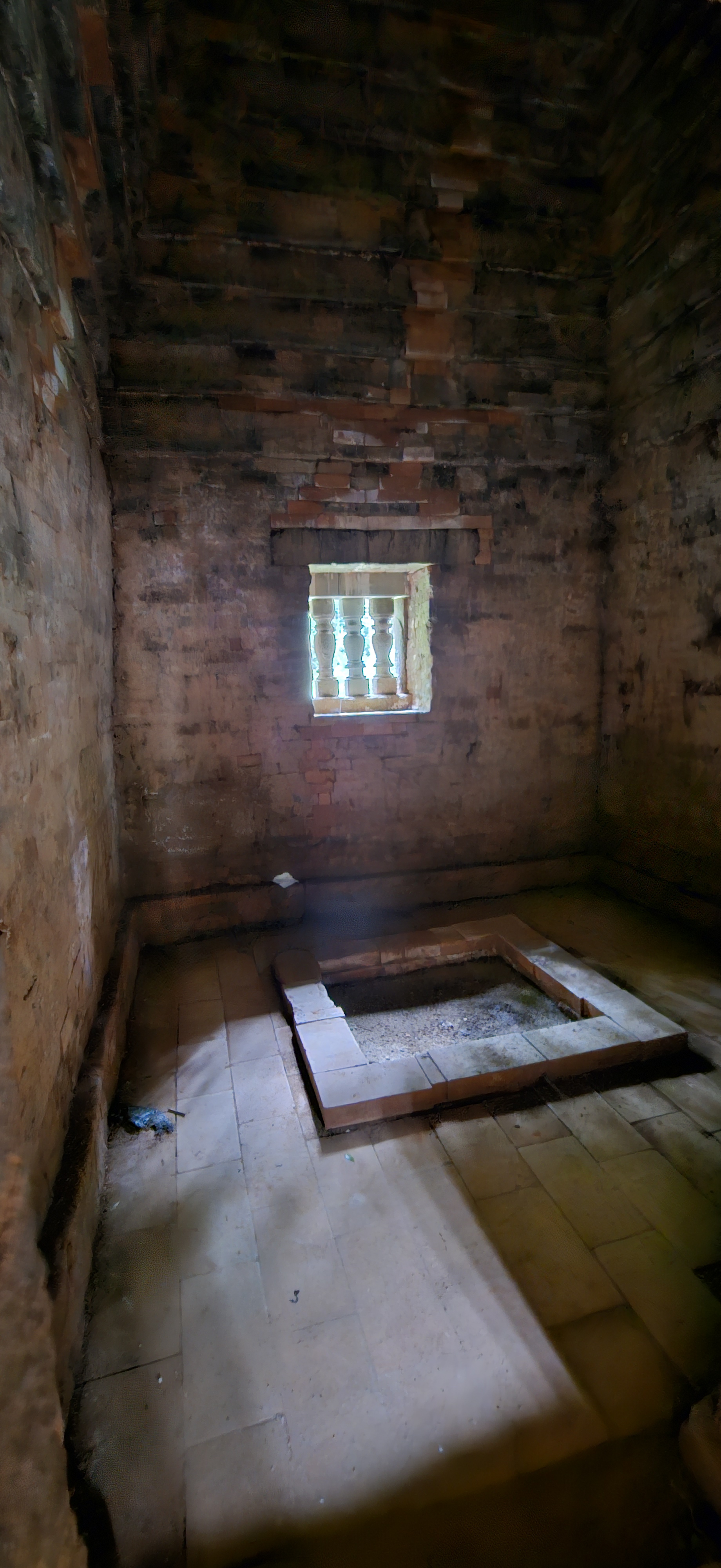
Next to construction project was a more complete, albeit smaller, temple that we could look inside.
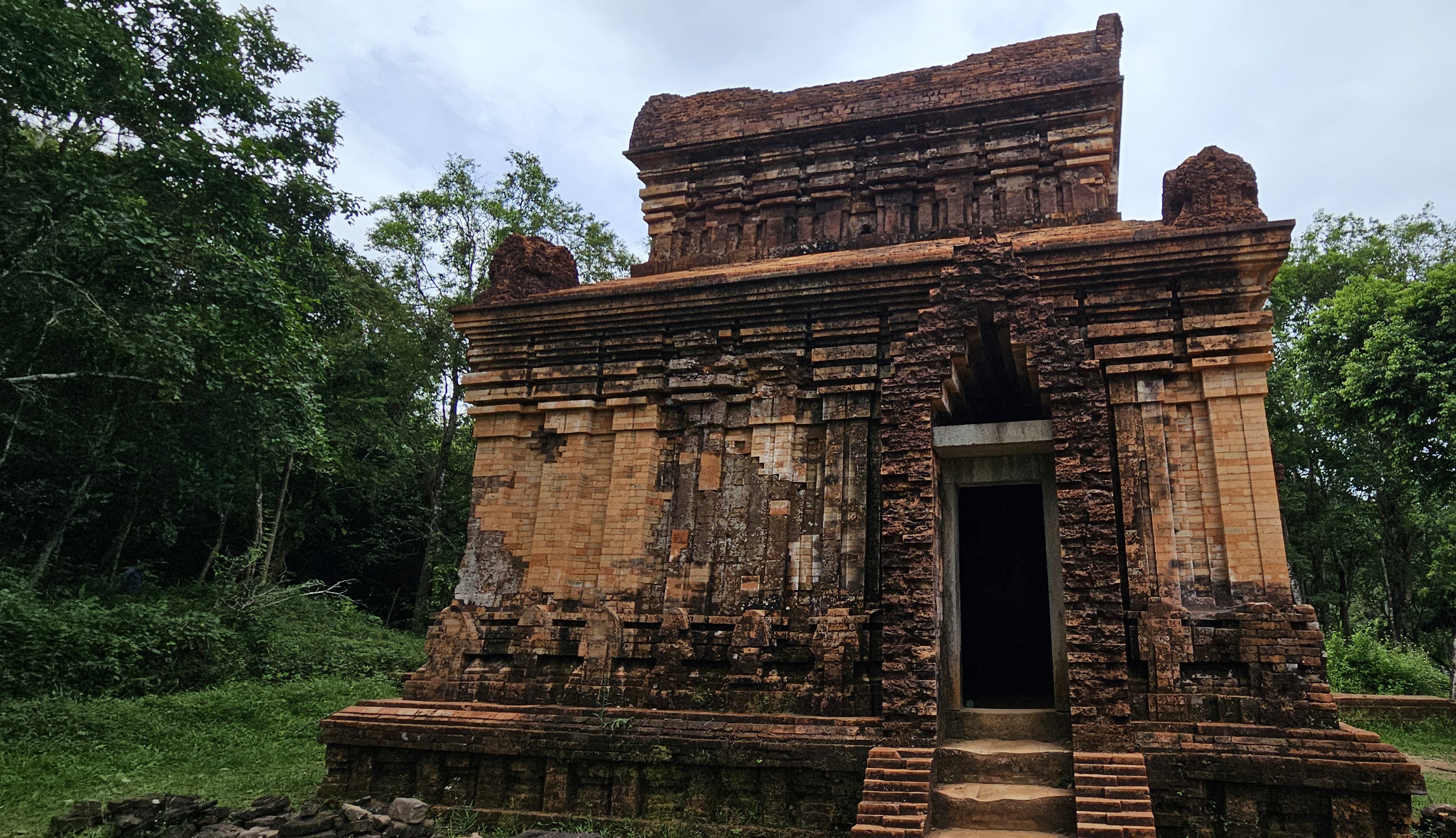
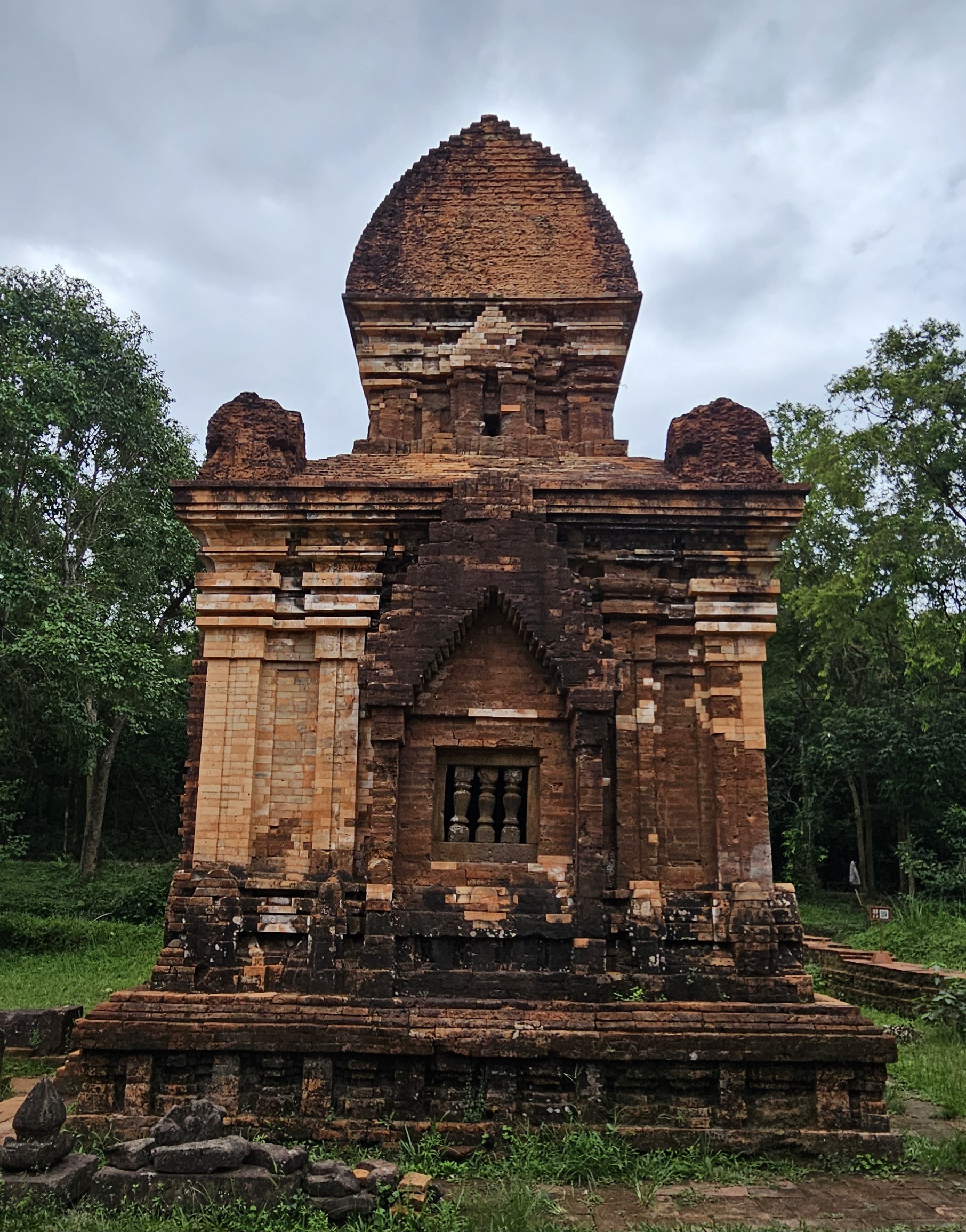
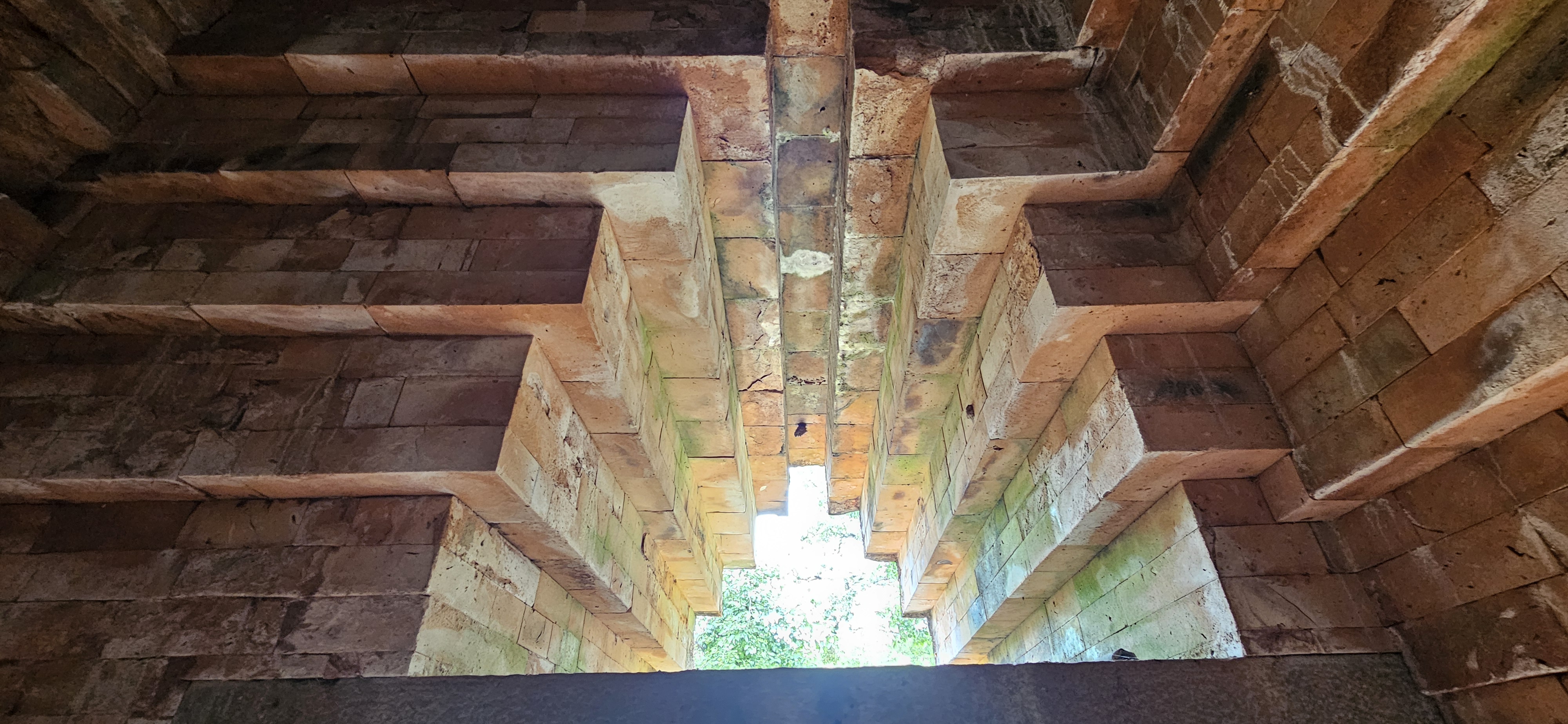
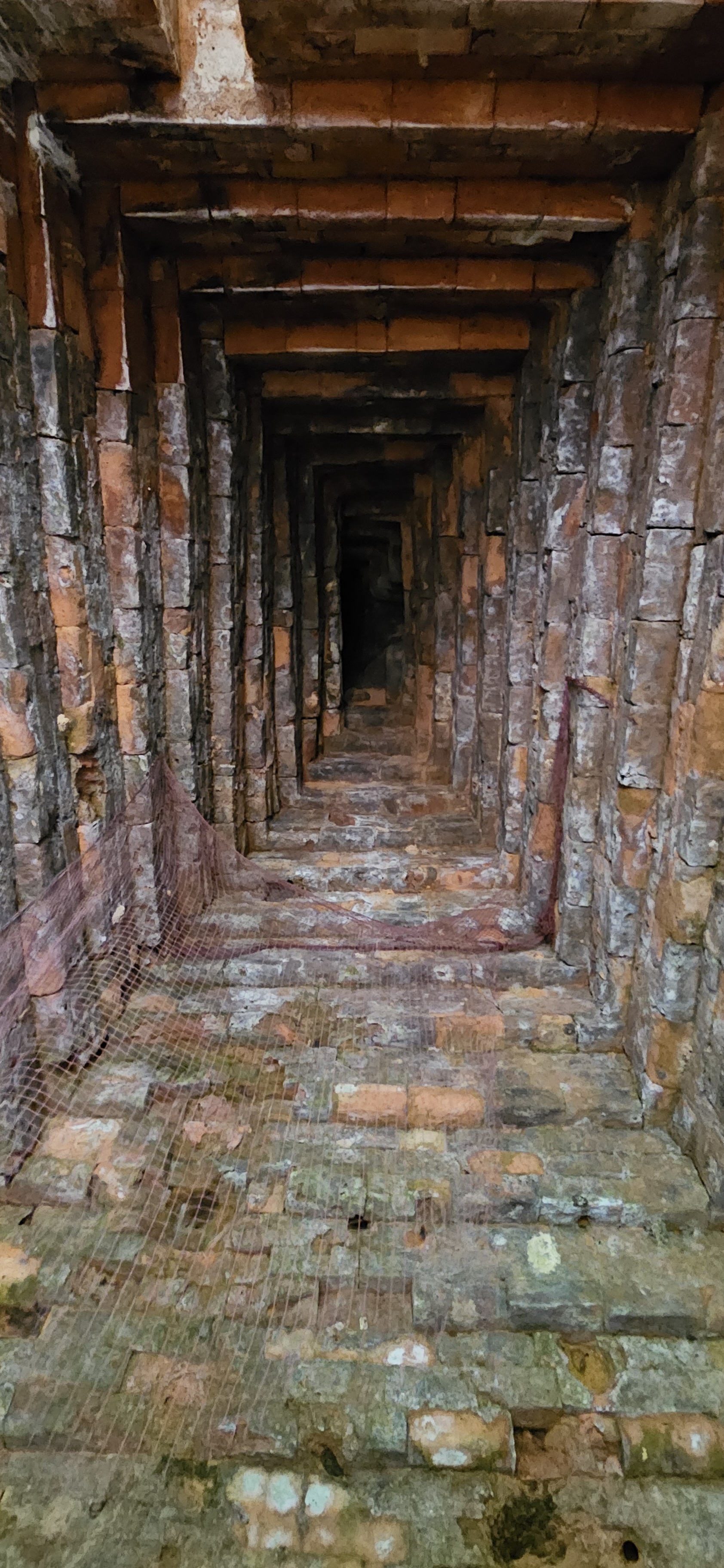
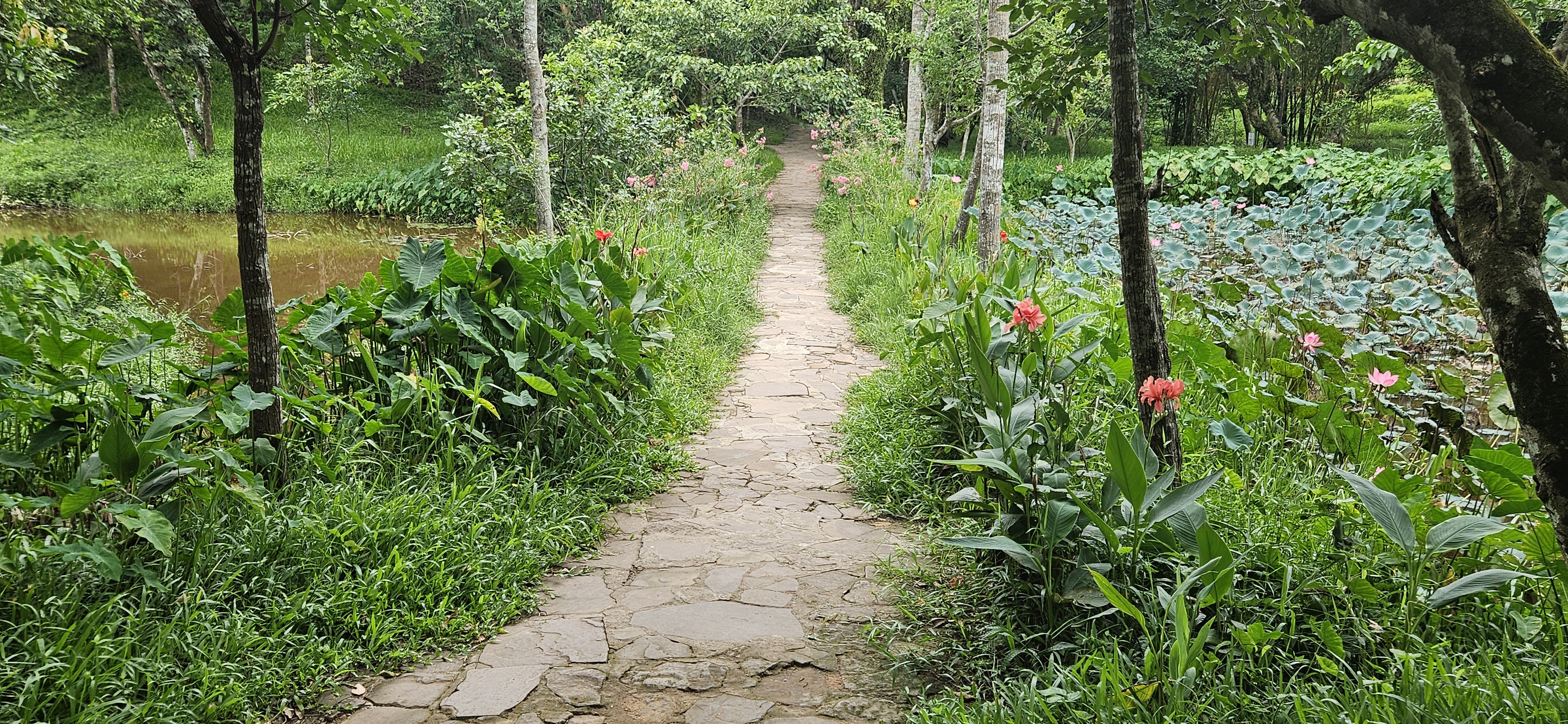
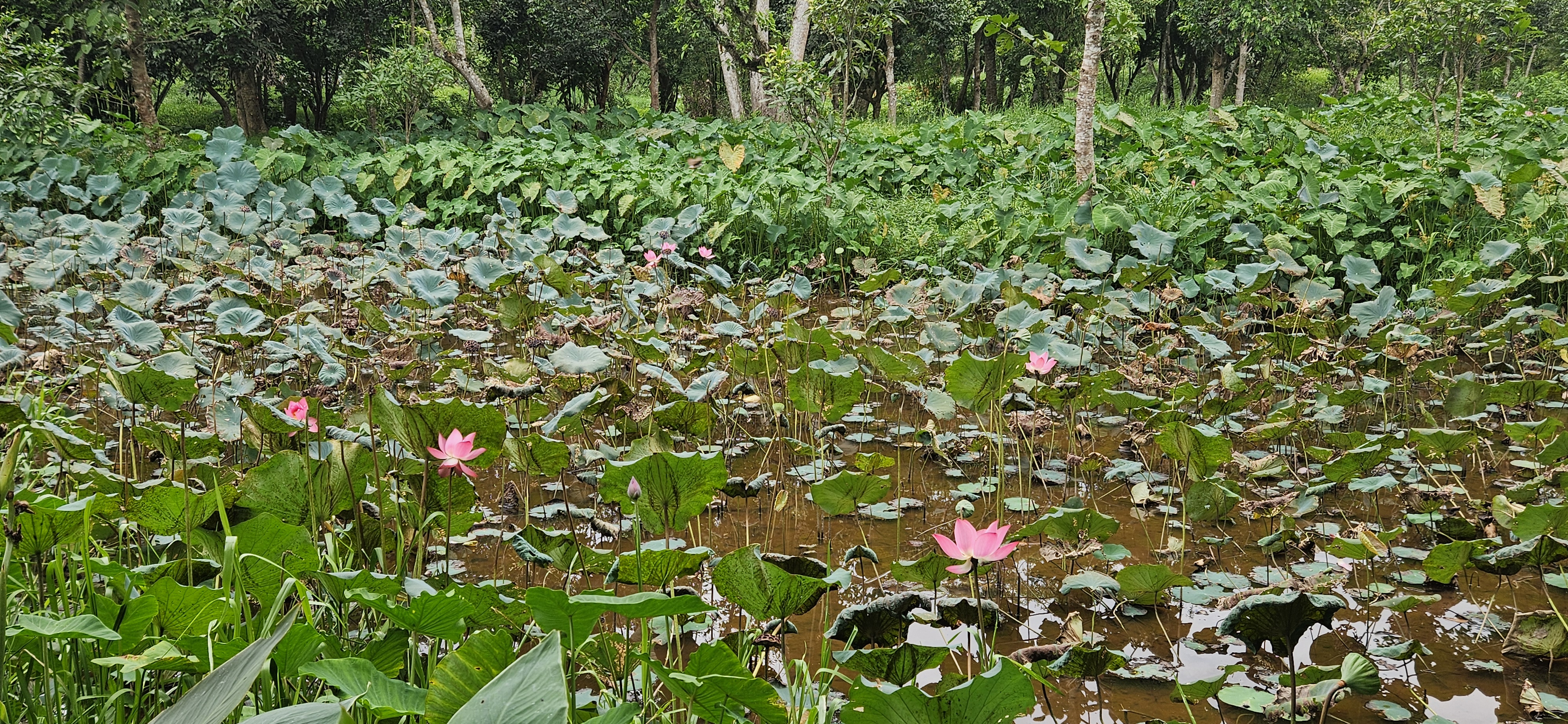
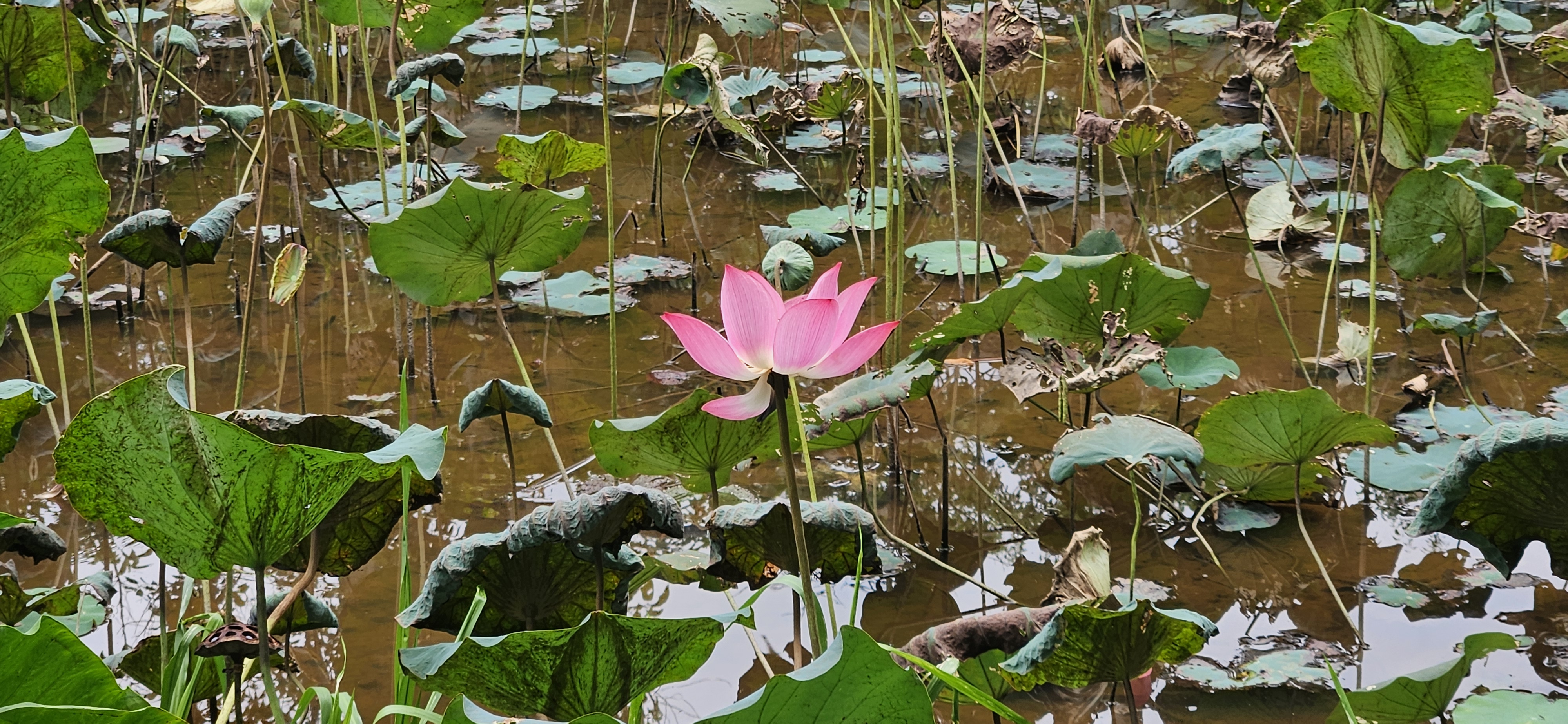
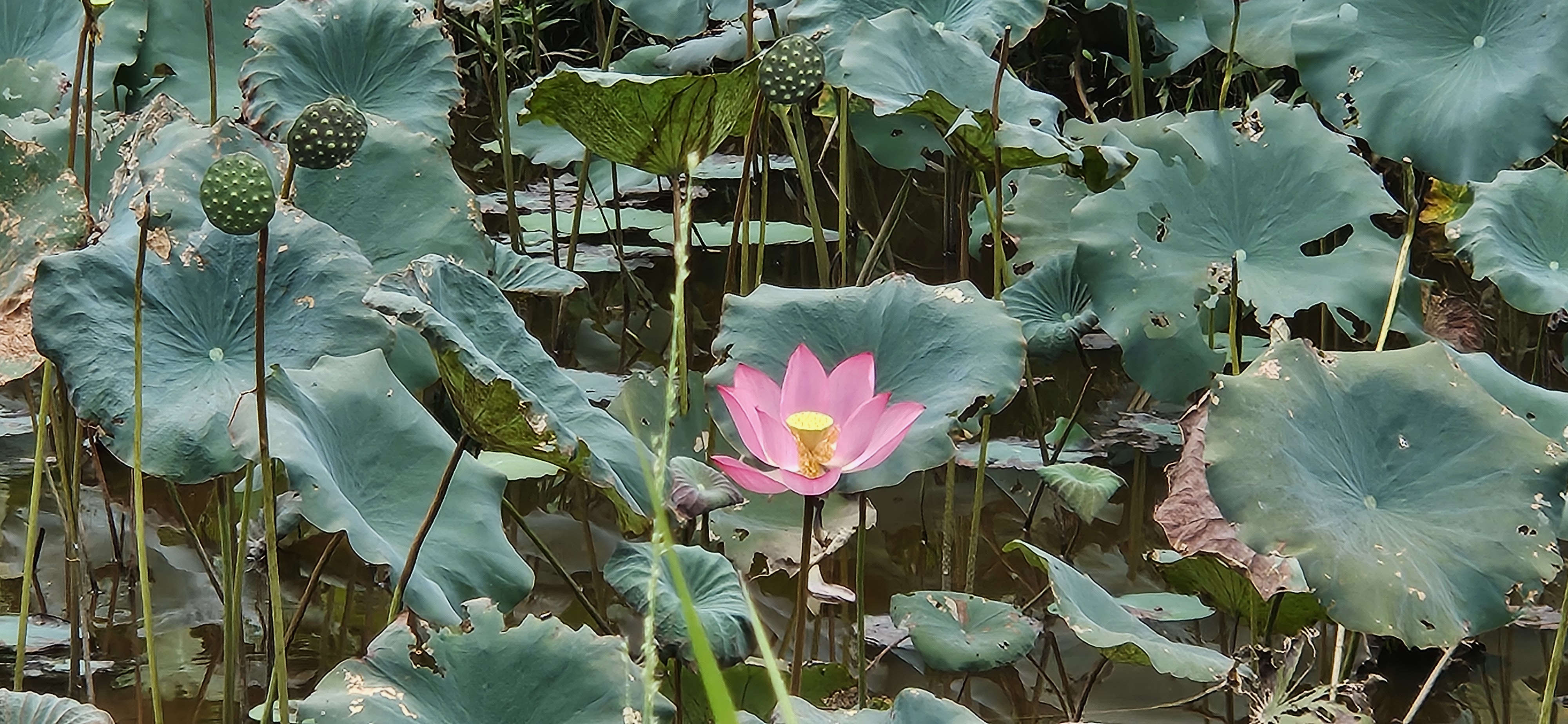
We were very, very glad we brought the personal fans, and there were also some large oscillating fans set up throughout the park, where we would stop and rest and try to cool off. There were some ponds that had lotus flowers, their bright pink color popping on the cloudy day.
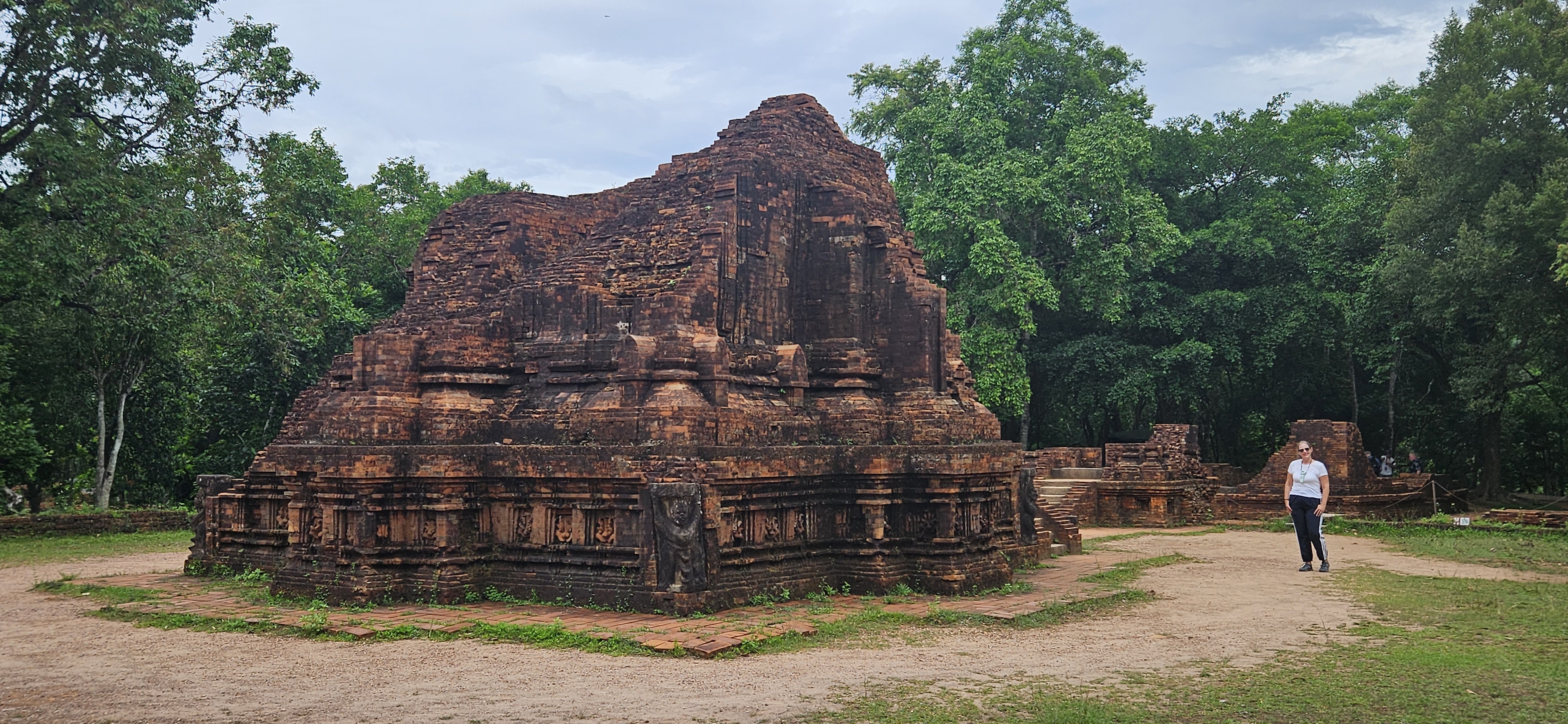
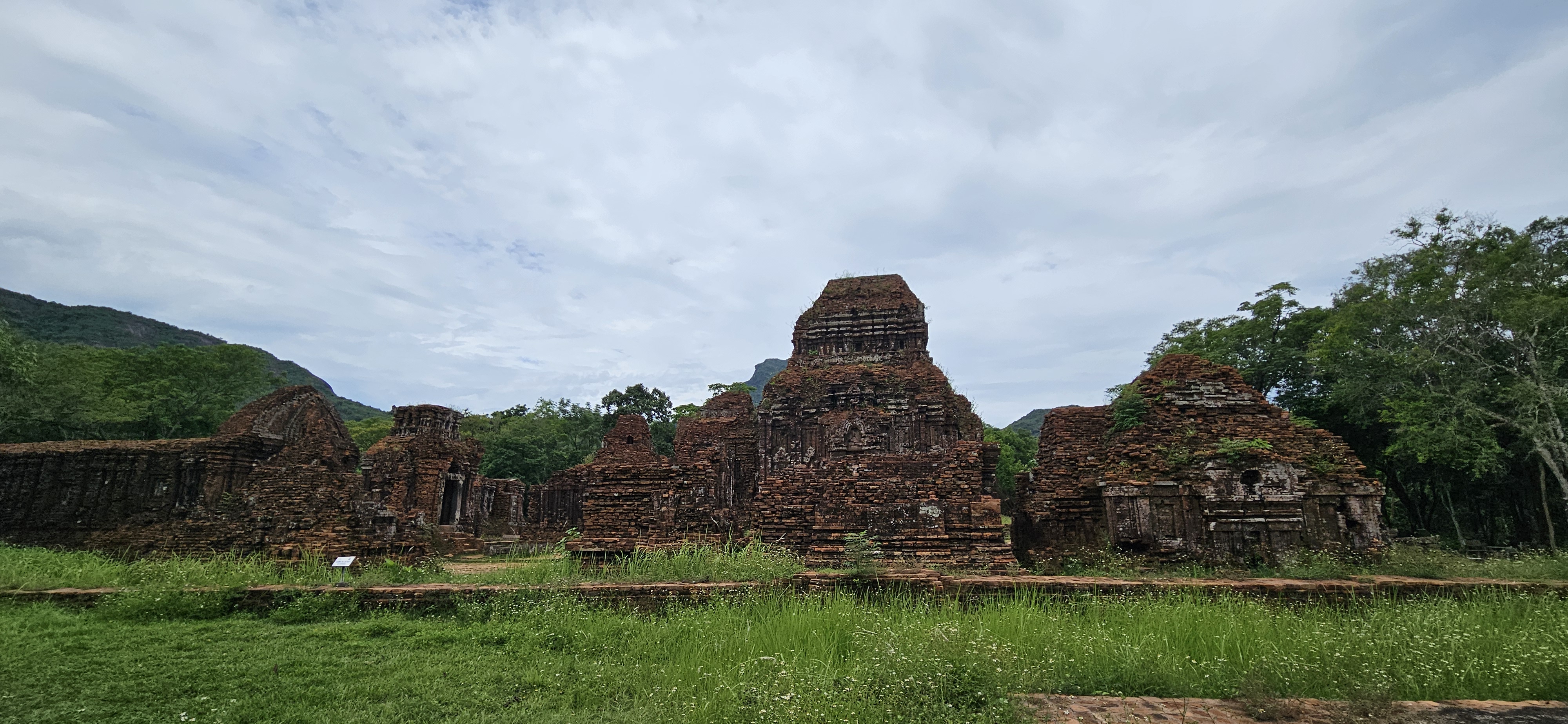
The next temple cluster was the largest yet.
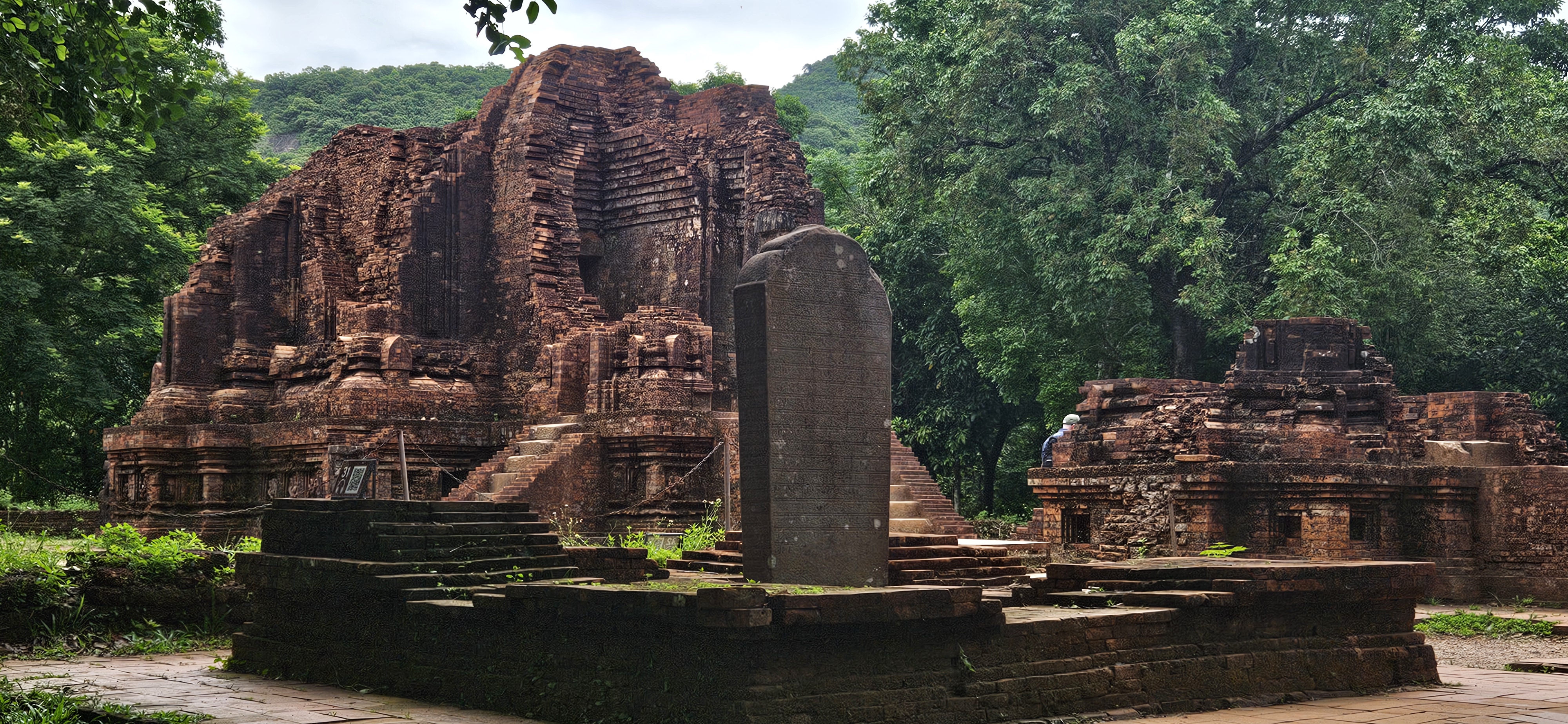

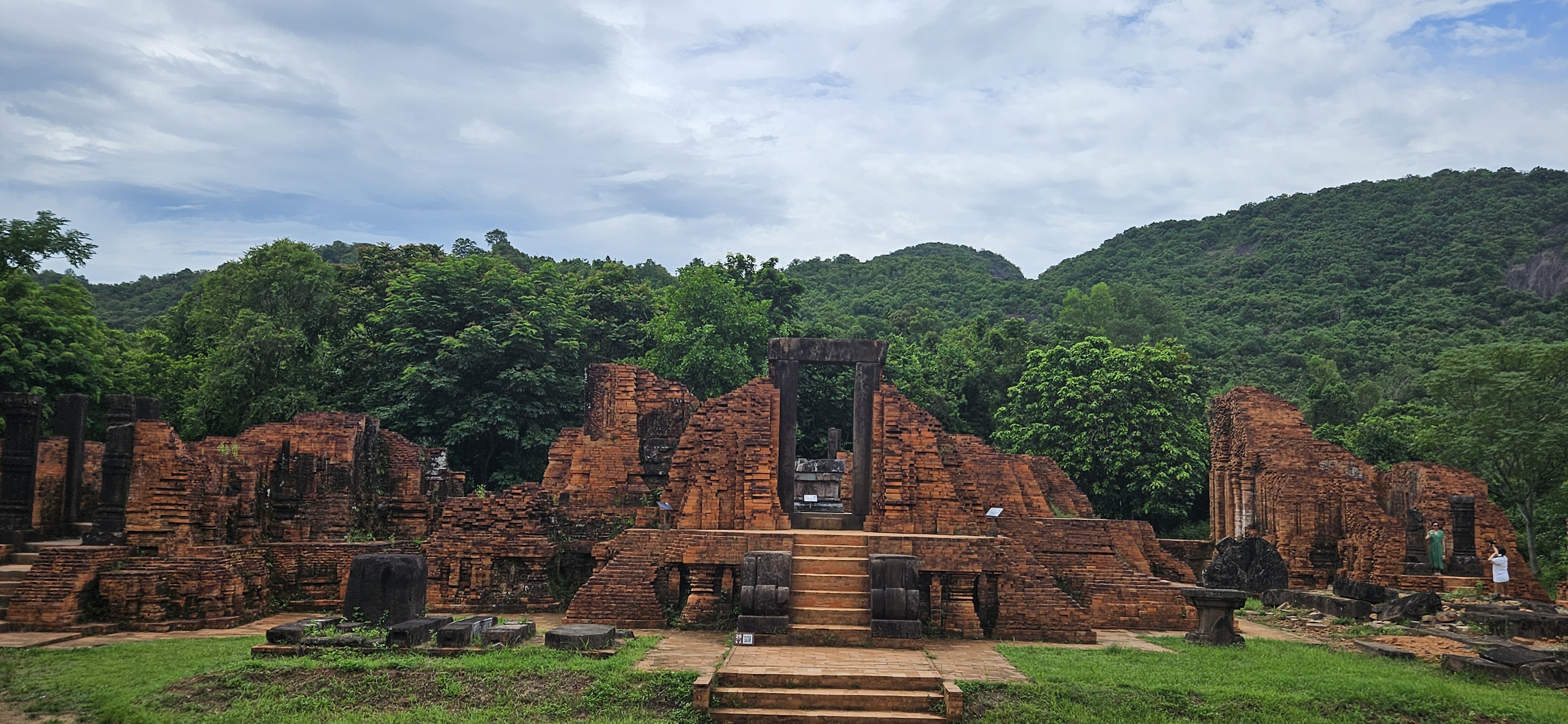
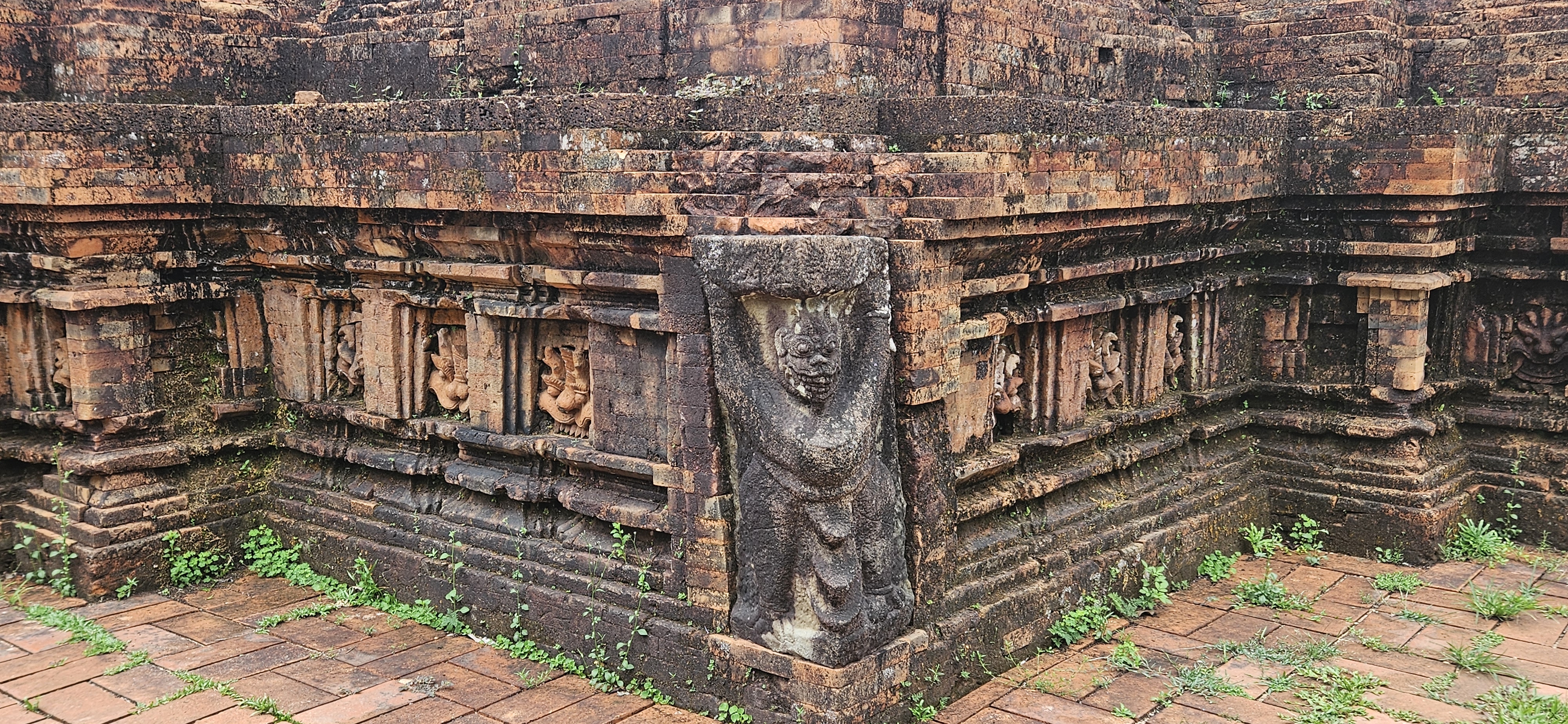
The final temple complex was the most extensive and had the most buildings on the site.
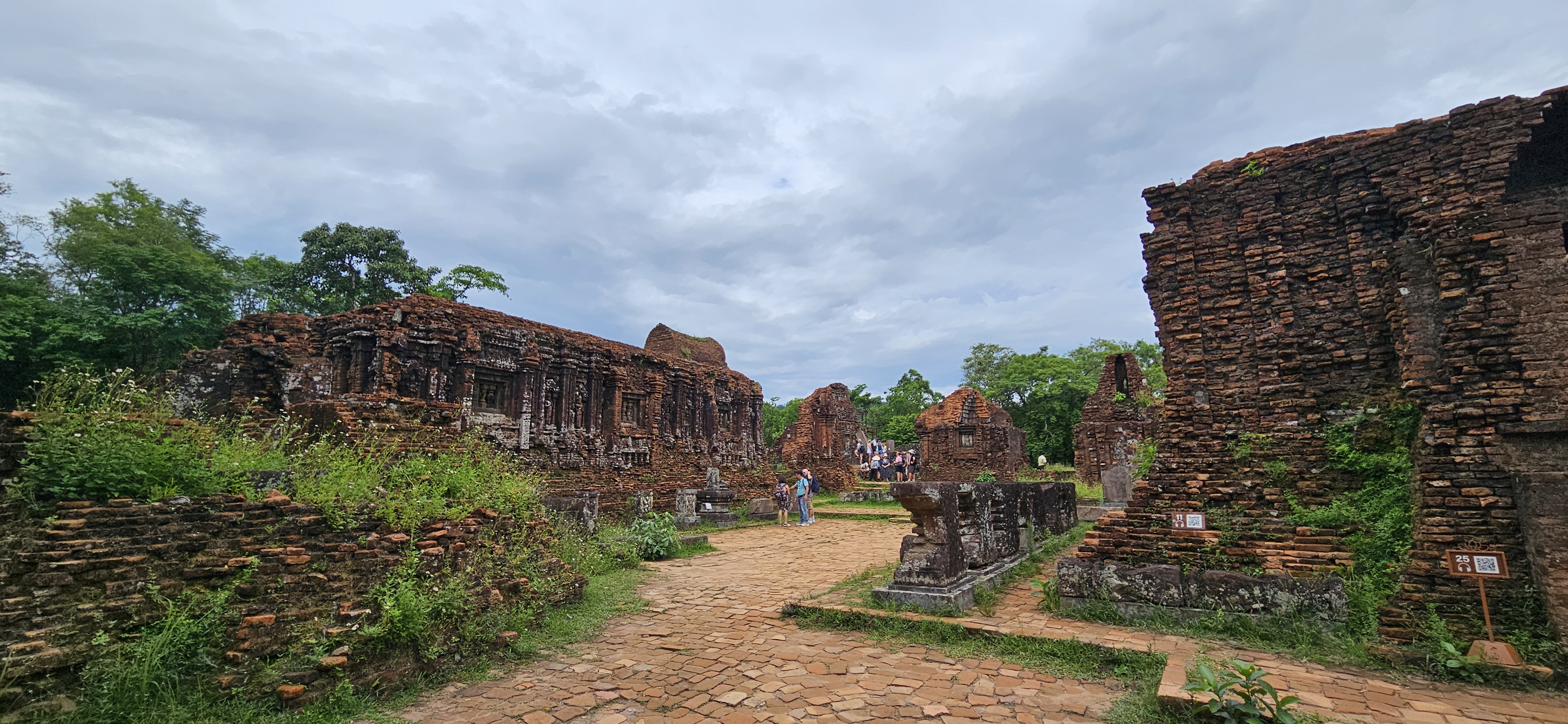
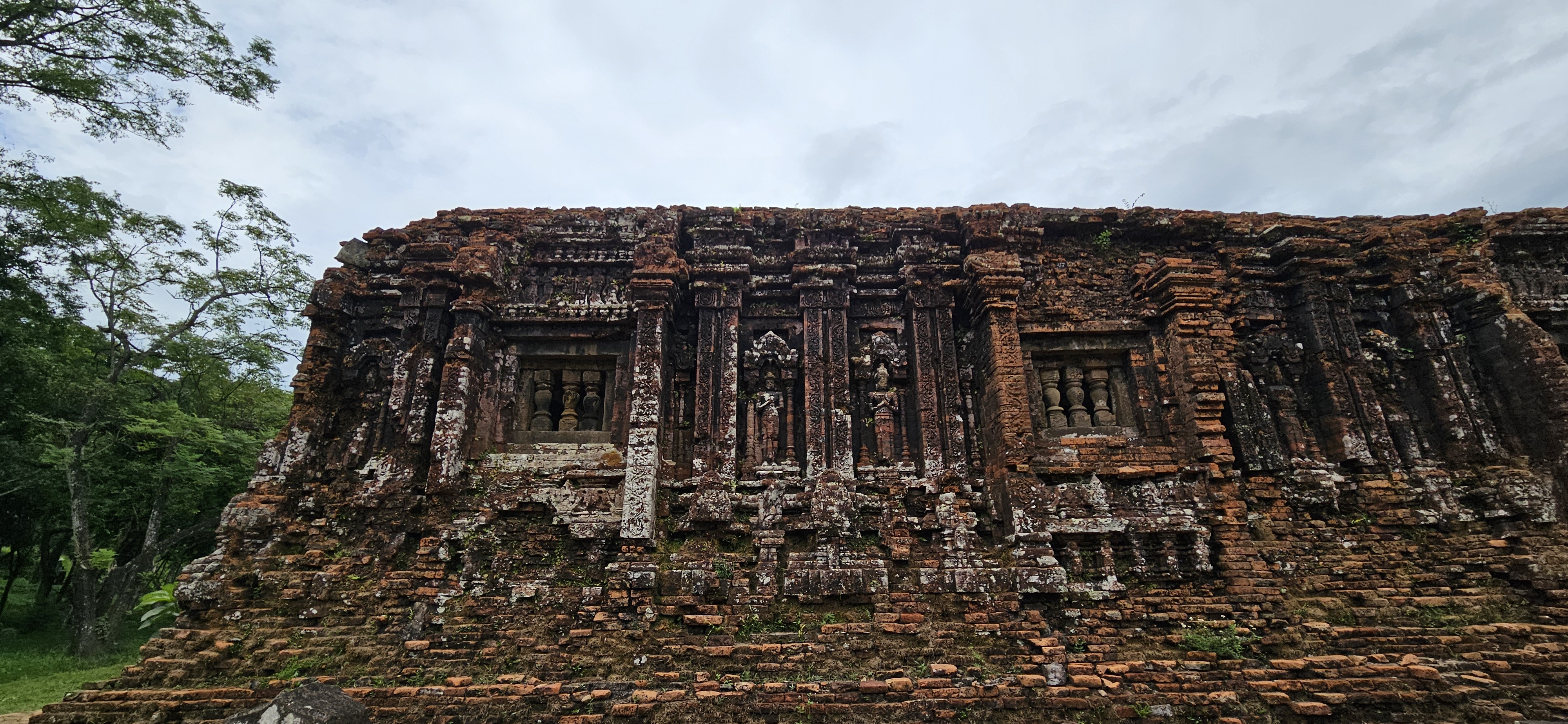
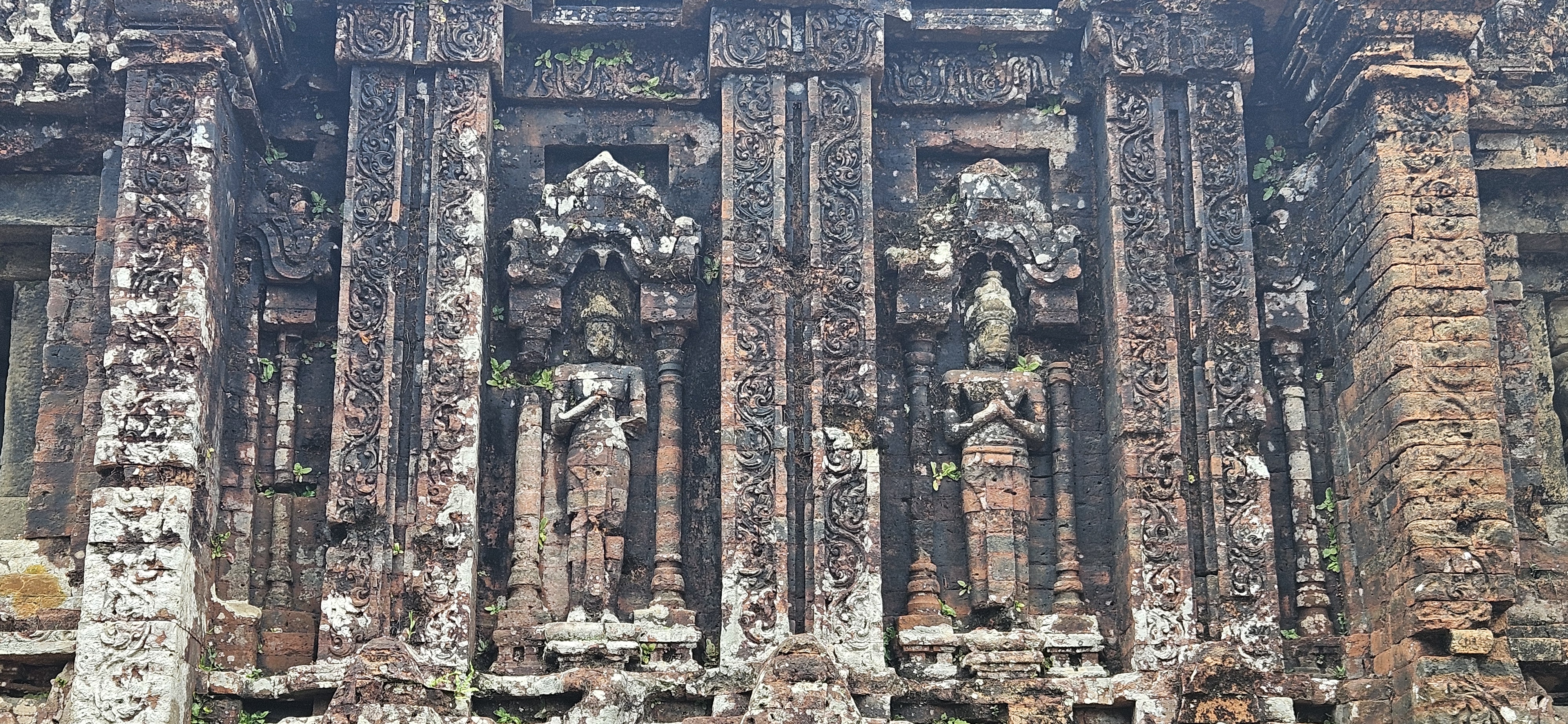
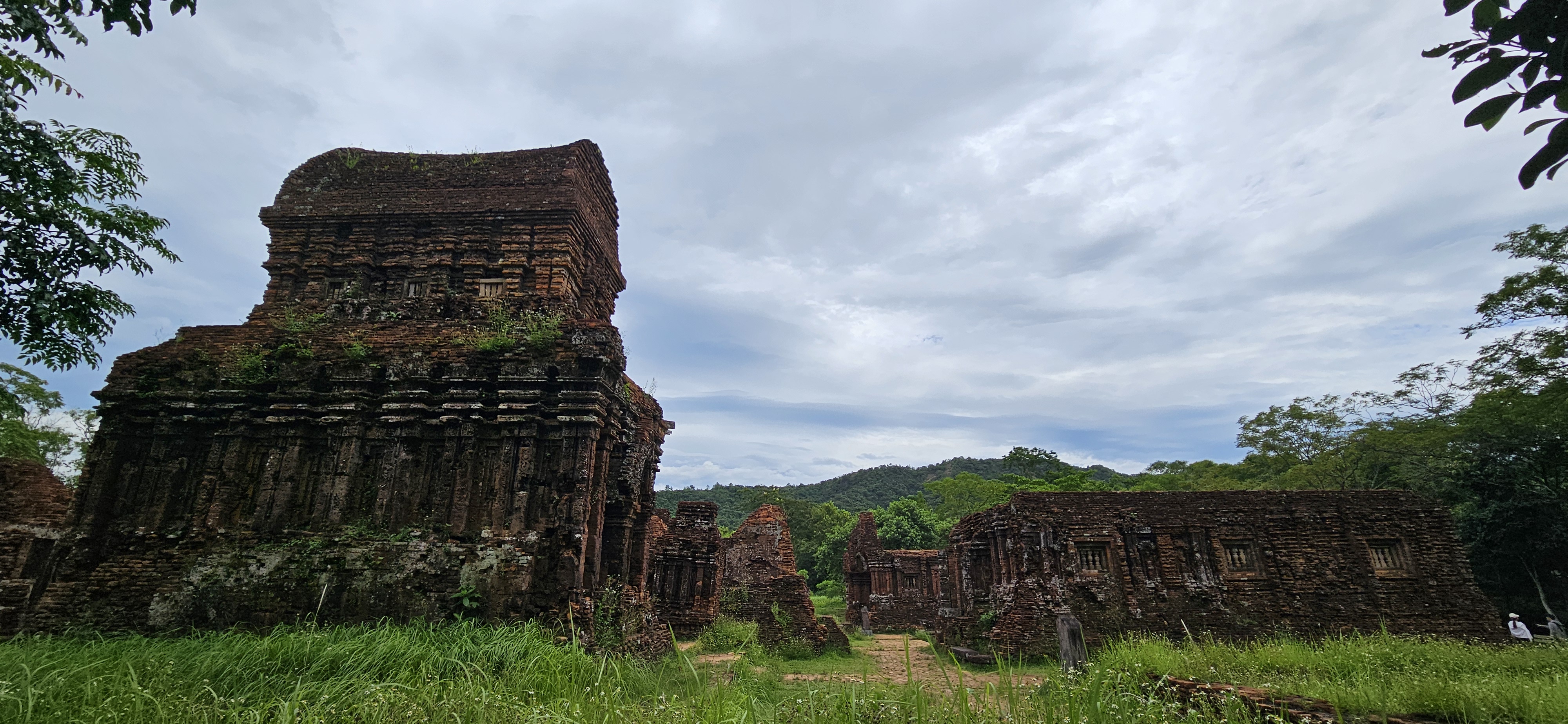
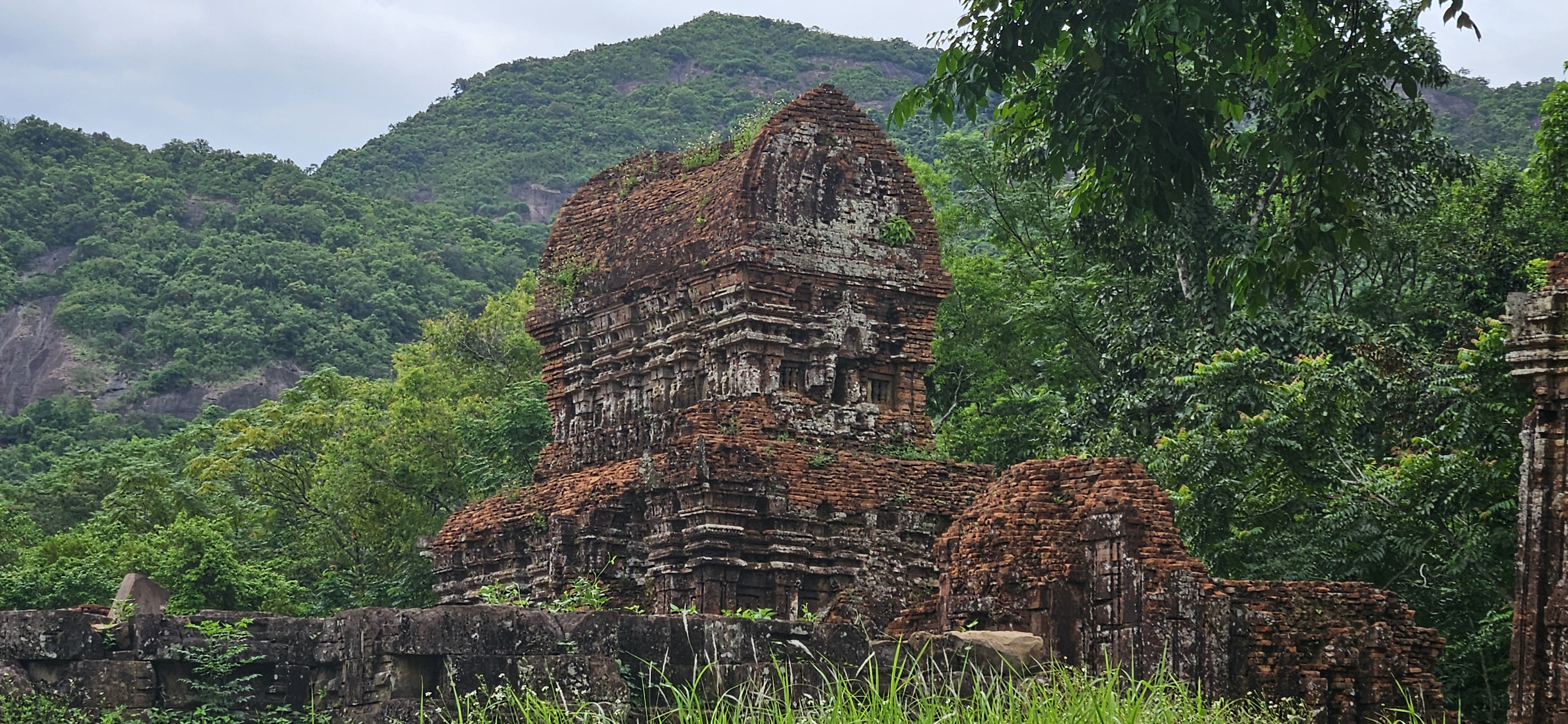
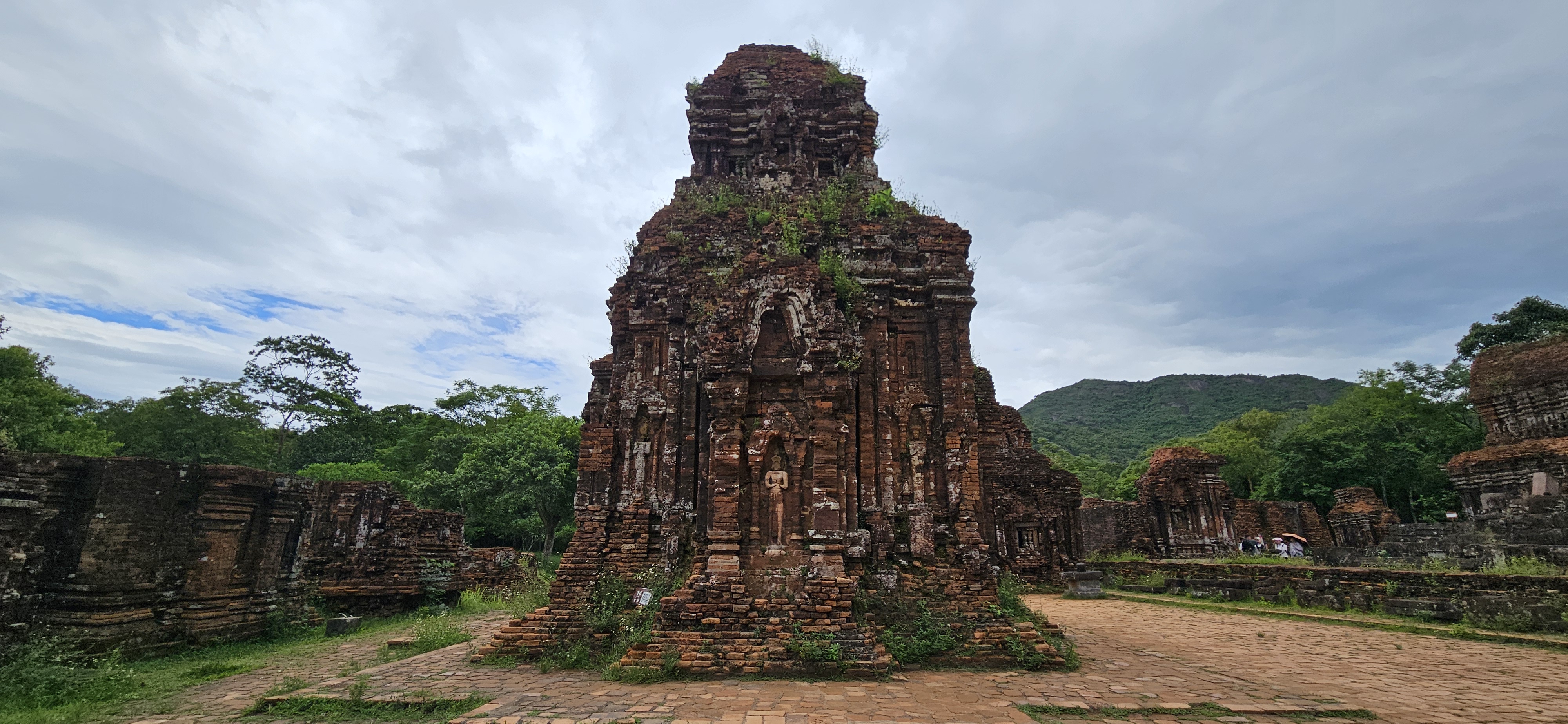
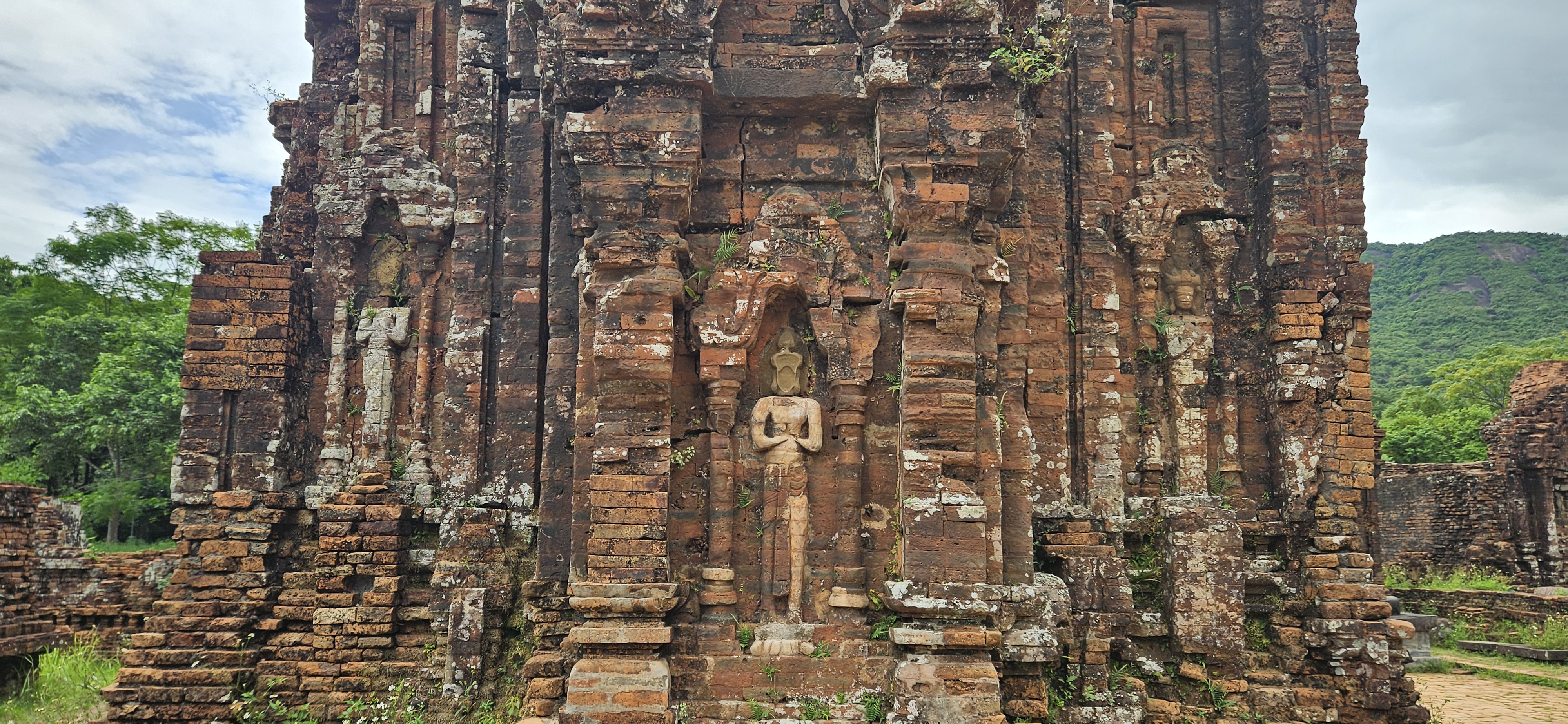
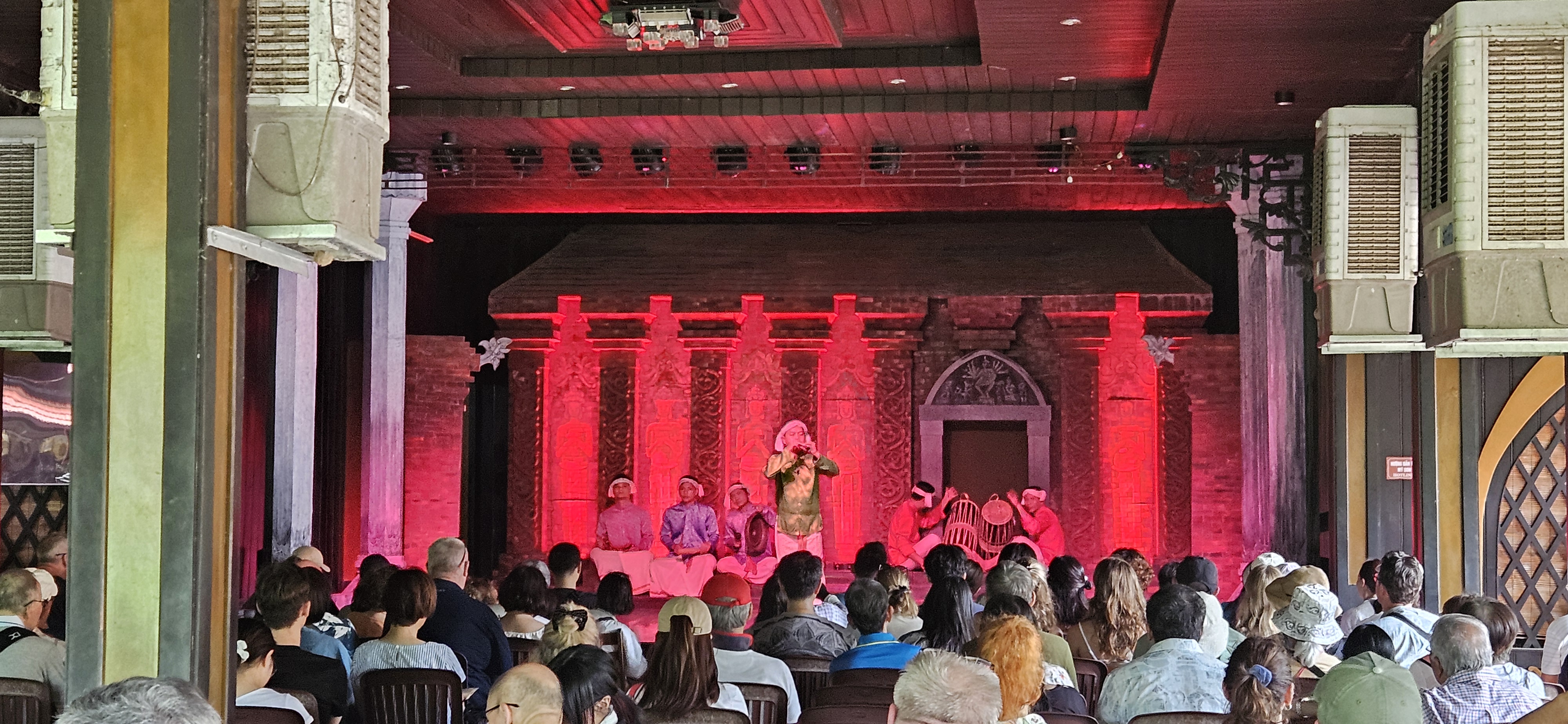
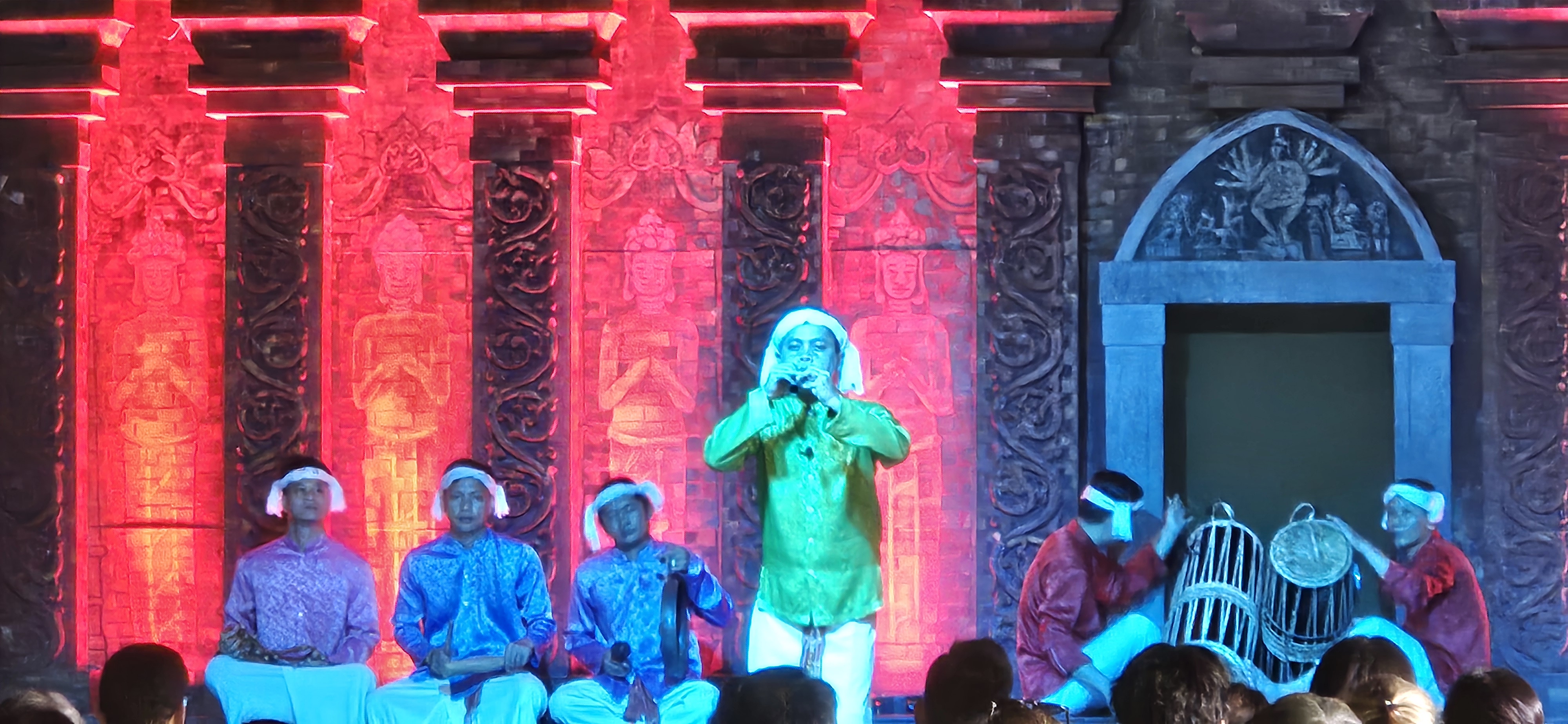
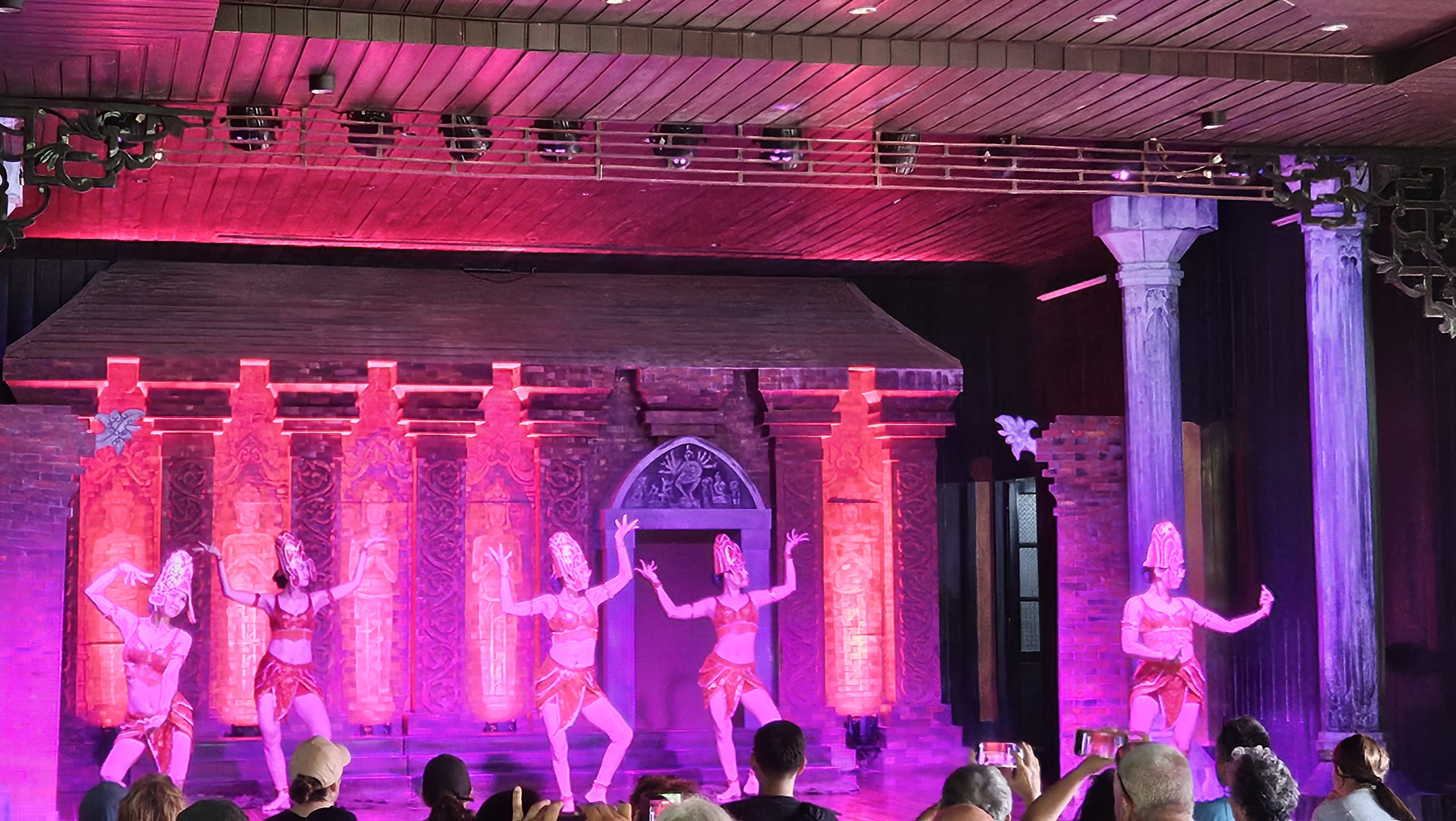
Just past the last complex is the stage to watch a traditional dance and music show, which is performed every half hour, and lasts about 10 minutes. There is a bigger gift shop there and they sell water and ice cream too. I have become partial to the mango ice cream bars sold around Vietnam, so tasty and refreshing.
Instead of heading back toward the bridge and exit, we retraced our original path. Many tourists only see the main complex and the dance and music show and then leave, on to the next stop on their tour. Since we were on our own schedule, and it doesn’t take more than an hour to see all the temples, we took our time. We also noticed they are building more paths through the park and they are a peaceful place to visit, especially off the main path.
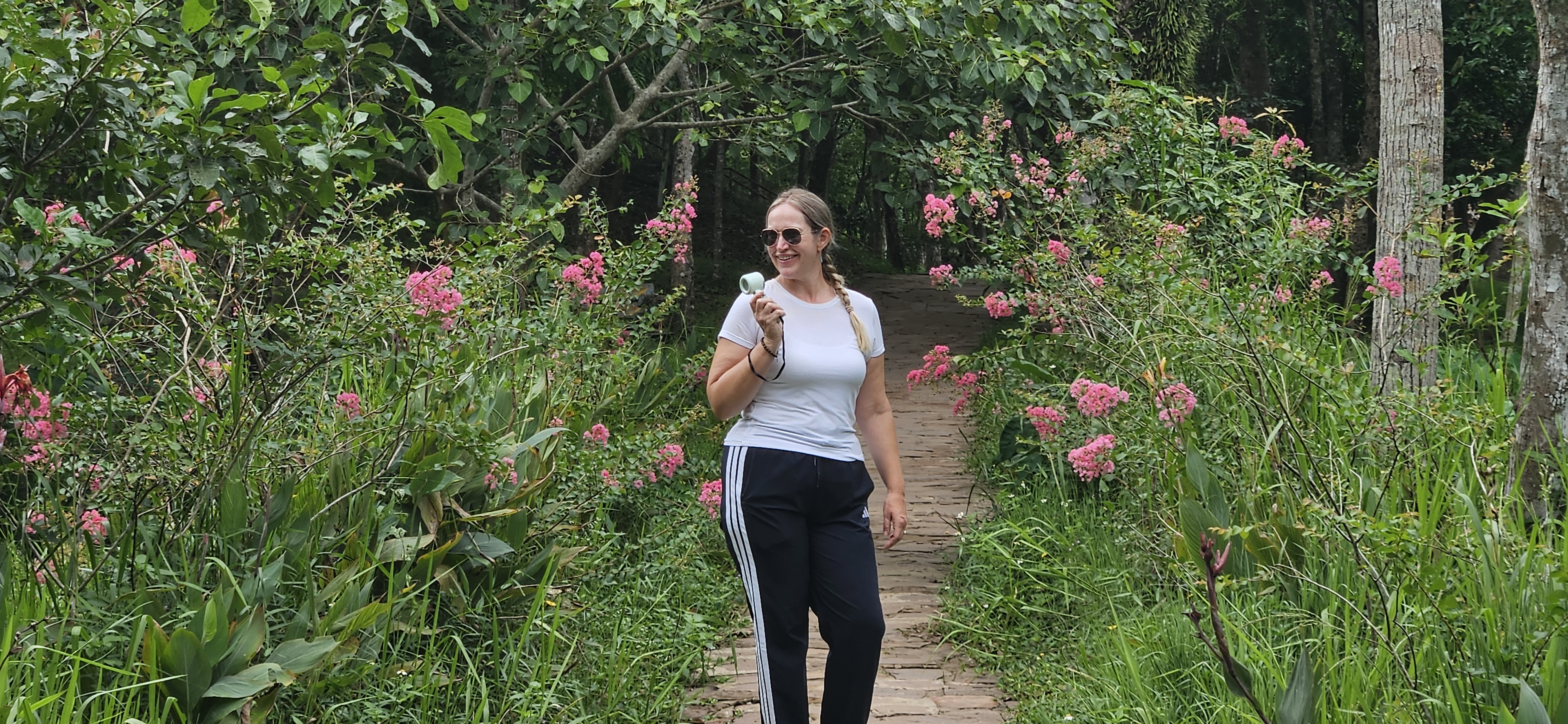
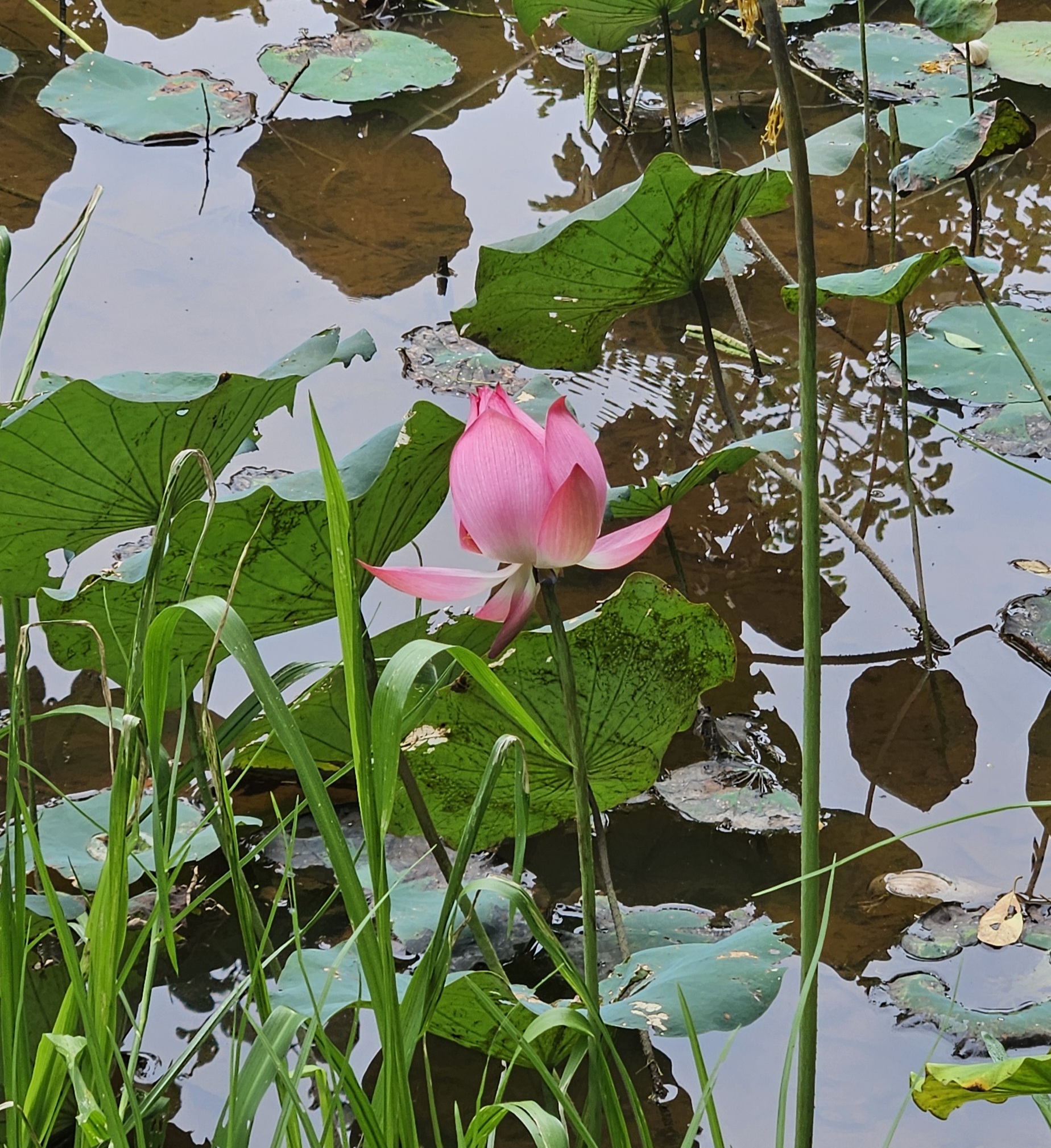
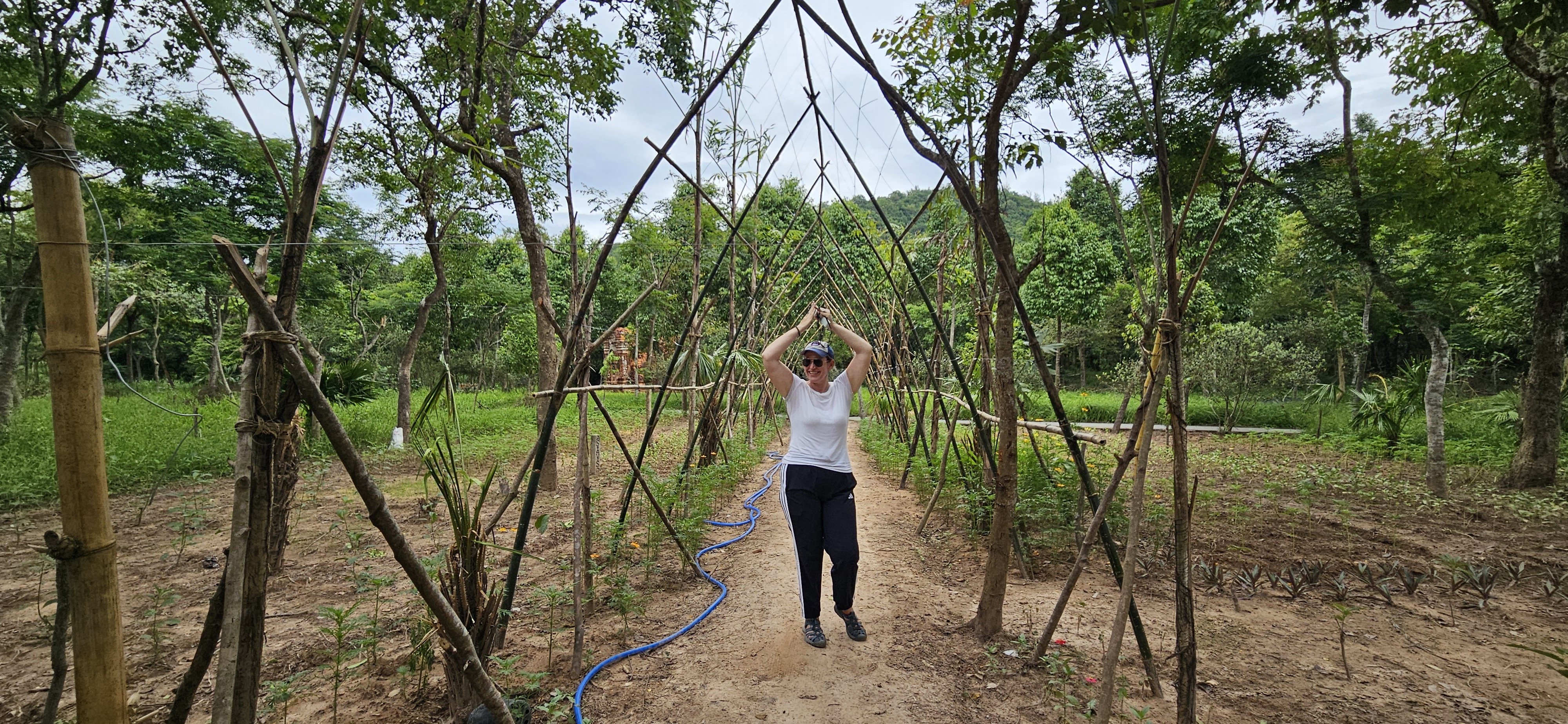
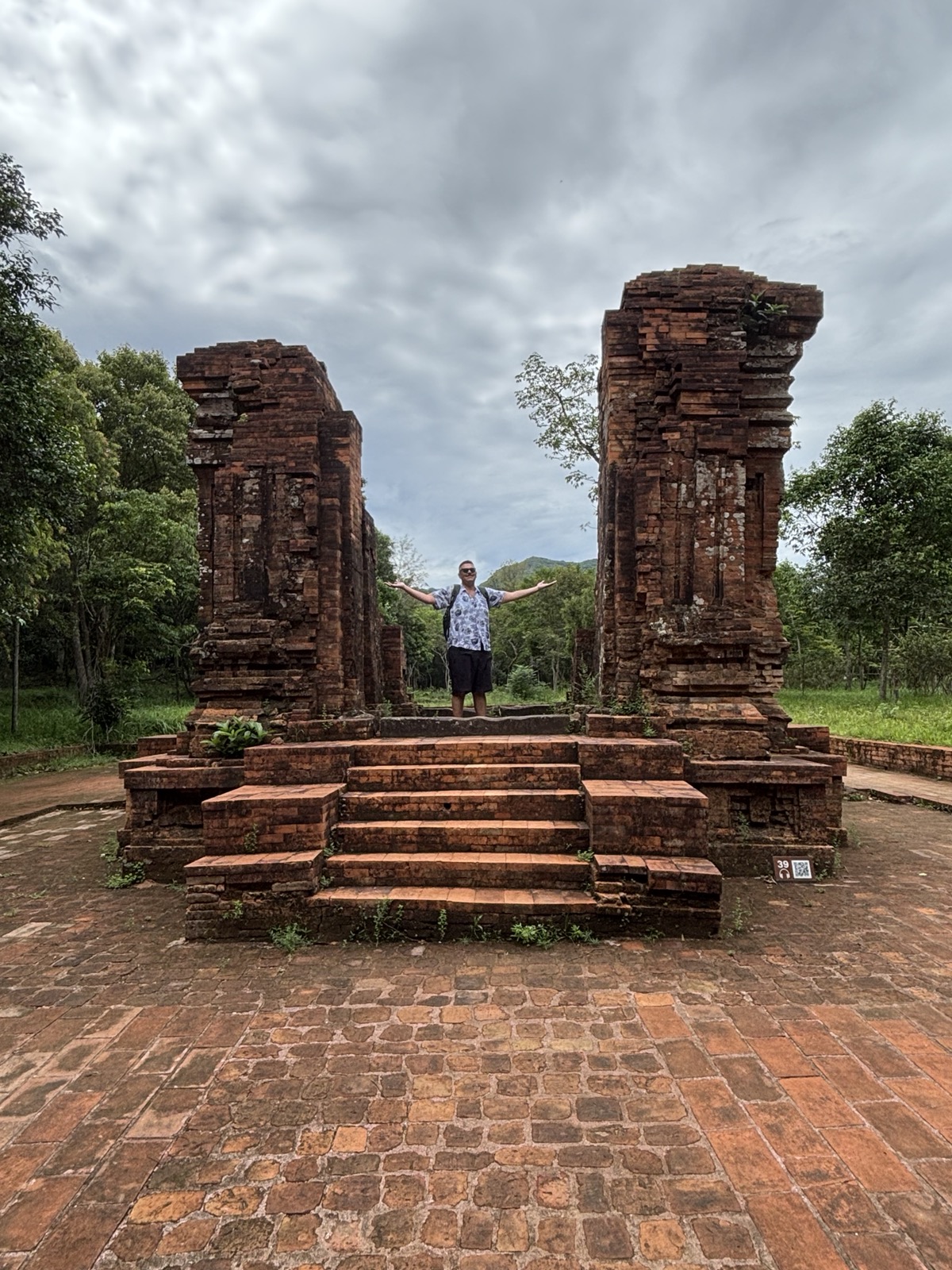
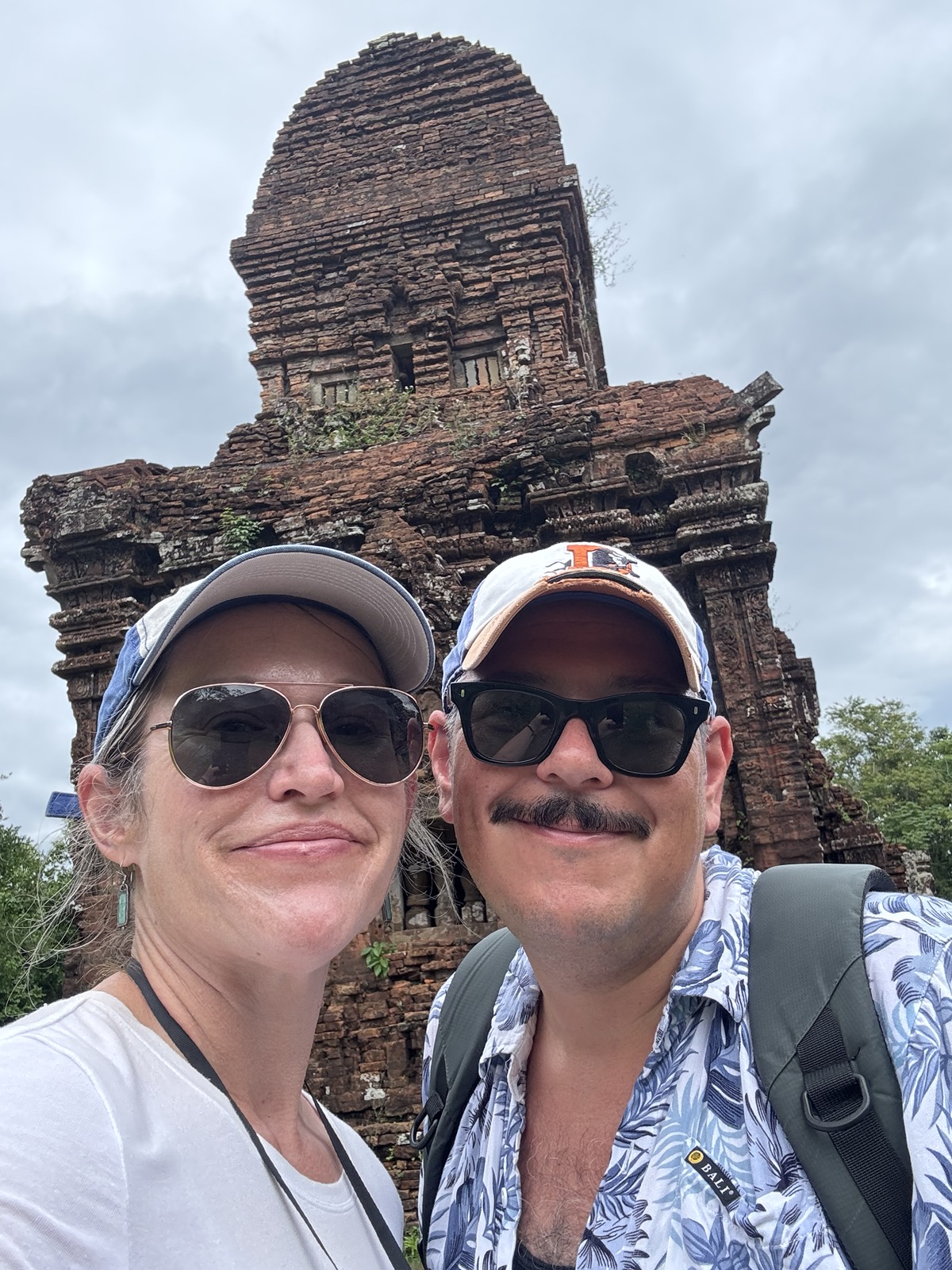
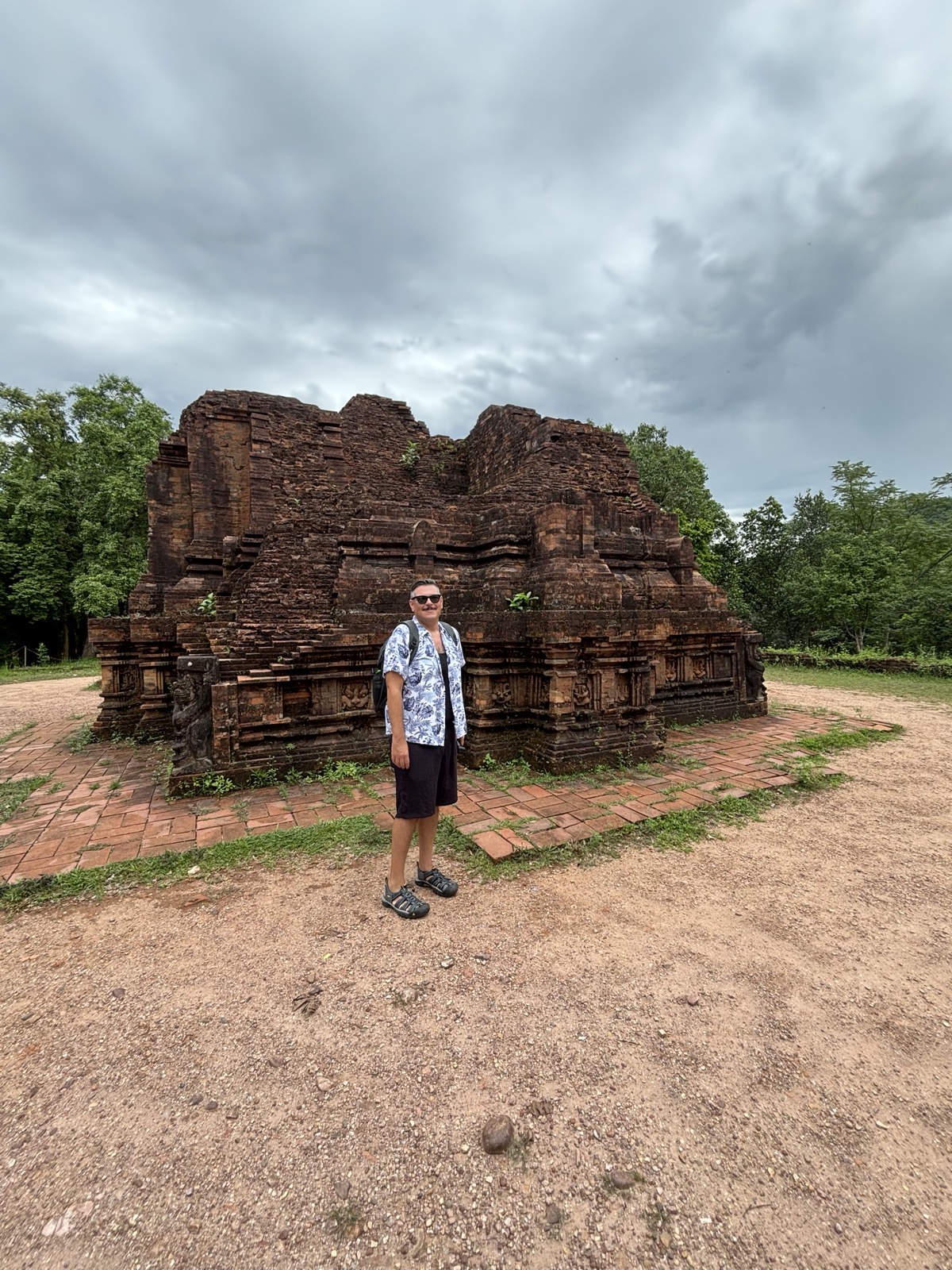
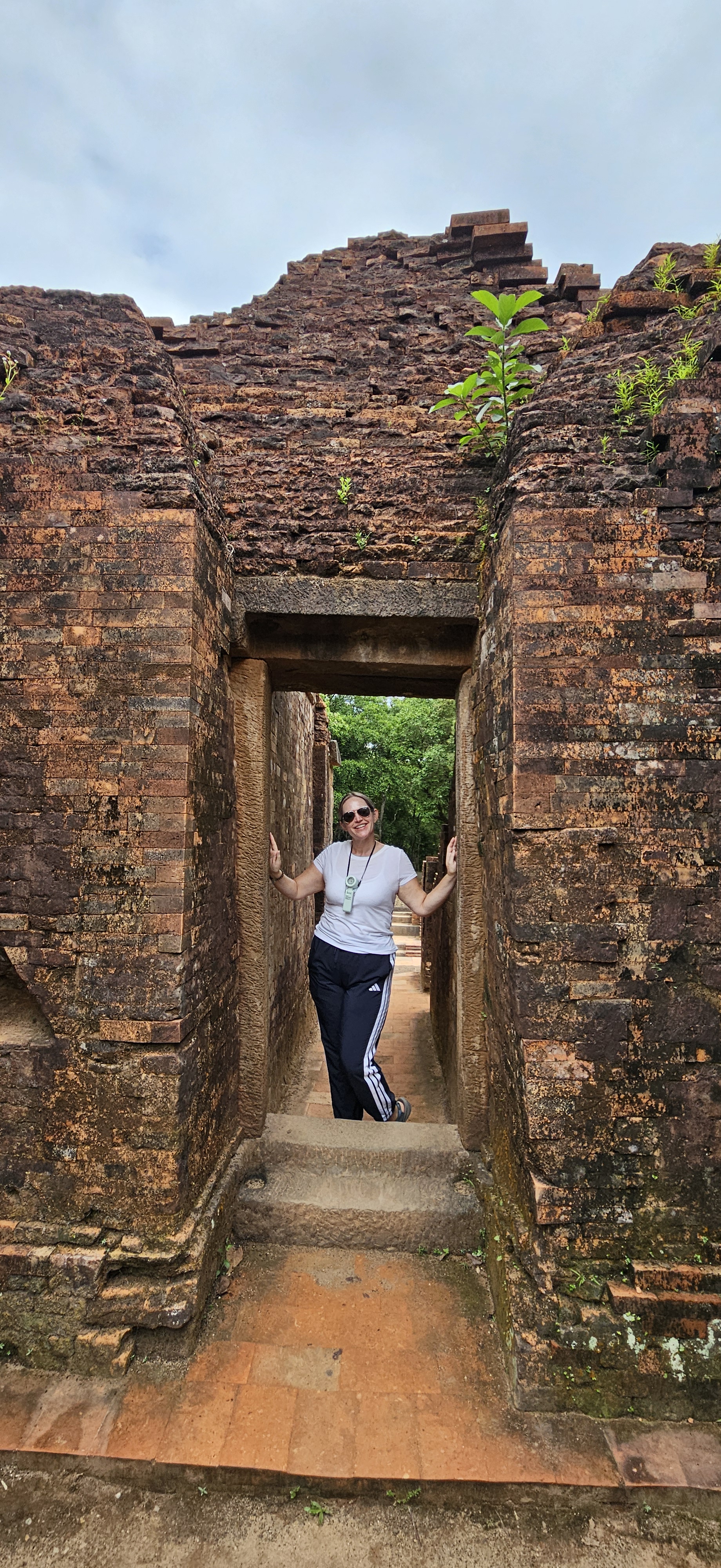
Going to the left once on the other side of the bridge gave us a nice progression of the smallest temple to largest temple group, and also a lot less tourists. Many say to arrive when the park opens to avoid most of the tourists, though we didn’t encounter too many until visiting the last of the temple groups.
We did stop in the museum on the way out, but it is small and not very extensive; most of the Cham statues and relics are housed in Da Nang, in the appropriately named Da Nang Museum of Cham Sculpture. Jessica and I visited the museum a few days after we toured My Son.
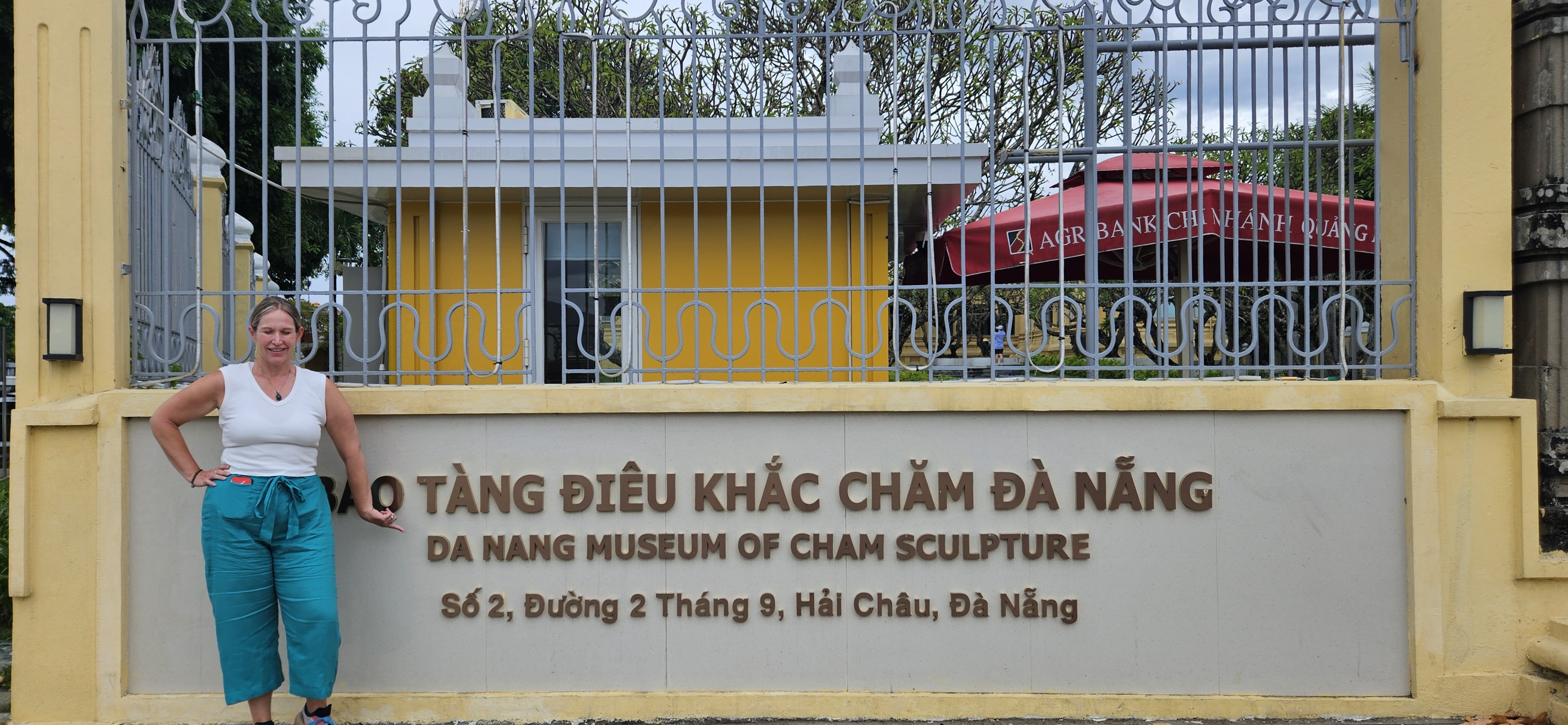
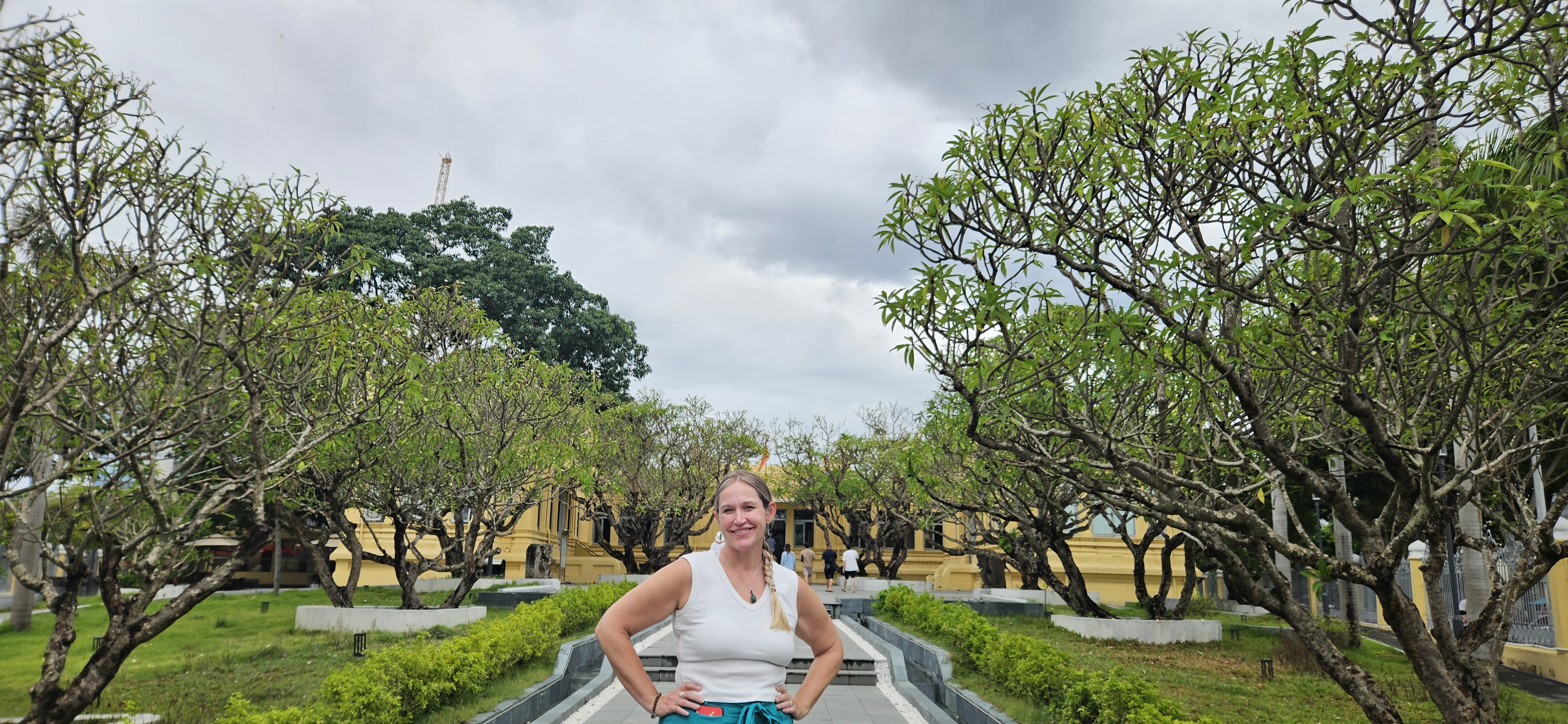
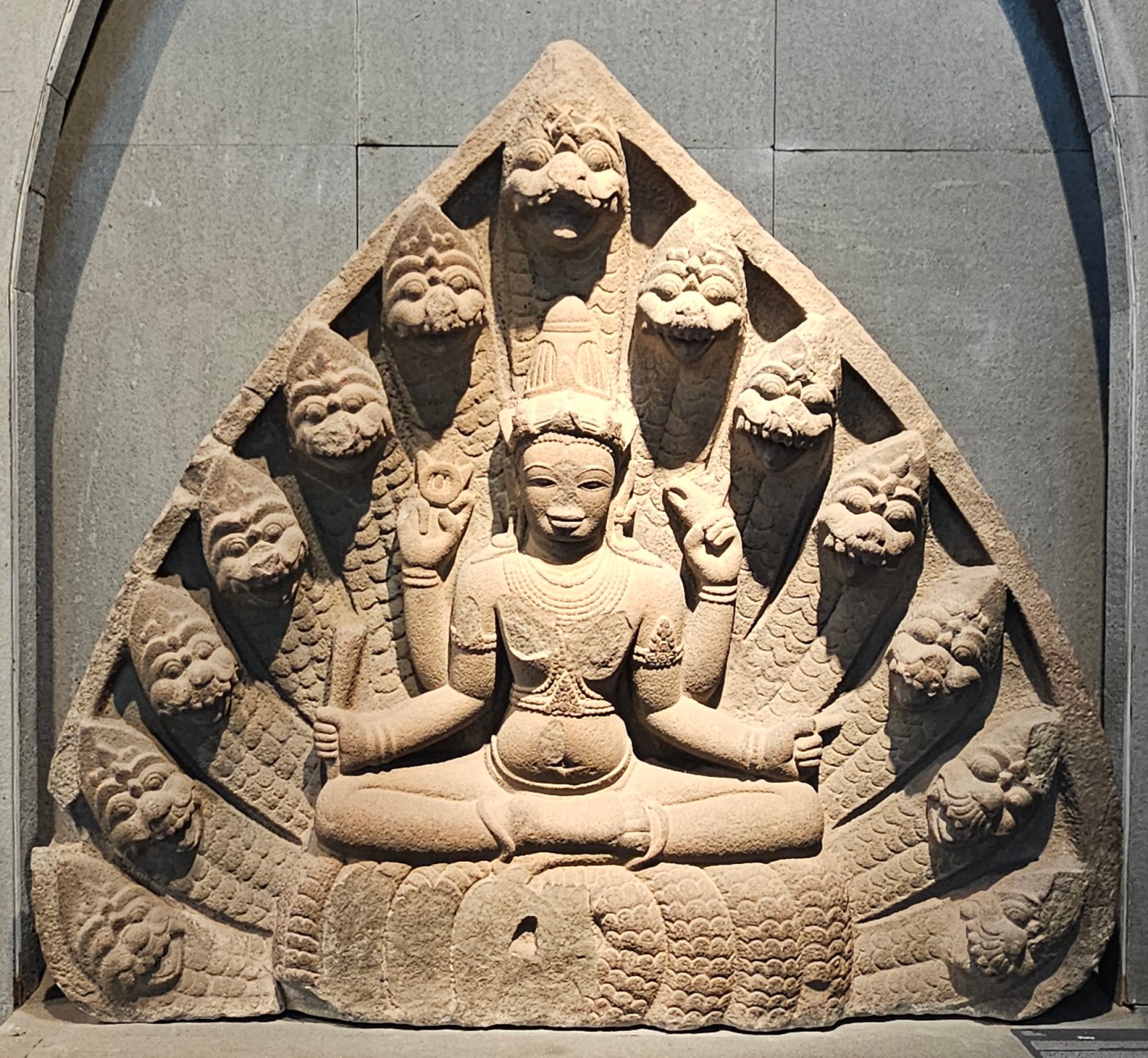
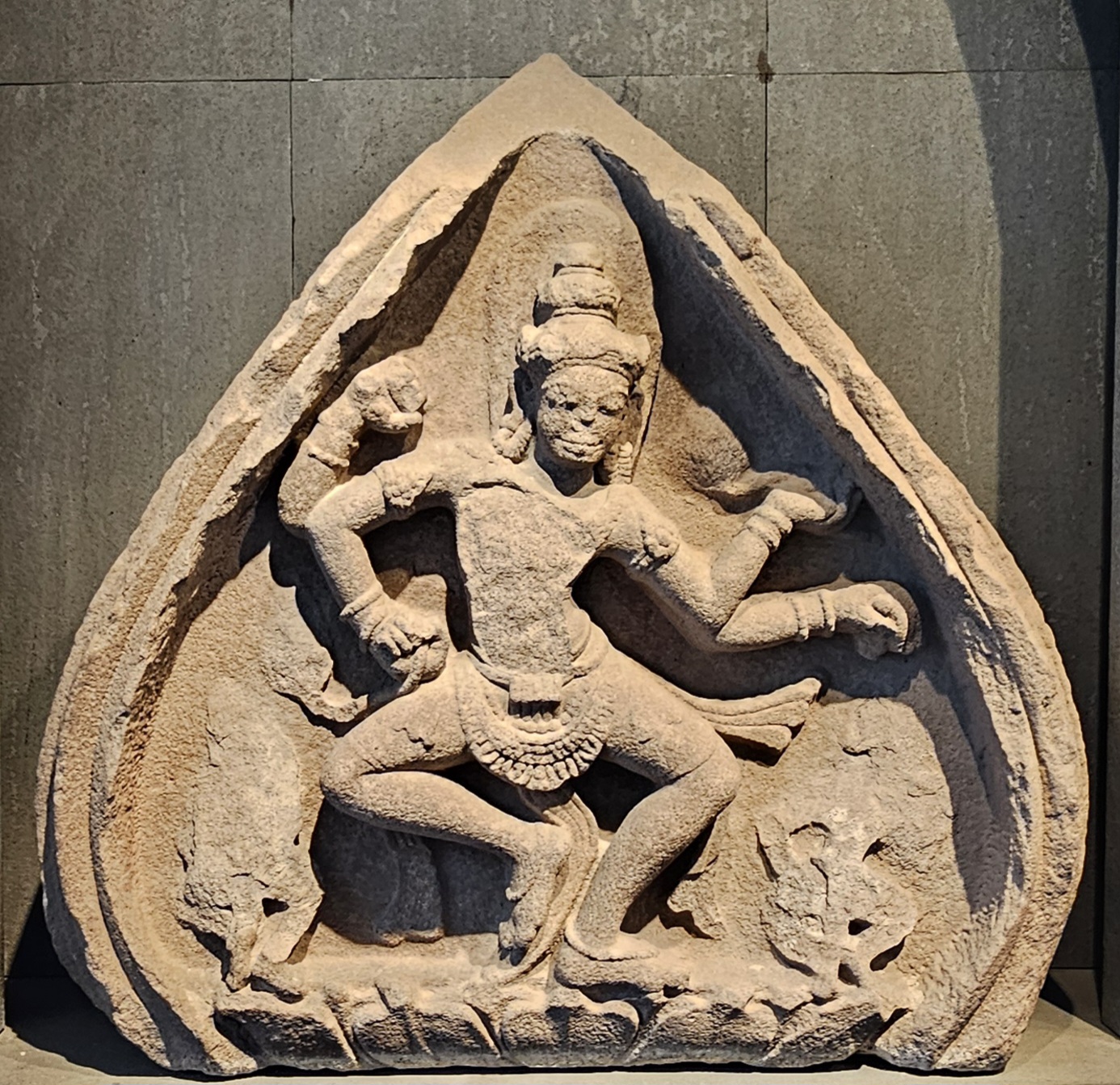
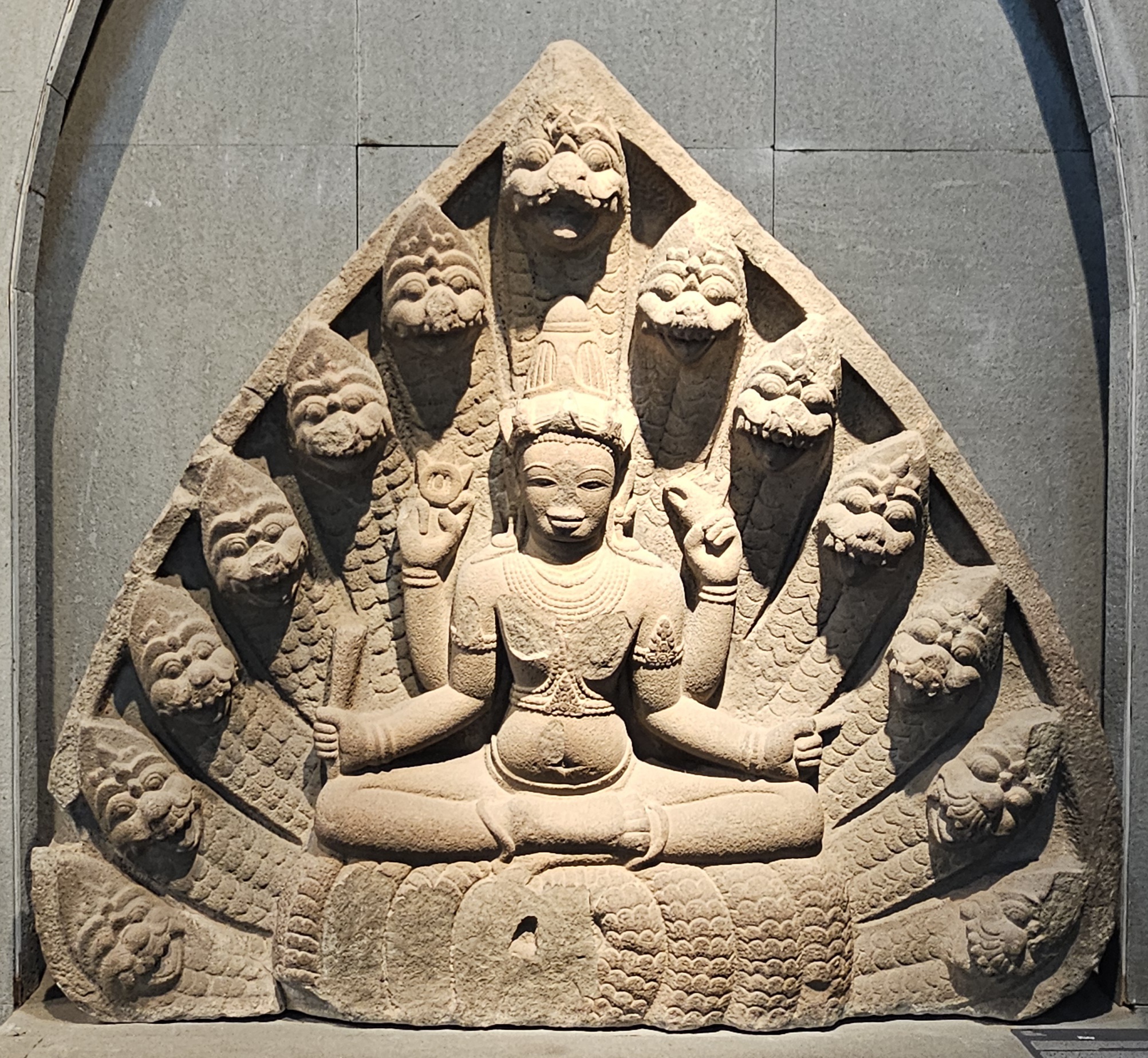
The museum is quite nice, although with no A/C (the stone sculptures are not as effected by the lack of A/C, compared to paintings, I guess). There are big fans and a lot of windows, so it was not too hot. They present the sculptures, collected from all of Central Vietnam (not just My Son), very well. The statues mainly dated from the 7th-10th centuries, AD. Some are really big, and here are some of my favorites.

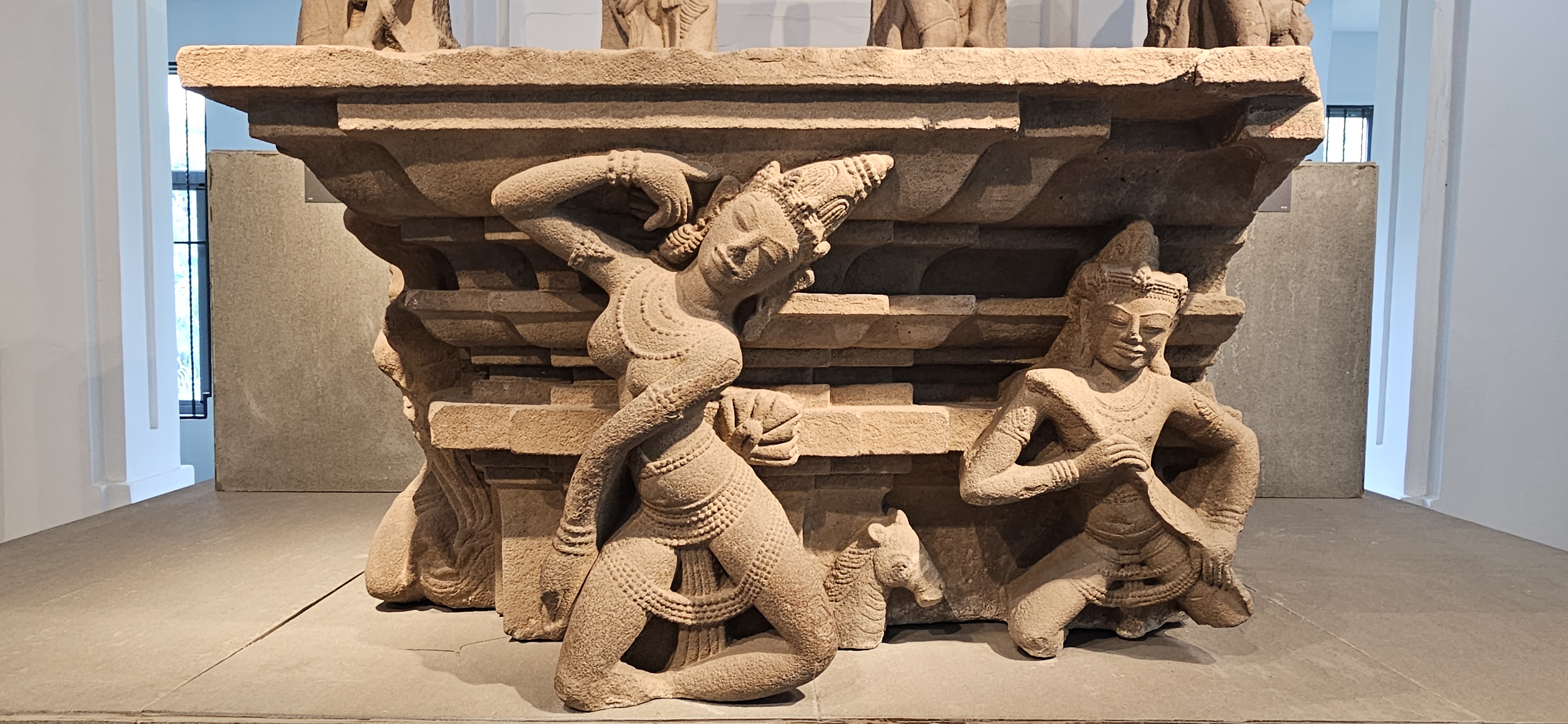
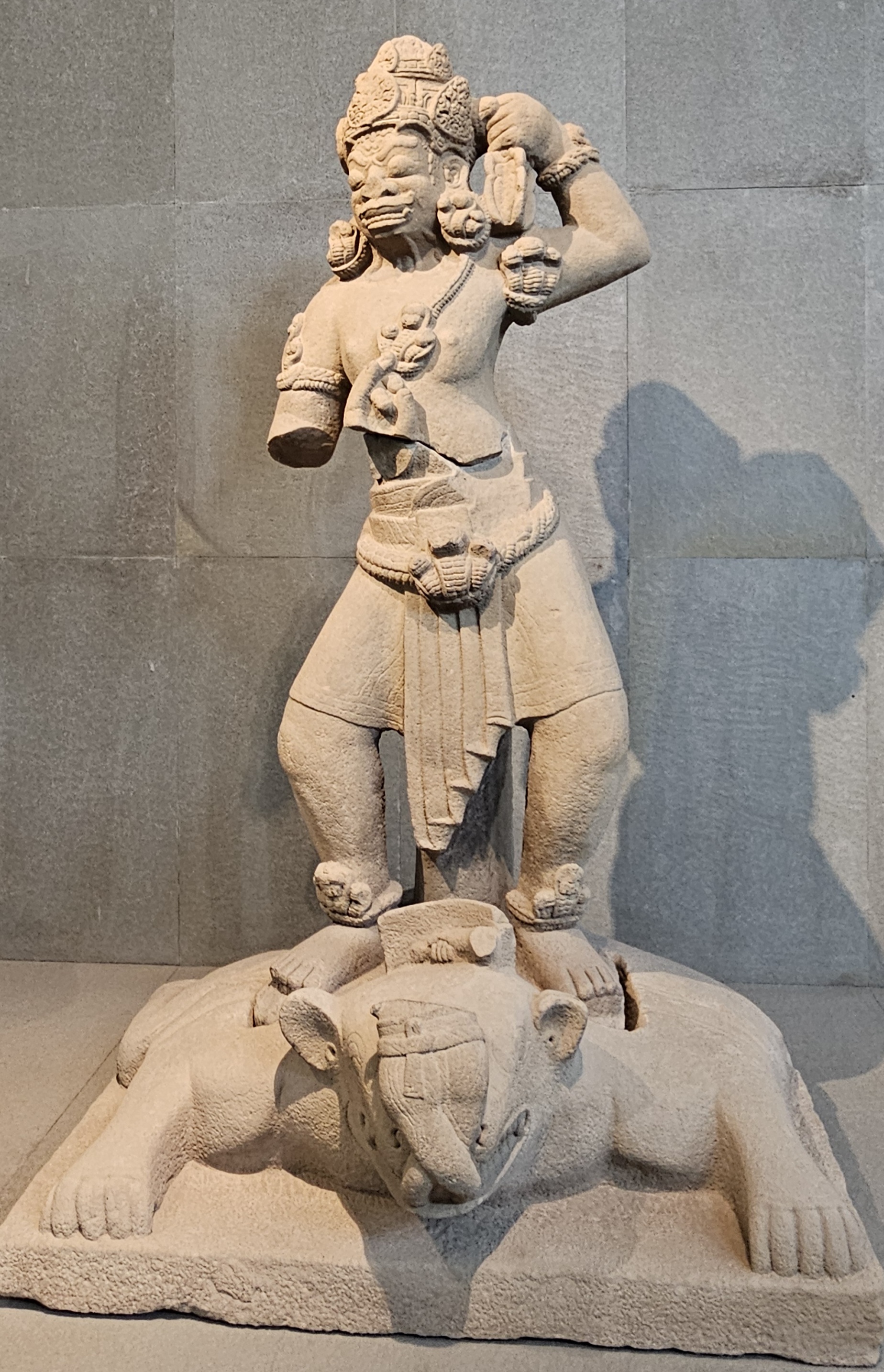
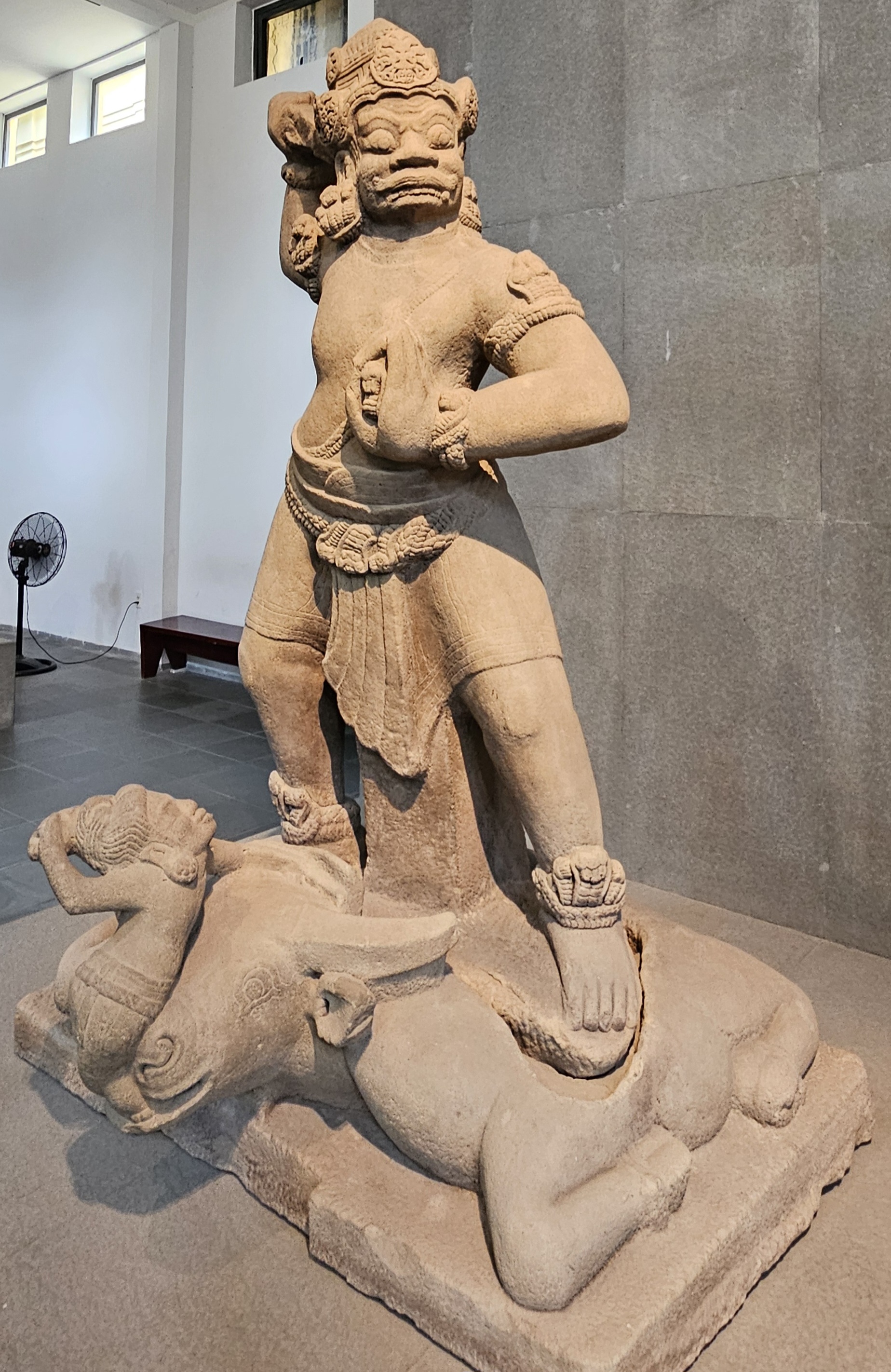
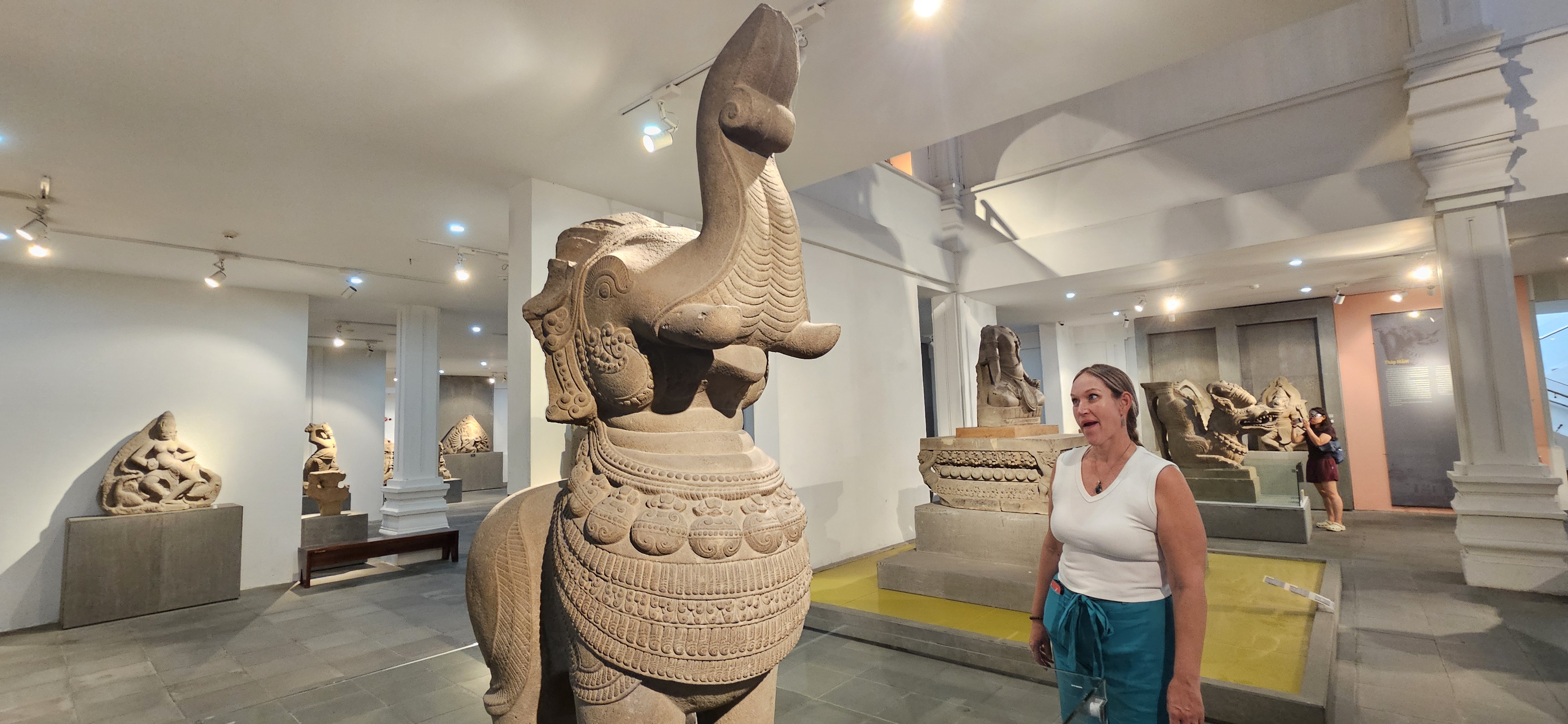
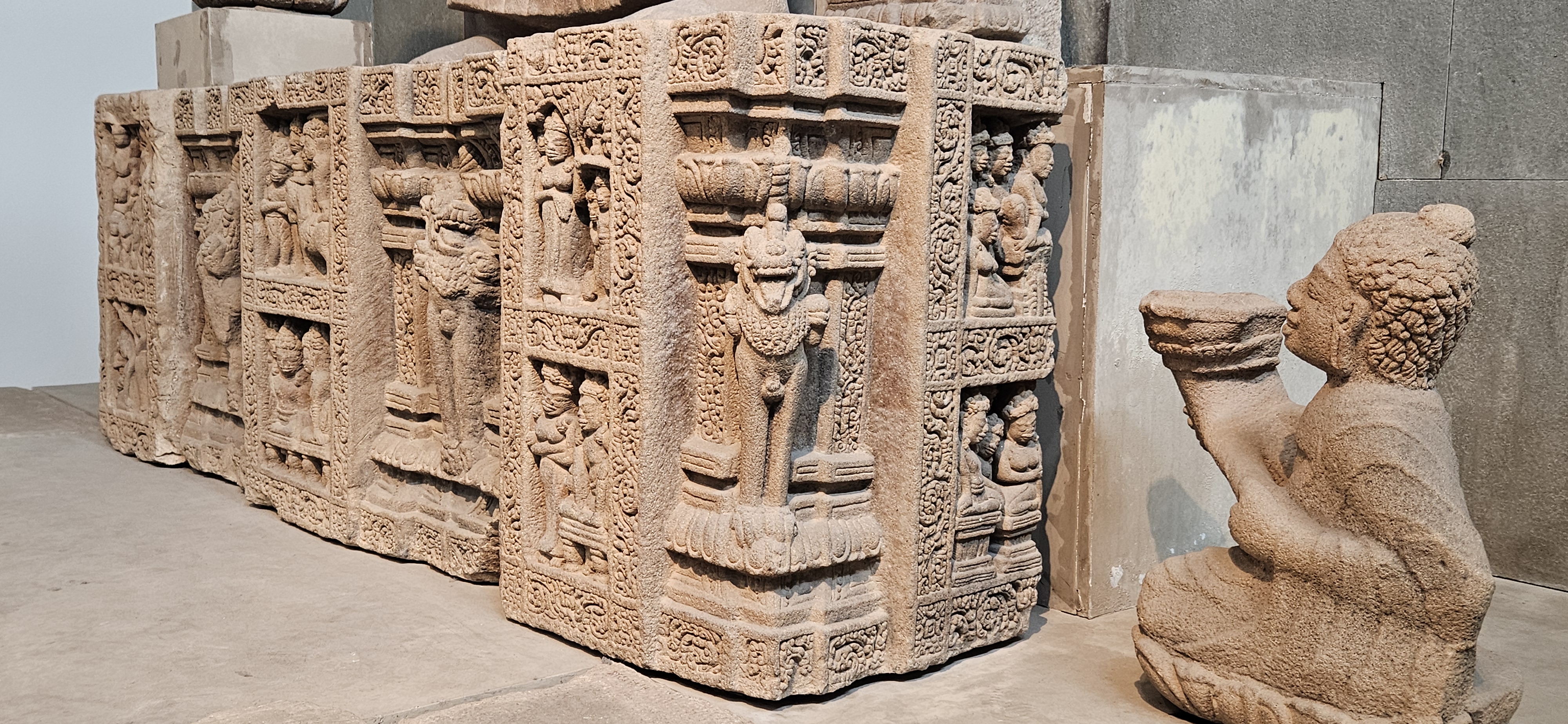
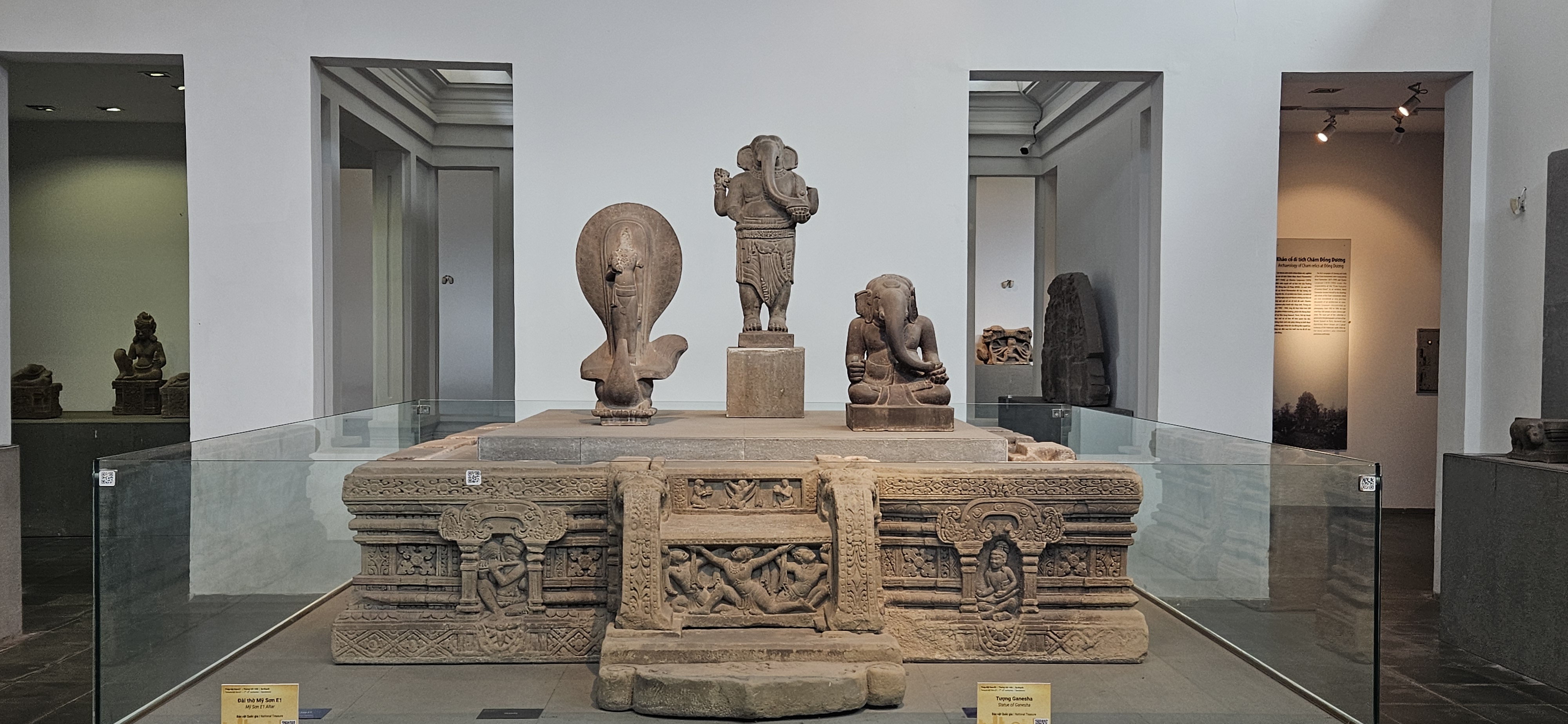
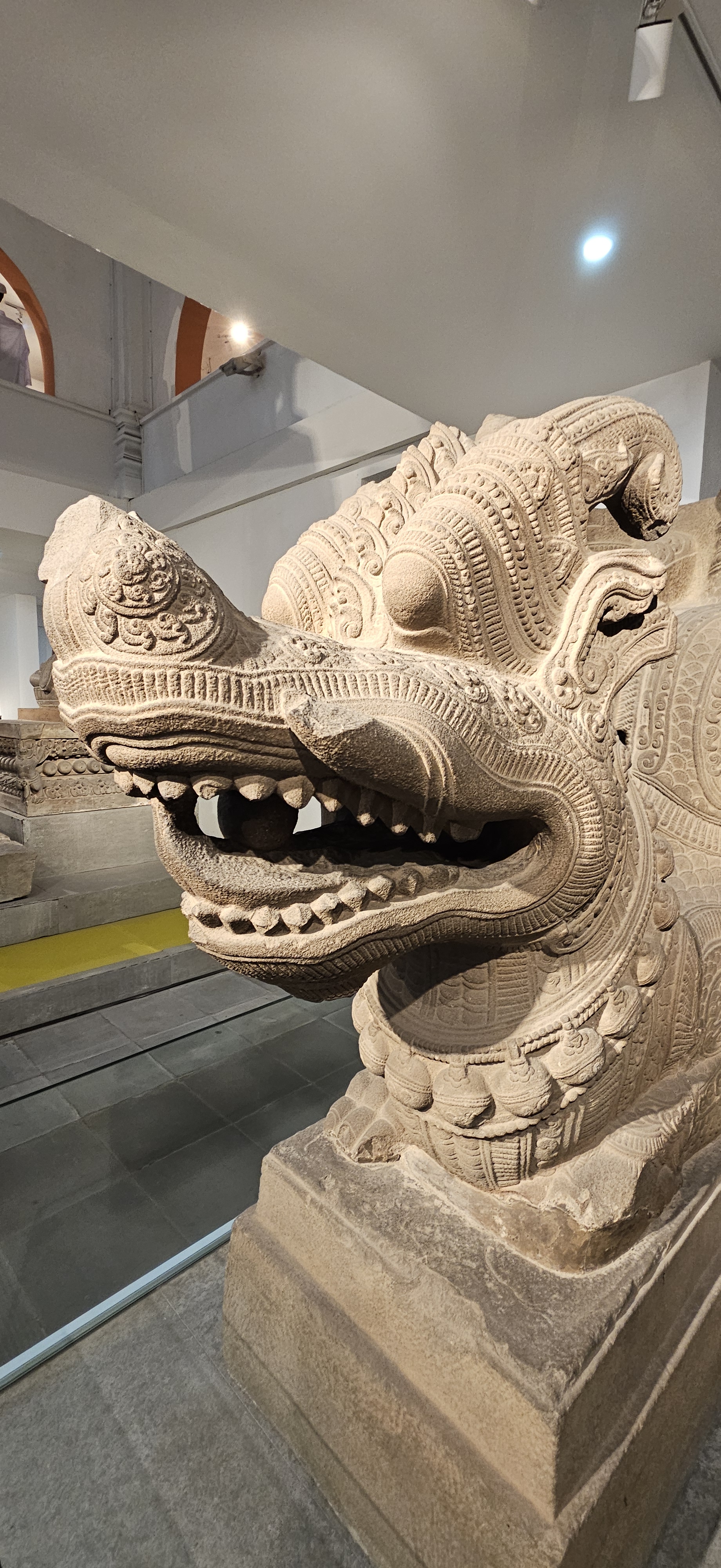
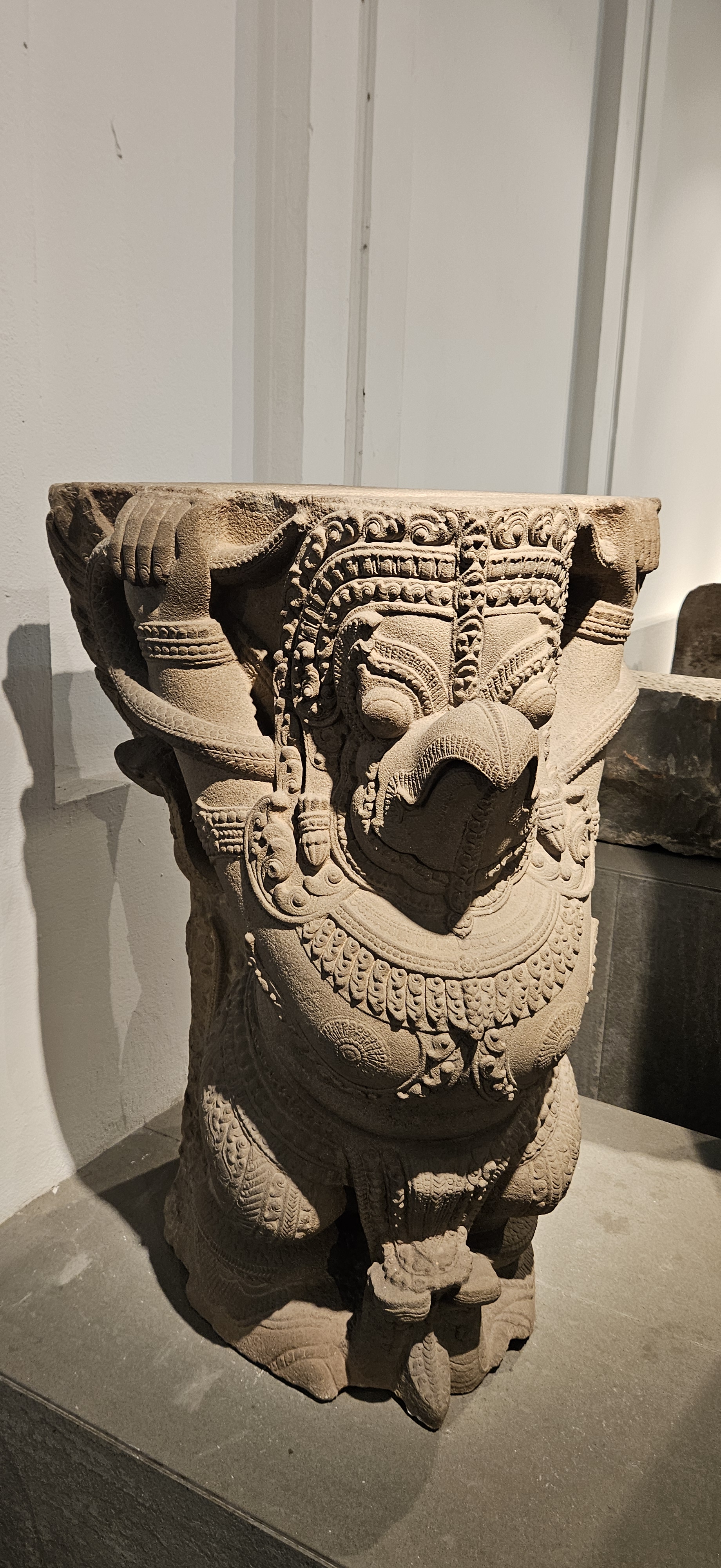
They also had a section of traditional dress since the time of the Cham people becoming Muslim, which included wedding and ceremonial outfits.
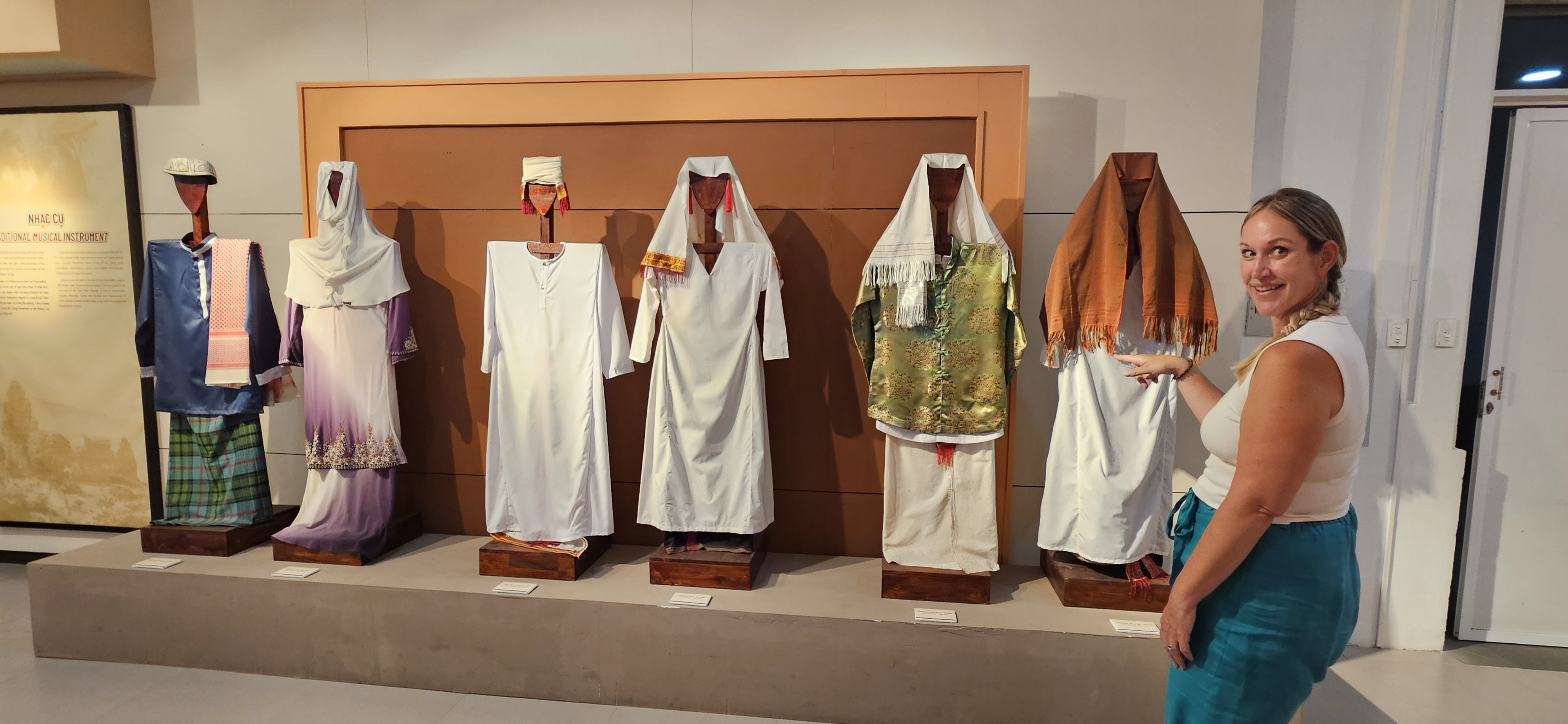
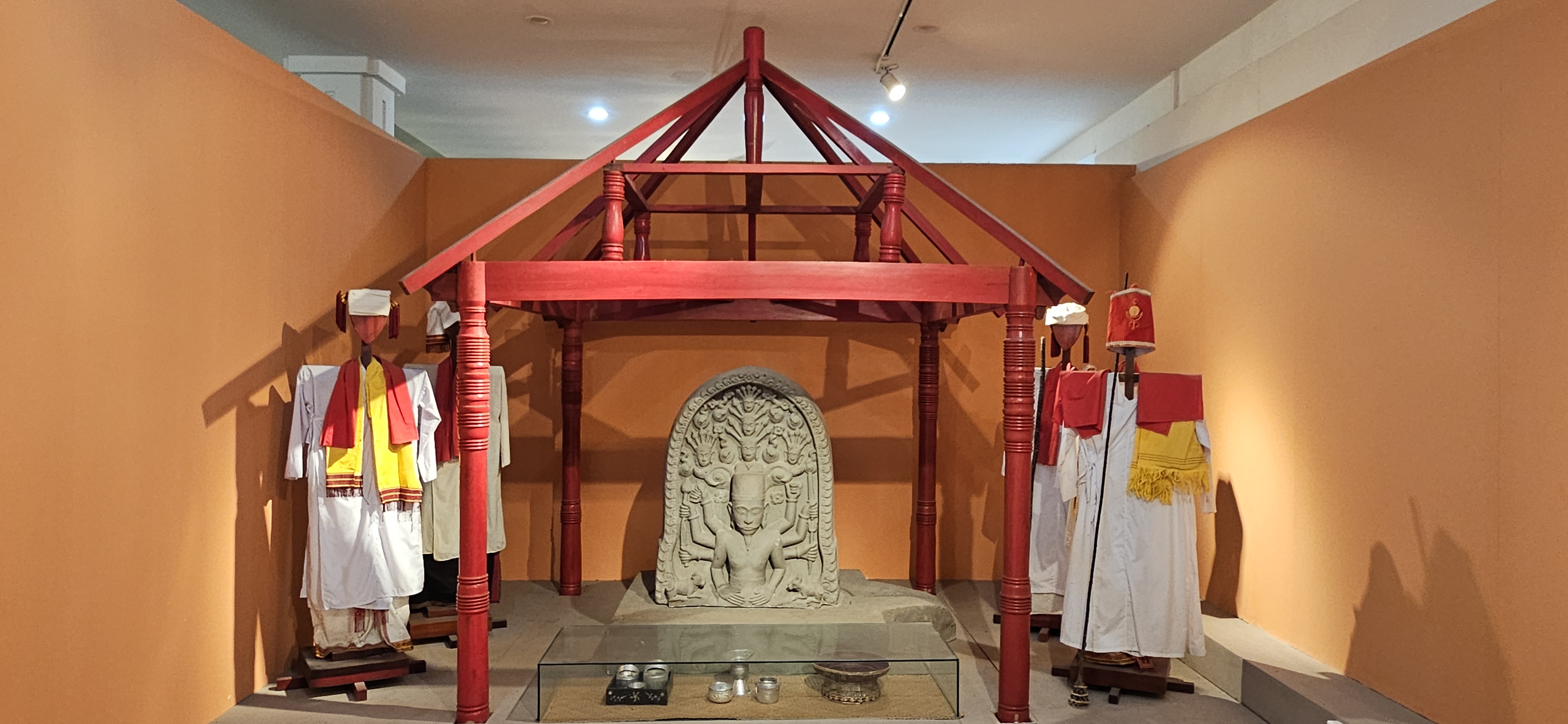
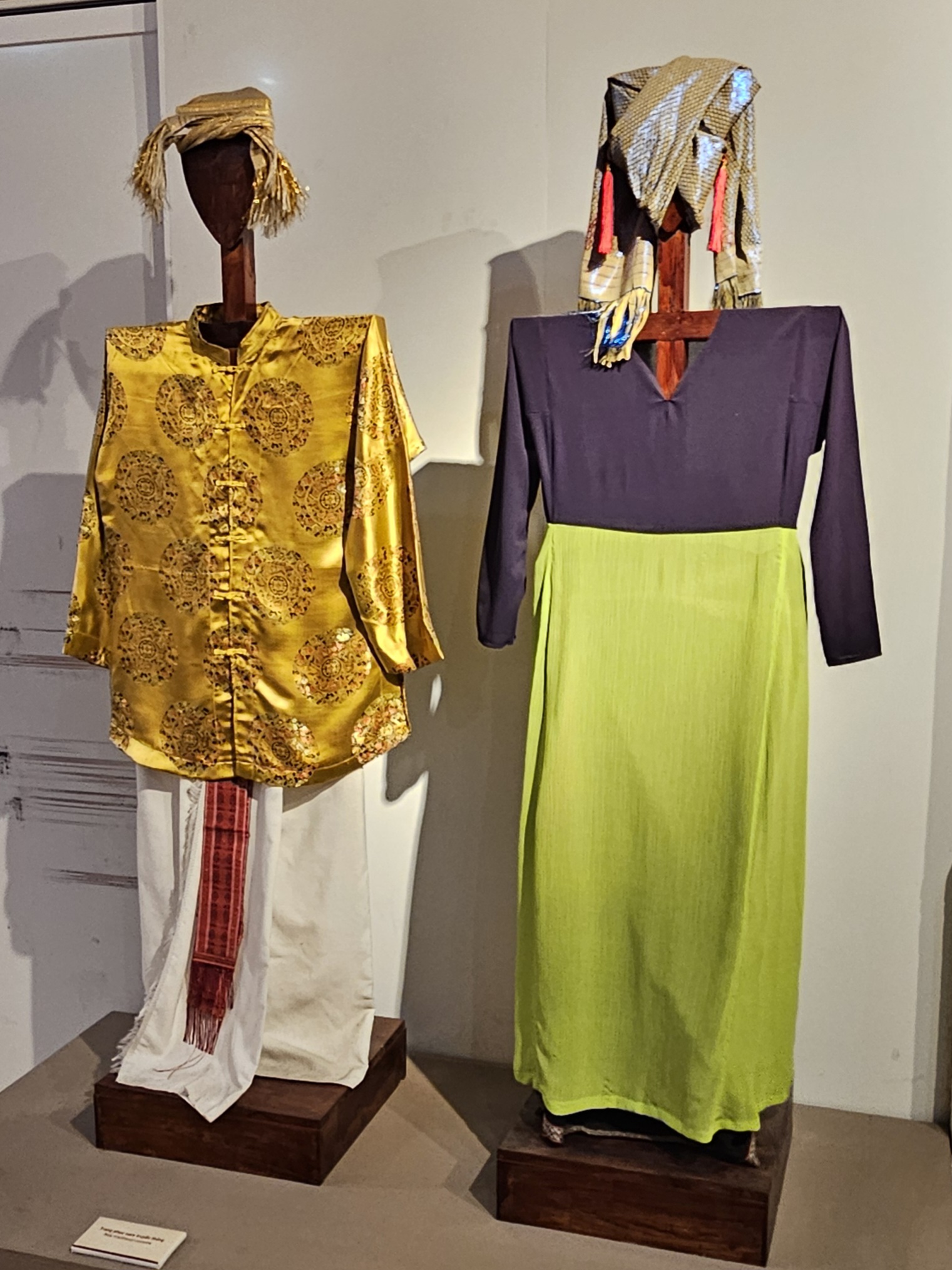
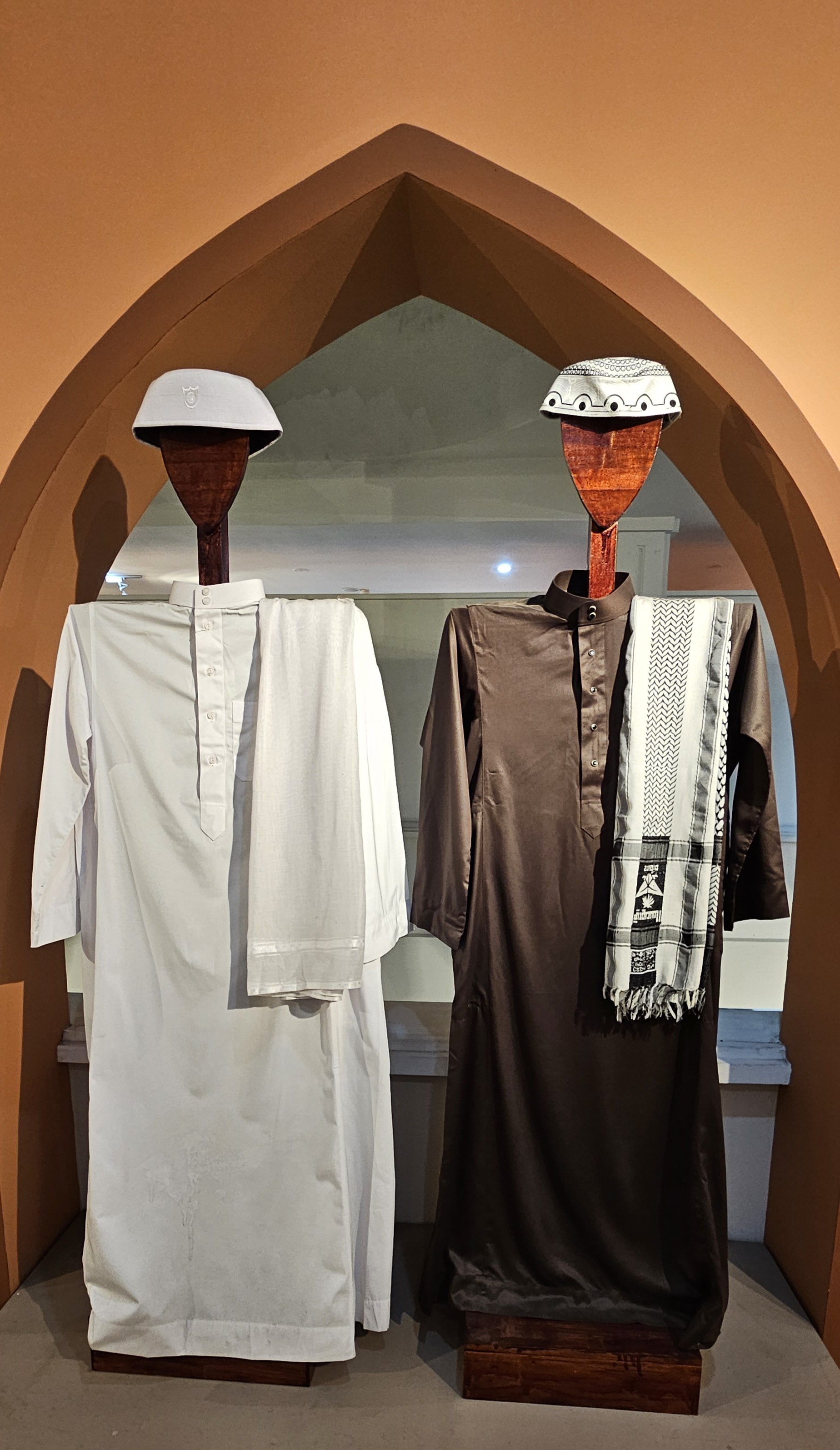
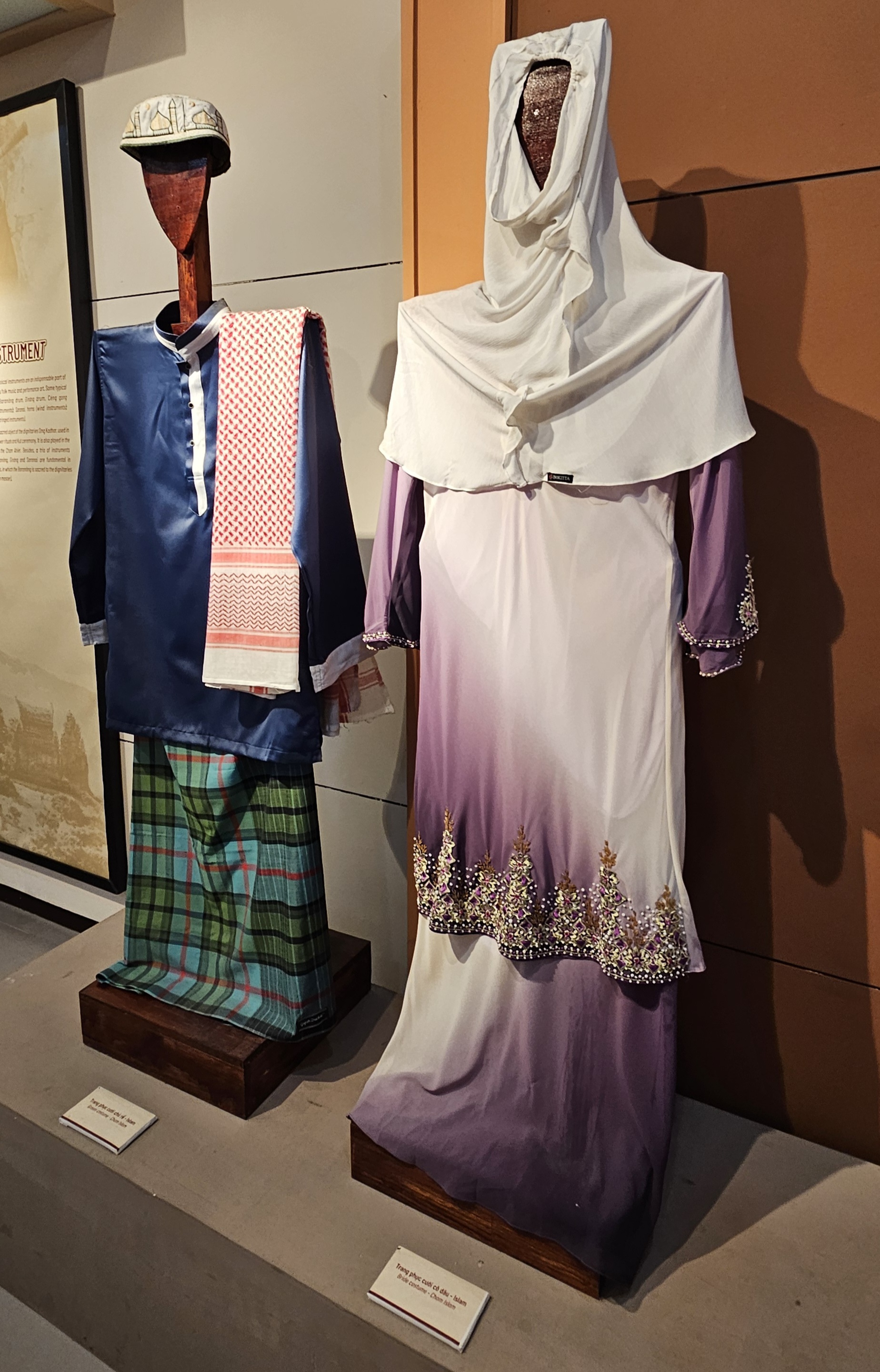
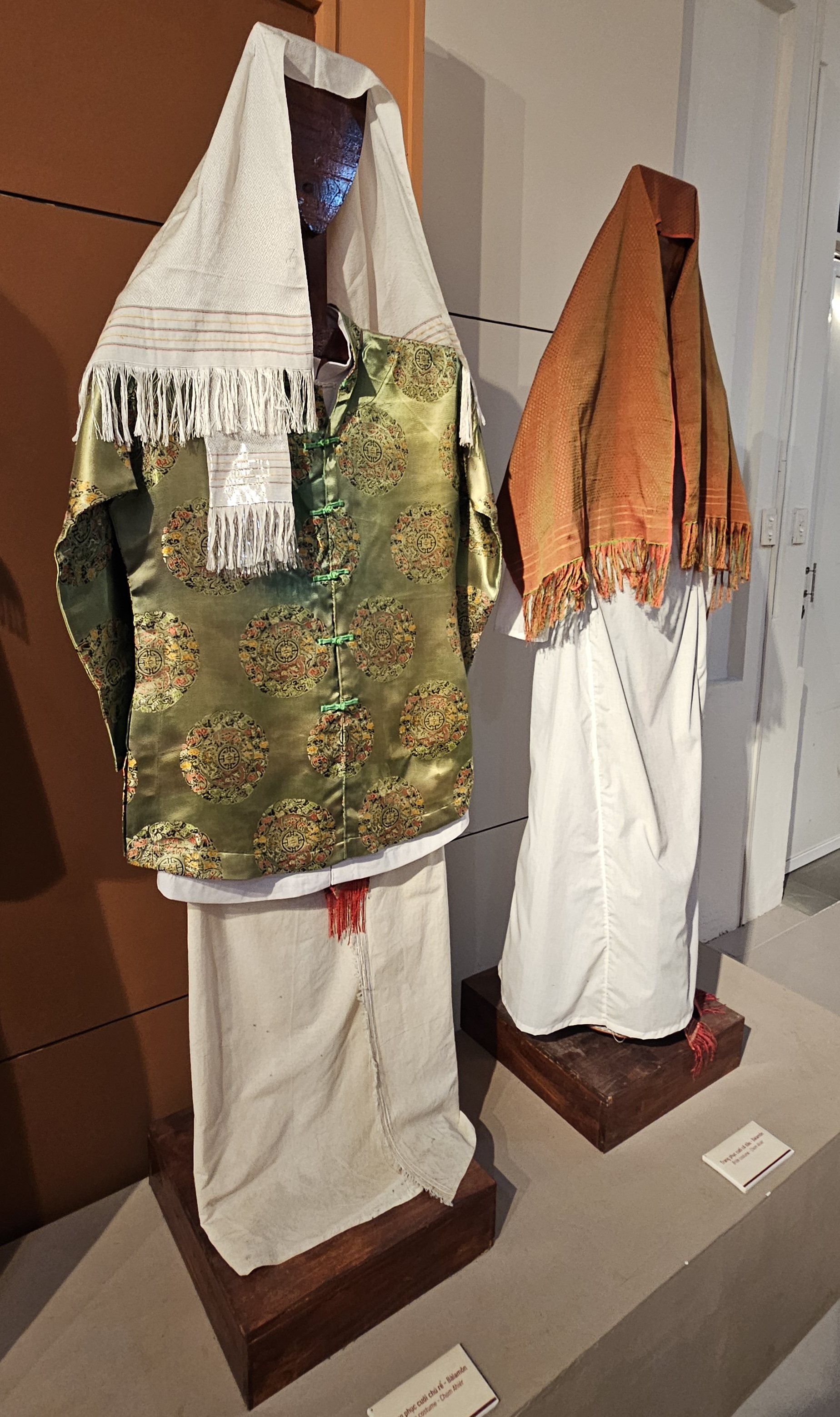
Lastly, were a few random pieces that caught our eye in the museum.
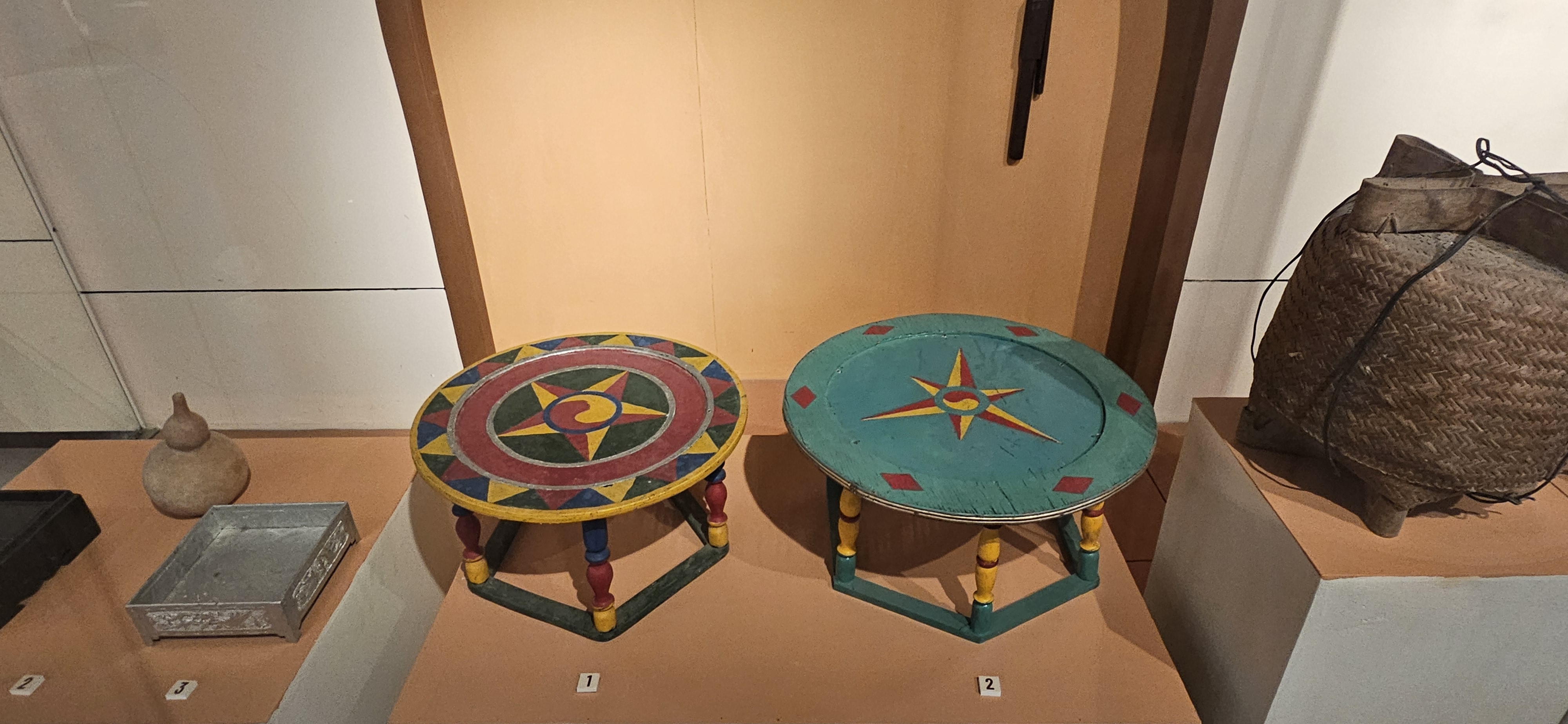
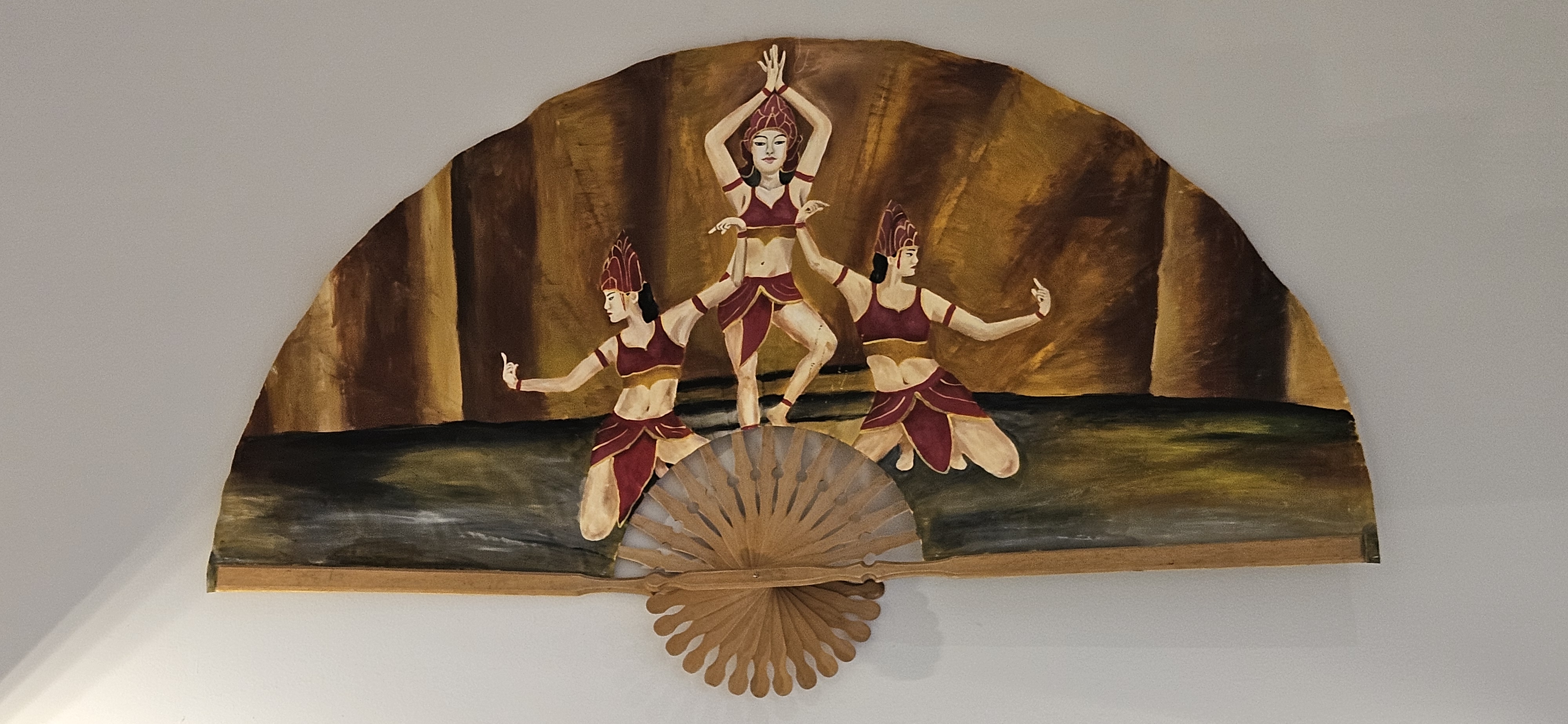
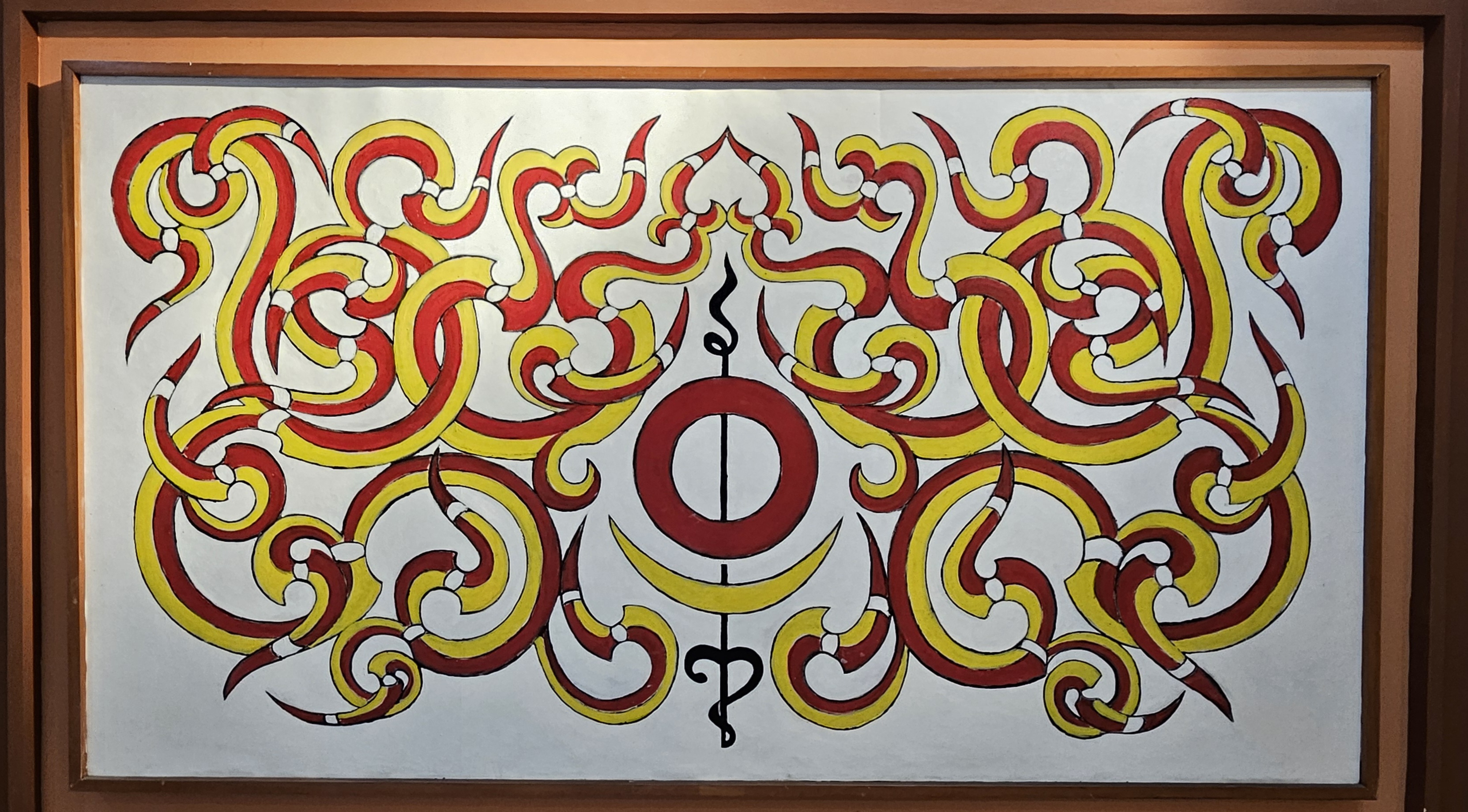
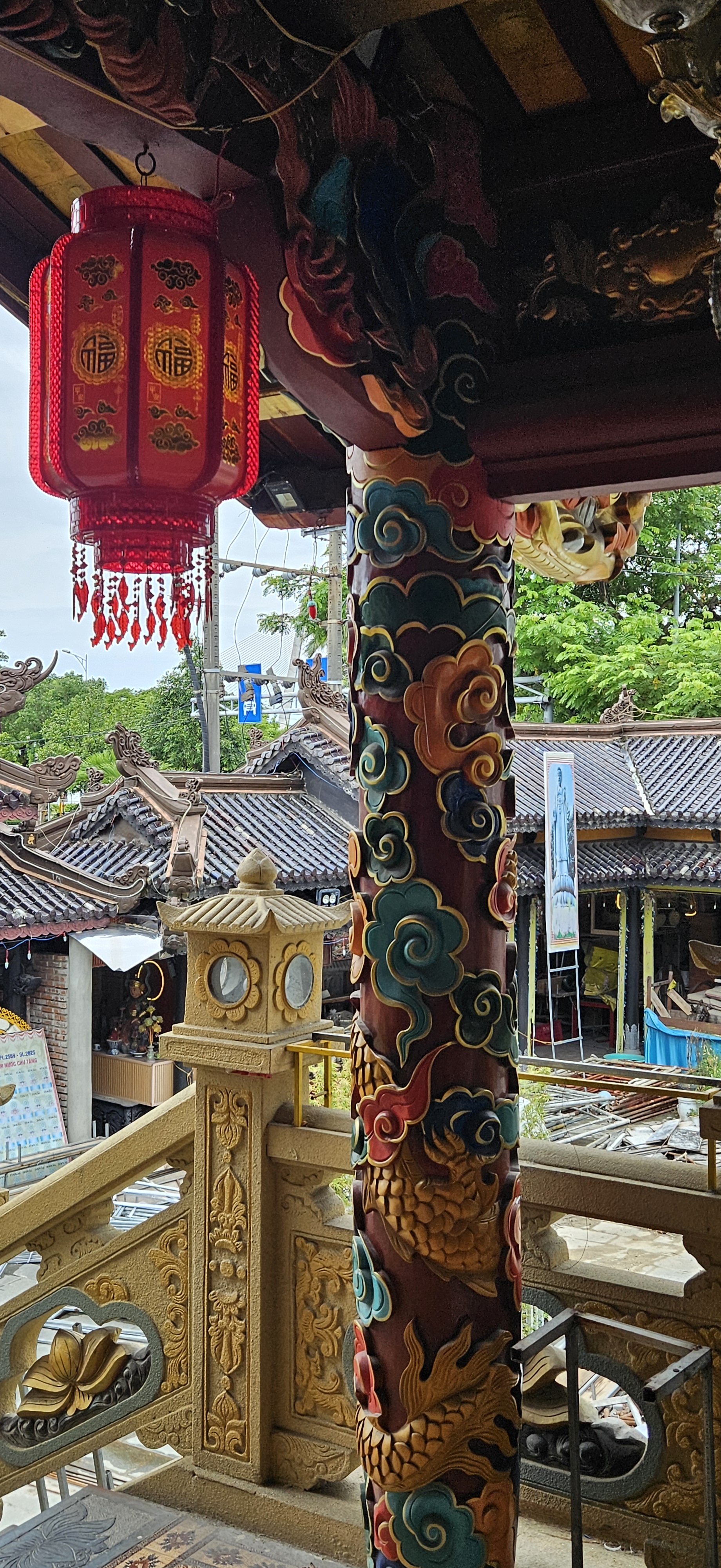
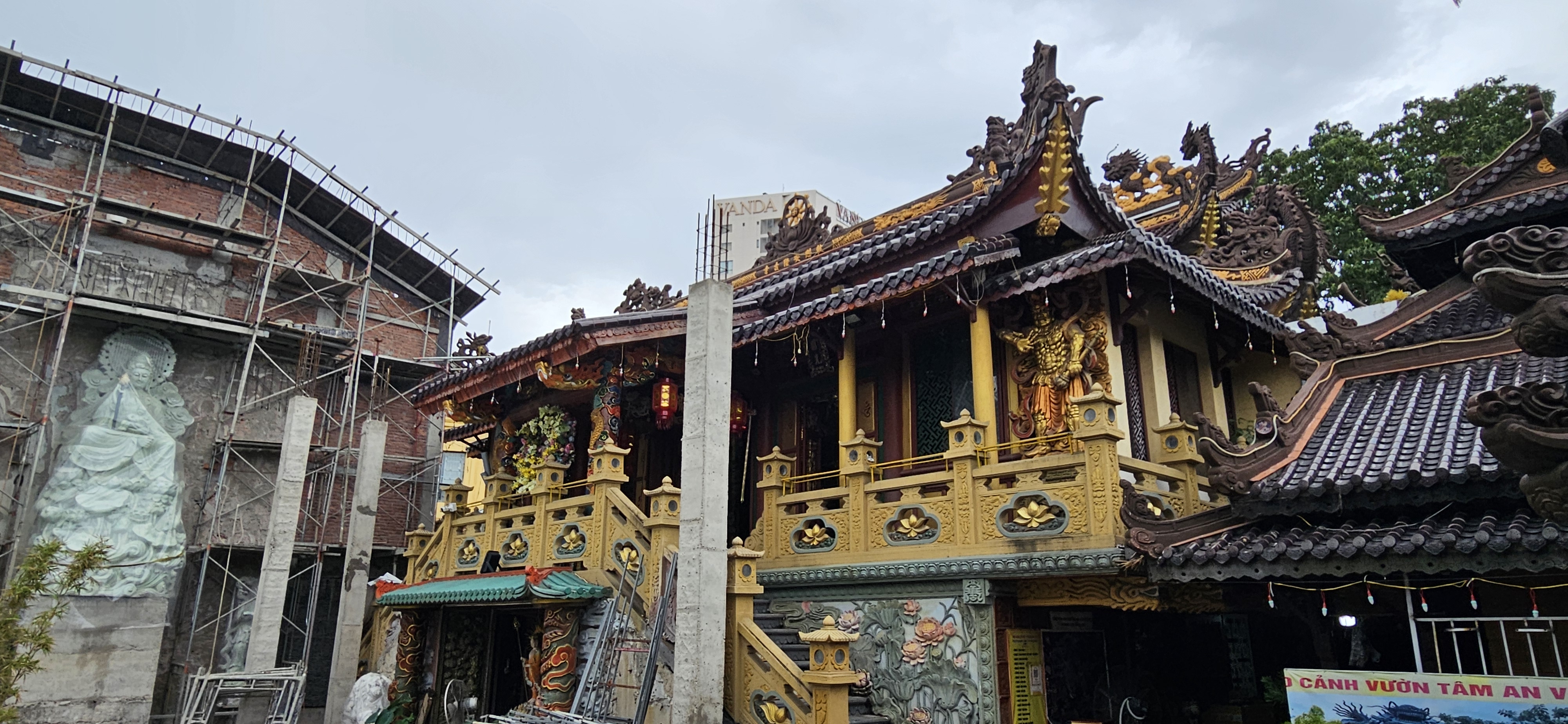
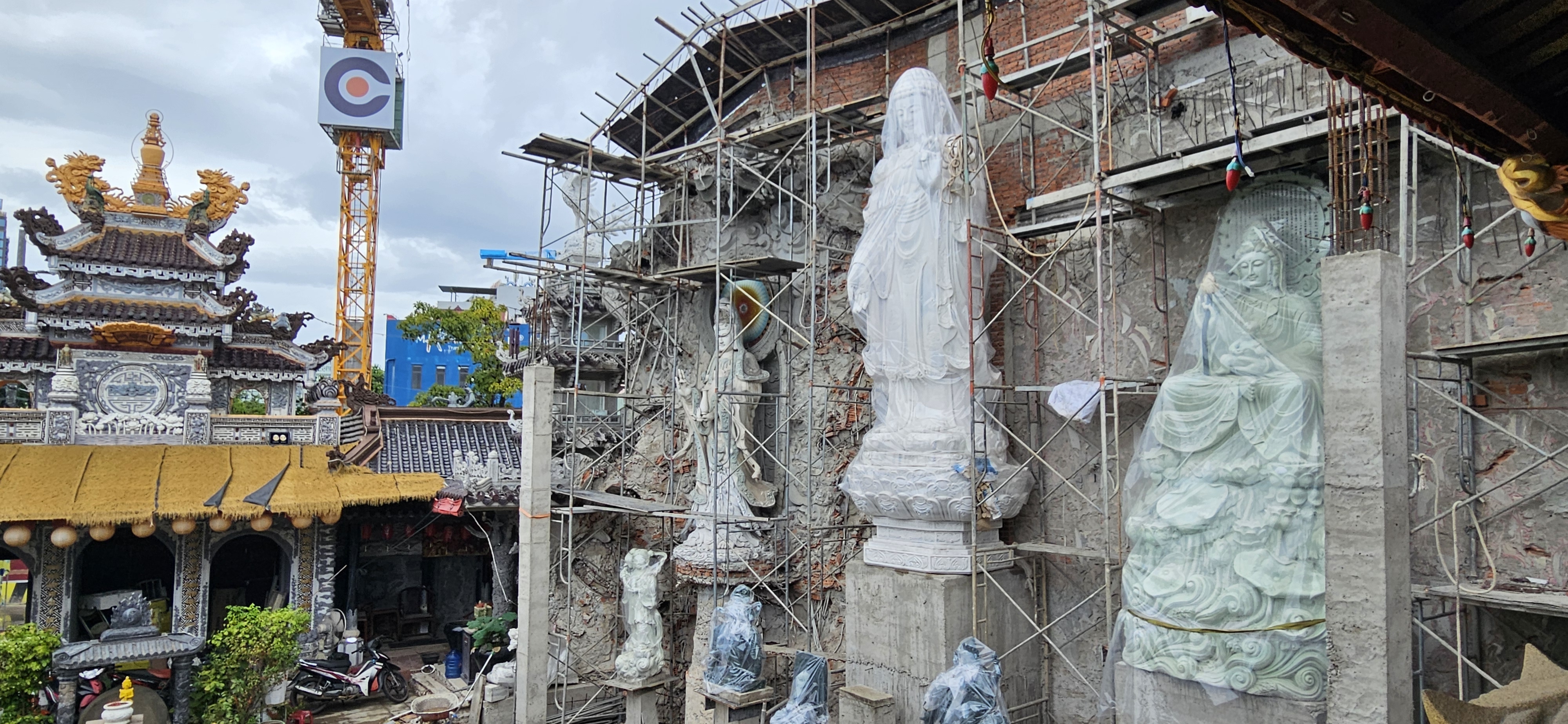
There is a nice gift shop and decent cafe at the exit, and right next door is the An Long Temple While it is under major renovation we still were able to explore the main shrine by ourselves.
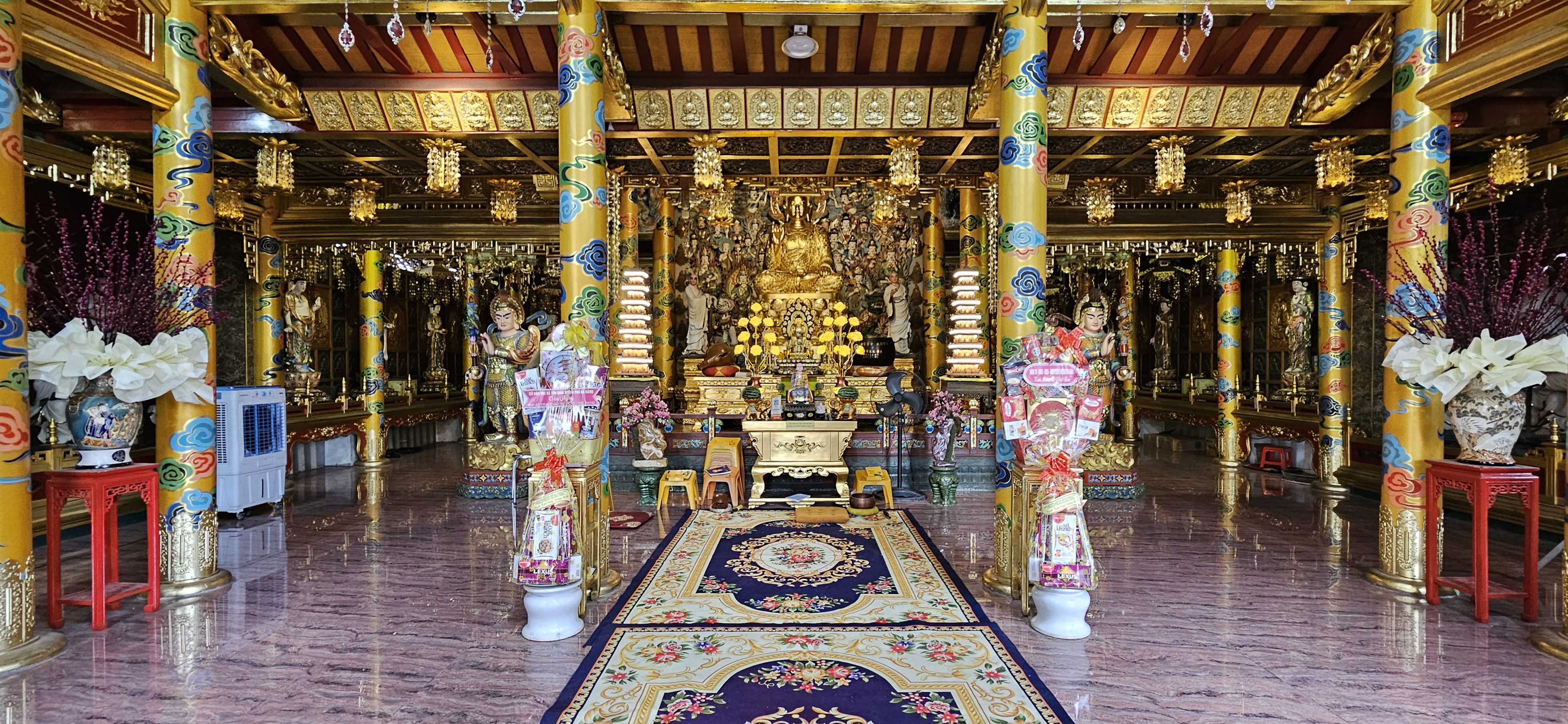
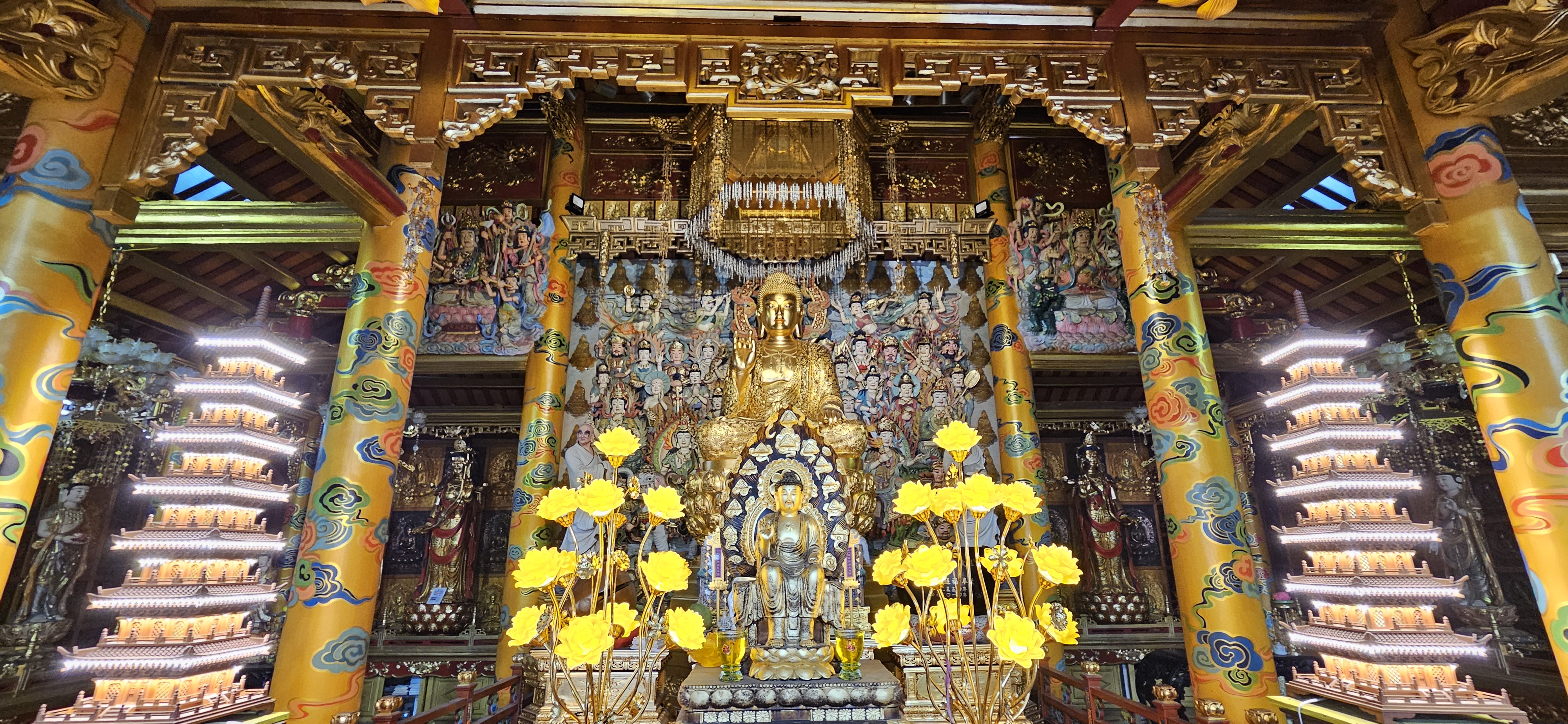
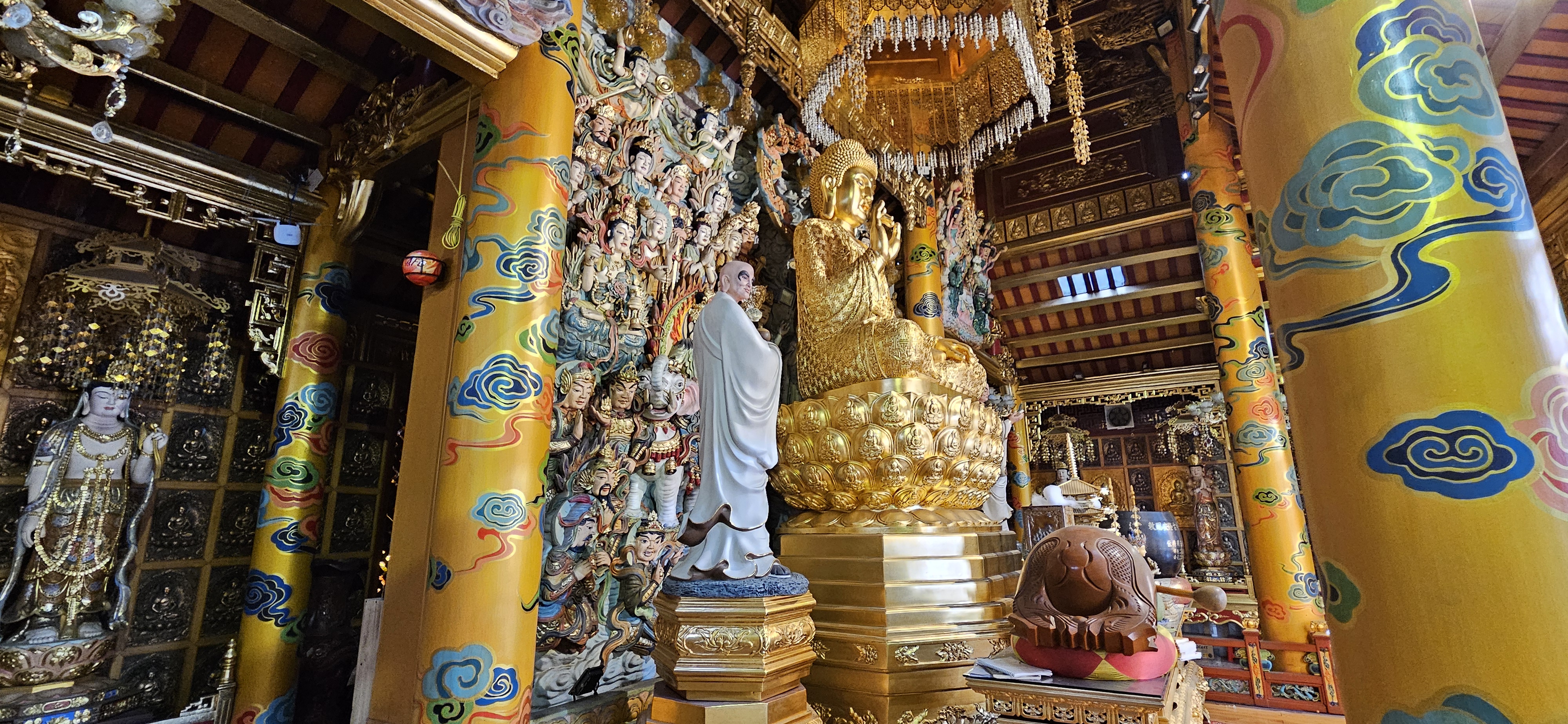
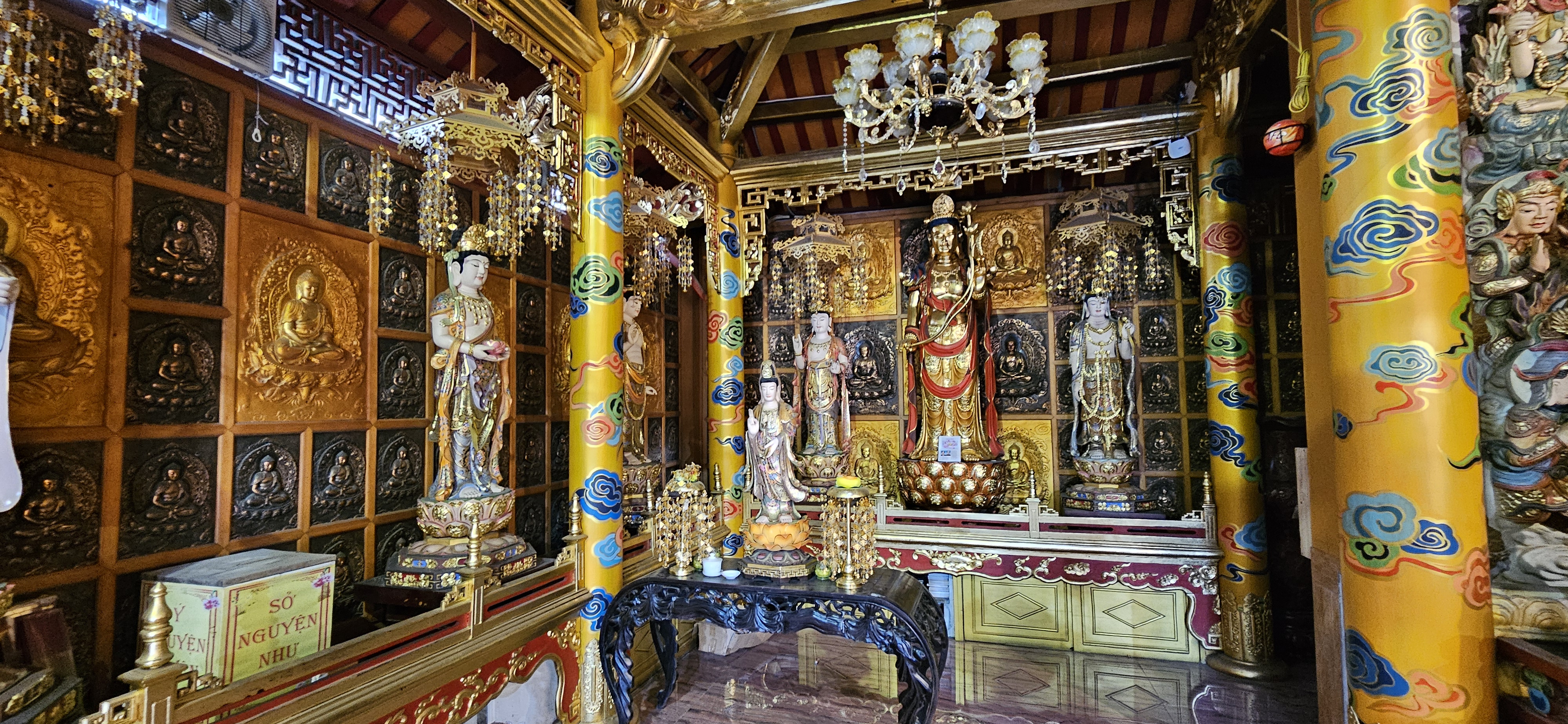
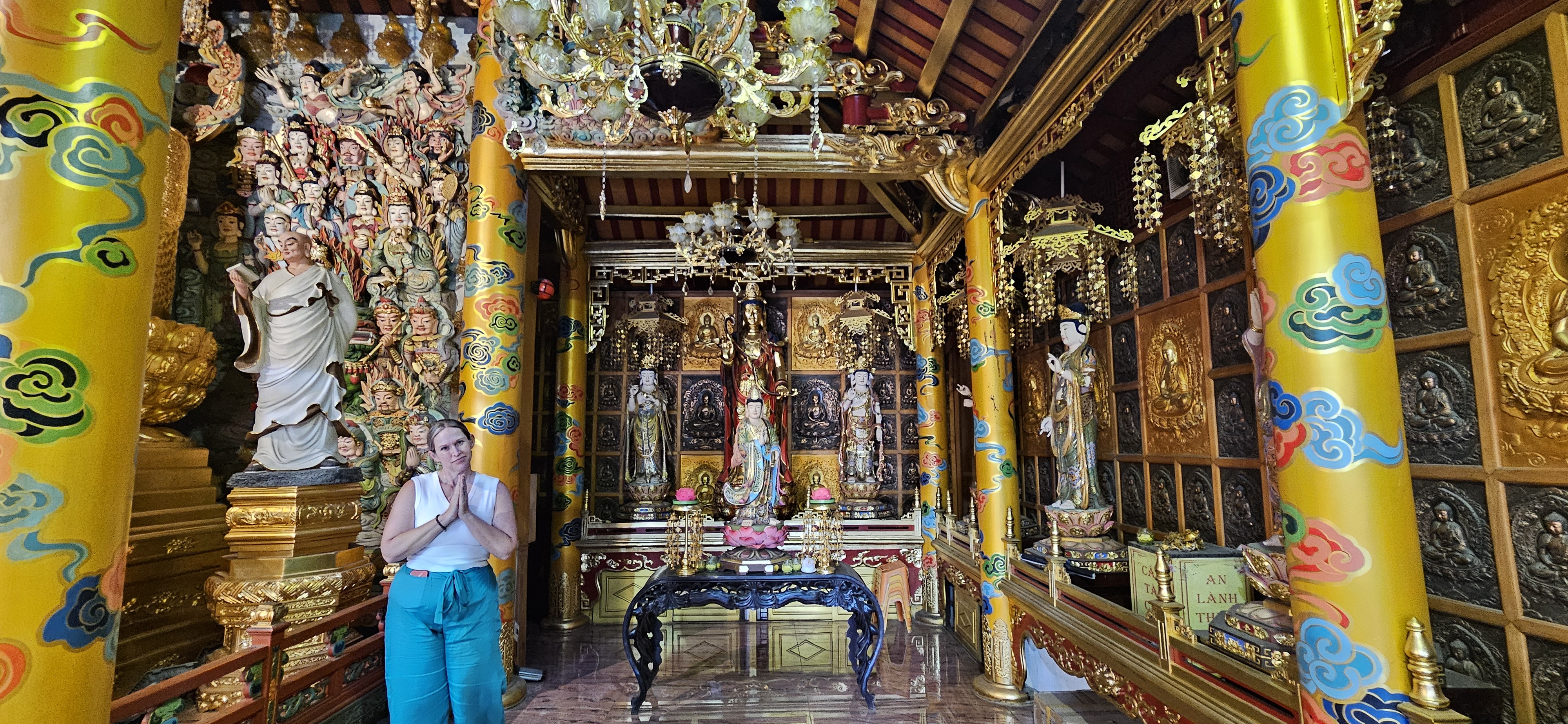
Jessica is giving me the side-eye in the last picture above, since they usually don’t allow or want people to take pictures inside the shrines themselves (so we, and other tourists, stand just outside the entrance, which is ok), but there was no one here when we visited, and it was so cool, so I hope you appreciate the pics as much as I do.
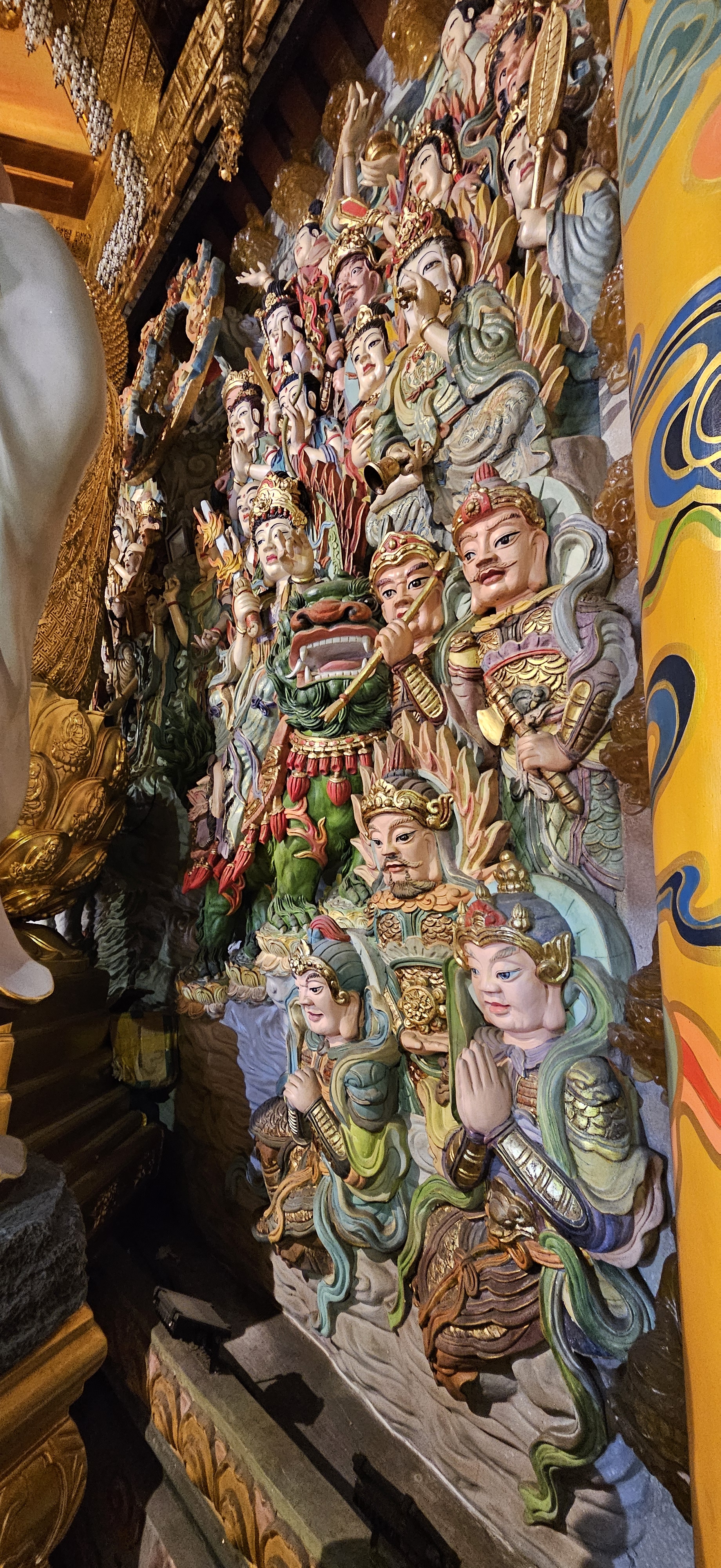
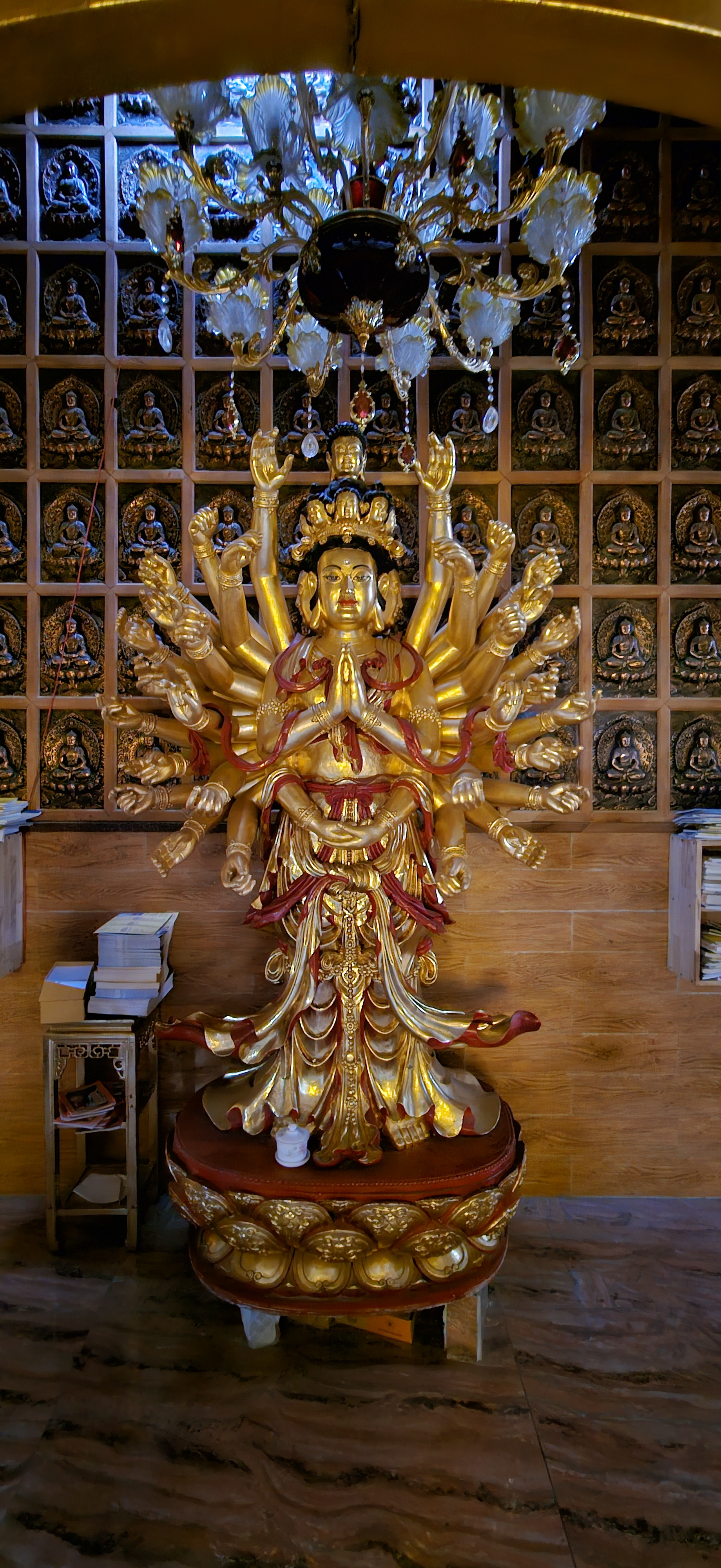
As I said, the temple is under renovations, and some of the Buddhist statues haven’t even been fully unwrapped yet.
We are looking forward to seeing more Cham temples when we visit Nha Trang in a month, and to seeing My Son completely rebuilt one day. Next up is our few days visit to the historic Hoi An town, then back to Da Nang to wrap up our time there. Stay tuned!


The temple complex looks ancient – that is very neat. The cham statuary is beautiful!
LikeLike
It really felt like visiting a place that time forgot, I wonder if that charm will be lost once they eventually rebuild it all, or it will be more impressive like Prambanan? I hope they leave some of it as it has been, to show a before and after.
LikeLike