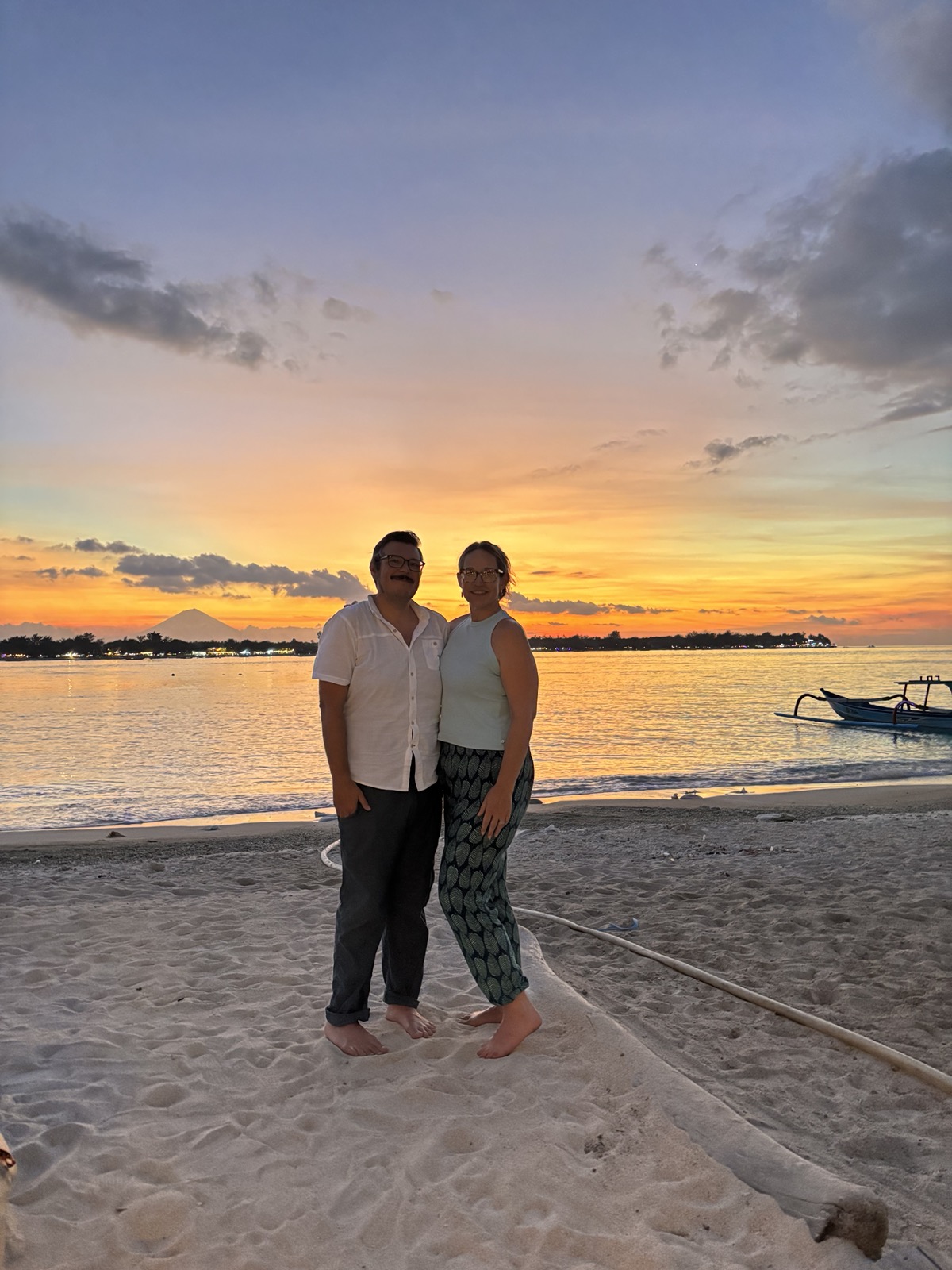
We spent two months traveling on just a few of the 10,000+ islands that make up the country of Indonesia; and this trip centered around two of them, Bali and Java, which both have their own unique and distinct vibe.
We arrived in Bali first, after our two-month visit to China, and it was quite a change. The island atmosphere, the less than stellar infrastructure, the calmer vibe to lots of traffic; the busyness, which was unexpected, the trash, which literally littered the streets and landscape, the super friendly and smiling Balinese people, who always made us feel welcome.
Going in with low expectations is key to enjoying any place, and I did not have many about Bali. Social media often paints often Bali as a paradise, and while it was not that, it was a lot better than some of the negative videos and things we had read online. I was looking forward to it as being much different from China, and it was, for sure.
Language: Speaking in English with our first driver from the airport, Kris, and him doing a great American surfer accent, was so different from any of our taxi driver interactions in China, mainly due to the language barrier. The hotel staff once we arrived all spoke English, and I knew then that Indonesian travel was going to be easier, simply in that aspect. We learned the basic words (hello and thank you), but they were rarely used. We still used the translator when needed, but not nearly as often as China (where it was needed in almost every interaction).
Transportation/Getting around: We would book a taxi from the airport to our hotel through booking.com or trip.com; and that driver would offer their services to take us around whichever city we were in. This worked really well, as the different drivers in each place would take us on day trips as well, that we could dictate where we went and for how long. It seems luxurious having one’s own “private” driver for the day, but it really is very reasonable (under $40 a day), compare that to a day tour price for two people, and it’s much less expensive.
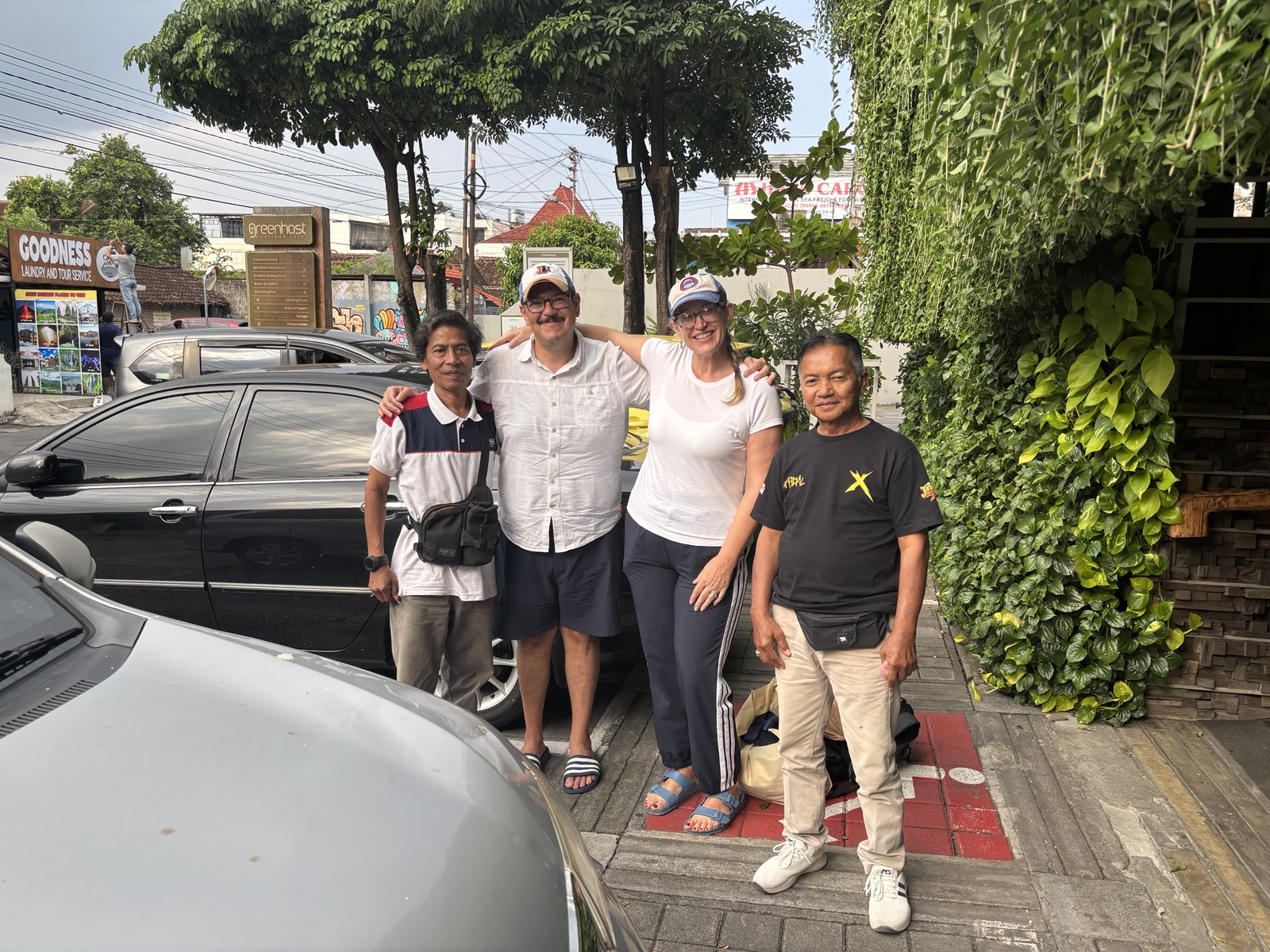
Kris, became our driver in Bali, and he took us to the port to visit the other islands, and picked us up as well, which alleviated that stress in the already hectic environment of a Balinese port pickup. He was also a source of information, in that we could ask questions about the culture and he would give us tips and share knowledge as well. Later, his brother-in-law took us on a day tour, and he told us, for example, that in Balinese culture, the youngest son inherits the house of the parents, as they will have to take care of the parents in their older age since the oldest son was born and grew up while the parents were still working.
For short trips around town, we used the Grab app, which is like Uber and Lyft in the US. It is super easy to connect a credit card and subsequently use it. Grab is also good for food delivery and even grocery delivery. If you’re more adventurous, Grab also will pick you up on a motorbike for much less than a car, and they provide a helmet, though we never used it as we were two people and a car was always preferred. We used Grab exclusively on Java as well.
In Bali, one can also rent a motor bike to get around, but there is a flow all its own to driving on Bali. When we asked a German couple we met at one of the hotels, who had visited Bali before, if we should rent a bike, they said, “not if you value your life.” We took that to heart. Motorbikes are quicker since they can weave through traffic. We learned that, the quoted travel time on Googlemaps would always be under the actual time it took because it was showing the motorbike time. We factored an extra 15-30 minutes at minimum for any ride, and at rush hour and peak times, sometimes an hour. This was true on Java and Bali. In Java, renting a motorbike is doing so in a big city, so that’s even more opportunity for accidents, at higher speeds.
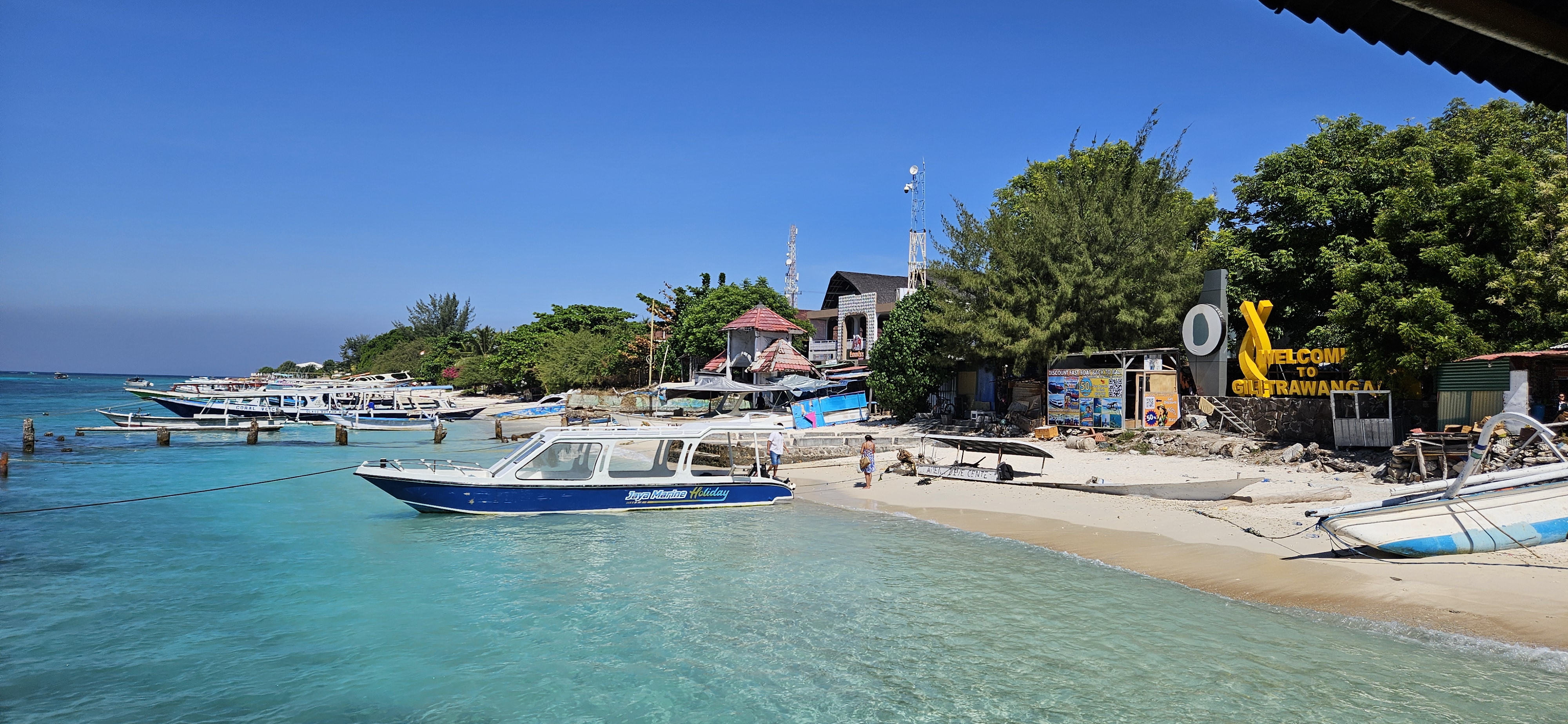
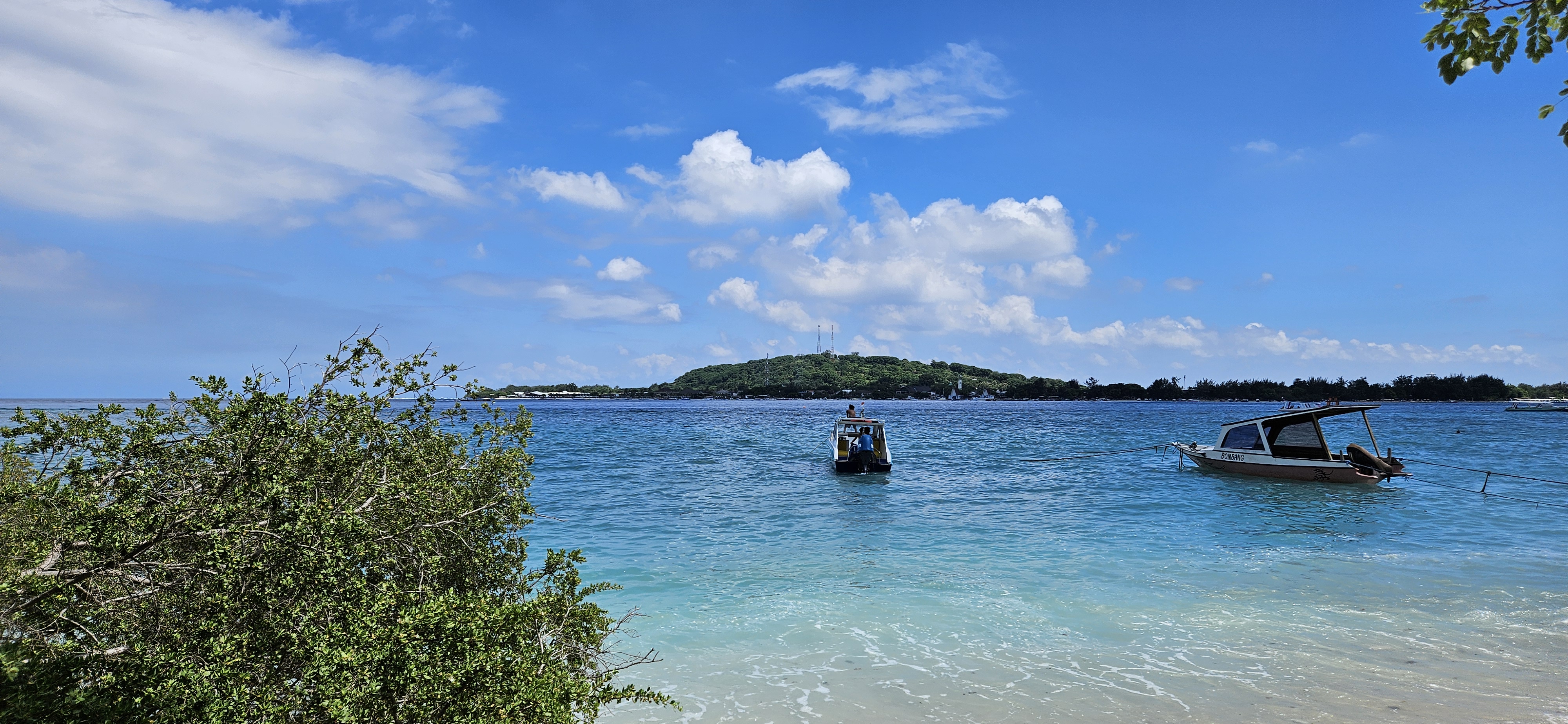
Getting to and around the islands near Bali: We visited the Gili Islands and Nusa Penida, which is right off of the coast of south Bali. Even though there was less traffic on Nusa Penida, the roads were terrible and often up hills and mountains with blind curves, so we did not want to rent motorbikes there either. Nusa Penida does not have Grab or any rideshare services, so we had to book a ride through our hotel.
On the Gili’s, there are bicycle rentals but walking was the best option we found. There are also horse drawn carts at the port of arrival, for transporting luggage to one’s hotel.
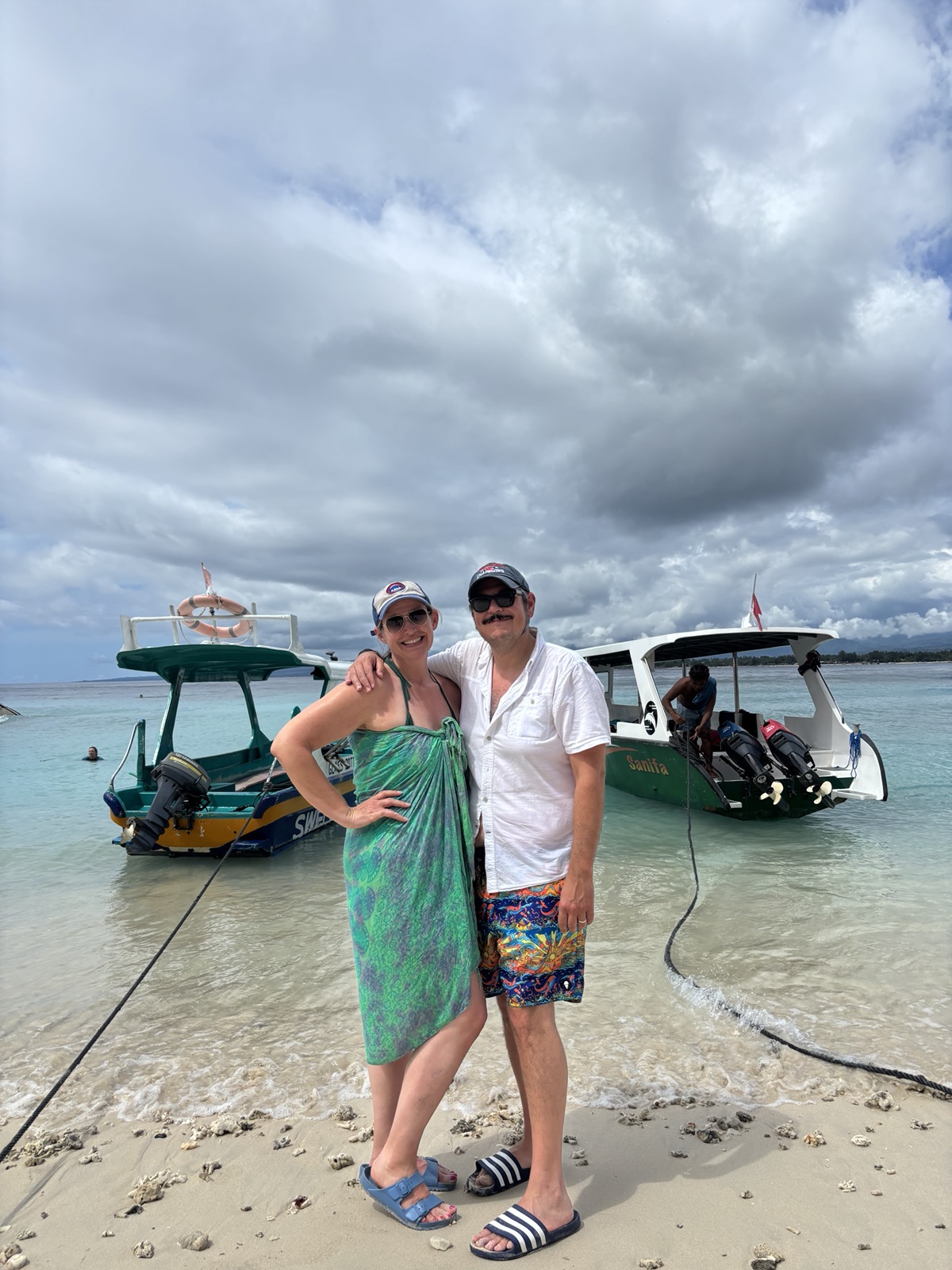
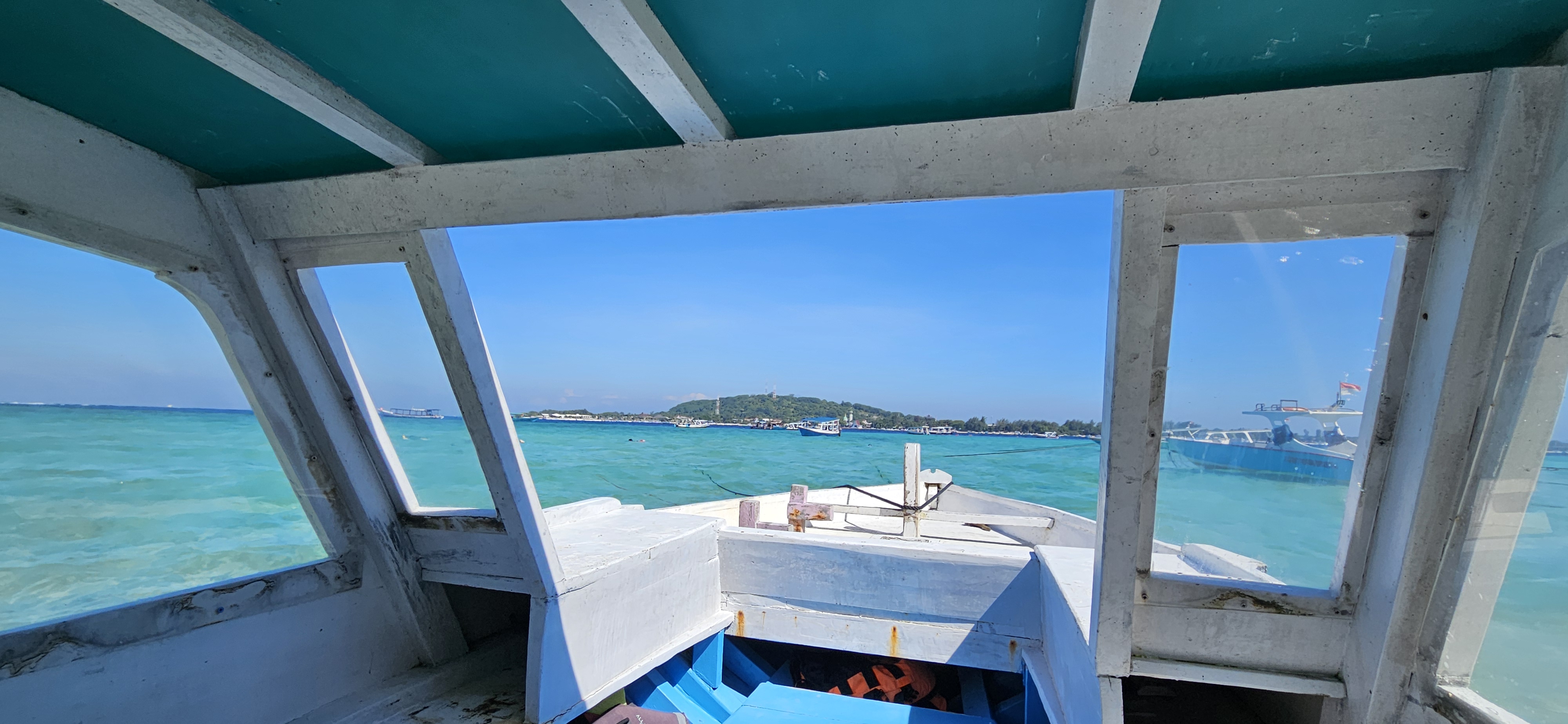
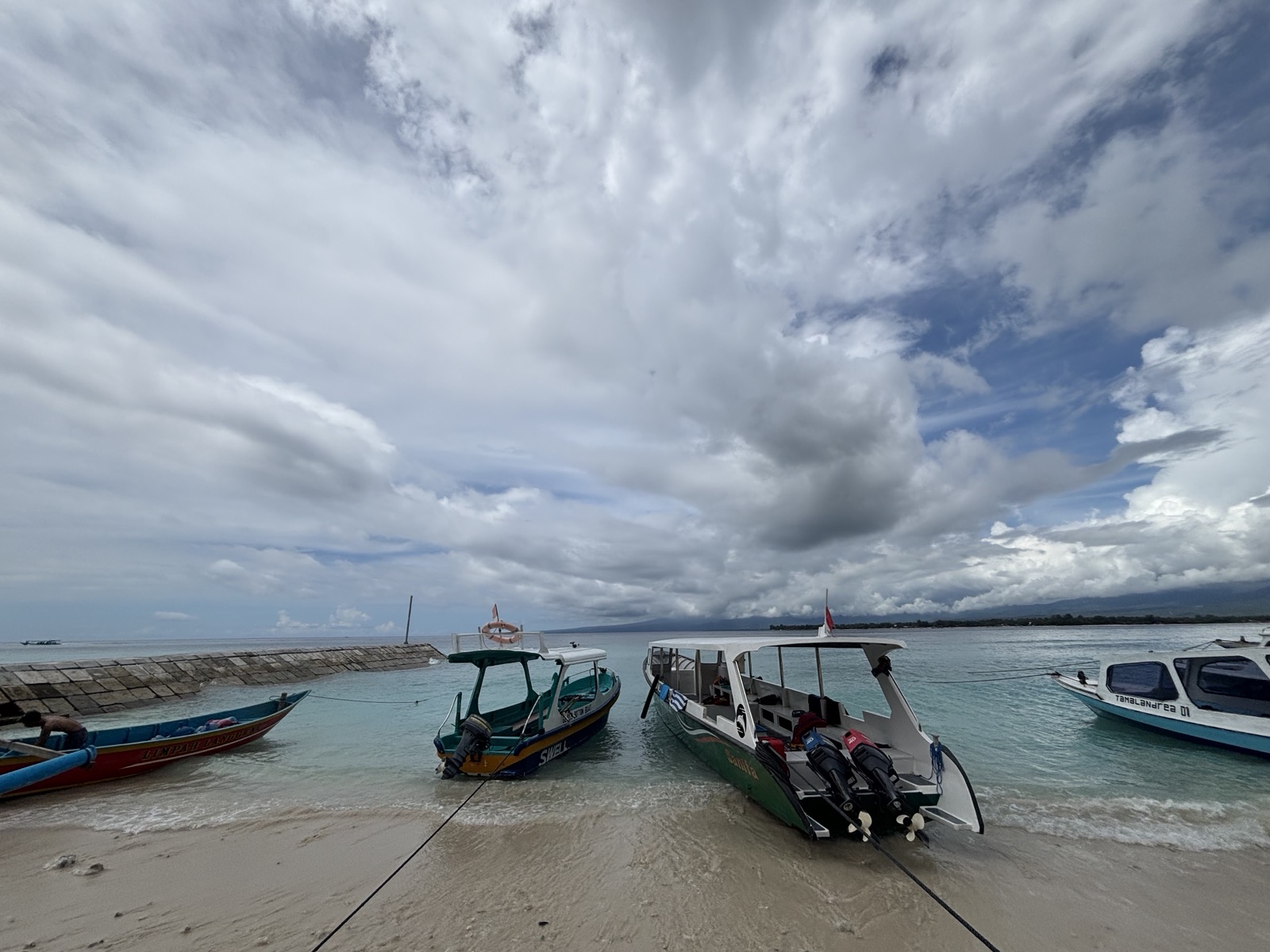
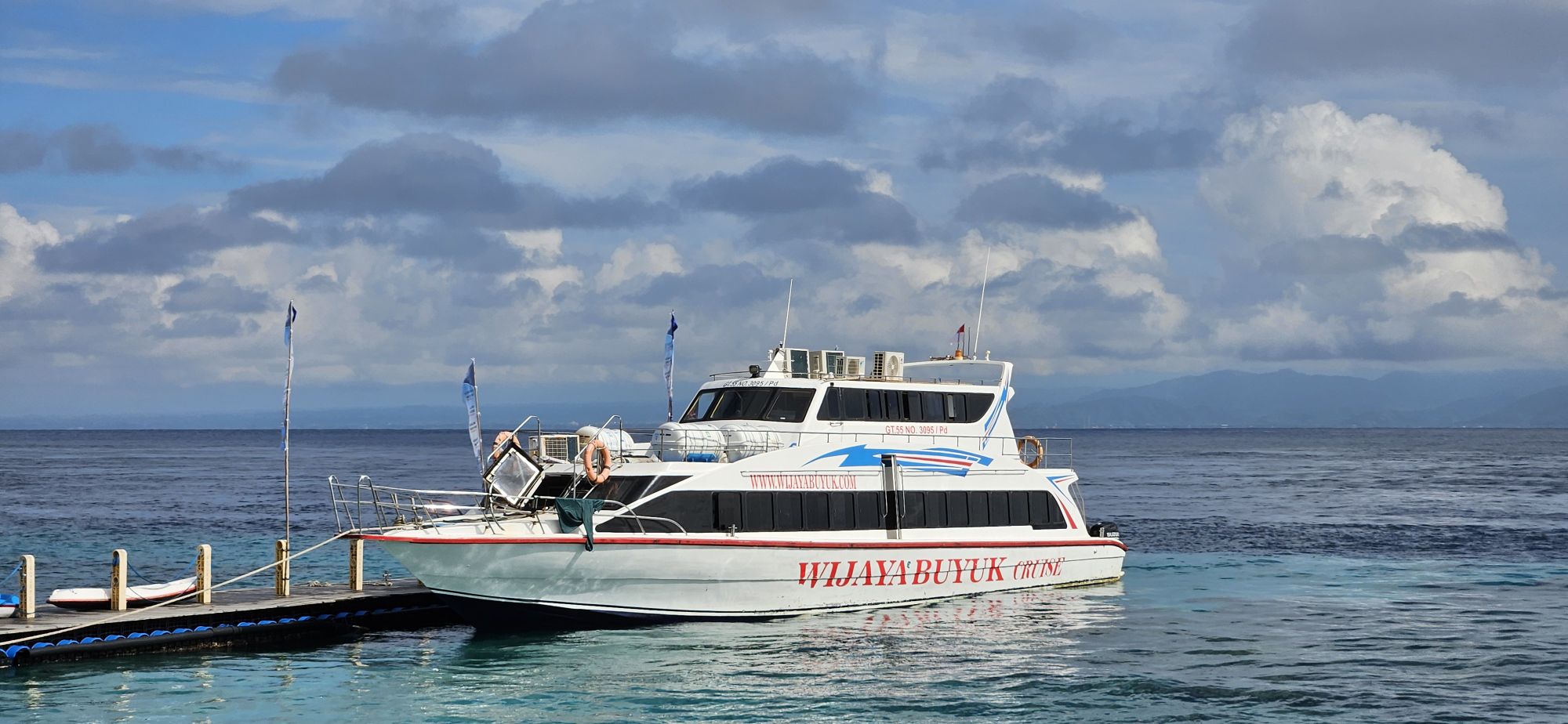
I was a bit nervous on how to get between the different islands; there are passenger ships to travel between them, but it is hard to know which are better or worse, due to limited reviews. I booked one through booking.com (12GO is also an app that can help with this), and that trip went well. Once we connected via Whatsapp, I would message them and they would give me the boat options. They are the booking agent for the boats, and there are many of those. I was also able to find reviews of their offices on Googlemaps. We would have to to visit the office to pick up our “boarding pass” which was a lanyard with a plastic card on it, to give to the boat operators when boarding.
Once we were on the islands, there are many tour operators that do snorkeling, scuba, fishing, etc tours. We found one through our hotel that was basically next door. When we wanted to do a quick boat trip from one Gili island to another (and later another), we asked them their price, and they took us, on a small speed boat, for less than taking the bigger, public boat. It worked a lot easier than I was expecting. The biggest thing we learned was to be a little flexible as storms/rain can cause delays, and also know the boats will usually run a little late anyway, but that’s island life.
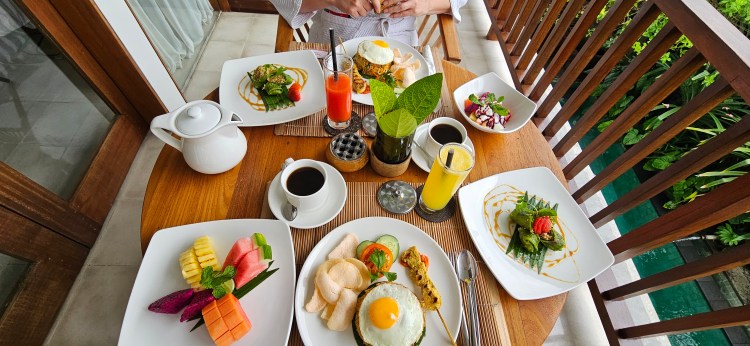
The food: Indonesian food is fresh and tasty, with a lot less oil than we ate in China; rice or noodle dishes with an egg is most common (nasi goreng or mei goreng). The vegetables and fruit are usually great. There are also many western restaurants if one gets tired of Indonesian food, and we ate at our fair share. I did get food poisoning from cooked rice that was left out too long; the lesson I took from that was, if there are no people in a restaurant when you arrive, even if the reviews are good, go to one that where are people eating, meaning they have prepared food recently. We broke that rule and that’s where it happened.
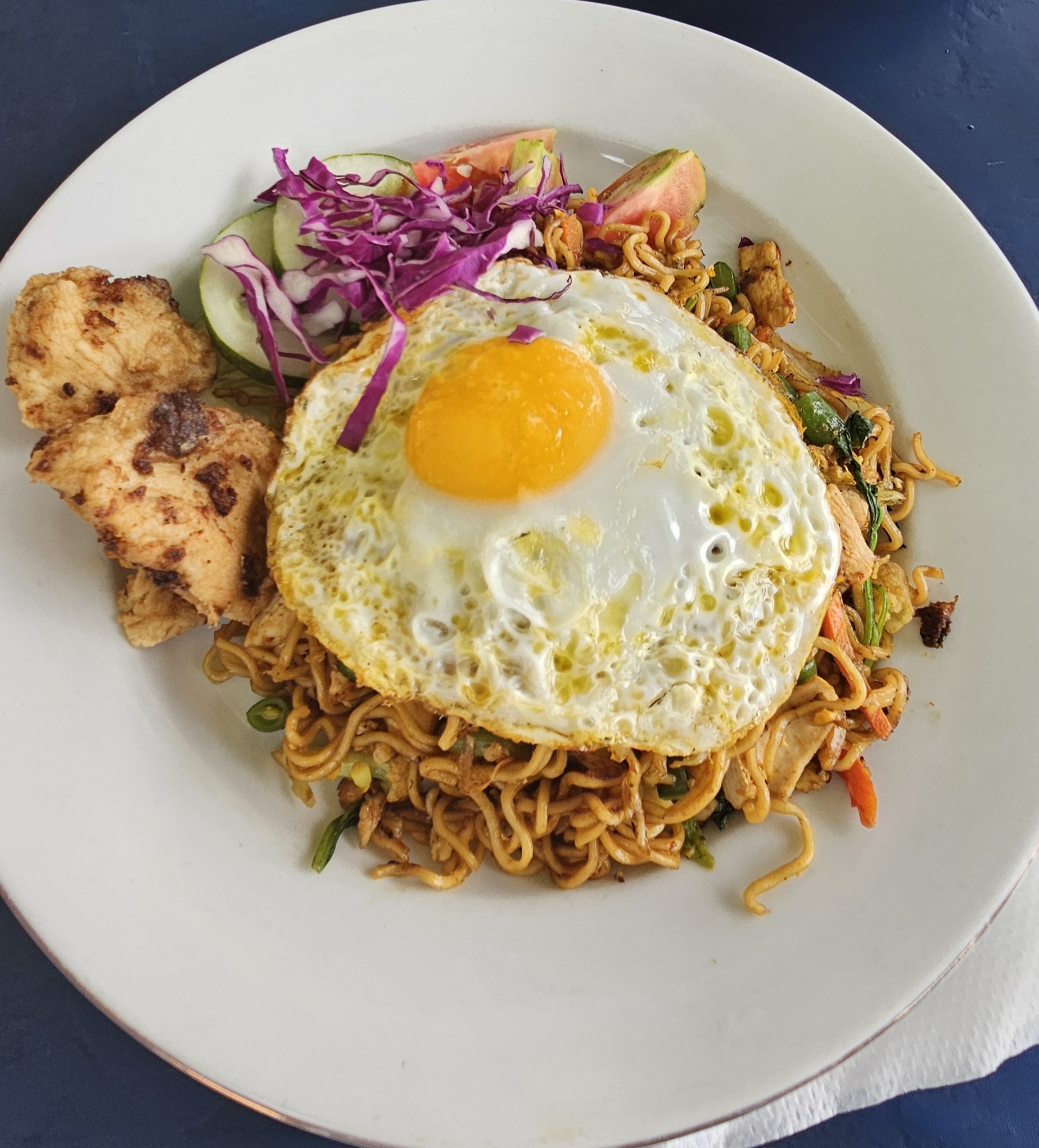
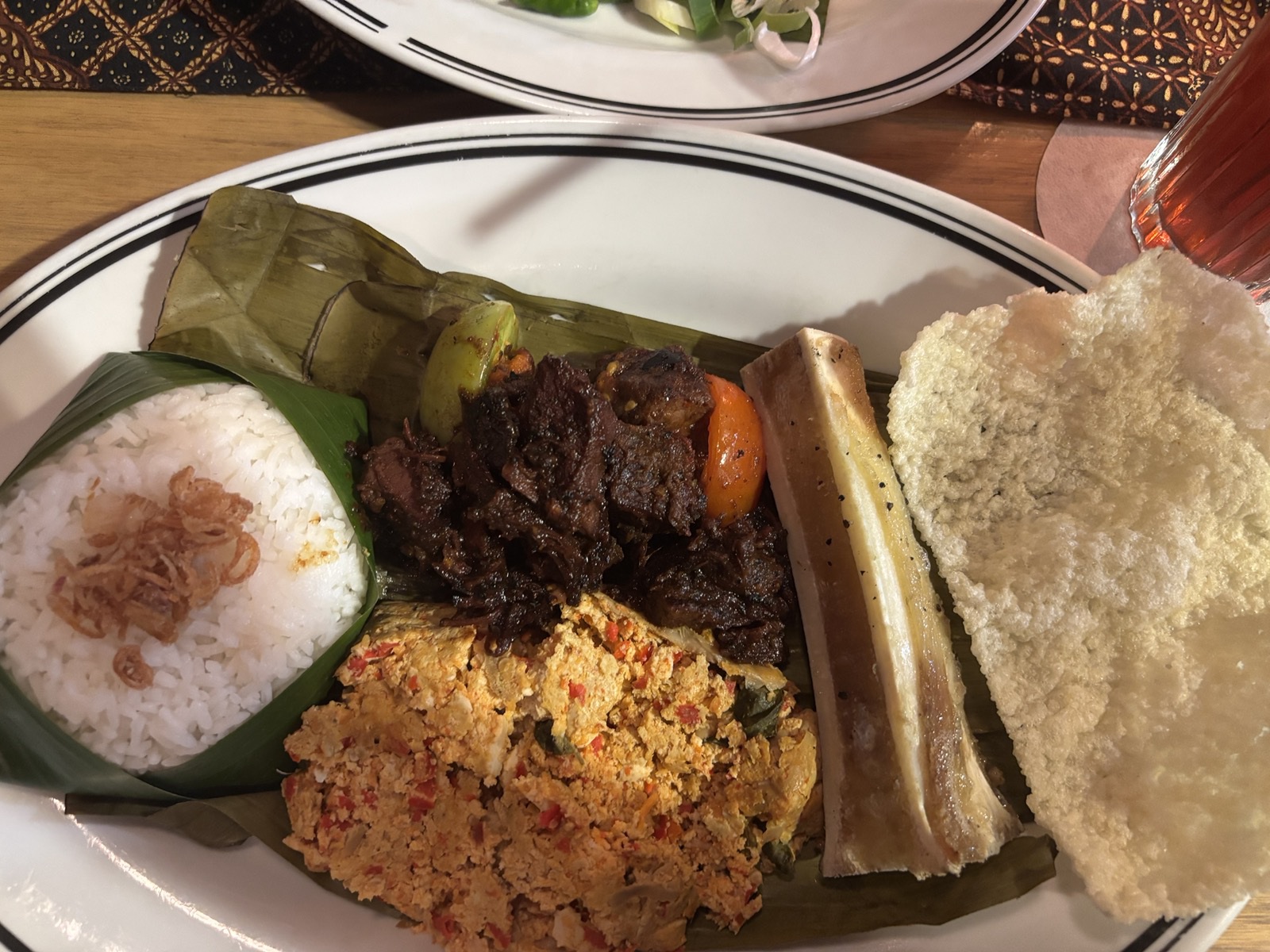
Most food was not spicy, and they would say on the menu if it was; there was often a spicy dipping sauce. Many meals also came with a side of chips, that had a fishy flavor to them; after the first few times trying them, I grew to like them less, especially if they were not really crispy; Jessica did not like them at all (you can see them below, next to the egg).
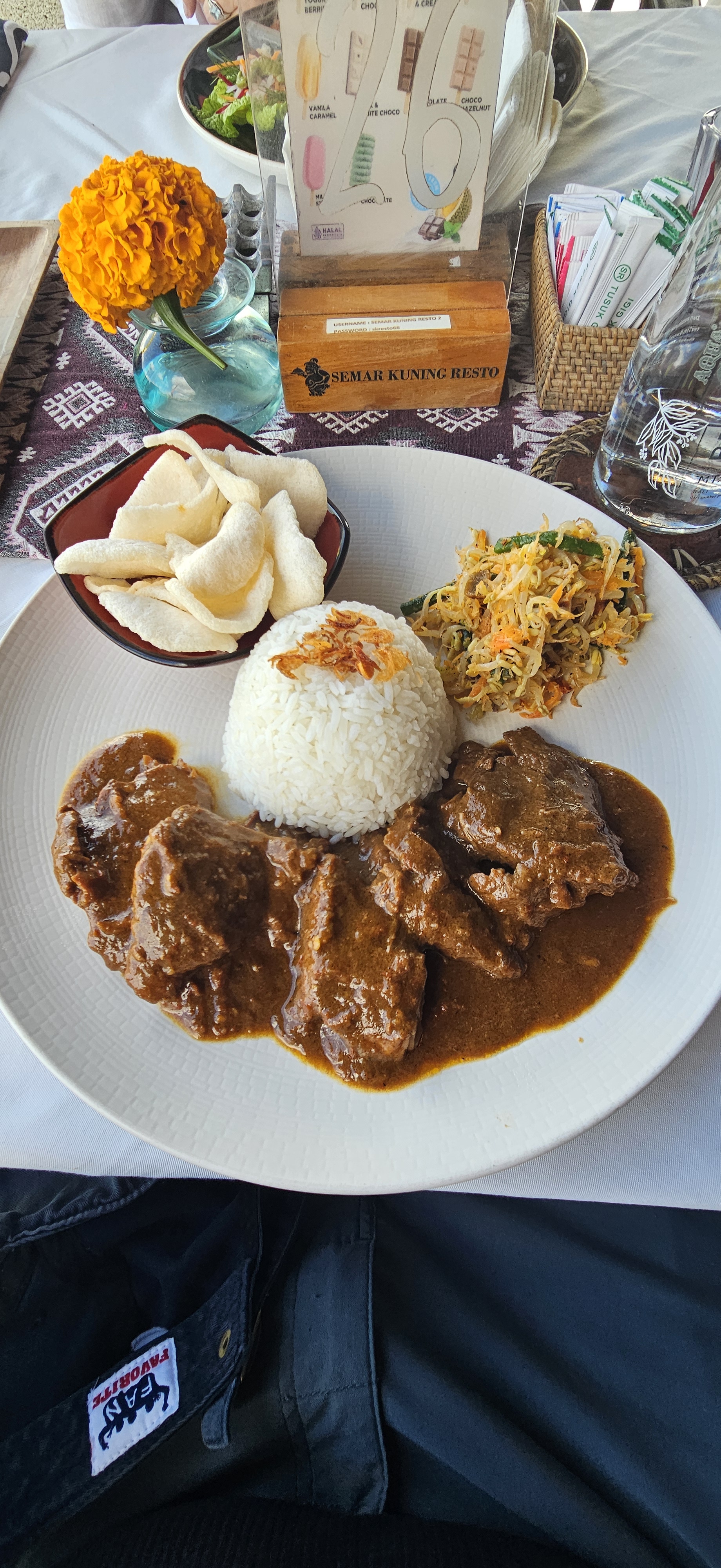
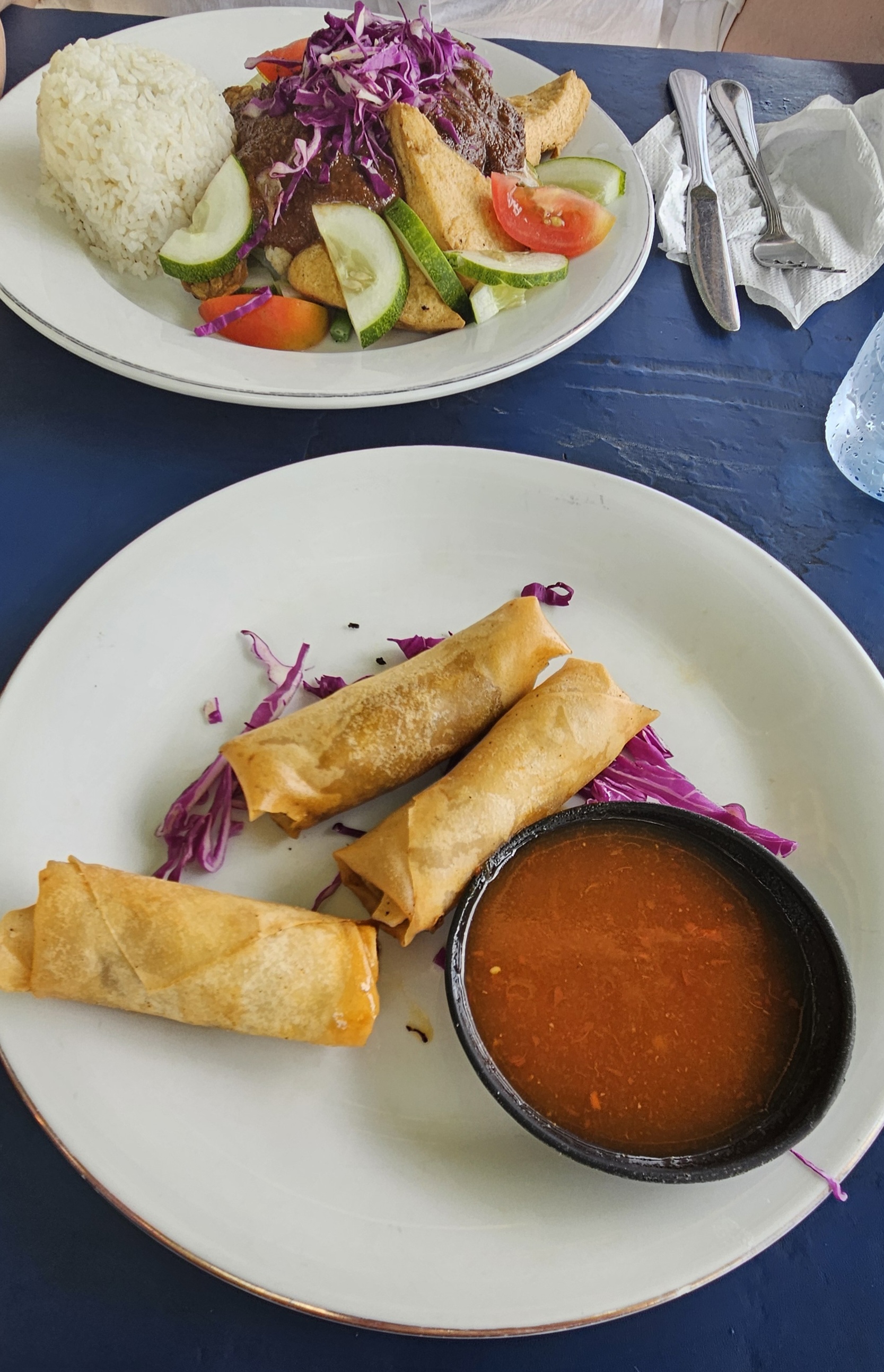
Food we ate on Gili Meno below (from left): Mie Goreng, Beef Rendang (a personal favorite) and spring rolls
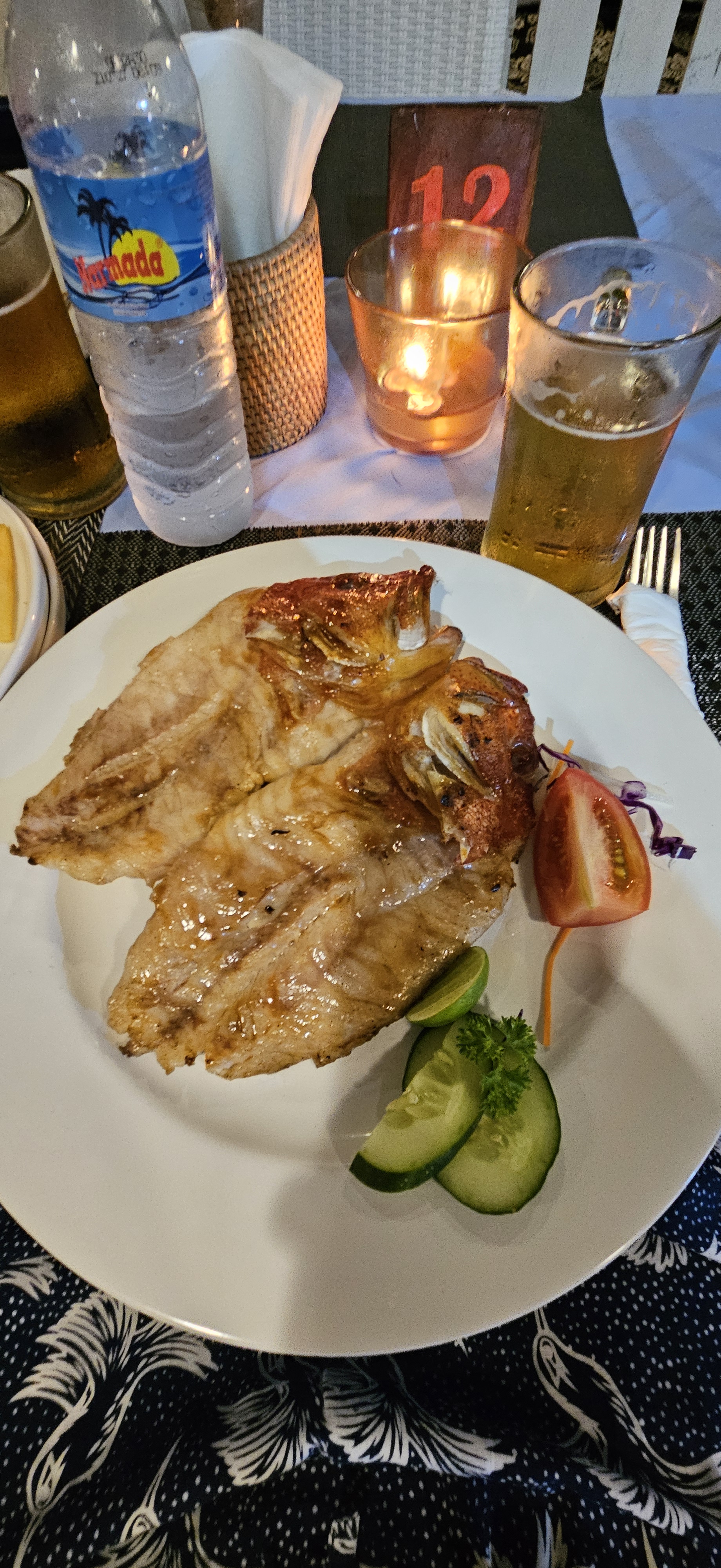
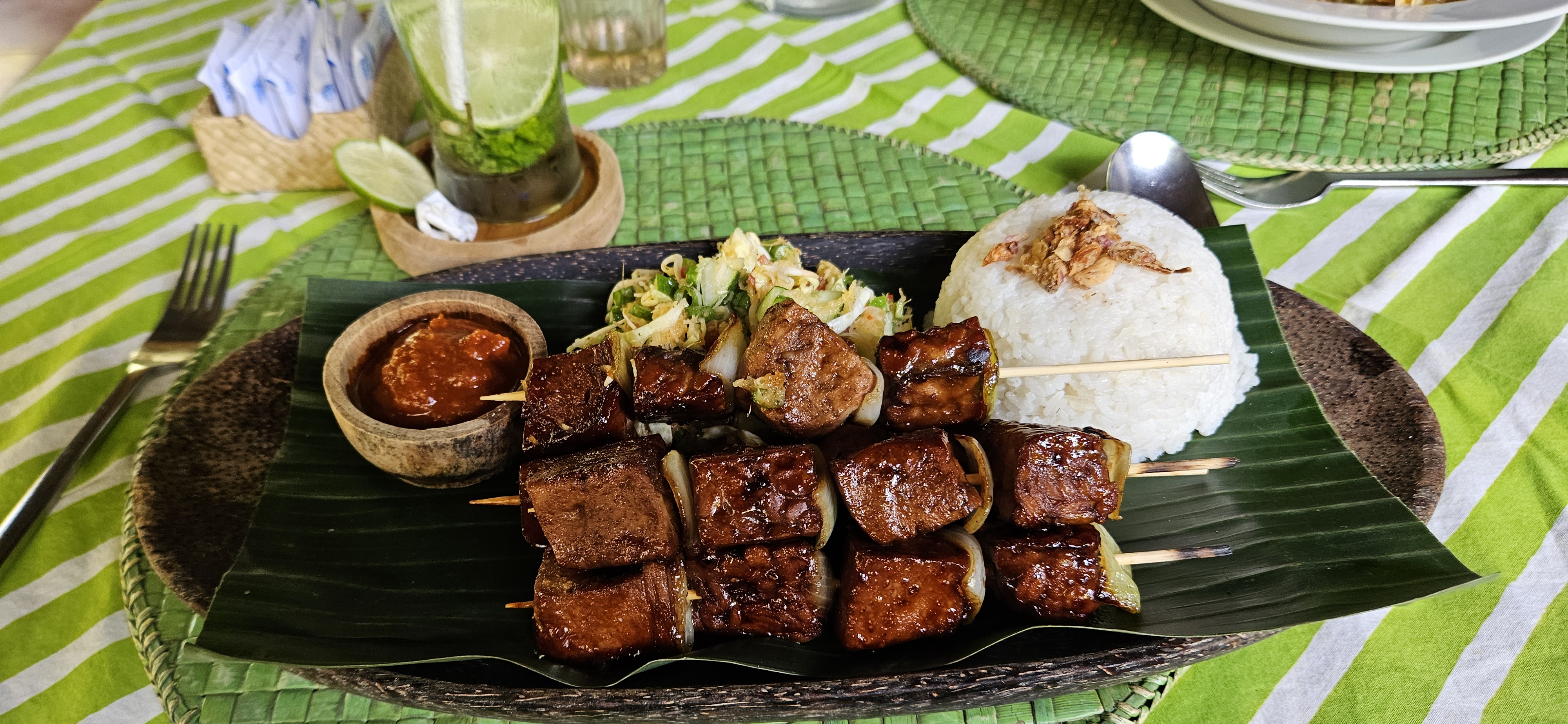
Satay and Fish were also very popular, and we ate a lot of both:
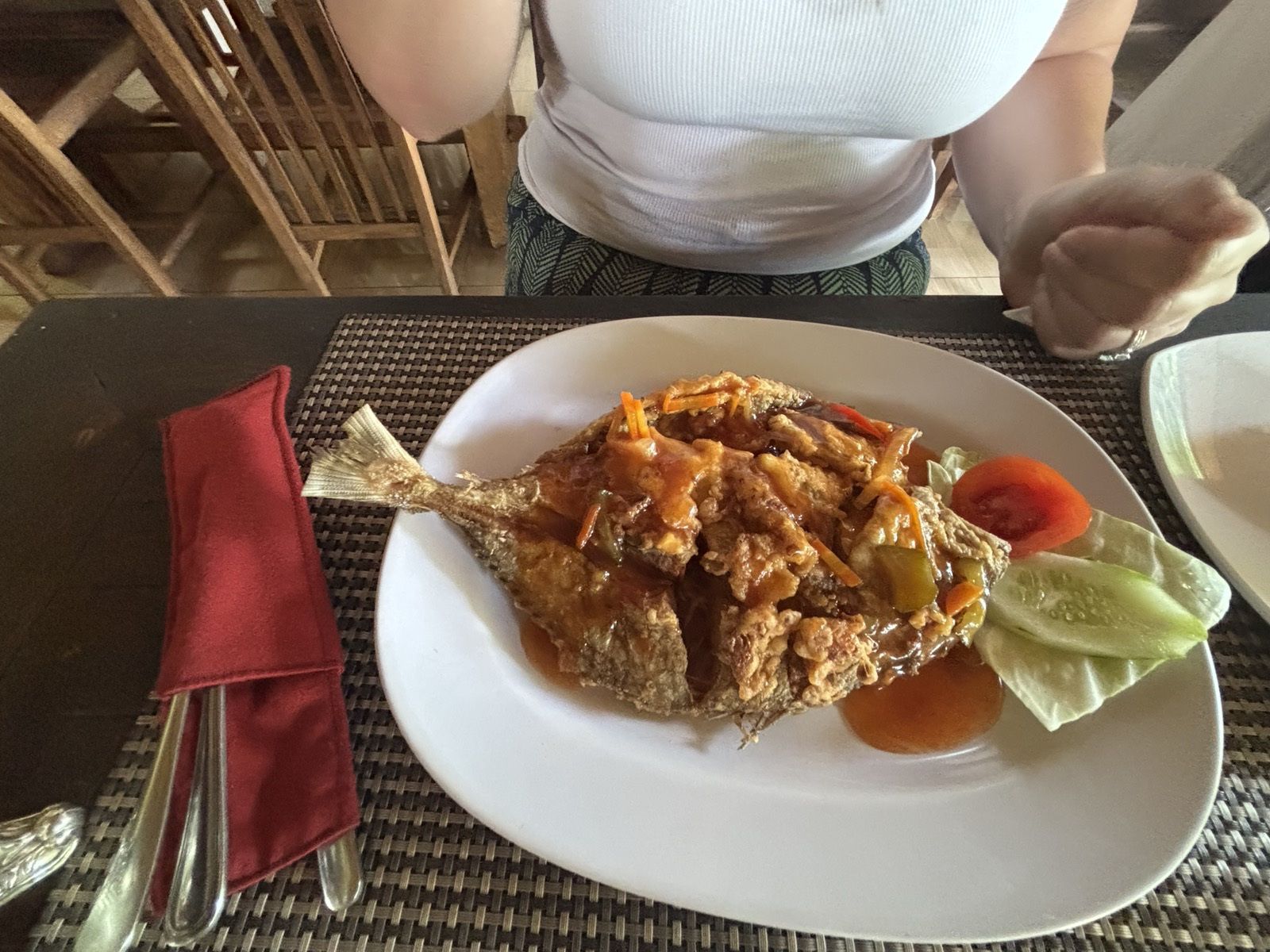
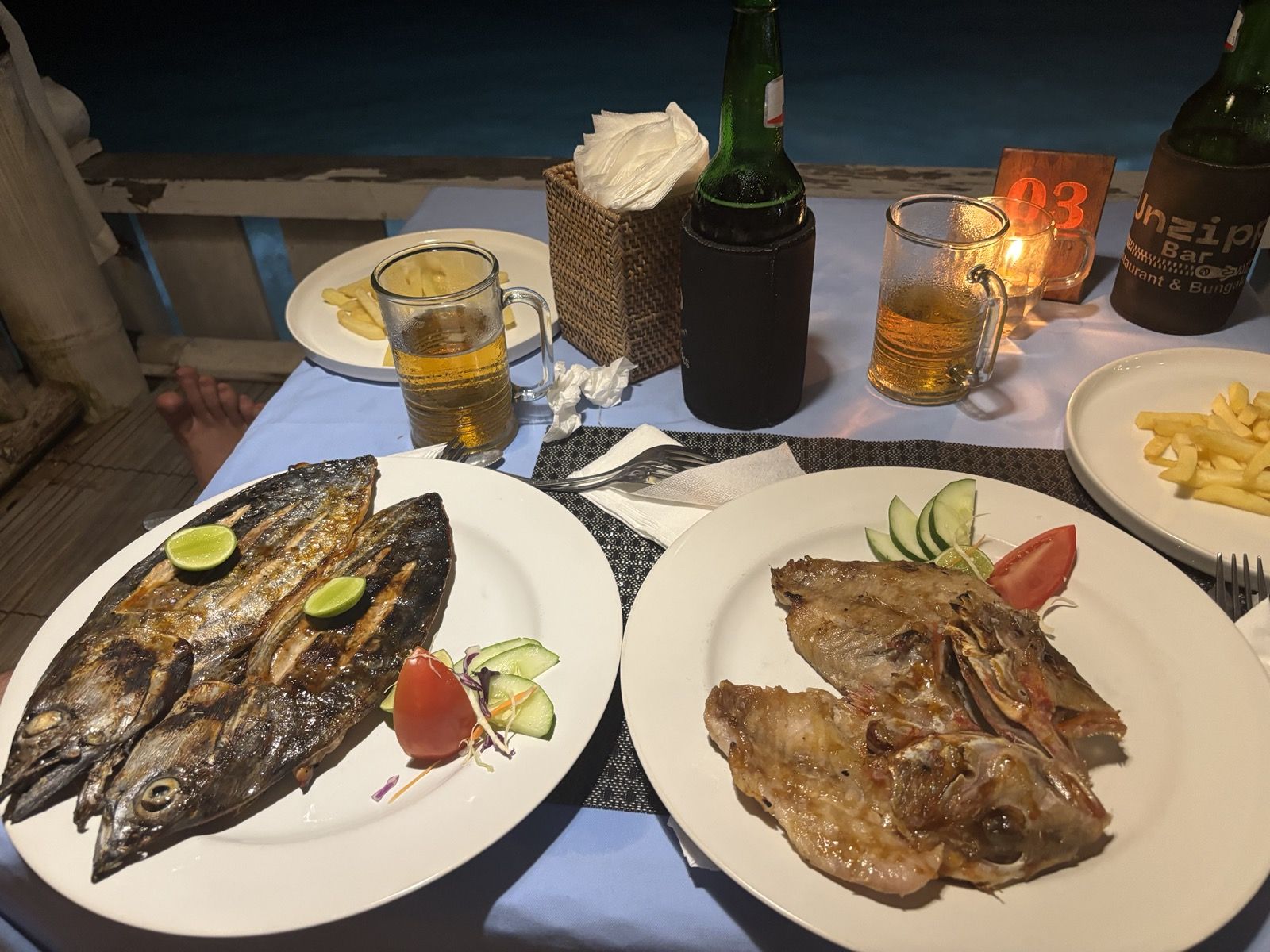
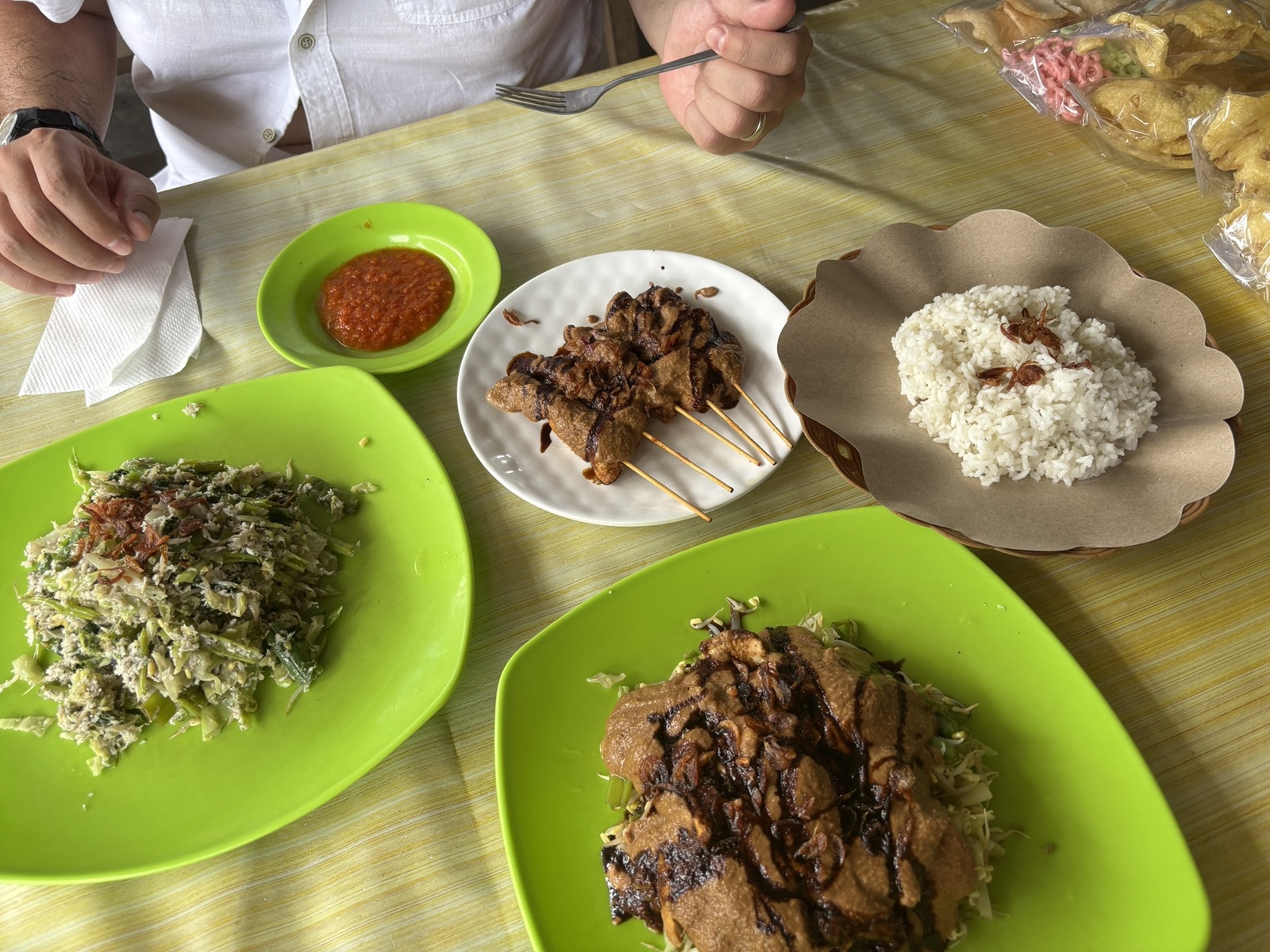
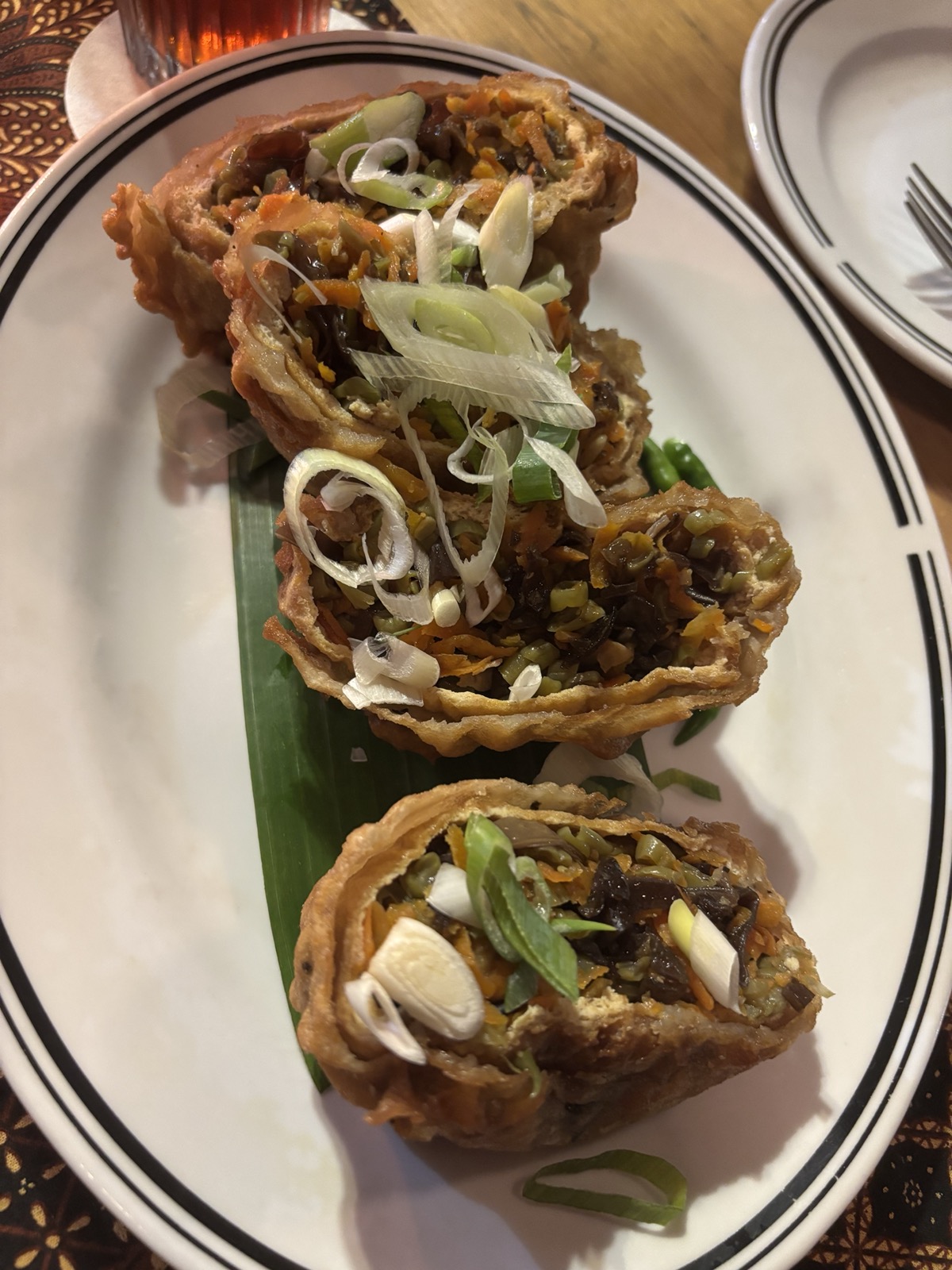
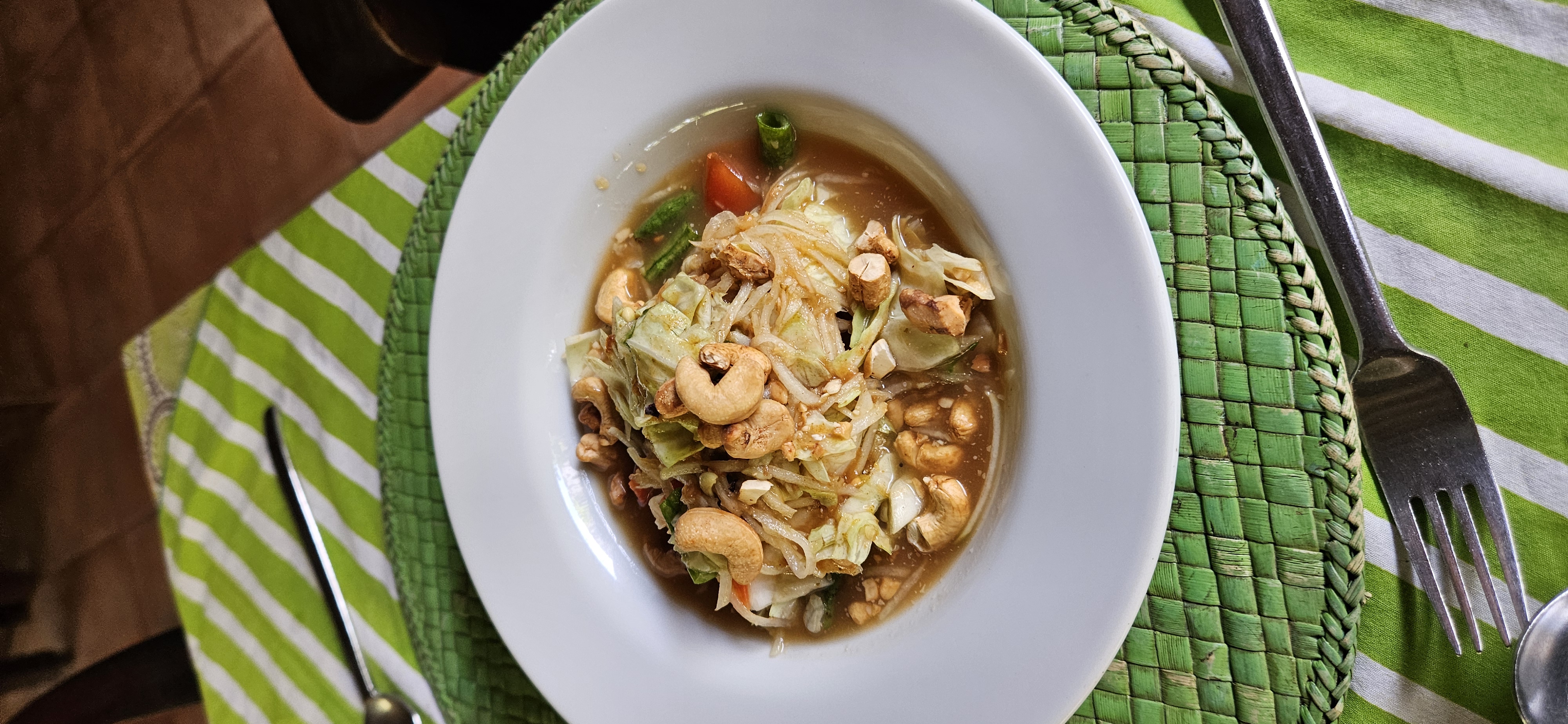
There are many vegetarian options as well; here is some fried tofu that I ordered and really enjoyed in Jogjakarta, along with Jessica’s cabbage and cashew soup;
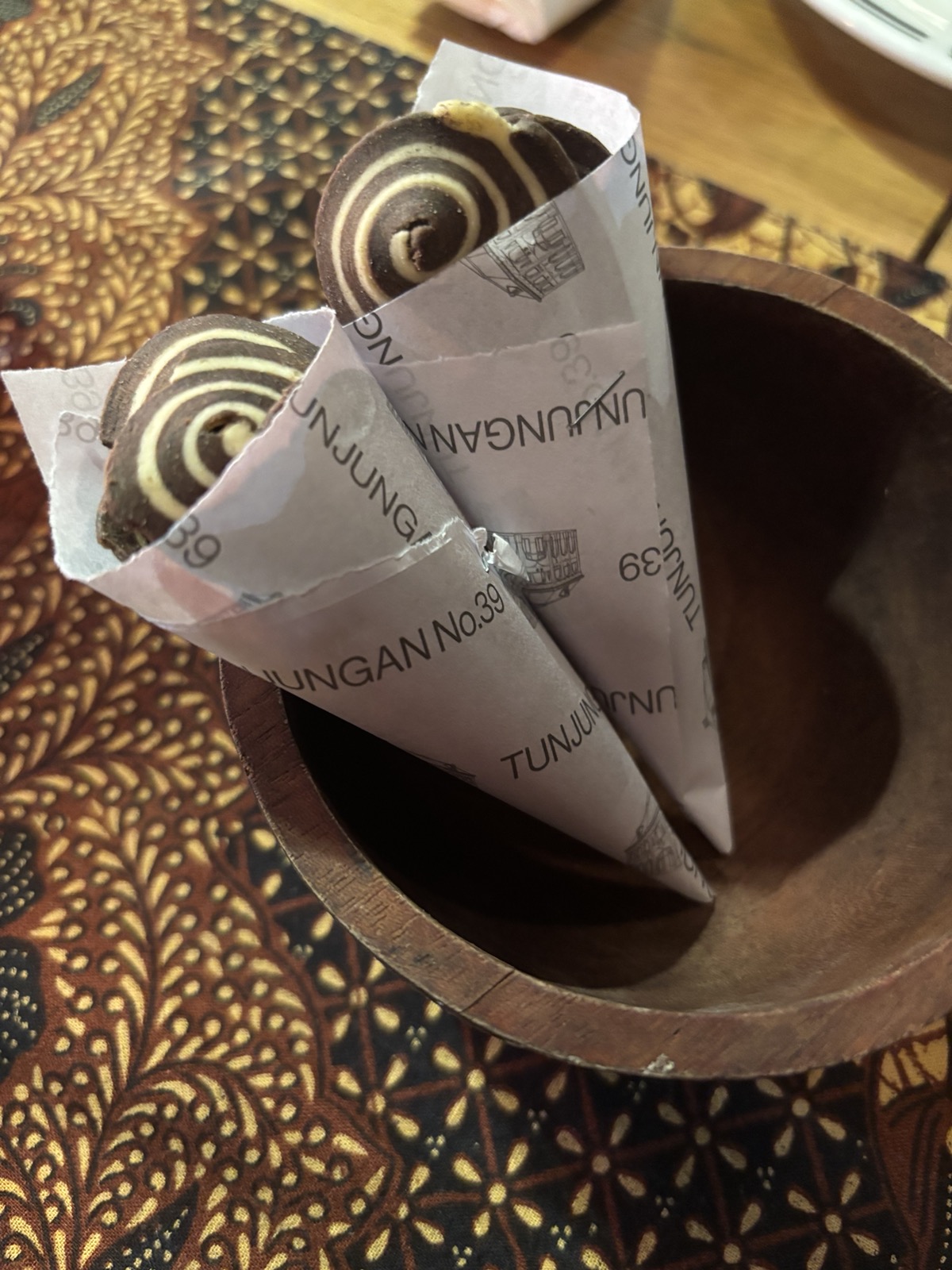
The snacks and small cakes were also great.
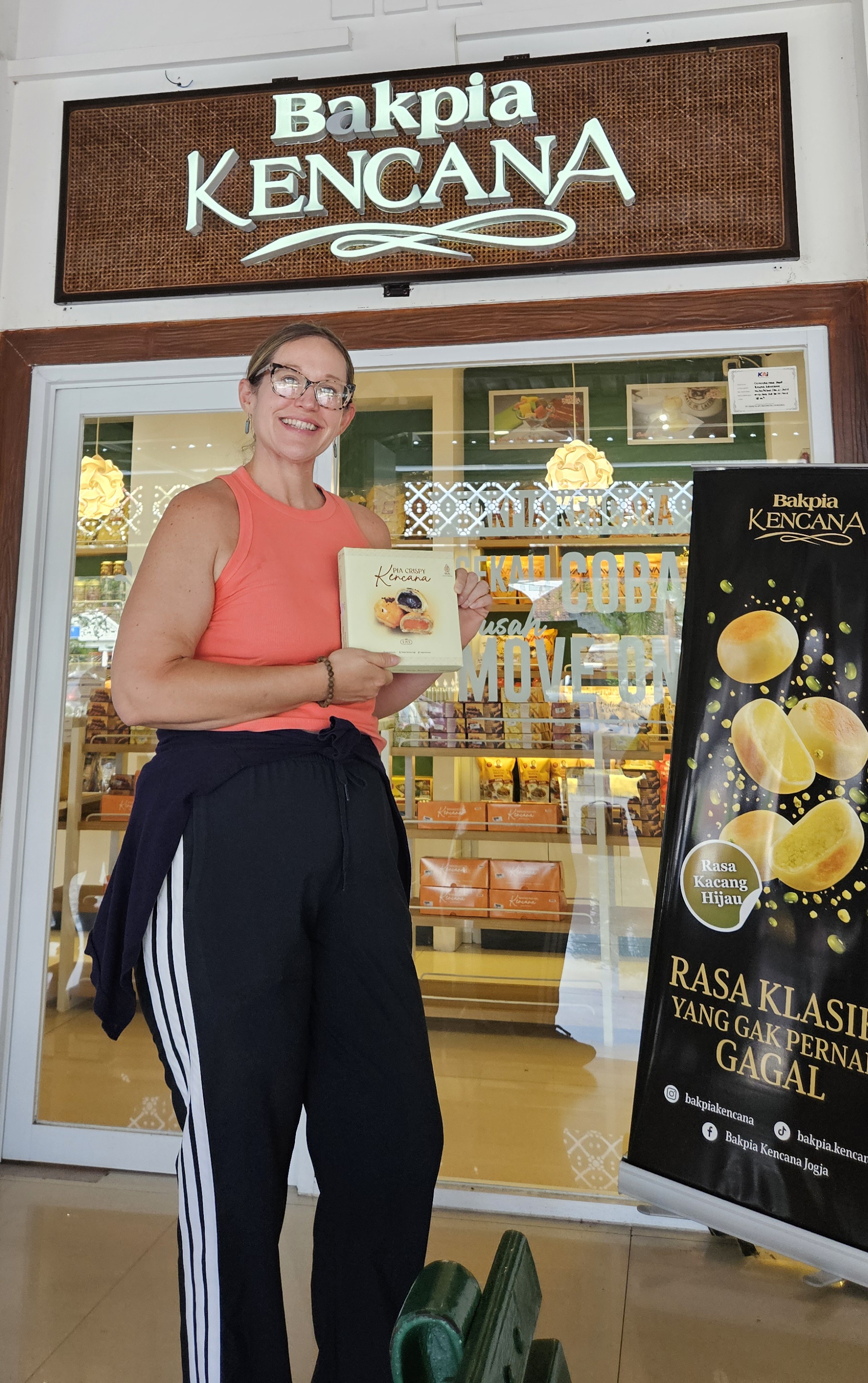
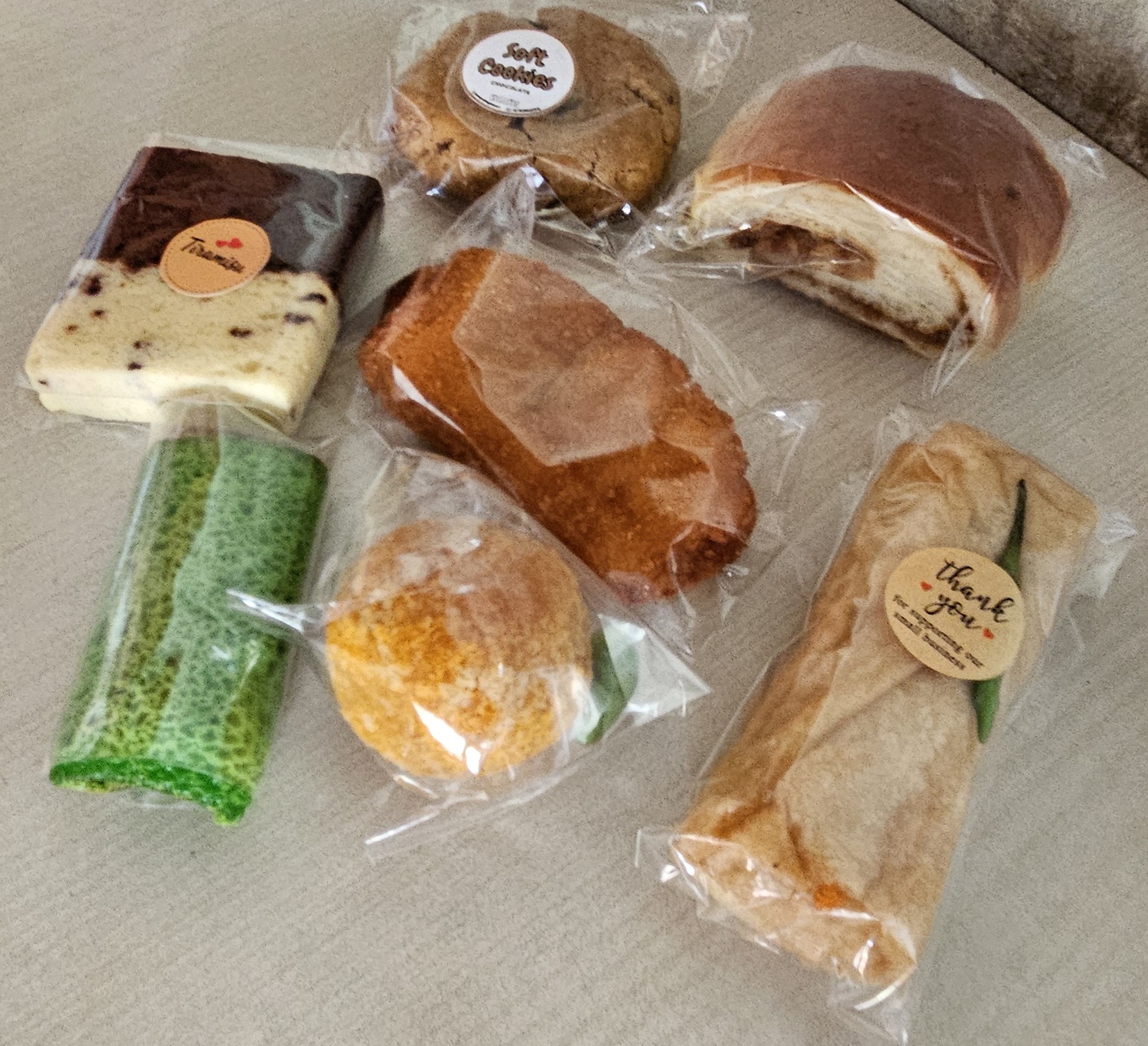
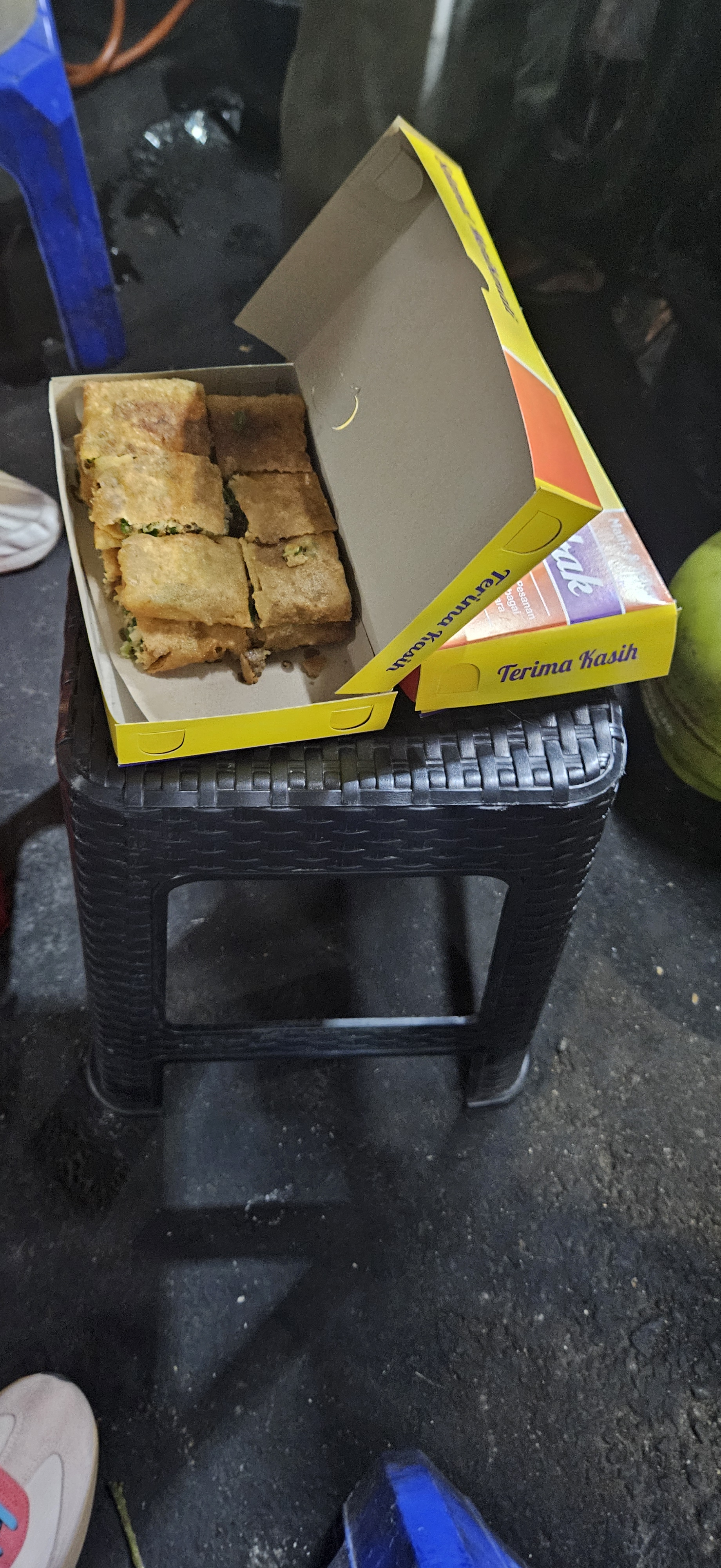
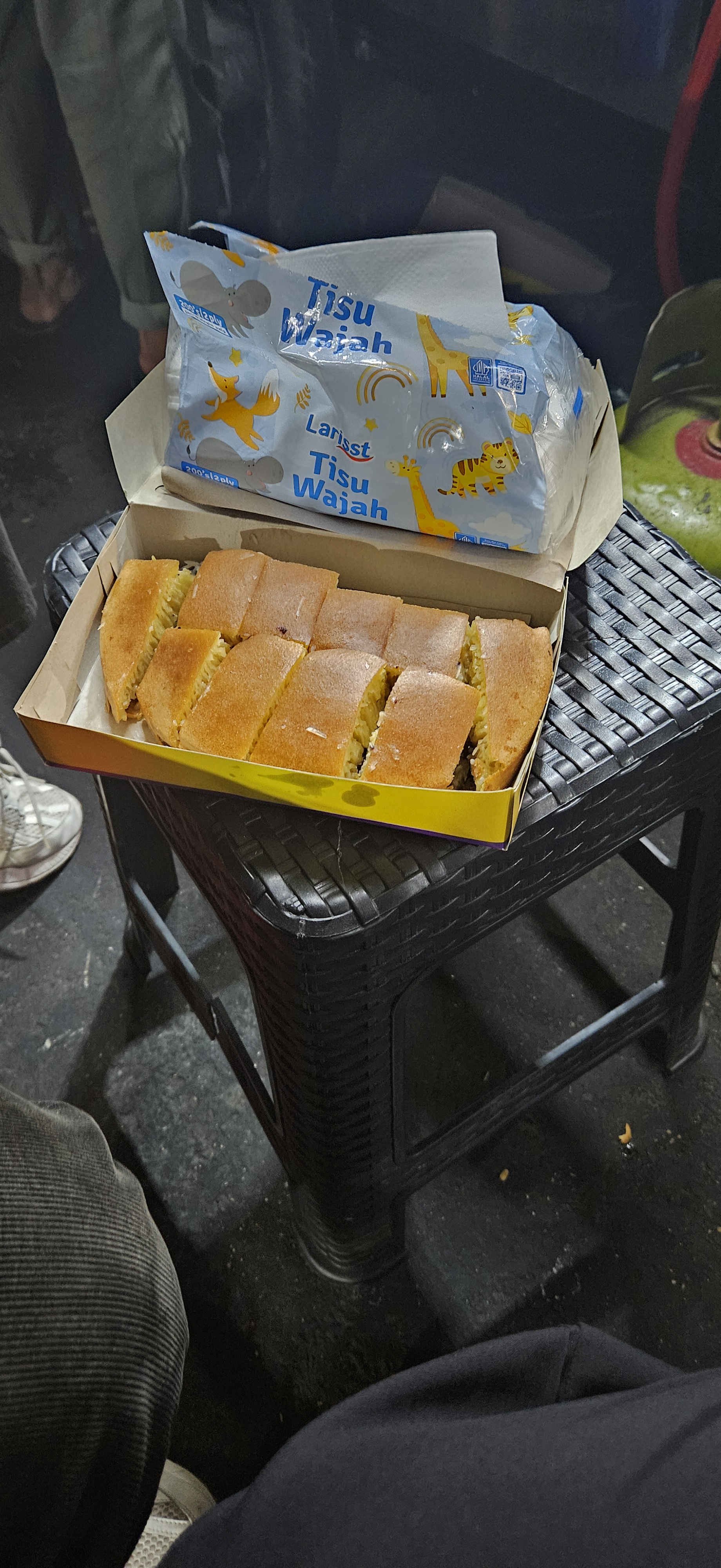
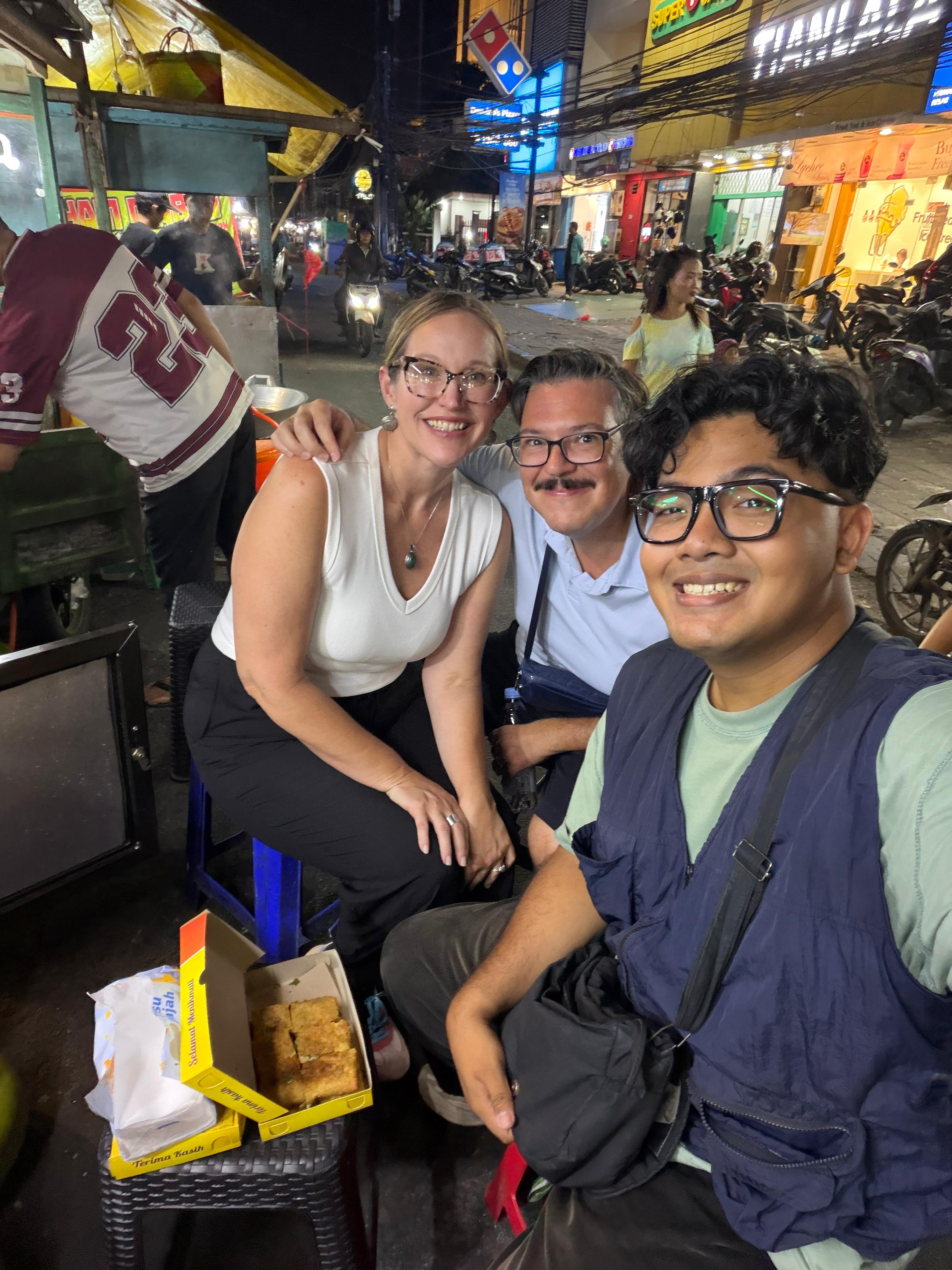
We did not eat much street food, as usually it was hot food (and the temperature was so hot, and we were already sweating) and most of it didn’t look as good as wanted it to, so ate at restaurants. We did get to eat some Martabak on a tour in Jakarta, and it was so good, both the savory and sweet options.
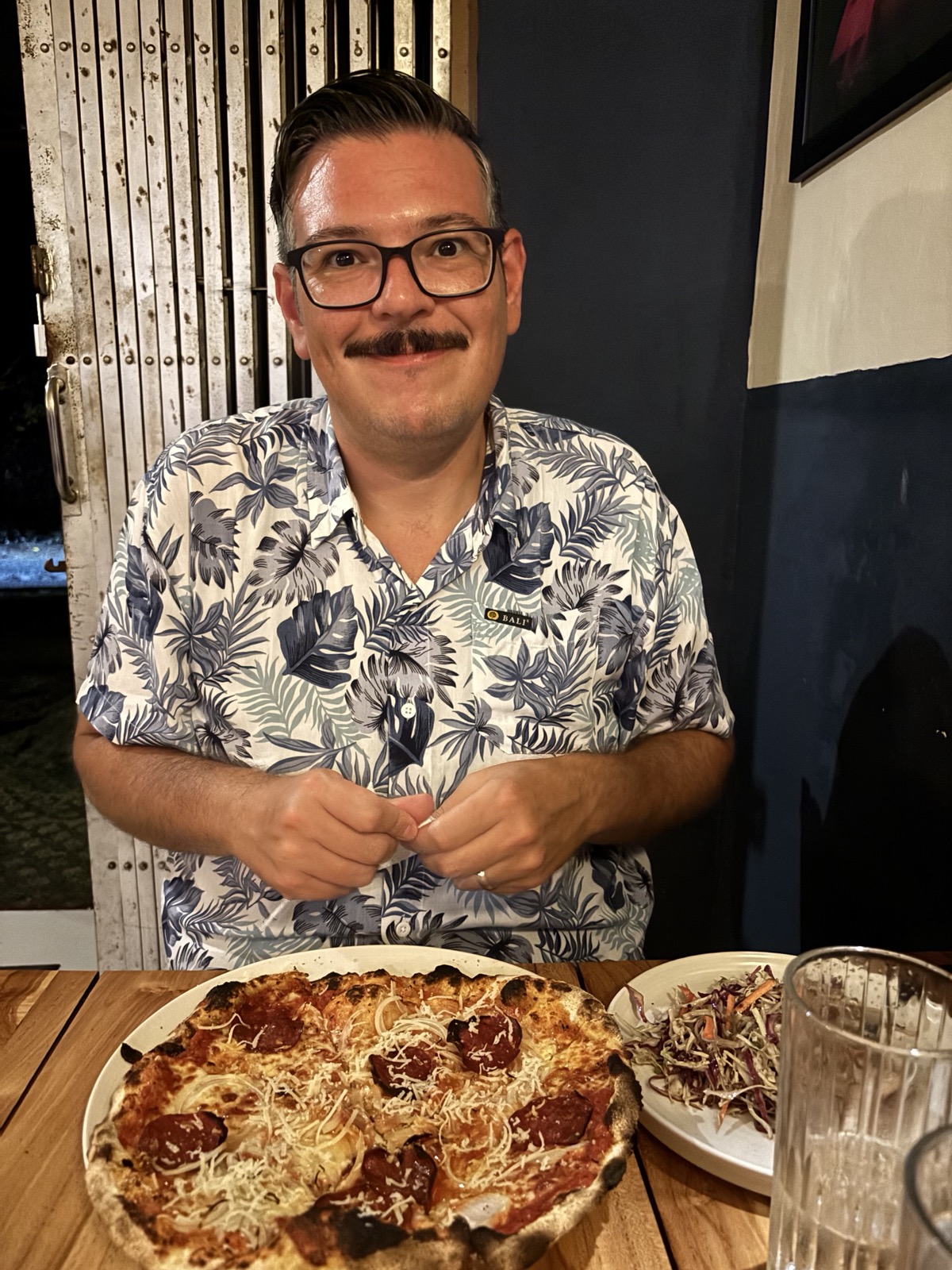
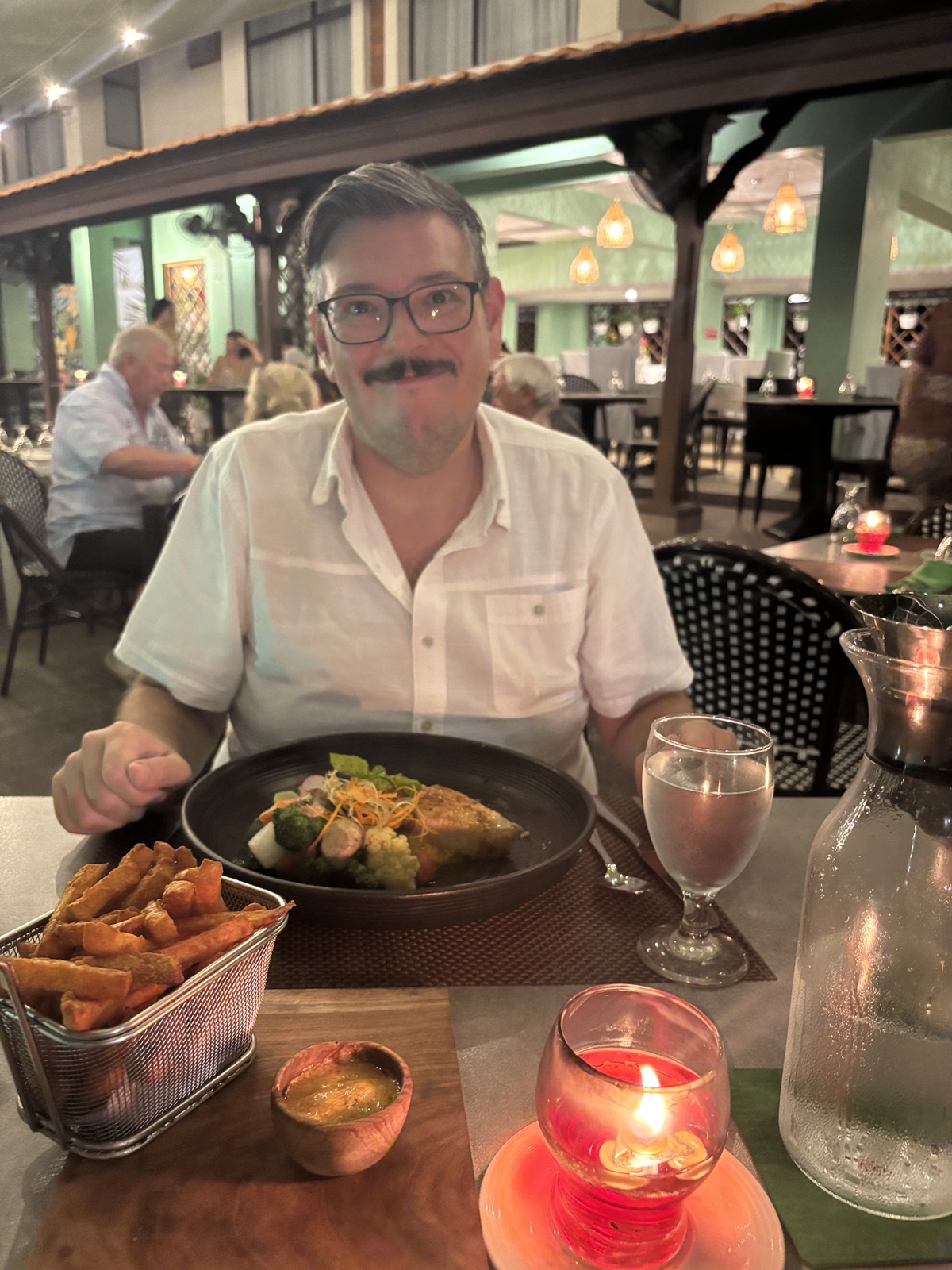
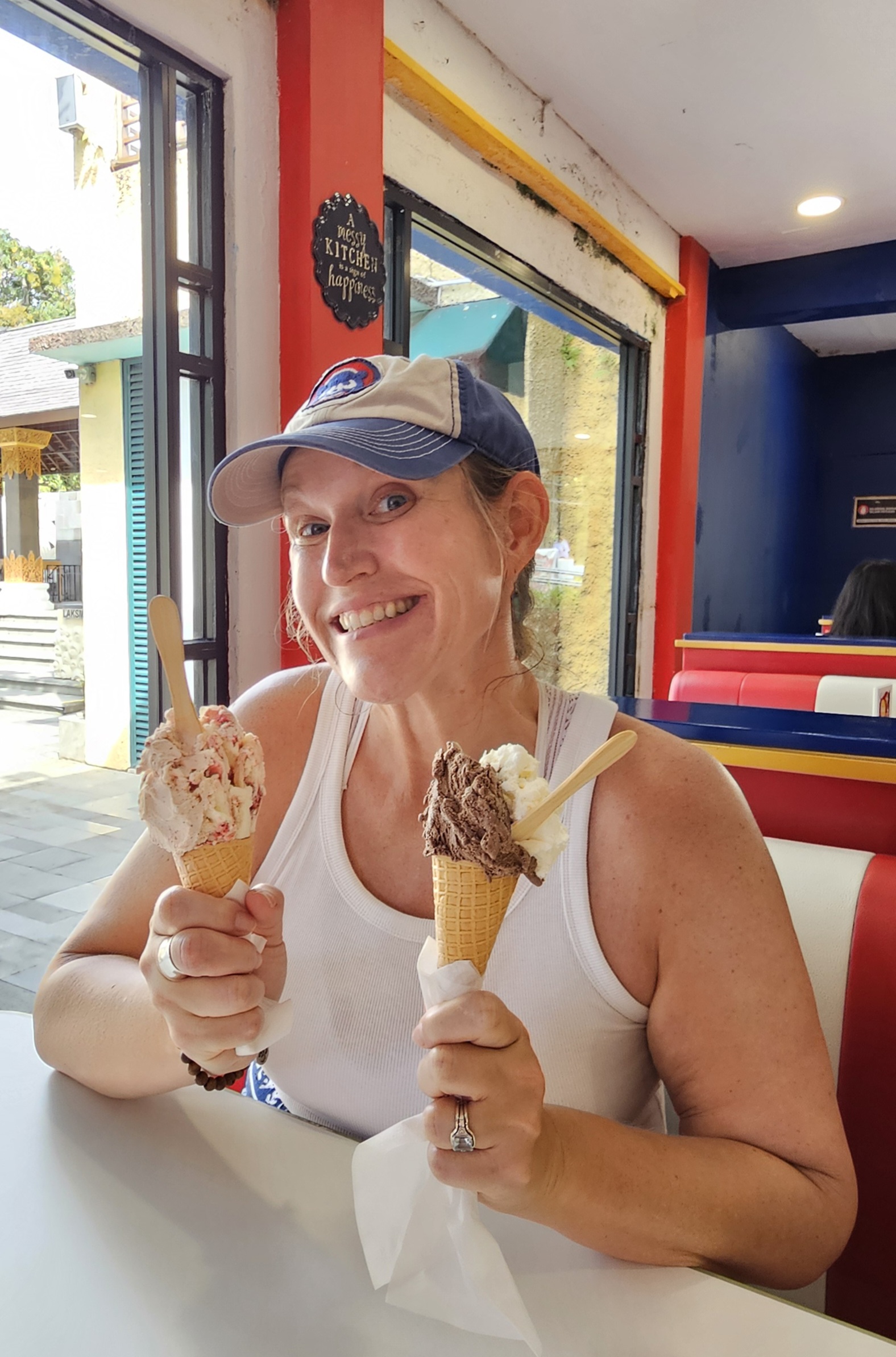
Our western food eats included pizza, fish, ice cream and burgers.

Paying/Money: We were able to use credit cards at 80% of the stores and restaurants, all except the smaller places; the mom & pop convenience stores (where we usually only purchased bottles of water) and smaller Warungs. ATMs are available, especially in the cities on Bali and Java; not nearly as many on the Gilis or Nusa Penida.
Hotels: We booked our hotels through booking.com or trip.com, whichever was cheaper. We would look for the hotel that had the amenities we needed (air conditioning and a private bathroom) and then compare our options. There are other hotel booking websites/apps out there; these two have always worked well for us. I booked many of the hotels that had free cancellation (usually up to one week before check-in), in case we changed our minds, and would try to compare the rates as we approached the cancellation deadline, because sometimes the rates would drop.
We also stayed at some homestays, which are unique and fun, while in Bali. They are often much less expensive and were a different experience; I don’t think I would stay in one longer than a week, but for that time-frame, it is worthwhile for the experience alone. We were able to talk to locals and ask questions and learn a bit more about the lives of the people that lived there.
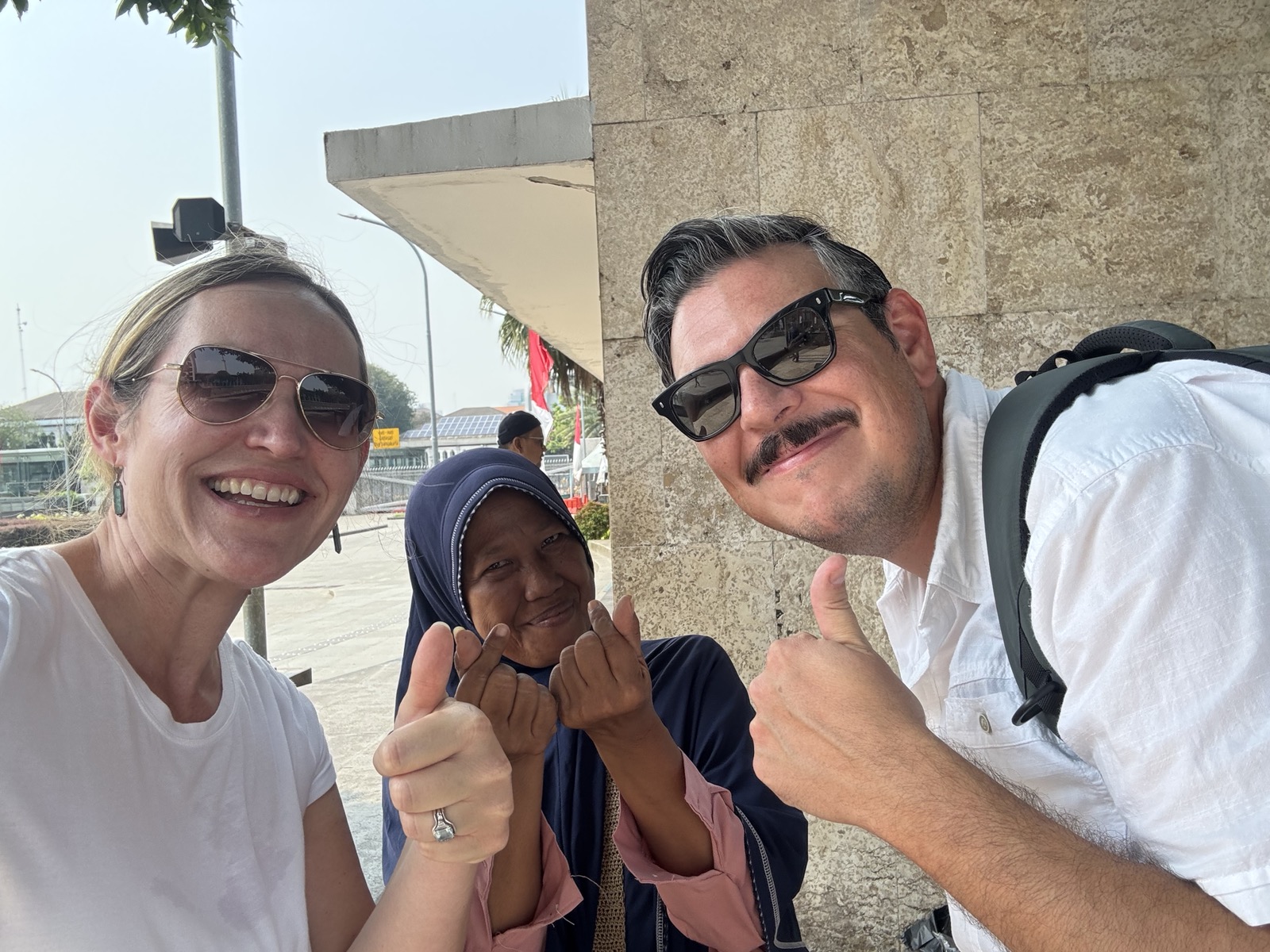
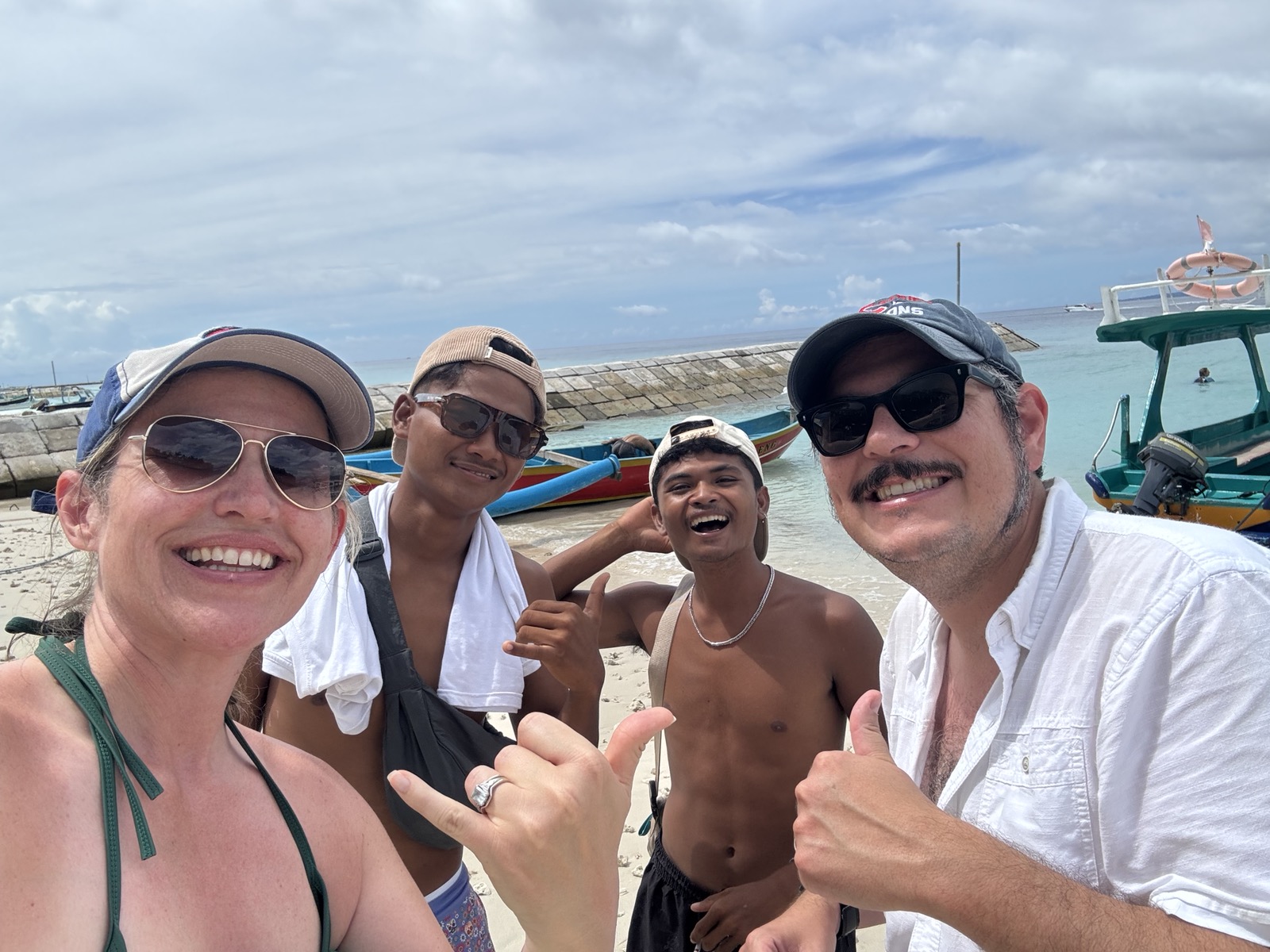
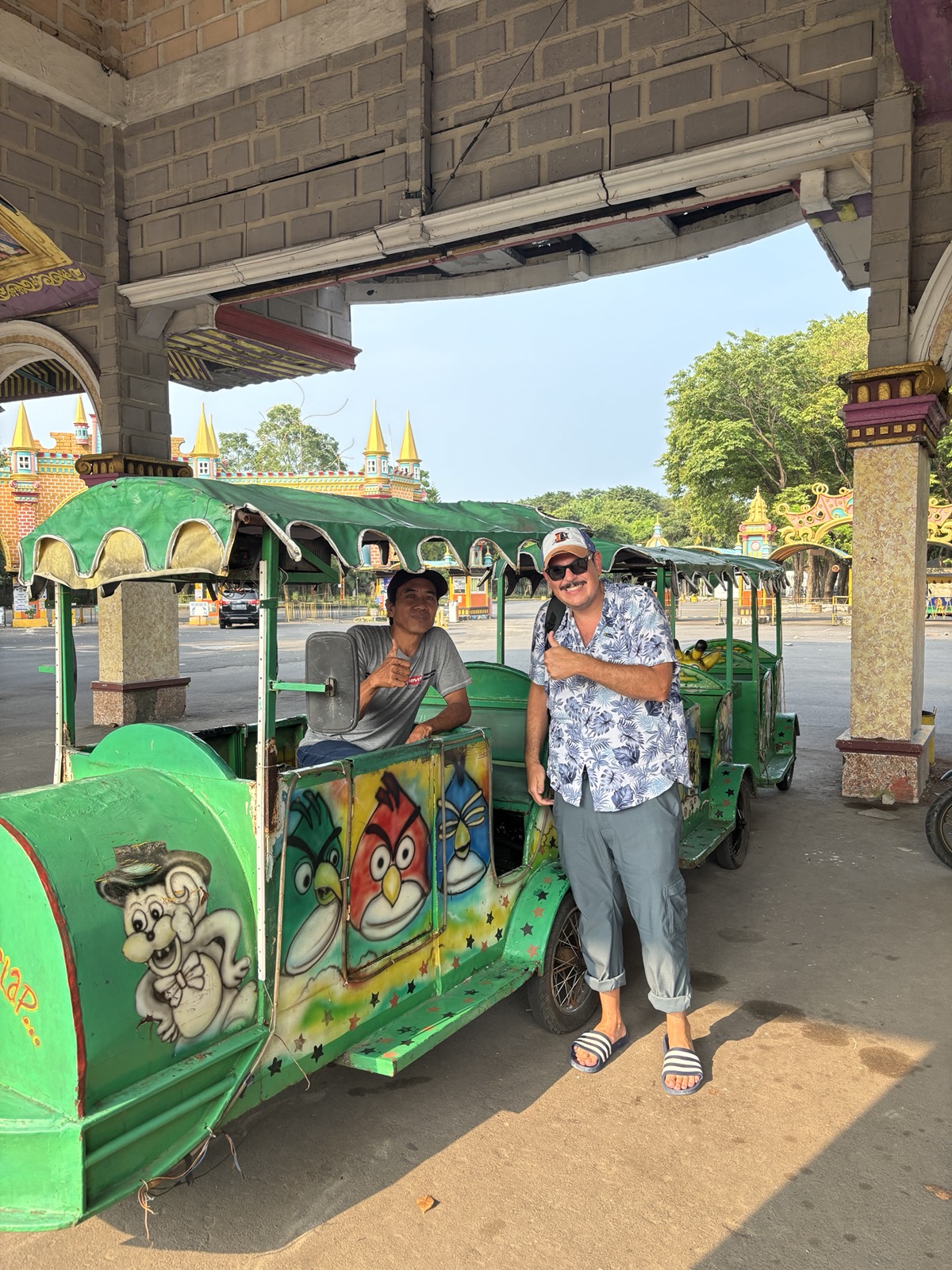
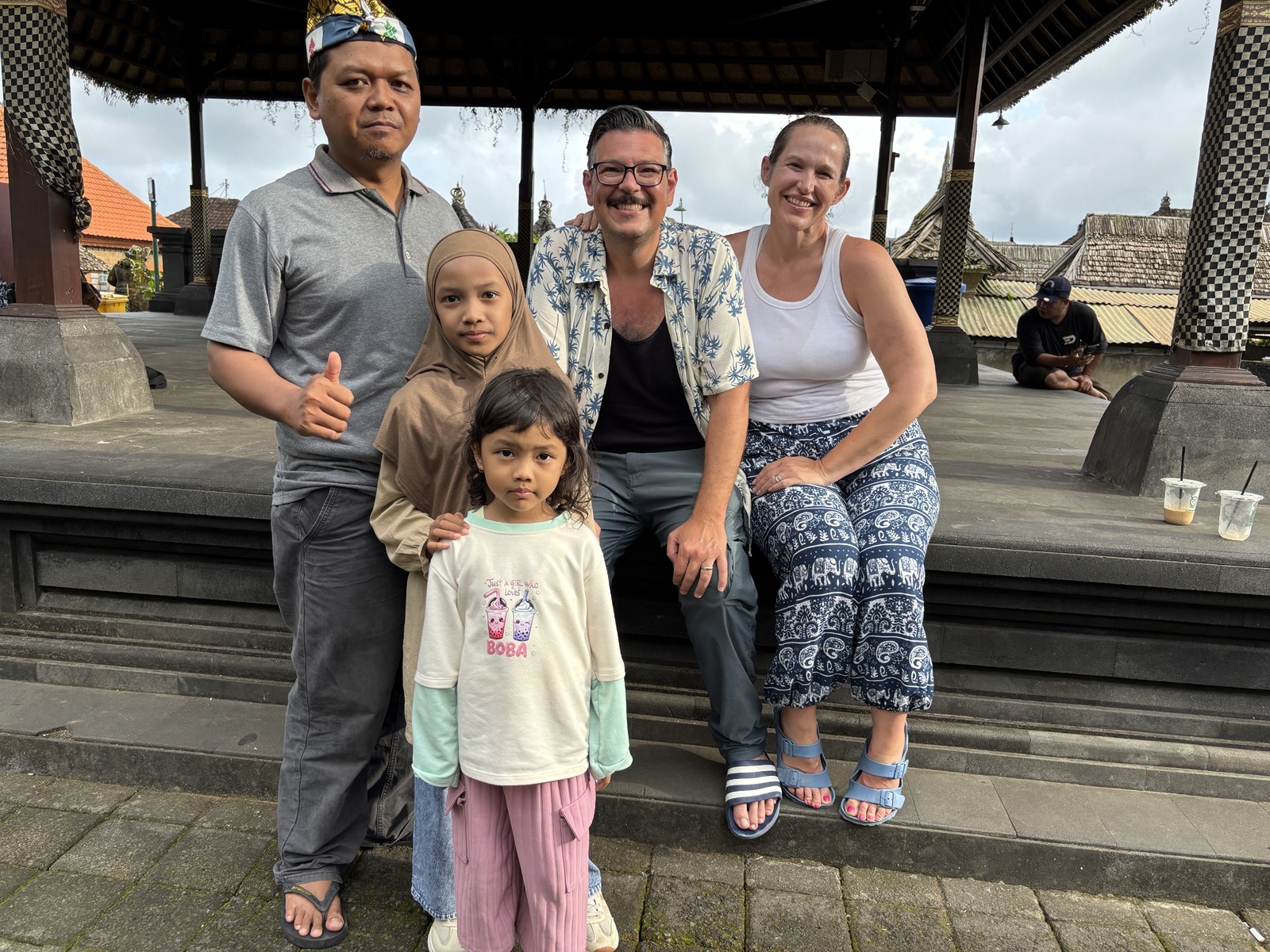
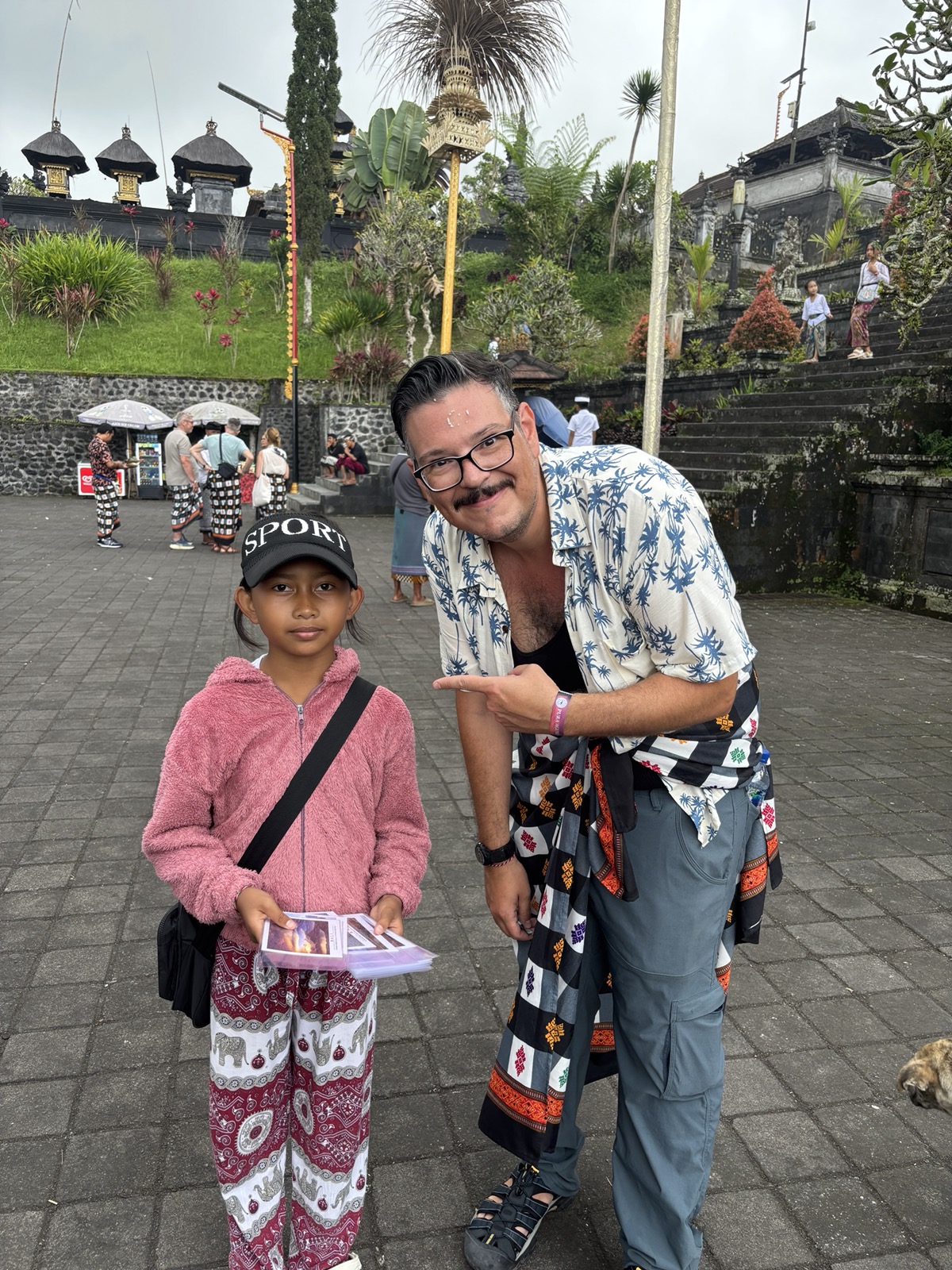
The people of Bali and Java (in my experience): The people were all so friendly, smiling, and willing to help whenever needed. To be fair, we did meet and interact with people mostly in a service capacity, so there is a benefit to treating us well. It still felt, even in those interactions, that being friendly and welcoming was a part of their being, as opposed to done for money alone (90% of the time, especially in a non-touristy area). When we would walk the neighborhoods of Jogjakarta and pass people and they would wave hello, especially the kids, it made us feel happy and welcomed. When we would walk the beach on the Gilis, and through the streets on the inner parts of the island, local people were the same. The drivers, who would also be our de-facto tour guides and cultural liaisons, felt genuinely proud to share their culture with us.
Talking with the owners of the home-stay in Ubud about art, and how he created some of the artwork in our bungalow, and how he grew up and had to always finish his art before he could play with his friends, was told to us with true feeling. Our afternoon talking with Rudana, the art dealer and museum owner, about art and travel and a host of other things, while sharing his pastries with us, was so special.
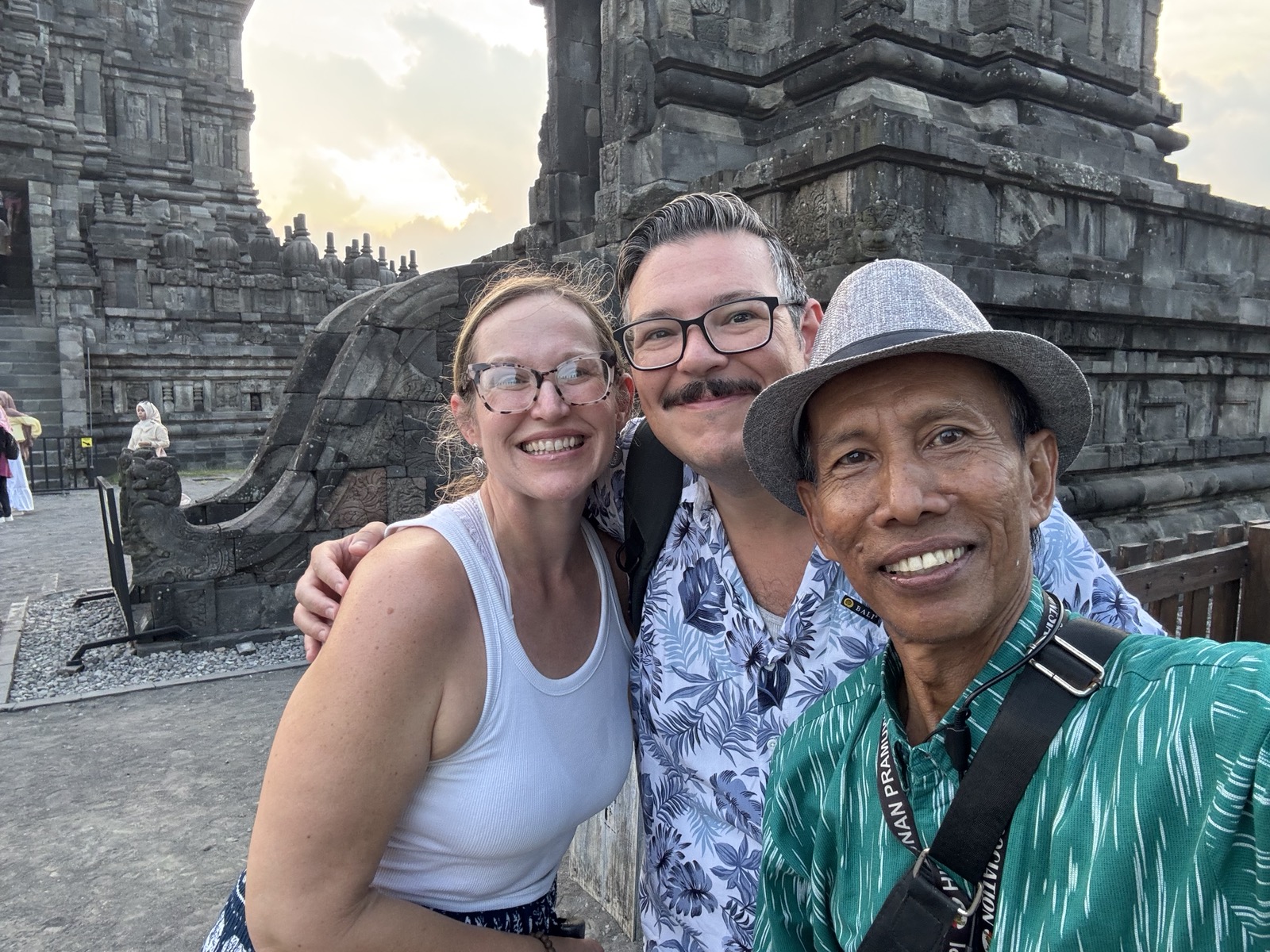
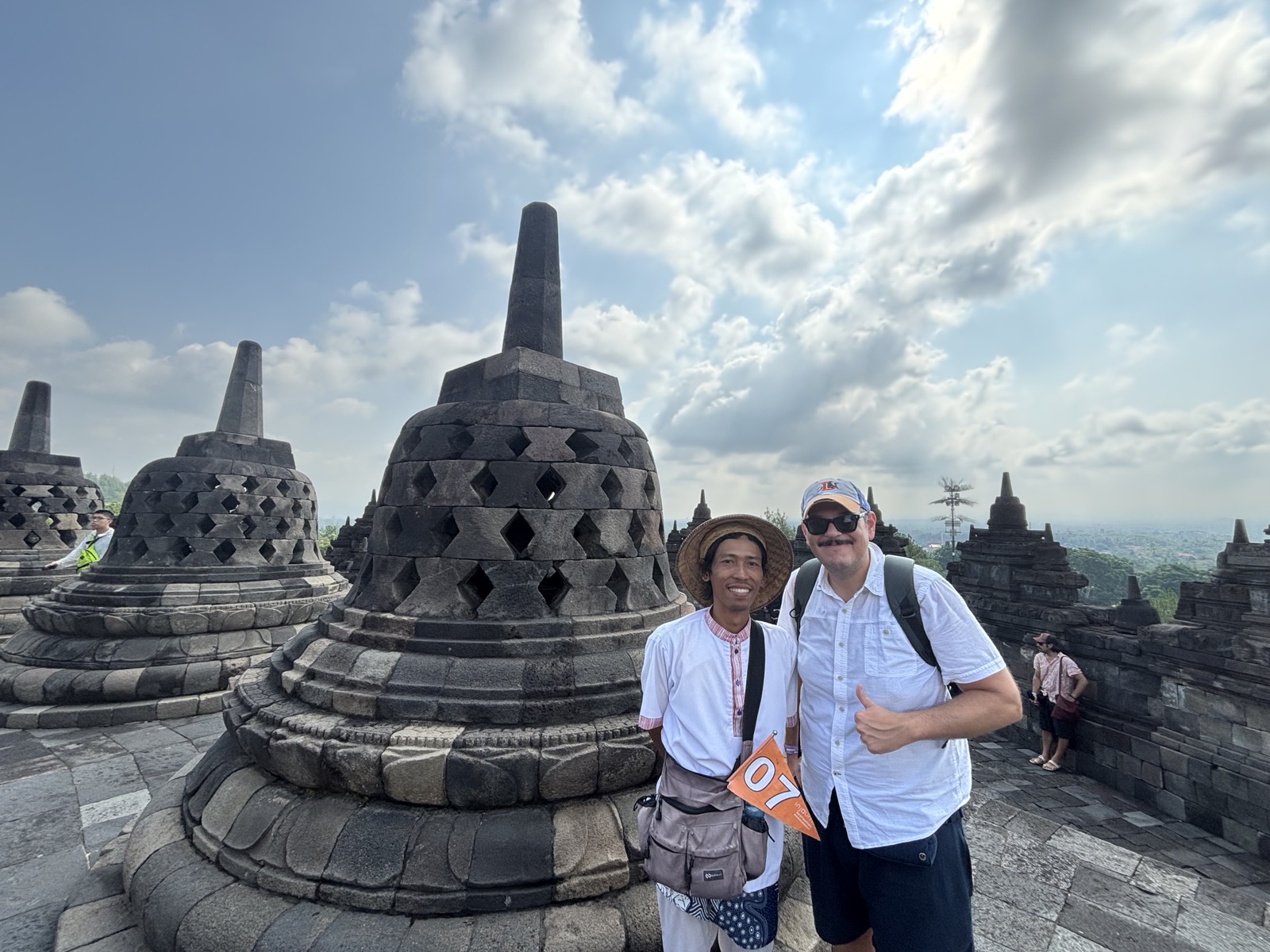
Tio, our twenty-one year old tour guide in Jakarta, sharing his feelings on Indonesia today with such passion, and then telling us to keep it to ourselves, was so precious, as we remembered how passionate we were at his age. Eddie, who introduced himself as “Eddie Murphy,” that we met at his son’s Warung on Gili Meno, who we would say hi to us when we would see him around the island; he made us “off the menu” fried bananas with chocolate sauce, just because, and they were delicious. Mr. Alif and his brother-in-law, talking about religious tolerance while sitting on the tile floor outside the mosque prayer room, and their pride of how tolerant Indonesians are, really touched us. Those are just some of our interactions, and as we continue to learn and confirm on this journey, the best stories and memories are made from meeting people.
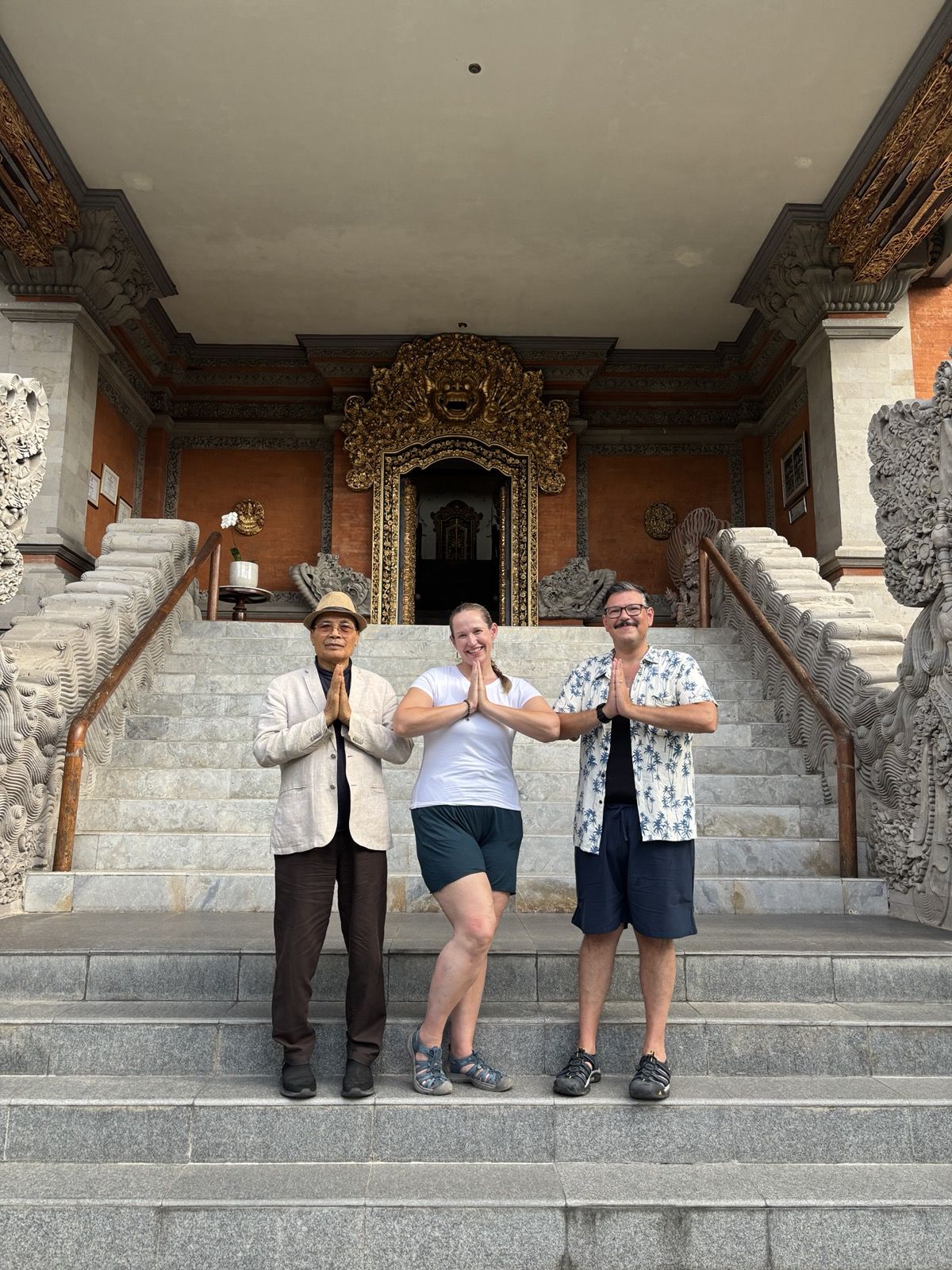
Posts (click on the picture below to read the posts):
Ubud
April 2026
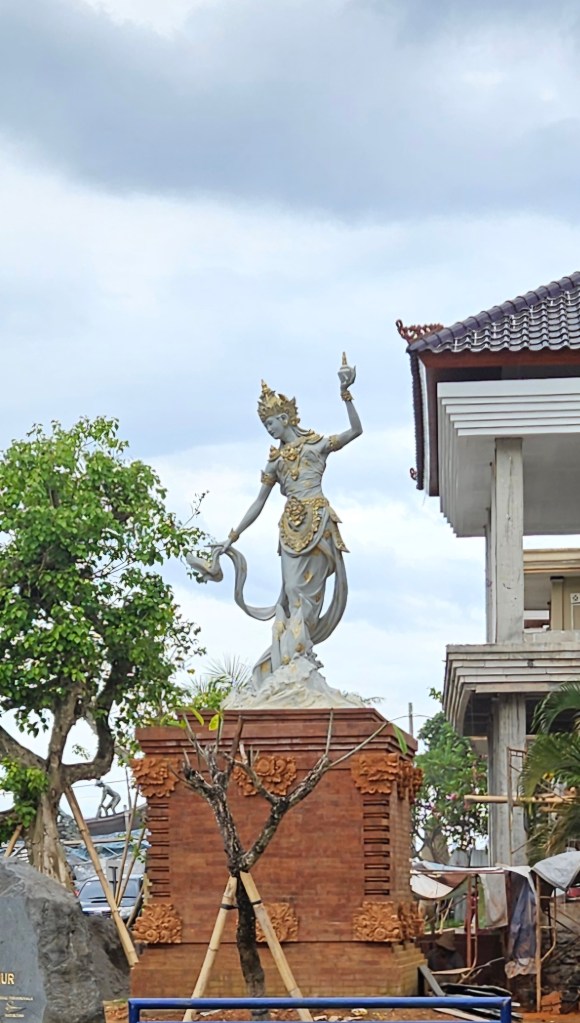
Nusa Penida
April 2026
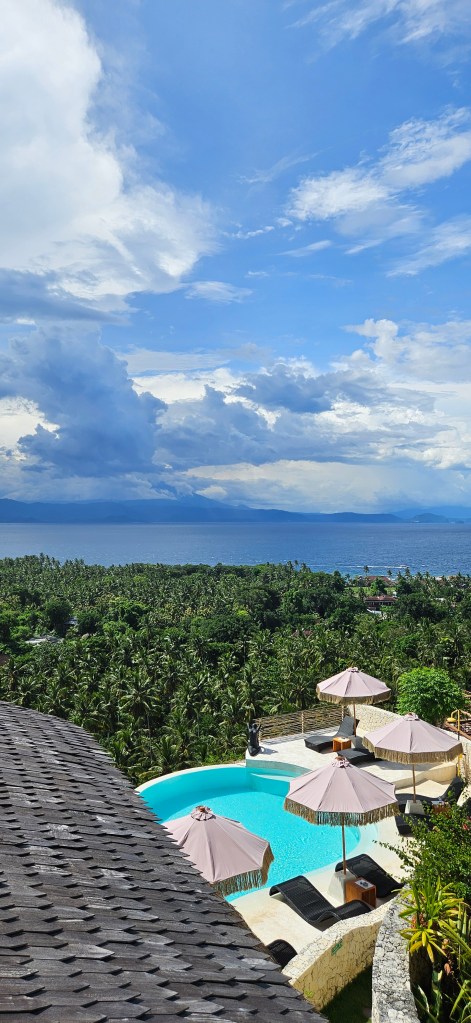
Gili Air
May 2026
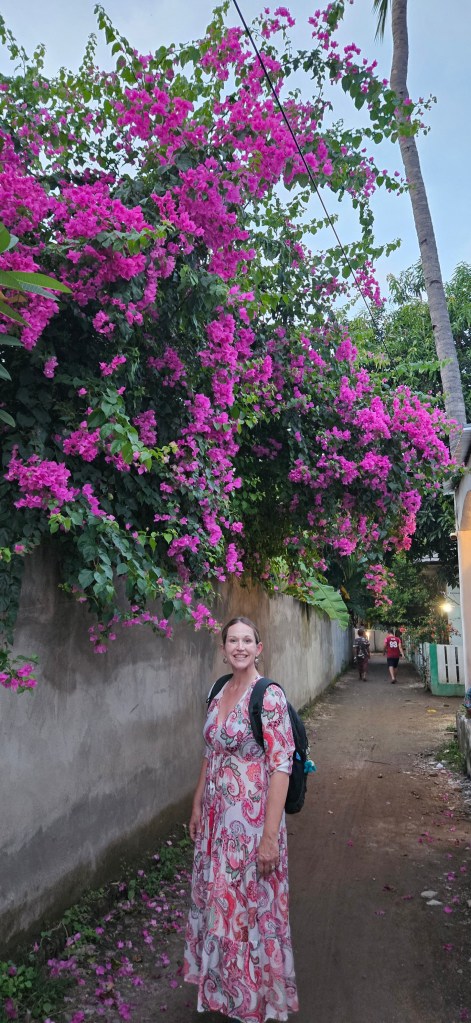
Gili Meno
May 2026
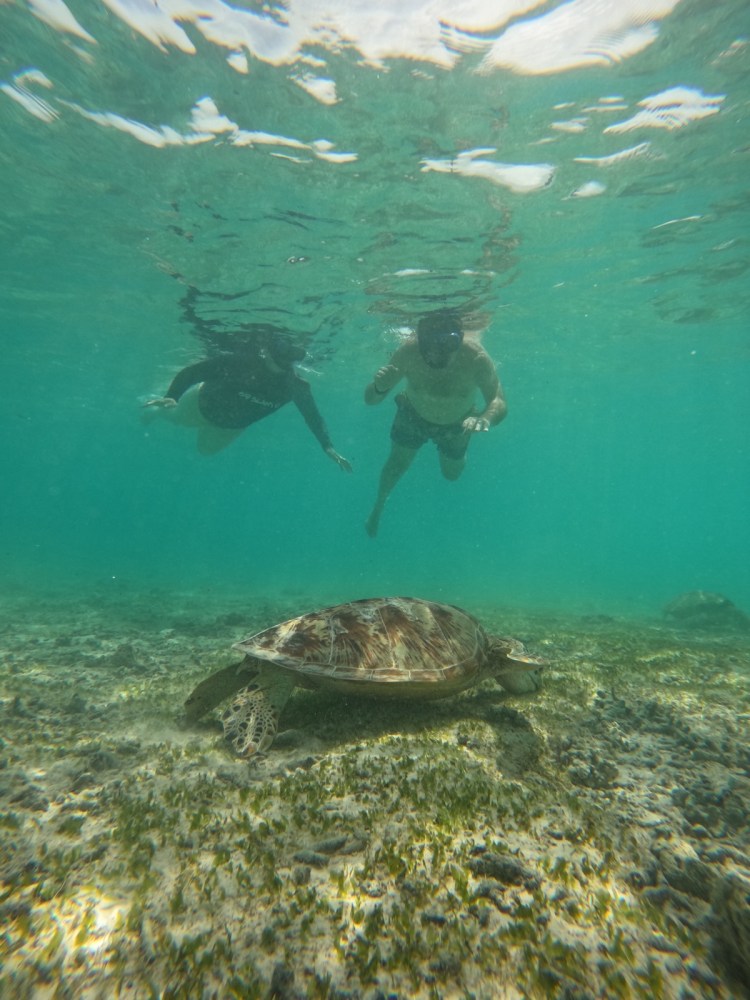
Sanur/Denpasar
May 2026
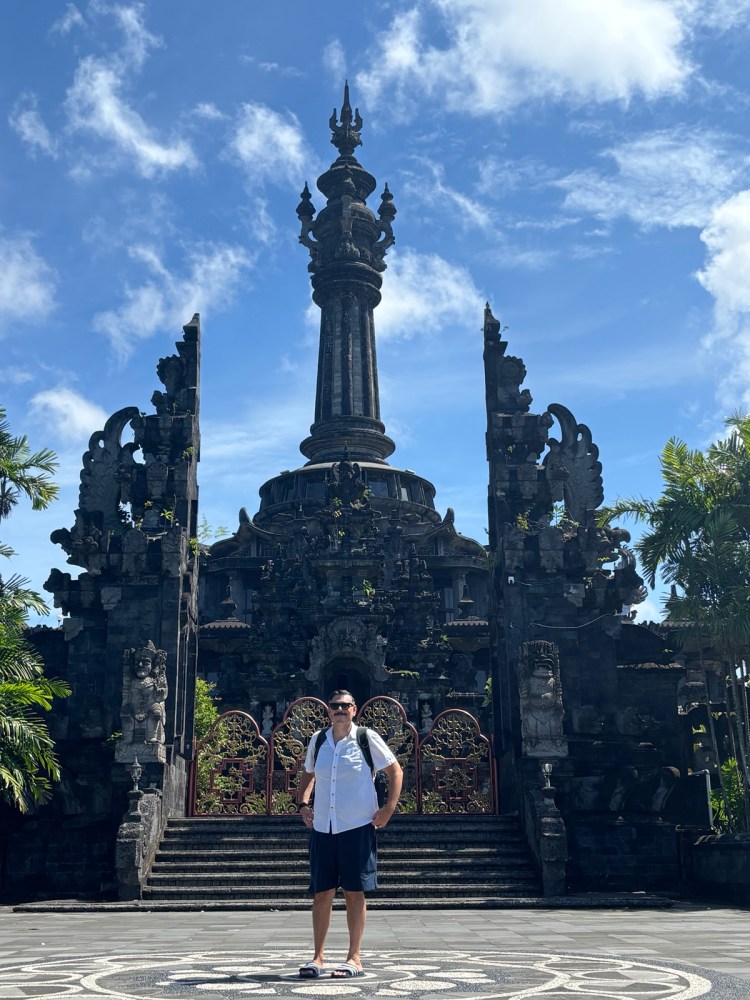
Kuta
May 2026
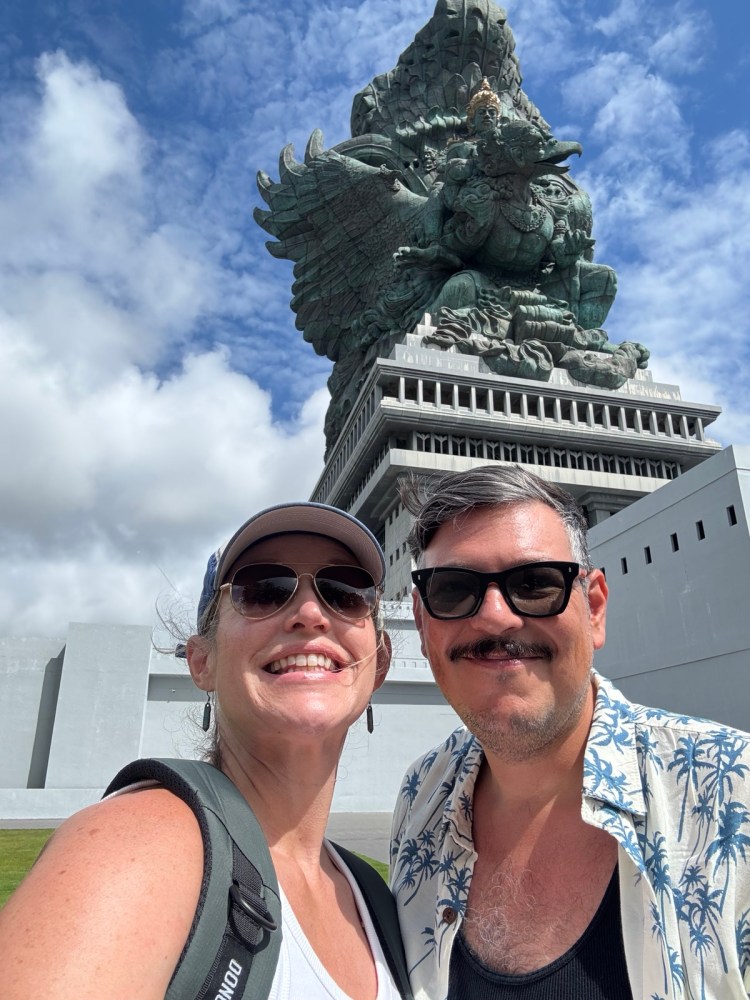
Surabaya
May 2026
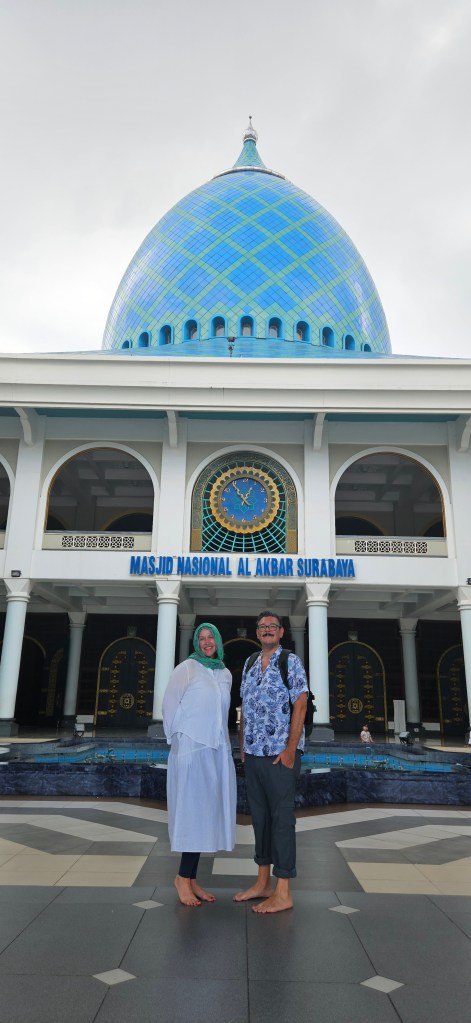
Jogjakarta
June 2026
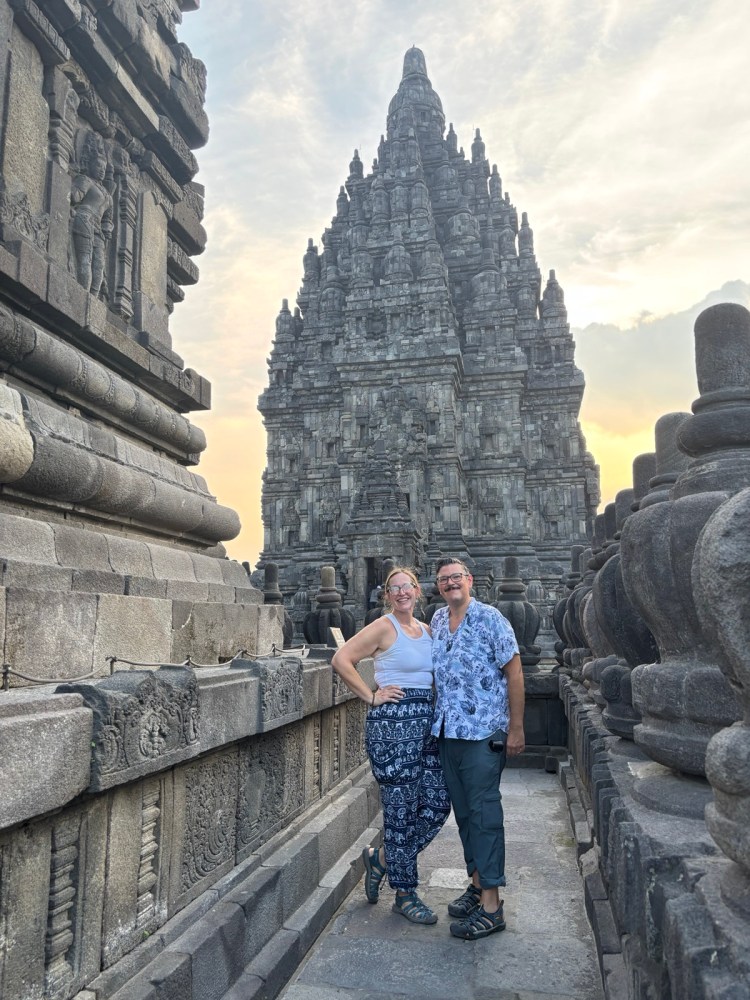
Jakarta
June 2026


I have thoroughly enjoyed y’all’s travels and cannot wait to hear about Vietnam!
LikeLike
Thank you so much! We are already six weeks into it and there’s so much we have done already. It has been a lot different than Indonesia and China for sure
LikeLike