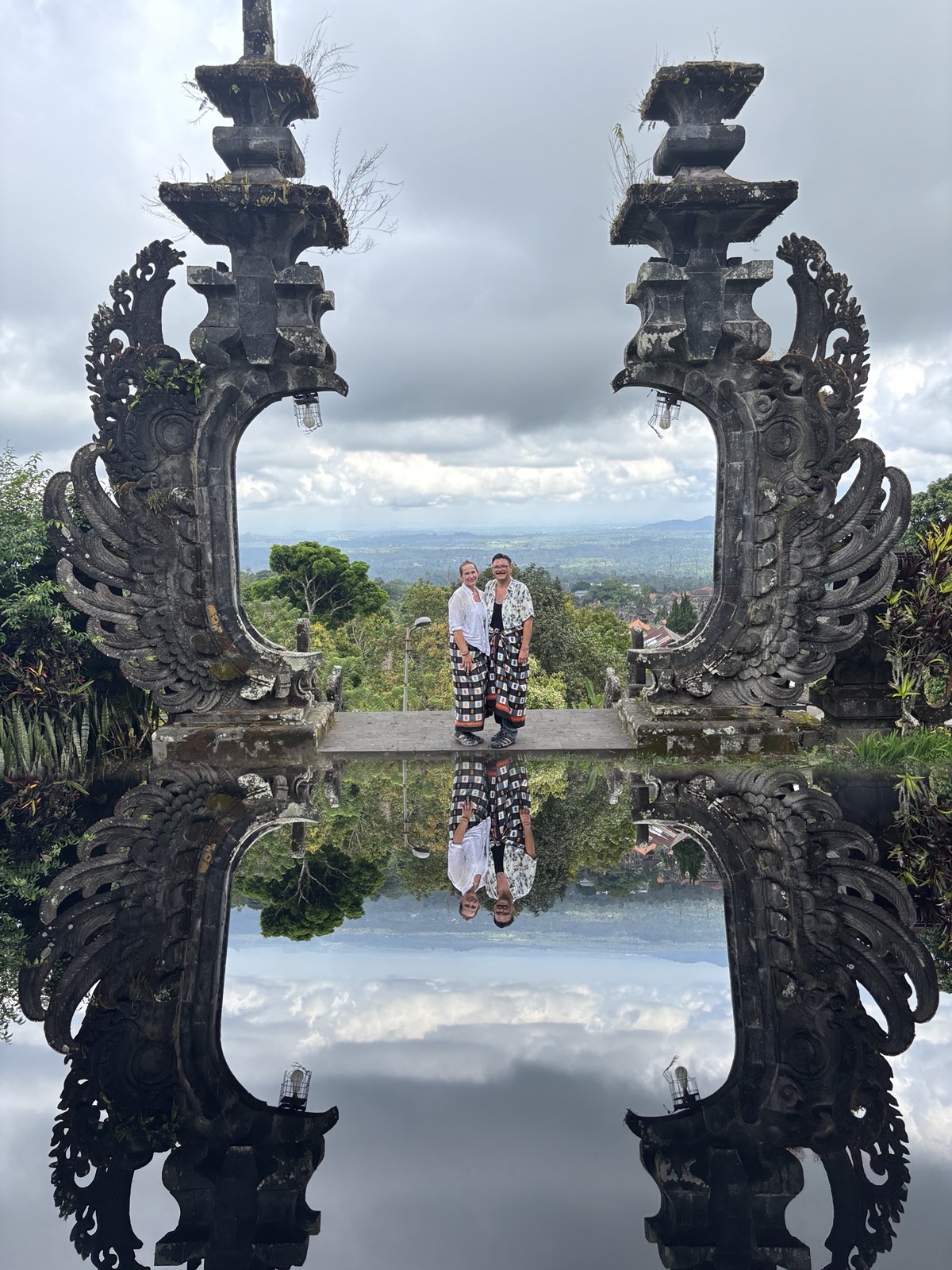
There are no “must see’s” on Bali; I read that and it really is true. This may be because there are many, many things to do and see: waterfalls, volcanoes, beaches, temples, rice fields and tea plantations; cities with their distinct vibe – laid back, party, resort, fancy, kid-centric, isolated or bustling. If one does their research, they can find what they want and have a great time in Bali, that is for sure.
I’ve mentioned before the driver who picked us up from the airport, Kris, (who we booked through booking.com or trip.com, I can’t recall which since we have success with both for airport rides). Kris wound up later taking us to the port to go to Nusa Penida, and picked us up from Padangbei to return to Ubud.
He also offered to take us for a day trip to different points around the island, and gave us examples of many places we could go. We did some research and picked five places that we figured we could see in one day. Kris said ok, and gave us a reasonable price to drive us around Bali for the day. It is fun to have a driver take you to places you want to go, and not the ones you don’t, which often is a part of a full day tour booked through a tour company or Viator/Getyouguide/Klook/etc, and will be cheaper too.
The morning of our tour, Kris messaged and said he was sick, and said his brother-in-law, Dwi (pronouced D’wee) would be driving us. We asked Dwi, who arrived to pick us up with a big, friendly, smile, if our itinerary was doable. He said we should do it backwards of what we had suggested, and he knew the routes, roads and traffic (I researched on googlemaps, and the distances between places may be short, but the time will always be longer, that’s Bali).
Our first stop was a coffee tasting at Satria Luwak Coffee Plantation. Dwi dropped us at the door and a young lady guided us through their garden of different plants grown in the area. We saw Civets (which are like a cross between a cat and a ferret) sleeping in their cage (they are nocturnal). The Civets eat only the best coffee beans, and then they poop them out, and those are collected, cleaned many times, then they crack the other shell, and then roast the beans. I crushed some beans while Jessica roasted them.
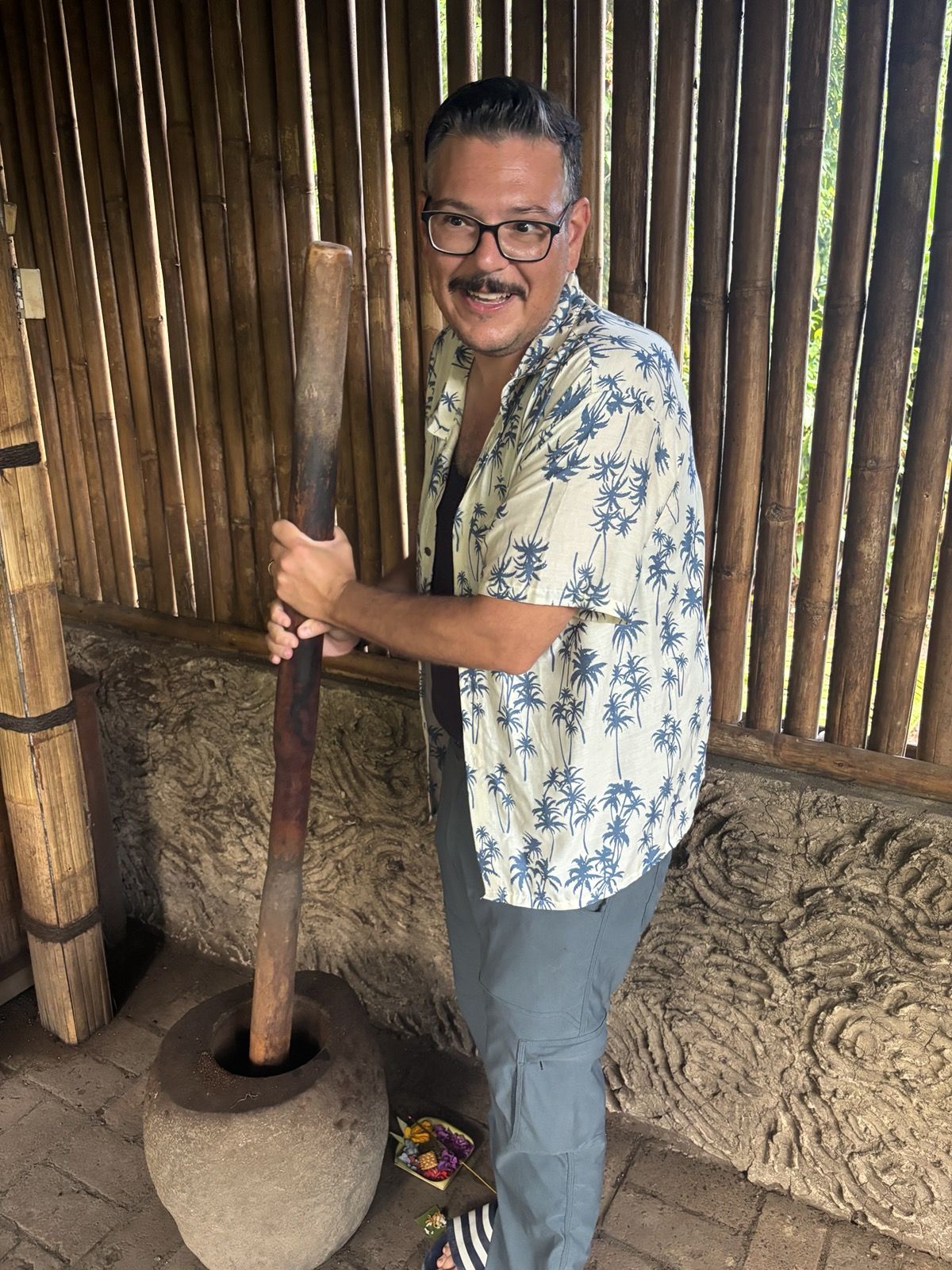
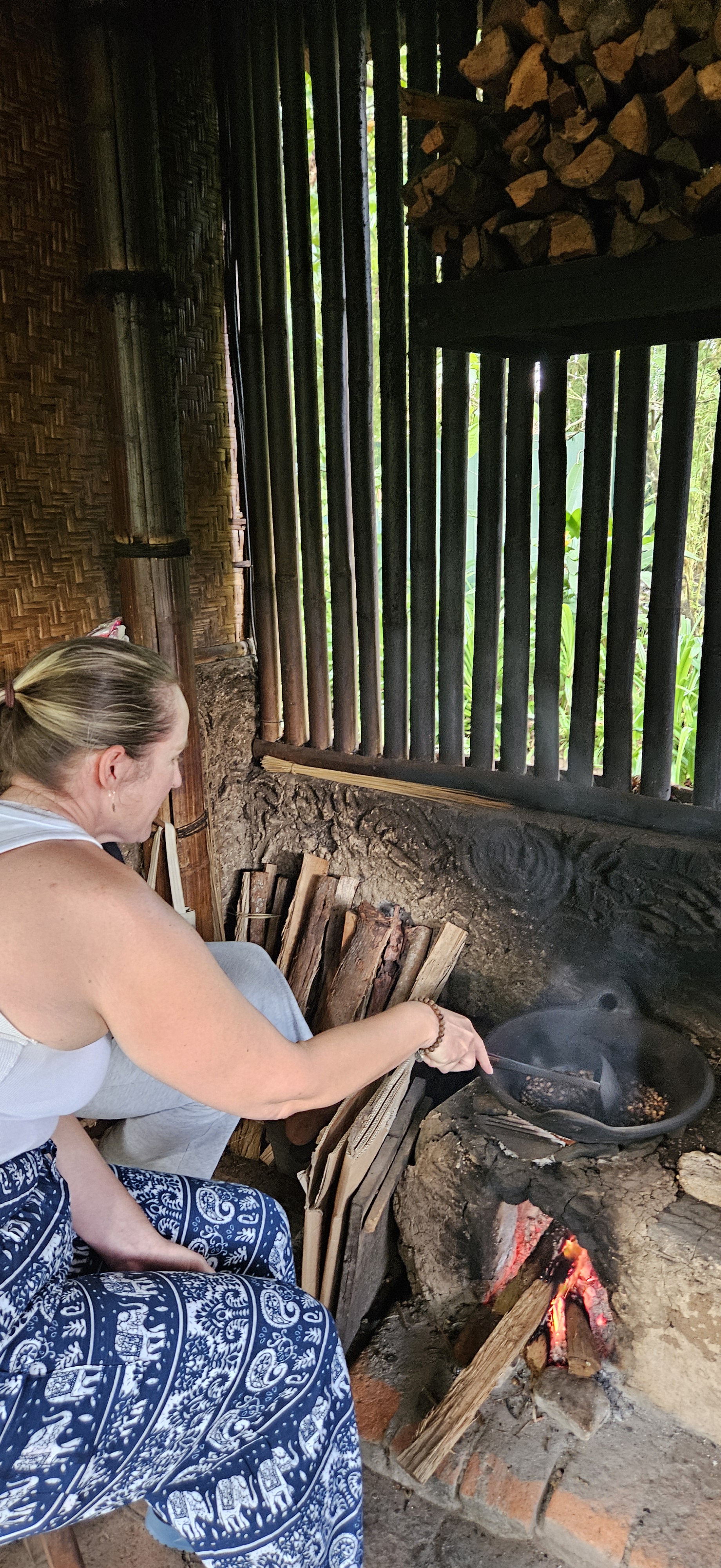
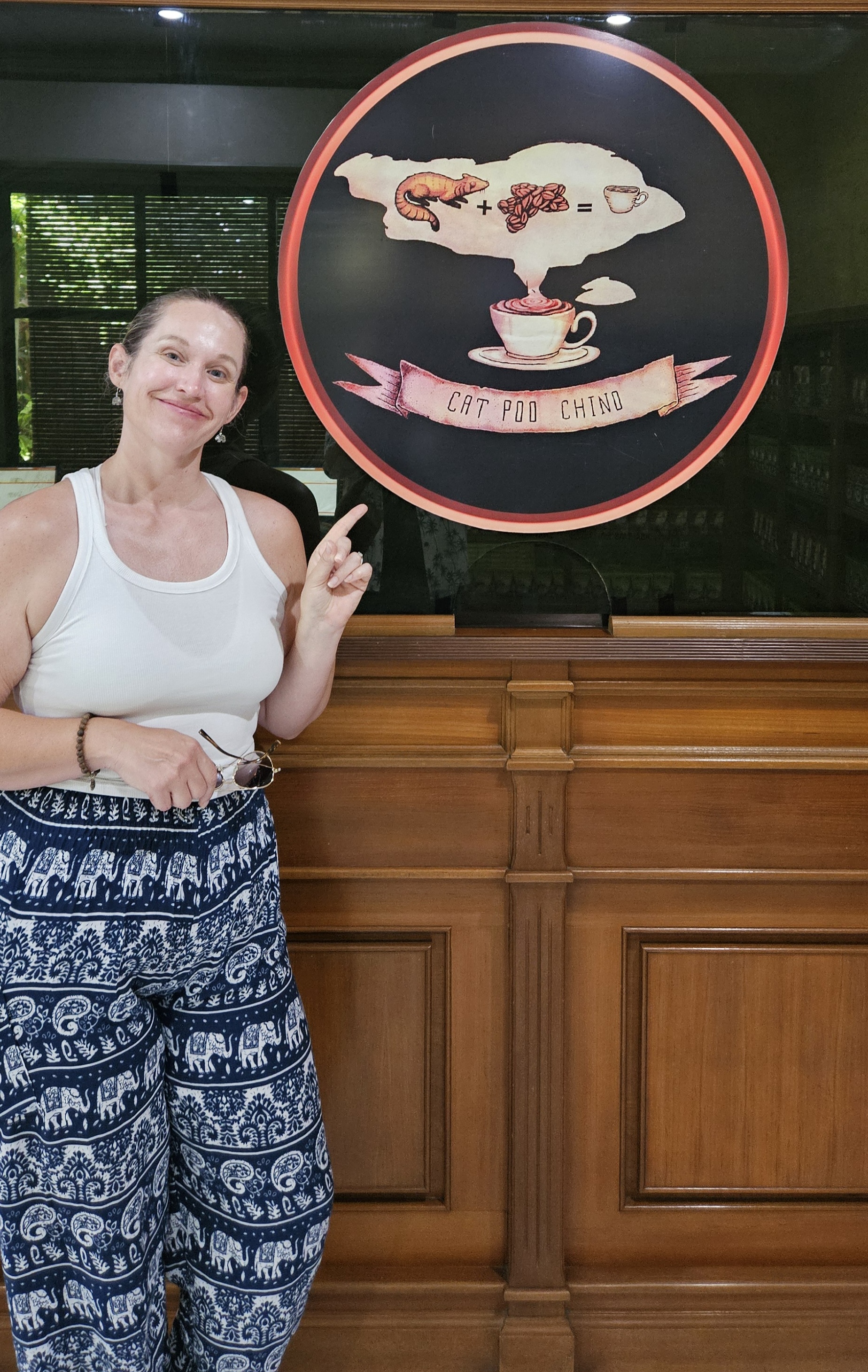
Luwak coffee is what the final product is called, and it is very expensive. They also roast many other types of coffee, as well as tea, at the plantation. We did a tasting of all the teas and coffees,
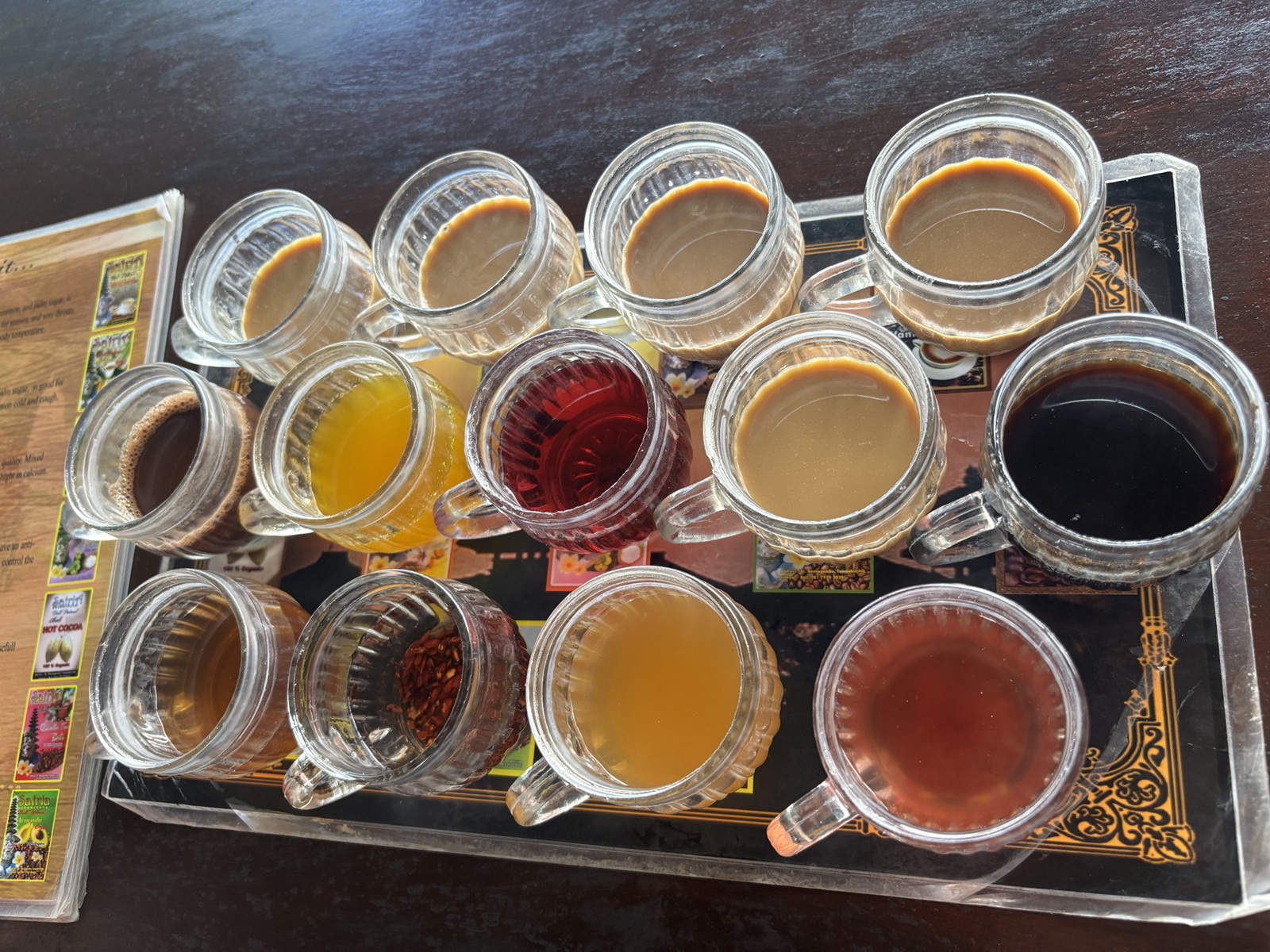
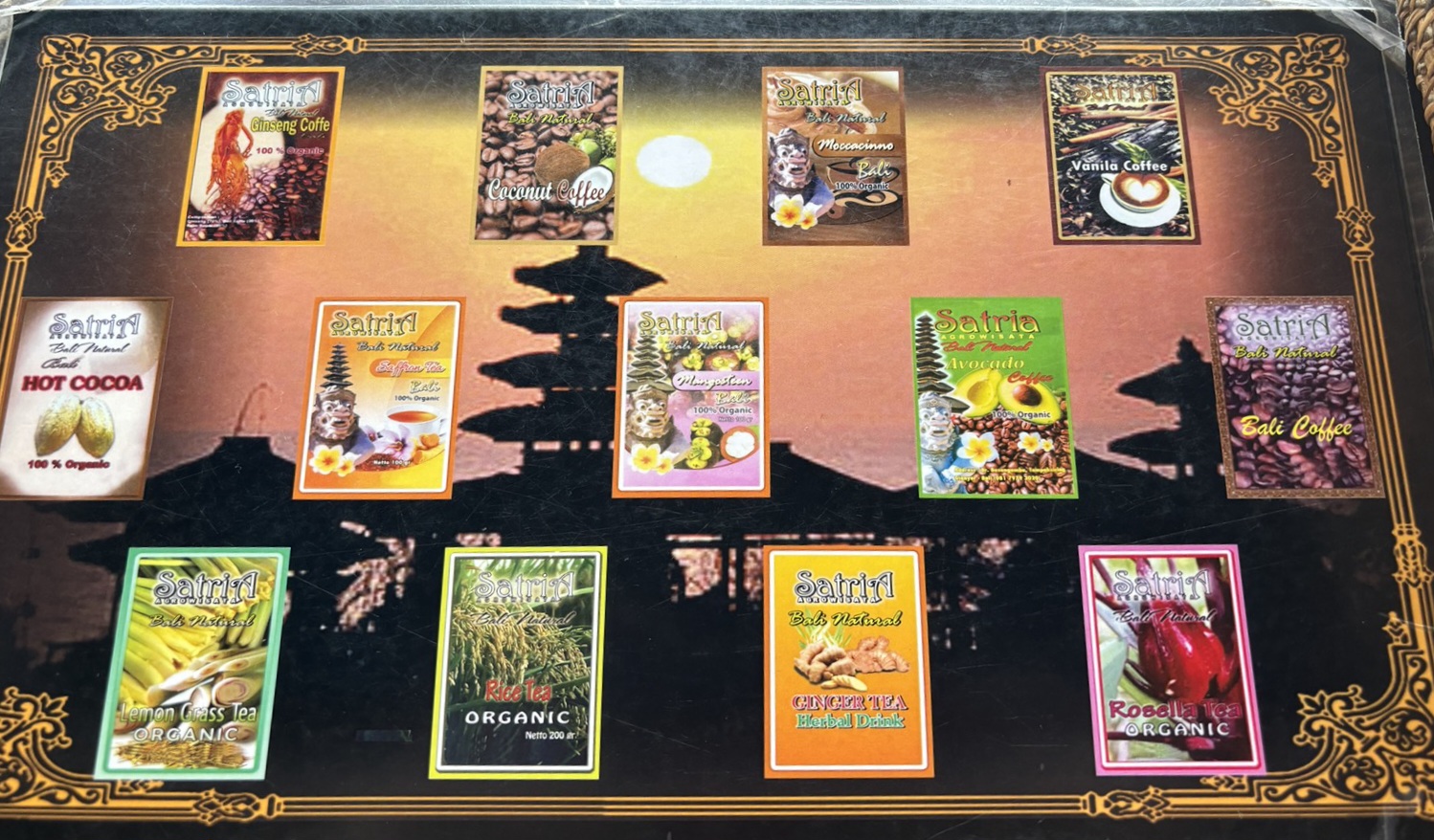
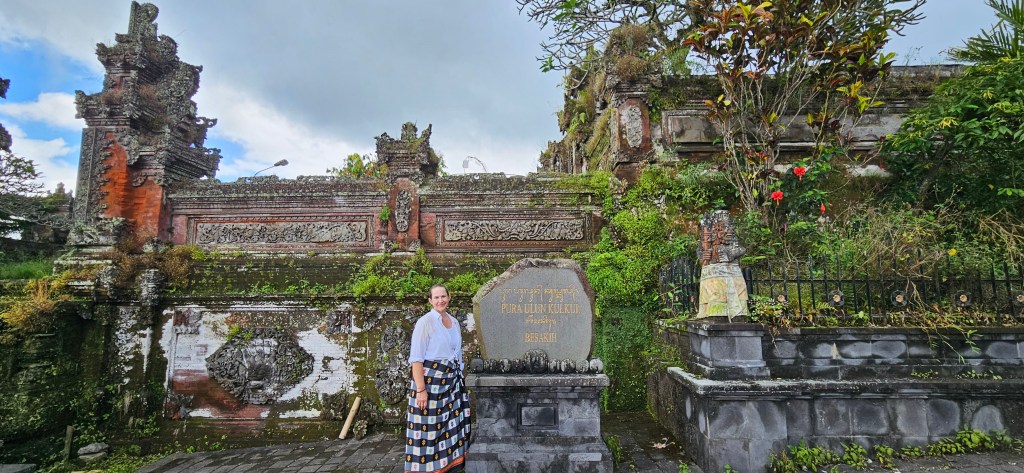
and did try the Luwak coffee (it isn’t as good as the price). We bought some avocado coffee (that also wasn’t great), but now we had enough caffeine to push us on to our next stop, which was Besakih (Great) Temple, the largest Hindu temple complex in all of Indonesia.
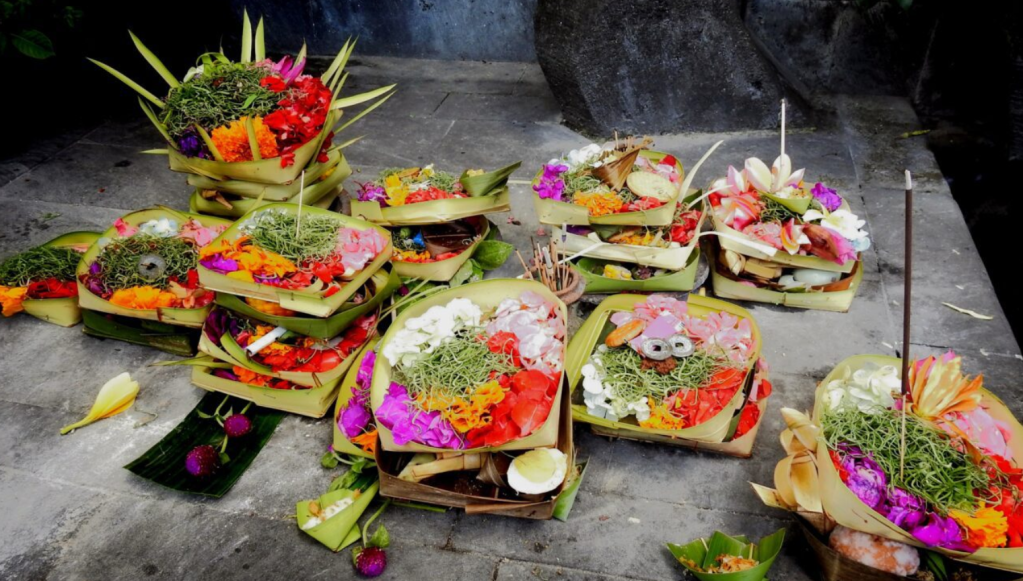
We arrived and paid the entrance fee; included is a provided sarong (that is required to enter the temple) and an English-speaking guide accompanied us. Not required, but we purchased anyway, (for about $2.75 USD) is a traditional Balinese offering called a canang sari. A Canang Sari is a type of Banten (or Balinese offering) which is a palm-leaf basket containing colorful flowers, rice, incense (and sometimes limes, betel leaf, and coins). We saw these offerings all over Bali, literally; in front of almost every dwelling: stores, restaurants, homes, and shrines. Every day they would be made anew.
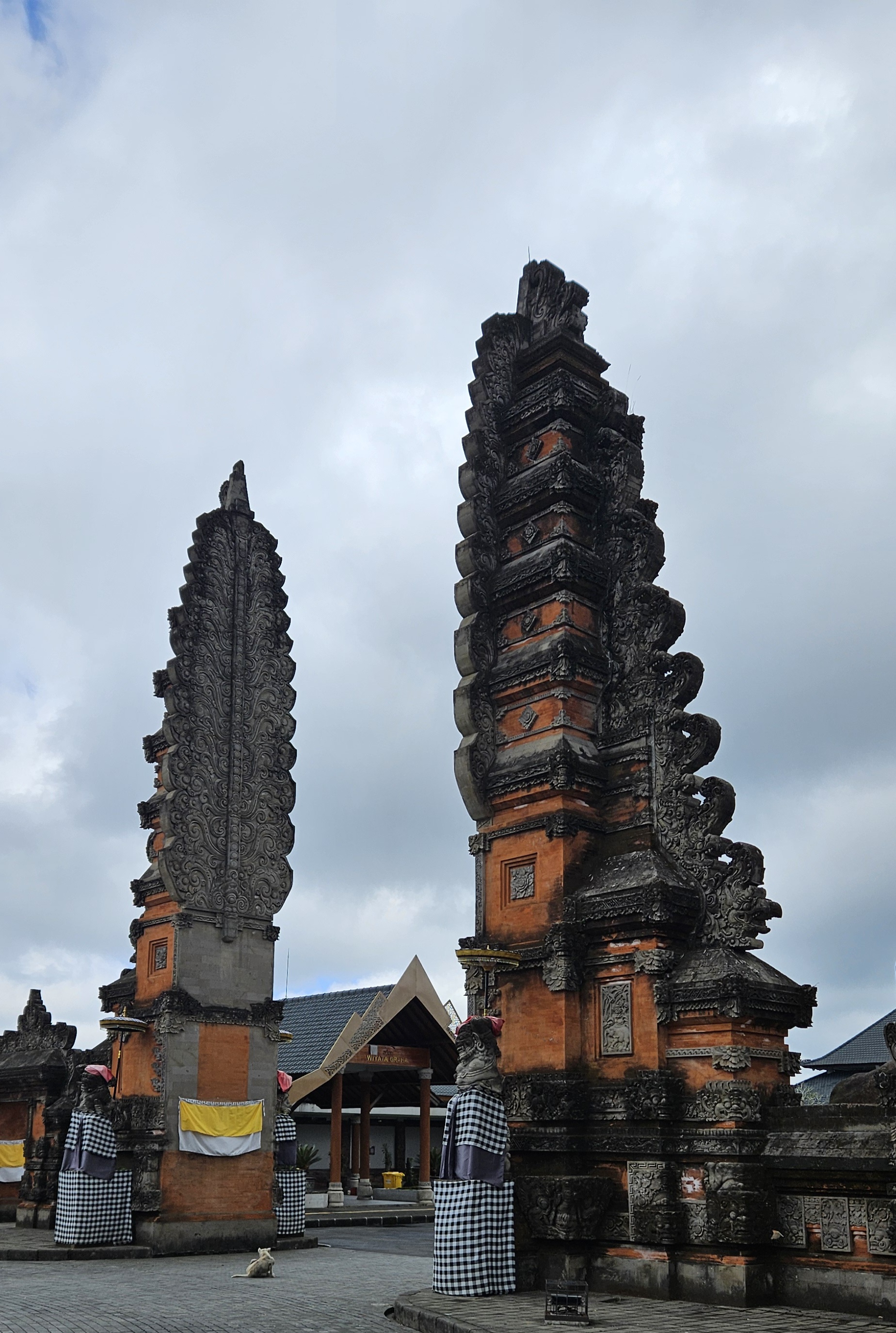
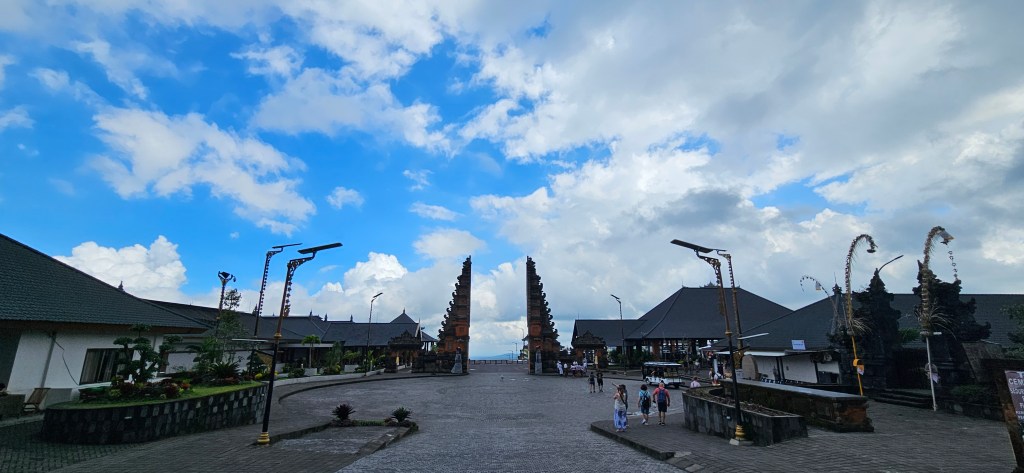
We entered the temple through large orange stone gates, and up a path of vendors while our guide told us the history of the temple complex. It is located on the slopes of Mount Agung, the biggest volcano on Bali (We had seen Mount Agung when we were on Nusa Penida). The temple complex dates back at least 2,000 years, and it has been a holy site since prehistoric times. There are 23 different temples on the complex site, situated on six levels. It has been a Hindu place of worship since at least 1284 AD.
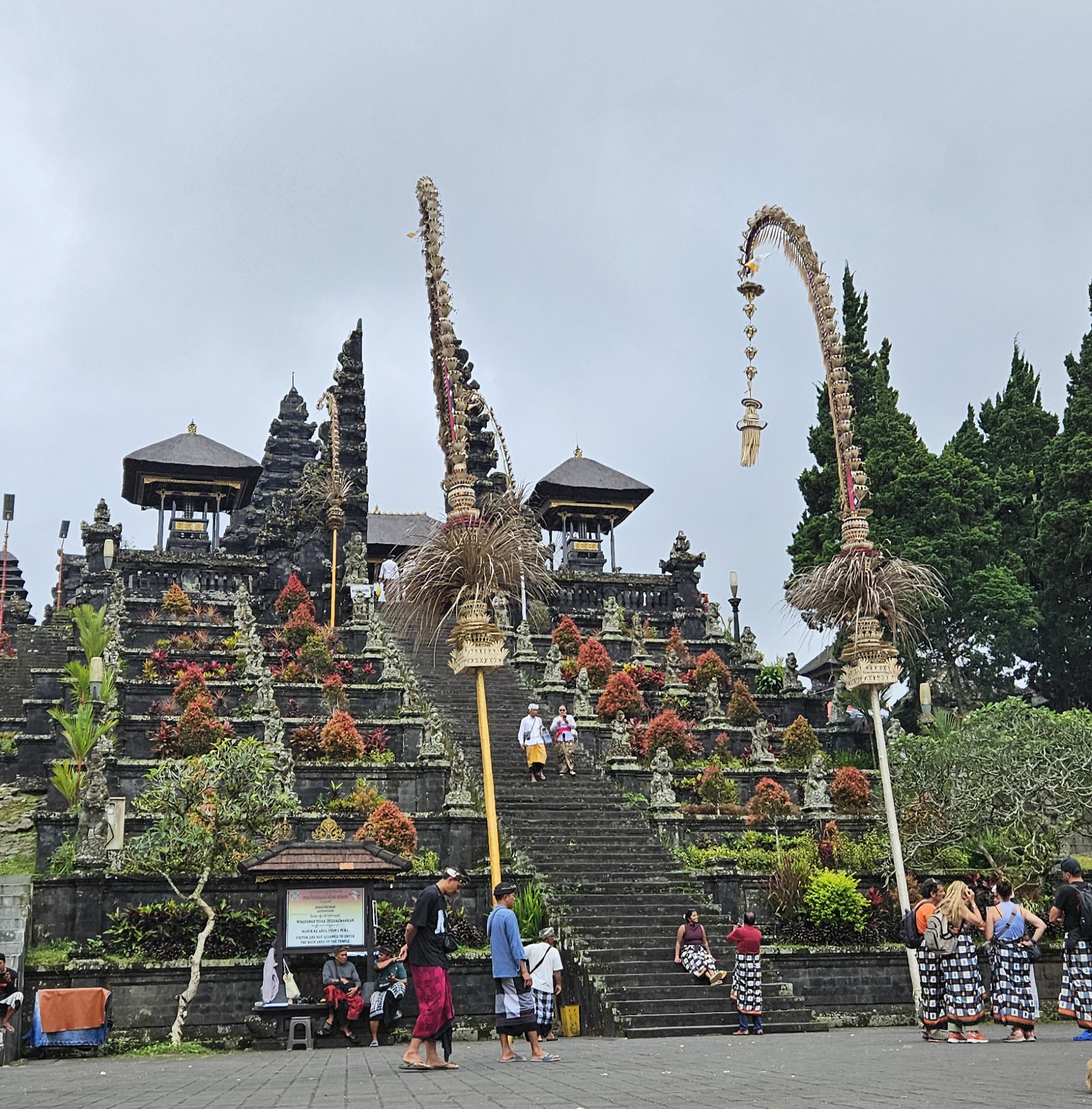
A young girl selling postcards made me pinky promise to buy some when we came back down from the top with a very serious look, but I didn’t think much of it, there are many sellers at the temple. Our guide was an expert picture taker, to our benefit, as we do not have so many pictures together that aren’t selfies. As you can tell by our poses (directed by our guide), Bali is a popular place for newlyweds.
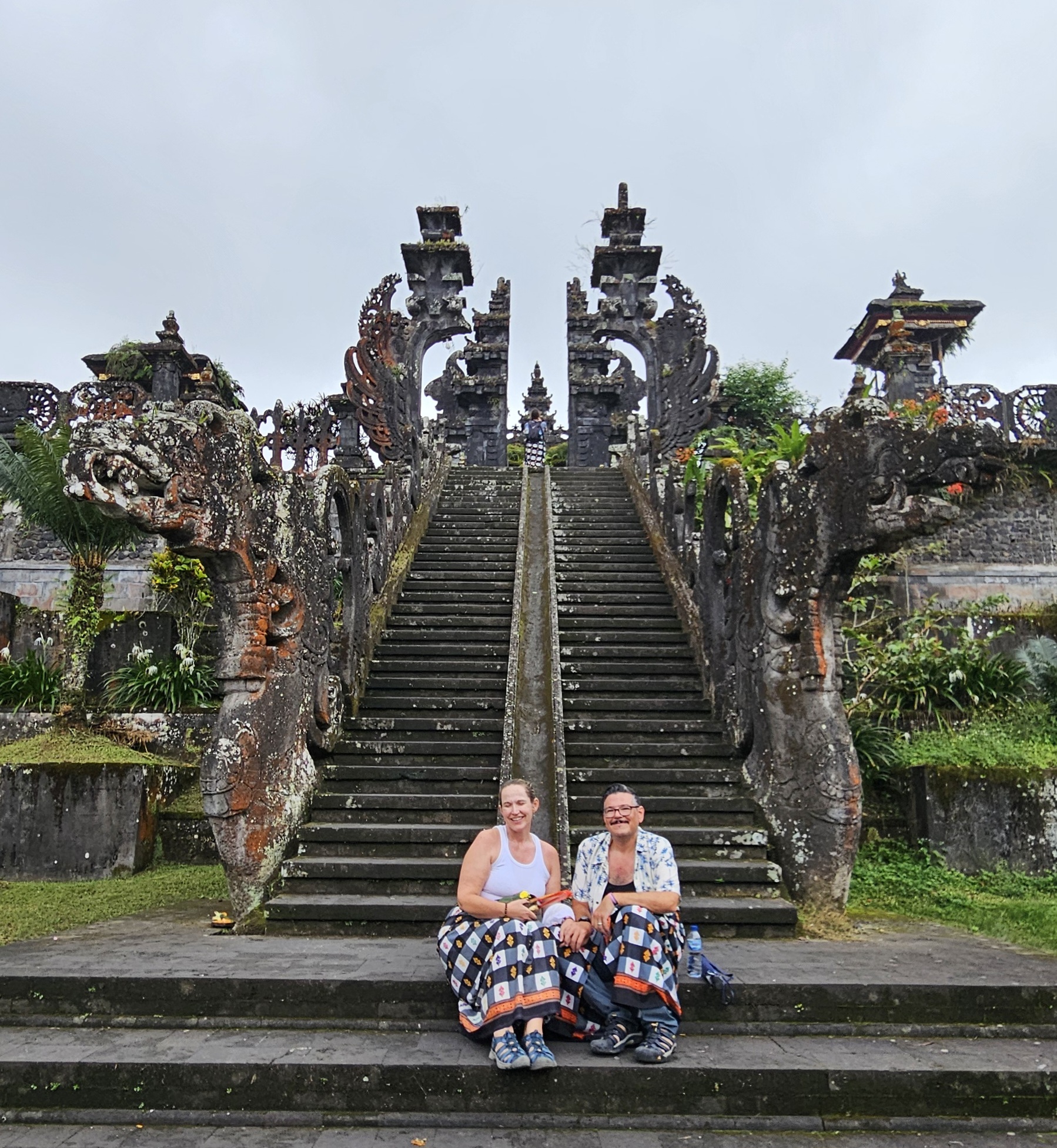
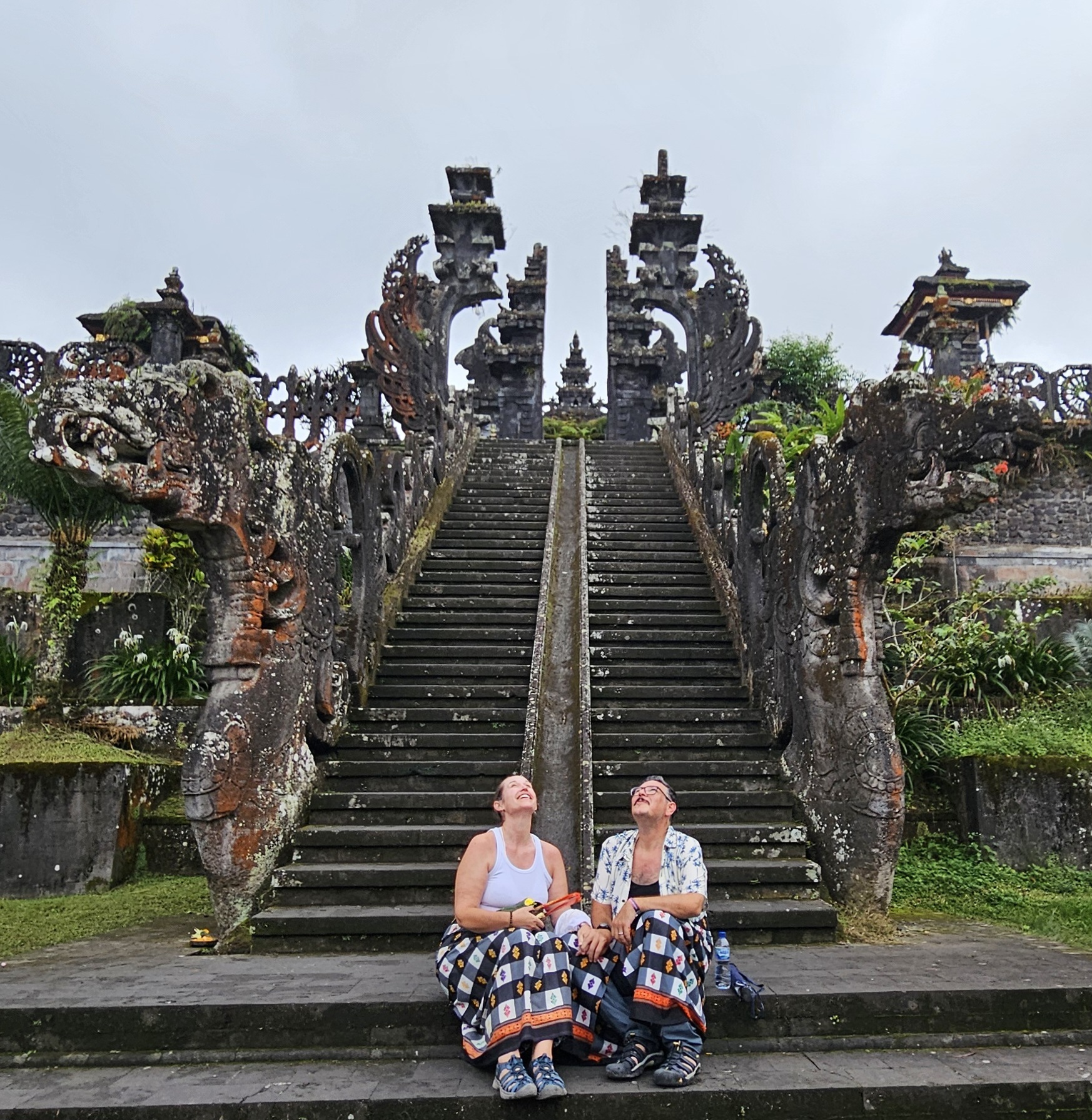
We climbed levels, giving us better views of the surrounding countryside of Bali, and each temple.
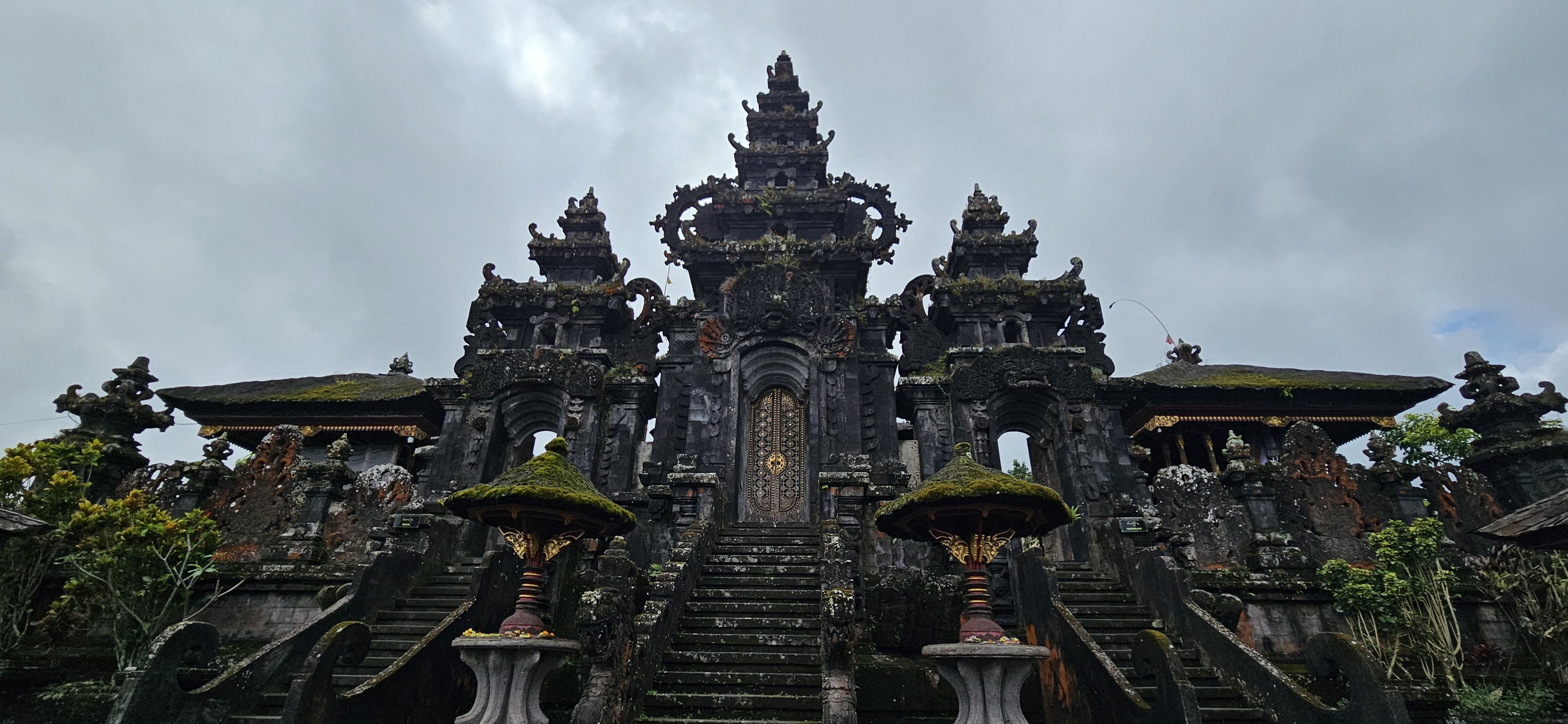
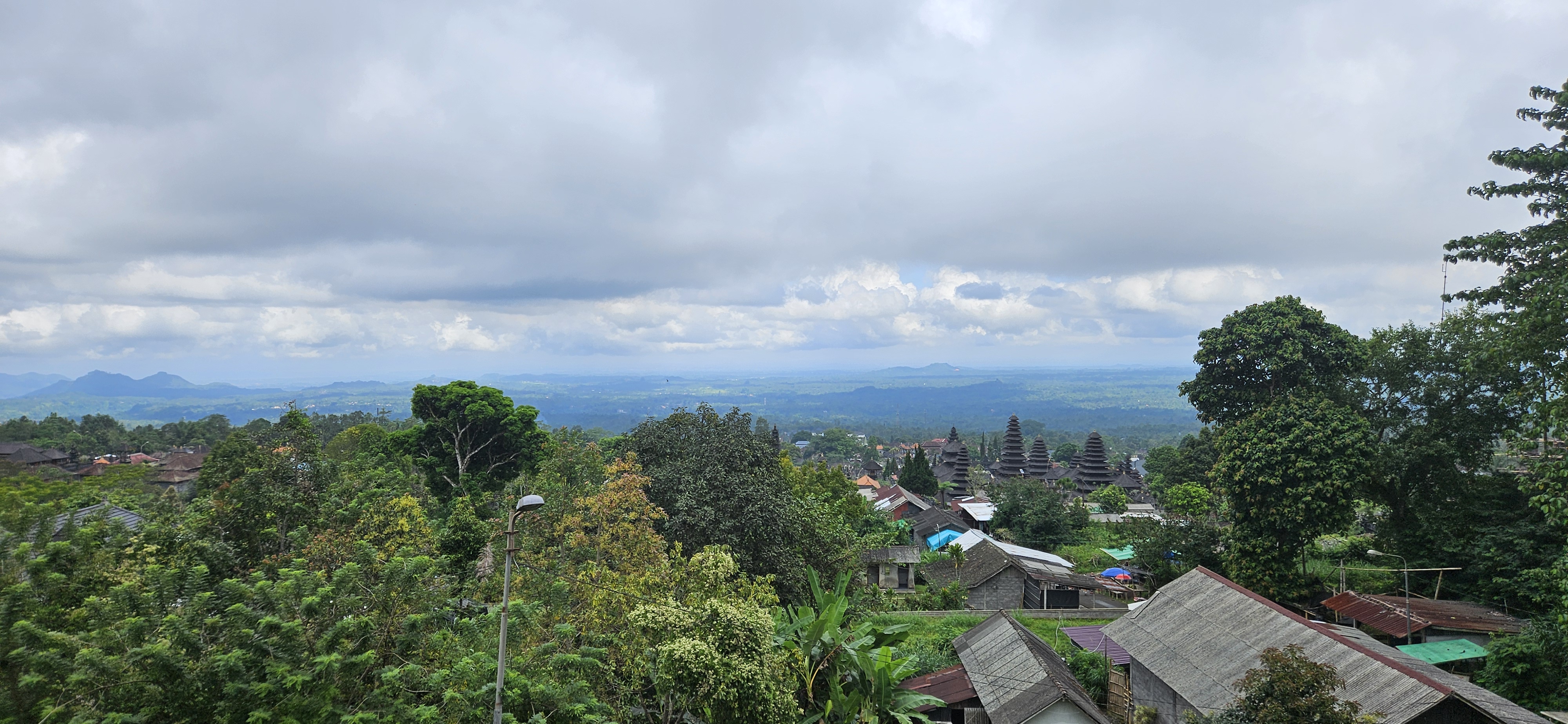
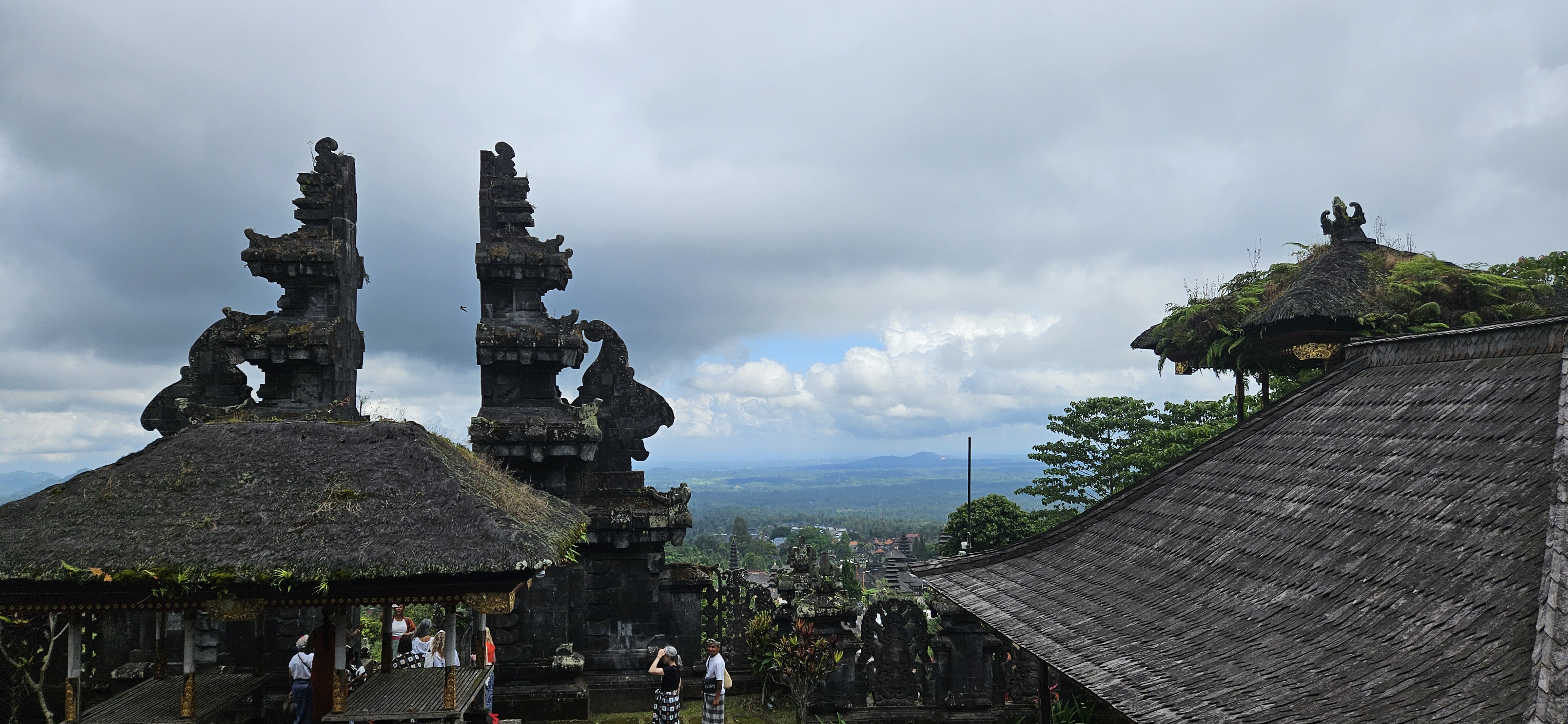
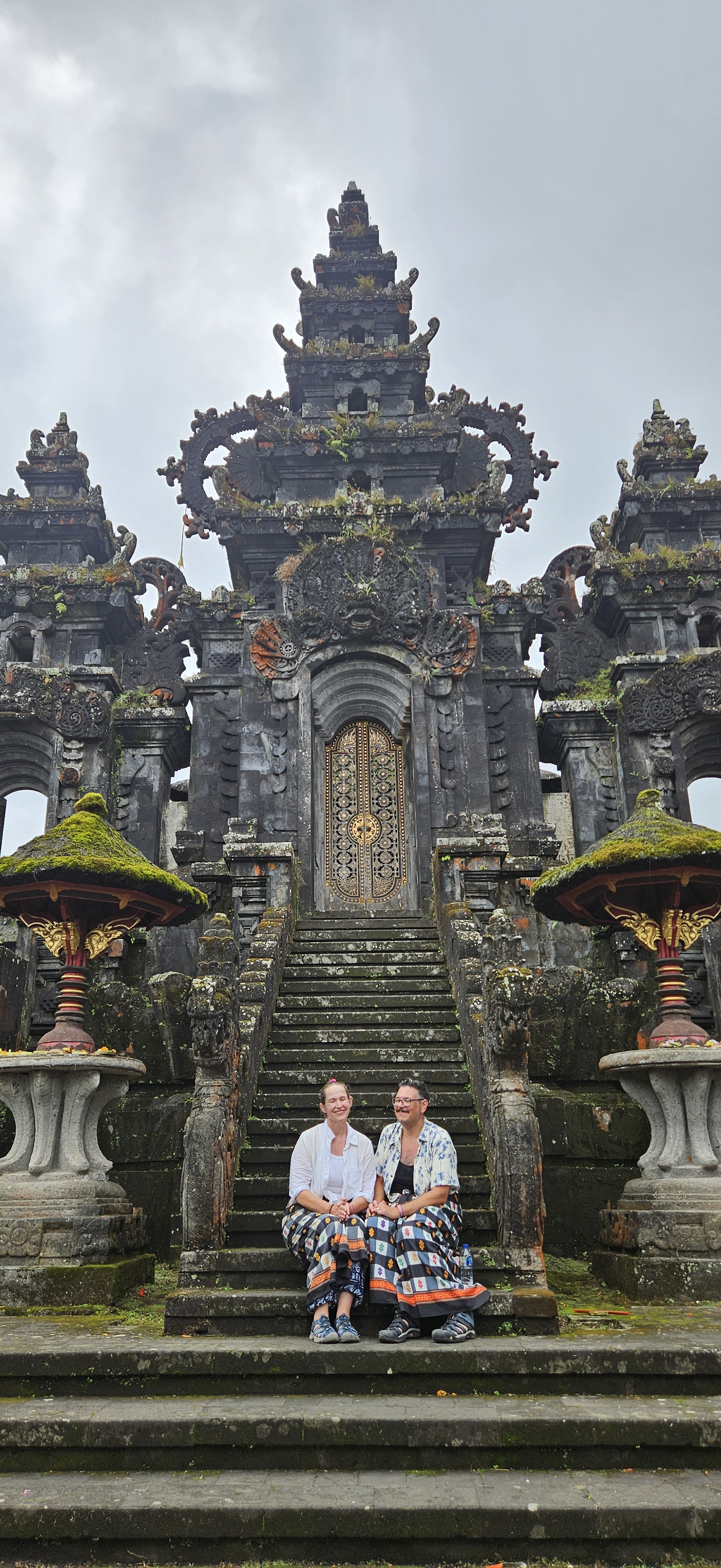
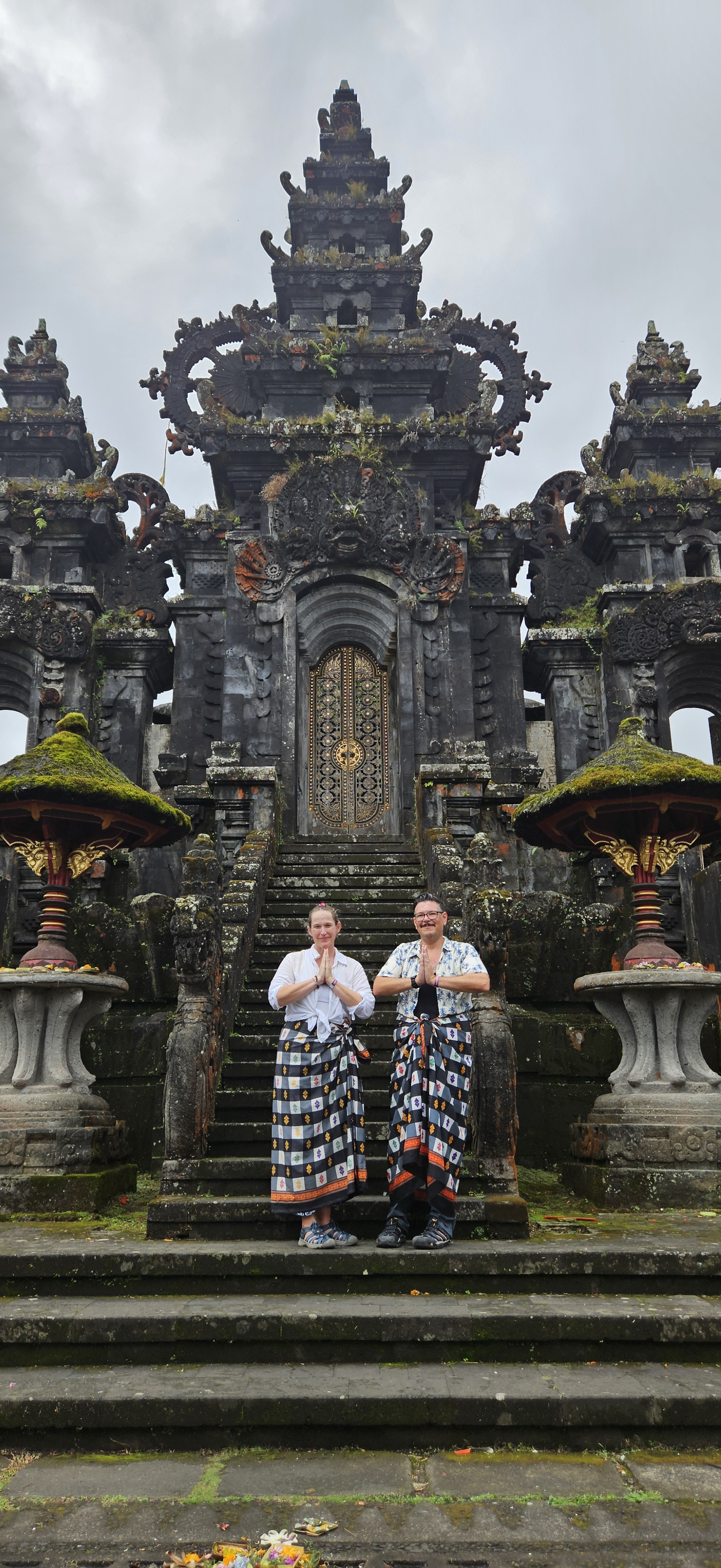
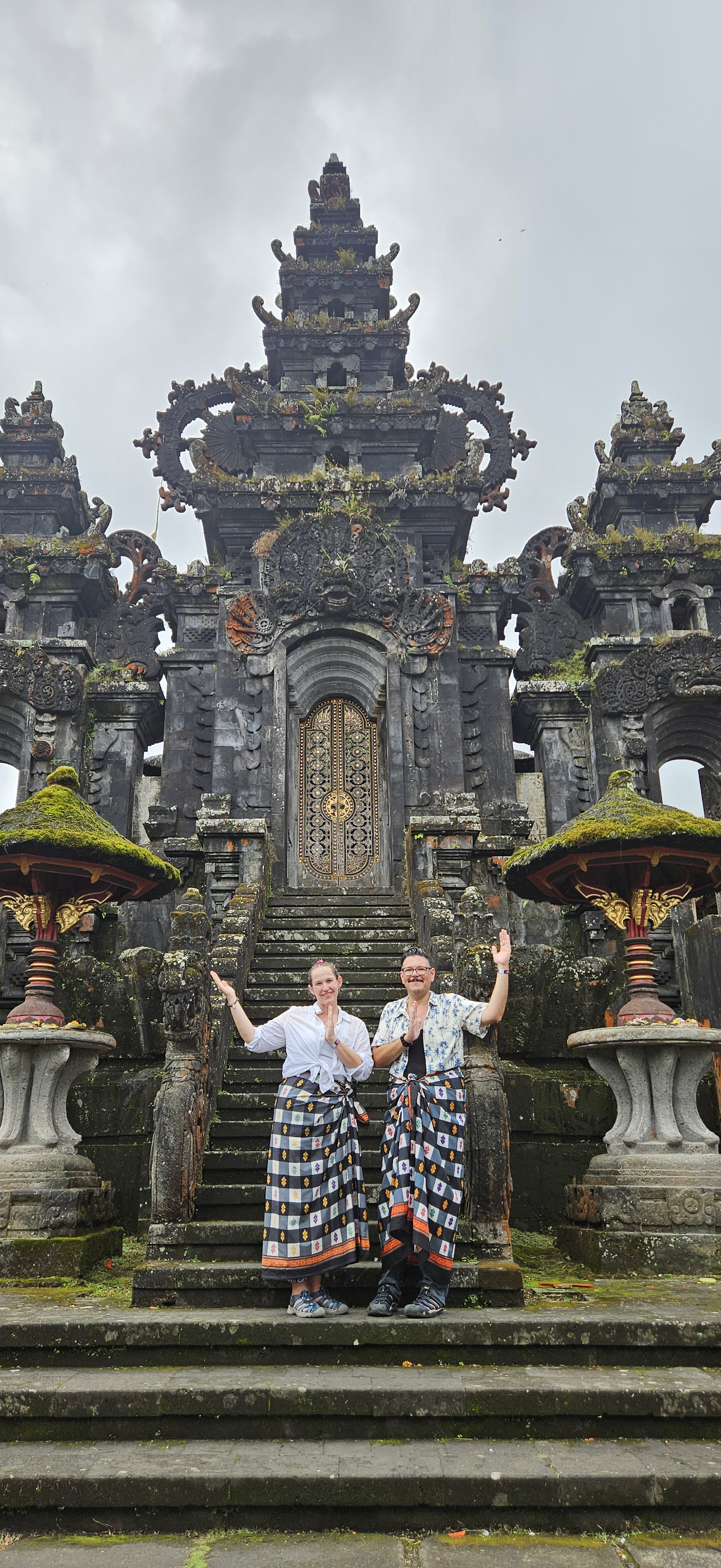
We eventually reached the top temple, where our offerings were to be given.
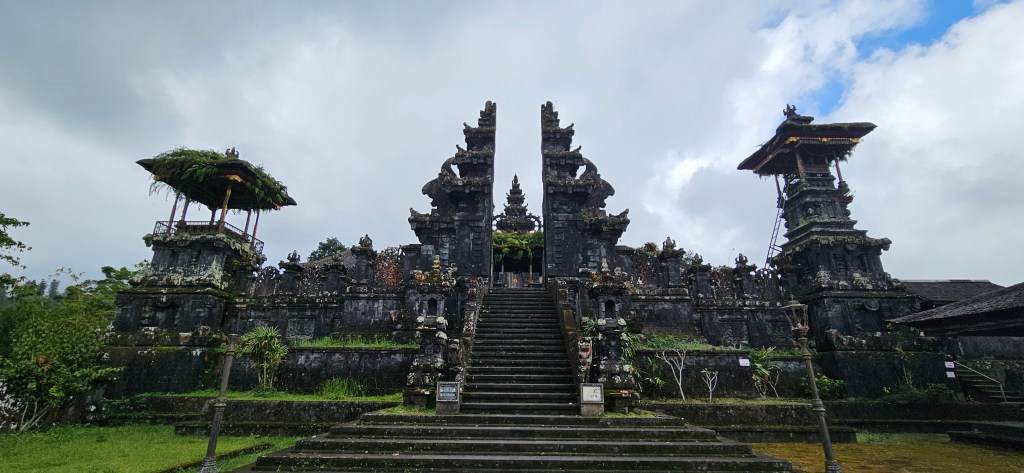
Once up the above pictured stairs, we sat cross legged with our guide, while he led us in the prayer. He told us to put some of the flowers from the offering in our hair, and eventually some rice pieces on our forehead as well; then we were blessed with holy water by the local guru, all dressed in white. It was an interesting experience, and at the end we made a cash offering as well (as was expected). The best views came from the top.
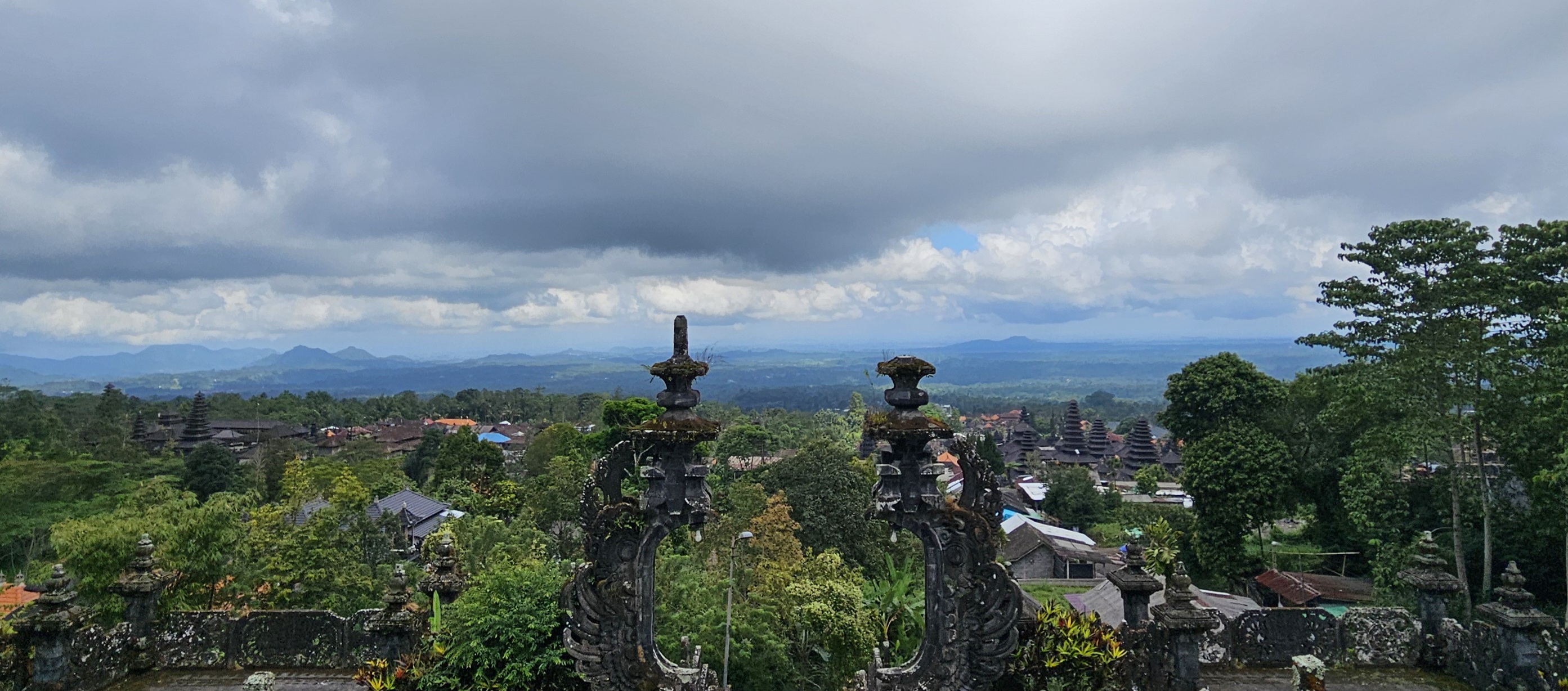
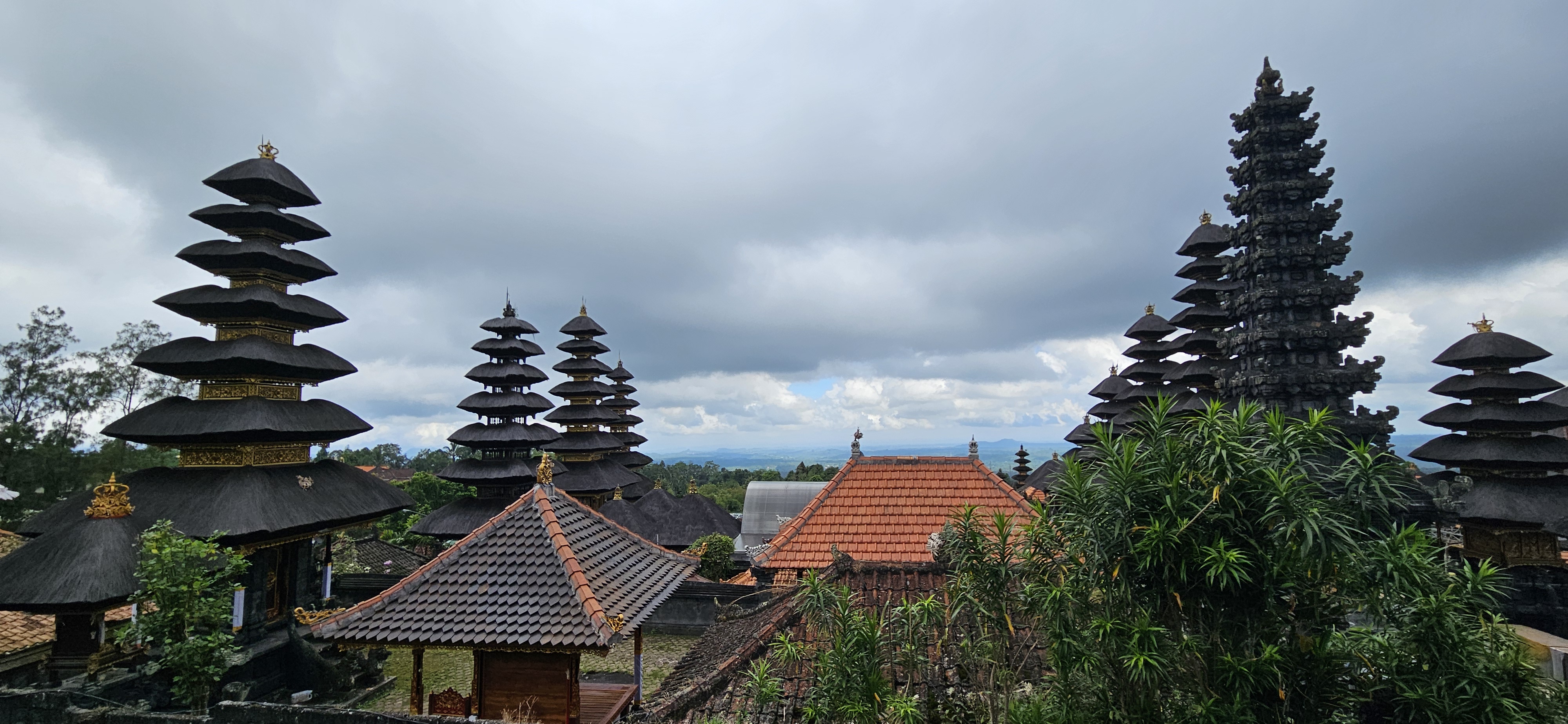
Our guide even took some cool reflective shots (using a mirror) of us:
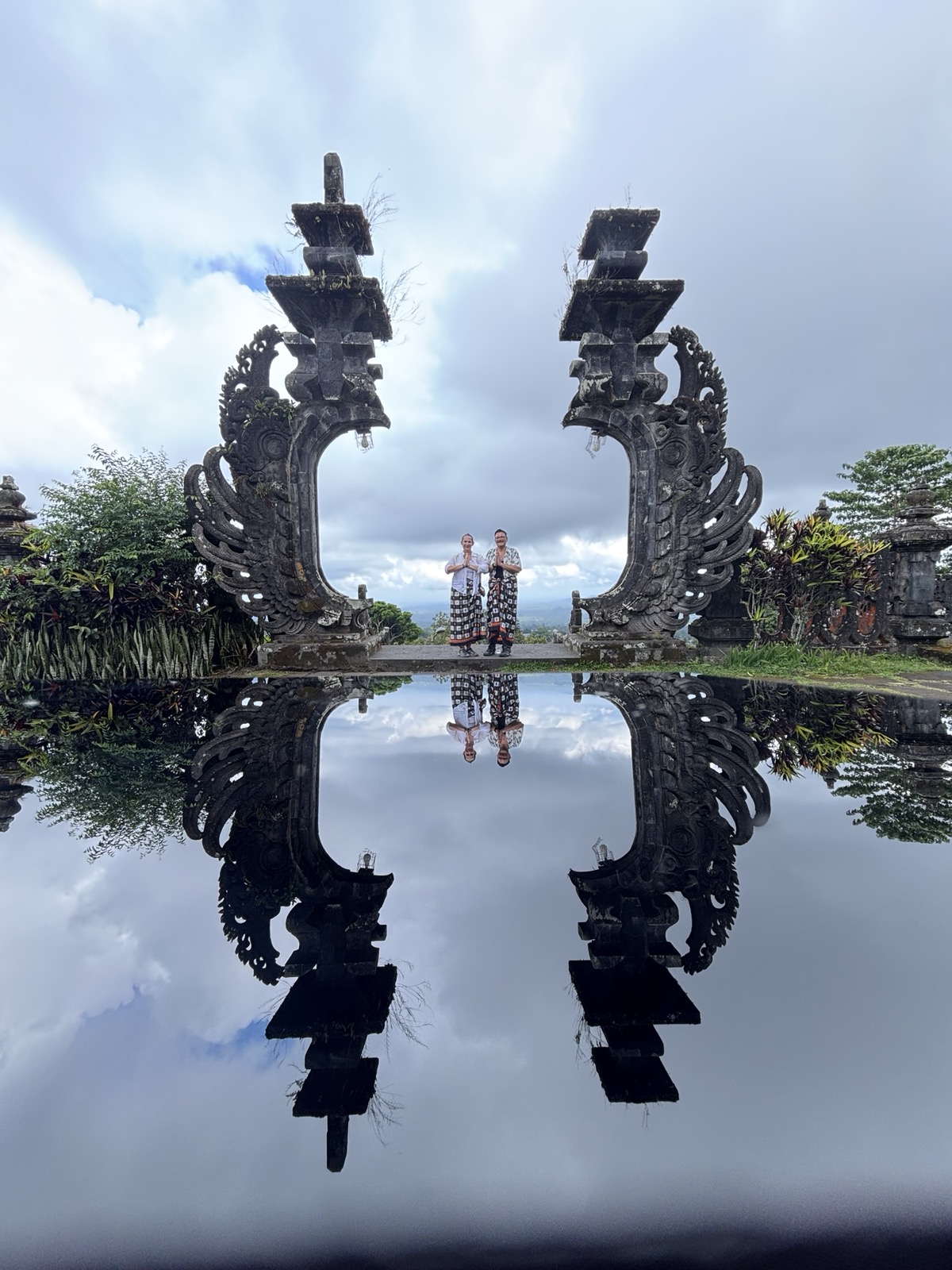
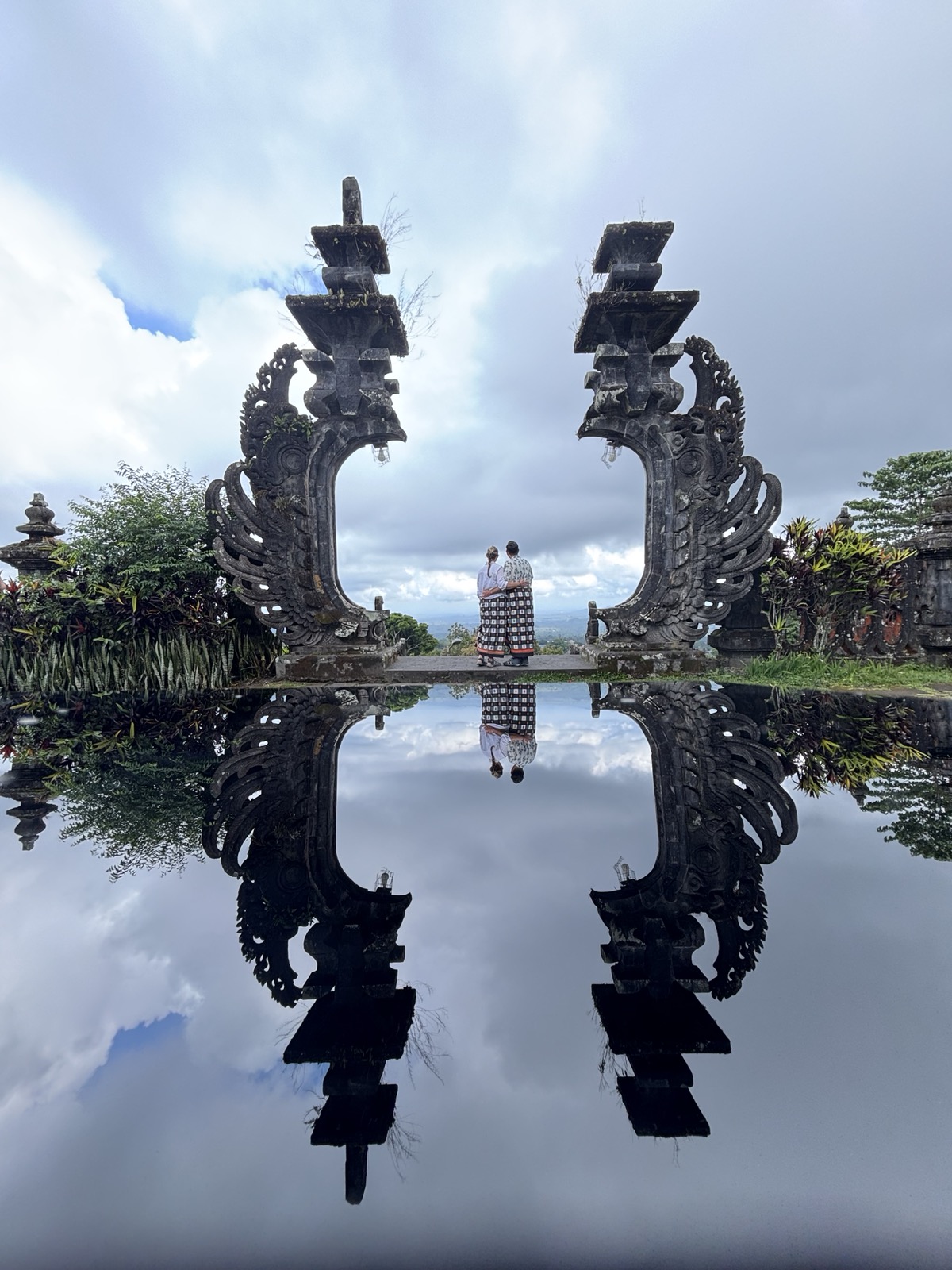
We headed back down, a much easier trek than up. Who was waiting at the bottom? The young girl, staring seriously at me, wanting to sell us as many postcards as possible. Even though we didn’t need them, we bought three, for a much inflated price to boot, so I asked for a picture. What can I say, she made me pinky swear.
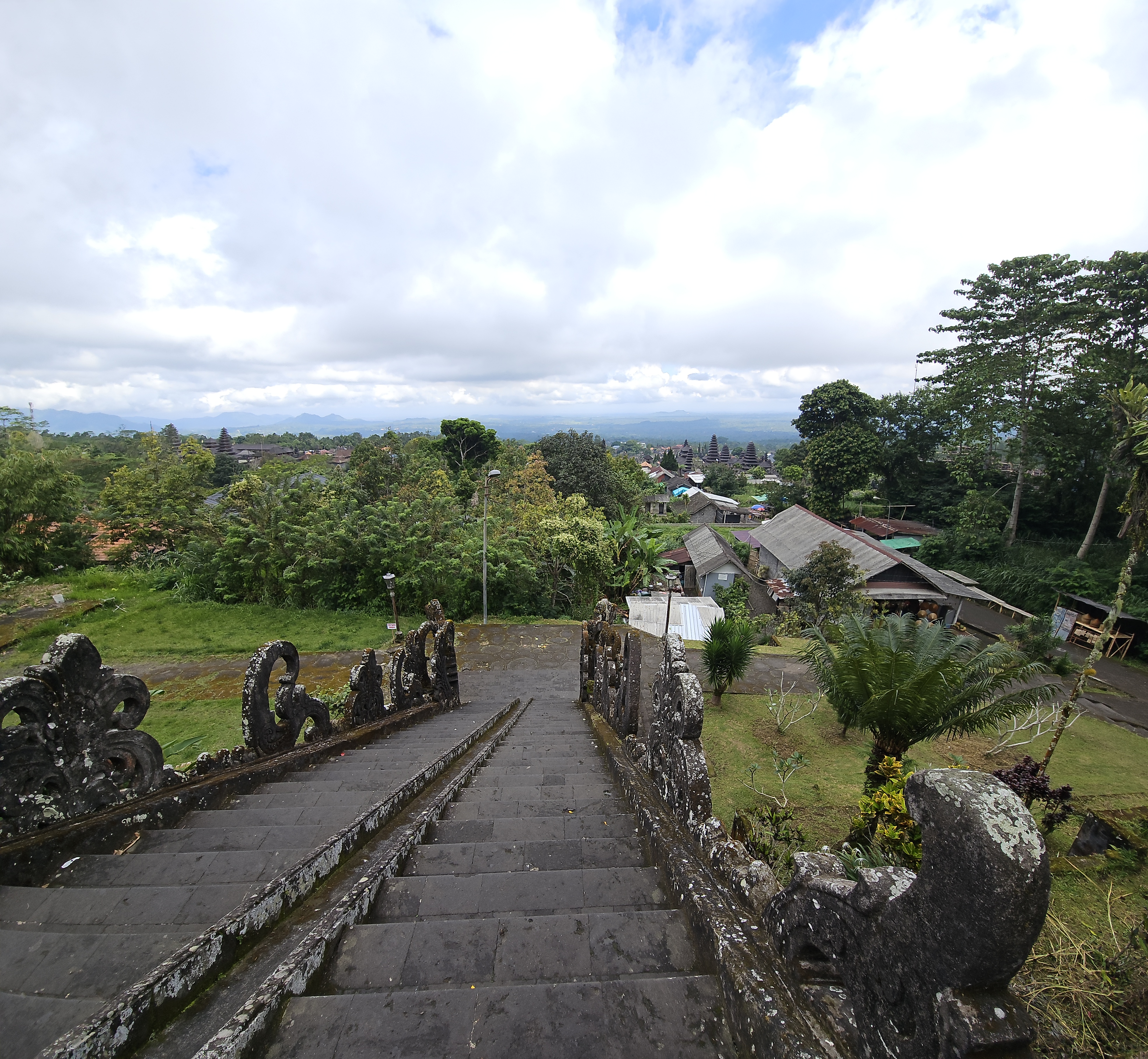
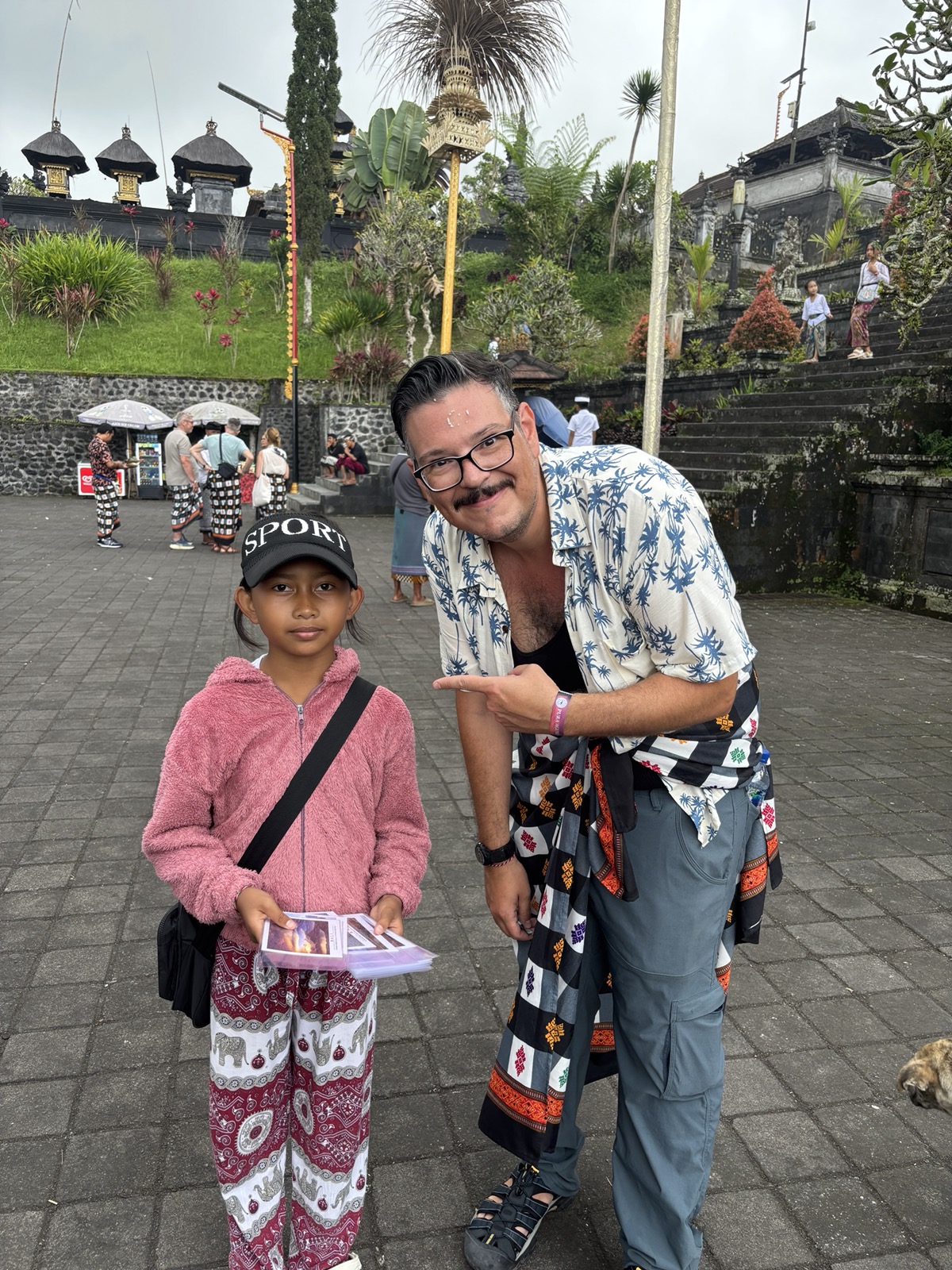
Our guide left us and we walked the rest of the way on our own, until we reached the entrance/exit gates, where Dwi asked us if we were hungry for lunch.
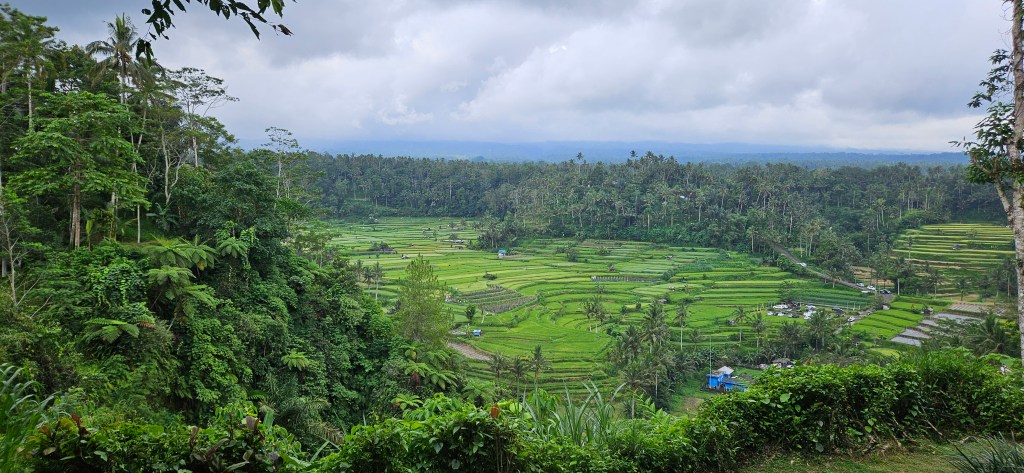
He said he knew a good place (and we came to realize during our time, each driver knew a place for us to eat) that overlooked some rice terraces. It was a buffet lunch at Mahagiri Restaurant, and he undersold the view. It was really cool.
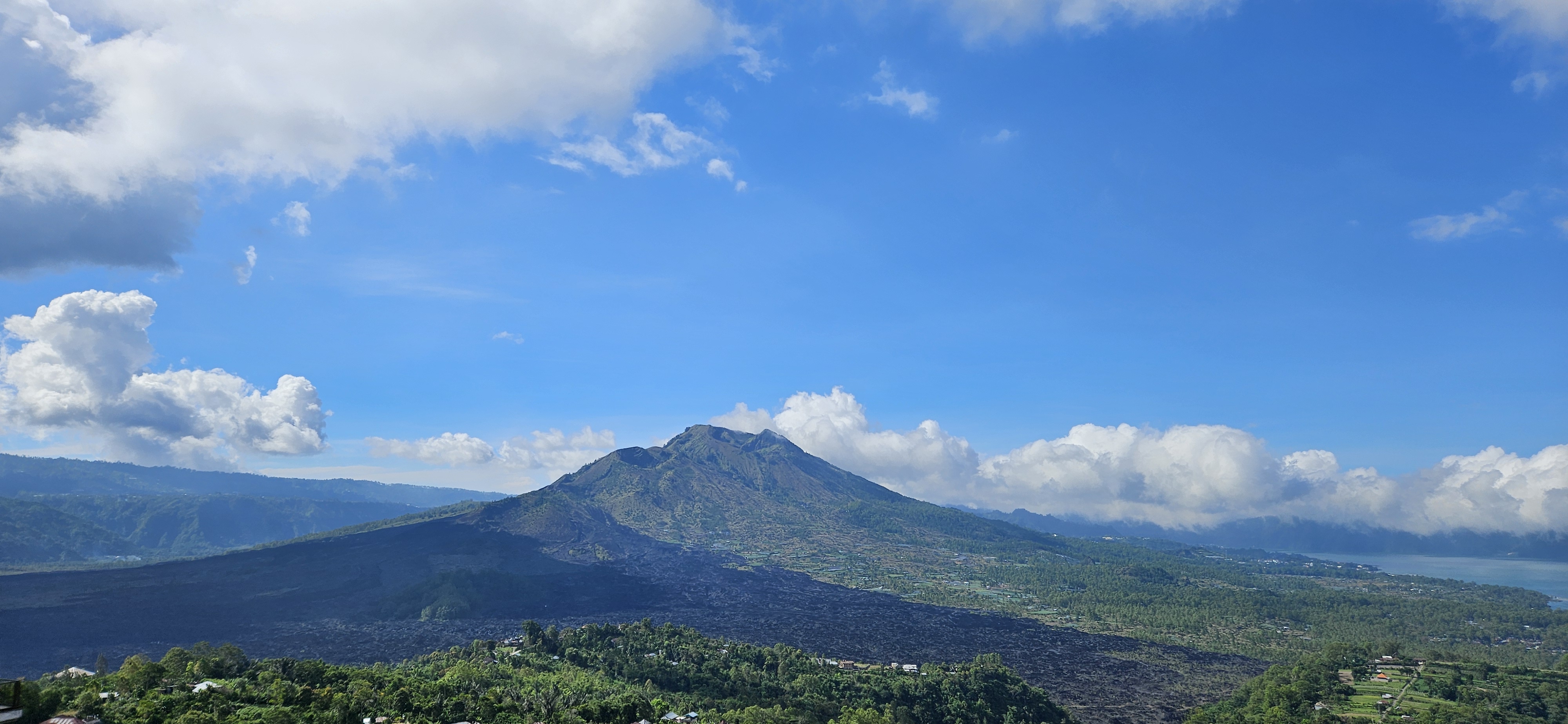
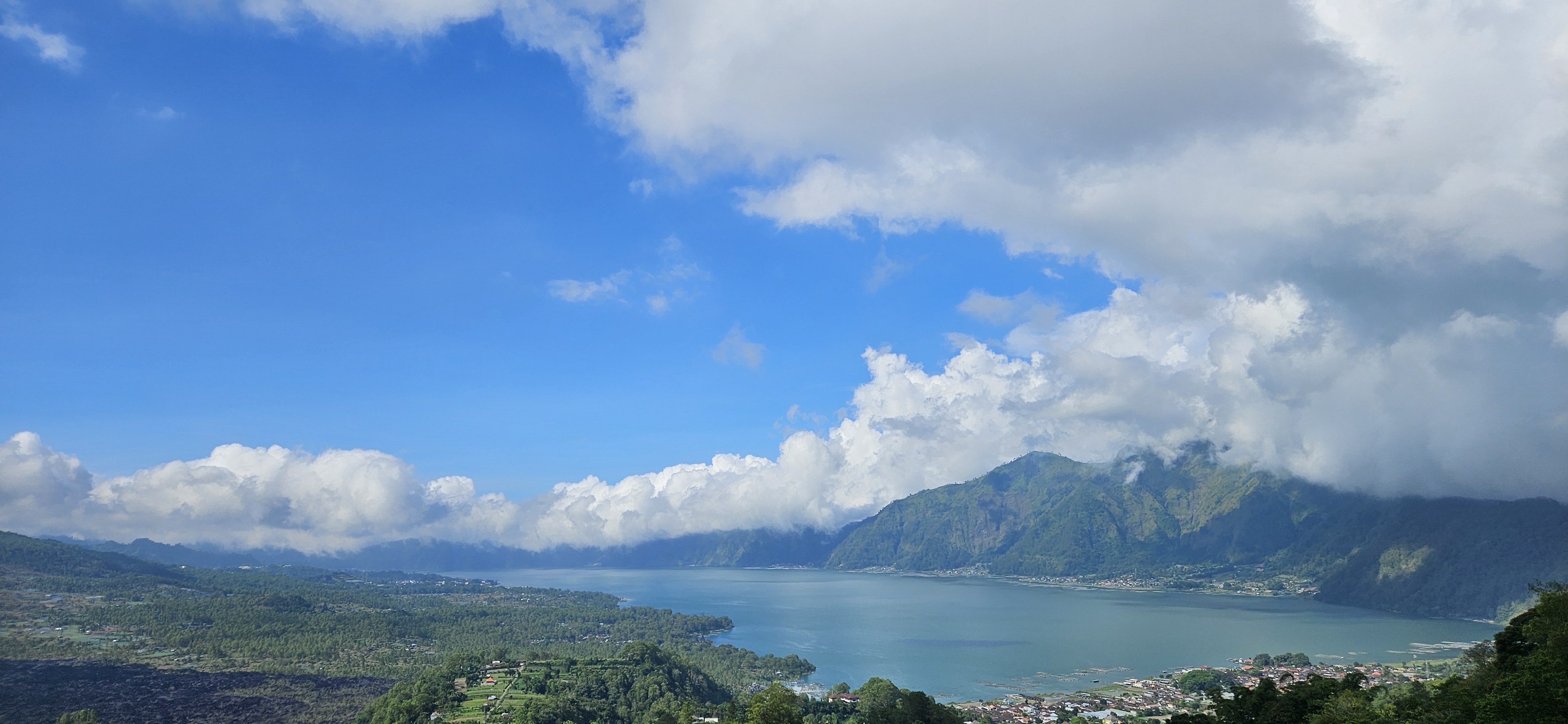
Our next stop was Mount Batur, an active volcano (last erupted in the year 2000), and about two hours drive north of Ubud. Many travel here to watch the sunrise, or even hike it, but we were just coming to look. Dwi took us to the viewing platform, and luckily, the clouds cleared so we could get a full view of Mount Batur and Lake Batur. They both sit within a massive crater caused by an eruption thousands of years ago, and the black you see in front of the mountain is actually not a shadow, but black lava fields. We even saw Mount Abang, on the right of the lake in the below picture, before it was obscured by the incoming clouds.
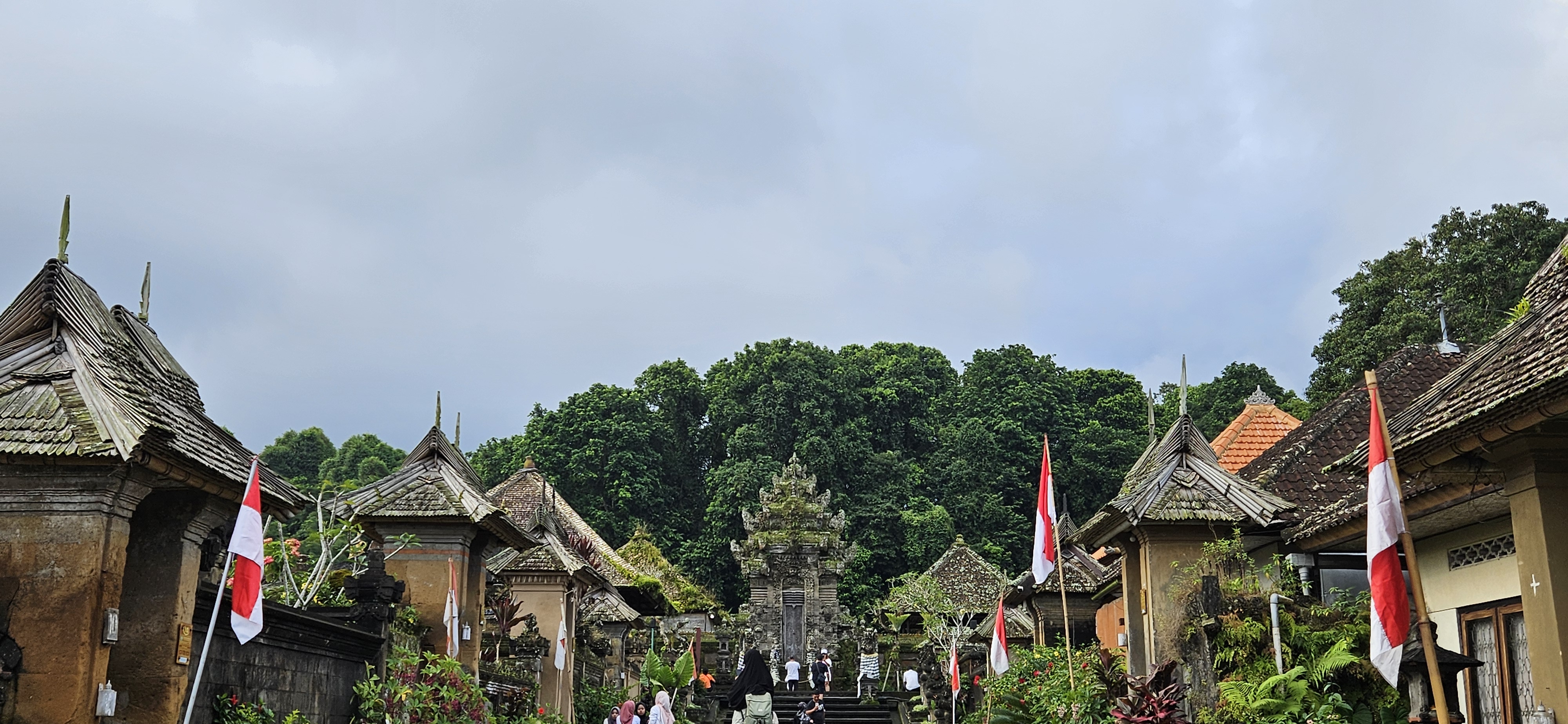
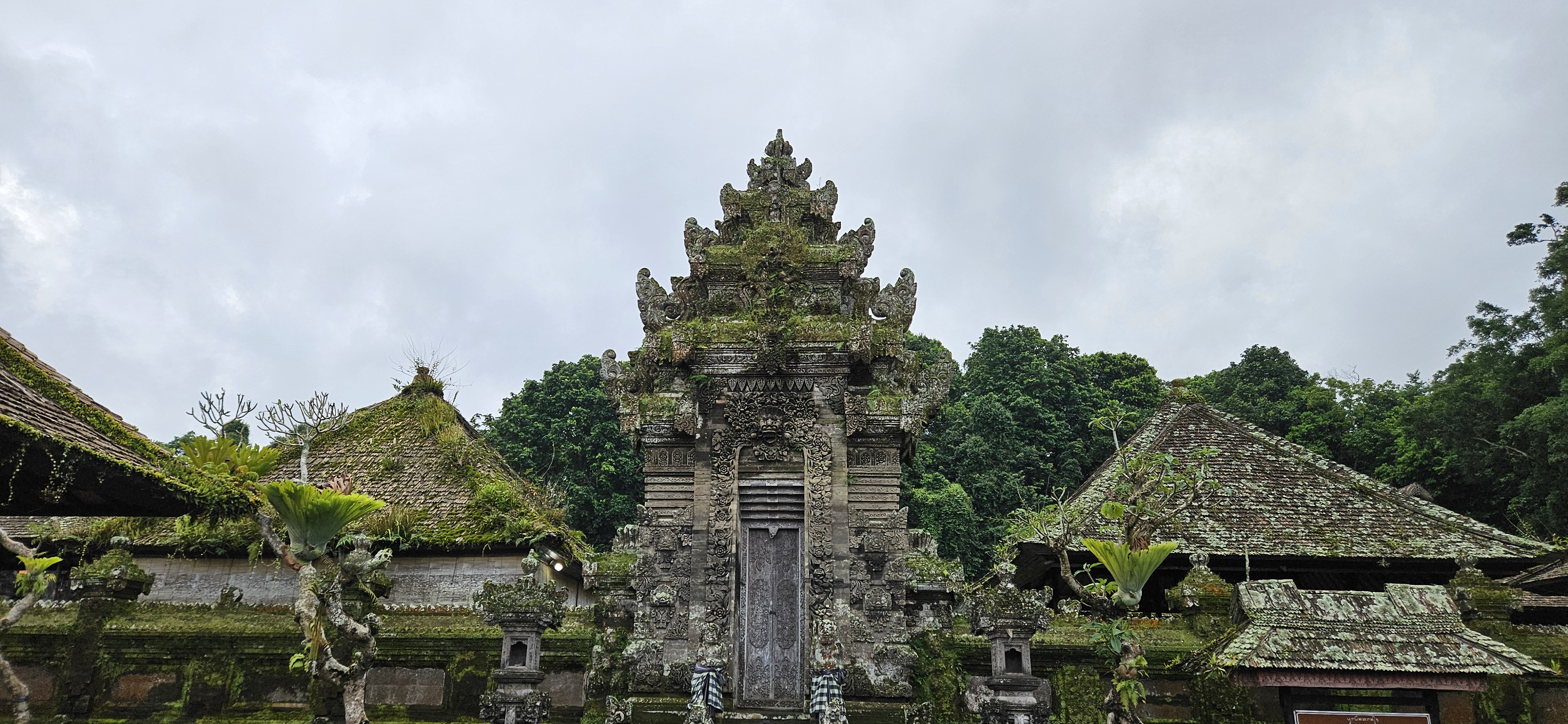
Our last stop in our day tour around Bali was to Penglipuran Village, a traditional village which still follows concept of Tri Hita Karana, the philosophy of Balinese society regarding the balance of relations between God, humans and their environment; there are no motorized vehicles, and families still live there. There is one main street and the villagers homes and compounds are on either side. Now, most of the villagers sell souvenirs, have restaurants, rent traditional Balinese clothing for visitors to take photos, or run convenience stores selling drinks and snacks.
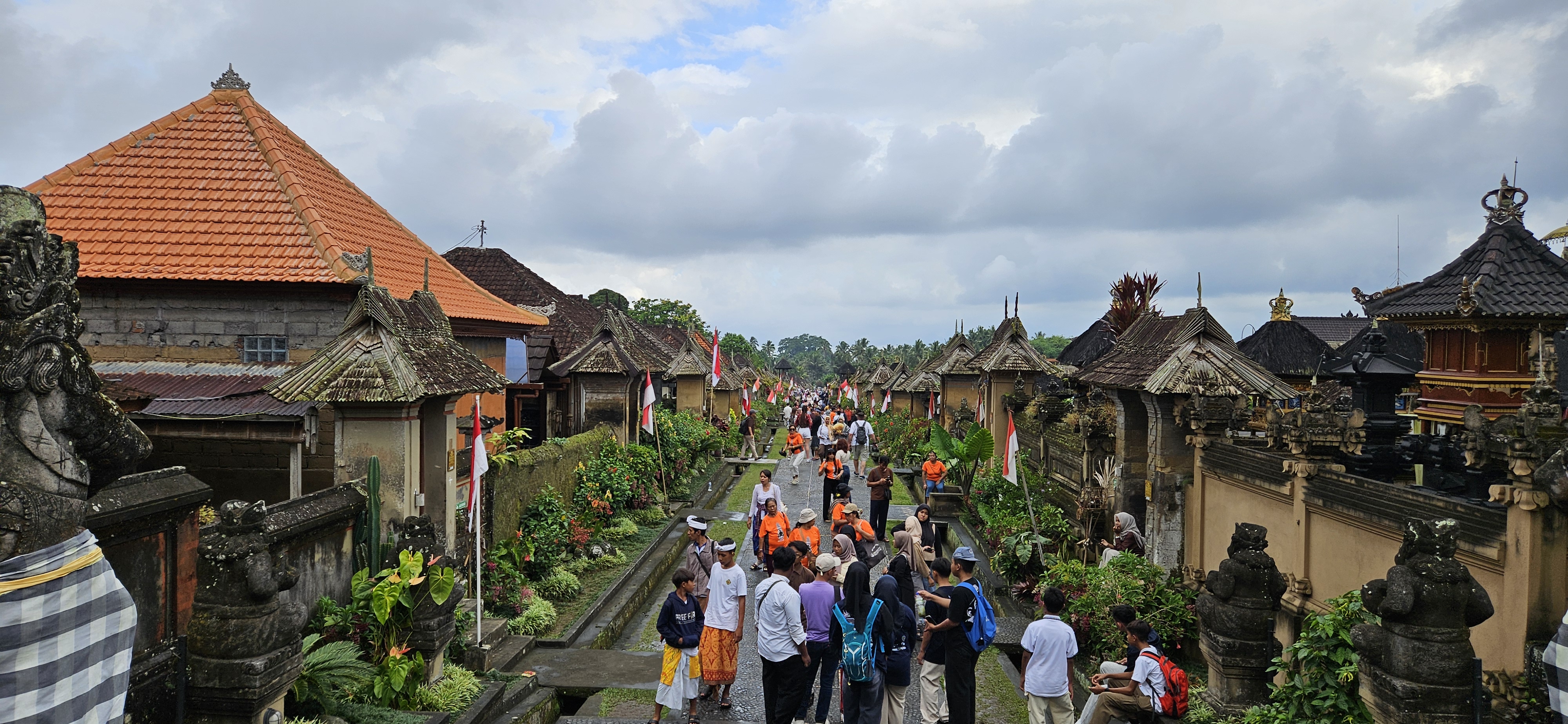
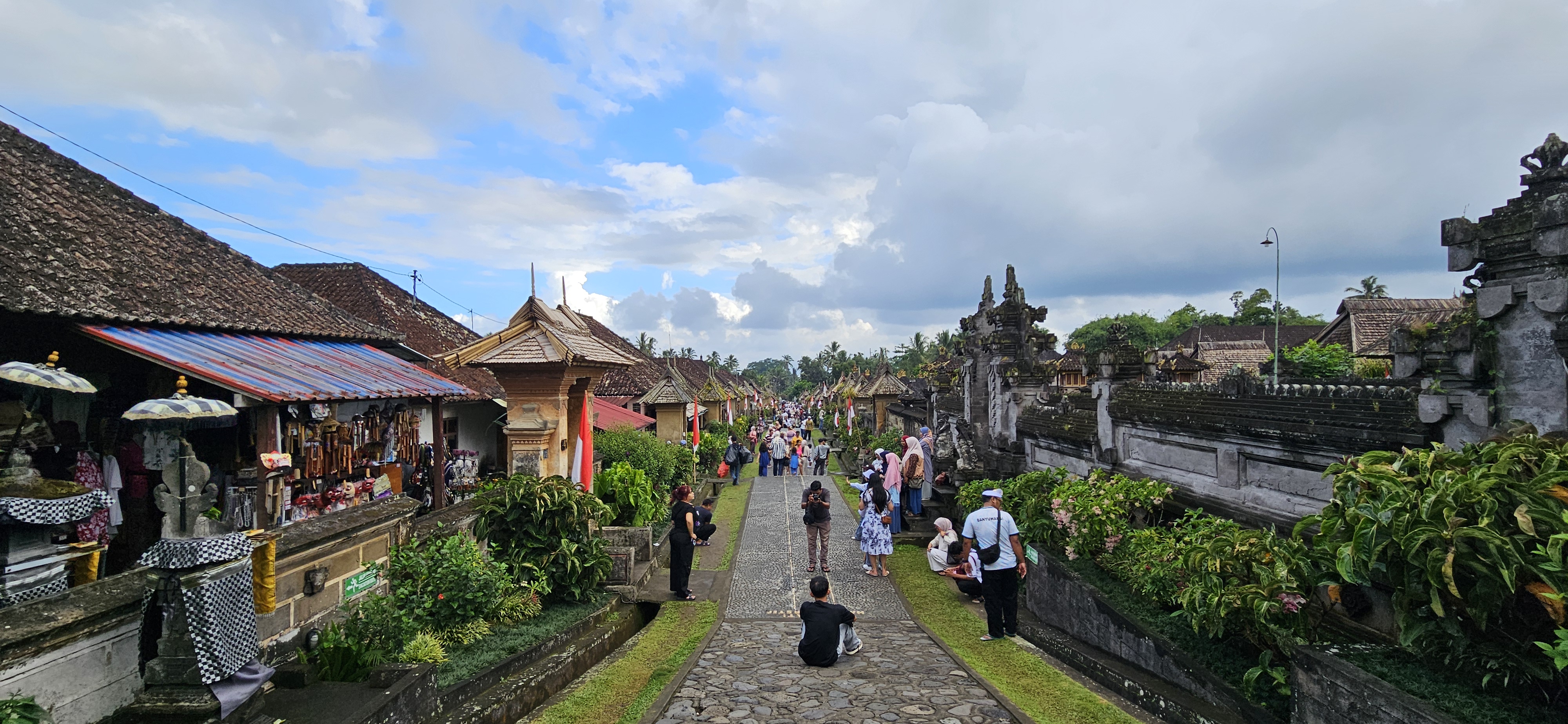
The temples and homes can be explored if purchasing an item or eating at the homeowner’s restaurant; we were looking for an iced coffee as it was hot and humid this day.
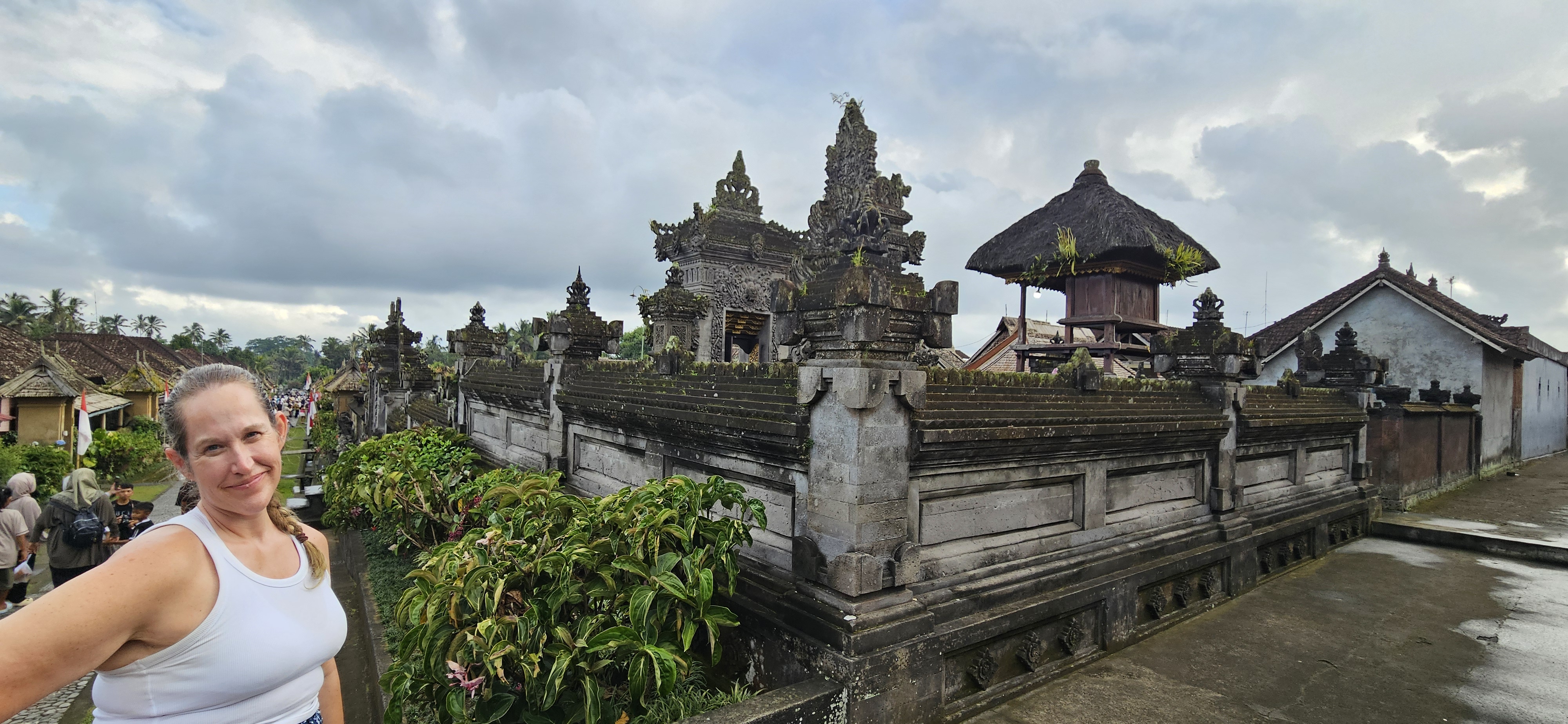
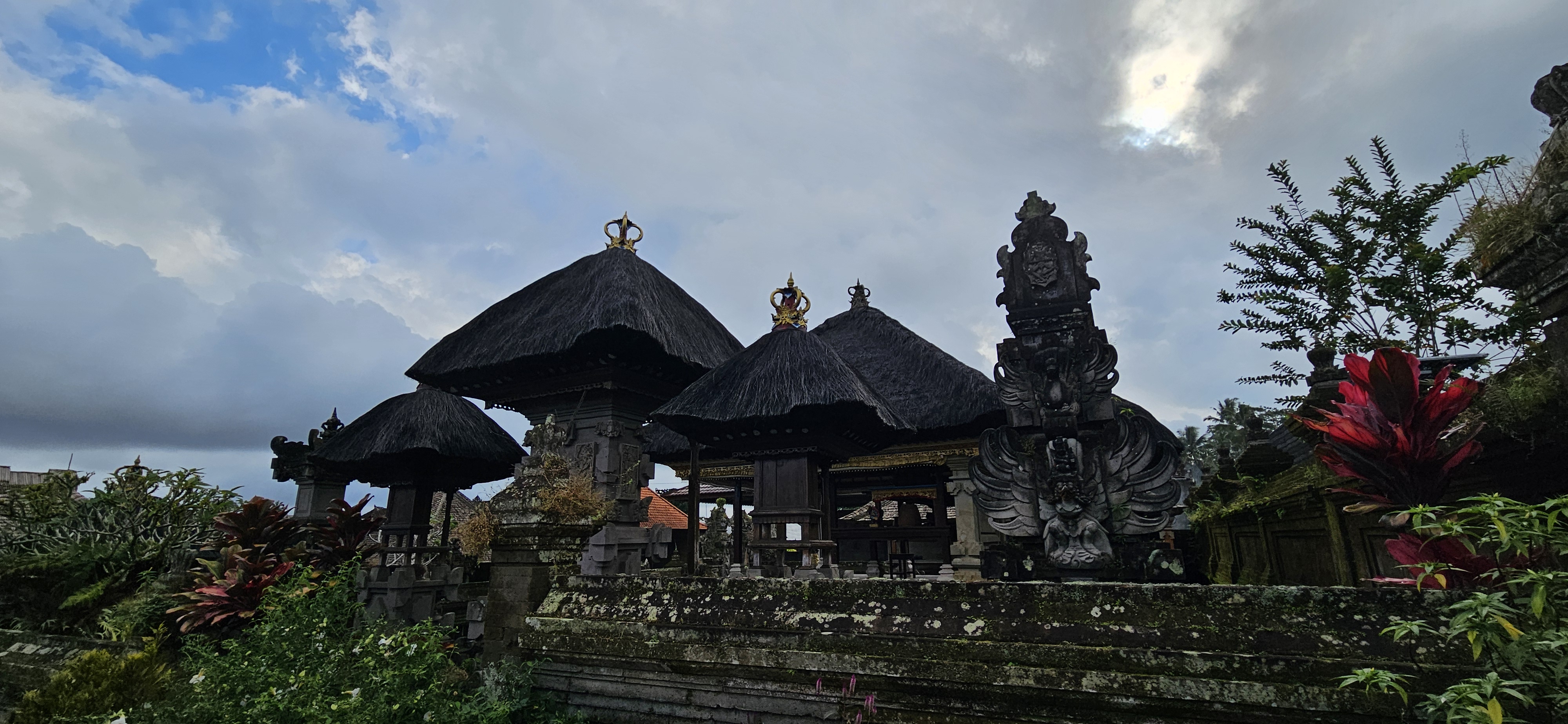
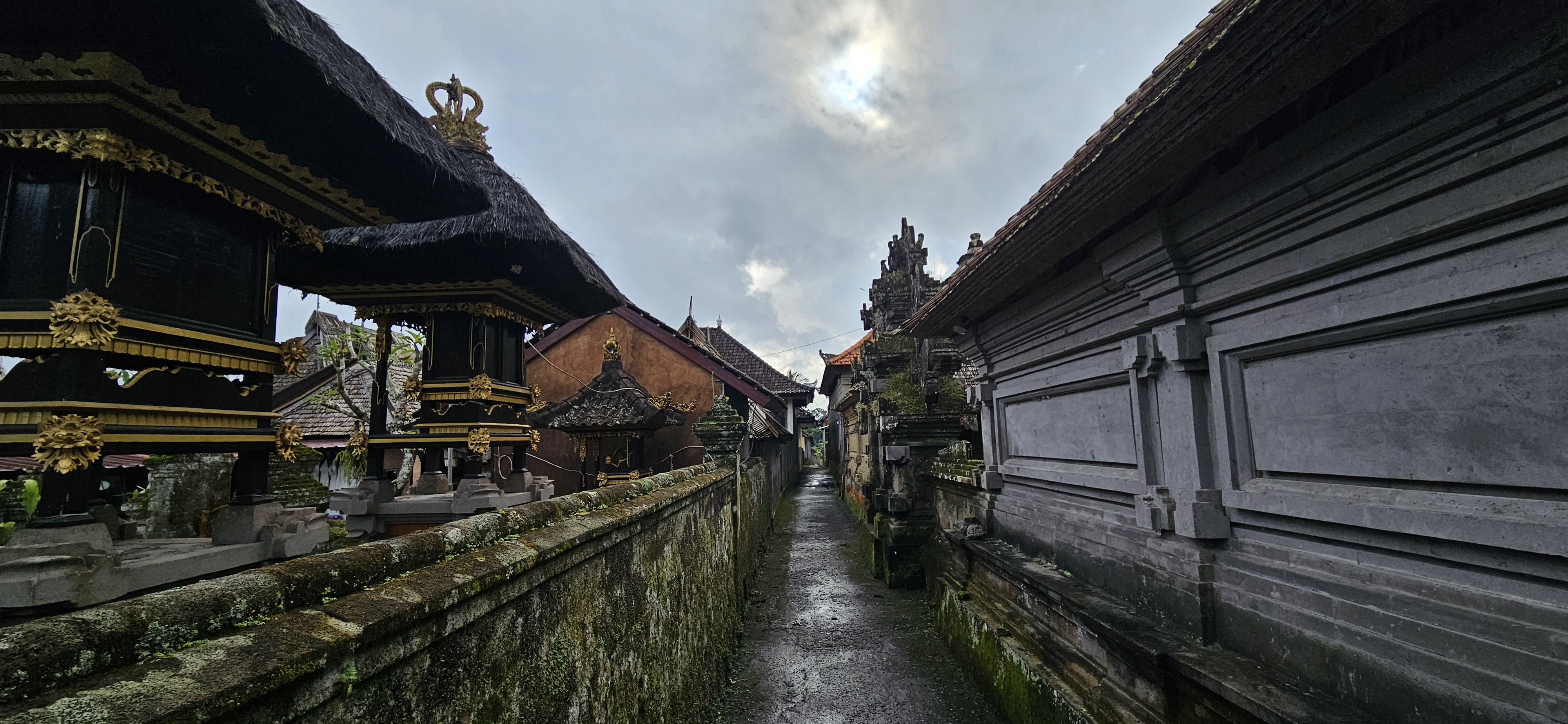
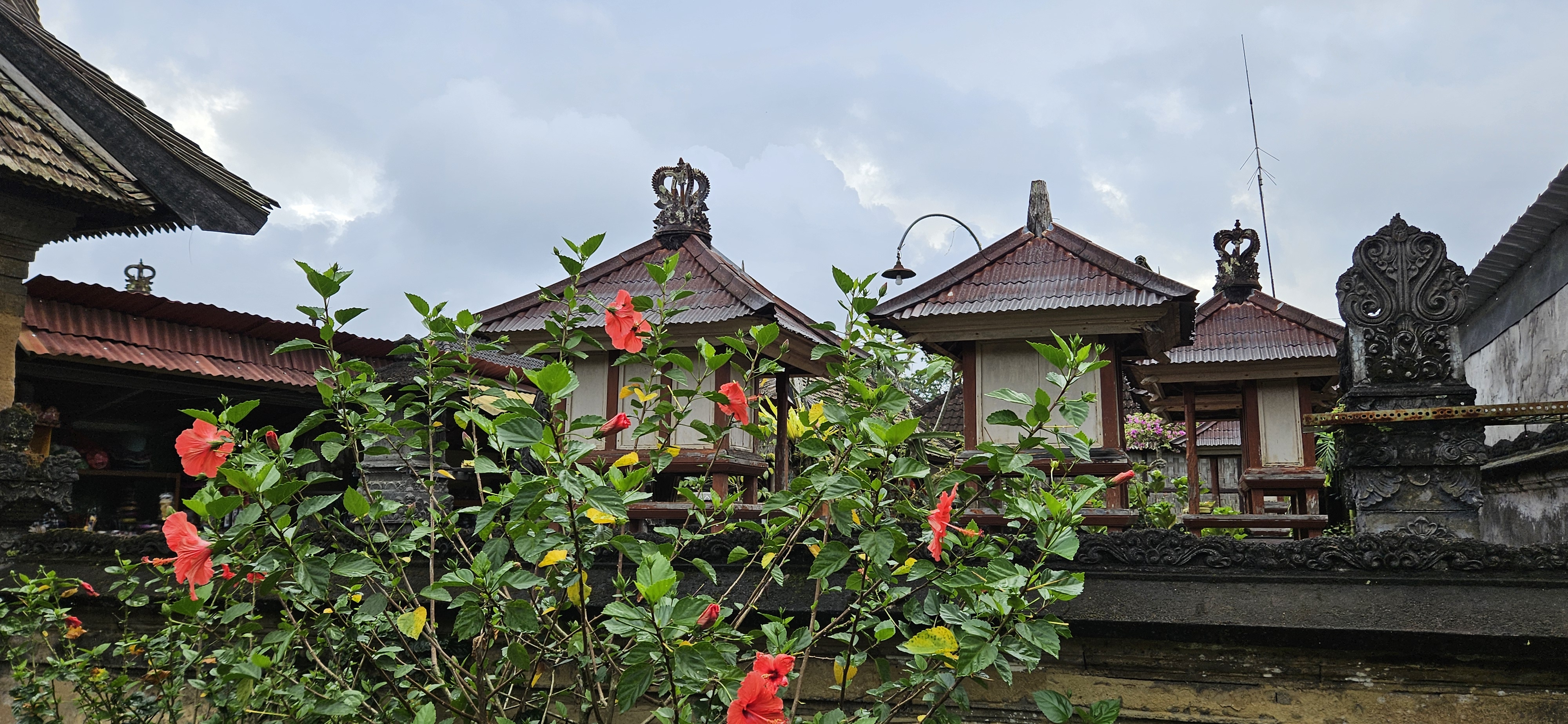
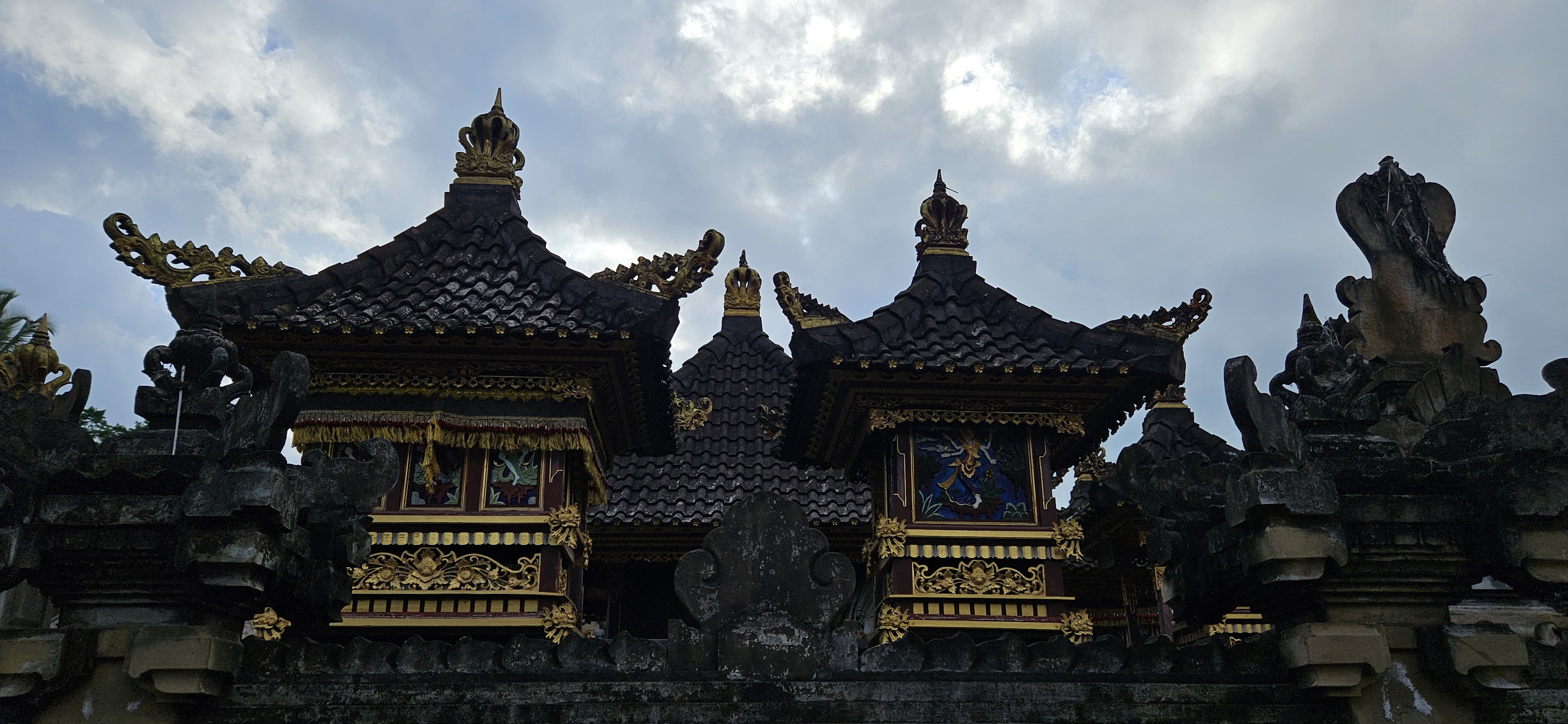
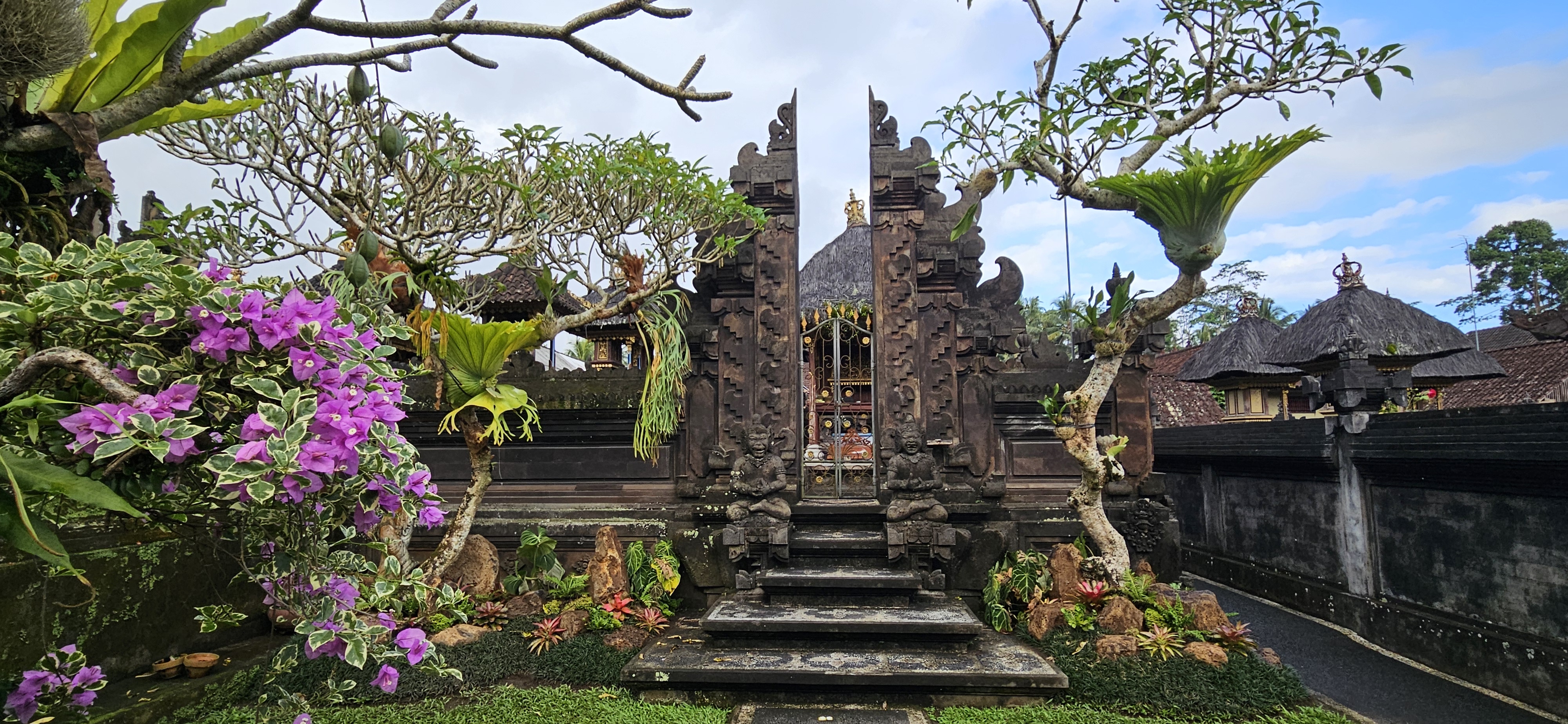
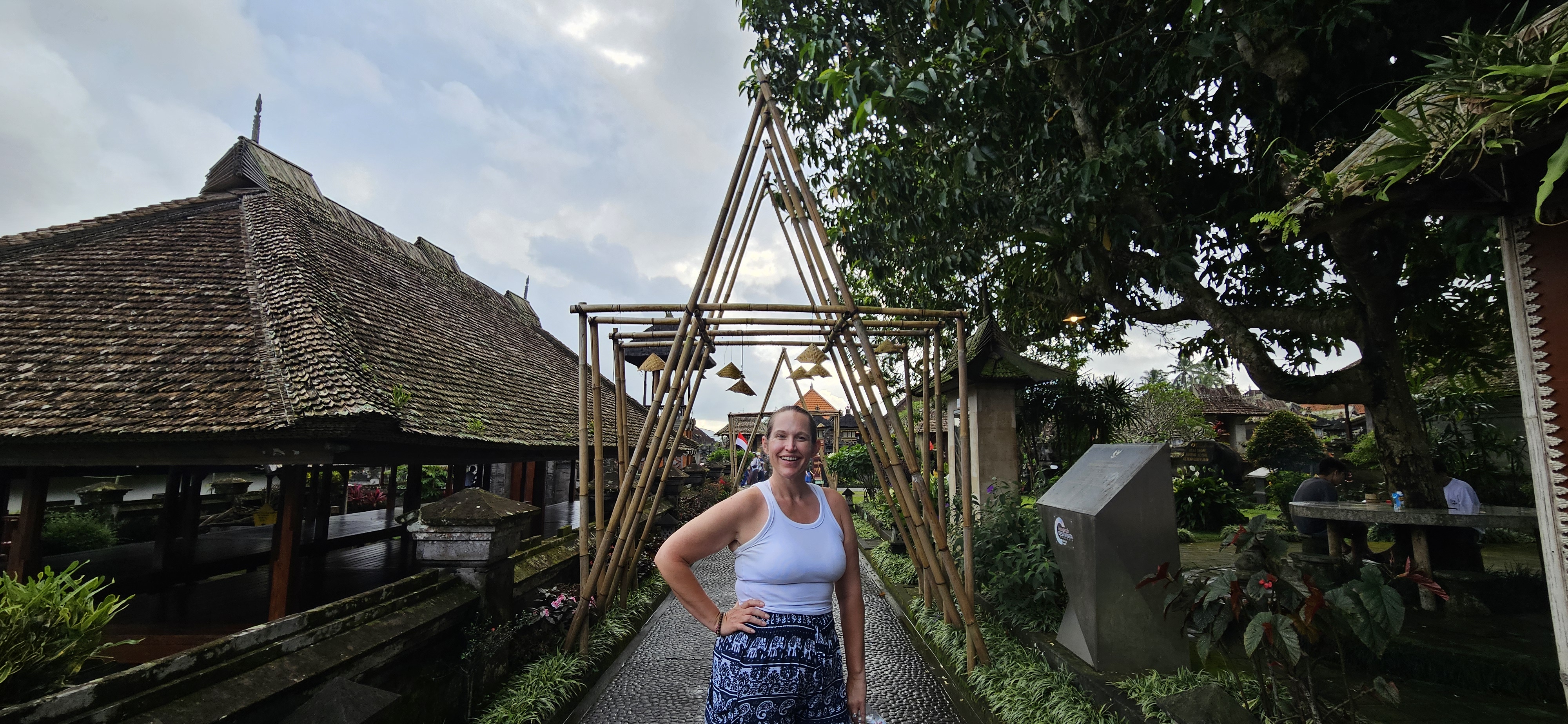
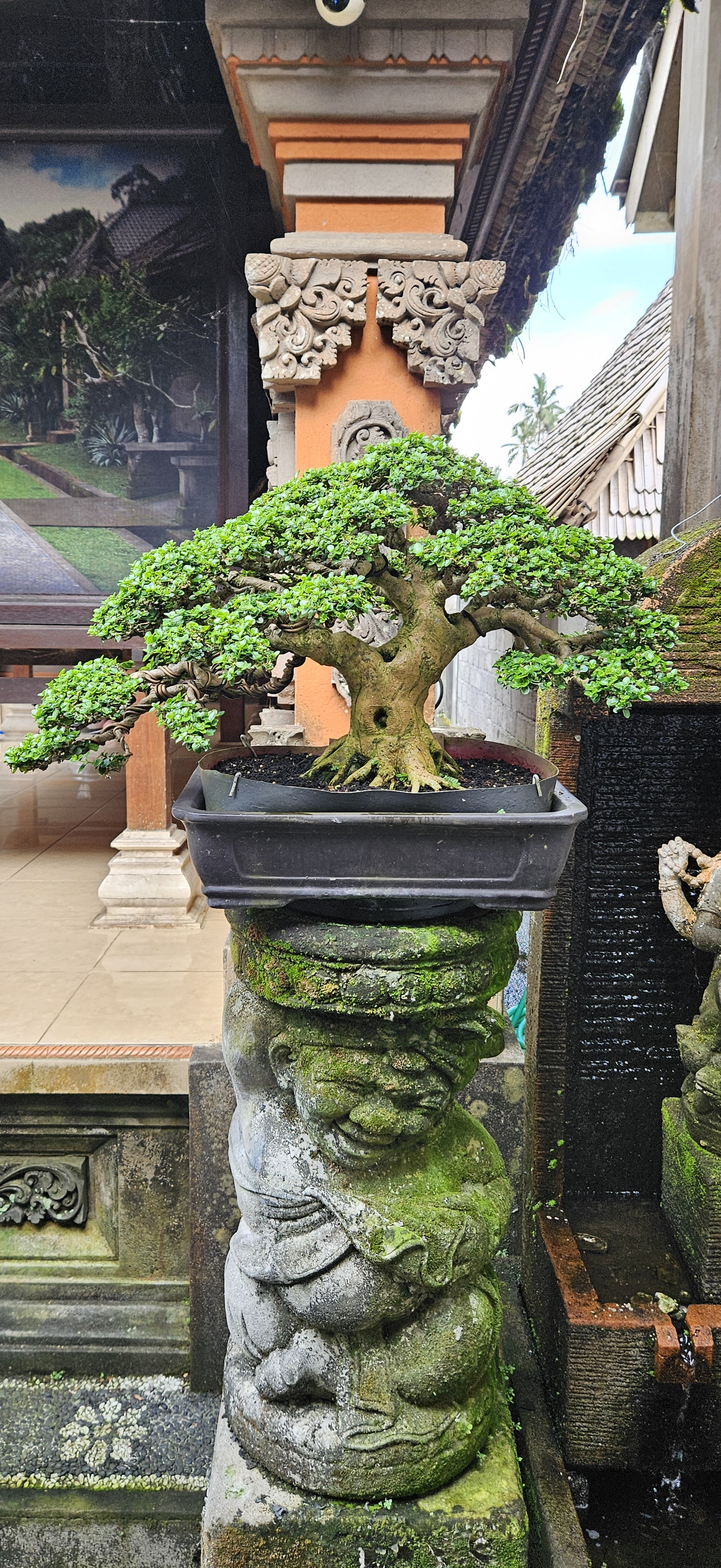
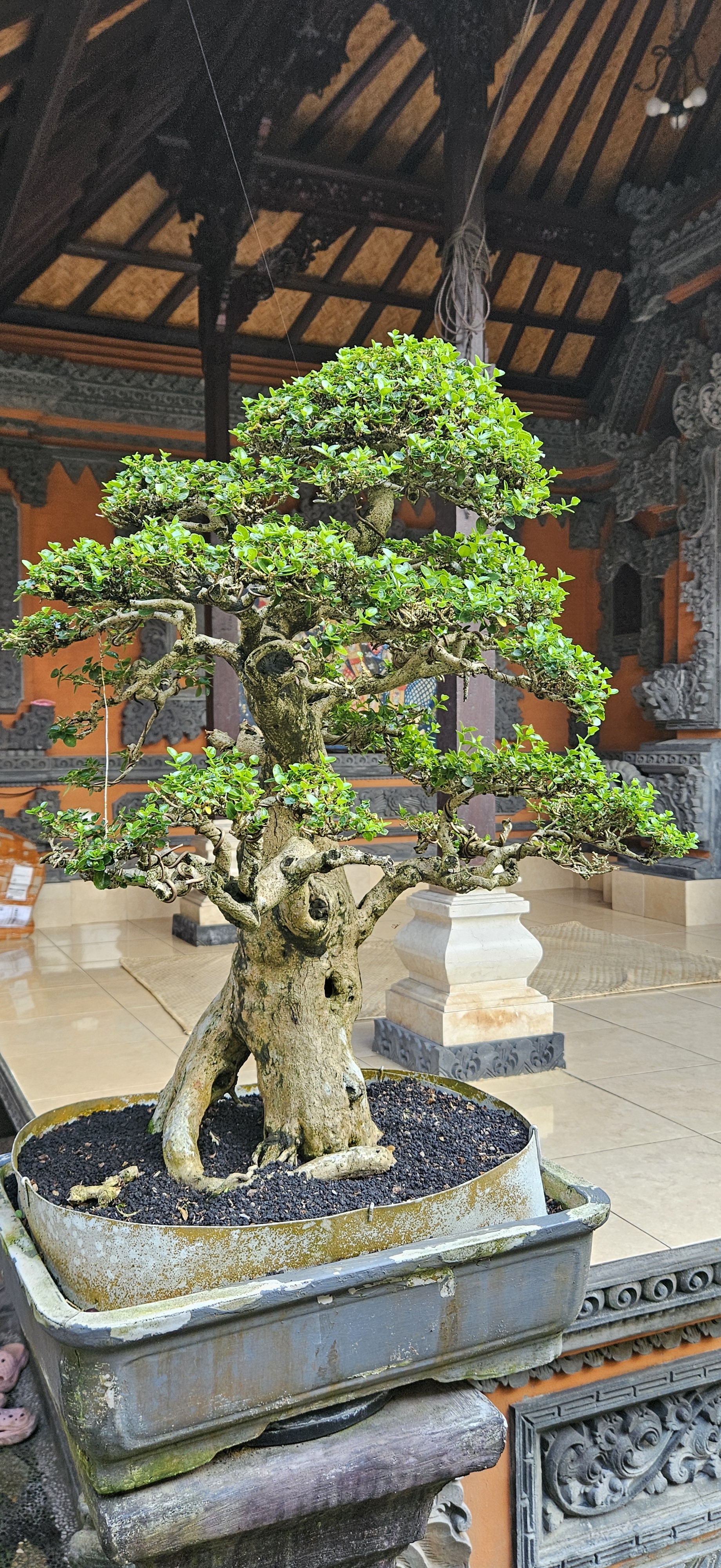
We walked all the way down the road, Jessica looking for a place selling coffee with an eagle eye. We were at the very end, and lo and behold, a woman was selling iced coffee! Jessica played peek-a-boo with her young daughter, and I checked out their collection of Bonsai trees, which were really impressive.
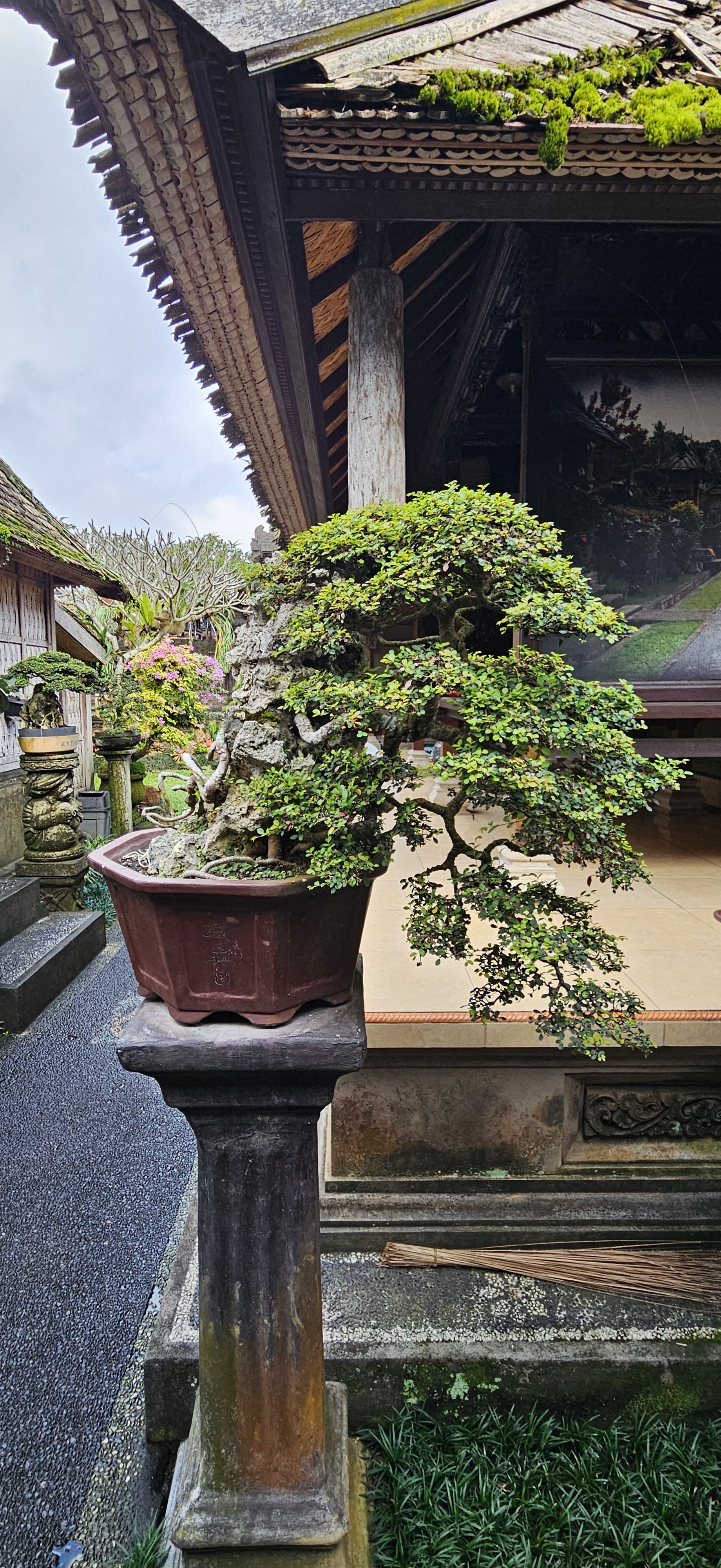
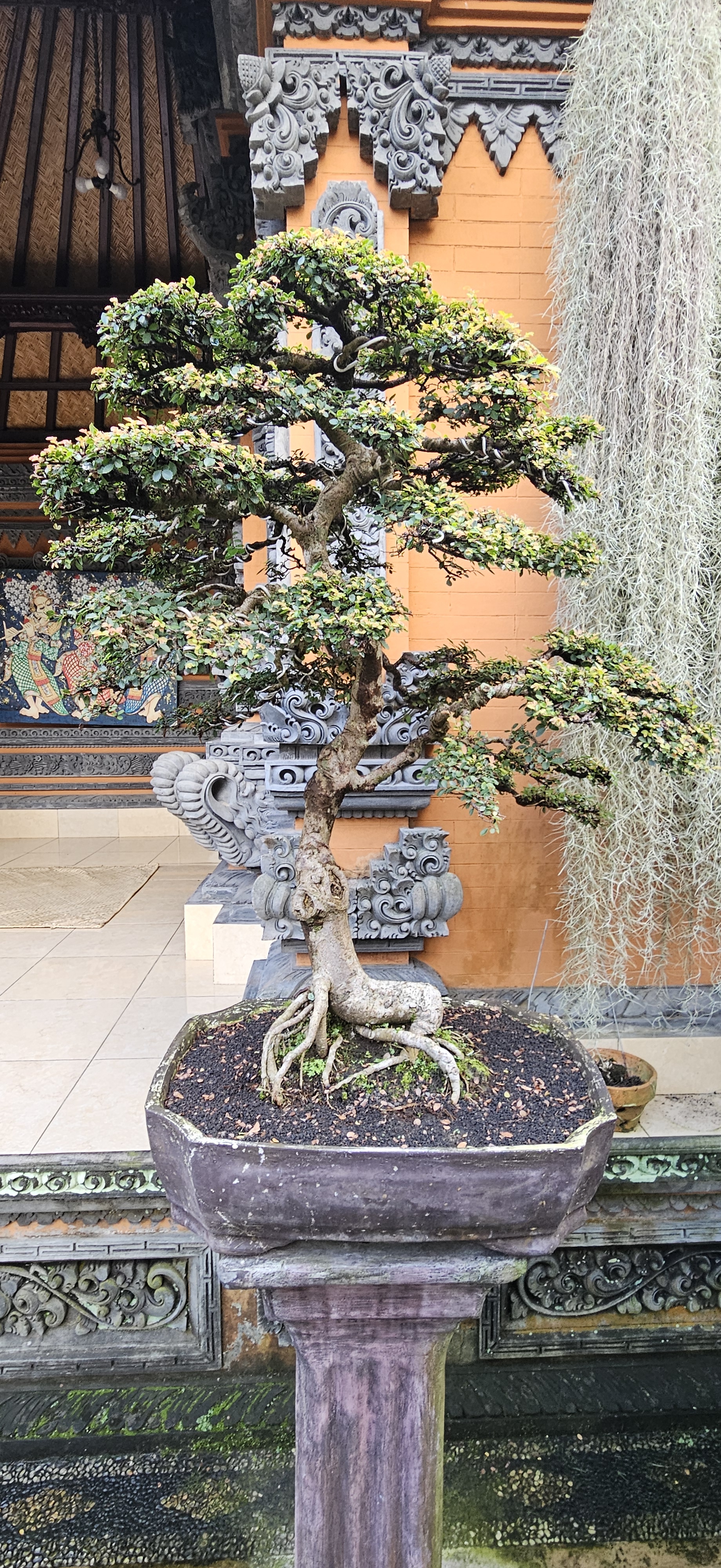
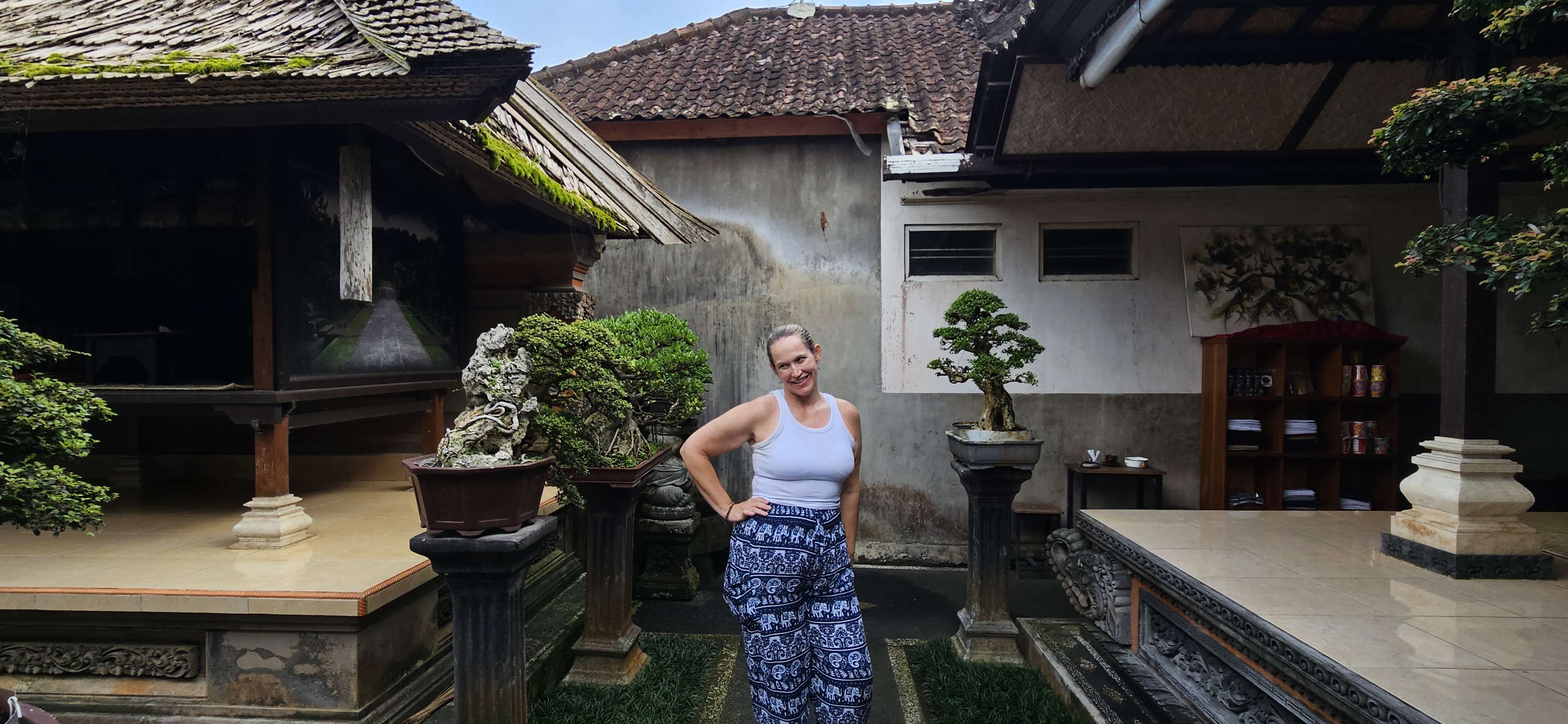
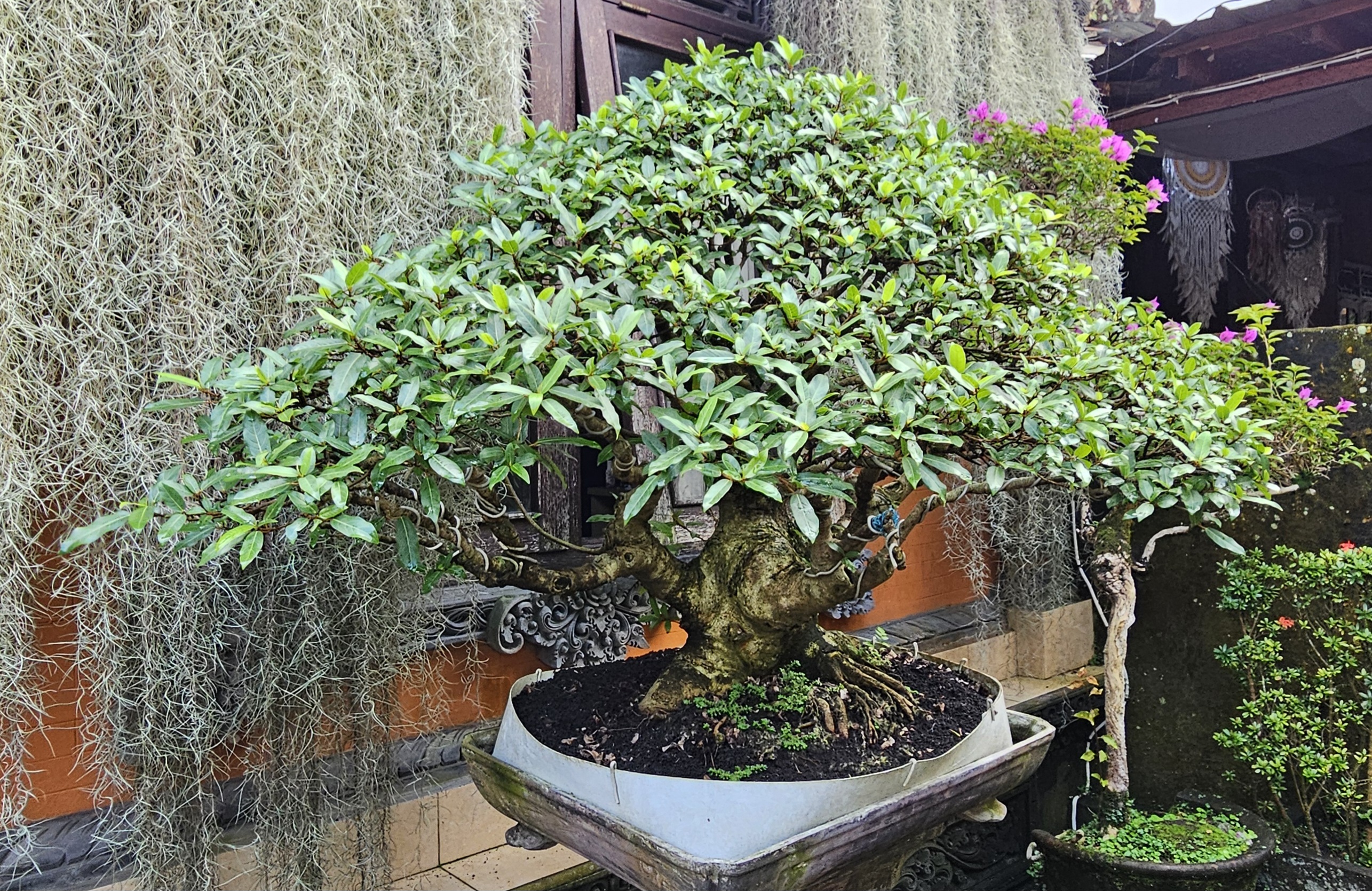
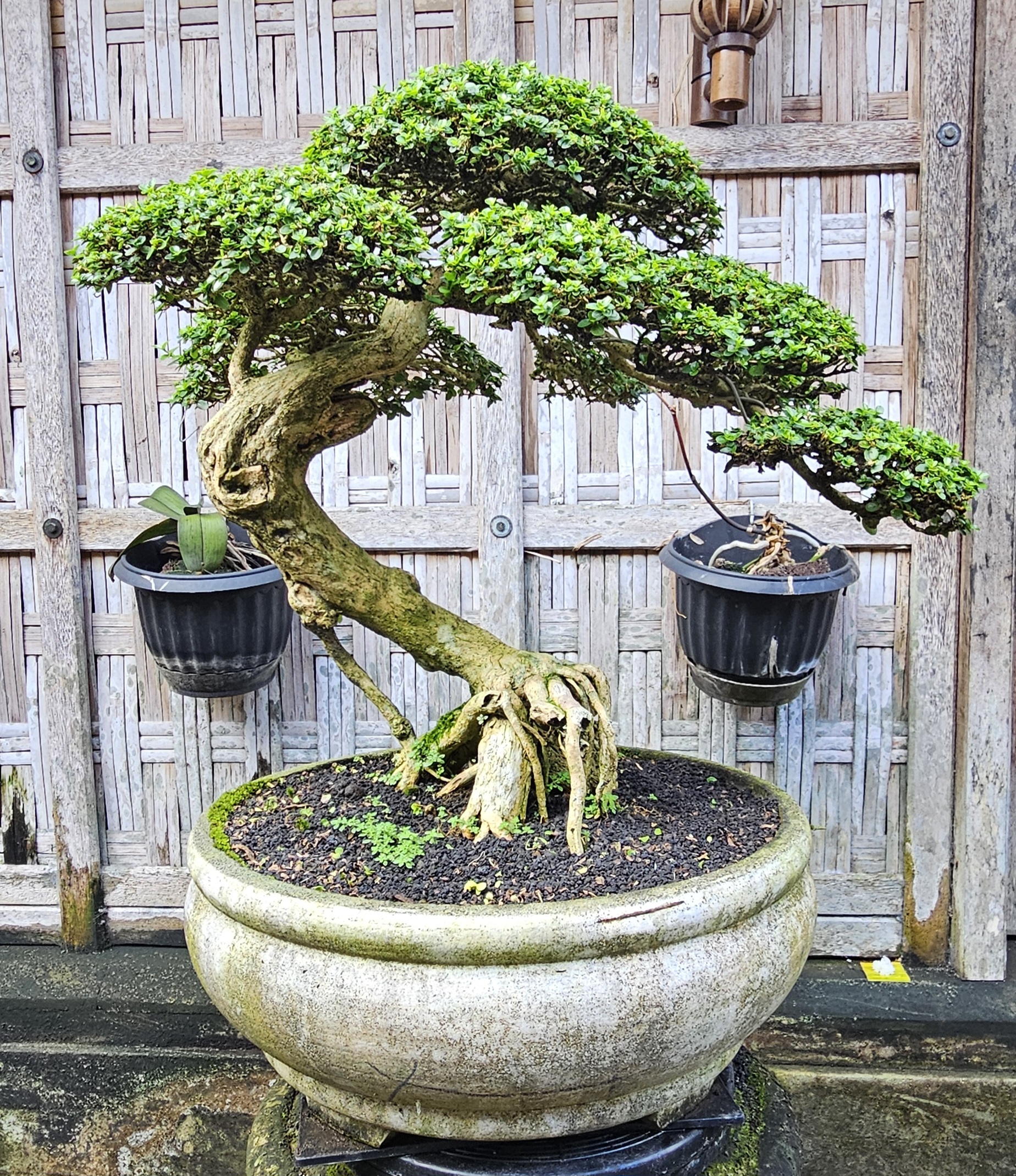
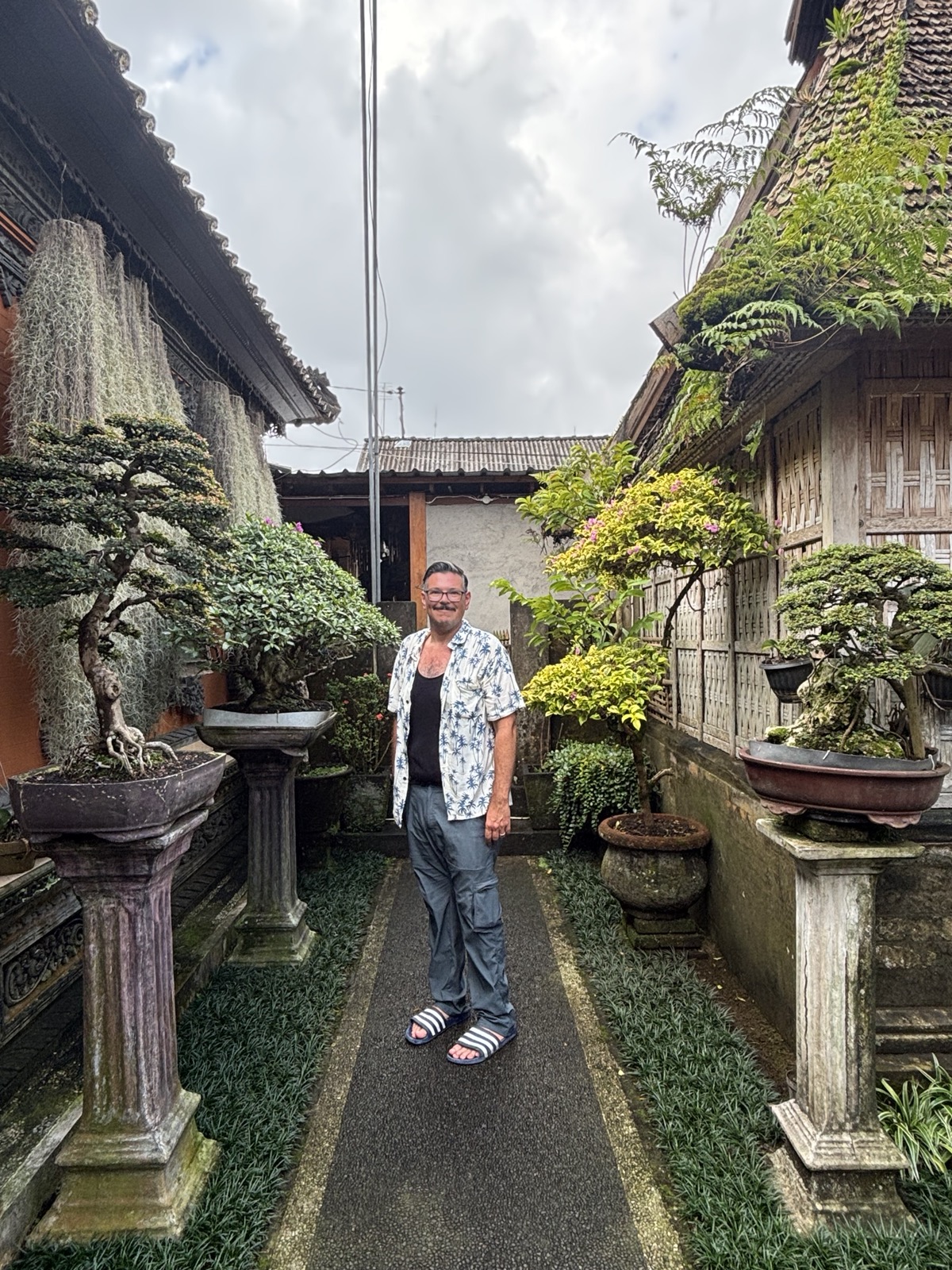
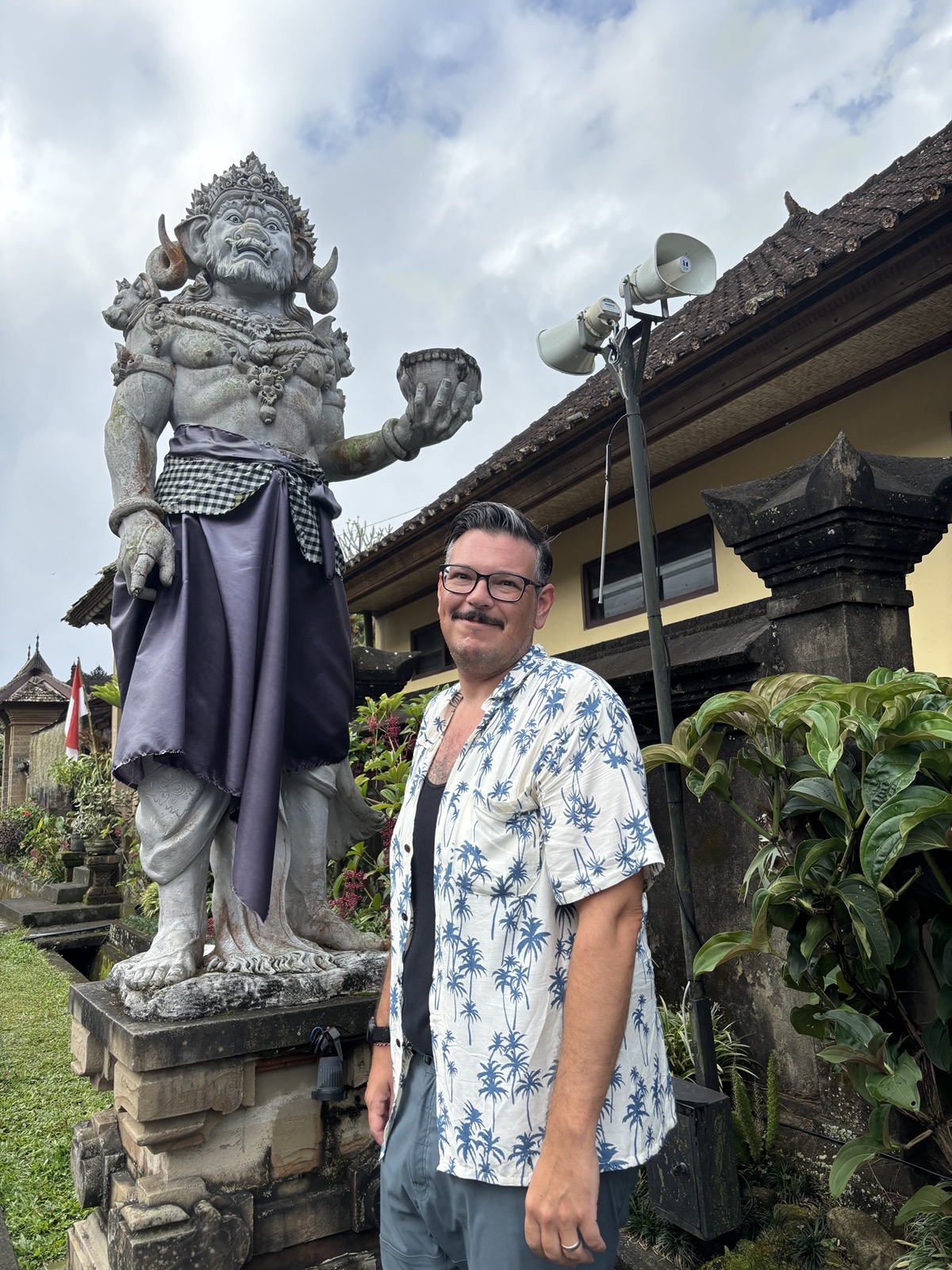
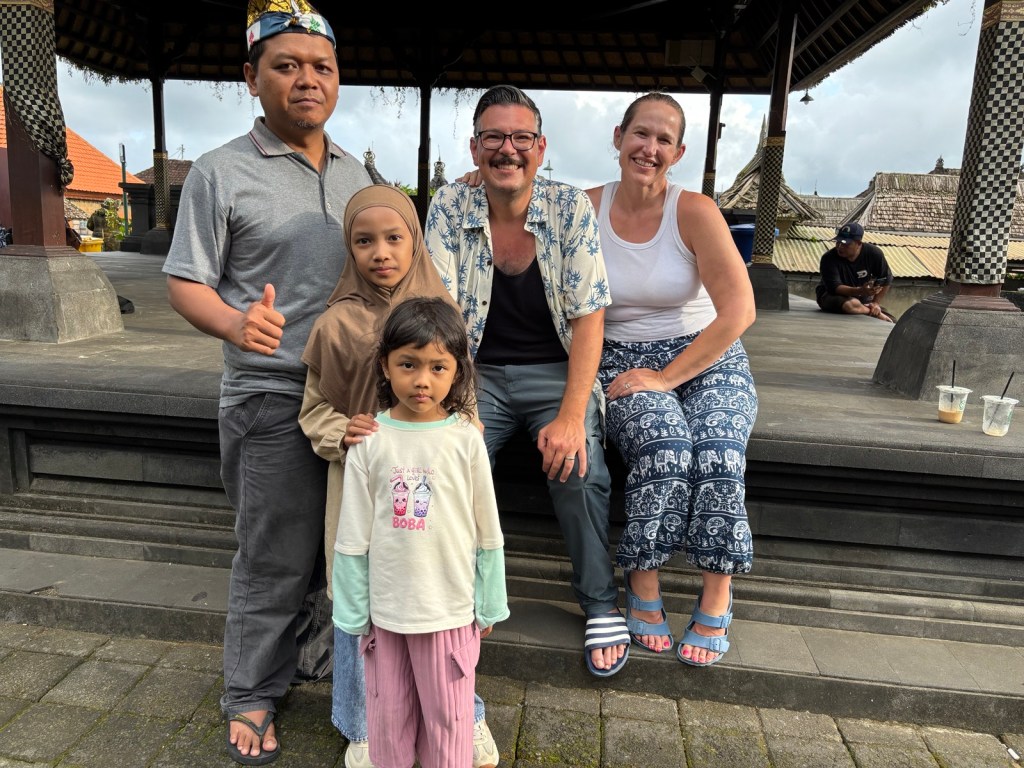
It is a very popular place for tourists from all over, including Indonesia; a man from Java introduced himself to us and we started talking and when we said we were from America, he asked us to take a picture with him and his daughters. We were happy to oblige.
We walked all the way back up the main street, taking a last look at the big temple complex that was at the beginning of the street.
Luckily we made it back to the car before the rain began, and we headed to Ubud, worn out from our day exploring some major sites on Bali. When traveling to Bali, it is important to research what you might like, as we chose five places originally, but after talking with Dwi it made more sense to do these four, and I’m glad we did. More to come from Bali!


This whole place looks amazing – that temple complex…just wow! Also 1284AD? That’s impressive.
LikeLike
That was one of the coolest temples, and experiences too
LikeLiked by 1 person