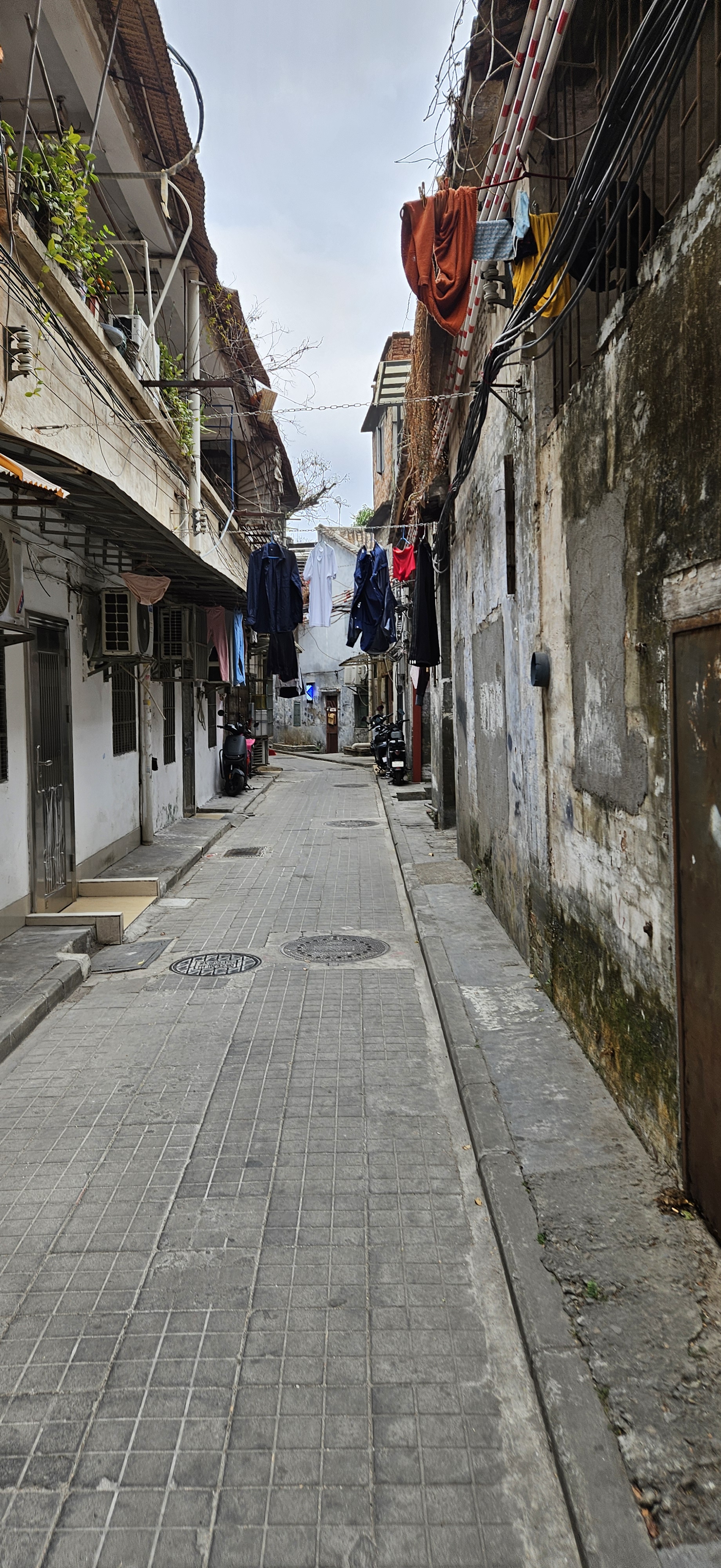
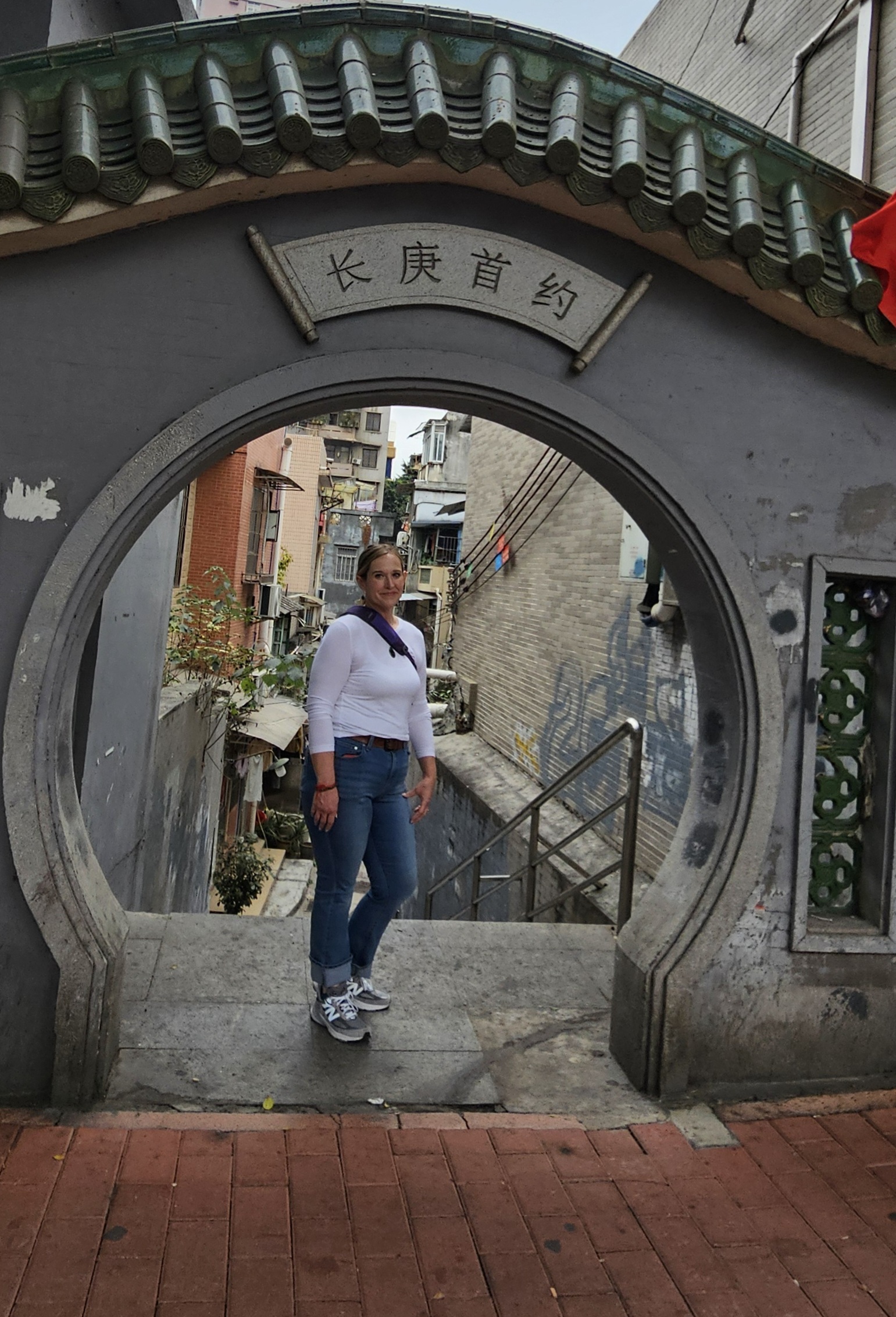
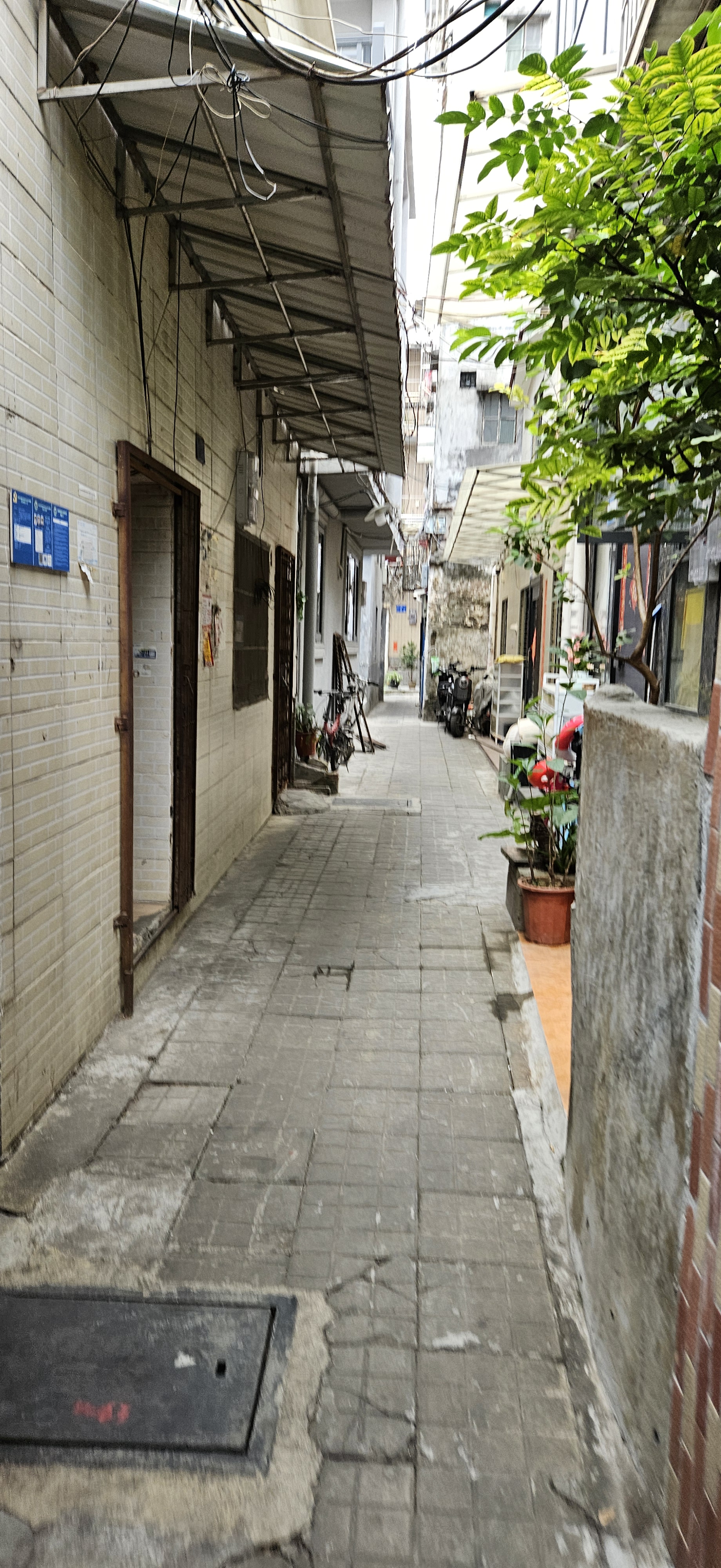
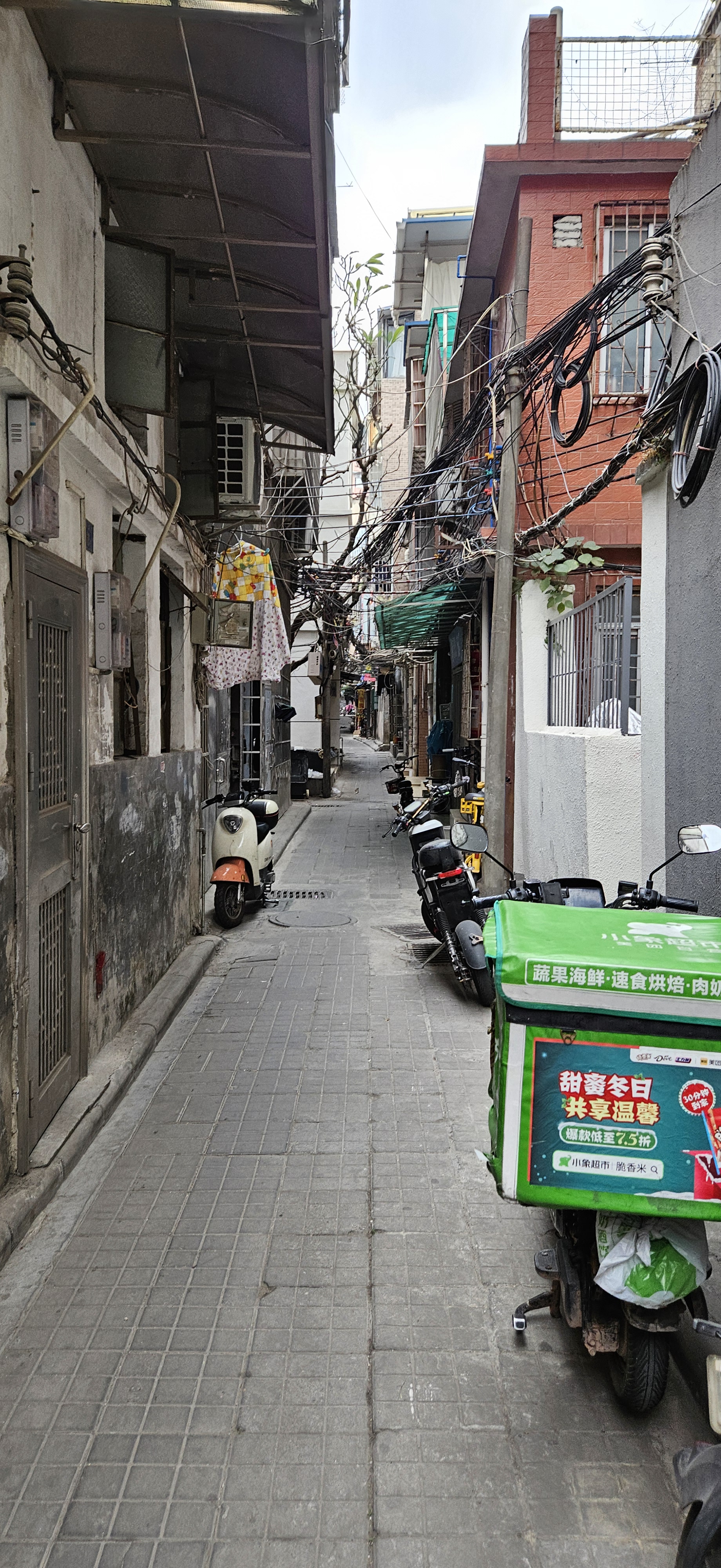
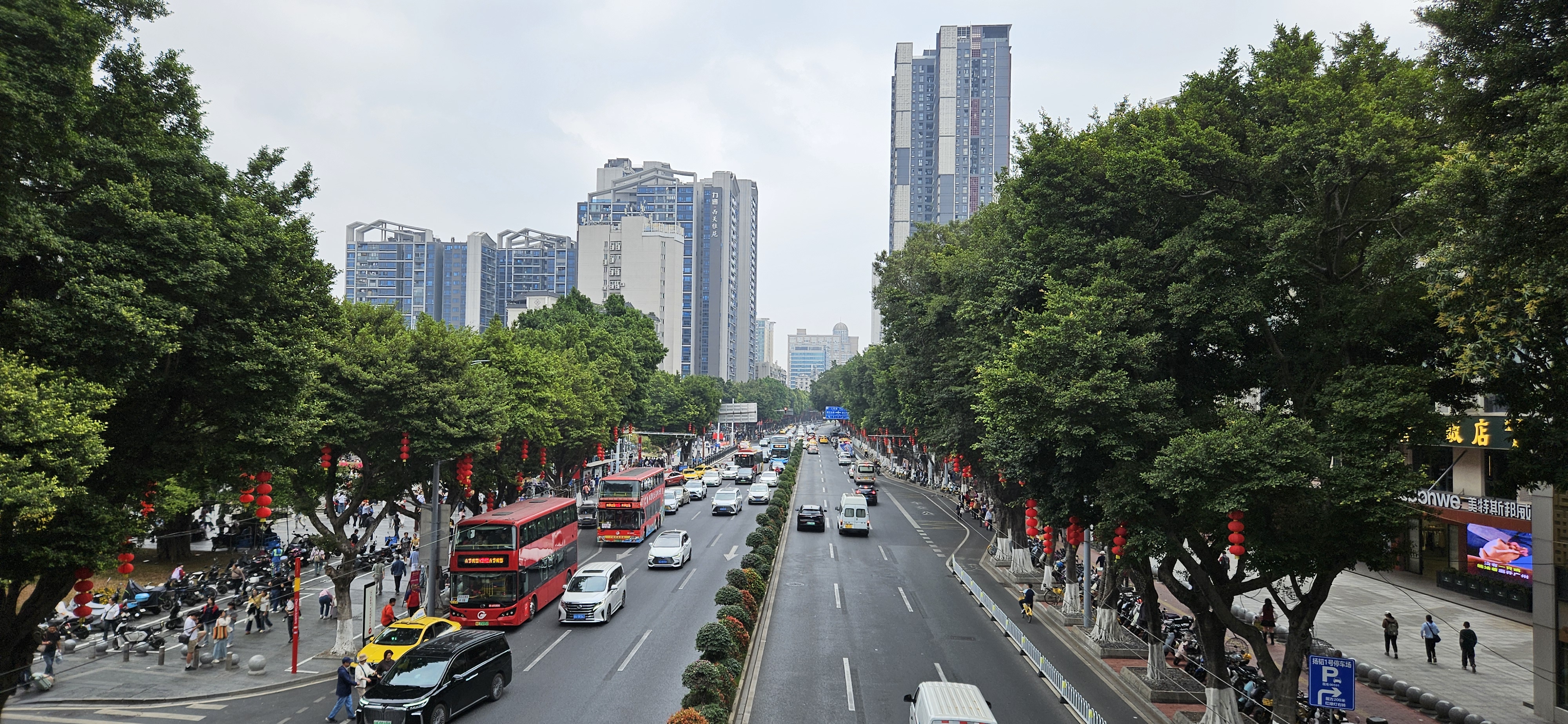
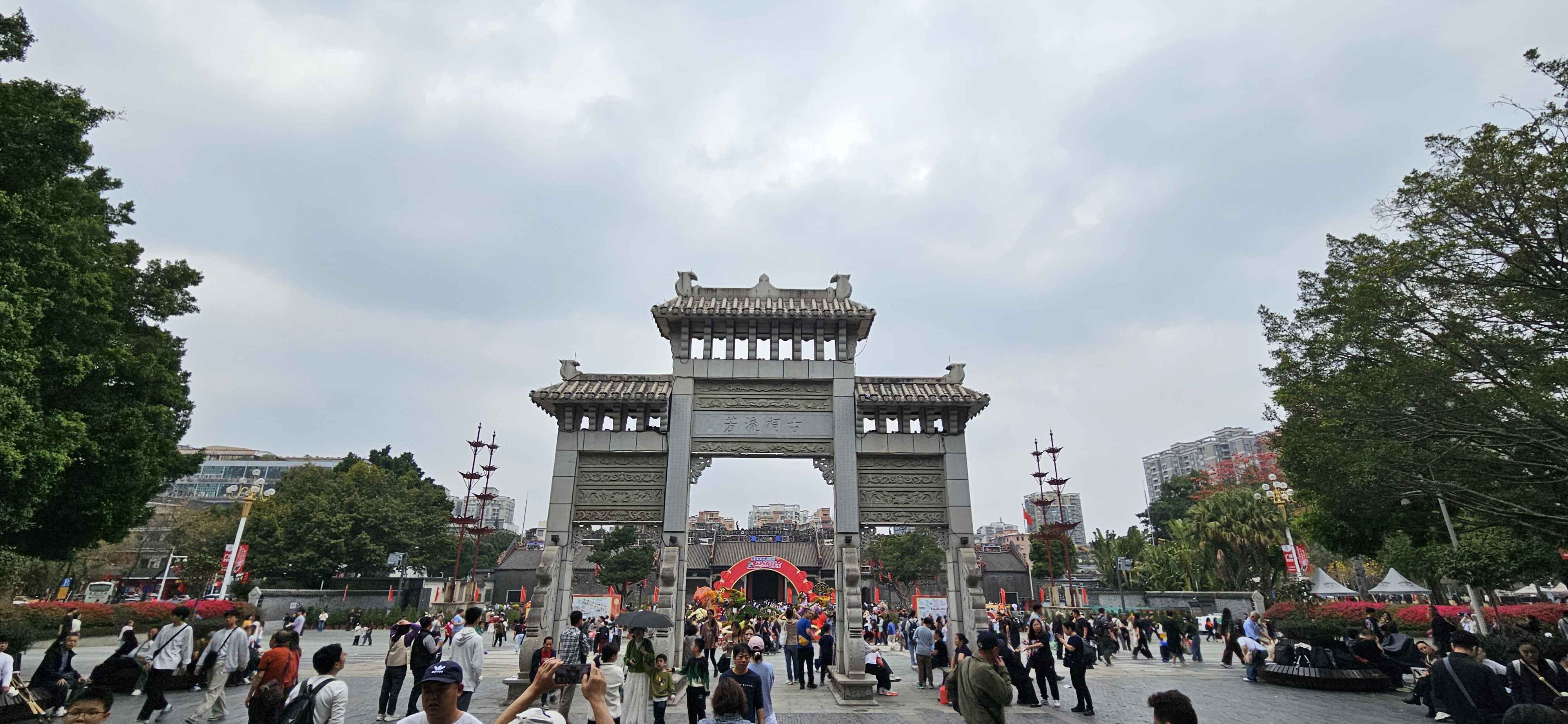
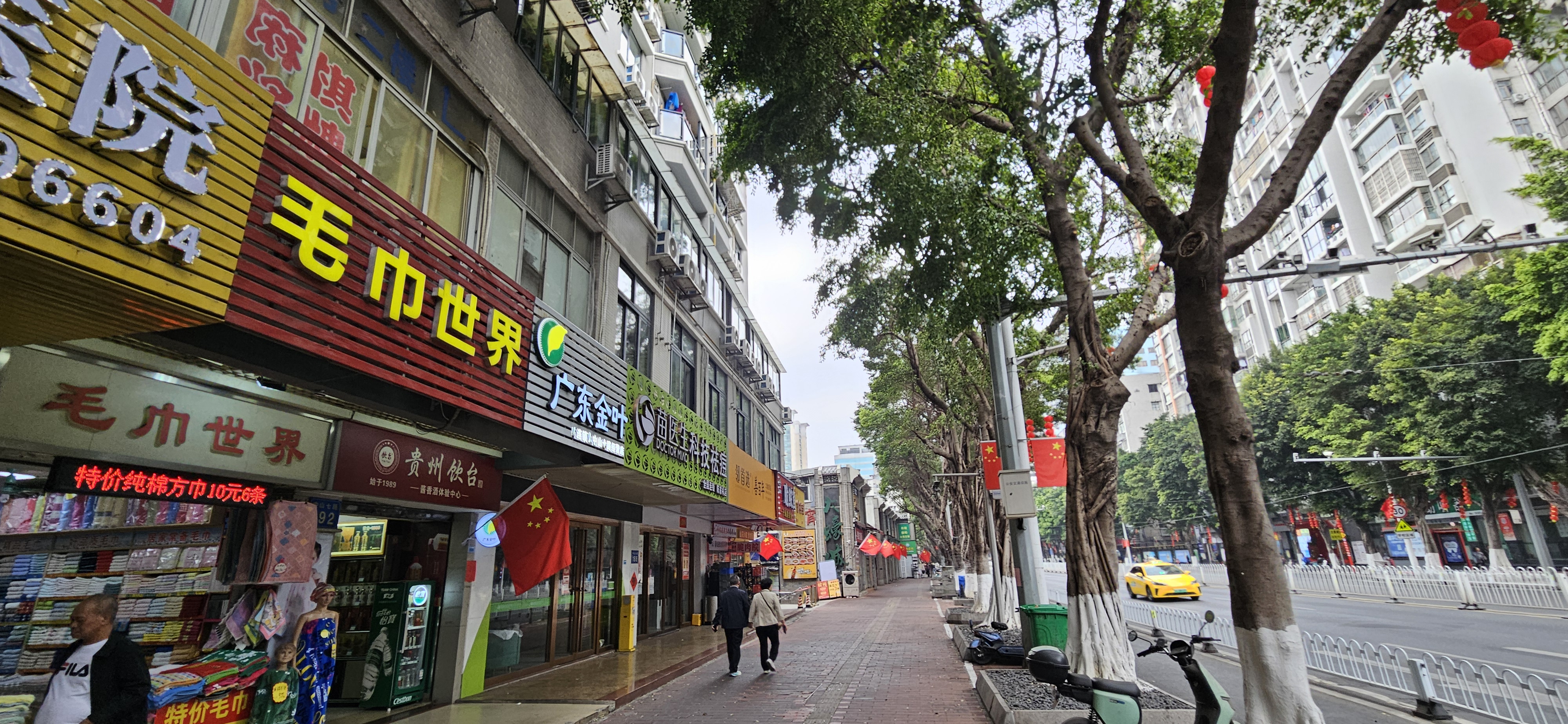
On this day, we had a city tour at 1pm, and it was about a 20-minute walk to the tour starting point. We started down the narrow streets of our neighborhood, Liwan, then onto the main thoroughfare, which we took a pedestrian bridge over, past the huge archway at Chen Clan Academy Square, down a busy street that led us to a smaller street that smelled of incense and cooking food, and at the end, we saw a large temple.
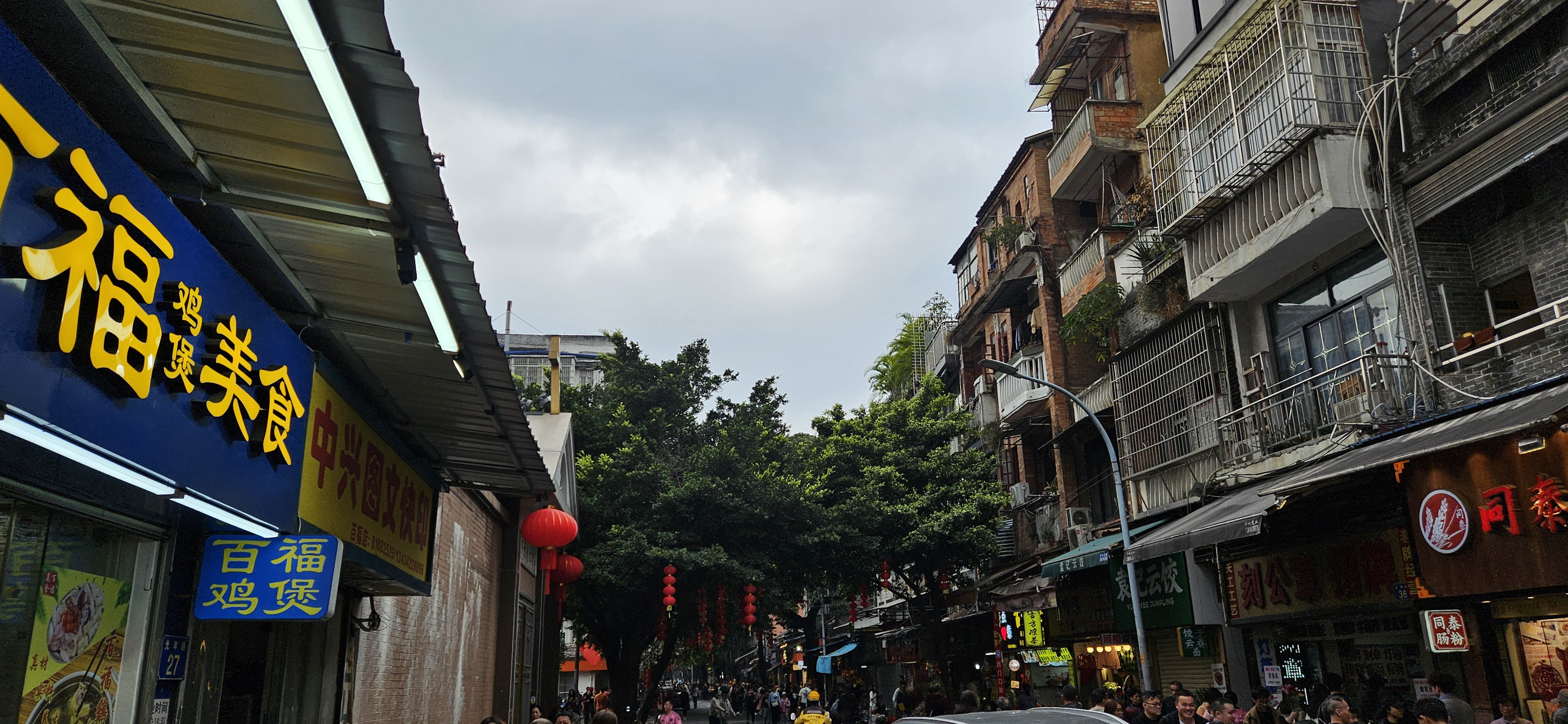
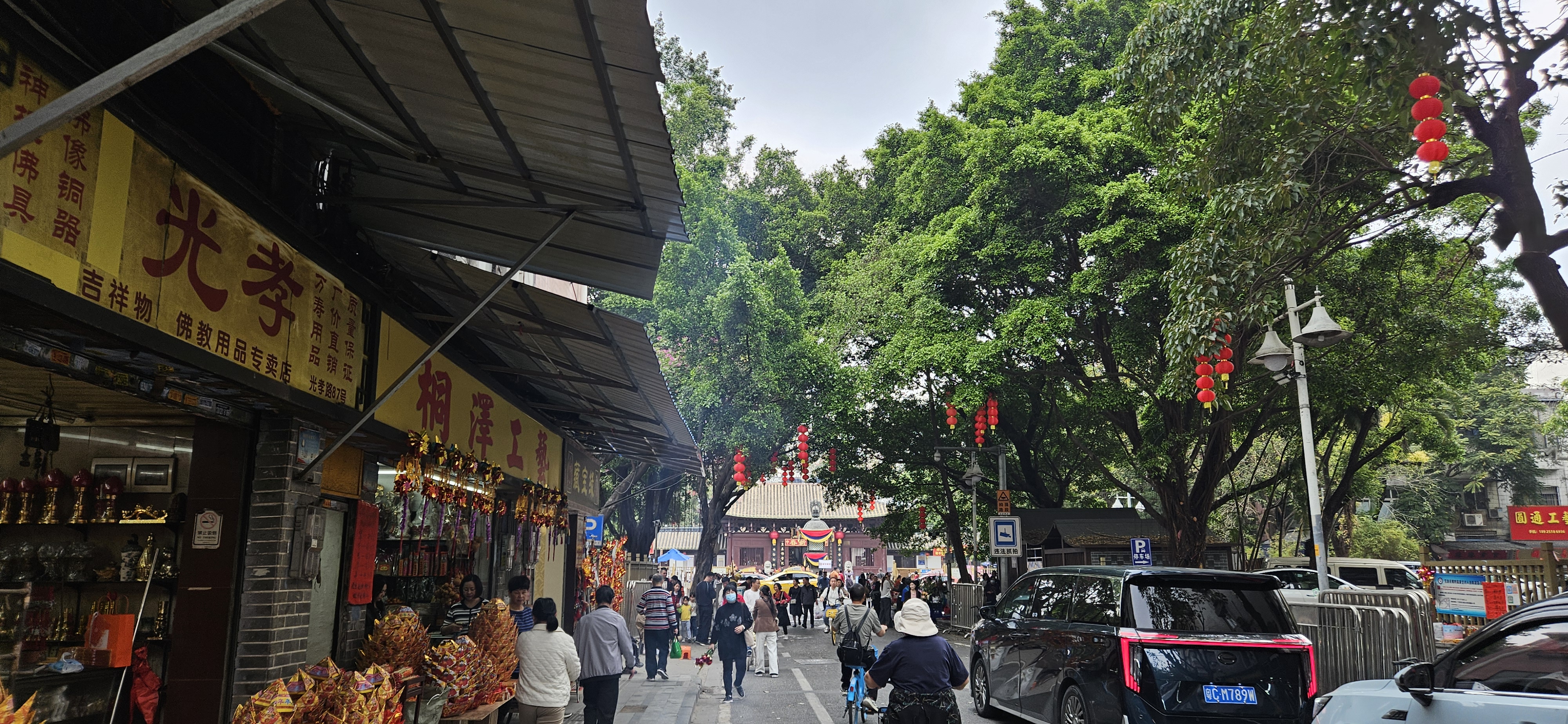
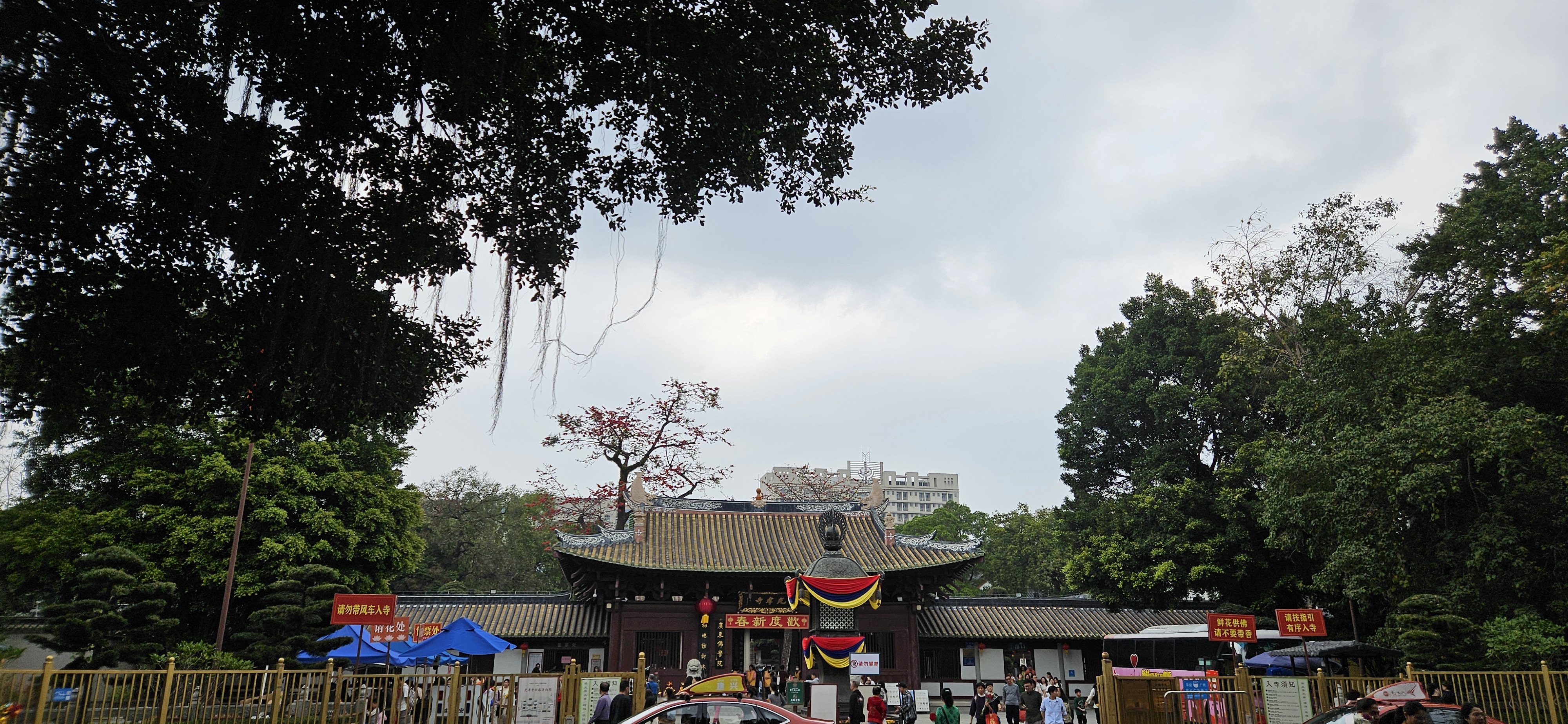
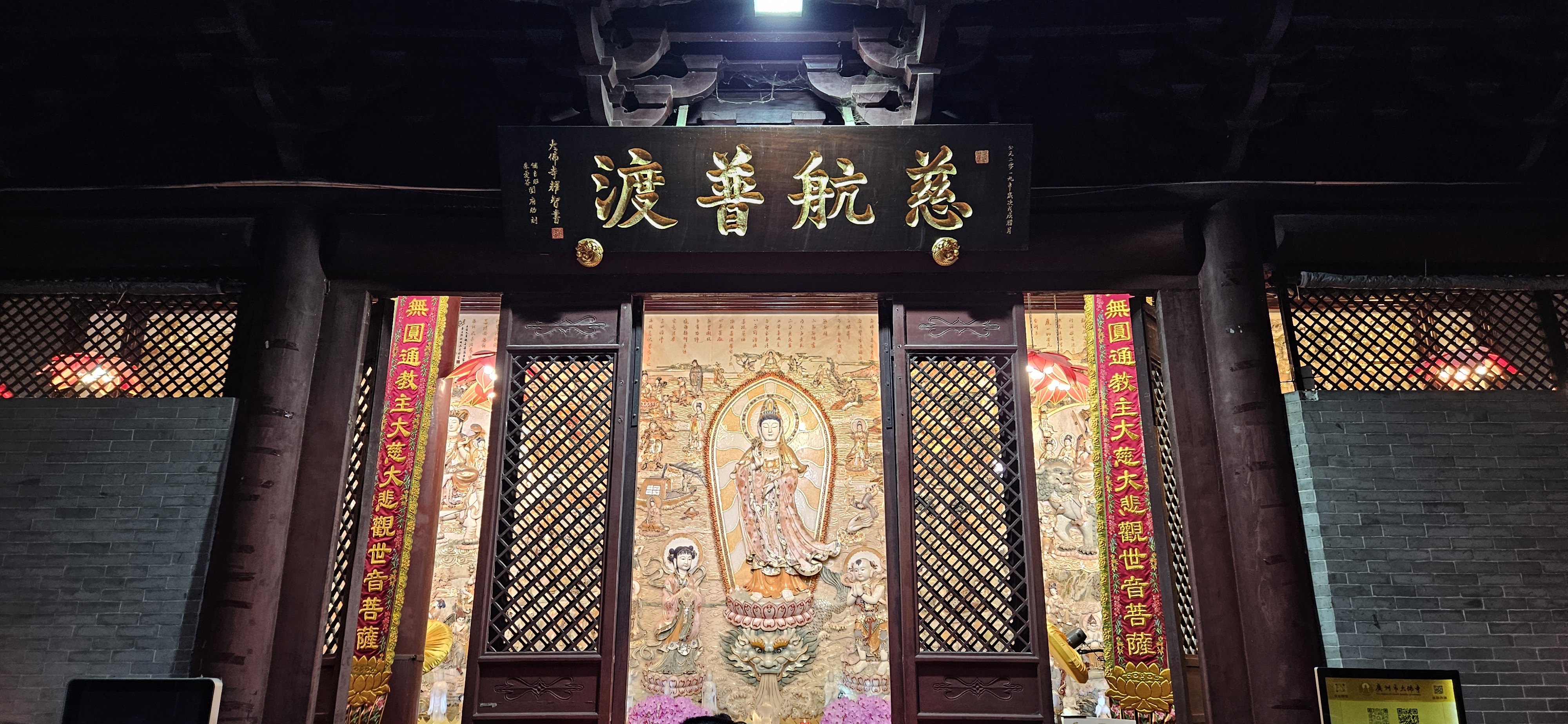
We found we were at the Guangxiao Temple, and we saw many people visiting. During Chinese New Year, many Chinese visit Buddhist temples to pay respect, ask for blessings for the coming year, and make offerings, like food (tangerines are popular), small coins or bills, incense, and flowers, among other items. We bought tickets, and also purchased a few flowers to give as offerings.
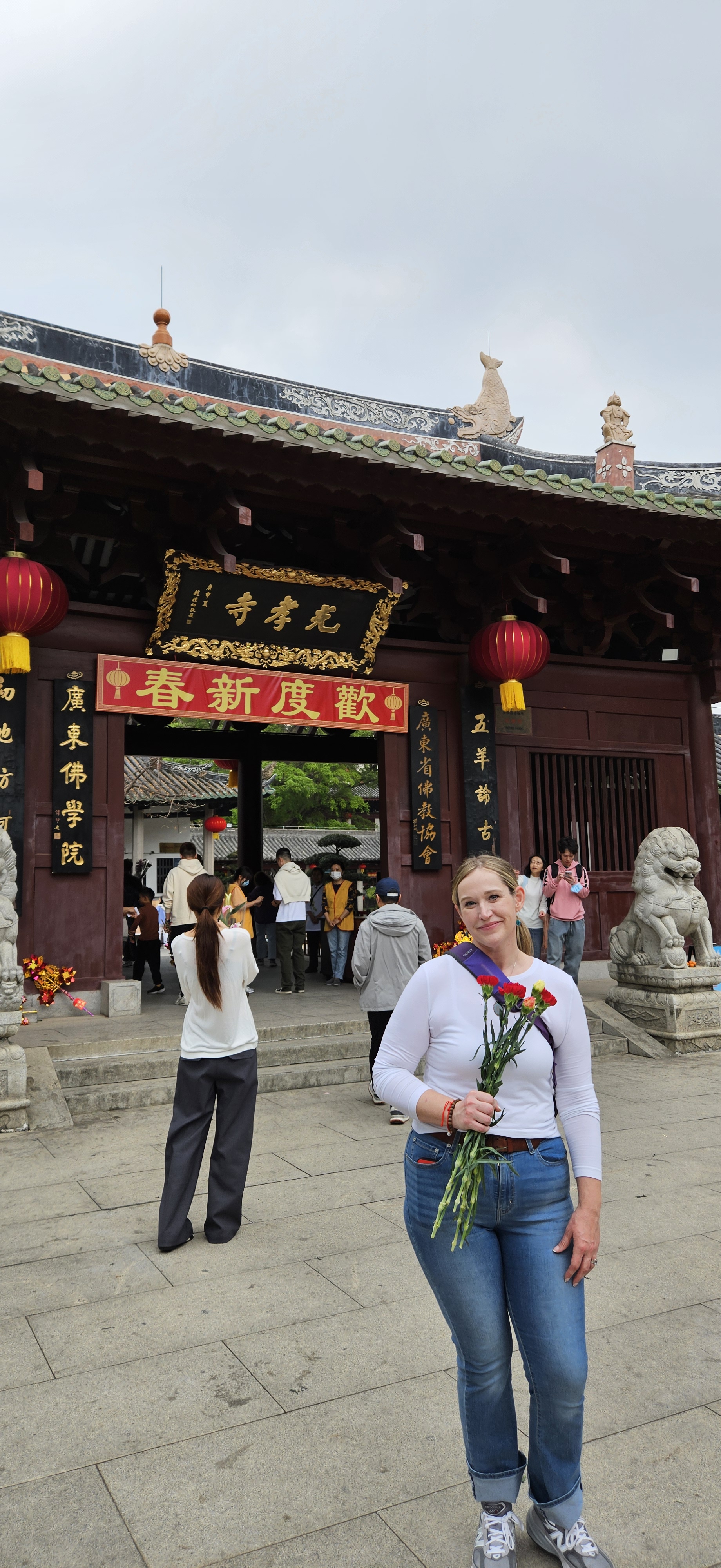
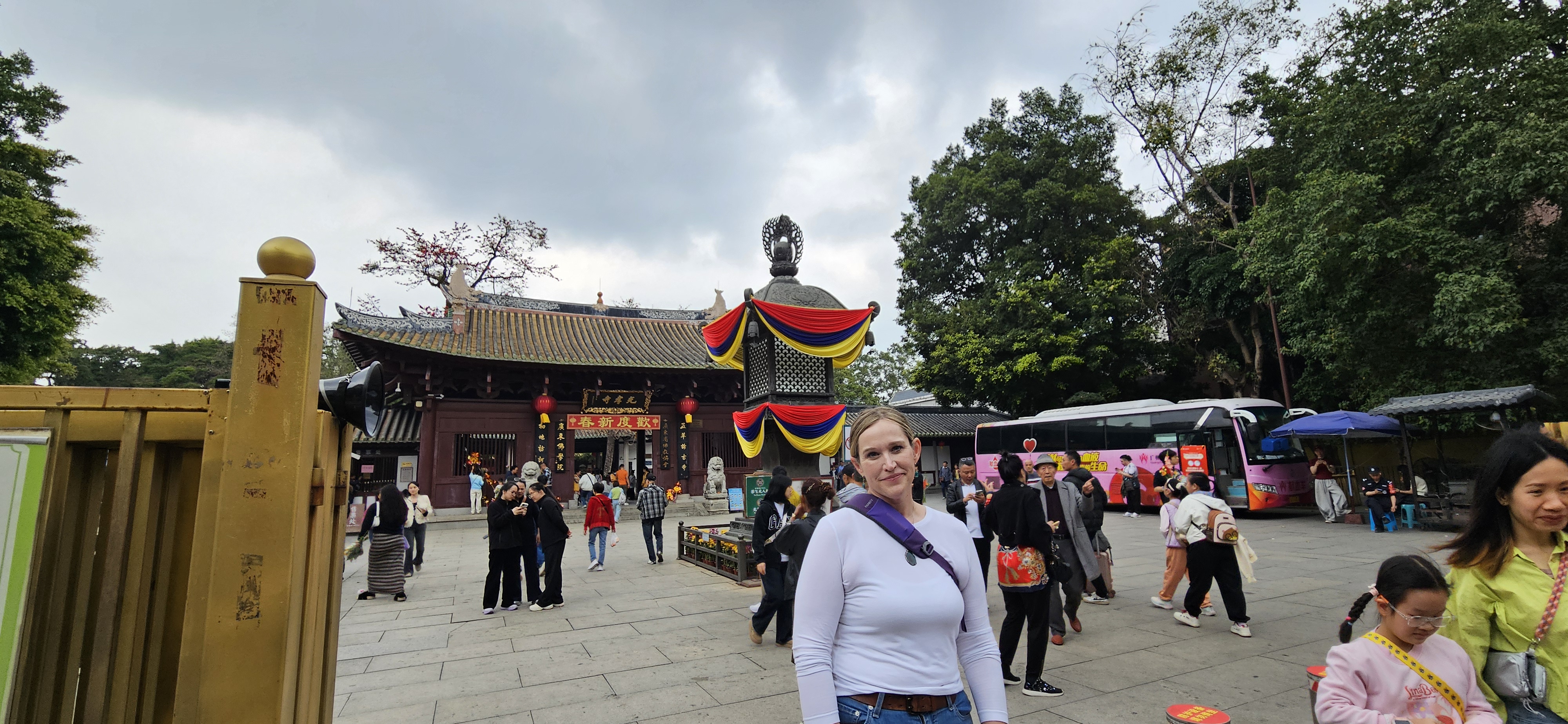
Once we entered the temple, a woman approached us, and asked if we wanted a tour. In our research and travels, this is not uncommon, but is often avoided, as there is usually a request for money for the “free tour” at the end, or the “guide” is not knowledgeable about the place, so we were initially apprehensive. Mendy told us about herself, that she was a volunteer, and a Buddhist, that wanted more people to know about the Buddhist temple complexes. We had already seen a few on our travels and, while we appreciated the art and architecture a lot, did not know much about them specifically.
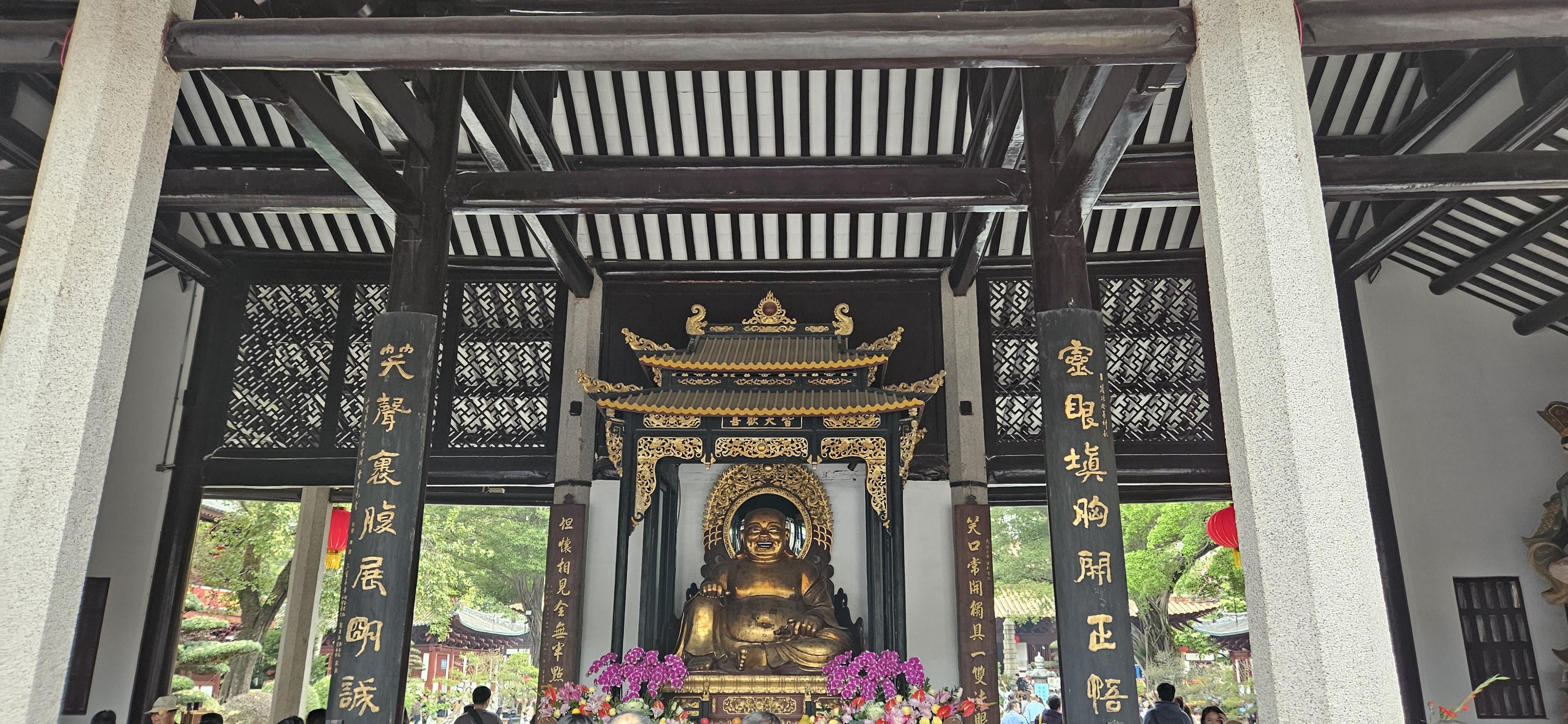
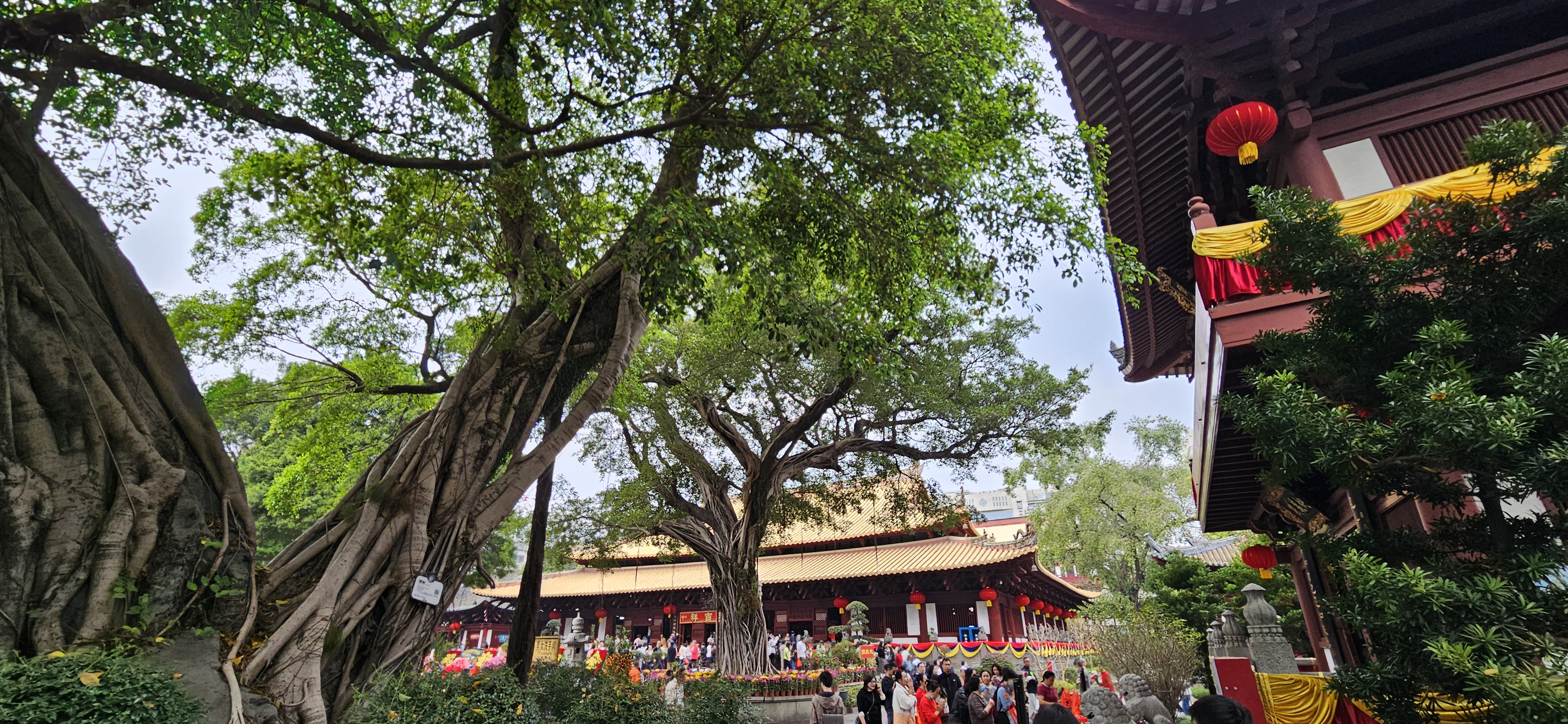
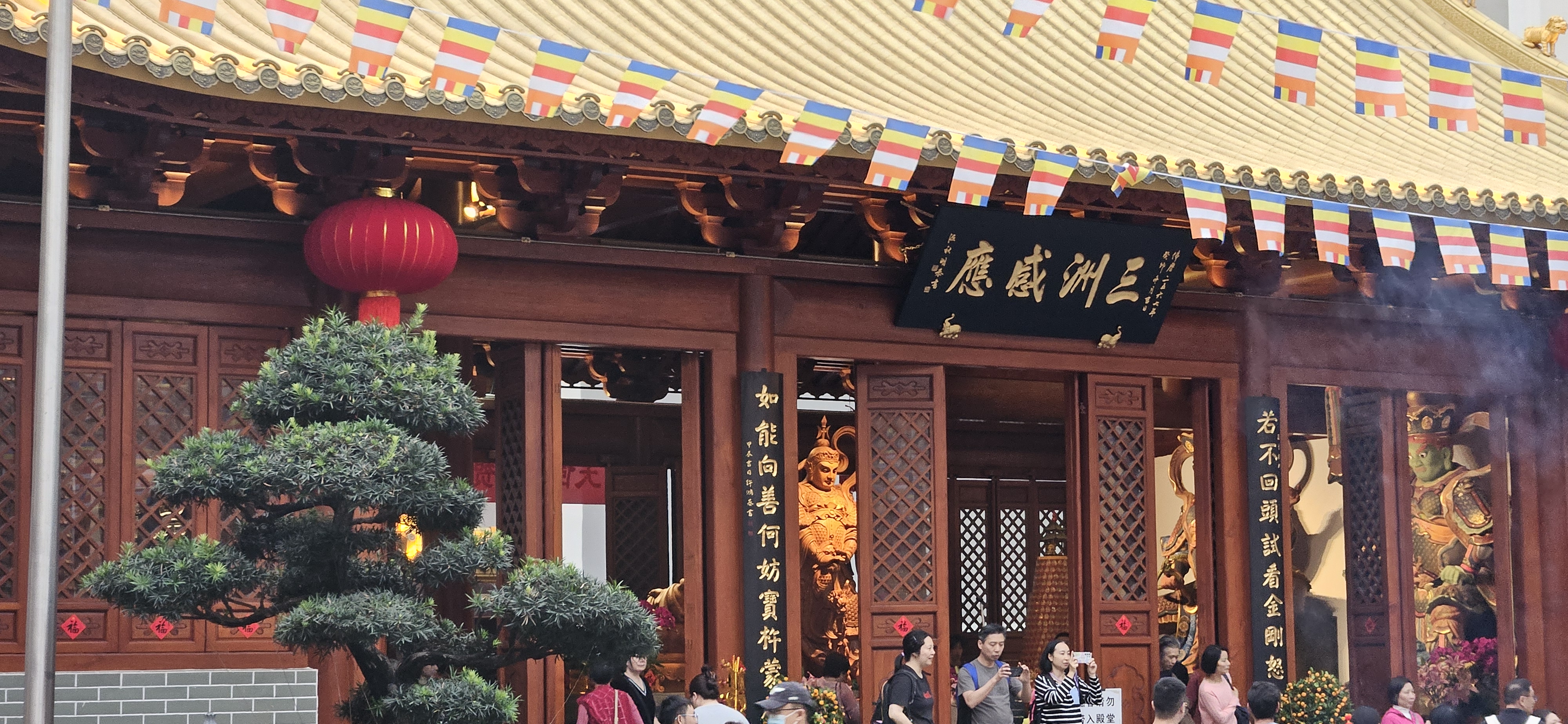
We still had about an hour until our actual city tour started, so we asked how long, and she said “about an hour,” and we agreed, and were joined by another couple shortly thereafter. Mendy led us around the complex, telling us many things, like this temple was one of the oldest in Gunagzhou, where the first monk from India arrived, and showed us the well he dug to find water, which was still there to this day. She also told us about the four Guardians at the entrance to every temple complex, that guarded the four compass points (we had seen these large guardians in Seoul). It is important to note the directions, as many cities have multiple train stations, for example, Guangzhouxi, and Guangzhounan, which was confusing when I was planning the trip. For (my) reference: North (bei), South (nan), East (dong), and West (xi). Jessica made sure to place a flower in front of each of the Guardians.
We also learned that the “fat” Buddha statue is a Chinese-only Buddha (known as Jambhala, the future Buddha, who grants wealth and prosperity), the same as the reclining Buddha (or laying down on their right side) is specific to Thailand & Cambodia (there was one in the temple complex that was a gift from Thailand. The flower displays, and the red and yellow lanterns and ribbons, really brightened up the complex as well.
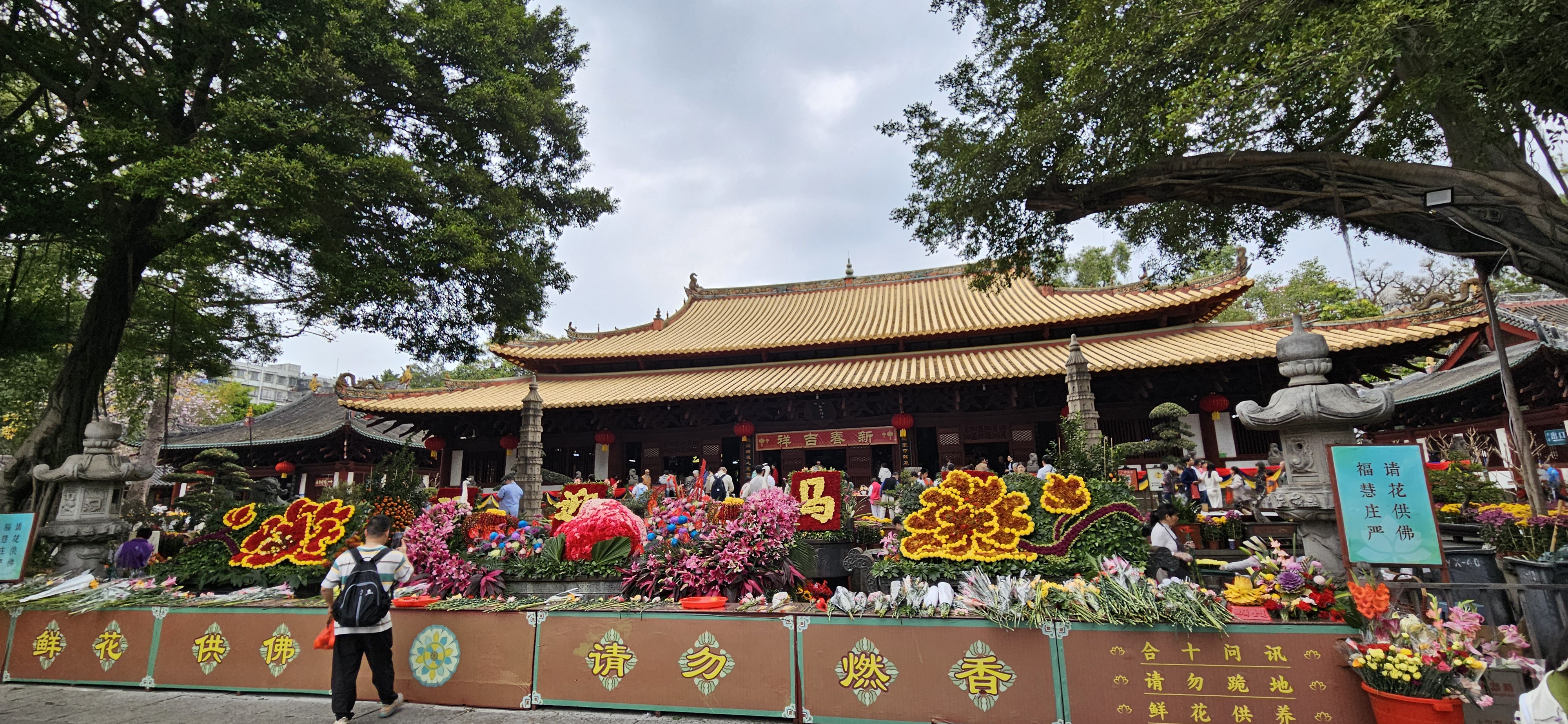
This one also had a peacock made entirely of flowers too!
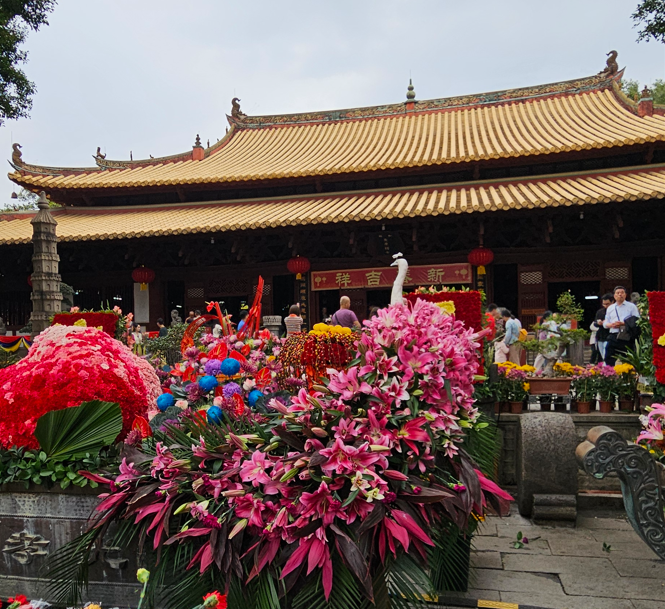
Mendy shared so much information with us, and the hour went by fast, and all she asked in return was for us to give a quick video review of the tour, which we were happy to oblige, as we learned so much from her.
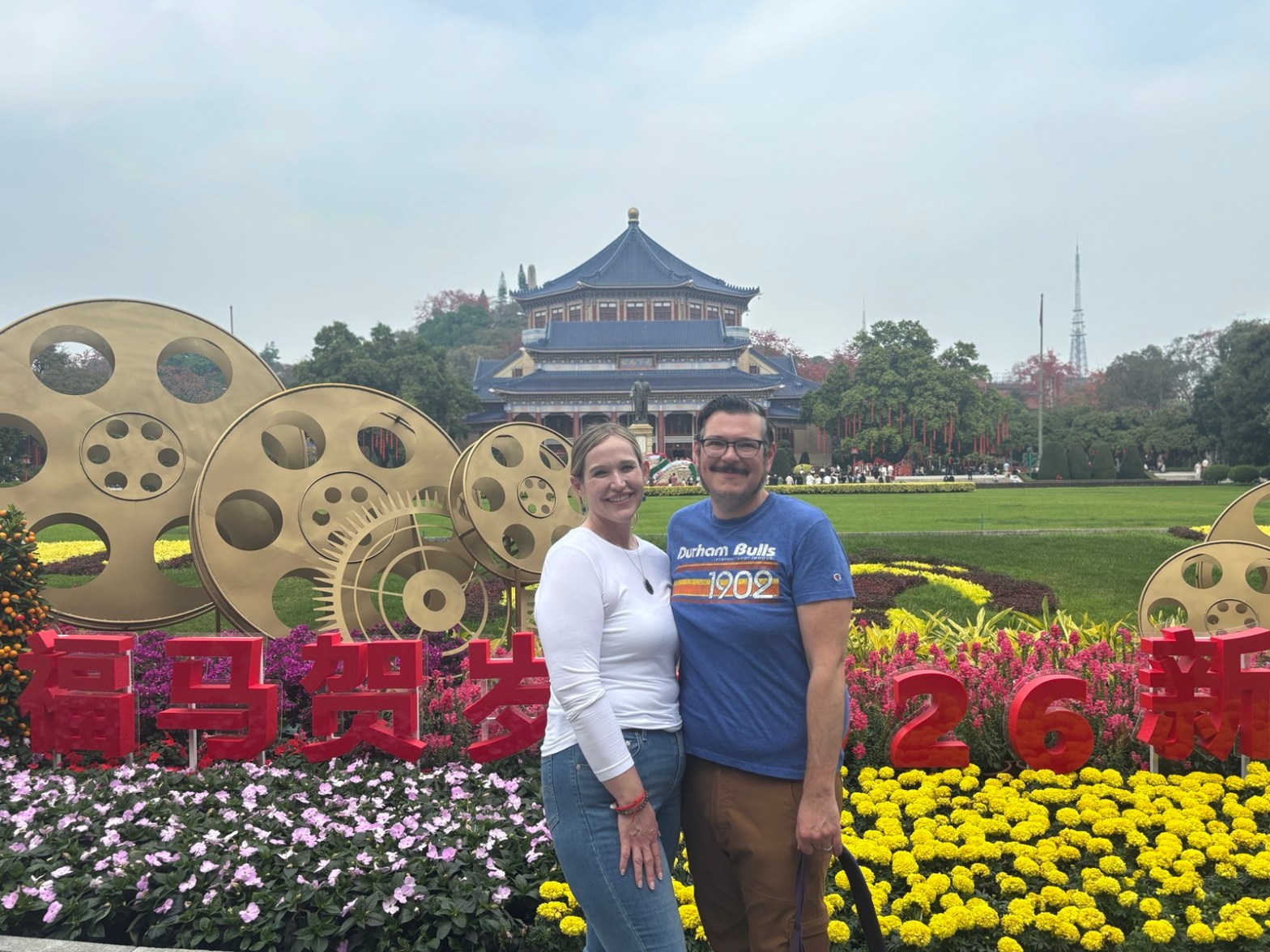
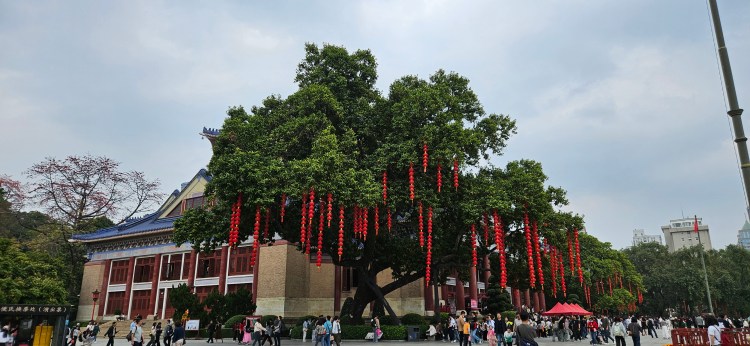
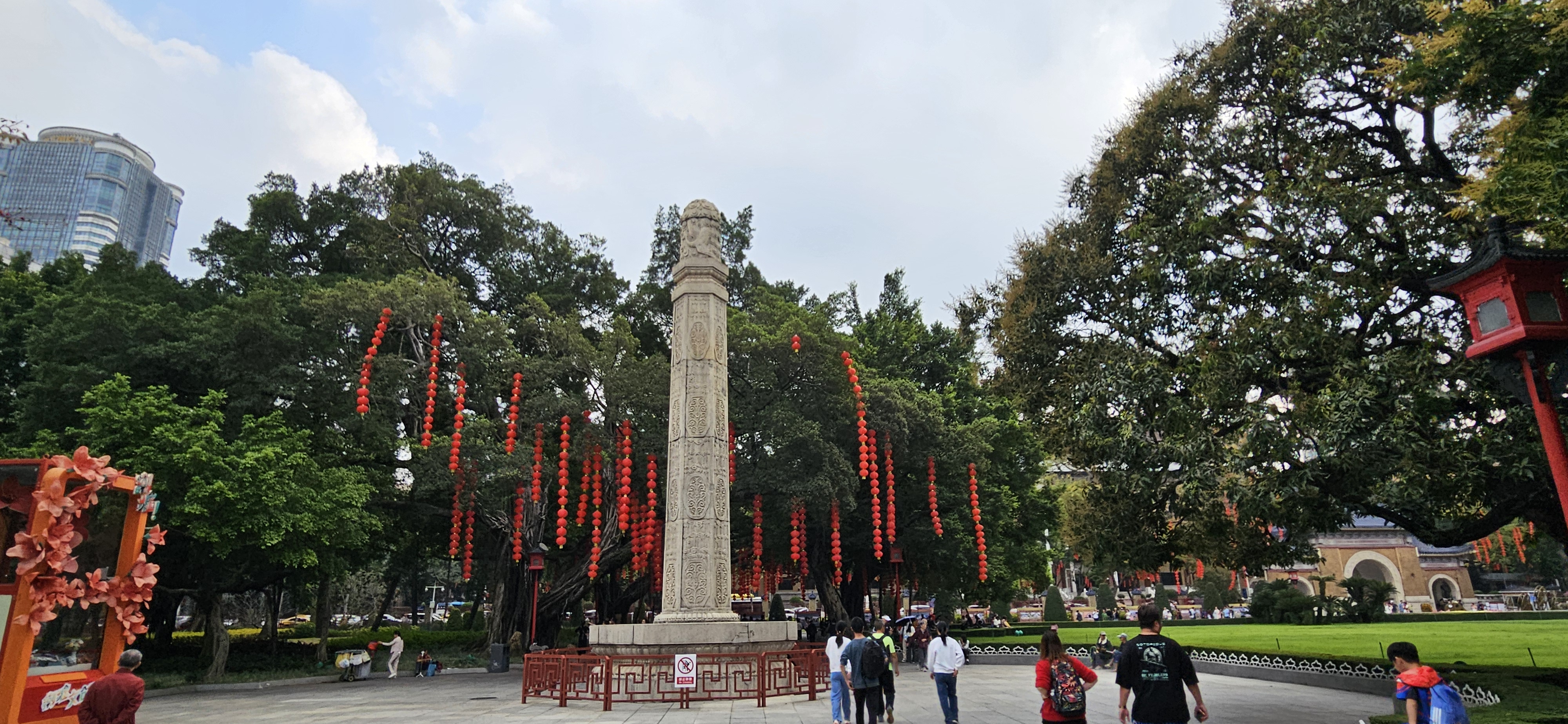
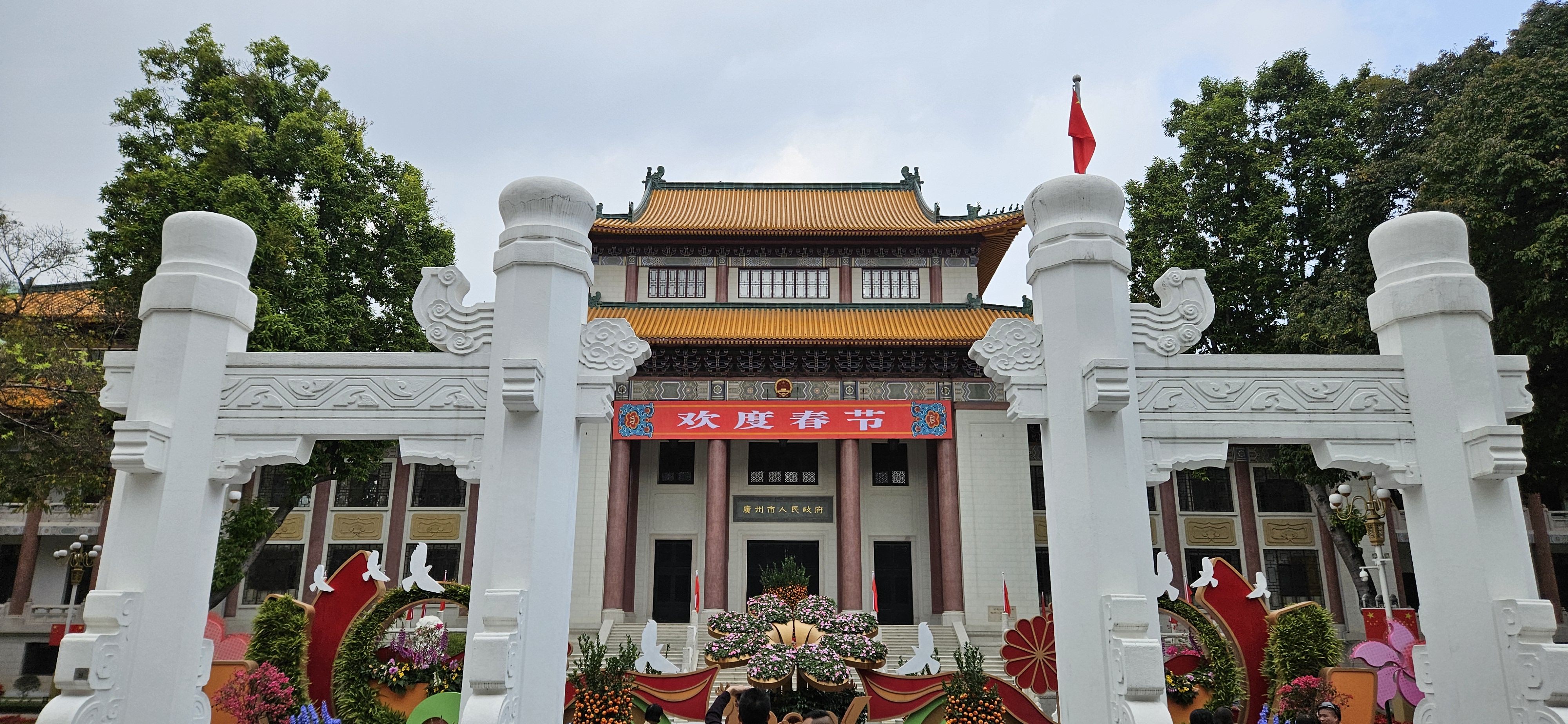
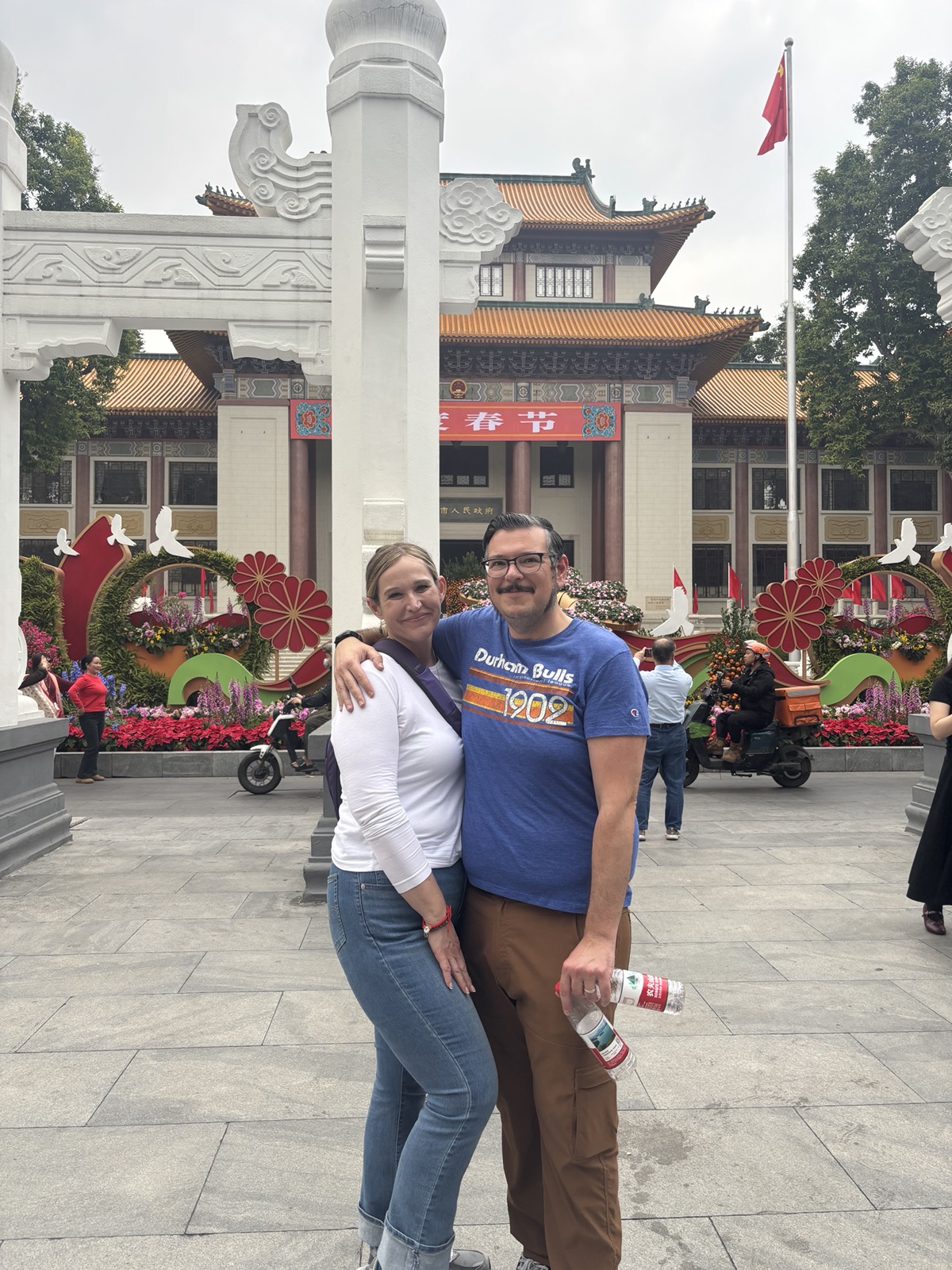
We had to walk quickly as we just made it on time for our planned tour, led by local guide Tony. We were able to talk with him for a bit about Guangzhou and his experience living and growing up in the city while we waited for our fellow tour-mates, a couple and his 5-year-old son, from Serbia. She is a flight attendant, and we learned that there is a non-stop flight from Belgrade to Guangzhou. Our first stop was the Sun Yet Sen Memorial Hall, a huge building with a statue in front, dedicated to the father of modern China (we did not find out what was going on with the movie film props, however).
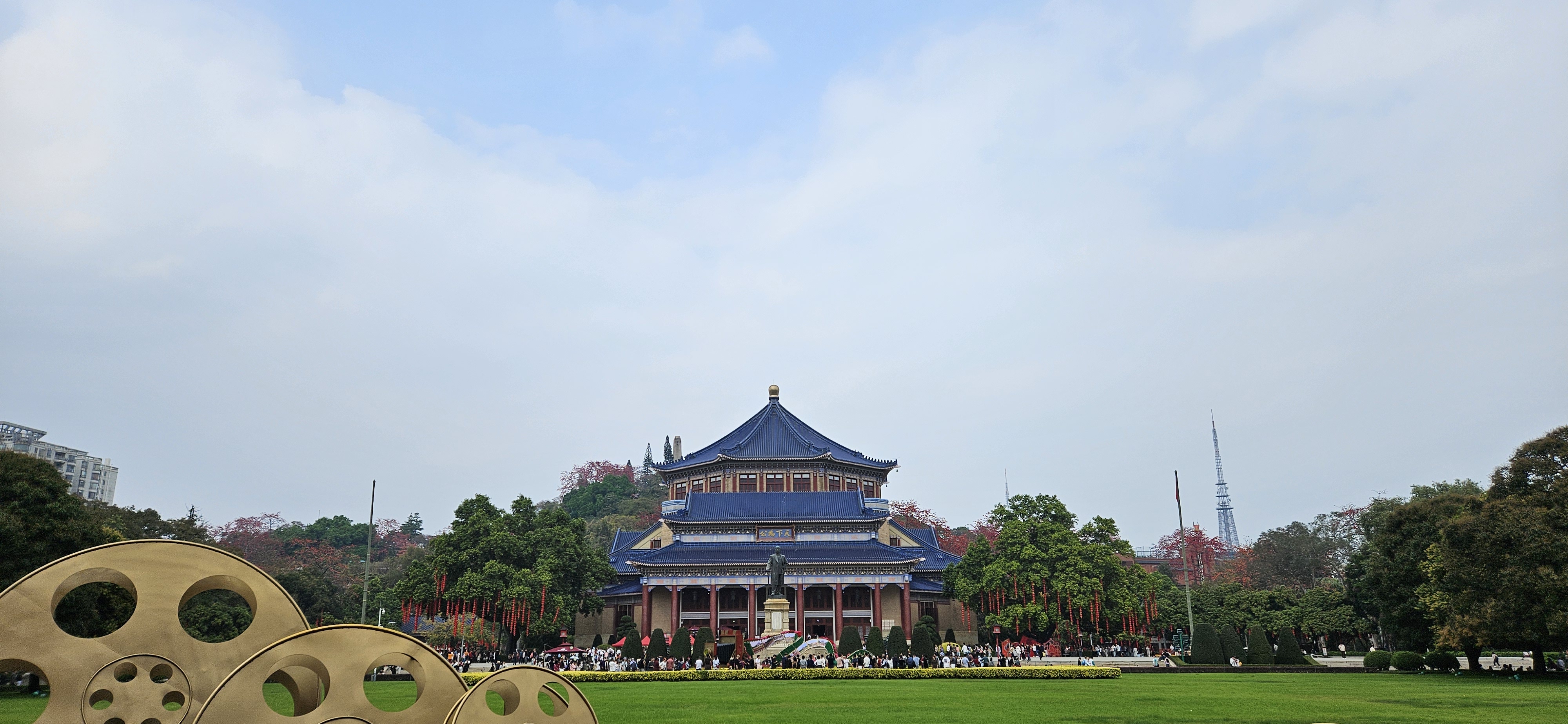
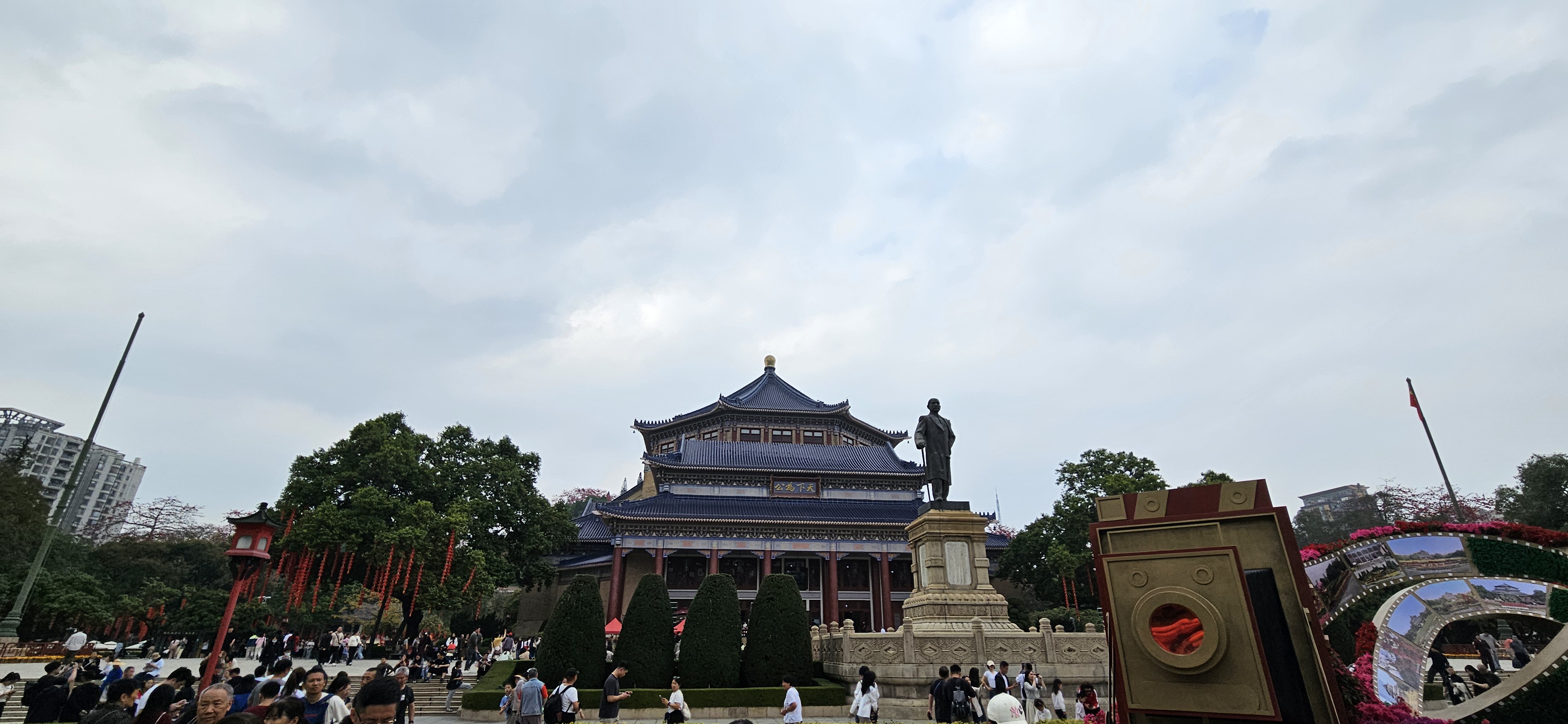
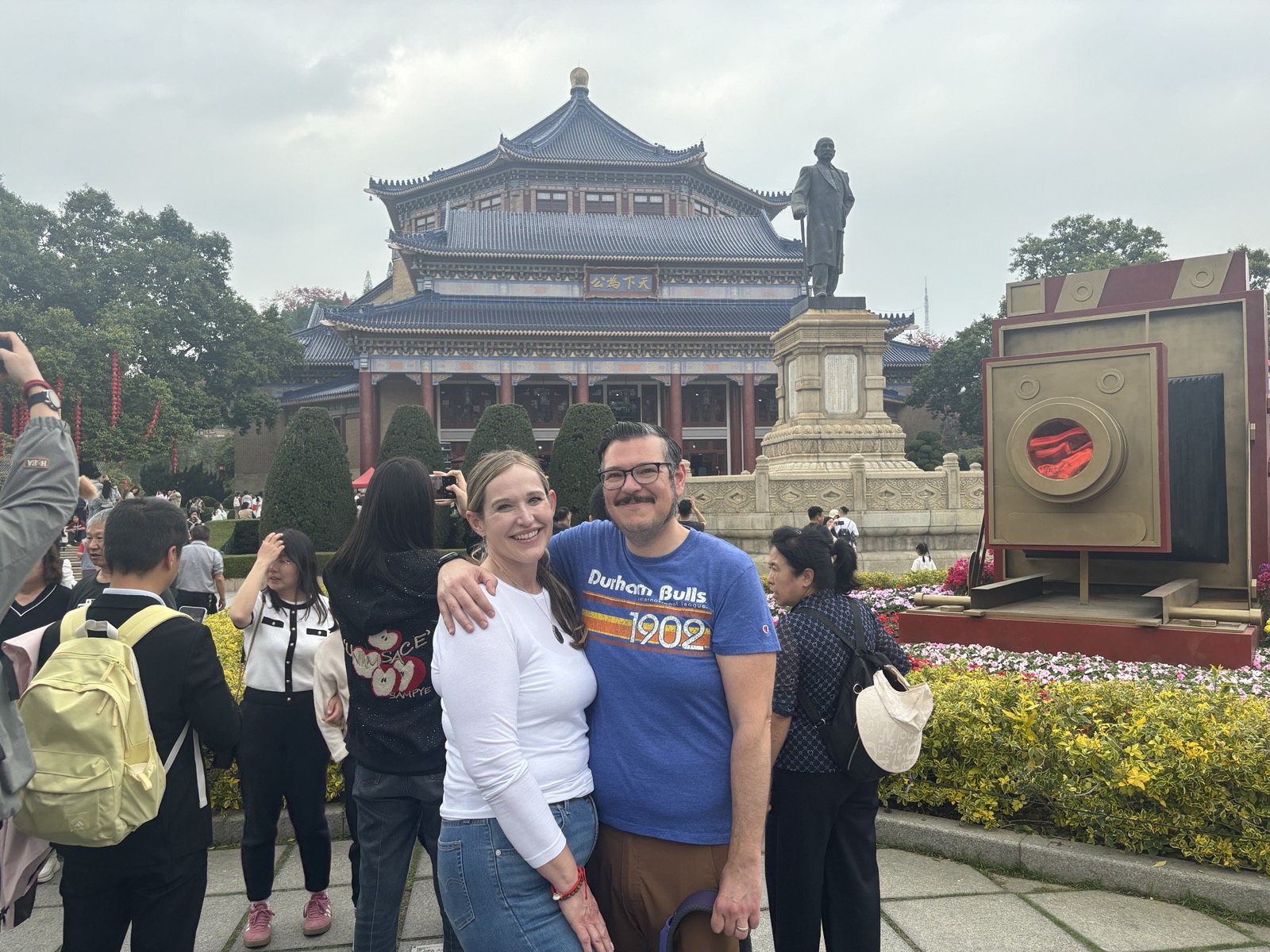
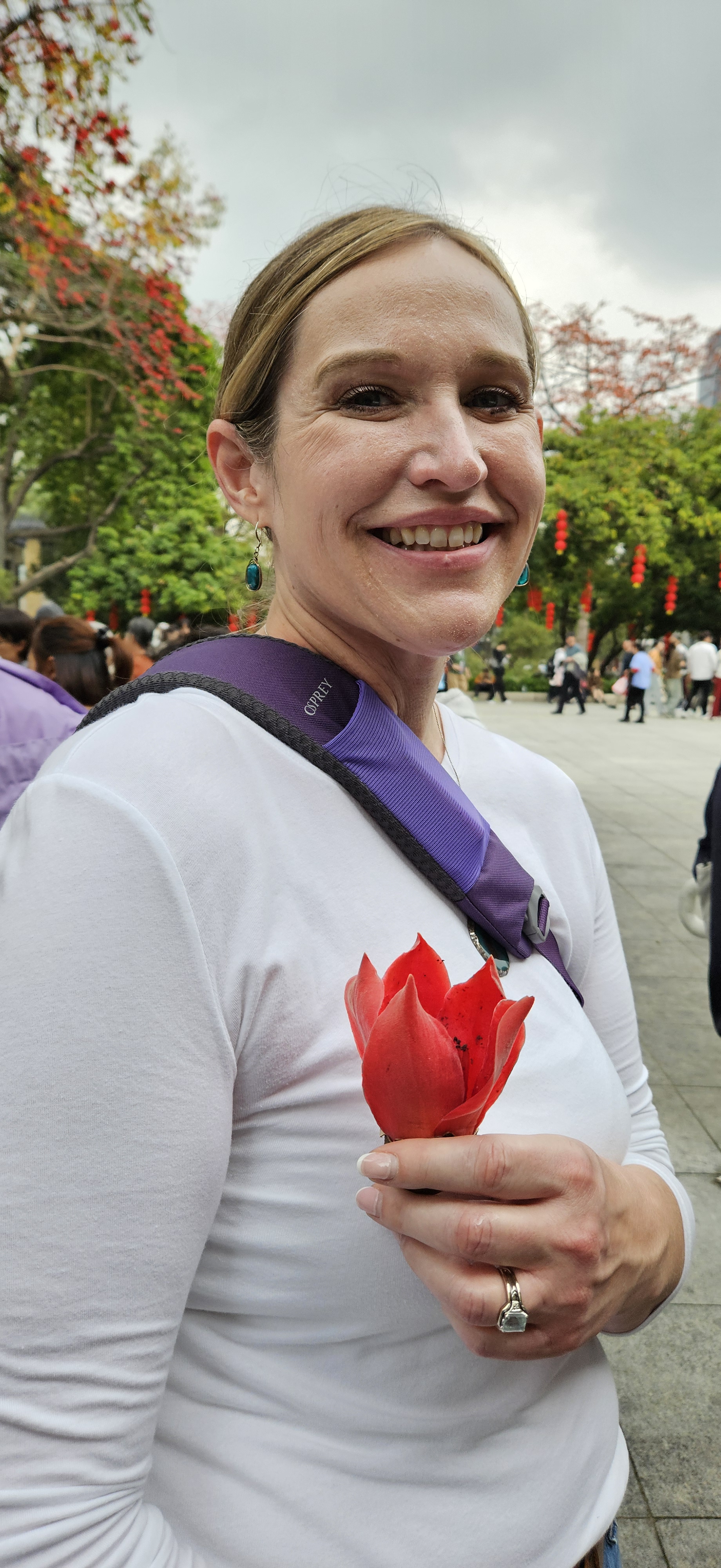
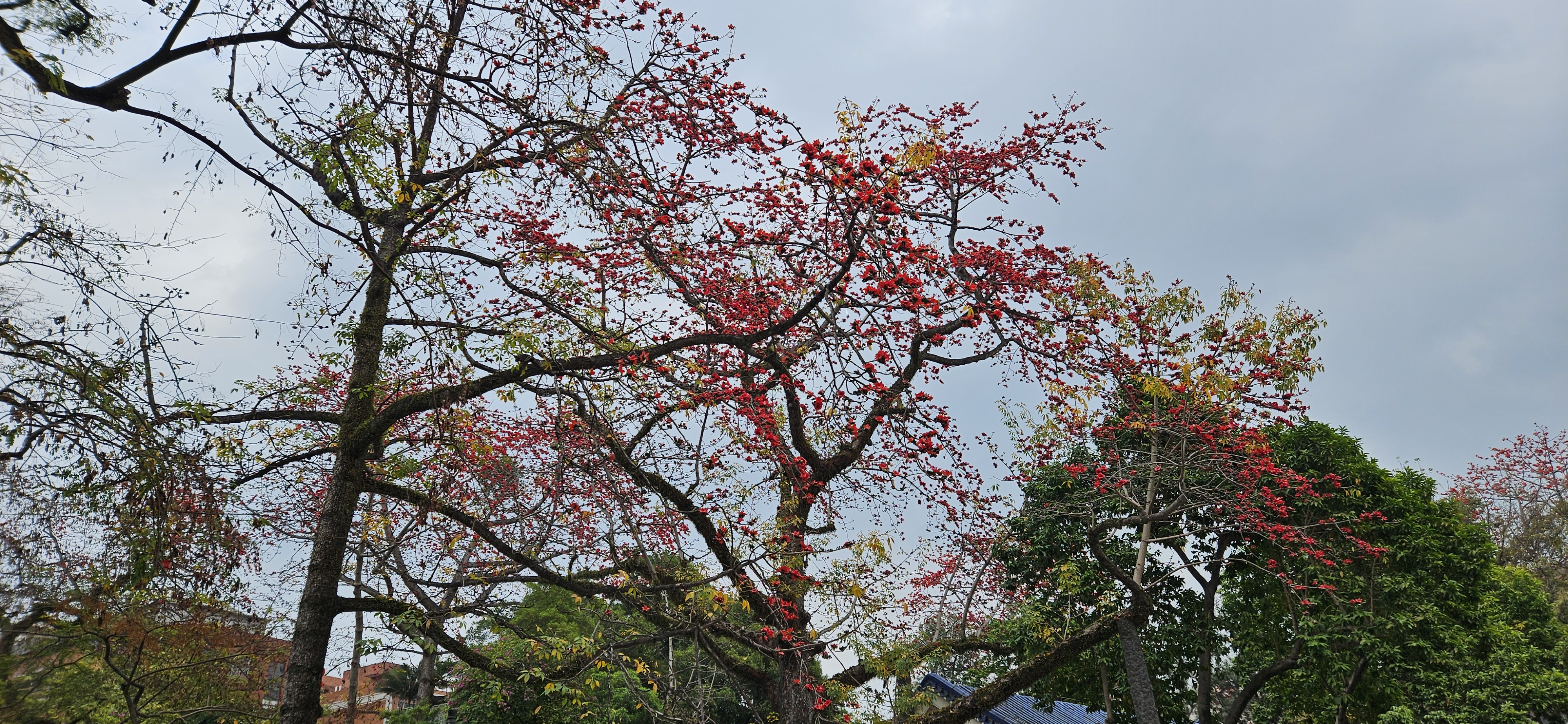
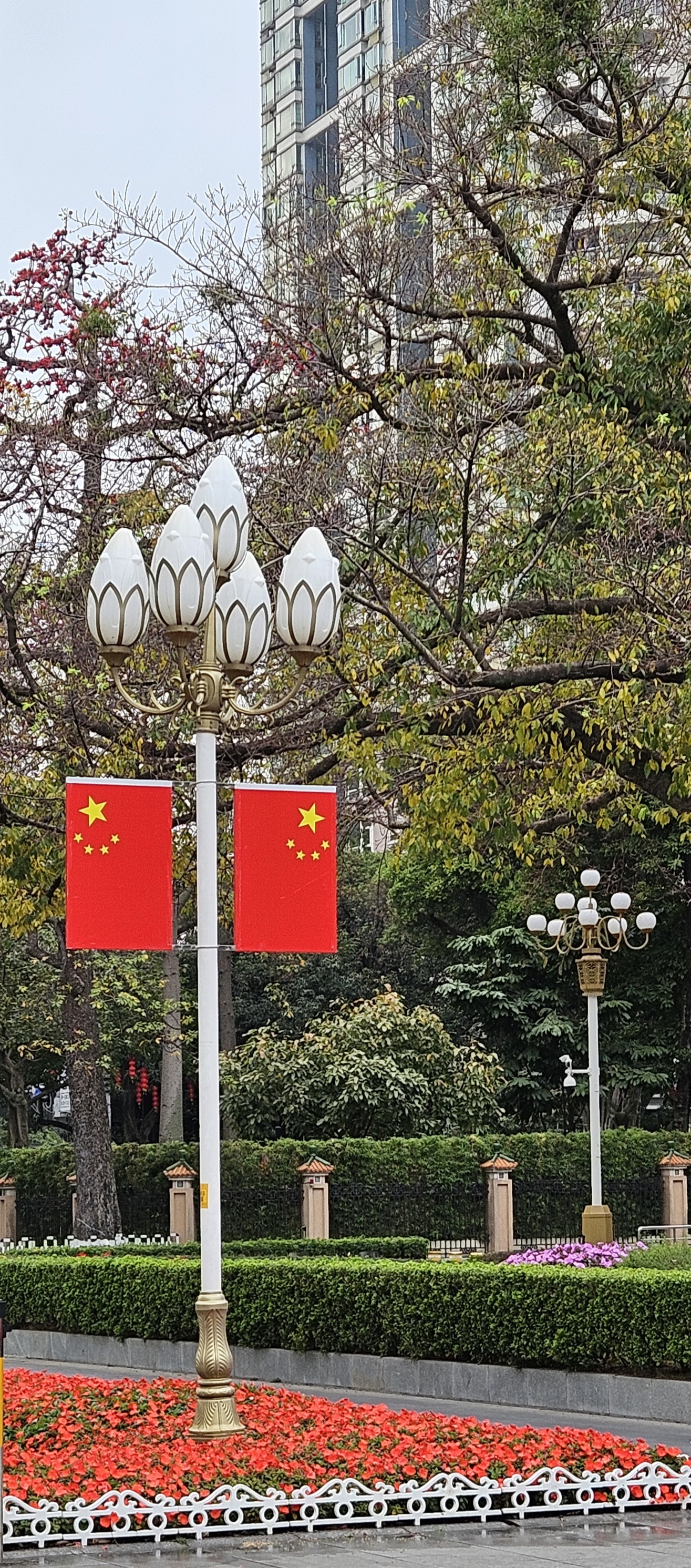
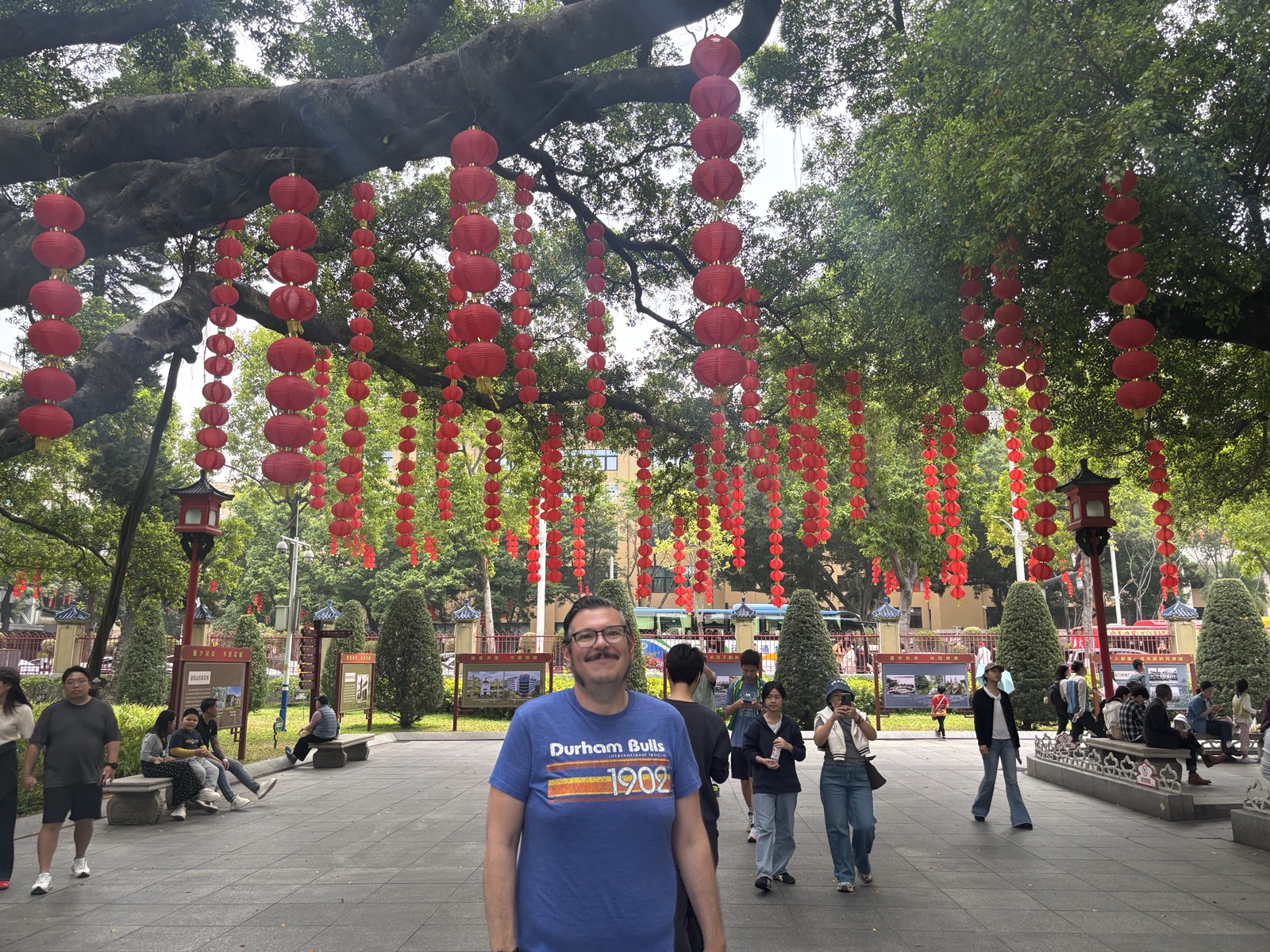
There were many red lanterns hanging from the large Banyan trees, as well as these trees with no leaves but big red flowers, and Tony told us these are the Kapok flower, also known as the Hero Flower, and only bloom once a year. He said they were blooming early this year, and we took that as a good sign. The five year old picked one up and gave it to Jessica, which is also a sign on good luck.
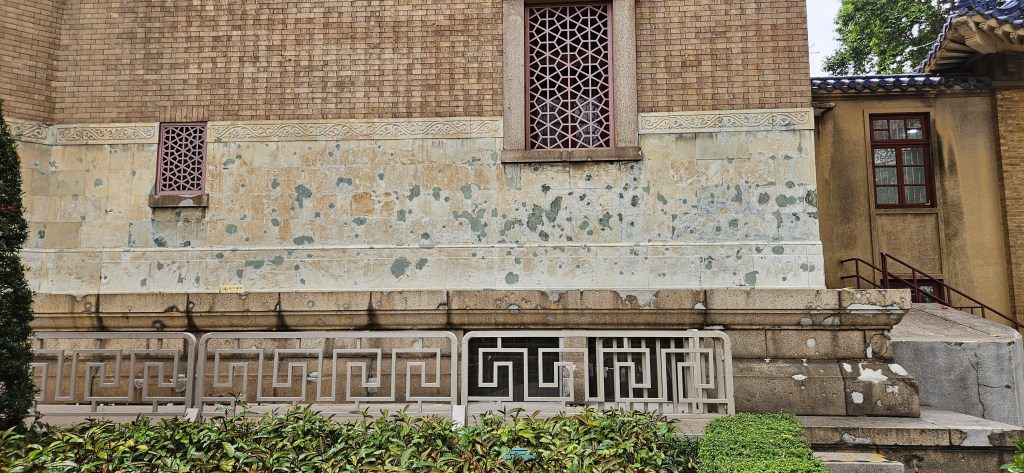
We also learned that, in 1938, Japan bombed Guangzhou and the Hall had the shrapnel scars from mortar attacks still visible.
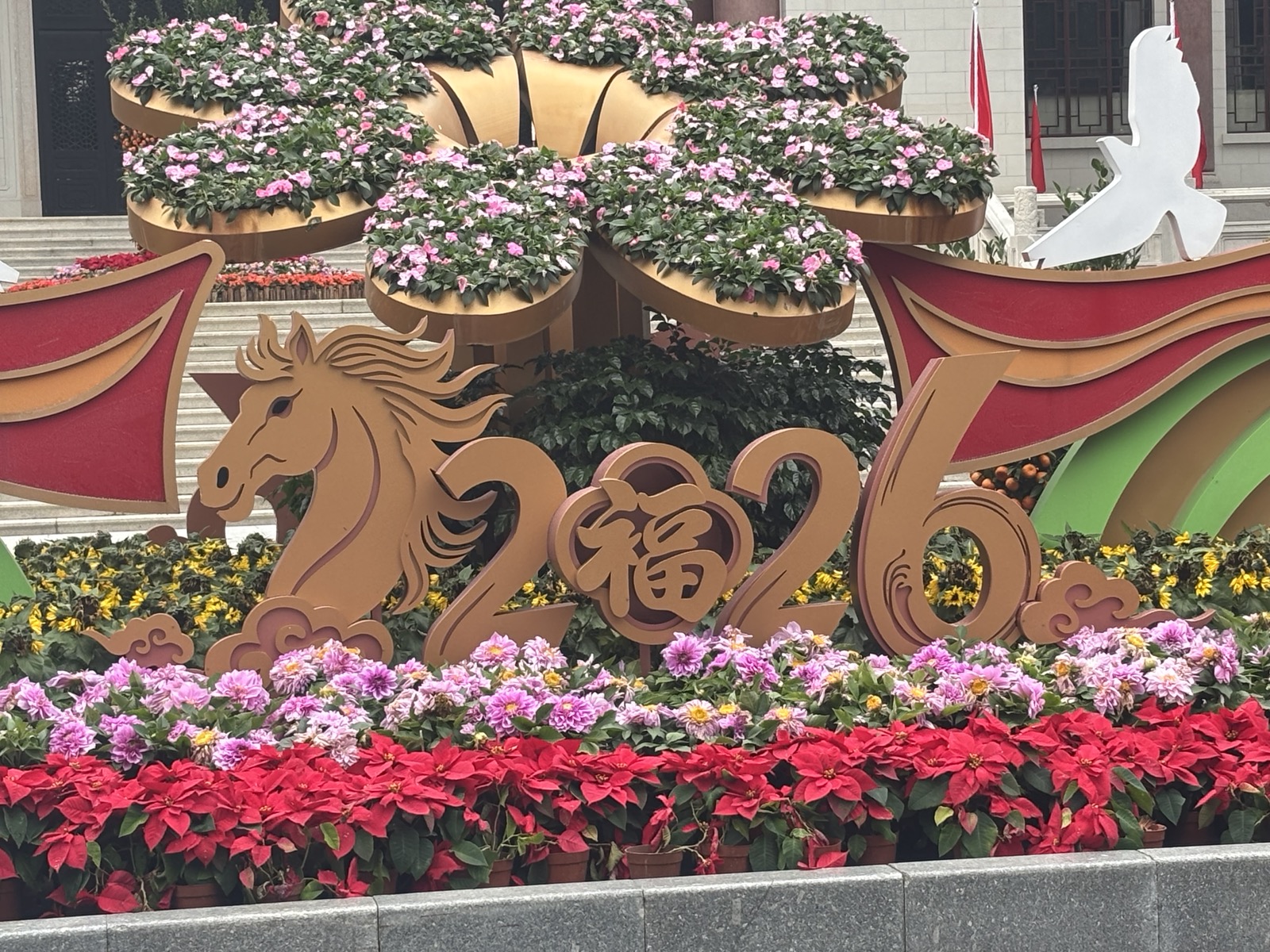
We continued on to People’s Park, which was decorated for the New Year as well. We also passed many groups of retirees in groups of four, playing hackysack, but with shuttlecocks, and were laughing and having fun. Tony said they are the happiest age group in China, with few worries, and would return later after dark to dance the night away, truly enjoying their retirement.
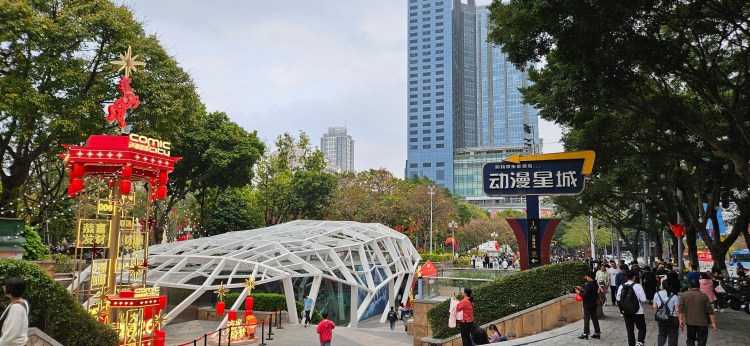
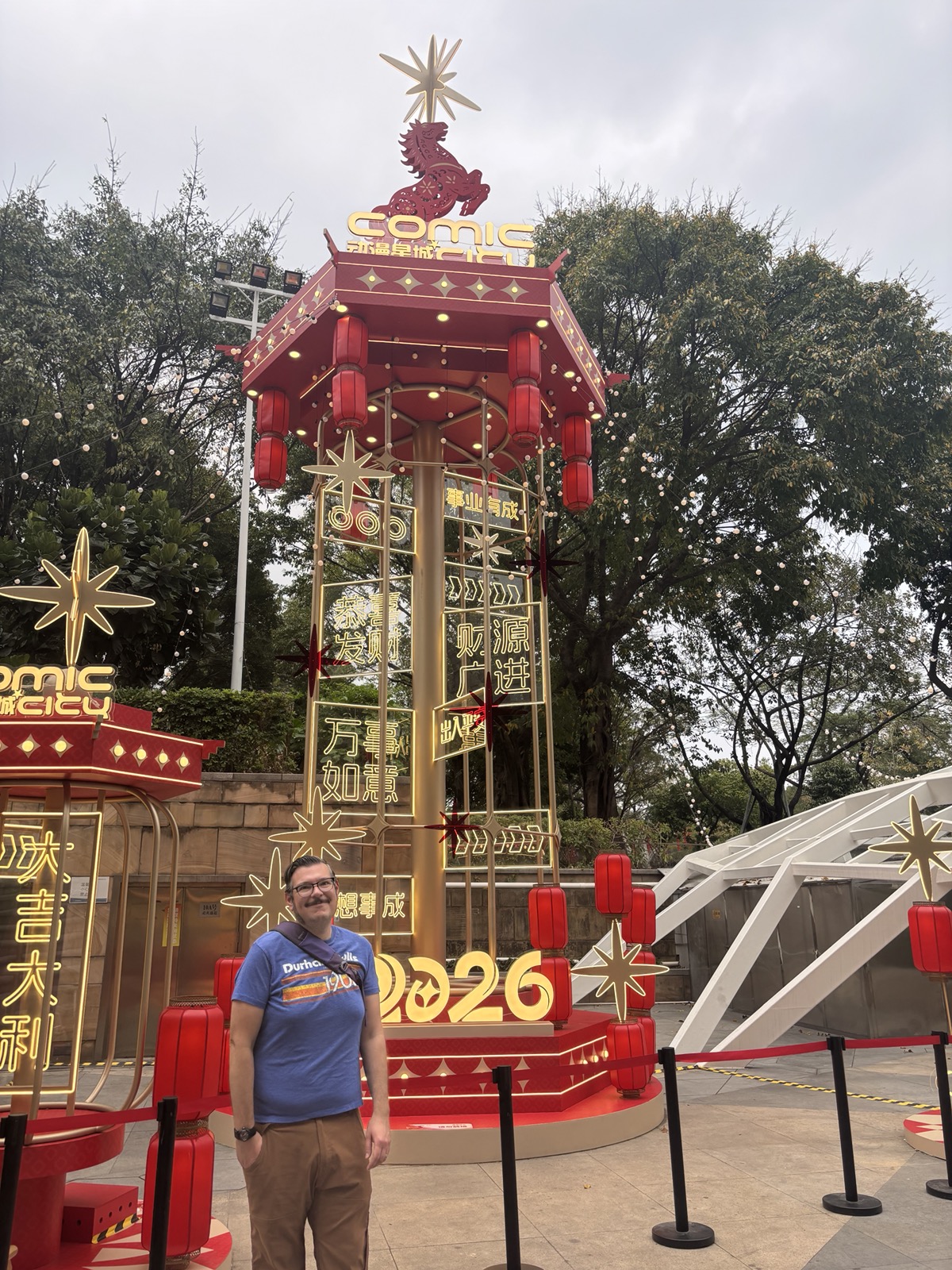
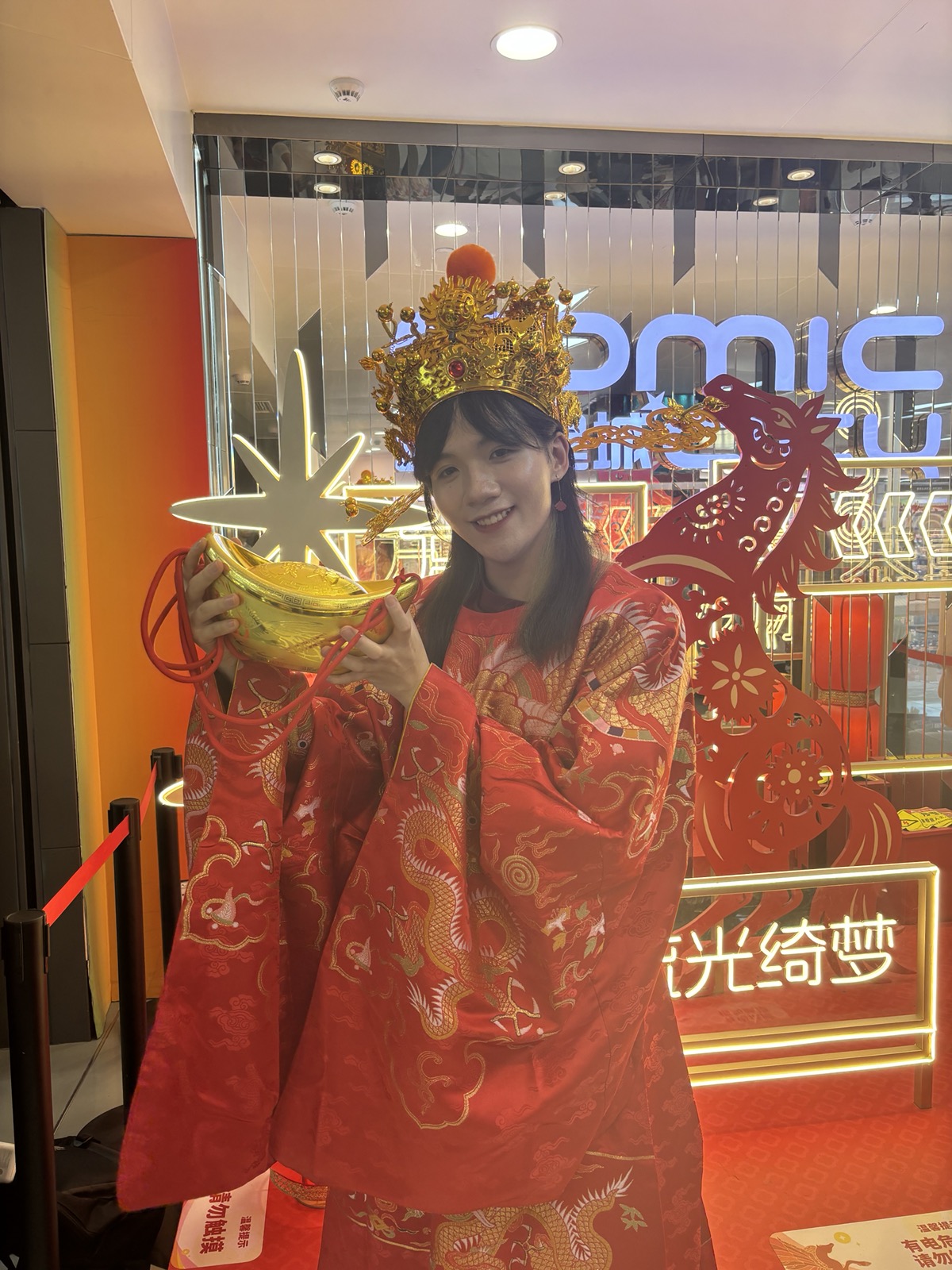
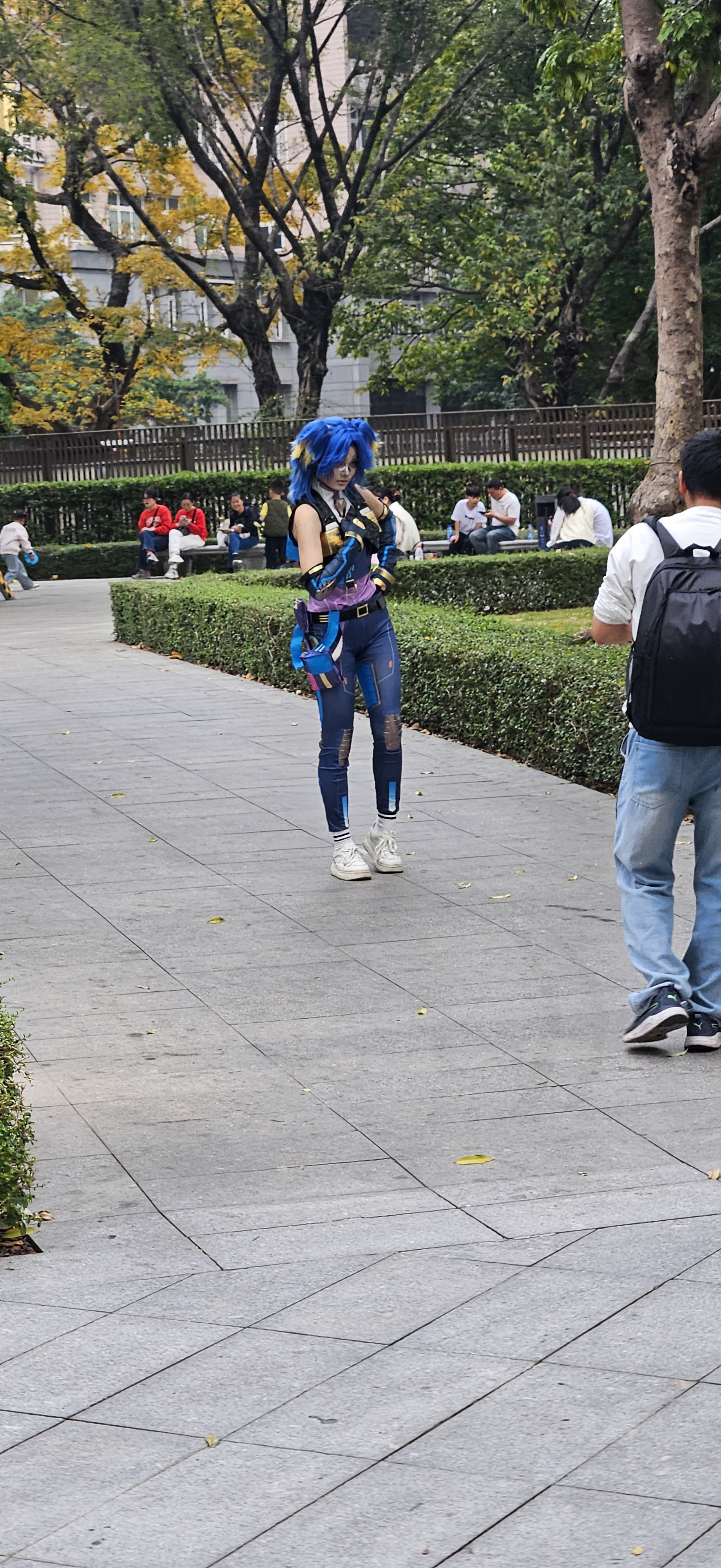
The next stop was a mall called Comic City, where young people would get their makeup done and dress up like their favorite Anime characters; once inside there was even one dressed up for the New Year and gave Jessica a good luck gold (chocolate) coin. We collected as much good luck as we could, all day.
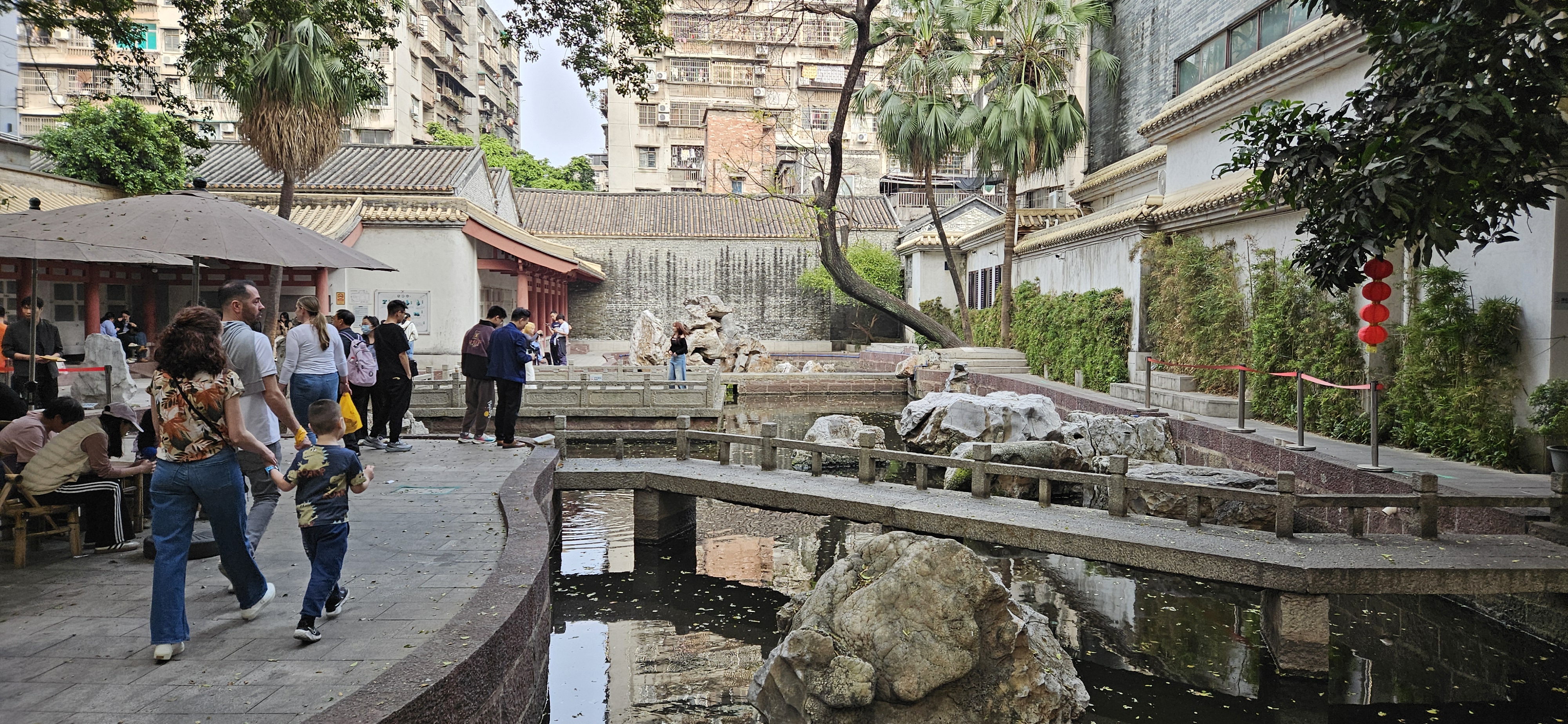
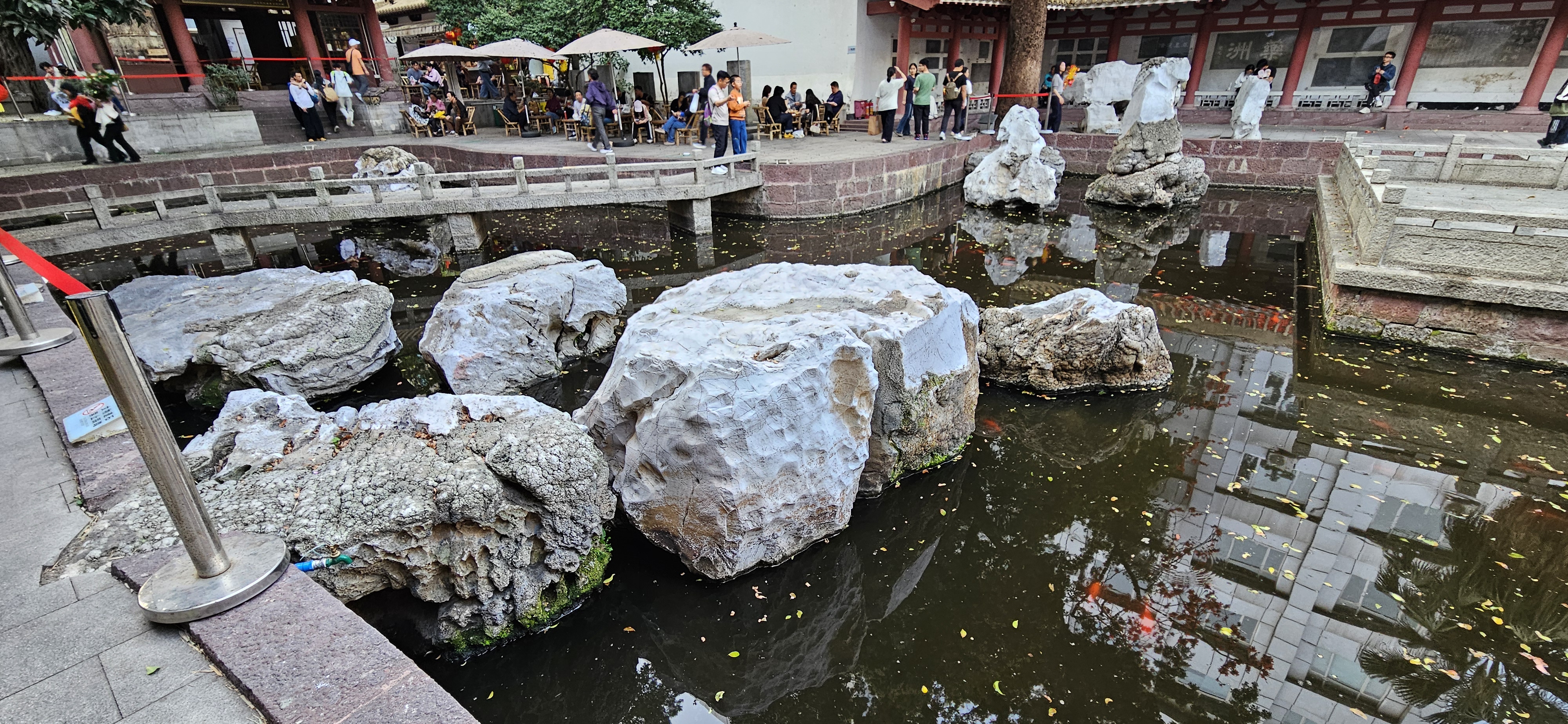
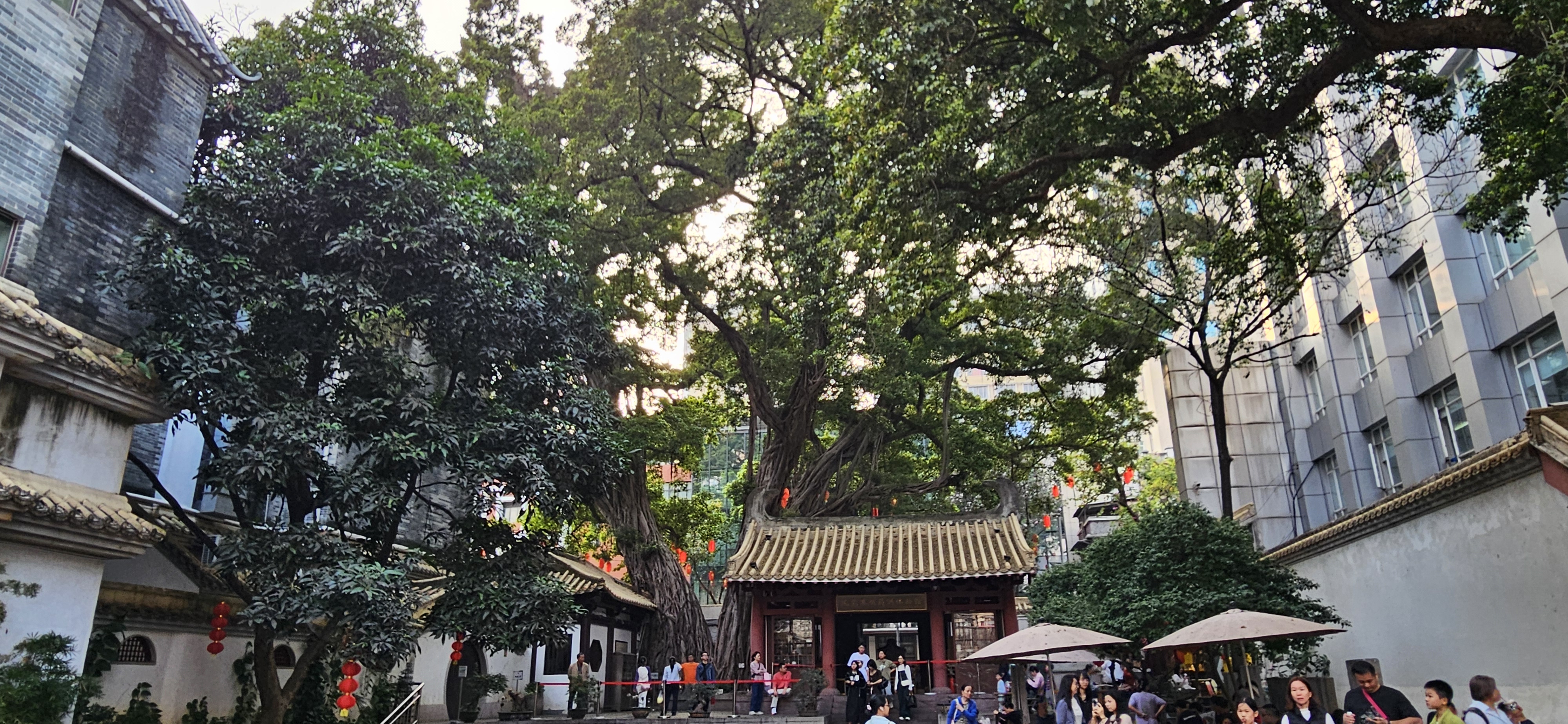
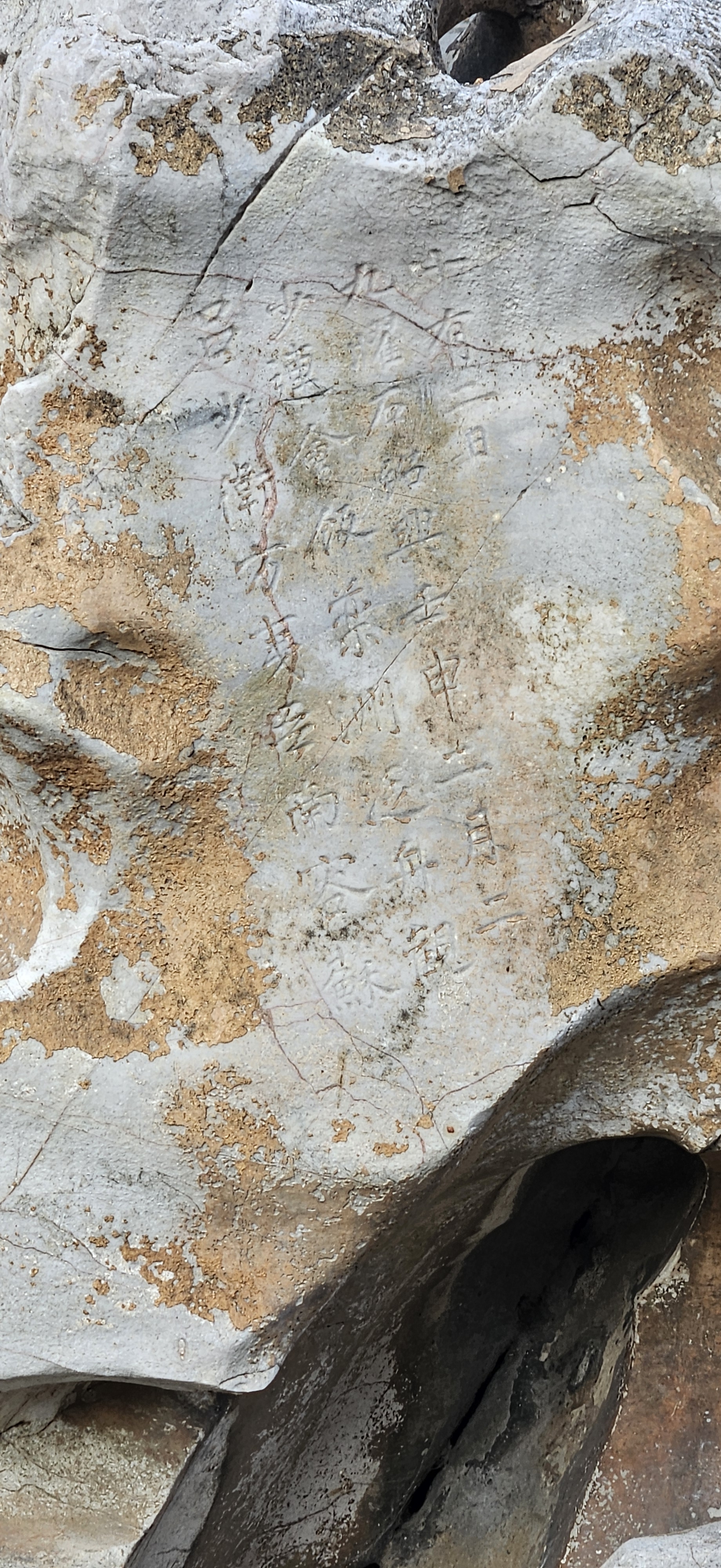
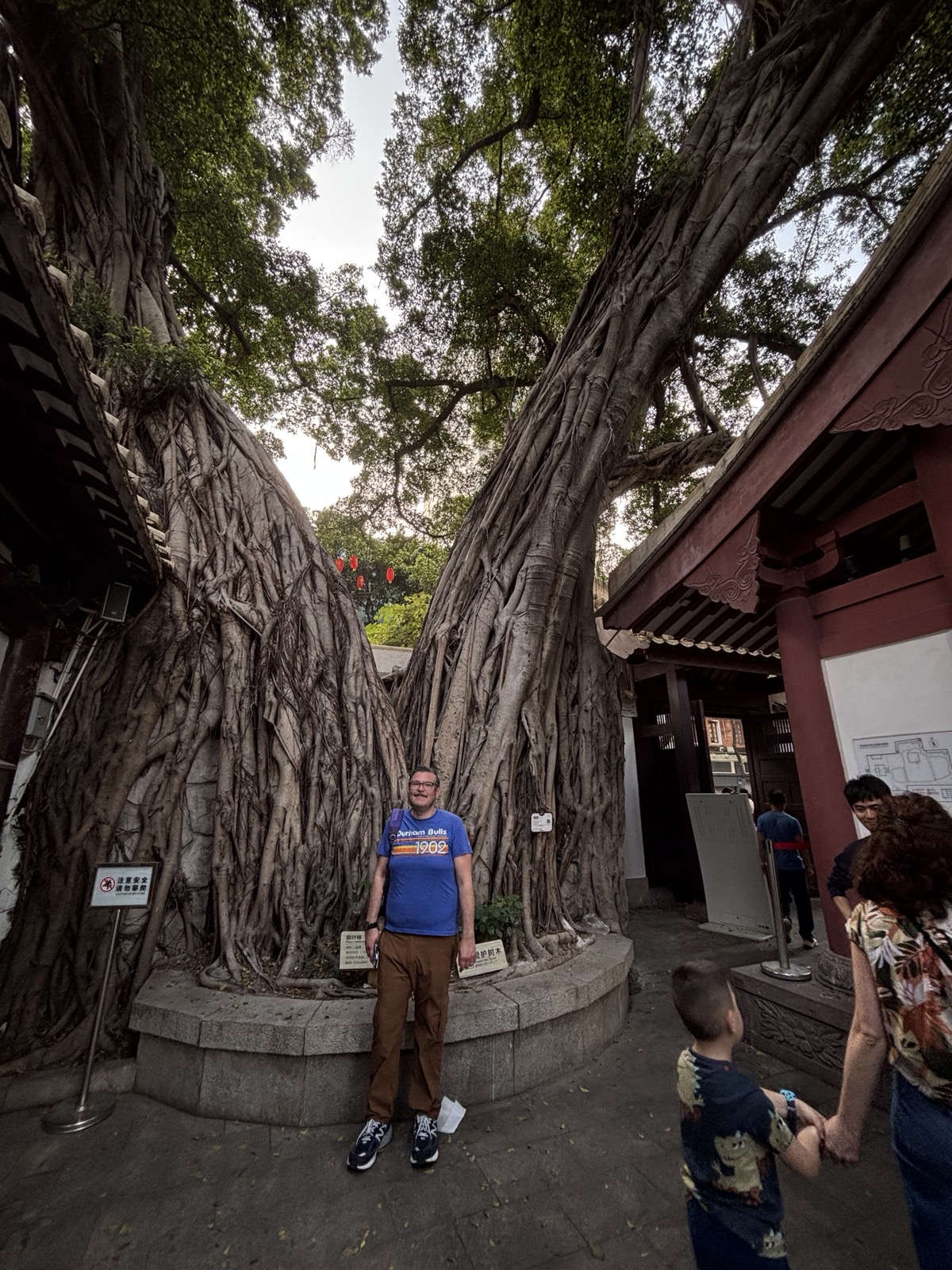
We made a quick stop in the tranquil and unique “Islet of Immortality Pills” (which is a loose translation at best), but this stone garden and pond was constructed in 919 AD, and the rocks in the water have carvings dating back that far. We asked Tony what they said, and he told us they were markings made by those that visited, like “Bob was here.” There was also a huge banyan tree from 1745.
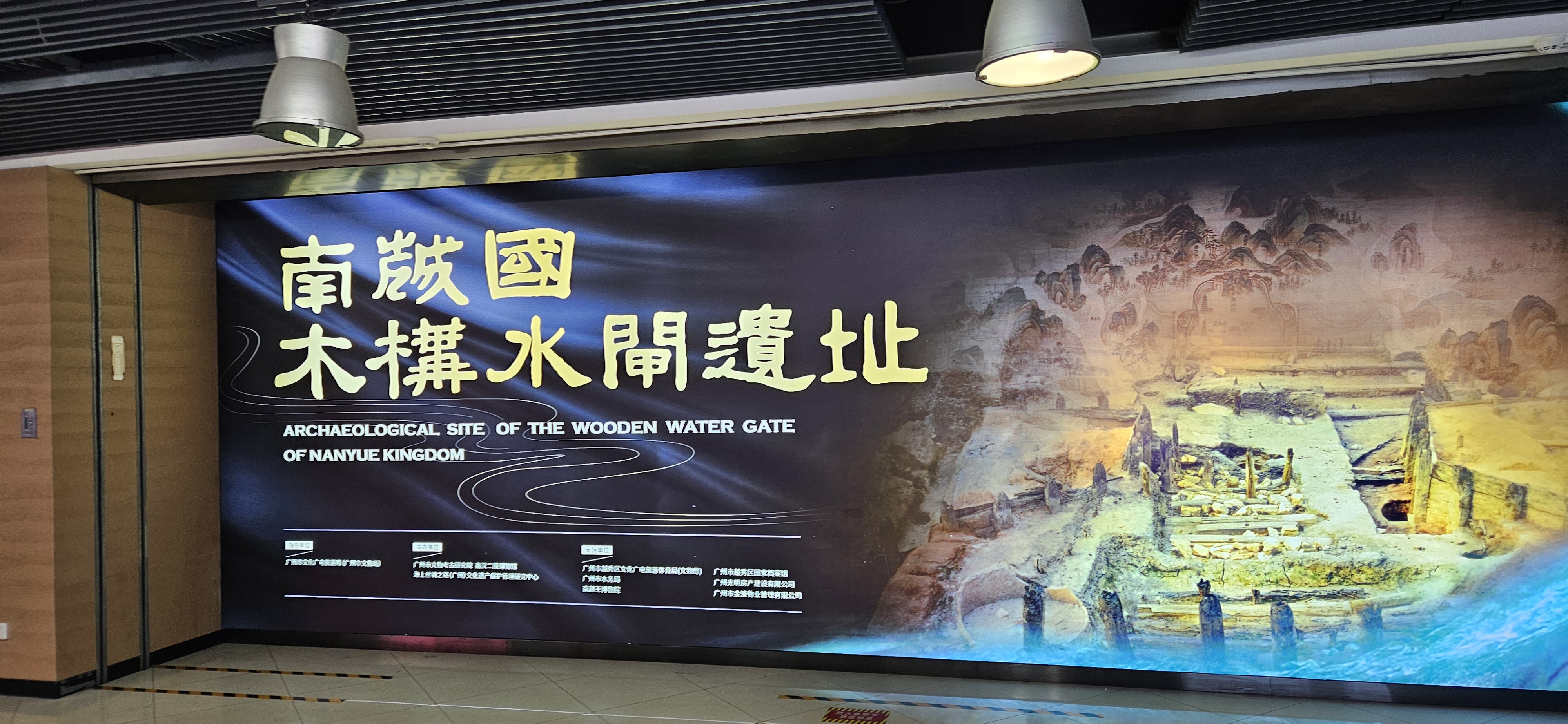
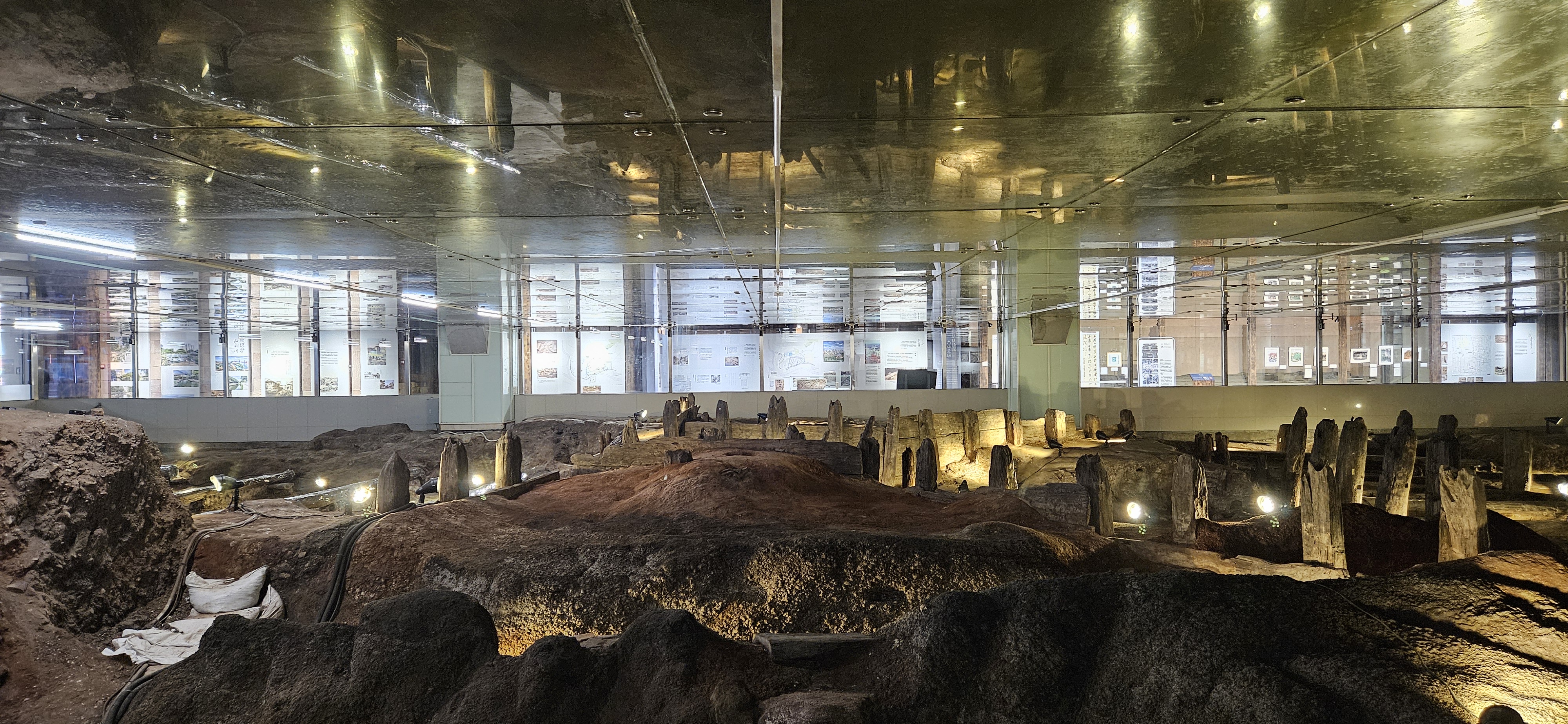
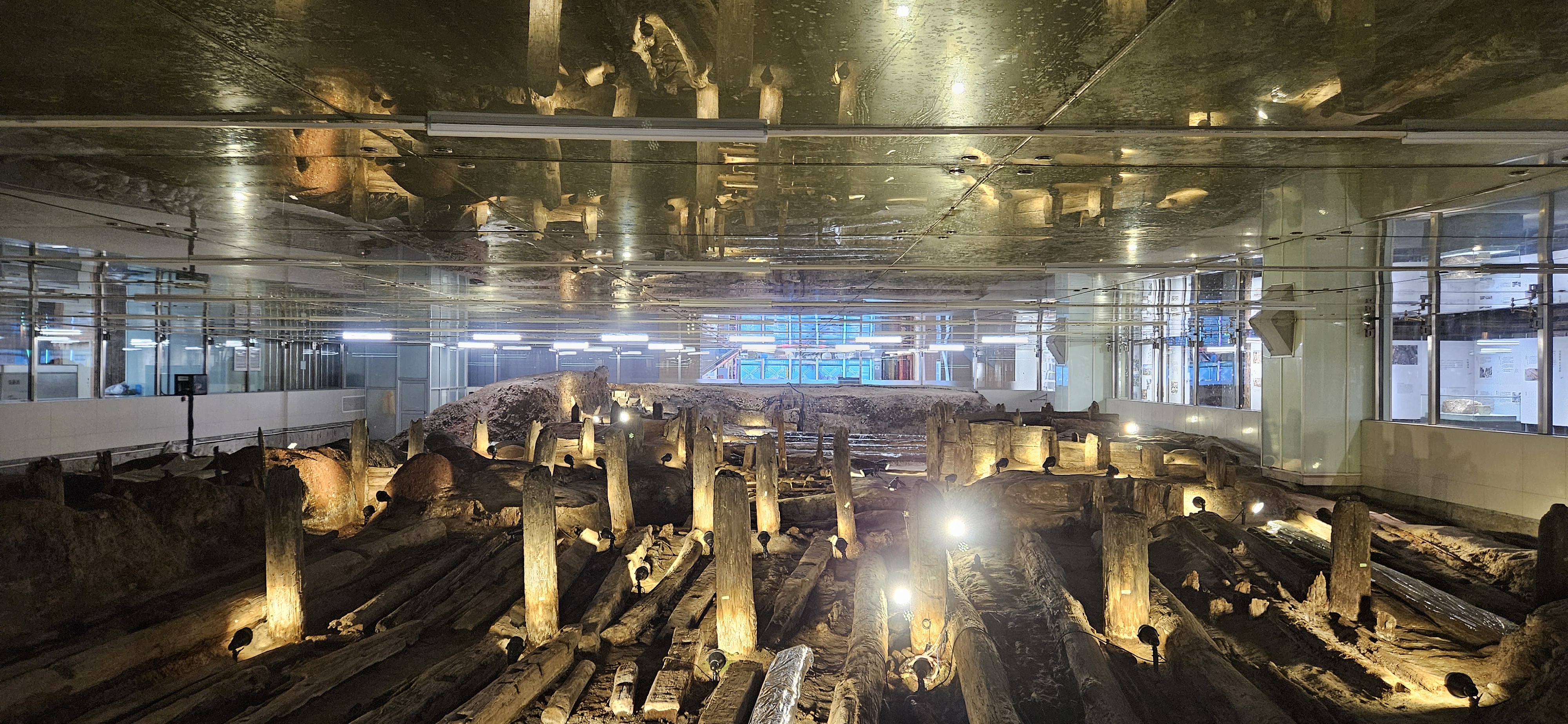
Next, Tony took us to a mall, but this was no ordinary mall. On the basement level was an entire ancient wooden water gate that had been preserved and was being studied by local historians. It was unbelievable to still be there, fairly intact, while a multi-story shopping mall existed right above it.
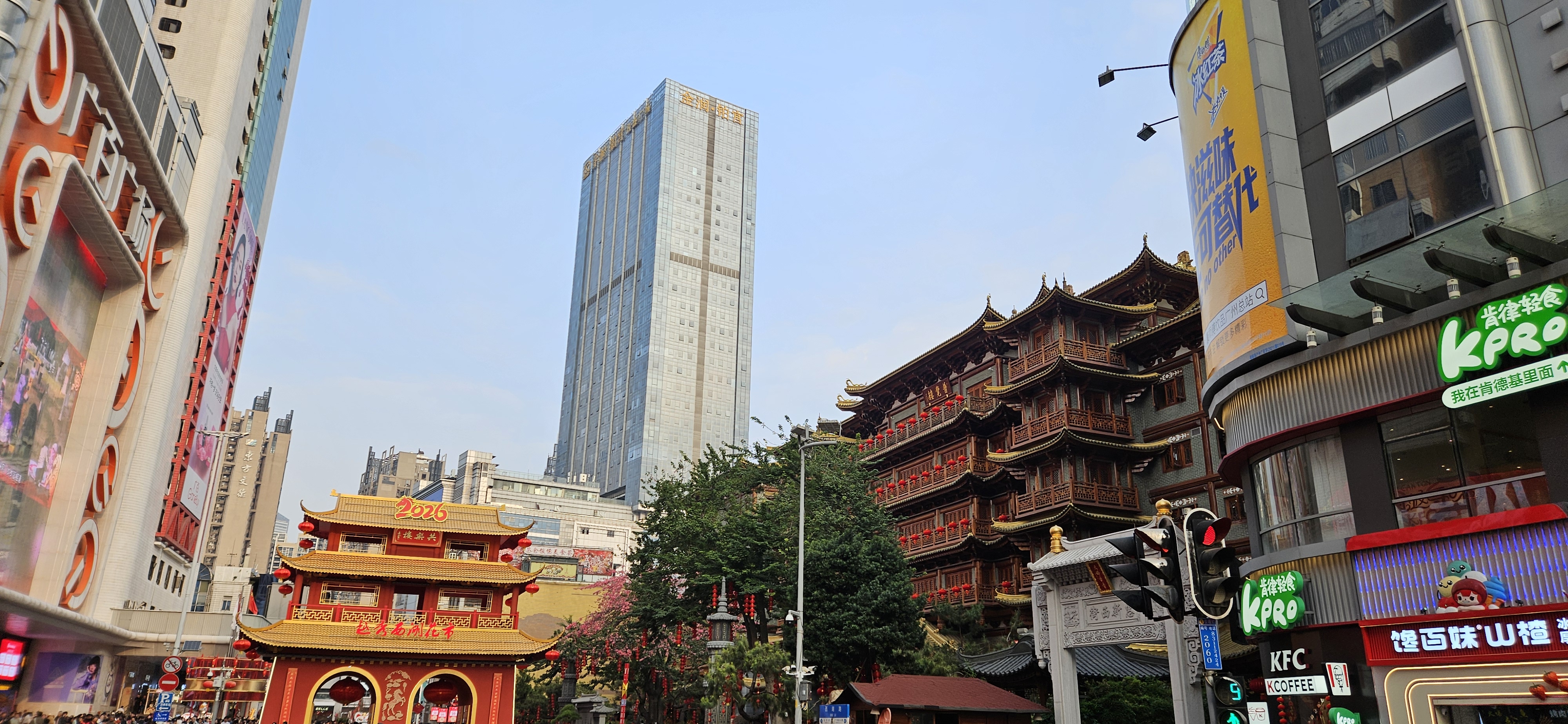
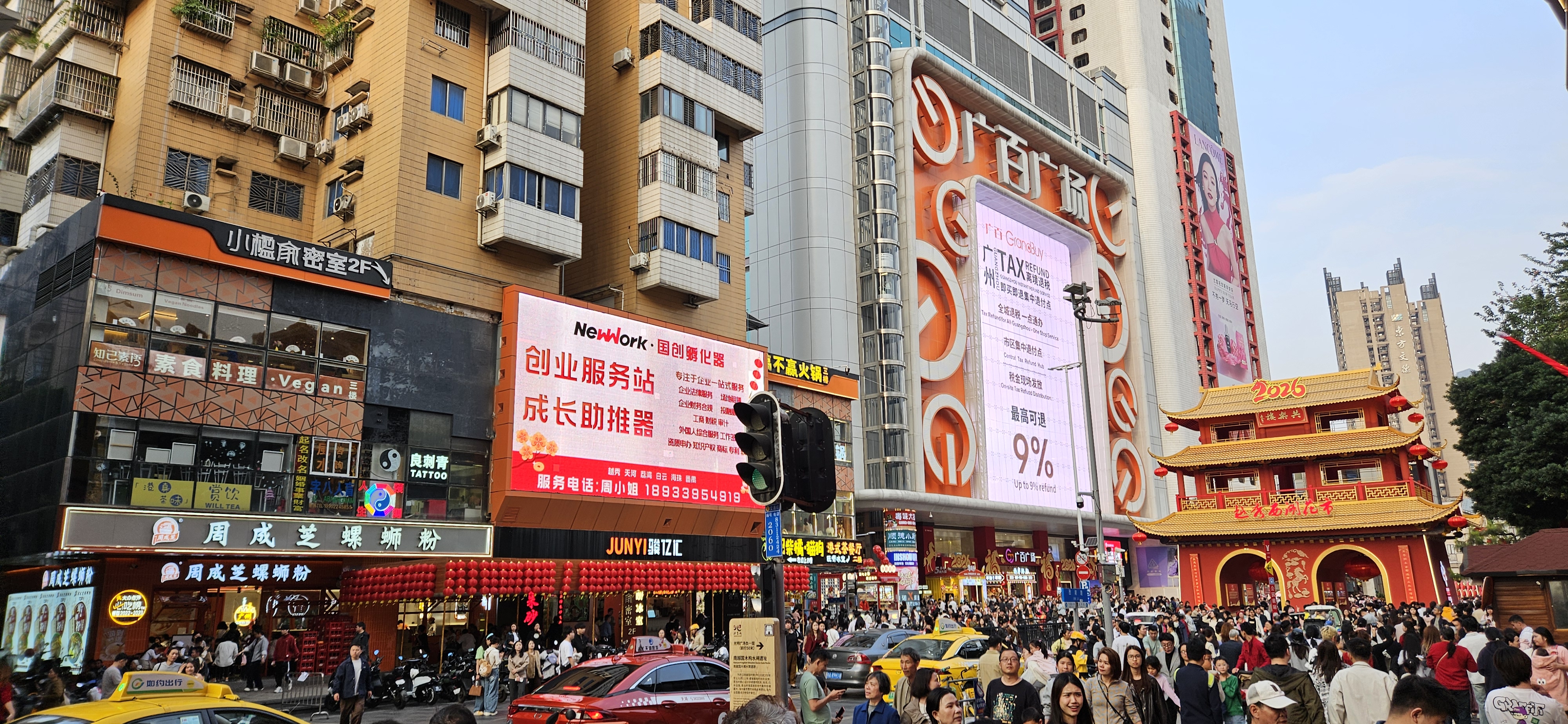
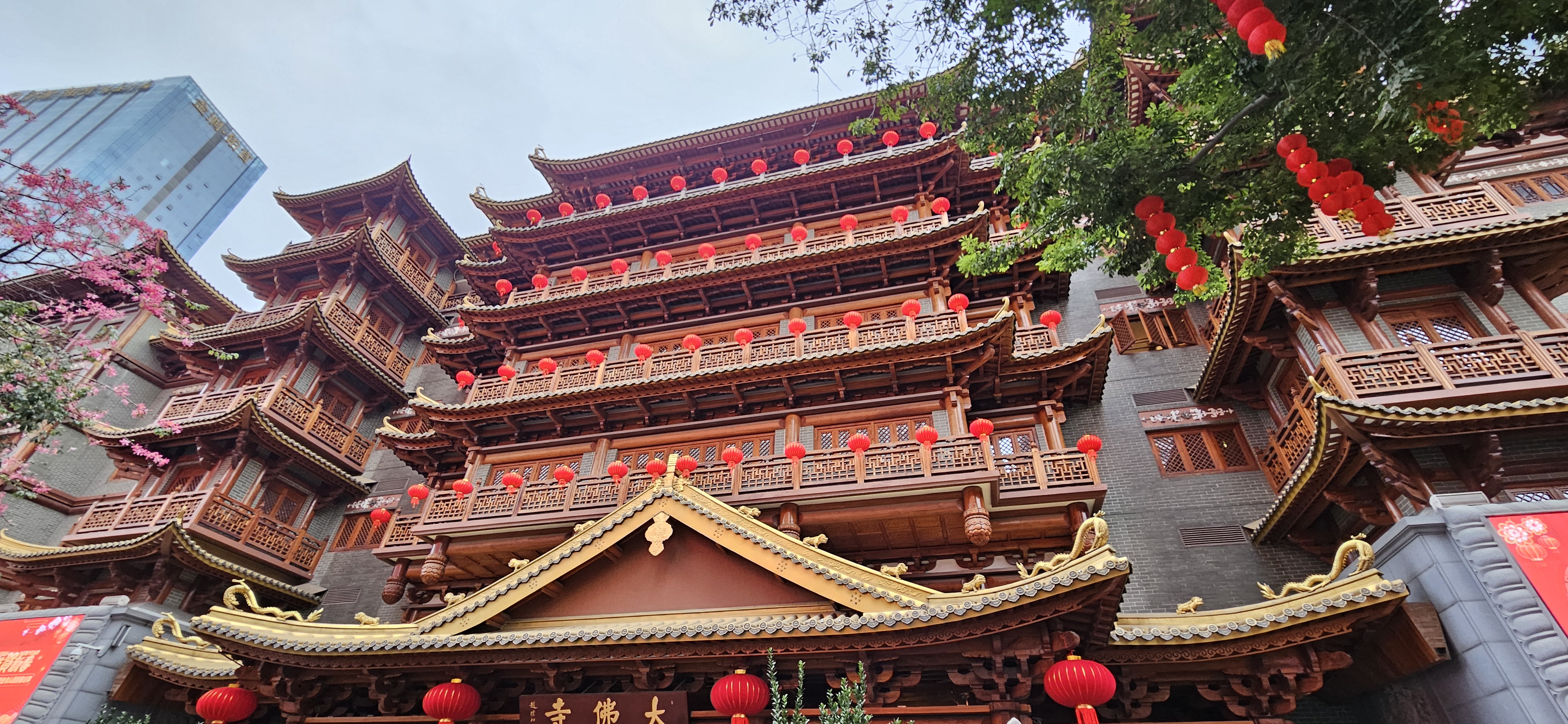
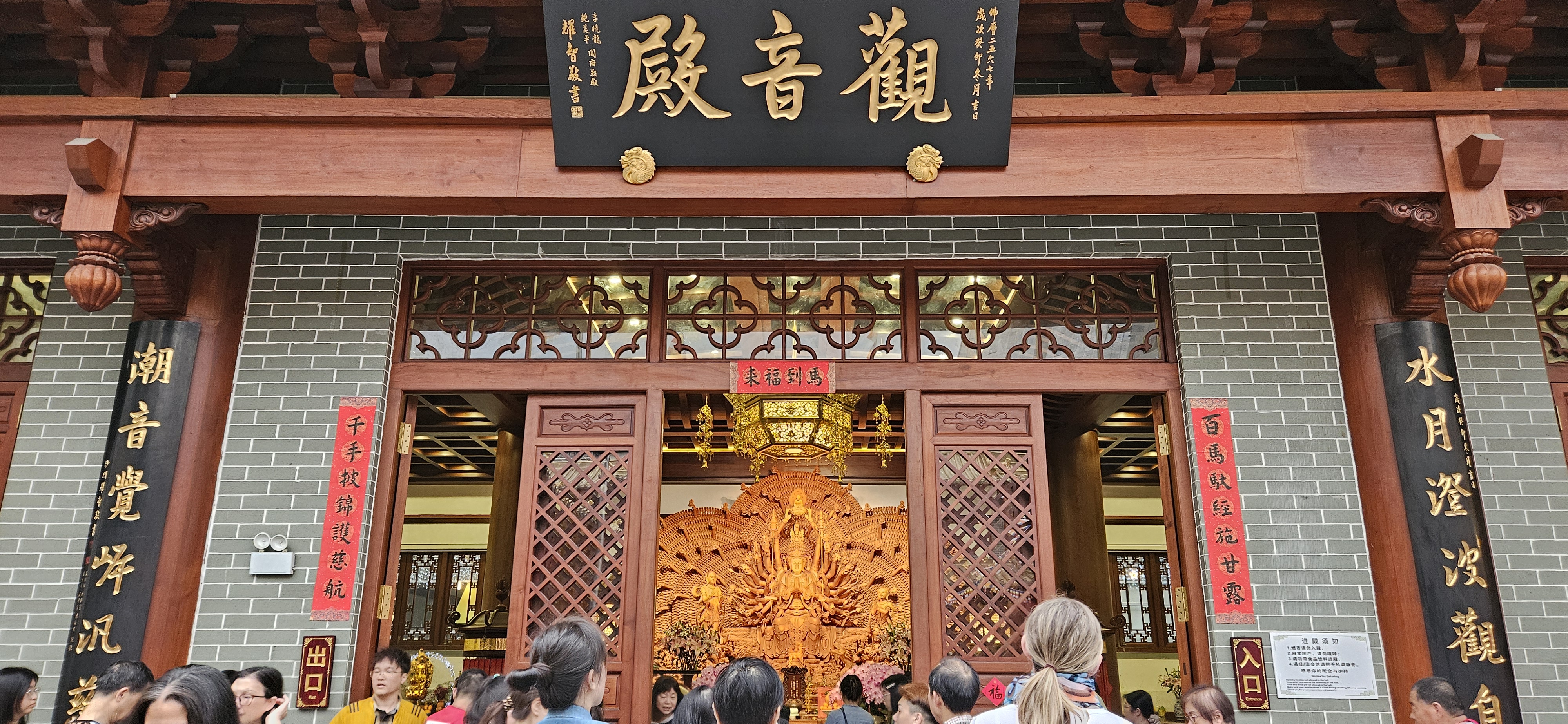
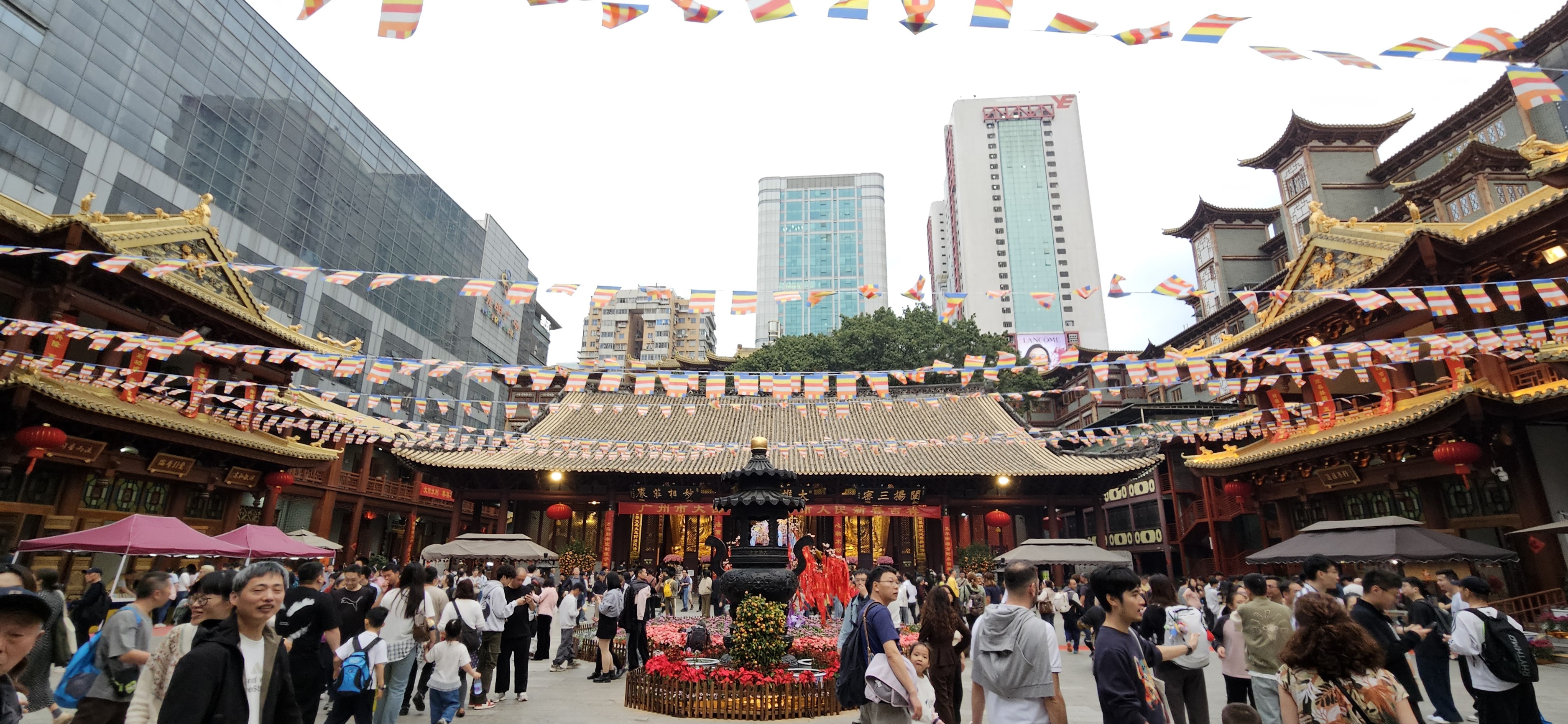
Tony had saved the best for last, the Giant Buddha Temple, also known as the Dafo Temple, which was packed with people celebrating the New Year holiday. So, so many people, we had to ensure we kept Tony in our sights, as even though there were only six in our group, it was easy to lose each other in the throngs of people. We saw it as we approached; the tall entrance gate on the right, the red 2026 gate was specific for New Years.
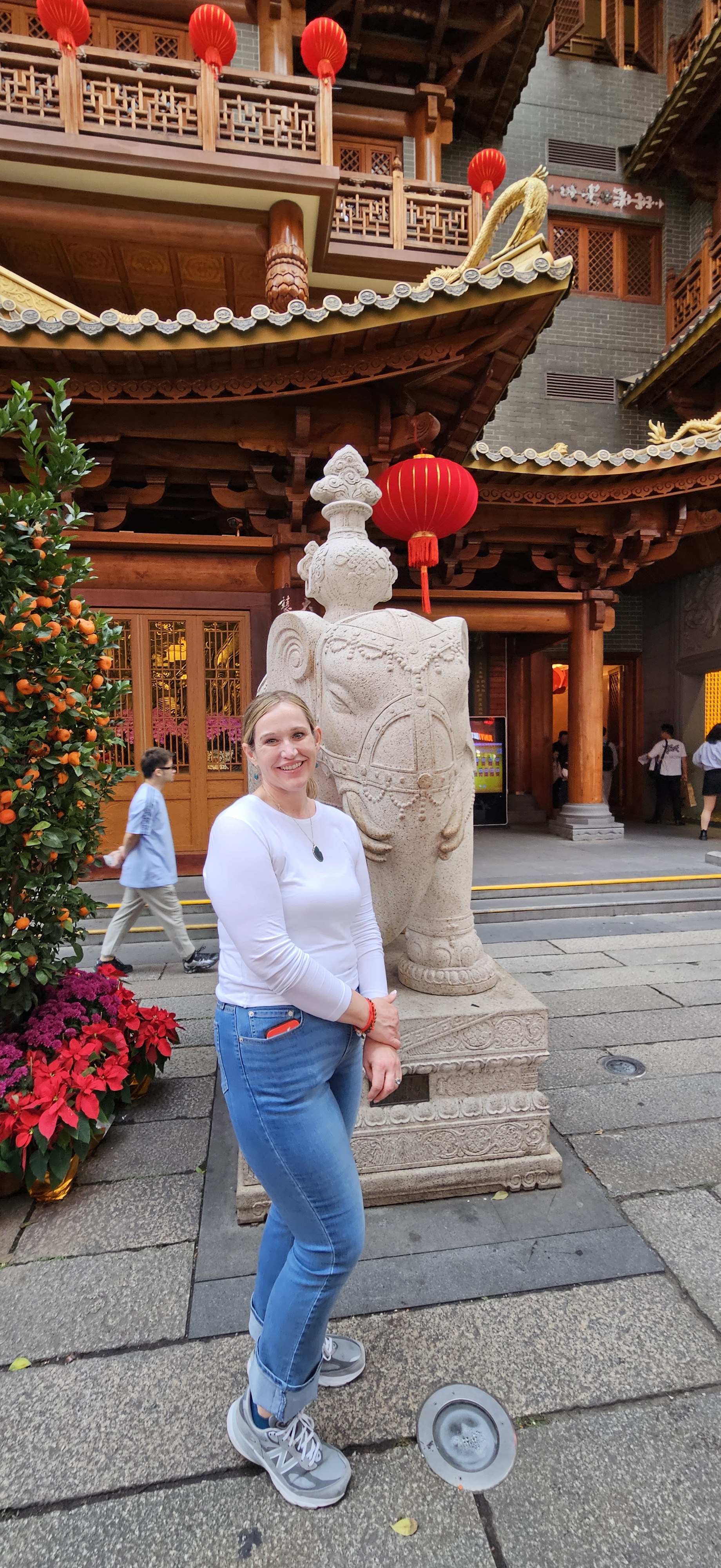
There were two stone elephants outside, so had to get a picture with Jessica in front of them when we could. Tony also told us about the duality of statues and trees outside of buildings and complexes, that they will always come in twos. Often times they are lions, but sometimes they take on a mythical quality, as the early Chinese did not know what lions looked like (so they made them look similar to dragons, which we also did not understand, as dragons aren’t real…or are they?)
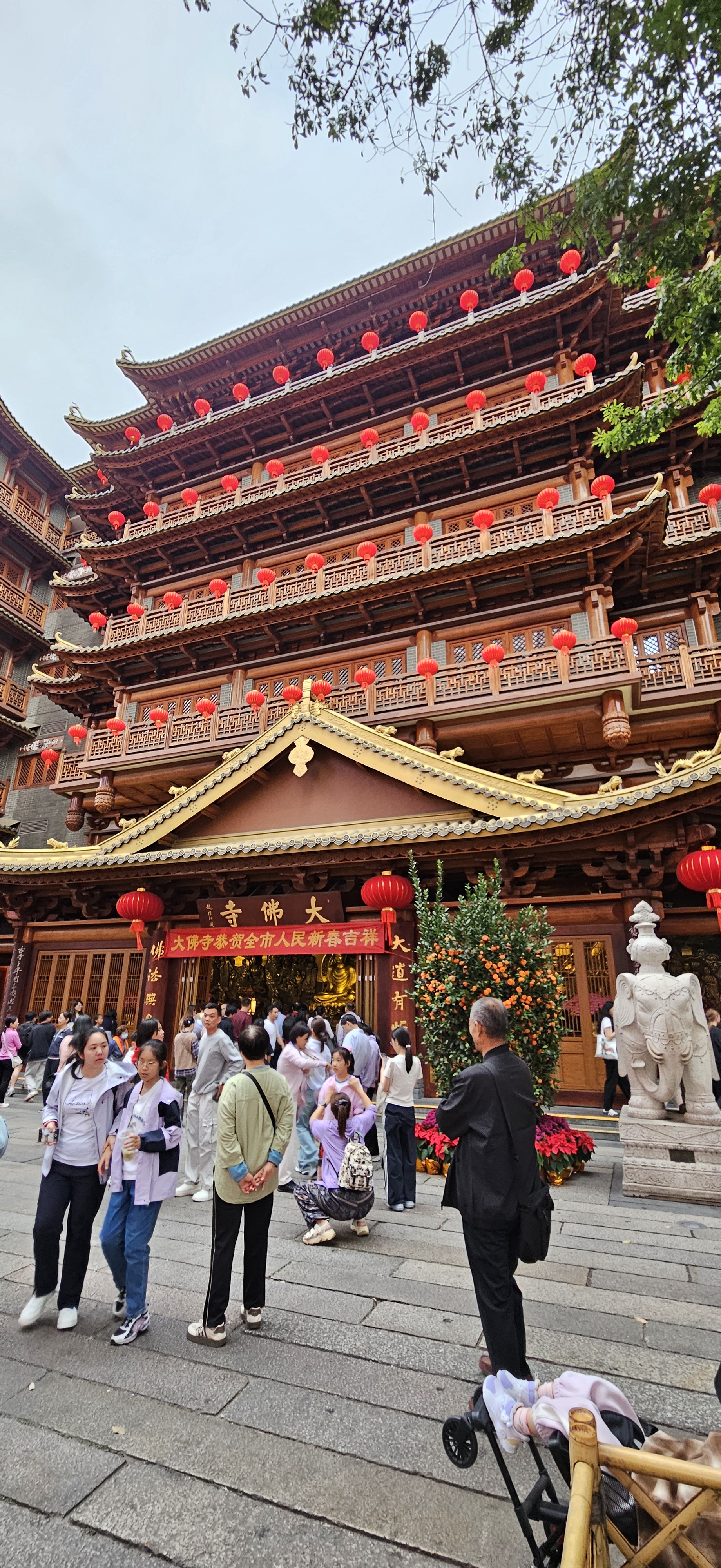
Once inside, and there is usually a threshold to step over, and Tony told us always enter with our right foot first; there were so many people, many purchasing flowers and incense and a long line to our right, waiting to pet Jambhala (the money Buddha)’s fat belly for good luck. Tony told us today was Jambhala’s day of worship during Chinese New Year, so that’s why there were so many people in his line.
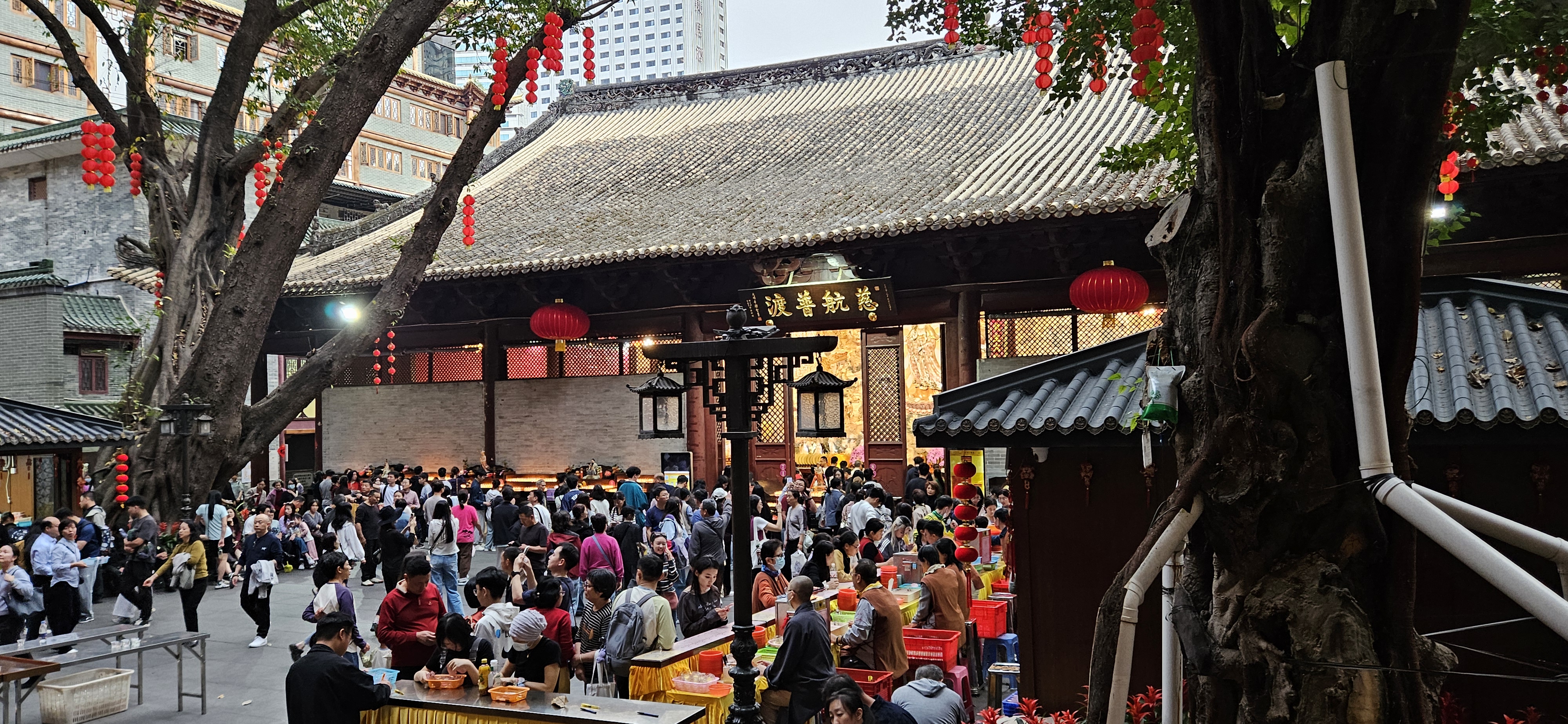
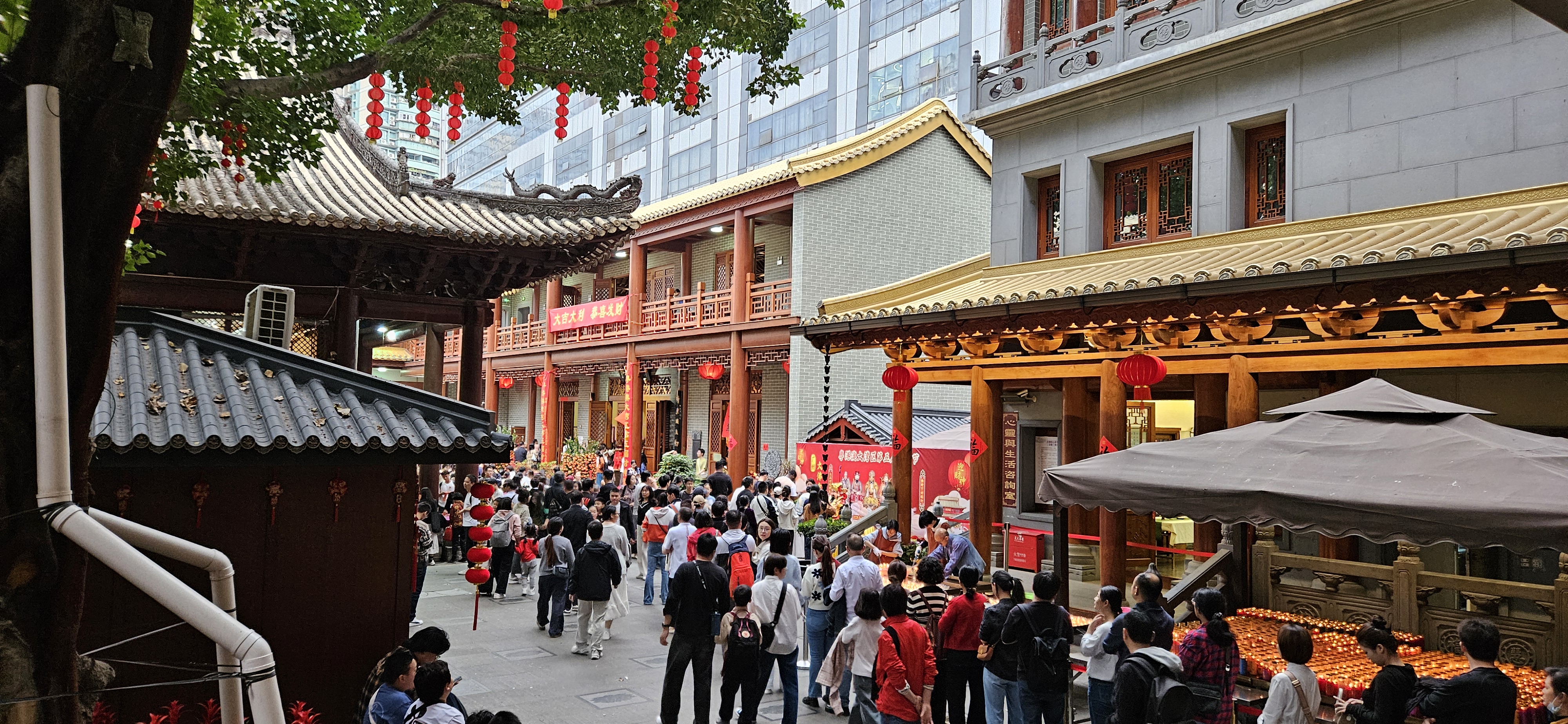
We passed through the three main buildings (it is not appropriate to take pictures inside the temple buildings, but outside is ok) and sampled good luck tea, and learned that while China has no national religion, many of its citizens visit Buddhist temples during the holidays, because why not?
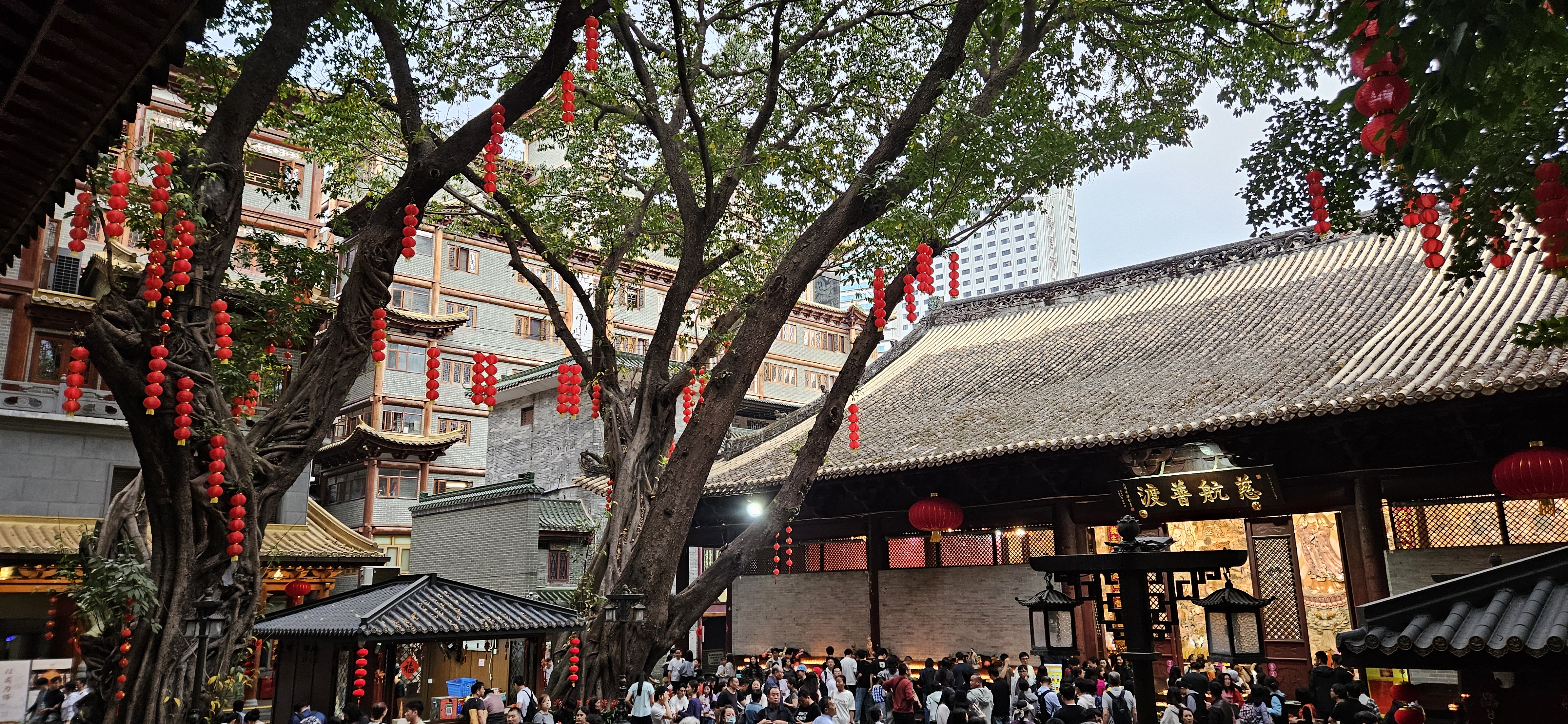
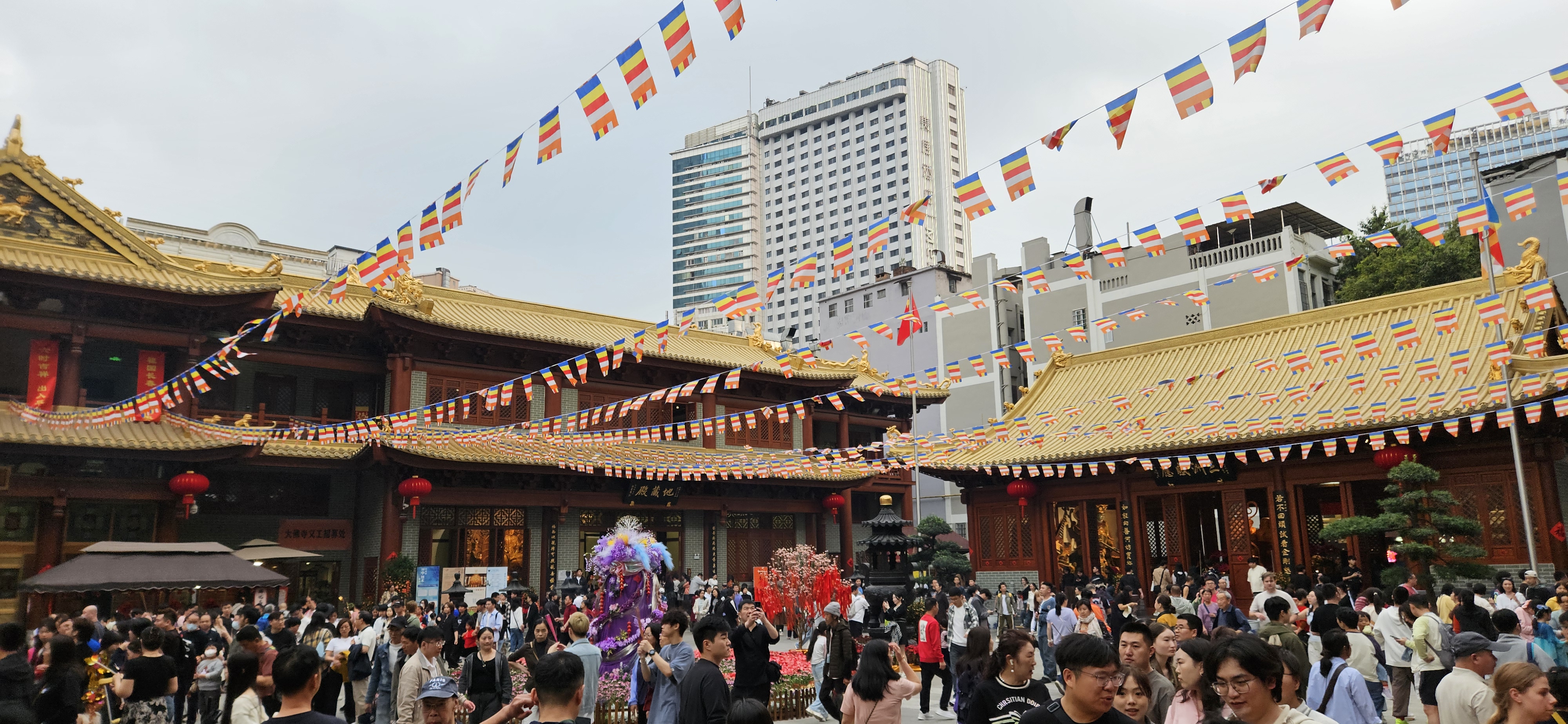
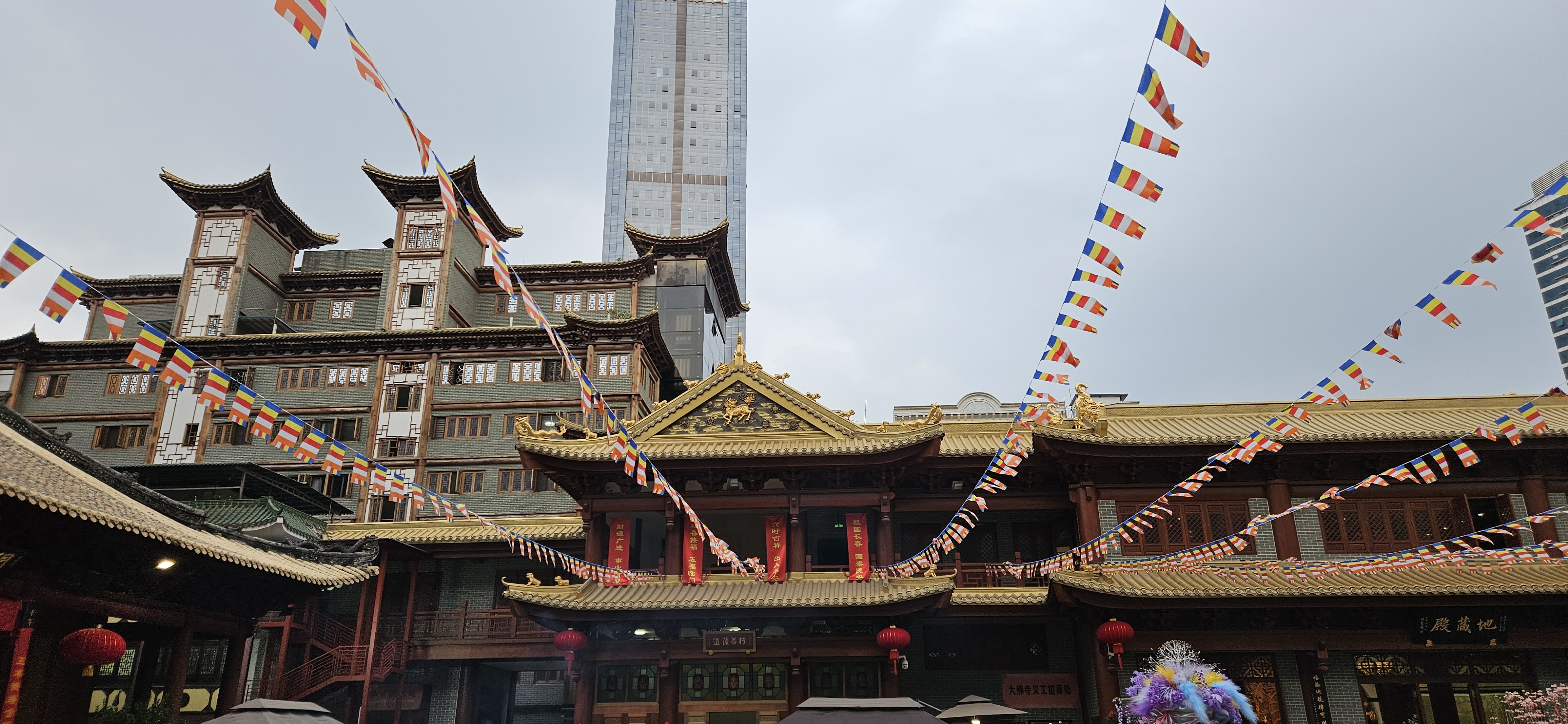
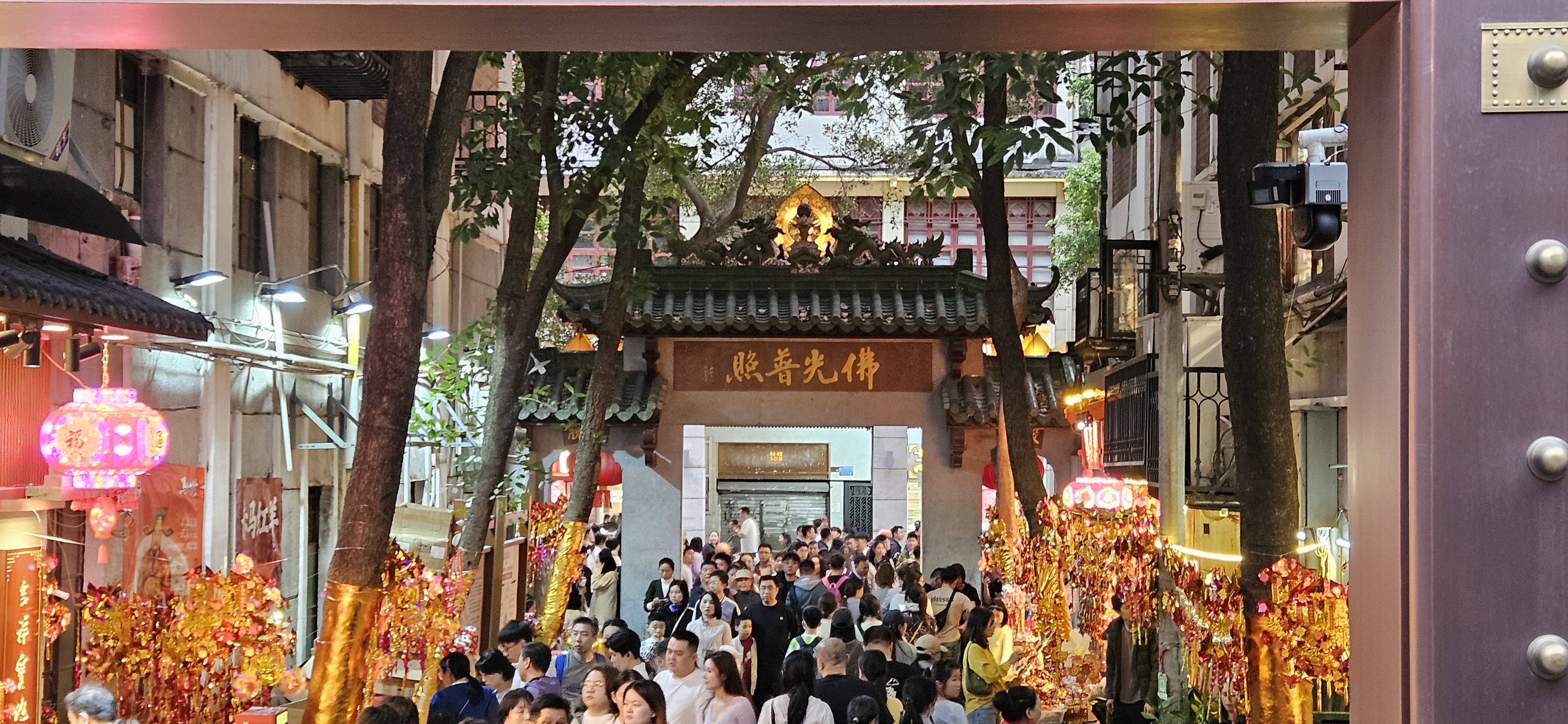
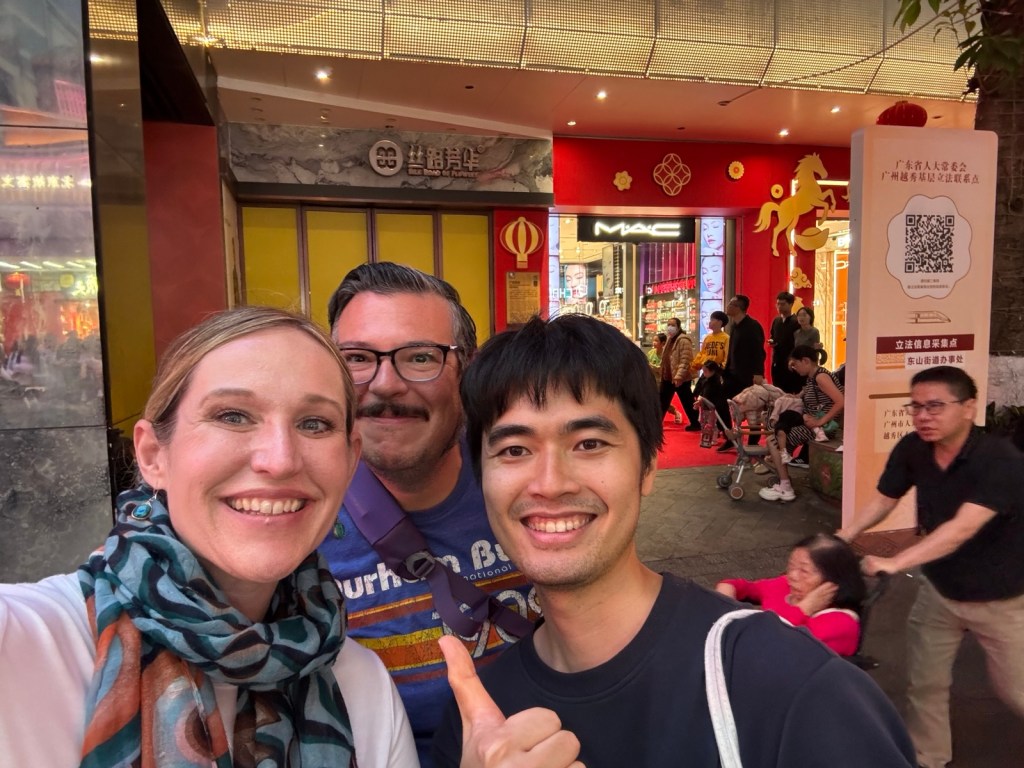
Tony ended the tour amidst the very busy Beijing Road Pedestrian Street, a few steps away from the Temple. He was such a great guide, and told us so many more interesting facts, took pictures of us together, and even gave us a pair (the duality) of large Chinese characters that we had seen on many homes during the new year for, what else?, good luck. We thanked him, and asked for a selfie, which he was happy to do.
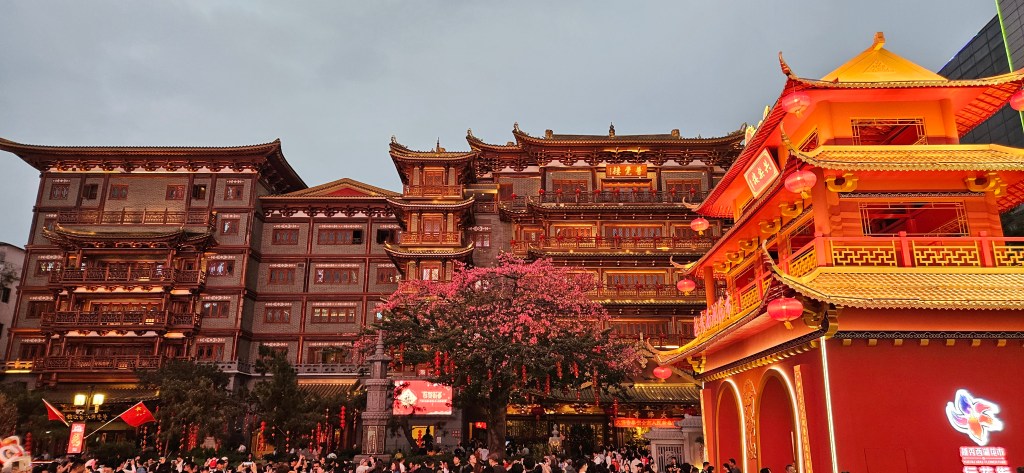
As the sun set on a long day, we took one last look at the Temple,
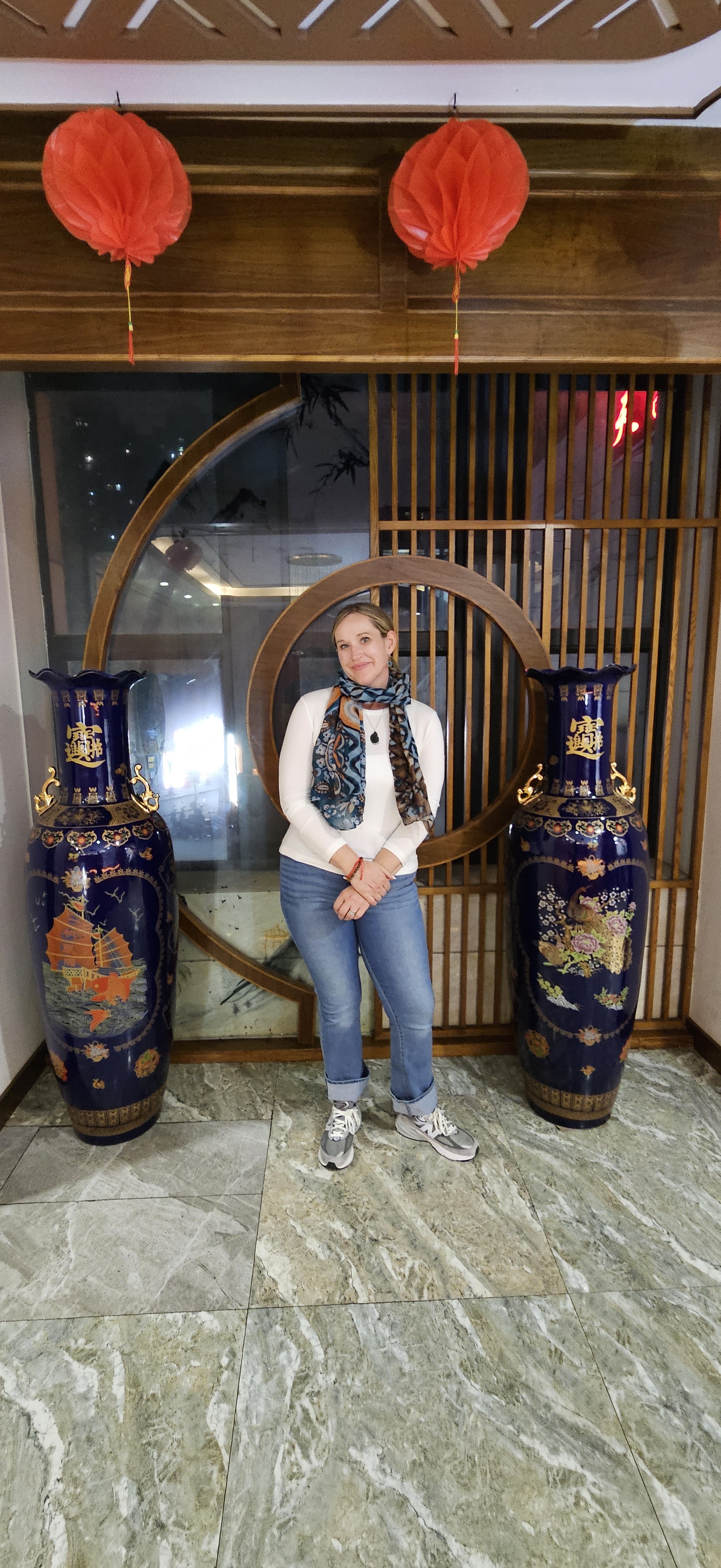
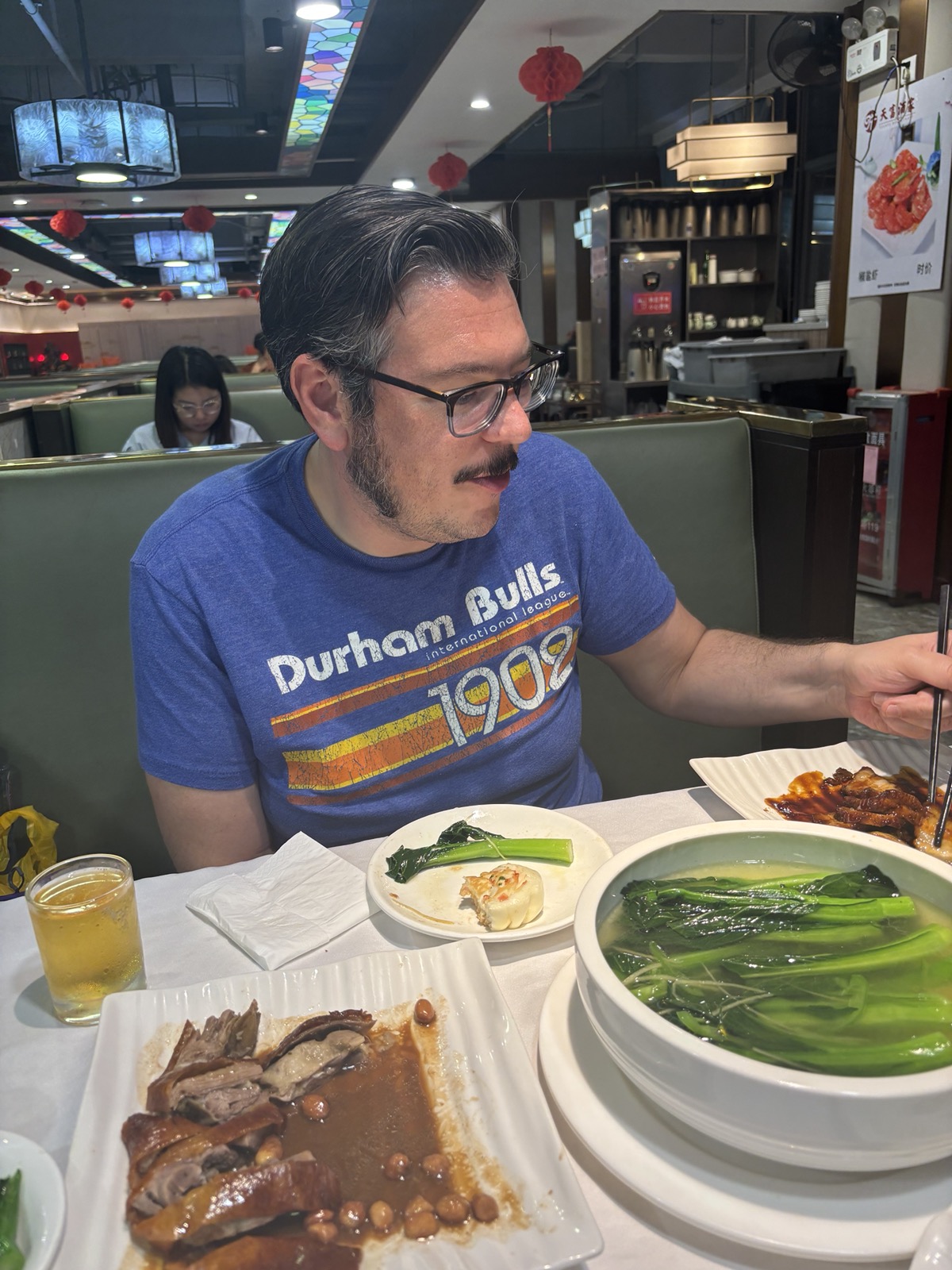
made our way a couple blocks until we cleared the mass of people and hopped in a Didi. We went back to the hotel, where we had dinner at the restaurant next door, ordered too much food, and slept very well.
 Phil's WayPastCool
There are SO MANY people there…I would also need a break from that. That final pic of the sunset on those buildings – they are beautiful!
LikeLike