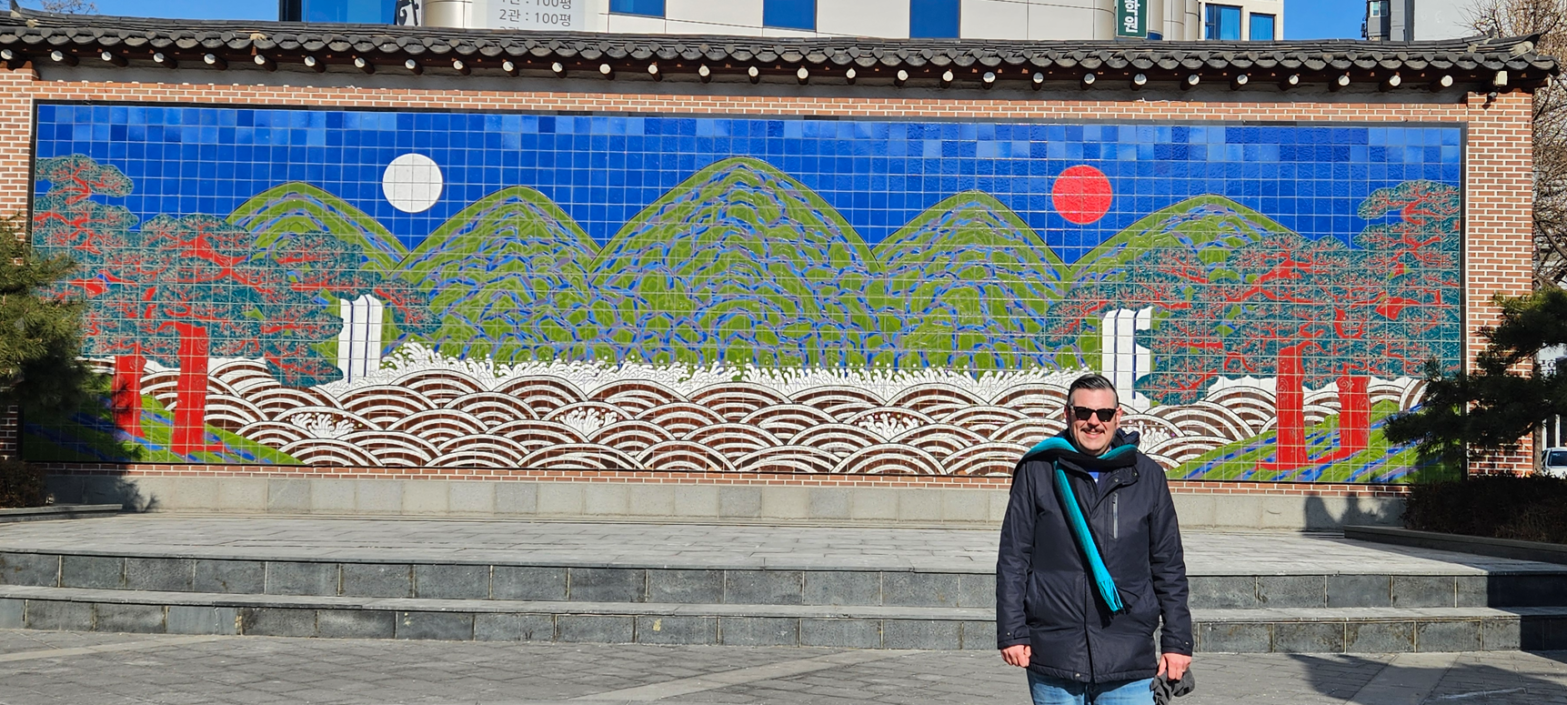
Our third day in Seoul was another experience in the (minor) frustrations of travel. I started working on Bonsai trees our last year in North Carolina, and was able to visit the Bonsai Village in the outskirts of Tokyo when we were there, so we found a Bonsai nursery near Seoul to visit. We used the map app to get us there, and went into the station to buy a “T-card” which is used to travel on trains and buses around Seoul. We bought cards, but they were the wrong ones we found out (called “Climate Cards”) and did not know we had to further load them with money after purchasing the cards. So we ate a quick lunch and went to the bus stop; we hopped on the bus and our cards did not work; the driver was kind and told us to get on anyway, and asked our stop in broken English, and we told him the hospital.
Well, there were two hospitals on the route, the first was the University hospital, and that is where the driver dropped us off. We actually wanted the Children’s hospital, another 30 minutes away, but we couldn’t convey that properly, so we got off the bus, found a coffee shop, and planned our next destination. That’s ok, the Bonsai nursery wasn’t for us (this trip).
We had marked the Leeum Museum of Art, which was not too far from where we were, and walked through narrow backstreets with fancy stores we were unfamiliar with but saw ladies taking performative photos in front of them. The museum was free, made up of four floors, each with a different art theme from Korean history. The top two floors were devoted to ceramics an earthenware, ranging from the oldest, Celadon (aka “Greeware”) from BC times, and Goryeo (more detailed from the first 1,000 years AD), and finally from the Joesen dynasty period, up until the early 1900s.
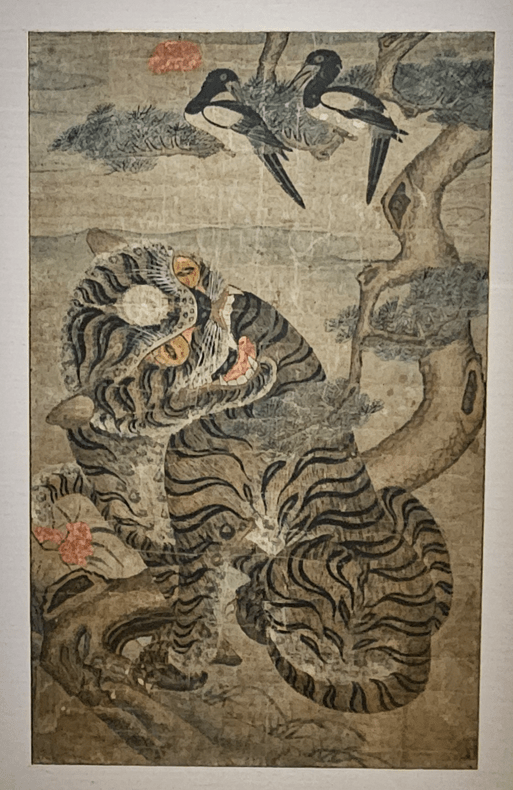
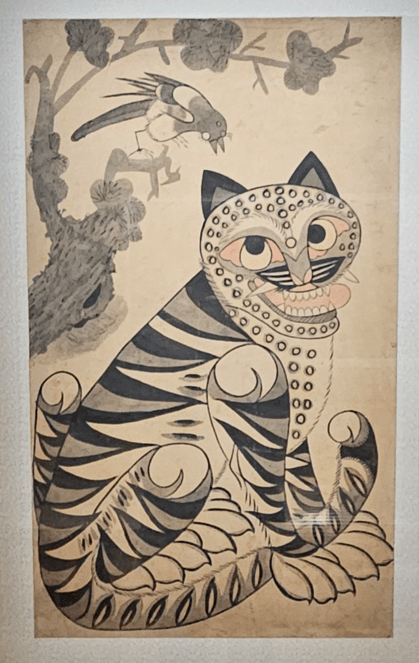
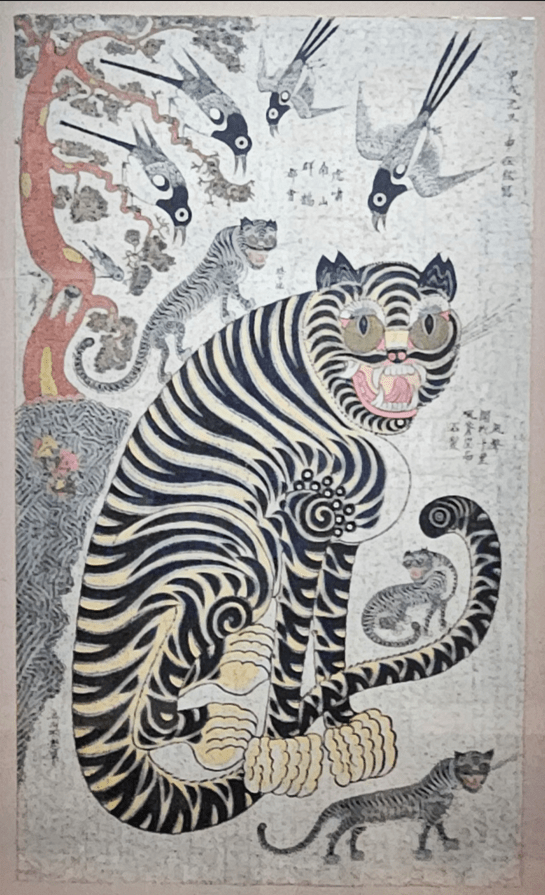
Floor two was my favorite, with the exhibit entitled “Tigers and Magpies.” Both have been used in art to represent the Korean people in varying degrees, depending on the artist; we saw both on entrance doors at the Korean folk village we visited later.
The first floor had figurines (many made of gold or copper) of different Buddhist deities and other items like earrings, and miniature pagodas of different sizes.
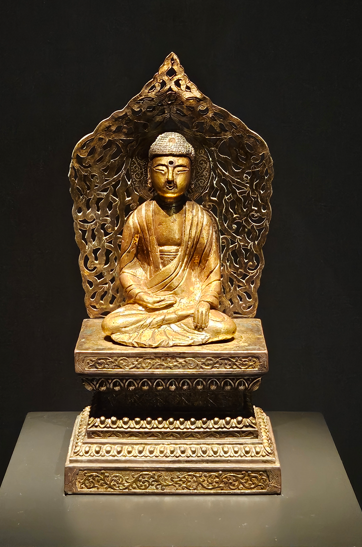
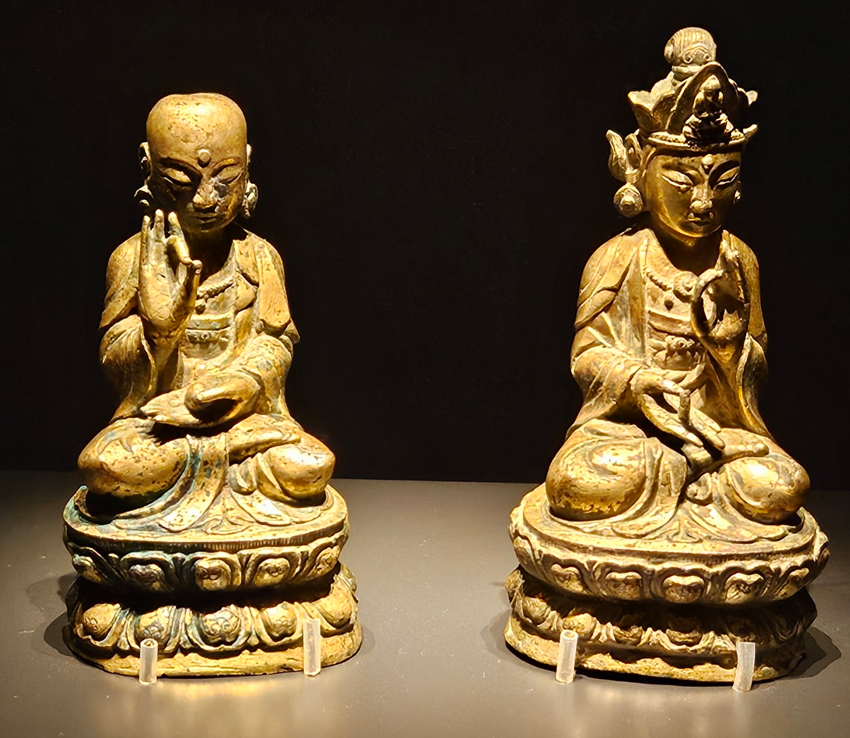
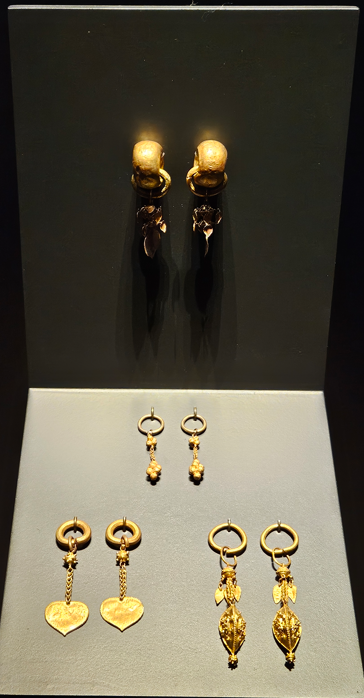
After the museum we found a nearby subway station and tried our luck at getting the correct card for travel, and with help from a friendly train staffer, we were able to purchase the cards and, with the remaining daylight we had left, visited the Korean War Memorial.
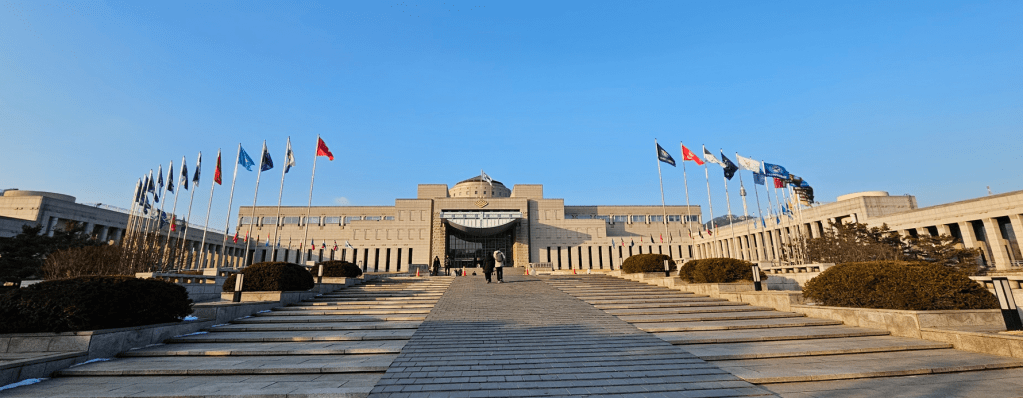
The entrance is stunning, as our the monuments that are found at the park in front.
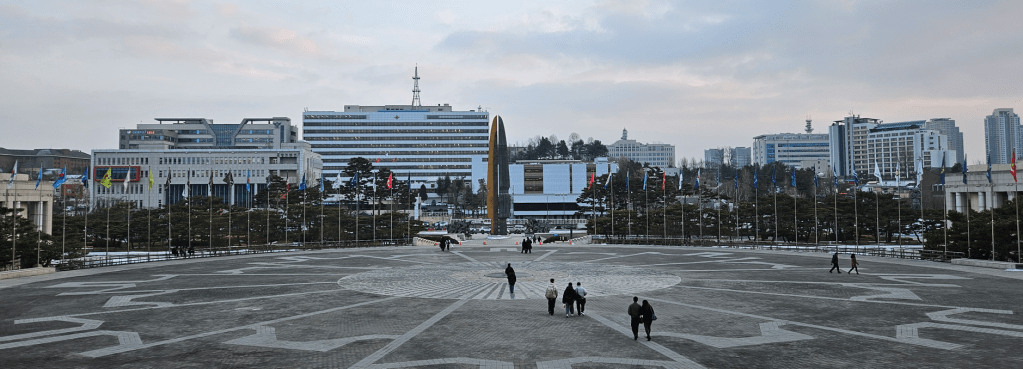
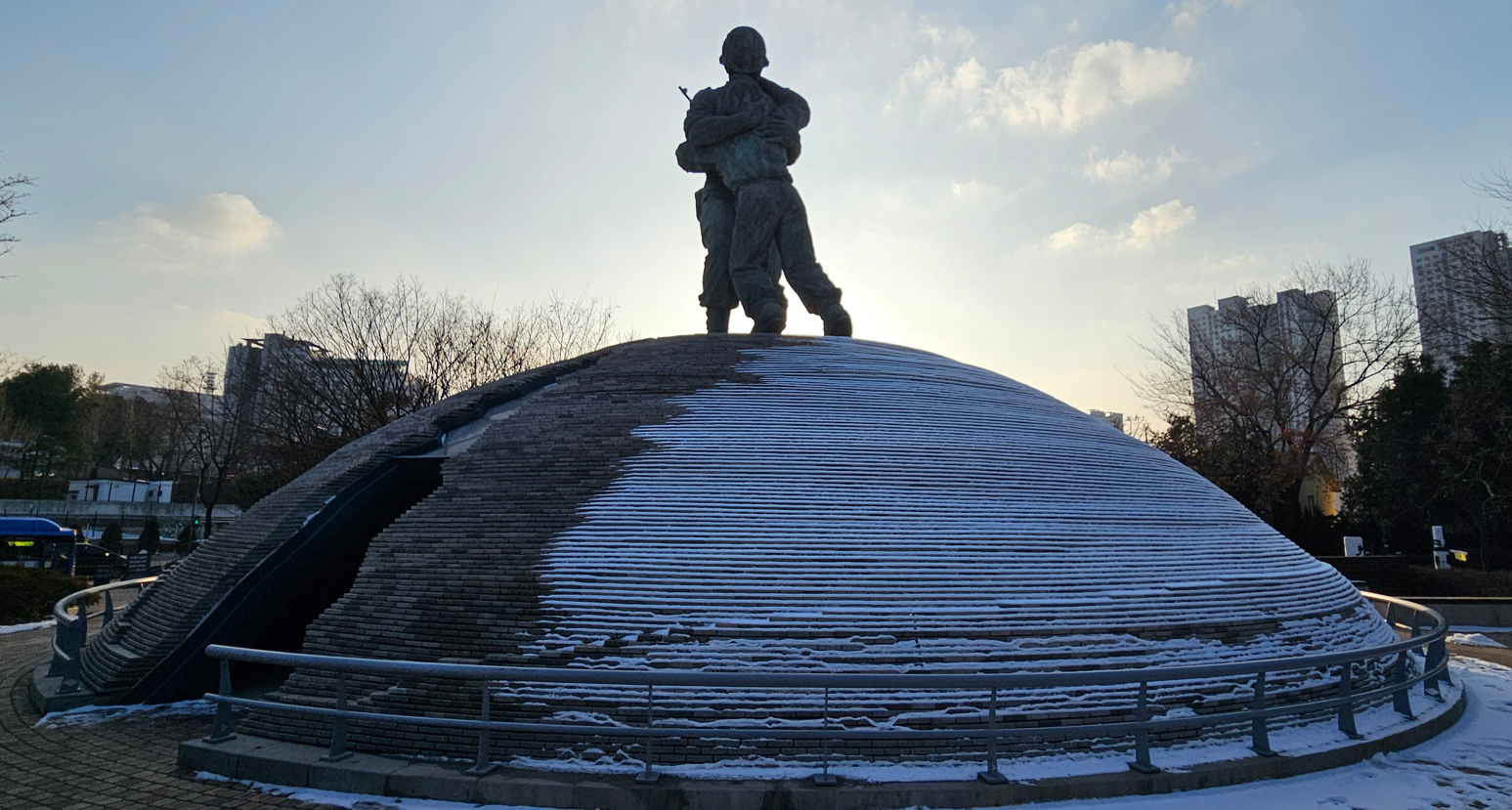
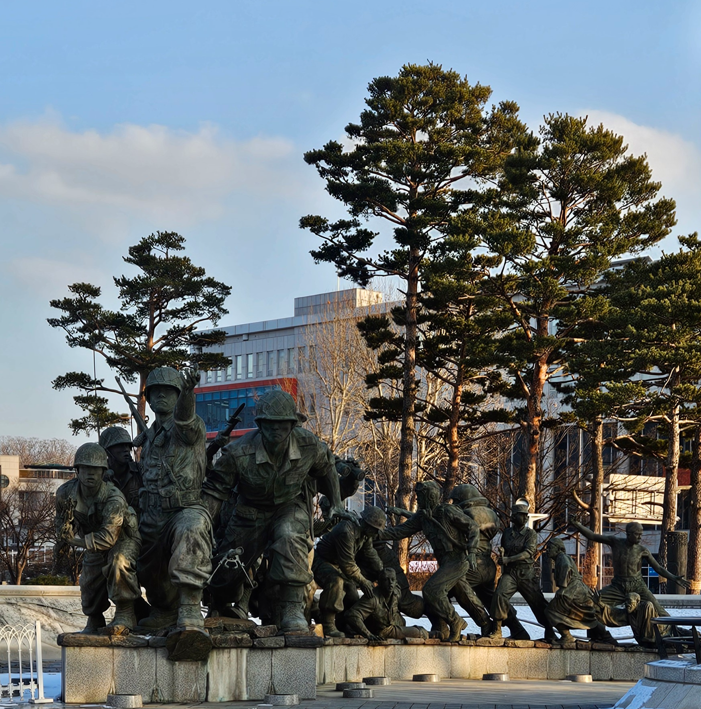
Once inside, we learned about the history of war in Korea, from ancient times through the most recent Korean War.
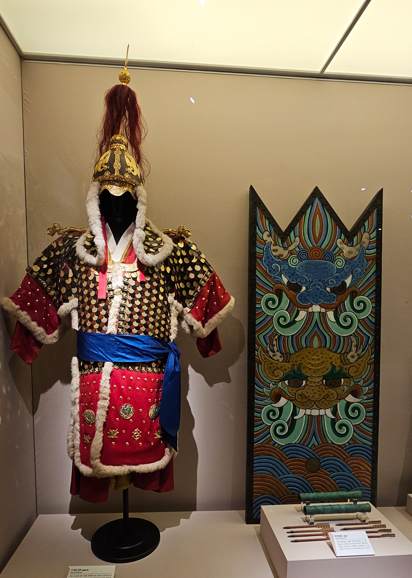
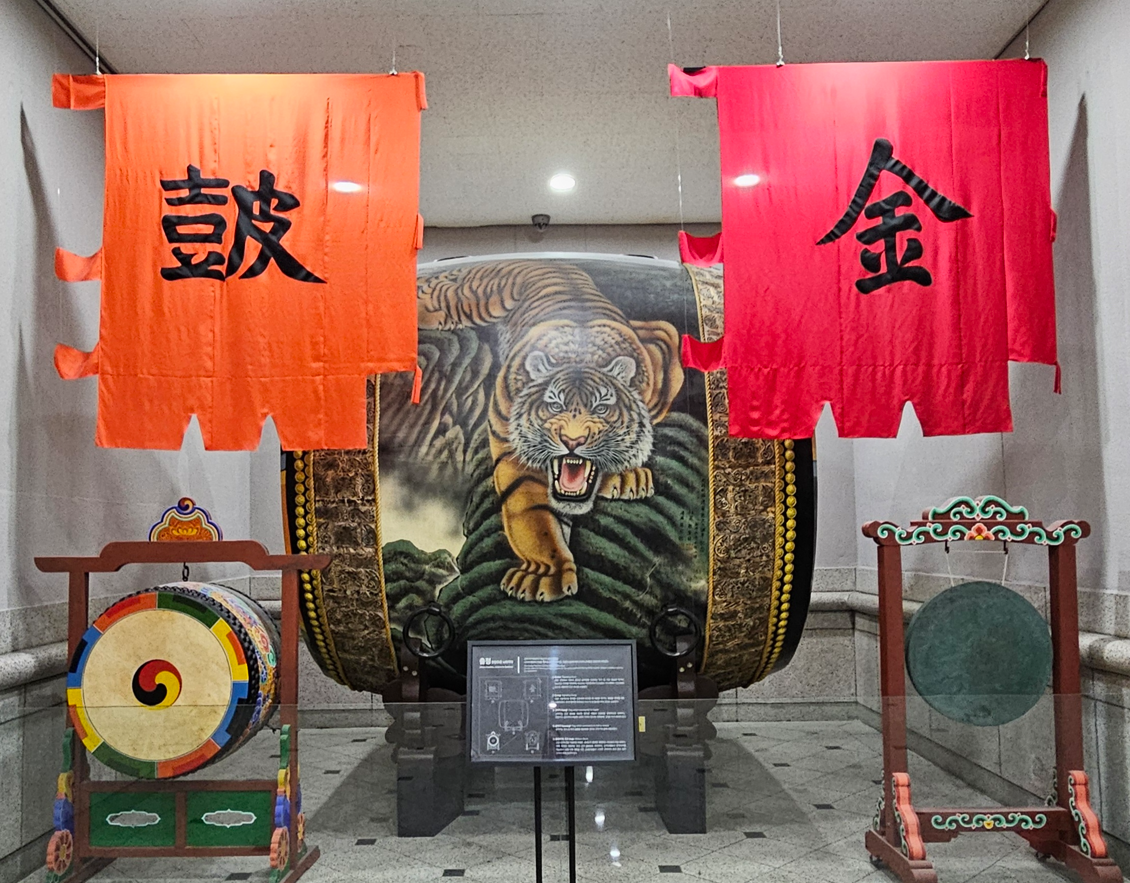
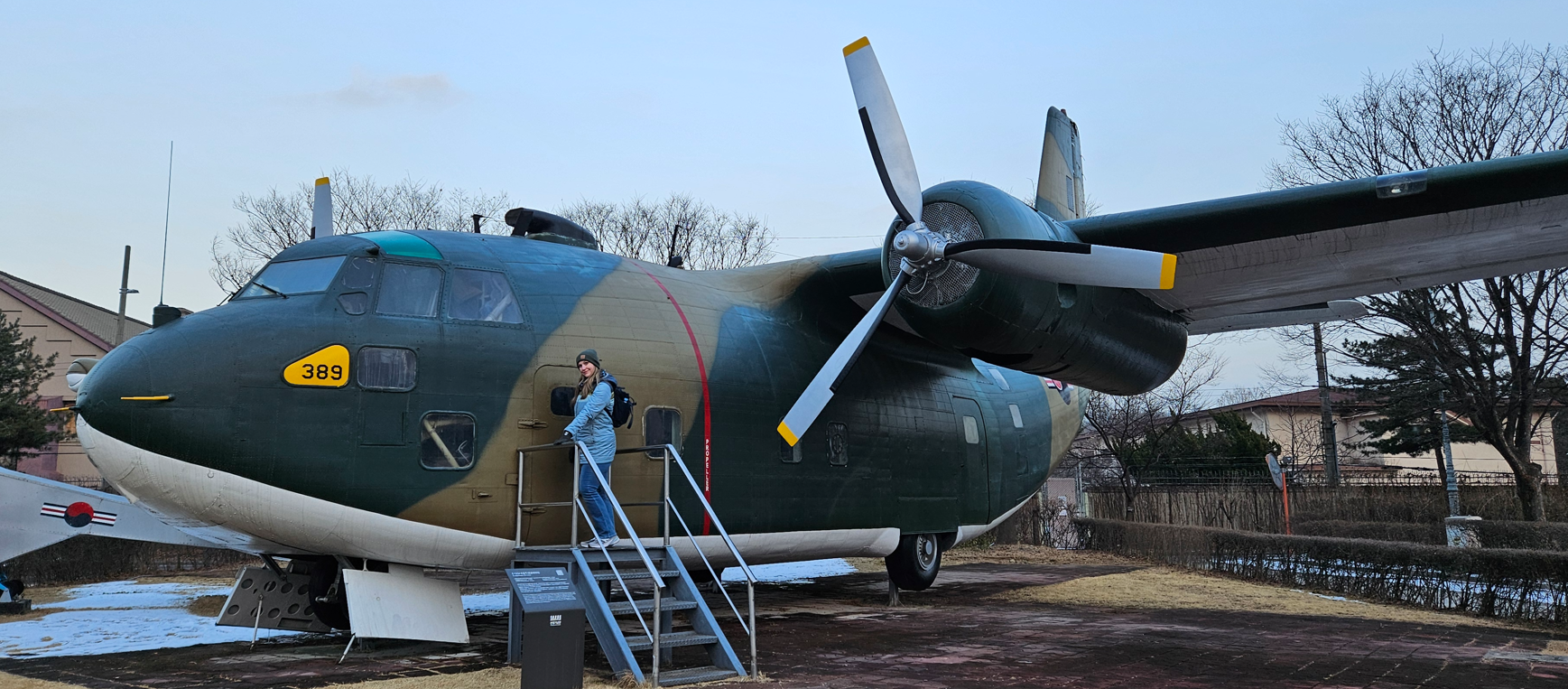
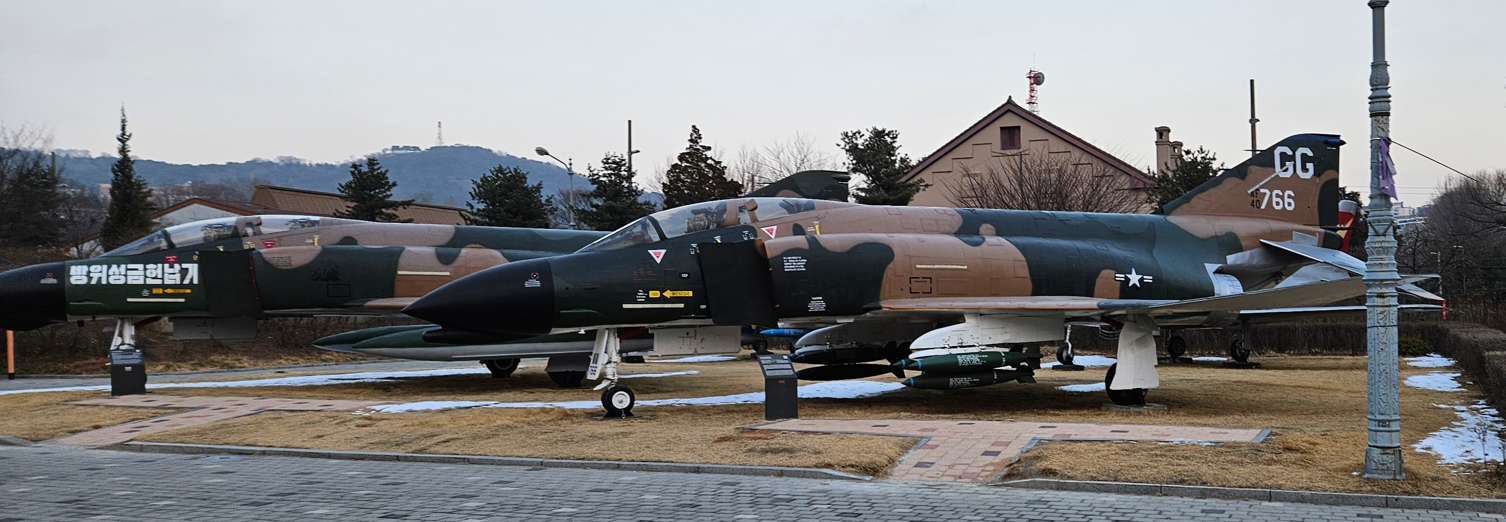
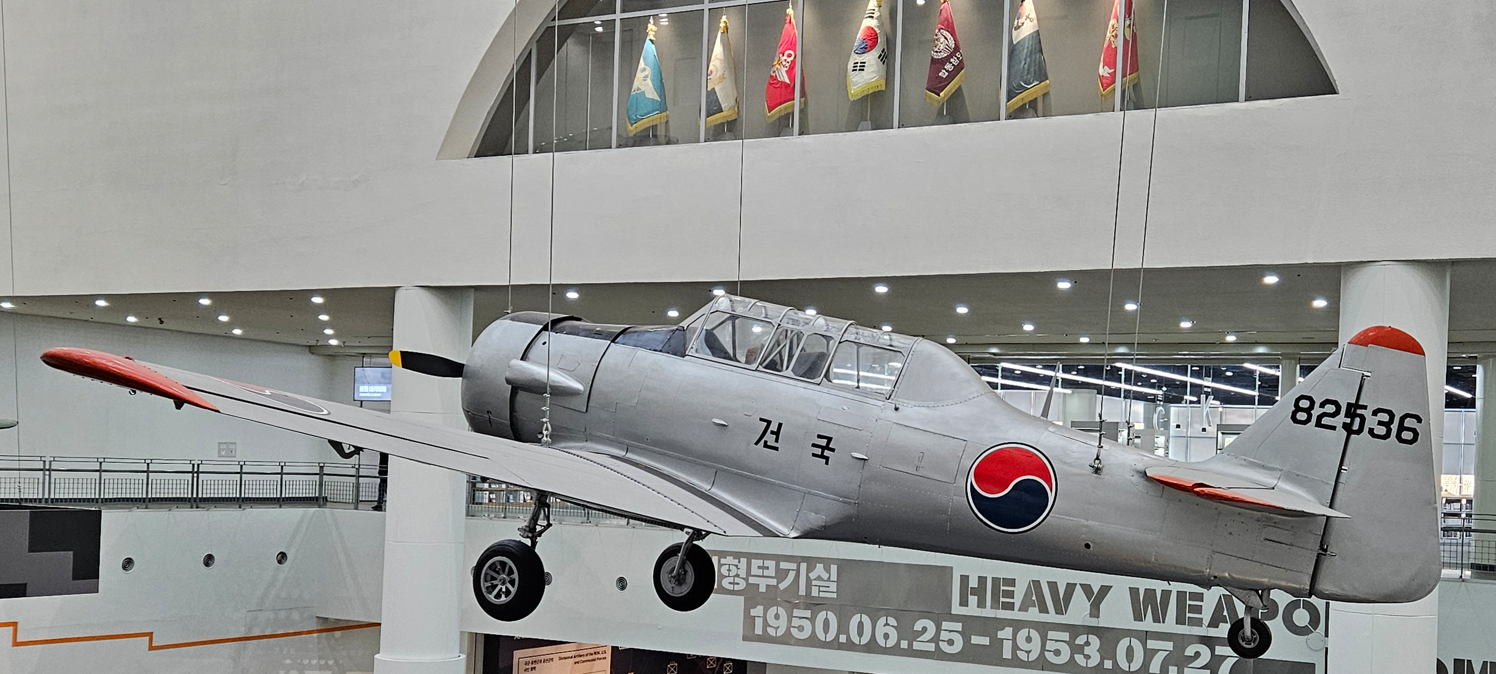
The most impressive part of the museum are the planes and tanks used by the military during the Korean War; these are inside and many outside too. If you visit Seoul, and even if you are not a big military history fan, it is still an awe-inspiring place to visit.
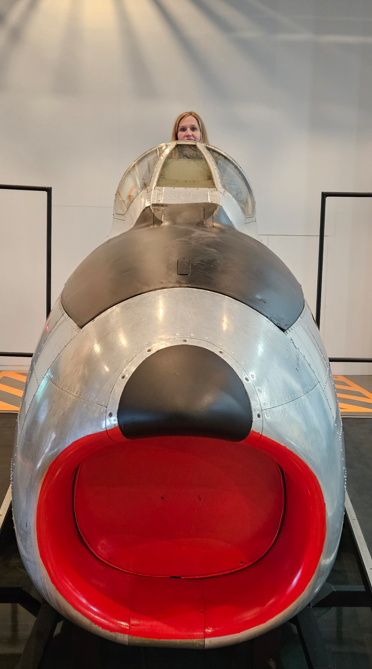
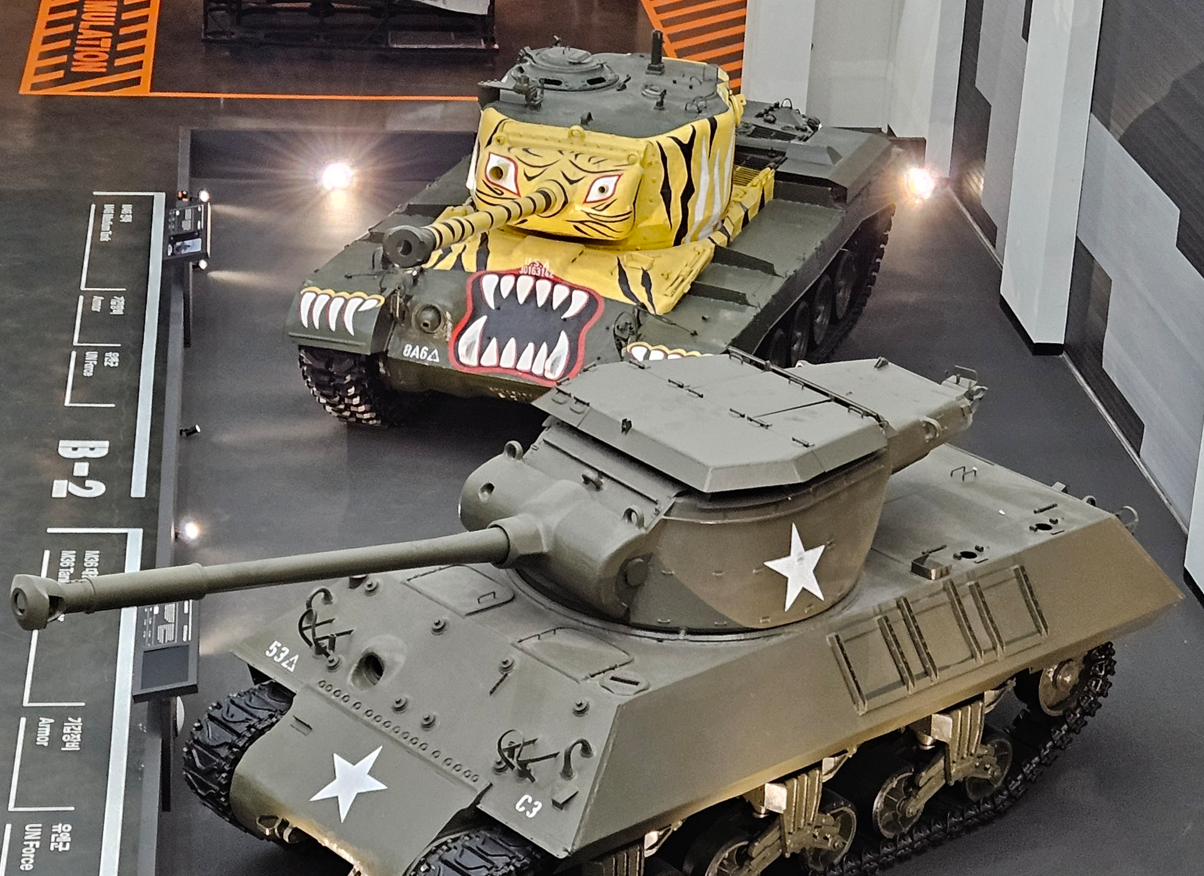
As the sunlight faded we headed back to the train station, planning to find a restaurant near out hotel, when we passed a bar/restaurant where two guys were drinking beers, and decided to stop in. We took a look at the menu, and it looked good, so we ordered two dishes to share; their signature dish, sous vide pork shoulder and handmade spam which came in a cast iron skillet with onions, broccoli and mushrooms, as well as warm spiced pork with soybean paste noodles. It was delicious and our favorite meal thus far in Seoul. Fully satiated, we boarded the train and called it an early night, as we had an all day tour planned for the next day, starting at 9am.
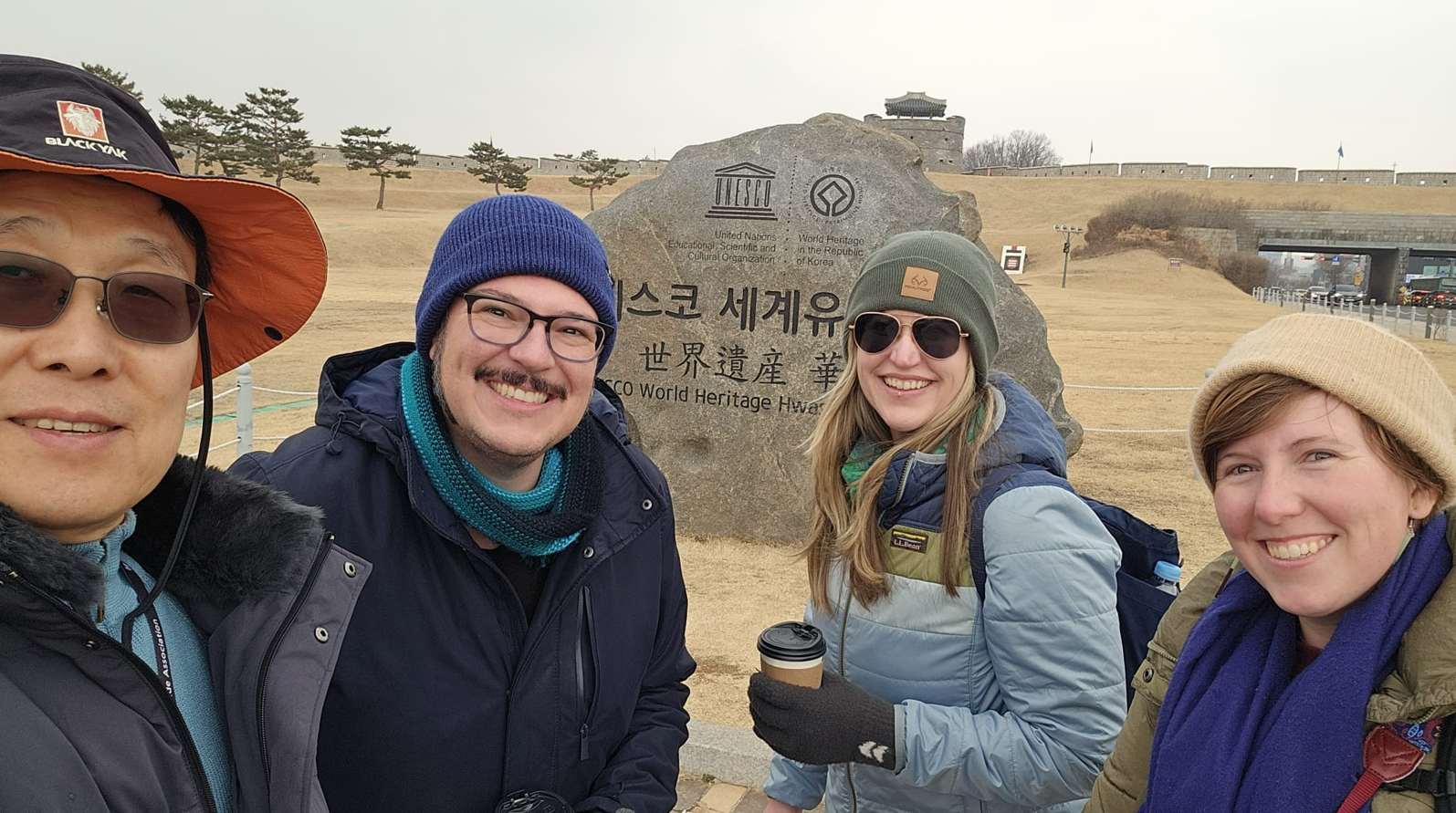
We met our guide and learned we had only one companion, a traveler from the Bay Area named Chandler, and along with our tour guide Jonathan, we would be a group of four on the all day tour, so basically a private tour, in our own sedan! Jonathan had worked in Finance and was retired, but it didn’t take, so after a few months at home and encouragement from his wife, he decided to get his tour guide license and using his wealth of knowledge (he loved history). He told us many things about the history of Korea, the Korean people and their relations with their neighbors (China and Japan) and housing costs in Seoul; and we learned of Chandler’s travels and related on things California. The hour long ride flew by, and soon we arrived at the Korean Folk Village (which was a recreated village from past times, that had been used in movies and also came with a kids theme park attached – it reminded us of Colonial Williamsburg in the US). Once inside, Jonathan had us pose with actors dressed in traditional clothing.
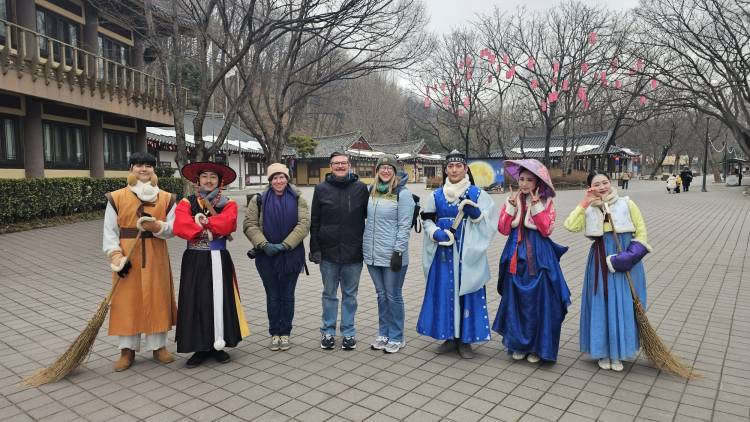
As you see, it was quite cold, but we had a great time walking around the huge park; as we explored the many buildings, we learned of the historical and current importance of Kimchee in Korean life; that many households have a smaller, second refrigerator just for Kimchee! Before refrigeration, it was fermented in large barrels and buried in the ground to keep fresh.
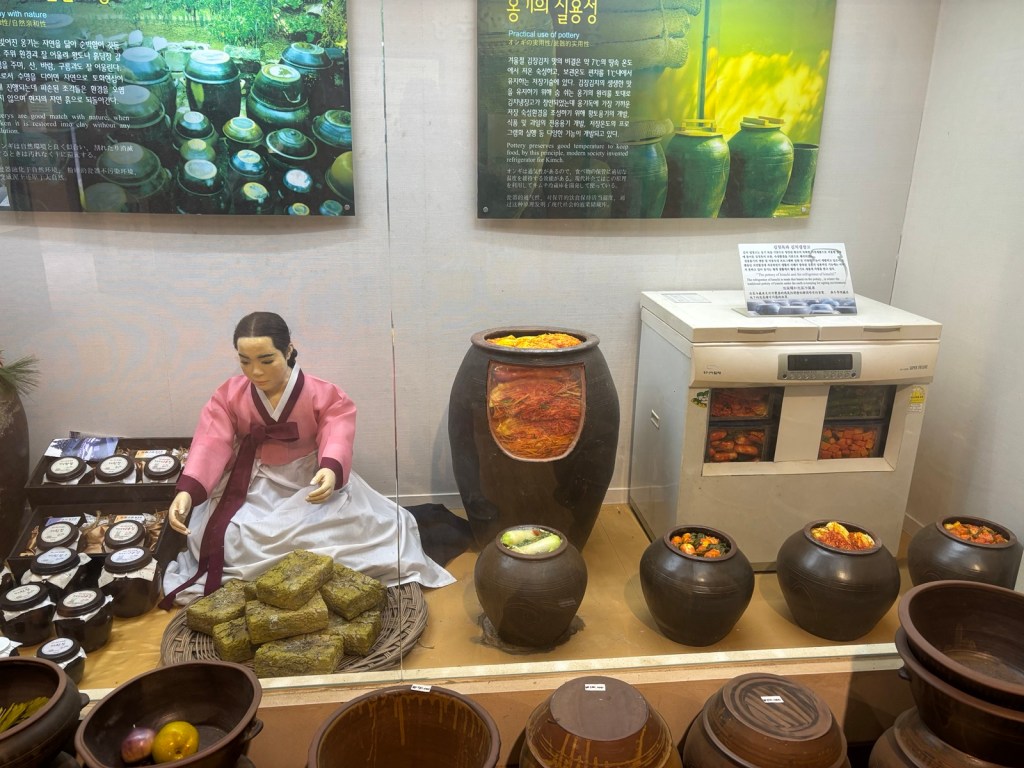
The thatched roof buildings were for the common people, while the estates of the wealthy, including the Governors estate, a wealthy merchants estate, and a high ranking academic, had tile roofs. There was even a cow and its baby in a stall, and chickens too. We also saw some of the torture devices used when people violated the law; Jonathan told us jails were only temporary (and women could be imprisoned as well) as exile was most common form of punishment.
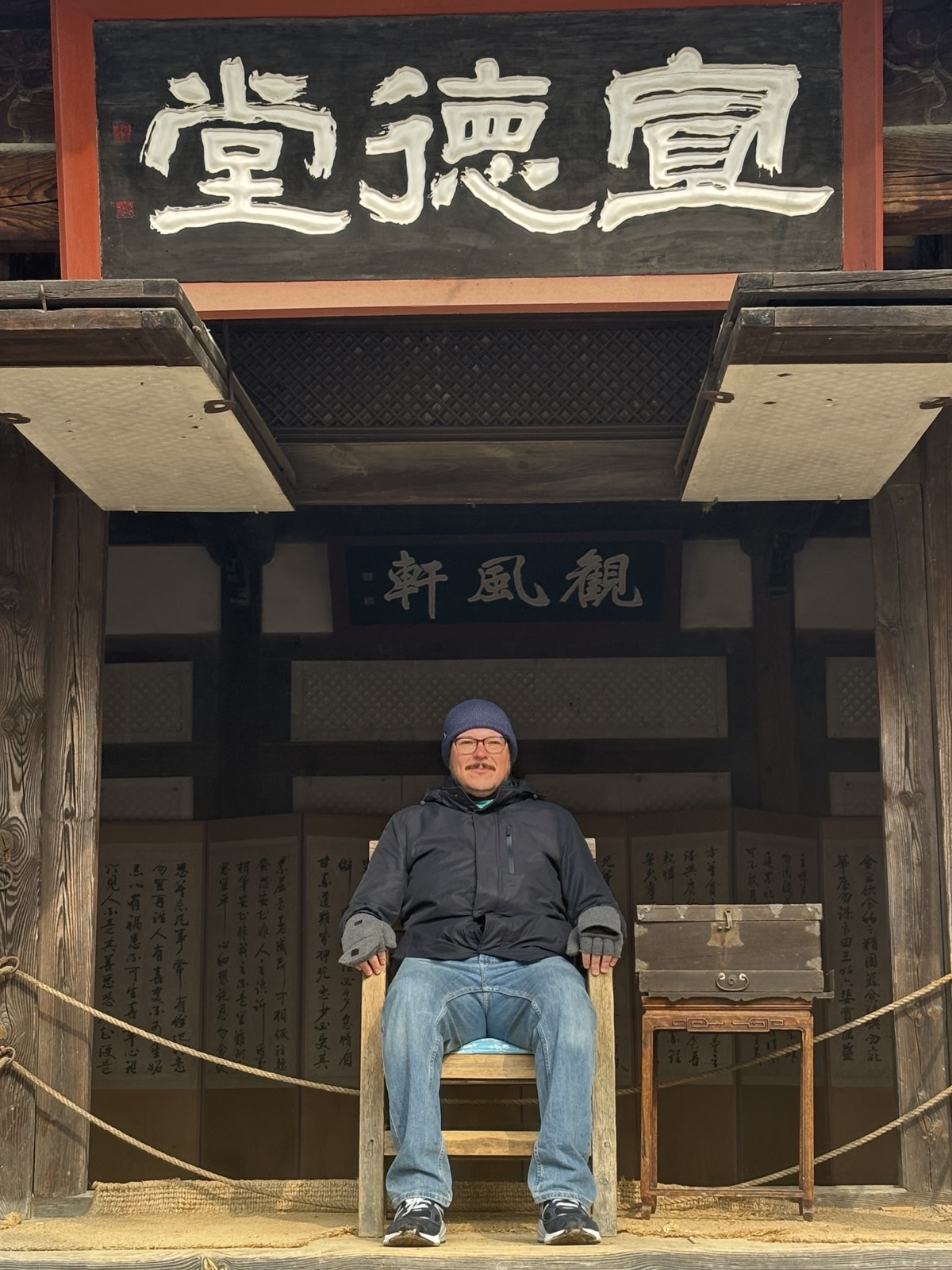
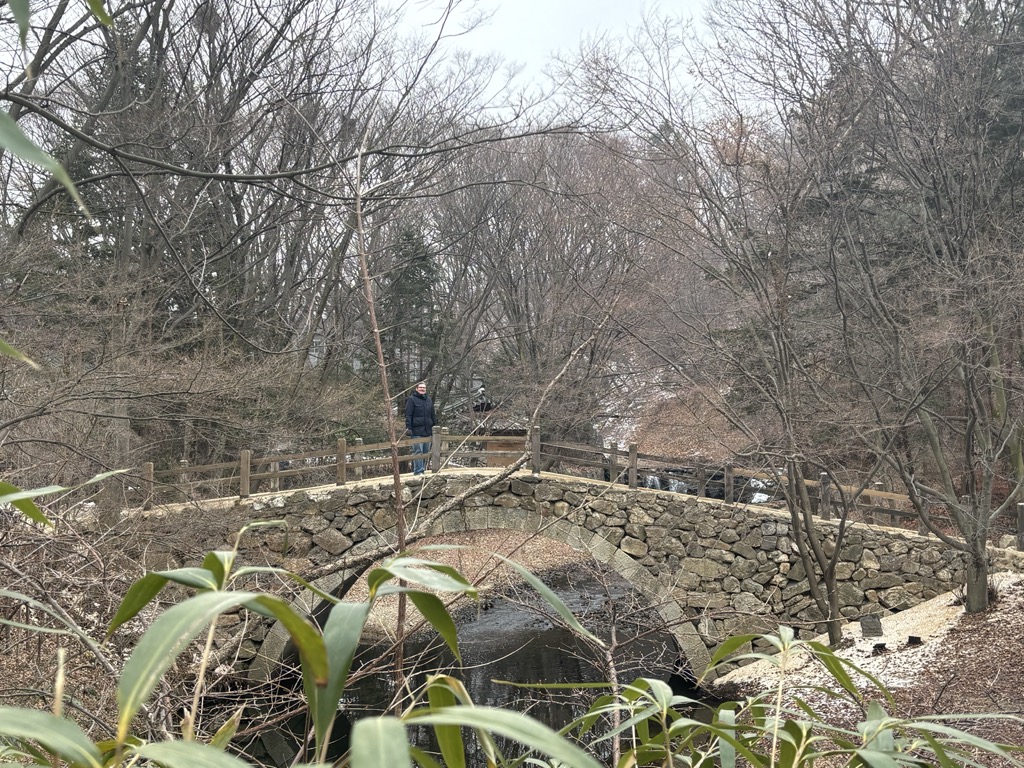
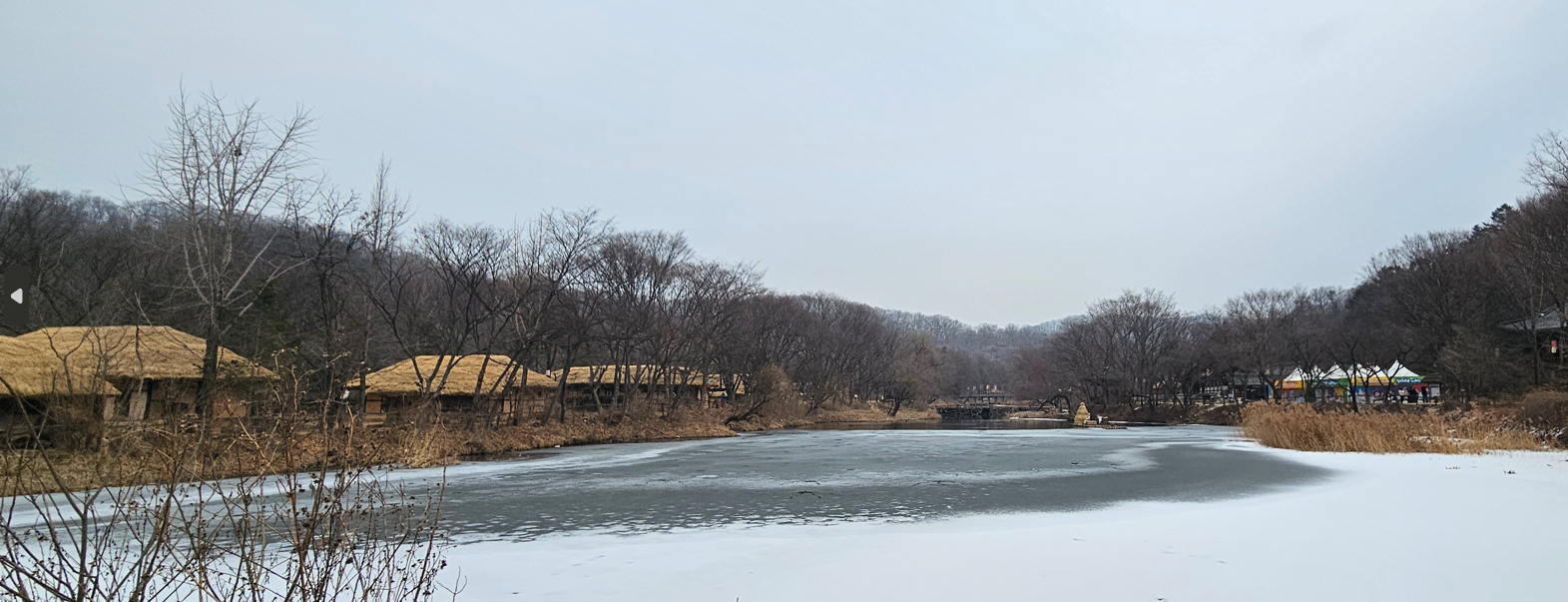
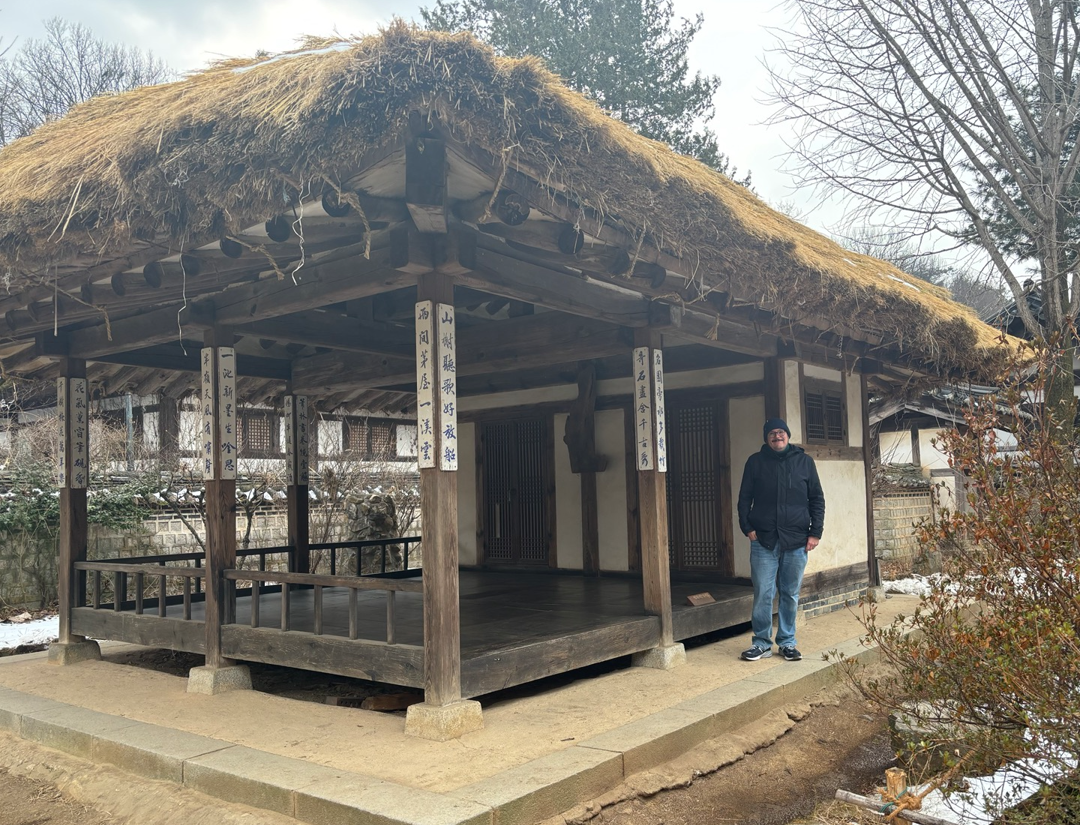
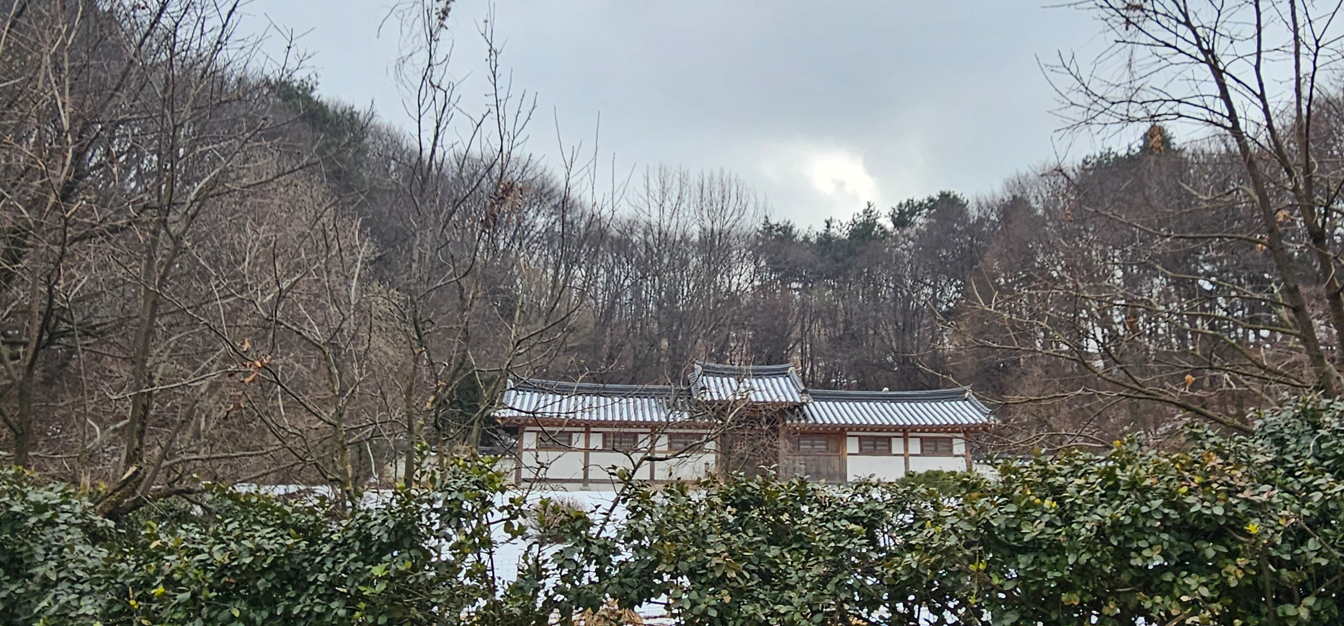
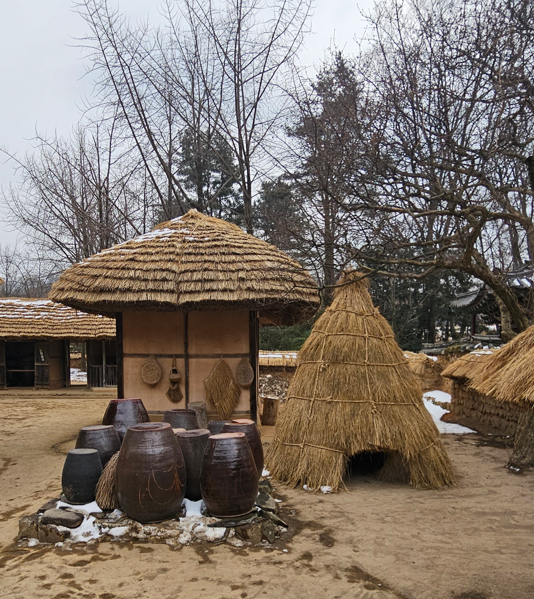
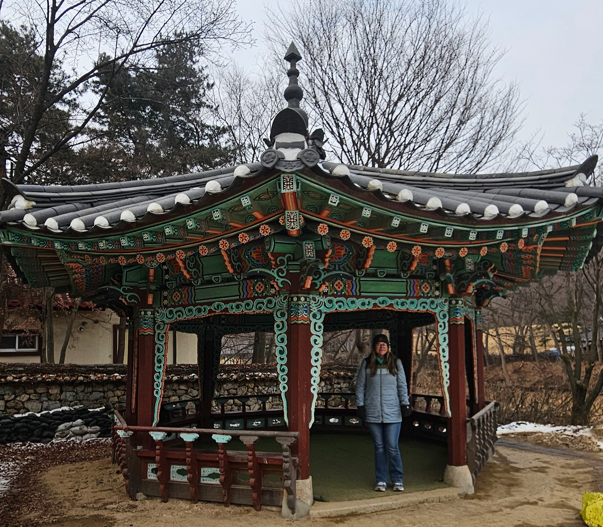
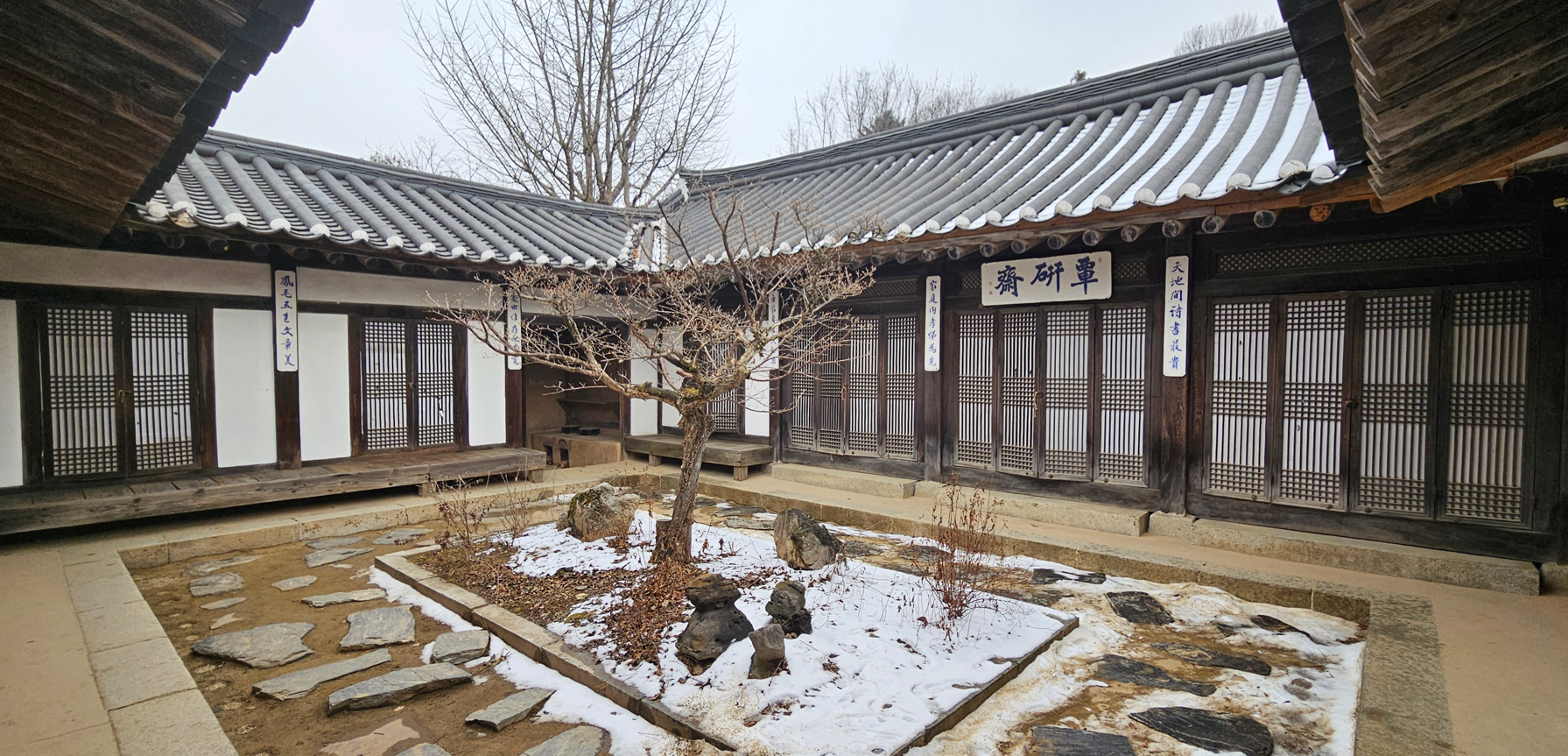
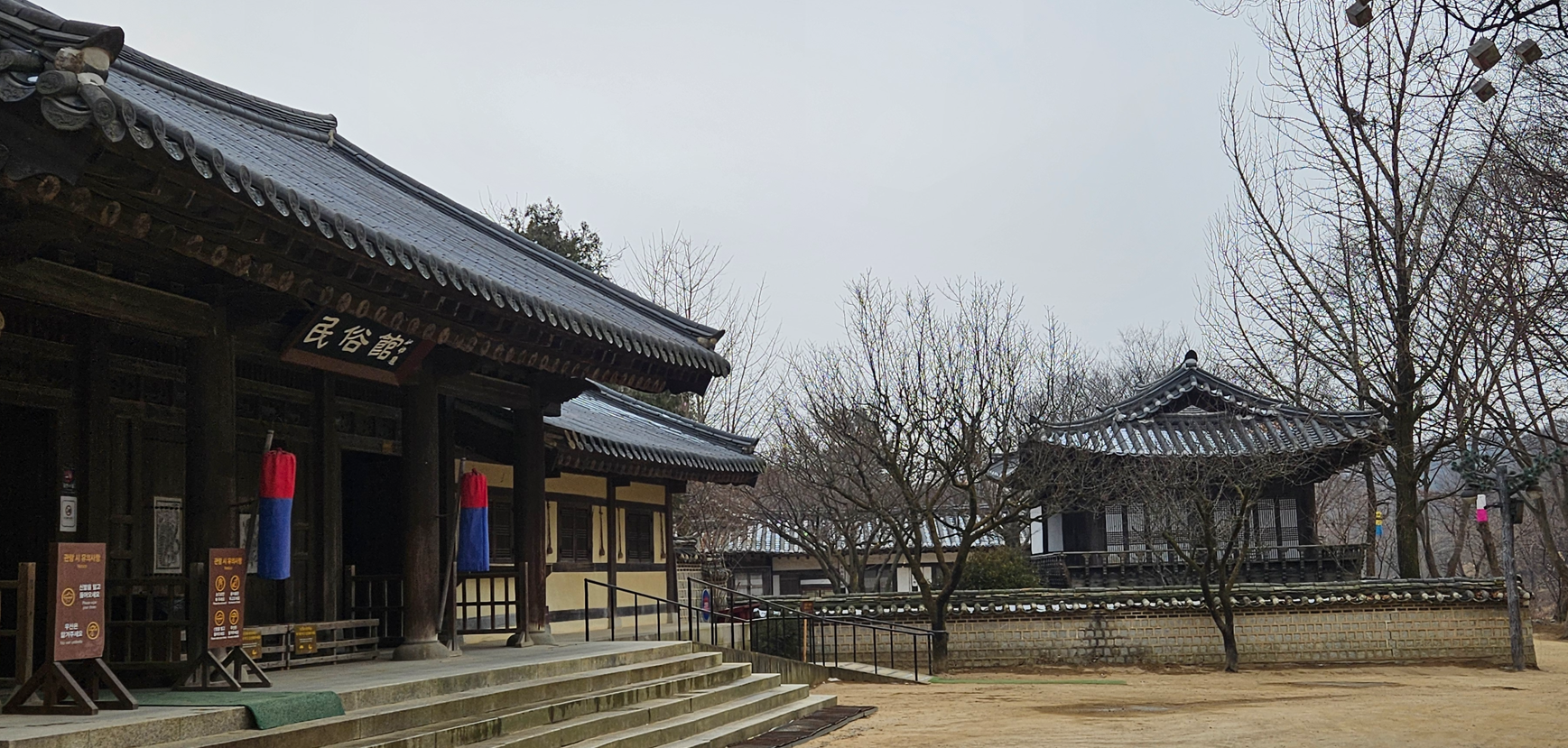
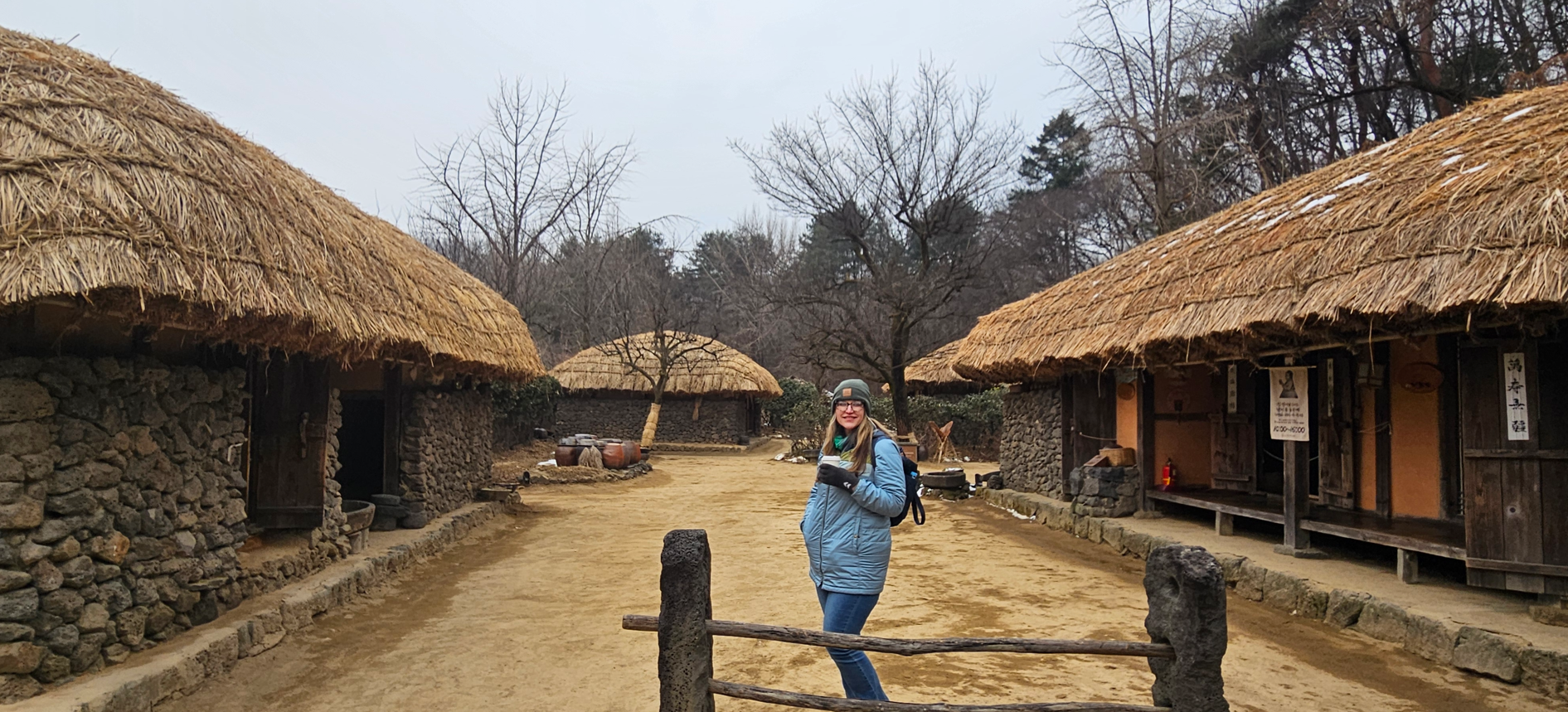
We learned how the buildings were kept heated, as there were no fireplaces; rather the stone floor was heated throughout the building using an outside furnace, leading to sleeping on the floor being the warmest place to rest. Heating was different on the islands of Jeju and Jindo, which were often used as places of exile. The rainbow bridge (which I am standing on above) was very important to connecting the living world to the afterlife.
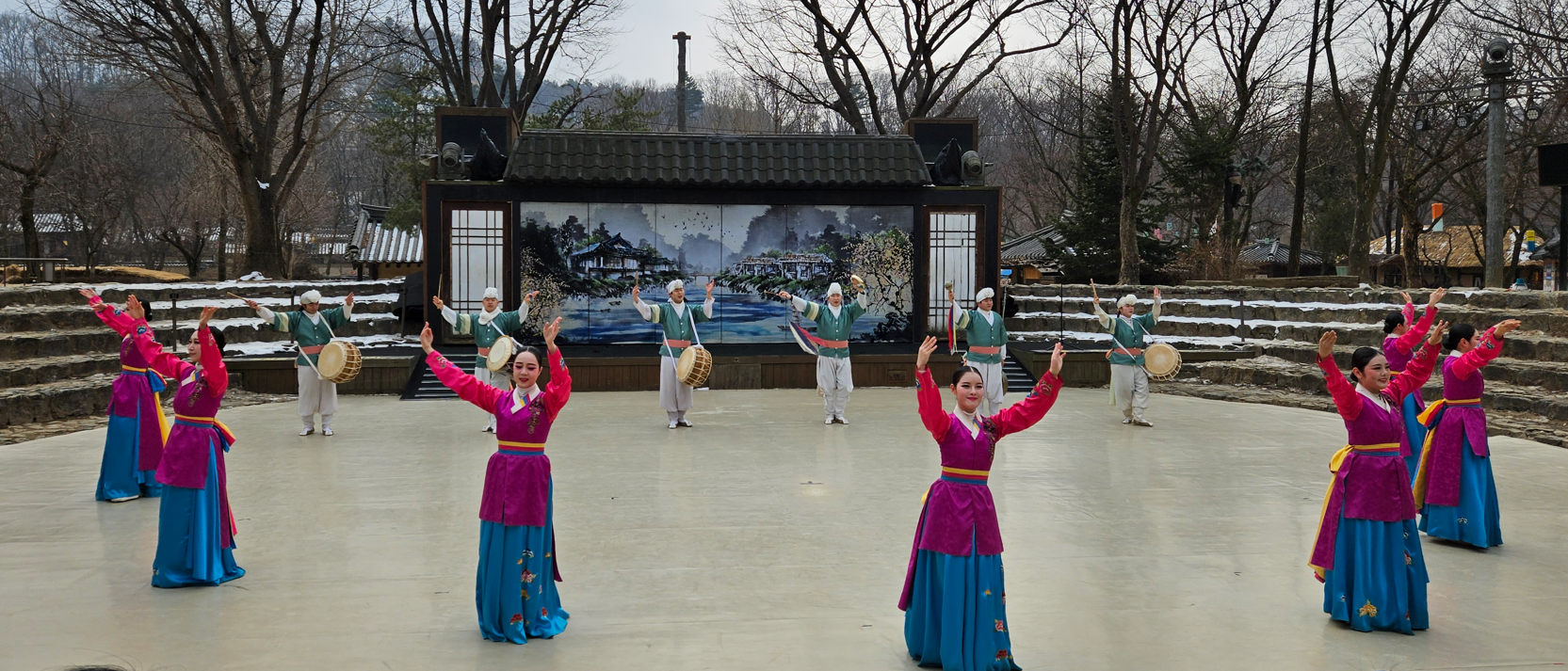
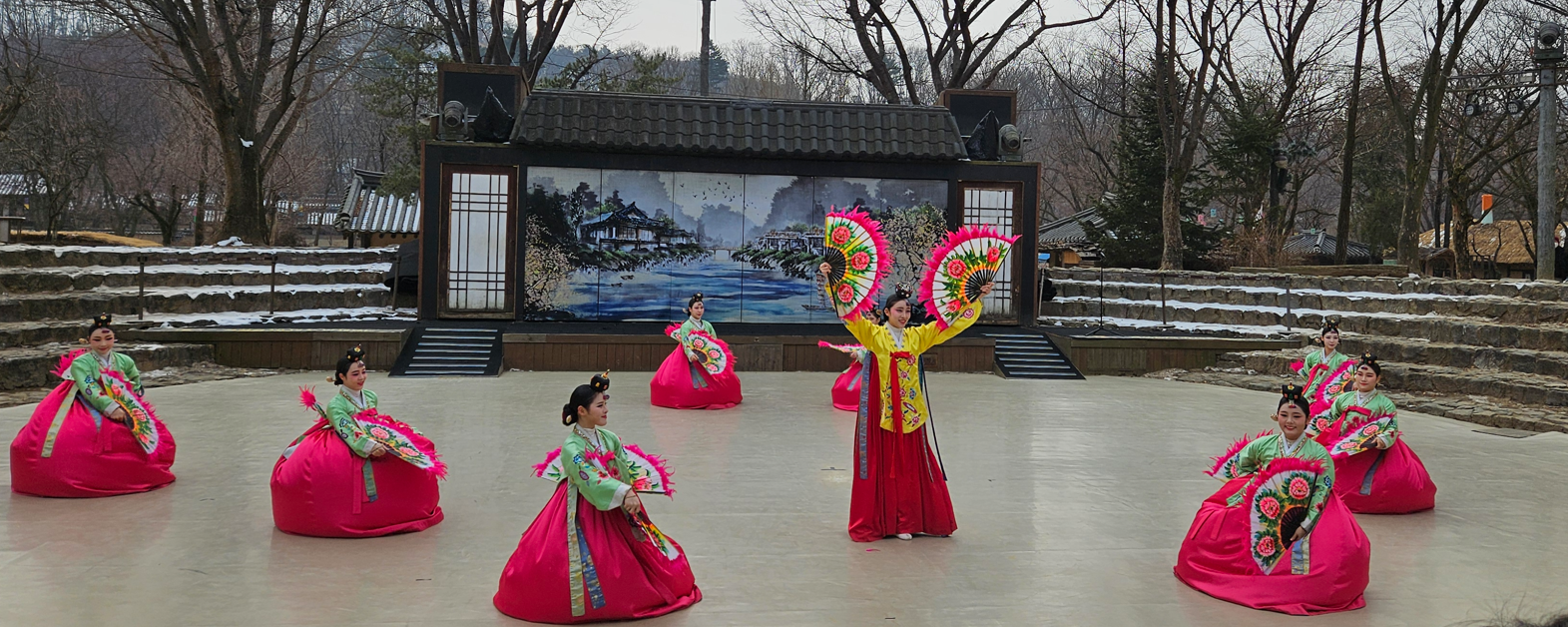
The highlight of the Folk Village for me was the performance of the dance and singing troupe; a group of women danced in colorful outfits and the men played instruments and sung as they danced. It was very cool, and the colors they wore were all significant, as blue, red, white, black all symbolize the four directions, with yellow as the center color.
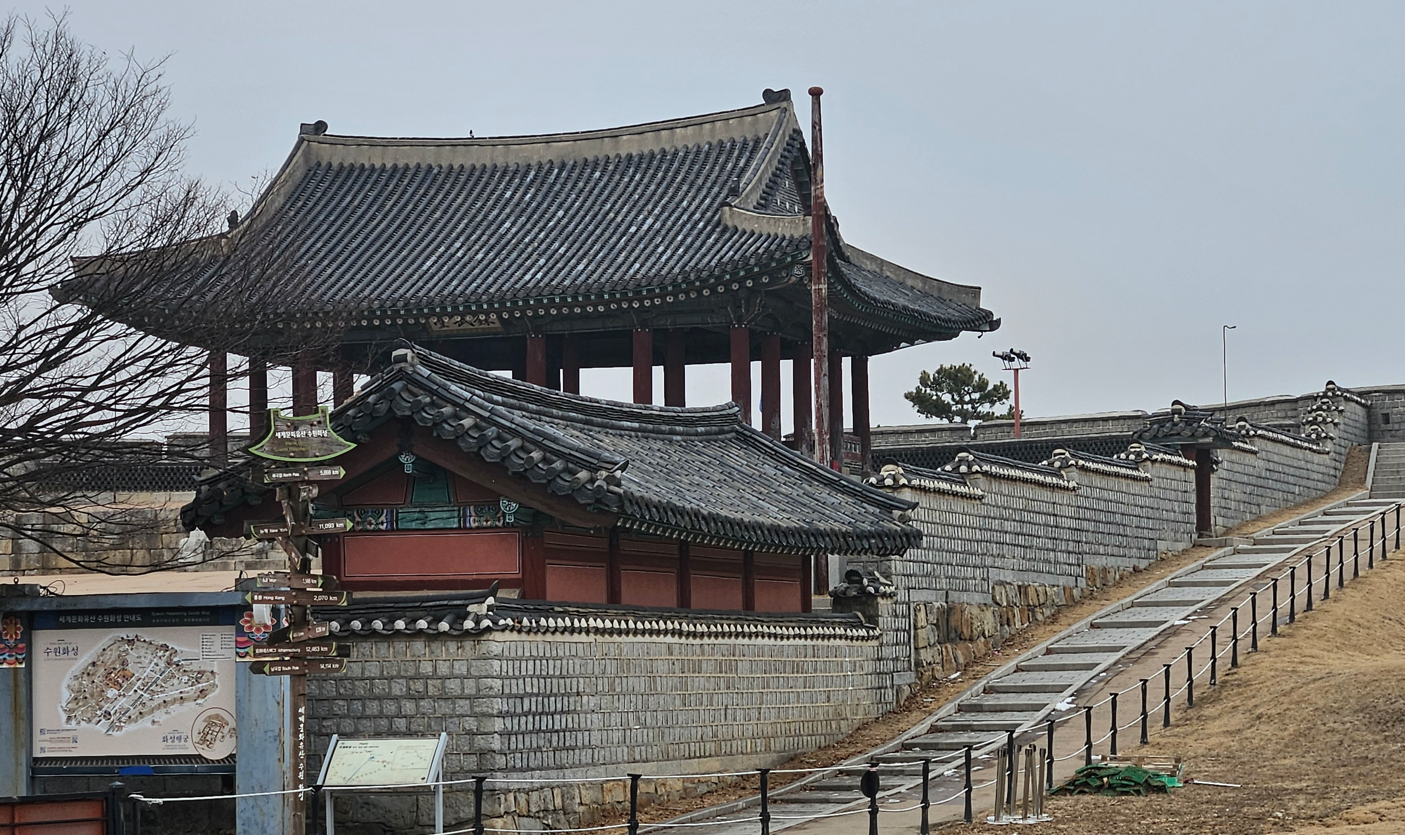
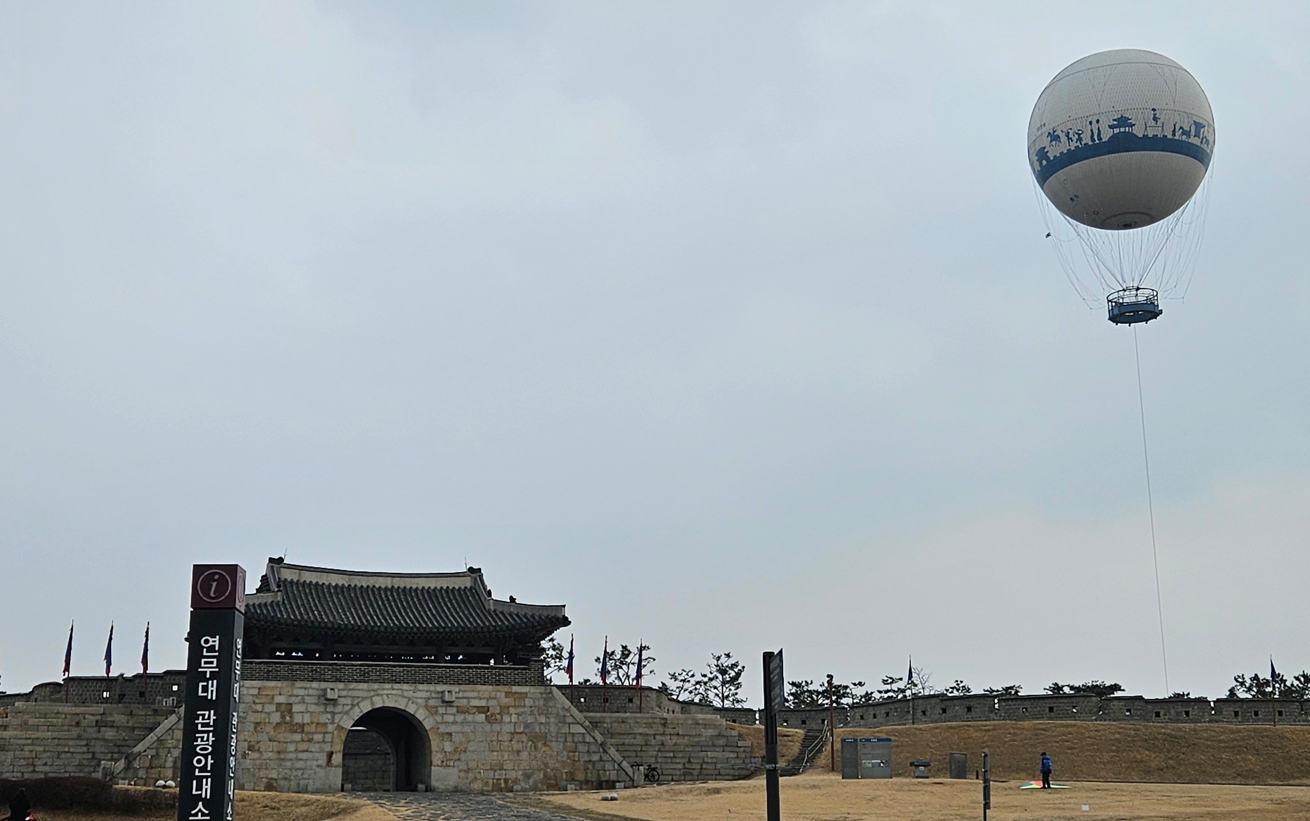
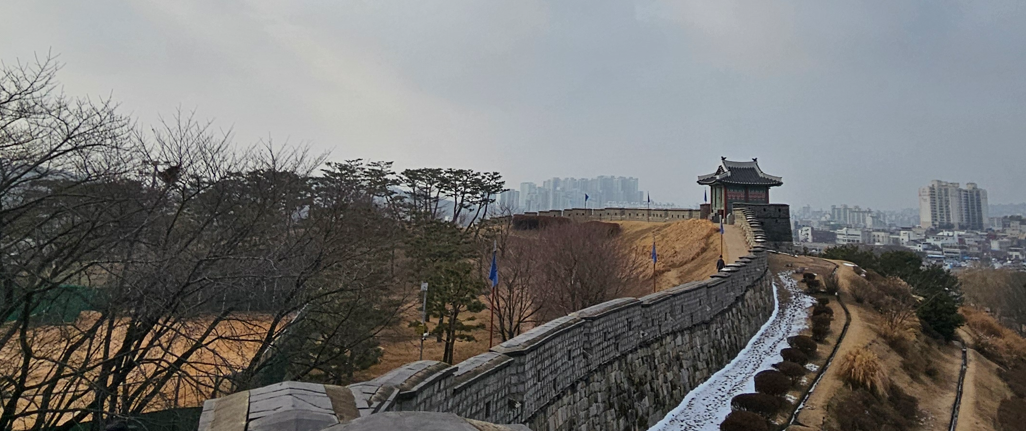
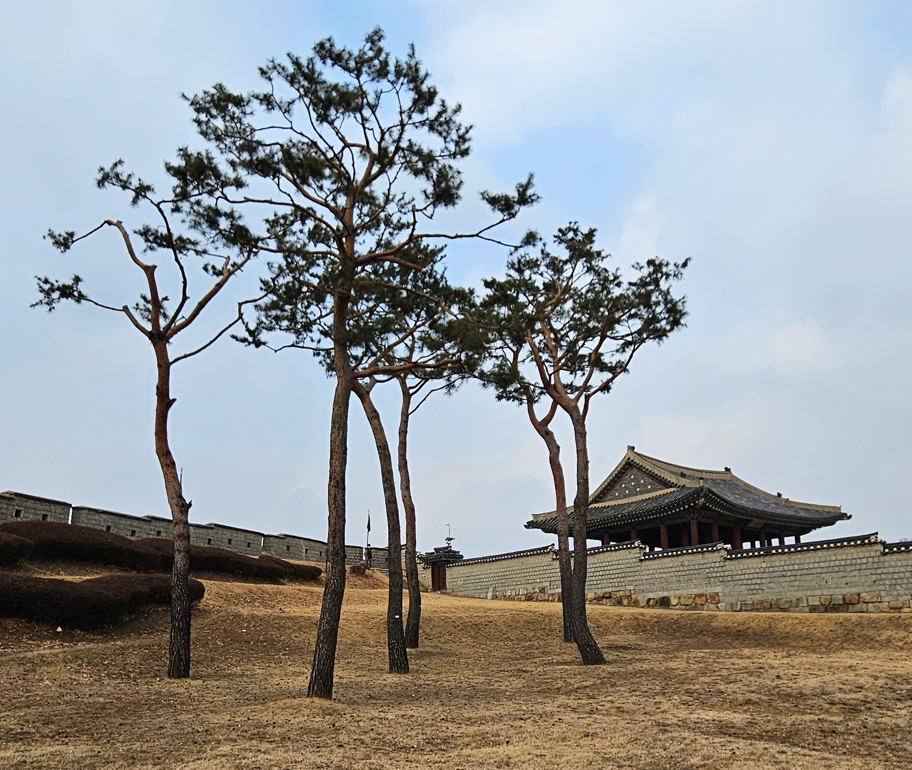
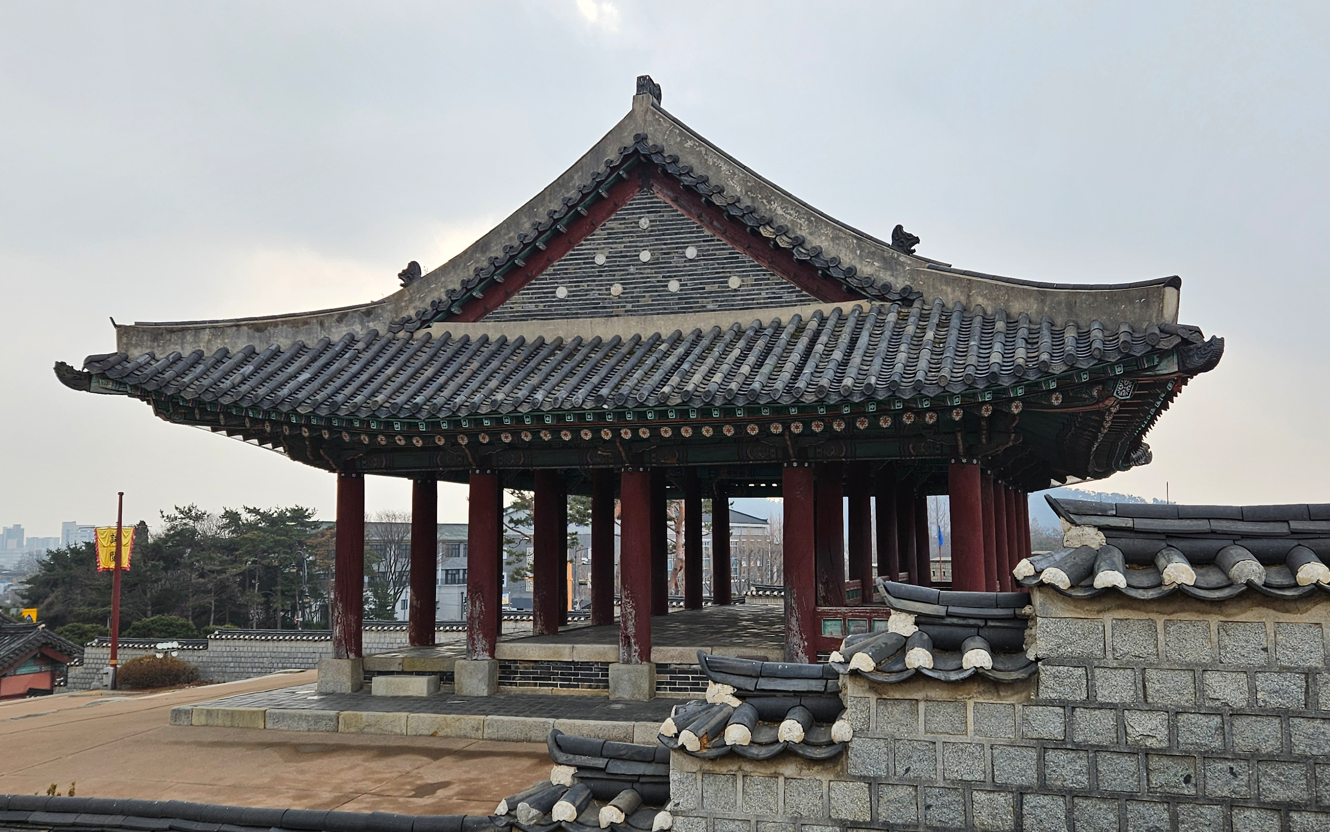
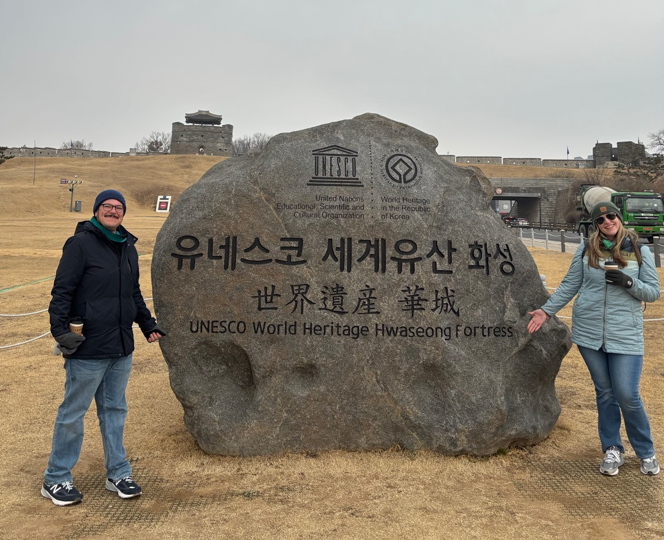
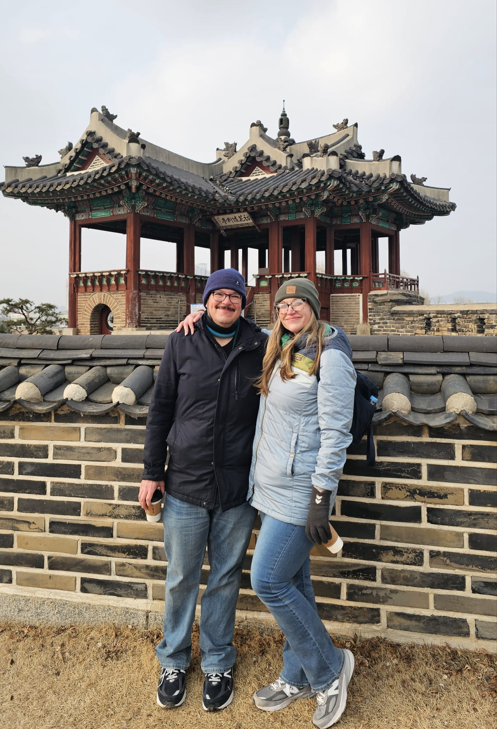
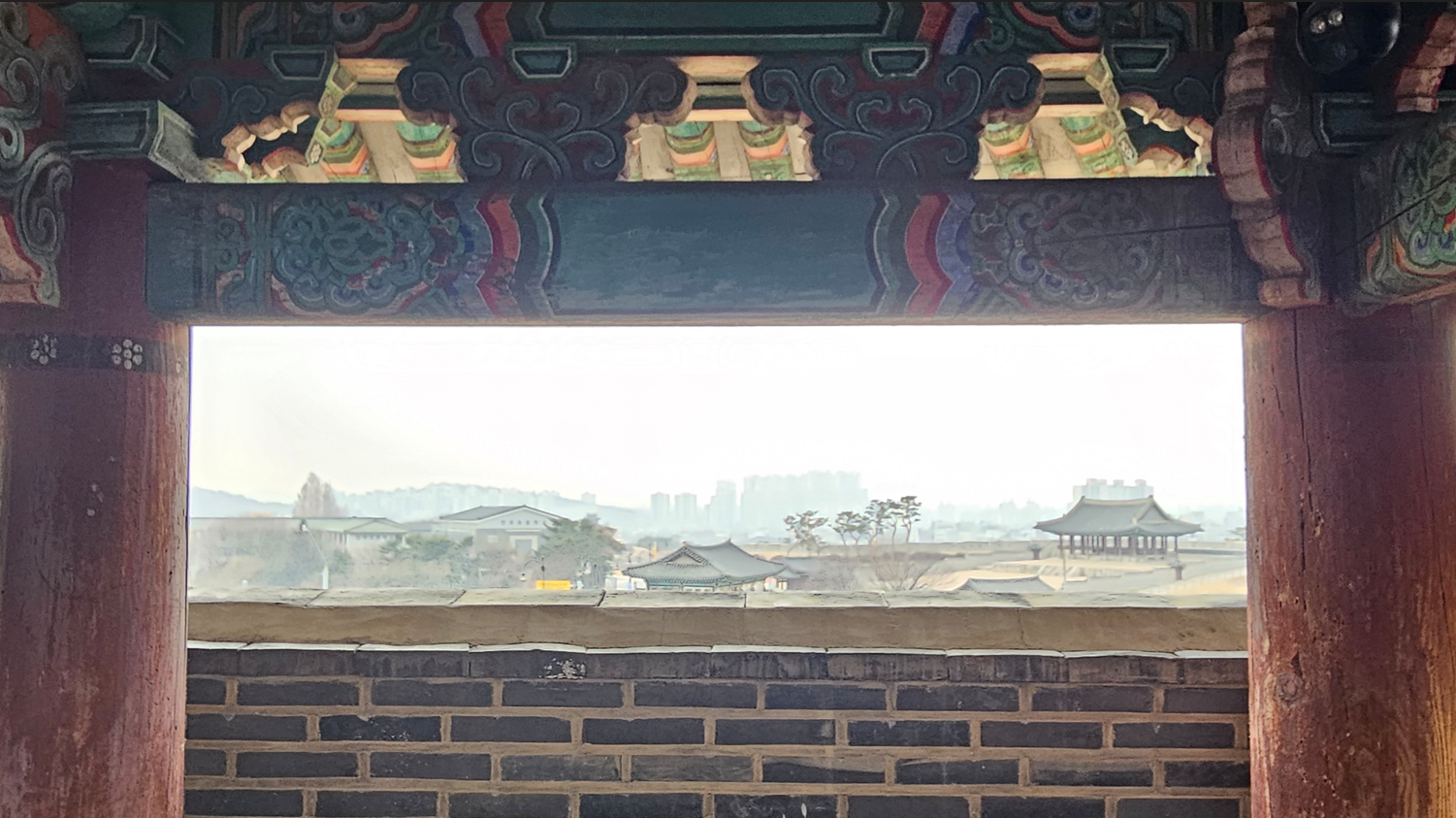
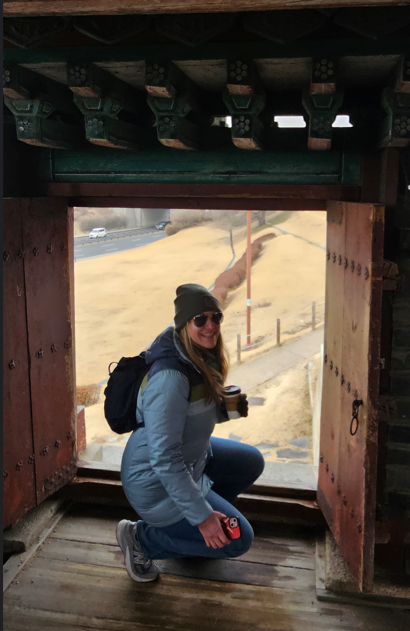
Truly a memorable experience, we even were able to see the dancers practicing before we left, on our way to the next stop, the world heritage site Suwon Hwaseong Fortress. There were four fortresses built to protect Korea, and this was the southern one, built most recently, in the 18th century. It had been destroyed during the war, but they kept designs so it could be rebuilt to exact specifications. There was also archery practice and a hot air balloon (which we did not take as it was still quite cold). We only walked a small section of the huge walled fortress, taking time to snap pics at the many guard towers and water tower.
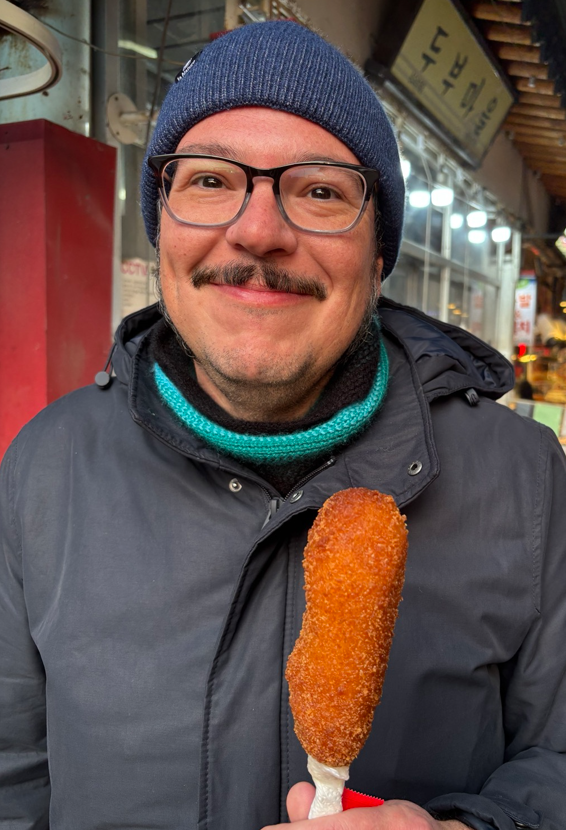
Our last stop on the tour was the nearby Suwon Nanmun Market which also dates back to Joseon times, and we tried all kinds of snacks, from pancakes with sunflower seeds and syrup inside, fish cakes, a doughnut filled with red bean paste, and even a corndog! We also bought some plump strawberries for later (which were delicious). Almost every type of food is available to purchase, many live sea creatures (see the octopus below), pots and pans, ginseng, and even pre-made dinner sides (which Jonathan had to pick up at the direction of his wife for dinner that evening).
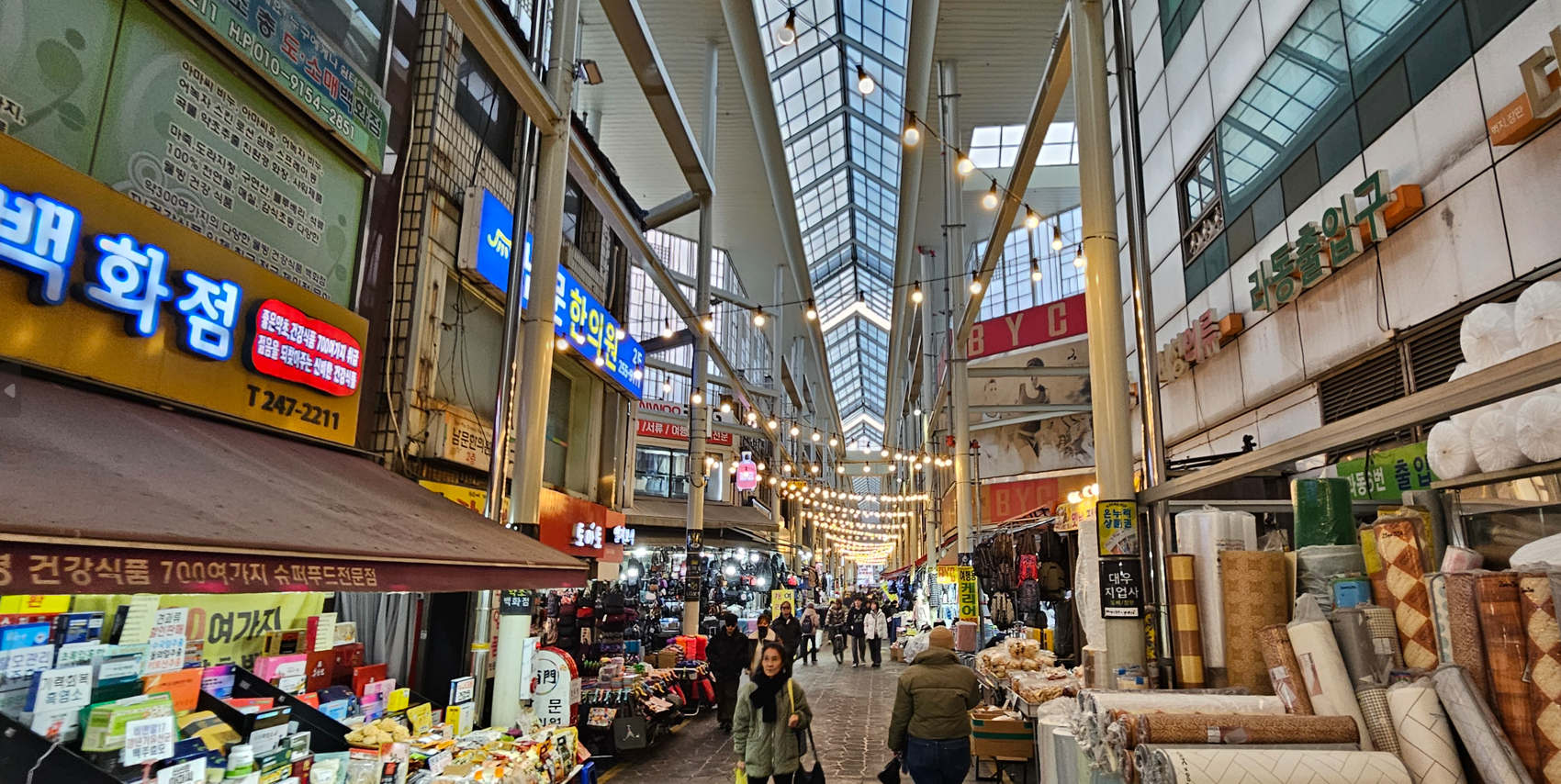
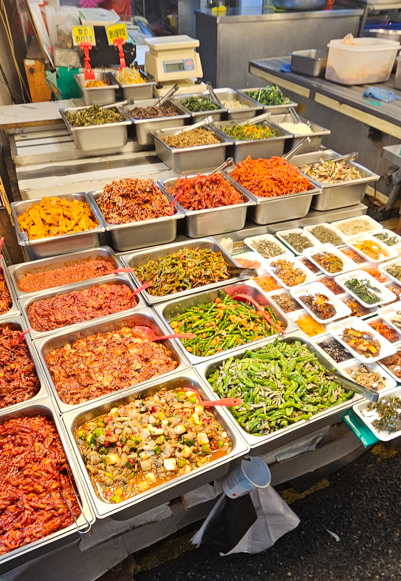
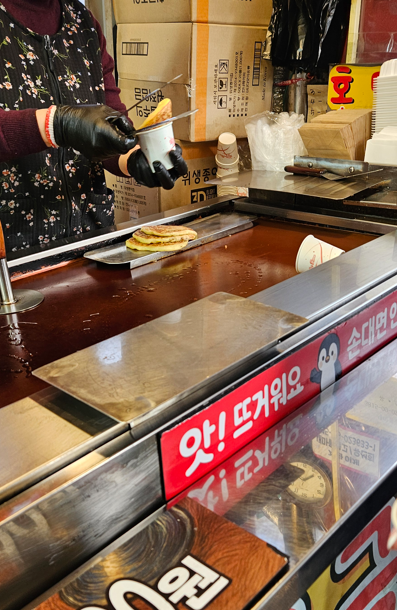
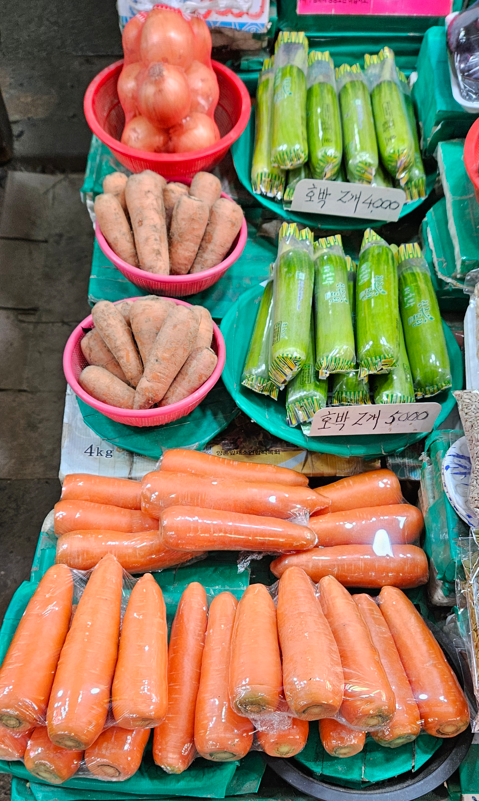
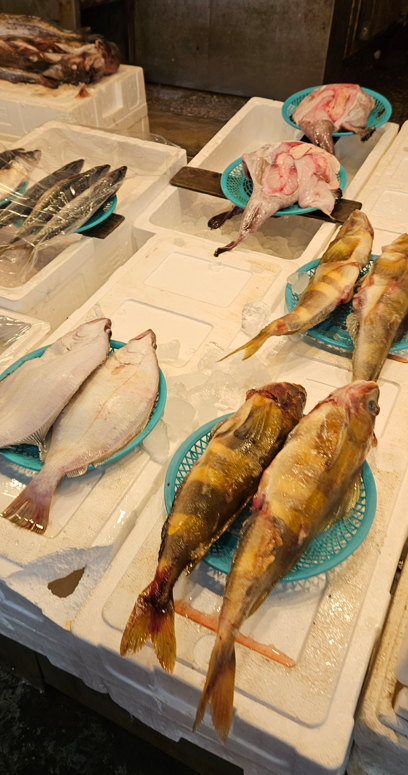
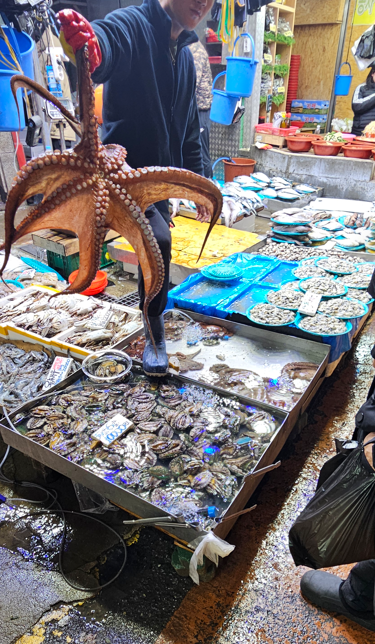
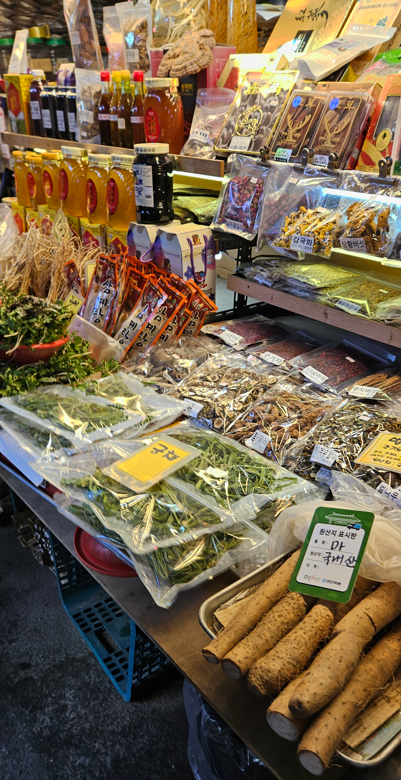
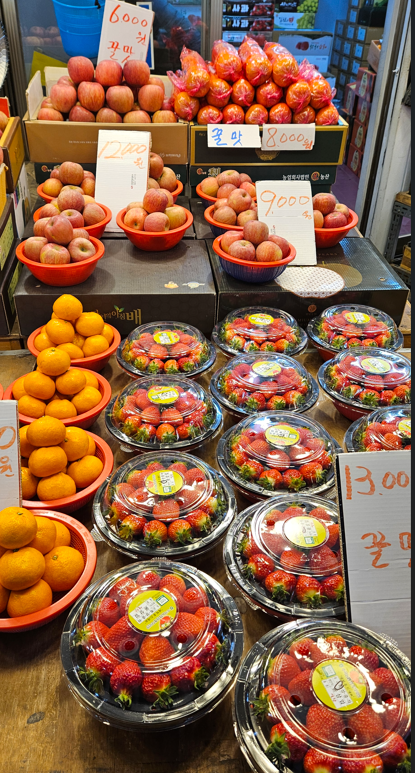
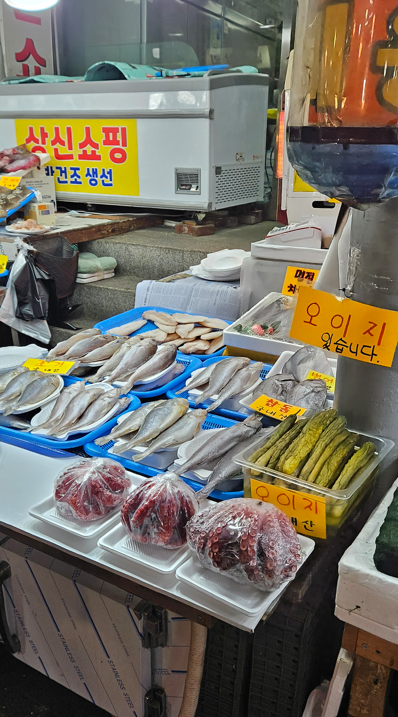
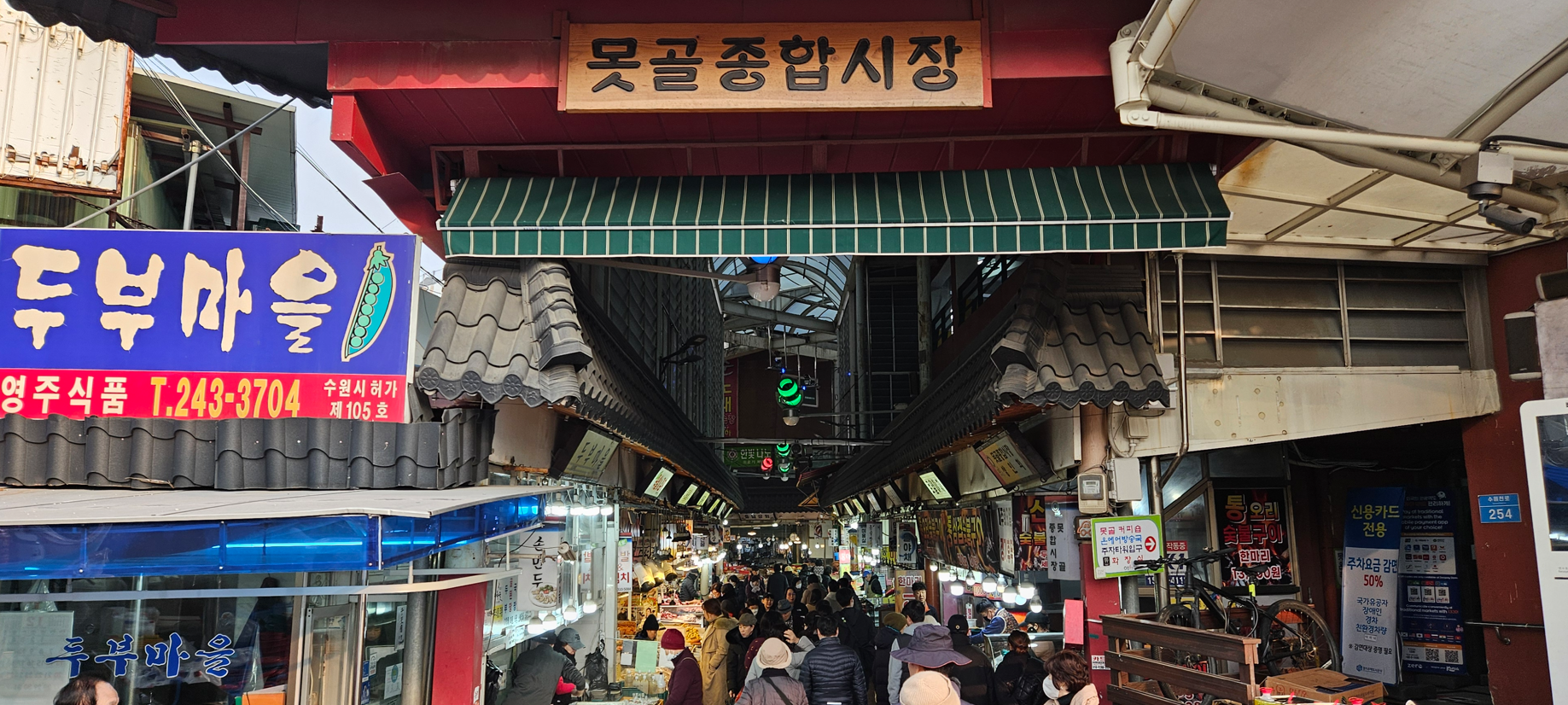
There is a controlled chaos to the markets we’ve come to learn; it is important to keep on your path but know it is ok to stop and look, and when buying things, your turn is just as important as anyone else’s, so need to feel rushed when buying. We received friendly smiles and welcoming vendors throughout; we even were offered a deal on the strawberries, cheaper than other vendors.
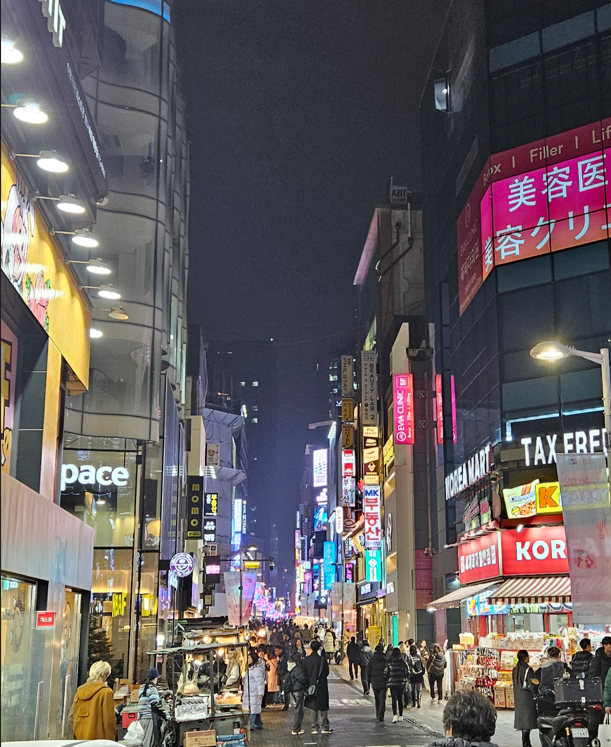
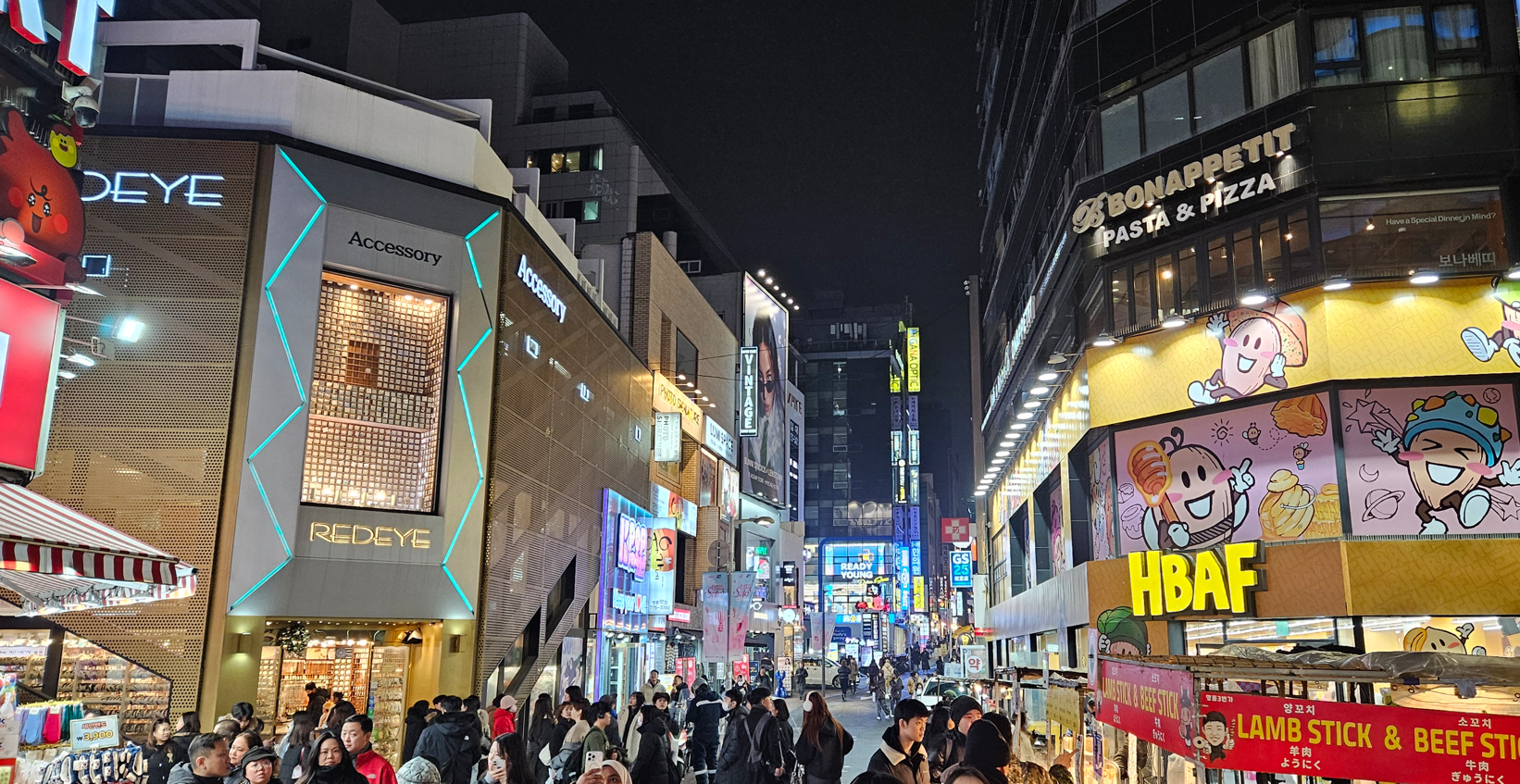
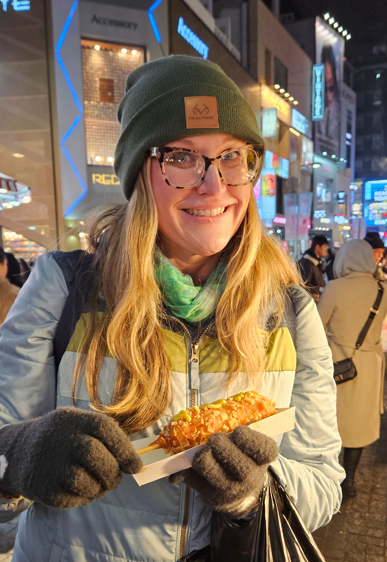
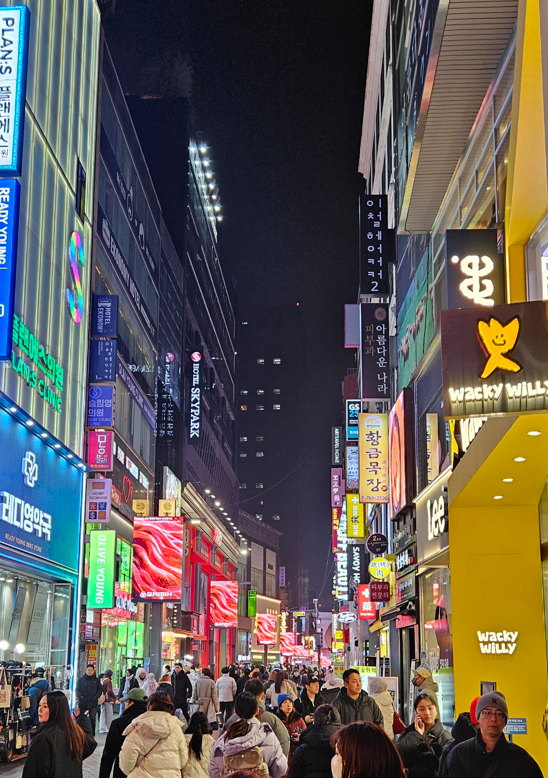
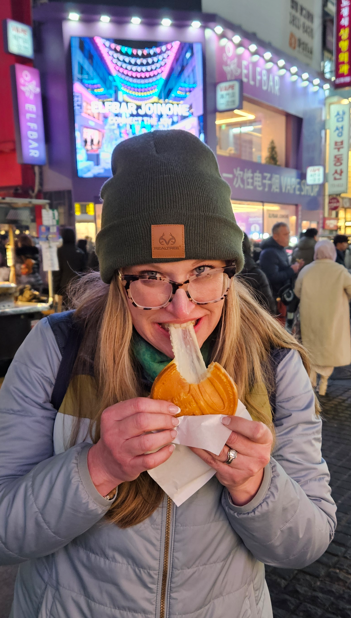
Jonathan dropped us back near Myeongdong train station just as nightfall was setting in; we walked down the nearby streets lit up with businesses, packed with people, and ate some more yummy snacks as part of a piecemeal dinner. Jesse ate her own corndog and a baked cookie filled with custard and cheese in the shape of a large, 10-cent coin.
We eventually made it back to the hotel, and prepared for our remaining Seoul adventures!
 Phil's WayPastCool
One thought on “Travels in Seoul: Part II”