Our six-hour flight from Raleigh to Seattle was delayed so we had to run from our gate right onto the plane for Seoul and 12 hours (5 movies, 2 TV shows, and two plane meals later) we arrived to frigid temperatures (30 degrees Fahrenheit). But it didn’t matter, we were on our way. We had nothing planned for the first of our 8-day Seoul visit; the best thing about slow(er) travel is there is less need to pack every day full of things to do, and we have found the best way to experience things is to wander and not know where we’re going.
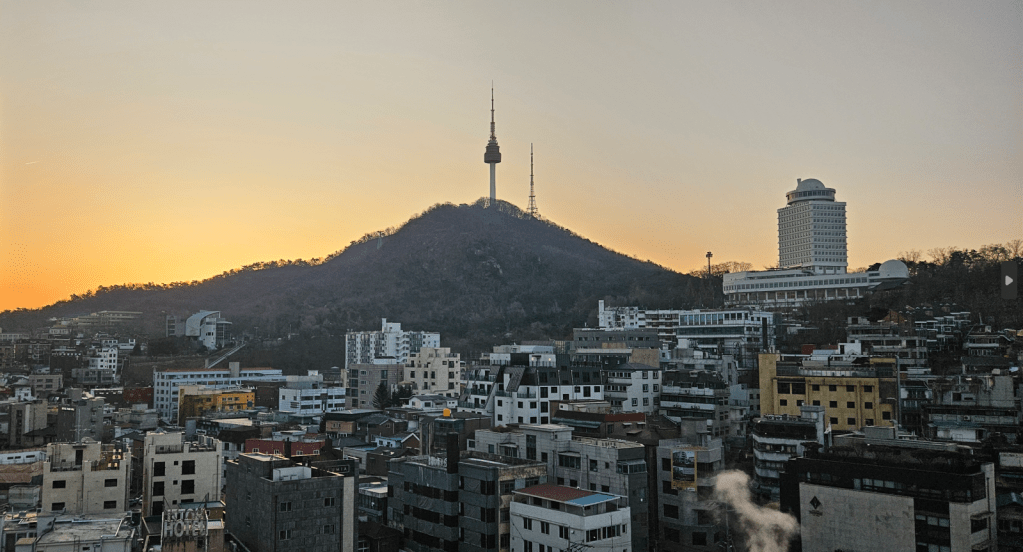
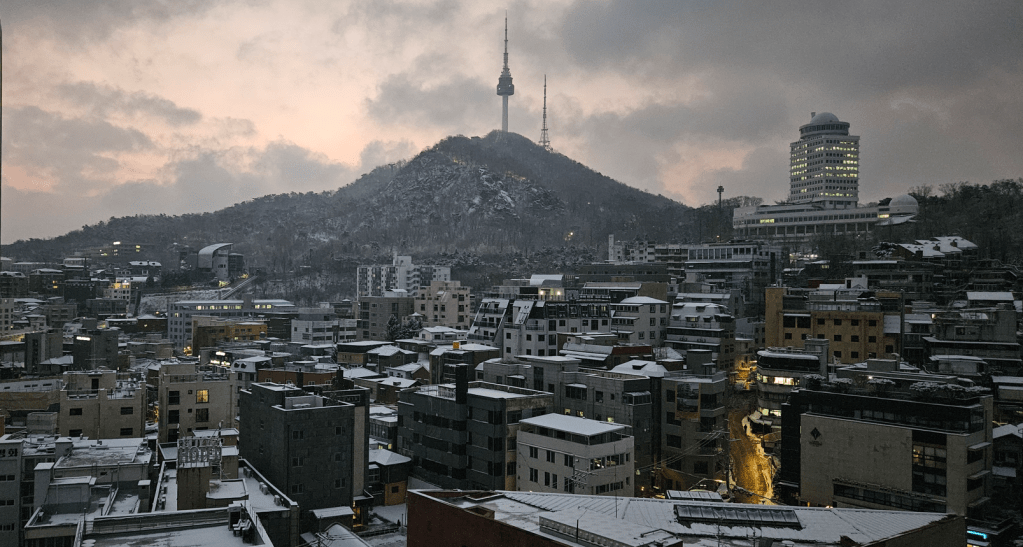
So we bundled up and headed out; it was cold, but sunny, and that makes a big difference. We were staying in the Myeongdong district of Seoul, where there are many hotels and lots of shopping, and is popular for first time visitors. Below is the view from our hotel, of Seoul Tower, and we took many pics of it at different times of day.
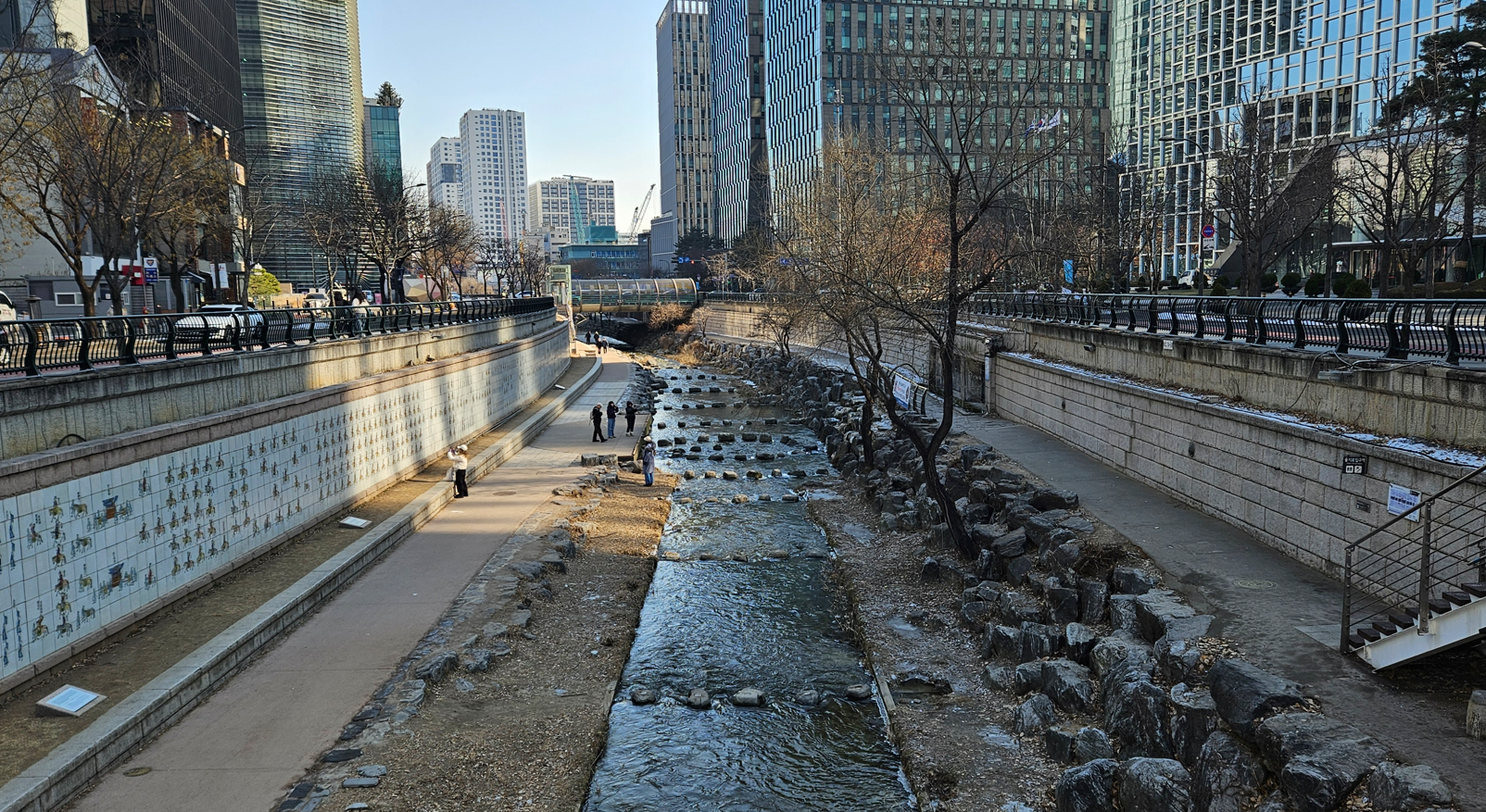
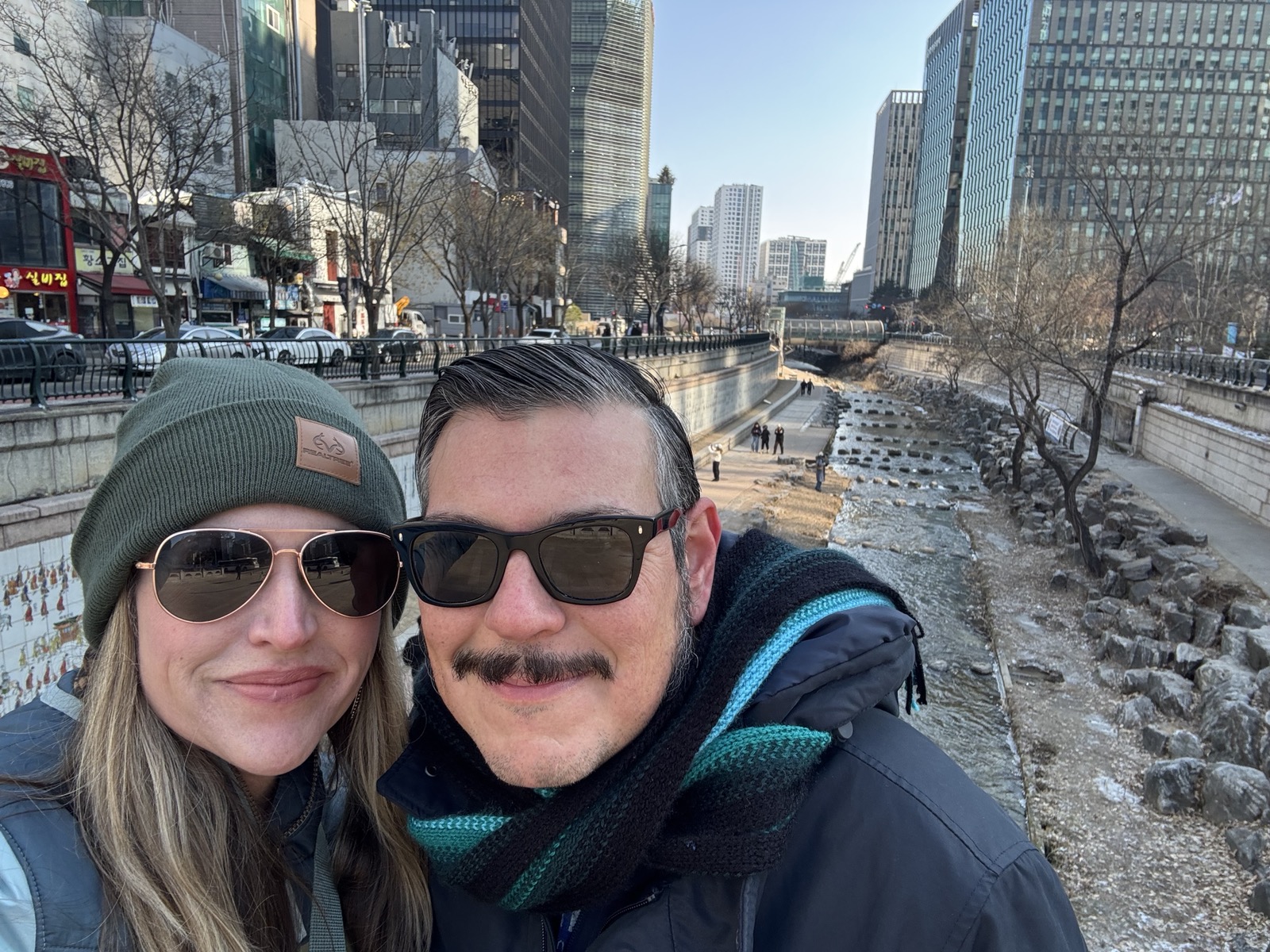
Something we did when planning was watch lots of youtube videos, as well as tiktoks, about where we would be going and save them on the map app (in South Korea, the map app is called Naver) but when planning for so many places, we would sometimes forget why we saved a place, but would remember when we would pass it. The first one of these was the Cheonggye stream, which runs through a part of Seoul, and as stones that can be stepped on to cross it. We didn’t step on the stones, but took some pics instead.
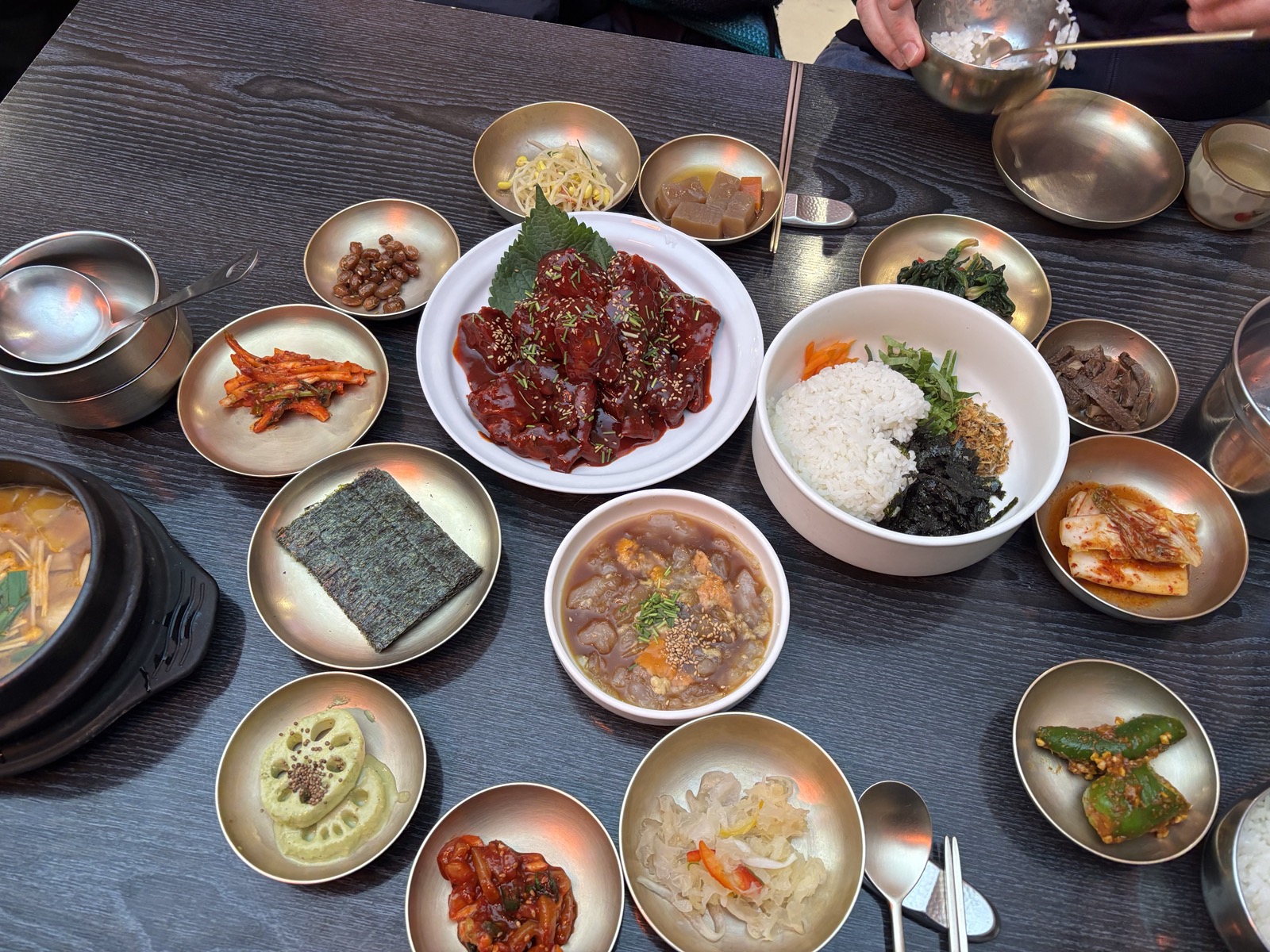
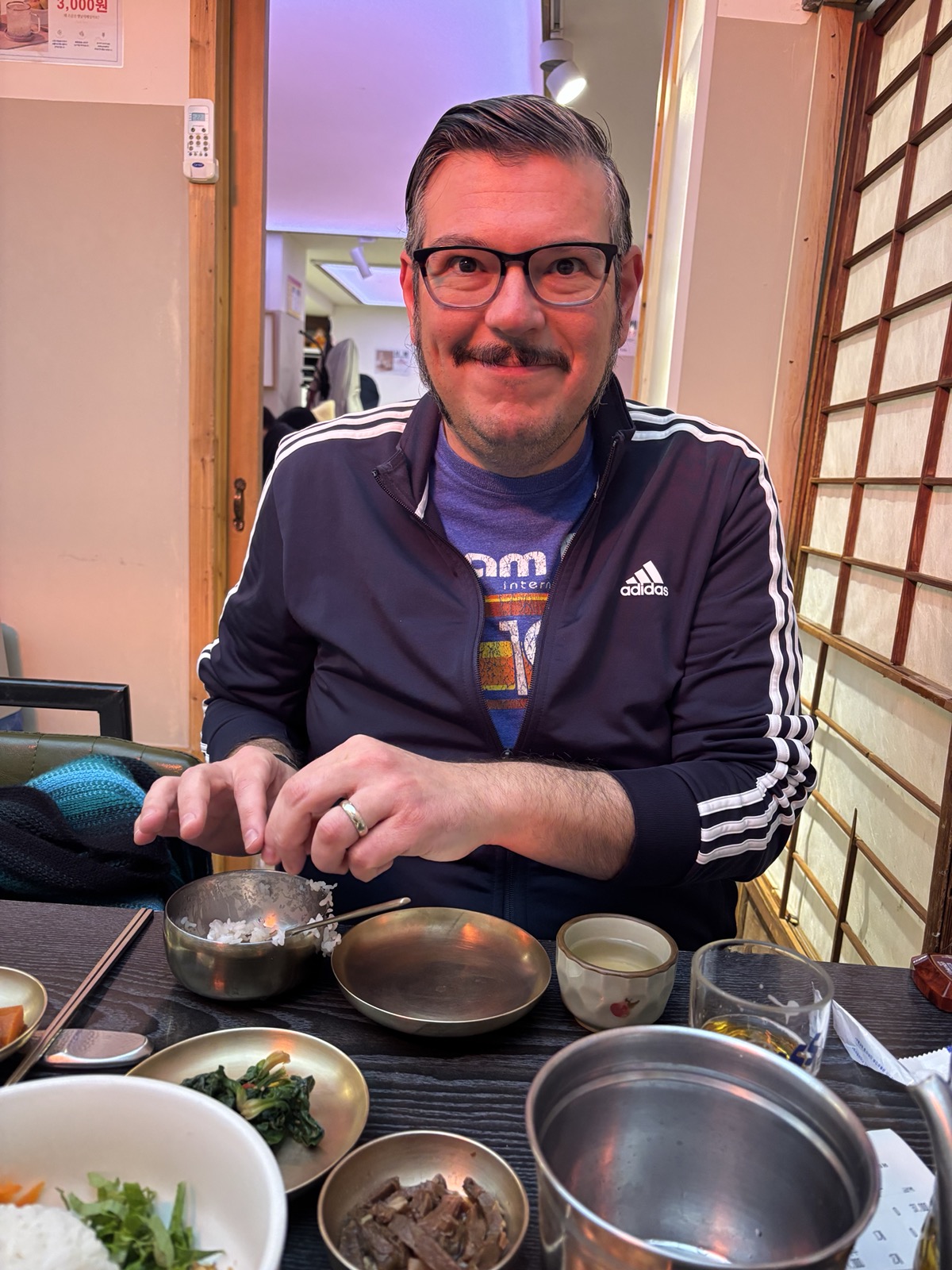
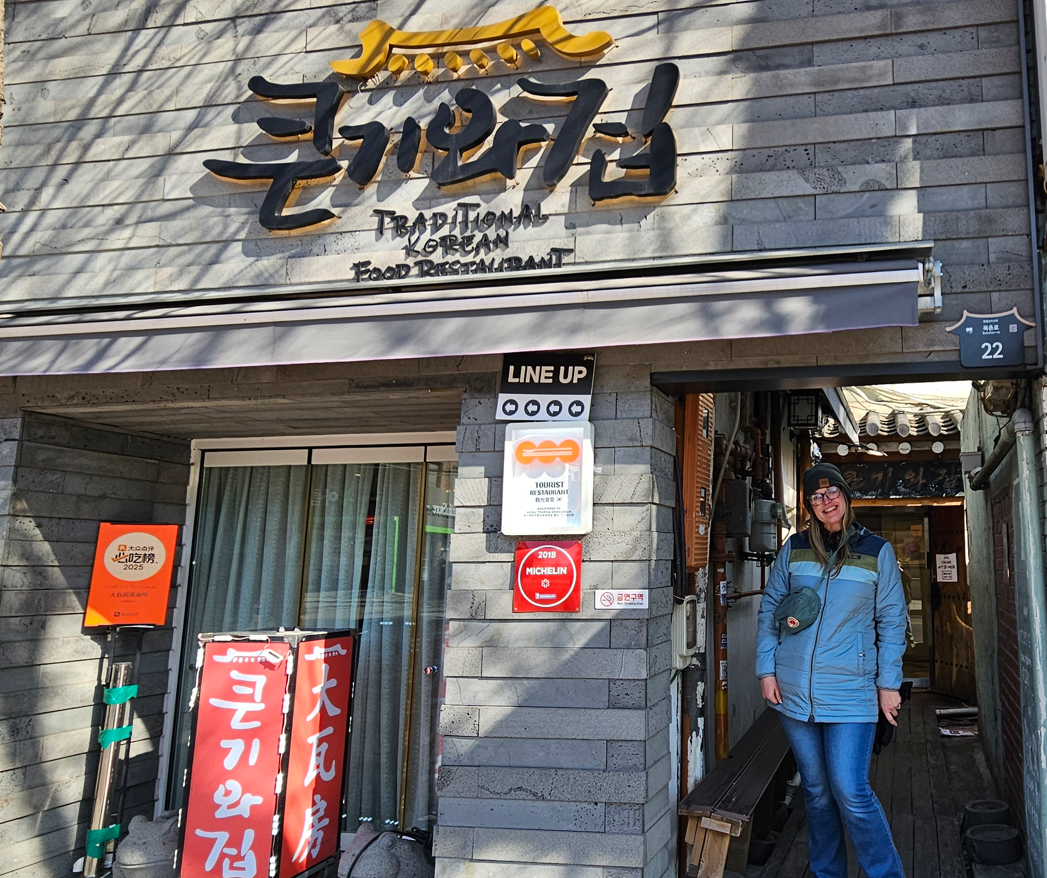
We were getting hungry, and saw a restaurant we had previously pinned, and headed toward it. Keunkiwajip specialized in crab dishes as a traditional Korean restaurant, and even had earned a Michelin Star back in 2018; we ordered the spicy marinated (raw) crab, and a cooked crab dish to share; they brought us both along with all the sides (kimchi, bean sprouts, assorted pickled veggies, cooked peanuts, gelatinous cubes – tasted like Italian beef from Chicago, oddly, and other treats) and we ate (almost) all of it.
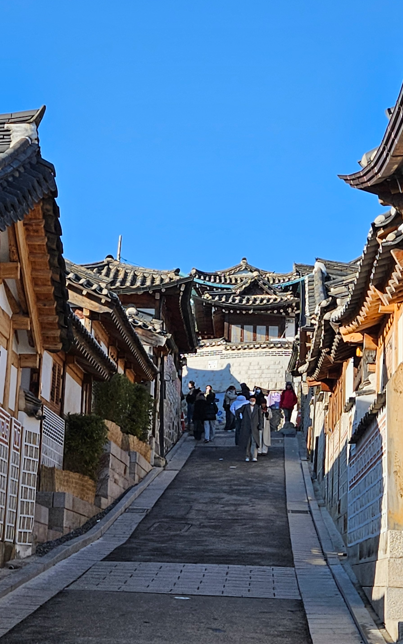
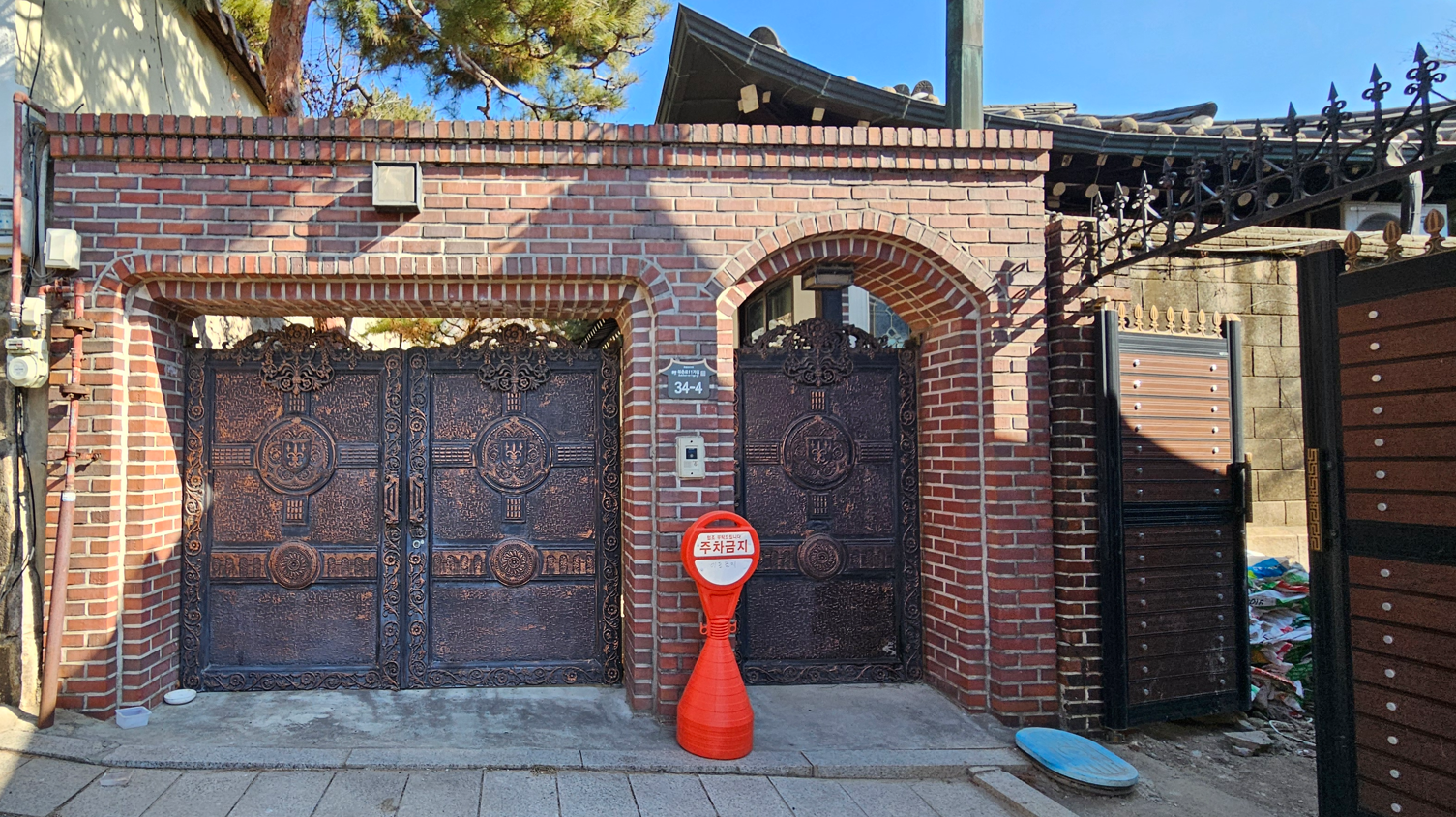
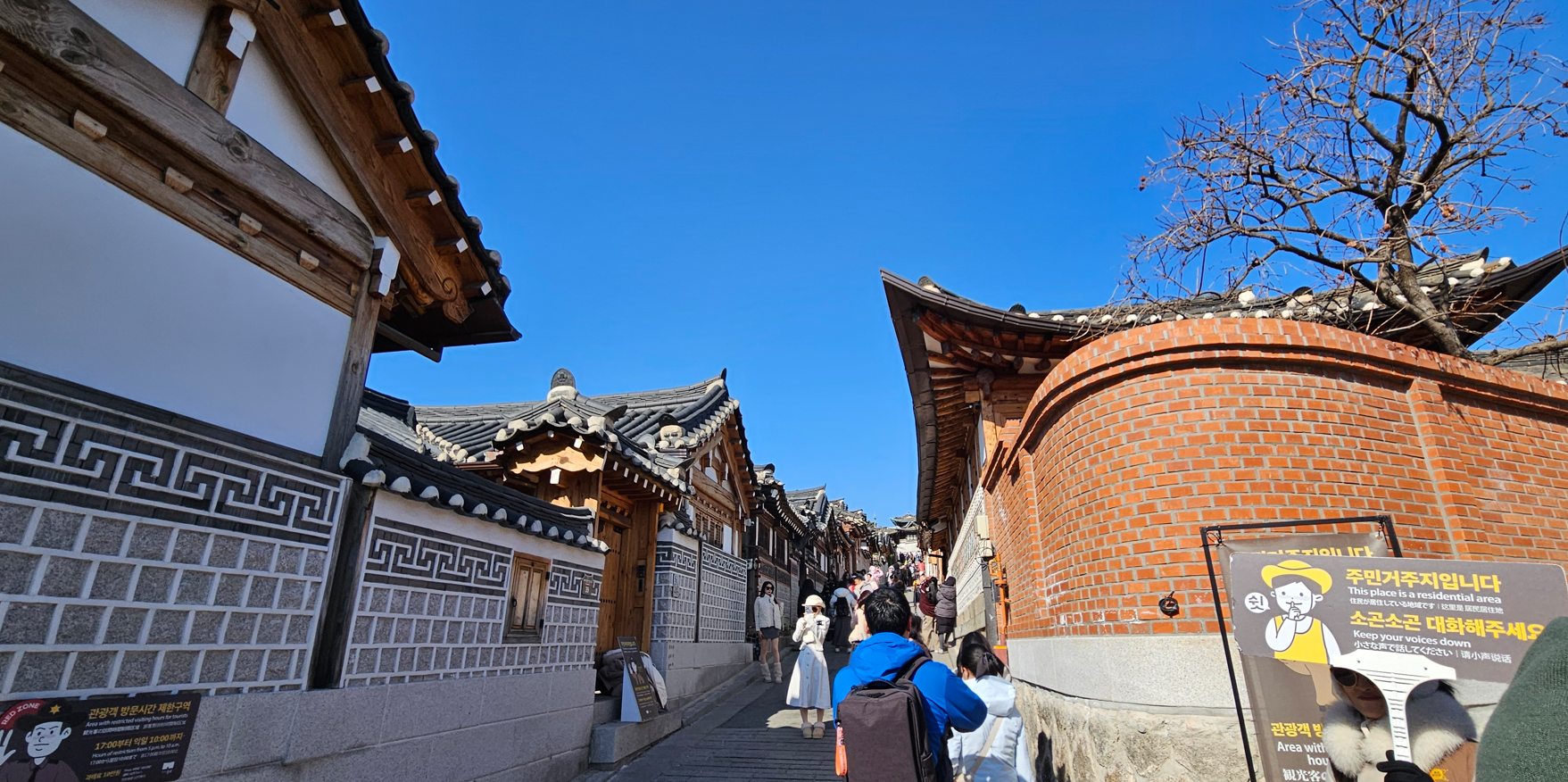
Now full, we headed back into the cold, and onward to the Bukchon Hanok village, which has many Hanok style homes, which we later learned on our tour the next day belonged to the ruling class of the Emperor. It is very hilly, so lots of up and down streets, and people still live in these homes (they are very expensive), so there are signs all over to keep quiet, and the area is closed to tourists after 5pm.
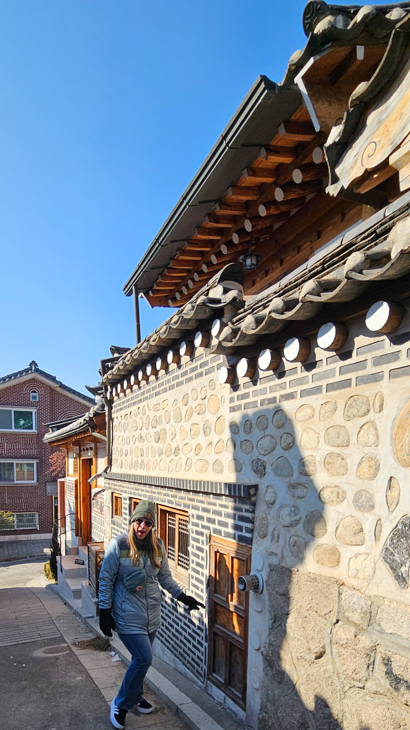
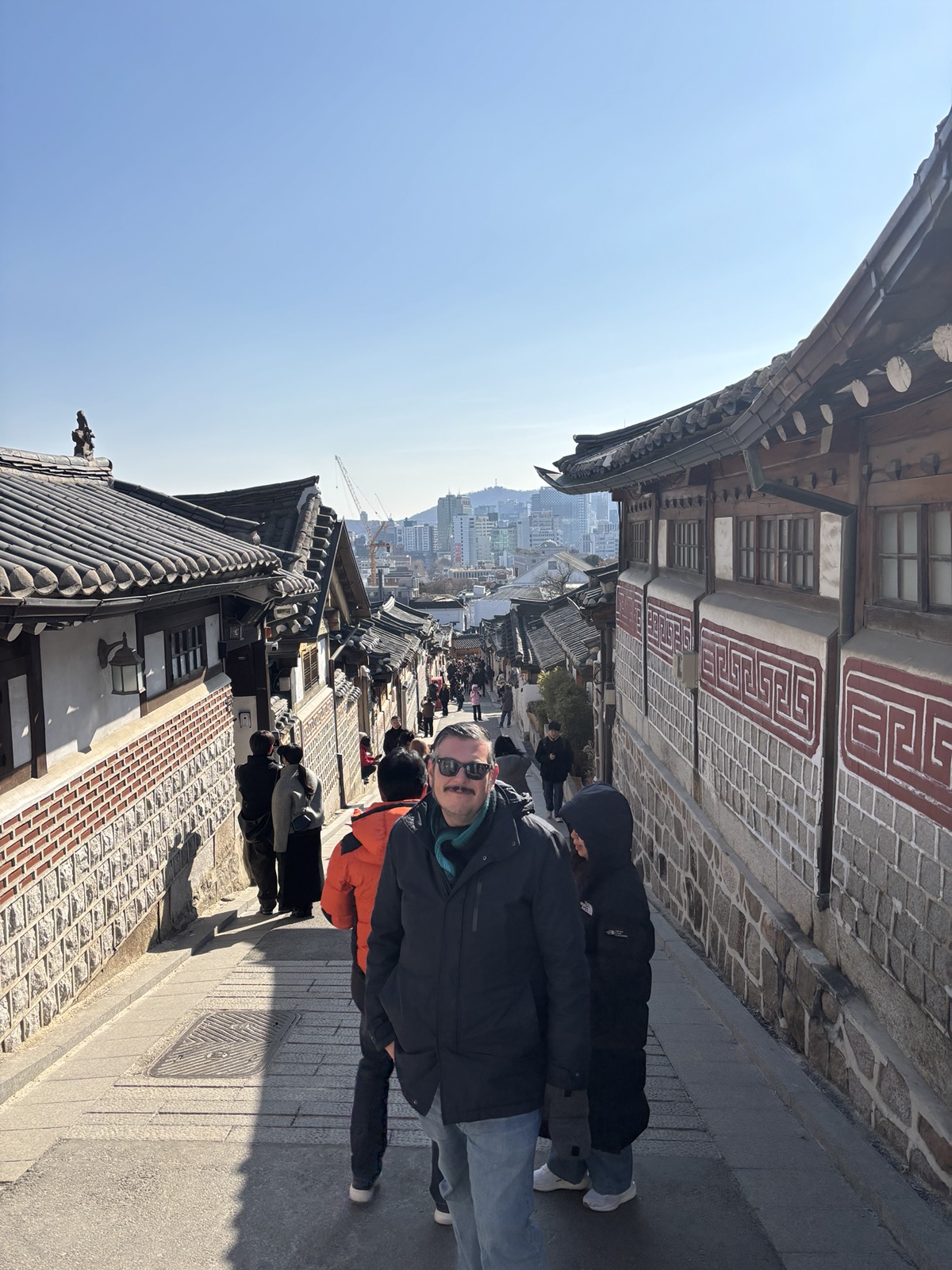
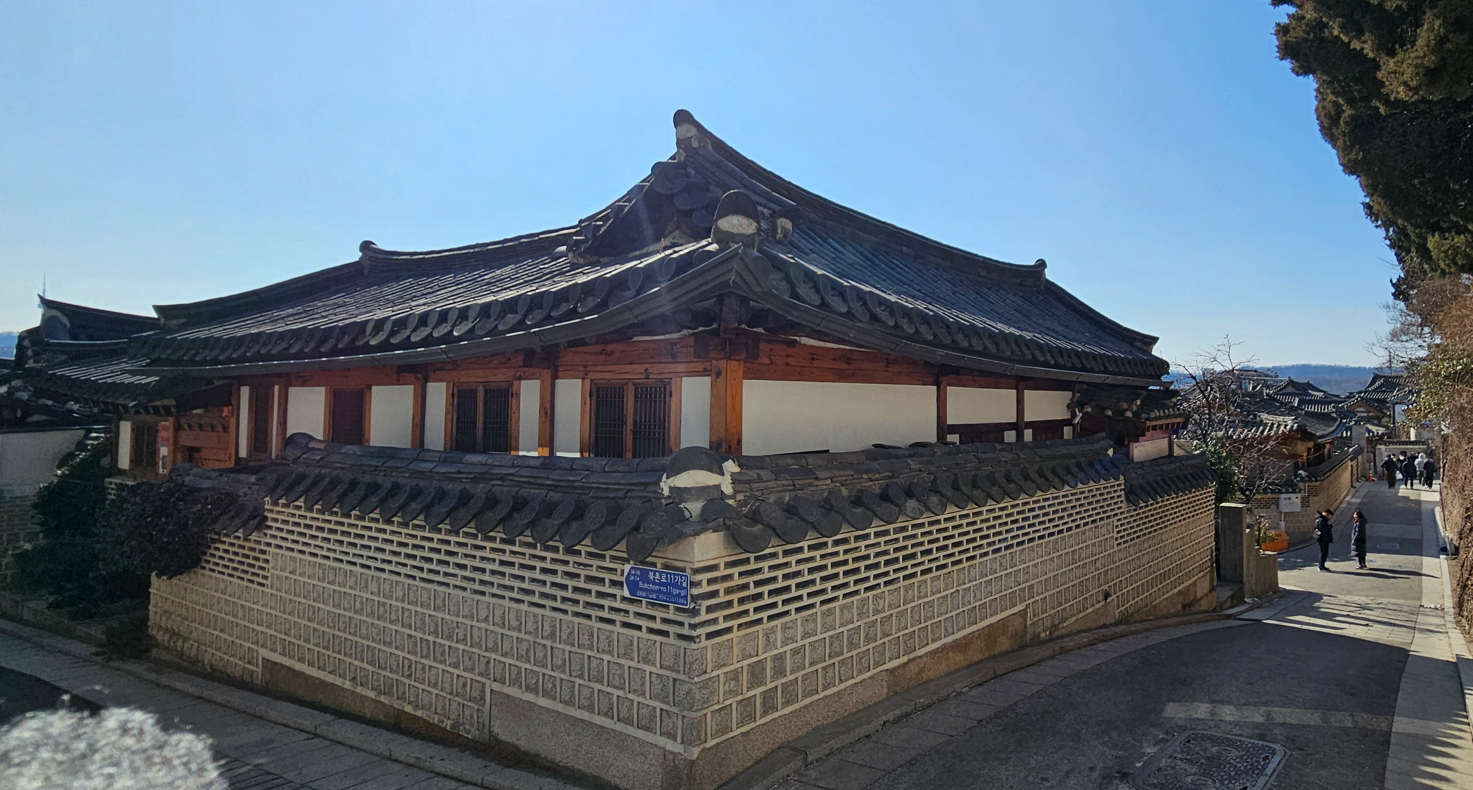
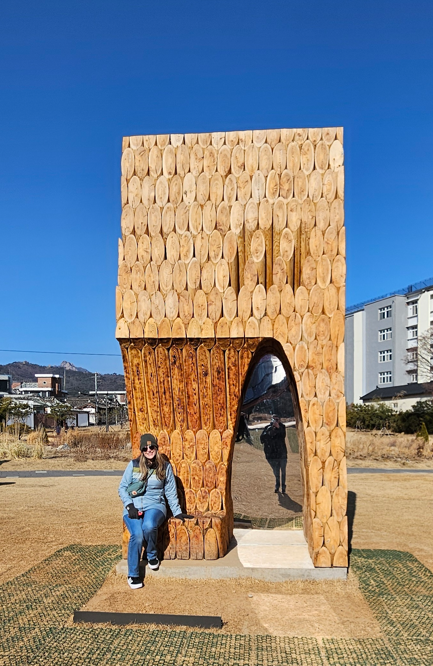
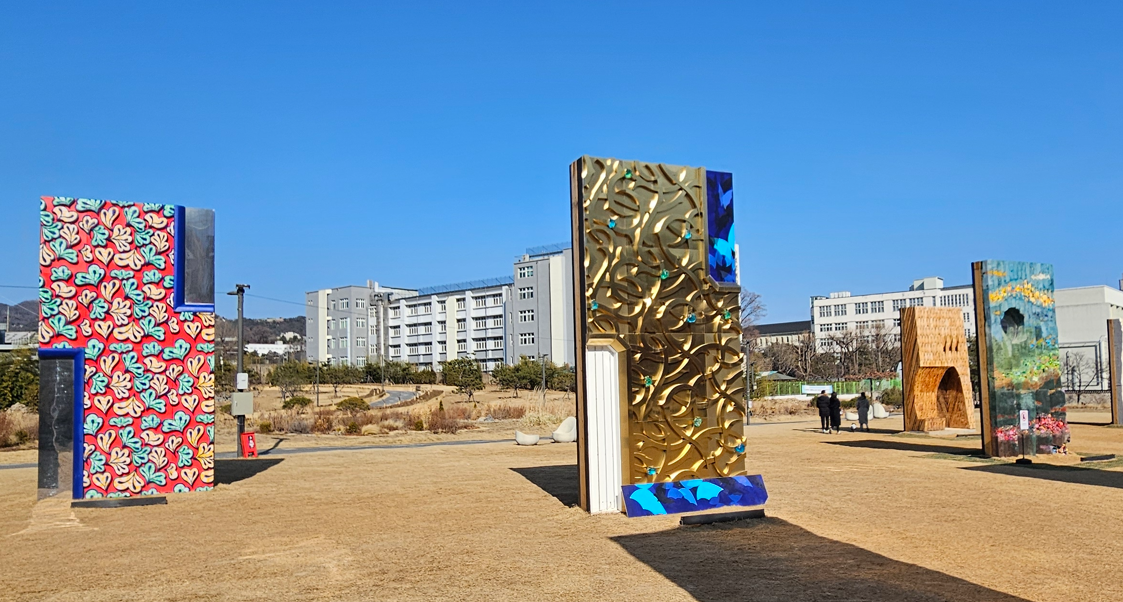
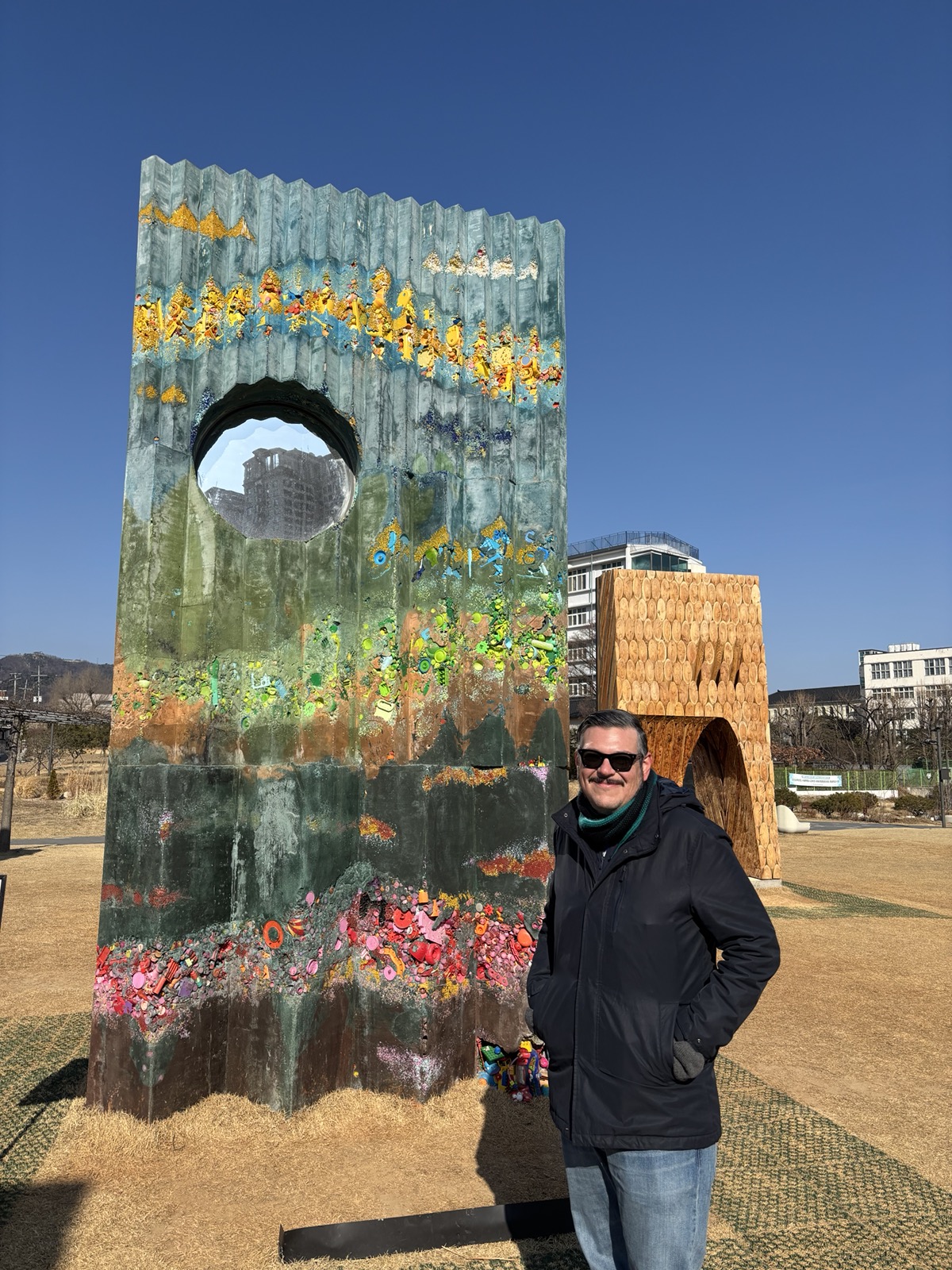
We were far from our hotel, but the sun was still shining, and we didn’t feel like dealing with public transport yet, so we started walking back. On the way, we happened upon an art installation in a large park (the Songhyeon Green Plaza), called “Walls of Public Life” made up of 24 walls (16-feet tall by 8-feet wide), designed by different artists.
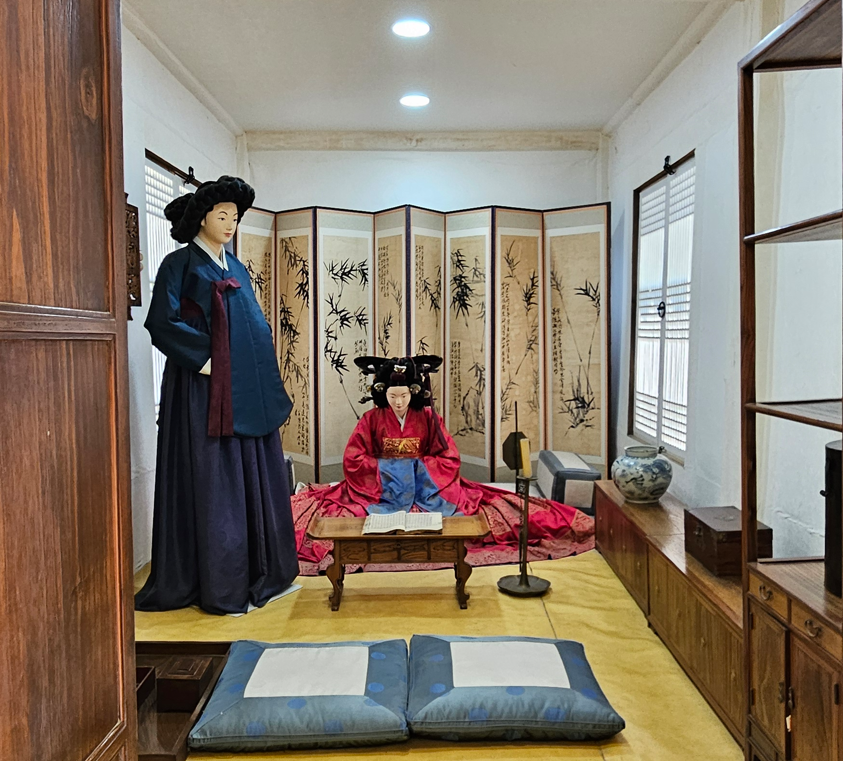
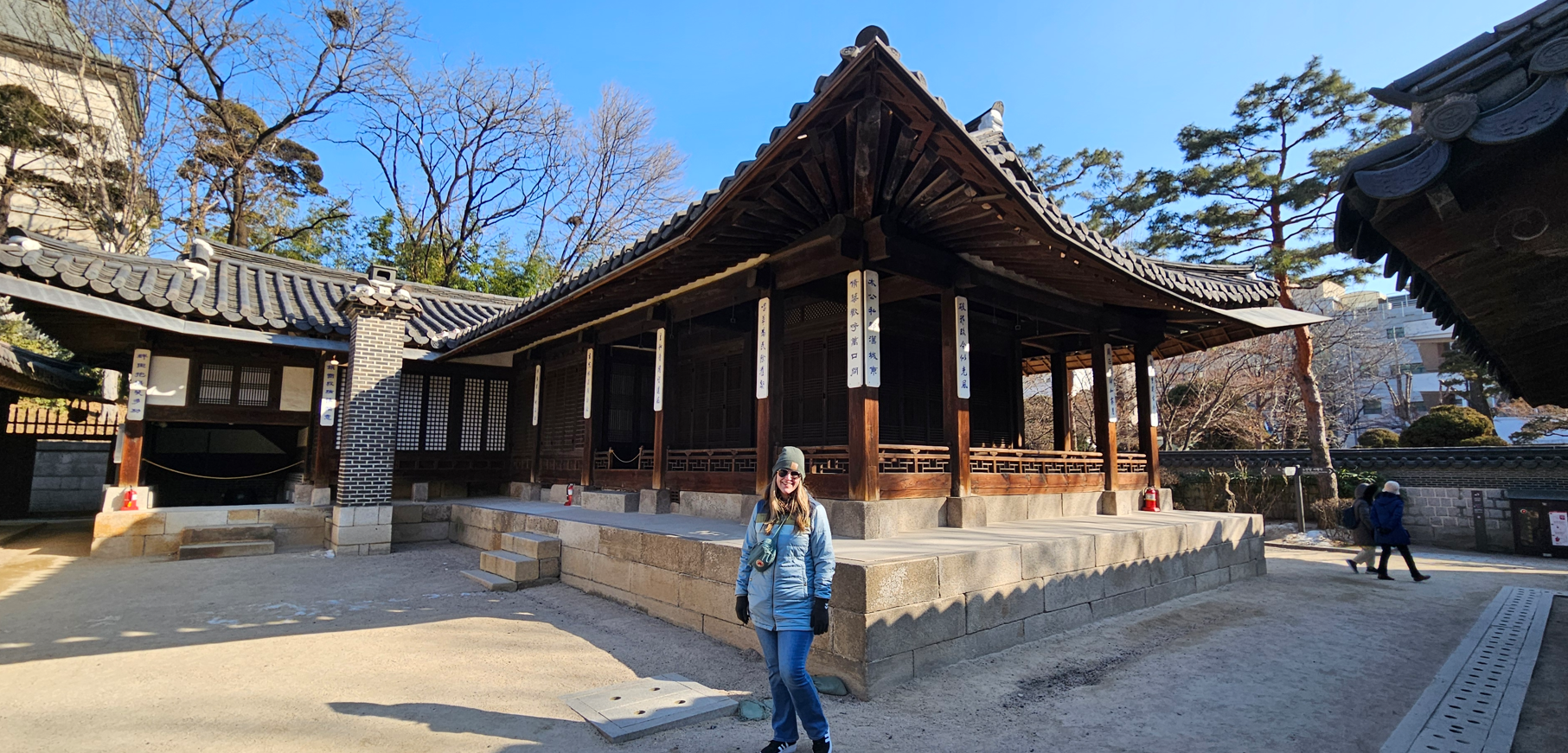
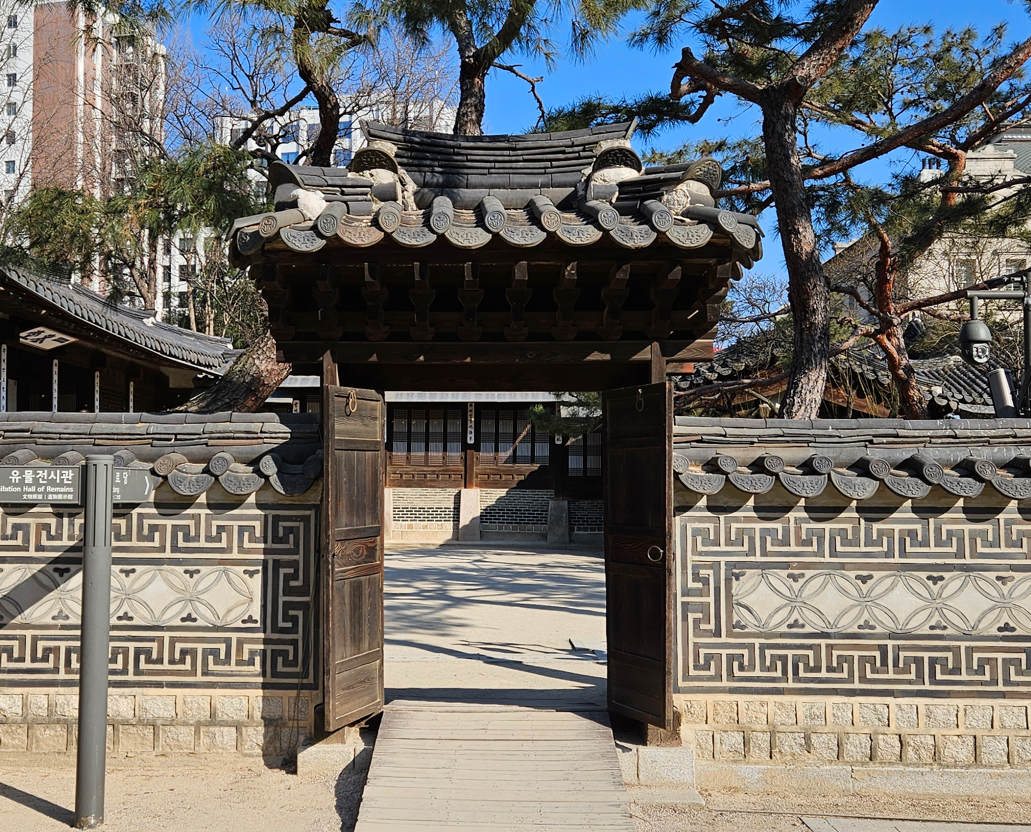
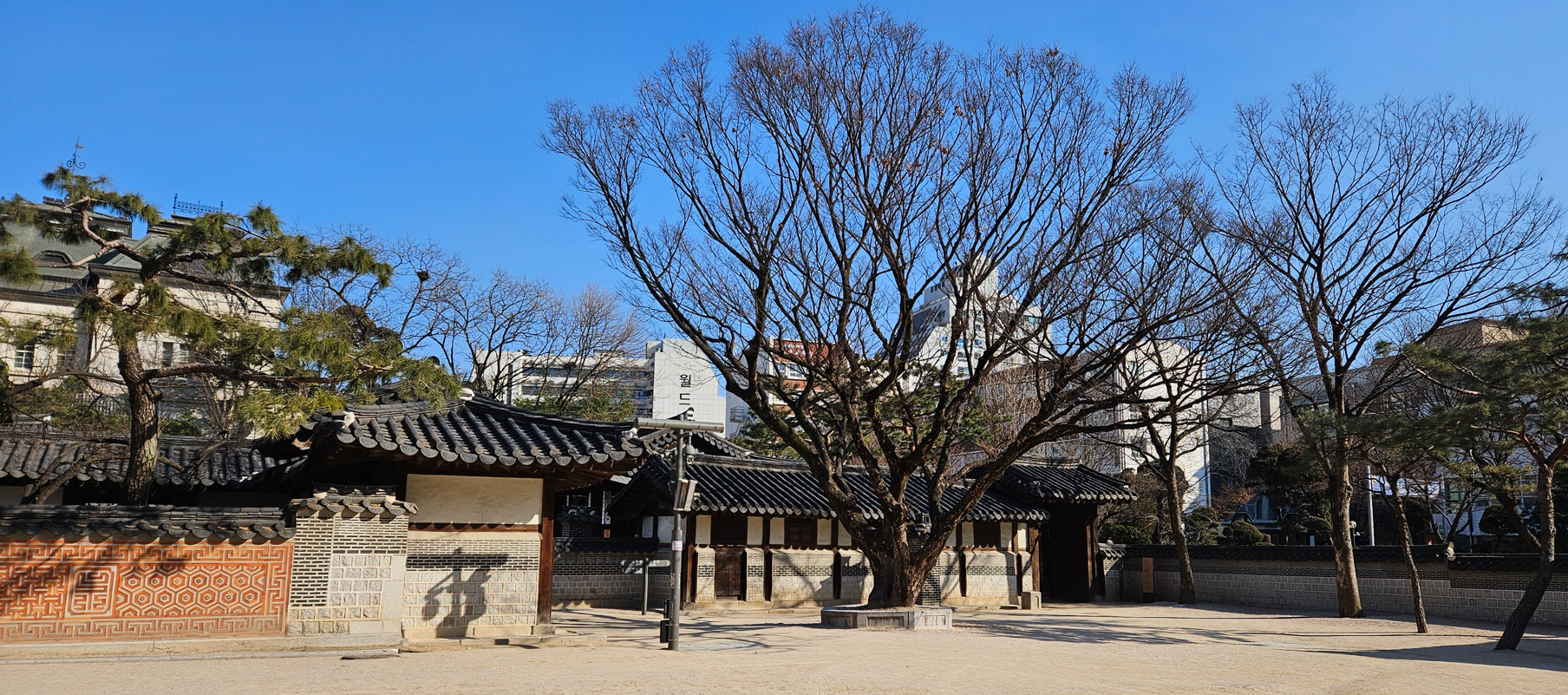
After we stopped at Unhyeongung, which was the residence of the King’s father, built back in 1864; where he ruled as regent for 10 years as the King was still a child. It was a very peaceful place, with few visitors; we walked around and appreciated the many buildings that we could walk into or peer inside. The King was married later to the Empress Myeongdong, who the neighborhood we stayed in was named after.

We finished the evening with a dinner of fried chicken and octopus before calling it an early night.
The next morning we slept in, as we didn’t have anything scheduled until our 1:30 tour to some sites around Seoul. We decided to have lunch before the tour, and headed toward a restaurant we had saved in our maps app that was not too far from the meeting spot of the tour. We walked through the snow and slush that had occurred overnight.
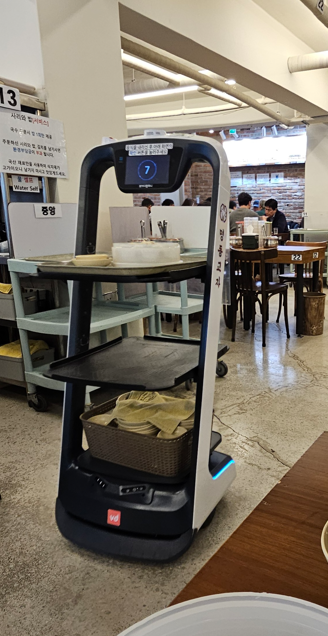
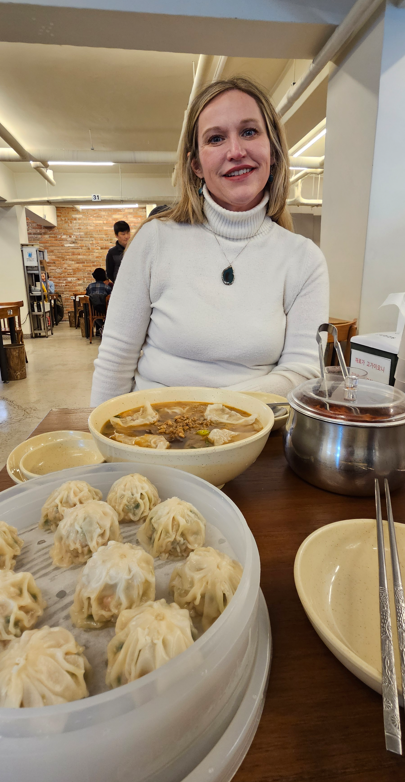
On the way we passed another spot that people seemed to be entering at quite a pace; so we joined the queue and were soon ushered up a flight of stairs into a large eating space where robots were zooming around with plates of food. This must be the place, we thought, as we chose two of four total dishes they served, were told to pay immediately, and sat down. An excellent part of much of Korean dining is the drawer under the table that houses the napkins, cutlery/chopsticks, and bottle opener. Very quickly (we learned Korean food is served fast, and they eat fast and get on their way) we received our dumplings and Kalguksu (noodles with ground meat in broth) steaming hot, brought to us by the robot waiter.
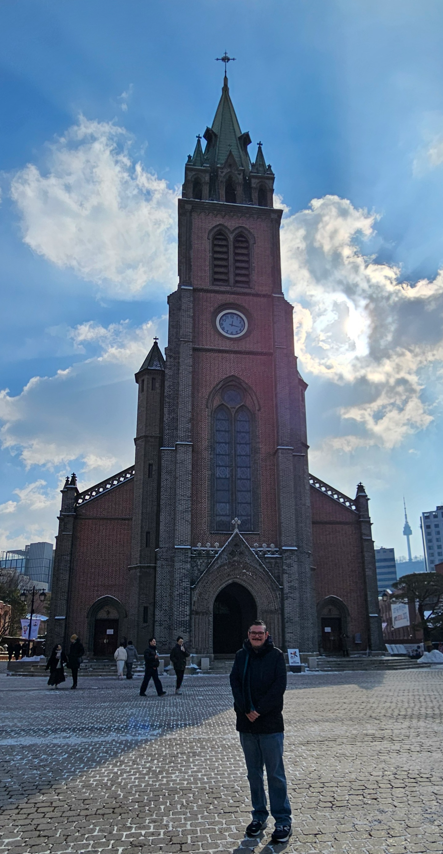
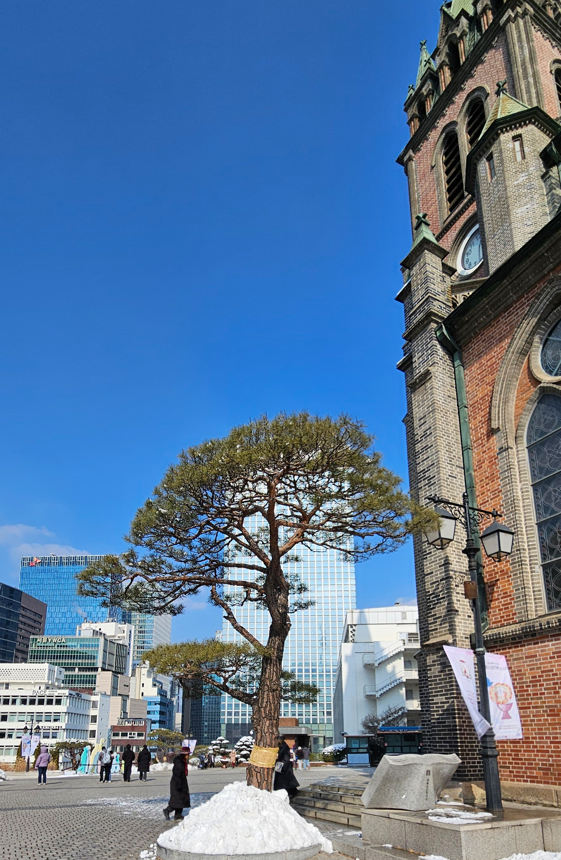
We learned later there are many churches in and around Seoul, of the many denominations of Christianity. After lunch, we noticed we were near the Catholic Myeongdong Cathedral, which is the head of the Seoul archdioceses and has a whole campus devoted to it, including a two story mall with shops, cafes and restaurants. We took in the 19th century-built cathedral from a pew, and later had a coffee amongst nuns and other visitors.
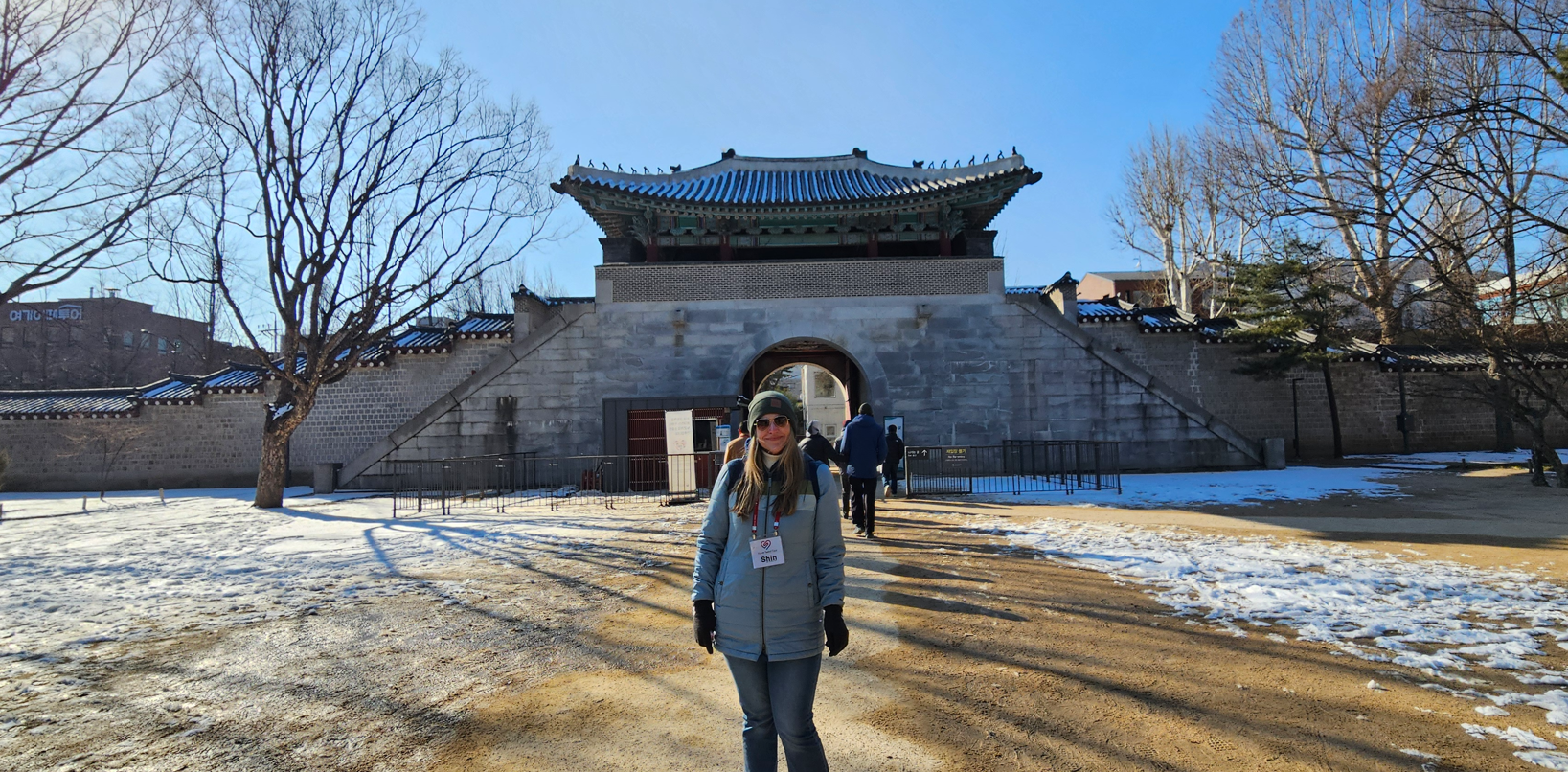
We walked the short distance toward the tour meeting point ,and passed a protest happening right next to it. We couldn’t tell what they were protesting, but were later told by our tour guide, Shin, that they were protesting a hotelier who laid off much of the hotel staff during Covid and promised to re-hire them once the pandemic was over; of course, he did not, and they had been protesting for 3 years! Shin told us protesting was a part of the South Korean culture, and they even had impeached the last President by protesting, so it was effective!
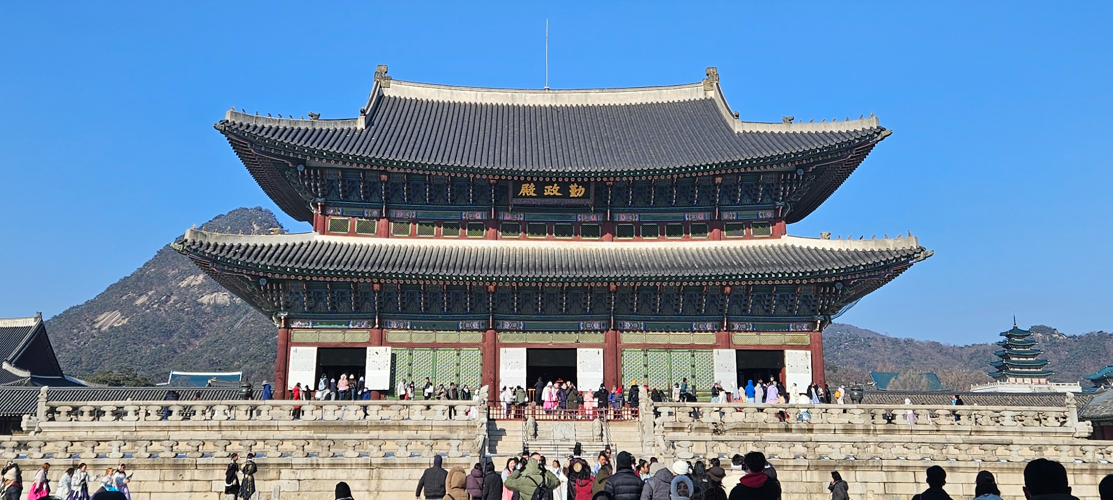
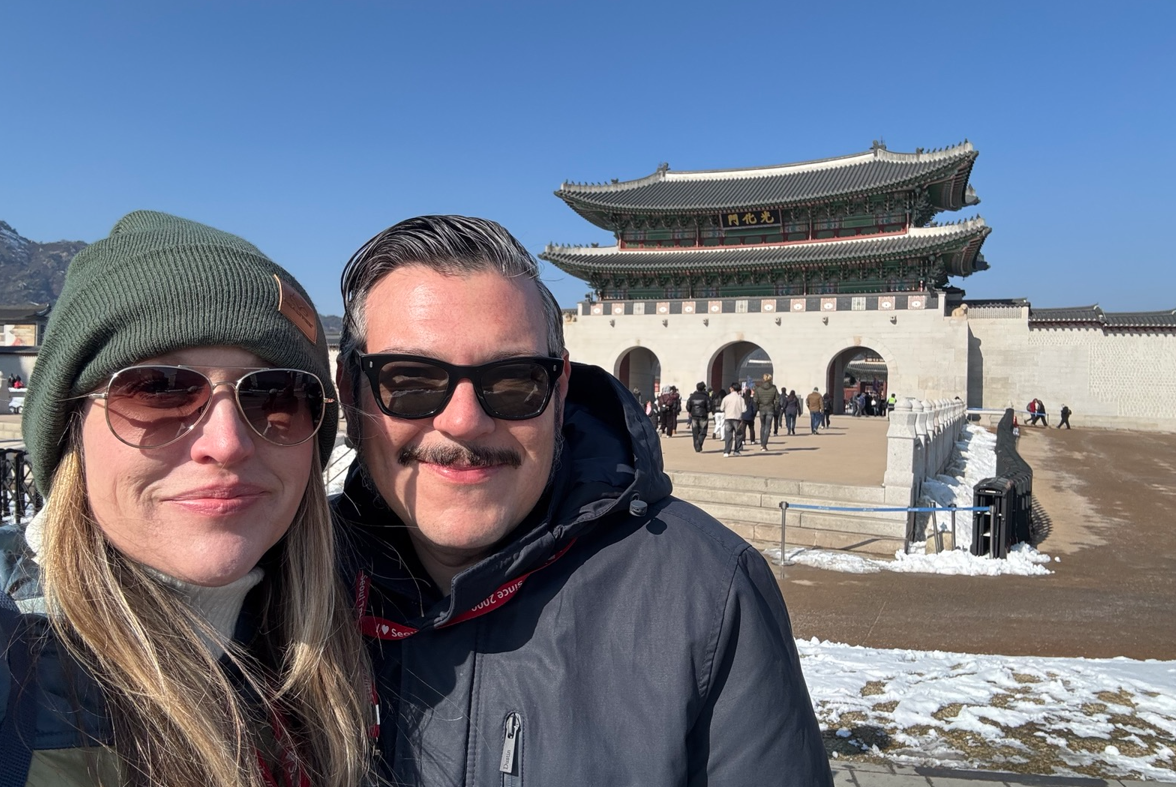
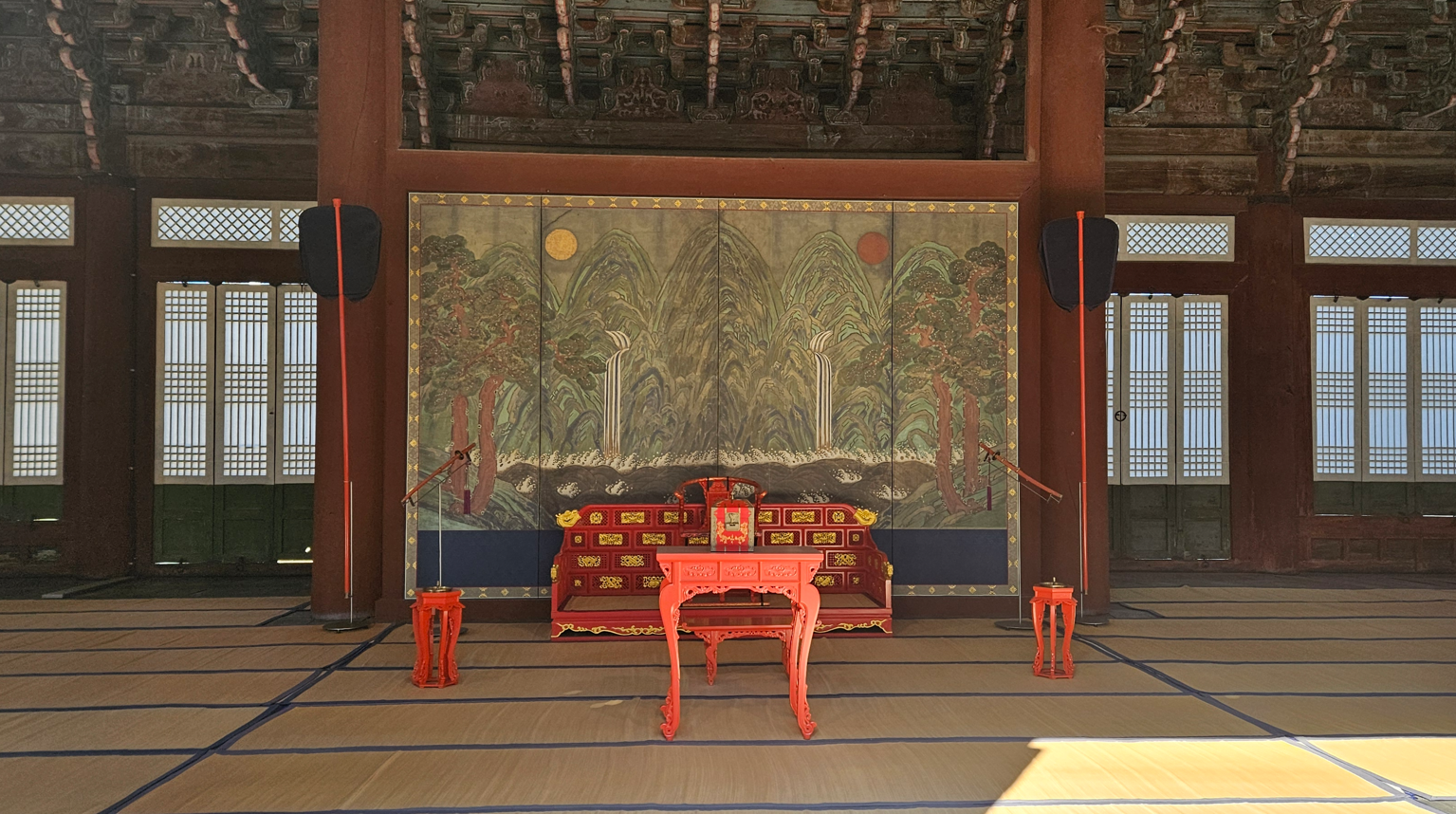
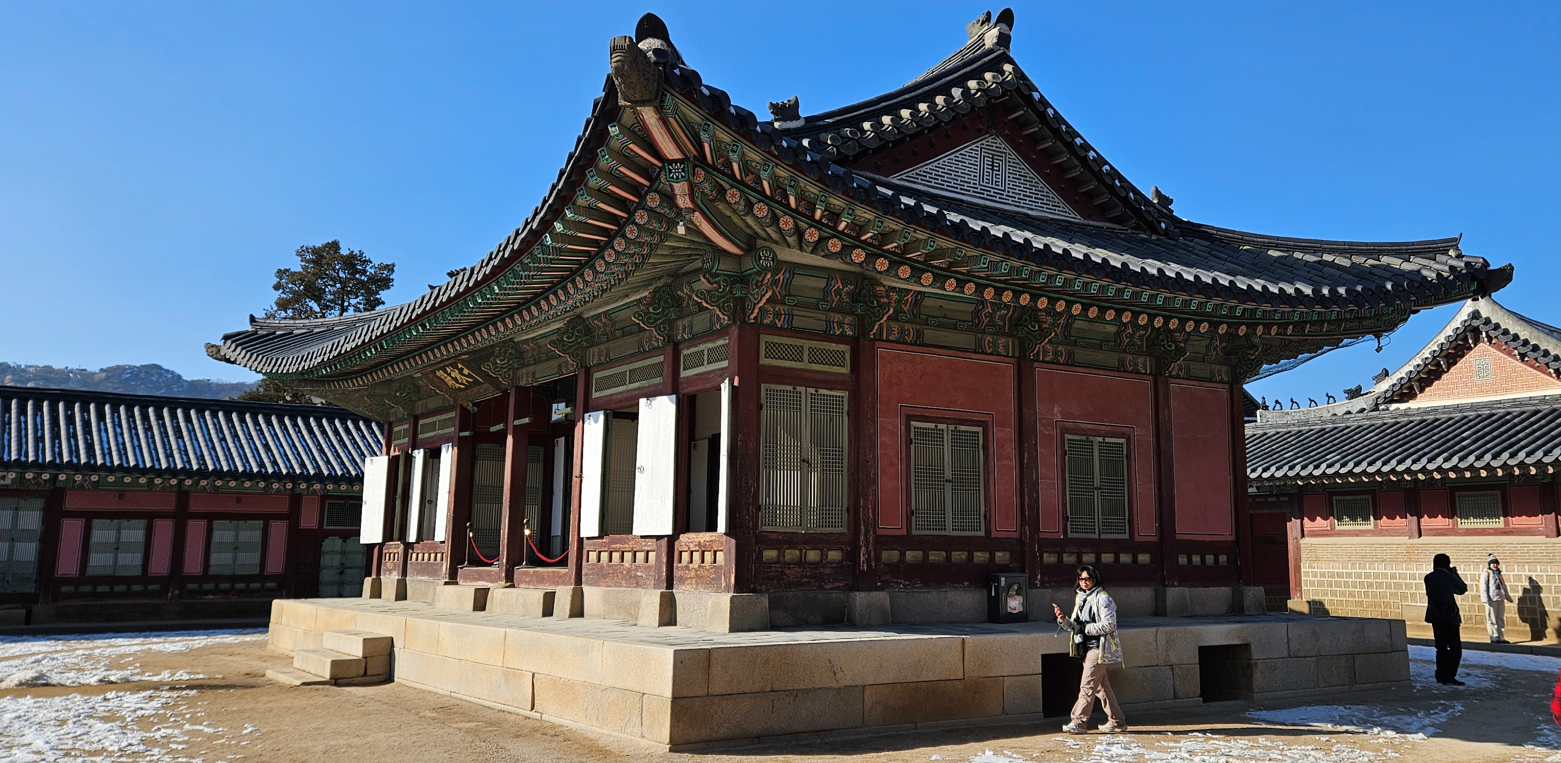
We were joined by eight others from all over the world on our day tour and we piled into a large van; first stop, Gyeongbokgung Palace, which was the seat of power of the Joseon (pronounced Chosen) Dynasty. On the way we passed the US Embassy, located just outside the main gate. We were able to watch the changing of the guard, which was a colorful and memorable experience, as we tried to keep warm.
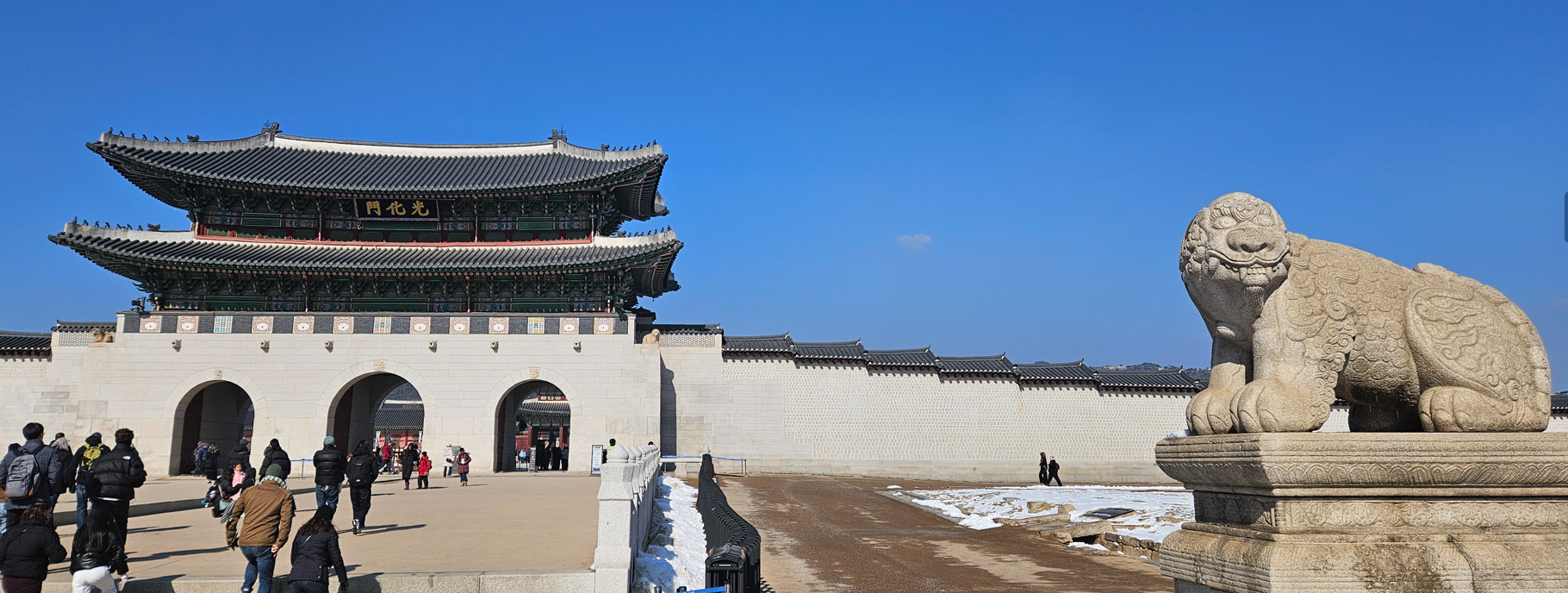
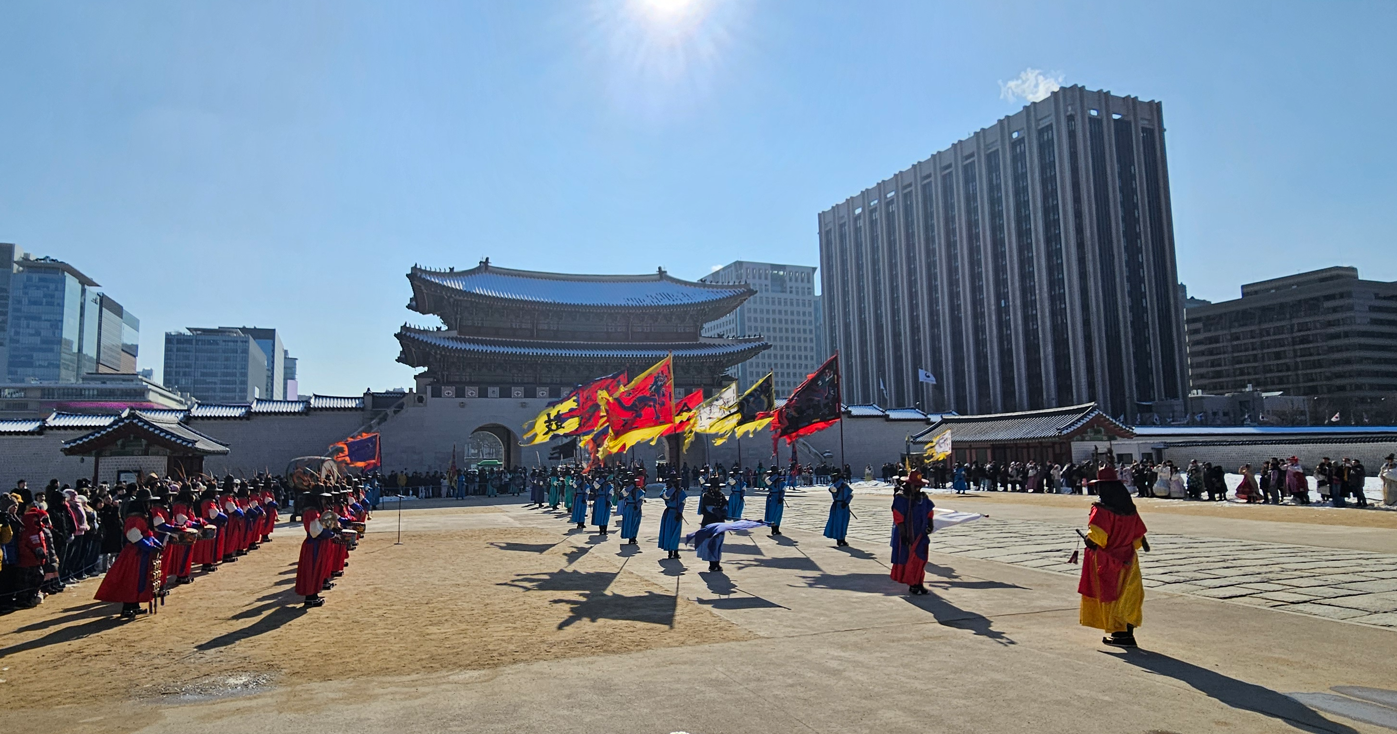
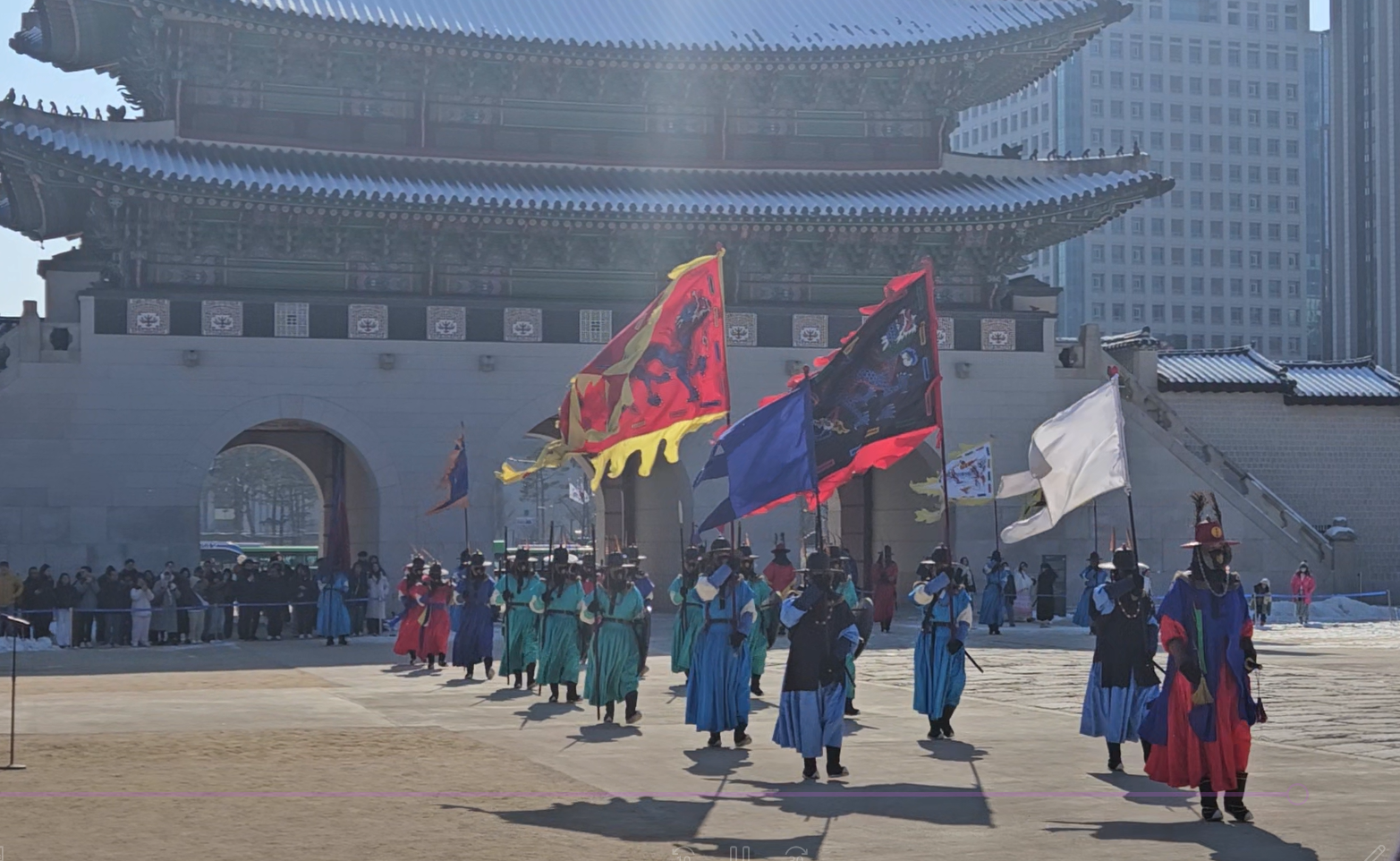
We learned that when the Japanese colonized Korea they tore down 95% of the palace buildings and built a big, ugly, government building, that the South Koreans tore down in the 90s, and began rebuilding to the original specifications.
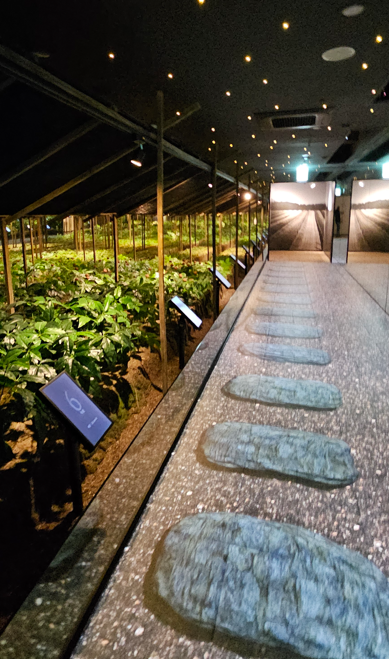
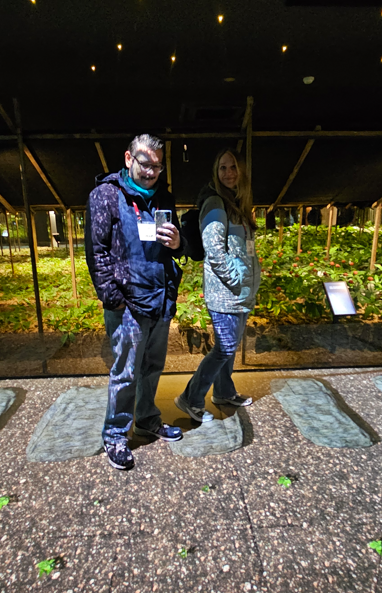
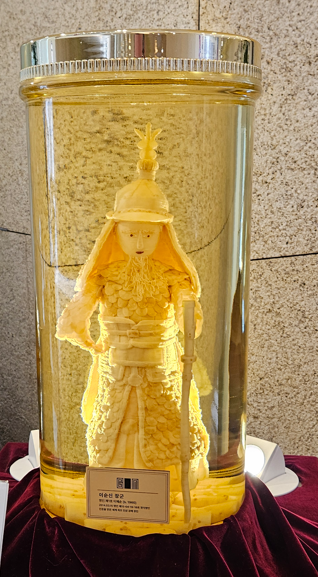
We warmed up with some coffee and were on our way to the next stop, the Bukchon Hanok village (where we visited the day before). Luckily we didn’t spend much time here, and were on our way to the next stop, the Ginseng Museum. Now, the Ginseng Museum was not mentioned in the tour description, and we have been on other tours where there is a stop to do some “selling”, but this one was on another level. The “museum” was immaculate, and there were some top notch displays, multiple floors, on the history and how Ginseng is grown, including full size dioramas of how they grow it, and the different types. They even make figures, like the one below, out of it. We ended up in the sales room (of course), where every two of us had their own sales person. While we did not buy, but it was certainly something else.
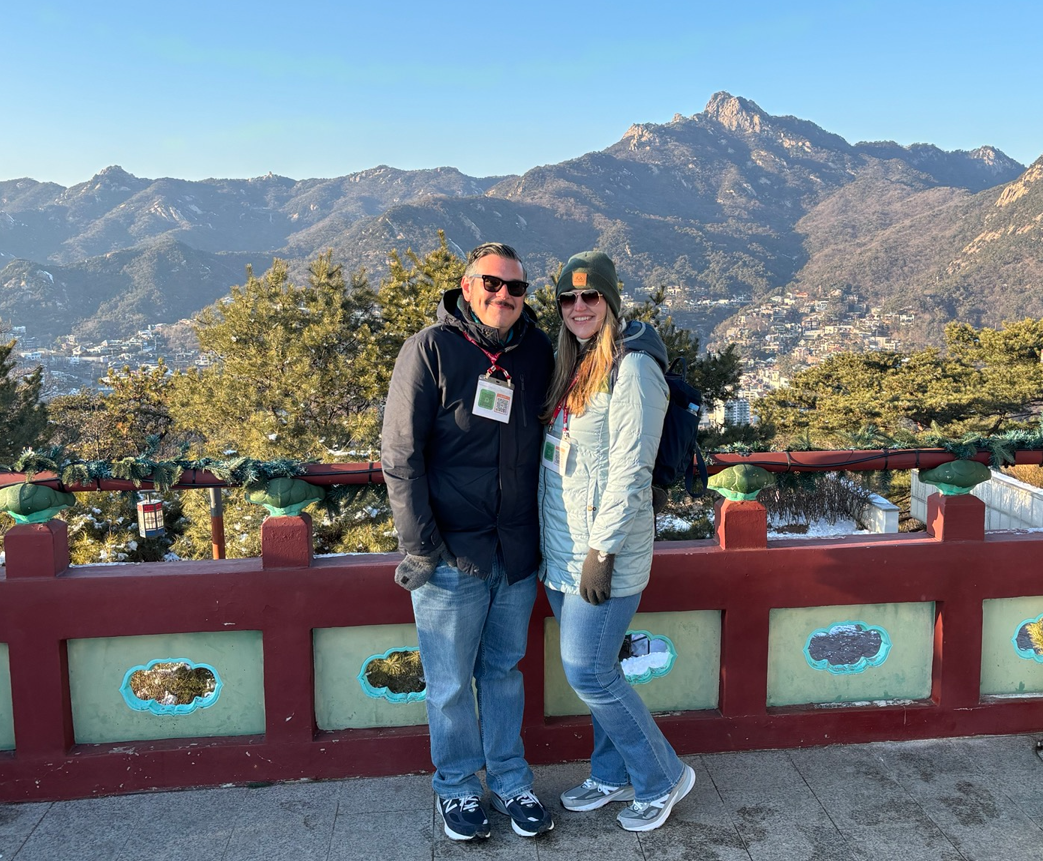
Back into the van we climbed, and our next stop on the tour was for city views at the top of Bugaksan Mountain. While very cold and windy (our fellow tour goers from Russia actually waited inside the restaurant at the top), we enjoyed the clear skies and sun above.
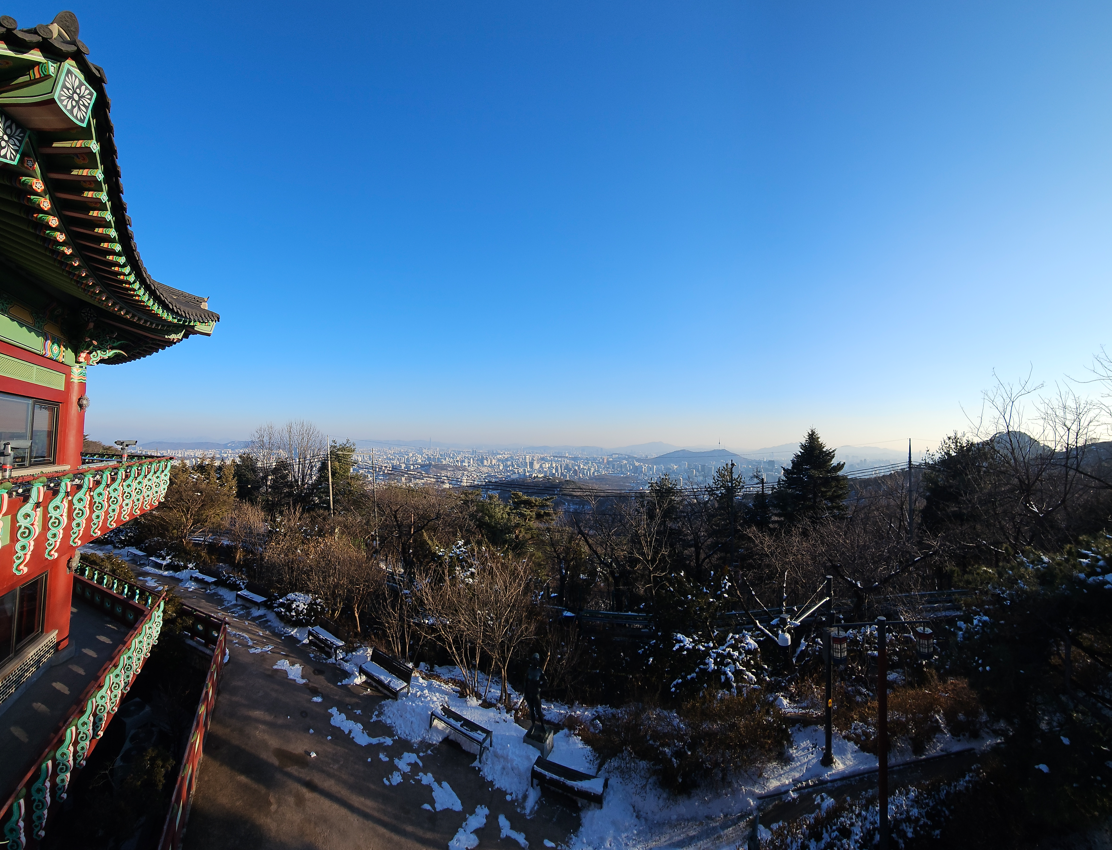
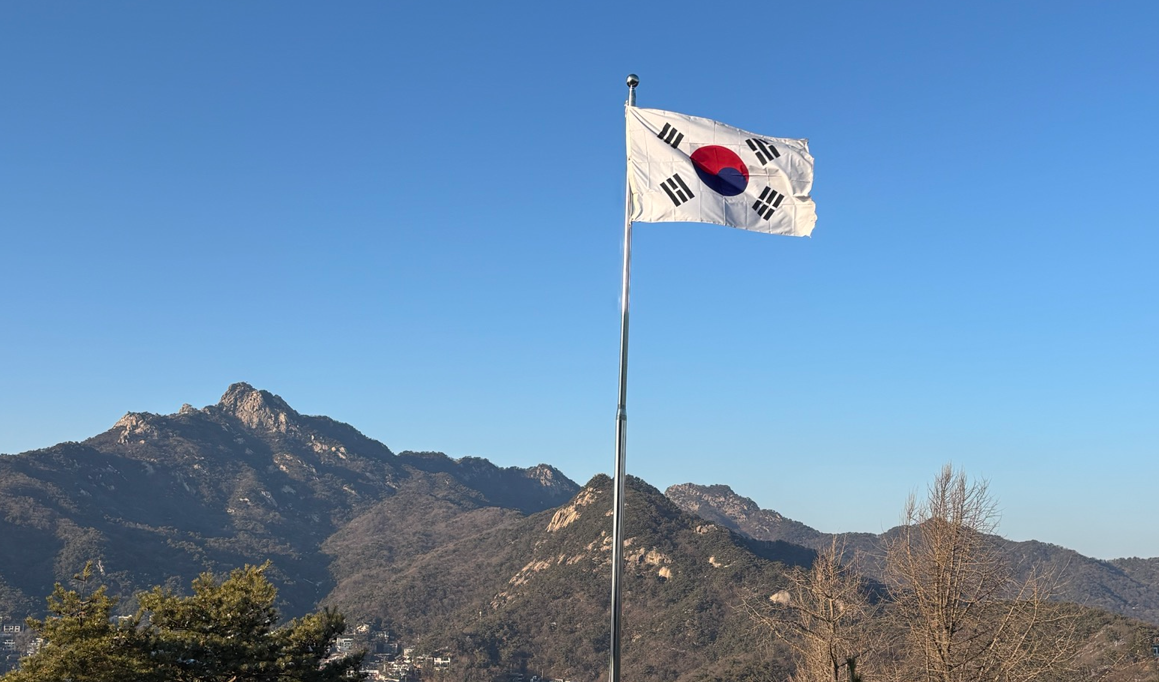
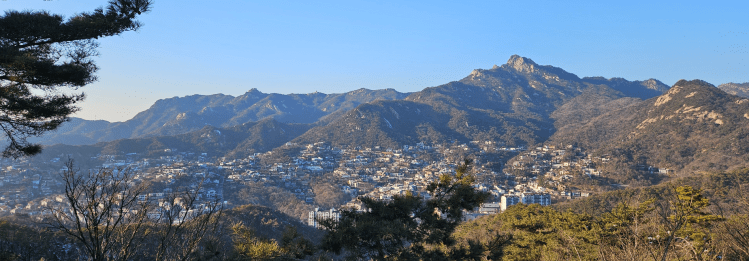
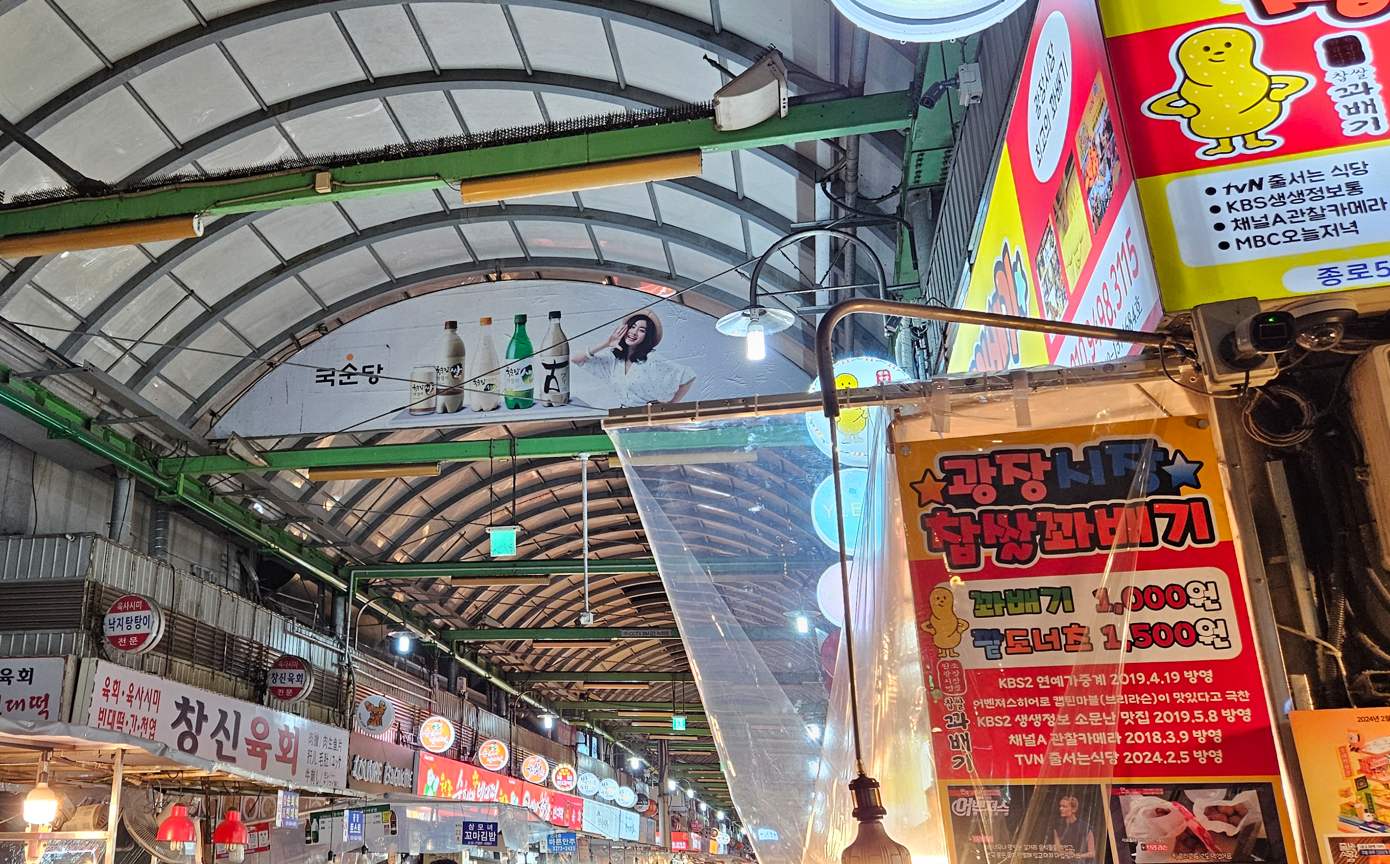
The tour ended at Gyeongdong Market, which sold so much fresh food that it was hard to decide what to eat.
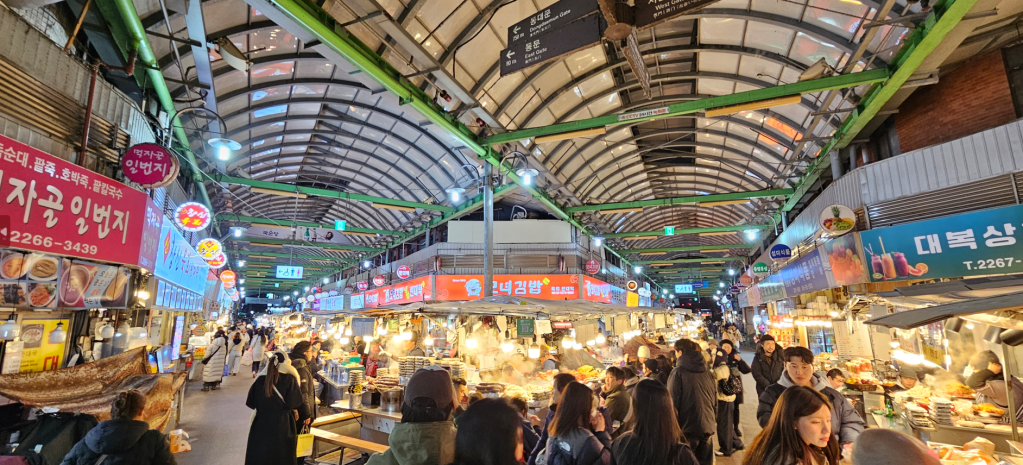
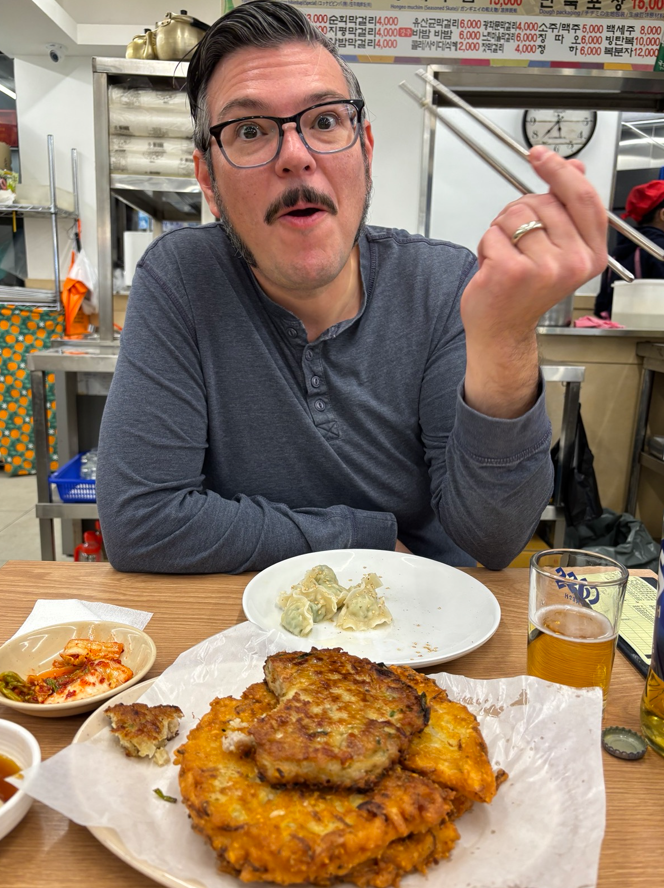
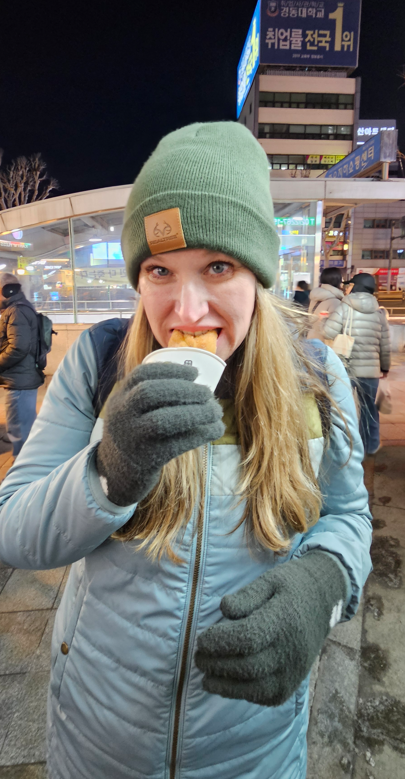
Our tour guide, Shin, recommended trying Mung bean fried pancakes, so we did, and sat next to a young couple from Australia; we talked travel and ate some great food; afterward, our dessert was a twisted, sweet rice, bread stick, which was so good.
It was even colder once the sun had set, so we hopped in a taxi and headed back to the hotel to call it a night. More to come, stay tuned!
 Phil's WayPastCool
How were the mung bean pancakes? It looks so cold there!
LikeLike